Applicability and Feasibility of InSAR-Based Mining Subsidence Monitoring Under Overburden Isolated Grouting Backfill Mining Conditions
 ,
,  ,
,
Highlights
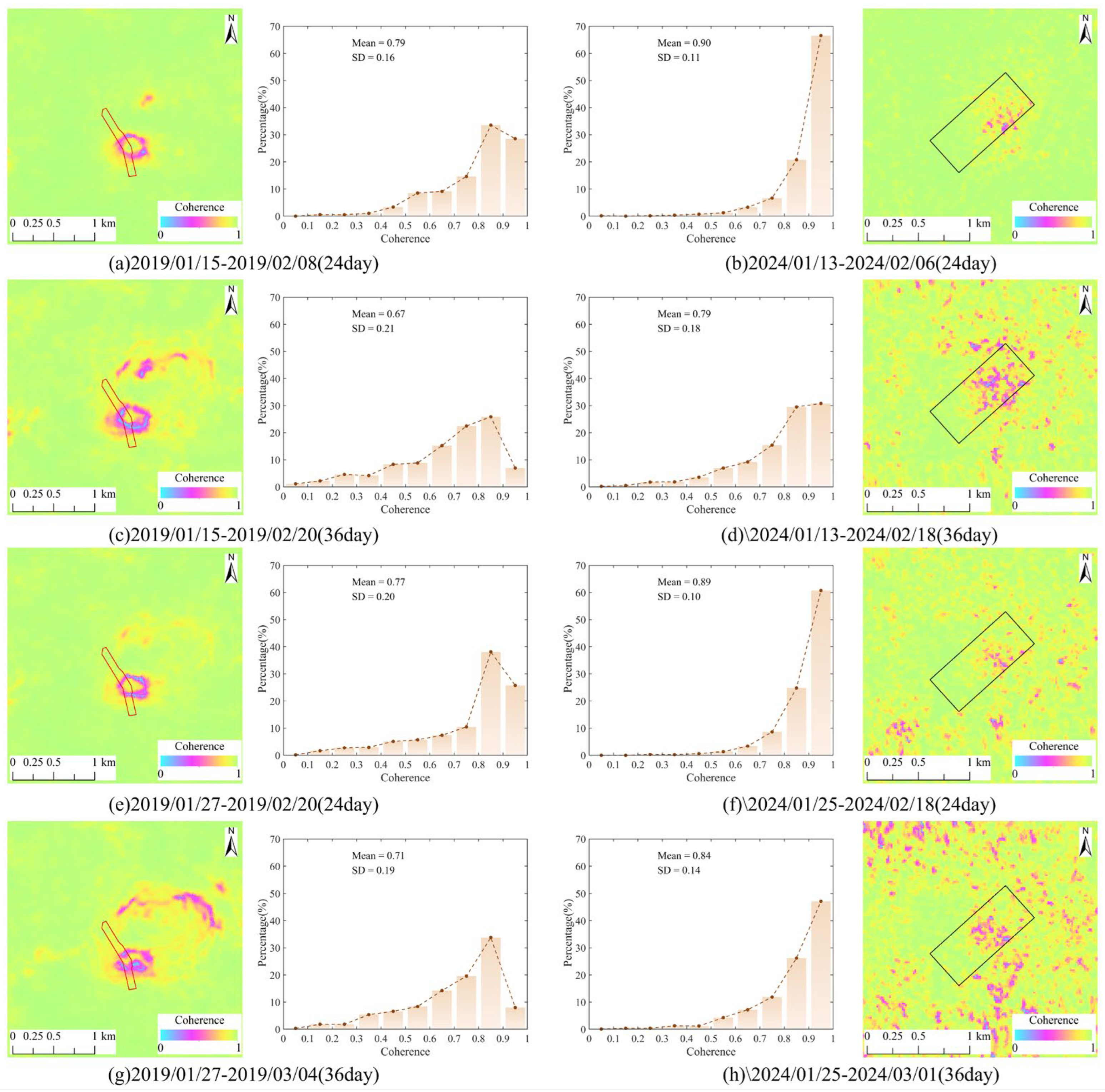
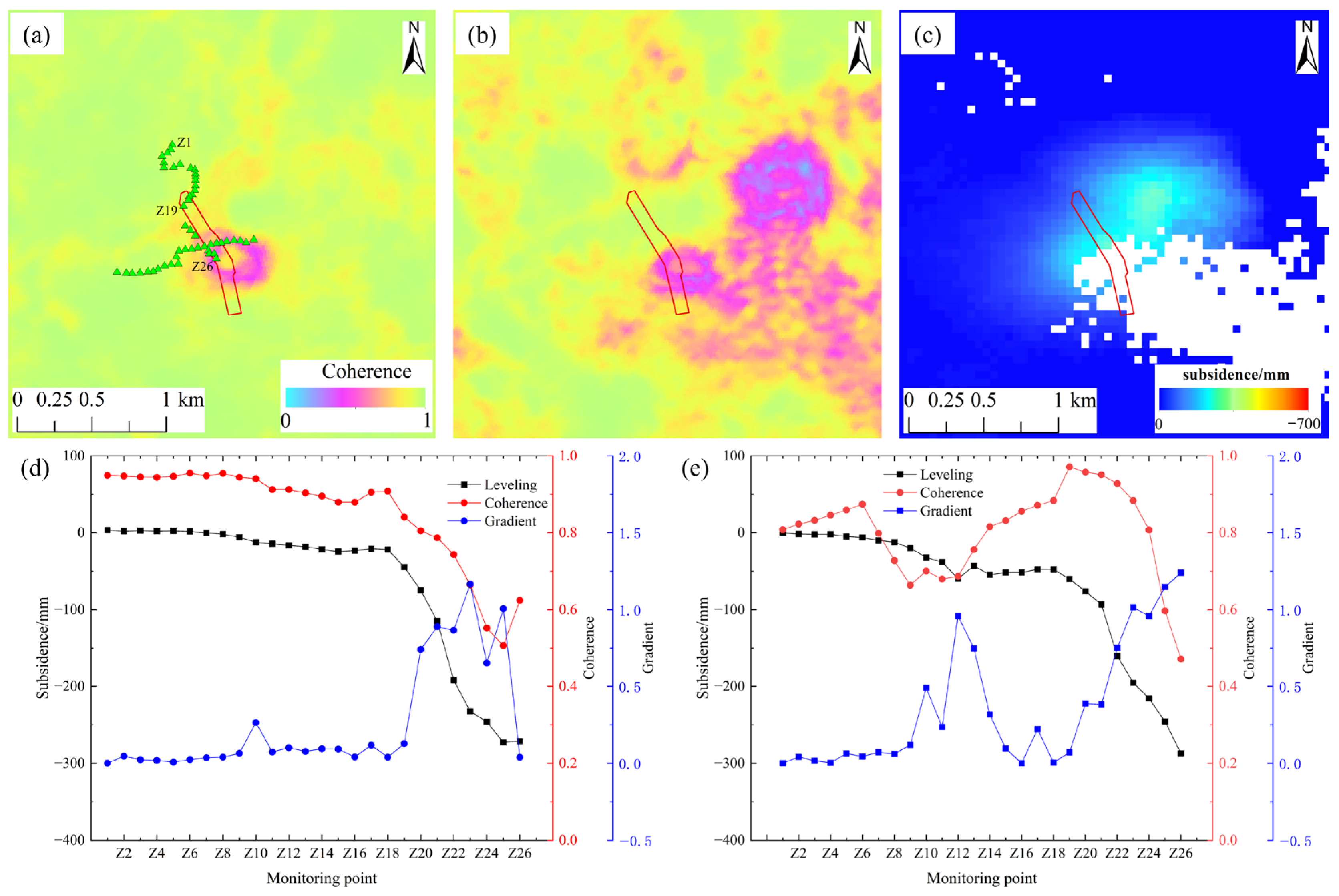
- Under comparable surface-cover conditions, increases in deformation magnitude and deformation gradient can lead to significant InSAR coherence decay, and areas of large-gradient deformation exhibit a high degree of spatial correspondence with low-coherence or decorrelated zones.
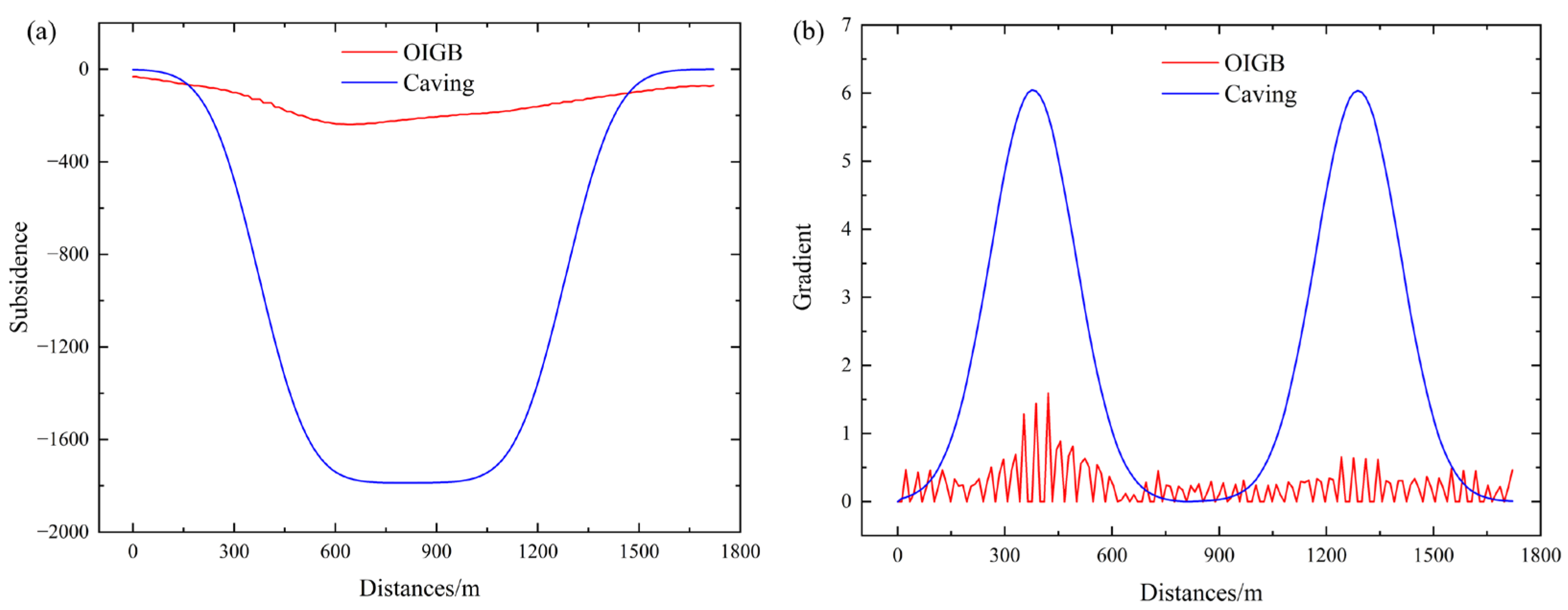
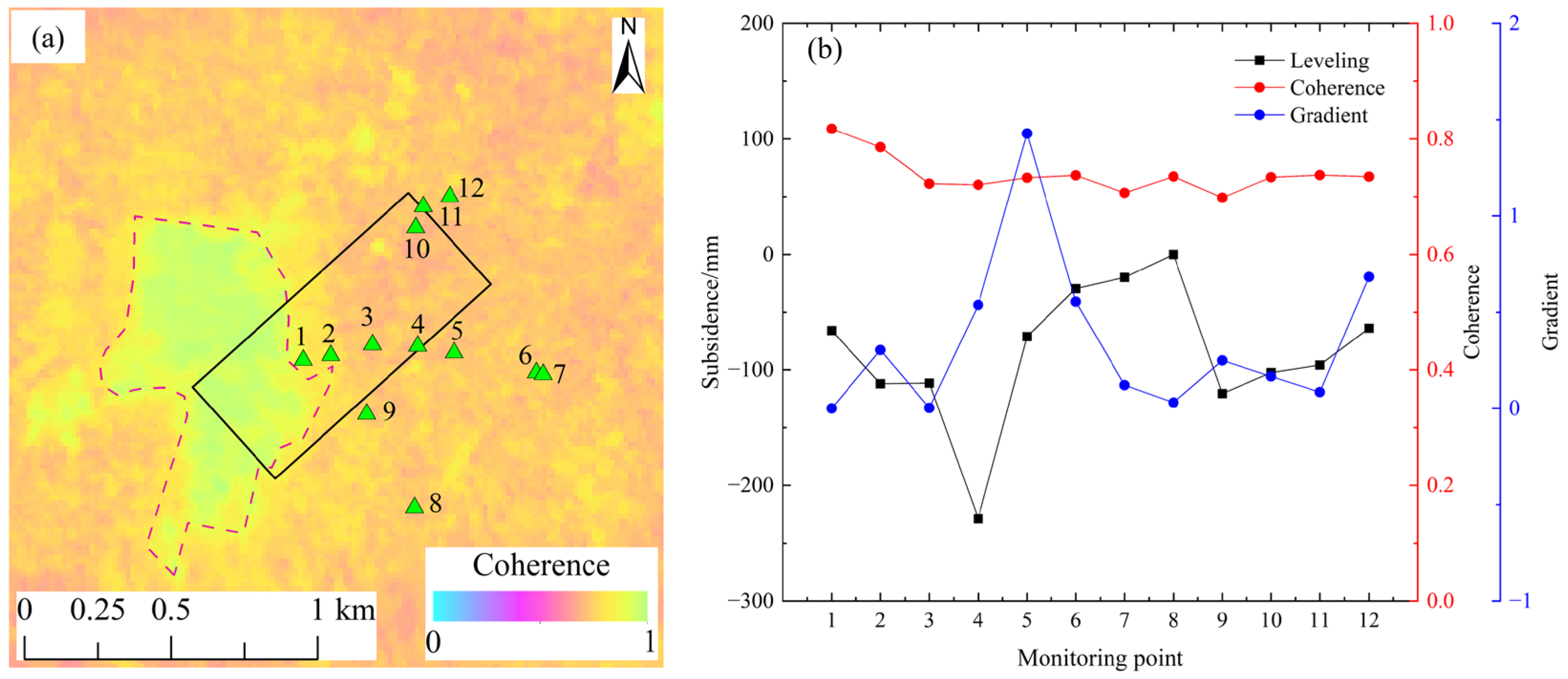
- Overburden isolated grouting backfilling technology exhibits significant advantages in controlling surface subsidence and deformation gradients, achieving a surface subsidence reduction of up to 83.3%. This allows the subsidence-affected area to maintain relatively high coherence, thereby enabling InSAR to retrieve high-accuracy and continuous deformation time-series results.
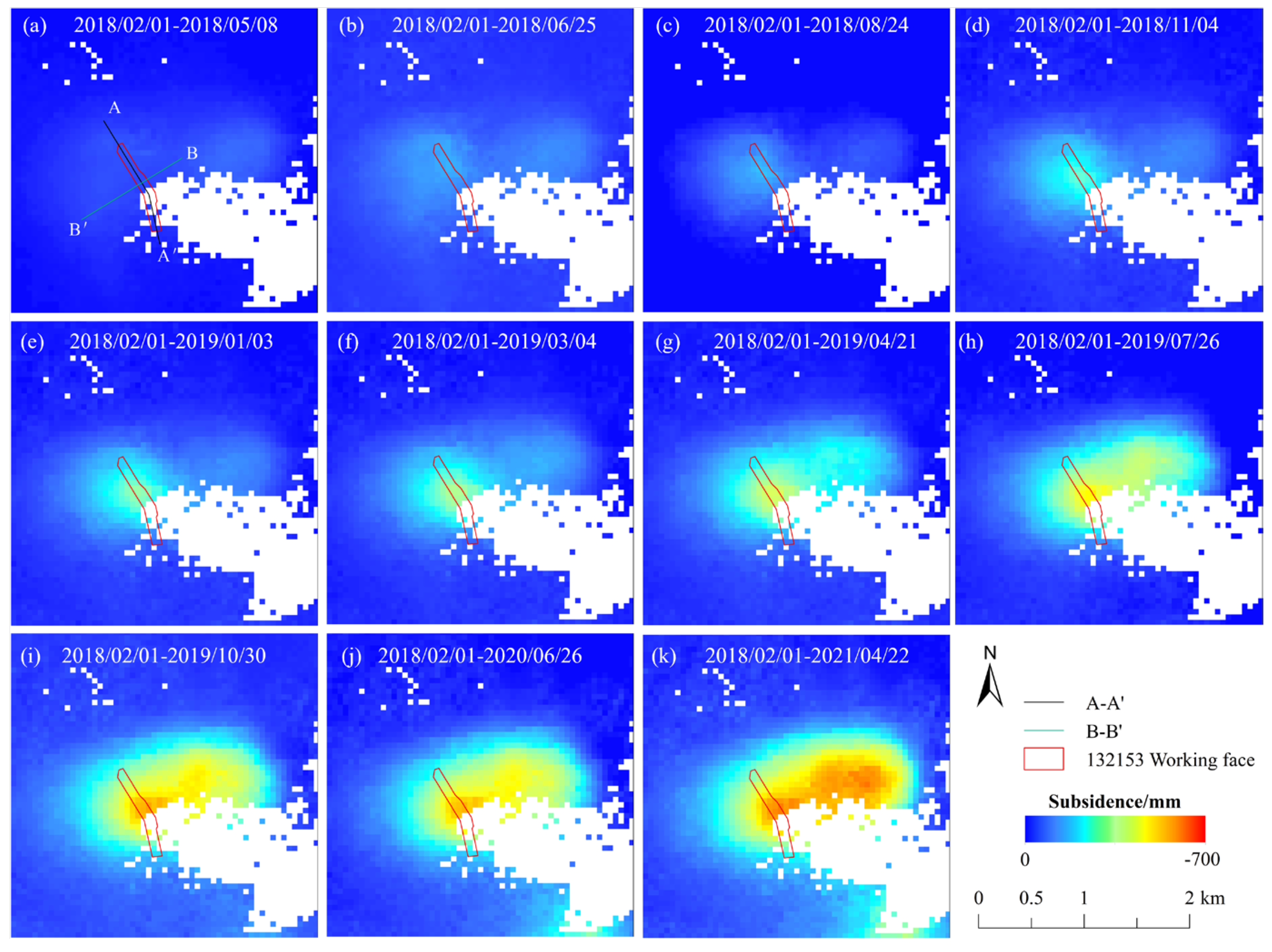
- In conventional caving-mined areas, when subsidence monitoring is conducted using Sentinel-1 C-band data and a conventional SBAS-InSAR/MintPy processing workflow, the large-magnitude and large-gradient deformation in the central part of the subsidence basin readily causes rapid coherence decay and phase-unwrapping difficulties, thereby limiting the applicability of InSAR for subsidence monitoring and making it difficult to support stable monitoring and risk assessment of surface subsidence and its secondary hazards.
- Overburden isolated grouting backfilling can effectively control both the magnitude and gradient of surface deformation, thereby making the Sentinel-1 C-band data and SBAS-InSAR processing workflow adopted in this study well suited to surface subsidence monitoring. This can provide useful guidance for green, safe, and efficient mining, as well as for surface subsidence monitoring under the “three-under” conditions.
Abstract
1. Introduction
2. Research Areas and Data Introduction
2.1. Overview of Research Areas
2.2. Data
3. Methodology
3.1. Time-Series Deformation Inversion
3.1.1. Interferometric Pair Selection
3.1.2. Time-Series Inversion Using MintPy
3.2. Accuracy Validation
4. InSAR Monitoring Results and Analysis
4.1. Time-Series Deformation Monitoring Results
4.1.1. Wu’an Mining Area
4.1.2. Fengfeng Mining Area
4.2. Accuracy Verification of Deformation Monitoring
4.3. Comparison of Different Mining Methods
4.3.1. Coherence Analysis Comparison
4.3.2. Deformation Analysis Comparison
4.4. Deformation Characteristics Under OIGB Conditions
5. Discussion
5.1. Surface Subsidence Control Performance
5.2. Coherence Response to Deformation Gradient
5.3. Subsidence Evolution Pattern Under OIGB Conditions
5.4. Limitations and Future Prospects
5.4.1. Limitations and Prospects of InSAR Monitoring in Caving-Mined Areas
5.4.2. Applicability and Application Prospects of InSAR Monitoring in Backfill Mining Areas
6. Conclusions
- (1)
- Under similar surface conditions, surface deformation gradients exert a significant influence on coherence. As deformation magnitude and gradient increase sharply, interferometric coherence decreases markedly.
- (2)
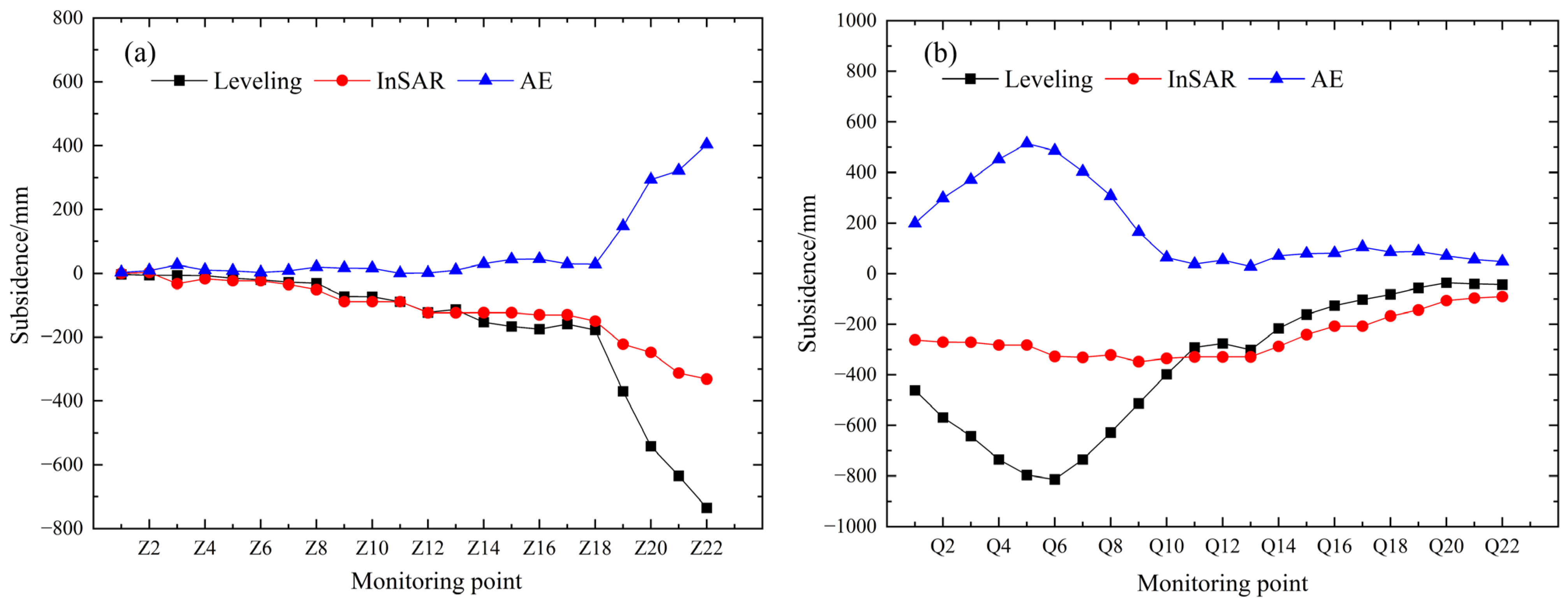
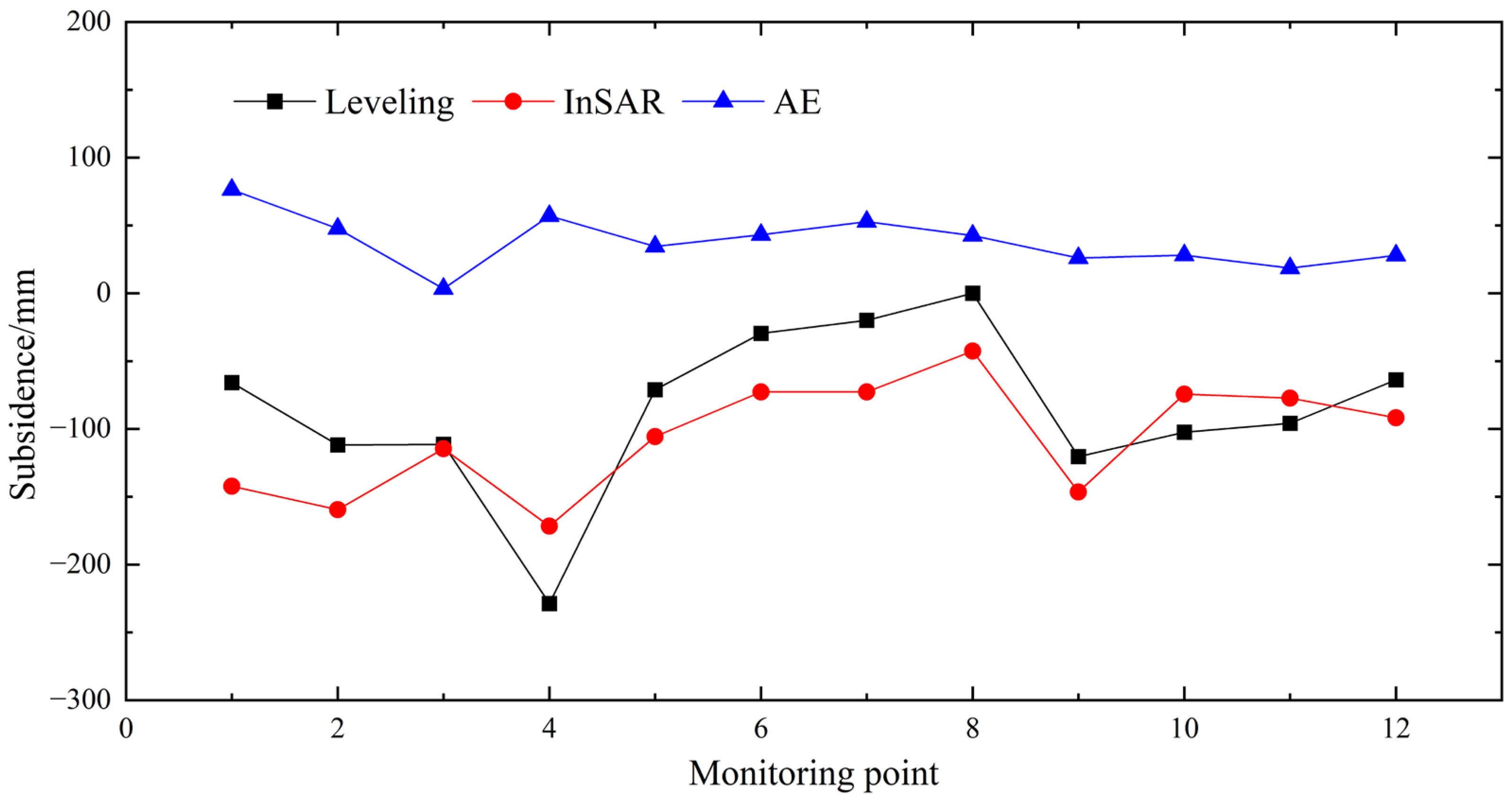
- Comparison with leveling measurements indicates that the RMSEs in the strike and dip directions for the Wu’an mining area under caving mining are 132 mm and 245 mm, respectively, whereas the RMSE for the Fengfeng mining area under OIGB conditions is 42 mm, representing a reduction of at least 68.2% relative to that of the Wu’an mining area. This demonstrates that InSAR achieves higher monitoring accuracy under OIGB conditions.
- (3)
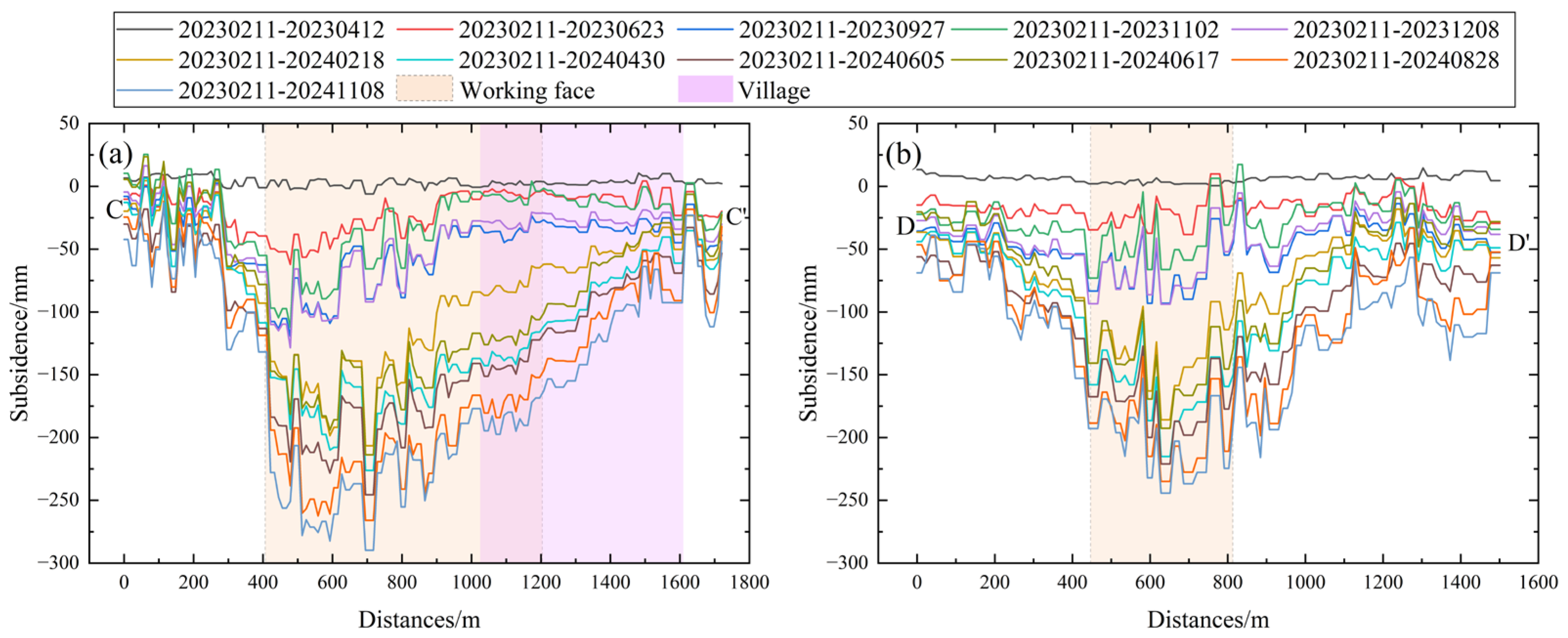
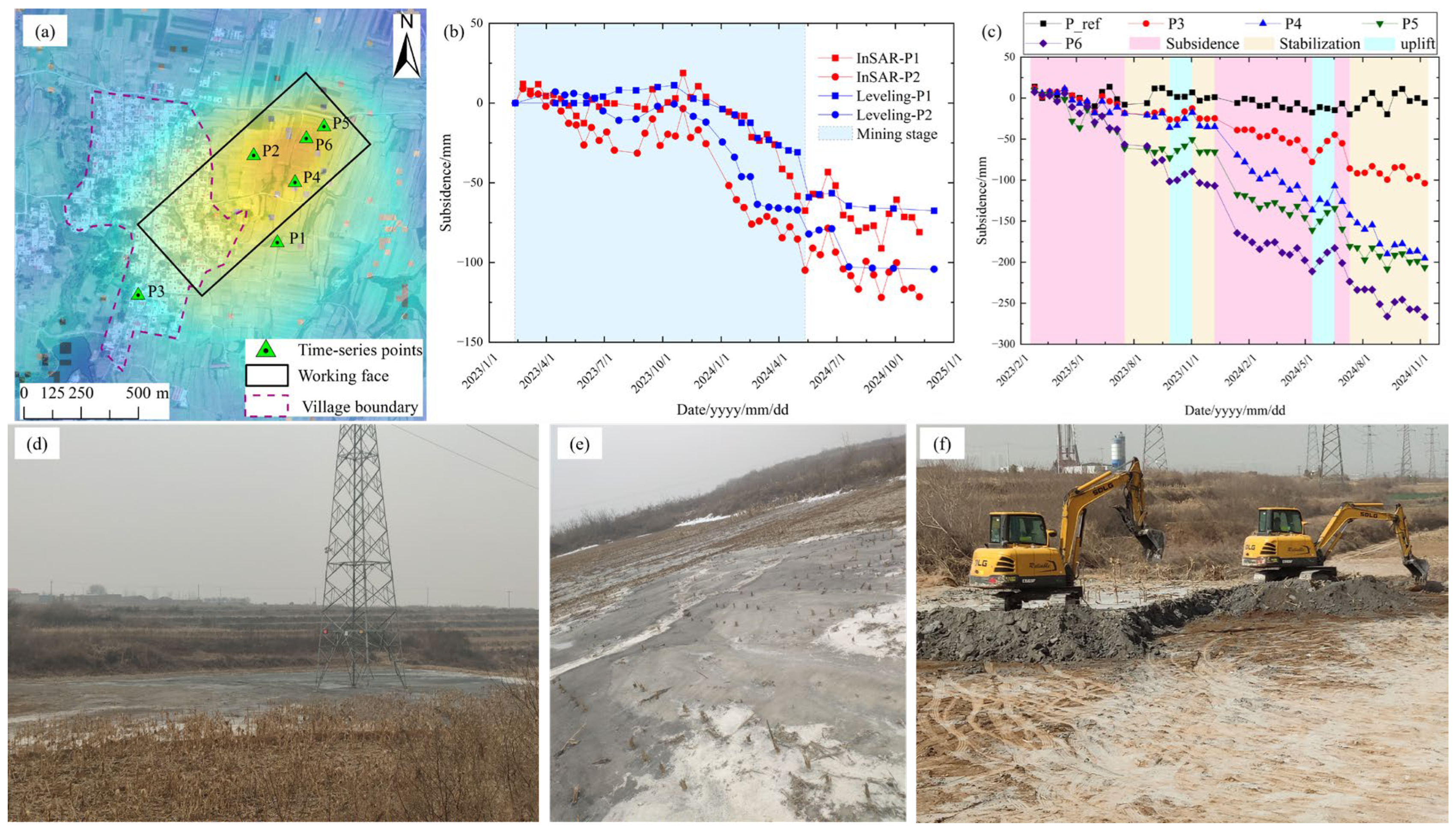
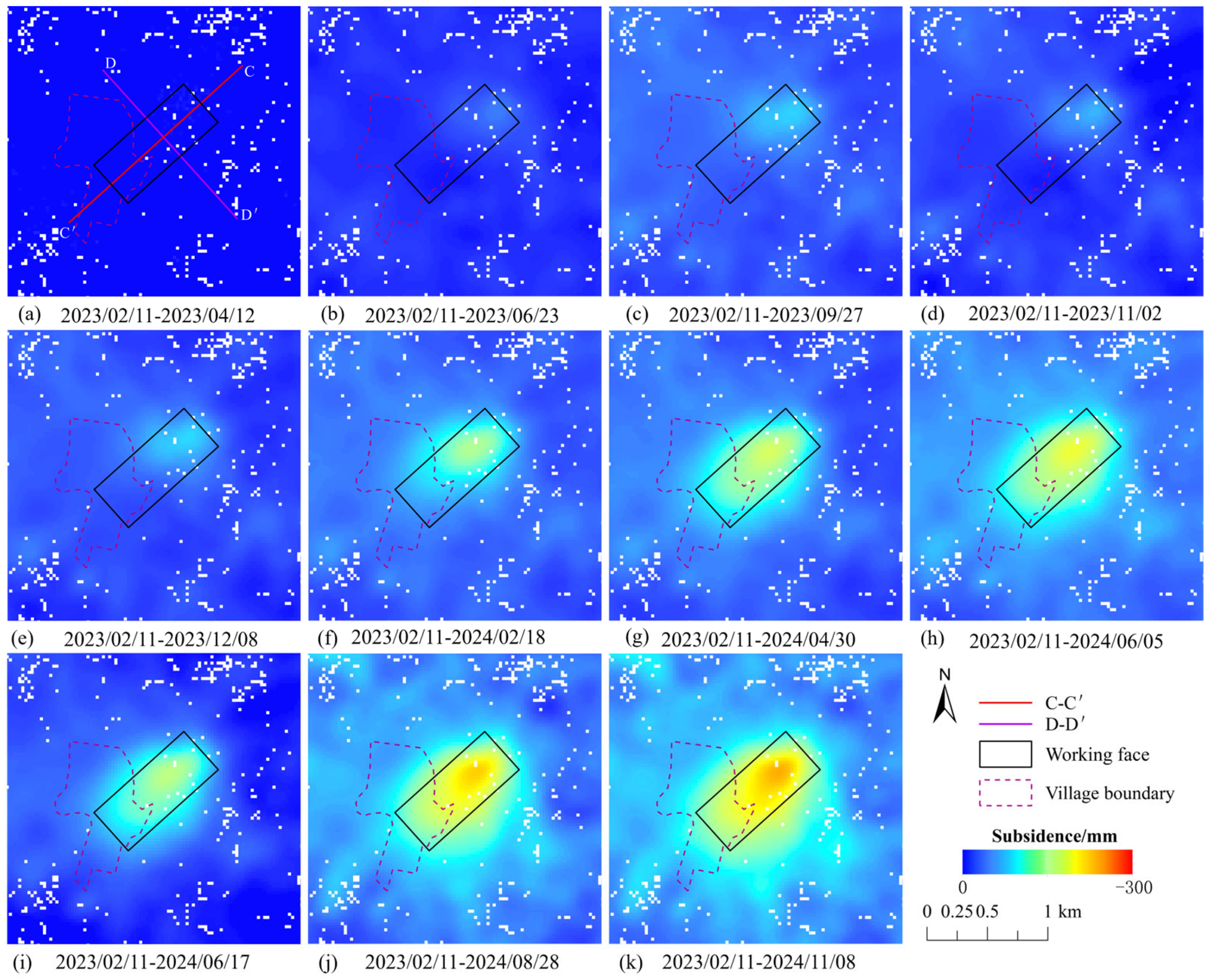
- The OIGB technique demonstrates a pronounced subsidence-mitigation effect, effectively limiting the maximum surface subsidence within the mining influence zone of the Fengfeng working face to no more than 300 mm and restricting subsidence in the village area to no more than 200 mm, thereby substantially reducing the impact of mining-induced deformation.
- (4)
- Under OIGB conditions, both the magnitude and gradient of surface deformation remain relatively low, thereby effectively reducing the impact of deformation gradients on coherence and maintaining relatively high coherence. Therefore, using Sentinel-1 data and the conventional SBAS-InSAR processing workflow adopted in this study, InSAR demonstrates higher reliability and applicability for surface subsidence monitoring in mining areas under OIGB conditions than in those under caving mining conditions. These findings may also provide useful guidance for subsidence monitoring under similar geological and mining conditions.
Author Contributions
Funding
Data Availability Statement
Acknowledgments
Conflicts of Interest
References
- Ge, S.; Liu, S.; Fan, J.; Zhao, Y.; Teng, T. Key technologies for low-carbon modern coal-based energy. J. China Coal Soc. 2024, 49, 2949–2972. [Google Scholar]
- Yuan, L.; Zhang, T.; Wang, Y.; Wang, X.; Wang, Y.; Hao, X. Scientific problems and key technologies for safe and efficient mining of deep coal resources. J. China Coal Soc. 2025, 50, 1–12. [Google Scholar]
- Fan, H.; Xin, J.; Lin, T.; Wang, J. Automatic Detection and Calculation of Mining Subsidence in Large-Scale Interferograms with Transformer-CNN Model. IEEE J. Sel. Top. Appl. Earth Obs. Remote Sens. 2025, 18, 15086–15100. [Google Scholar] [CrossRef]
- Hu, L.; Tang, X.; Tomás, R.; Li, T.; Zhang, X.; Li, Z.; Yao, J.; Lu, J. Monitoring surface deformation dynamics in the mining subsidence area using LT-1 InSAR interferometry: A case study of Datong, China. Int. J. Appl. Earth Obs. Geoinf. 2024, 131, 103936. [Google Scholar] [CrossRef]
- Chen, Y.; Zhao, D.; Huang, P.; Yin, B.; Gao, Z.; Tan, W.; Qi, Y.; Xu, W. Enhanced surface deformation monitoring in open-pit mines via dynamic filtering and multiscale adaptive interpolation of D-InSAR/offset tracking fusion. Int. J. Digit. Earth 2025, 18, 2538218. [Google Scholar] [CrossRef]
- Zhu, S.; Zuo, X.; Shi, K.; Li, Y.; Guo, S.; Li, C. Surface subsidence monitoring in Kunming City with time-series InSAR and GNSS. Appl. Sci. 2022, 12, 12752. [Google Scholar] [CrossRef]
- Ashraf, T.; Yin, F.; Liu, L.; Zhang, Q. Land Subsidence Detection Using SBAS-and Stacking-InSAR with Zonal Statistics and Topographic Correlations in Lakhra Coal Mines, Pakistan. Remote Sens. 2024, 16, 3815. [Google Scholar] [CrossRef]
- Gojković, Z.; Kilibarda, M.; Brajović, L.; Marjanović, M.; Milutinović, A.; Ganić, A. Ground surface subsidence monitoring using Sentinel-1 in the “Kostolac” open pit coal mine. Remote Sens. 2023, 15, 2519. [Google Scholar] [CrossRef]
- Dong, L.; Wang, C.; Tang, Y.; Tang, F.; Zhang, H.; Wang, J.; Duan, W. Time series InSAR three-dimensional displacement inversion model of coal mining areas based on symmetrical features of mining subsidence. Remote Sens. 2021, 13, 2143. [Google Scholar] [CrossRef]
- Peng, M.; Motagh, M.; Lu, Z.; Xia, Z.; Guo, Z.; Zhao, C.; Liu, Q. Characterization and prediction of InSAR-derived ground motion with ICA-assisted LSTM model. Remote Sens. Environ. 2024, 301, 113923. [Google Scholar] [CrossRef]
- Carnec, C.; Massonnet, D.; King, C. Two examples of the use of SAR interferometry on displacement fields of small spatial extent. Geophys. Res. Lett. 1996, 23, 3579–3582. [Google Scholar] [CrossRef]
- Ferretti, A.; Prati, C.; Rocca, F. Permanent scatterers in SAR interferometry. IEEE Trans. Geosci. Remote Sens. 2001, 39, 8–20. [Google Scholar] [CrossRef]
- Berardino, P.; Fornaro, G.; Lanari, R.; Sansosti, E. A new algorithm for surface deformation monitoring based on small baseline differential SAR interferograms. IEEE Trans. Geosci. Remote Sens. 2002, 40, 2375–2383. [Google Scholar] [CrossRef]
- Rocca, F. Modeling interferogram stacks. IEEE Trans. Geosci. Remote Sens. 2007, 45, 3289–3299. [Google Scholar] [CrossRef]
- Przyłucka, M.; Kowalski, Z.; Perski, Z. Twenty years of coal mining-induced subsidence in the Upper Silesia in Poland identified using InSAR. Int. J. Coal Sci. Technol. 2022, 9, 86. [Google Scholar] [CrossRef]
- Wang, Y.; Zhang, J.; Liu, Y. Feature Parameters Computation of Underground Coal Mining Space Coupled Probability Integral Model with SBAS-InSAR Subsidence Data. IEEE J. Sel. Top. Appl. Earth Obs. Remote Sens. 2025, 18, 13986–13999. [Google Scholar] [CrossRef]
- Zhao, J.; Yang, X.; Zhang, Z.; Niu, Y.; Zhao, Z. Mine Subsidence Monitoring Integrating DS-InSAR with UAV Photogrammetry Products: Case Studies on Hebei and Inner Mongolia. Remote Sens. 2023, 15, 4998. [Google Scholar] [CrossRef]
- Massonnet, D.; Feigl, K.L. Radar interferometry and its application to changes in the Earth’s surface. Rev. Geophys. 1998, 36, 441–500. [Google Scholar] [CrossRef]
- Wu, Y.-Y.; Madson, A. Error sources of interferometric synthetic aperture radar satellites. Remote Sens. 2024, 16, 354. [Google Scholar] [CrossRef]
- Chen, B.; Deng, K.; Fan, H.; Hao, M. Large-scale deformation monitoring in mining area by D-InSAR and 3D laser scanning technology integration. Int. J. Min. Sci. Technol. 2013, 23, 555–561. [Google Scholar] [CrossRef]
- Chen, Y.; Dong, X.; Qi, Y.; Huang, P.; Sun, W.; Xu, W.; Tan, W.; Li, X.; Liu, X. Integration of DInSAR-PS-stacking and SBAS-PS-InSAR methods to monitor mining-related surface subsidence. Remote Sens. 2023, 15, 2691. [Google Scholar] [CrossRef]
- Zhao, J.; Niu, Y.; Zhou, Z.; Lu, Z.; Wang, Z.; Zhang, Z.; Li, Y.; Ju, Z. Construction of mining subsidence basin and inversion of predicted subsidence parameters based on UAV photogrammetry products considering horizontal displacement. Remote Sens. 2024, 16, 4283. [Google Scholar] [CrossRef]
- Lou, J.; Zhao, C.; Li, G.; Li, D. Inversion of Time Series Elevation Changes in Open Pit Mining Areas Based on Adjacent Orbital Sentinel-2 Images. IEEE J. Sel. Top. Appl. Earth Obs. Remote Sens. 2024, 17, 6126–6133. [Google Scholar] [CrossRef]
- Ma, J.; Yang, J.; Zhu, Z.; Cao, H.; Li, S.; Du, X. Decision-making fusion of InSAR technology and offset tracking to study the deformation of large gradients in mining areas-Xuemiaotan mine as an example. Front. Earth Sci. 2022, 10, 962362. [Google Scholar] [CrossRef]
- Yang, B.; Du, W.; Zou, Y.; Zhang, H.; Chai, H.; Wang, W.; Song, X.; Zhang, W. Reconstruction of coal mining subsidence field by fusion of SAR and UAV LiDAR deformation data. Remote Sens. 2024, 16, 3383. [Google Scholar] [CrossRef]
- Zhao, C.; Lu, Z.; Zhang, Q. Time-series deformation monitoring over mining regions with SAR intensity-based offset measurements. Remote Sens. Lett. 2013, 4, 436–445. [Google Scholar] [CrossRef]
- Hu, B.; Liu, P.; Cui, F.; Wang, H. Review and development status of backfill coal mining technology in China. Coal Sci. Technol. 2020, 48, 39–47. [Google Scholar]
- Lu, G.; Meguid, M. Cemented Backfill Applications in Challenging Geothermal Environments: A Brief Review and Future Perspectives. Rock Mech. Rock Eng. 2025, 59, 2789–2809. [Google Scholar] [CrossRef]
- Yu, X.; Yang, K.; He, X.; Hou, Y.; Fang, J.; He, S. Research progress on multi-source coal-based solid waste (MCSW) resource utilization and backfill mining basic theory: A systematic literature review. Process Saf. Environ. Prot. 2025, 195, 106670. [Google Scholar] [CrossRef]
- Peng, L.; Zhang, G.; Wang, H.; Sun, S.; Zhang, Y.; Liu, Z.; Wang, Z.-y. Research on strata movement control in deep areas of super-thick and weak-cemented overlying strata during local backfill mining—A case study based on Yingpanhao Coal Mine. Results Eng. 2025, 27, 105579. [Google Scholar] [CrossRef]
- Sun, X. Present situation and prospect of green backfill mining in mines. Coal Sci. Technol. 2020, 48, 48–55. [Google Scholar]
- Yang, Z.; Zhai, S.; Gao, Q.; Li, M. Stability analysis of large-scale stope using stage subsequent filling mining method in Sijiaying iron mine. J. Rock Mech. Geotech. Eng. 2015, 7, 87–94. [Google Scholar] [CrossRef]
- Zhang, J.; Yang, K.; He, X.; Zhao, X.; Wei, Z.; He, S. Research status of comprehensive utilization of coal-based solid waste (CSW) and key technologies of filling mining in China: A review. Sci. Total Environ. 2024, 926, 171855. [Google Scholar] [CrossRef]
- Liu, J.; Qin, K. Progress of green coal mining technology in China. Min. Saf. Environ. Prot. 2023, 50, 7–15. [Google Scholar]
- Qian, M.; Xu, J.; Wang, J. Further on the sustainable mining of coal. J. China Coal Soc. 2018, 43, 1–13. [Google Scholar]
- Guo, W.; Yang, W.; Wu, D. Current status and progress of subsidence control technology in China coal mines. J. Min. Strat. Control Eng. 2024, 6, 5–20. [Google Scholar]
- Sun, X. Research on paste backfilling mining technology of coal mining under buildings, water bodies and railways. Coal Sci. Technol. 2021, 49, 218–224. [Google Scholar]
- Wang, F.; Liu, C.; Hao, W.; Hu, S.; Feng, G.; Li, H.; Guo, G. Progress and Prospect for Disaster Mitigation and Damage Reduction Green Mining Theory and Technology of Super-high Water Material Backfill. Met. Mine 2023, 5, 14–30. [Google Scholar]
- Xuan, D.; Xu, J. Longwall surface subsidence control by technology of isolated overburden grout injection. Int. J. Min. Sci. Technol. 2017, 27, 813–818. [Google Scholar] [CrossRef]
- Xu, J.; Xuan, D.; Li, J. Application and research prospects of overburden isolated grouting backfilling technology. China Coal 2024, 50, 74–80. [Google Scholar]
- Xuan, D.; Xu, J.; Wang, B. Green mining technology of overburden isolated grout injection. J. China Coal Soc. 2022, 47, 4265–4277. [Google Scholar]
- Teng, H.; Xu, J.; Xuan, D.; Wang, B. Surface subsidence characteristics of grout injection into overburden: Case study of Yuandian No. 2 coalmine, China. Environ. Earth Sci. 2016, 75, 530. [Google Scholar] [CrossRef]
- Chen, Y.; Li, J.; Li, H.; Gao, Y.; Li, S.; Chen, S.; Guo, G.; Wang, F.; Zhao, D.; Zhang, K. Revealing land surface deformation over the Yineng backfilling mining area, China, by integrating distributed scatterer SAR interferometry and a mining subsidence model. IEEE J. Sel. Top. Appl. Earth Obs. Remote Sens. 2023, 16, 3611–3634. [Google Scholar] [CrossRef]
- Jiang, C.; Guo, G.; Li, H.; Wang, F.; Guo, K.; Wei, T.; Jiang, Q. Study on Surface Movement Characteristics and Building Damage of Backfilling Mining Based on DInSAR. Coal Technol. 2022, 41, 142–145. [Google Scholar]
- Di, M.; Zhang, L.; He, Y.; Xu, N.; Qiao, L.; Li, X. Deformation Monitoring of Subsidence Areas in Wu′an City Based on SBAS-InSAR Technology. Geogr. Geo-Inf. Sci. 2021, 37, 52–56. [Google Scholar]
- Ahadov, B.; Fielding, E.; Kadirov, F. Far-Field Earthquake-Induced Crustal Deformation and Mud Volcano Activity in Azerbaijan Based on the InSAR Technique. Remote Sens. 2025, 17, 1421. [Google Scholar] [CrossRef]
- Pepe, A.; Yang, Y.; Manzo, M.; Lanari, R. Improved EMCF-SBAS processing chain based on advanced techniques for the noise-filtering and selection of small baseline multi-look DInSAR interferograms. IEEE Trans. Geosci. Remote Sens. 2015, 53, 4394–4417. [Google Scholar] [CrossRef]
- Tough, J.; Blacknell, D.; Quegan, S. A statistical description of polarimetric and interferometric synthetic aperture radar data. Proc. R. Soc. London. Ser. A Math. Phys. Sci. 1995, 449, 567–589. [Google Scholar] [CrossRef]
- Samiei-Esfahany, S.; Martins, J.E.; Van Leijen, F.; Hanssen, R.F. Phase estimation for distributed scatterers in InSAR stacks using integer least squares estimation. IEEE Trans. Geosci. Remote Sens. 2016, 54, 5671–5687. [Google Scholar] [CrossRef]
- Hu, X.; Song, C.; Yu, C.; Li, Z.; Du, J.; Zhou, J.; Peng, J. Long-term deformation monitoring and analysis of Changbaishan Tianchi volcano based on time-series InSAR technique. Chin. J. Geophys. 2025, 68, 1660–1677. [Google Scholar]
- Jiang, M.; Ding, X.; Li, Z.; Wang, C.; Zhu, W.; Ke, L. InSAR coherence magnitude estimation based on data stack. Chin. J. Geophys. 2013, 56, 799–811. [Google Scholar]
- Safety, S.A.o.W. Code for Coal Pillar Retention and Coal Mining in Buildings, Water Bodies, Railways and Main Shafts and Lanes; China Coal Industry Publishing House: Beijing, China, 2017. [Google Scholar]
- Yao, S.; Zhang, Y.; Yang, K.; Shi, X.; Wang, J. Spatial-temporal evolution of surface deformation in grouting mining area by SMD-InSAR monitoring-analysis method. Acta Geod. Cartogr. Sin. 2020, 49, 893–906. [Google Scholar]
- Lu, Z.; Zhao, J.; Niu, Y.; Chen, L.; Fan, Q.; Si, J.; Wang, Z.; Gao, Y.; Wang, S.; Qu, F.; et al. The NISAR mission: Innovations in earth observation and applications in surface deformation monitoring. Acta Geod. Cartogr. Sin. 2026, 55, 261–274. [Google Scholar]
- Liu, Z.; Peng, J.; Su, H.; Li, X.; Wang, C.; Peng, Y. InSAR monitoring of large gradient deformation in coalfield and phase unwrapping research. Geod. Geodyn. 2025, 17, 130–144. [Google Scholar] [CrossRef]
- Ng, A.H.-M.; Wen, B.; Ma, Y.; Guo, L.; Dai, Y.; Wang, H.; Ge, L.; Du, Z. Integrating spatial modeling-assisted InSAR phase unwrapping with temporal analysis for advanced mine subsidence time series mapping. Int. J. Appl. Earth Obs. Geoinf. 2024, 133, 104143. [Google Scholar] [CrossRef]
- Wang, R.; Huang, S.; He, Y.; Wu, K.; Gu, Y.; He, Q.; Yan, H.; Yang, J. Construction of High-Precision and Complete Images of a Subsidence Basin in Sand Dune Mining Areas by InSAR-UAV-LiDAR Heterogeneous Data Integration. Remote Sens. 2024, 16, 2752. [Google Scholar] [CrossRef]
- Zhou, D.; Wang, L.; An, S.; Wang, X.; An, Y. Integration of unmanned aerial vehicle (UAV)-based photogrammetry and InSAR for mining subsidence and parameters inversion: A case study of the Wangjiata Mine, China. Bull. Eng. Geol. Environ. 2022, 81, 343. [Google Scholar] [CrossRef]
- Zhou, W.; Zhang, W.; Yang, X.; Wu, W. An Improved GNSS and InSAR Fusion Method for Monitoring the 3D Deformation of a Mining Area. IEEE Access 2021, 9, 155839–155850. [Google Scholar] [CrossRef]
- Guo, W.; Hu, Y.; Hu, C.; Li, L.; Wu, D.; Ge, Z. System and engineering practice of coal mining technology under buildings, water bodies and railways in China. Coal Sci. Technol. 2025, 53, 19–38. [Google Scholar]






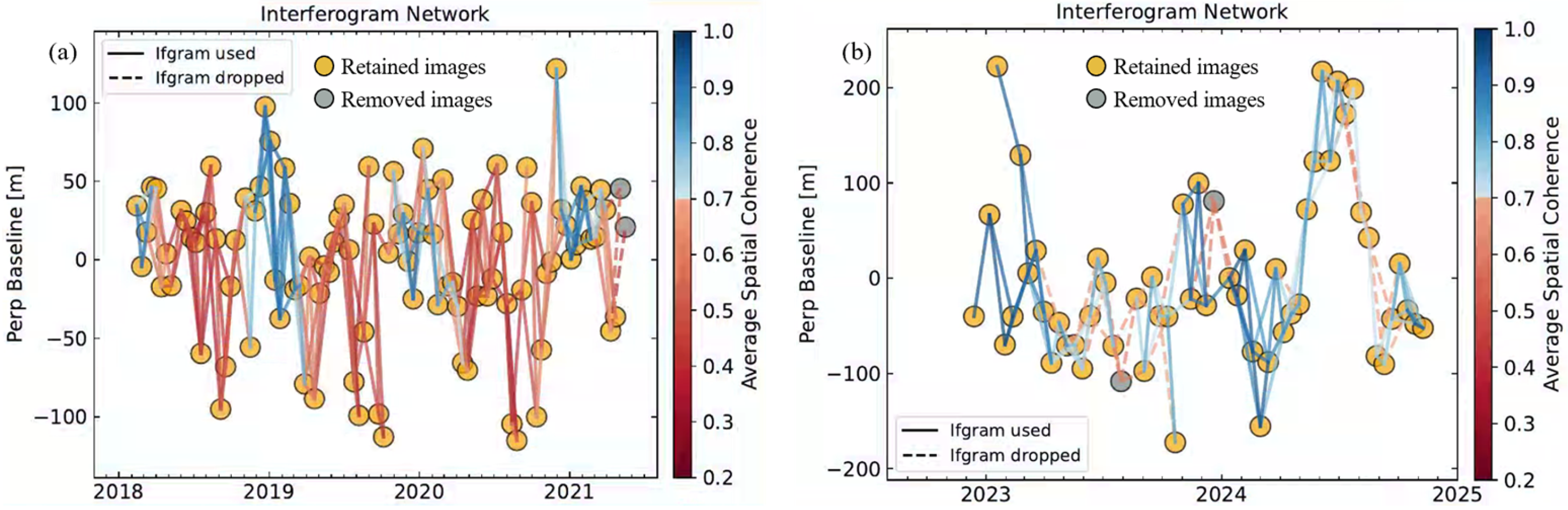
| Study Area | Data Type | Number | Resolution (m) | Incidence Angle (°) | Orbit | Start Date | End Date |
|---|---|---|---|---|---|---|---|
| Wu’an | SAR | 174 | 5 × 20 | 35.50 | Ascending | 1 February 2018 | 22 April 2021 |
| Leveling | 48 | / | / | / | 27 June 2018 | 27 July 2019 | |
| DEM | 1 | 30 | / | / | 2006 | 2011 | |
| Fengfeng | SAR | 50 | 5 × 20 | 37.35 | Ascending | 11 February 2023 | 8 November 2024 |
| Leveling | 12 | / | / | / | 11 February 2023 | 26 August 2024 | |
| DEM | 1 | 30 | / | / | 2006 | 2011 |
| Study Area | Direction | Minimum Absolute Error (mm) | Maximum Absolute Error (mm) | MAE (mm) | RMSE (mm) | ||
|---|---|---|---|---|---|---|---|
| Z1–Z18 (Q10–Q22) | Z1–Z22 (Q1–Q22) | Z1–Z18 (Q10–Q22) | Z1–Z22 (Q1–Q22) | ||||
| Wu’an | Strike | 1 | 404 | 17 | 82 | 22 | 132 |
| Dip | 28 | 514 | 18 | 142 | 70 | 245 | |
| Fengfeng | / | 3 | 76 | 38 | 42 | ||
| No. | Name | Symbol | Parameter |
|---|---|---|---|
| 1 | Subsidence Coefficient | q | 0.84 |
| 2 | Tangent of Major Influence Angle | 2.2 | |
| 3 | Deviation of Inflection Point | S | 0.1H |
| 4 | Propagation Angle | 89 |
Disclaimer/Publisher’s Note: The statements, opinions and data contained in all publications are solely those of the individual author(s) and contributor(s) and not of MDPI and/or the editor(s). MDPI and/or the editor(s) disclaim responsibility for any injury to people or property resulting from any ideas, methods, instructions or products referred to in the content. |
© 2026 by the authors. Licensee MDPI, Basel, Switzerland. This article is an open access article distributed under the terms and conditions of the Creative Commons Attribution (CC BY) license.
Share and Cite
Zhou, Z.; Niu, Y.; Lu, Z.; Yang, X.; Zhang, Z.; Ju, Z.; Zhao, J. Applicability and Feasibility of InSAR-Based Mining Subsidence Monitoring Under Overburden Isolated Grouting Backfill Mining Conditions. Remote Sens. 2026, 18, 1476. https://doi.org/10.3390/rs18101476
Zhou Z, Niu Y, Lu Z, Yang X, Zhang Z, Ju Z, Zhao J. Applicability and Feasibility of InSAR-Based Mining Subsidence Monitoring Under Overburden Isolated Grouting Backfill Mining Conditions. Remote Sensing. 2026; 18(10):1476. https://doi.org/10.3390/rs18101476
Chicago/Turabian StyleZhou, Zhengpei, Yufen Niu, Zhong Lu, Xuhai Yang, Zhaojiang Zhang, Ziheng Ju, and Jinqi Zhao. 2026. "Applicability and Feasibility of InSAR-Based Mining Subsidence Monitoring Under Overburden Isolated Grouting Backfill Mining Conditions" Remote Sensing 18, no. 10: 1476. https://doi.org/10.3390/rs18101476
APA StyleZhou, Z., Niu, Y., Lu, Z., Yang, X., Zhang, Z., Ju, Z., & Zhao, J. (2026). Applicability and Feasibility of InSAR-Based Mining Subsidence Monitoring Under Overburden Isolated Grouting Backfill Mining Conditions. Remote Sensing, 18(10), 1476. https://doi.org/10.3390/rs18101476