Article

Frequency–Spatial–Temporal Domain Fusion Network for Remote Sensing Image Change Captioning

1
Department of System Engineering, National University of Defense Technology, Changsha 410000, China
2
Department of Computer Science, Changsha University, Changsha 410000, China
*
Author to whom correspondence should be addressed.
Remote Sens. 2025, 17(8), 1463; https://doi.org/10.3390/rs17081463
Submission received: 17 February 2025 / Revised: 11 April 2025 / Accepted: 16 April 2025 / Published: 19 April 2025
(This article belongs to the Special Issue GeoAI and EO Big Data Driven Advances in Earth Environmental Science)

Abstract

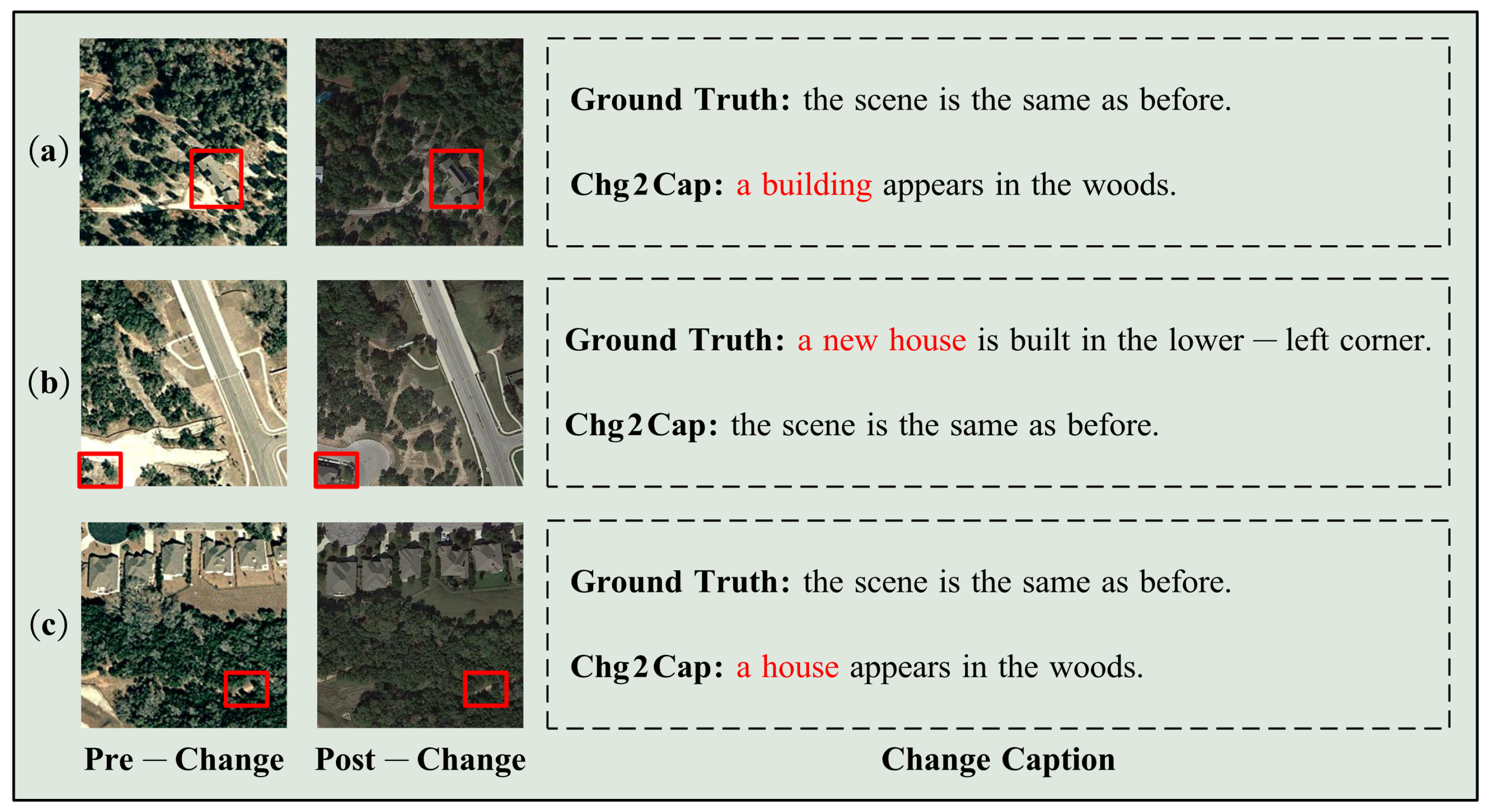
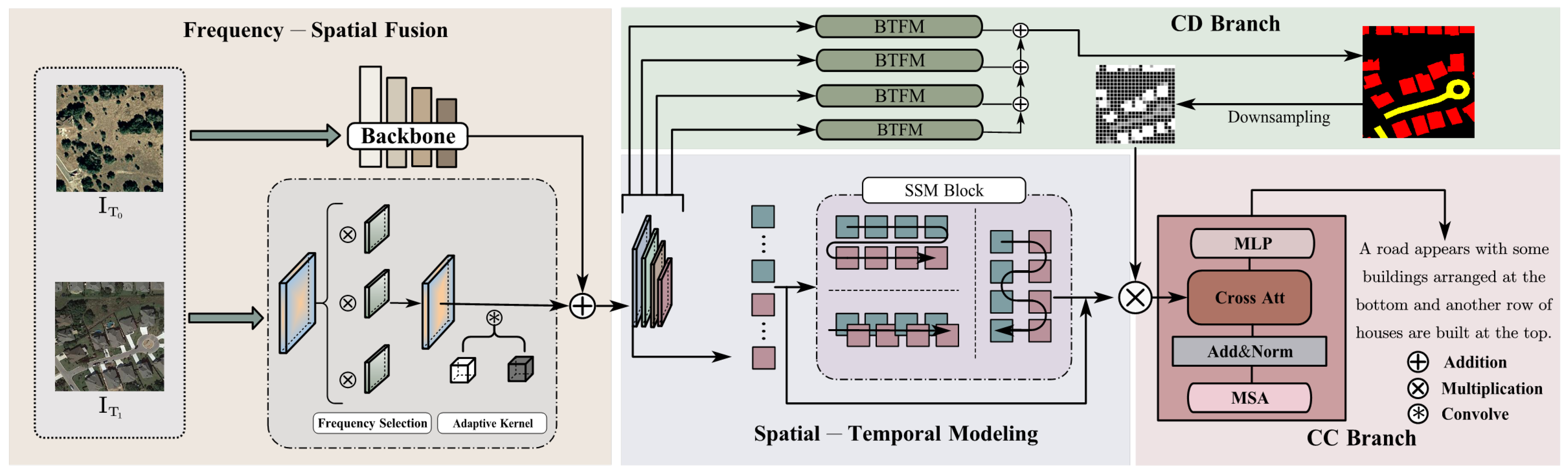
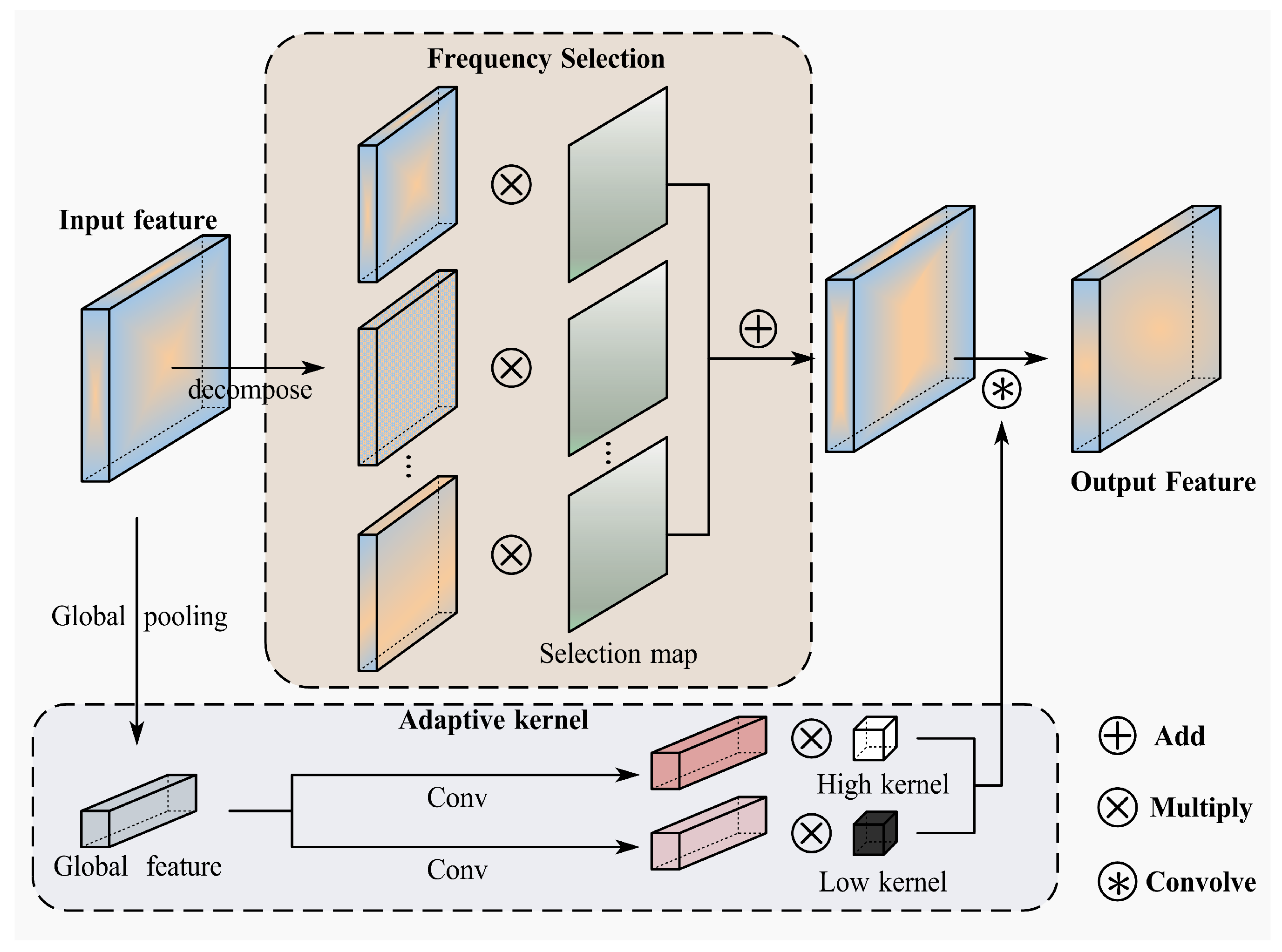
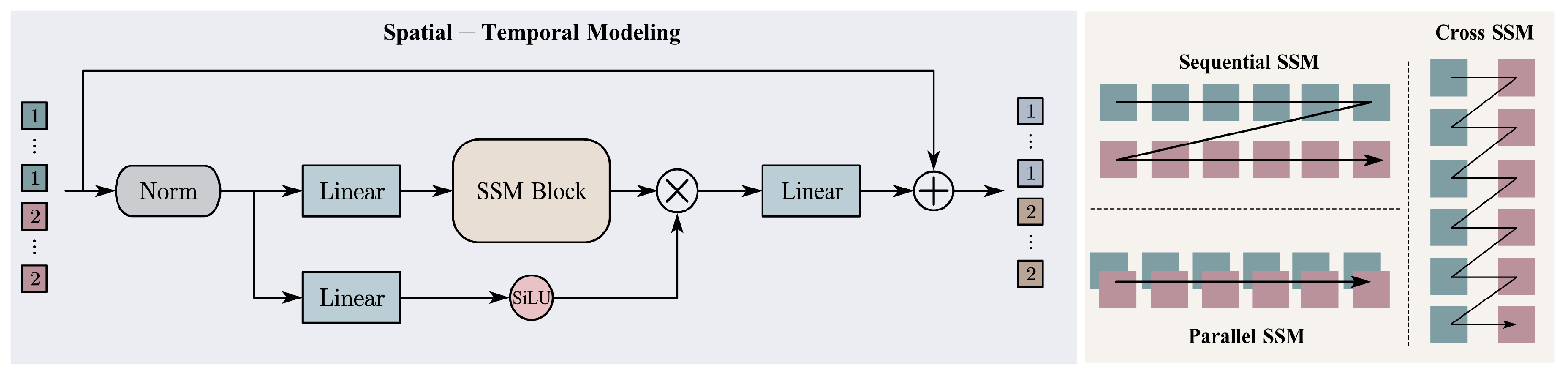
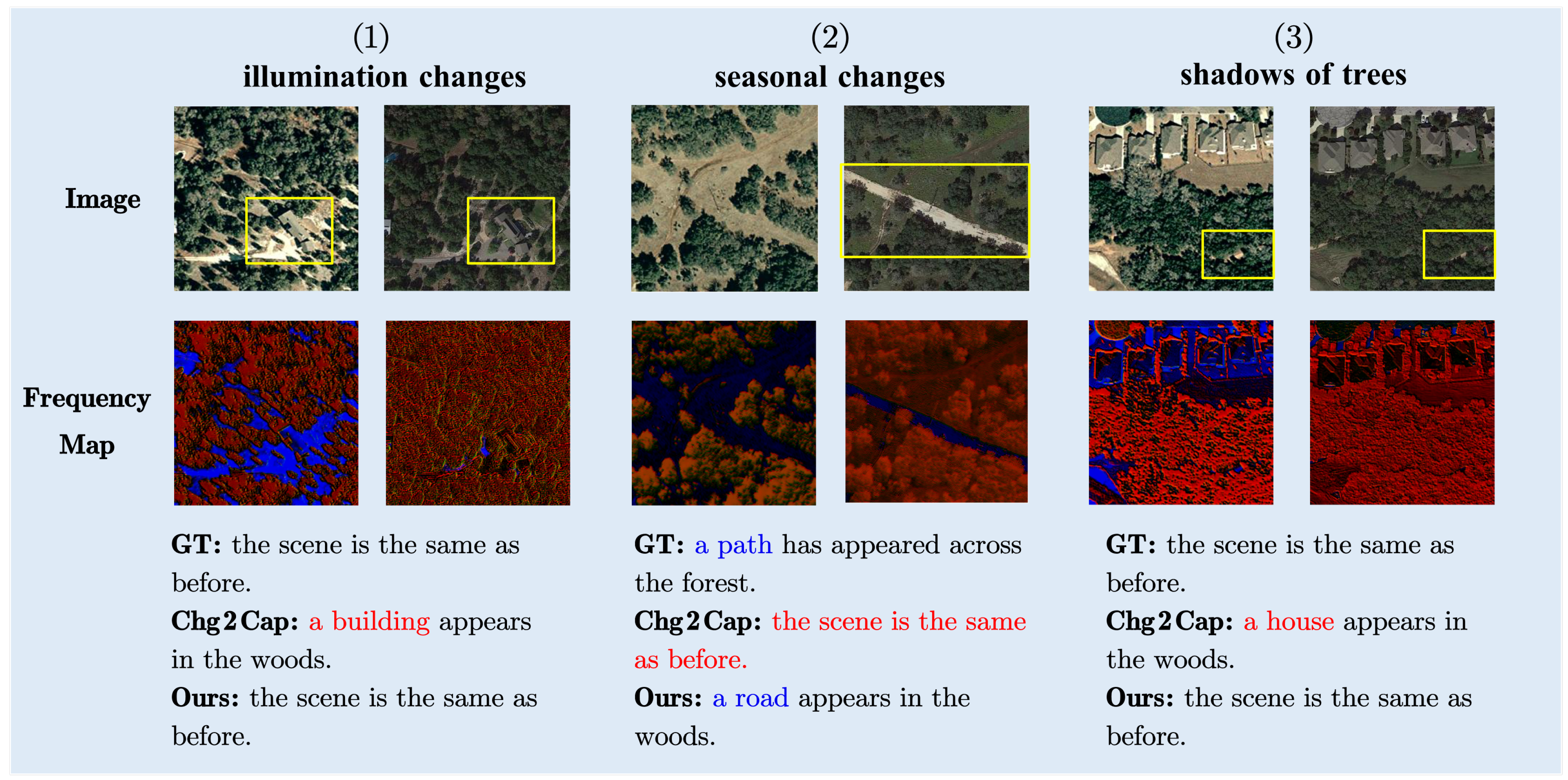
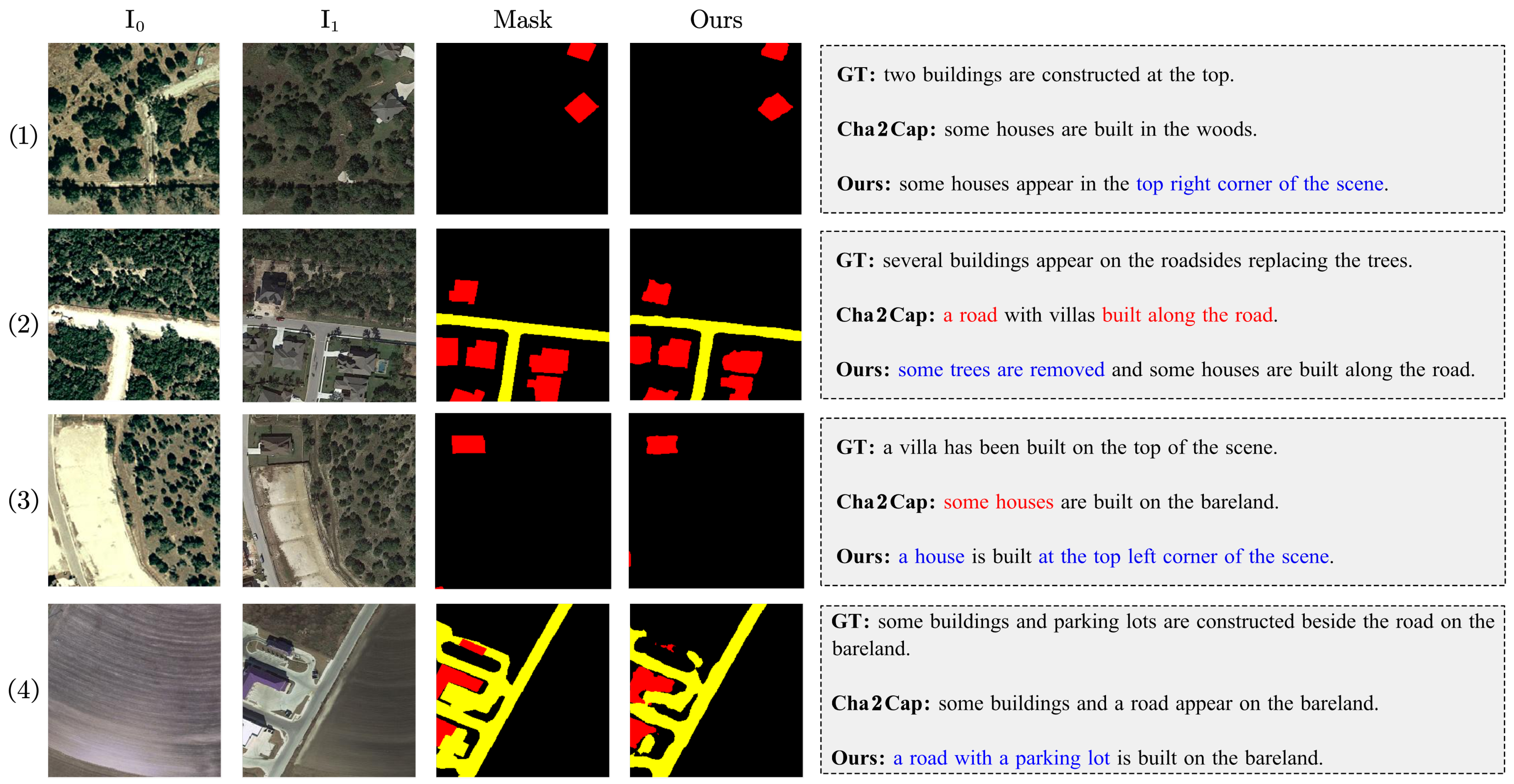
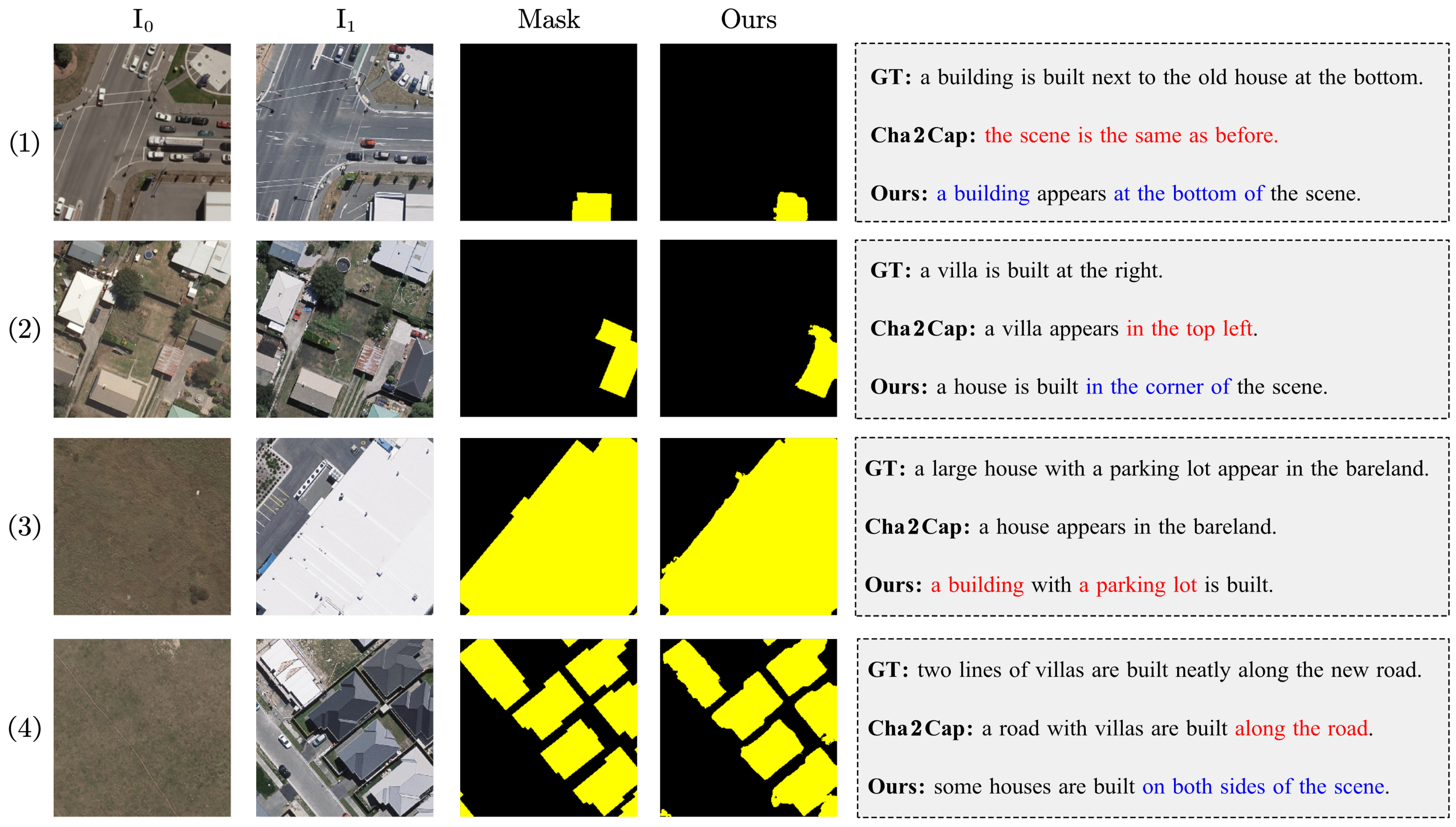
Remote Sensing Image Change Captioning (RSICC) has emerged as a cross-disciplinary technology that automatically generates sentences describing the changes in bi-temporal remote sensing images. While demonstrating significant potential for urban planning, agricultural surveillance, and disaster management, current RSICC methods exhibit two fundamental limitations: (1) vulnerability to pseudo-changes induced by illumination fluctuations and seasonal transitions and (2) an overemphasis on spatial variations with insufficient modeling of temporal dependencies in multi-temporal contexts. To address these challenges, we present the Frequency–Spatial–Temporal Fusion Network (FST-Net), a novel framework that integrates frequency, spatial, and temporal information for RSICC. Specifically, our Frequency–Spatial Fusion module implements adaptive spectral decomposition to disentangle structural changes from high-frequency noise artifacts, effectively suppressing environmental interference. The Spatia–Temporal Modeling module is further developed to employ state-space guided sequential scanning to capture evolutionary patterns of geospatial changes across temporal dimensions. Additionally, a unified dual-task decoder architecture bridges pixel-level change detection with semantic-level change captioning, achieving joint optimization of localization precision and description accuracy. Experiments on the LEVIR-MCI dataset demonstrate that our FSTNet outperforms previous methods by 3.65% on BLEU-4 and 4.08% on CIDEr-D, establishing new performance standards for RSICC.

Keywords: image change captioning; remote sensing; frequency; state space model; change detection image change captioning; remote sensing; frequency; state space model; change detection