Article

Undifferenced Ambiguity Resolution for Precise Multi-GNSS Products to Support Global PPP-AR

1
GNSS Research Center, Wuhan University, No. 129 Luoyu Road, Wuhan 430079, China
2
School of Geodesy and Geomatics, Wuhan University, No. 129 Luoyu Road, Wuhan 430079, China
*
Author to whom correspondence should be addressed.
Remote Sens. 2025, 17(8), 1451; https://doi.org/10.3390/rs17081451
Submission received: 3 March 2025 / Revised: 3 April 2025 / Accepted: 10 April 2025 / Published: 18 April 2025
(This article belongs to the Section Earth Observation Data)

Abstract

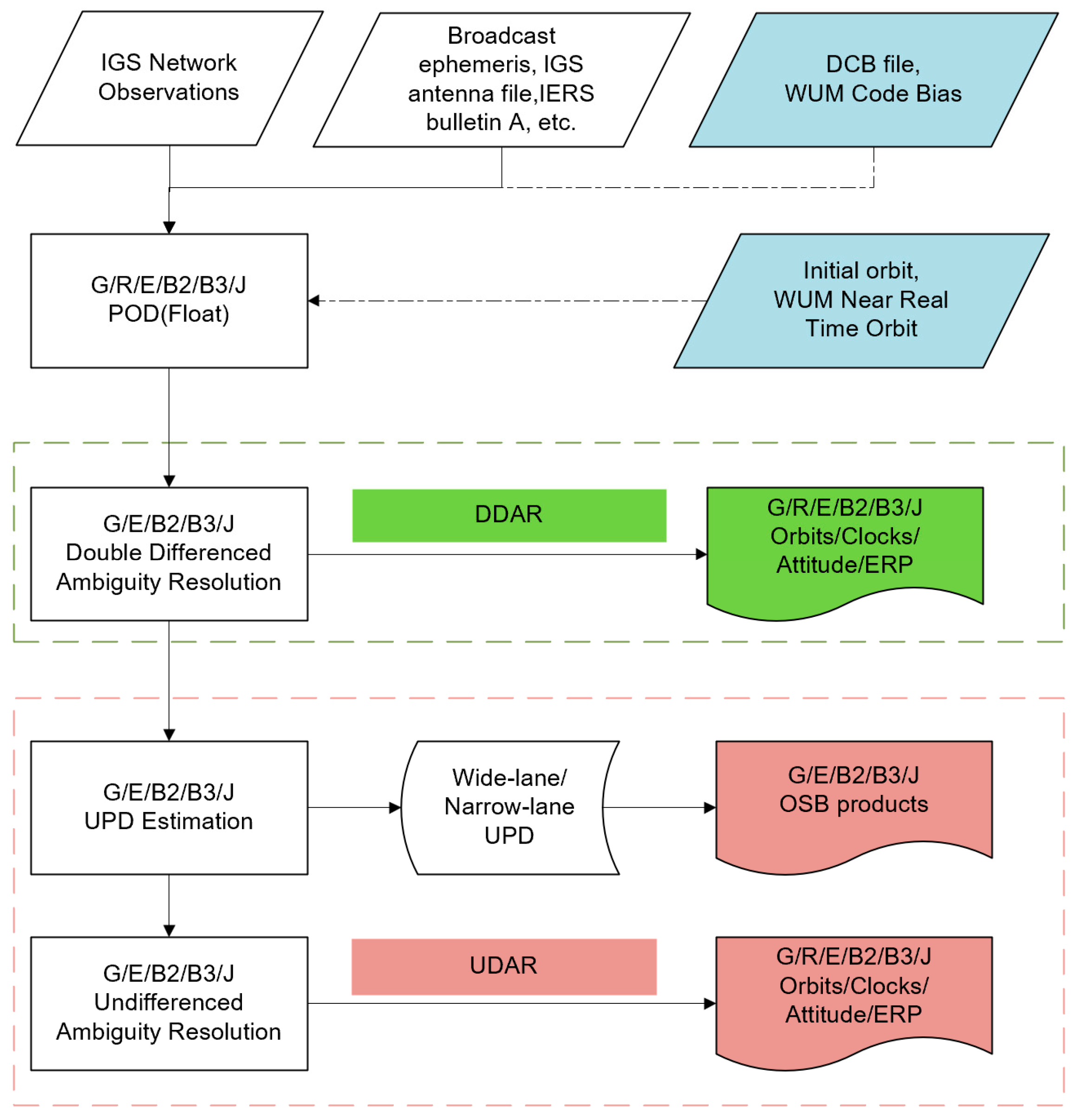
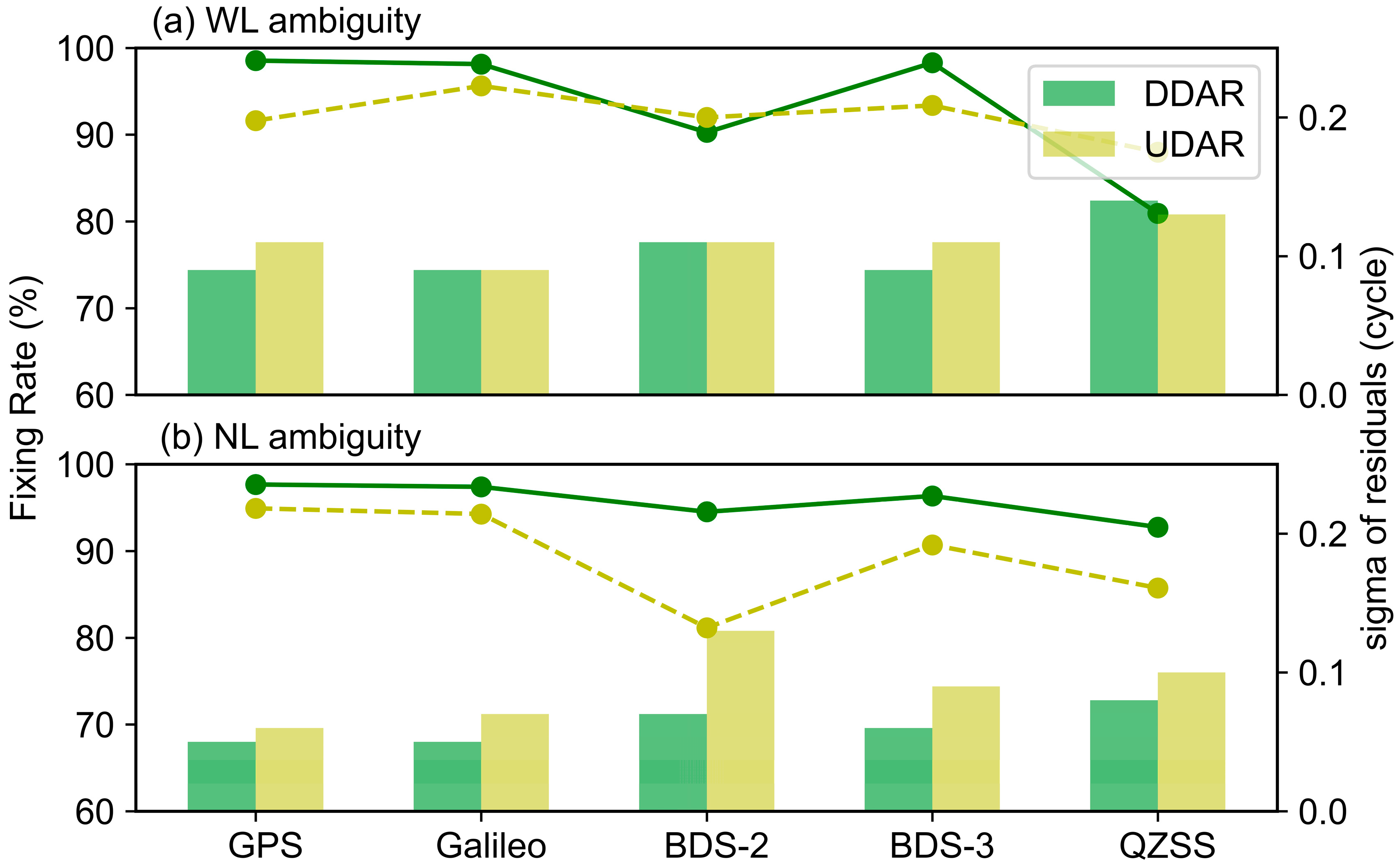
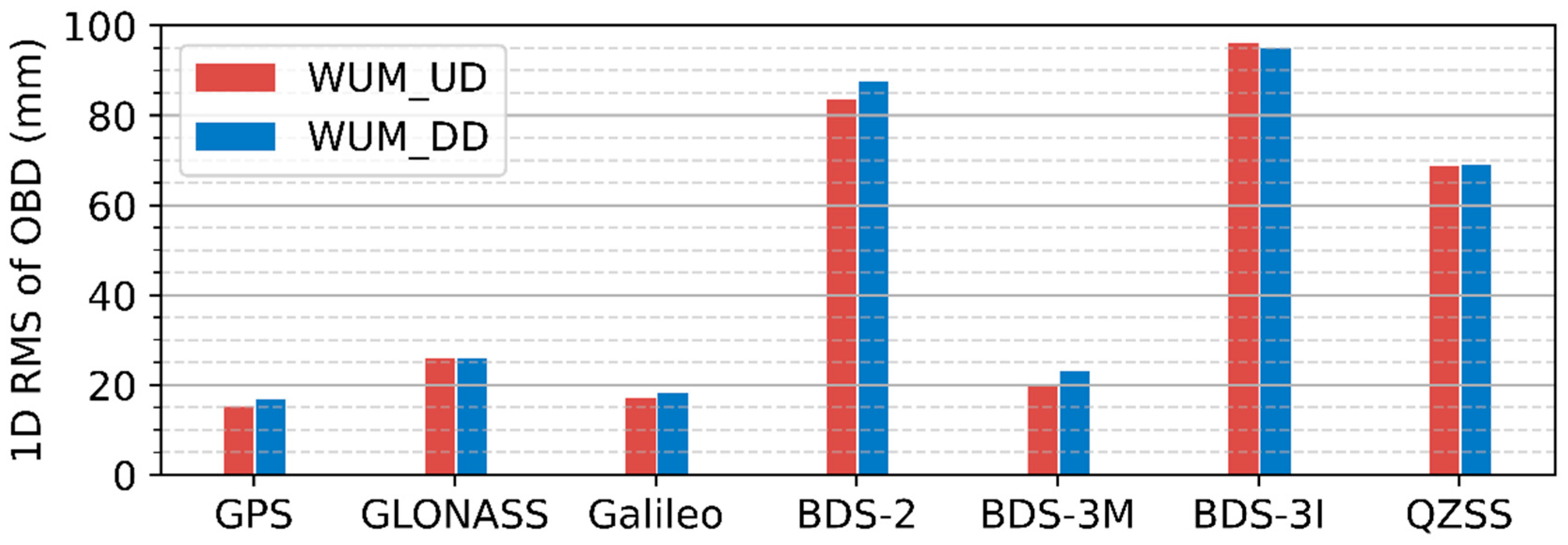
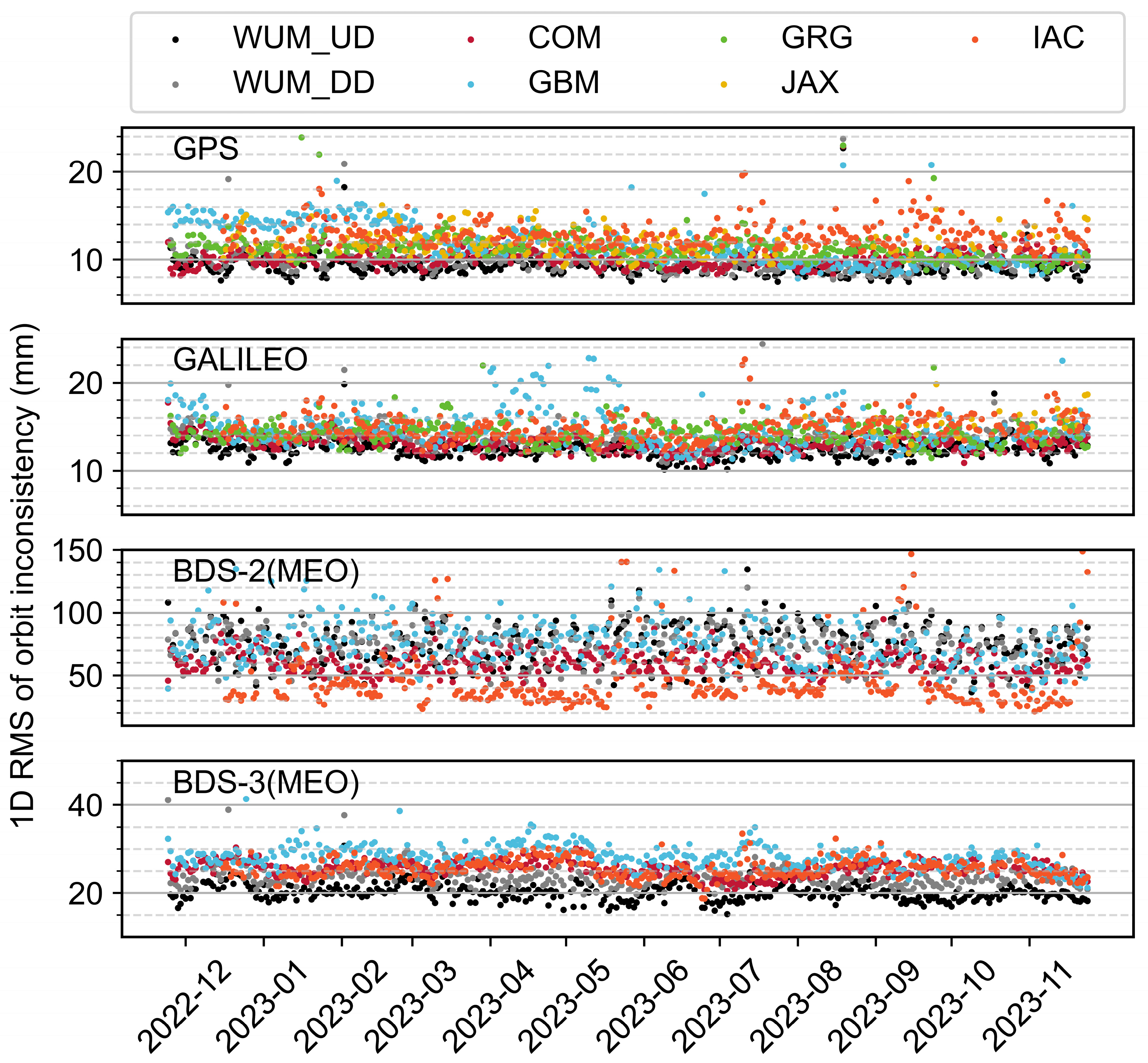
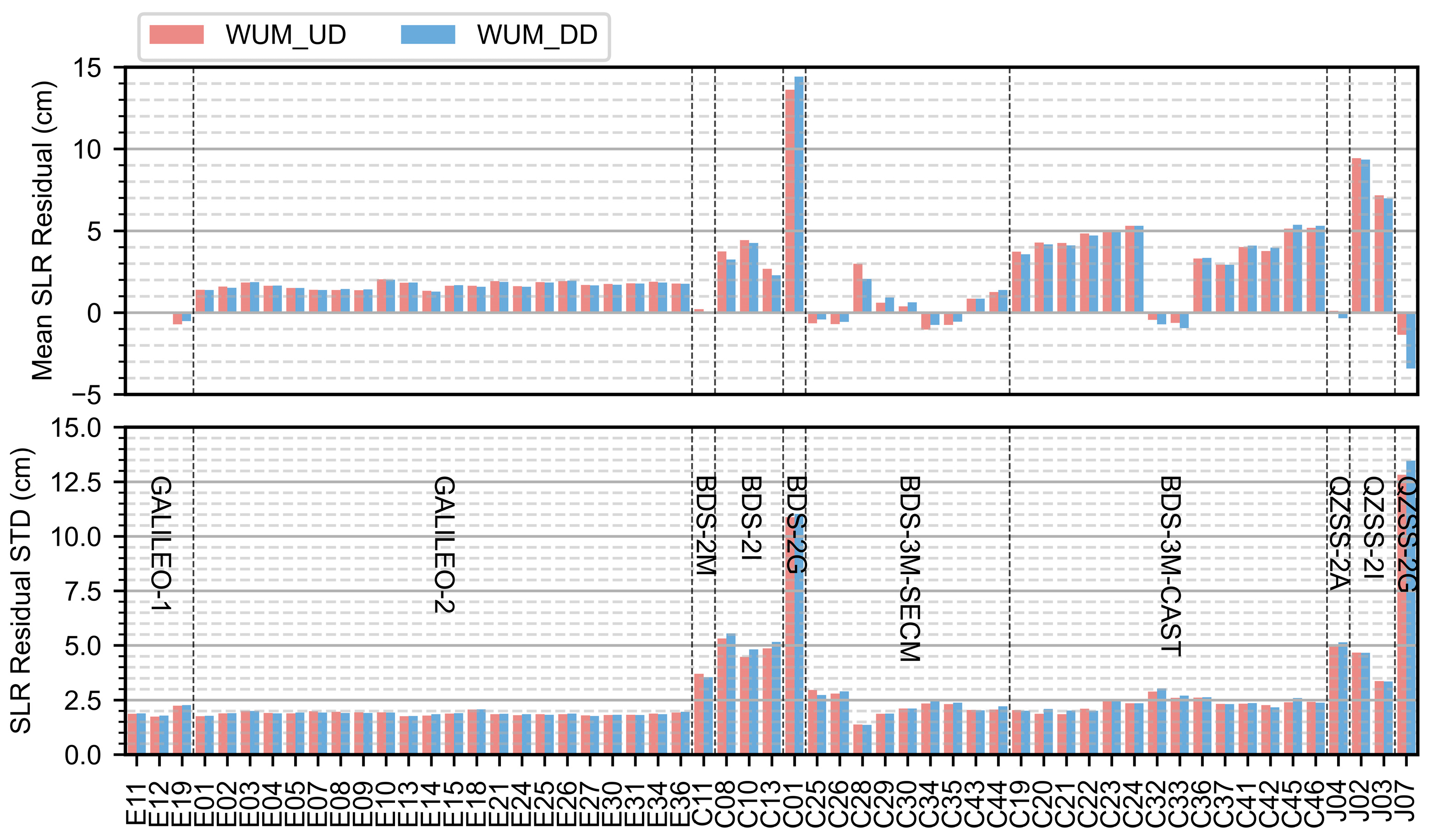
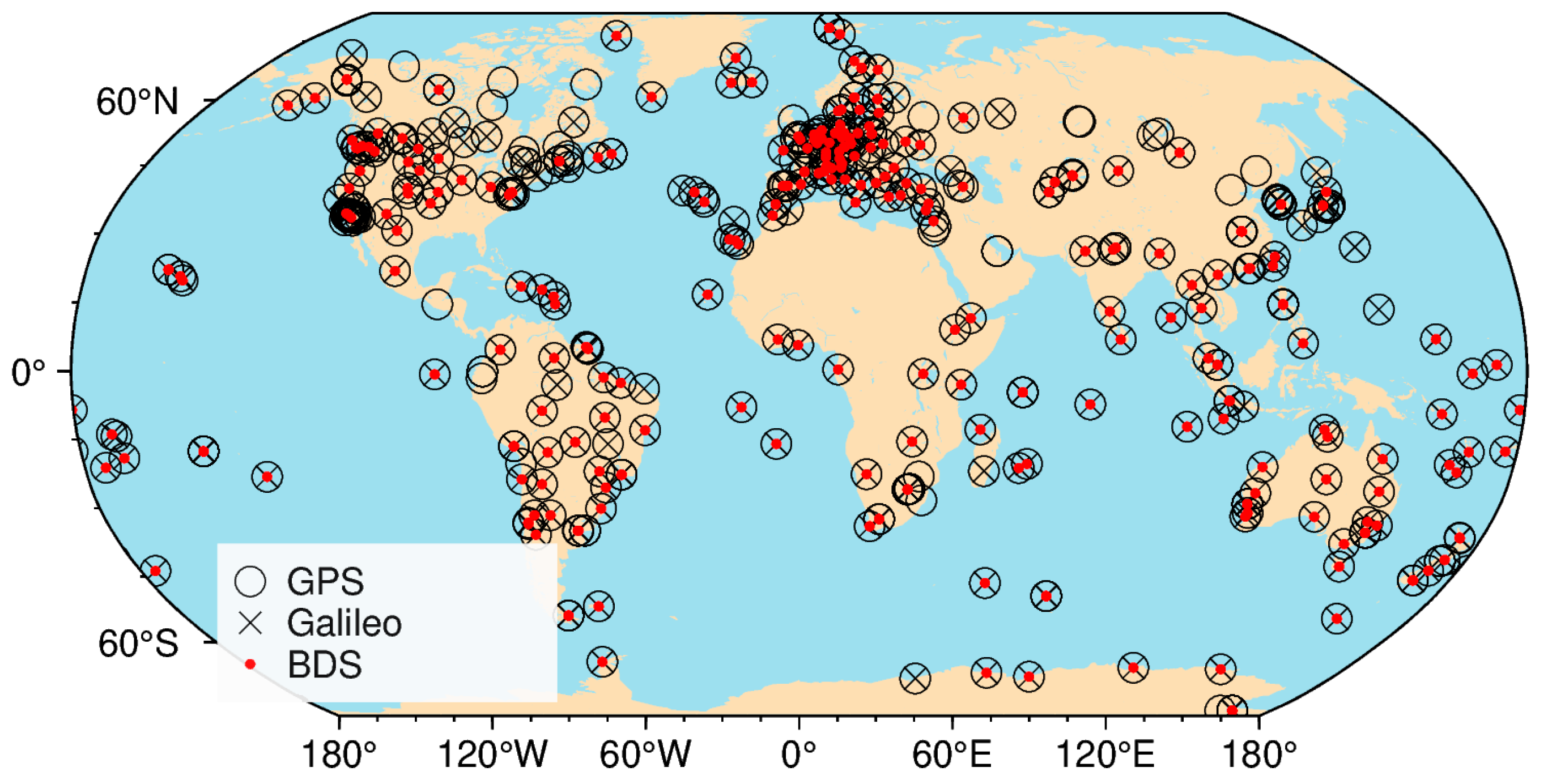
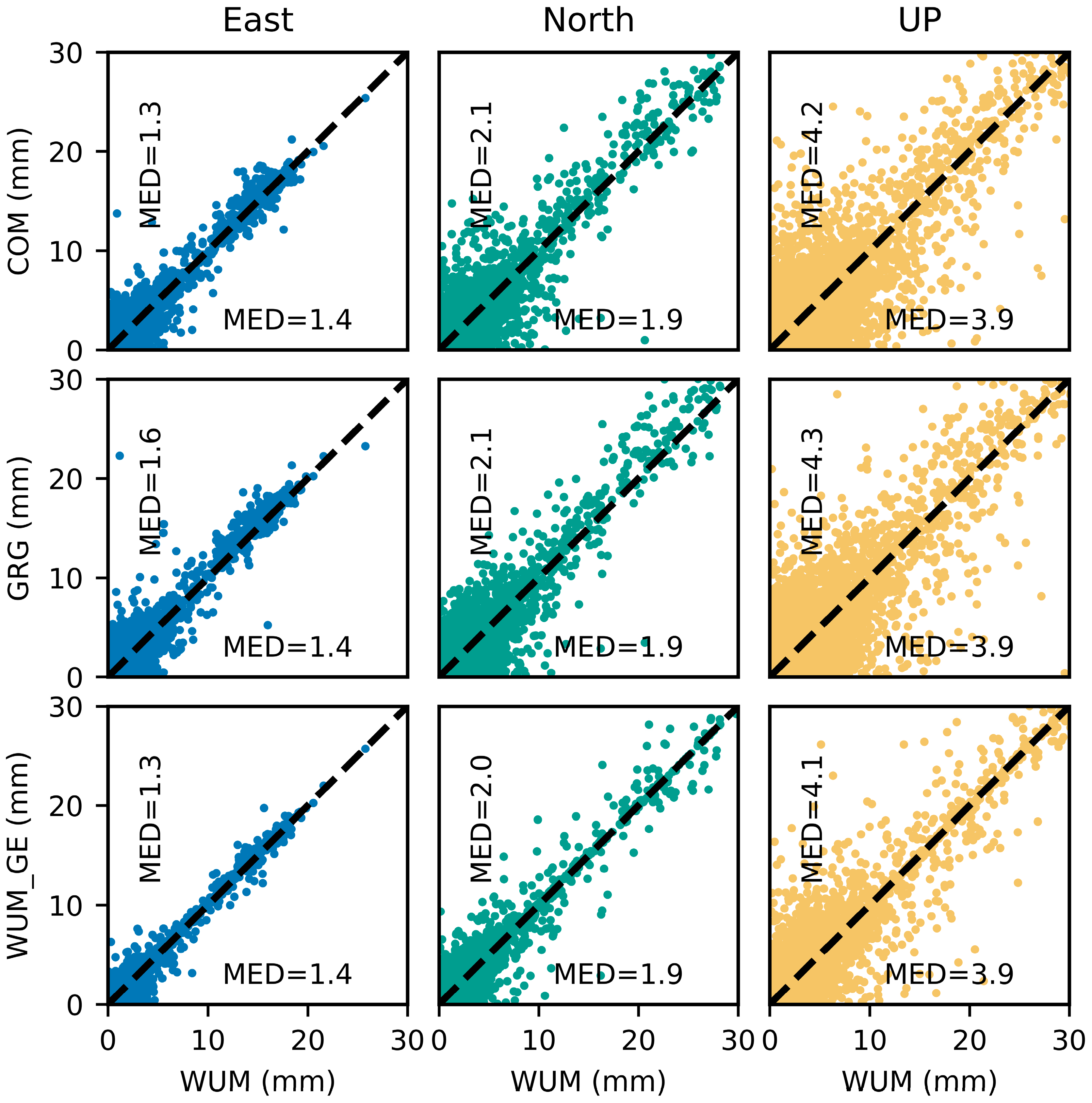
Precise point positioning ambiguity resolution (PPP-AR) is a key technique for high-precision global navigation satellite system (GNSS) observations, with phase bias products playing a critical role in its implementation. The multi-GNSS experiment analysis center at Wuhan University (WUM) has adopted the undifferenced ambiguity resolution (UDAR) approach to generate high-precision orbit, clock, and observable-specific bias (OSB) products to support PPP-AR since day 162 of 2023. This study presents the analysis strategy employed and assesses the impact of the transition to ambiguity resolution on the orbit precision, using metrics such as orbit boundary discontinuities (OBD) and satellite laser ranging (SLR) validation. Additionally, the stability of the OSB products and the overall performance of PPP-AR solutions are evaluated. The OBD demonstrates specific improvements of 7.1% and 9.5% for GPS and Galileo, respectively, when UDAR is applied. Notably, BDS-3 medium Earth orbit satellites show a remarkable 15.2% improvement compared to the double-differenced results. However, for the remaining constellations, the improvements are either minimal or result in degradation. Using GPS and GLONASS solutions from the International GNSS Service (IGS) and other solutions from the European Space Agency (ESA) as references, the orbit differences of WUM solutions based on UDAR exhibit a significant reduction. However, the improvements in SLR validation are limited, as the radial orbit precision is primarily influenced by the dynamic model. The narrow-lane ambiguity fixing rate for static PPP-AR, based on data from approximately 430 globally distributed stations, reaches 99.2%, 99.2%, 88.8%, and 98.6% for GPS, Galileo, BDS-2, and BDS-3, respectively. The daily repeatability of station coordinates is approximately 1.4 mm, 1.9 mm, and 3.9 mm in the east, north, and up directions, respectively. Overall, these results demonstrate the effectiveness and potential of WUM’s undifferenced ambiguity resolution approach in enhancing GNSS data processing and facilitating PPP-AR applications.
Keywords: GNSS; UDAR; observable-specific bias; PPP-AR GNSS; UDAR; observable-specific bias; PPP-AR