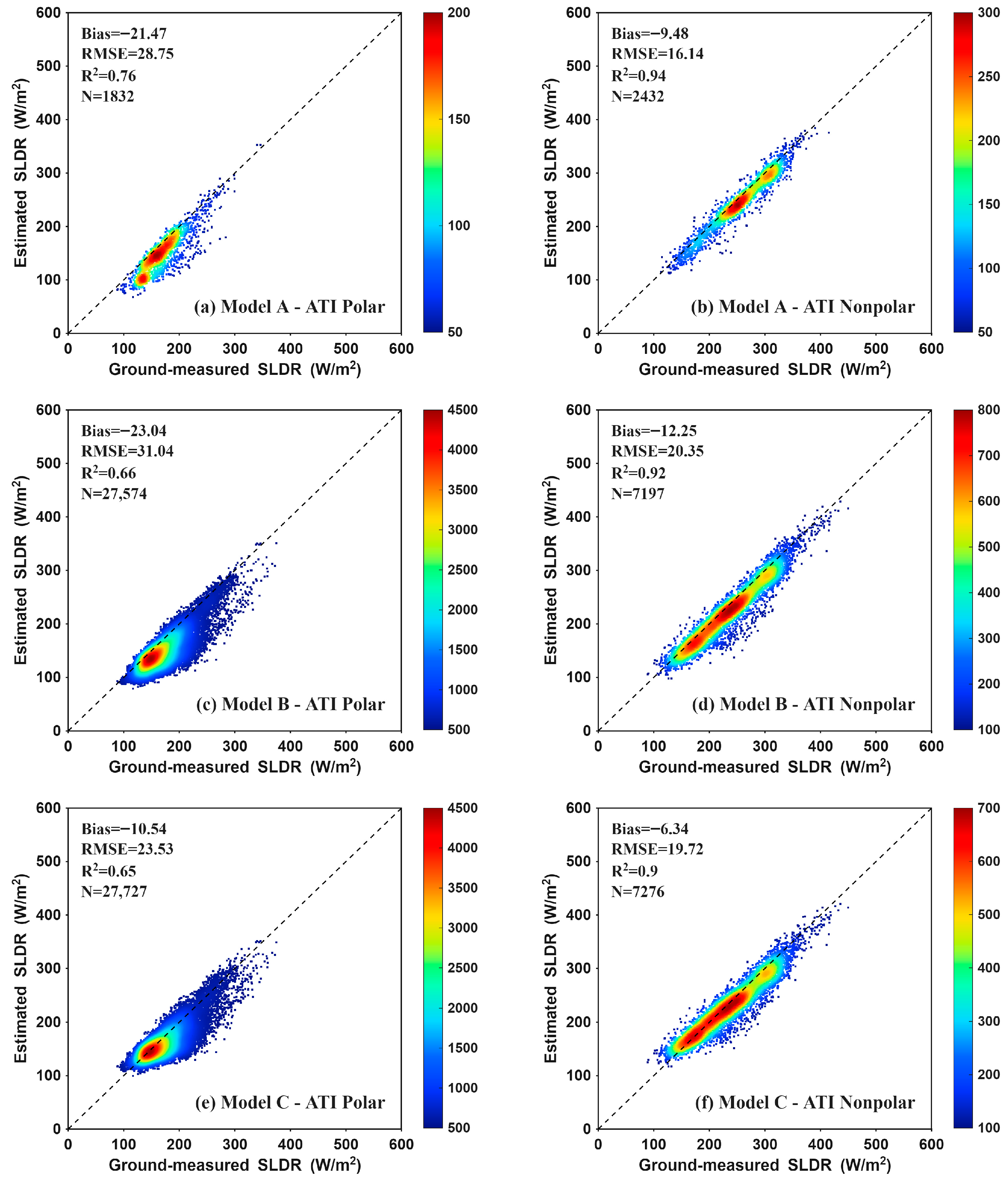
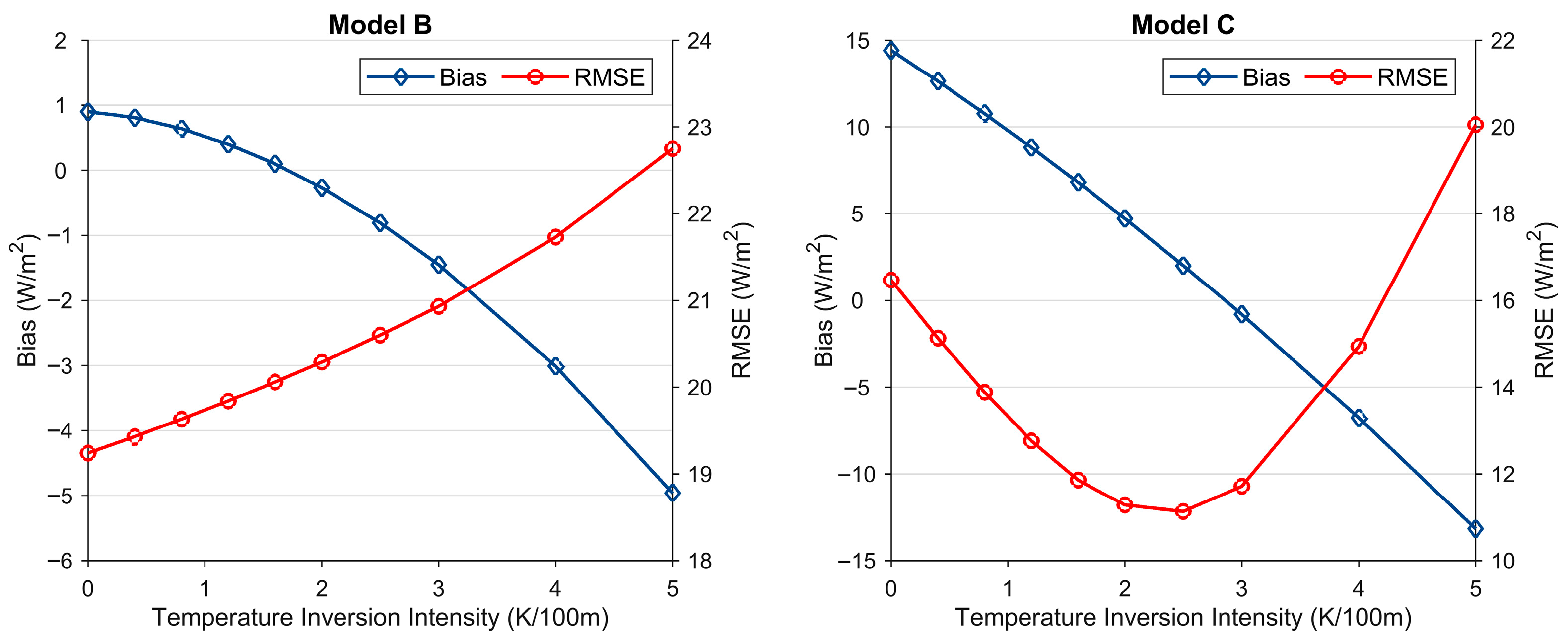
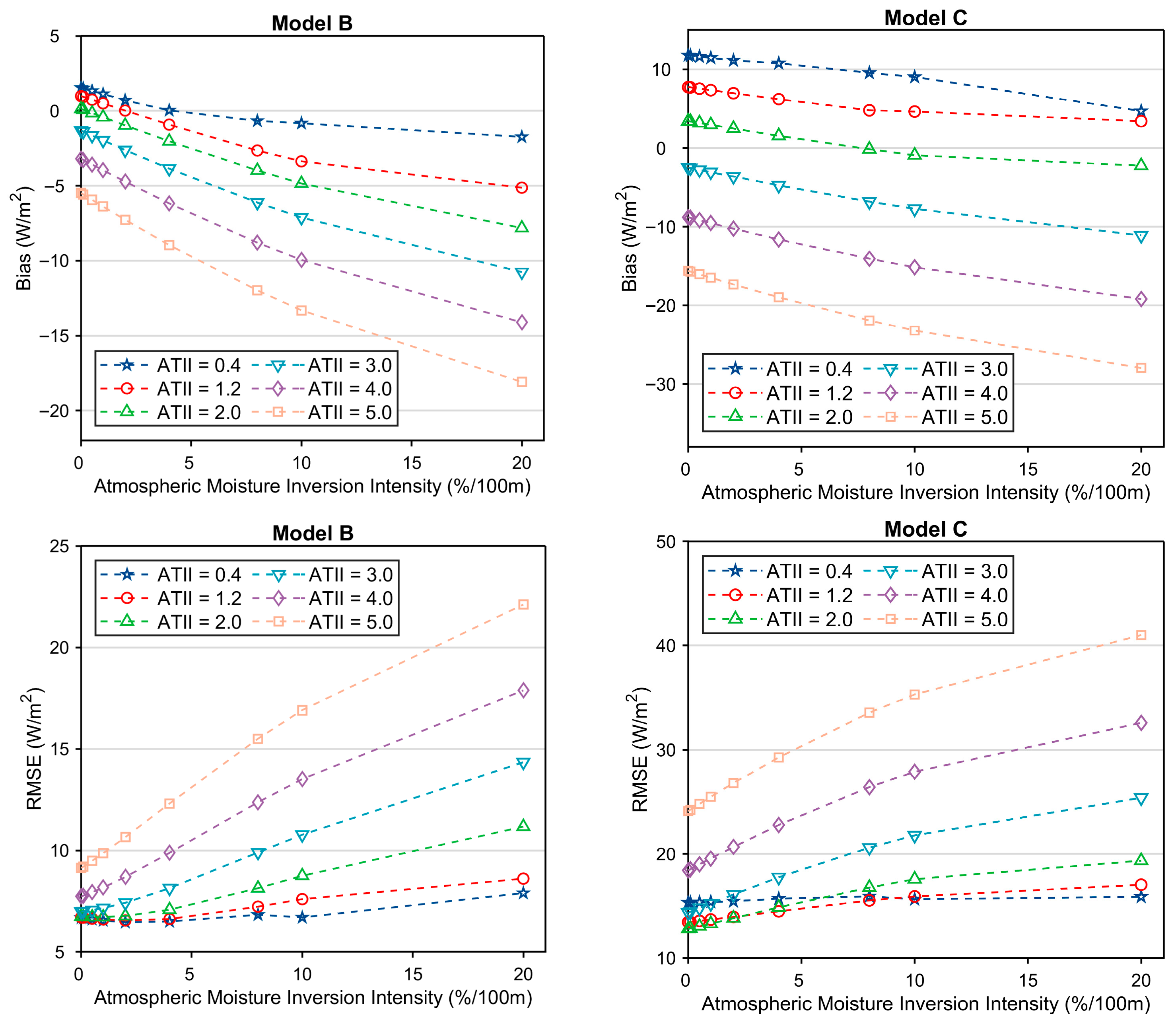
Validation of the CERES Clear-Sky Surface Longwave Downward Radiation Products Under Air Temperature Inversion



Abstract
Share and Cite
Sun, H.; Zeng, Q.; Zhang, W.; Cheng, J. Validation of the CERES Clear-Sky Surface Longwave Downward Radiation Products Under Air Temperature Inversion. Remote Sens. 2025, 17, 4012. https://doi.org/10.3390/rs17244012
Sun H, Zeng Q, Zhang W, Cheng J. Validation of the CERES Clear-Sky Surface Longwave Downward Radiation Products Under Air Temperature Inversion. Remote Sensing. 2025; 17(24):4012. https://doi.org/10.3390/rs17244012
Chicago/Turabian StyleSun, Hao, Qi Zeng, Wanchun Zhang, and Jie Cheng. 2025. "Validation of the CERES Clear-Sky Surface Longwave Downward Radiation Products Under Air Temperature Inversion" Remote Sensing 17, no. 24: 4012. https://doi.org/10.3390/rs17244012
APA StyleSun, H., Zeng, Q., Zhang, W., & Cheng, J. (2025). Validation of the CERES Clear-Sky Surface Longwave Downward Radiation Products Under Air Temperature Inversion. Remote Sensing, 17(24), 4012. https://doi.org/10.3390/rs17244012