Article

Fine-Grained Multispectral Fusion for Oriented Object Detection in Remote Sensing

1
Chengdu Institute of Computer Applications, Chinese Academy of Sciences, Chengdu 610213, China
2
University of Chinese Academy of Sciences, Beijing 100049, China
*
Author to whom correspondence should be addressed.
Remote Sens. 2025, 17(22), 3769; https://doi.org/10.3390/rs17223769
Submission received: 26 September 2025 / Revised: 27 October 2025 / Accepted: 7 November 2025 / Published: 20 November 2025

Abstract

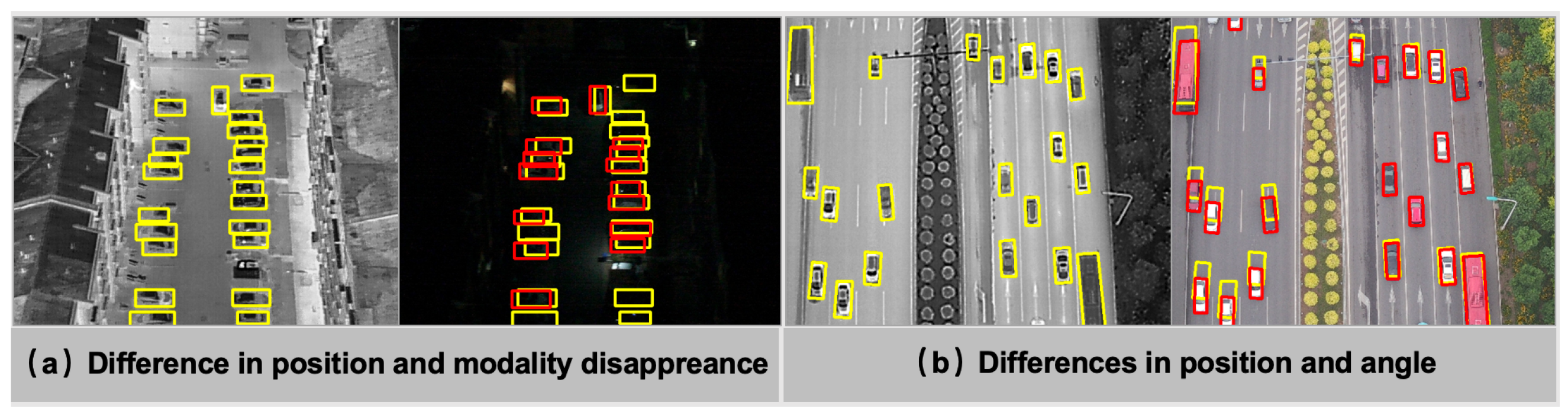
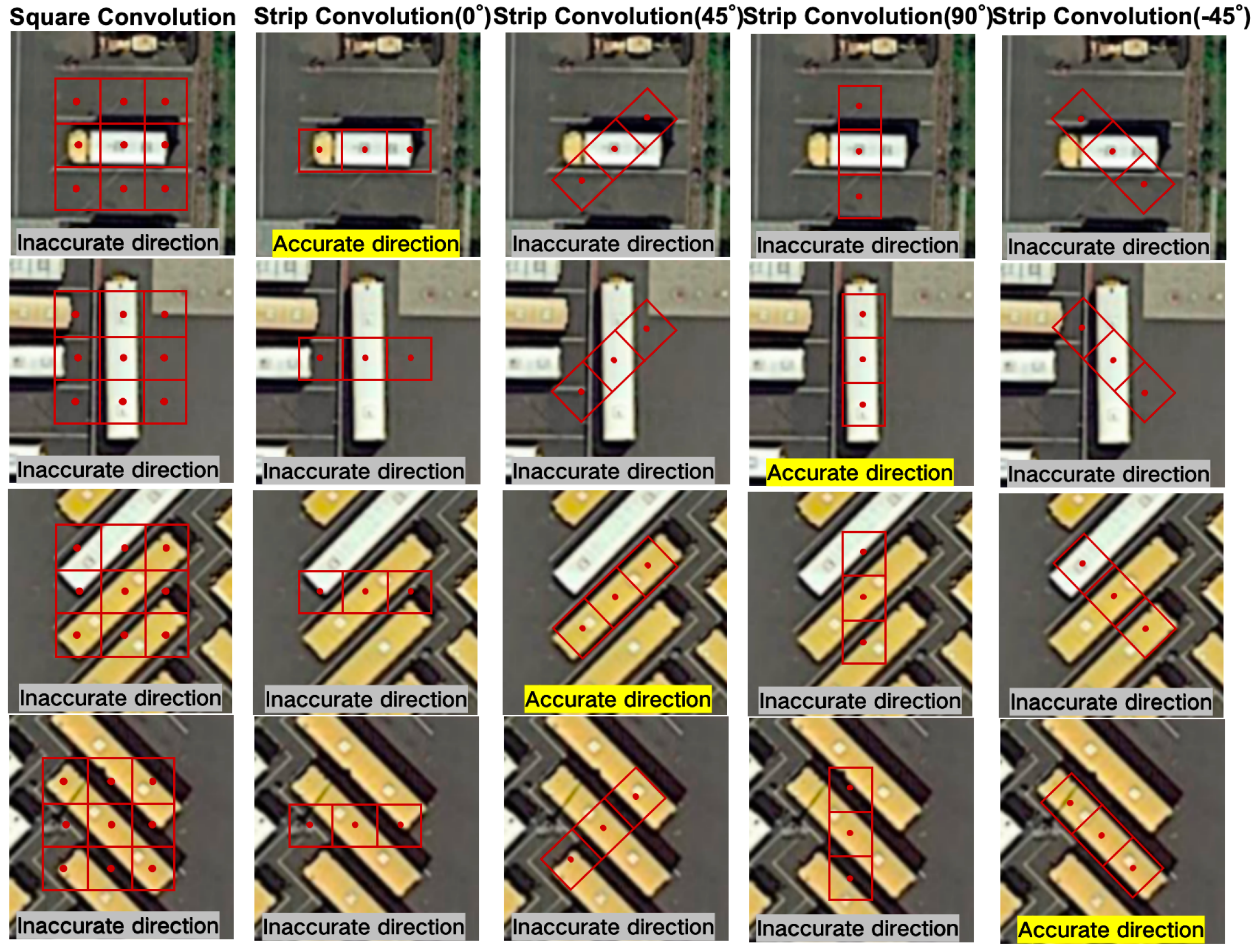
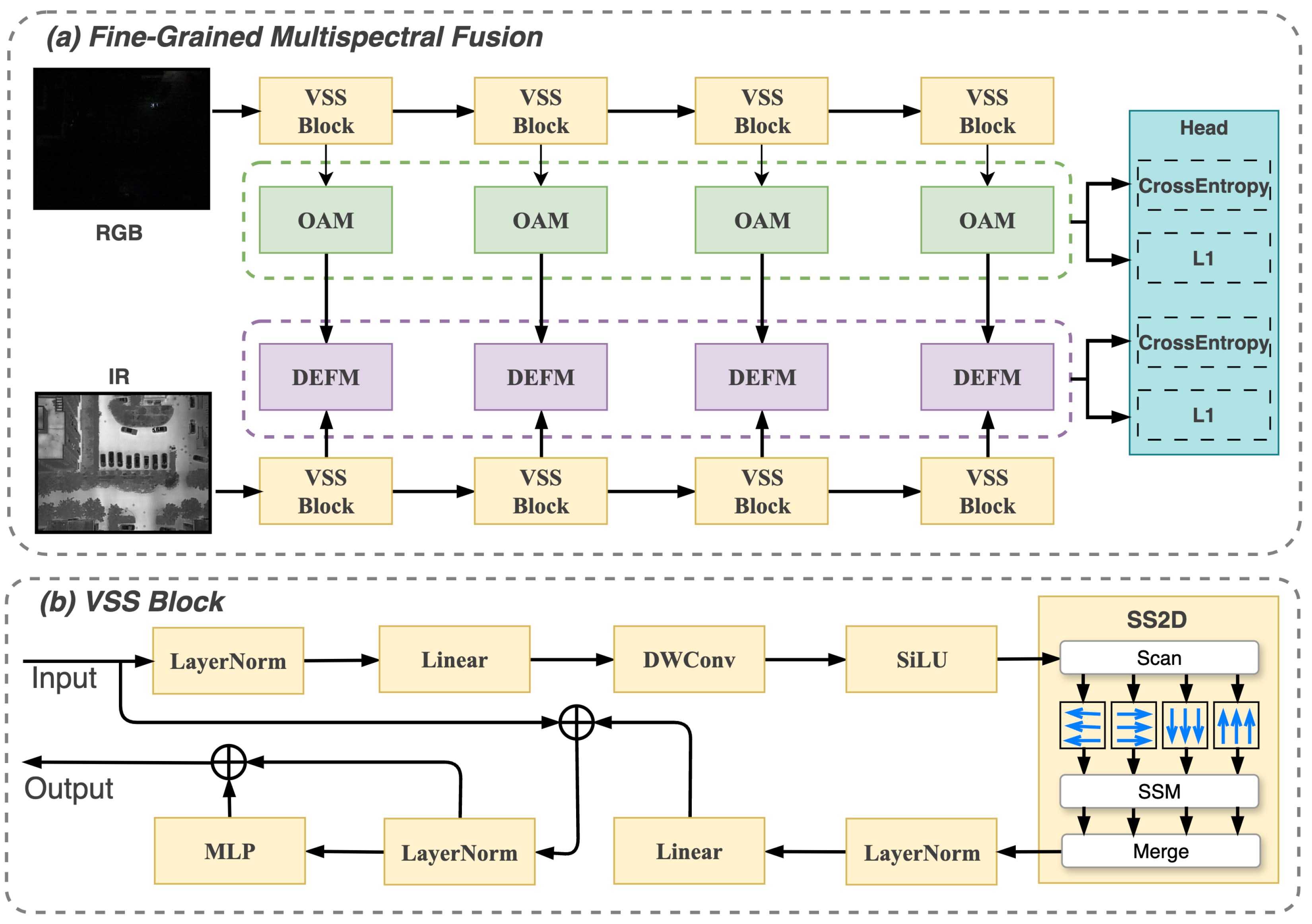
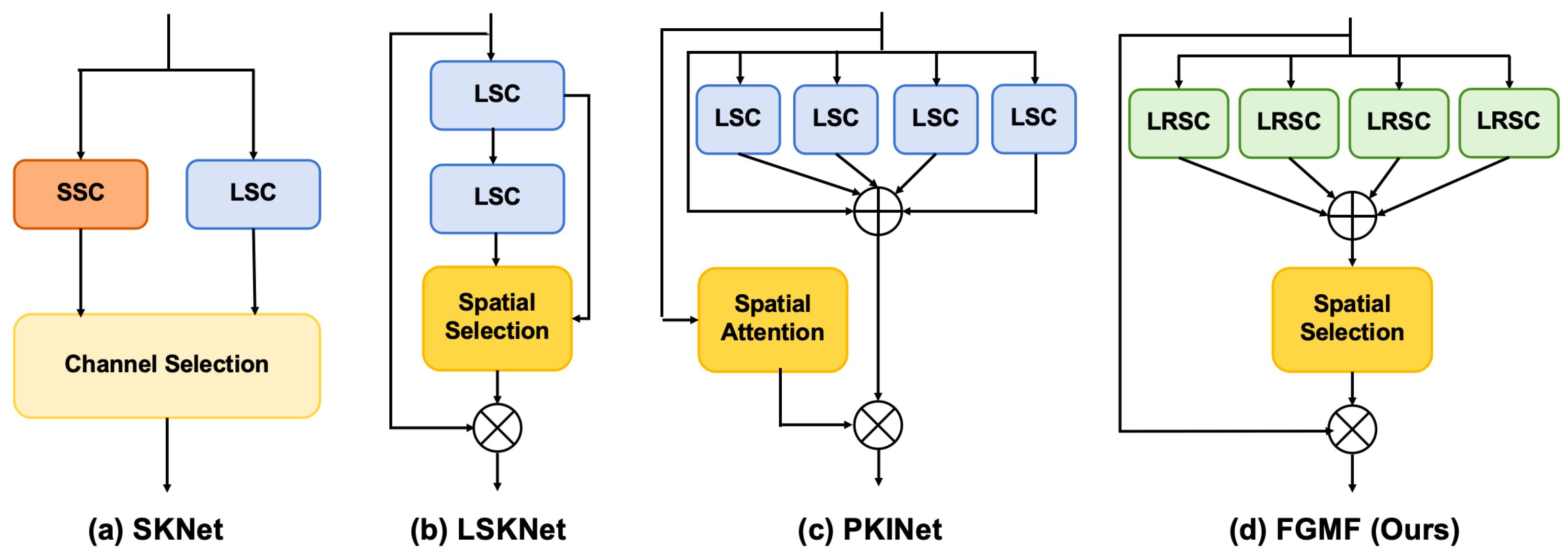
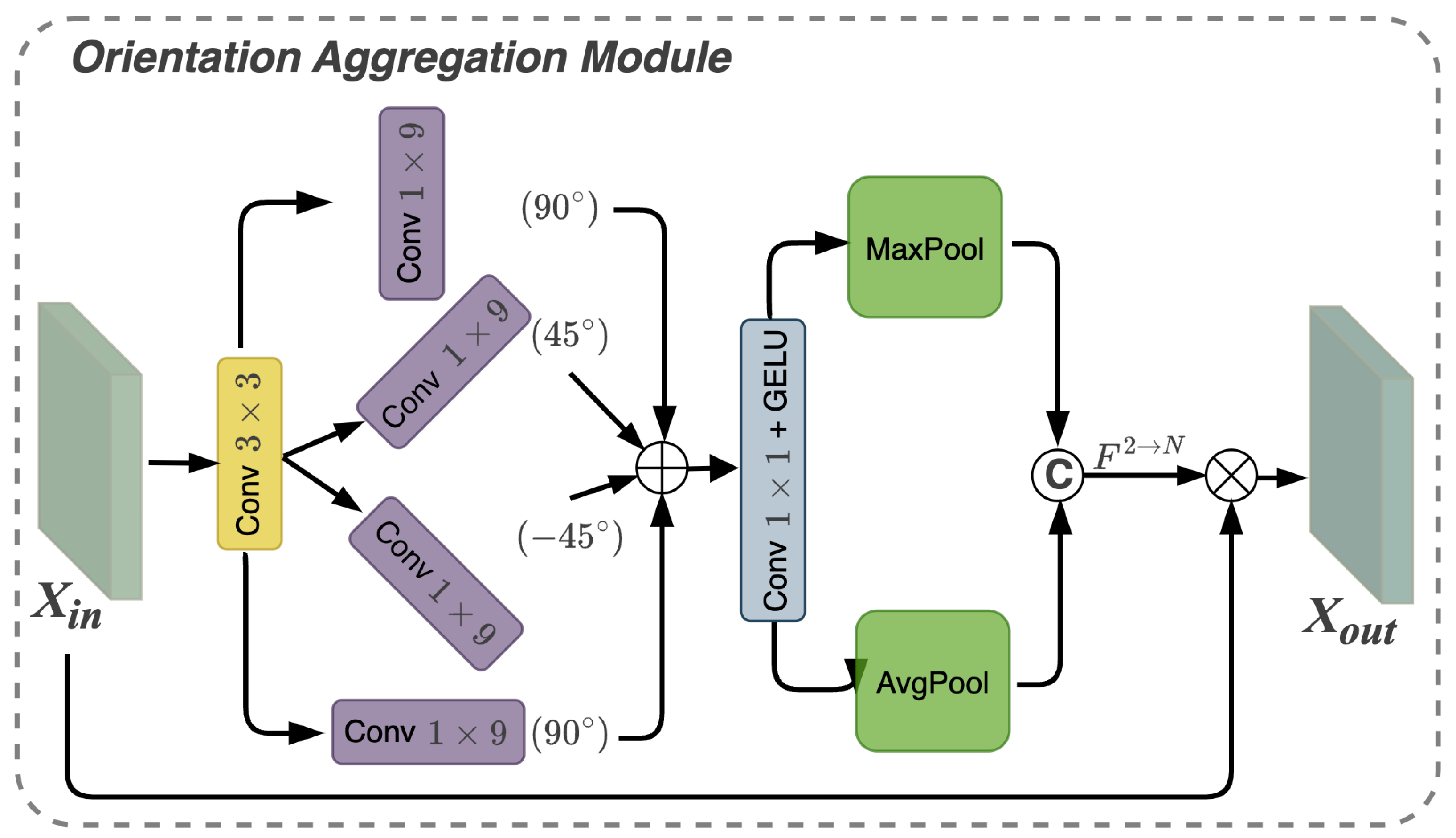
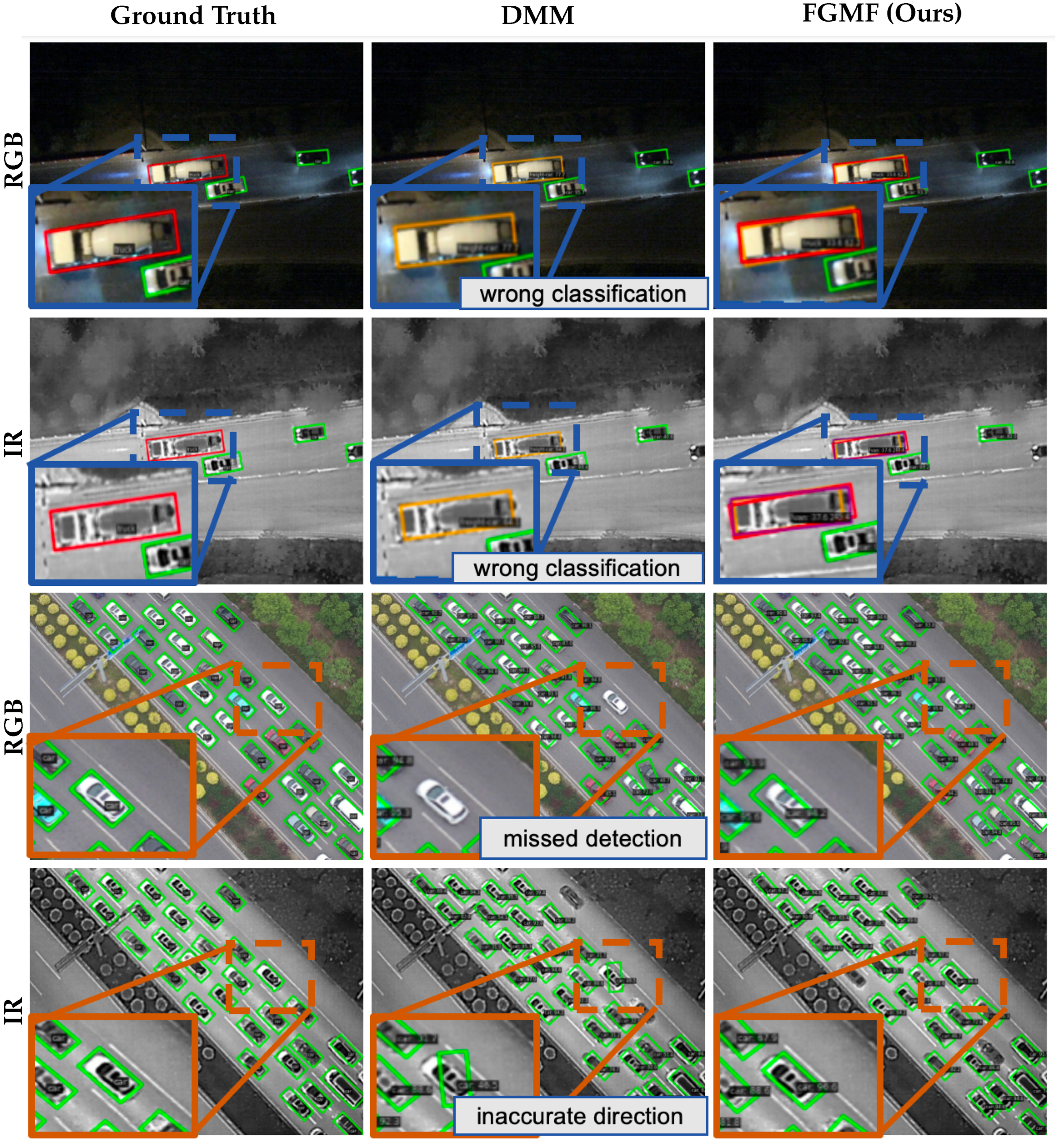
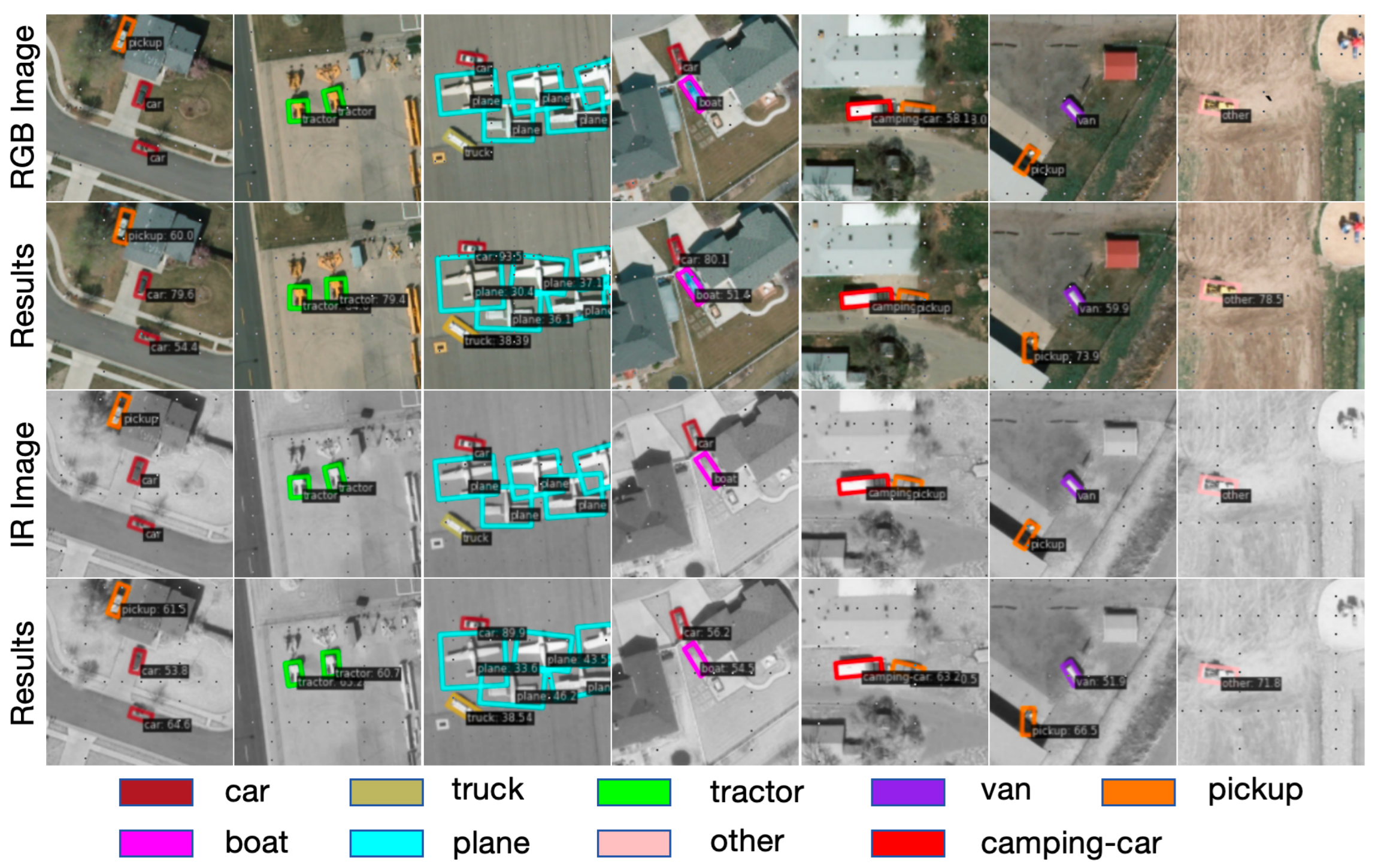
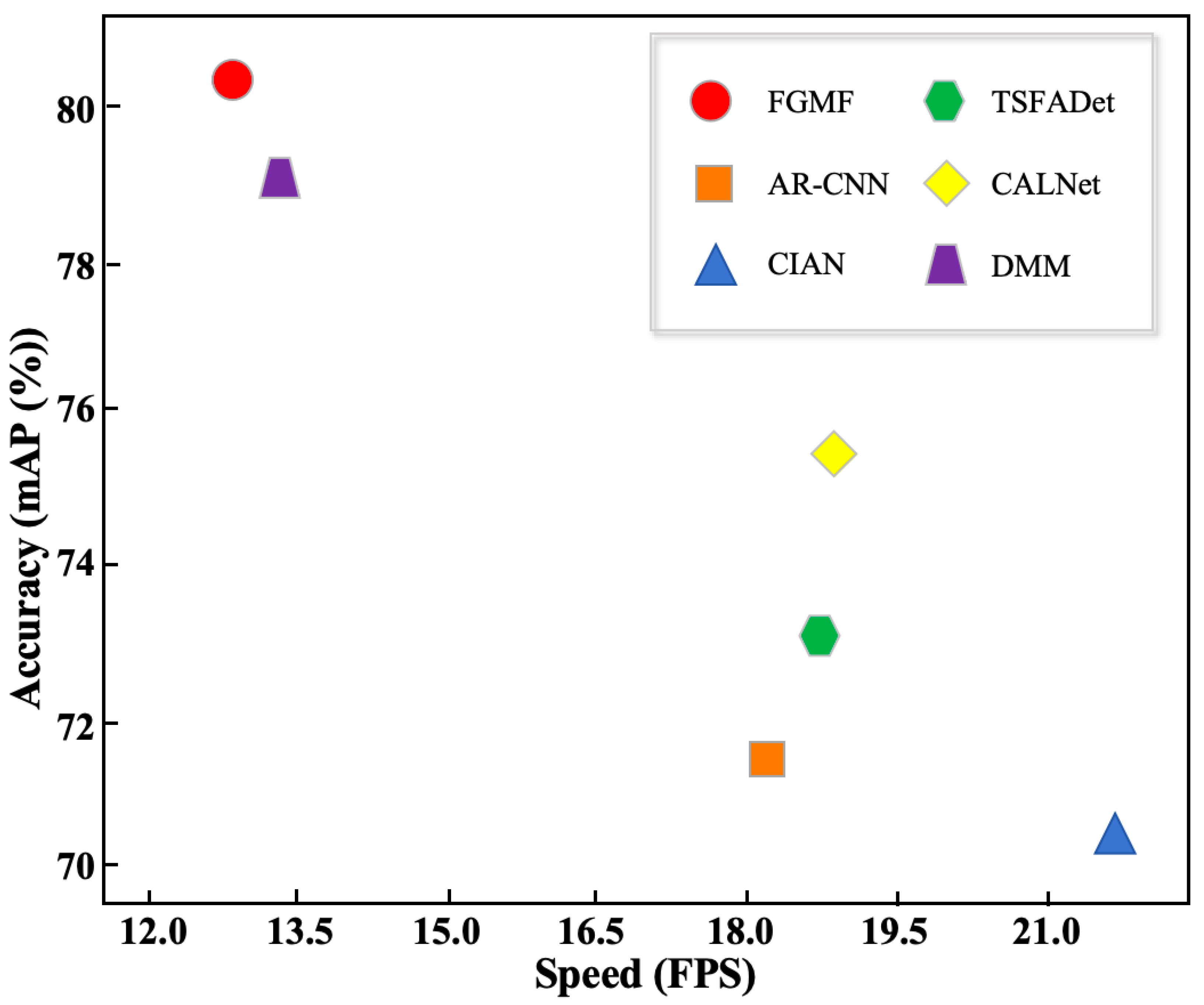
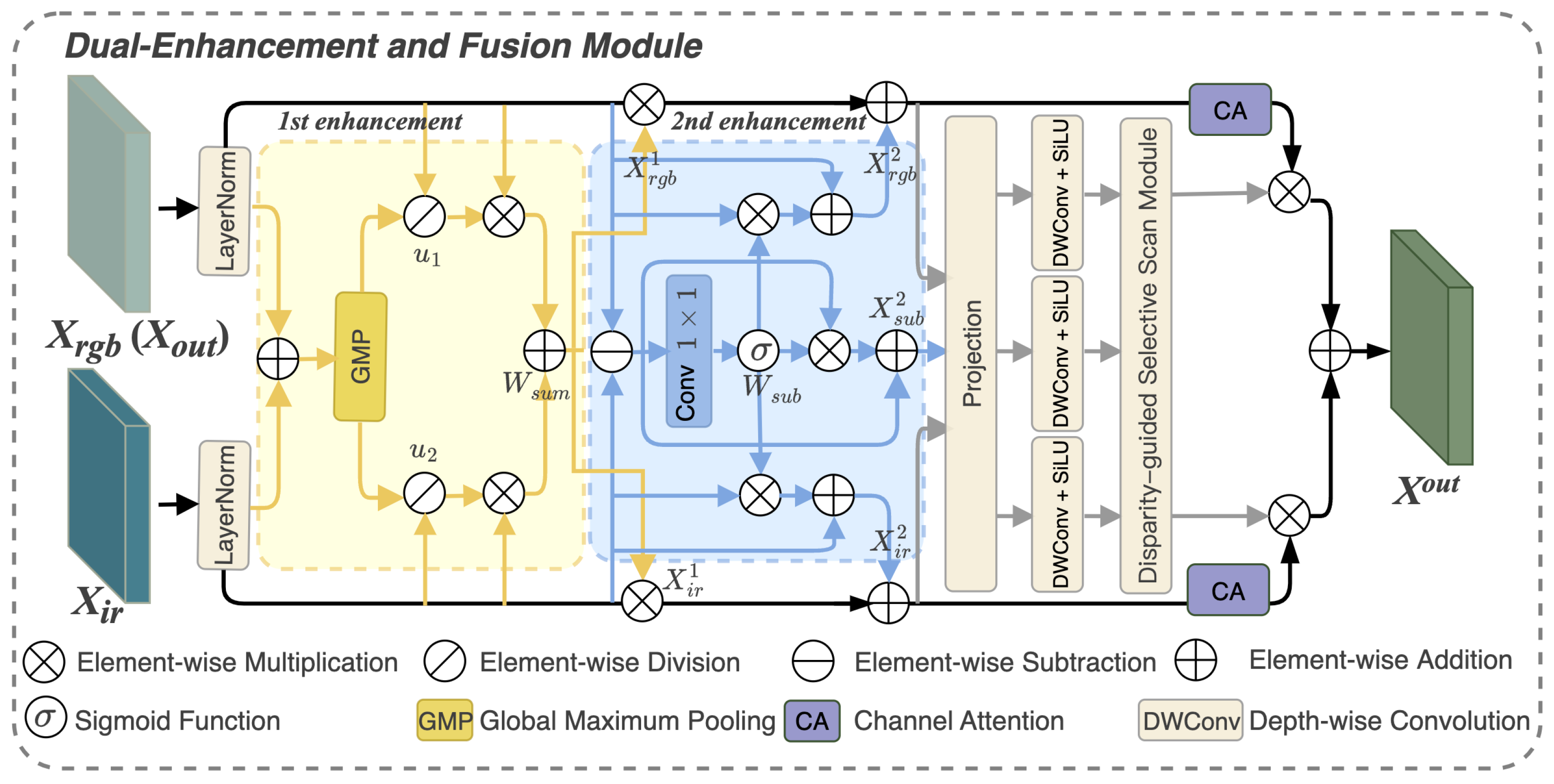
Infrared–visible-oriented object detection aims to combine the strengths of both infrared and visible images, overcoming the limitations of a single imaging modality to achieve more robust detection with oriented bounding boxes under diverse environmental conditions. However, current methods often suffer from two issues: (1) modality misalignment caused by hardware and annotation errors, leading to inaccurate feature fusion that degrades downstream task performance; and (2) insufficient directional priors in square convolutional kernels, impeding robust object detection with diverse directions, especially in densely packed scenes. To tackle these challenges, in this paper, we propose a novel method, Fine-Grained Multispectral Fusion (FGMF), for oriented object detection in the paired aerial images. Specifically, we design a dual-enhancement and fusion module (DEFM) to obtain the calibrated and complementary features through weighted addition and subtraction-based attention mechanisms. Furthermore, we propose an orientation aggregation module (OAM) that employs large rotated strip convolutions to capture directional context and long-range dependencies. Extensive experiments on the DroneVehicle and VEDAI datasets demonstrate the effectiveness of our proposed method, yielding impressive results with accuracies of 80.2% and 66.3%, respectively. These results highlight the effectiveness of FGMF in oriented object detection within complex remote sensing scenarios.
Keywords: oriented object detection; multispectral object detection; infrared and visible image fusion oriented object detection; multispectral object detection; infrared and visible image fusion