Article

Spatiotemporal Variations and Seasonal Climatic Driving Factors of Stable Vegetation Phenology Across China over the Past Two Decades


1
College of Resources, Sichuan Agricultural University, Chengdu 611130, China
2
Key Laboratory of Investigation and Monitoring, Protection and Utilization for Cultivated Land Resources, Ministry of Natural Resources, Chengdu 611130, China
*
Author to whom correspondence should be addressed.
Remote Sens. 2025, 17(20), 3467; https://doi.org/10.3390/rs17203467
Submission received: 19 August 2025 / Revised: 12 October 2025 / Accepted: 15 October 2025 / Published: 17 October 2025

Abstract

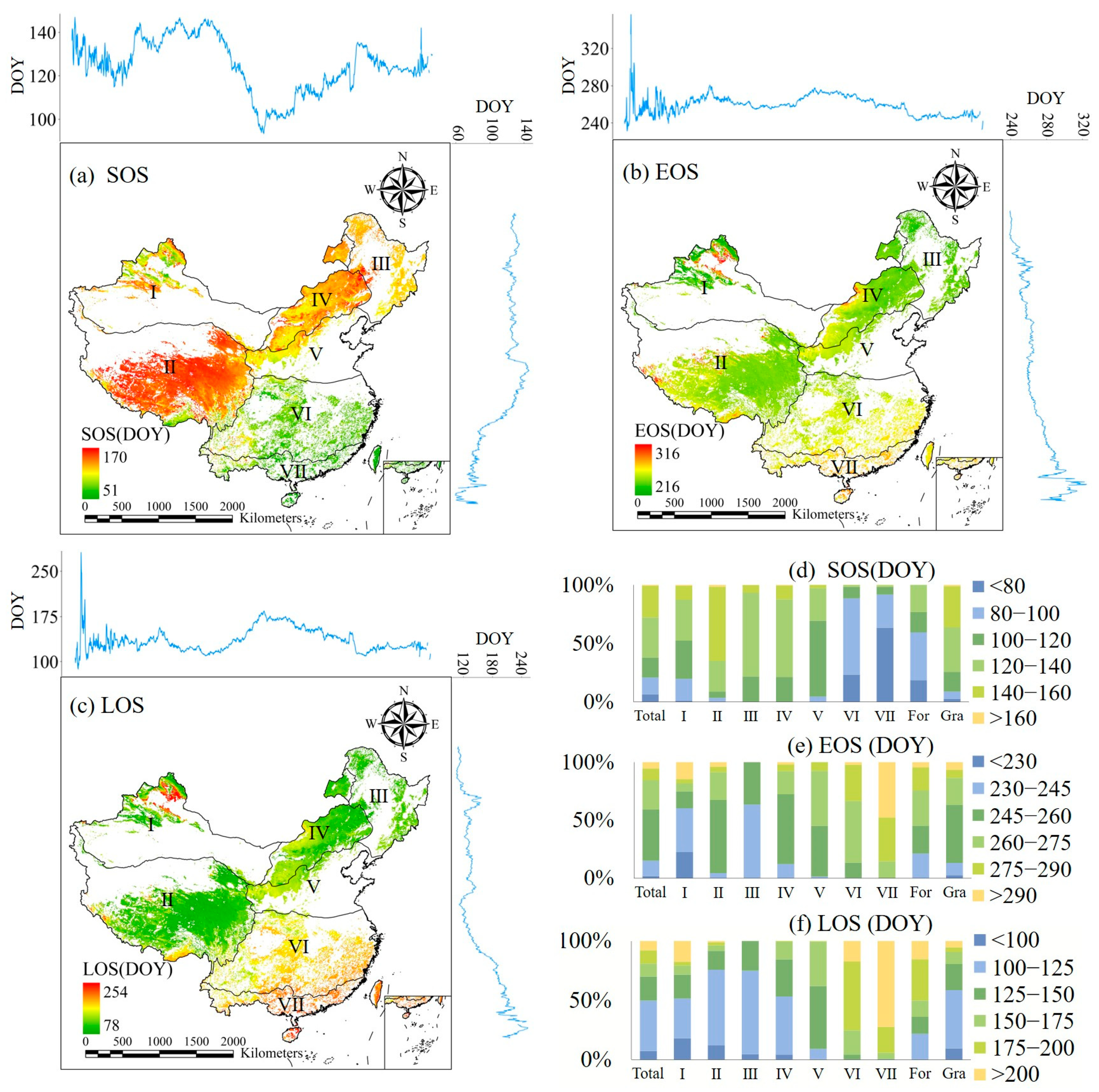
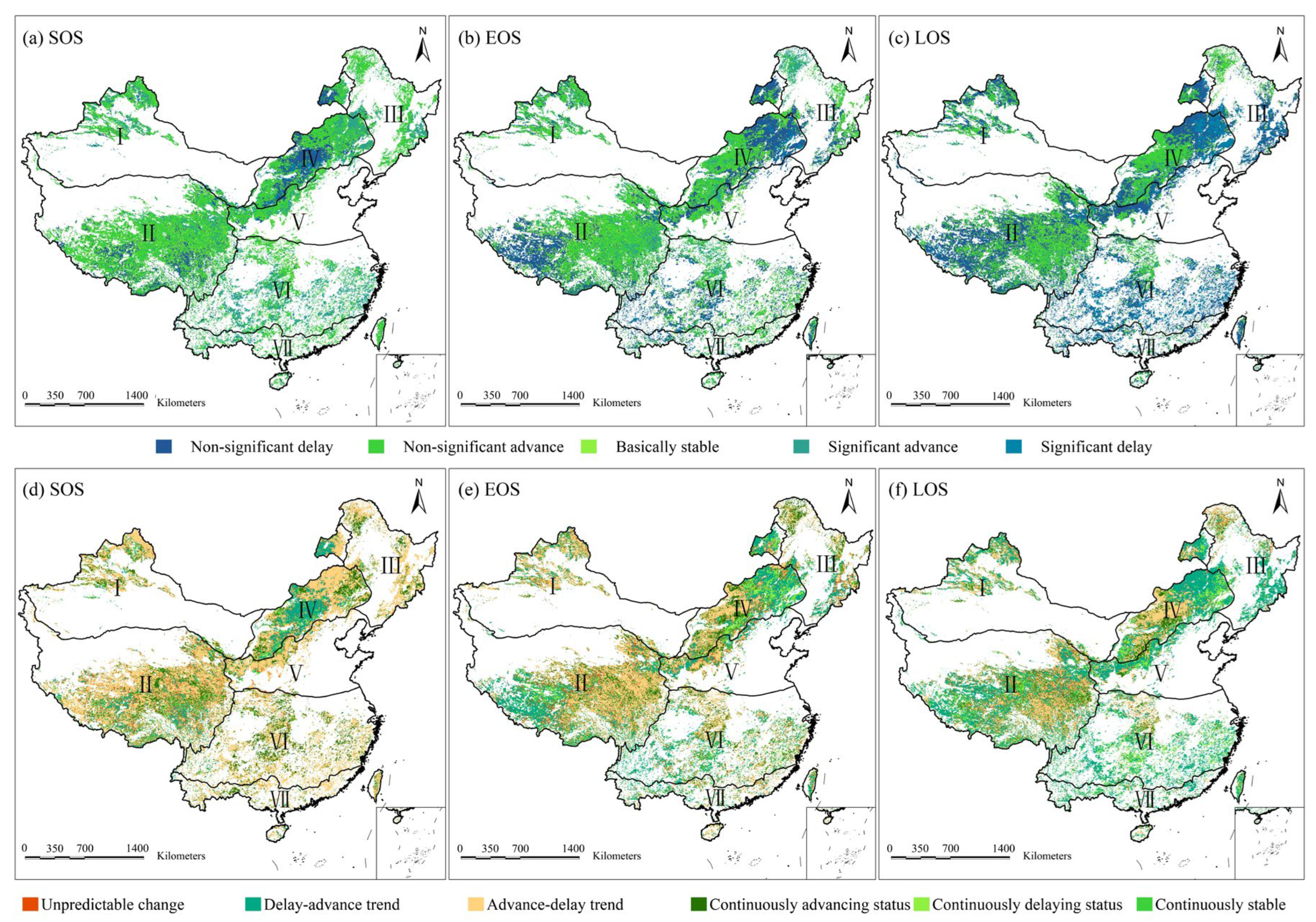
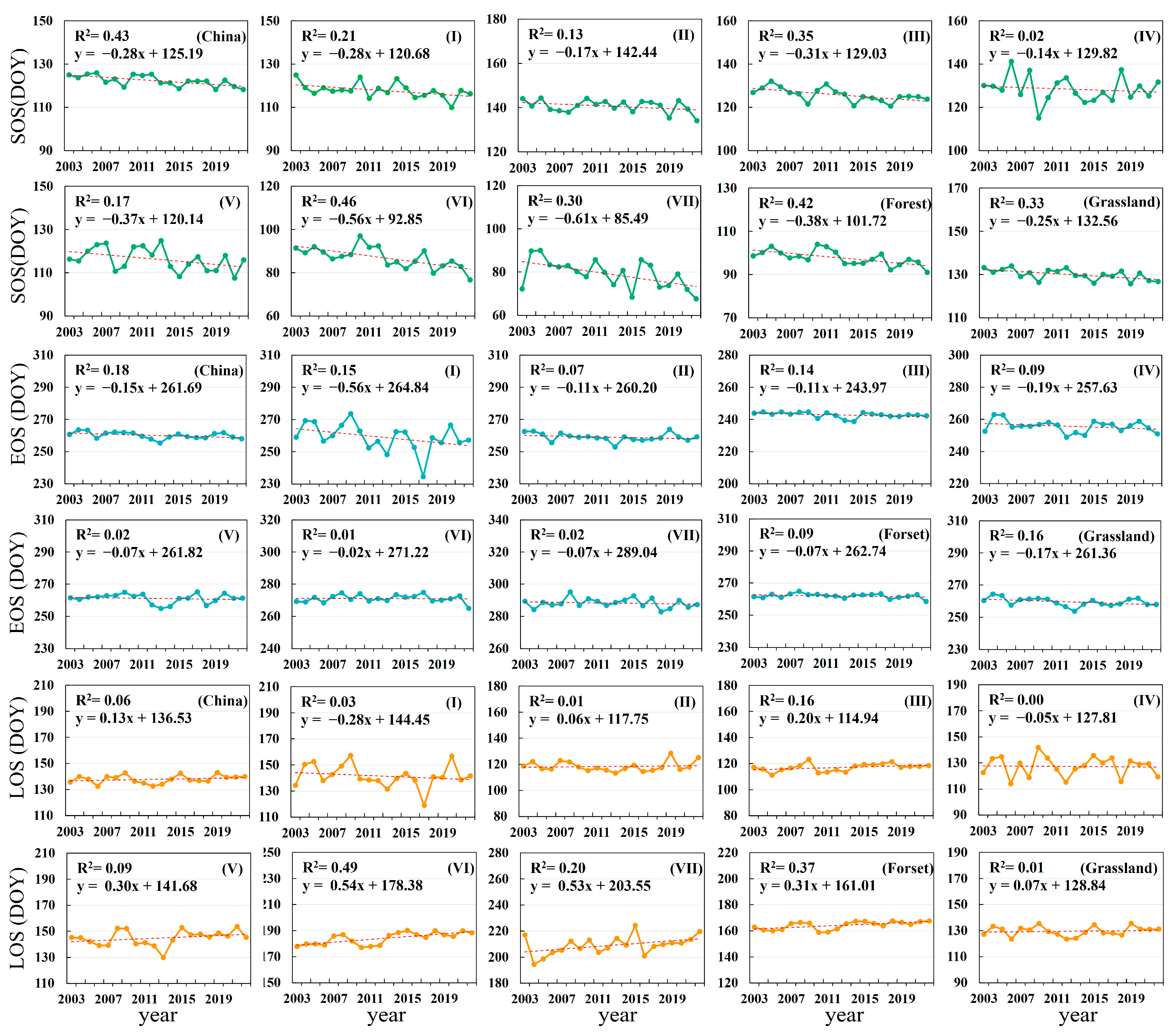
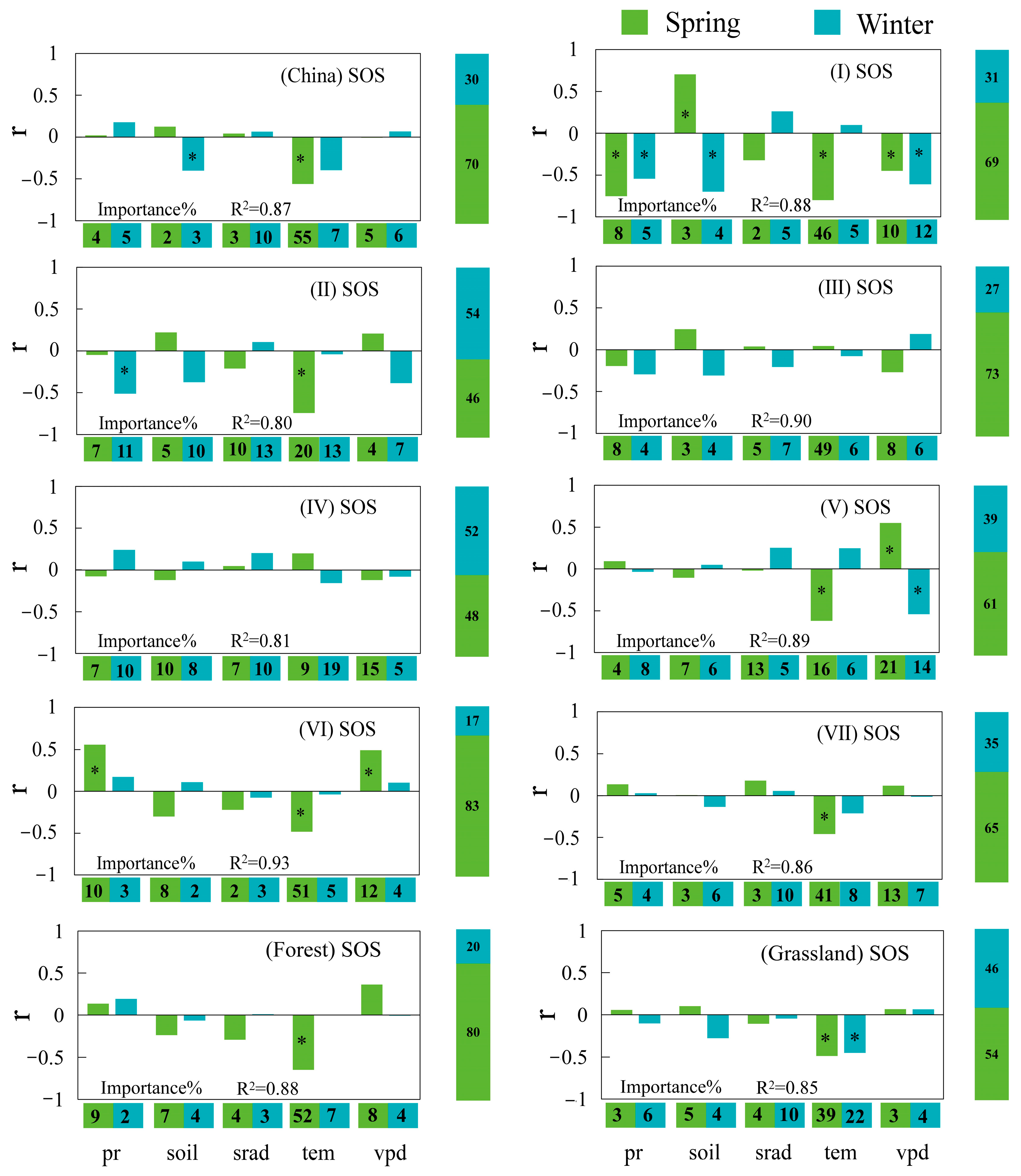
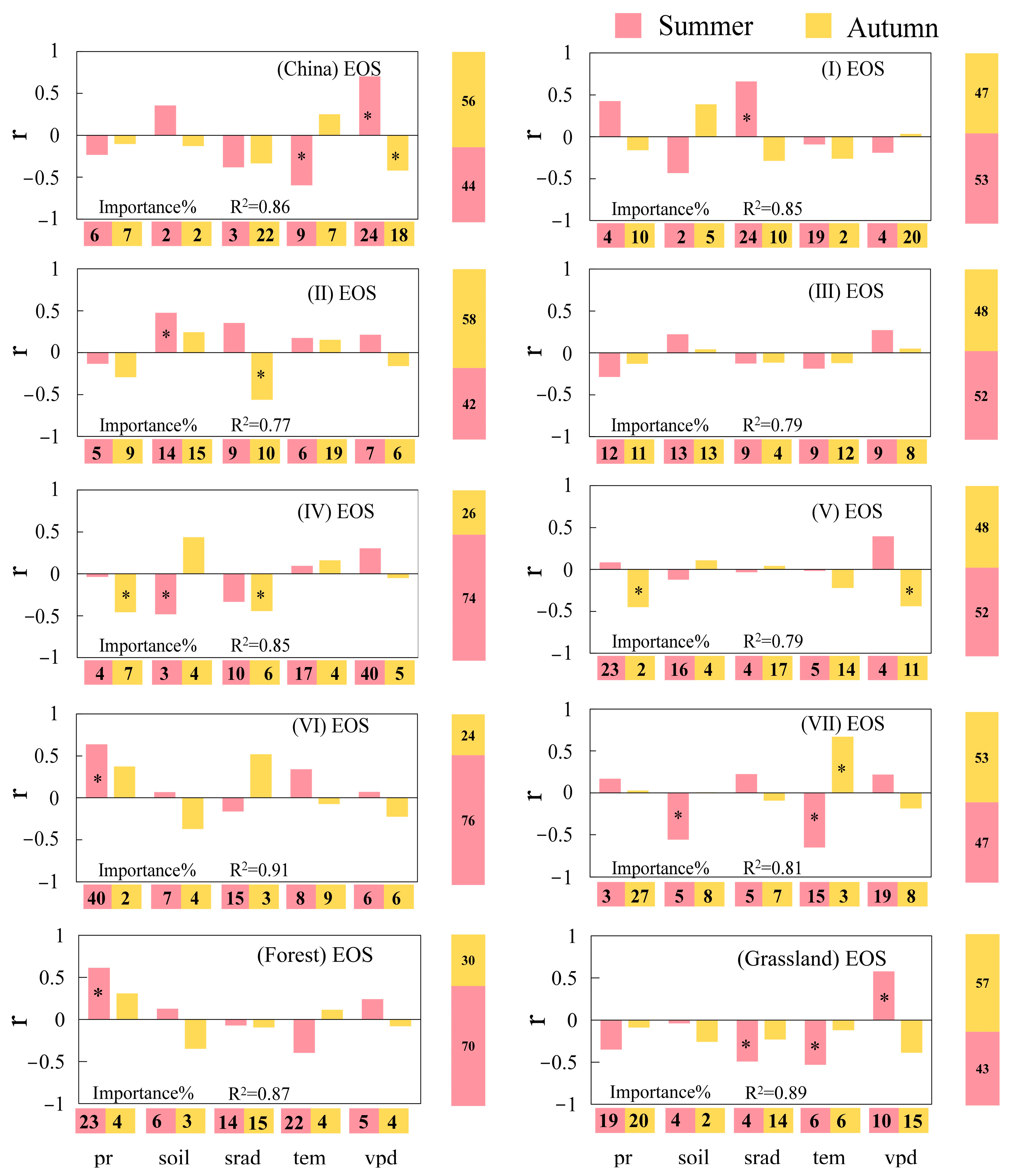
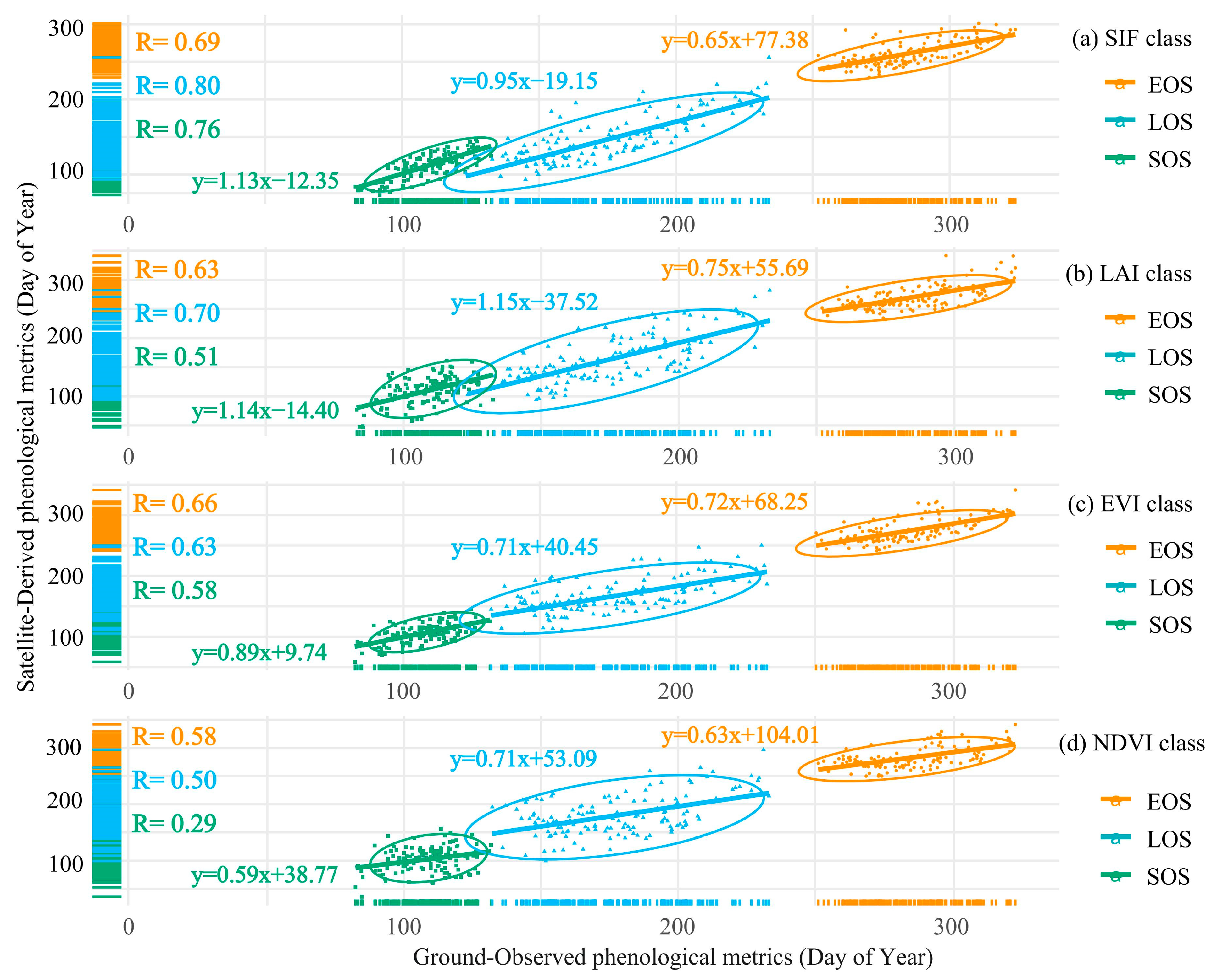
Vegetation phenology (VP) is a crucial biological indicator for monitoring terrestrial ecosystems and global climate change. However, VP monitoring using traditional remote sensing vegetation indices has significant limitations in precise analysis. Furthermore, most studies have overlooked the distinction between stable and short-term VP in relation to climate change and have failed to clearly identify the seasonal variation in the impact of climatic factors on stable VP (SVP). This study compared the accuracy of solar-induced chlorophyll fluorescence (SIF) and three traditional vegetation indices (e.g., Normalized Difference Vegetation Index) for estimating SVP in China, using ground-based data for validation. Additionally, this study employs Sen’s slope, the Mann–Kendall (MK) test, and the Hurst index to reveal the spatiotemporal evolution of the Start of Season (SOS), End of Season (EOS), and Length of Growing Season (LOS) over the past two decades. Partial correlation analysis and random forest importance evaluation are used to accurately identify the key climatic drivers of SVP across different climate zones and to assess the seasonal contributions of climate to SVP. The results indicate that (1) phenological metrics derived from SIF data showed the strongest correlation coefficients with ground-based observations, with all correlation coefficients (R) exceeding 0.69 and an average of 0.75. (2) The spatial distribution of SVP in China has revealed three primary spatial patterns: the Tibetan Plateau, and regions north and south of the Qinling–Huaihe Line. From arid, cold-to-warm, and humid regions, the rate of SOS advancement gradually increases; EOS transitions from earlier to nearly unchanged; and the rate of LOS delay increases accordingly. (3) The spring climate primarily drives the advancement of SOS across China, contributing up to 70%, with temperatures generally having a negative effect on SOS (r = −0.53, p < 0.05). In contrast, EOS is regulated and more complex, with the vapor pressure deficit exerting a dual ‘limitation–promotion’ effect in autumn (r = −0.39, p < 0.05) and summer (r = 0.77, p < 0.05). This study contributes to a deeper scientific understanding of the interannual variability in SVP under seasonal climate change.
Keywords: vegetation phenology; solar-induced chlorophyll fluorescence; stable vegetation areas; seasonal climate drivers vegetation phenology; solar-induced chlorophyll fluorescence; stable vegetation areas; seasonal climate drivers