Article

A Novel Nighttime Sea Fog Detection Method Based on Generative Adversarial Networks

College of Meteorology and Oceanography, National University of Defense Technology, Changsha 410073, China
*
Author to whom correspondence should be addressed.
Remote Sens. 2025, 17(19), 3285; https://doi.org/10.3390/rs17193285
Submission received: 2 August 2025 / Revised: 11 September 2025 / Accepted: 23 September 2025 / Published: 24 September 2025

Abstract

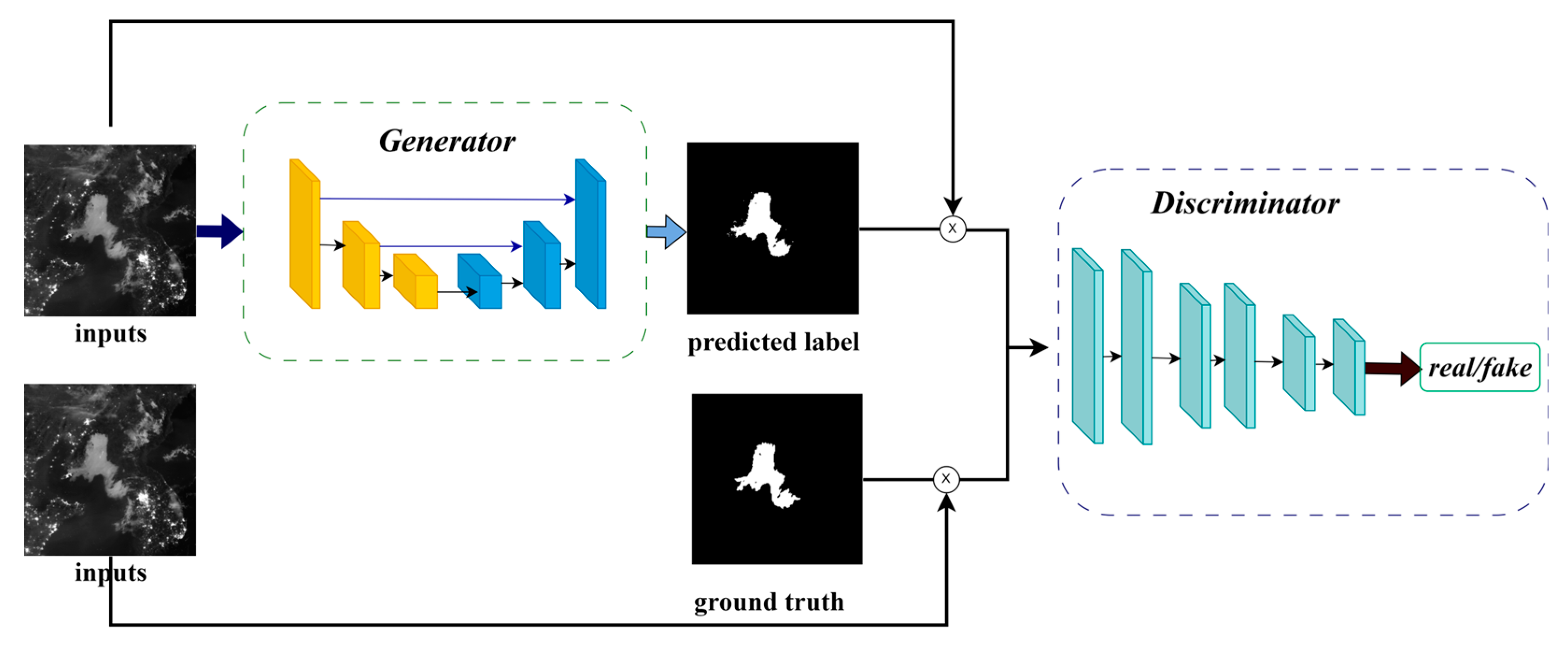
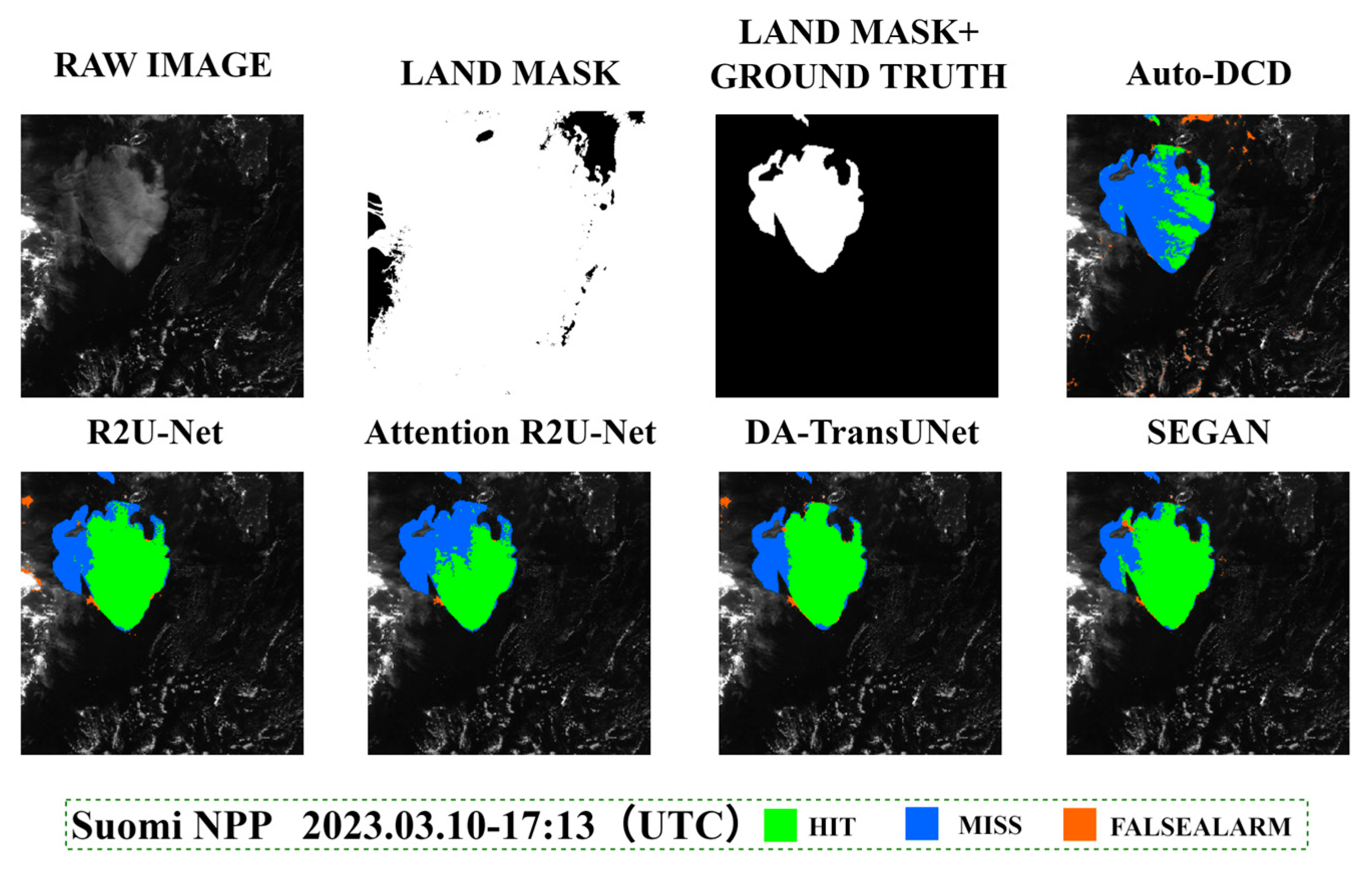
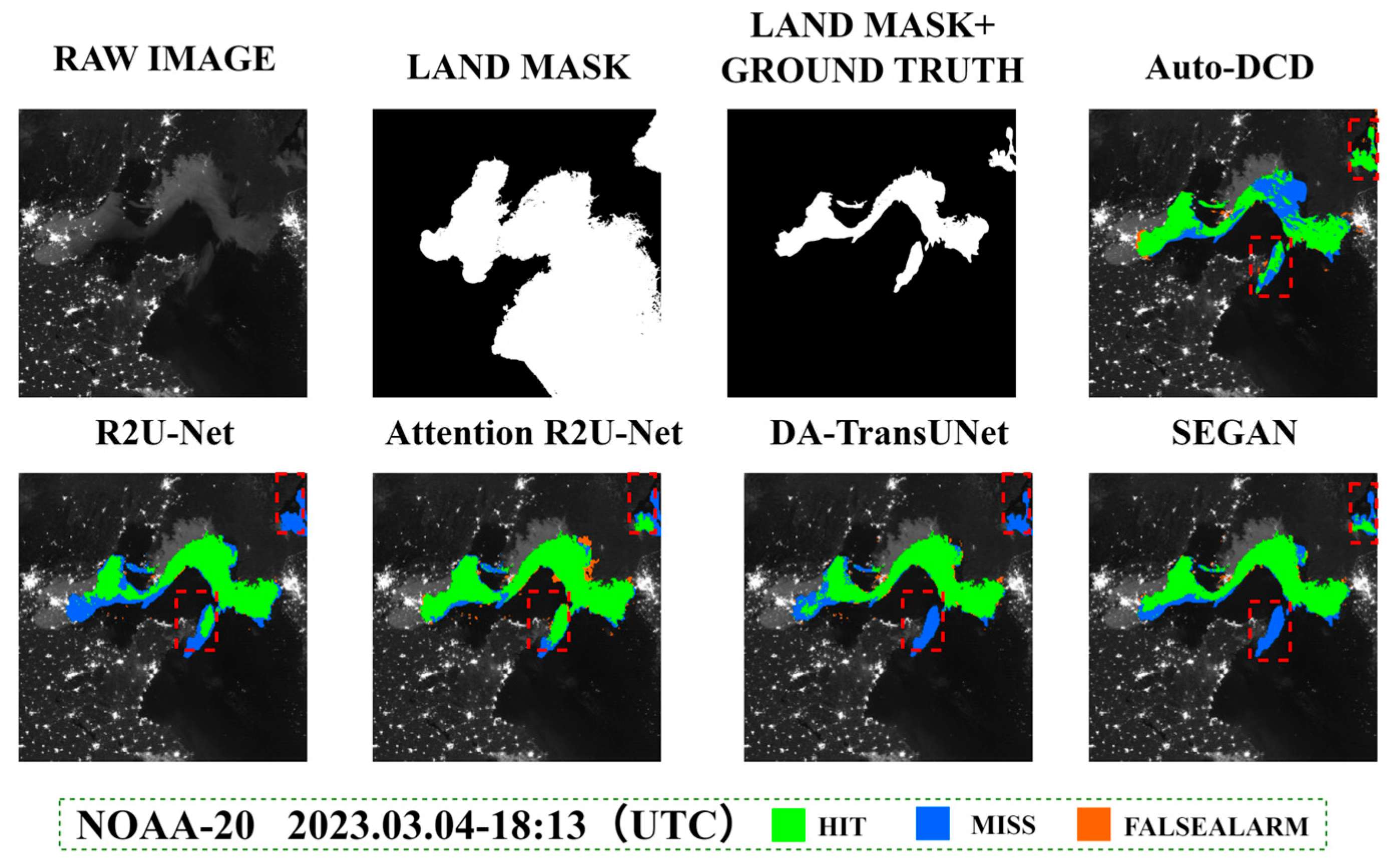
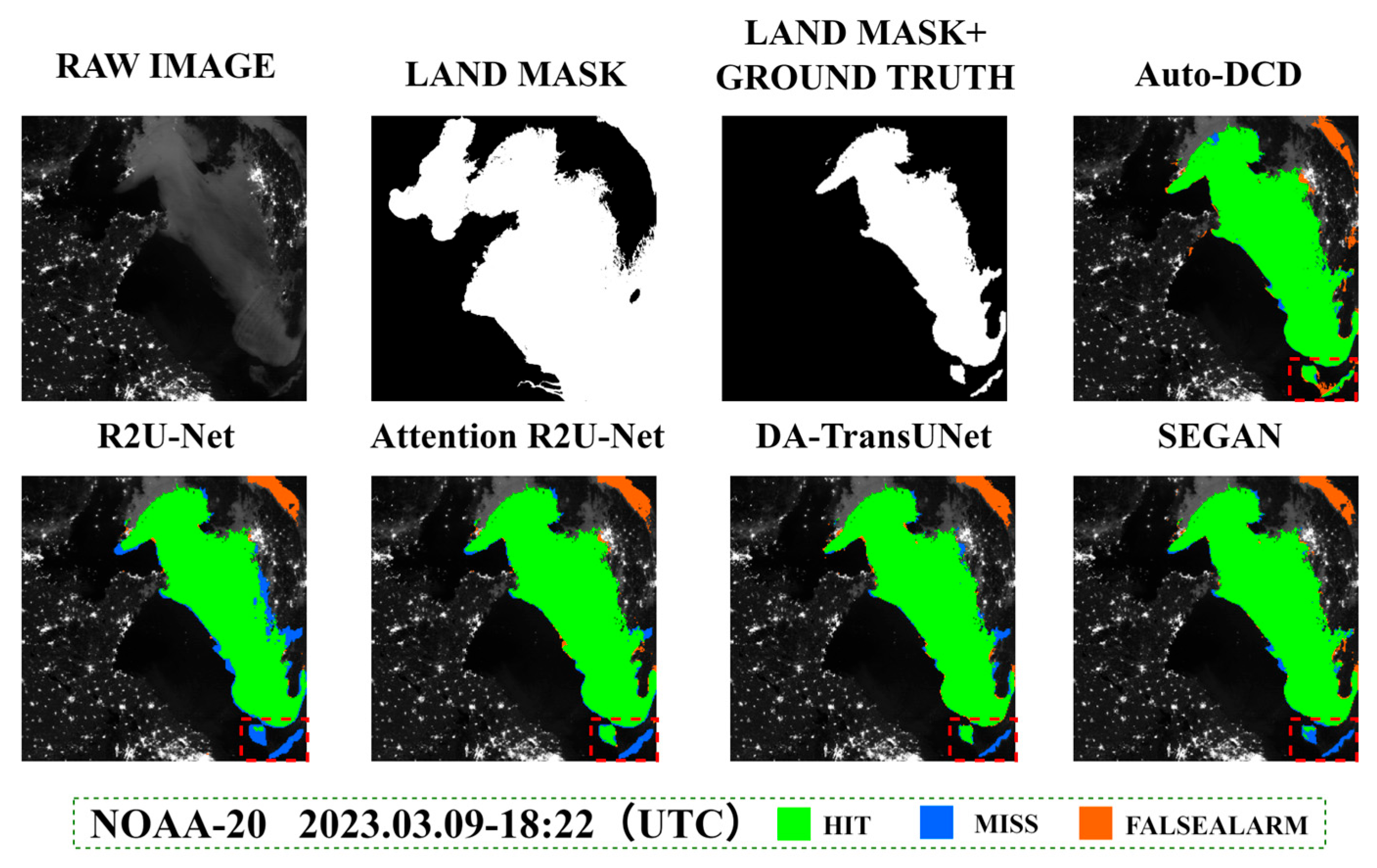
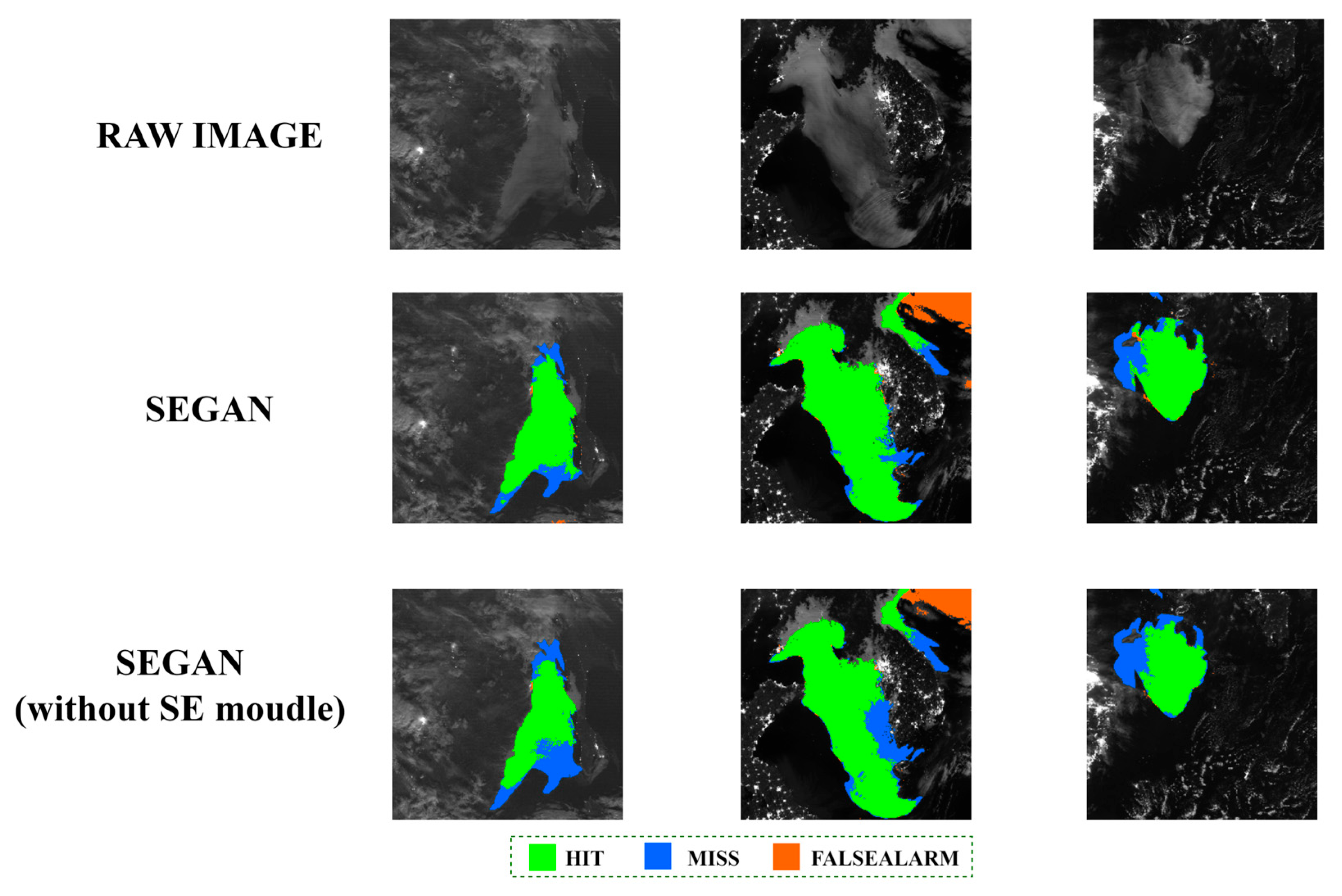
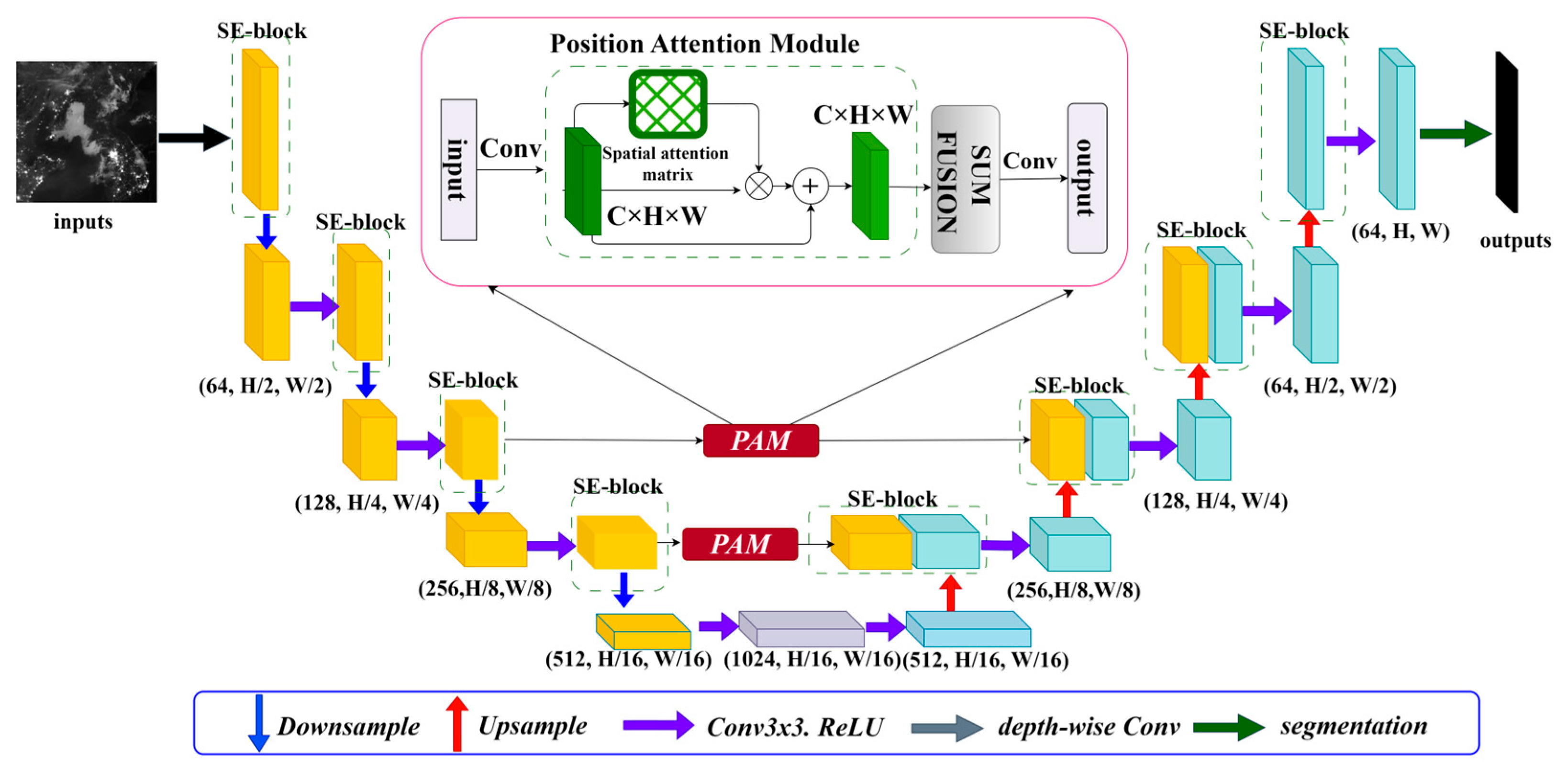
Nighttime sea fog exhibits high frequency and prolonged duration, posing significant risks to maritime navigation safety. Current detection methods primarily rely on the dual-infrared channel brightness temperature difference technique, which faces challenges such as threshold selection difficulties and a tendency toward overestimation. In contrast, the VIIRS Day/Night Band (DNB) offers exceptional nighttime visible-like cloud imaging capabilities, offering a new solution to alleviate the overestimation issues inherent in infrared detection algorithms. Recent advances in artificial intelligence have further addressed the threshold selection problem in traditional detection methods. Leveraging these developments, this study proposes a novel generative adversarial network model incorporating attention mechanisms (SEGAN) to achieve accurate nighttime sea fog detection using DNB data. Experimental results demonstrate that SEGAN achieves satisfactory performance, with probability of detection, false alarm rate, and critical success index reaching 0.8708, 0.0266, and 0.7395, respectively. Compared with the operational infrared detection algorithm, these metrics show improvements of 0.0632, 0.0287, and 0.1587. Notably, SEGAN excels at detecting sea fog obscured by thin cloud cover, a scenario where conventional infrared detection algorithms typically fail. SEGAN emphasizes semantic consistency in its output, endowing it with enhanced robustness across varying sea fog concentrations.
Keywords: GANs; VIIRS; nighttime sea fog GANs; VIIRS; nighttime sea fog