Article

Signatures of Breaking Waves in a Coastal Polynya Covered with Frazil Ice: A High-Resolution Satellite Image Case Study of Terra Nova Bay Polynya


by
Katarzyna Bradtke
1,*,
Wojciech Brodziński
1 and
Agnieszka Herman
2
1
Faculty of Oceanography and Geography, University of Gdansk, 81-378 Gdynia, Poland
2
Institute of Oceanology, Polish Academy of Sciences, 81-712 Sopot, Poland
*
Author to whom correspondence should be addressed.
Remote Sens. 2025, 17(18), 3198; https://doi.org/10.3390/rs17183198
Submission received: 11 July 2025 / Revised: 29 August 2025 / Accepted: 9 September 2025 / Published: 16 September 2025

Abstract

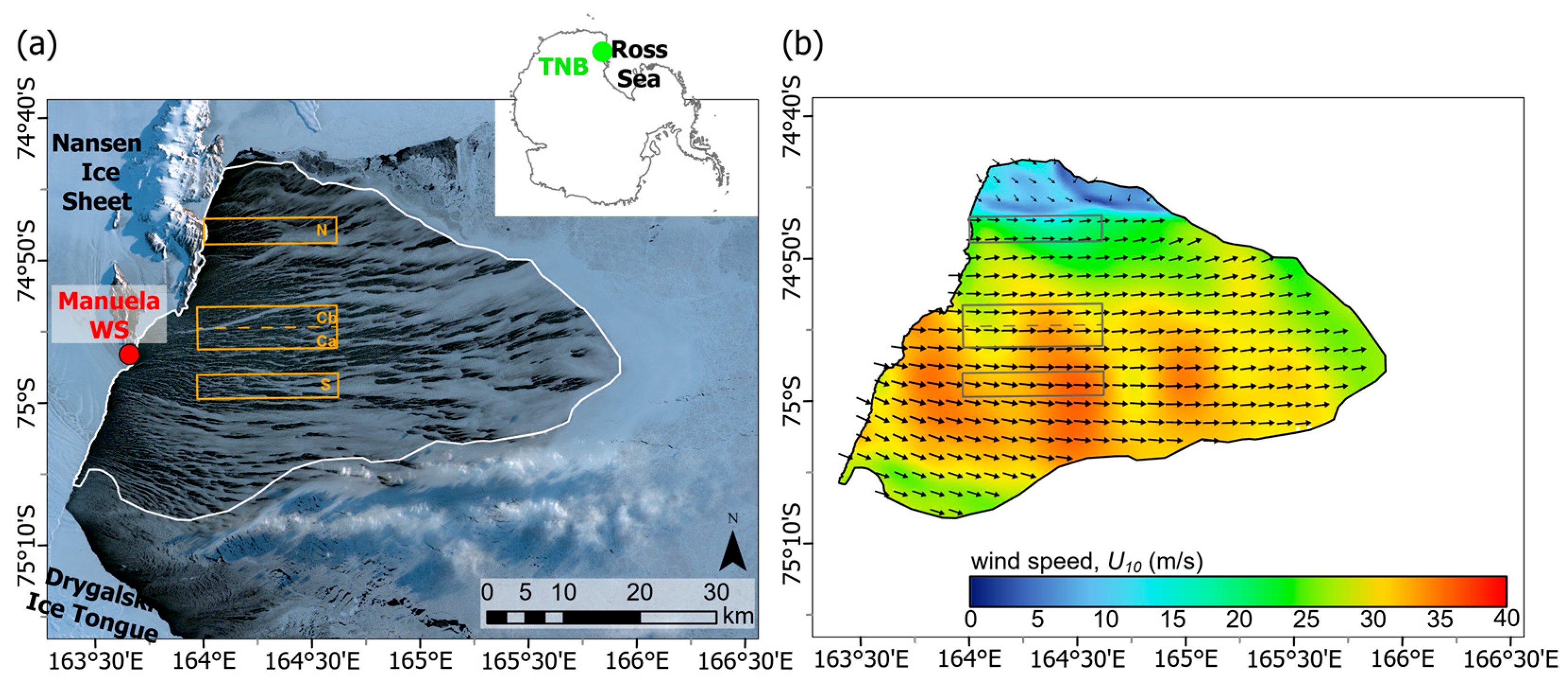
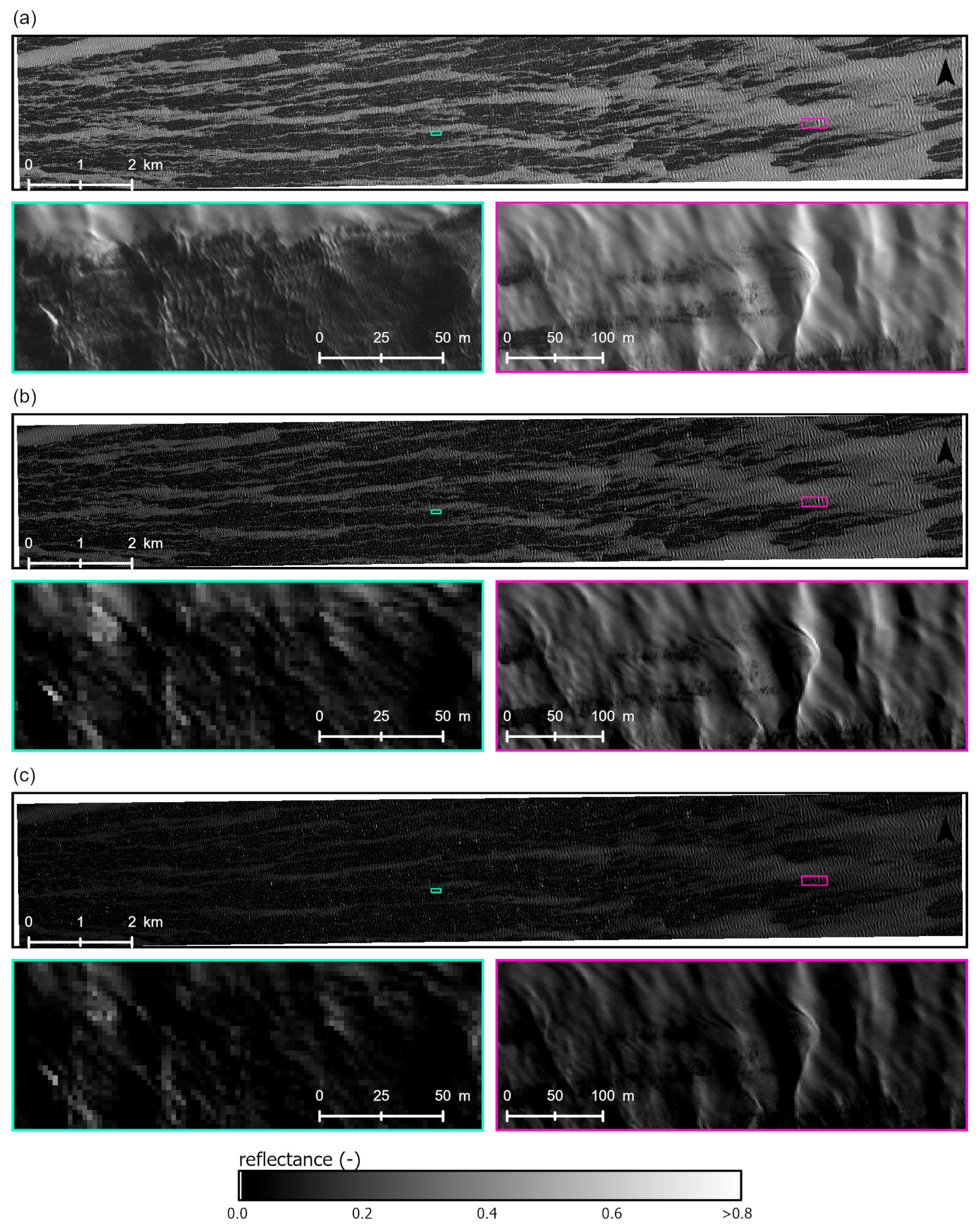
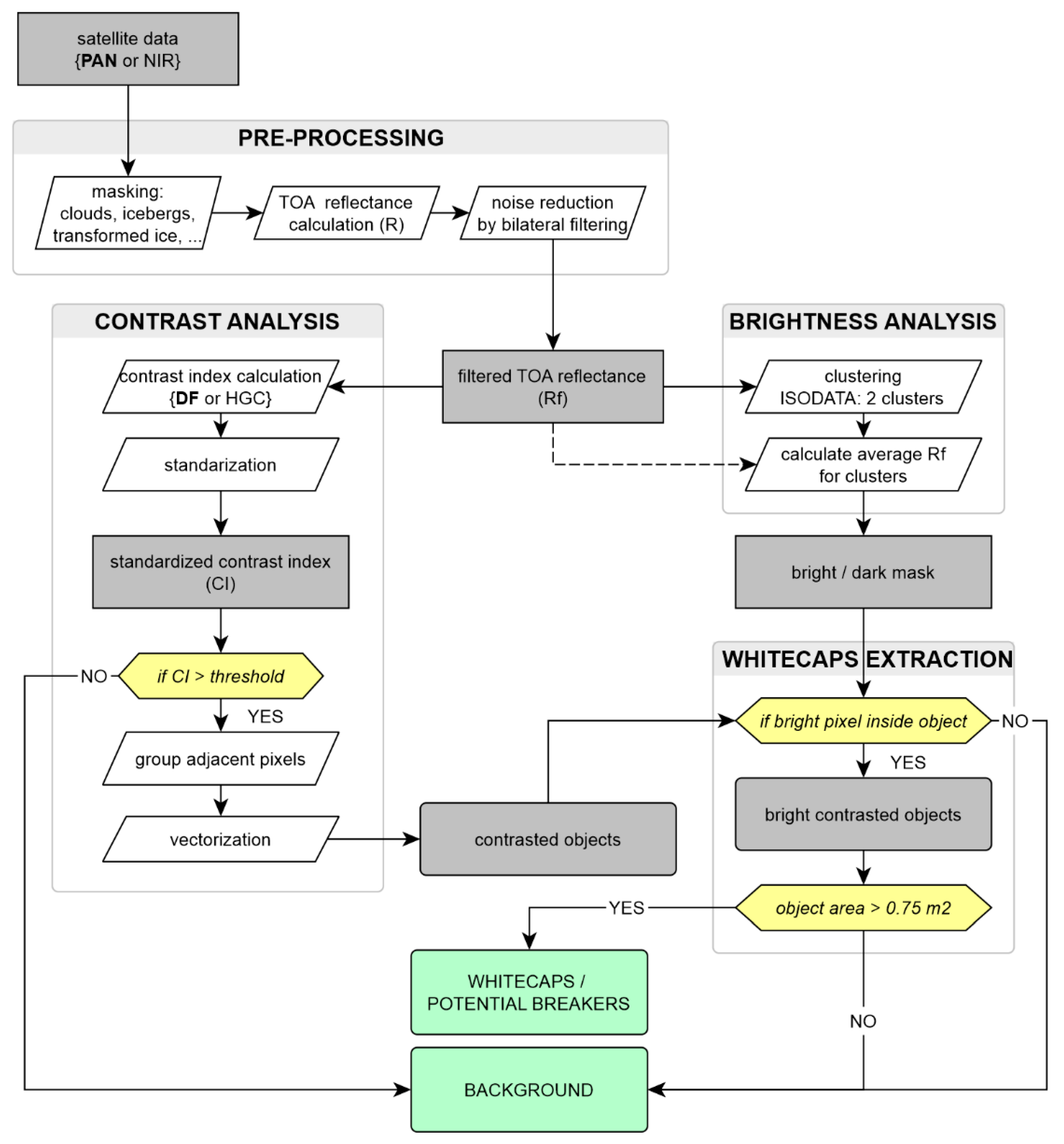
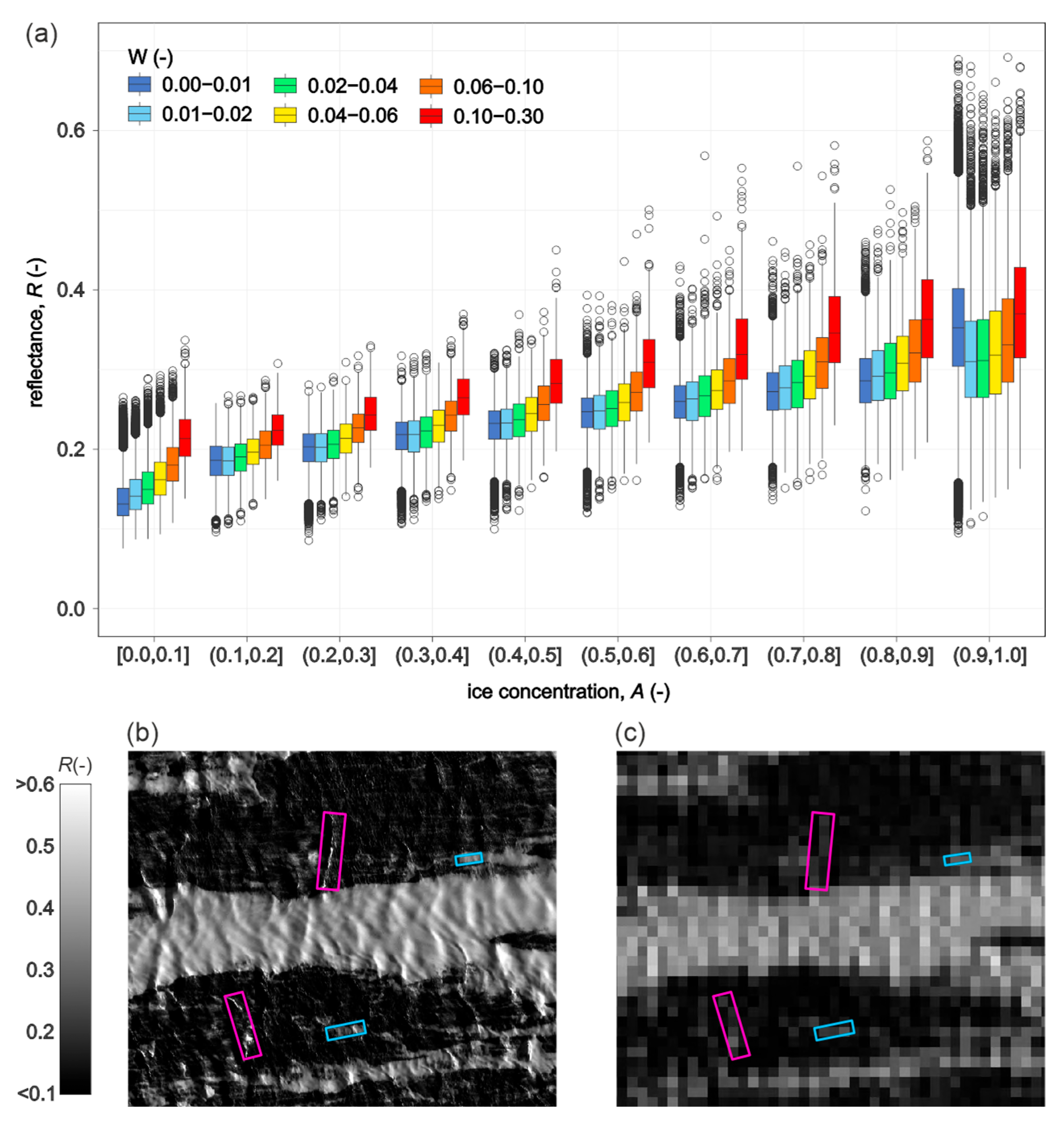
The study focuses on the detection of breaking wave crests in the highly dynamic waters of an Antarctic coastal polynya using high-resolution panchromatic satellite imagery. Accurate assessment of whitecap coverage is crucial for improving our understanding of the interactions between wave generation, air–sea heat exchange, and sea ice formation in these complex environments. As open-ocean whitecap detection methods are inadequate in coastal polynyas partially covered with frazil ice, we discuss an approach that exploits specific lighting conditions: the alignment of sunlight with the dominant wind direction and low solar elevation. Under such conditions, steep breaking waves cast pronounced shadows, which are used as the primary indicator of wave crests, particularly in frazil streak zones. The algorithm is optimized to exploit these conditions and minimize false positives along frazil streak boundaries. We applied the algorithm to a WorldView-2 image covering different parts of Terra Nova Bay Polynya (Ross Sea), a dynamic polar coastal zone. This case study demonstrates that the spatial distribution of detected breaking waves is consistent with ice conditions and wind forcing patterns, while also revealing deviations that point to complex wind–wave–ice interactions. Although quantitative validation of satellite-derived whitecaps coverage was not possible due to the lack of in situ data, the method performs reliably under a range of conditions. Limitations of the proposed approach are pointed out and discussed. Finally, the study highlights the risk of misinterpretation of lower-resolution reflectance data in areas where whitecaps and sea ice coexist at subpixel scales.
Keywords: terra nova bay polynya (TNBP); high-resolution panchromatic image; worldview-2 (WV2); breaking waves; frazil streaks; wave–ice interactions terra nova bay polynya (TNBP); high-resolution panchromatic image; worldview-2 (WV2); breaking waves; frazil streaks; wave–ice interactions