Comprehensive Assessment of NDVI Products Derived from Fengyun Satellites across China



Abstract
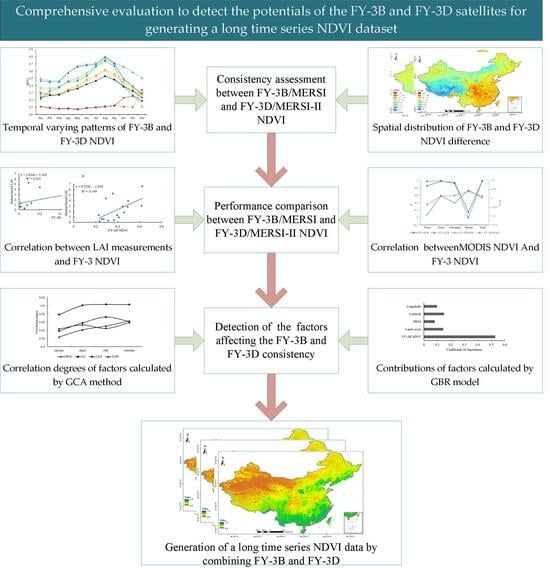
1. Introduction
2. Data and Methods
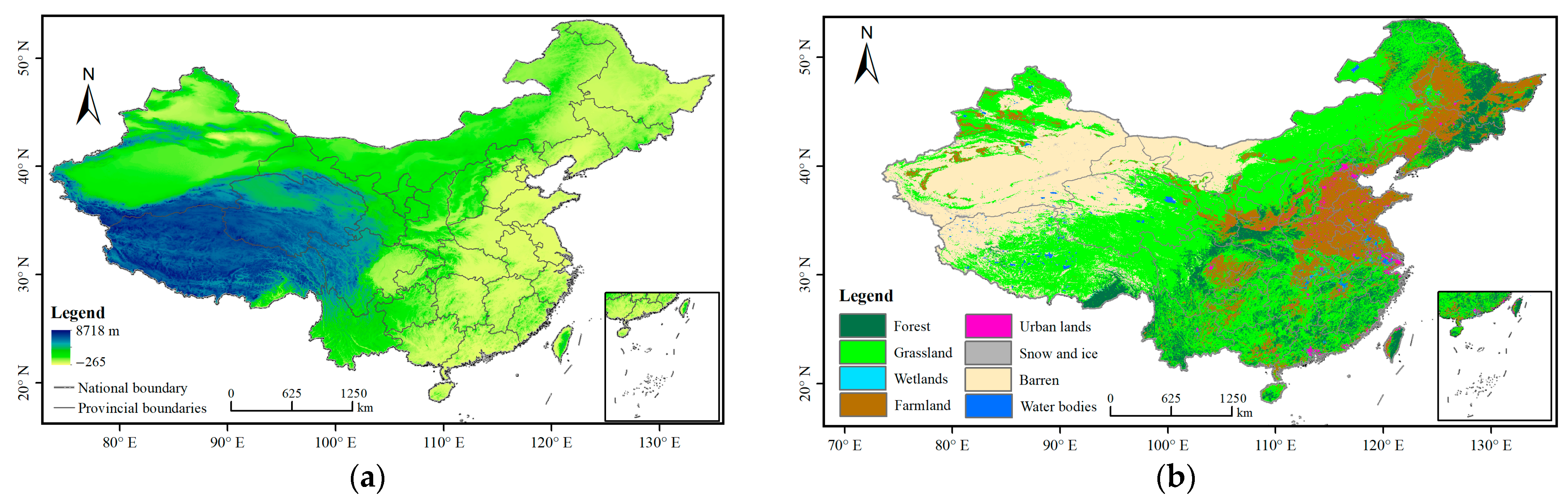
2.1. Study Area
2.2. Data
2.2.1. RCH-CEOS NDVI Product Derived from Fengyun Satellites
2.2.2. In Situ LAI Measurements from CMA
2.2.3. Land Cover and NDVI Products Derived from MODIS
2.2.4. DEM Data from GMTED2010
2.3. Methods
2.3.1. Grey Relational Analysis Method
2.3.2. Gradient Boosting Regression Model
2.4. Evaluation Criteria
3. Results and Analysis
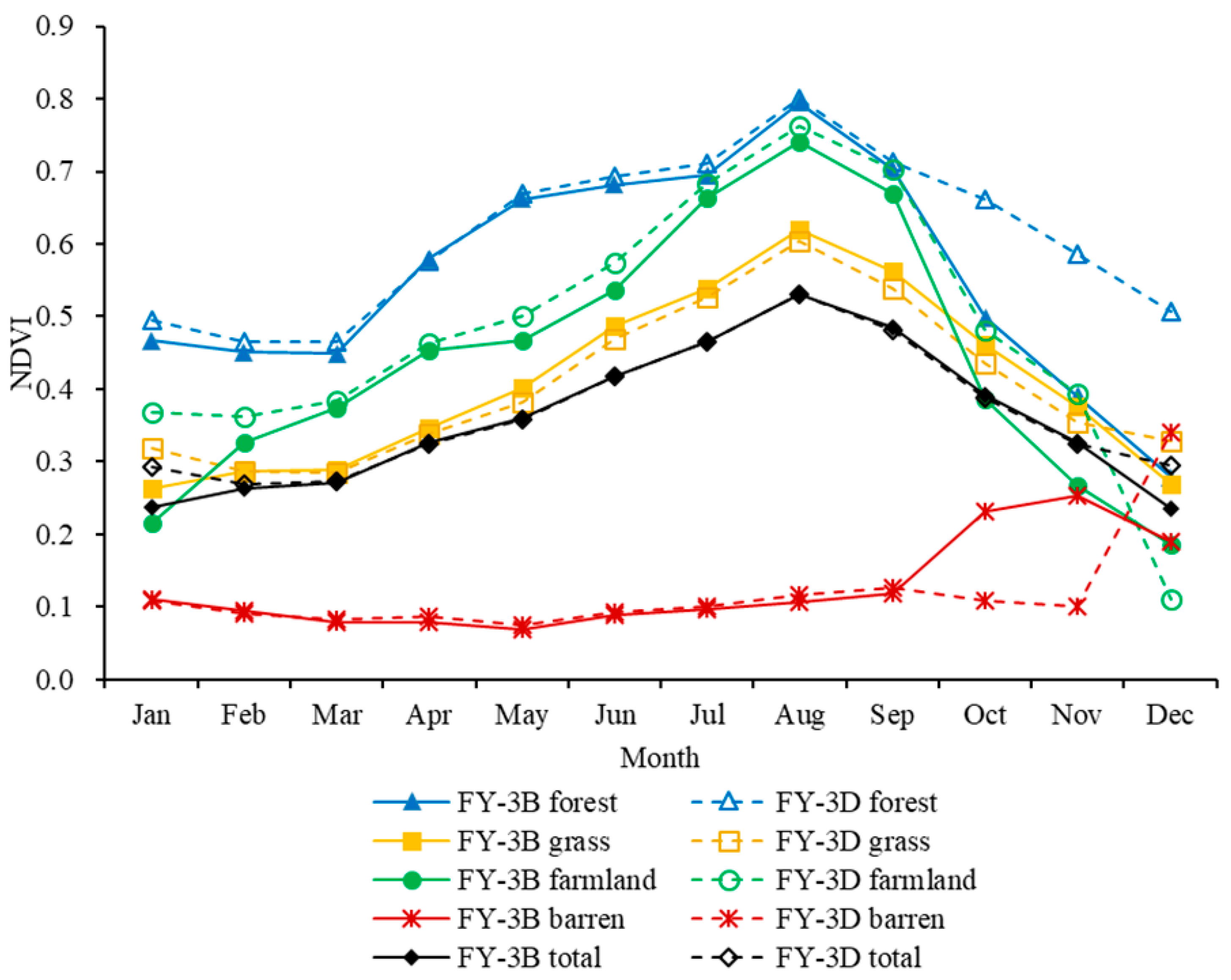
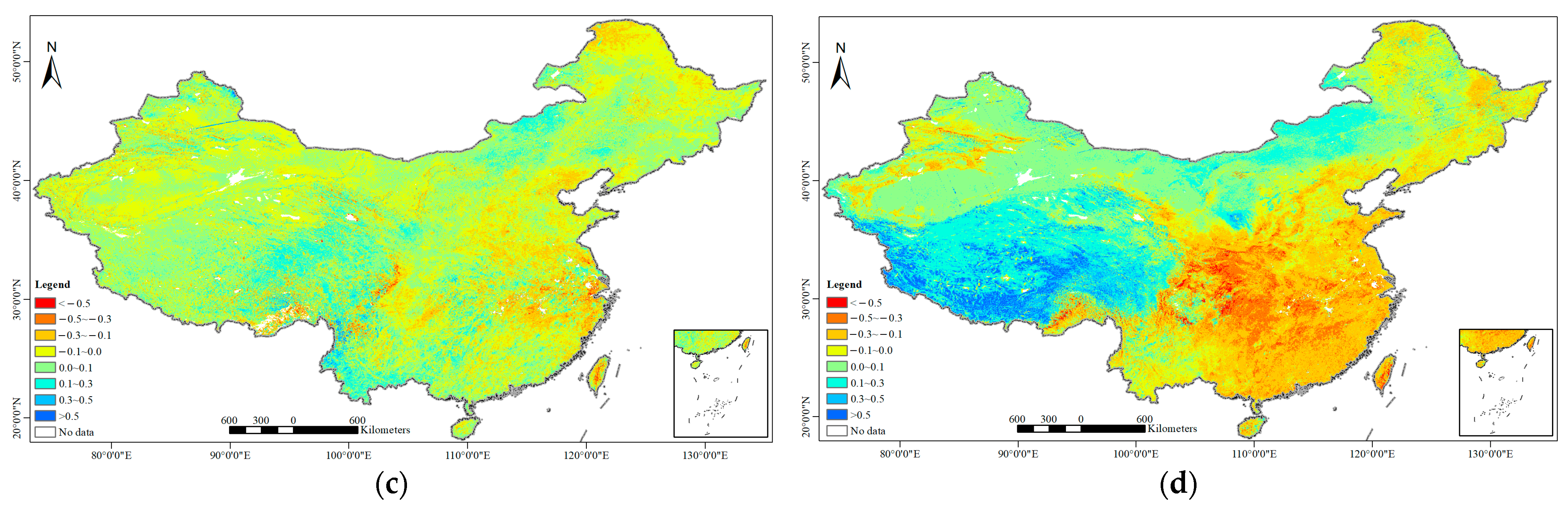
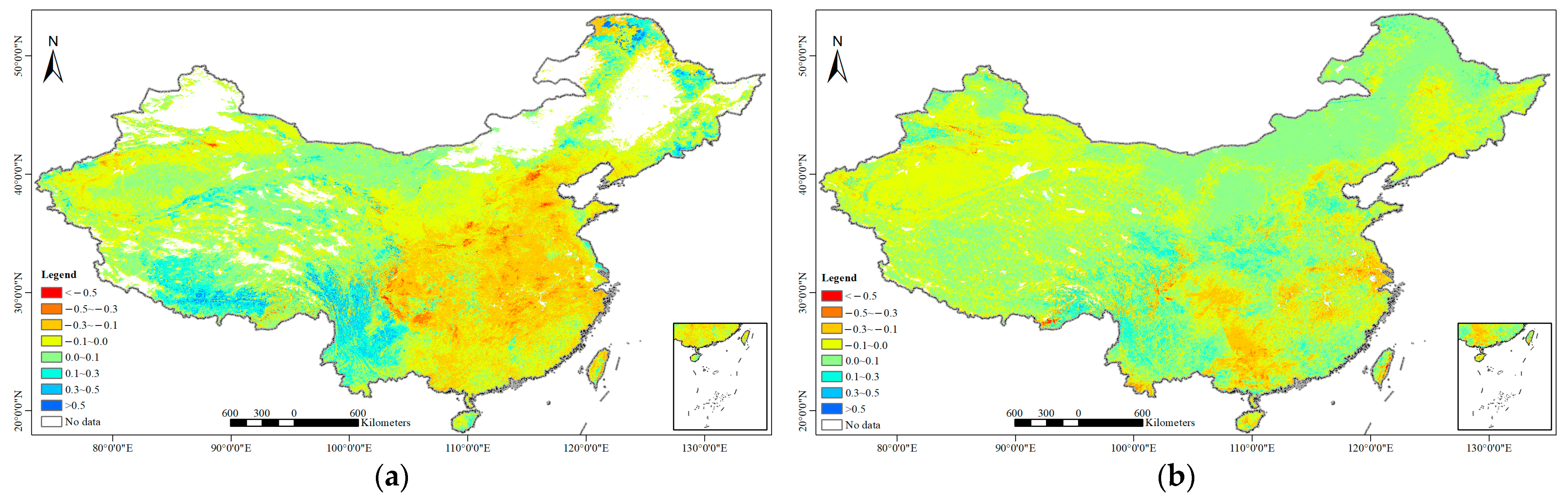
3.1. Consistency Assessment of NDVI Products Derived from Different Fengyun Satellites
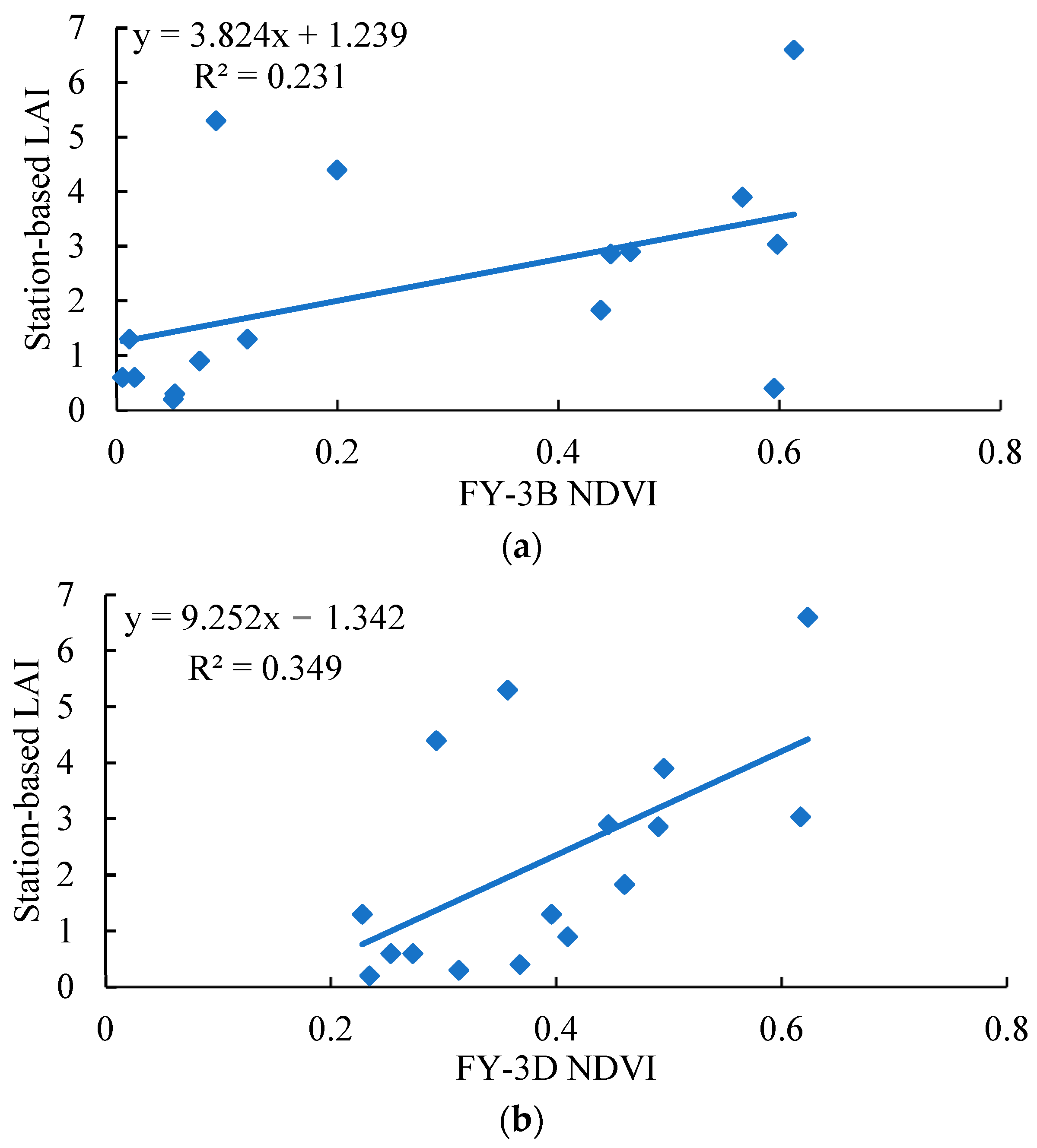
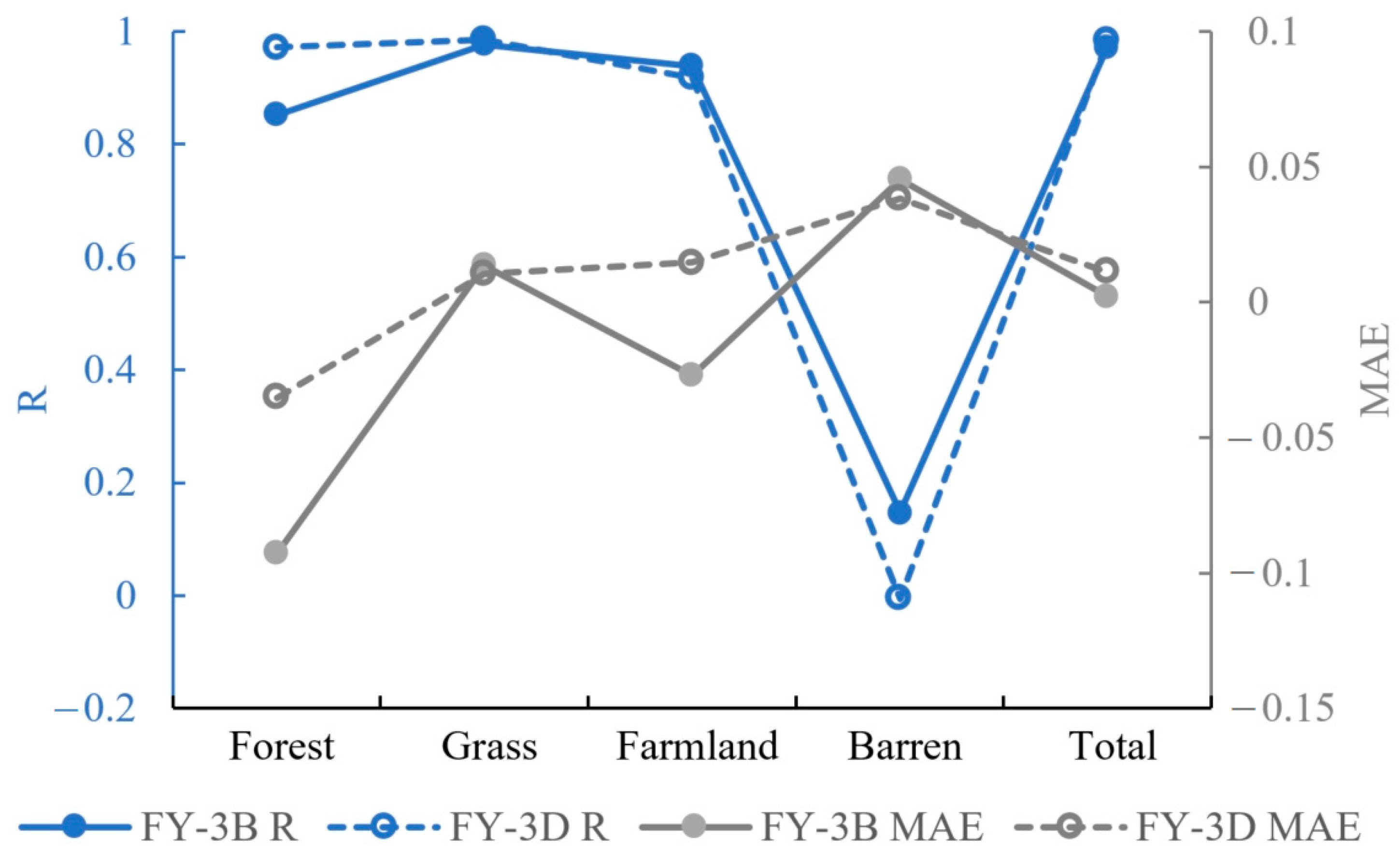
3.2. Comparing the Performances of Different Fengyun Satellites in Monitoring Vegetation Conditions
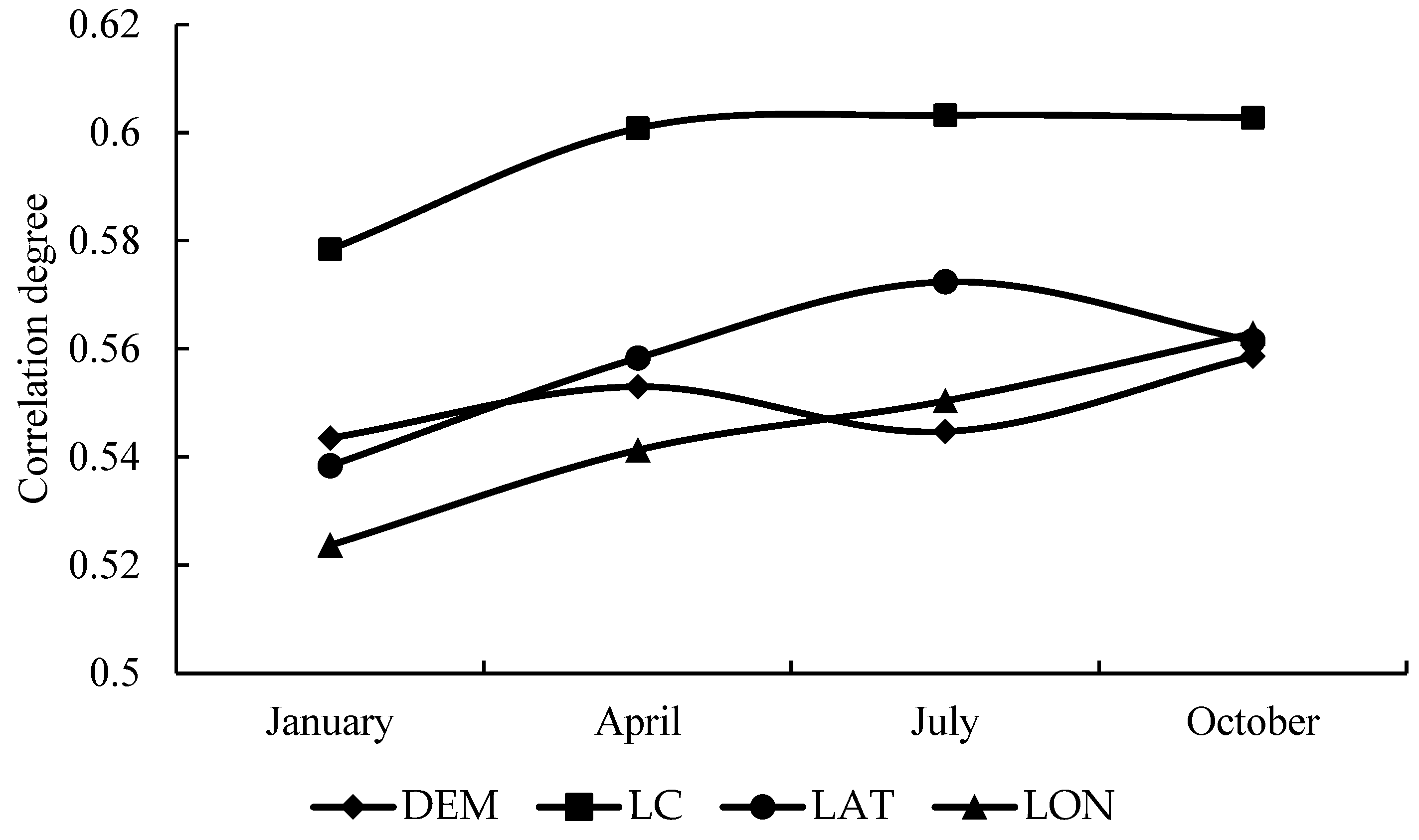
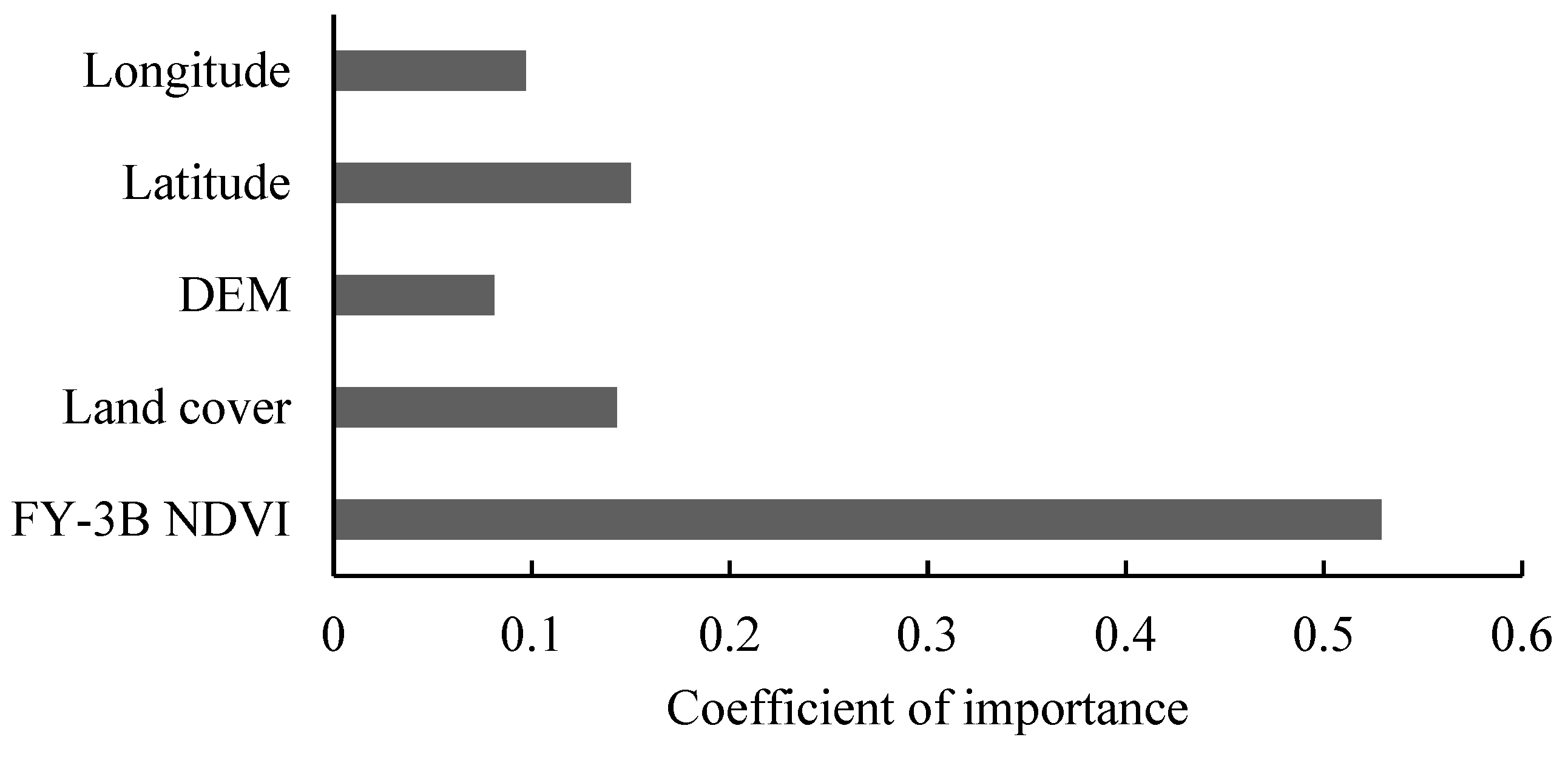
3.3. Detecting the Factors Affecting the NDVI Difference Using the GRA Method
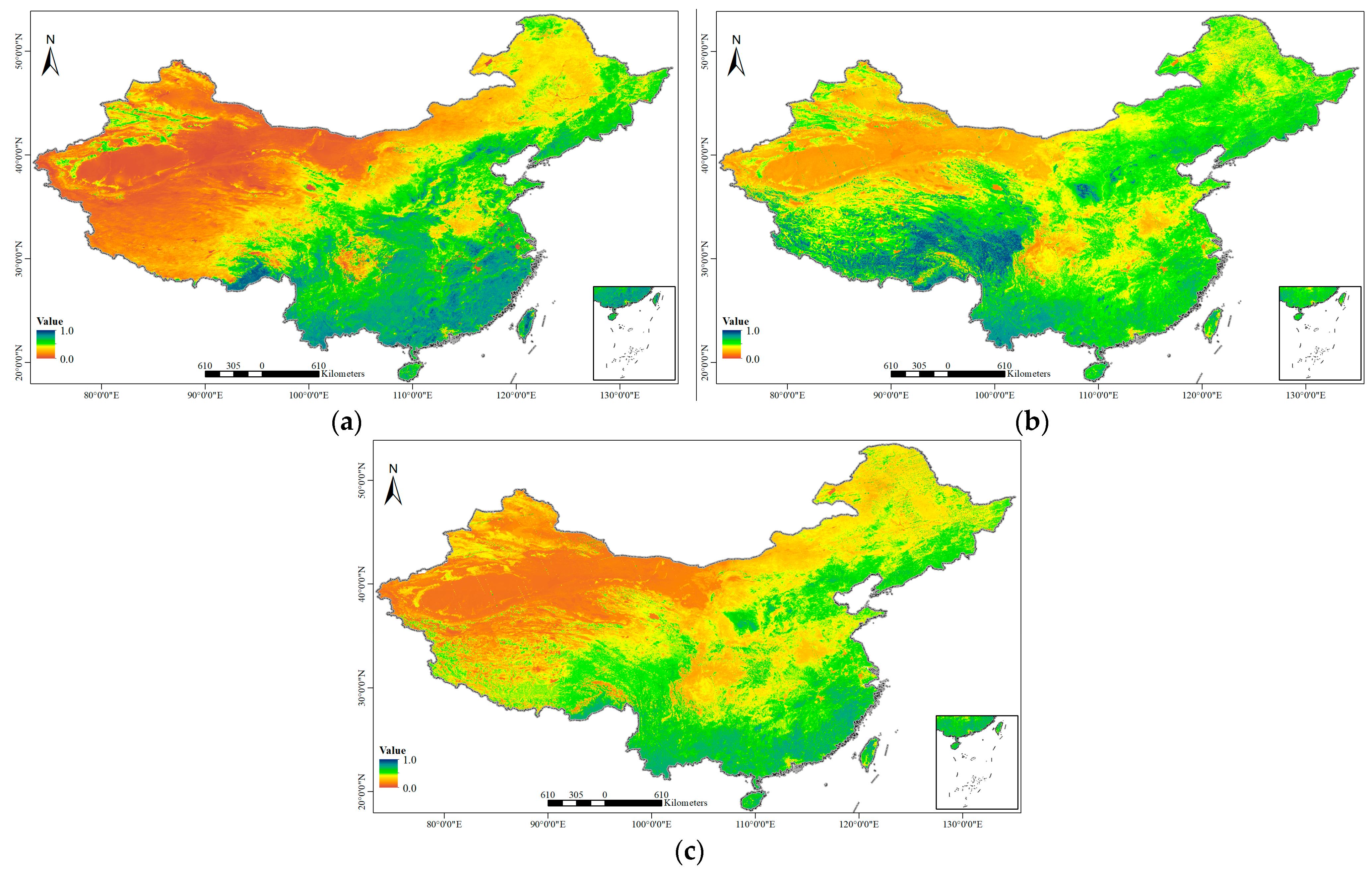
3.4. Establishing a GBR Model for Forming Long Time Series NDVI Data
4. Discussion
5. Practical Applications
6. Conclusions
Author Contributions
Funding
Data Availability Statement
Acknowledgments
Conflicts of Interest
References
- Dai, X.; Yang, G.; Liu, D.; Wan, R. Vegetation Carbon Sequestration Mapping in Herbaceous Wetlands by Using a MODIS EVI Time-Series Data Set: A Case in Poyang Lake Wetland, China. Remote Sens. 2020, 12, 3000. [Google Scholar] [CrossRef] [Scilit]
- Zhang, X.; Cao, Q.; Chen, H.; Quan, Q.; Li, C.; Dong, J.; Chang, M.; Yan, S.; Liu, J. Effect of Vegetation Carryover and Climate Variability on the Seasonal Growth of Vegetation in the Upper and Middle Reaches of the Yellow River Basin. Remote Sens. 2022, 14, 5011. [Google Scholar] [CrossRef] [Scilit]
- Thackway, R.; Lee, A.; Donohue, R.; Keenan, R.; Wood, M. Vegetation information for improved natural resource management in Australia. Landsc. Urban Plan. 2007, 79, 127–136. [Google Scholar] [CrossRef] [Scilit]
- Becker-Reshef, I.; Vermote, E.; Lindeman, M.; Justice, C. A generalized regression-based model for forecasting winter wheat yields in Kansas and Ukraine using MODIS data. Remote Sens. Environ. 2010, 114, 1312–1323. [Google Scholar] [CrossRef] [Scilit]
- Khan, J.; Wang, P.; Xie, Y.; Wang, L.; Li, L. Mapping MODIS LST NDVI imagery for drought monitoring in Punjab Pakistan. IEEE Access 2018, 6, 19898–19911. [Google Scholar] [CrossRef] [Scilit]
- Bhuyan, U.; Zang, C.; Vicente-Serrano, S.M.; Menzel, A. Exploring Relationships among Tree-Ring Growth, Climate Variability, and Seasonal Leaf Activity on Varying Timescales and Spatial Resolutions. Remote Sens. 2017, 9, 526. [Google Scholar] [CrossRef] [Scilit]
- Xiao, Z.; Liang, S.; Tian, X.; Jia, K.; Yao, Y.; Jiang, B. Reconstruction of long-term temporally continuous NDVI and surface reflectance from AVHRR data. IEEE J. STARS 2017, 14, 5551–5568. [Google Scholar] [CrossRef] [Scilit]
- Jin, Z.; Xu, B. A Novel Compound Smoother-RMMEH to Reconstruct MODIS NDVI Time Series. IEEE Trans. Geosci. Remote Sens. 2013, 10, 942–946. [Google Scholar] [CrossRef] [Scilit]
- Ke, Y.; Im, J.; Lee, J.; Gong, H.; Ryu, Y. Characteristics of Landsat 8 OLI-derived NDVI by comparison with multiple satellite sensors and in-situ observations. Remote Sens. Environ. 2015, 164, 298–313. [Google Scholar] [CrossRef] [Scilit]
- Han, X.; Weng, F.; Han, Y.; Huang, H.; Li, S. Vegetation indices derived from Fengyun-3D MERSI-II data. In Proceedings of the IGARSS 2020—2020 IEEE International Geoscience and Remote Sensing Symposium, Waikoloa, HI, USA, 26 September–2 October 2020. [Google Scholar]
- Xiao, F.; Liu, Q.; Li, S.; Qin, Y.; Huang, D.; Wang, Y.; Wang, L. A Study of the Method for Retrieving the Vegetation Index from FY-3D MERSI-II Data. Remote Sens. 2023, 15, 491. [Google Scholar] [CrossRef] [Scilit]
- Yang, Z.D.; Zhang, P.; Gu, S.Y. Capability of Fengyun-3D satellite in earth system observation. J. Meteorol. Res. 2019, 33, 1113–1130. [Google Scholar] [CrossRef] [Scilit]
- Liu, Y.; Han, X.; Weng, F.; Xu, Y.; Zhang, Y.; Tang, S. Estimation of Terrestrial Net Primary Productivity in China from Fengyun-3D Satellite Data. J. Meteorol. Res. 2022, 36, 401–416. [Google Scholar] [CrossRef] [Scilit]
- Jin, S.; Zhang, M.; Ma, Y.; Gong, W.; Chen, C.; Yang, L.; Hu, X.; Liu, B.; Chen, N.; Du, B.; et al. Adapting the Dark Target Algorithm to Advanced MERSI Sensor on the FengYun-3-D Satellite: Retrieval and Validation of Aerosol Optical Depth Over Land. IEEE Trans. Geosci. Remote Sens. 2021, 59, 8781–8797. [Google Scholar] [CrossRef] [Scilit]
- Ma, X.; Yao, Y.; Zhang, B.; Du, Z. FY-3A/MERSI precipitable water vapor reconstruction and calibration using multi-source observation data based on a generalized regression neural network. Atmos. Res. 2022, 265, 105893. [Google Scholar] [CrossRef] [Scilit]
- Han, X.; Weng, F.; Han, Y. Fengyun-3D MERSI True Color Imagery Developed for Environmental Applications. J. Meteorol. Res. 2019, 33, 914–924. [Google Scholar] [CrossRef] [Scilit]
- Mancino, G.; Ferrara, A.; Padula, A.; Nolè, A. Cross-Comparison between Landsat 8 (OLI) and Landsat 7 (ETM+) Derived Vegetation Indices in a Mediterranean Environment. Remote Sens. 2020, 12, 291. [Google Scholar] [CrossRef] [Scilit]
- Wei, X.; Gu, X.; Meng, Q.; Yu, T.; Jia, K.; Zhan, Y.; Wang, C. Cross-Comparative Analysis of GF-1 Wide Field View and Landsat-7 Enhanced Thematic Mapper Plus Data. J. Appl. Spectrosc. 2017, 84, 829–836. [Google Scholar] [CrossRef] [Scilit]
- Hao, C.; Wu, S.; Xu, C. Comparison of some vegetation indices in seasonal information. Chin. Geogr. Sci. 2008, 18, 242–248. [Google Scholar] [CrossRef] [Scilit]
- Xu, D.; Guo, X. Compare NDVI Extracted from Landsat 8 Imagery with that from Landsat 7 Imagery. Am. J. Remote Sens. 2014, 2, 10–14. [Google Scholar] [CrossRef] [Scilit]
- Yang, Q.; Jiang, C.; Ding, T. Impacts of Extreme-High-Temperature Events on Vegetation in North China. Remote Sens. 2023, 15, 4542. [Google Scholar] [CrossRef] [Scilit]
- Xu, X.; Piao, S.; Wang, X.; Chen, A.; Ciais, P.; Myneni, R.B. Spatio-temporal patterns of the area experiencing negative vegetation growth anomalies in China over the last three decades. Environ. Res. Lett. 2012, 7, 035701. [Google Scholar] [CrossRef] [Scilit]
- Han, X.; Gao, H.; Yang, J.; Li, Y.; Geng, W. Advances in ecological applications of Fengyun satellite data. J. Meteorol. Res. 2021, 35, 743–758. [Google Scholar] [CrossRef] [Scilit]
- Vermote, E.F.; Saleous, N.Z.E.; Justice, C.O. Atmospheric correction of MODIS data in the visible to middle infrared: First results. Remote Sens. Environ. 2002, 83, 97–111. [Google Scholar] [CrossRef] [Scilit]
- Song, X.; Huang, C.; Feng, M.; Sexton, J.O.; Channan, S.; Townshend, J.R. Integrating global land cover products for improved forest cover characterization: An application in North America. Int. J. Digit. Earth 2014, 7, 709–724. [Google Scholar] [CrossRef] [Scilit]
- Garcia-Mora, T.J.; Mas, J.; Hinkley, E.A. Land cover mapping applications with MODIS: A literature review. Int. J. Digit. Earth 2012, 5, 63–87. [Google Scholar] [CrossRef] [Scilit]
- Meng, L.; Liu, H.; Zhang, X.; Ren, C.; Ustin, S.; Qiu, Z.; Xu, M.; Guo, D. Assessment of the effectiveness of spatiotemporal fusion of multi-source satellite images for cotton yield estimation. Comput. Electron. Agric. 2019, 162, 44–52. [Google Scholar] [CrossRef] [Scilit]
- Wang, L.; Fang, S.; Pei, Z.; Zhu, Y. Using FengYun-3C VSM Data and Multivariate Models to Estimate Land Surface Soil Moisture. Remote Sens. 2020, 12, 1038. [Google Scholar] [CrossRef] [Scilit]
- Danielson, J.; Gesch, D. Global Multi-Resolution Terrain Elevation Data 2010 (GMTED2010); U.S. Geological Survey Open-File Report 2011-1073; USGS: Reston, VA, USA, 2011; 26p. [Google Scholar]
- Jiang, H.; Sun, Z.; Guo, H.; Weng, Q.; Du, W.; Xing, Q.; Cai, G. An assessment of urbanization sustainability in China between 1990 and 2015 using land use efficiency indicators. npj Urban Sustain. 2021, 1, 34. [Google Scholar] [CrossRef] [Scilit]
- Xie, Y.; Liu, S. Research on evaluations of several grey relational models adapt to grey relational axioms. J. Syst. Eng. Electron. 2009, 20, 304–309. [Google Scholar]
- Liu, H.; Wang, H.; Yuan, Y.; Zhang, C. Models for multiple attribute decision making with picture fuzzy information. J. Intell. Fuzzy Syst. 2019, 37, 1973–1980. [Google Scholar] [CrossRef] [Scilit]
- Zhang, J.; Zhang, Q.; Zhang, J. The result greyness problem of the grey relational analysis and its solution. J. Intell. Fuzzy Syst. 2023, 44, 6079–6088. [Google Scholar] [CrossRef] [Scilit]
- Wang, L.; Wang, P.; Li, L.; Xun, L.; Kong, Q.; Liang, S. Developing an integrated indicator for monitoring maize growth condition using remotely sensed vegetation temperature condition index and leaf area index. Comput. Electron. Agric. 2018, 152, 240–349. [Google Scholar] [CrossRef] [Scilit]
- Kuo, Y.; Yang, T.; Huang, G. The use of a grey-based Taguchi method for optimizing multi-response simulation problems. Eng. Optim. 2008, 40, 517–528. [Google Scholar] [CrossRef] [Scilit]
- Bühlmann, P.; Hothorn, T. Boosting Algorithms: Regularization, Prediction and Model Fitting. Stat. Sci. 2007, 22, 477–505. [Google Scholar]
- Natekin, A.; Knoll, A. Gradient boosting machines, a tutorial. Front. Neurorobot. 2012, 7, 21. [Google Scholar] [CrossRef] [Scilit] [PubMed]
- Friedman, J.H. Greedy function approximation: A gradient boosting machine. Ann. Stat. 2001, 29, 1189–1232. [Google Scholar] [CrossRef] [Scilit]
- Xu, N.; Wang, Z.; Dai, Y.; Li, Q.; Zhu, W.; Wang, R.; Finkelman, R.B. Prediction of higher heating value of coal based on gradient boosting regression tree model. Int. J. Coal Geol. 2023, 274, 104293. [Google Scholar] [CrossRef] [Scilit]
- Yurttakal, A.H. Extreme gradient boosting regression model for soil thermal conductivity. Therm. Sci. 2021, 25, S1–S7. [Google Scholar] [CrossRef] [Scilit]
- Zhang, F.; Zhu, X.; Hu, T.; Guo, W.; Chen, C.; Liu, L. Urban Link Travel Time Prediction Based on a Gradient Boosting Method Considering Spatiotemporal Correlations. ISPRS Int. J. Geoinf. 2016, 5, 201. [Google Scholar] [CrossRef] [Scilit]
- Huete, A.; Justice, C.; van Leeuwen, W. Modis Vegetation Index (MOD13). Algorithm Theor. Basis Doc. 1999, 3, 213. [Google Scholar]
- Wang, D.; Chen, Y.; Wang, M.; Quan, J.; Jiang, T. A New Neighboring Pixels Method for Reducing Aerosol Effects on the NDVI Images. Remote Sens. 2016, 8, 489. [Google Scholar] [CrossRef] [Scilit]
- Hideki, K.; Dennis, G.D. Atmospheric conditions for monitoring the long-term vegetation dynamics in the Amazon using normalized difference vegetation index. Remote Sens. Environ. 2005, 97, 519–525. [Google Scholar]
- Teillet, P.M.; Ren, X. Spectral band difference effects on vegetation indices derived from multiple satellite sensor data. Can. J. Remote Sens. 2008, 34, 159–173. [Google Scholar] [CrossRef] [Scilit]
- Wang, S.; Li, X.; Ge, Y.; Jin, R.; Ma, M.; Liu, Q.; Wen, J.; Liu, S. Validation of Regional-Scale Remote Sensing Products in China: From Site to Network. Remote Sens. 2016, 8, 980. [Google Scholar] [CrossRef] [Scilit]
- Jackson, T.J.; Bindlish, R.; Cosh, M.H.; Zhao, T.J.; Starks, P.J.; Bosch, D.D.; Seyfried, M.; Moran, M.S.; Goodrich, D.C.; Kerr, Y.H.; et al. Validation of soil moisture and ocean salinity (SMOS) soil moisture over watershed networks in the U.S. IEEE Trans. Geosci. Remote Sens. 2012, 50, 1530–1543. [Google Scholar] [CrossRef] [Scilit]





| Error | FY-3B NDVI | GBR NDVI | ||||||||||
|---|---|---|---|---|---|---|---|---|---|---|---|---|
| Dataset | R | p | RMSE | MAE | R | p | RoC | RMSE | RoC | MAE | RoC | |
| Training | 0.902 | <0.001 | 0.092 | 0.065 | 0.947 | <0.001 | +5.0% | 0.067 | −27.2% | 0.046 | −29.2% | |
| Testing | 0.774 | <0.001 | 0.120 | 0.090 | 0.867 | <0.001 | +17.2% | 0.101 | −15.8% | 0.078 | −13.3% | |
| Validation | 0.547 | <0.001 | 0.213 | 0.159 | 0.829 | <0.001 | +51.6% | 0.140 | −34.3% | 0.107 | −32.7% | |
Disclaimer/Publisher’s Note: The statements, opinions and data contained in all publications are solely those of the individual author(s) and contributor(s) and not of MDPI and/or the editor(s). MDPI and/or the editor(s) disclaim responsibility for any injury to people or property resulting from any ideas, methods, instructions or products referred to in the content. |
© 2024 by the authors. Licensee MDPI, Basel, Switzerland. This article is an open access article distributed under the terms and conditions of the Creative Commons Attribution (CC BY) license (https://creativecommons.org/licenses/by/4.0/).
Share and Cite
Wang, L.; Han, X.; Fang, S.; Xiao, F. Comprehensive Assessment of NDVI Products Derived from Fengyun Satellites across China. Remote Sens. 2024, 16, 1363. https://doi.org/10.3390/rs16081363
Wang L, Han X, Fang S, Xiao F. Comprehensive Assessment of NDVI Products Derived from Fengyun Satellites across China. Remote Sensing. 2024; 16(8):1363. https://doi.org/10.3390/rs16081363
Chicago/Turabian StyleWang, Lei, Xiuzhen Han, Shibo Fang, and Fengjin Xiao. 2024. "Comprehensive Assessment of NDVI Products Derived from Fengyun Satellites across China" Remote Sensing 16, no. 8: 1363. https://doi.org/10.3390/rs16081363
APA StyleWang, L., Han, X., Fang, S., & Xiao, F. (2024). Comprehensive Assessment of NDVI Products Derived from Fengyun Satellites across China. Remote Sensing, 16(8), 1363. https://doi.org/10.3390/rs16081363