Next Article in Journal
An Investigation of Impacts of Surface Waves-Induced Mixing on the Upper Ocean under Typhoon Megi (2010)
Next Article in Special Issue
A Unified Brightness Temperature Features Analysis Framework for Mapping Mare Basalt Units Using Chang’e-2 Lunar Microwave Sounder (CELMS) Data
Previous Article in Journal
Video SAR Moving Target Shadow Detection Based on Intensity Information and Neighborhood Similarity
Previous Article in Special Issue
Inversion of Upstream Solar Wind Parameters from ENA Observations at Mars
 
 
Correction published on 6 June 2023, see Remote Sens. 2023, 15(12), 2956.
Article

Lunar Procellarum KREEP Terrane (PKT) Stratigraphy and Structure with Depth: Evidence for Significantly Decreased Th Concentrations and Thermal Evolution Consequences


1
Center for Lunar and Planetary Science, Institute of Geochemistry, Chinese Academy of Sciences, Guiyang 550081, China
2
University of Chinese Academy of Sciences, Beijing 100049, China
3
Department of Earth, Environmental and Planetary Sciences, Brown University, Providence, RI 02912, USA
4
Institute for Scientific Information, Clarivate, 70 St. Mary Axe, London EC3A 8BE, UK
*
Author to whom correspondence should be addressed.
Remote Sens. 2023, 15(7), 1861; https://doi.org/10.3390/rs15071861
Submission received: 28 February 2023 / Revised: 26 March 2023 / Accepted: 28 March 2023 / Published: 30 March 2023 / Corrected: 6 June 2023

Abstract

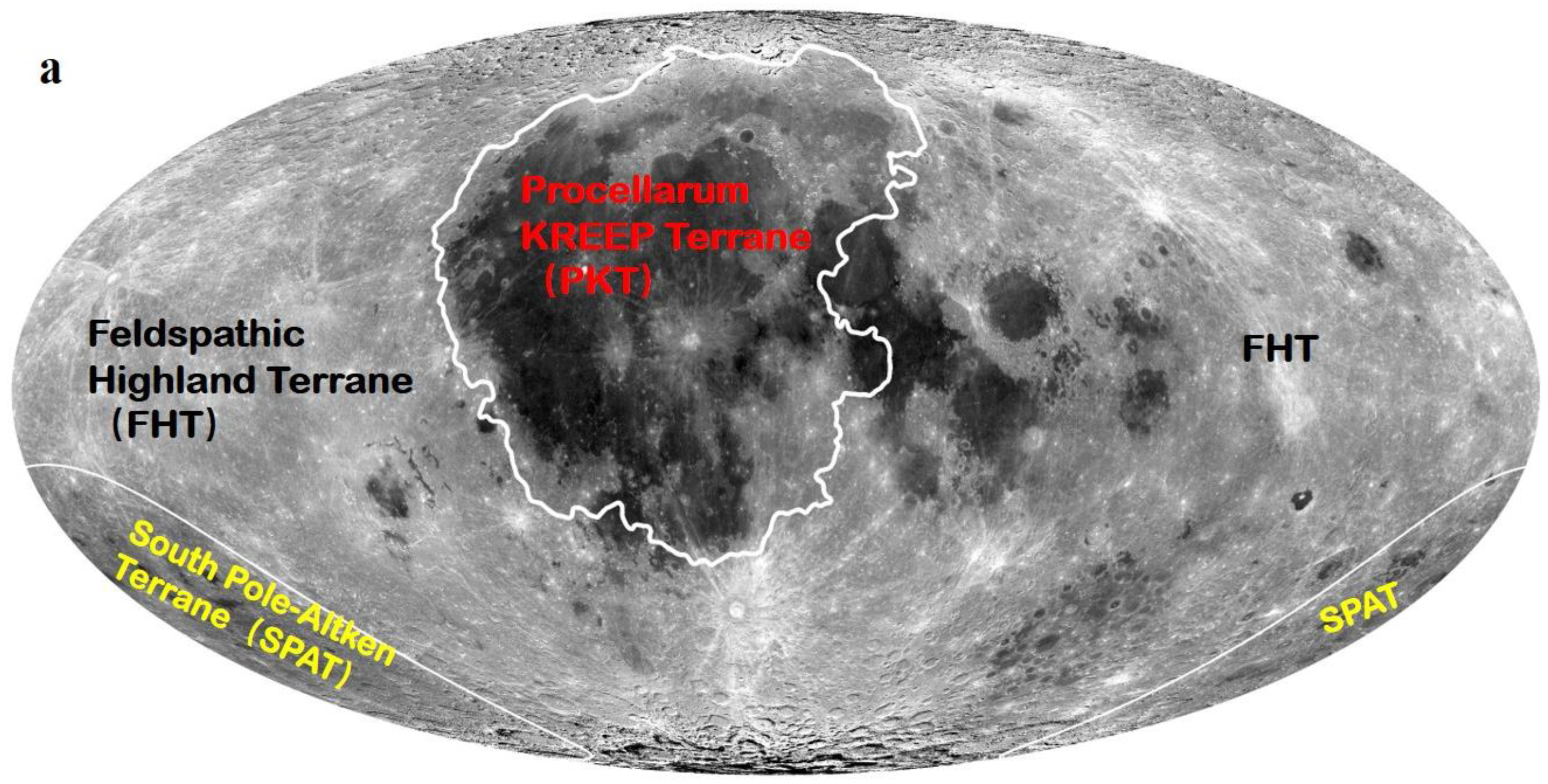
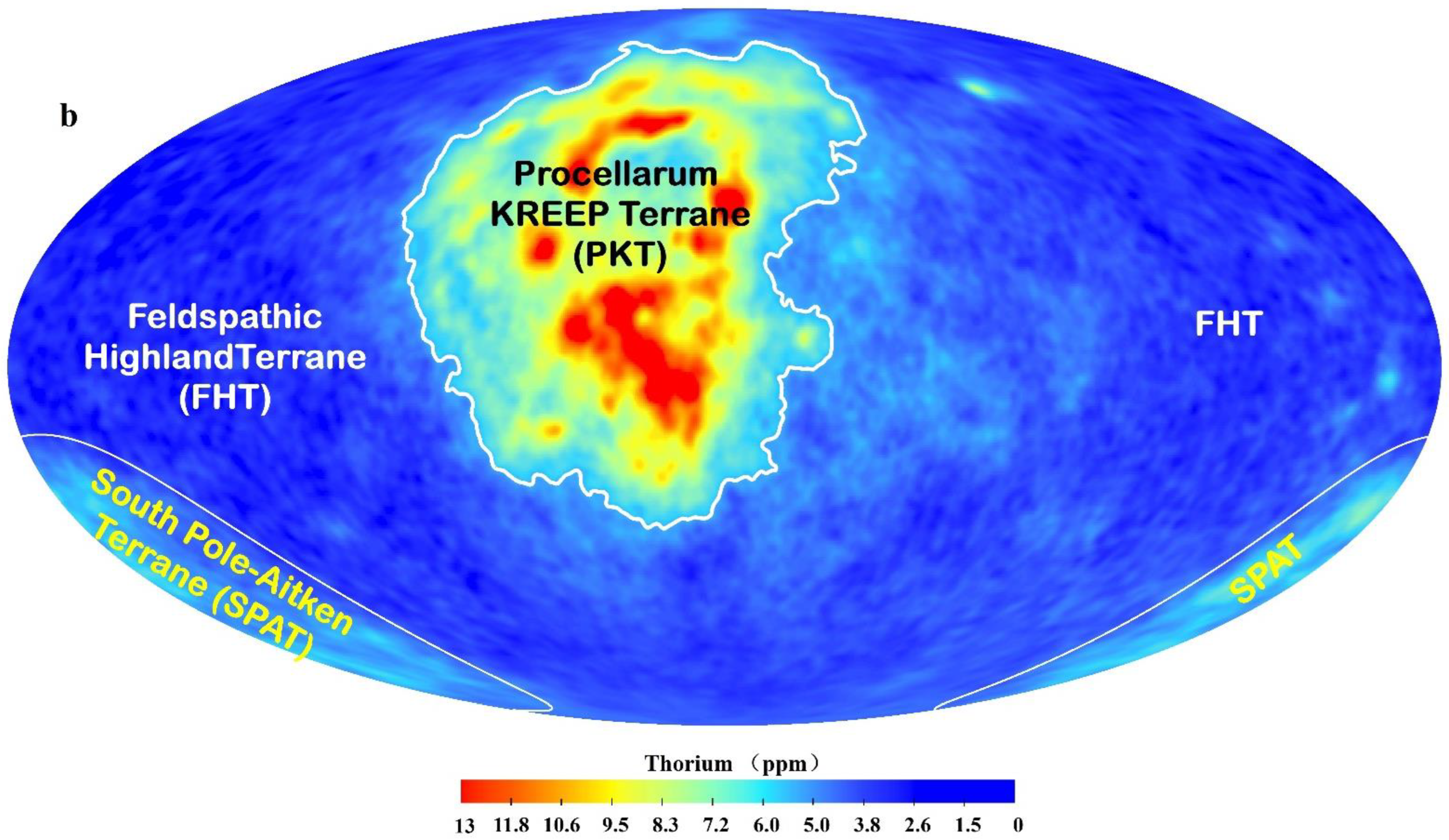
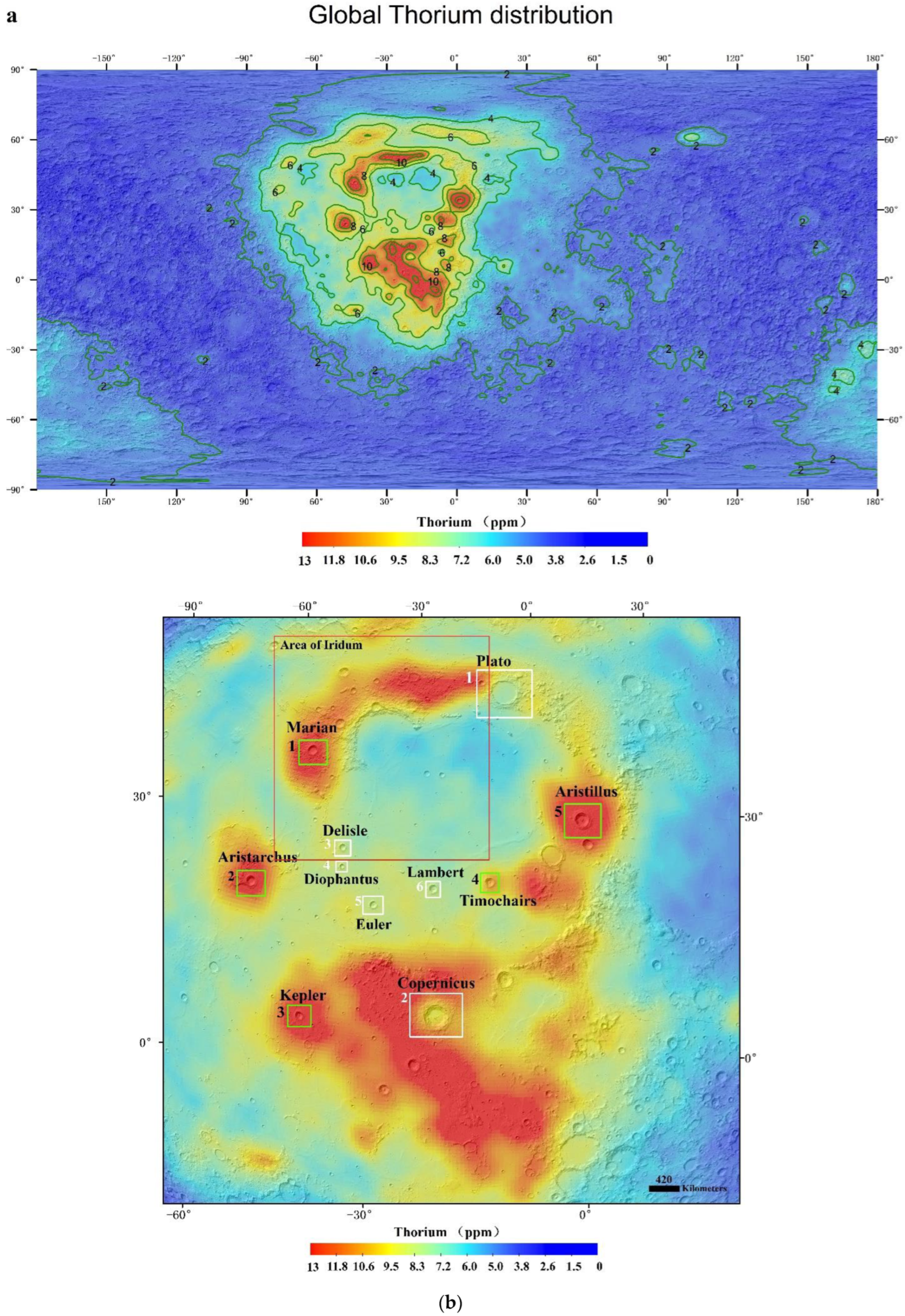
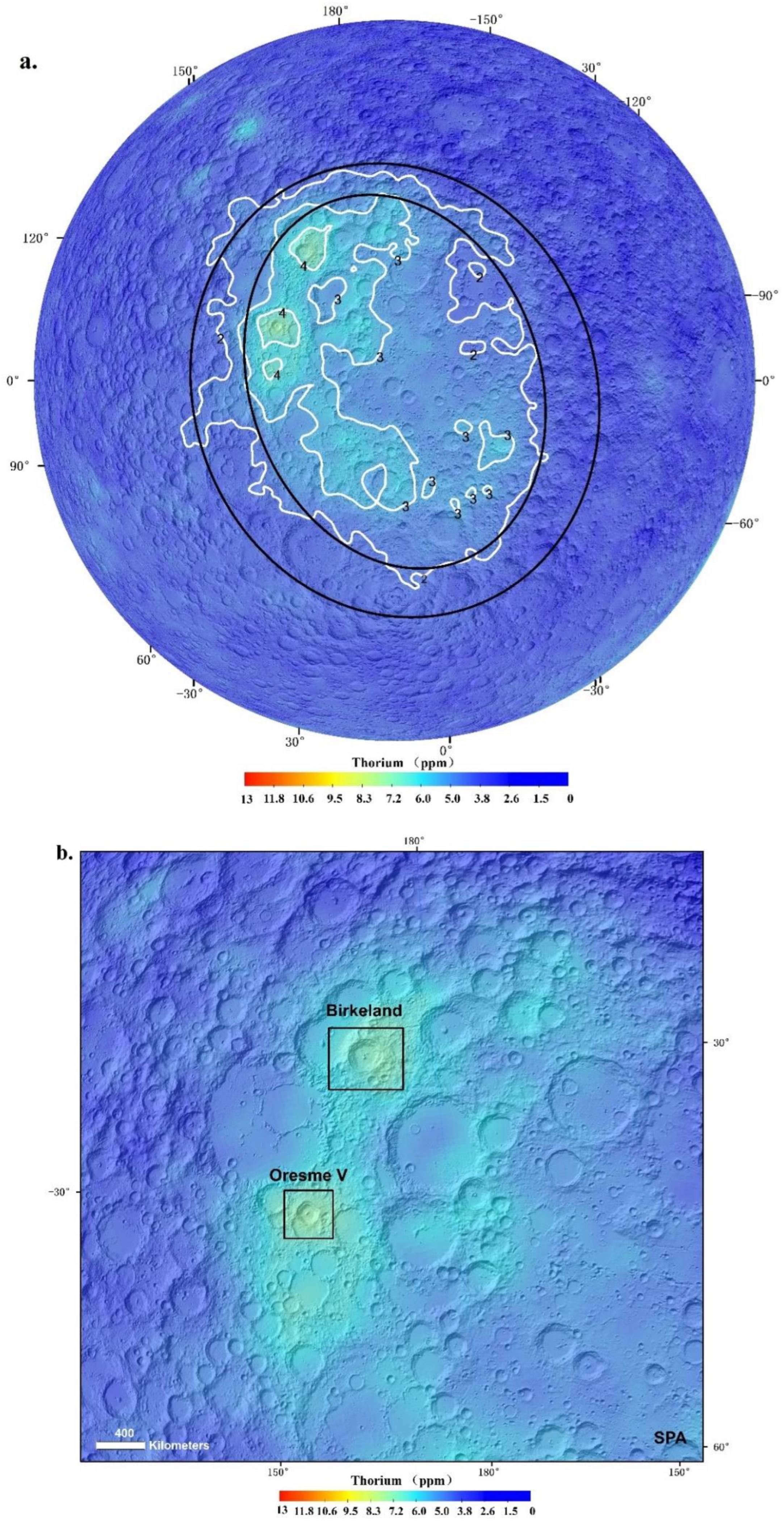
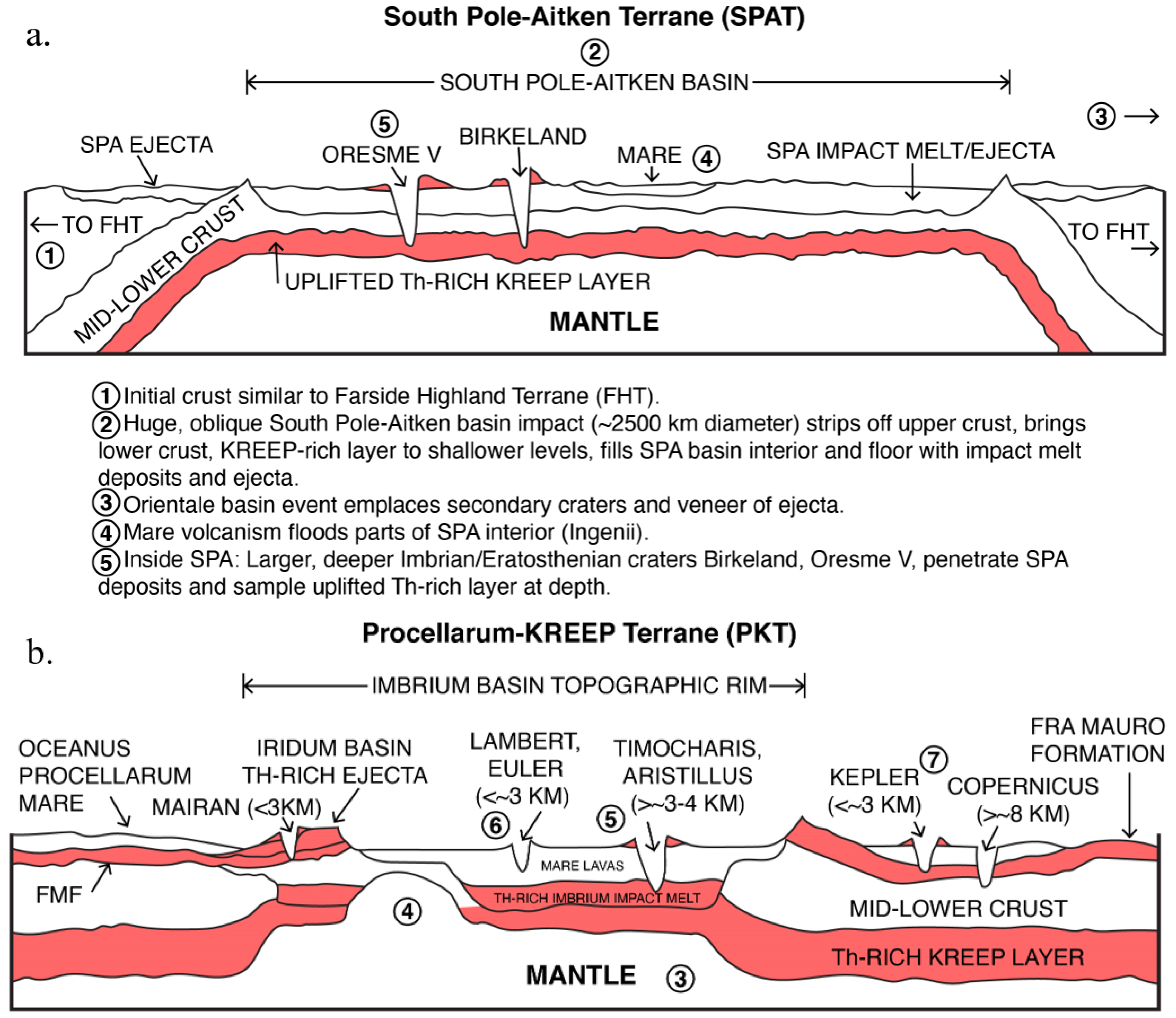
Dating from the lunar magma ocean solidification period, the Procellarum KREEP Terrane (PKT) occupies 16% of the surface but has a much higher thorium abundance compared to the rest of the Moon and is thus interpreted to carry 40% of the radioactive elements by volume in the form of an anomalously thick KREEP-rich layer. Subsequent research has focused on the processes responsible for PKT concentration and localization (e.g., degree-1 convection, farside impact basin effects, etc.), and the effect of PKT high-radioactivity localization on lunar thermal evolution (e.g., topography relaxation, mantle heating, late-stage mare basalt generation, etc.). Here we use a stratigraphic approach and new crustal thickness data to probe the nature of the PKT with depth. We find that most PKT characteristics can be explained by sequential impact cratering events that excavated and redistributed to the surface/near-surface a much thinner Th-rich KREEP layer at depth, implying that no anomalous conditions of PKT thickness, radioactive abundances, geodynamics, thermal effects or magma generation are likely to be required as in the previous studies.
Keywords: Procellarum KREEP Terrane (PKT); radioactive elements; thorium; thermal anomaly; stratigraphy; structure with depth; Imbrium basin; South Pole–Aitken basin Procellarum KREEP Terrane (PKT); radioactive elements; thorium; thermal anomaly; stratigraphy; structure with depth; Imbrium basin; South Pole–Aitken basin