Article

Complex-Valued U-Net with Capsule Embedded for Semantic Segmentation of PolSAR Image

1
School of Information Engineering, Jiangxi University of Science and Technology, Ganzhou 341000, China
2
School of Physics and Electronic Information, Gannan Normal University, Ganzhou 341000, China
3
Aerospace Information Research Institute, Chinese Academy of Sciences, Beijing 100194, China
*
Author to whom correspondence should be addressed.
Remote Sens. 2023, 15(5), 1371; https://doi.org/10.3390/rs15051371
Submission received: 5 January 2023 / Revised: 24 February 2023 / Accepted: 26 February 2023 / Published: 28 February 2023
(This article belongs to the Special Issue Deep Learning and Computer Vision in Remote Sensing-II)

Abstract

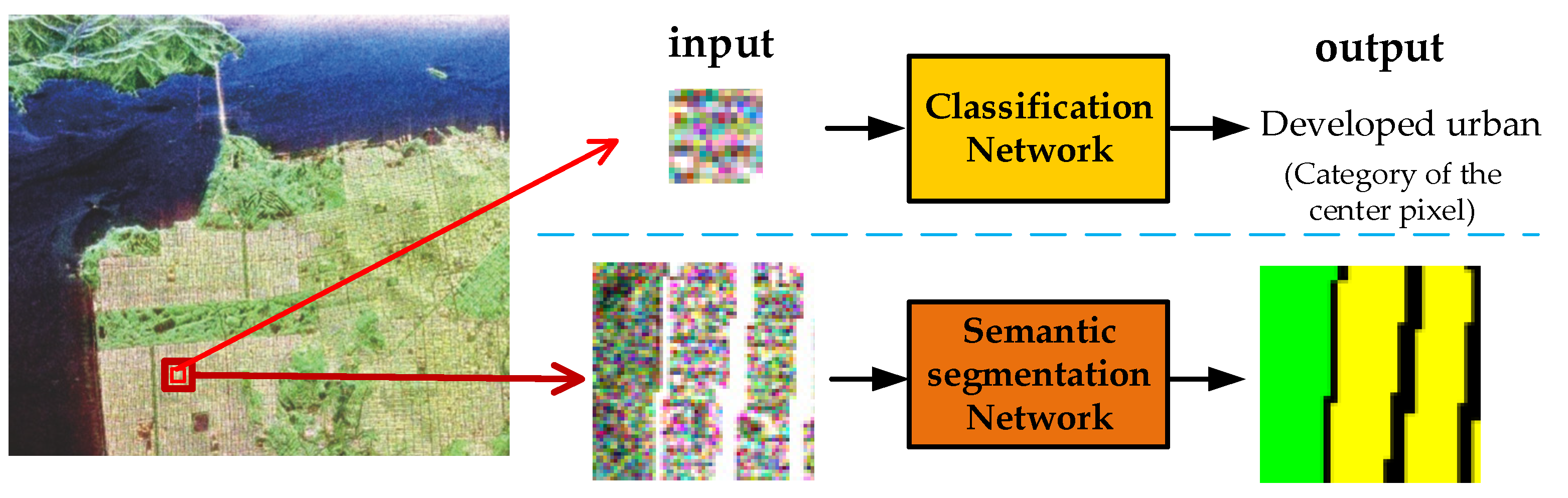
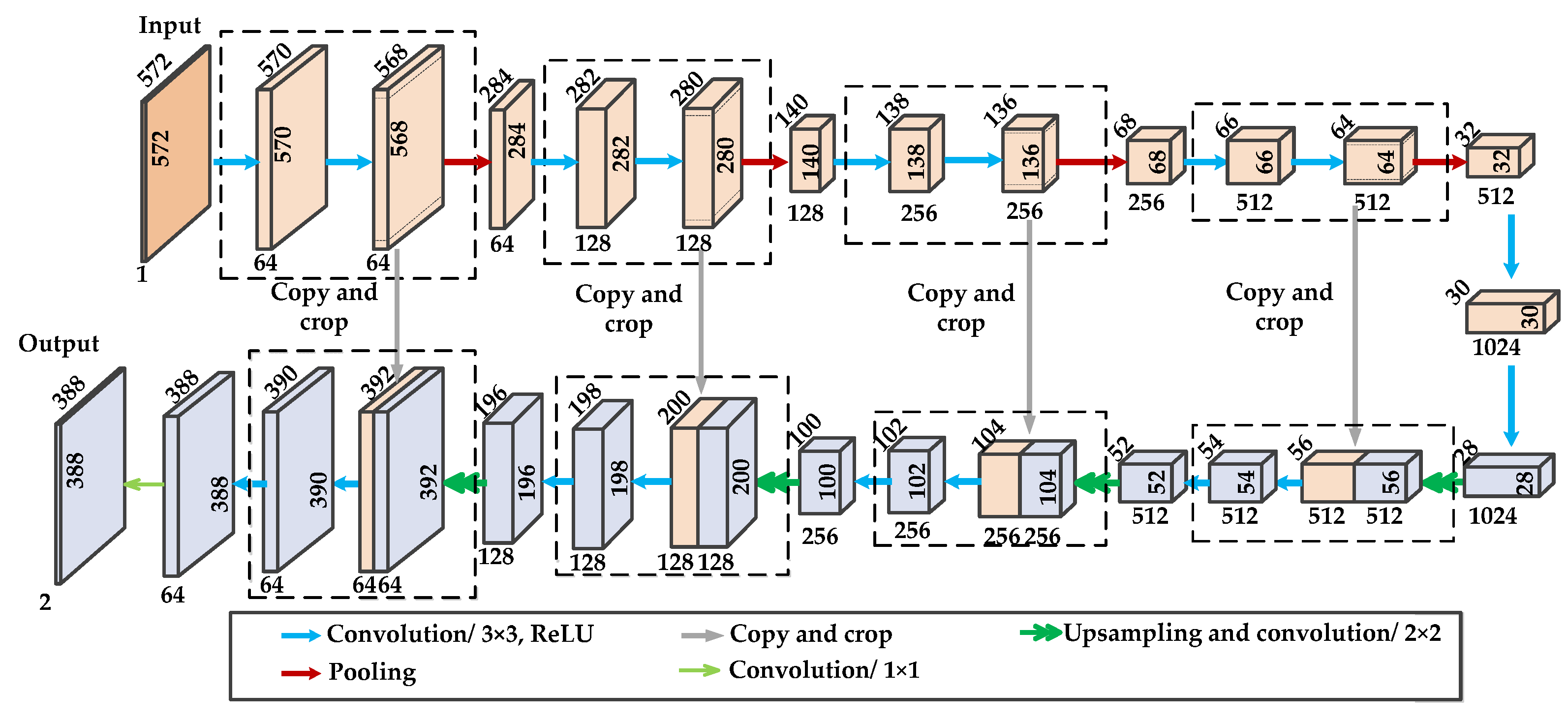
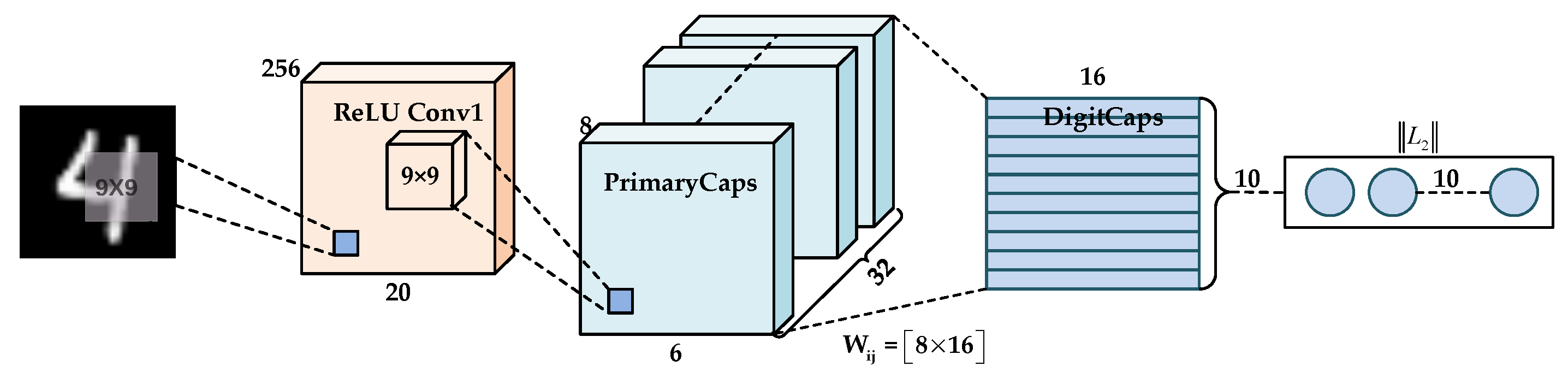
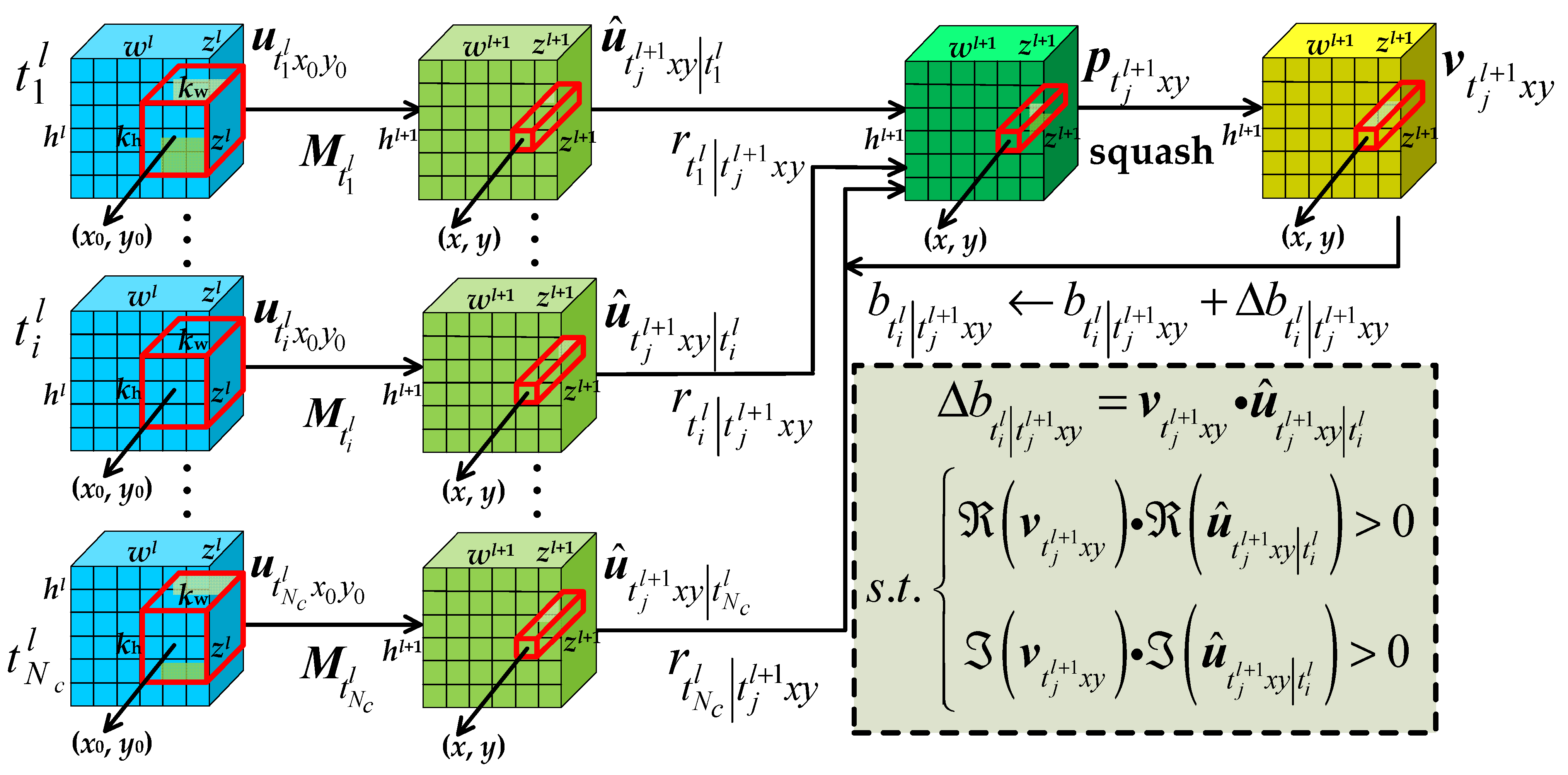
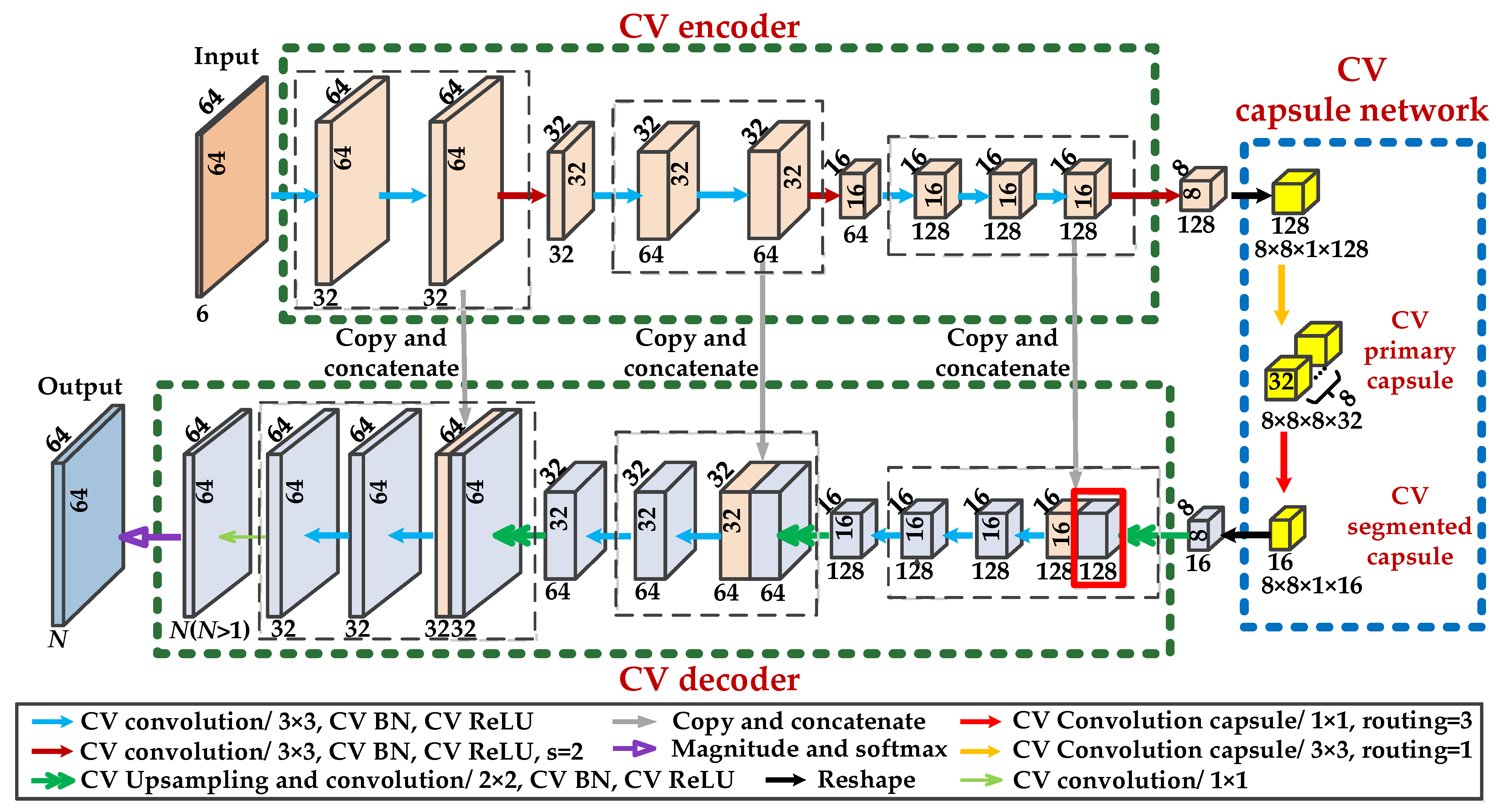
In recent years, semantic segmentation with pixel-level classification has become one of the types of research focus in the field of polarimetric synthetic aperture radar (PolSAR) image interpretation. Fully convolutional network (FCN) can achieve end-to-end semantic segmentation, which provides a basic framework for subsequent improved networks. As a classic FCN-based network, U-Net has been applied to semantic segmentation of remote sensing images. Although good segmentation results have been obtained, scalar neurons have made it difficult for the network to obtain multiple properties of entities in the image. The vector neurons used in the capsule network can effectively solve this problem. In this paper, we propose a complex-valued (CV) U-Net with a CV capsule network embedded for semantic segmentation of a PolSAR image. The structure of CV U-Net is lightweight to match the small PolSAR data, and the embedded CV capsule network is designed to extract more abundant features of the PolSAR image than the CV U-Net. Furthermore, CV dynamic routing is proposed to realize the connection between capsules in two adjacent layers. Experiments on two airborne datasets and one Gaofen-3 dataset show that the proposed network is capable of distinguishing different types of land covers with a similar scattering mechanism and extracting complex boundaries between two adjacent land covers. The network achieves better segmentation performance than other state-of-art networks, especially when the training set size is small.
Keywords: semantic segmentation; complex-valued U-Net; complex-valued capsule network; polarimetric synthetic aperture radar semantic segmentation; complex-valued U-Net; complex-valued capsule network; polarimetric synthetic aperture radar