Article

Identification of Rubber Plantations in Southwestern China Based on Multi-Source Remote Sensing Data and Phenology Windows

1
Faculty of Land Resource Engineering, Kunming University of Science and Technology, Kunming 650093, China
2
Key Laboratory of Plateau Remote Sensing, Yunnan Provincial Department of Education, Kunming 650093, China
3
National Engineering Research Center for Geomatics (NCG), Aerospace Information Research Institute, Chinese Academy of Sciences, Beijing 100101, China
*
Author to whom correspondence should be addressed.
Remote Sens. 2023, 15(5), 1228; https://doi.org/10.3390/rs15051228
Submission received: 30 December 2022 / Revised: 15 February 2023 / Accepted: 21 February 2023 / Published: 23 February 2023
(This article belongs to the Special Issue Remote Sensing of Land Use and Land Change with Google Earth Engine)

Abstract

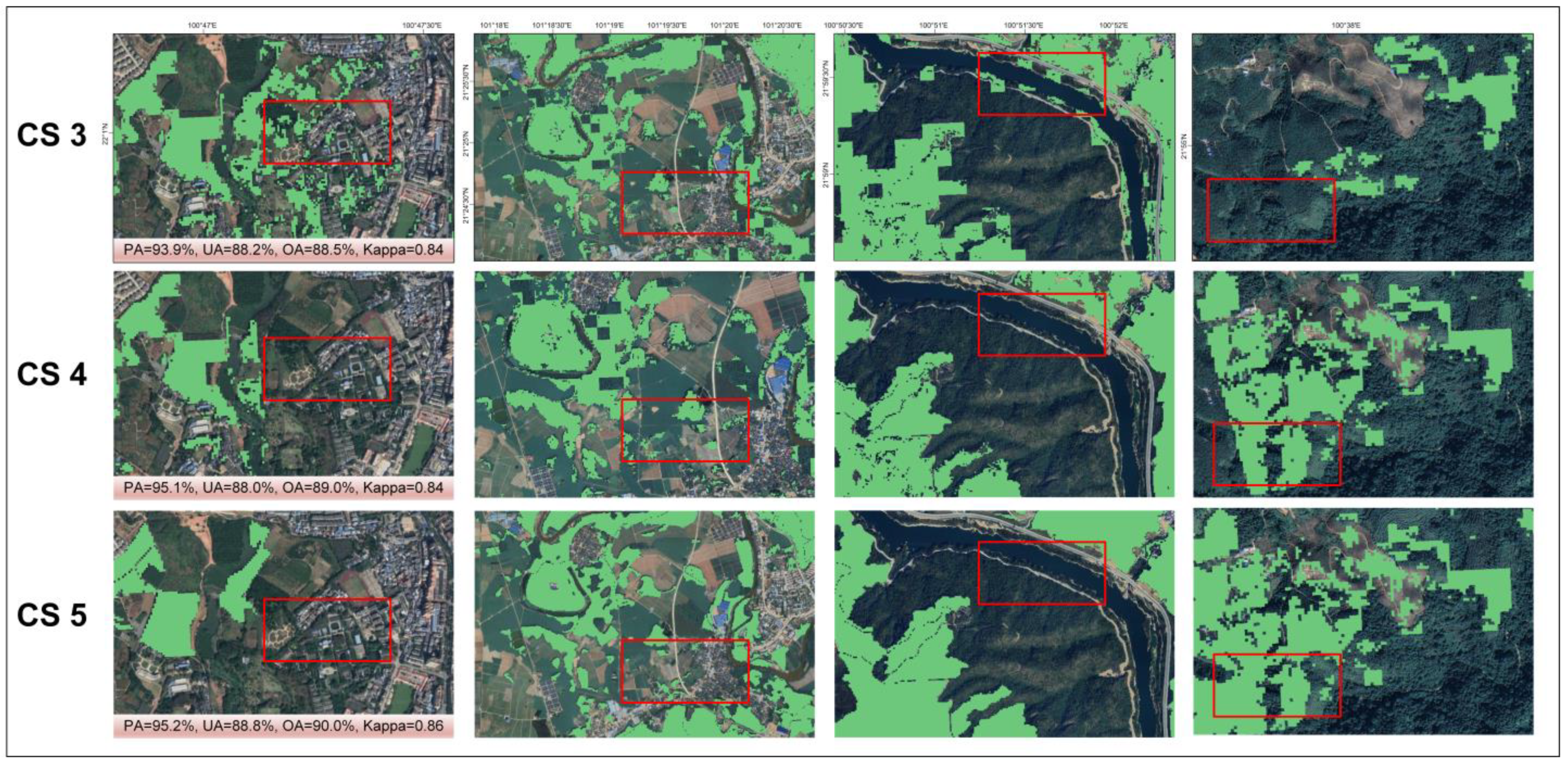
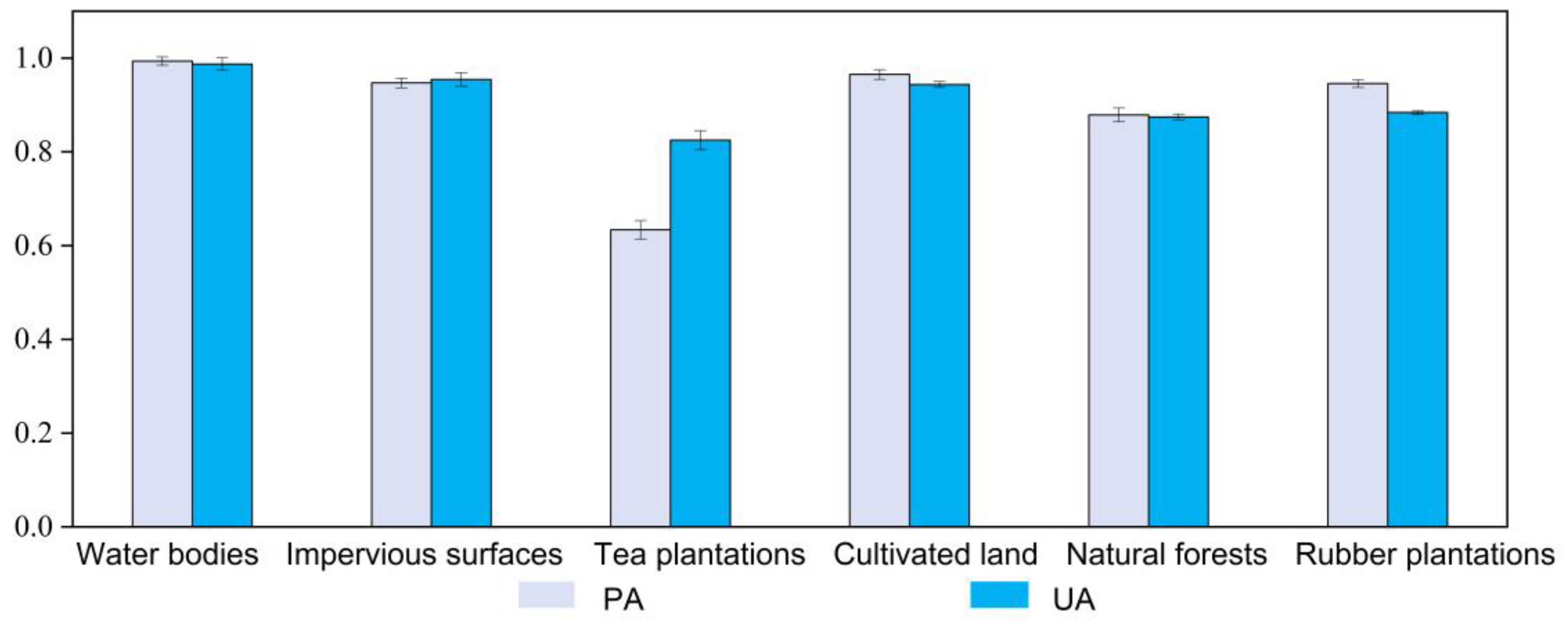
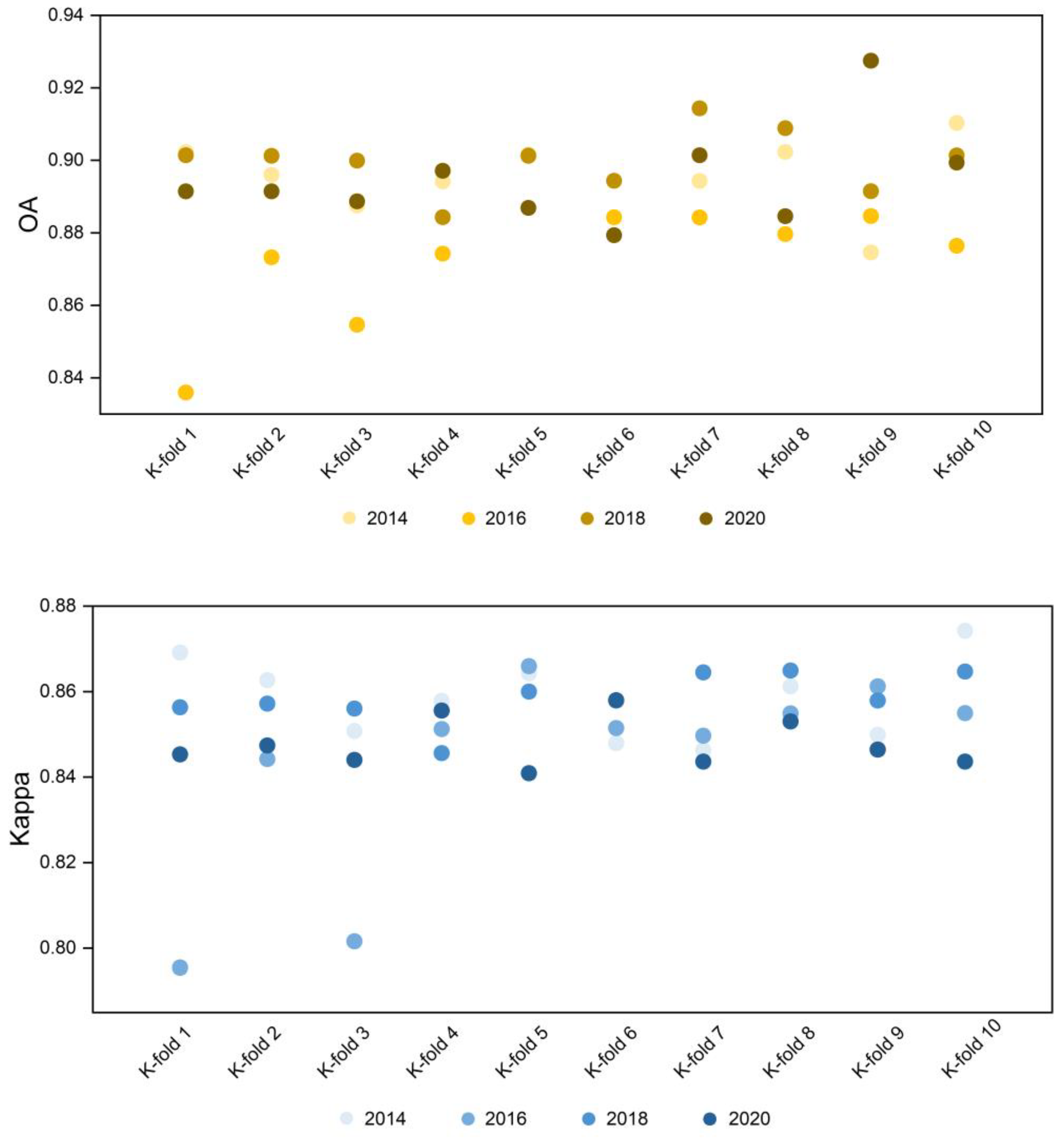
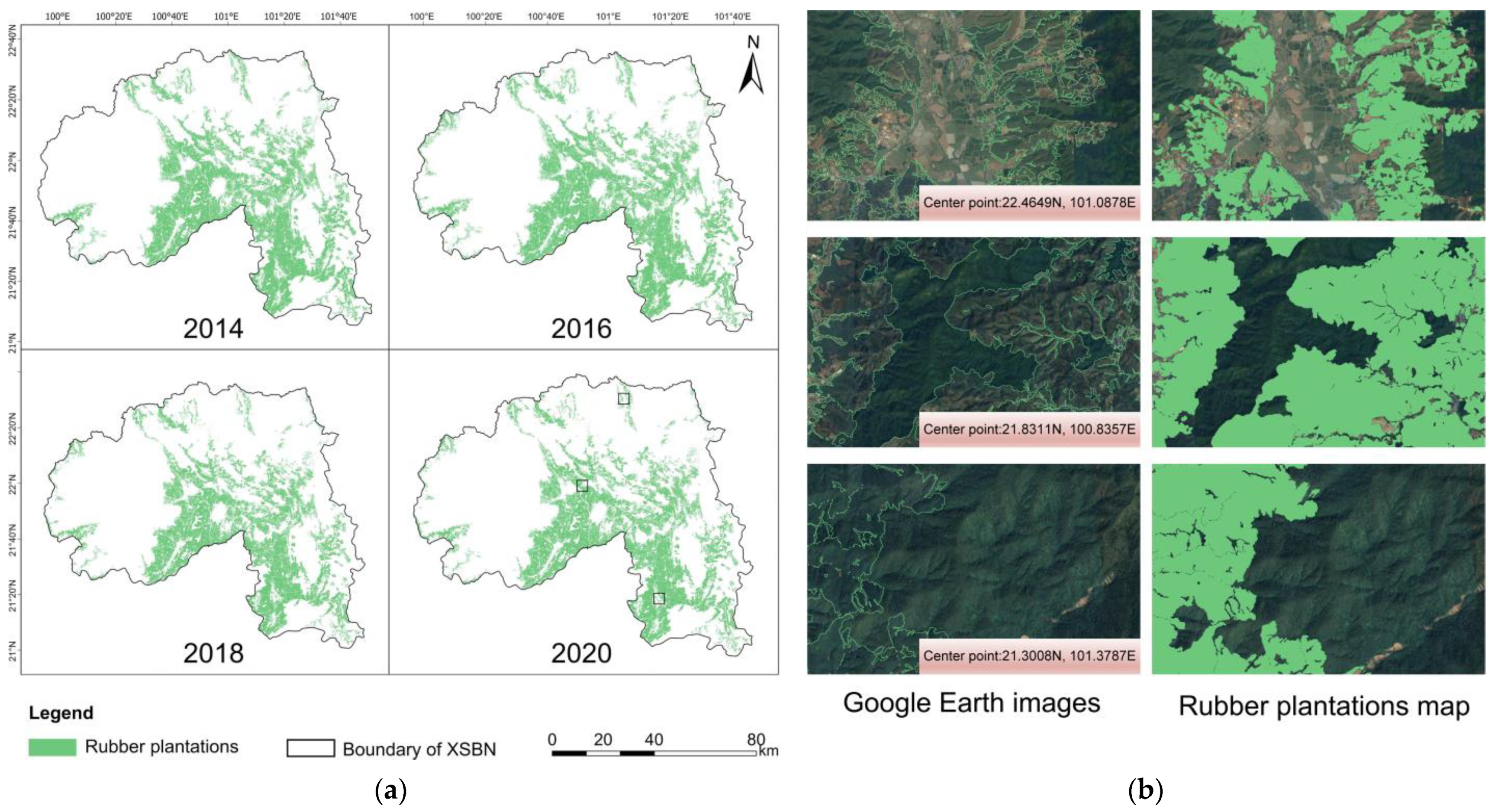
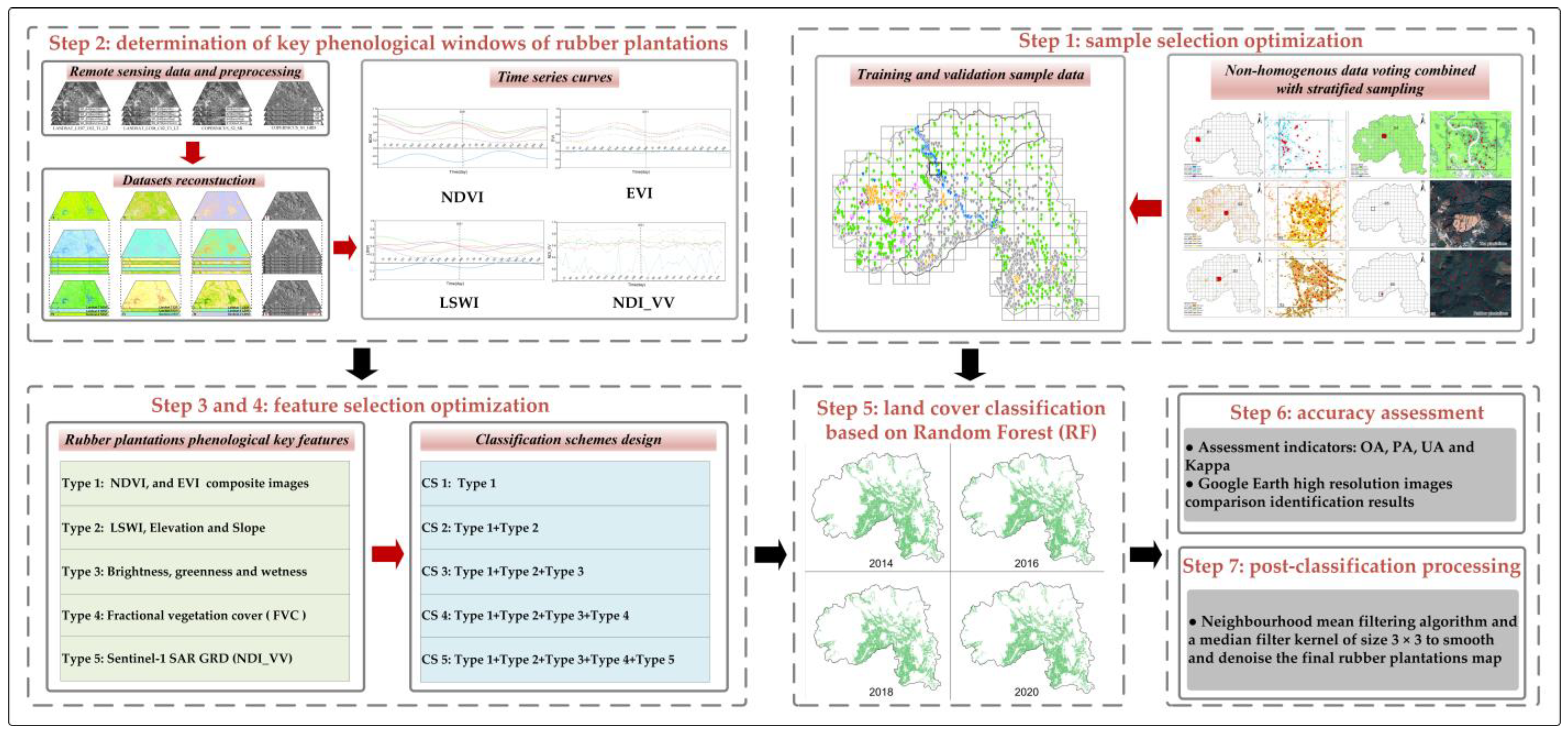
The continuous transformation from biodiverse natural forests and mixed-use farms into monoculture rubber plantations may lead to a series of hazards, such as natural forest habitats fragmentation, biodiversity loss, as well as drought and water shortage. Therefore, understanding the spatial distribution of rubber plantations is crucial to regional ecological security and a sustainable economy. However, the spectral characteristics of rubber tree is easily mixed with other vegetation such as natural forests, tea plantations, orchards and shrubs, which brings difficulty and uncertainty to regional scale identification. In this paper, we proposed a classification method combines multi-source phenology characteristics and random forest algorithm. On the basis of optimization of input samples and features, phenological spectrum, brightness, greenness, wetness, fractional vegetation cover, topography and other features of rubber were extracted. Five classification schemes were constructed for comparison, and the one with the highest classification accuracy was used to identify the spatial pattern of rubber plantations in 2014, 2016, 2018 and 2020 in Xishuangbanna. The results show that: (1) the identification results are in consistent with field survey and rubber plantations area generally shows a first increasing and then decreasing trend; (2) the Overall Accuracy (OA) and Kappa coefficient of the proposed method are 90.0% and 0.86, respectively, with a Producer’s Accuracy (PA) and User’s Accuracy (UA) of 95.2% and 88.8%, respectively; (3) cross-validation was employed to analyze the accuracy evaluation indexes of the identification results: both PA and UA of the rubber plantations stay stable over 85%, with the minimum fluctuation and best stability of UA value. The OA value and Kappa coefficient were stable in the range of 0.88–0.90 and 0.84–0.86, respectively. The method proposed provides reliable results on spatial distribution of rubber, and is potentially transferable to other mountainous areas as a robust approach for rapid monitoring of rubber plantations.
Keywords: Google Earth Engine (GEE); identification; phenology windows; rubber plantations; random forest algorithm; sample optimization Google Earth Engine (GEE); identification; phenology windows; rubber plantations; random forest algorithm; sample optimization