Technical Note

On Barotropic Response of Arctic Seas to Polar Lows: A Case Study in the Barents Sea

by
Vladimir Kudryavtsev
1,2,
Anastasiia Stokoz
1,* and
Kirill Khvorostovsky
1
1
Satellite Oceanography Laboratory, Russian State Hydrometeorological University, 195196 St. Petersburg, Russia
2
Marine Hydrophysical Institute RAS, 299011 Sevastopol, Russia
*
Author to whom correspondence should be addressed.
Remote Sens. 2023, 15(17), 4239; https://doi.org/10.3390/rs15174239
Submission received: 13 July 2023 / Revised: 24 August 2023 / Accepted: 26 August 2023 / Published: 29 August 2023
(This article belongs to the Special Issue Remote Sensing of Polar Ocean, Sea Ice and Atmosphere Dynamics)

Abstract

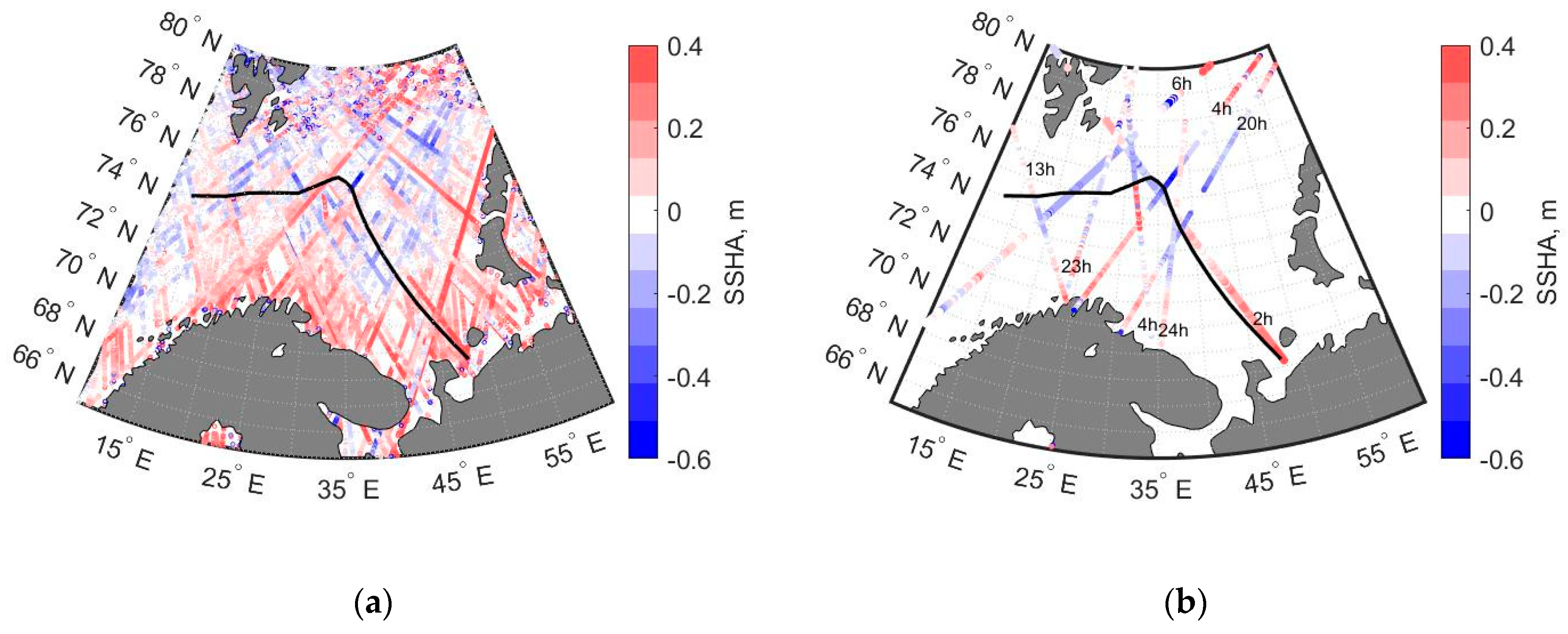
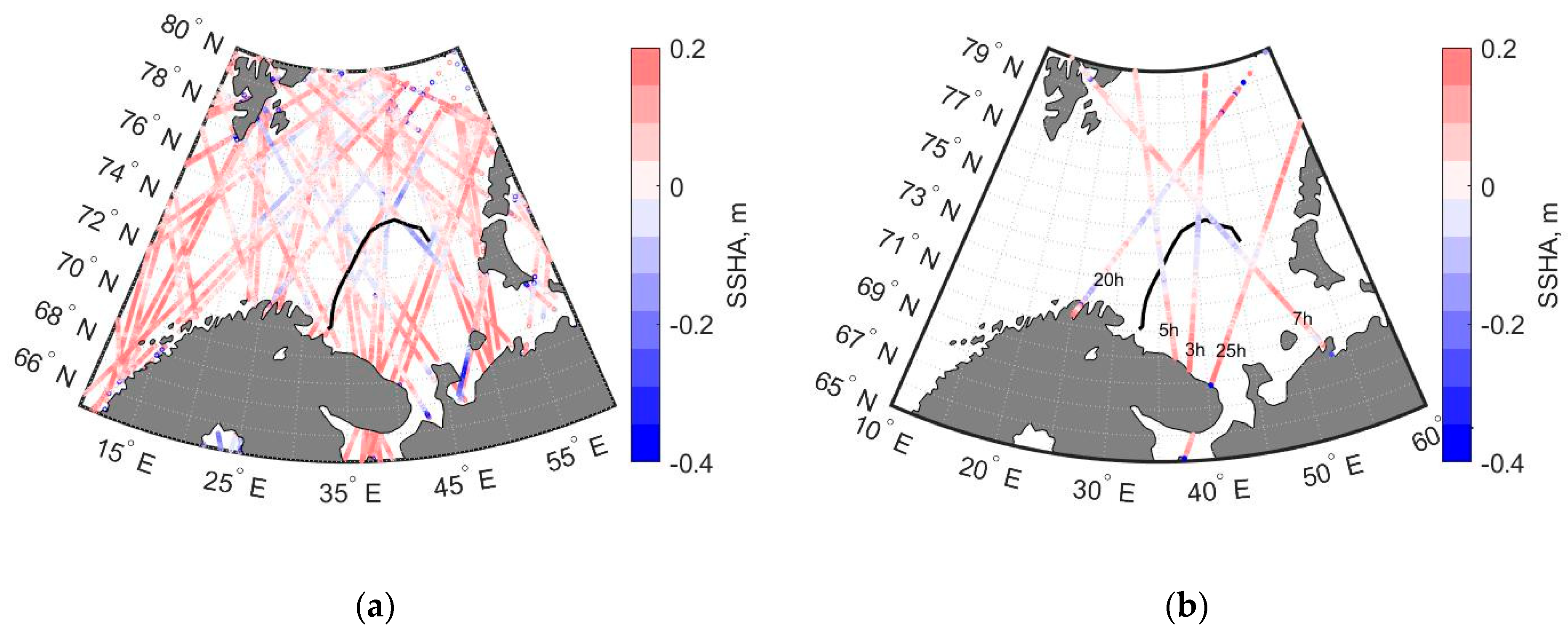
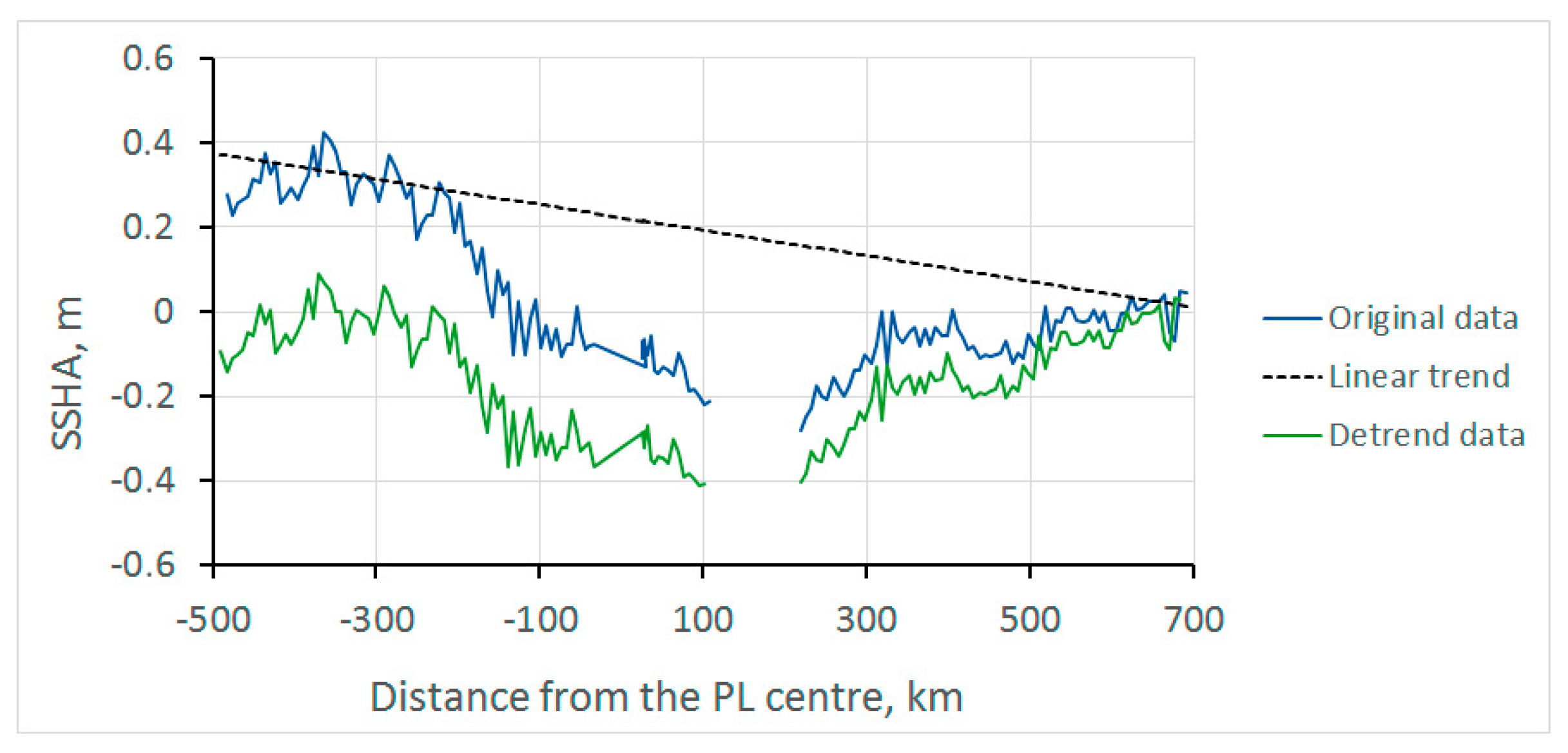
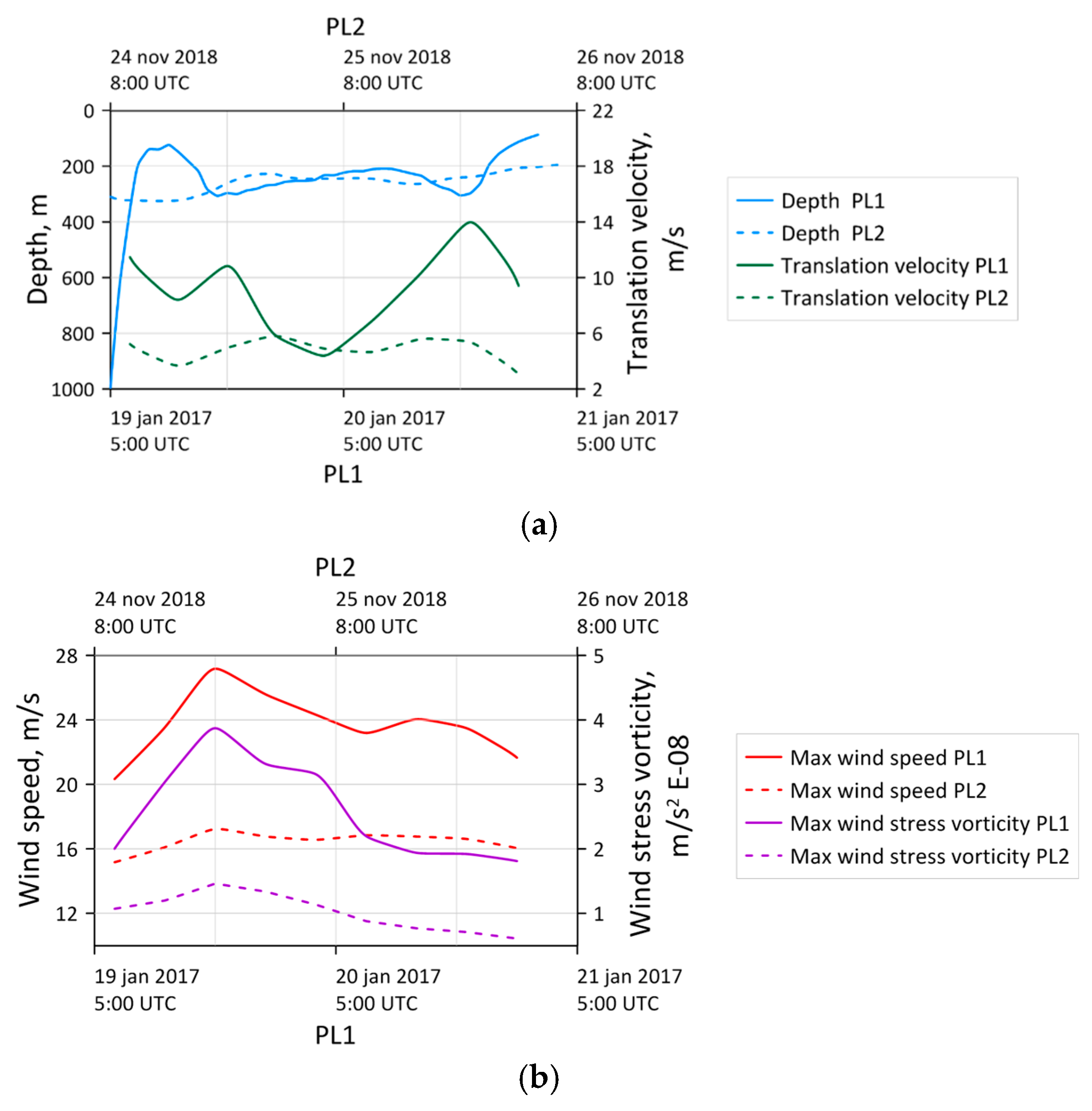
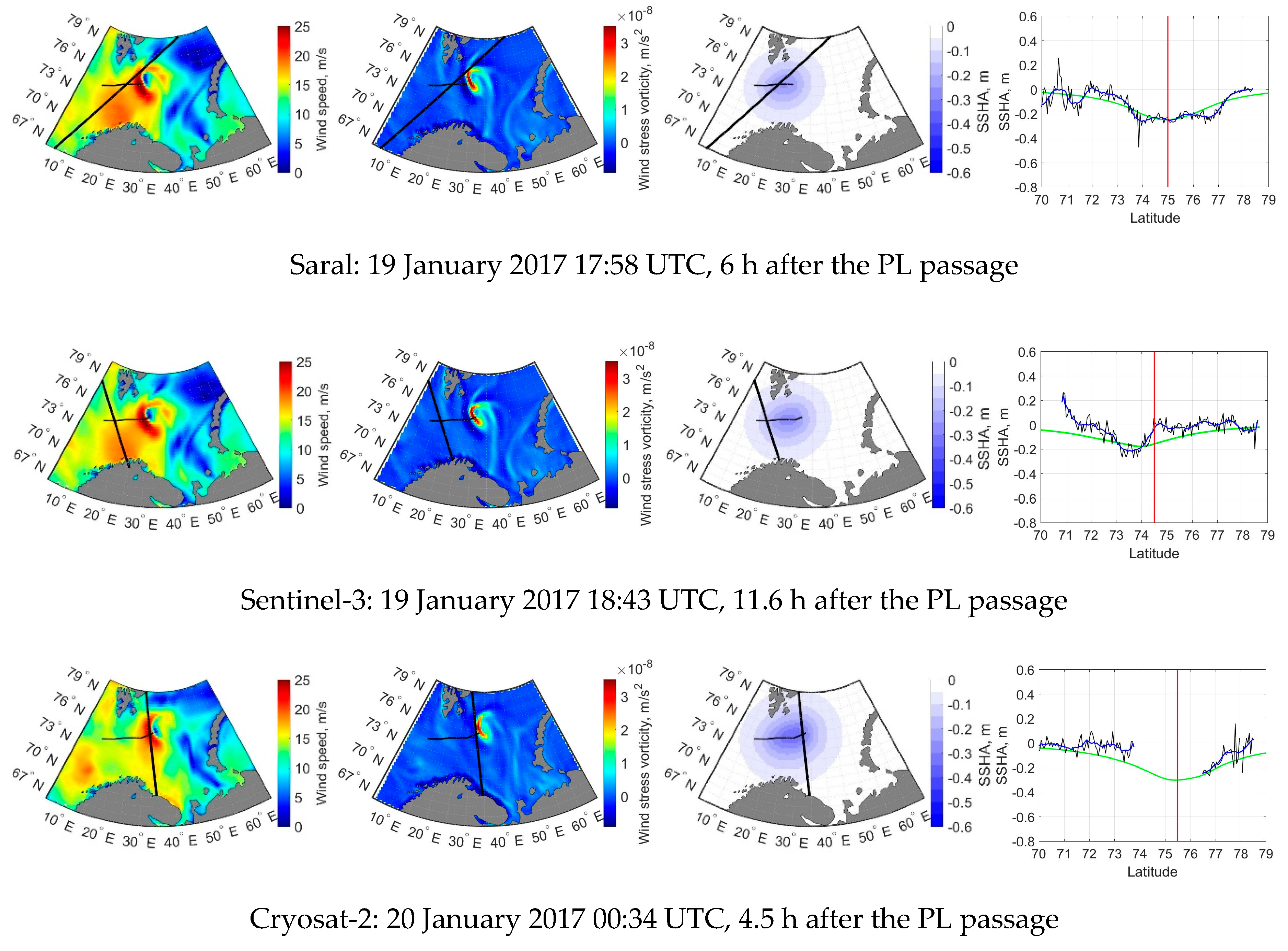
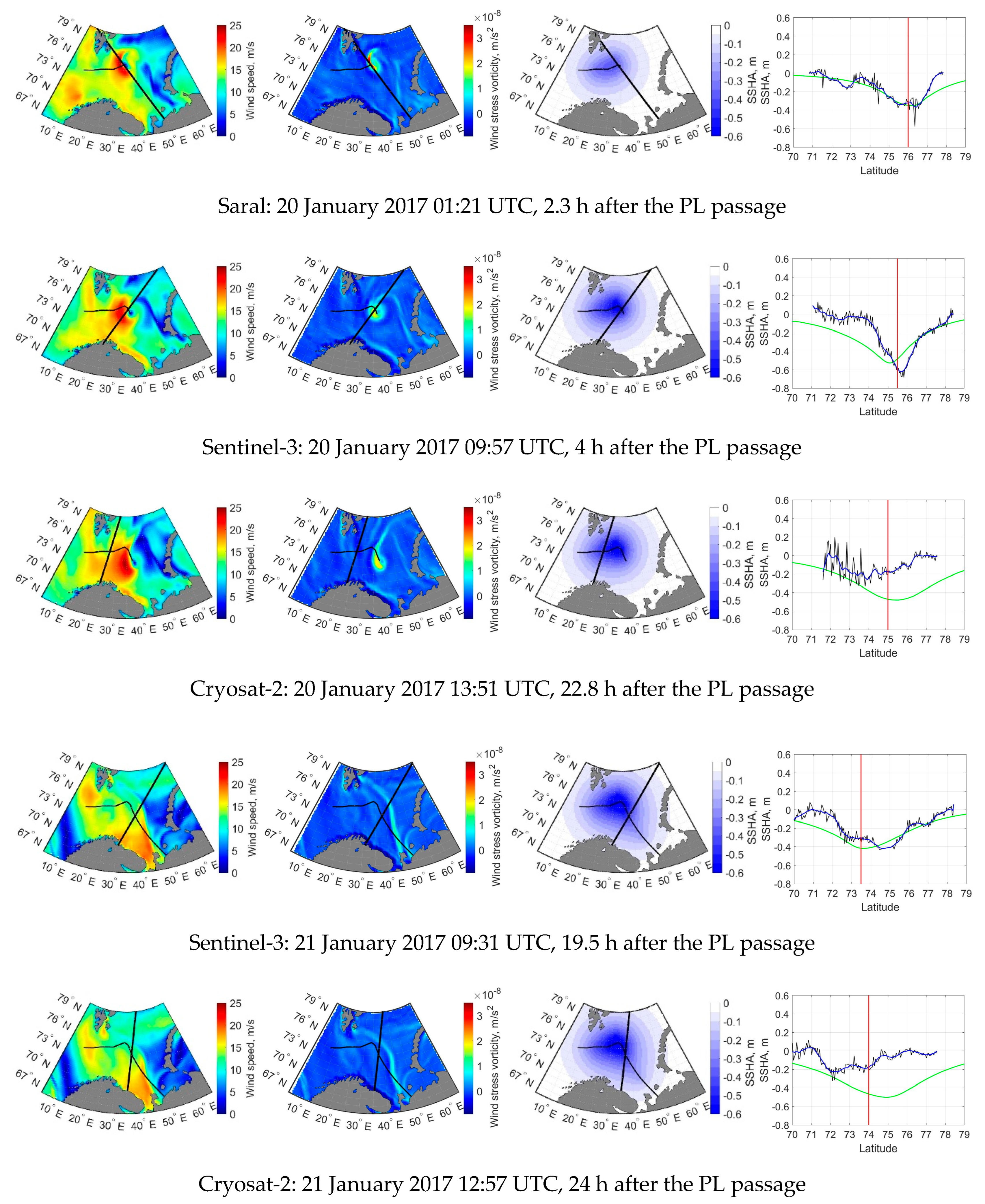
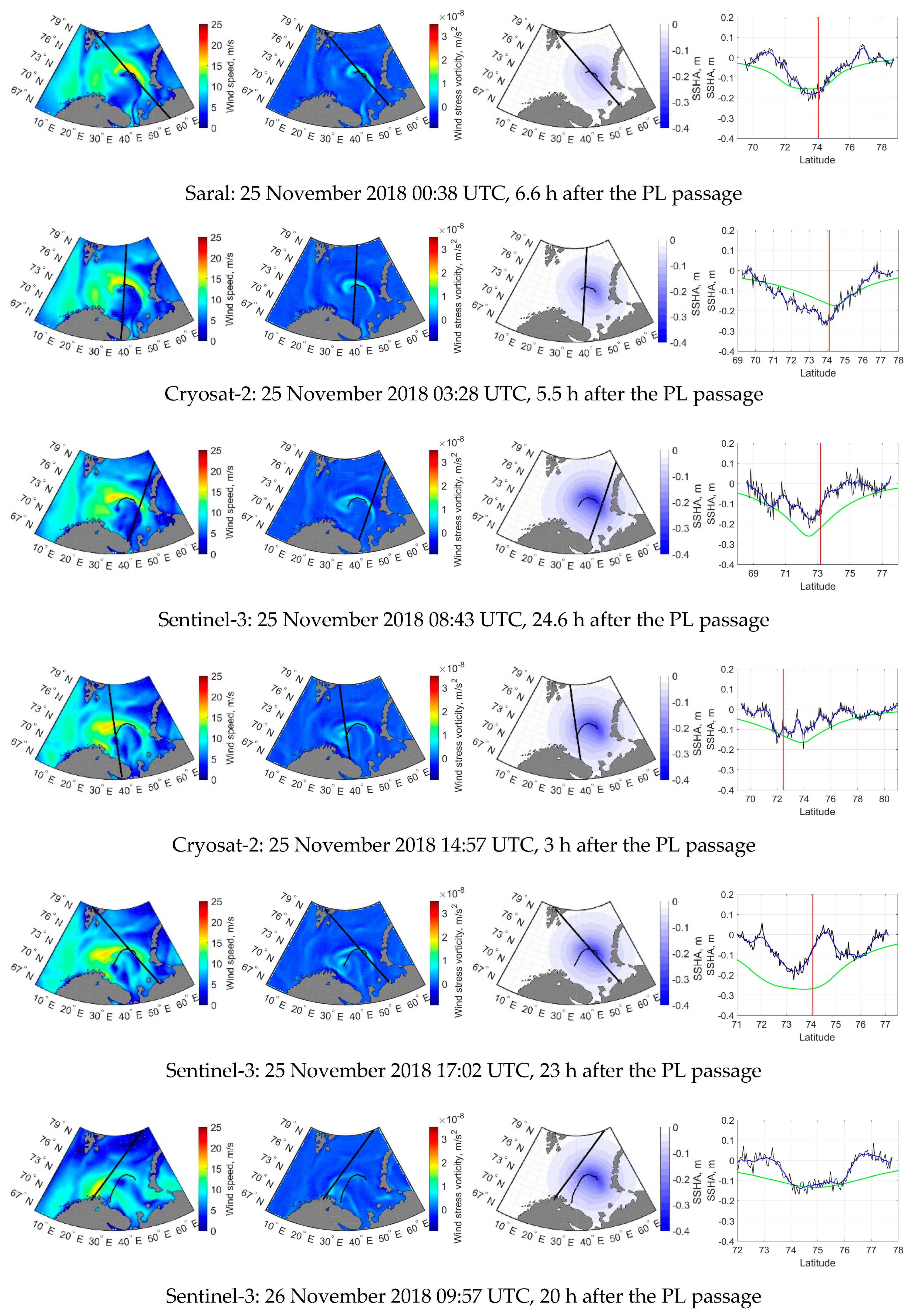
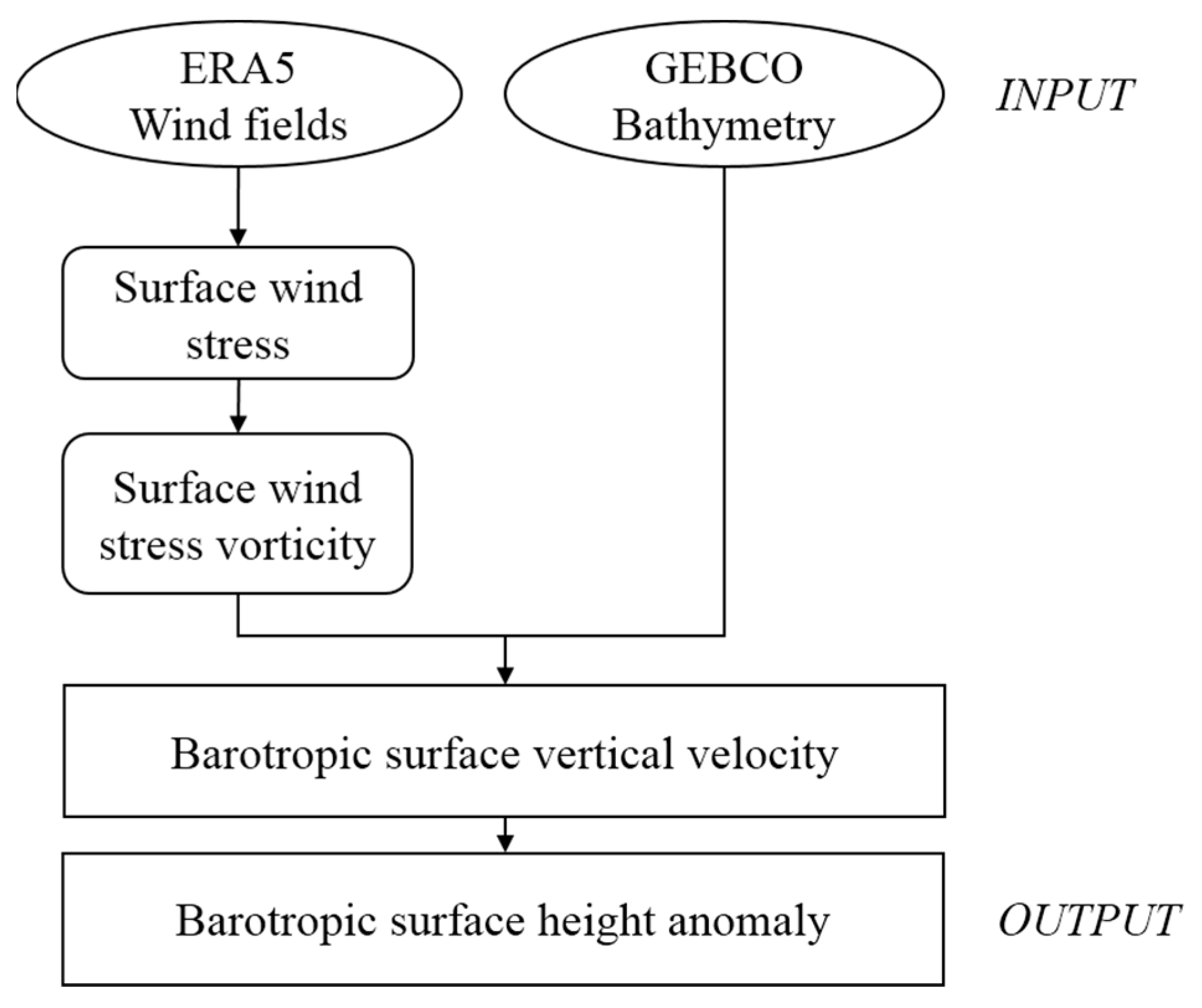
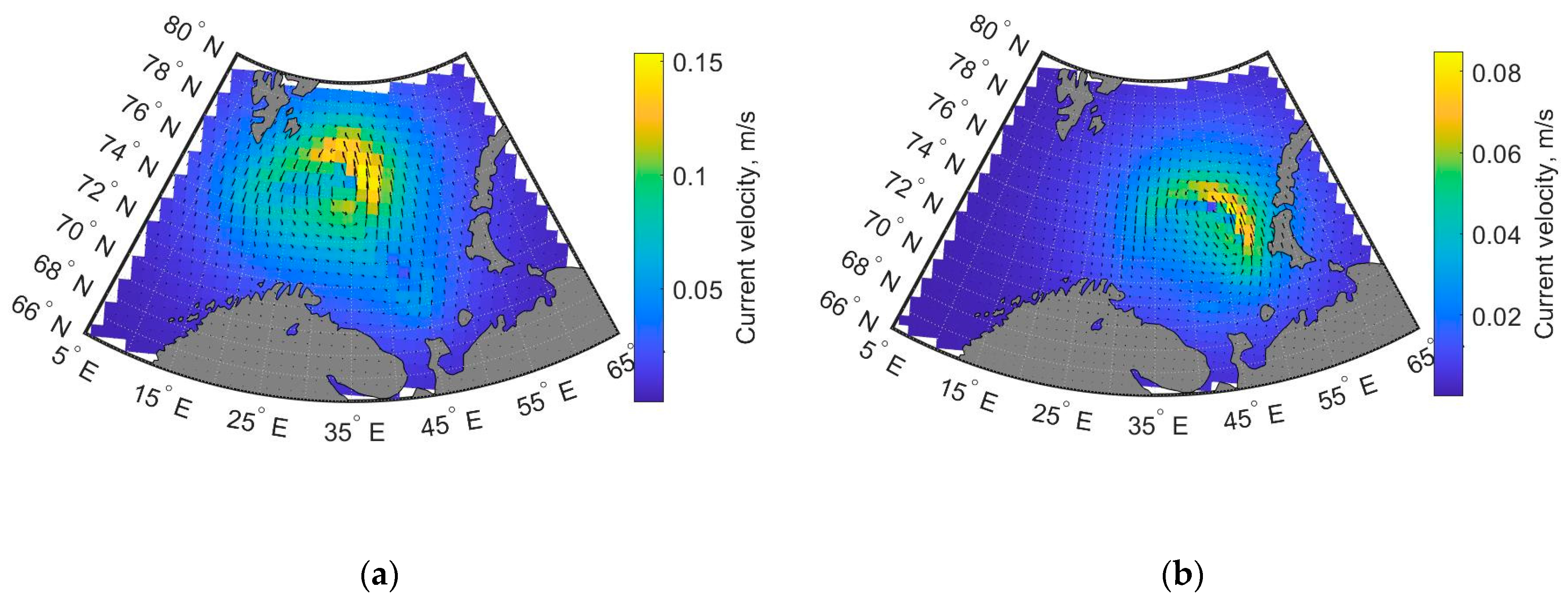
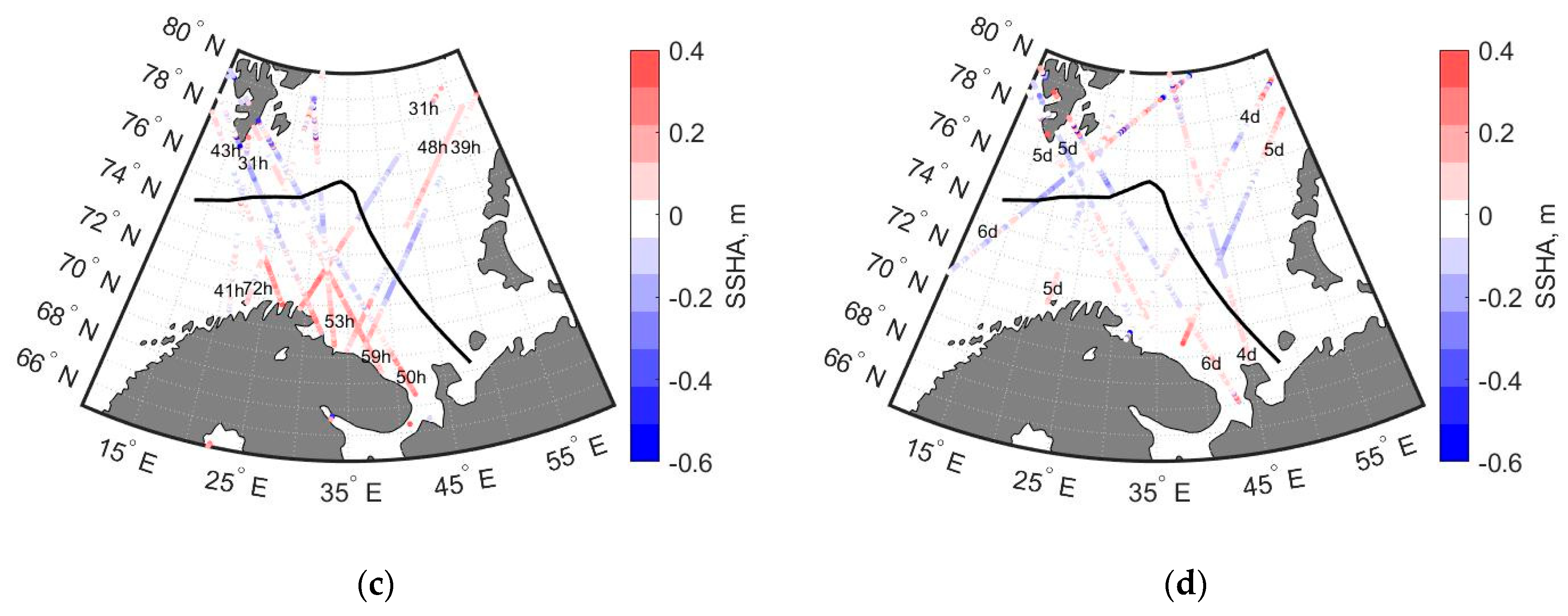
In the present paper, we investigate the sea surface height (SSH) anomalies caused by polar lows (PLs) crossing the central part of the Barents Sea and verify if the barotropic response is detectable in the shallow Arctic seas. Analysis of the SSH anomalies in response to the passage of two PLs is performed using satellite altimeter measurements and model simulations. The observed SSH anomalies contained an inverse barometer correction; therefore, they were presumably caused only by the action of surface wind stress in the PLs. The SSH anomalies along the satellite altimeter tracks had the shape of a trough, with the lowest surface height near the center of the PL. The observed anomalies were well distinguished within about one day after the PL passage, with the largest negative value of 0.6 m. The SSH anomalies are analyzed using a simplified model of the ocean barotropic response to the surface wind stress, derived from the hourly wind fields provided in the ERA5 reanalysis dataset. The model quantitatively reproduced the SSH anomalies along most satellite altimeter tracks crossing the PL trajectories. The model simulations revealed that the largest negative SSH anomalies were observed in areas where the PL translation velocity was low and its moving direction changed with the trajectory curvature radius, which was much smaller than the barotropic radius of deformation. The estimated quasi-geostrophic current velocities corresponding to the SSH anomalies in the wakes of the PLs reached 0.15 m/s, which were comparable to the current velocities observed in the Barents Sea.
Keywords: polar low; ocean barotropic response; air-sea interaction; satellite altimetry; sea surface height anomaly polar low; ocean barotropic response; air-sea interaction; satellite altimetry; sea surface height anomaly