Article

Current Status and Challenges of BDS Satellite Precise Orbit Products: From a View of Independent SLR Validation
School of Geodesy and Geomatics, Wuhan University, 129 Luoyu Road, Wuhan 430079, China
*
Author to whom correspondence should be addressed.
Remote Sens. 2023, 15(11), 2782; https://doi.org/10.3390/rs15112782
Submission received: 23 April 2023 / Revised: 24 May 2023 / Accepted: 25 May 2023 / Published: 26 May 2023
(This article belongs to the Special Issue Precision Orbit Determination of Satellites)

Abstract

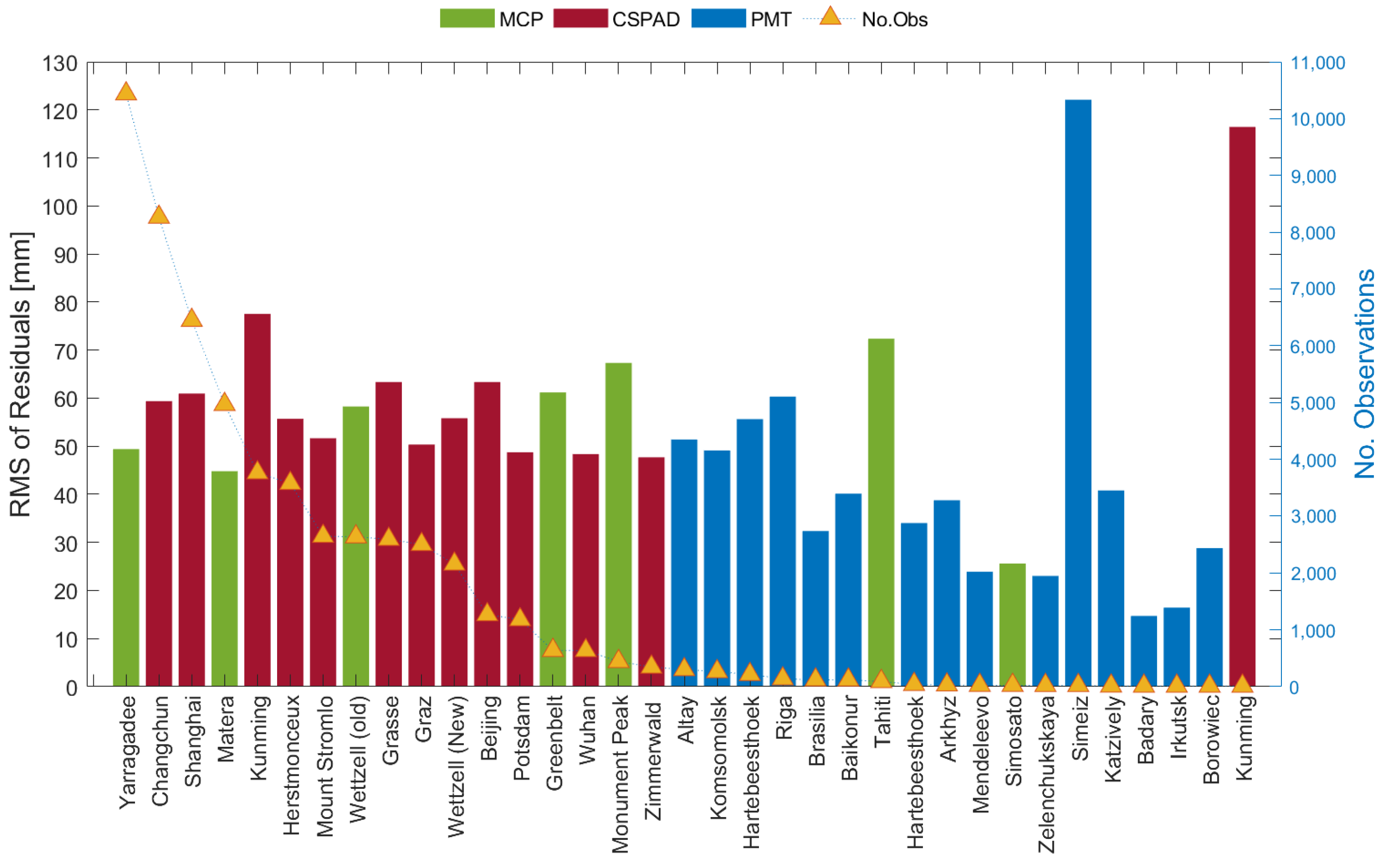
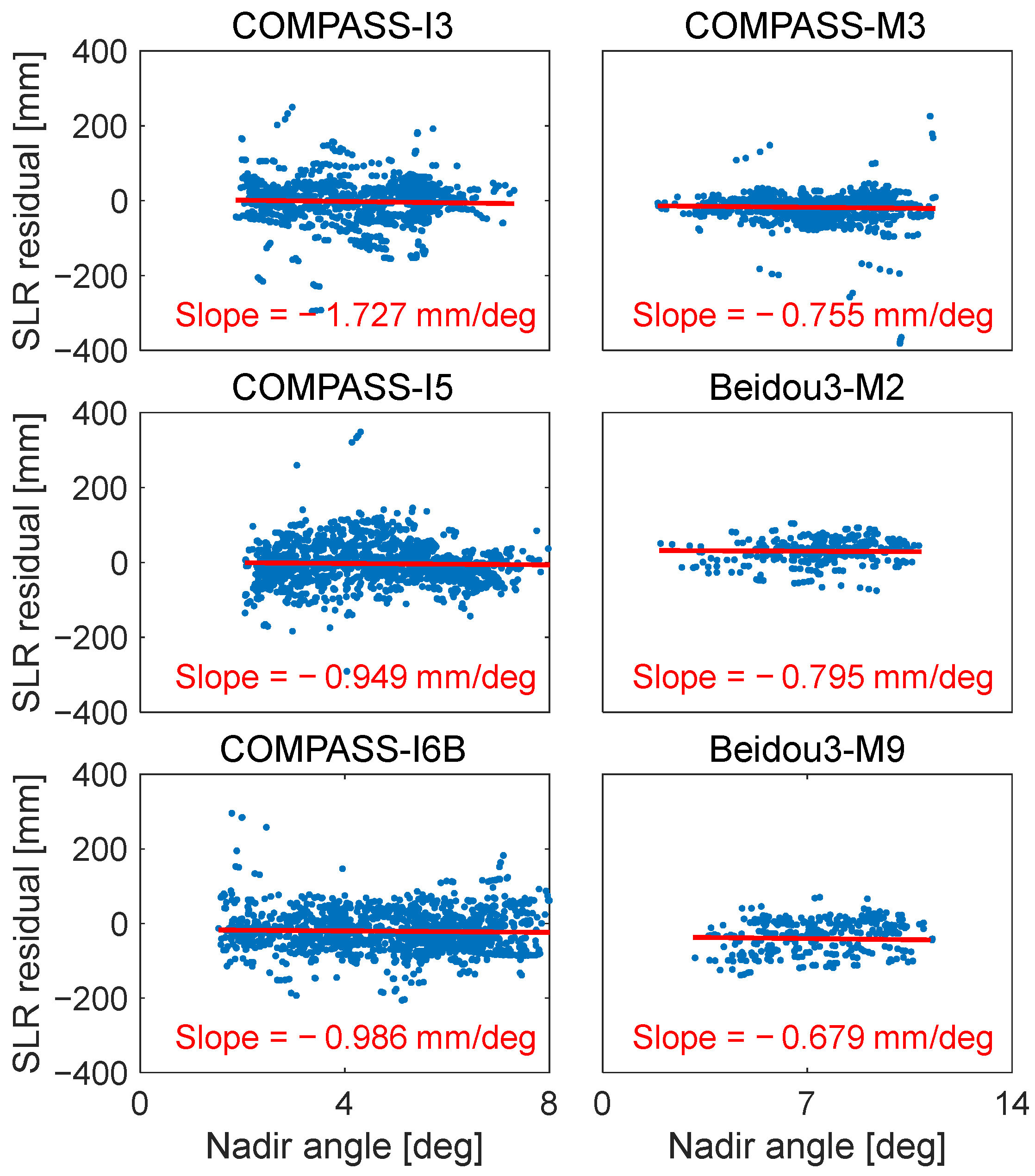
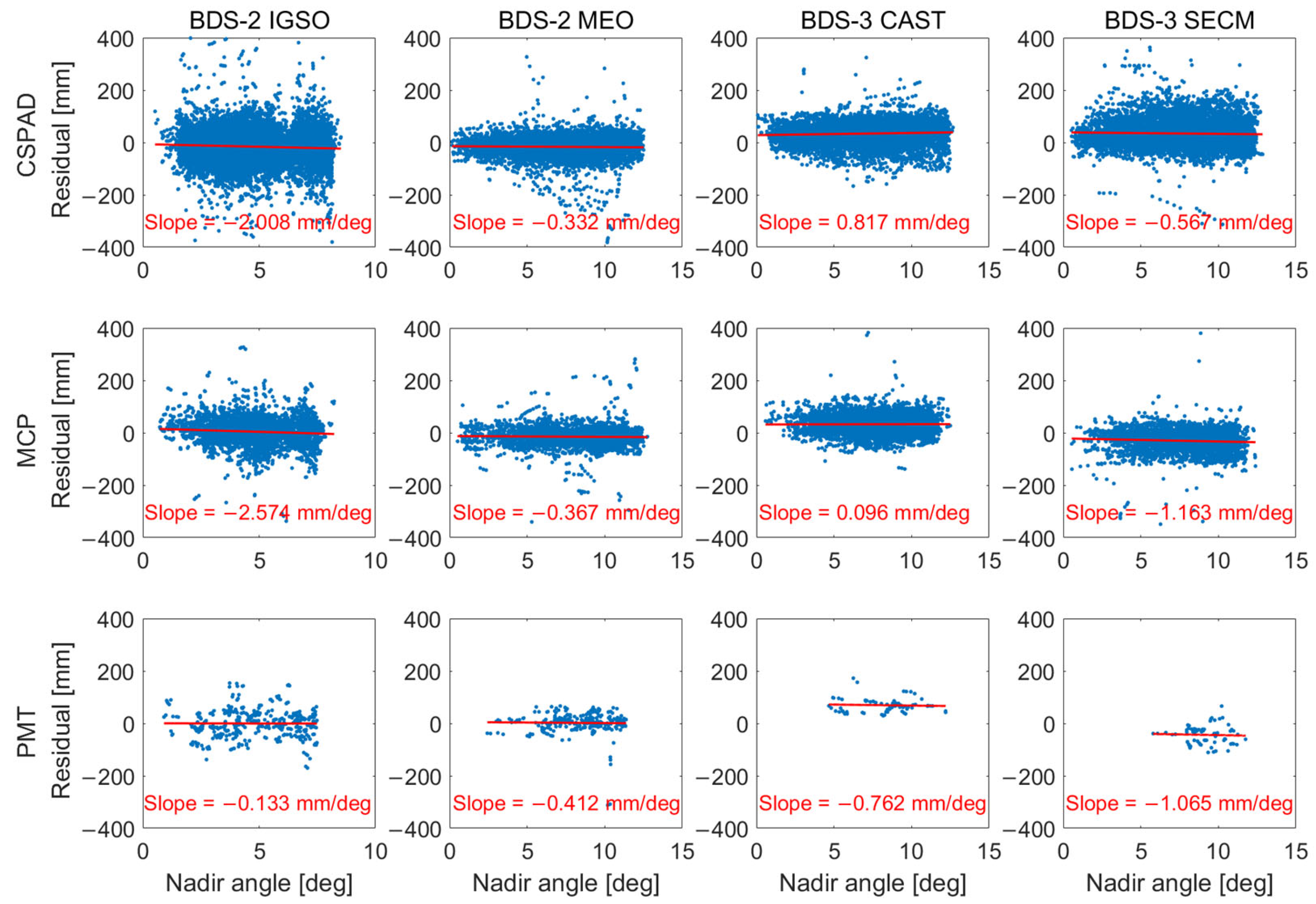
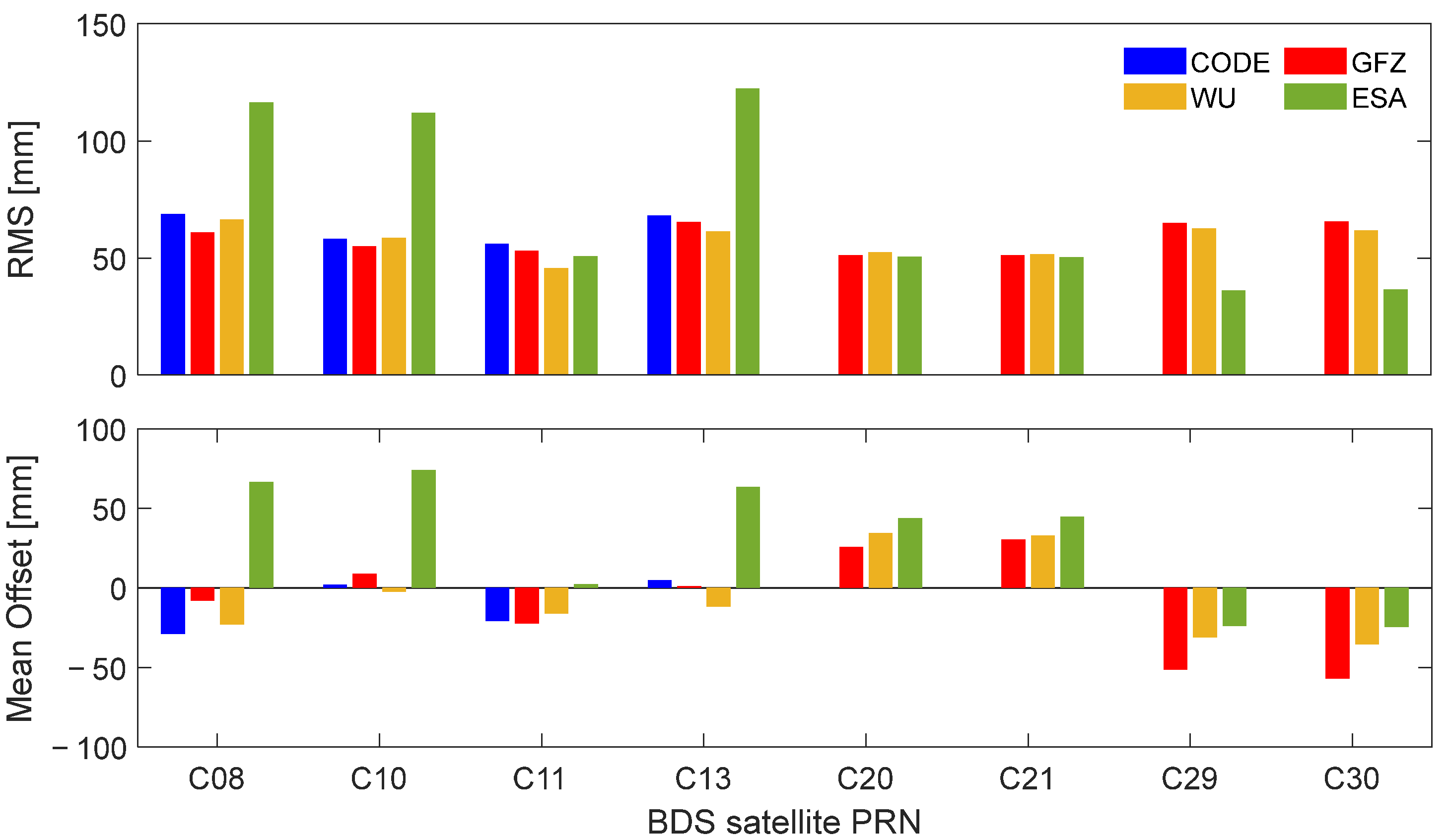
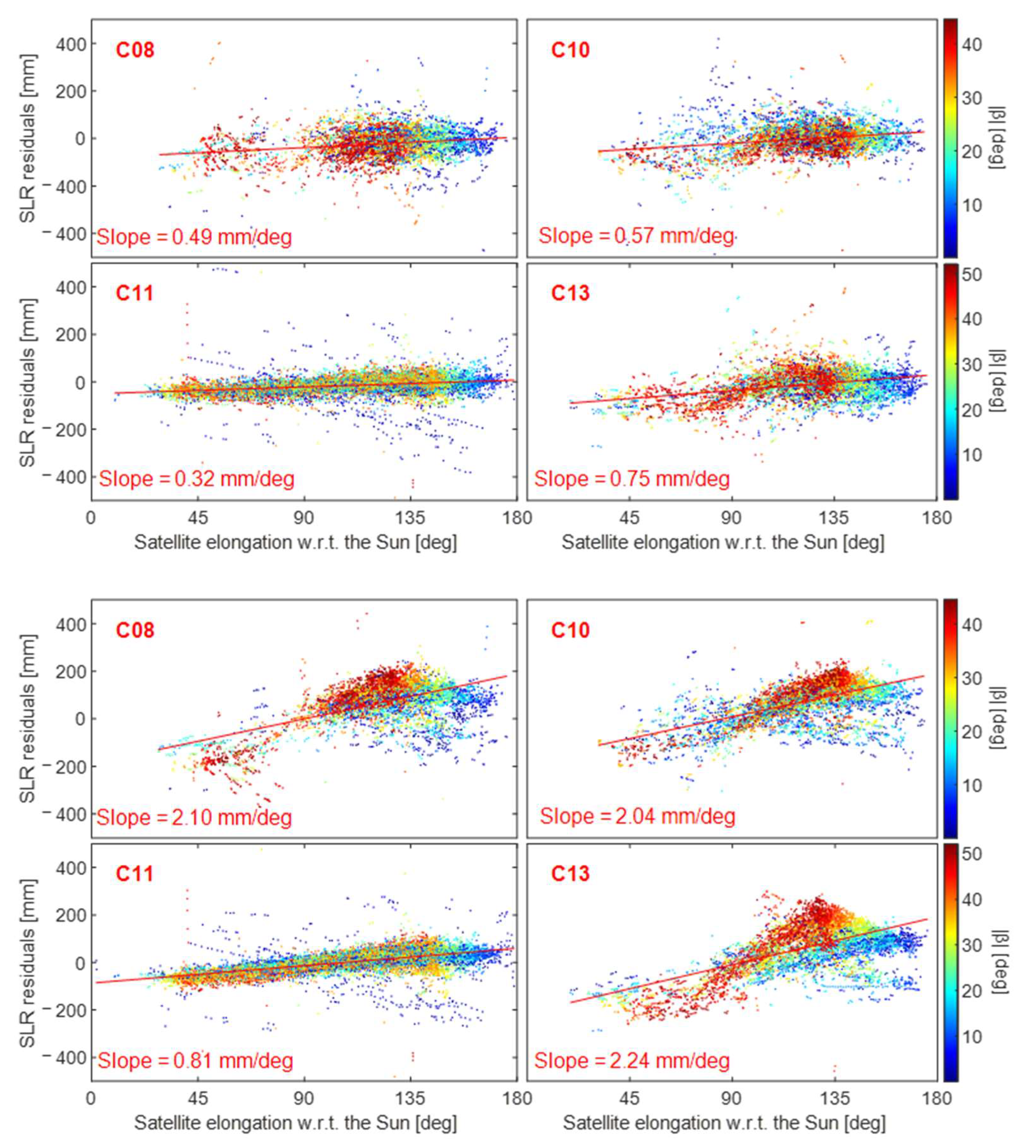
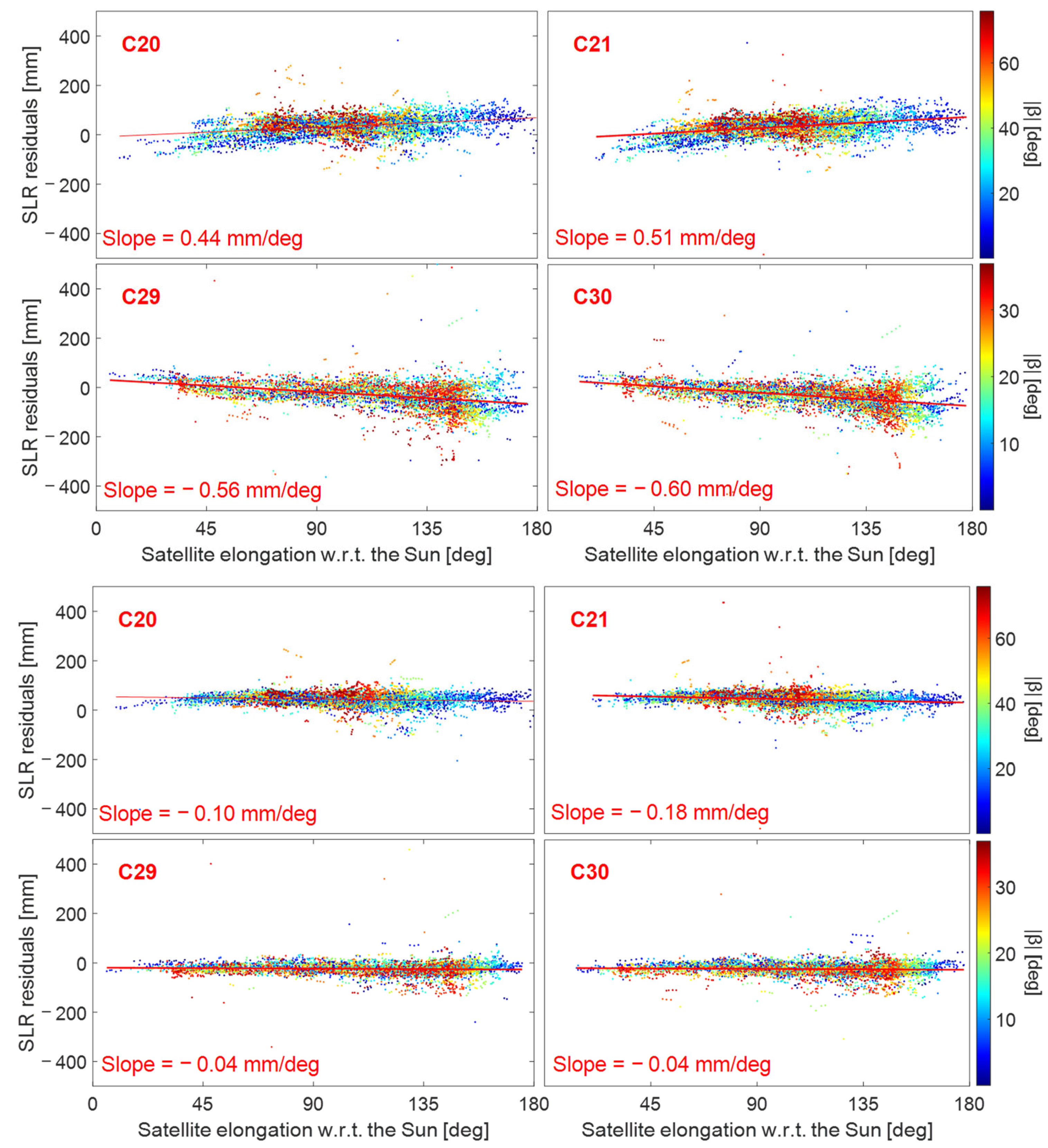
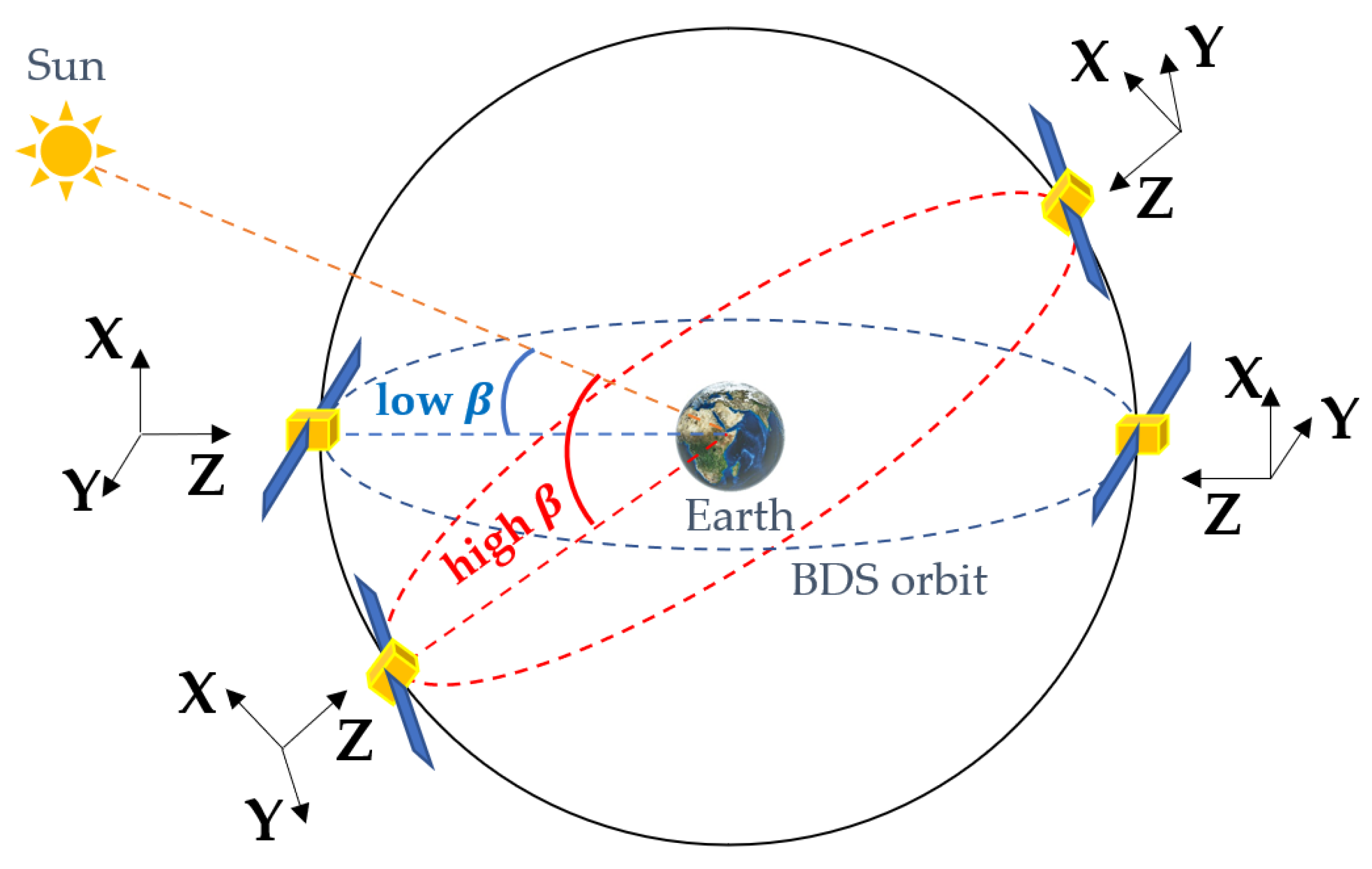
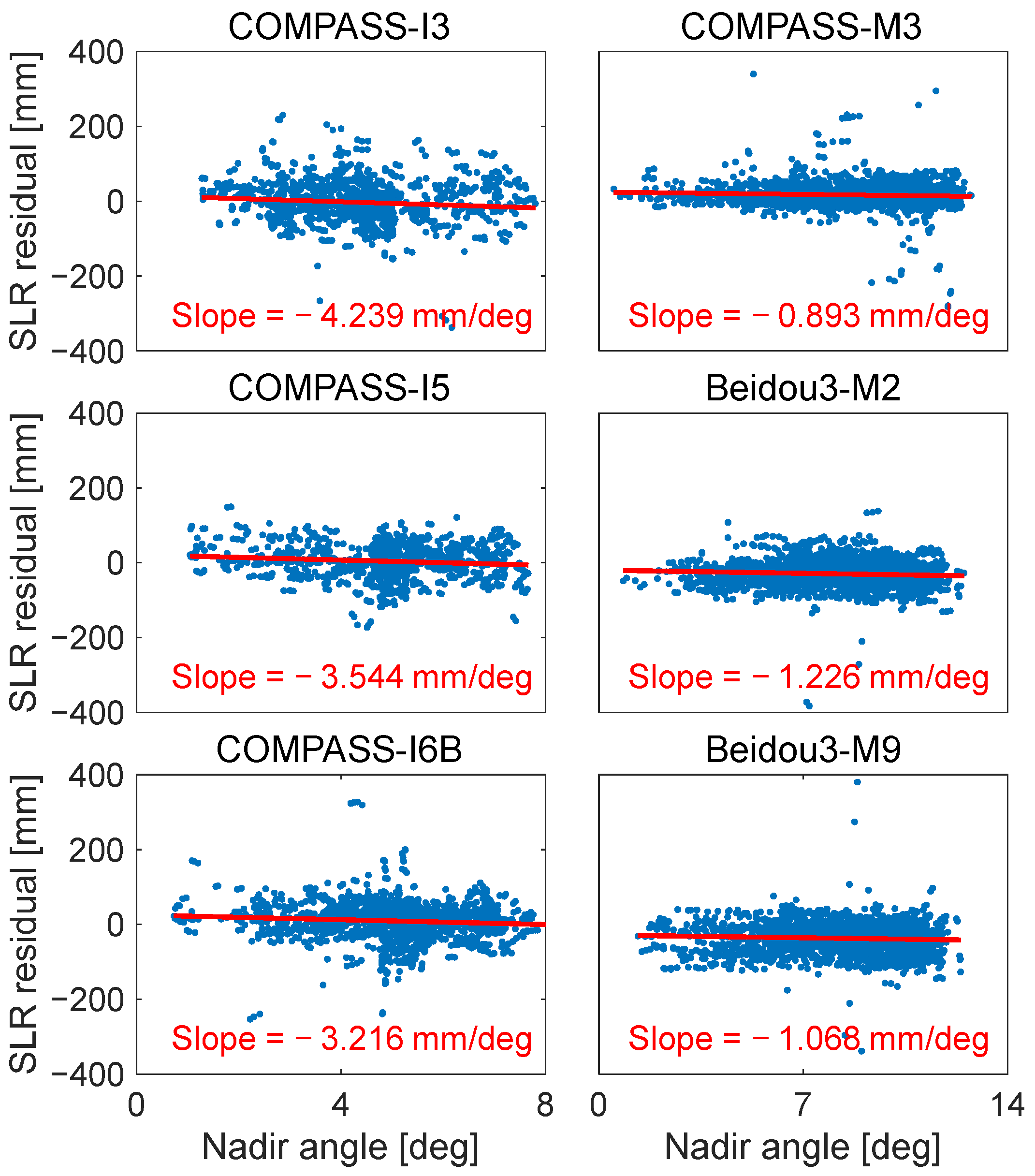
As an essential infrastructure that provides positioning, navigation, and timing services, China constructed the BeiDou Navigation Satellite System (BDS). The last BDS satellite was launched in June 2020, which represents the completion of BDS. BDS’s constellation consists of Medium Earth Orbit (MEO), Inclined Geosynchronous Orbit (IGSO), and Geostationary Orbit satellites. The precise modeling of non-conservative forces for BDS satellites is a challenging task. As an independent observation, Satellite Laser Ranging (SLR) is an important validation method of GNSS orbit modeling. In this paper, we validated the precise orbit products of different Analysis Centers (ACs) by using SLR observations, focusing on the BDS orbit modeling. By comparing BDS precise orbit products generated by four ACs with respect to SLR observations for the period of February 2017 to March 2021, we proved that an obvious satellite signature effect exists in the SLR residuals of BDS observed by multi-photon stations. The result indicates that multi-photon stations have a root mean square (RMS) of SLR residuals about 5 mm lower than that of single-photon detectors. The slope of SLR residuals with regard to nadir angle of IGSO satellites for single-photon and multi-photon stations is −2.0 and −2.5 mm/deg, respectively, while the slope of MEO satellites for these stations is about −0.6 to −0.3 and −1.0 to −0.4 mm/deg, respectively. To assess the effect of non-conservative force modeling, we selected seven high-performing stations, including five single-photon and two multi-photon stations. By comparing the SLR residuals of four ACs’ orbits, we analyzed the effect of the solutions of orbit processing, especially solar radiation pressure (SRP) models. We found that some centers may have modeling defects, including BDS-3 orbits of the Deutsches GeoForschungsZentrum and BDS-2 orbits of the European Space Agency, inferred from the large RMS of SLR residuals. Modeling the SRP of BDS satellites is challenging, while an appropriate prior box-wing model can improve the accuracy of SRP modeling and provide a more stable performance.
Keywords: SLR; BDS; satellite signature effect; non-conservative force modeling SLR; BDS; satellite signature effect; non-conservative force modeling