Article

Stratospheric Aerosol Characteristics from the 2017–2019 Volcanic Eruptions Using the SAGE III/ISS Observations


by
Bomidi Lakshmi Madhavan
1,*,
Rei Kudo
2,
Madineni Venkat Ratnam
1,
Corinna Kloss
3,
Gwenaël Berthet
3 and
Pasquale Sellitto
4,5
1
National Atmospheric Research Laboratory (NARL), Gadanki 517 112, India
2
Meteorological Research Institute, Japan Meteorological Agency, Ibaraki 305-0052, Japan
3
Laboratoire de Physique et Chimie de l’Environnement et de l’Espace (LPC2E), CNRS/Université d’Orléans, UMR 7328, 45071 Orléans, France
4
Université Paris Est Créteil and Université de Paris Cité, CNRS/Laboratoire Interuniversitaire des Systèmes Atmosphériques (LISA), Institut Pierre Simon Laplace (IPSL), 94010 Créteil, France
5
Istituto Nazlonale di Geofisica e Vulcanologia, Osservatorio Etneo, 95125 Catania, Italy
*
Author to whom correspondence should be addressed.
Remote Sens. 2023, 15(1), 29; https://doi.org/10.3390/rs15010029
Submission received: 26 September 2022 / Revised: 5 December 2022 / Accepted: 17 December 2022 / Published: 21 December 2022

Abstract

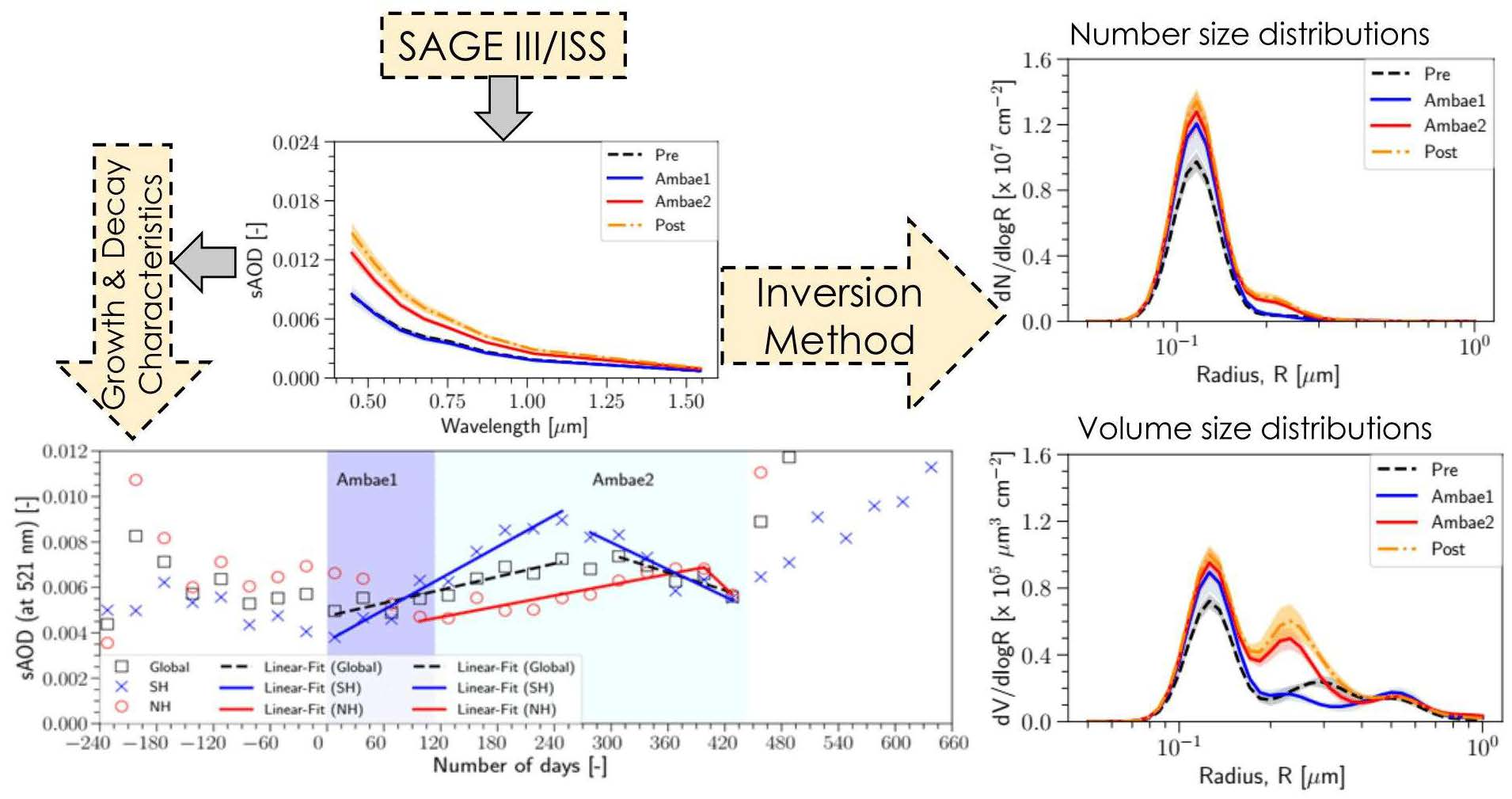
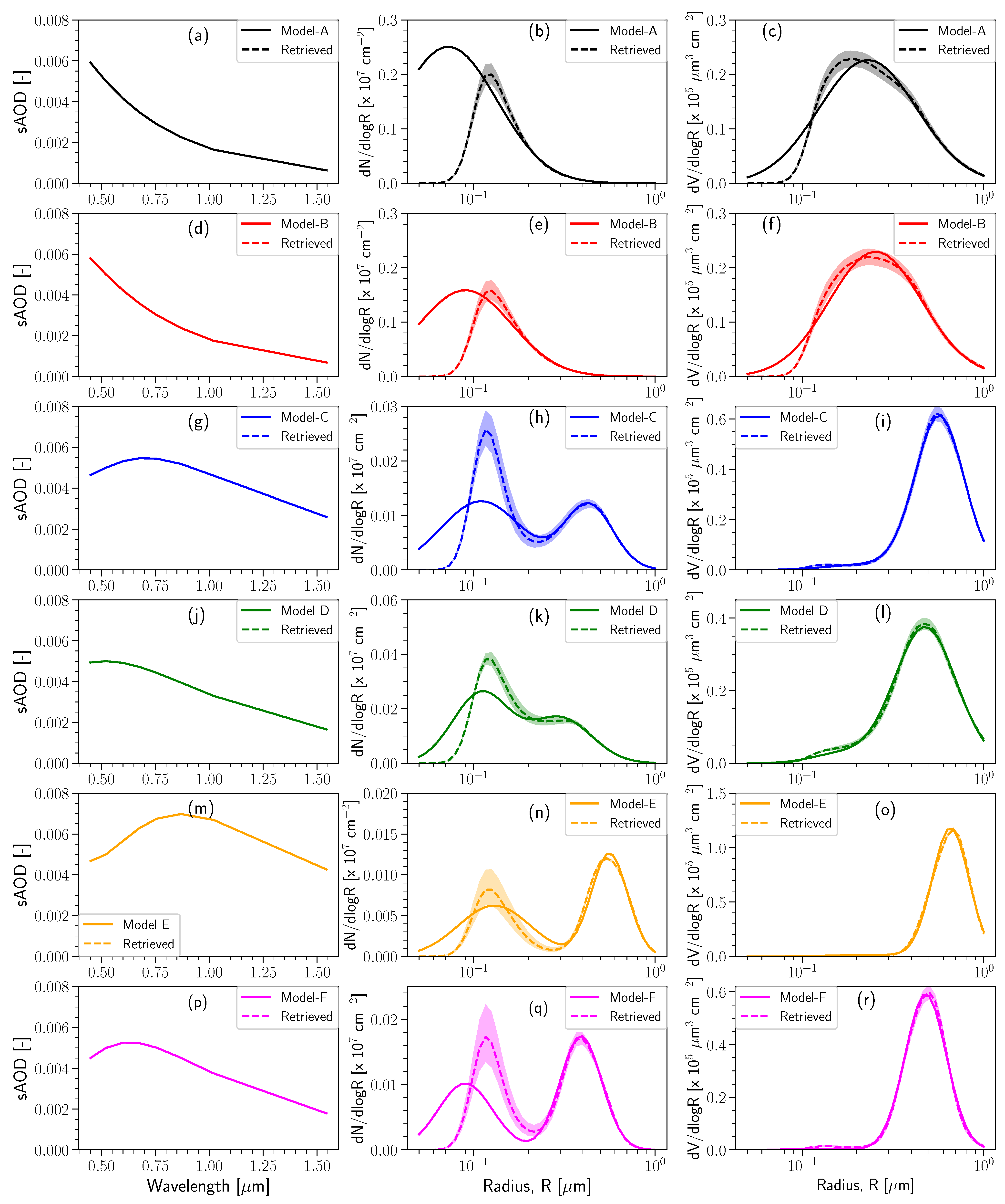
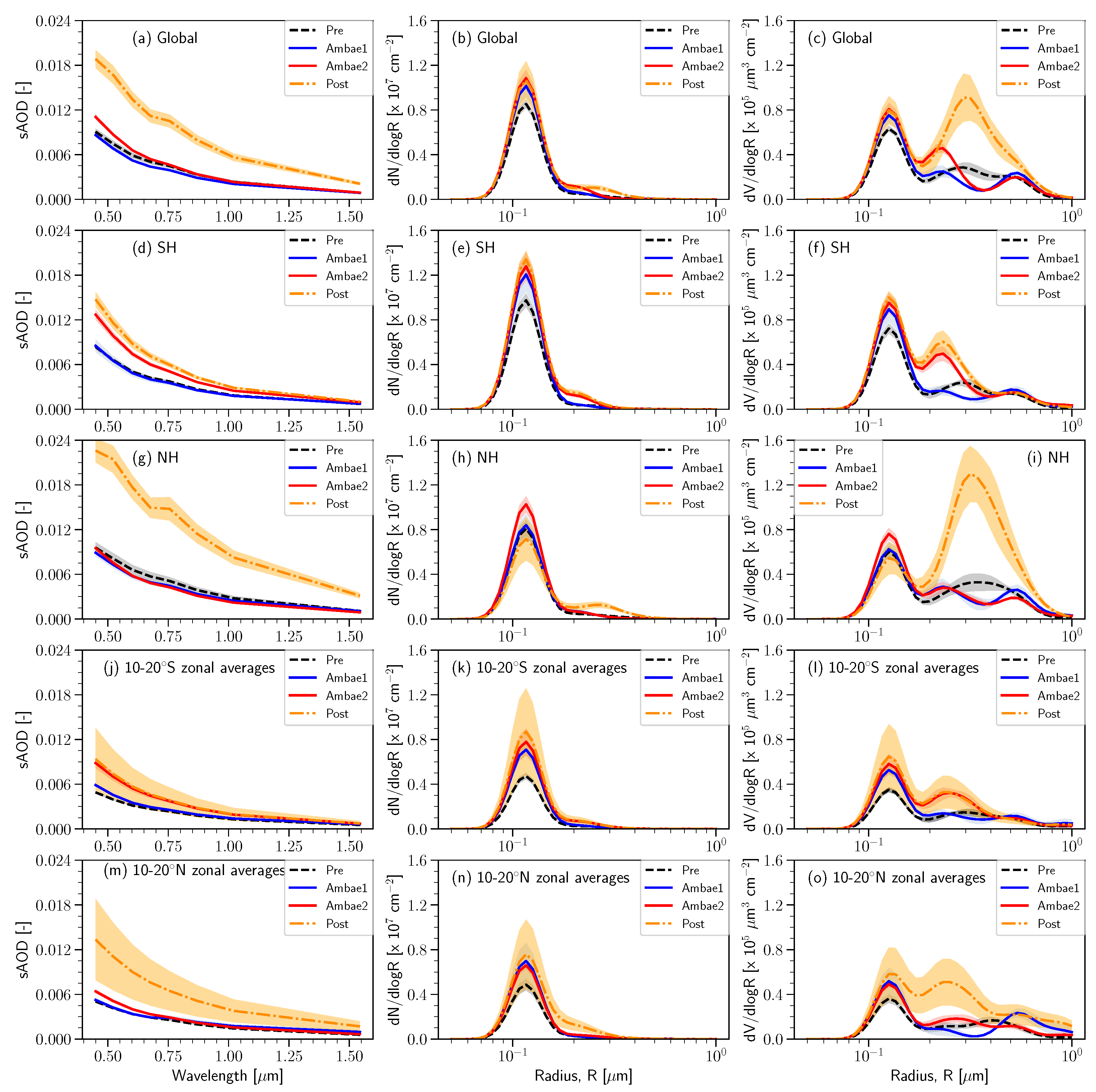
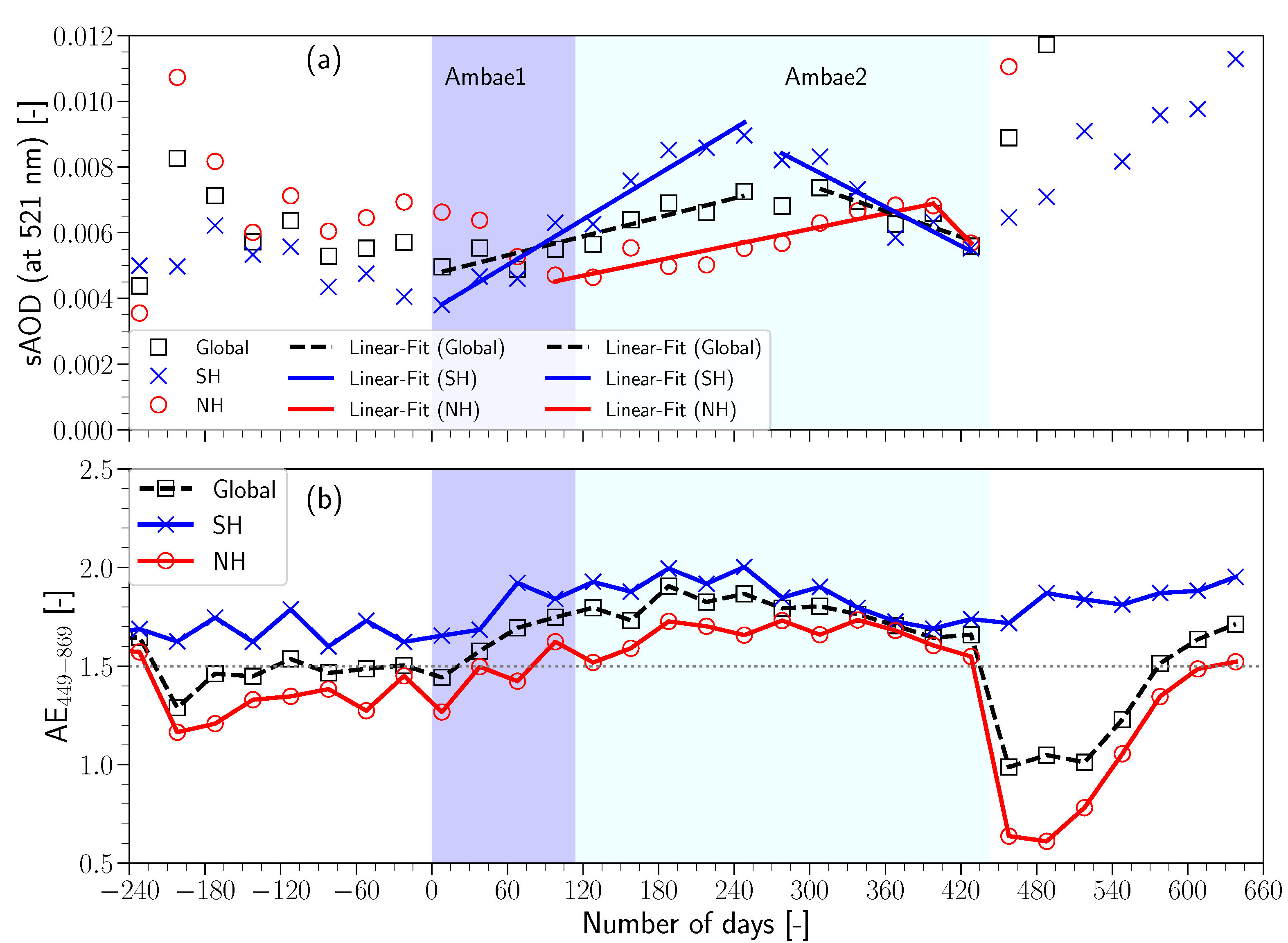
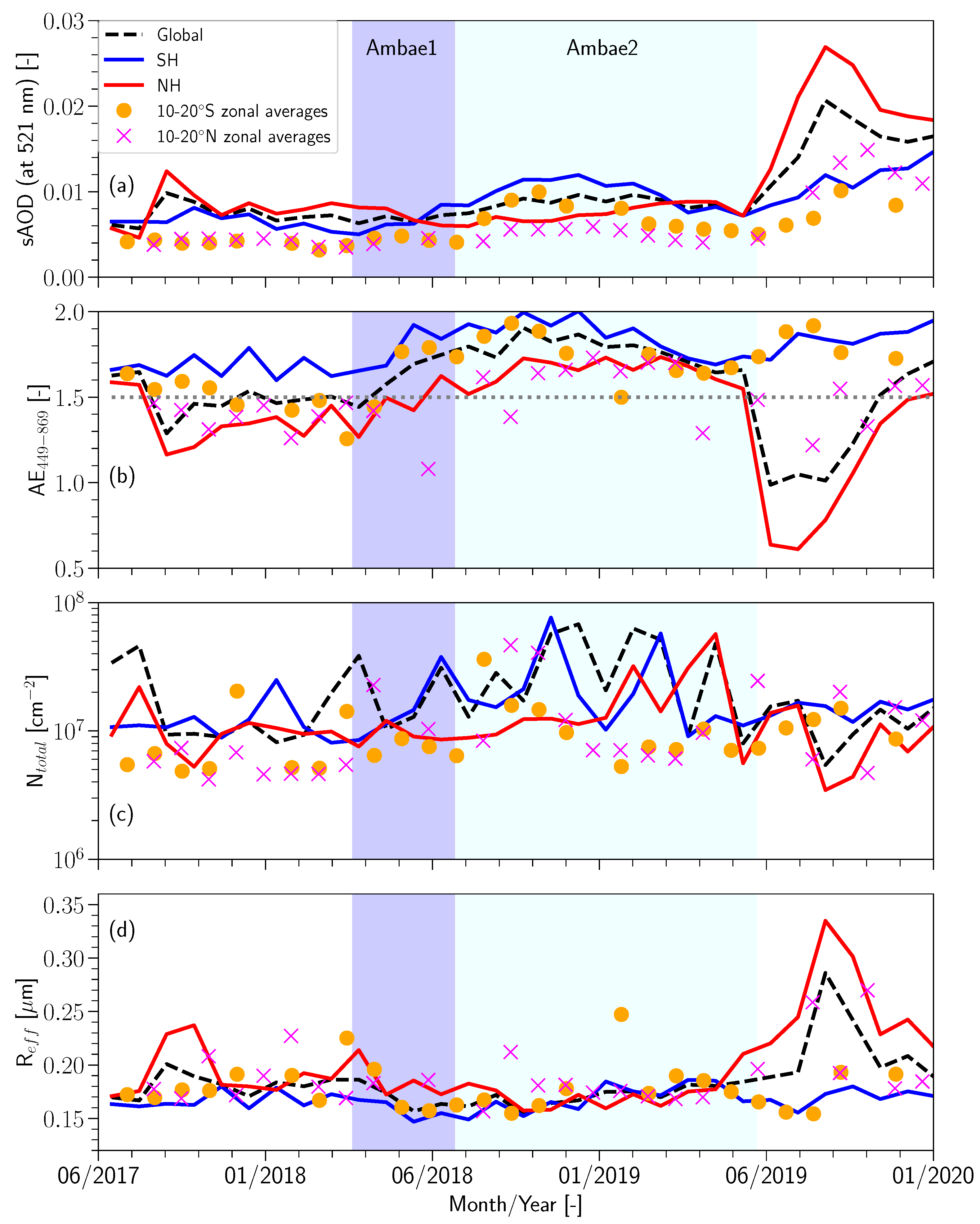
In recent years (2017–2019), several moderate volcanic eruptions and wildfires have perturbed the stratospheric composition and concentration with distinct implications on radiative forcing and climate. The Stratospheric Aerosol and Gas Experiment III instruments onboard the International Space Station (SAGE III/ISS) have been providing aerosol extinction coefficient (EC) profiles at multiple wavelengths since June 2017. In this study, a method to invert the spectral stratospheric aerosol optical depth (sAOD) or EC values from SAGE III/ISS (to retrieve the number/volume size distributions and other microphysical properties) is presented, and the sensitivity of these retrievals is evaluated. It was found that the retrievals are strongly dependent on the choices of wavelengths, which in turn determine the shapes of the calculated curves. Further, we examine the changes in stratospheric aerosol spectral behavior, size distribution properties, time evolution (growth/decay) characteristics associated with subsequent moderate volcanic eruptions, namely, Ambae (15S, 167E; April and July 2018), Raikoke (48N, 153E; June 2019), and Ulawun (5S, 151E; June and August 2019), in different spatial regions. The observational period was classified with reference to Ambae eruptions into four phases (pre-Ambae, Ambae1, Ambae2, and post-Ambae). The pre-Ambae and post-Ambe periods comprise the 2017 Canadian fires and 2019 Raikoke/Ulawun eruptions, respectively. The spectral dependence of sAOD was comparable and lowest during the pre-Ambae and Ambae1 periods in all regions. The number concentration at the principal mode radius (between 0.07 and 0.2 μm) was observed to be higher during the Ambae2 period over the Northern Hemisphere (NH). The rate of change (growth/decay) in the sAOD on a global scale resembled the changes in the Southern Hemisphere (SH), unlike the time-lag-associated changes in the NH. These differences could be attributed to the prevailing horizontal and vertical dispersion mechanisms in the respective regions. Lastly, the radiative forcing estimates of Ambae and Raikoke/Ulawun eruptions, as reported in recent studies, was discussed by taking clues from other major and moderate eruptions to gain insight on their role in climate change.
Keywords: volcanic eruption; stratospheric aerosols; aerosol microphysics; aerosol properties volcanic eruption; stratospheric aerosols; aerosol microphysics; aerosol properties
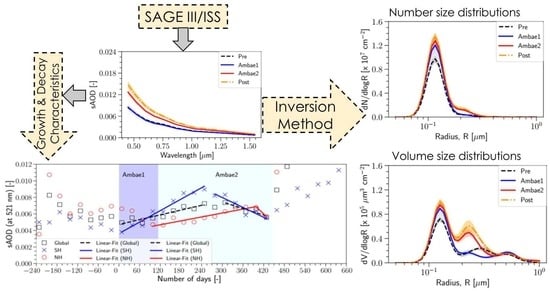
Graphical Abstract