Article

Changes in Onset of Vegetation Growth on Svalbard, 2000–2020
1
NORCE Norwegian Research Centre AS, P.O. Box 6434, 9294 Tromsø, Norway
2
Noregs Arktiske Universitetsmuseum, UiT—The Arctic University of Norway, 9037 Tromsø, Norway
3
Norwegian Institute for Nature Research (NINA), FRAM—High North Research Centre for Climate and the Environment, Langnes, P.O. Box 6606, 9296 Tromsø, Norway
4
Applied Mathematics Department, University of Alicante, 03080 Alicante, Spain
5
Department of Agriculture, Food, Environment, and Forestry (DAGRI), University of Florence, Piazzale Delle Cascine 18, 50144 Florence, Italy
*
Author to whom correspondence should be addressed.
Remote Sens. 2022, 14(24), 6346; https://doi.org/10.3390/rs14246346
Submission received: 30 October 2022 / Revised: 1 December 2022 / Accepted: 13 December 2022 / Published: 15 December 2022
(This article belongs to the Special Issue Remote Sensing Monitoring for Arctic Region)

Abstract

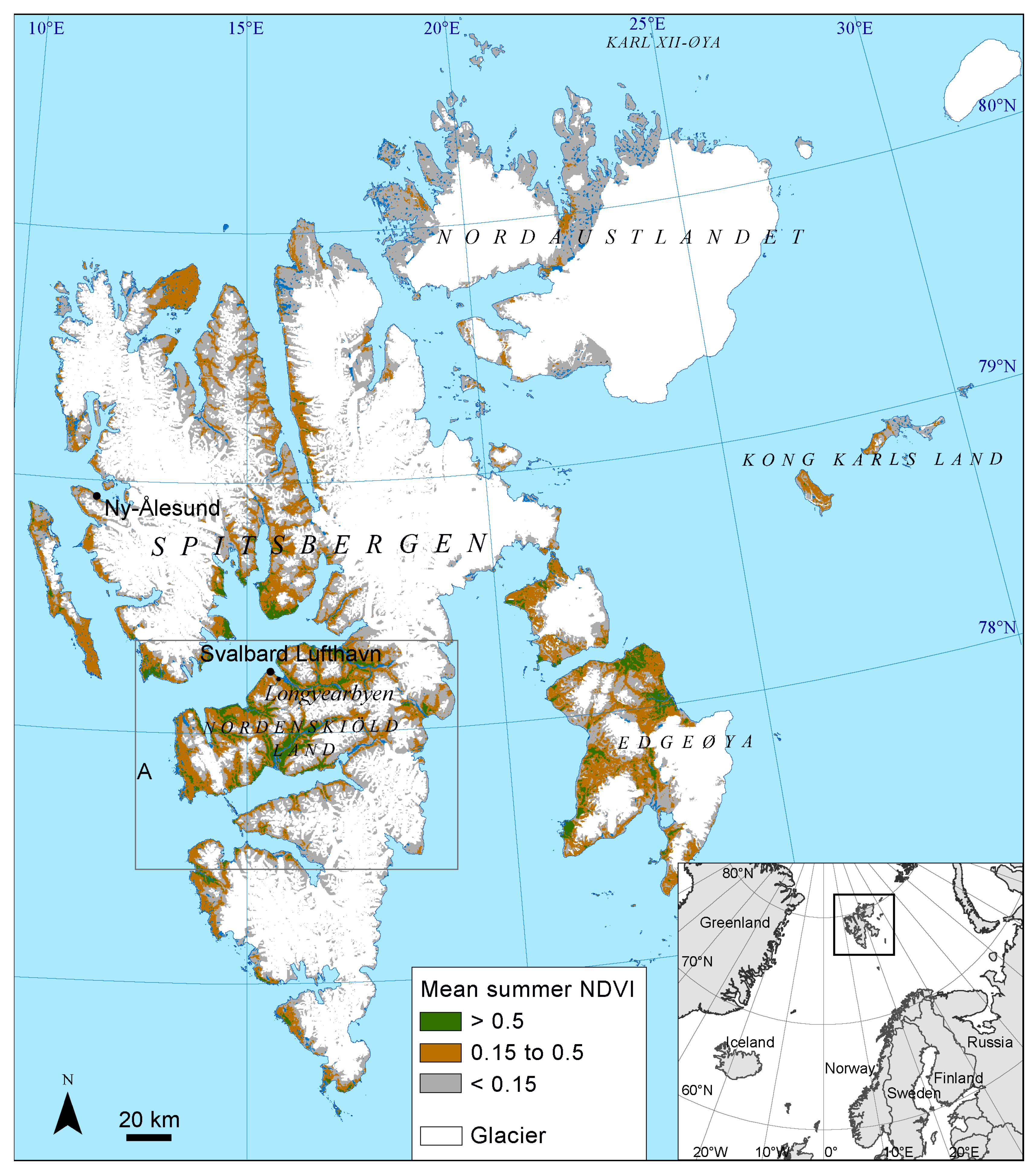
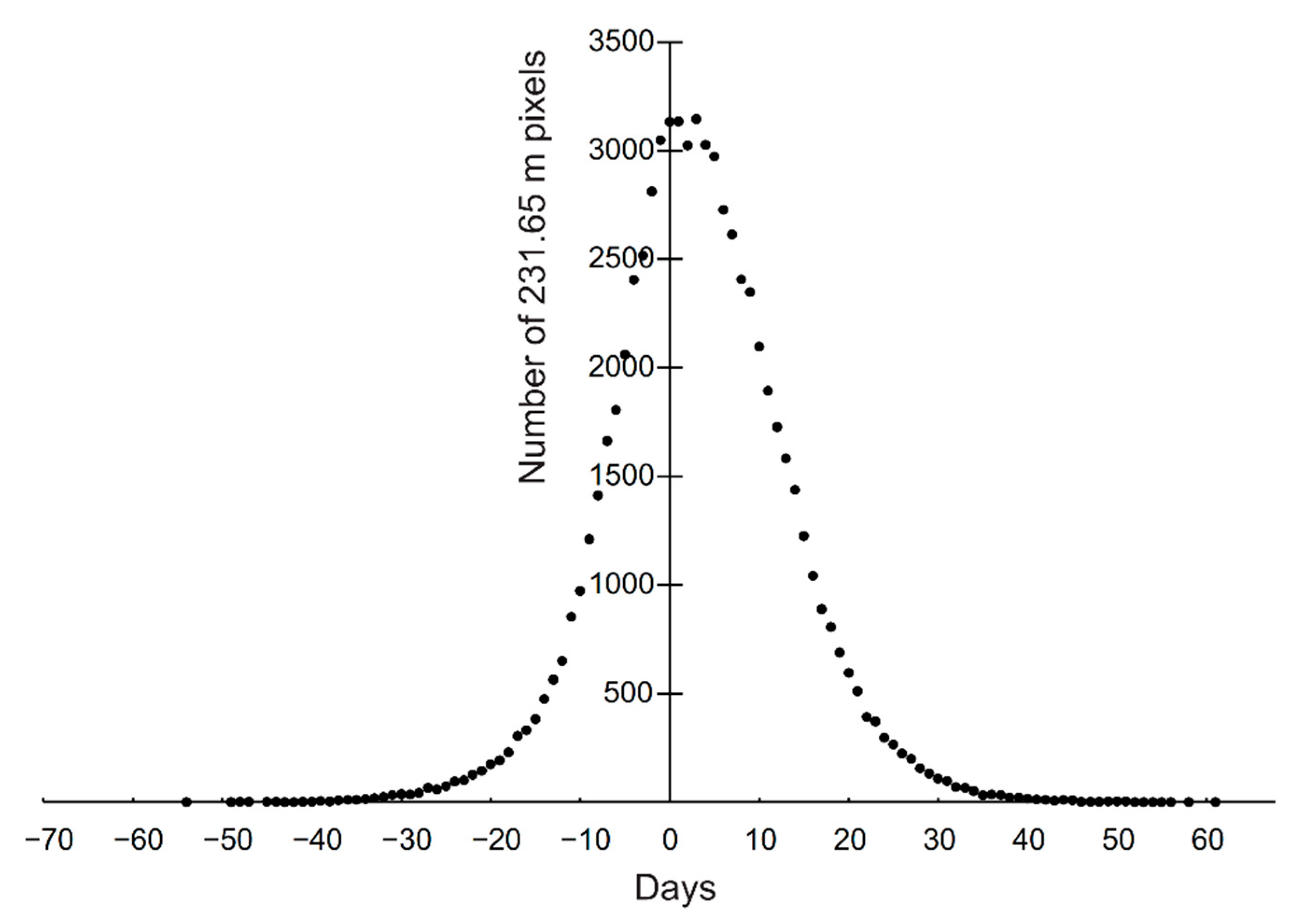
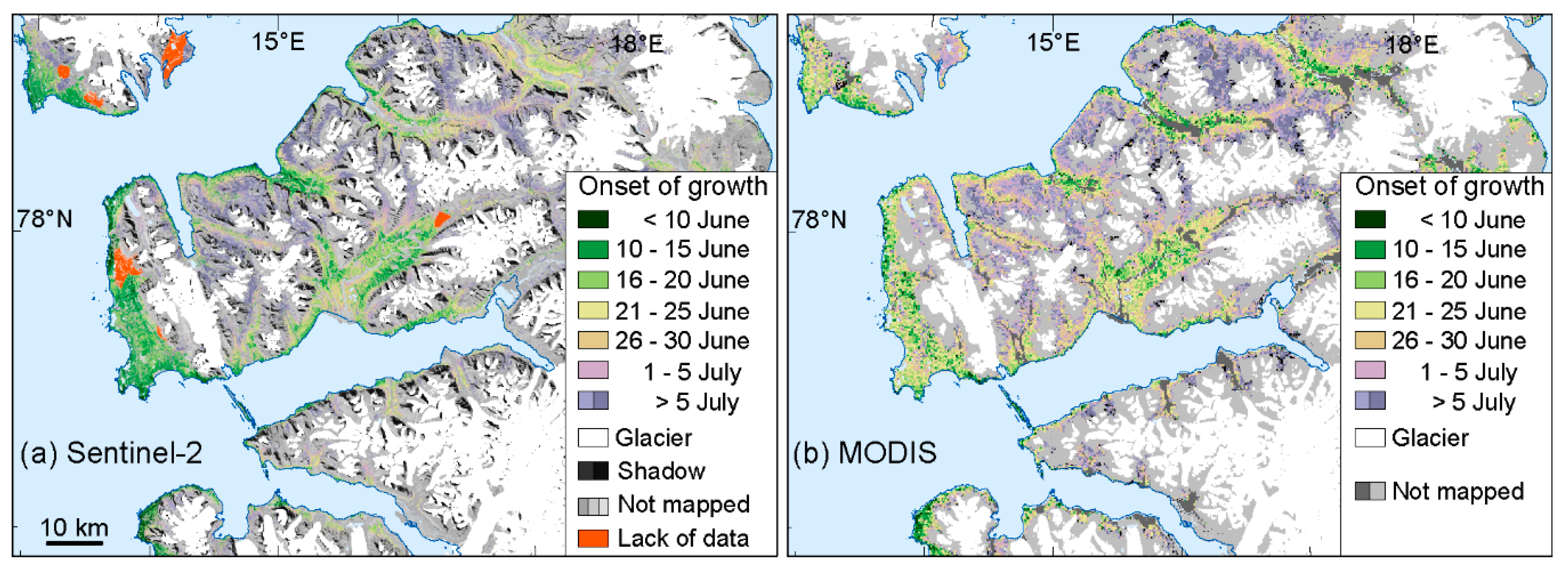
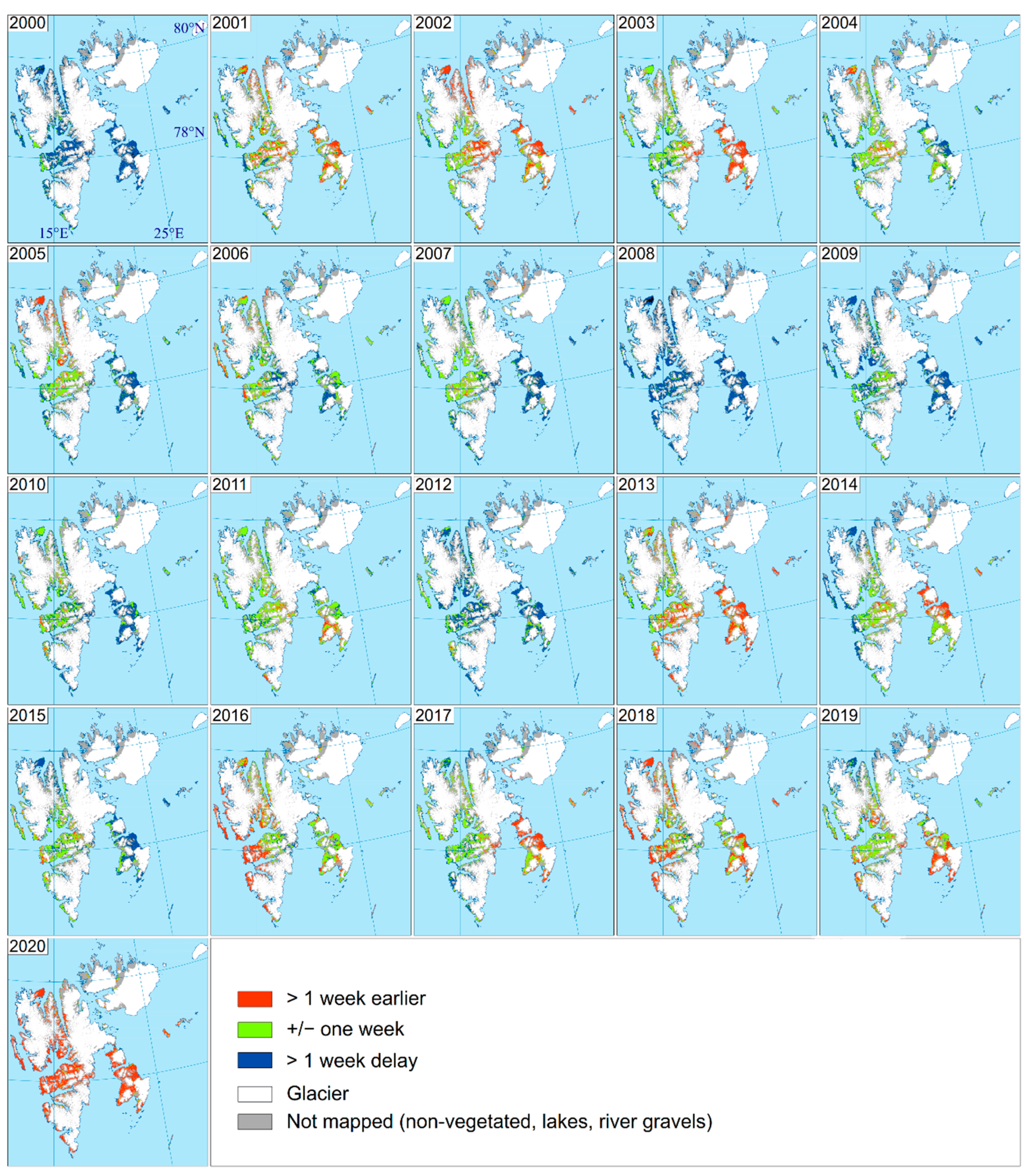
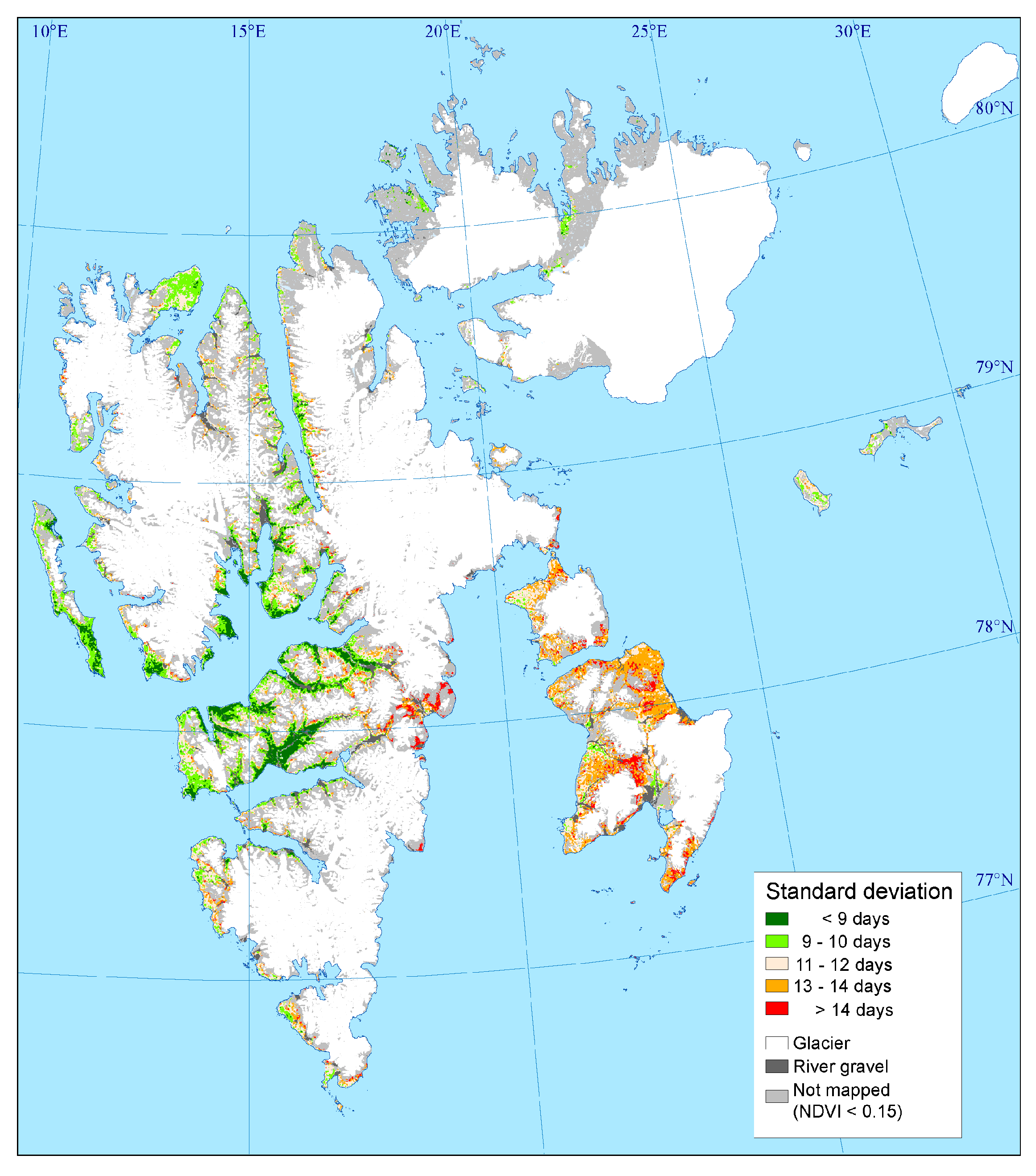
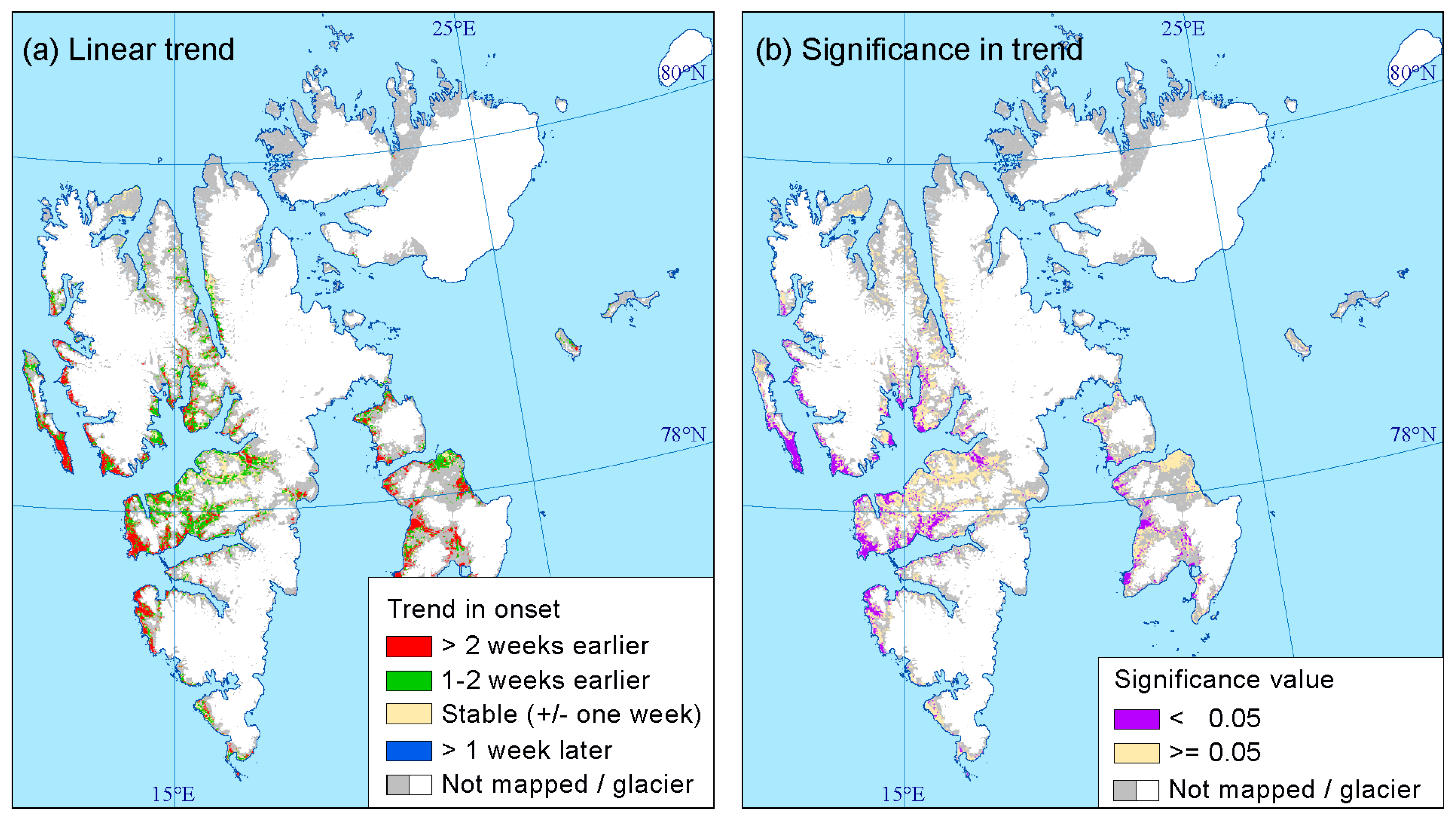
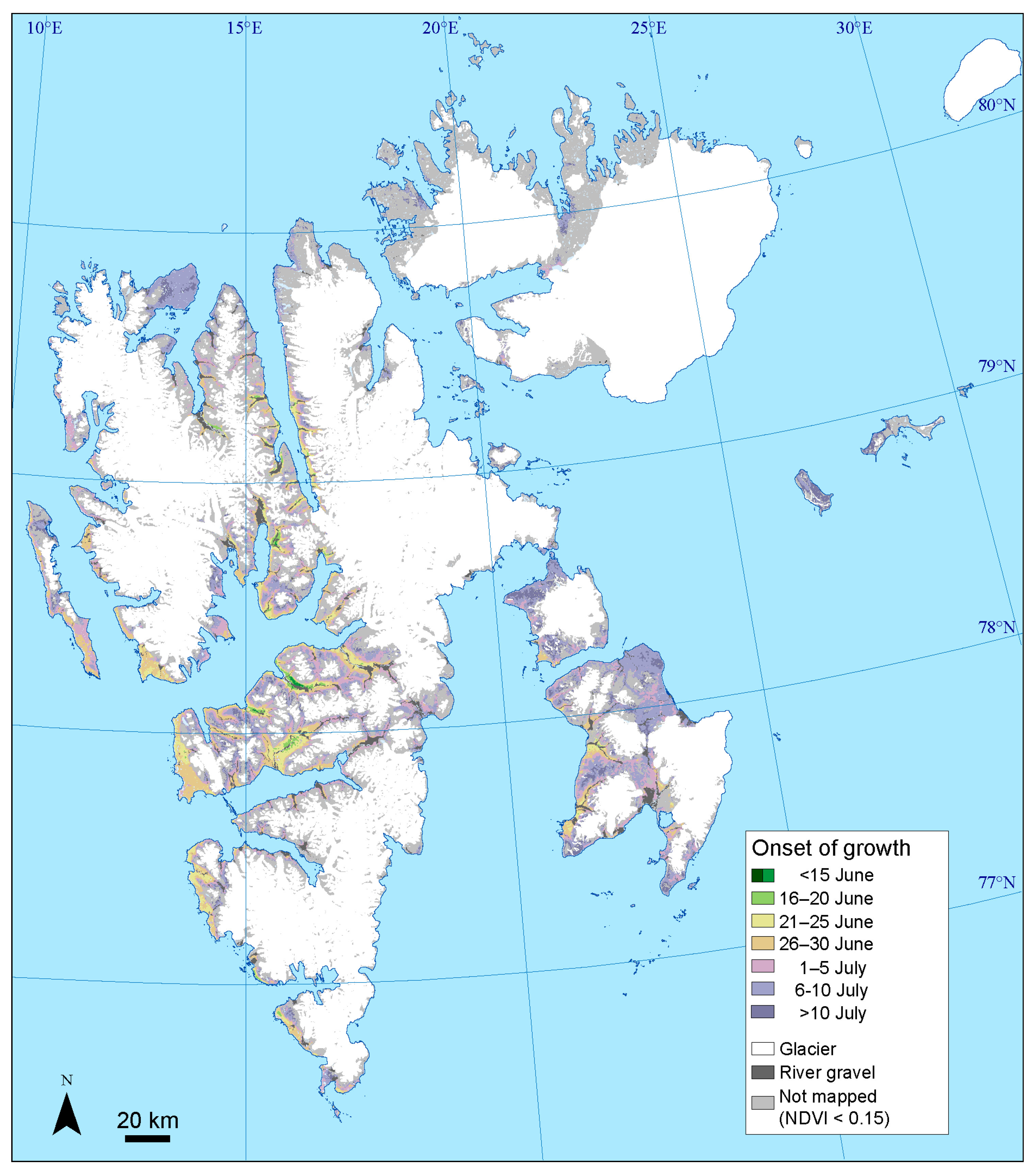
The global temperature is increasing, and this is affecting the vegetation phenology in many parts of the world. The most prominent changes occur at northern latitudes such as our study area, which is Svalbard, located between 76°30′N and 80°50′N. A cloud-free time series of MODIS-NDVI data was processed. The dataset was interpolated to daily data during the 2000–2020 period with a 231.65 m pixel resolution. The onset of vegetation growth was mapped with a NDVI threshold method which corresponds well with a recent Sentinel-2 NDVI-based mapping of the onset of vegetation growth, which was in turn validated by a network of in-situ phenological data from time lapse cameras. The results show that the years 2000 and 2008 were extreme in terms of the late onset of vegetation growth. The year 2020 had the earliest onset of vegetation growth on Svalbard during the 21-year study. Each year since 2013 had an earlier or equally early timing in terms of the onset of the growth season compared with the 2000–2020 average. A linear trend of 0.57 days per year resulted in an earlier onset of growth of 12 days on average for the entire archipelago of Svalbard in 2020 compared to 2000.
Keywords: MODIS; NDVI; time series; onset of vegetation growth; trend; Arctic; Svalbard; spatial scales MODIS; NDVI; time series; onset of vegetation growth; trend; Arctic; Svalbard; spatial scales