Article

Spatio-Temporal Variability of Wind Energy in the Caspian Sea: An Ecosystem Service Modeling Approach

1
Department of Environment, Faculty of Natural Resources & Marine Sciences (FNRMS), Tarbiat Modares University (TMU), Noor 46414 356, Mazandaran, Iran
2
Department of Marine Physics, Faculty of Natural Resources & Marine Sciences (FNRMS), Tarbiat Modares University (TMU), Noor 46414 356, Mazandaran, Iran
3
P.P. Shirshov Institute of Oceanology, Russian Academy of Sciences, Nakhimovsky pr. 36, 117997 Moscow, Russia
4
Laboratory of Integrated Research of Water Resources, S.Yu. Witte Moscow University, Second Kozhukhovsky pr. 12, Build. 1, 115432 Moscow, Russia
*
Author to whom correspondence should be addressed.
Remote Sens. 2022, 14(24), 6263; https://doi.org/10.3390/rs14246263
Submission received: 7 October 2022 / Revised: 30 November 2022 / Accepted: 7 December 2022 / Published: 10 December 2022
(This article belongs to the Special Issue Remote Sensing of Ocean Surface Winds)

Abstract

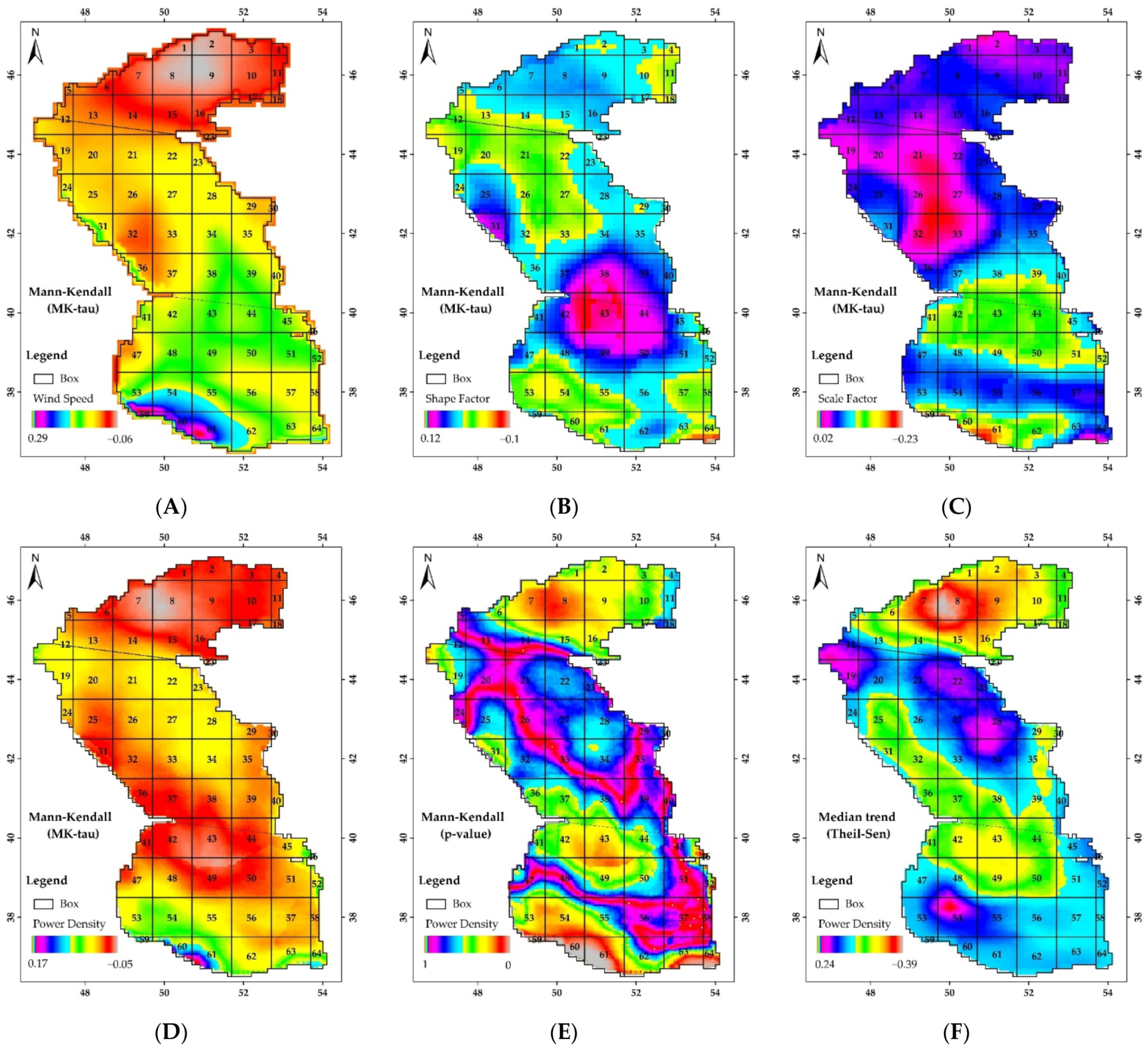
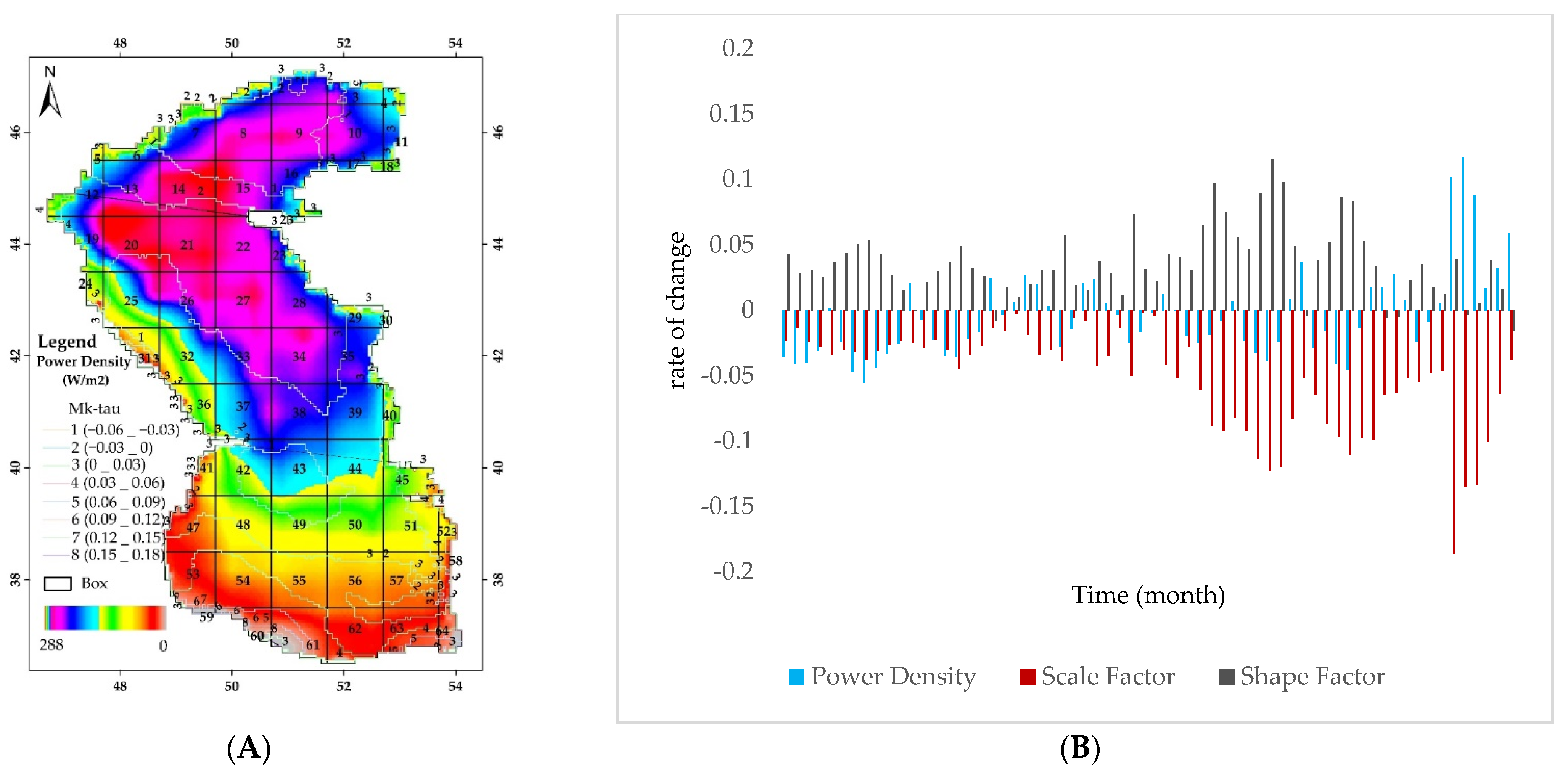
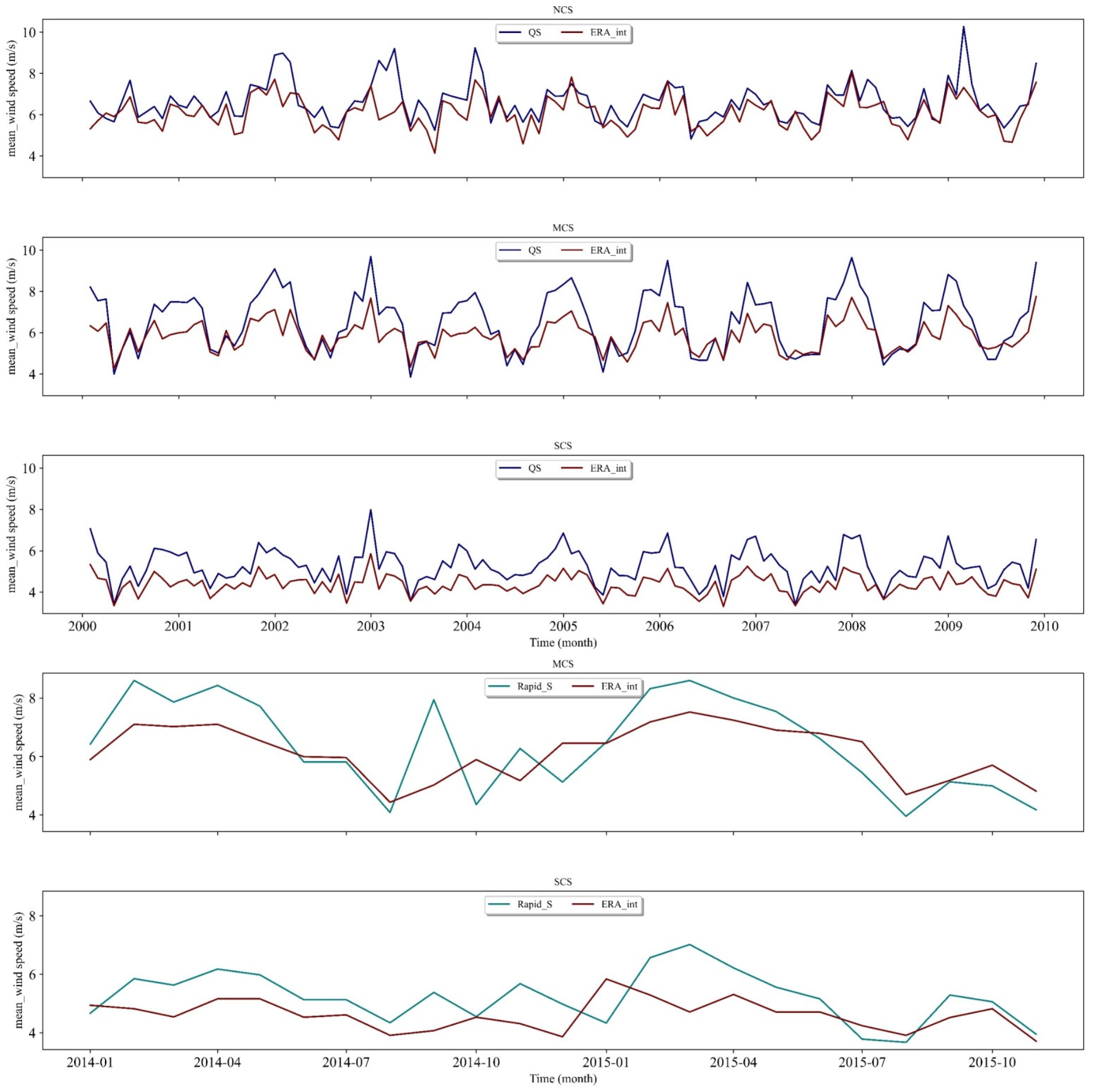
The ecosystem services that can be obtained from the oceans and seas are very diverse; one of the sources of energy is wind power. The Caspian Sea is characterized by a fragile ecosystem that is under serious anthropogenic stress, including oil and gas production and transportation. In particular, rich oil and gas resources in the region make renewables less important for the Caspian Sea Region. Depletion of hydrocarbon resources, a rise of their price on the international markets, geopolitical tensions, a decrease in the Caspian Sea level, regional climate change, and other factors make exploring offshore wind energy production timely. In order to model the offshore wind energy of the Caspian Sea, data from the ERA-Interim atmospheric reanalysis were used from 1980 to 2015 combined with QuikSCAT and RapidSCAT remote sensing data. The modeling results showed a wind power density of 173 W/m2 as an average value for the Caspian Sea. For the 1980–2015 period, 57% of the Caspian Sea area shows a decreasing trend in wind power density, with a total insignificant drop of 16.85 W/m2. The highest negative rate of change is observed in the Northern Caspian, which seems to be more influenced by regional climate change. The Caspian Sea regions with the highest potential for offshore wind energy production are identified and discussed.
Keywords: offshore wind energy; QuikSCAT; RapidSCAT; Caspian Sea; ecosystem services offshore wind energy; QuikSCAT; RapidSCAT; Caspian Sea; ecosystem services
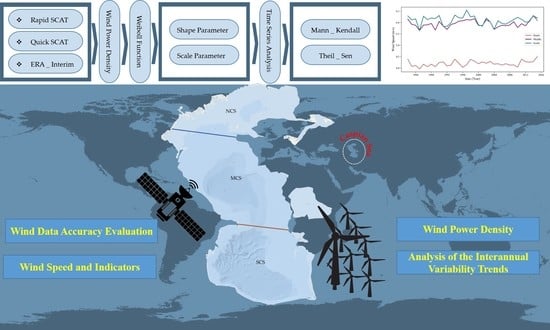
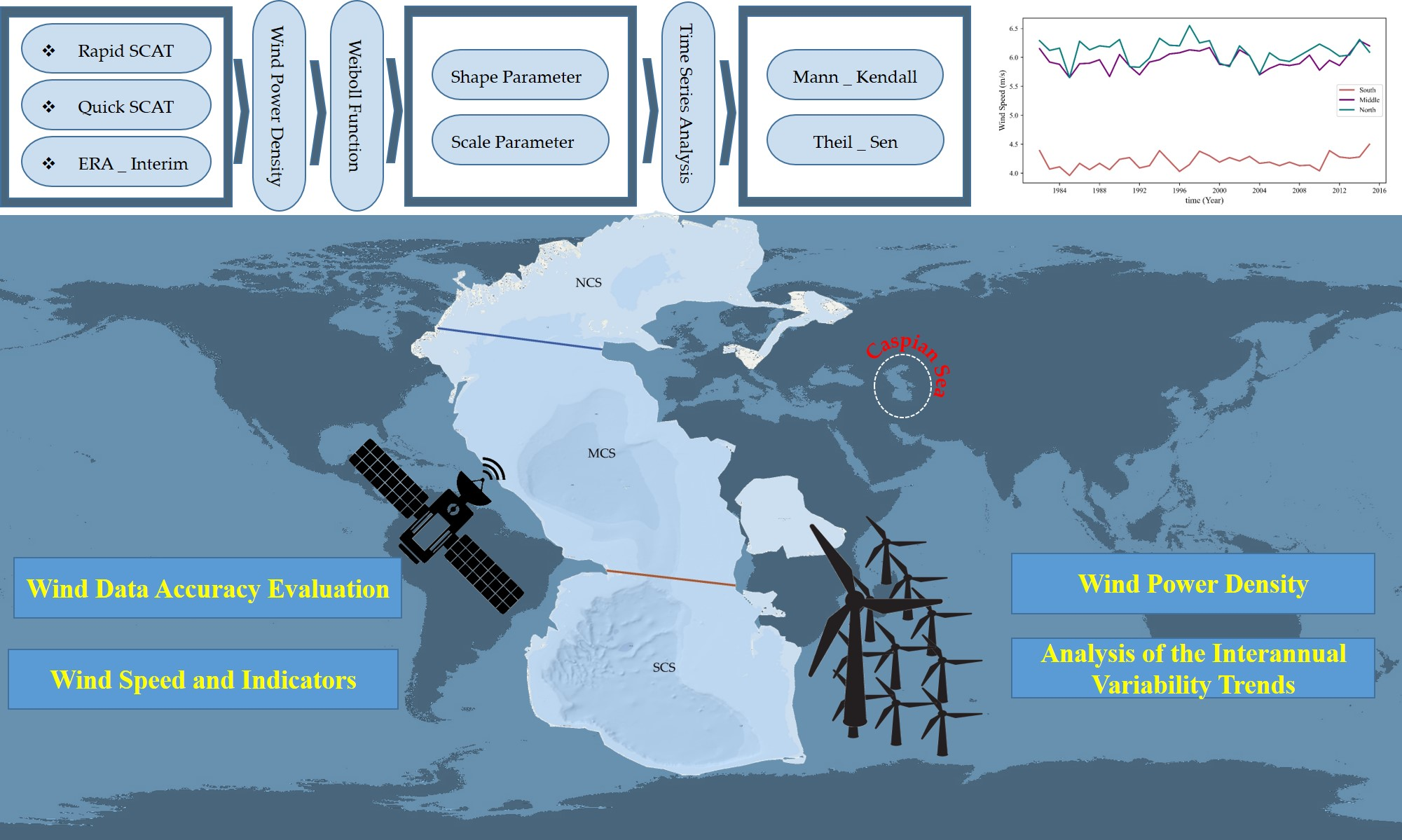
Graphical Abstract