Article

KNN Based Denoising Algorithm for Photon-Counting LiDAR: Numerical Simulation and Parameter Optimization Design


1
Hangzhou Institute for Advanced Study, The Chinese Academy of Sciences, Hangzhou 310024, China
2
Key Laboratory of Space Active Optical-Electro Technology, Shanghai Institute of Technical Physics, Chinese Academy of Sciences, Shanghai 200083, China
3
University of Chinese Academy of Sciences, Beijing 100049, China
4
Shanghai Branch, Hefei National Laboratory, Shanghai 201315, China
5
Shanghai Research Center for Quantum Sciences, Shanghai 201315, China
*
Author to whom correspondence should be addressed.
Remote Sens. 2022, 14(24), 6236; https://doi.org/10.3390/rs14246236
Submission received: 17 October 2022 / Revised: 26 November 2022 / Accepted: 5 December 2022 / Published: 9 December 2022
(This article belongs to the Section Environmental Remote Sensing)

Abstract

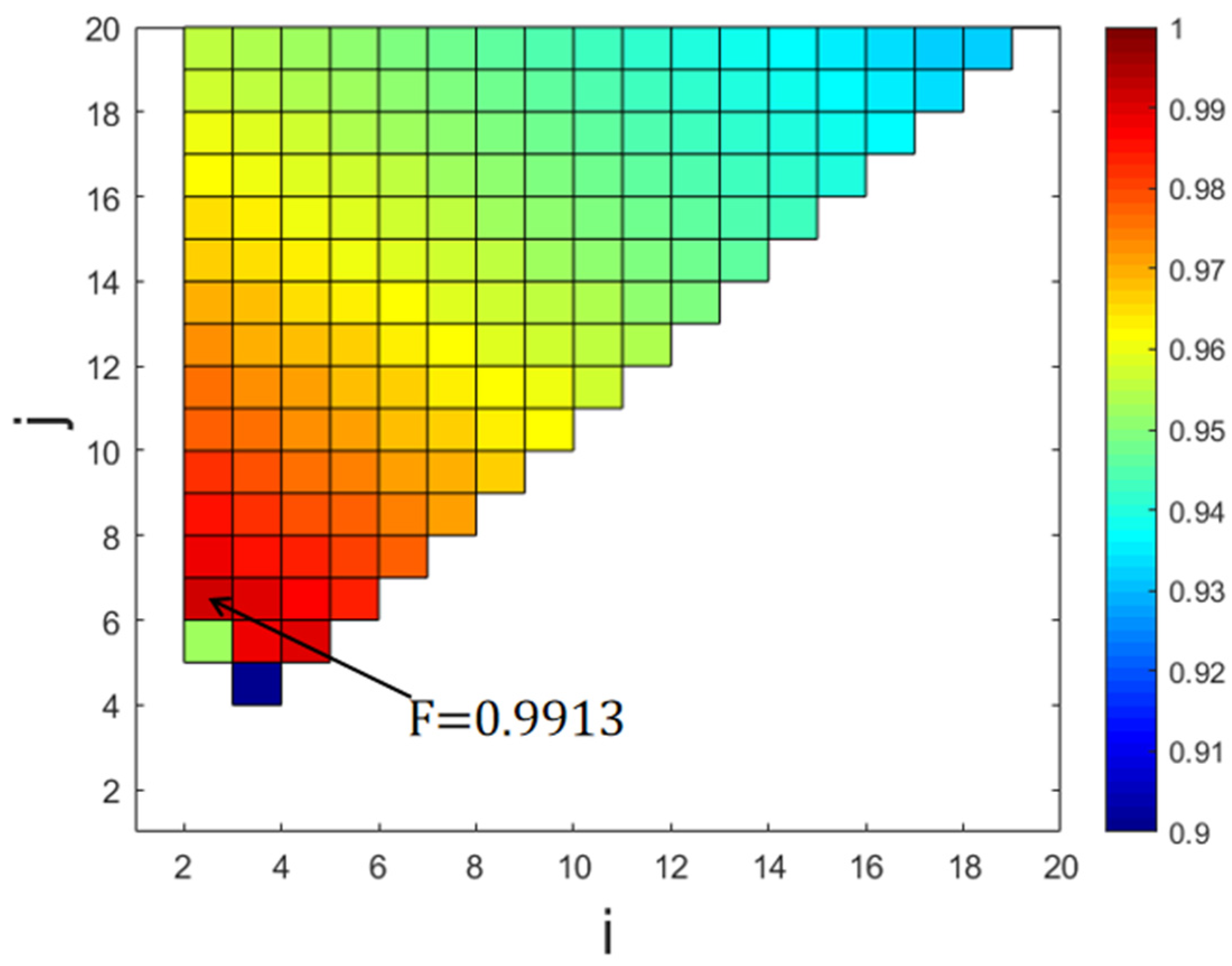
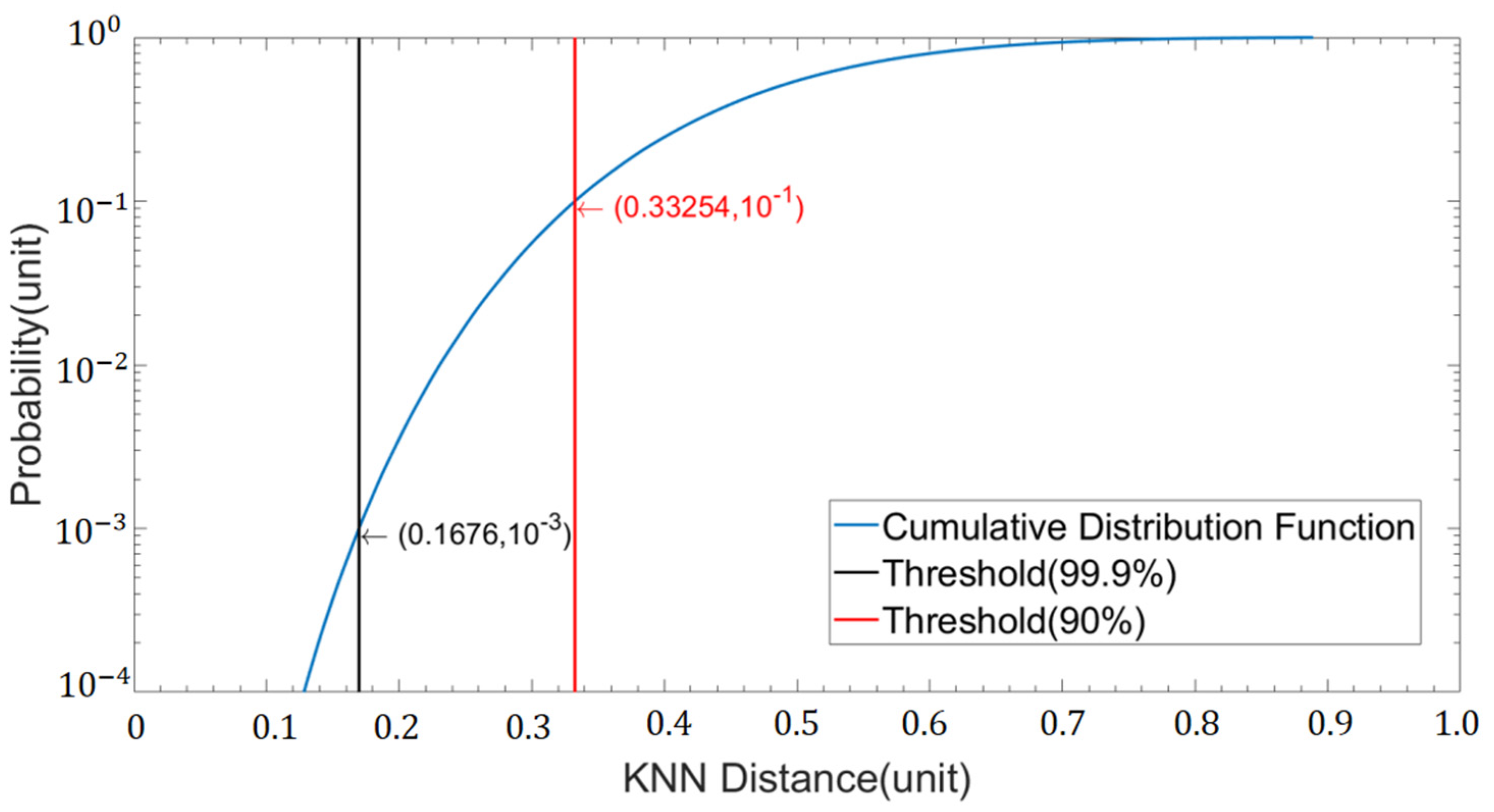
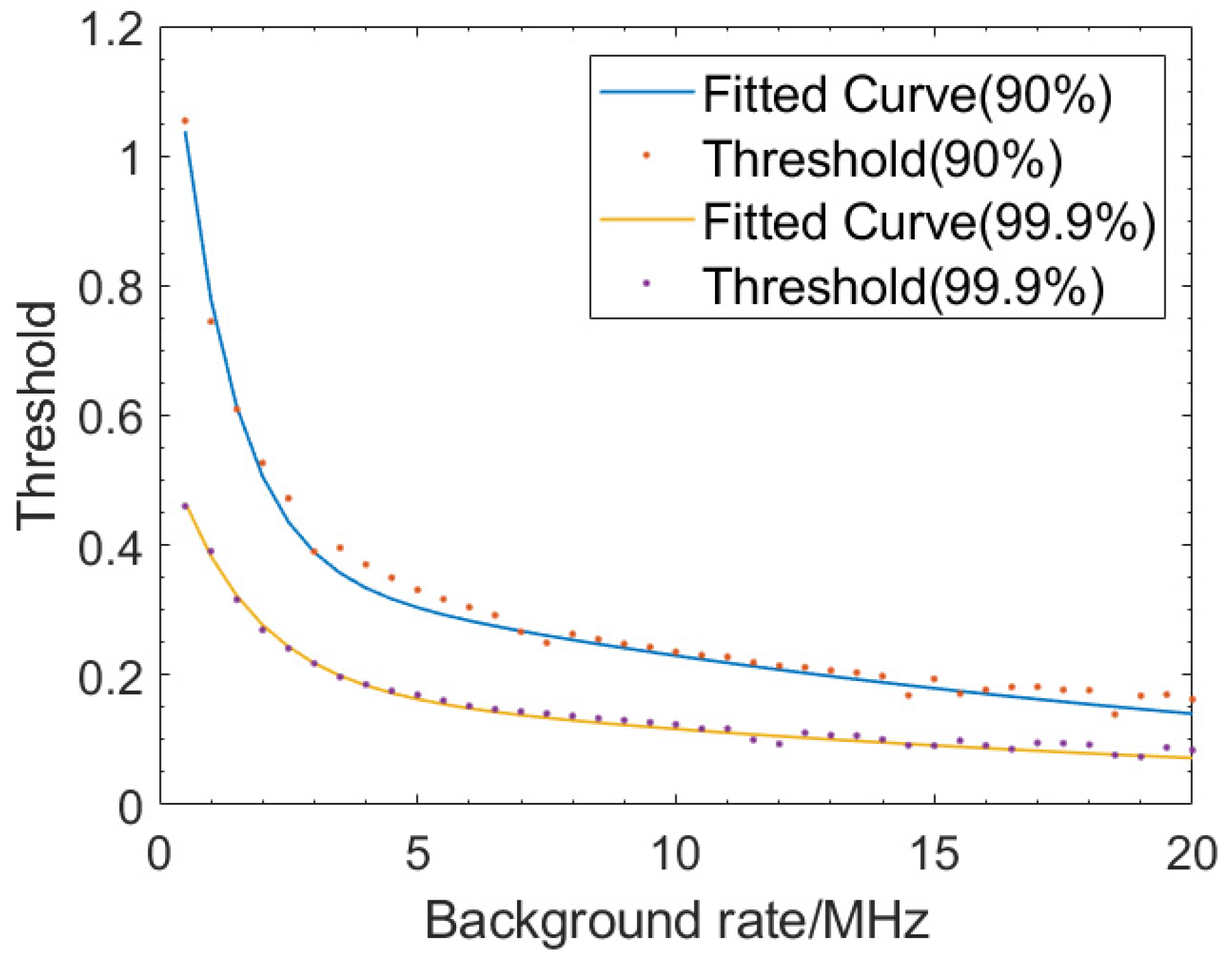
Photon-counting LiDAR can obtain long-distance, high-precision target3D geographic information, but extracting high-precision signal photons from background noise photons is the key premise of photon-counting LiDAR data processing and application. This study proposes an adaptive noise filtering algorithm that adjusts parameters according to the background photon count rate and removes noise photons based on the local mean Euclidean distance. A simulated photon library that provides different background photon count rates and detection probabilities was constructed. It was then used to fit the distribution relationship between the background photon count rate and the average KNN (K-Nearest Neighbor) distance (k = 2–6) and to obtain the optimal denoising threshold under different background photon count rates. Finally, the proposed method was evaluated by comparing it with the modified density-based spatial clustering (mDBSCAN) and local distance-based statistical methods. The experimental results show that various methods are similar when the background noise rate is high. However, at most non-extreme background photon count rate levels, the F of this algorithm was maintained between 0.97–0.99, which is an improvement over other classical algorithms. The new strategy eliminated the artificial introduction of errors. Due to its low error rates, the proposed method can be widely applied in photon-counting LiDAR signal extraction under various conditions.
Keywords: LiDAR; photon-counting LiDAR; point cloud denoising; KNN LiDAR; photon-counting LiDAR; point cloud denoising; KNN