Article

End-to-End Radar HRRP Target Recognition Based on Integrated Denoising and Recognition Network

1
National Lab of Radar Signal Processing, Xidian University, Xi’an 710071, China
2
Key Laboratory of Electronic Information Countermeasure and Simulation Technology of Ministry of Education, Xidian University, Xi’an 710071, China
*
Author to whom correspondence should be addressed.
Remote Sens. 2022, 14(20), 5254; https://doi.org/10.3390/rs14205254
Submission received: 8 September 2022 / Revised: 5 October 2022 / Accepted: 17 October 2022 / Published: 20 October 2022
(This article belongs to the Special Issue SAR Images Processing and Analysis)

Abstract

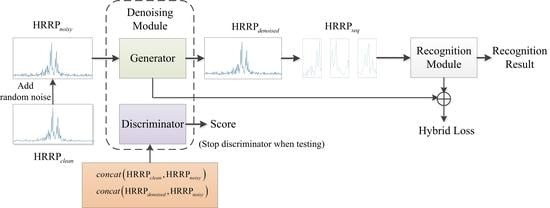
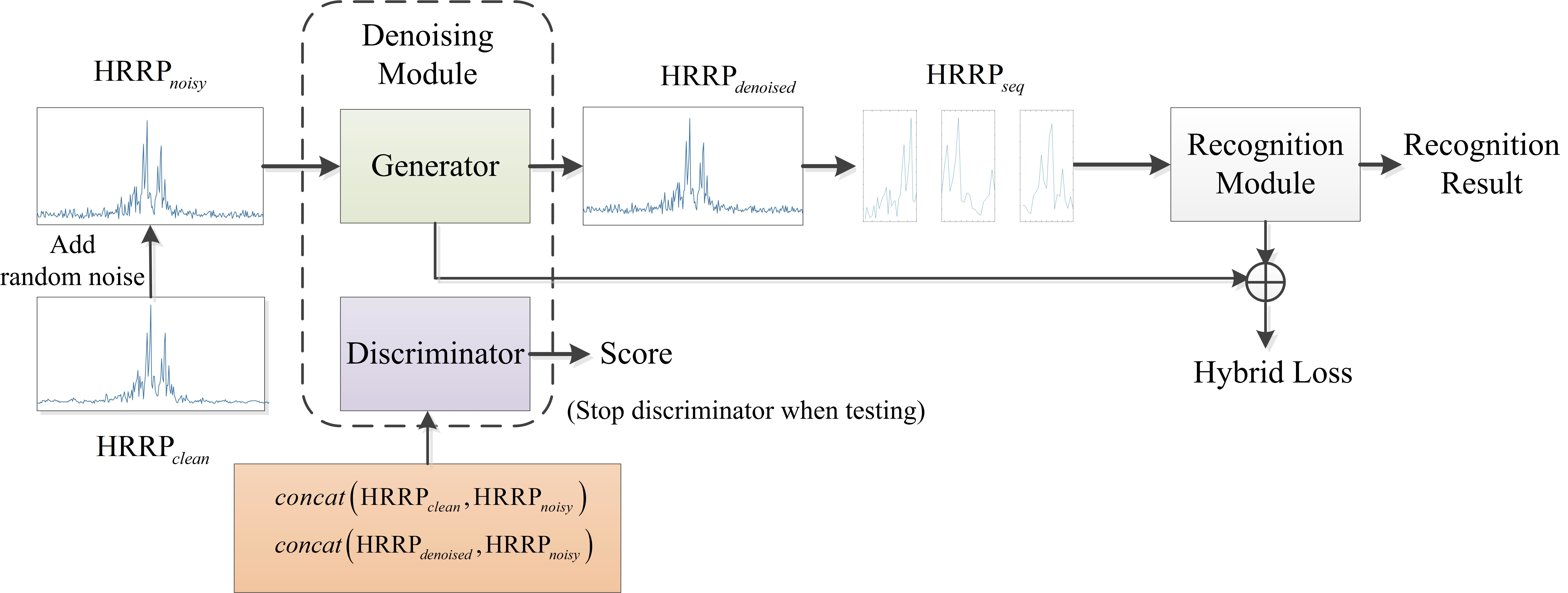
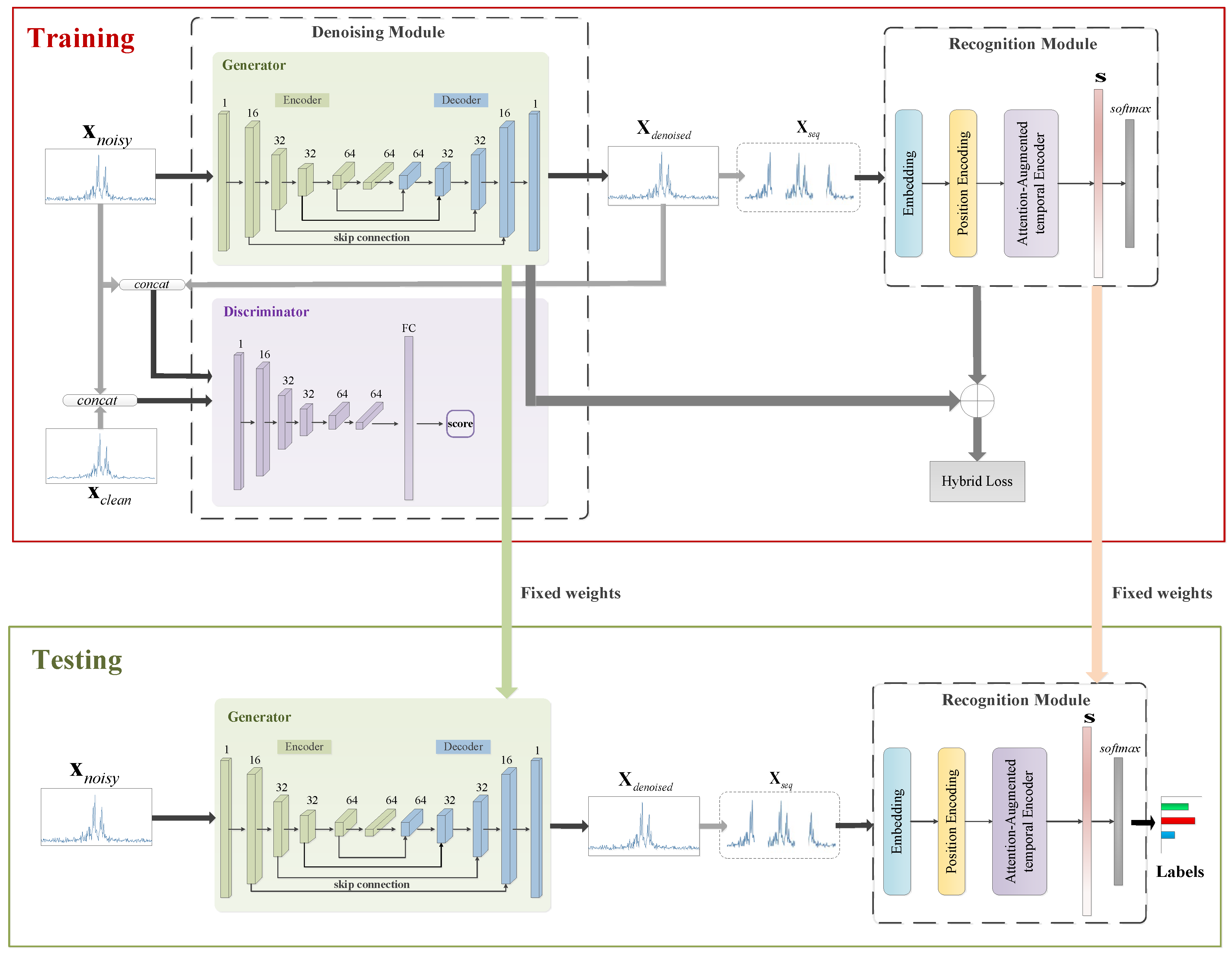
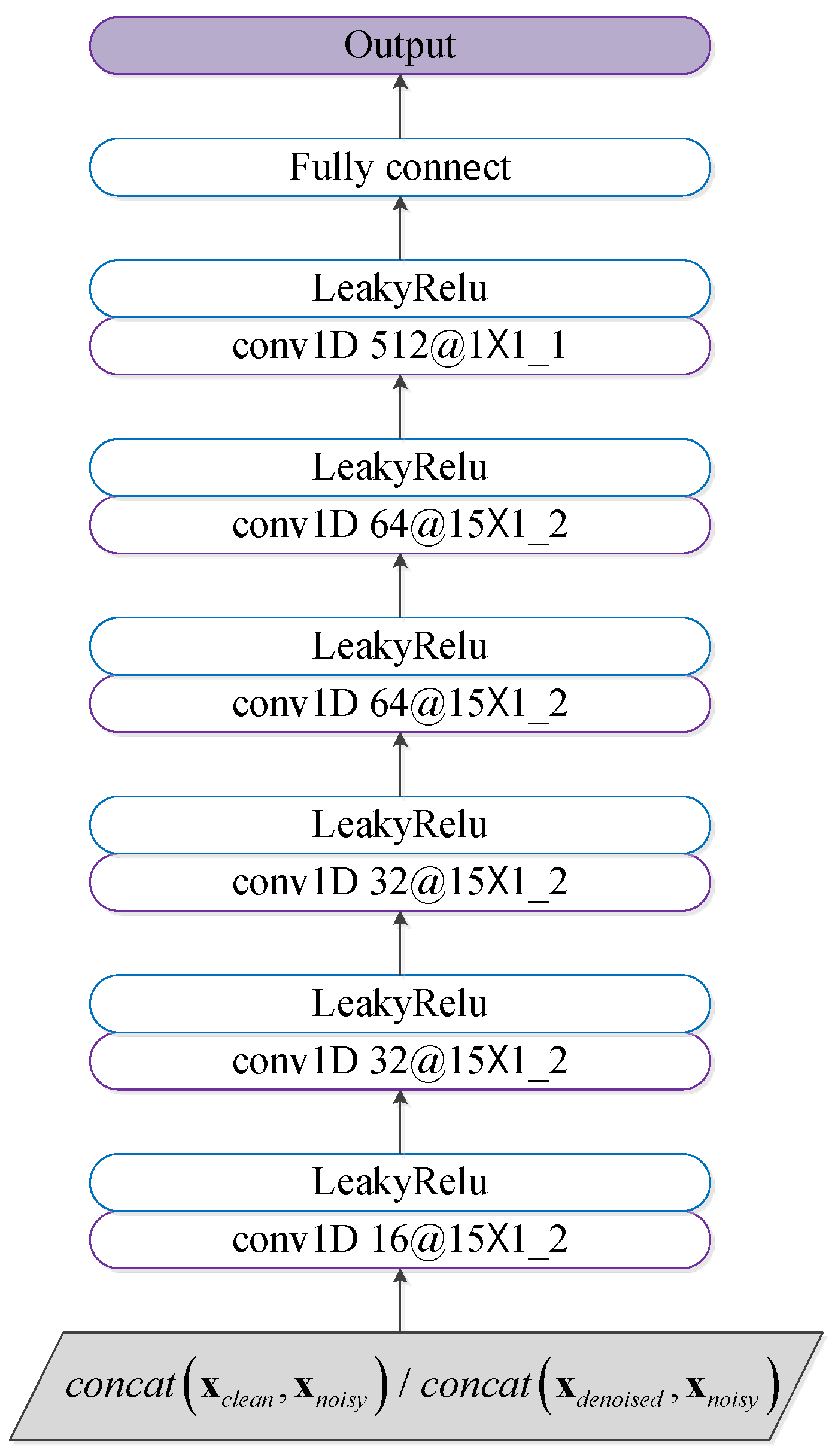
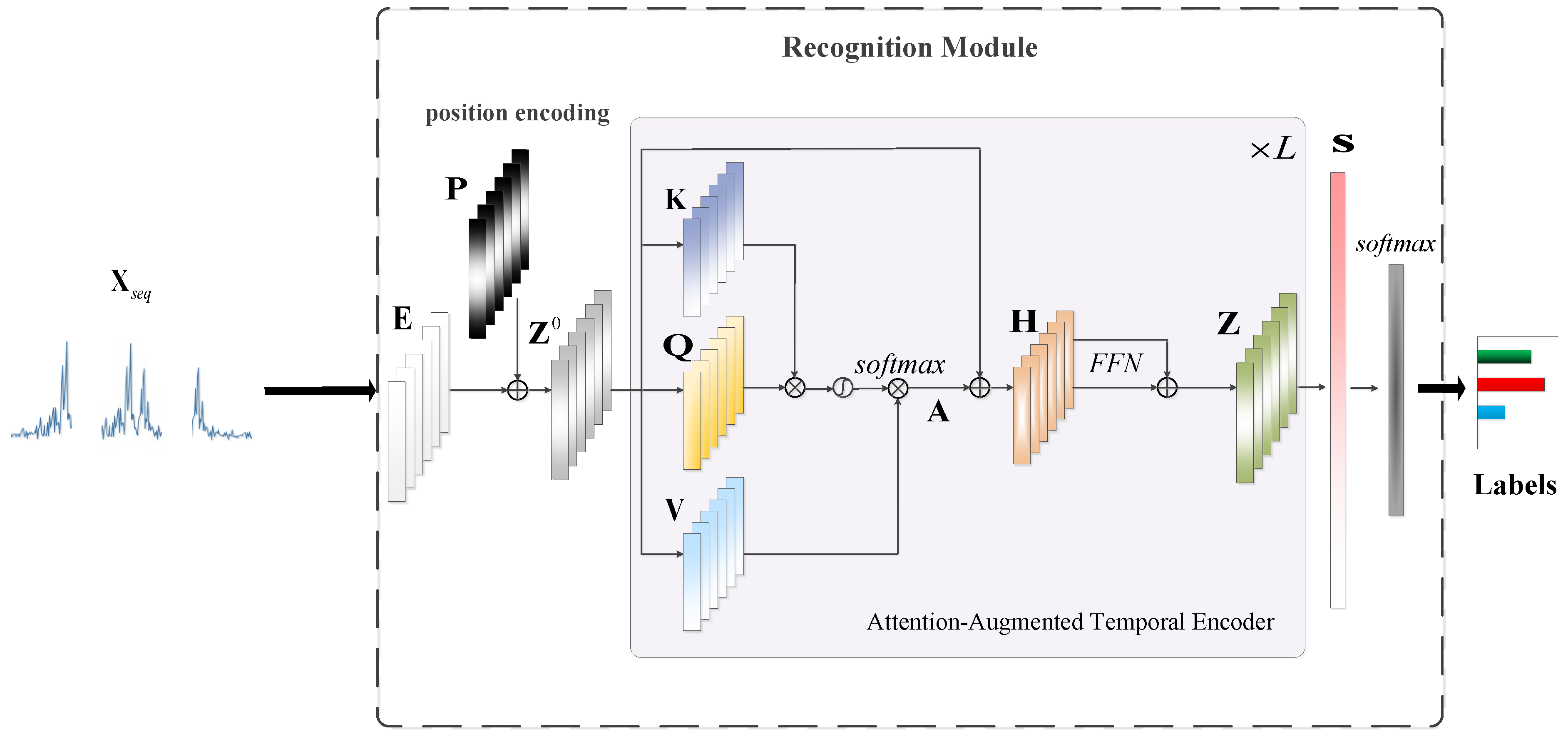
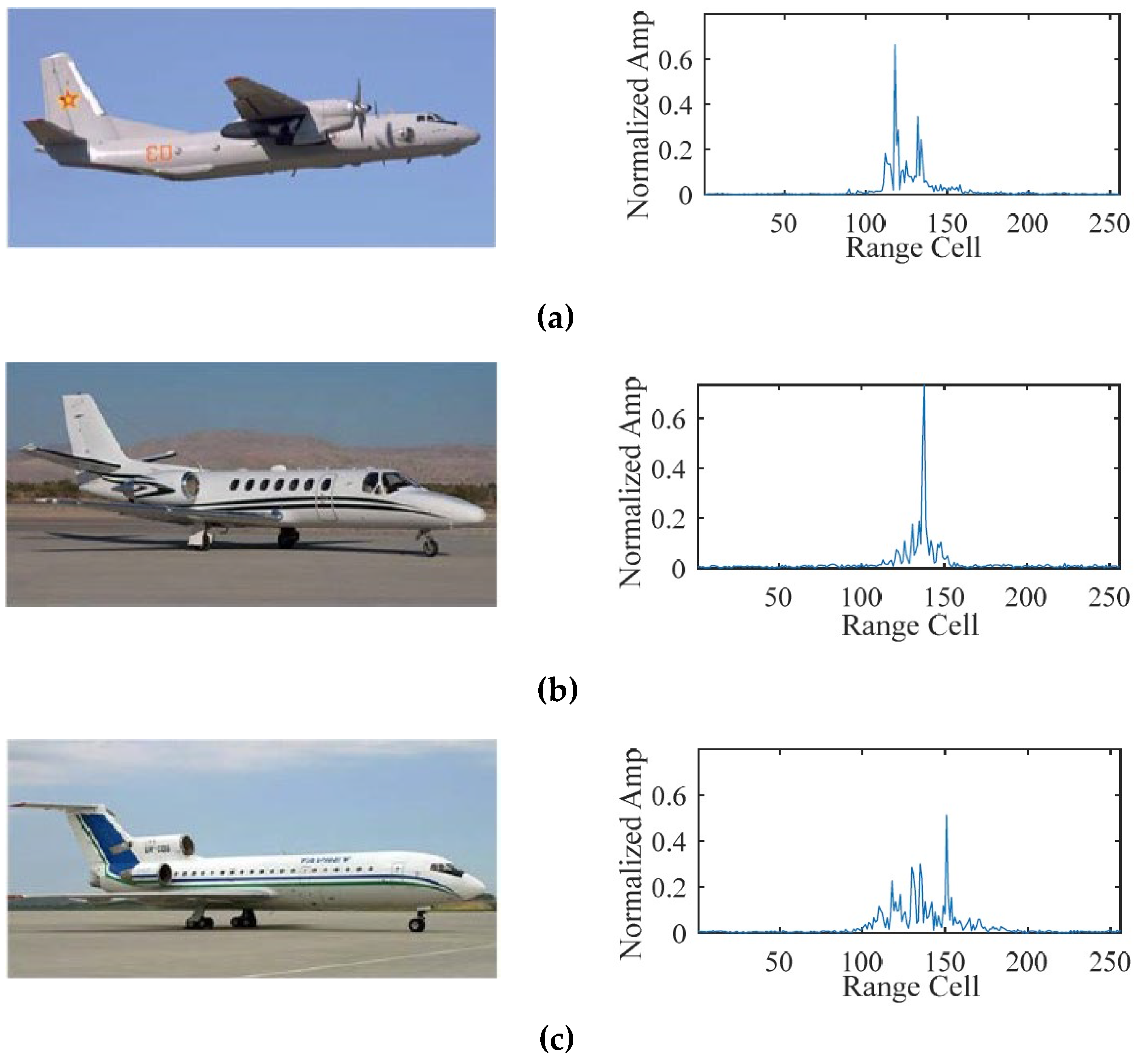
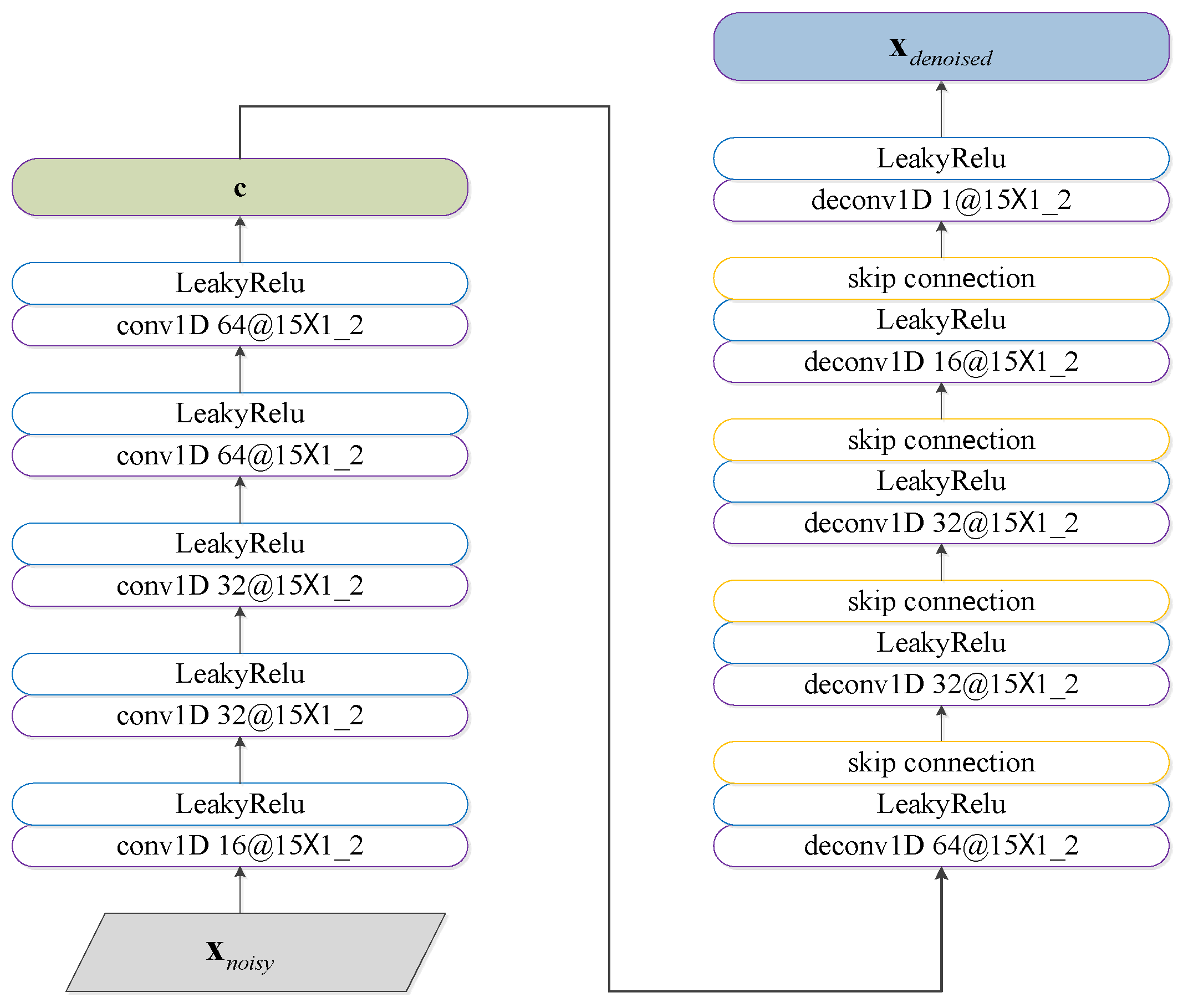
For high-resolution range profile (HRRP) radar target recognition in a low signal-to-noise ratio (SNR) scenario, traditional methods frequently perform denoising and recognition separately. In addition, they assume equivalent contributions of the target and the noise regions during feature extraction and fail to capture the global dependency. To tackle these issues, an integrated denoising and recognition network, namely, IDR-Net, is proposed. The IDR-Net achieves denoising through the denoising module after adversarial training, and learns the global relationship of the generated HRRP sequence using the attention-augmented temporal encoder. Furthermore, a hybrid loss is proposed to integrate the denoising module and the recognition module, which enables end-to-end training, reduces the information loss during denoising, and boosts the recognition performance. The experimental results on the measured HRRPs of three types of aircraft demonstrate that IDR-Net obtains higher recognition accuracy and more robustness to noise than traditional methods.
Keywords: HRRP recognition; adversarial training; attention mechanism; hybrid loss; deep learning HRRP recognition; adversarial training; attention mechanism; hybrid loss; deep learning
Graphical Abstract