Article

A Robust Nonlinear Filter Strategy Based on Maximum Correntropy Criterion for Multi-GNSS and Dual-Frequency RTK


1
Institute of Space Science and Applied Technology, Harbin Institute of Technology (Shenzhen), Shenzhen 518055, China
2
Guangxi Key Laboratory of Wireless Broadband Communication and Signal Processing, Guilin 541004, China
3
Department of Aeronautical and Aviation Engineering, The Hong Kong Polytechnic University, Hong Kong SAR, China
*
Author to whom correspondence should be addressed.
Remote Sens. 2022, 14(18), 4578; https://doi.org/10.3390/rs14184578
Submission received: 30 July 2022 / Revised: 9 September 2022 / Accepted: 9 September 2022 / Published: 13 September 2022

Abstract

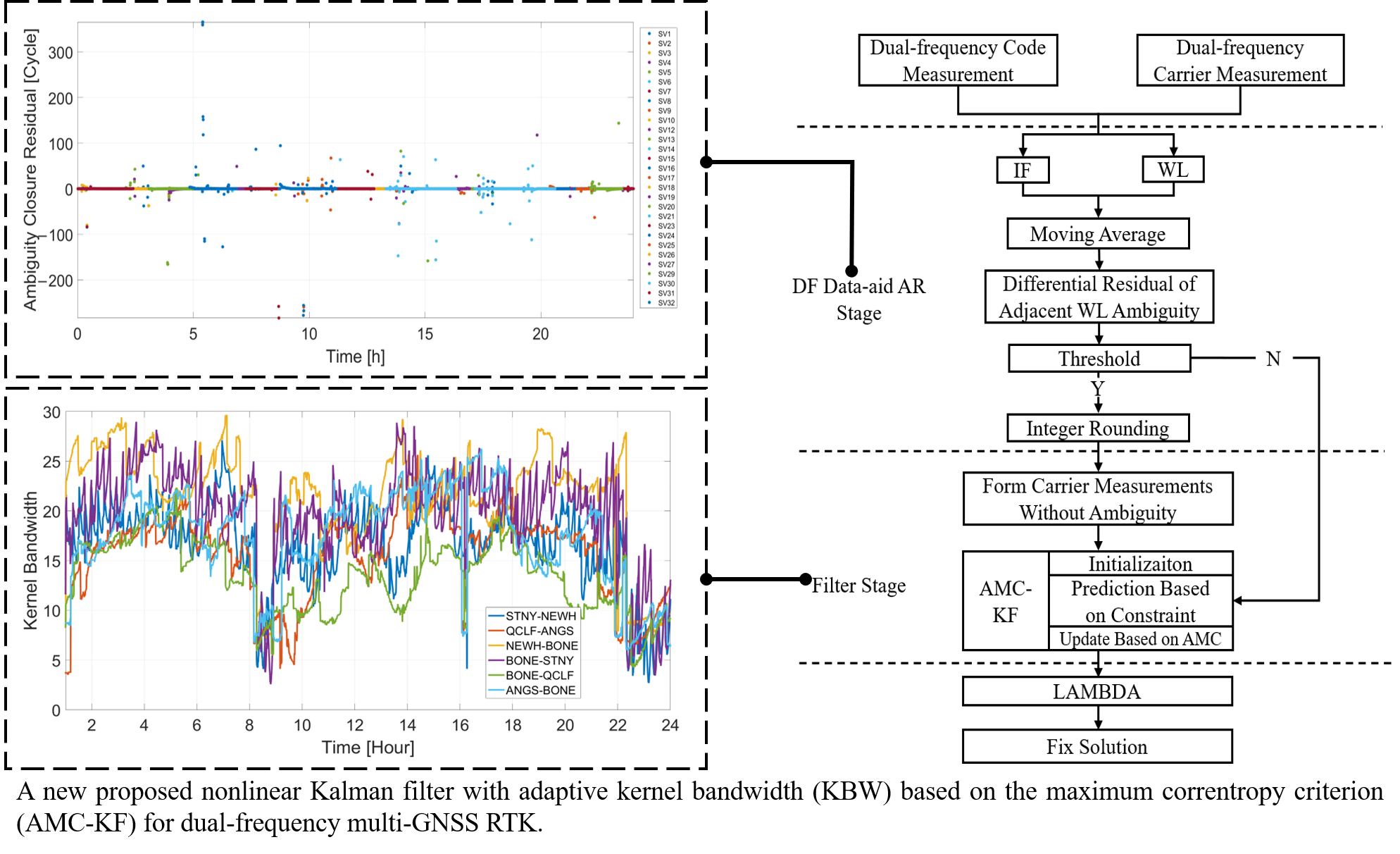
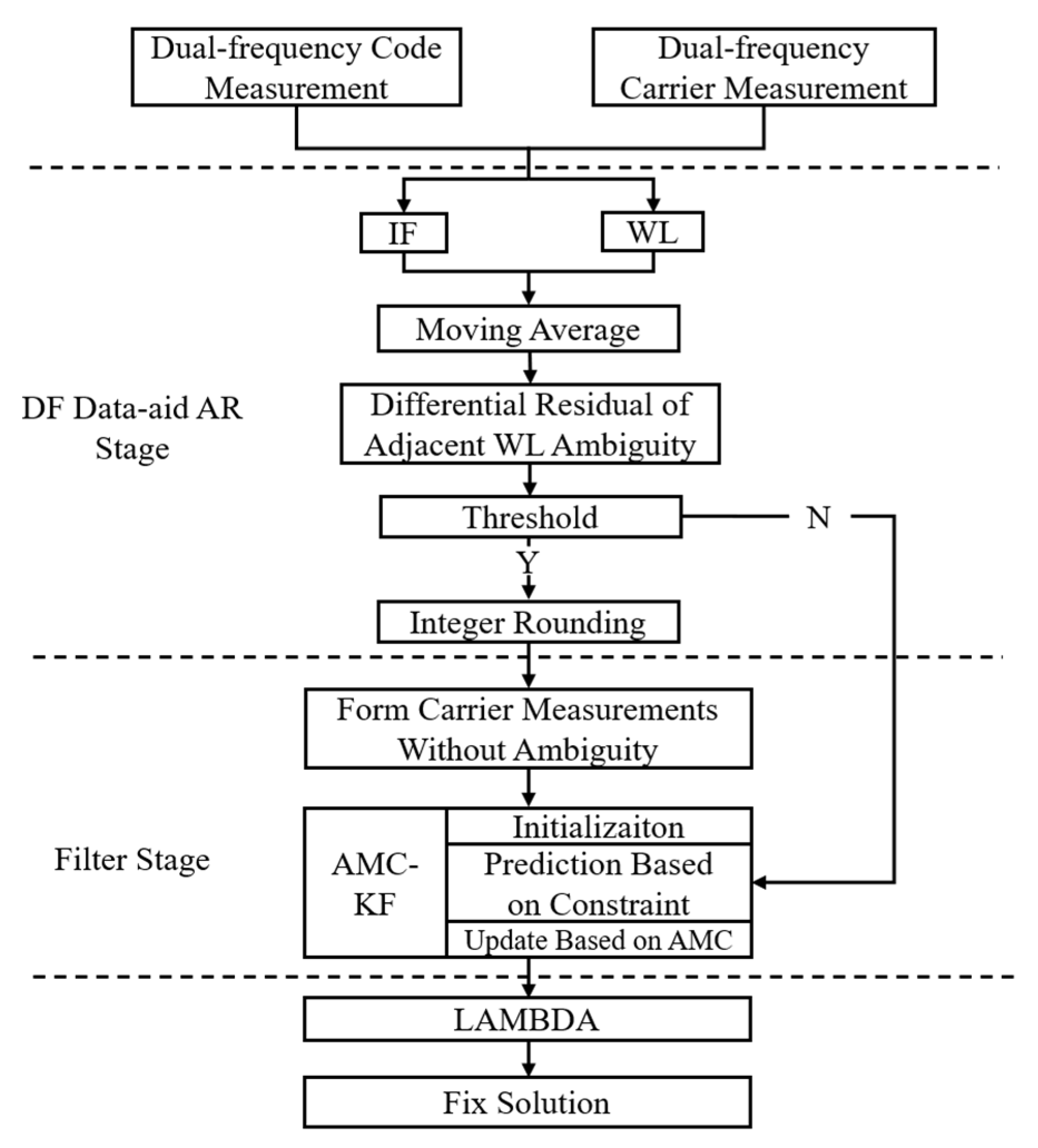
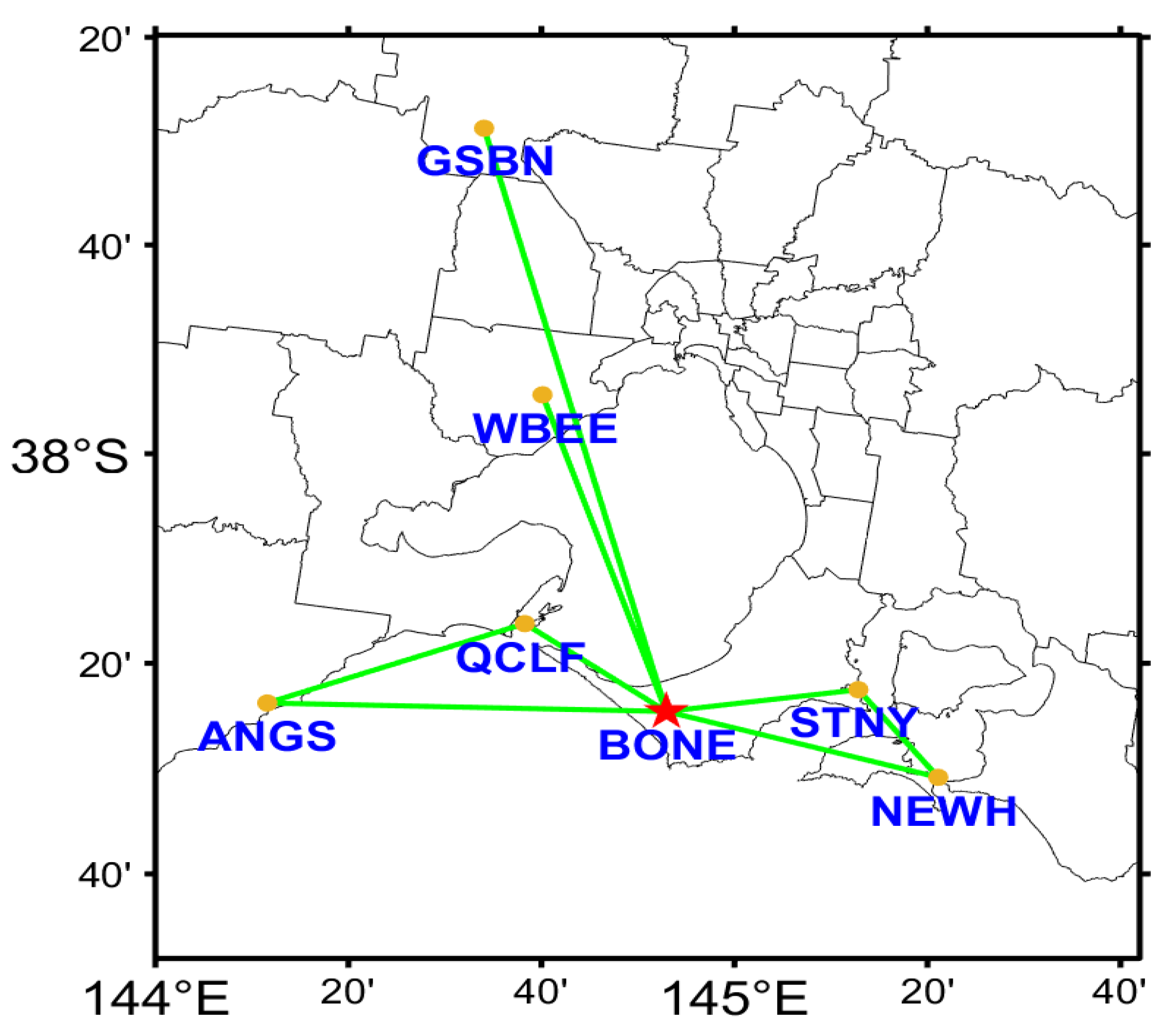
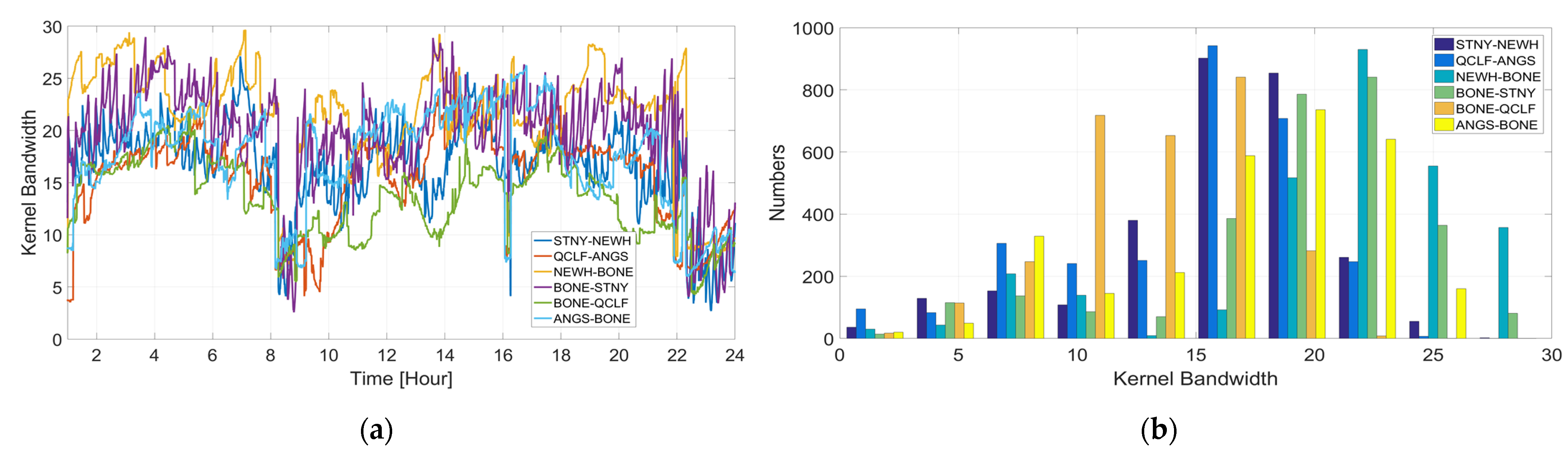
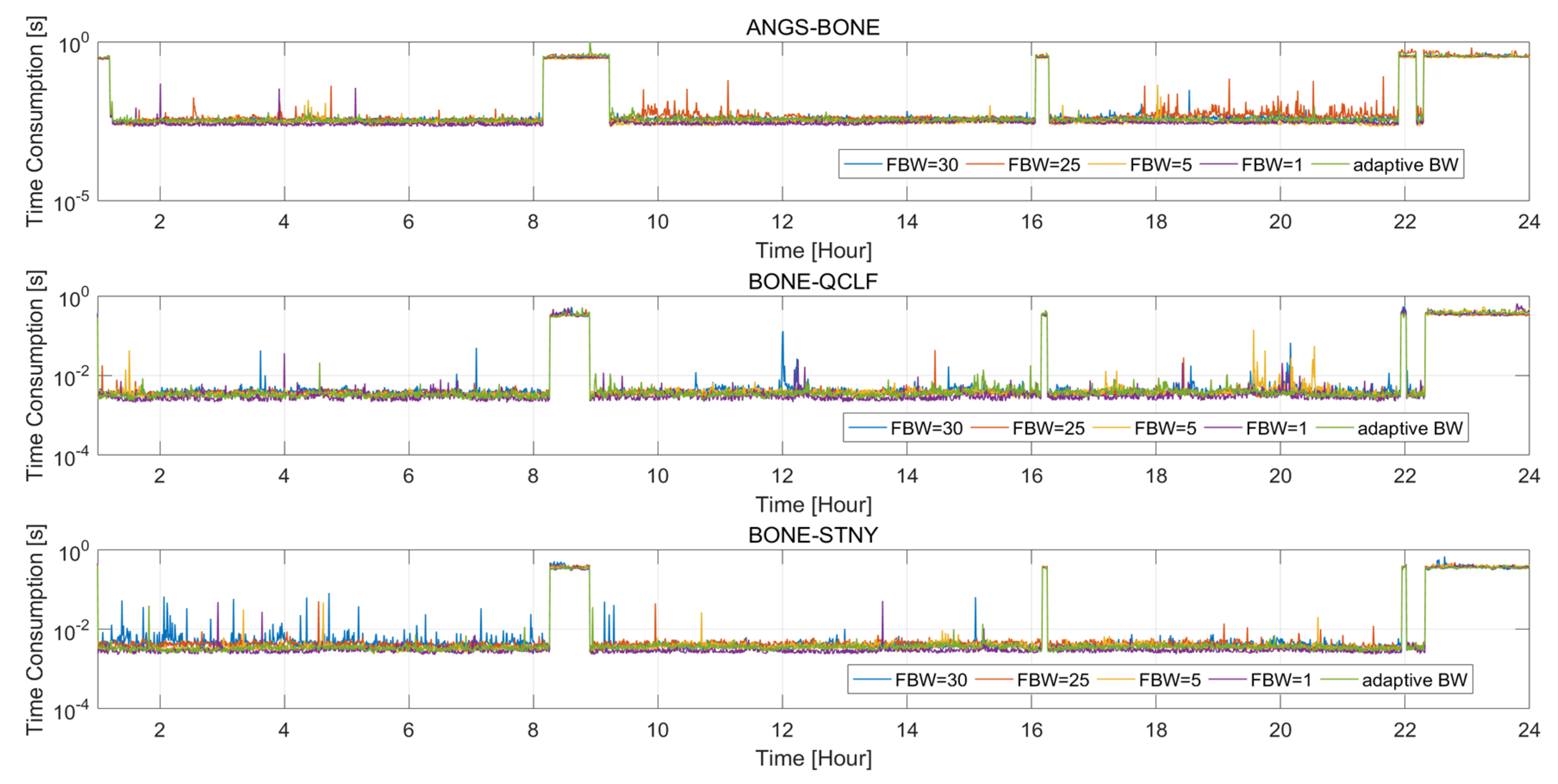
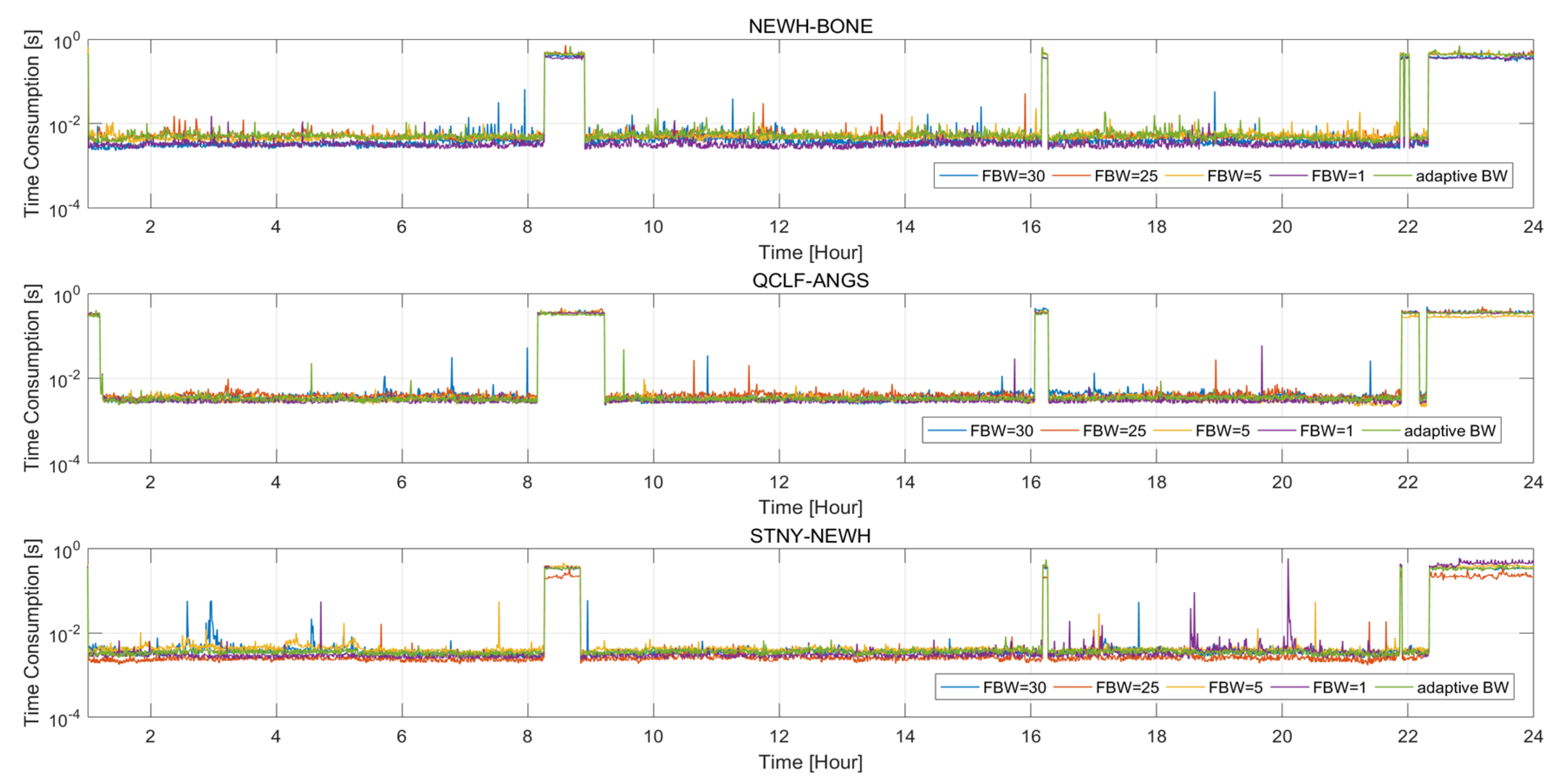
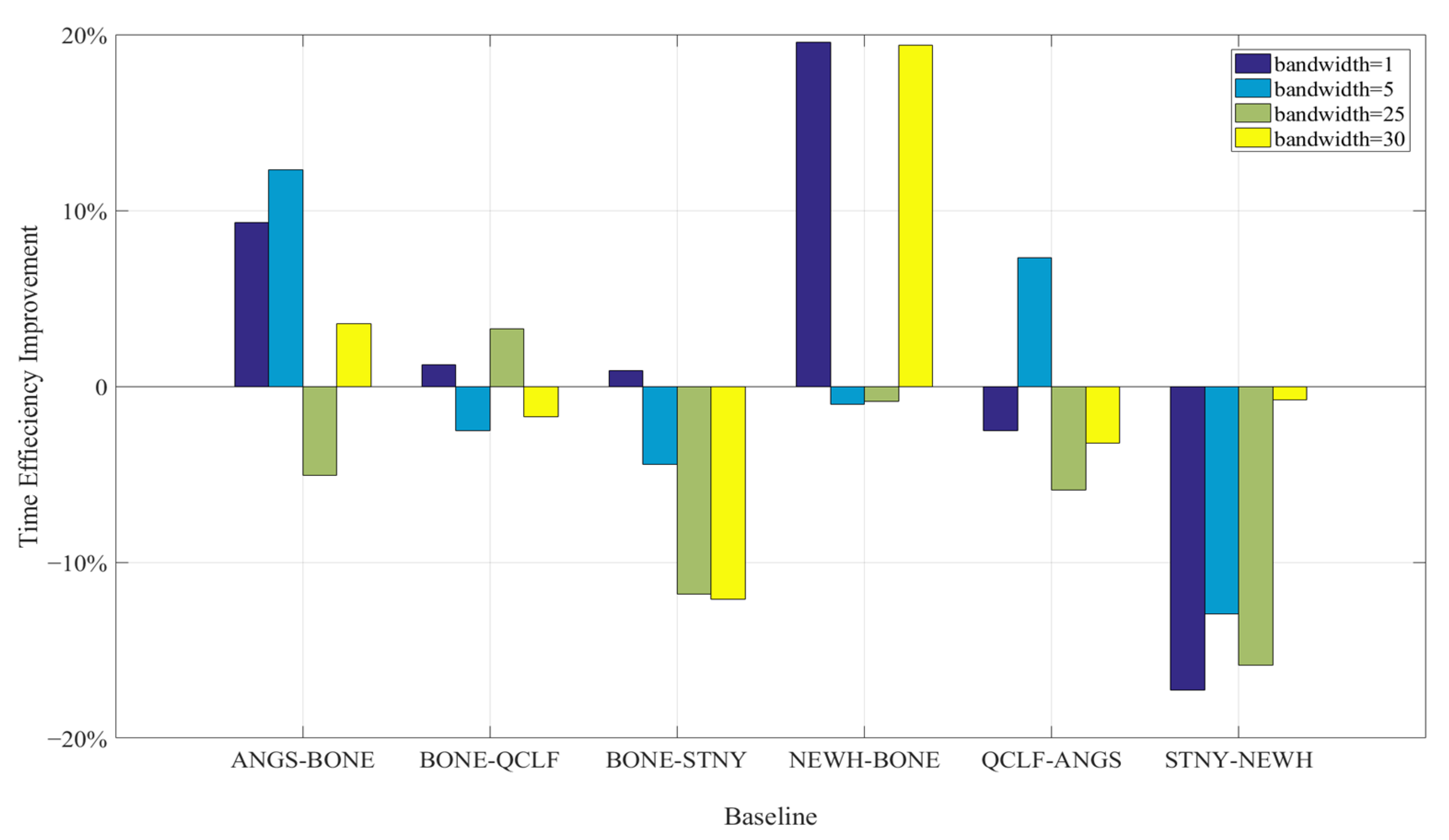
The multi-constellation, multi-frequency Global Navigation Satellite System (GNSS) has the potential to empower precise real-time kinematics (RTK) with higher accuracy, availability, continuity, and integrity. However, to enhance the robustness of the nonlinear filter, both the measurement quality and efficiency of parameter estimation need consideration, especially for GNSS challenging or denied environments where outliers and non-Gaussian noise exist. This study proposes a nonlinear Kalman filter with adaptive kernel bandwidth (KBW) based on the maximum correntropy criterion (AMC-KF). The proposed method excavates data features of higher order moments to enhance the robustness against noise. With the wide-lane and ionosphere-free combination, a dual frequency (DF) data-aided ambiguity resolution (AR) method is also derived to improve the measurement quality. The filtering strategy based on the DF data-aided AR method and AMC-KF is applied for multi-GNSS and DF RTK. To evaluate the proposed method, the short baseline test, long baseline test, and triangle network closure test are conducted with DF data from GPS and Galileo. For the short baseline test, the proposed filter strategy could improve the positioning accuracy by more than 30% on E and N components, and 60% on U. The superiority of the proposed adaptive KBW is validated both in efficiency and accuracy. The triangle network closure test shows that the proposed DF data-aided AR method could achieve a success rate of more than 93%. For the long baseline test, the integration of the above methods gains more than 40% positioning accuracy improvement on ENU components. This study shows that the proposed nonlinear strategy could enhance both robustness and accuracy without the assistance of external sensors and is applicable for multi-GNSS and dual-frequency RTK.
Keywords: multi-GNSS; real-time kinematic; maximum correntropy criterion; Kalman filter; wide-lane; ionosphere-free multi-GNSS; real-time kinematic; maximum correntropy criterion; Kalman filter; wide-lane; ionosphere-free
Graphical Abstract