Article

IoT Enabled Deep Learning Based Framework for Multiple Object Detection in Remote Sensing Images

1
School of Computing and Information Science, Anglia Ruskin University, Cambridge CB1 1PT, UK
2
Center of Excellence in IT, Institute of Management Sciences, Peshawar 25000, Pakistan
3
Department of Mathematics and Computer Science, Royal Military College of Canada, Kingston, ON K7K 7B4, Canada
4
Information Systems Department, College of Computer and Information Sciences, King Saud University, Riyadh 11543, Saudi Arabia
5
Department of Embedded Systems Engineering, Incheon National University, Incheon 22012, Korea
*
Author to whom correspondence should be addressed.
Remote Sens. 2022, 14(16), 4107; https://doi.org/10.3390/rs14164107
Submission received: 19 June 2022 / Revised: 16 August 2022 / Accepted: 17 August 2022 / Published: 22 August 2022
(This article belongs to the Special Issue New Developments in Remote Sensing for the Environment)

Abstract

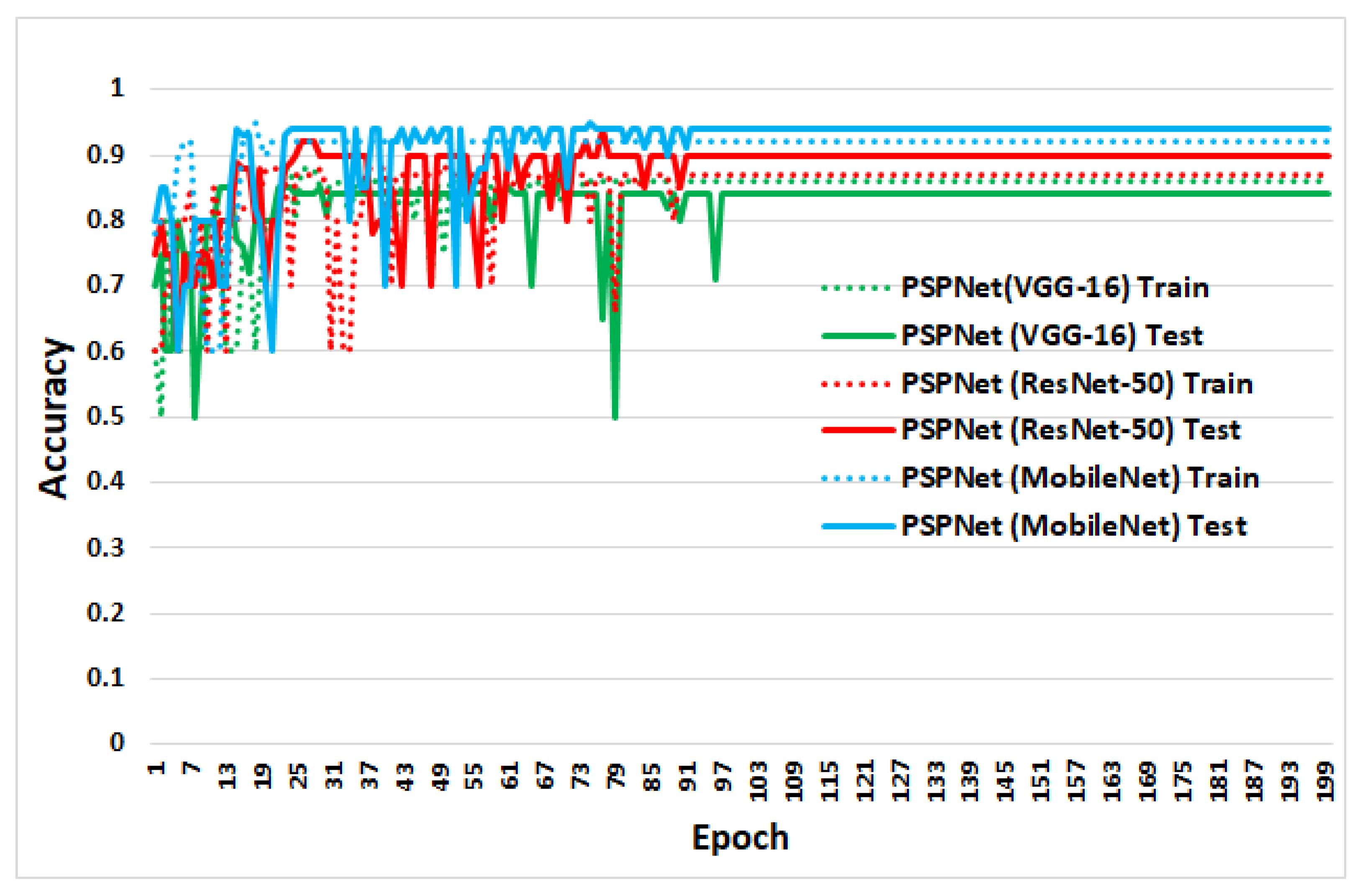
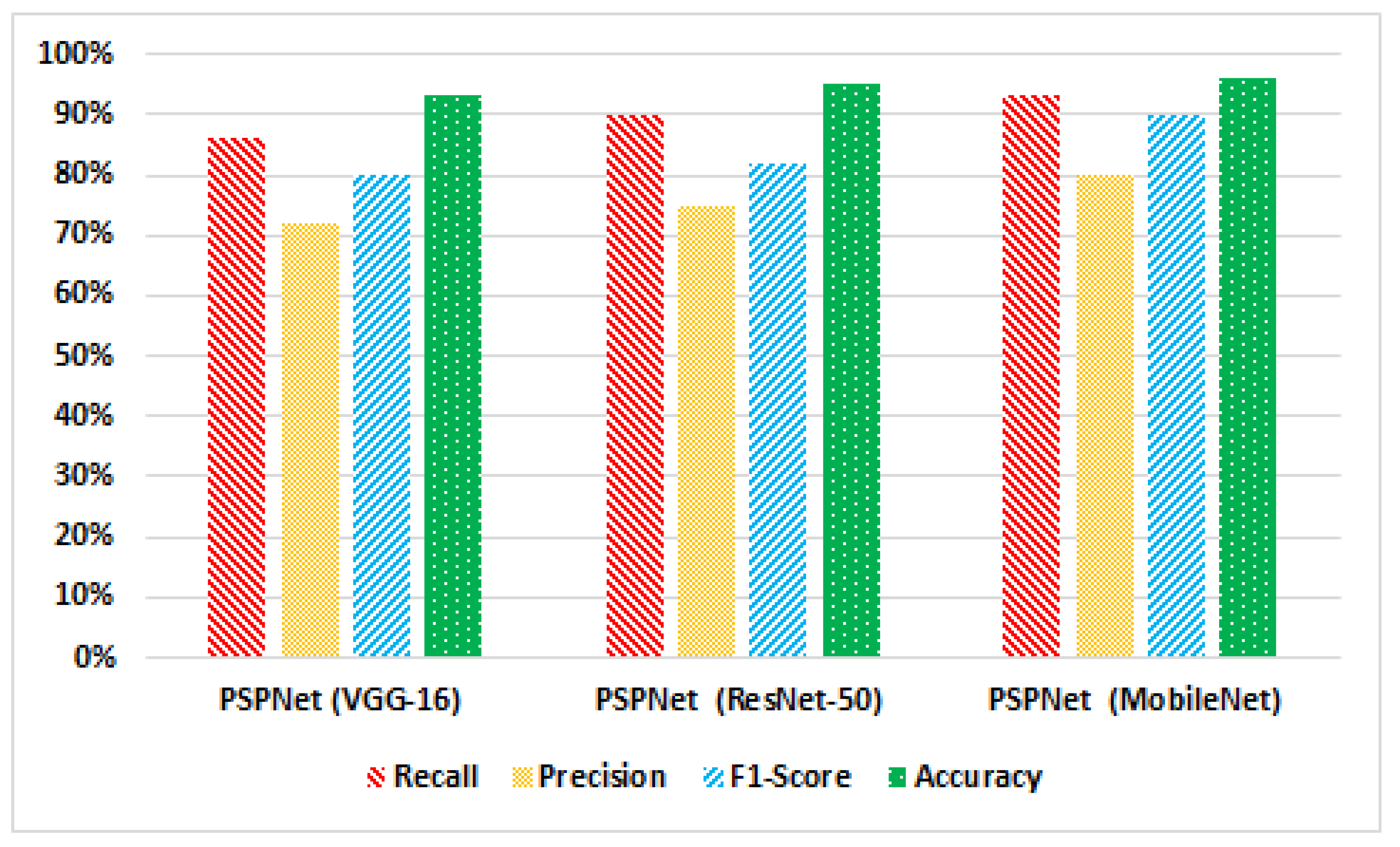
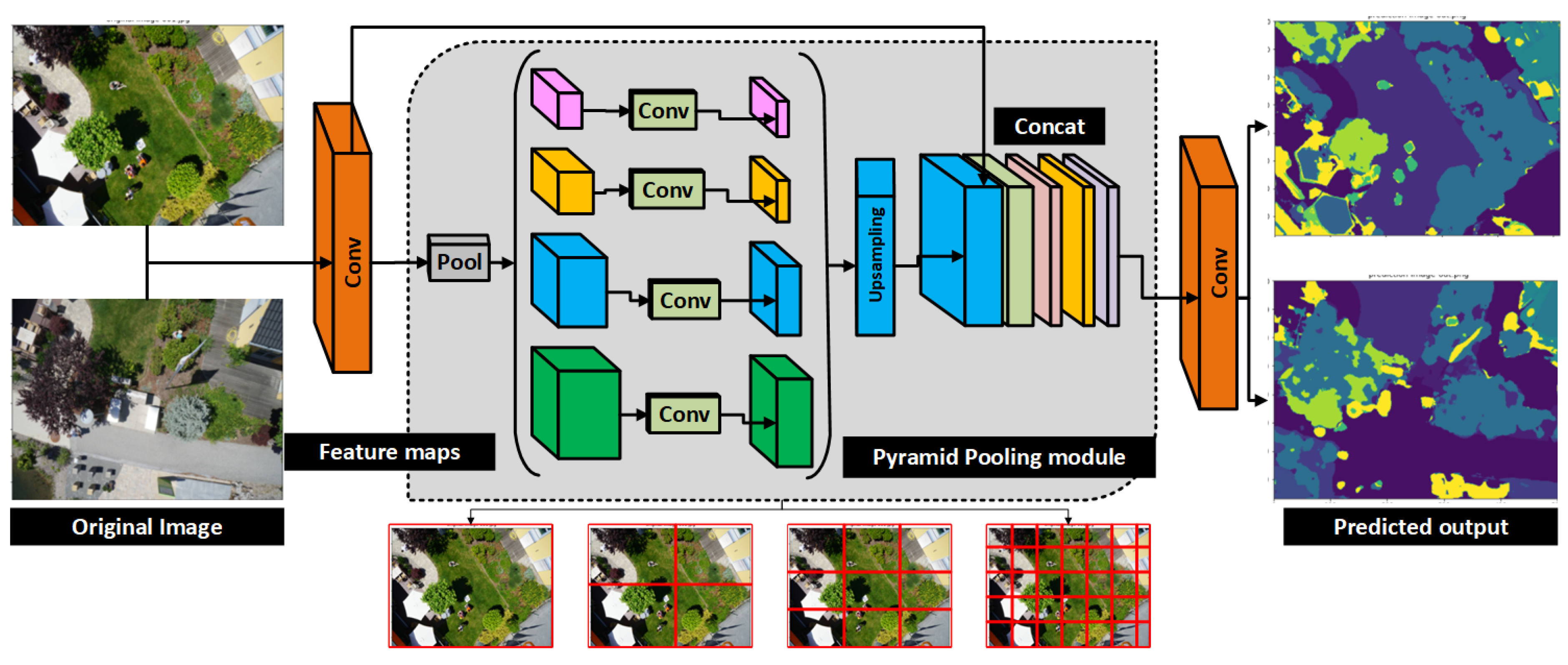
Advanced collaborative and communication technologies play a significant role in intelligent services and applications, including artificial intelligence, Internet of Things (IoT), remote sensing, robotics, future generation wireless, and aerial access networks. These technologies improve connectivity, energy efficiency, and quality of services of various smart city applications, particularly in transportation, monitoring, healthcare, public services, and surveillance. A large amount of data can be obtained by IoT systems and then examined by deep learning methods for various applications, e.g., object detection or recognition. However, it is a challenging and complex task in smart remote monitoring applications (aerial and drone). Nevertheless, it has gained special consideration in recent years and has performed a pivotal role in different control and monitoring applications. This article presents an IoT-enabled smart surveillance solution for multiple object detection through segmentation. In particular, we aim to provide the concept of collaborative drones, deep learning, and IoT for improving surveillance applications in smart cities. We present an artificial intelligence-based system using the deep learning based segmentation model PSPNet (Pyramid Scene Parsing Network) for segmenting multiple objects. We used an aerial drone data set, implemented data augmentation techniques, and leveraged deep transfer learning to boost the system’s performance. We investigate and analyze the performance of the segmentation paradigm with different CNN (Convolution Neural Network) based architectures. The experimental results illustrate that data augmentation enhances the system’s performance by producing good accuracy results of multiple object segmentation. The accuracy of the developed system is 92% with VGG-16 (Visual Geometry Group), 93% with ResNet-50 (Residual Neural Network), and 95% with MobileNet.
Keywords: artificial intelligence; IoT; remote sensing; aerial computing; PSPNet artificial intelligence; IoT; remote sensing; aerial computing; PSPNet