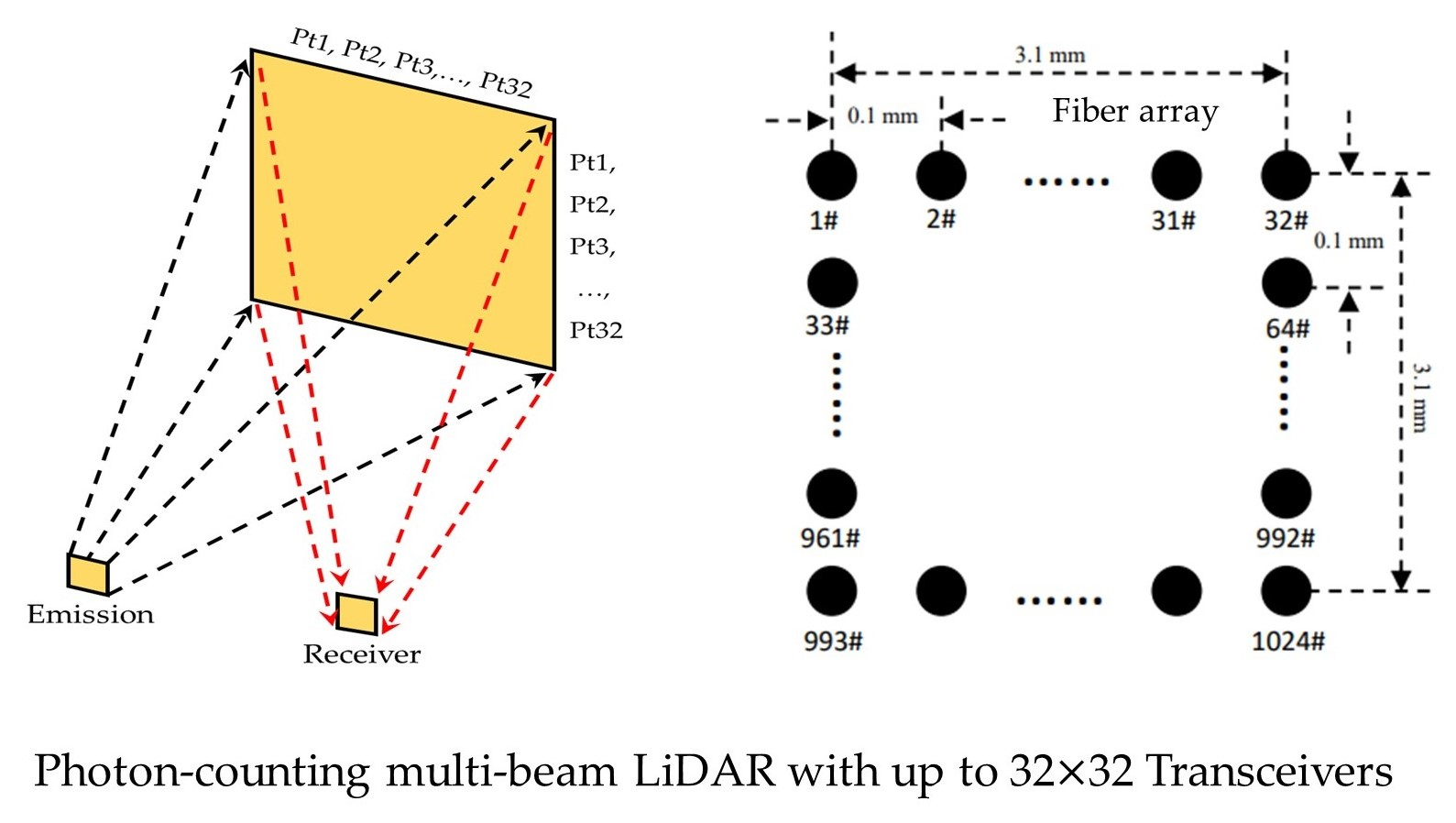
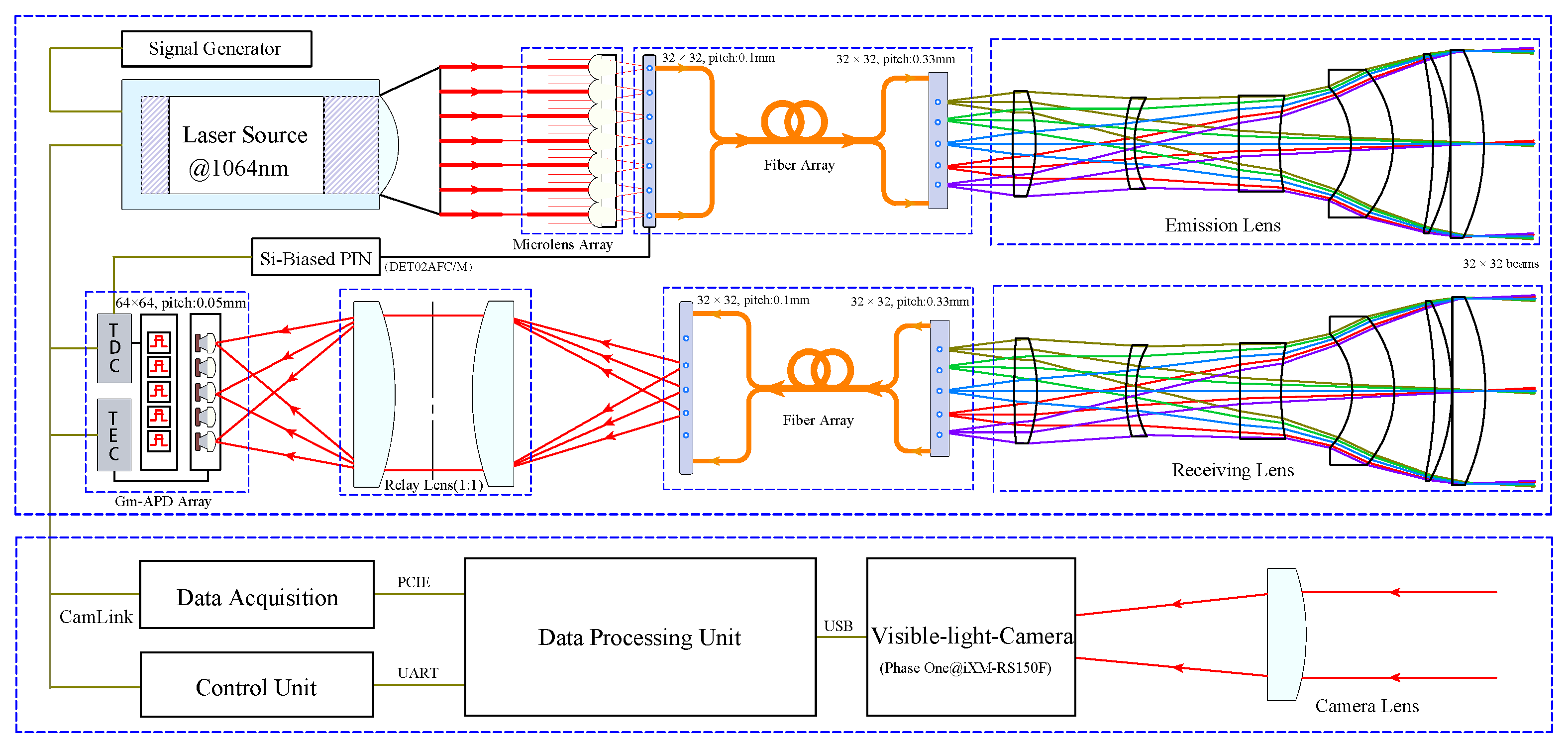
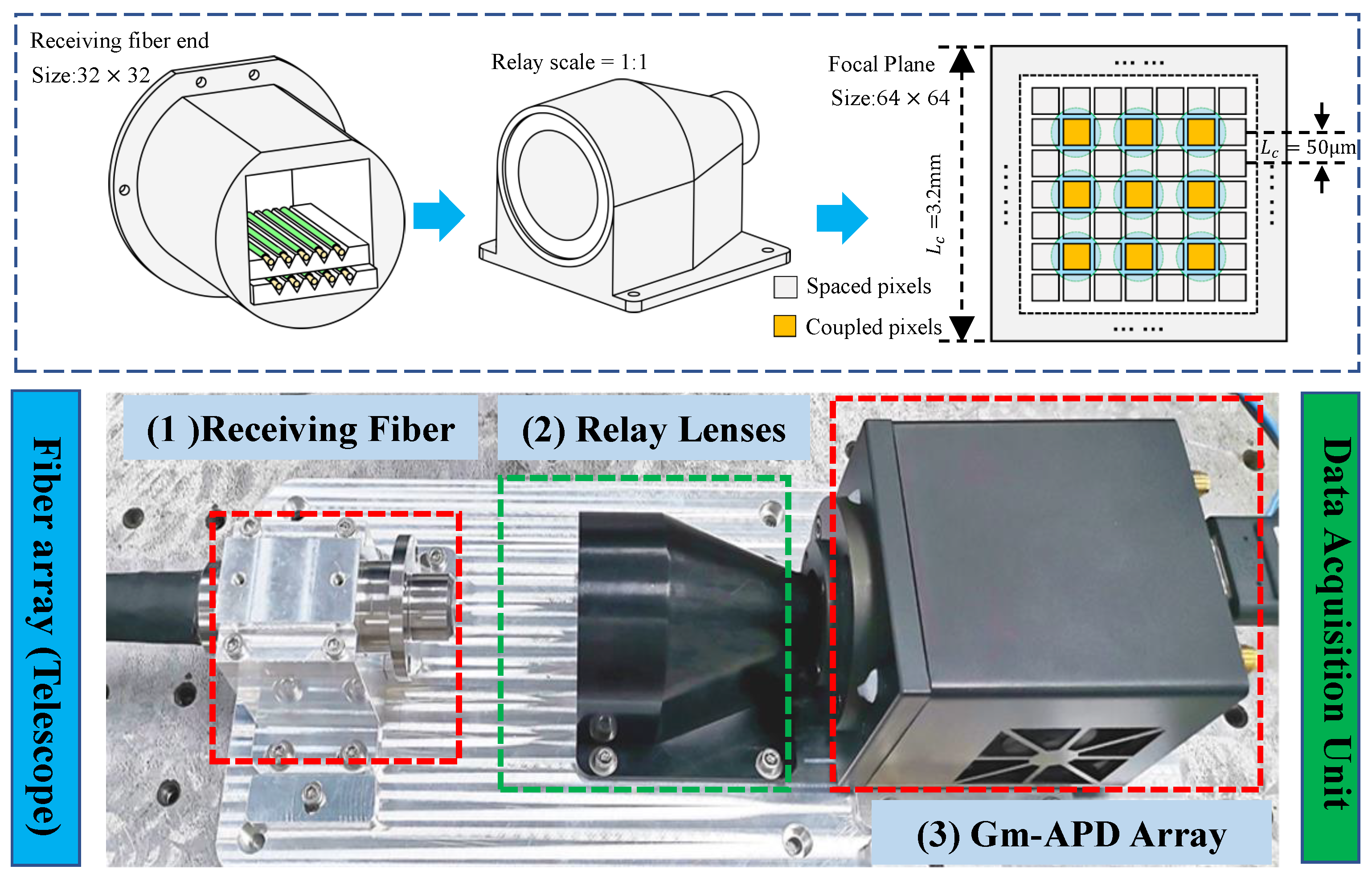
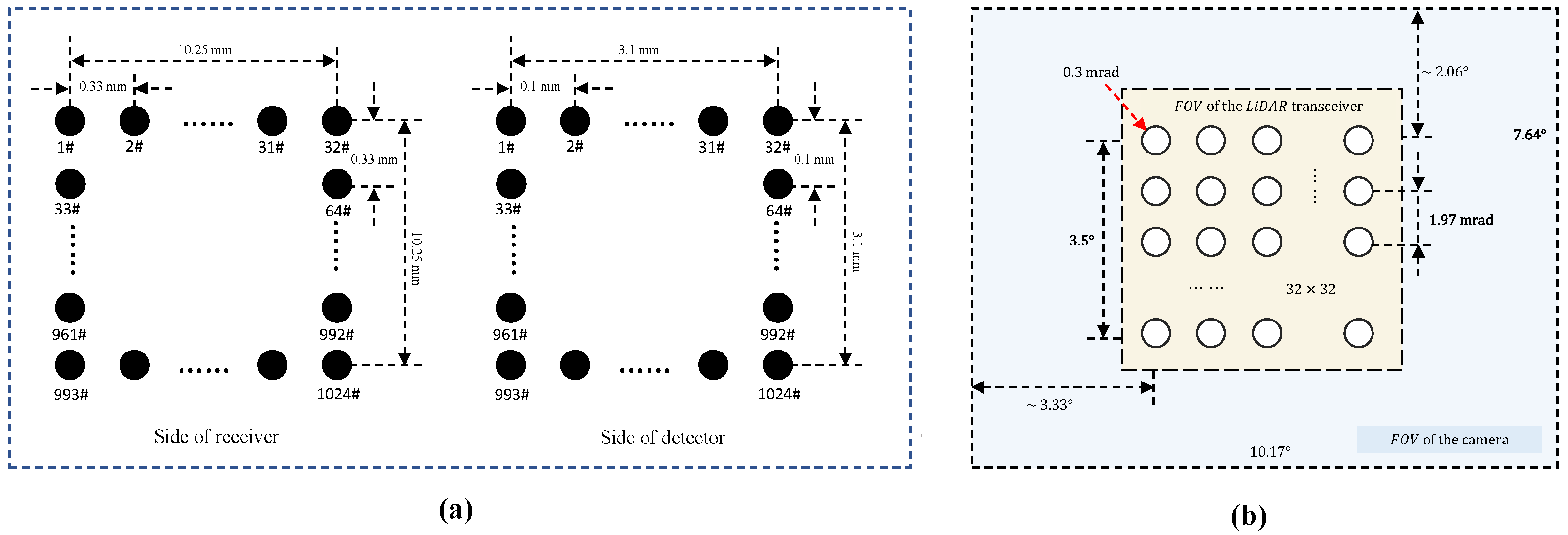
Design and Demonstration of a Novel Long-Range Photon-Counting 3D Imaging LiDAR with 32 × 32 Transceivers
 , , and
 Abstract
Share and Cite
Tan, C.; Kong, W.; Huang, G.; Hou, J.; Jia, S.; Chen, T.; Shu, R. Design and Demonstration of a Novel Long-Range Photon-Counting 3D Imaging LiDAR with 32 × 32 Transceivers. Remote Sens. 2022, 14, 2851. https://doi.org/10.3390/rs14122851
Tan C, Kong W, Huang G, Hou J, Jia S, Chen T, Shu R. Design and Demonstration of a Novel Long-Range Photon-Counting 3D Imaging LiDAR with 32 × 32 Transceivers. Remote Sensing. 2022; 14(12):2851. https://doi.org/10.3390/rs14122851
Chicago/Turabian StyleTan, Changsheng, Wei Kong, Genghua Huang, Jia Hou, Shaolei Jia, Tao Chen, and Rong Shu. 2022. "Design and Demonstration of a Novel Long-Range Photon-Counting 3D Imaging LiDAR with 32 × 32 Transceivers" Remote Sensing 14, no. 12: 2851. https://doi.org/10.3390/rs14122851
APA StyleTan, C., Kong, W., Huang, G., Hou, J., Jia, S., Chen, T., & Shu, R. (2022). Design and Demonstration of a Novel Long-Range Photon-Counting 3D Imaging LiDAR with 32 × 32 Transceivers. Remote Sensing, 14(12), 2851. https://doi.org/10.3390/rs14122851