Article

Ghost Elimination via Multi-Component Collaboration for Unmanned Aerial Vehicle Remote Sensing Image Stitching

Key Laboratory of Computer Vision and System (Ministry of Education), Engineering Research Center of Learning-Based Intelligent System (Ministry of Education), School of Computer Science and Engineering, Tianjin University of Technology, Tianjing 300384, China
*
Author to whom correspondence should be addressed.
Remote Sens. 2021, 13(7), 1388; https://doi.org/10.3390/rs13071388
Submission received: 7 March 2021 / Revised: 30 March 2021 / Accepted: 2 April 2021 / Published: 4 April 2021
(This article belongs to the Special Issue Semantic Segmentation of High-Resolution Images with Deep Learning)

Abstract

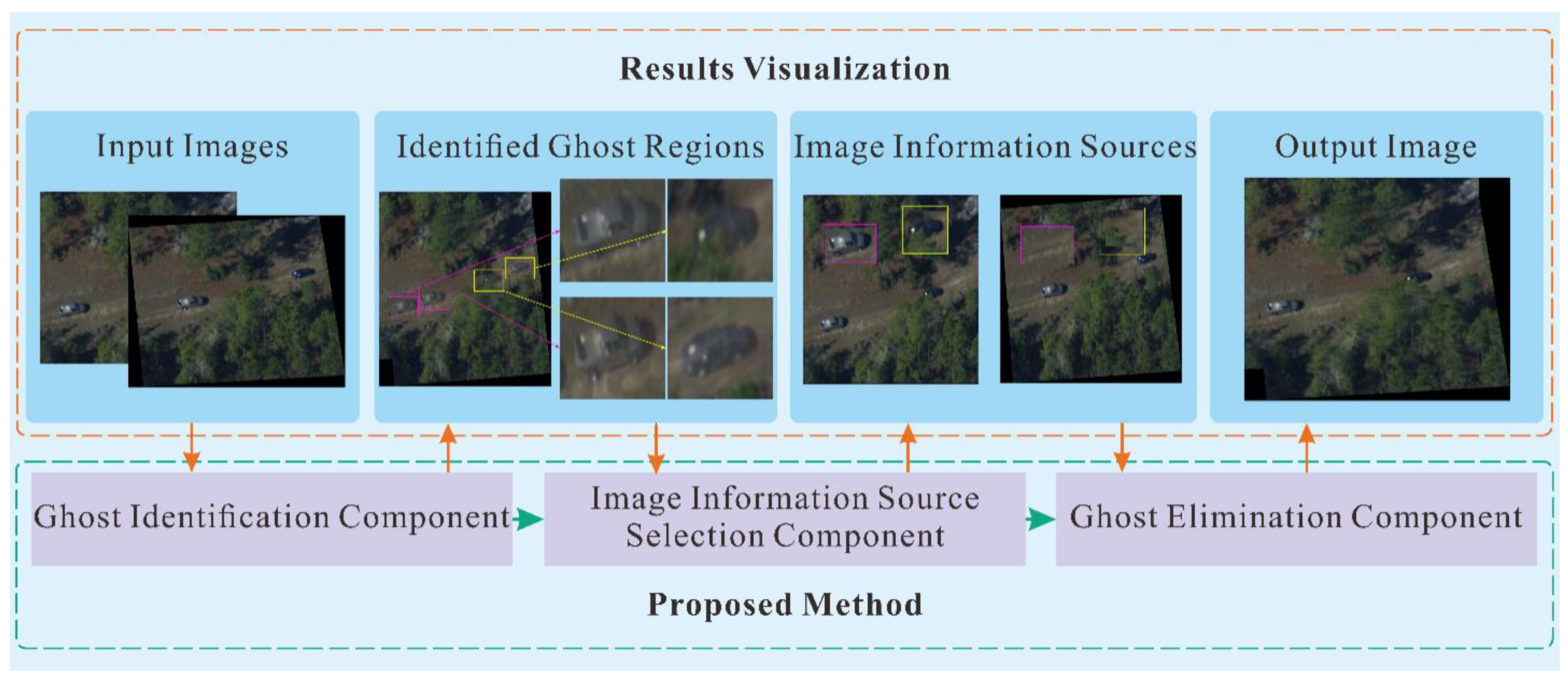
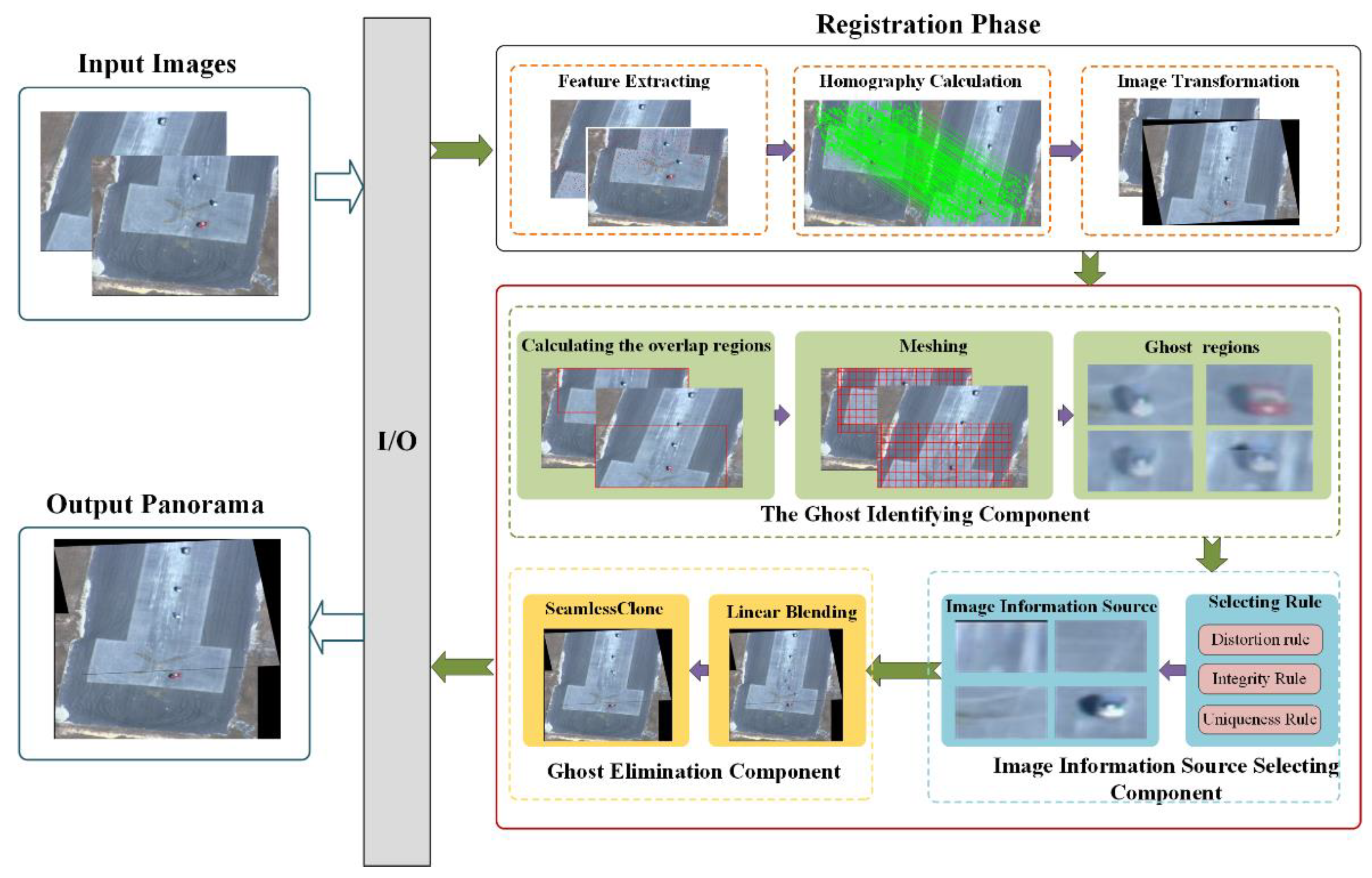
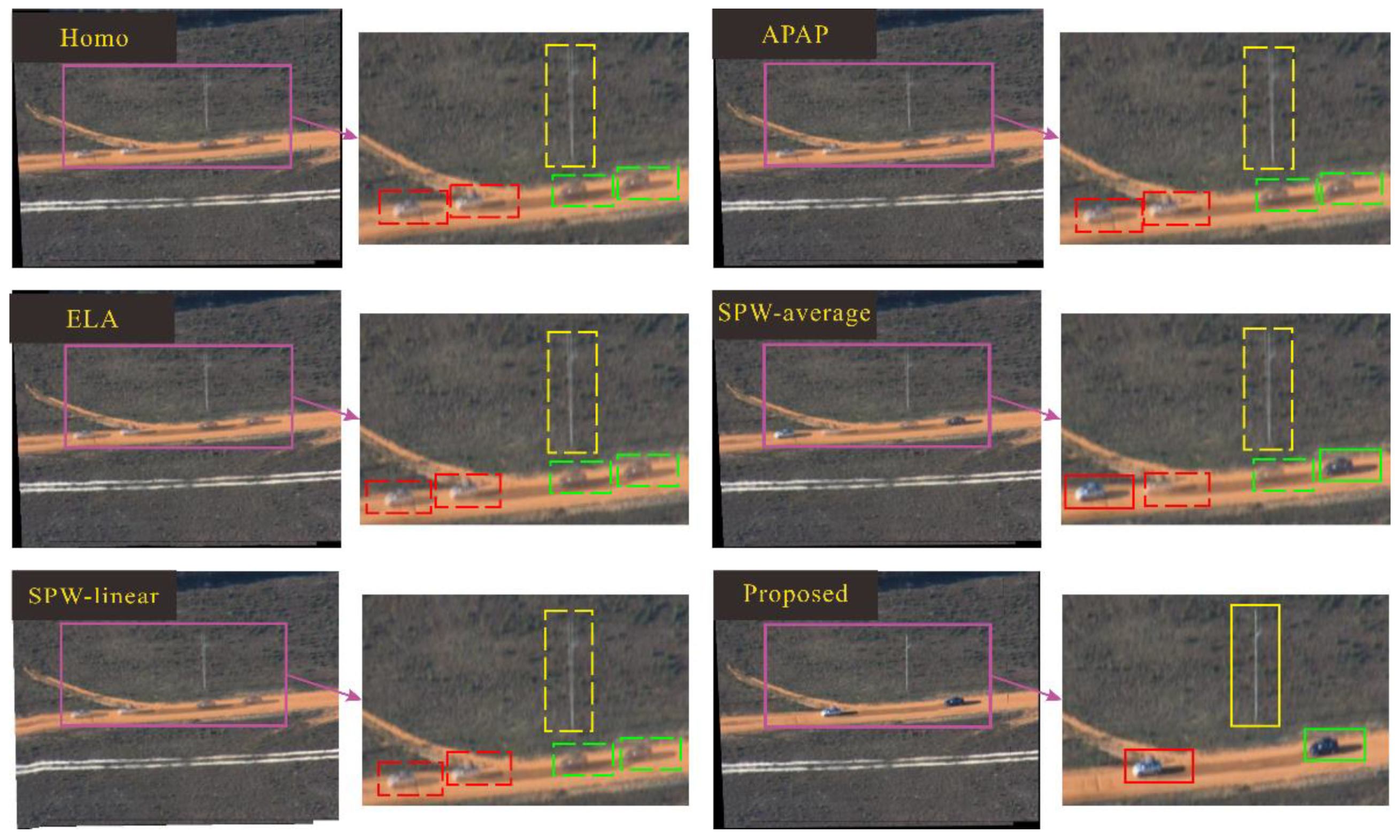
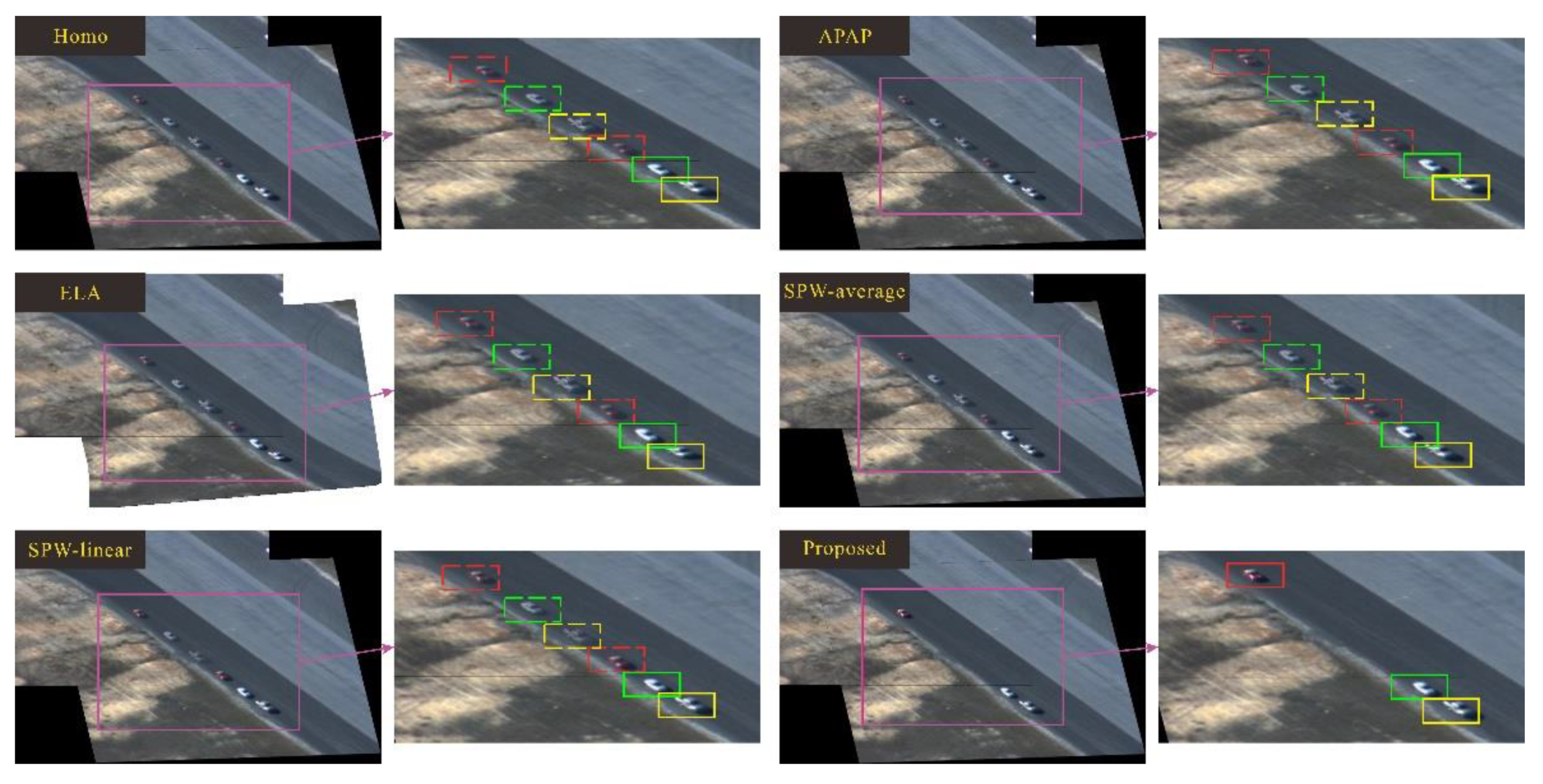
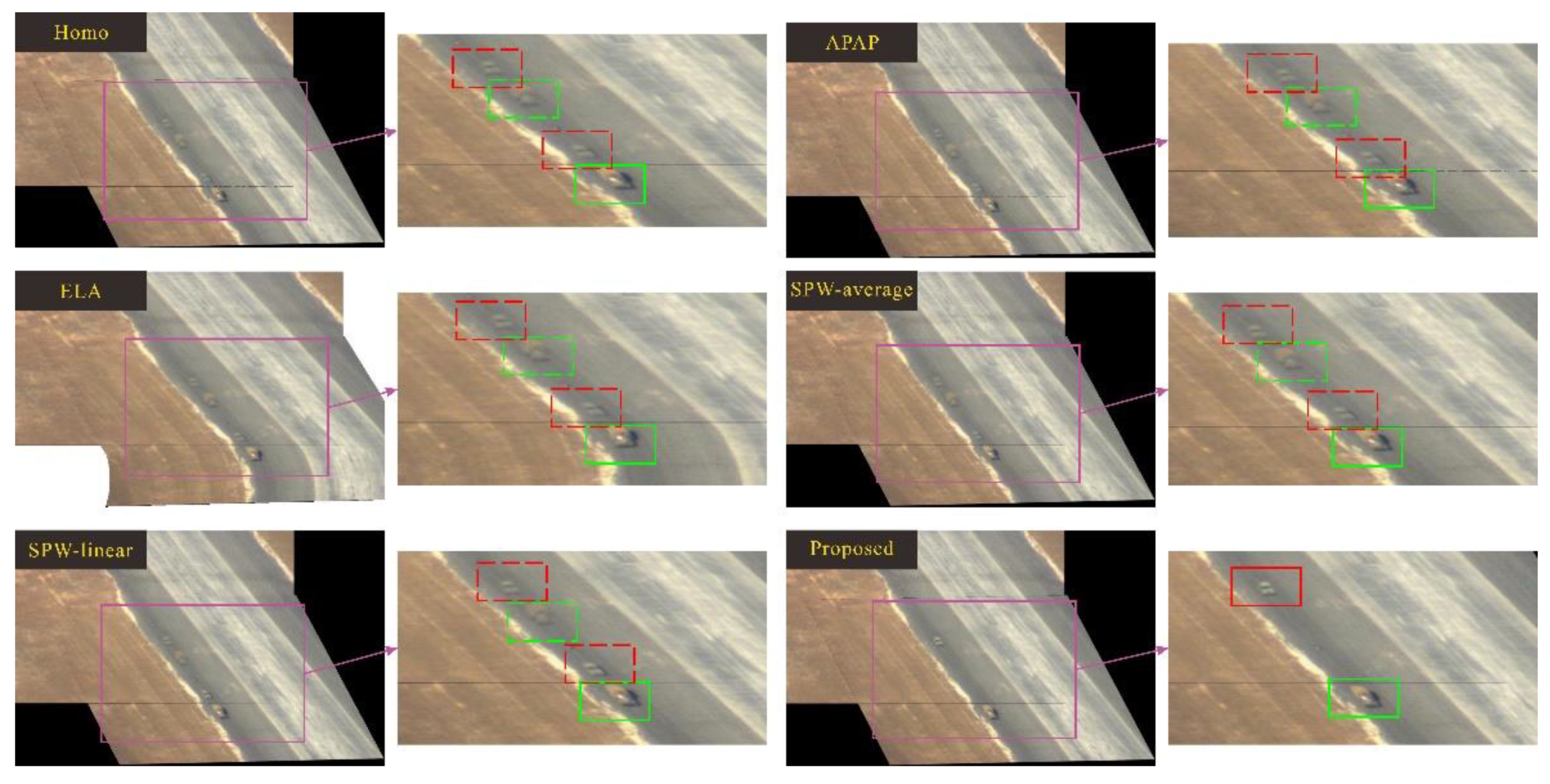
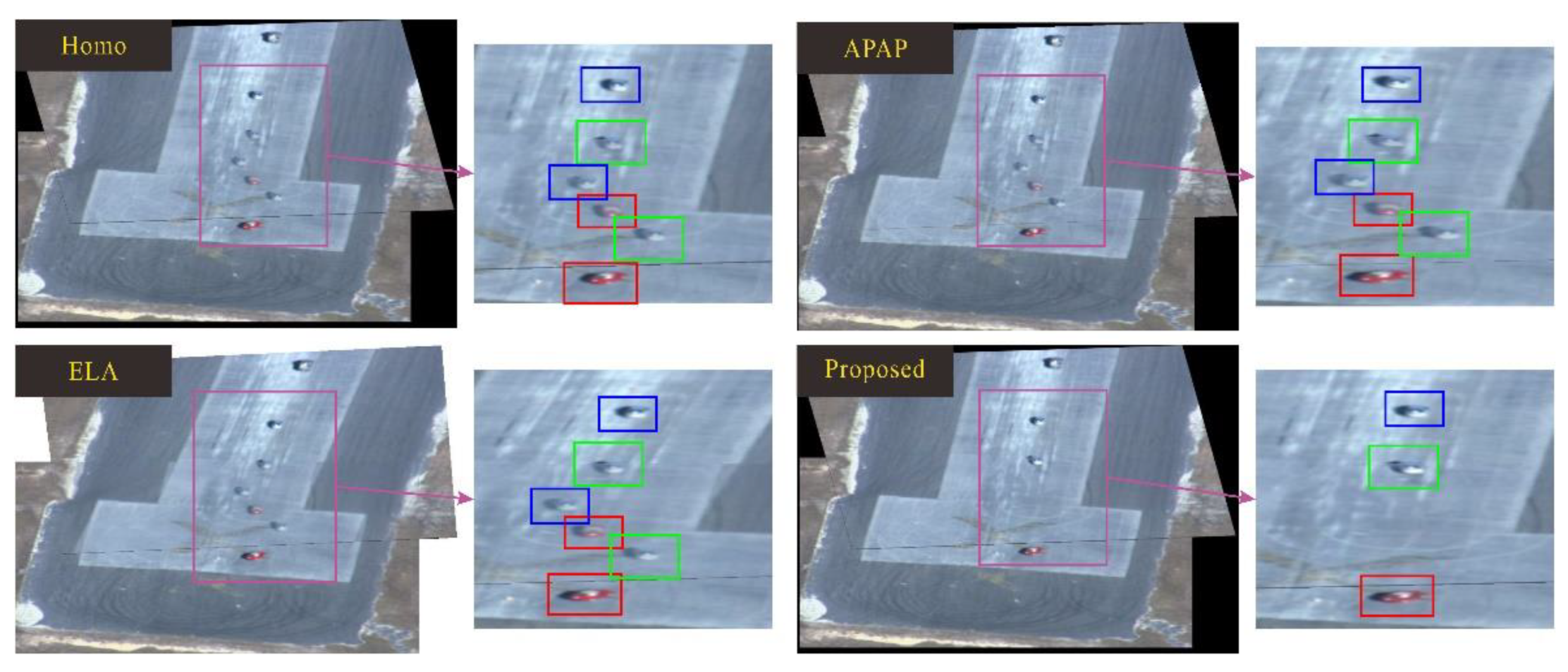
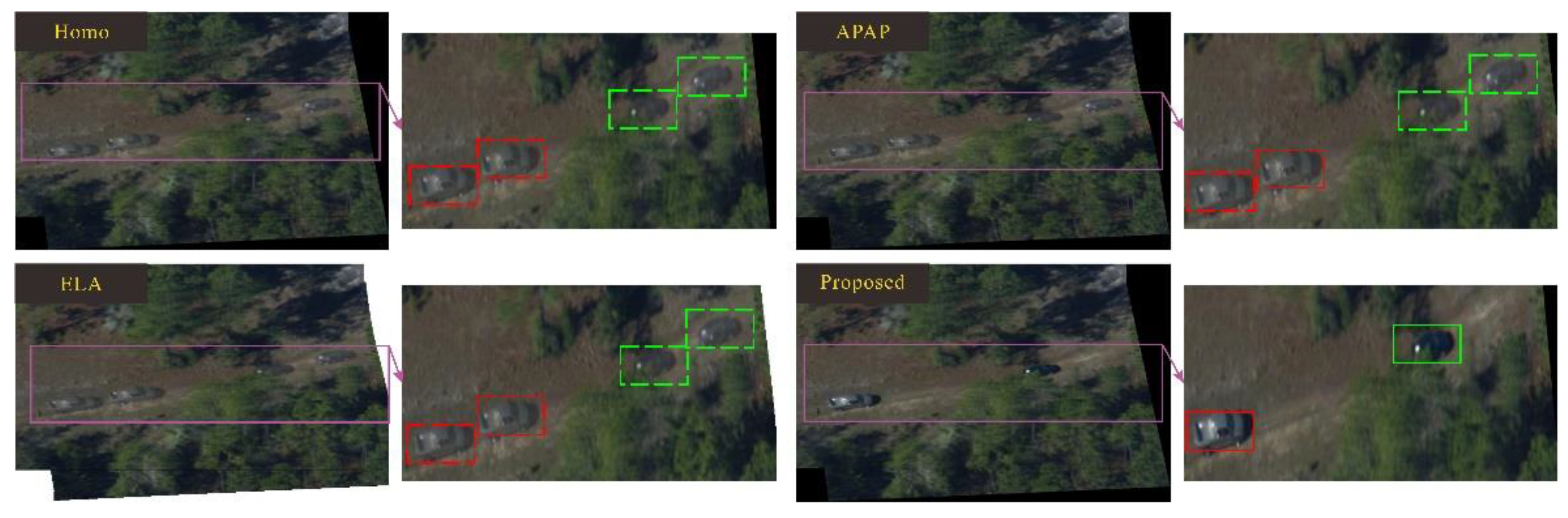
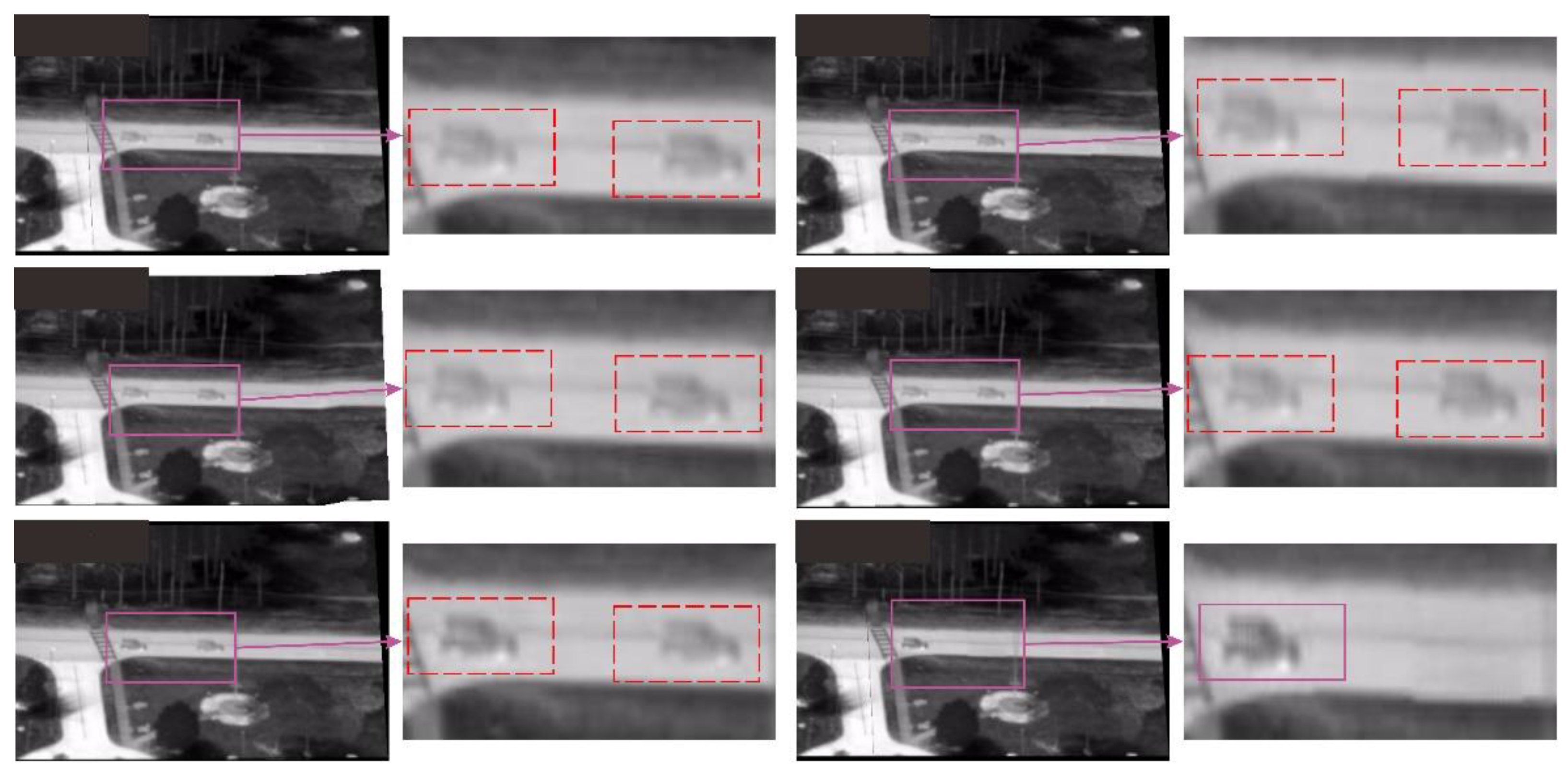
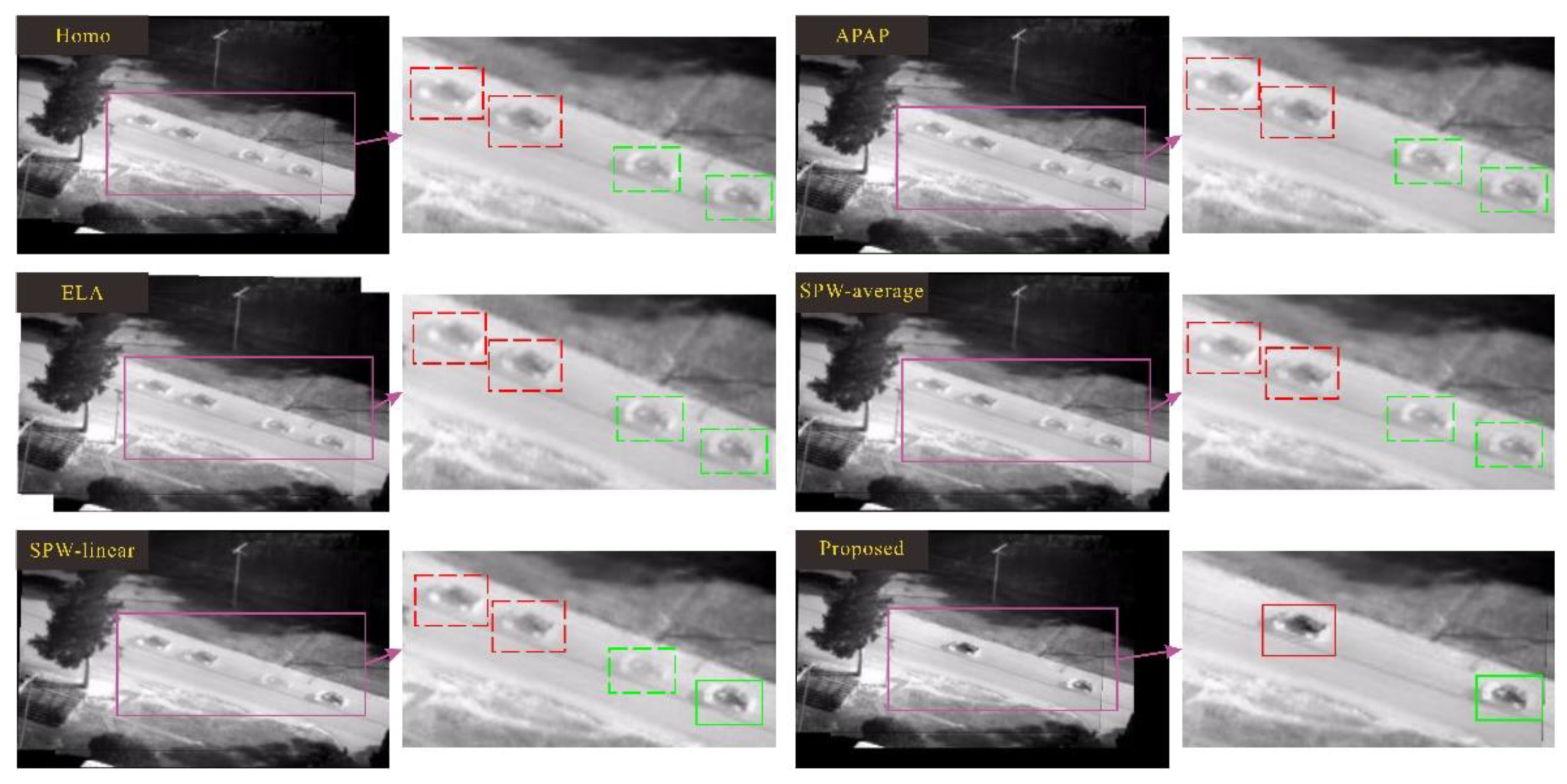
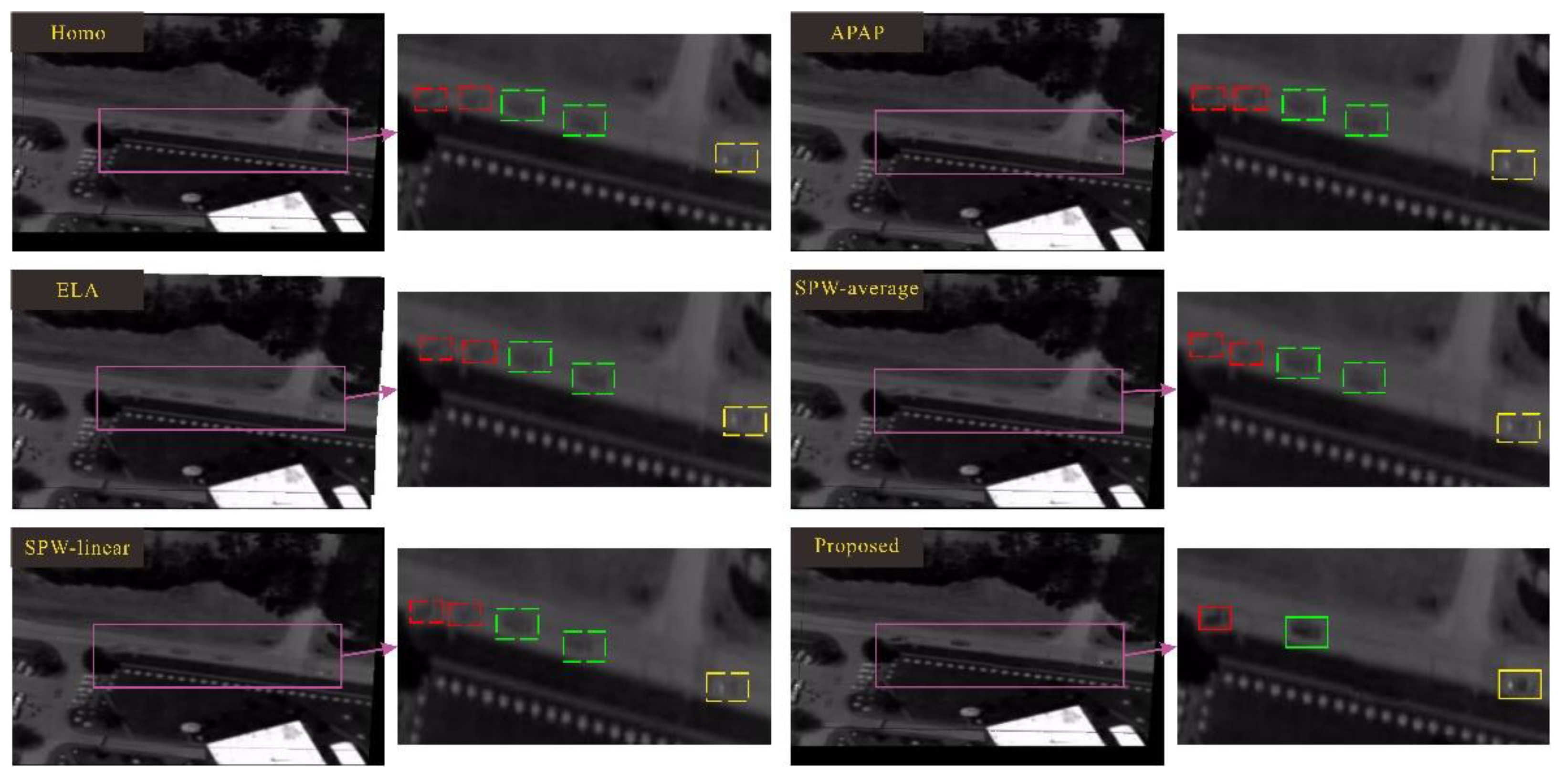
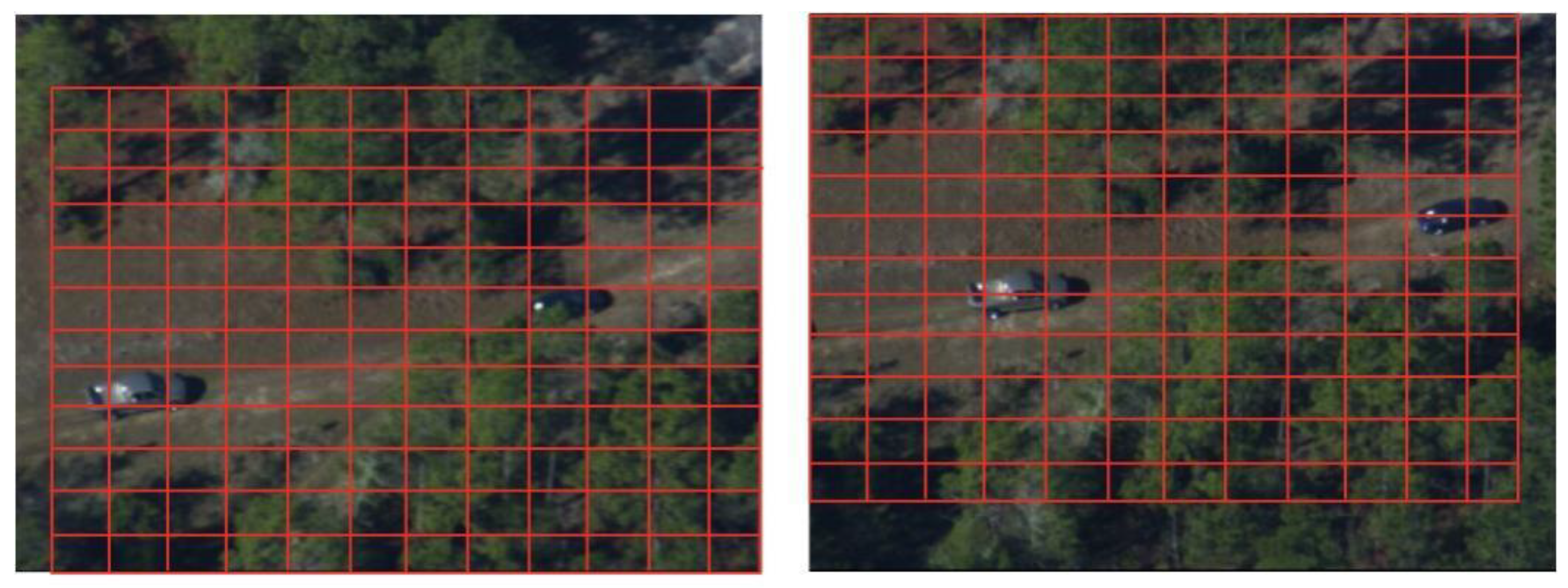
Ghosts are a common phenomenon widely present in unmanned aerial vehicle (UAV) remote sensing image stitching that seriously affect the naturalness of stitching results. In order to effectively remove ghosts and produce visually natural stitching results, we propose a novel image stitching method that can identify and eliminate ghosts through multi-component collaboration without object distortion, segmentation or repetition. Specifically, our main contributions are as follows: first, we propose a ghost identification component to locate a potential ghost in the stitching area; and detect significantly moving objects in the two stitched images. In particular, due to the characteristics of UAV shooting, the objects in UAV remote sensing images are small and the image quality is poor. We propose a mesh-based image difference comparison method to identify ghosts; and use an object tracking algorithm to accurately correspond to each ghost pair. Second, we design an image information source selection strategy to generate the ghost replacement region, which can replace the located ghost and avoid object distortion, segmentation and repetition. Third, we find that the process of ghost elimination can produce natural mosaic images by eliminating the ghost caused by initial blending with selected image information source. We validate the proposed method on VIVID data set and compare our method with Homo, ELA, SPW and APAP using the peak signal to noise ratio (PSNR) evaluation indicator.
Keywords: UAV remote sensing image; image stitching; ghosts UAV remote sensing image; image stitching; ghosts