Article

Global Assessment of the GNSS Single Point Positioning Biases Produced by the Residual Tropospheric Delay
1
College of Surveying and Geo-informatics, Tongji University, 1239 Siping Road, Shanghai 200092, China
2
State Key Laboratory of Information Engineering in Surveying, Mapping and Remote Sensing, Wuhan University, 129 Luoyu Road, Wuhan 430079, China
*
Author to whom correspondence should be addressed.
Remote Sens. 2021, 13(6), 1202; https://doi.org/10.3390/rs13061202
Submission received: 31 January 2021 / Revised: 13 March 2021 / Accepted: 16 March 2021 / Published: 22 March 2021
(This article belongs to the Special Issue Advances in GNSS Data Processing and Navigation)

Abstract

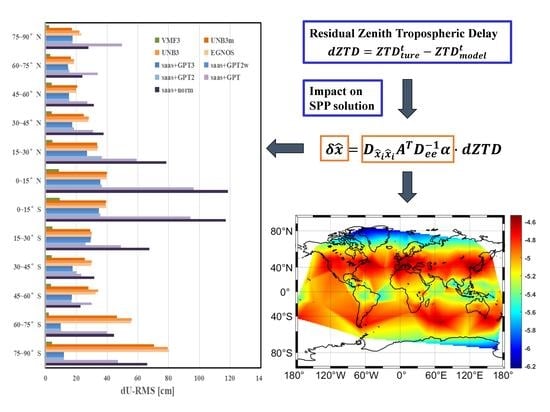
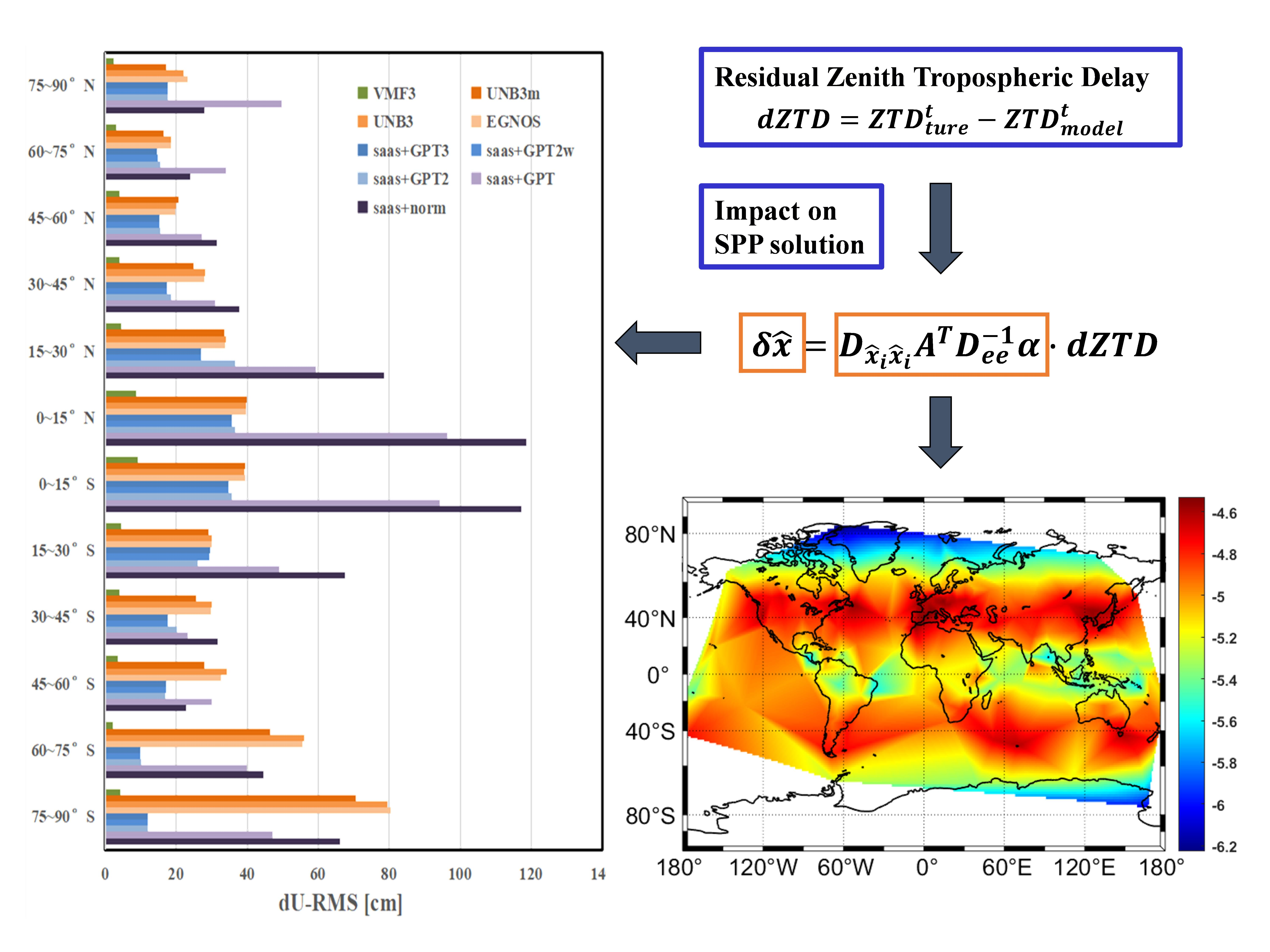
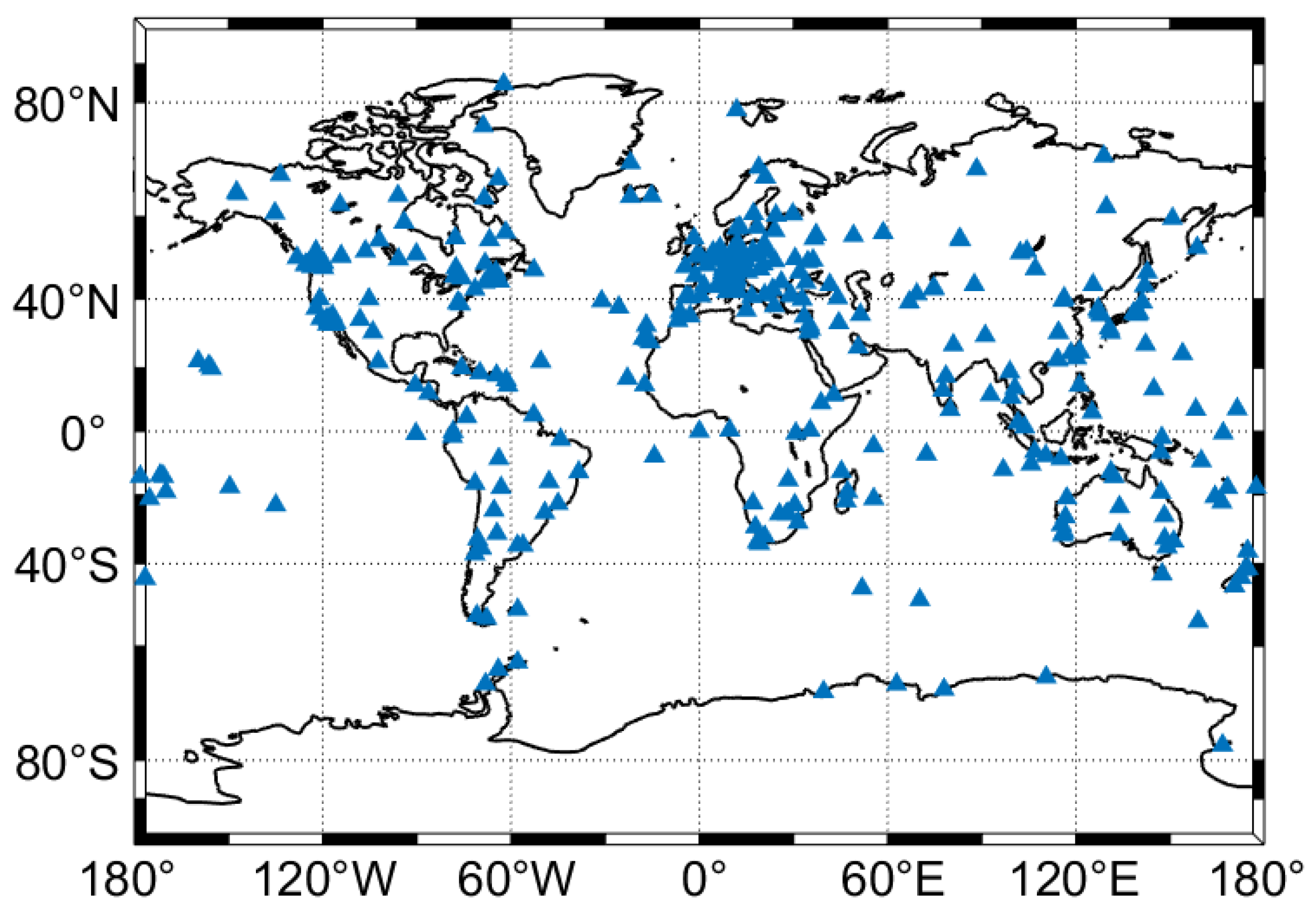
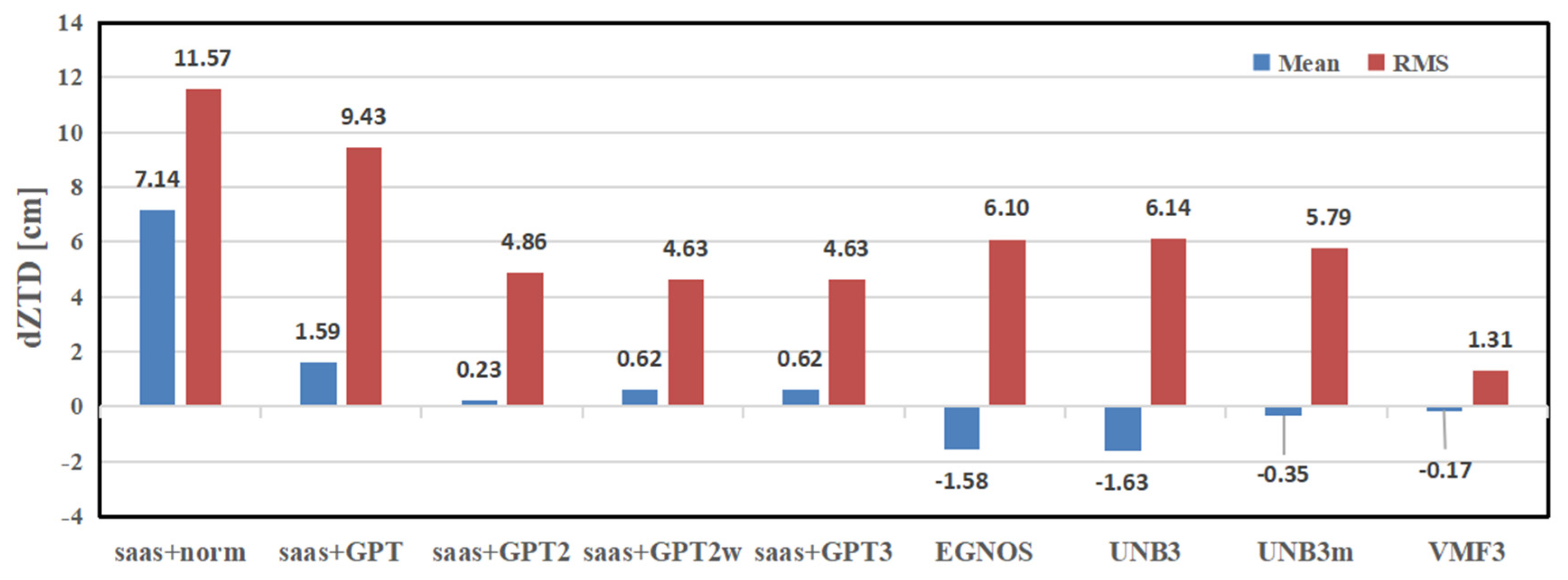
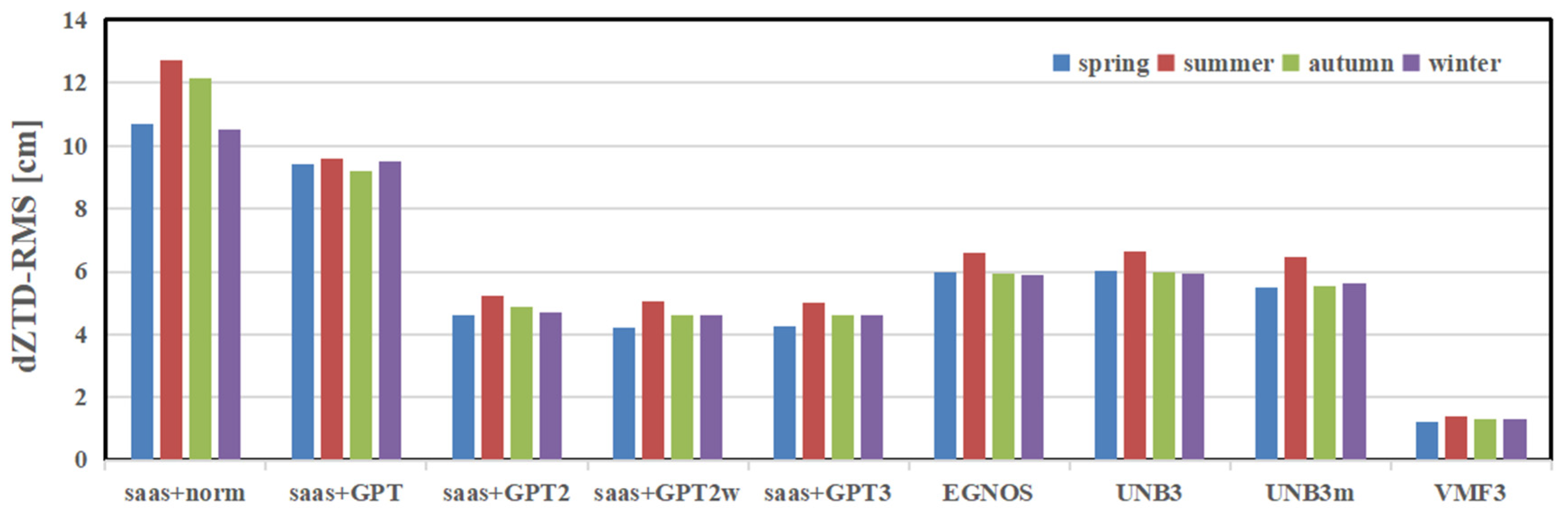
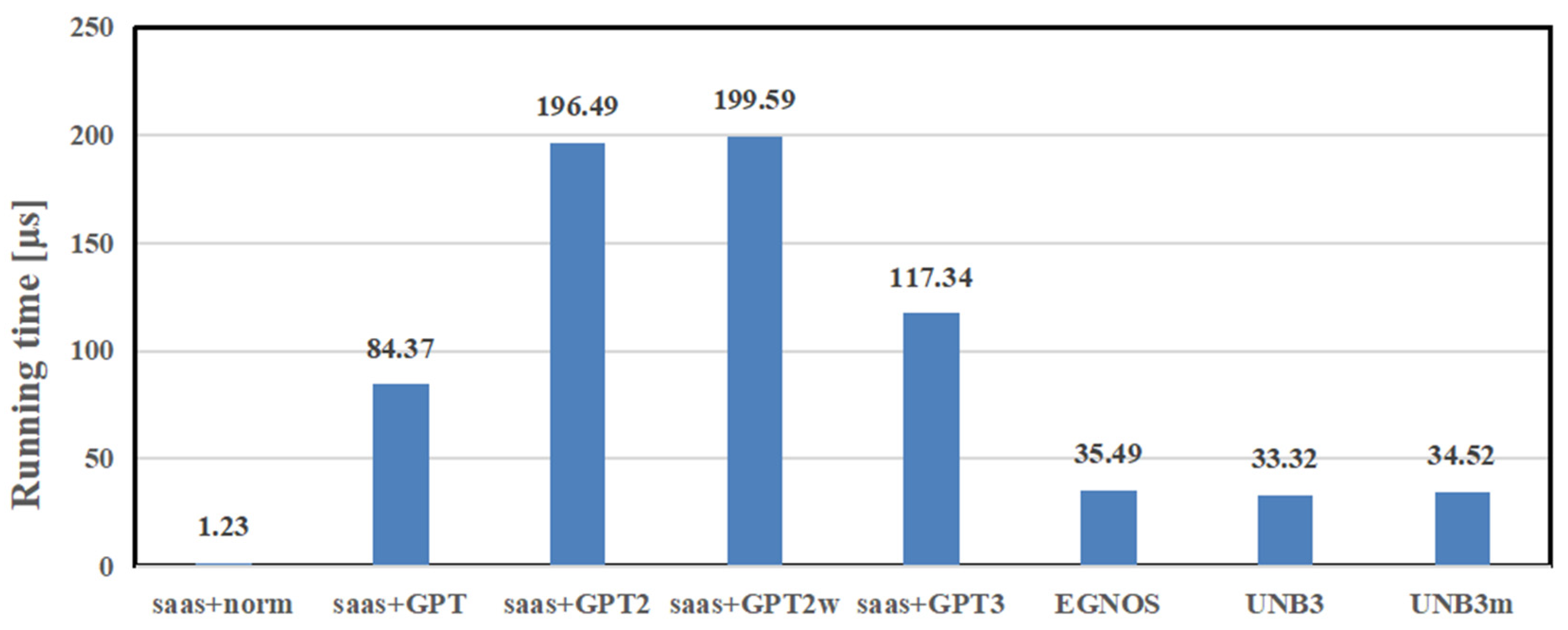
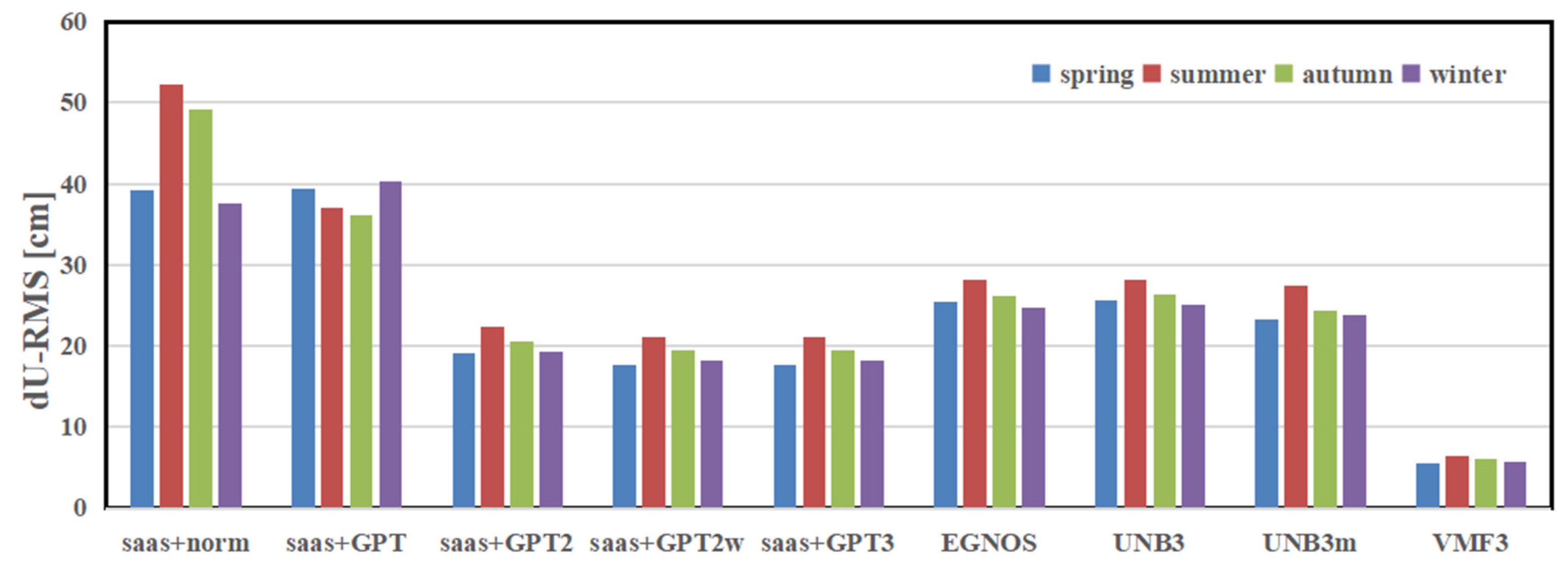
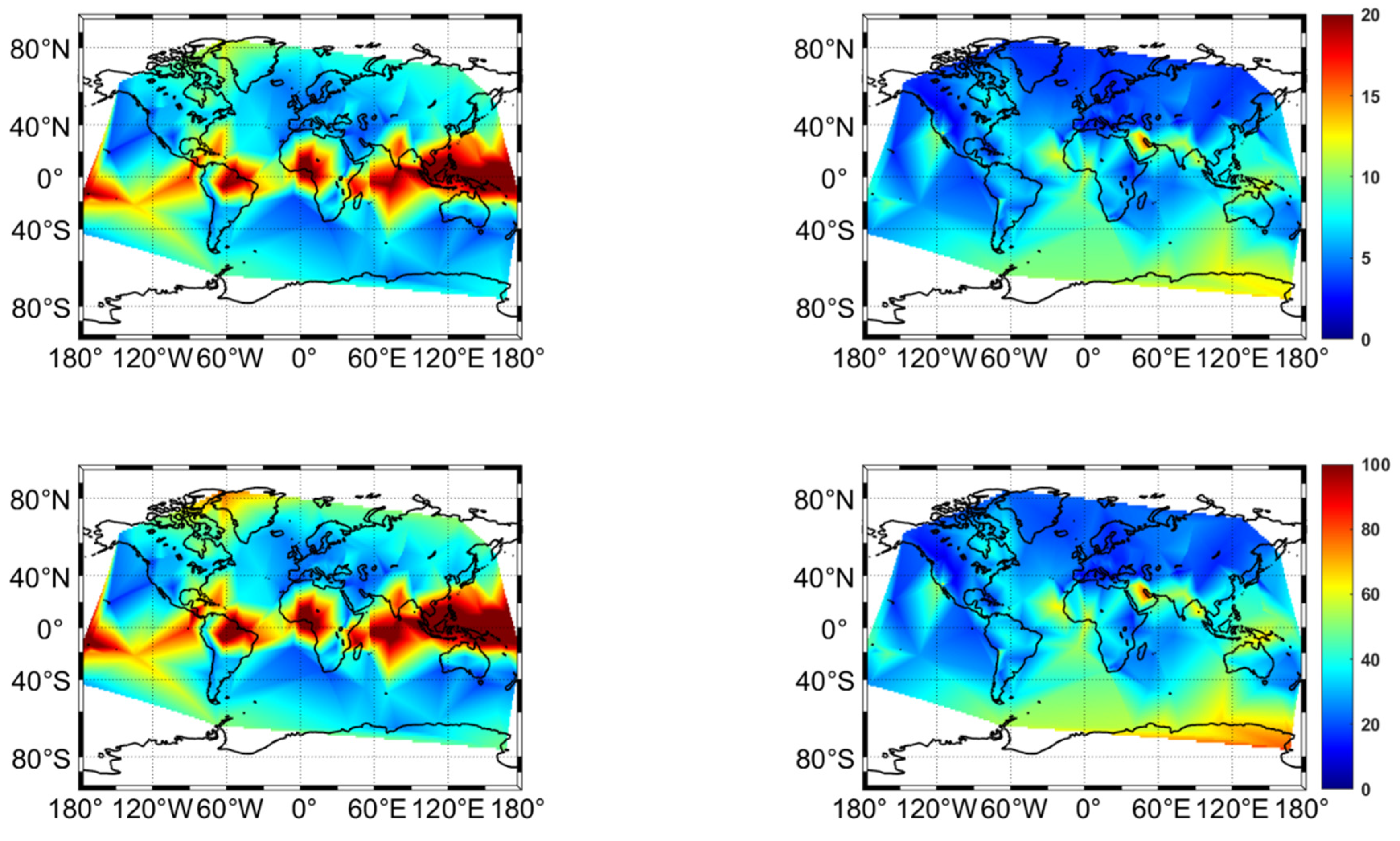
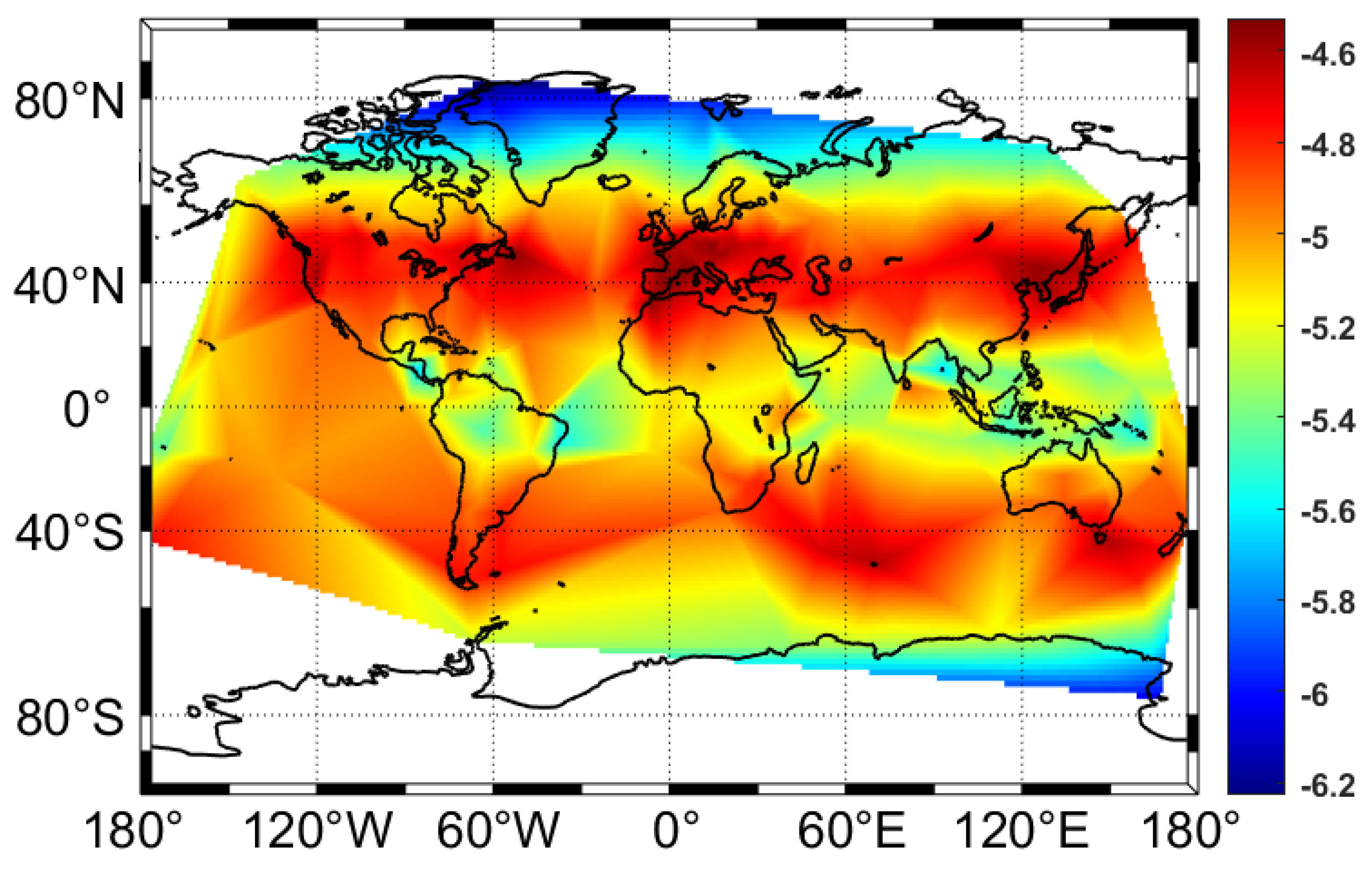
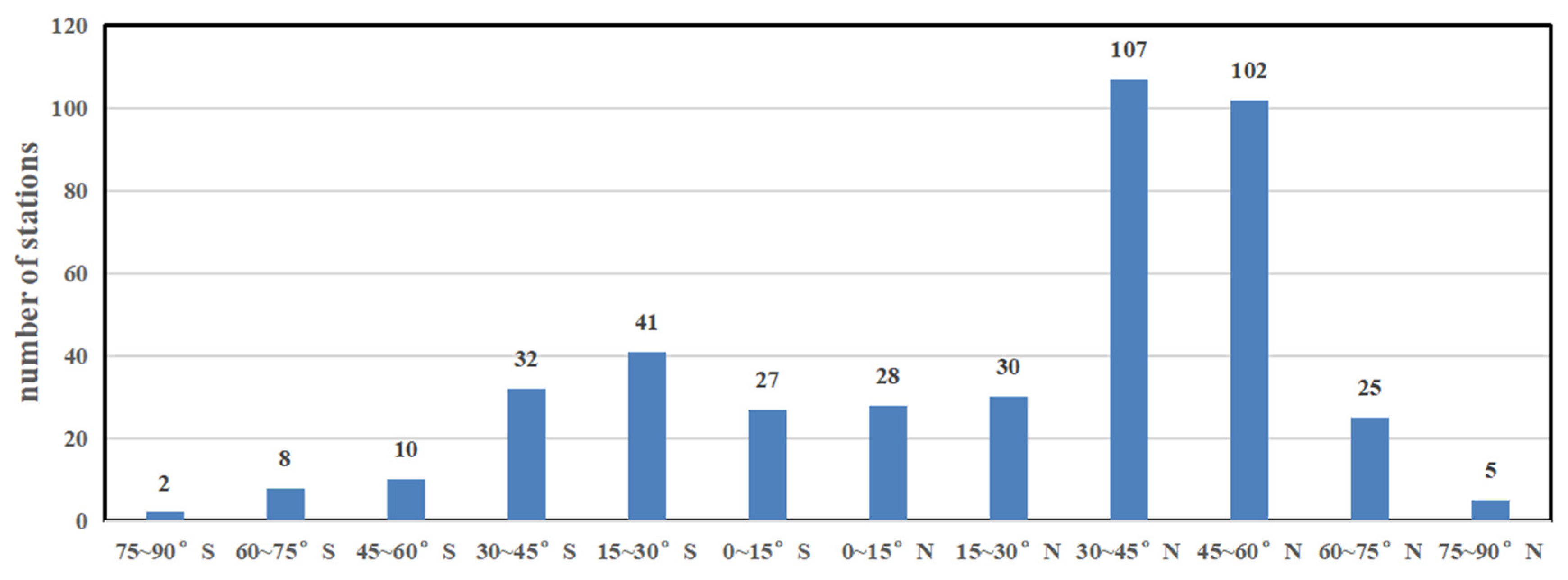
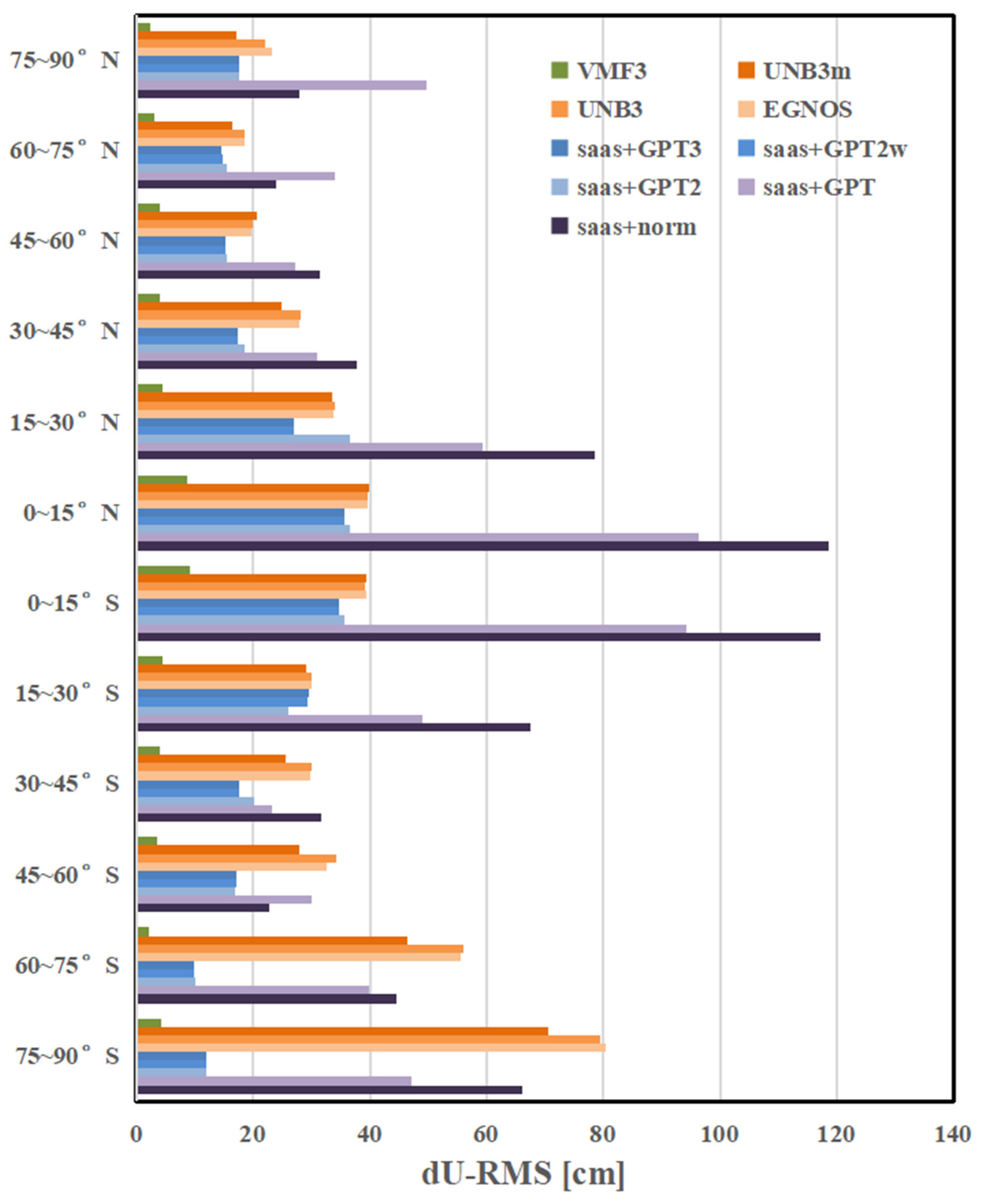
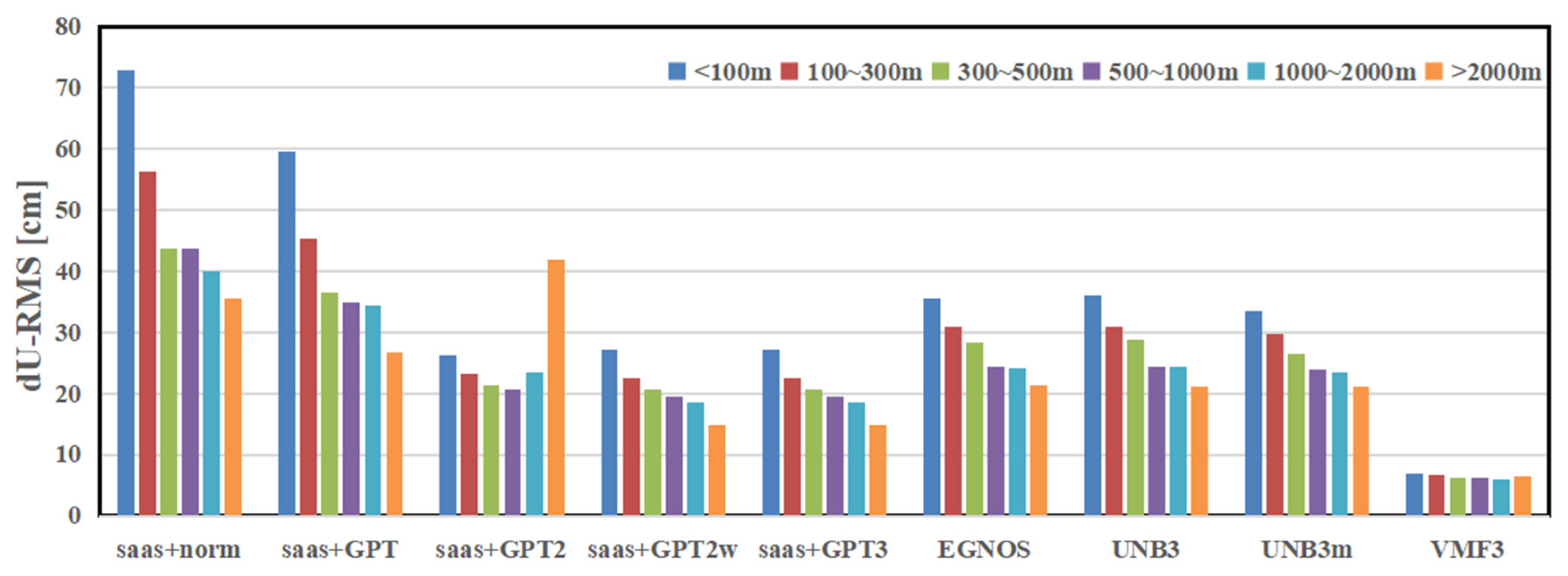
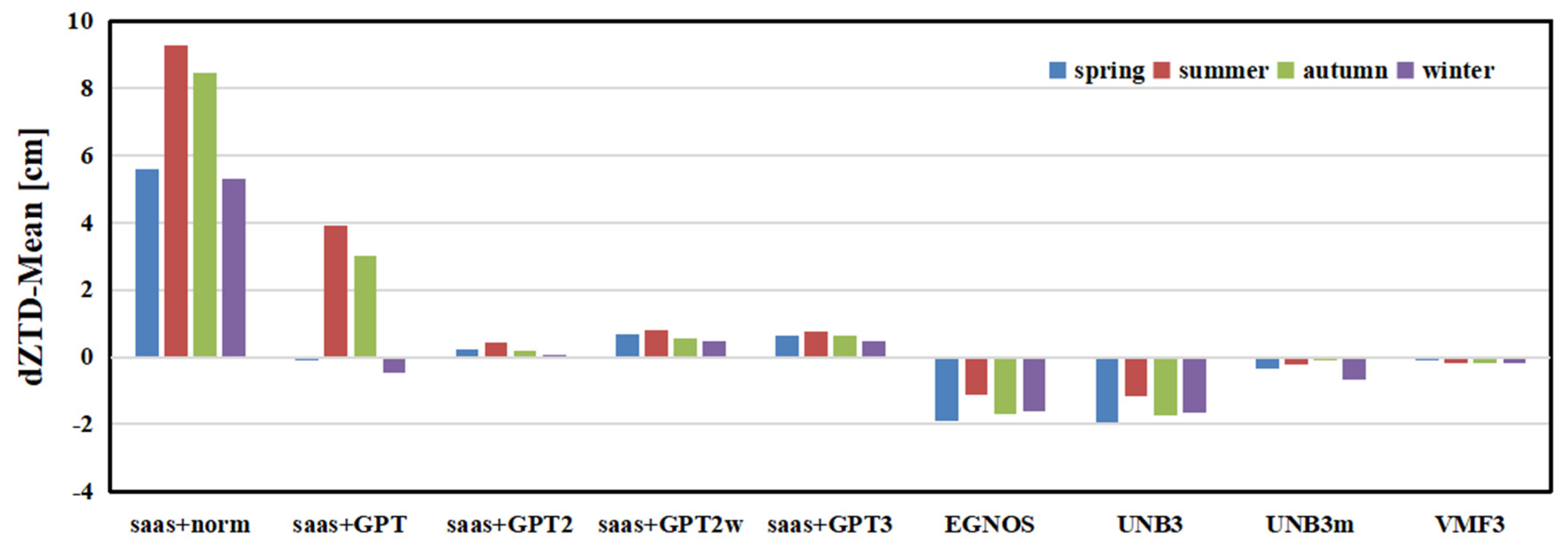
The tropospheric delay is one of the main error sources that degrades the accuracy of Global Navigation Satellite Systems (GNSS) Single Point Positioning (SPP). Although an empirical model is usually applied for correction and thereby to improve the positioning accuracy, the residual tropospheric delay is still drowned in measurement noise, and cannot be further compensated by parameter estimation. How much this type of residual error would sway the SPP positioning solutions on a global scale are still unclear. In this paper, the biases on SPP solutions introduced by the residual tropospheric delay when using nine conventionally Zenith Tropospheric Delay (ZTD) models are analyzed and discussed, including Saastamoinen+norm/Global Pressure and Temperature (GPT)/GPT2/GPT2w/GPT3, University of New Brunswick (UNB)3/UNB3m, European Geostationary Navigation Overlay System (EGNOS) and Vienna Mapping Functions (VMF)3 models. The accuracies of the nine ZTD models, as well as the SPP biases caused by the residual ZTD (dZTD) after model correction are evaluated using International GNSS Service (IGS)-ZTD products from around 400 globally distributed monitoring stations. The seasonal, latitudinal, and altitudinal discrepancies are analyzed respectively. The results show that the SPP solution biases caused by the dZTD mainly occur on the vertical direction, nearly to decimeter level, and significant discrepancies are observed among different models at different geographical locations. This study provides references for the refinement and applications of the nine ZTD models for SPP users.
Keywords: residual tropospheric delay; model corrections; SPP solution; vertical influence residual tropospheric delay; model corrections; SPP solution; vertical influence
Graphical Abstract