Article

Analyzing Pixel-Level Relationships between Luojia 1-01 Nighttime Light and Urban Surface Features by Separating the Pixel Blooming Effect
1
State Key Laboratory of Information Engineering in Surveying, Mapping and Remote Sensing, Wuhan University, Wuhan 430079, China
2
Institute of Geophysics & Geomatics, China University of Geosciences, Wuhan 430074, China
*
Author to whom correspondence should be addressed.
Remote Sens. 2021, 13(23), 4838; https://doi.org/10.3390/rs13234838
Submission received: 2 November 2021 / Revised: 24 November 2021 / Accepted: 25 November 2021 / Published: 28 November 2021

Abstract

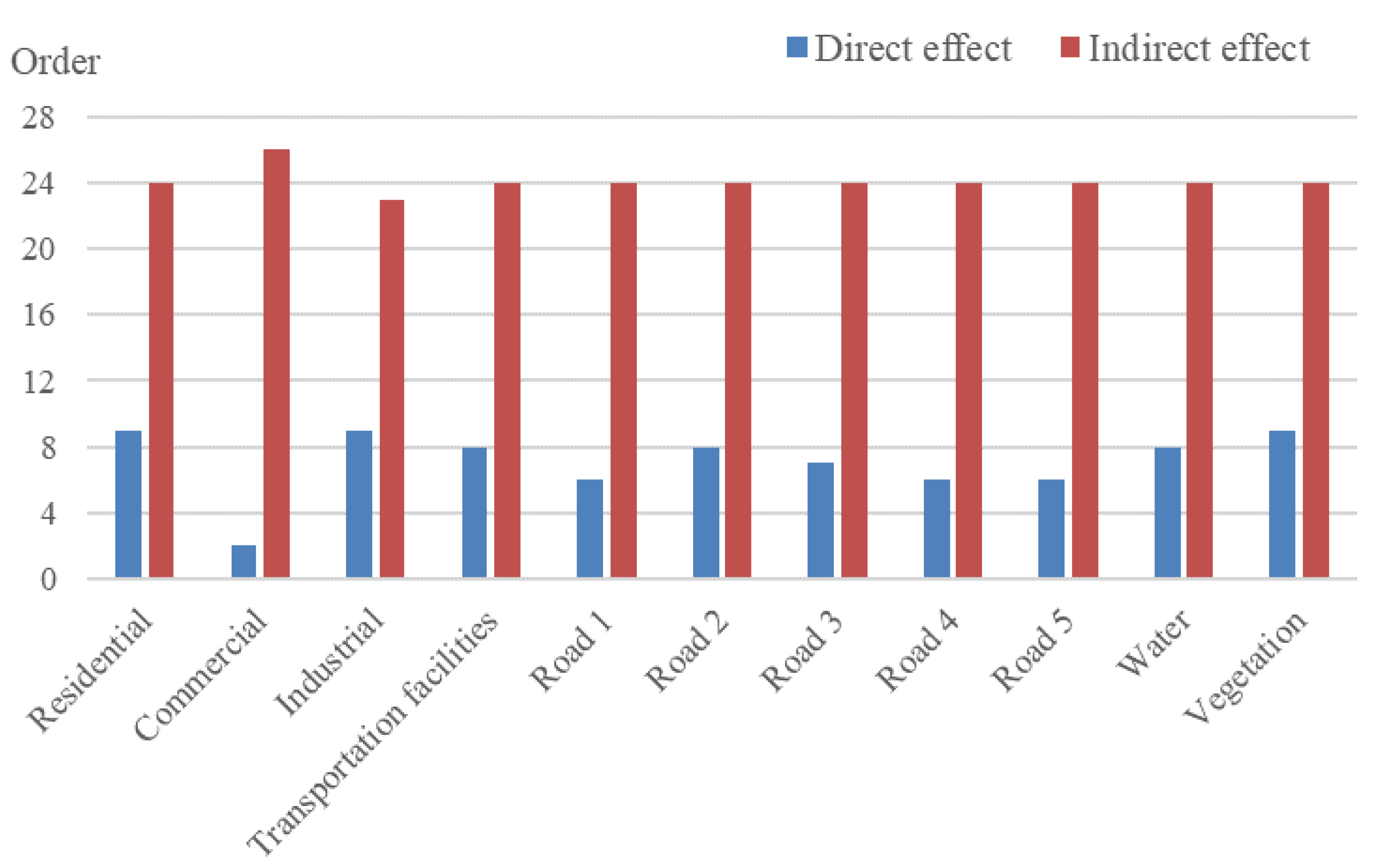
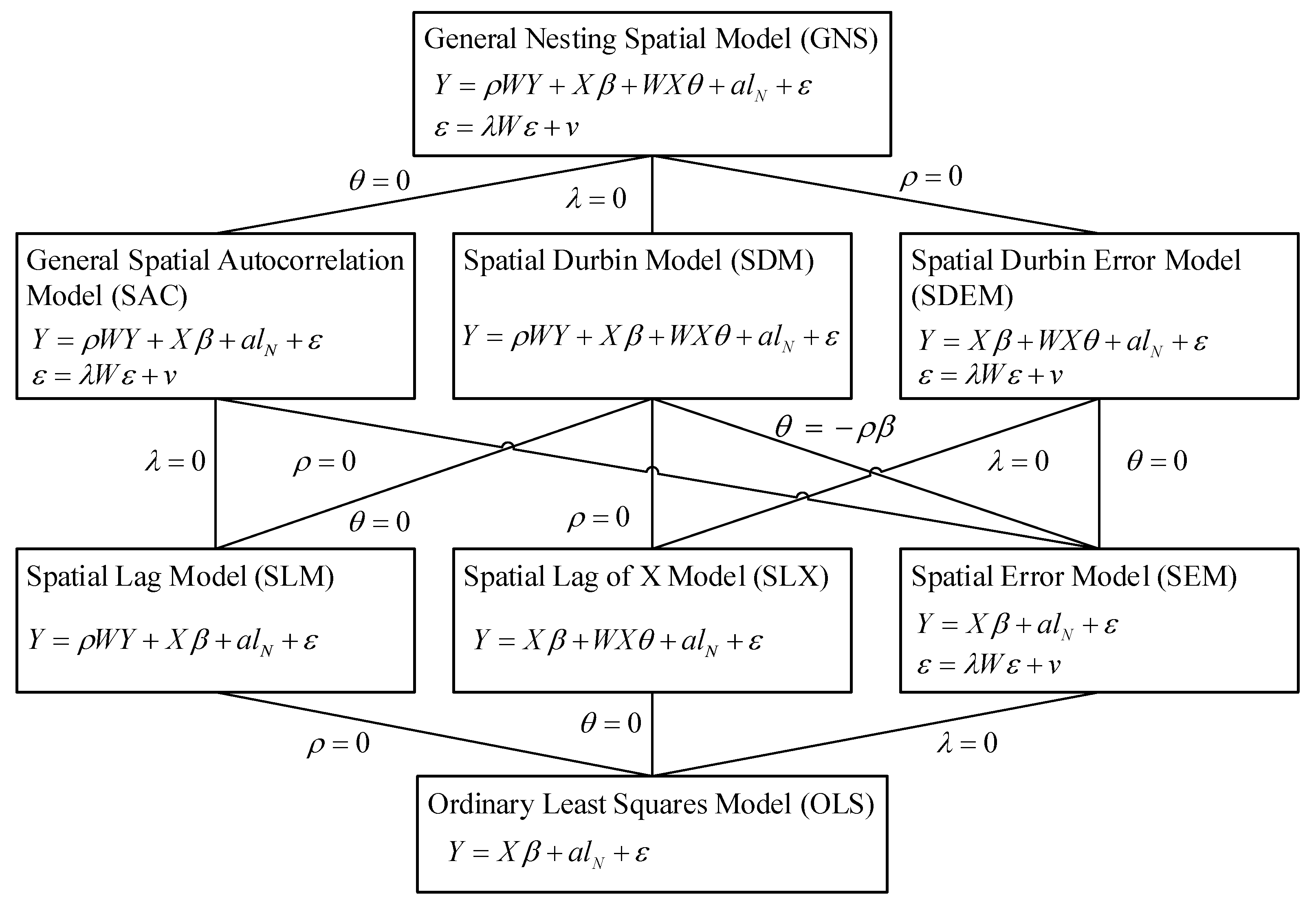
Nighttime light (NTL) remote sensing data can effectively reveal human activities in urban development. It has received extensive attention in recent years, owing to its advantages in monitoring urban socio-economic activities. Due to the coarse spatial resolution and blooming effect, few studies can explain the factors influencing NTL variations at a fine scale. This study explores the relationships between Luojia 1-01 NTL intensity and urban surface features at the pixel level. The Spatial Durbin model is used to measure the contributions of different urban surface features (represented by Points-of-interest (POIs), roads, water body and vegetation) to NTL intensity. The contributions of different urban surface features to NTL intensity and the Pixel Blooming Effect (PIBE) are effectively separated by direct effect and indirect effect (pseudo-R2 = 0.915; Pearson correlation = 0.774; Moran’s I = 0.014). The results show that the contributions of different urban surface features to NTL intensity and PIBE are significantly different. Roads and transportation facilities are major contributors to NTL intensity and PIBE. The contribution of commercial area is much lower than that of roads in terms of PIBE. The inhibitory effect of water body is weaker than that of vegetation in terms of NTL intensity and PIBE. For each urban surface feature, the direct contribution to NTL intensity is far less than the indirect contribution (PIBE of total neighbors), but greater than the marginal indirect effect (PIBE of each neighbor). The method proposed in this study is expected to provide a reference for explaining the composition and blooming effect of NTL, as well as the application of NTL data in the urban interior.
Keywords: Luojia 1-01; nighttime light; urban surface; points-of-interest; pixel blooming effect; spatial autoregressive model Luojia 1-01; nighttime light; urban surface; points-of-interest; pixel blooming effect; spatial autoregressive model