Technical Note

Development and Validation of Machine-Learning Clear-Sky Detection Method Using 1-Min Irradiance Data and Sky Imagers at a Polluted Suburban Site, Xianghe
1
Key Laboratory of Atmospheric Sounding, Chengdu University of Information Technology, Chengdu 610225, China
2
LAGEO, Institute of Atmospheric Physics, Chinese Academy of Sciences, Beijing 100029, China
3
Collaborative Innovation Center on Forecast and Evaluation of Meteorological Disasters, Nanjing University of Information Science & Technology, Nanjing 210044, China
4
College of Earth and Planetary Sciences, University of Chinese Academy of Sciences, Beijing 100049, China
*
Author to whom correspondence should be addressed.
Remote Sens. 2021, 13(18), 3763; https://doi.org/10.3390/rs13183763
Submission received: 16 August 2021 / Revised: 14 September 2021 / Accepted: 15 September 2021 / Published: 20 September 2021
(This article belongs to the Special Issue Artificial Intelligence in Remote Sensing of Atmospheric Environment)

Abstract

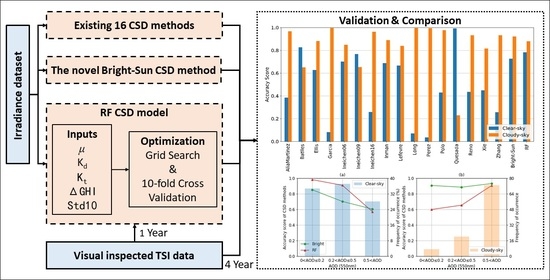
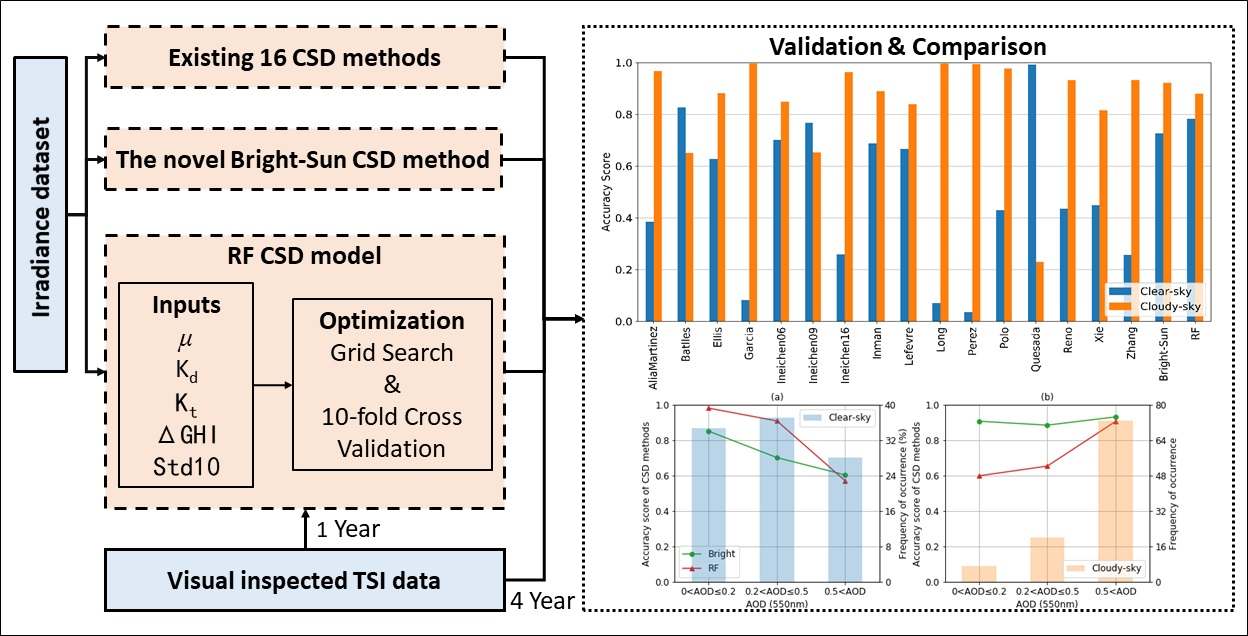
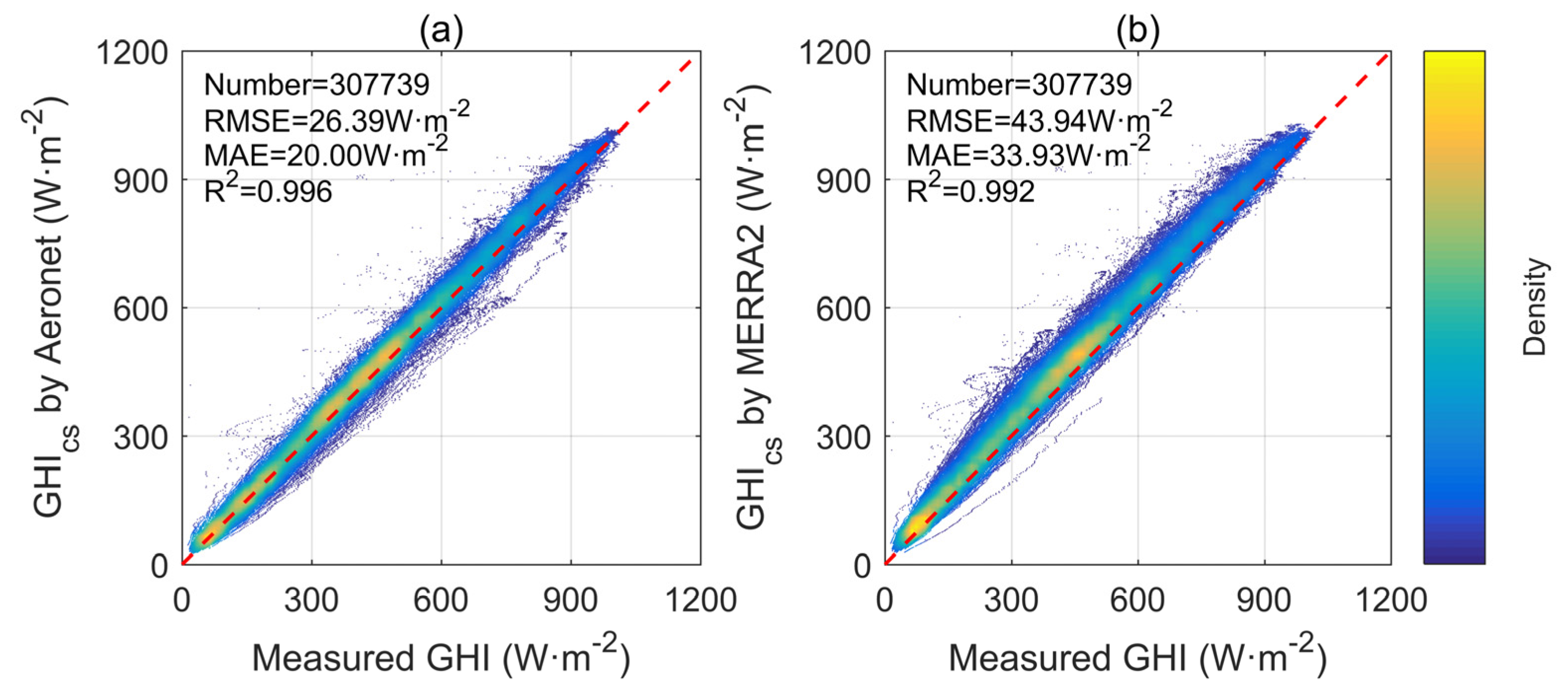
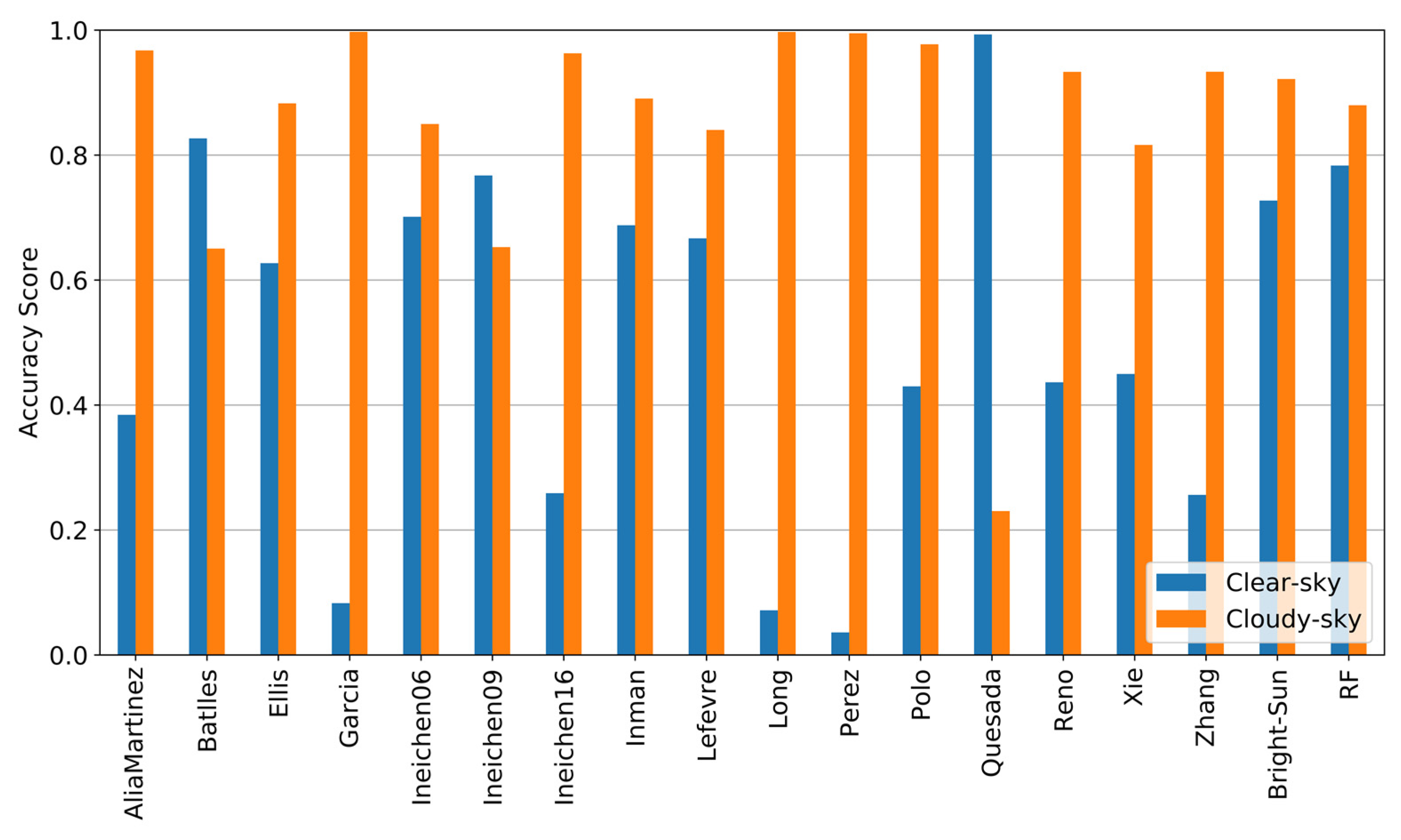
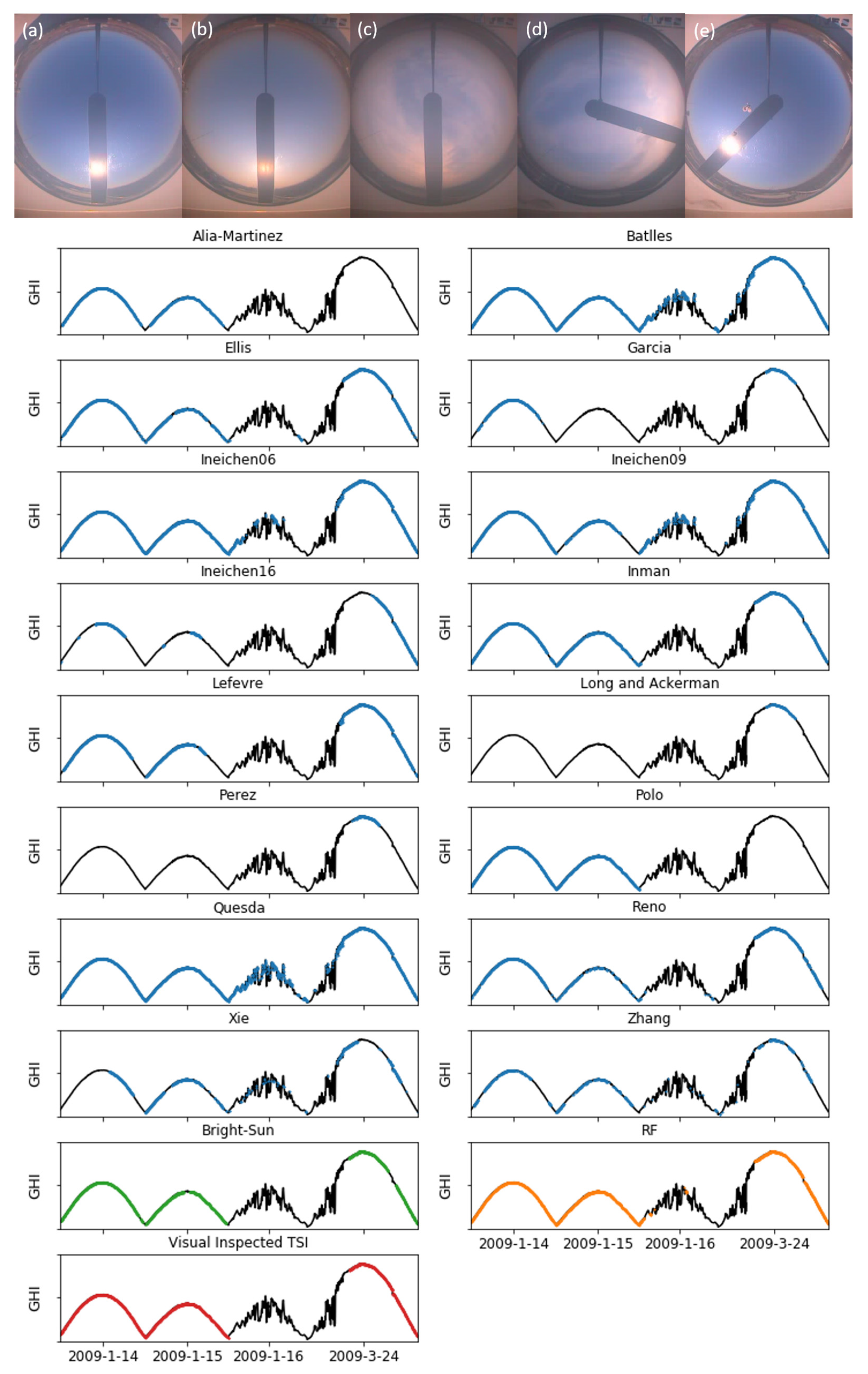
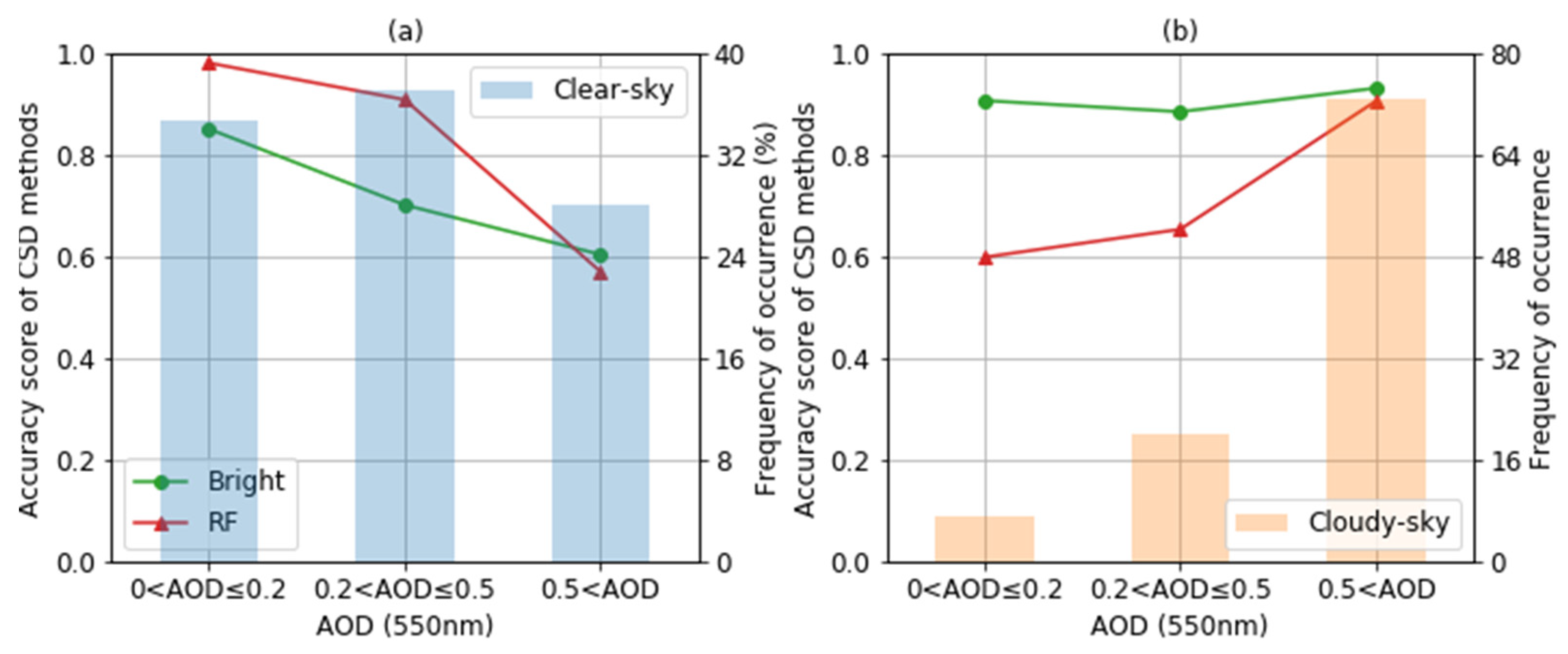
Clear-sky detection (CSD) is of critical importance in solar energy applications and surface radiative budget studies. Existing CSD methods are not sufficiently validated due to the lack of high-temporal resolution and long-term CSD ground observations, especially at polluted sites. Using five-year high resolution ground-based solar radiation data and visual inspected Total Sky Imager (TSI) measurements at polluted Xianghe, a suburban site, this study validated 17 existing CSD methods and developed a new CSD model based on a machine-learning algorithm (Random Forest: RF). The propagation of systematic errors from input data to the calculated global horizontal irradiance (GHI) is confirmed with Mean Absolute Error (MAE) increased by 99.7% (from 20.00 to 39.93 W·m−2). Through qualitative evaluation, the novel Bright-Sun method outperforms the other traditional CSD methods at Xianghe site, with high accuracy score 0.73 and 0.92 under clear and cloudy conditions, respectively. The RF CSD model developed by one-year irradiance and TSI data shows more robust performance, with clear/cloudy-sky accuracy score of 0.78/0.88. Overall, the Bright-Sun and RF CSD models perform satisfactorily at heavy polluted sites. Further analysis shows the RF CSD model built with only GHI-related parameters can still achieve a mean accuracy score of 0.81, which indicates RF CSD models have the potential in dealing with sites only providing GHI observations.
Keywords: clear sky detection; surface irradiance; random forest; total sky imager; bright-sun clear sky detection; surface irradiance; random forest; total sky imager; bright-sun
Graphical Abstract