Technical Note

BFAST Lite: A Lightweight Break Detection Method for Time Series Analysis
by
Dainius Masiliūnas
*,
Nandin-Erdene Tsendbazar
,
Martin Herold
and
Jan Verbesselt
Laboratory of Geo-Information Science and Remote Sensing, Wageningen University & Research, Droevendaalsesteg 3, 6708 PB Wageningen, The Netherlands
*
Author to whom correspondence should be addressed.
Remote Sens. 2021, 13(16), 3308; https://doi.org/10.3390/rs13163308
Submission received: 26 July 2021 / Revised: 17 August 2021 / Accepted: 19 August 2021 / Published: 21 August 2021

Abstract

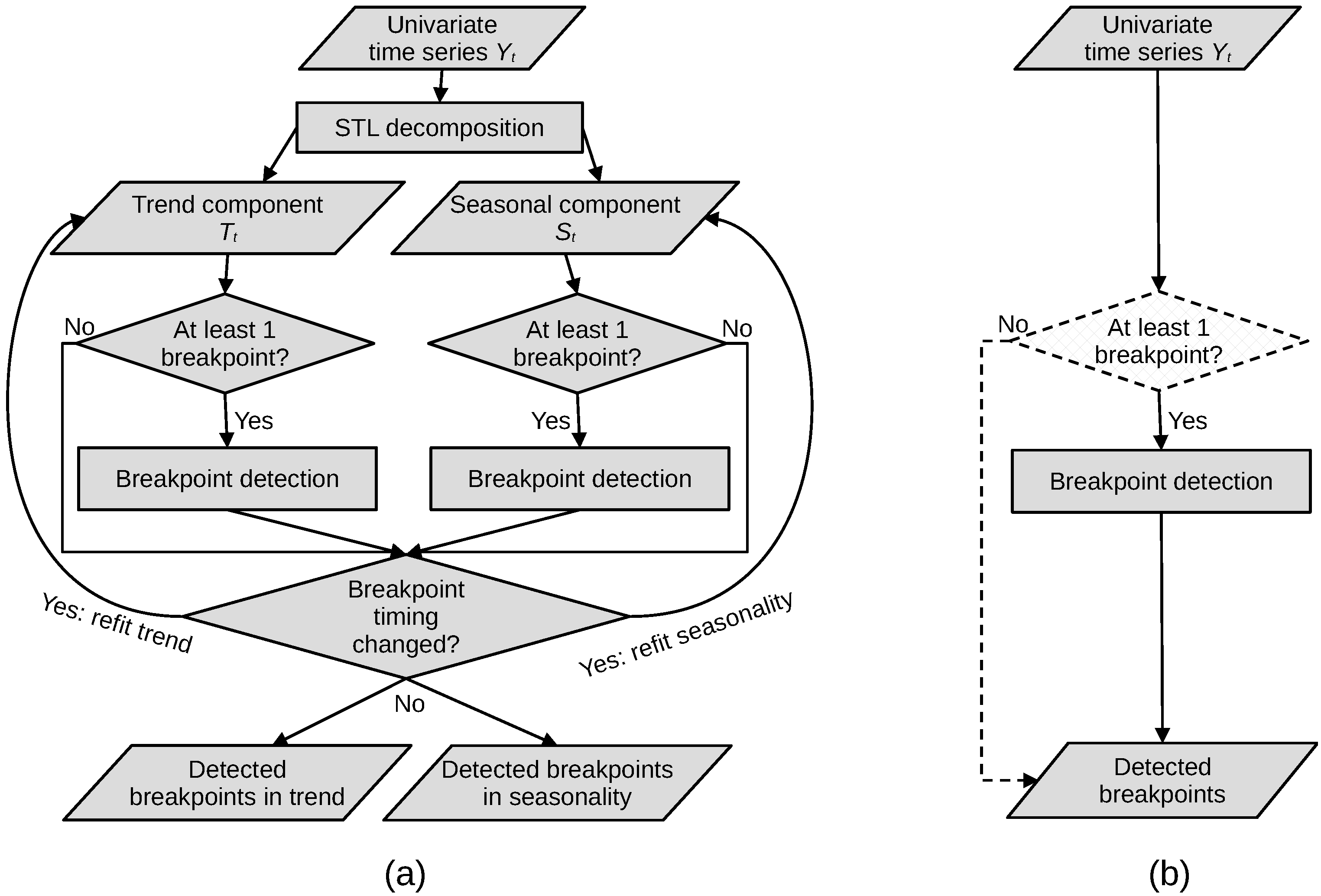
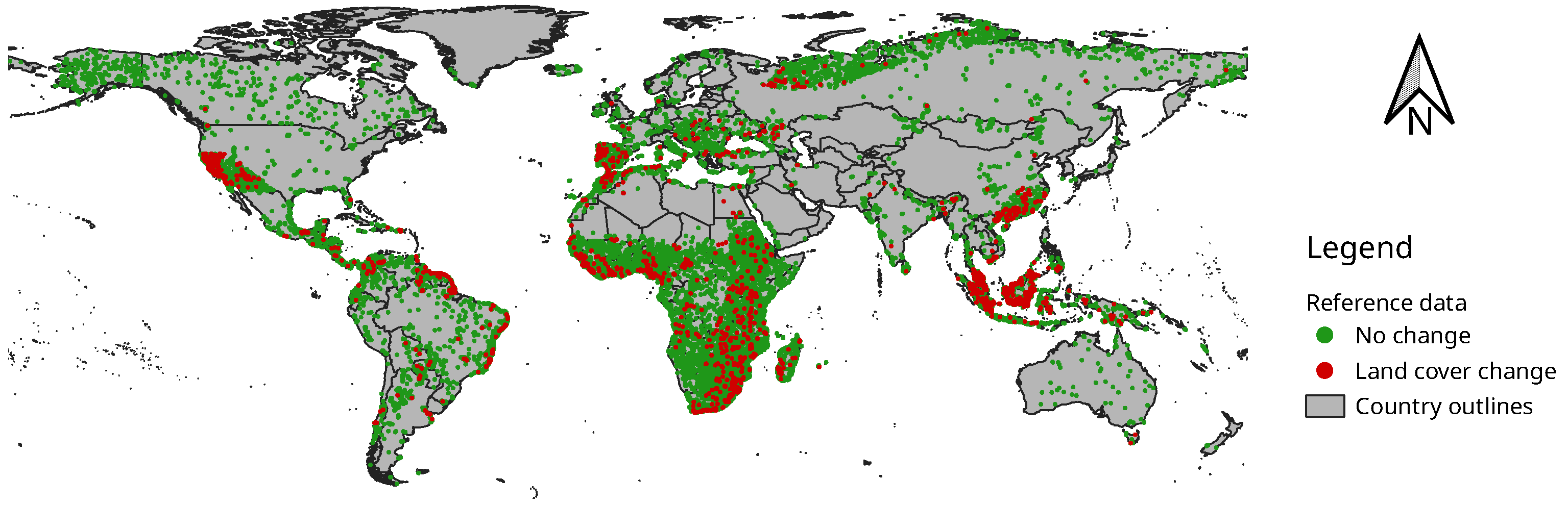
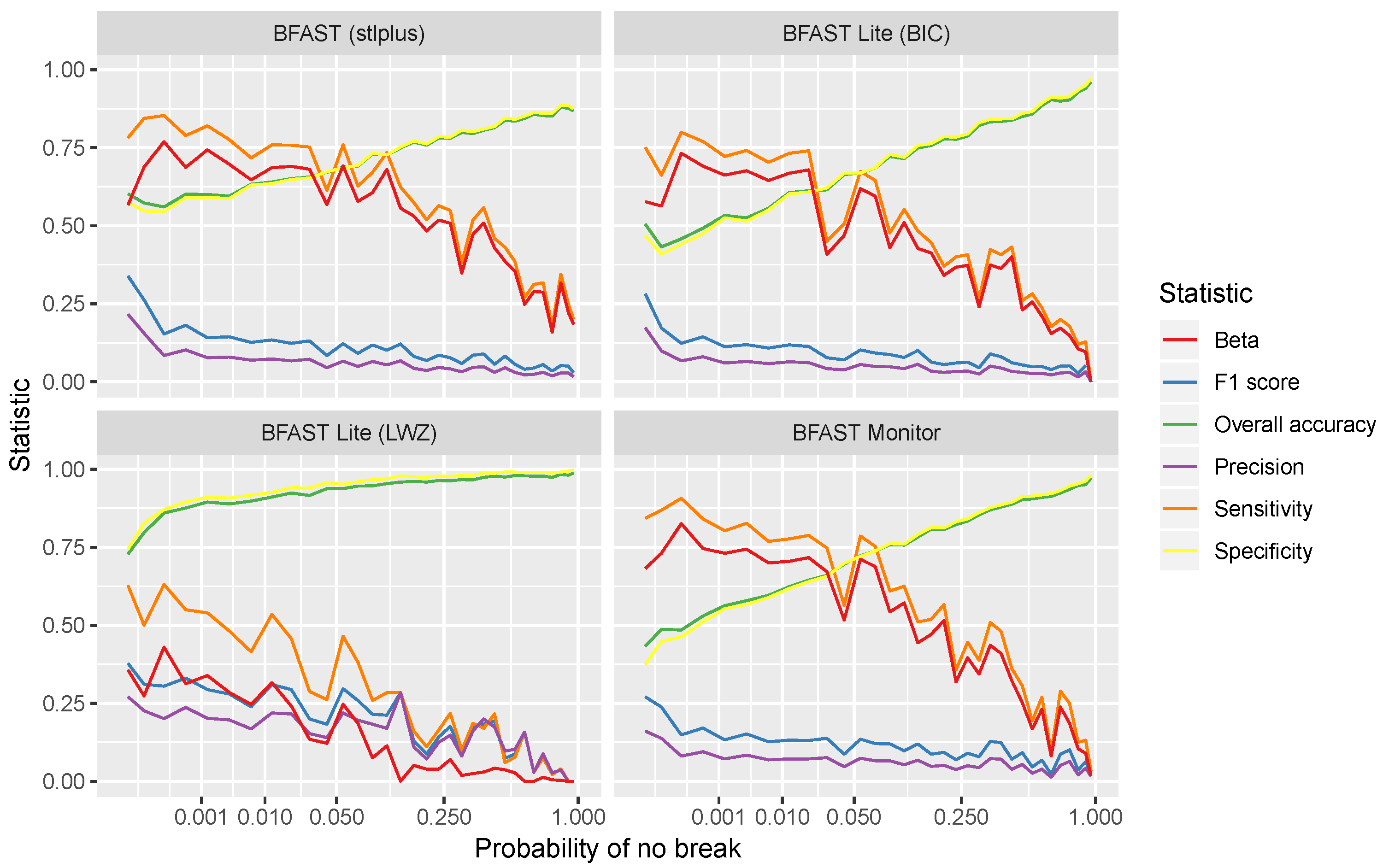
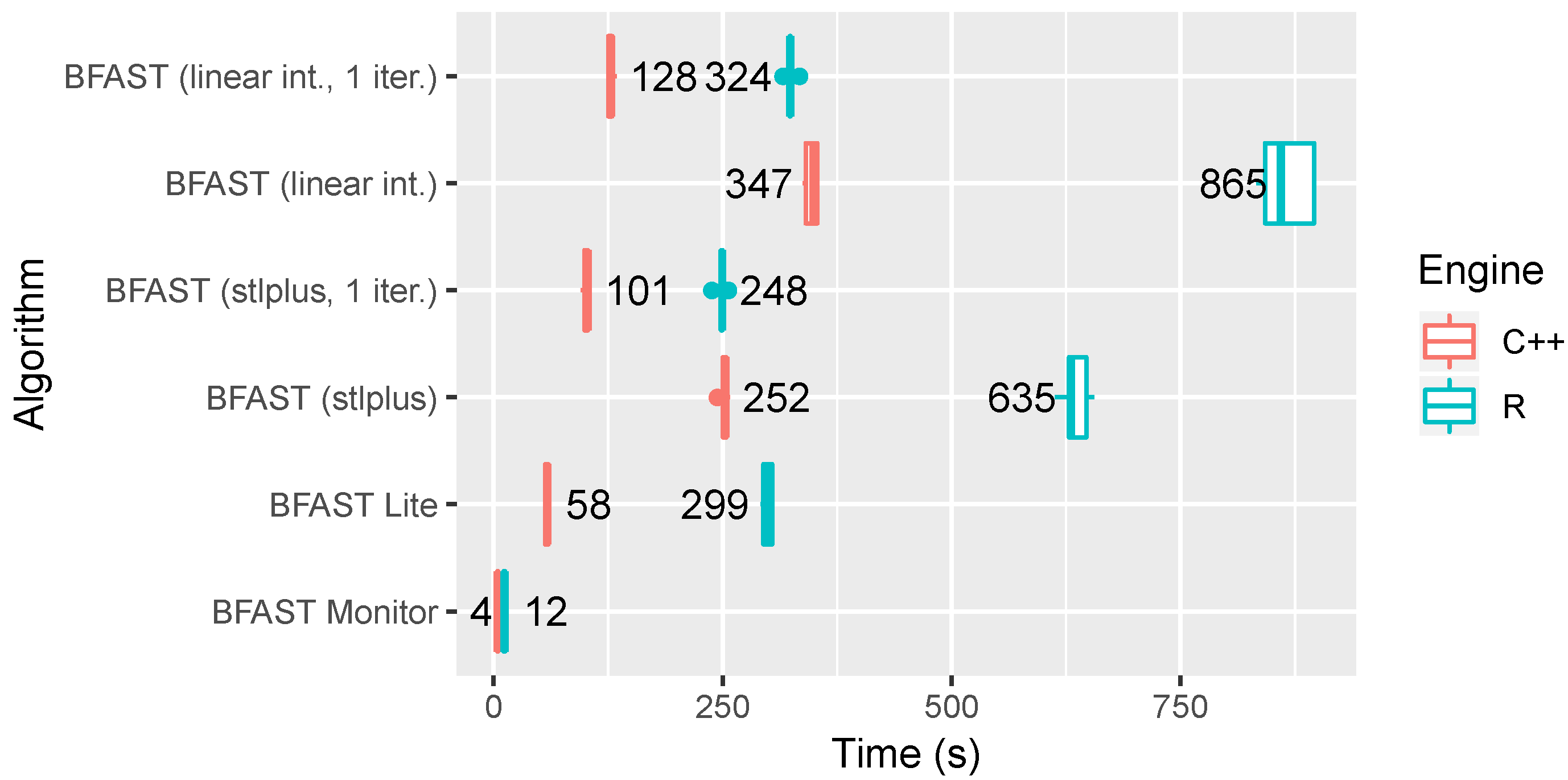
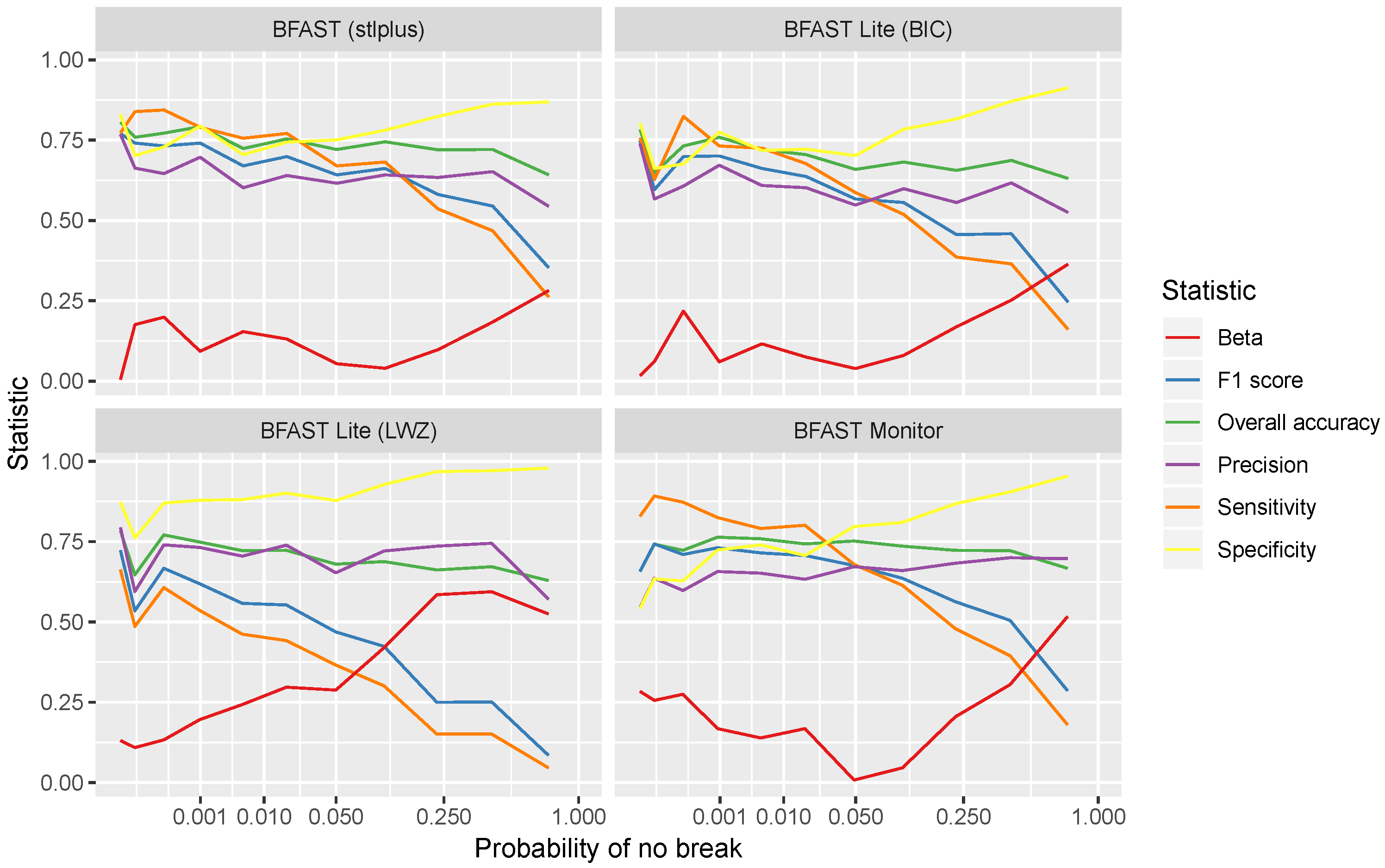
BFAST Lite is a newly proposed unsupervised time series change detection algorithm that is derived from the original BFAST (Breaks for Additive Season and Trend) algorithm, focusing on improvements to speed and flexibility. The goal of the BFAST Lite algorithm is to aid the upscaling of BFAST for global land cover change detection. In this paper, we introduce and describe the algorithm and then compare its accuracy, speed and features with other algorithms in the BFAST family: BFAST and BFAST Monitor. We tested the three algorithms on an eleven-year-long time series of MODIS imagery, using a global reference dataset with over 30,000 point locations of land cover change to validate the results. We set the parameters of all algorithms to comparable values and analysed the algorithm accuracy over a range of time series ordered by the certainty of that the input time series has at least one abrupt break. To compare the algorithm accuracy, we analysed the time difference between the detected breaks and the reference data to obtain a confusion matrix and derived statistics from it. Lastly, we compared the processing speed of the algorithms using both the original R code as well as an optimised C++ implementation for each algorithm. The results showed that BFAST Lite has similar accuracy to BFAST but is significantly faster, more flexible and can handle missing values. Its ability to use alternative information criteria to select the number of breaks resulted in the best balance between the user’s and producer’s accuracy of detected changes of all the tested algorithms. Therefore, BFAST Lite is a useful addition to the BFAST family of unsupervised time series break detection algorithms, which can be used as an aid in narrowing down areas with changes for updating land cover maps, detecting disturbances or estimating magnitudes and rates of change over large areas.
Keywords: time series; land cover; change detection; BFAST; MODIS time series; land cover; change detection; BFAST; MODIS