Article

Evaluation and Correction of Elevation Angle Influence for Coastal GNSS-R Ocean Altimetry
School of Electronic and Information Engineering, Beihang University, Beijing 100191, China
*
Author to whom correspondence should be addressed.
Remote Sens. 2021, 13(15), 2978; https://doi.org/10.3390/rs13152978
Submission received: 9 June 2021 / Revised: 23 July 2021 / Accepted: 23 July 2021 / Published: 28 July 2021
(This article belongs to the Special Issue Applications of GNSS Reflectometry for Earth Observation II)

Abstract

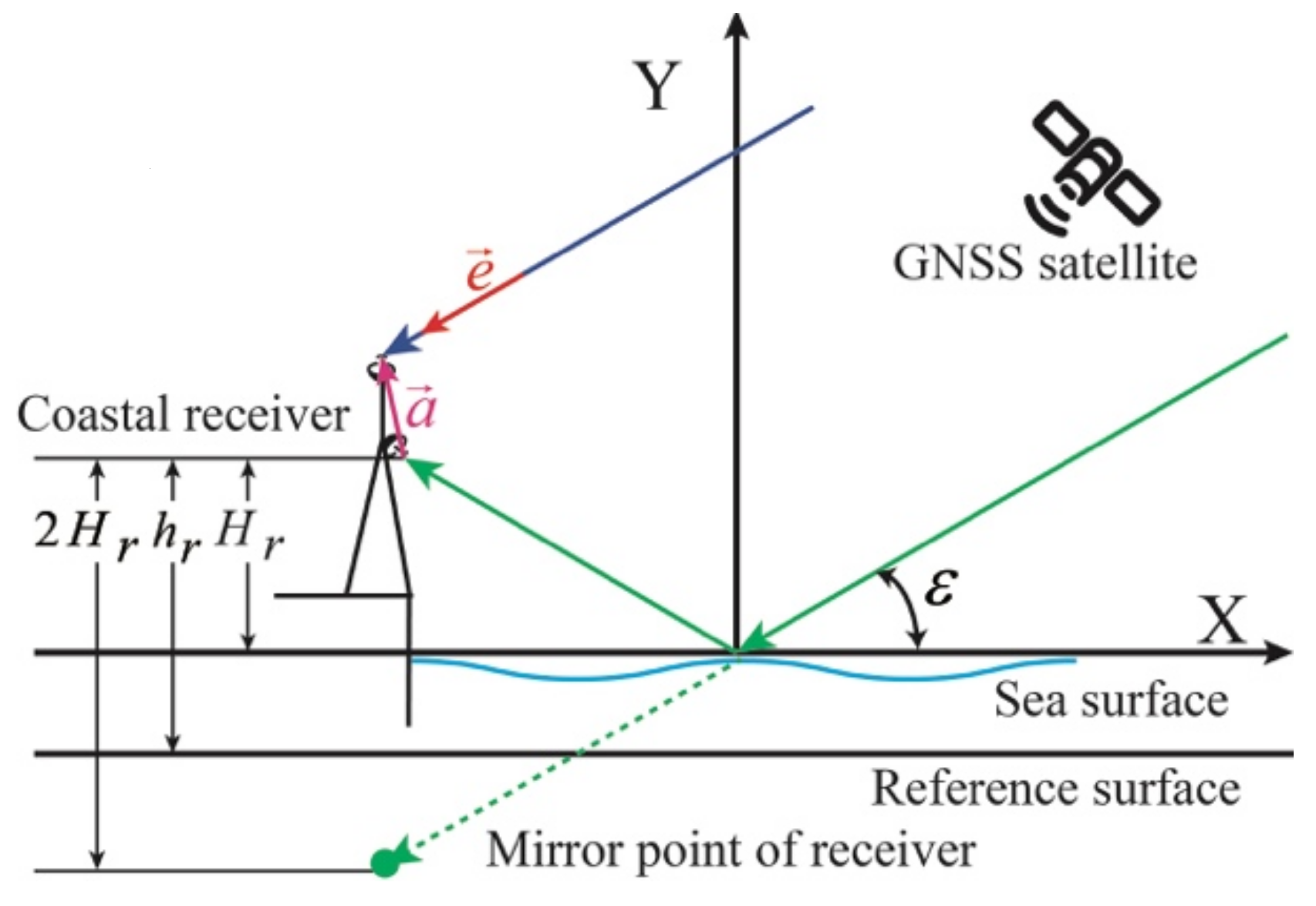
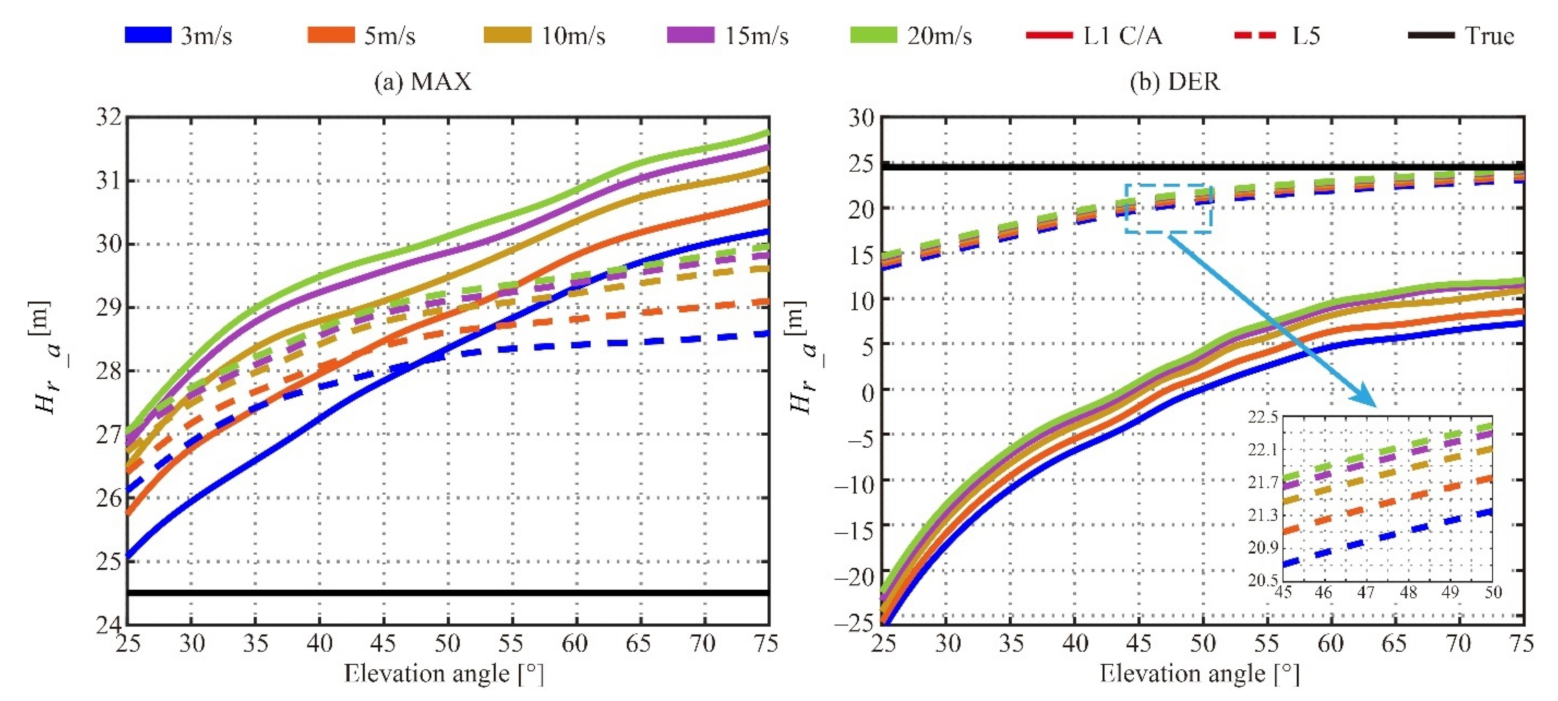
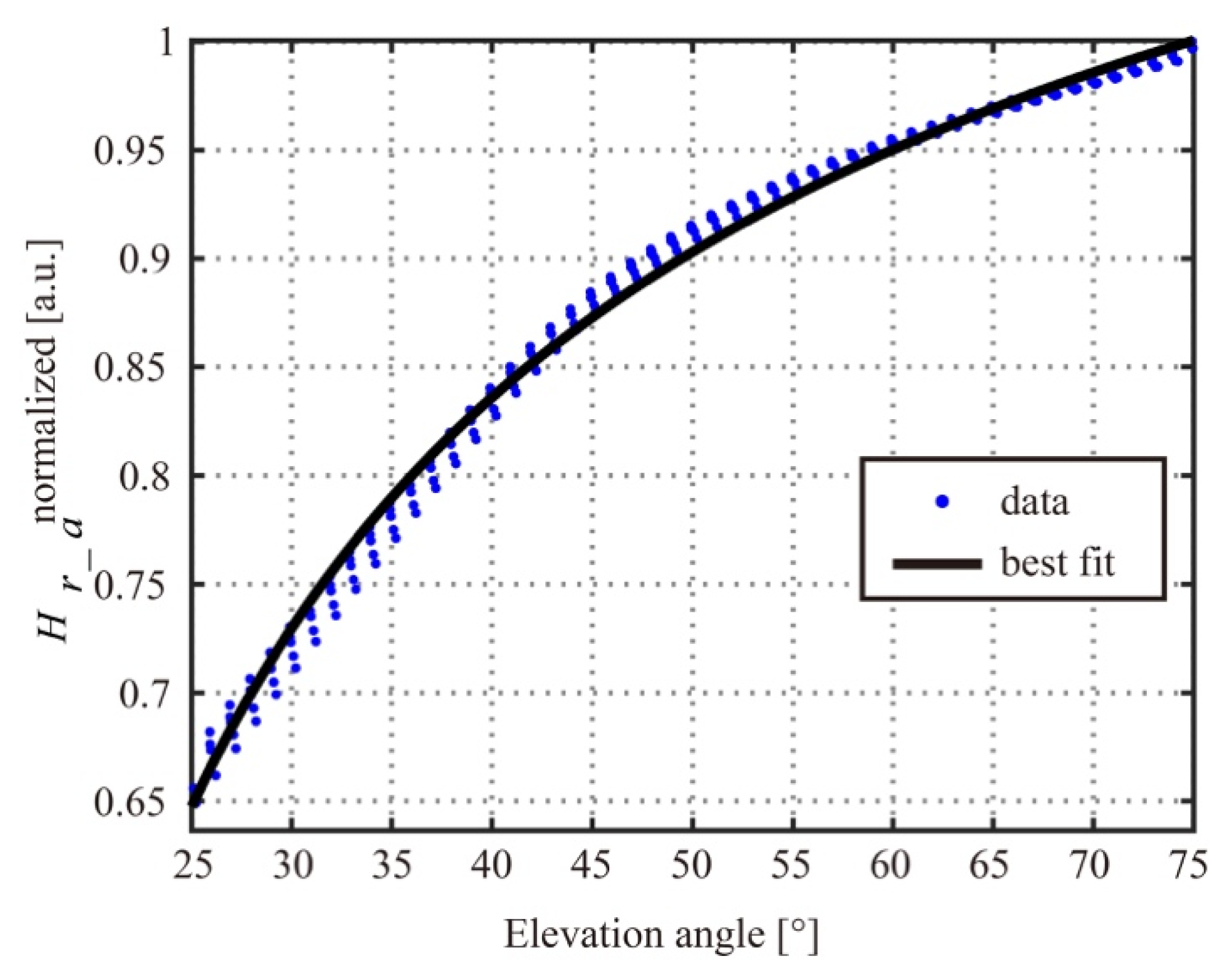
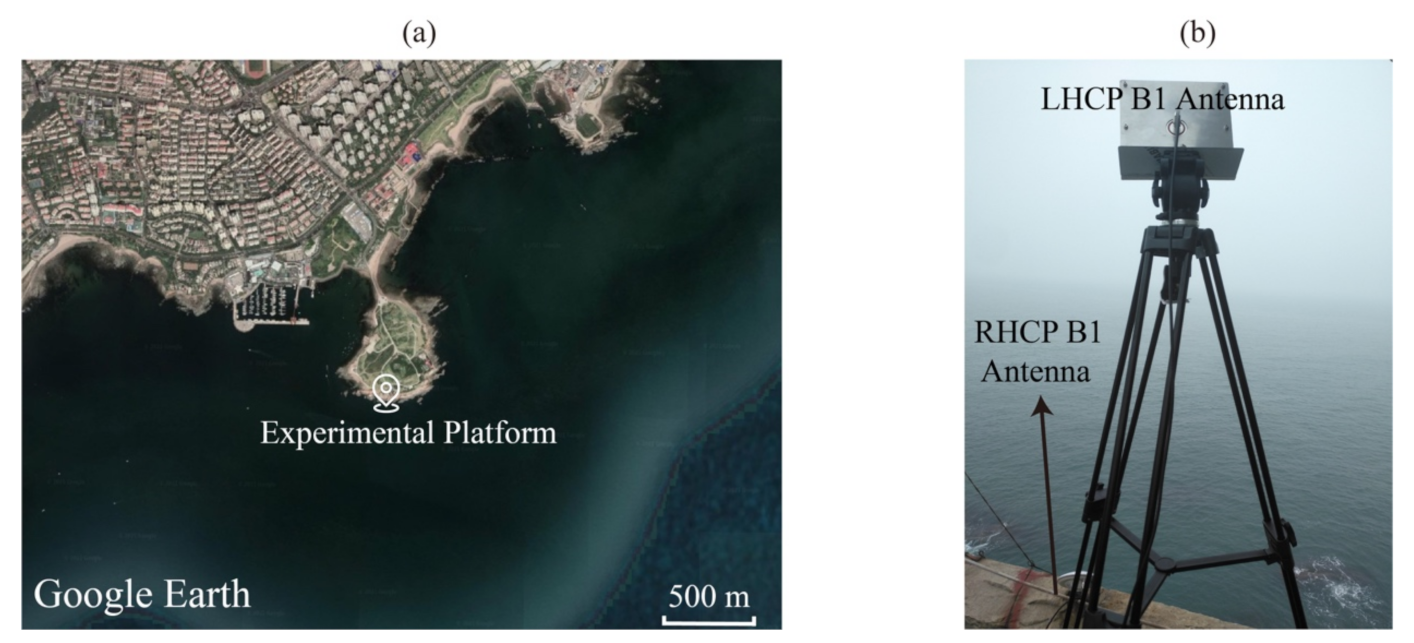
The elevation angle influence on coastal GNSS-R ocean code-based altimetry for GPS signals (L1 C/A and L5) and BDS B1 signals is investigated, and the corresponding correction method is presented. The study first focuses on the coastal ocean altimetry method, including the general experiment geometry and the code delay estimation using the single-point tracking algorithm. The peak power and the maximum first derivative are used as the location of the specular point. Then, the sensitivity of the height retrieved using the above coastal ocean altimetry method to elevation angle is analyzed based on the Z-V model. It can be seen that the elevation angle has a significant influence on the height retrieval, which will affect the precision of the coastal GNSS-R ocean altimetry. Finally, two correction methods, the model-driven method and the data-driven method, are proposed. The coastal altimetry experiments demonstrate that the correction methods can correct the elevation angle influence, and the data-driven method is more effective. The experimental results show that, after correcting the elevation angle influence, the code-based altimetry precision of the GPS L1 C/A signal, L5 signal, and BDS B1 signal can be up to the meter level, decimeter level (less than 4 decimeters), and meter level with respect to a reference tide gauge (TG) data set, respectively, without smoothing over time. These results provide information to guide the sea surface height retrieval using coastal GNSS-R, especially multi-satellite observation and GNSS signal with a higher chipping rate.
Keywords: global navigation satellite system reflectometry (GNSS-R); ocean altimetry; elevation angle influence; correction global navigation satellite system reflectometry (GNSS-R); ocean altimetry; elevation angle influence; correction