Article

Impacts of Human Activities on the Variations in Terrestrial Water Storage of the Aral Sea Basin

1
Shaanxi Key Laboratory of Earth Surface System and Environmental Carrying Capacity, College of Urban and Environmental Sciences, Northwest University, Xi’an 710127, China
2
Institute of Earth Surface System and Hazards, College of Urban and Environmental Sciences, Northwest University, Xi’an 710127, China
3
CAS Center for Excellence in Tibetan Plateau Earth Sciences, Beijing 100101, China
*
Author to whom correspondence should be addressed.
Remote Sens. 2021, 13(15), 2923; https://doi.org/10.3390/rs13152923
Submission received: 1 June 2021 / Revised: 8 July 2021 / Accepted: 23 July 2021 / Published: 25 July 2021

Abstract

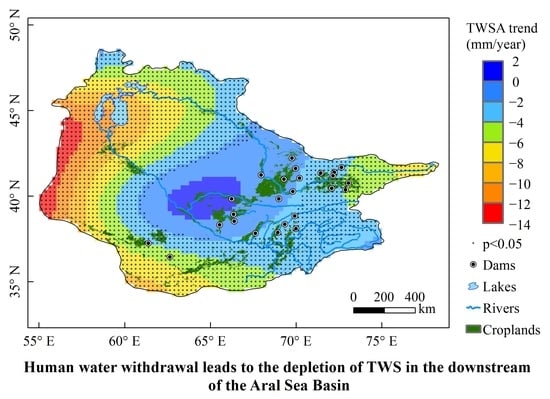
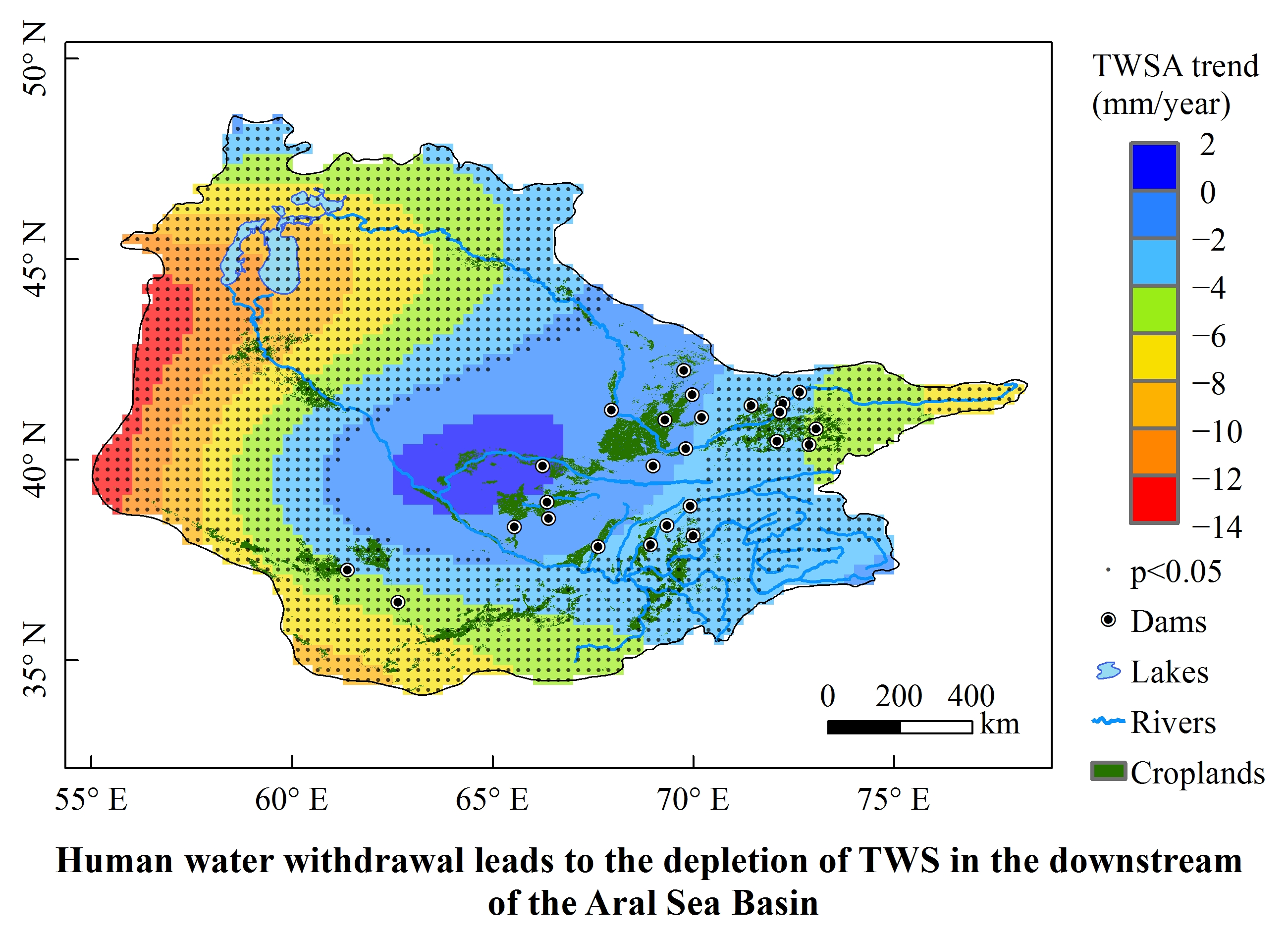
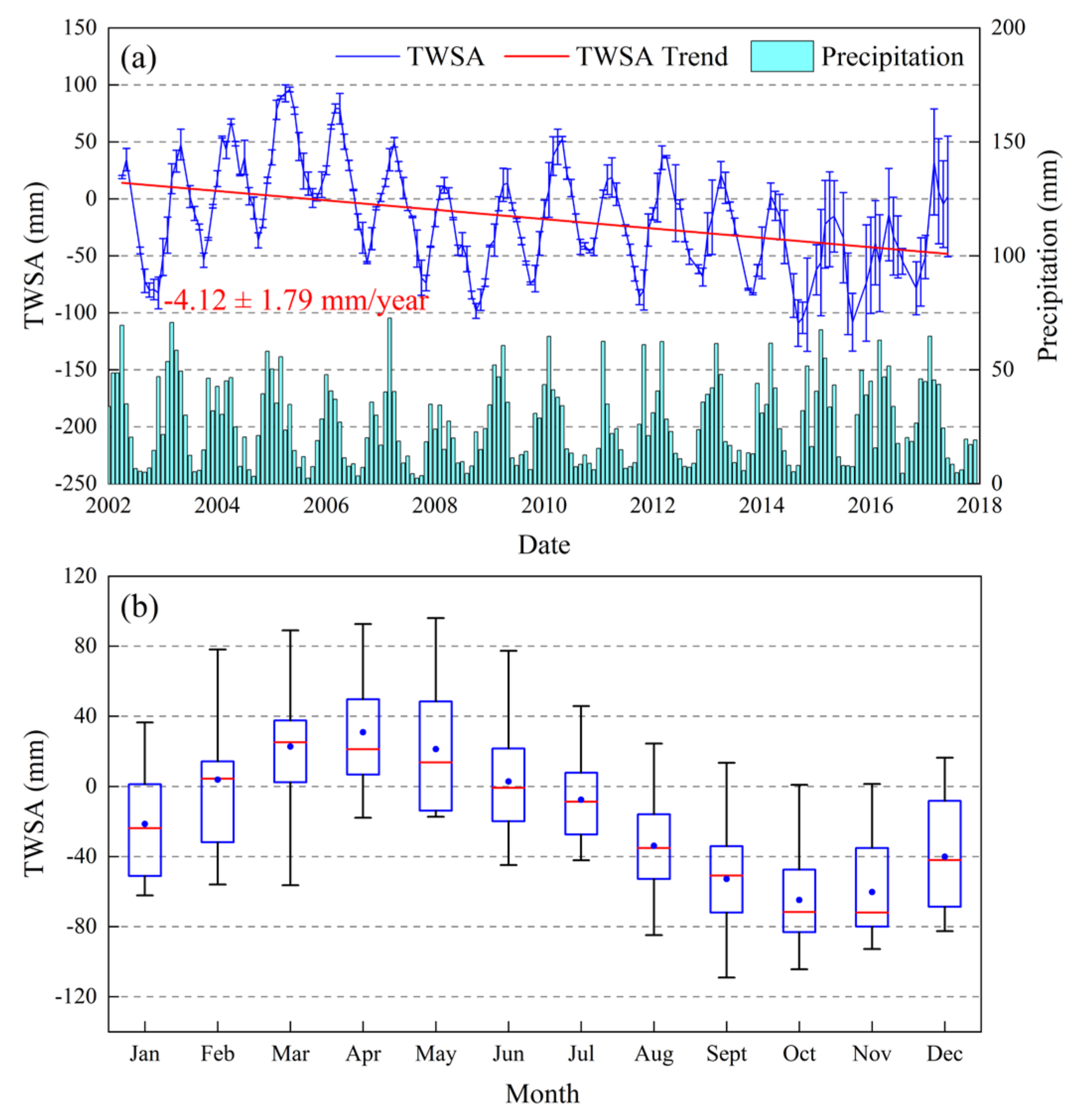
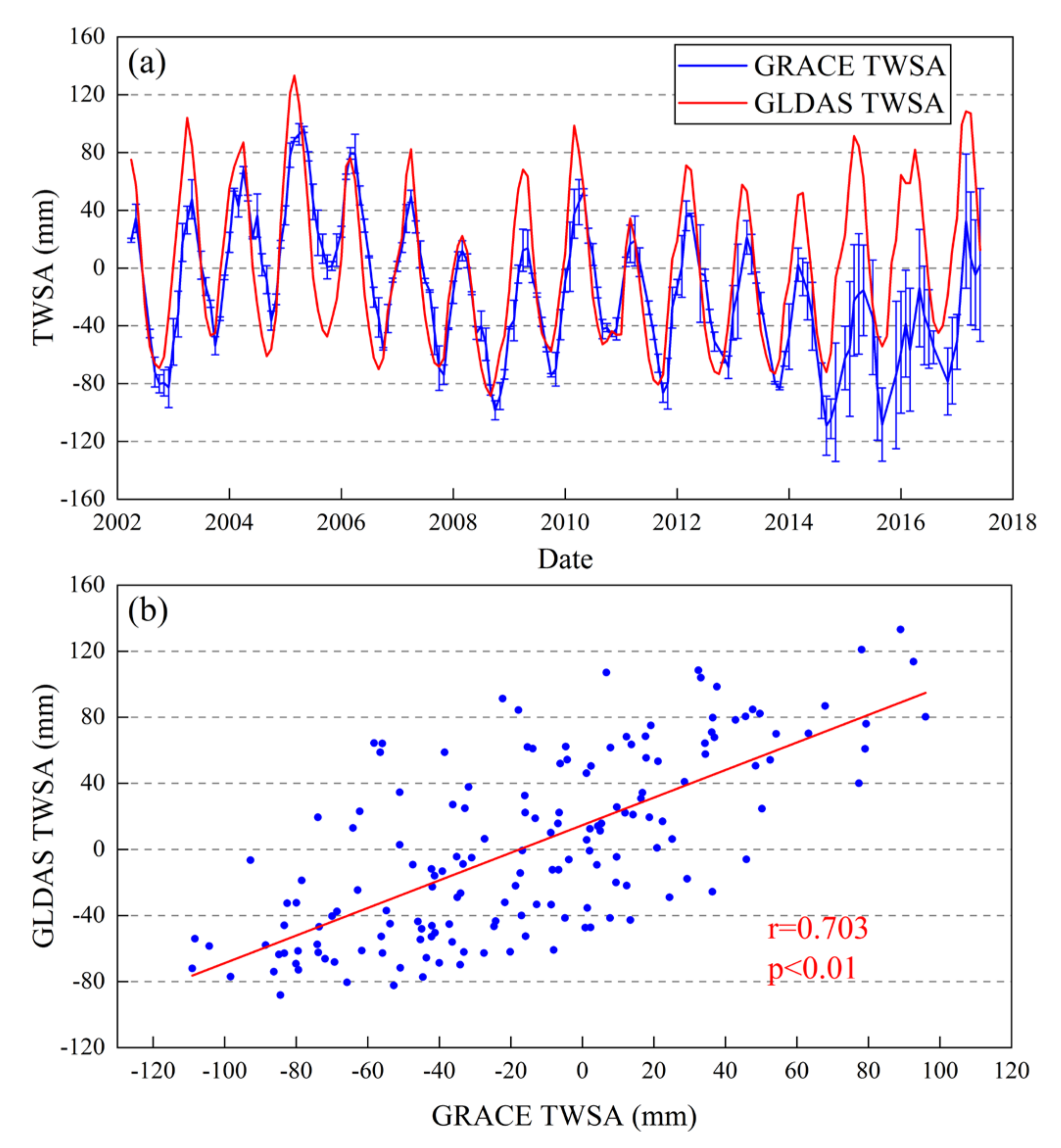
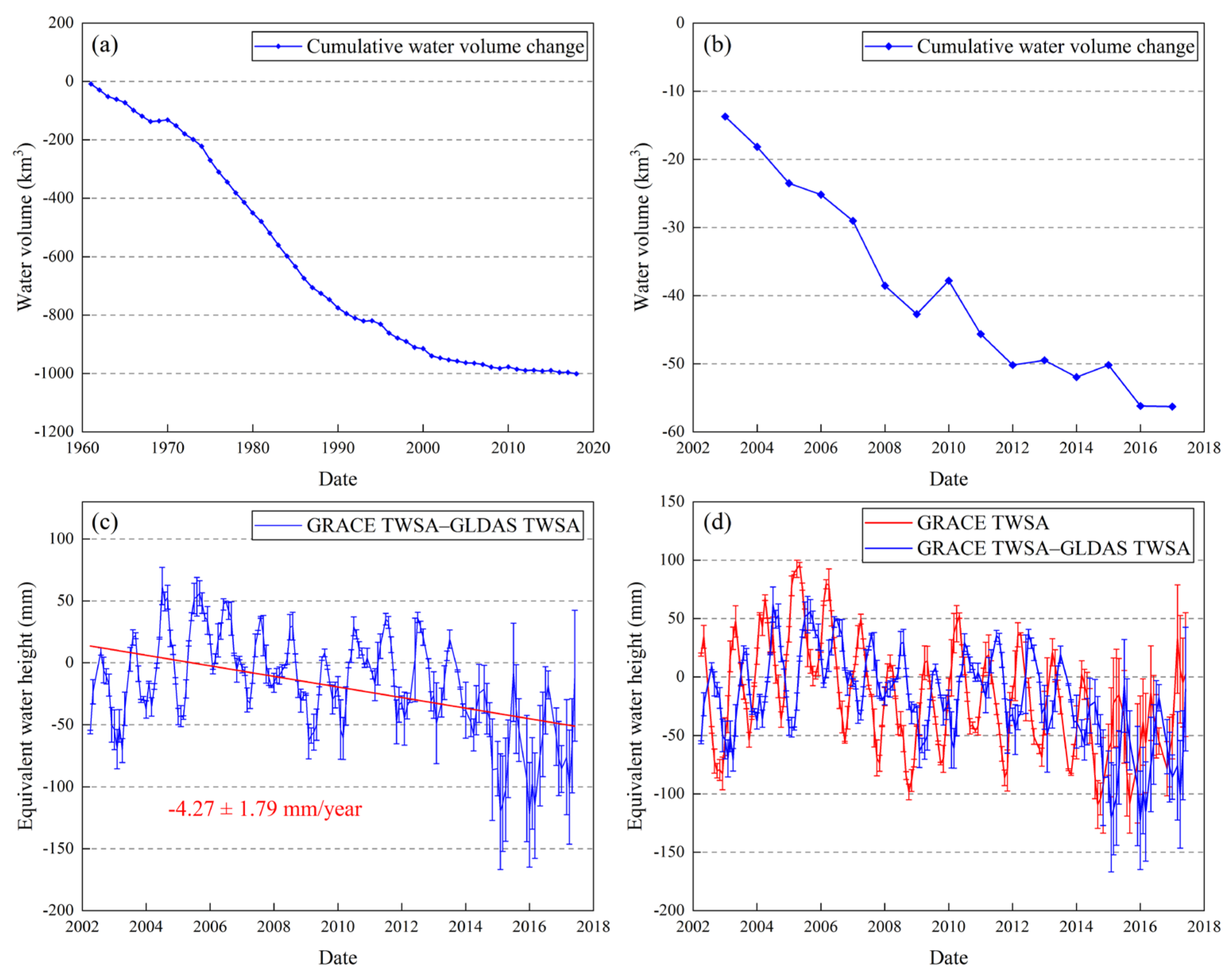
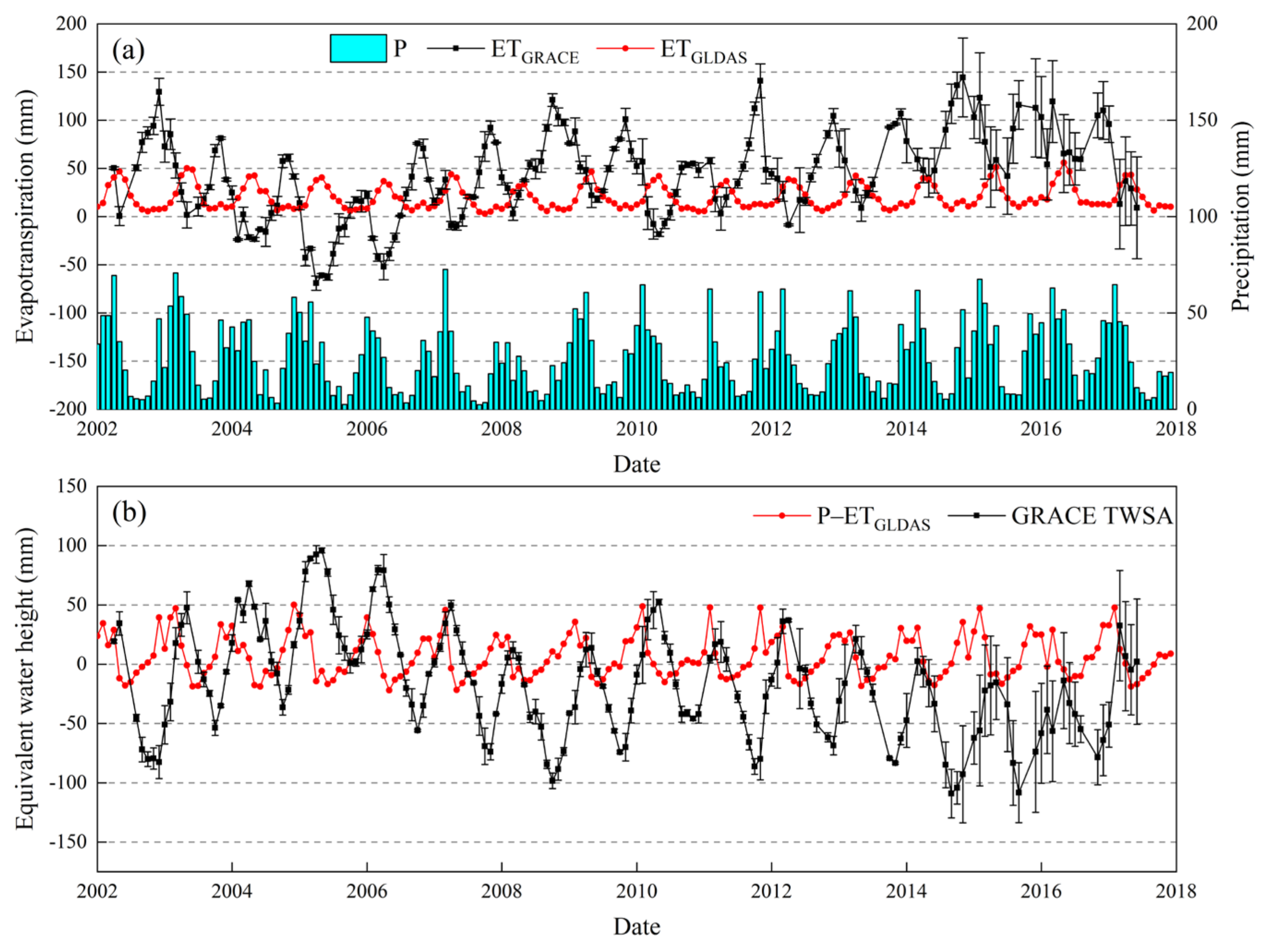
Assessing the impacts of human activities on the variations in terrestrial water storage (TWS) is essential for water resource management, particularly in regions like the Aral Sea Basin which suffers from severe water scarcity. In this study, the variations in TWS anomalies (TWSA) of the Aral Sea Basin during the period of April 2002 to June 2017 were analyzed using Gravity Recovery and Climate Experiment (GRACE) data and the Global Land Data Assimilation System (GLDAS) Noah model outputs. The impacts of human activities on TWS variations were further quantified through the variations in TWS components and the comparison of TWS obtained from GRACE and GLDAS. The results indicate that TWSA of the entire Aral Sea Basin derived from GRACE experienced a significant decreasing trend of 4.12 ± 1.79 mm/year (7.07 ± 3.07 km3/year) from 2002 to 2017. Trends in individual TWS components indicate that the reduction in TWS of the Aral Sea Basin was primarily attributed to surface water loss, followed by groundwater depletion, which account for ~53.16% and 11.65 ± 45.39 to 42.48 ± 54.61% of the total loss of TWS, respectively. Precipitation (P) and evapotranspiration (ET) both exhibited increasing trends, indicating that ET played a dominant role in TWS depletion from the perspective of water balance. The variations in ET and TWS induced by human activities contributed ~45.54% and ~75.24% to those in total ET and TWS of the Aral Sea Basin, respectively.
Keywords: terrestrial water storage; GRACE; GLDAS; water balance; human activities terrestrial water storage; GRACE; GLDAS; water balance; human activities
Graphical Abstract