Article

Modeling and Evaluation of the Systematic Errors for the Polarization-Sensitive Imaging Lidar Technique


1
School of Optoelectronic Engineering and Instrumentation Science, Dalian University of Technology, Dalian 116024, China
2
School of Electronic Information, Wuhan University, Wuhan 430072, China
*
Author to whom correspondence should be addressed.
Remote Sens. 2020, 12(20), 3309; https://doi.org/10.3390/rs12203309
Submission received: 7 September 2020 / Revised: 7 October 2020 / Accepted: 9 October 2020 / Published: 12 October 2020
(This article belongs to the Special Issue Lidar Remote Sensing of Aerosols Observation)

Abstract

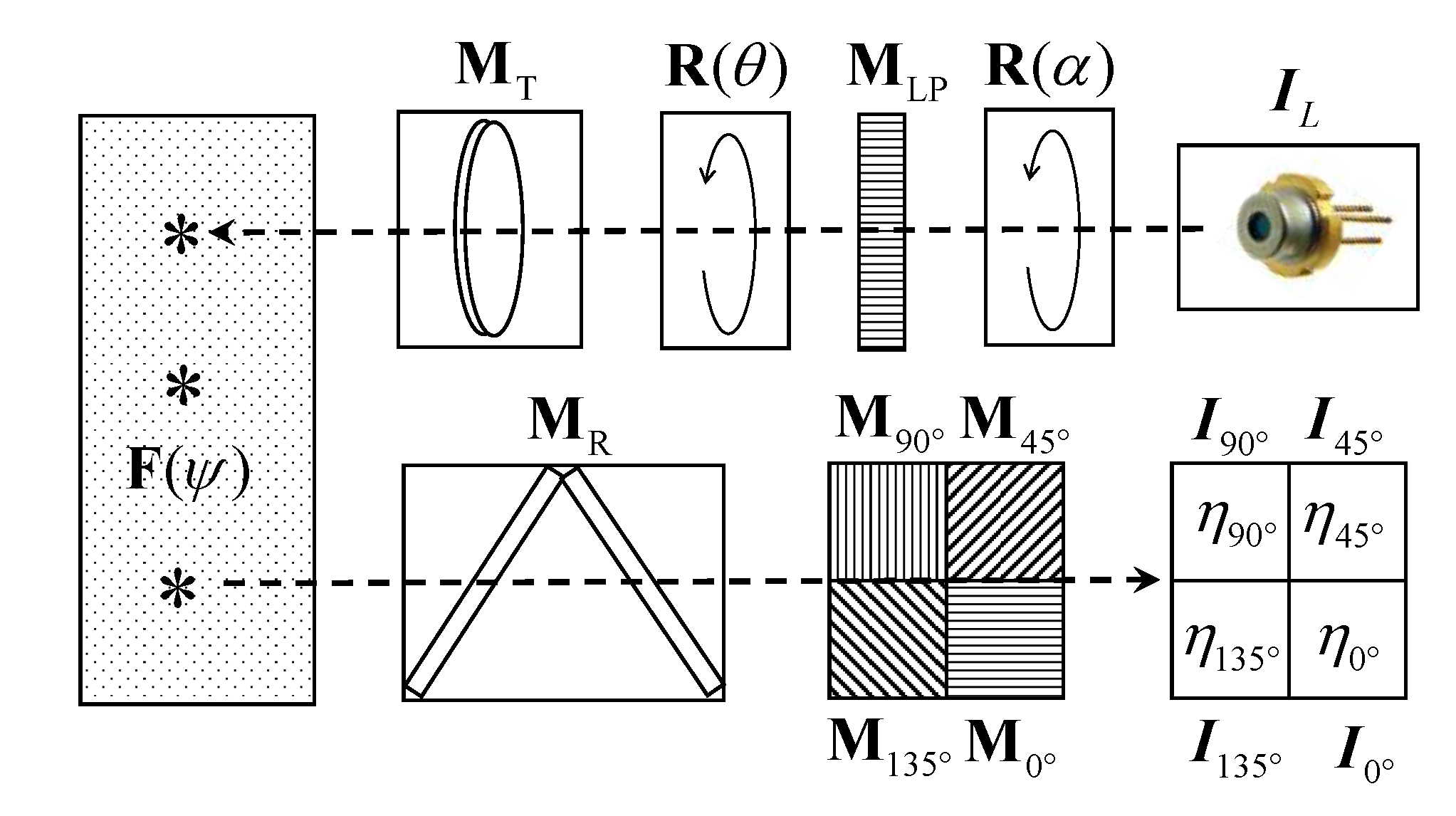
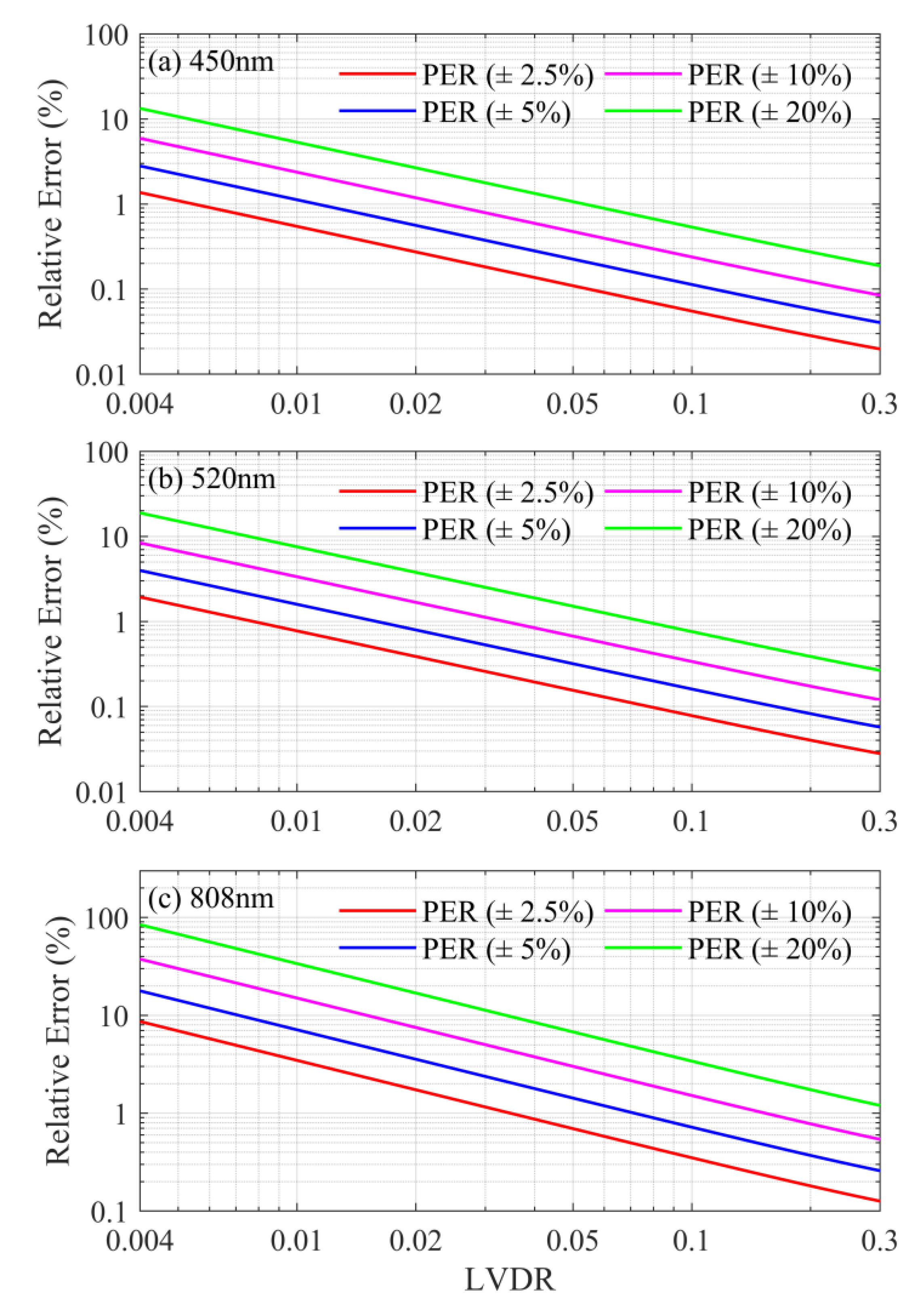
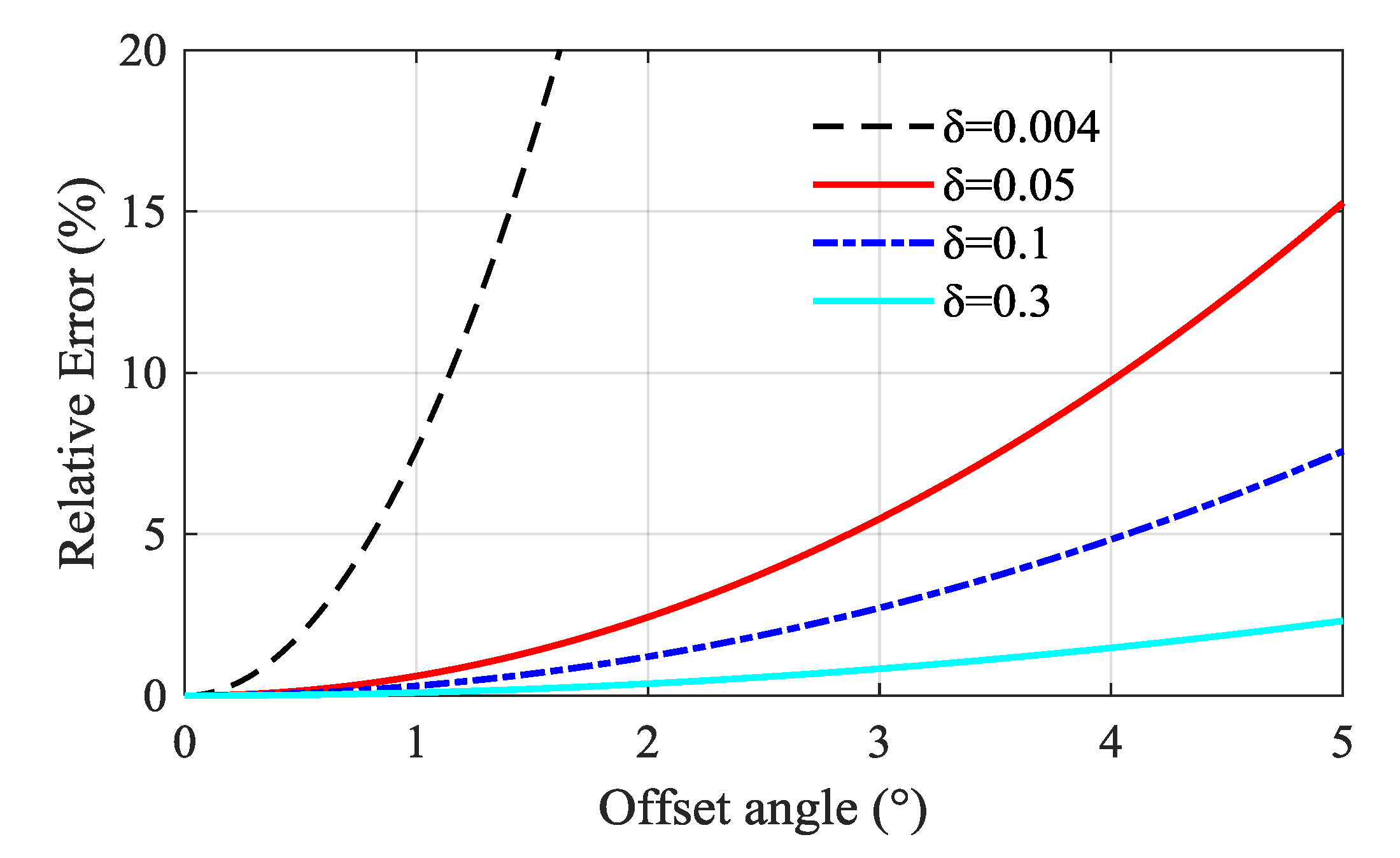
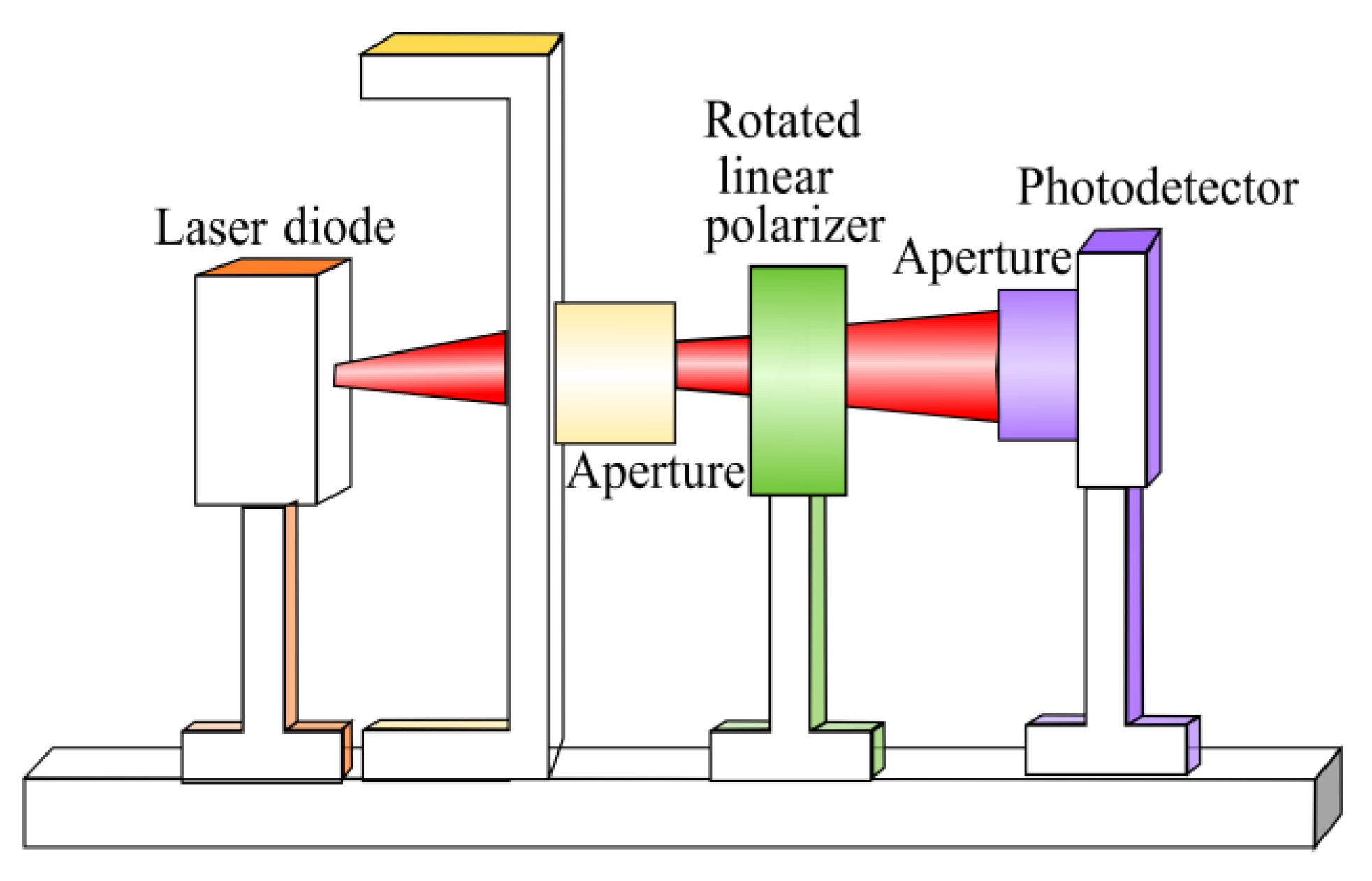
Polarization lidar plays a significant role in characterizing the properties of cirrus clouds, classifying aerosol types, retrieving aerosol microphysical properties, etc. However, the retrieval reliability and accuracy of the linear volume depolarization ratio (LVDR) of atmospheric particles rely on many system factors, requiring intensive attention and massive efforts on system calibrations and error evaluations, etc. In this work, a theoretical model based on the Stokes–Mueller formalism has been established for the newly developed polarization-sensitive imaging lidar (PSI-Lidar) technique. The systematic errors introduced by the degree of linear polarization (DoLP) of the emitted laser beam, the offset angle, and the quantum efficiencies (QEs) and polarization extinction ratios (PERs) of the polarization-sensitive image sensor, were evaluated in detail for the PSI-Lidar at 450, 520, and 808 nm. Although the DoLP of typical multimode laser diodes is not very high, the influence of non-ideal polarized laser beam on the LVDR can be reduced to less than 1% by employing a high-PER linear polarizer to improve the DoLP of the transmitted laser beam. Laboratory measurements have revealed that the relative QEs of the image sensor with four polarized directions are independent of the total illumination intensity and indicate a good consistency with the factory relative QEs (less than 2% deviation). Meanwhile, the influence of the relative QEs on the LVDR can be well-calibrated from either experimental or factory relative QEs. Owing to the non-ideal PER of the polarization-sensitive image sensor, e.g., ≈74 at 808 nm, ≈470 at 450 nm, the crosstalk between received signals with different polarization states can significantly deteriorate the measurement accuracy for small LVDRs. A relative error of the LVDR less than 4% can be achieved at 450 and 520 nm with the LVDR varying from 0.004 to 0.3 for a PER uncertainty of ± 5%, by taking the polarization crosstalk effect into account. However, in order to achieve a relative error of less than 10% for a small atmospheric LVDR of 0.004 at 808 nm, the uncertainty of the PER should be less than ± 2.5%. The offset angle can be calculated based on the four polarized lidar signals and the PER values at the four polarization angles. It was found out that the retrieval error of the offset angle is less than 0.15° even with a large PER uncertainty (±20%), giving a negligible systematic error on the LVDR (less than 1%).
Keywords: polarization-sensitive imaging lidar; polarization-sensitive image sensor; Stokes vectors; Mueller matrix; systematic error; depolarization ratio; atmosphere; remote sensing polarization-sensitive imaging lidar; polarization-sensitive image sensor; Stokes vectors; Mueller matrix; systematic error; depolarization ratio; atmosphere; remote sensing
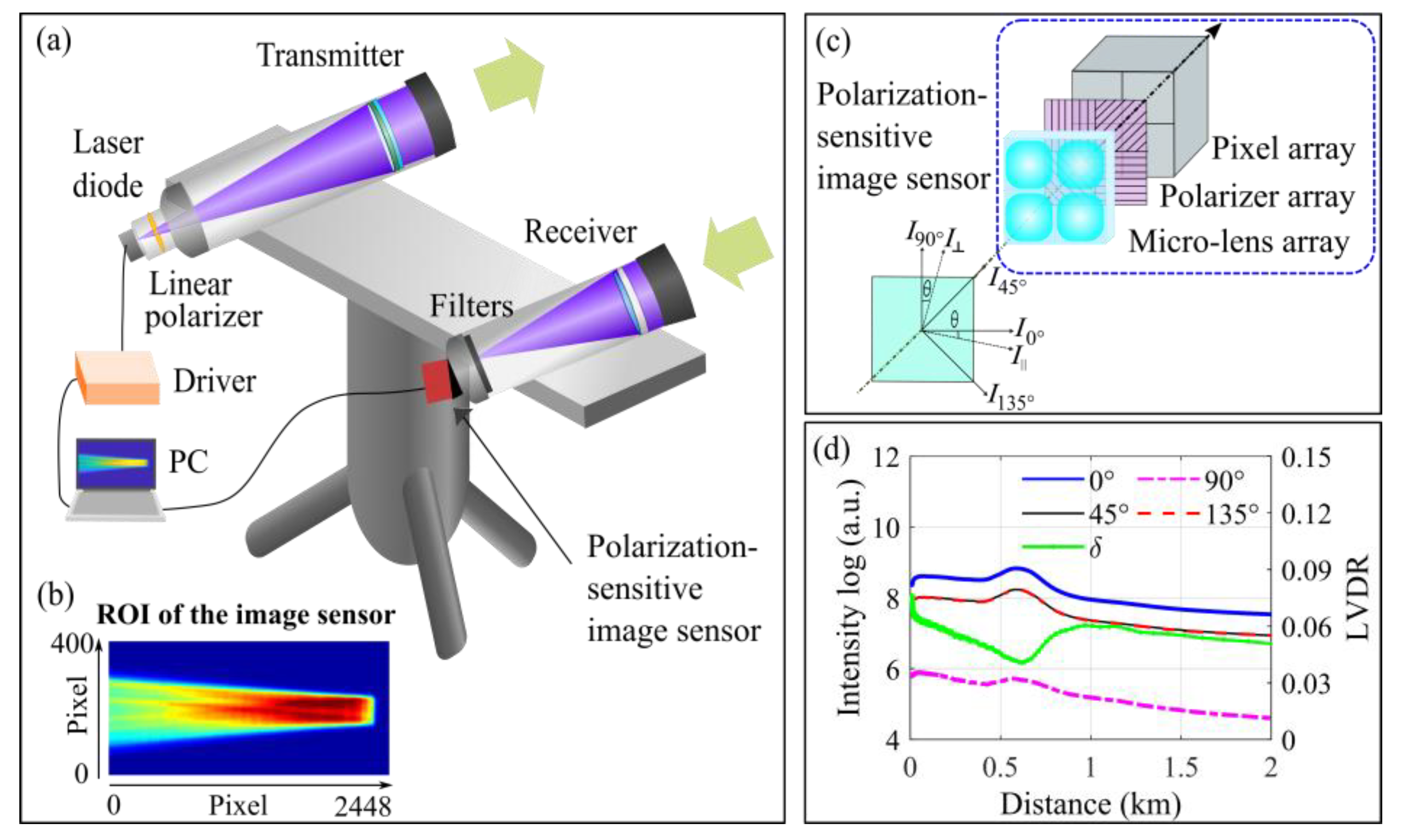
Graphical Abstract