Article

Multi-Scale Responses of Sediment Yield to Climate and Human Drivers in the Upper Yangtze River Basin


1
College of River and Ocean Engineering, Chongqing Jiaotong University, Chongqing 400074, China
2
Chongqing Institute of Green and Intelligent Technology, Chinese Academy of Sciences, Chongqing 401122, China
*
Author to whom correspondence should be addressed.
Sustainability 2026, 18(9), 4586; https://doi.org/10.3390/su18094586
Submission received: 9 February 2026 / Revised: 3 April 2026 / Accepted: 3 April 2026 / Published: 6 May 2026
(This article belongs to the Section Sustainability in Geographic Science)

Abstract

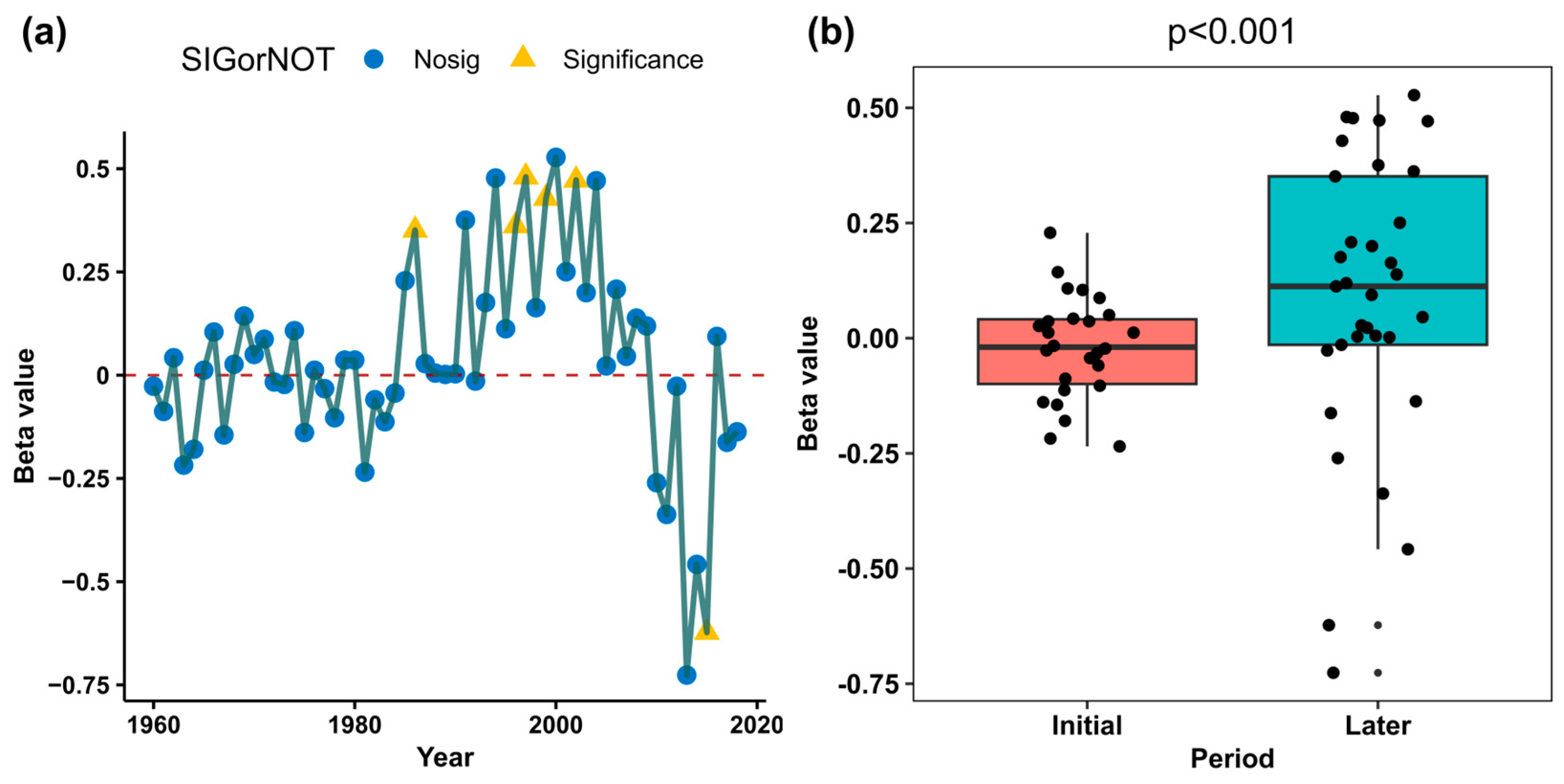
Global sediment reduction threatens deltaic sustainability and channel stability. While climatic and anthropogenic drivers are recognized, their cross-scale interactions remain poorly understood. This study investigated area-specific sediment yield (SSY) and its driving mechanisms across 14 stations (1.9 × 10⁴ to 1.0 × 10⁶ km2) in the Upper Yangtze River Basin (UYRB) from 1960 to 2018 using PLS-SEM and power-law scaling. Results show that by 2018, reservoir capacity reached 165.5 billion m3, regulating 38% of annual runoff. SSY significantly declined at 12 of 14 stations, with abrupt change points clustering around 1985. We found that intensive human interventions have fundamentally restructured the natural scale dependency of SSY, with the scaling exponent (β) shifting from a stable near-zero value to violent fluctuations (−0.2 to 0.5). Temporally, the dominant driver transitioned from hydro-climatic factors to dam-induced regulation. Spatially, the “filtering effect” of dams intensified with increasing drainage area, whereas smaller watersheds remained disproportionately sensitive to extreme precipitation. This scale-based divergence reveals a critical vulnerability: while mega-dams mitigate sediment at the basin scale, smaller catchments face elevated risks of high sediment delivery under intensifying climate extremes. These findings provide evidence of human-induced scaling instability in a large river system and highlight the necessity of scale-sensitive governance to ensure geomorphic and ecological resilience worldwide.

1. Introduction

Ecological processes are inherently scale-constrained, and their sustainable management requires an intricate understanding of how these patterns evolve across spatial and temporal dimensions [1]. In fluvial systems, area-specific sediment yield (SSY, expressed as t km−2 a−1) is not merely a physical transport process but a vital ecological service that sustains downstream channel morphology, deltaic landforms, and biodiversity [2,3]. Globally, rivers discharge 15–20 billion tons of sediment annually, yet we are now in an era where anthropogenic restructuring has led to a 20.8% reduction in global sediment loads [4]. Such drastic shifts perturb land–ocean biogeochemical cycles and threaten the long-term resilience of coastal socio-ecological systems [5]. Therefore, elucidating the multi-scale variations in sediment yield is no longer just a geomorphic inquiry but an imperative for sustainable watershed governance.
The scale dependency of SSY, the relationship between sediment yield and drainage area (A) is a cornerstone for predicting sediment flux in ungauged basins and designing effective soil conservation policies [6,7]. In undisturbed alpine or hilly landscapes, such as parts of the Mediterranean and the Romanian Carpathians, SSY typically decreases with A (SSY-Ab, where b < 0) due to increased sediment storage in floodplains and decreasing hillslope gradients downstream [8,9]. Conversely, positive or non-monotonic SSY–A relationships have been reported in the Canadian Rockies and the Loess Plateau of China, where downstream channel erosion or catastrophic landslides decouple natural geomorphic linkages [9,10]. In the context of global change, it remains critically under-researched whether these scale relationships remain stable over time, particularly in regions where intensified land-use changes and hydraulic engineering have redefined the sediment transport regime.
Climate change and anthropogenic activities represent the dual pressures on the sustainability of fluvial systems [11]. Climate change, through the intensification of extreme precipitation (e.g., the 1.5–2.0 times increase in erosion risk predicted for some monsoon regions), accelerates the hydrological cycle and alters runoff erosivity [12,13]. Simultaneously, human-led nature-based solutions, such as afforestation, alongside engineering interventions like dam construction, have profoundly improved land degradation [14] and reshaped sediment connectivity [15]. Globally, over 50,000 large dams have been constructed, trapping approximately 25–30% of the global sediment flux. For instance, the Mississippi and Ebro rivers have seen sediment reductions of over 70% and 95%, respectively, due to reservoir sequestration [16]. Because these drivers, climate-induced supply and human-induced trapping, are themselves scale-dependent, understanding their shifting dominance across spatio-temporal windows is essential for achieving a synergy between hydropower development and ecological conservation.
The Yangtze River, Asia’s longest river, serves as a premier laboratory for studying these socio-ecological dynamics. Ranking fifth globally in annual water discharge (920 × 109 m3/a) and historically fourth in sediment load (0.48 × 10⁹ t/a), it exerts a profound influence on the East China Sea [17]. The Upper Yangtze River Basin (UYRB), which accounts for 70% of the river’s length, has transitioned from an area of severe soil erosion to a region defined by massive-scale ecological restoration (e.g., “Grain for Green”) and the world’s most extensive cascade hydropower schemes [18,19]. These interventions have turned the UYRB into a highly regulated system, offering a unique opportunity to examine how human activity alters the fundamental scaling laws of nature.
Despite significant progress in watershed hydrology and sediment research, several critical gaps remain in our understanding of sediment dynamics in highly regulated basins. While the scaling laws of SSY are a fundamental concept, most existing studies treat these relationships as static properties, largely ignoring how intensive anthropogenic interventions may cause these natural scaling laws to evolve or even reverse over decadal scales. To address these limitations, this study utilizes the UYRB as a representative site to investigate the cross-scale responses of sediment load to environmental and anthropogenic drivers. The primary objectives are: (1) to characterize the spatio-temporal evolution of SSY scale dependency, evaluating how intensive human interventions have shifted the geomorphic logic of the basin over time; (2) to quantify the divergent driving mechanisms of sediment load changes across different sub-basins; and (3) to identify scale-sensitive thresholds where human impacts (e.g., dam trapping) supersede climatic variability. Ultimately, this research seeks to bridge the gap between theoretical scaling laws and practical sustainability strategies, providing evidence-based insights for sediment management in large, human-impacted river basins globally.

2. Materials and Methods

2.1. Study Area

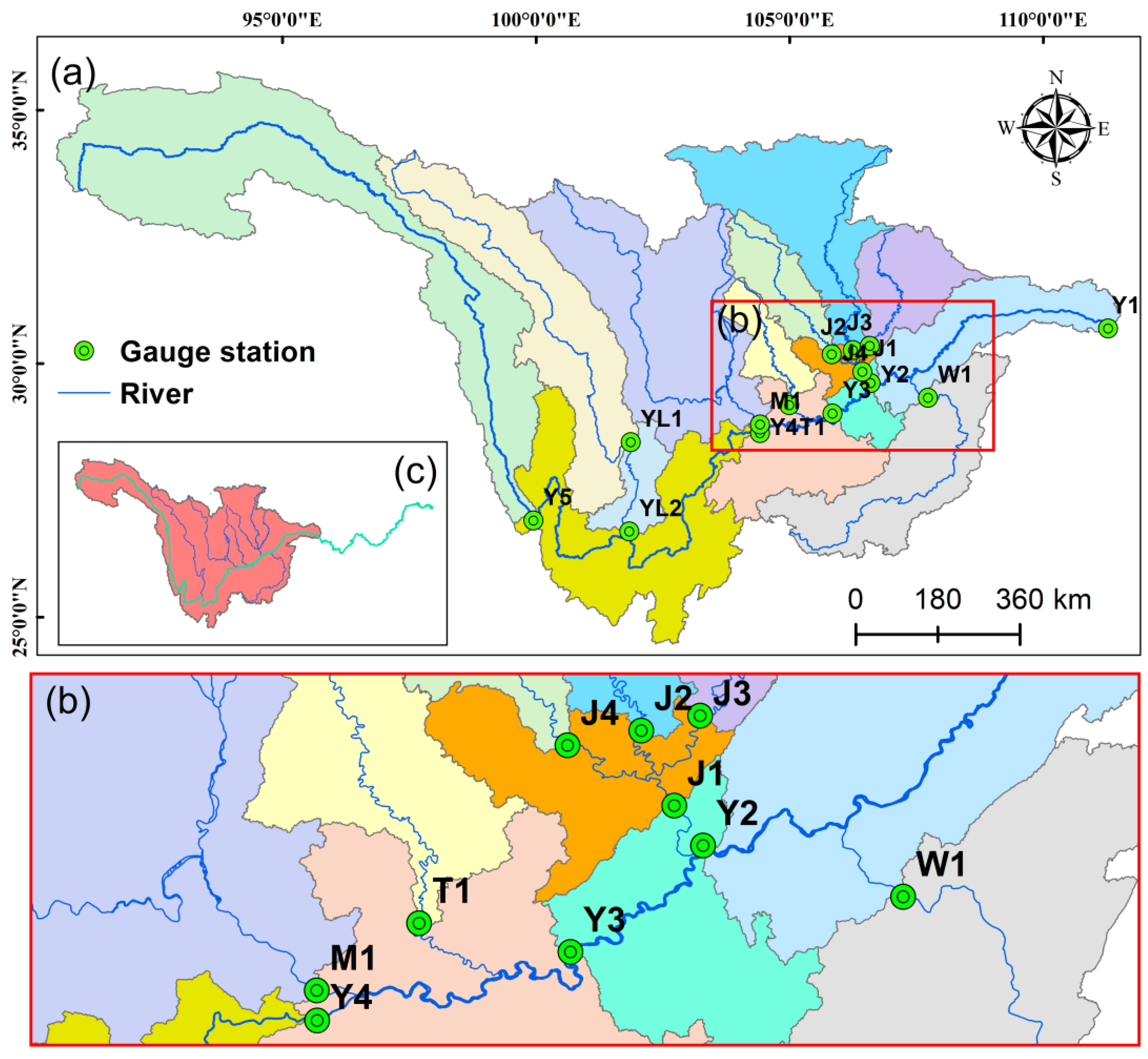
To investigate the scale-dependent driving mechanisms of sediment yield, 14 sub-basins with drainage areas ranging from 19,000 km2 to 1,000,000 km2 were selected within the Upper Yangtze River Basin (UYRB) (Table 1, Figure 1). These basins correspond to 14 key hydrological gauge stations. Five of these—Shigu, Pingshan, Zhutuo, Cuntan, and Yichang—are situated along the mainstream, capturing large-scale integrated signals. The remaining stations cover major tributaries, including four in the Jialingjiang River basin (the Yangtze’s largest tributary), two in the Yalongjiang River (Luning and Tongziling), and one at Fushun (Tuojiang River), which represents the smallest drainage area (19,854 km2). The selection of these 14 hydrological stations was based on several specific criteria to ensure a representative and robust cross-scale analysis. First, all selected stations provide continuous, long-term sediment and runoff records spanning 59 years (1960–2018), which is necessary for analyzing the transition from natural to human-regulated regimes. Second, the stations cover a wide range of drainage areas, from 1.9 × 10⁴ to 1.0 × 10⁶ km2, providing the necessary scale gradient to evaluate power-law scaling relationships. Finally, the stations represent basins with varying types and intensities of human impact, including those dominated by large-scale cascade reservoirs and those influenced by extensive ecological restoration programs.
The Yangtze River is China’s largest river and the world’s fifth-longest, originating on the Tibetan Plateau and flowing 6300 km to the East China Sea. The entire basin covers 1.8 million km2, supporting 40% of China’s population and GDP. The UYRB, our focus area, extends 4500 km from the headwaters to Yichang, characterized by rugged mountainous terrain. The Yichang station serves as the outlet of the UYRB, controlling a drainage area of 1.06 million km2. It records an average annual streamflow of 430 billion m3—approximately half of the entire basin’s runoff. Crucially, sediment flux at Yichang has undergone dramatic shifts following the commissioning of the Three Gorges Dam (TGD).
The UYRB is dominated by a subtropical monsoon climate, with a mean annual precipitation of 1108 mm, 70% of which occurs during the wet season (April–October). The region’s steep topographic gradient—dropping from ~6000 m on the Tibetan Plateau to ~200 m at Yichang—makes it the world’s most concentrated area for hydropower development. Historically, the UYRB suffered from severe soil erosion; however, extensive soil and water conservation projects and vegetation restoration programs since the 1980s have significantly mitigated this issue.

2.2. Data Collection

The study utilizes a multi-decadal dataset (1960–2018) comprising hydrological, climatic, and anthropogenic variables. Annual sediment load and streamflow were obtained from the Hydrology Bureau of the Changjiang Water Resources Commission. Specific Sediment Yield (SSY, t km−2 a−1) was calculated by normalizing the annual sediment load by the respective watershed area (delineated using ArcGIS 10.2). Daily precipitation and temperature (mean, max, min) from 82 national meteorological stations were provided by the China Meteorological Administration. The names and locations of these national meteorological stations can be found in Table S1 in the Supplementary Material. Basin-wide averages were computed using the Thiessen polygon method. The GIMMS NDVI-3g dataset (8 km resolution, 15-day interval) (http://ecocast.arc.nasa.gov) was used to quantify vegetation activity. Despite its coarse resolution, it remains the most robust long-term record for vegetation analysis. Dam information (location, capacity, operation date) was compiled from Ministry of Water Resources bulletins. Dams were categorized by storage capacity into small (105 to 107 m3), medium (107 to 108 m3), and large (>108 m3).

2.3. Methods

2.3.1. Trend and Change Point Detection

The non-parametric Mann–Kendall (MK) test and Theil–Sen median estimator were employed to detect monotonic trends and their magnitudes in SSY and driving factors. To identify the timing of structural shifts in SSY, the Pettitt test was applied. Based on the identified change points (most occurring around 1985), the time series was divided into two distinct periods: the initial period (1960–1985), representing low anthropogenic impact, and the later period (1986–2018), characterized by intensive human activity.

2.3.2. Partial Least Squares Structural Equation Modeling

To disentangle the complex direct and indirect effects of environmental and anthropogenic drivers on sediment load, we employed partial least squares structural equation modeling (SEM). SEM is particularly advantageous for fluvial research as it allows for the partitioning of causal influences into direct and indirect pathways and facilitates the comparison of relative effect strengths between latent variables.
First, we constructed a conceptual metamodel based on a priori theoretical knowledge of the Yangtze River’s hydrological processes. The model integrates six predefined causal pathways: (1) dam construction directly reduces runoff and sediment flux; (2) precipitation variability modulates both runoff and sediment load; (3) vegetation restoration inhibits soil erosion, thereby decreasing runoff and sediment yield; (4) rising temperatures increase evapotranspiration, potentially reducing runoff; (5) climate variables (precipitation and temperature) drive vegetation dynamics; and (6) runoff serves as the primary transport medium for sediment flux.
The driving factors were characterized using a multi-indicator approach to capture the multifaceted nature of environmental change (Table 2). Climate change was represented by annual precipitation (APRE) and mean temperature (TEM), supplemented by two specific erosive rainfall indices: the maximum consecutive 5-day precipitation (Rx5day) and the annual total of daily precipitation exceeding the 12 mm soil erosion threshold (R12). Vegetation activity was quantified using the median annual NDVI (MNDVI) to track long-term ecological restoration trends across the basin. Finally, dam interventions were characterized by both the cumulative reservoir surface area (DAMsa) and the total storage capacity (DAMsv), a dual-metric approach designed to capture the impact of sediment impoundment. The dam indices (DAMsa and DAMsv) for each gauging station were calculated as the cumulative sum of all upstream reservoirs located within the specific drainage area. For each dam, its capacity was incorporated into the annual time series starting from the exact year of its formal operation.
To test the PLS-SEM fitness designed in this study, we selected the coefficient of determination (R2) and the goodness-of-fit (GoF) indicators. To examine the temporal and spatial scale dependency of these mechanisms, we established 28 independent SEM models (14 stations × 2 periods). The initial period (1960–1985) and the later period (1986–2018) were used to contrast sediment dynamics under low and high anthropogenic intensities, respectively. By comparing the standardized path coefficients (analogous to partial correlation weights) across the 14 basins of varying sizes, we identified how the relative dominance of climatic and anthropogenic drivers evolves across both temporal stages and spatial scales.
The PLS-SEM was implemented using the R 4.4.1 package ‘plspm’. To ensure the stability and replicability of the results, the following algorithm settings were applied: a path weighting scheme was used for the inner model estimation, with a maximum of 300 iterations. To address potential multicollinearity between highly correlated drivers, particularly between ‘Precipitation’ and ‘Runoff’, we assessed the Variance Inflation Factor (VIF) for all structural pathways. All inner VIF values were confirmed to be below the conservative threshold of 3.0.

2.3.3. Temporal Evolution of SSY Scale Dependency

The spatial scale dependency of SSY is typically described by a power-law relationship with drainage area (A) [9]:
S S Y = α A β
where α is an empirical coefficient, and β is the scale coefficient. These coefficients were estimated using Ordinary Least Squares regression on log-transformed data. While previous studies often use long-term averages to fit this relationship, we fitted the equation for each year from 1960 to 2018. This approach allows us to analyze the temporal trajectory of the exponent β, thereby revealing how the scale dependency of SSY shifts under the influence of basin-wide environmental changes.

3. Results

3.1. Spatio-Temporal Variations in Climate and Human Activities

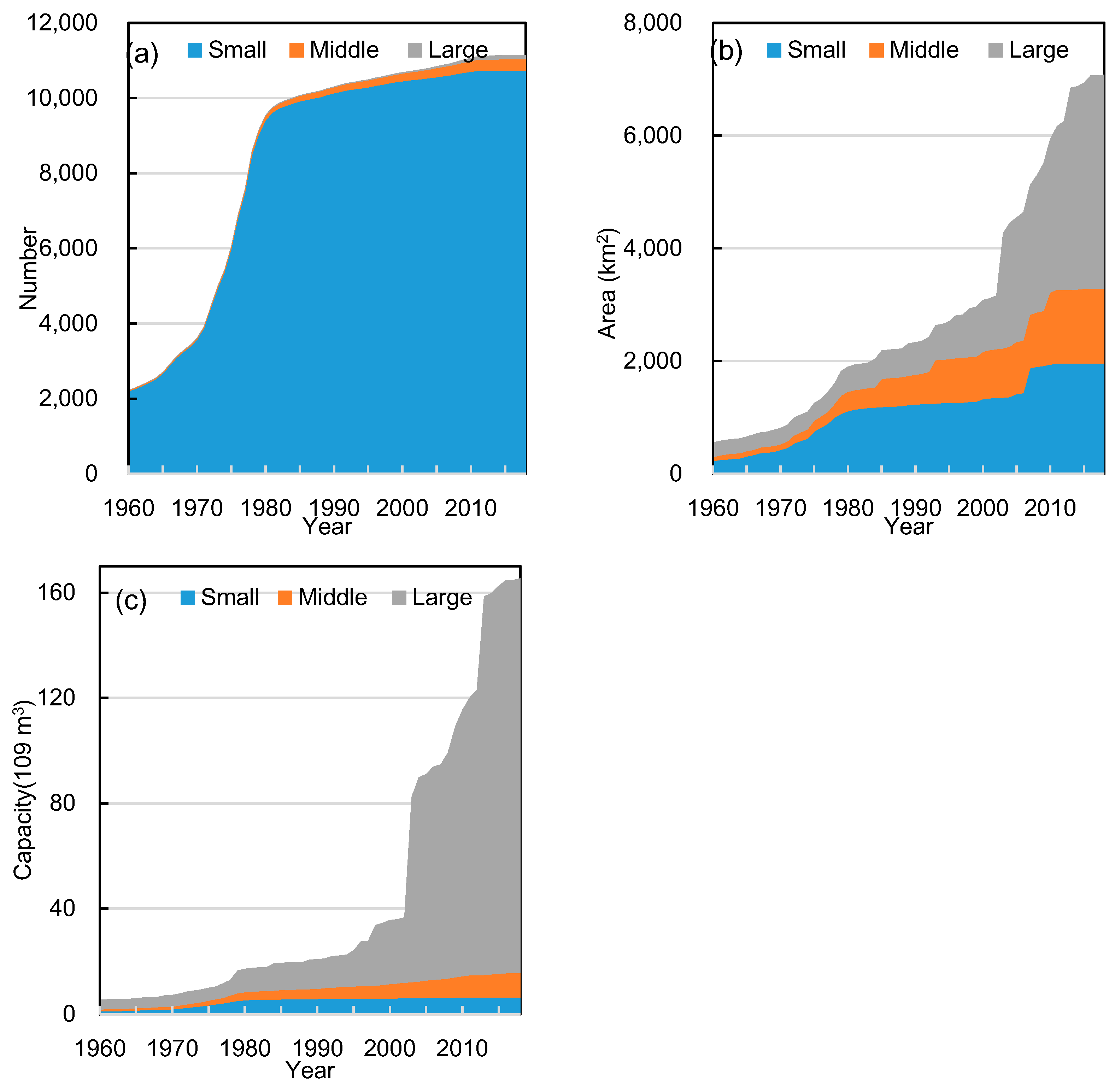
The UYRB underwent significant anthropogenic and climatic shifts between 1960 and 2018. Reservoir development exhibited a distinct phased characteristic (Figure 2): small reservoirs dominated the early stage (1950–1985), accounting for 90% of the total number but only 19.5 billion m3 in storage capacity (4.5% of annual runoff). Conversely, large-scale reservoirs surged after 2000, with 71% of them commencing operation in this period. By 2018, total storage capacity reached 165.5 billion m3 (38% of annual runoff), though large dams comprise only 0.7% of the total number. This highlights that while small reservoirs are numerous, large dams are the primary regulators of the basin’s water-sediment balance.
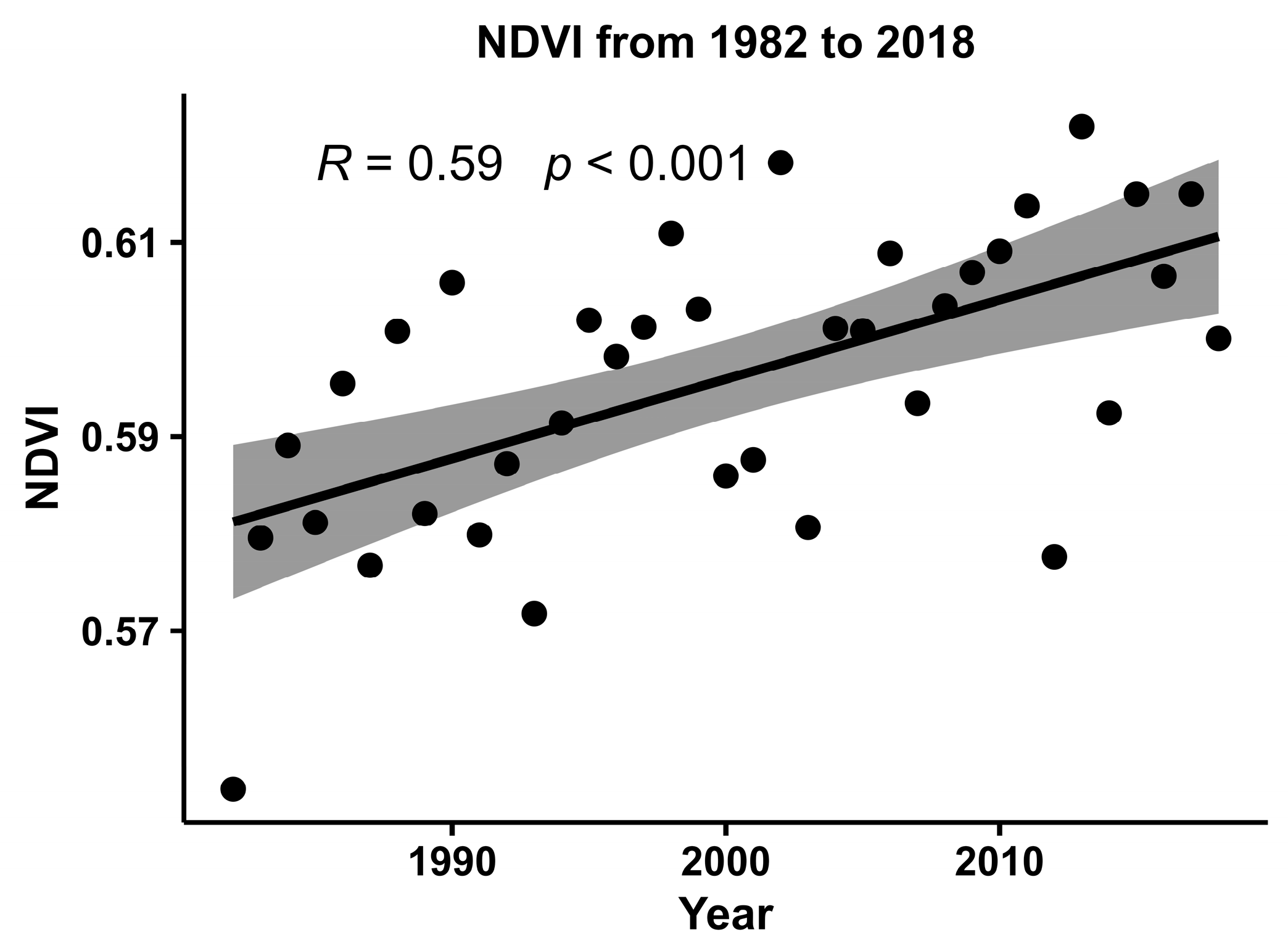
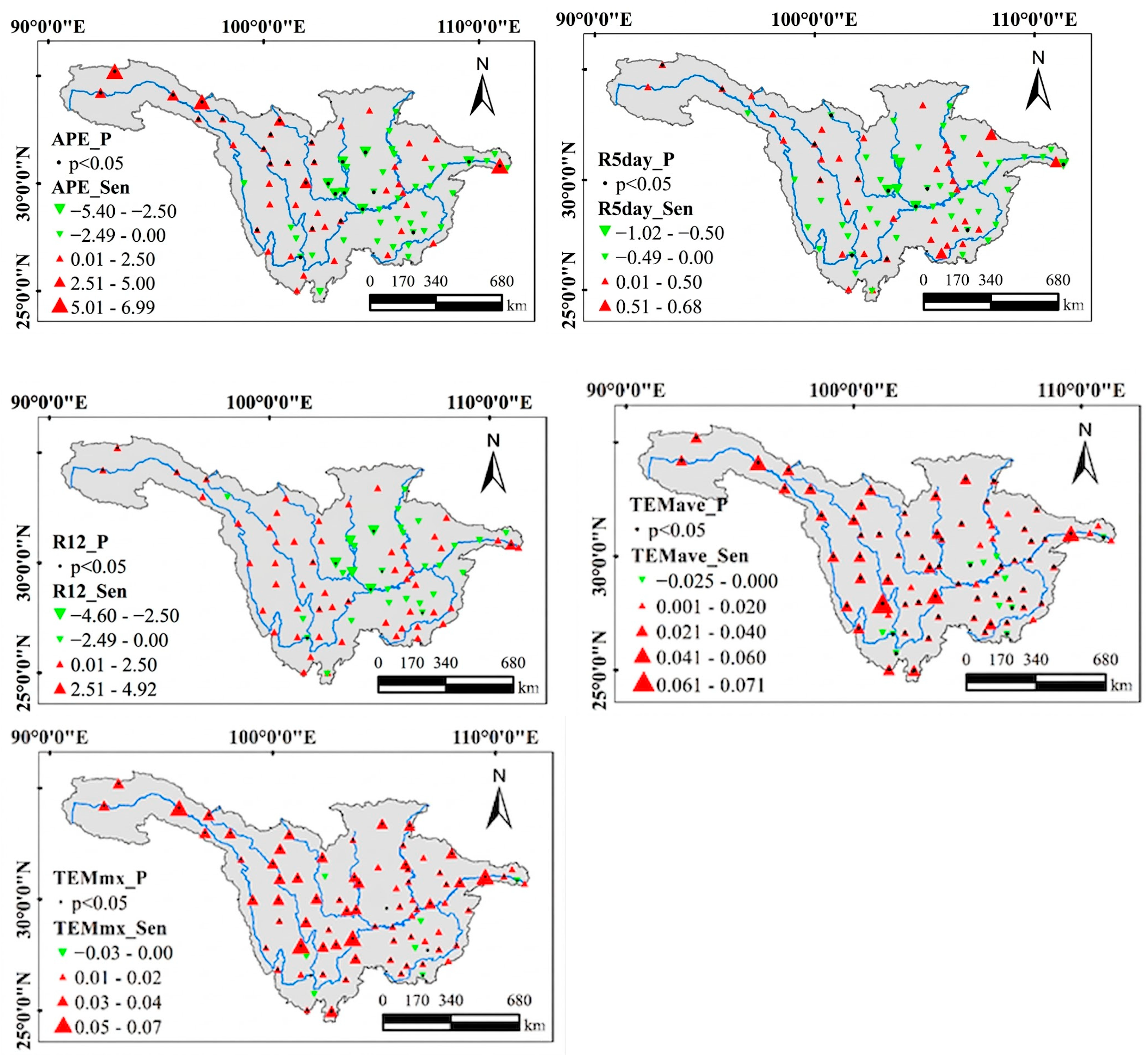
Vegetation and climate also showed marked trends. The basin-wide median NDVI (MNDVI) exhibited a fluctuating upward trend, increasing from 0.57 (1982–1987) to 0.61 (2014–2018), signaling successful ecological restoration (Figure 3). Climatically, although area-averaged annual precipitation (APRE) slightly declined (−0.44 mm a−1), erosive rainfall indices—Rx5day and R12mm—increased across half of the stations (Figure 4). This precipitation polarization, coupled with a significant rise in temperature (TEMave) at 82% of stations, suggests an intensifying hydrological cycle and potential erosion risk, despite the overall decline in total precipitation.

3.2. Trends and Structural Breaks in SSY

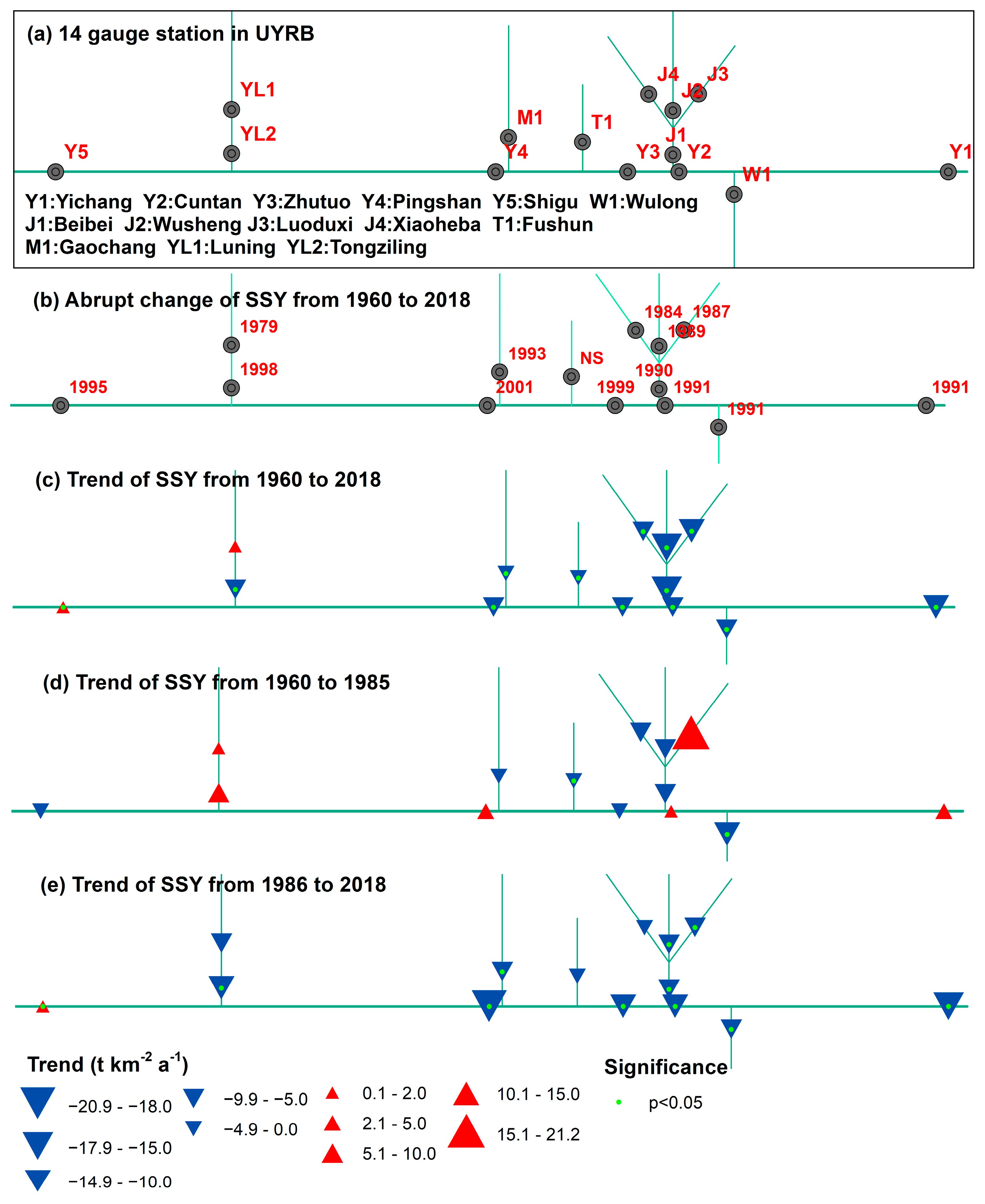
Between 1960 and 2018, SSY significantly declined at 12 of the 14 stations (p < 0.05, Figure 5c). The most dramatic reductions occurred in the Jialingjiang River basin (e.g., Beibei: −18.3 t km−2 a−1), while mainstream stations exhibited a downstream-increasing reduction rate, from −6.09 at Pingshan to −10.39 t km−2 a−1 at Yichang. Notably, only the headwater stations (Shigu and Luning) showed increasing trends, likely due to their proximity to source areas with less human intervention.
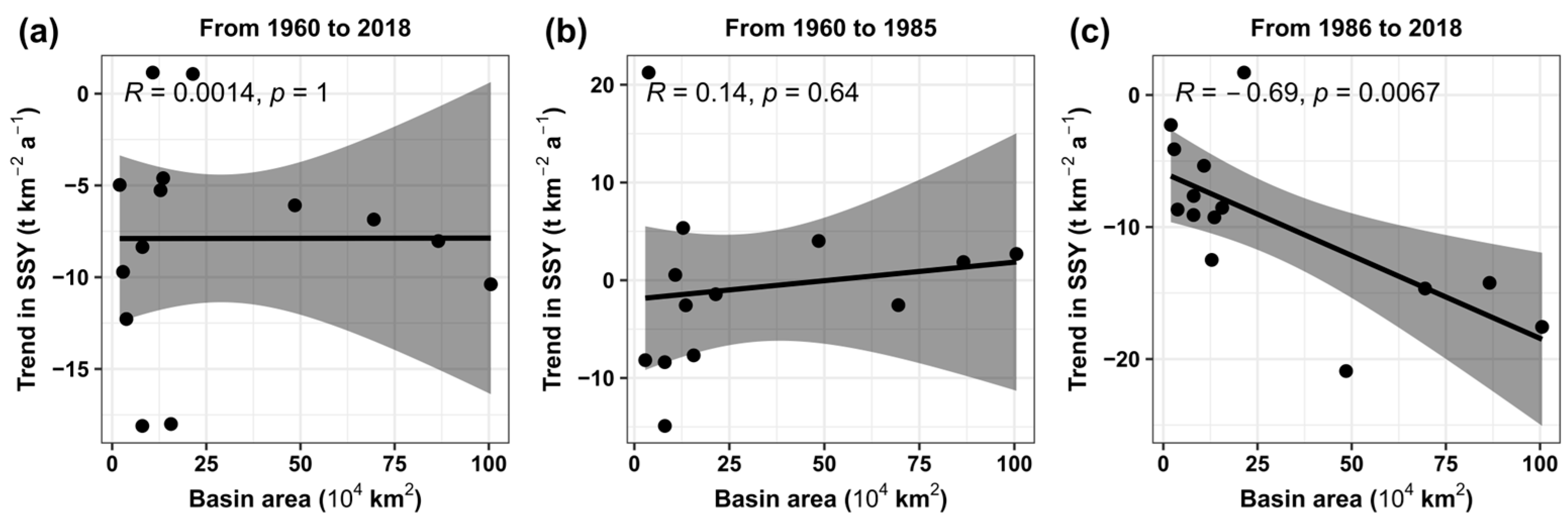
Structural break analysis (Pettitt test) identified abrupt change points at 13 stations, predominantly between 1984 and 2001 (Figure 5b). Interestingly, change points at Yichang (1991) and Pingshan (2001) predated the official operation of the Three Gorges (2003) and Xiangjiaba (2012) dams. This suggests that the pre-operation construction phase and smaller upstream dams had already begun altering sediment transport regimes. While the Pettitt test identified a range of station-specific change points (1984–2001), 1985 was selected as the unified breakpoint for the entire basin based on two primary considerations. Statistically, 1984–1985 represents the earliest cluster of significant structural shifts detected among major sediment-contributing tributaries, marking the onset of widespread geomorphic change. Methodologically, a unified temporal split is essential for the multi-scale comparative analysis. During the later period, the SSY decline became more widespread and significant, establishing a strong correlation between SSY trends and basin area (A) (Figure 6c).

3.3. Temporal Scale Dependency of Driving Mechanisms

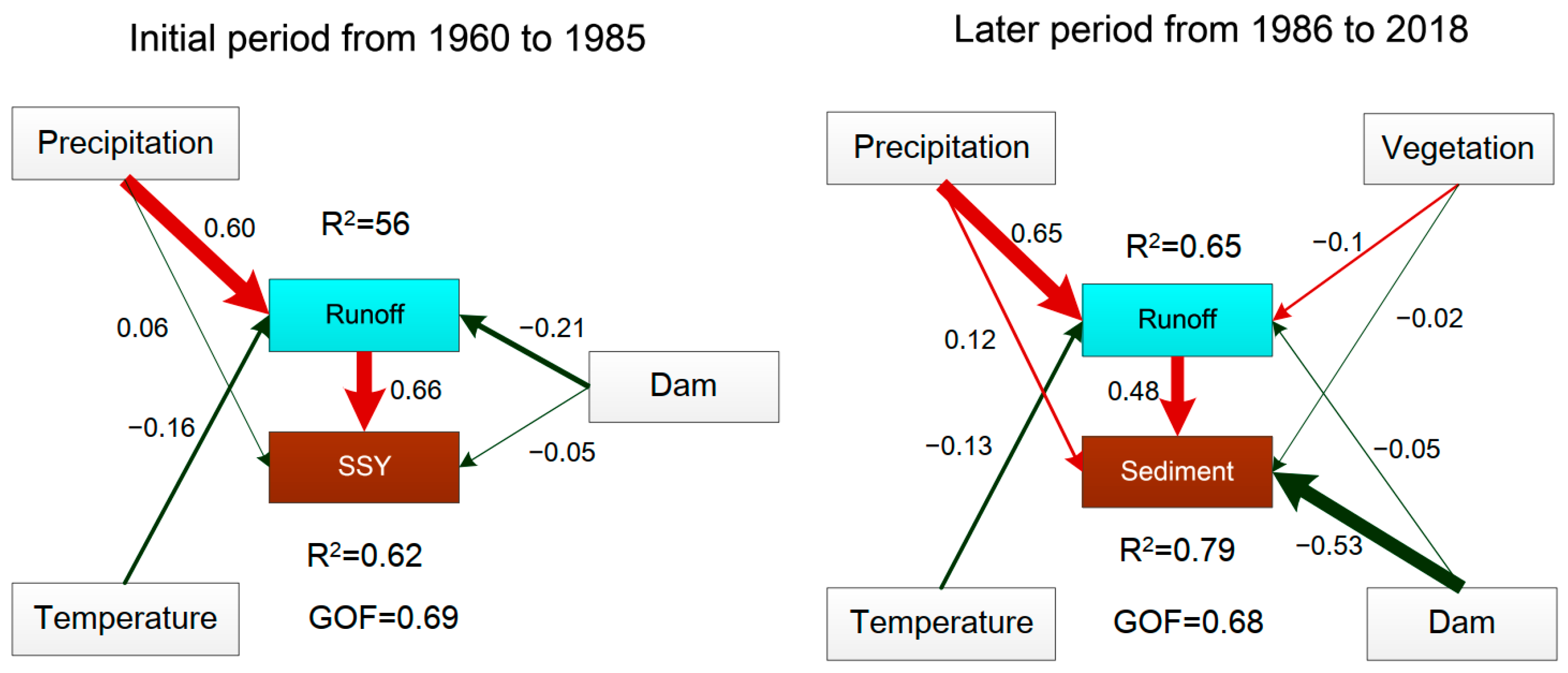
SEM analysis revealed a fundamental shift in the drivers of sediment variation between the two periods (Figure 7). While the models’ goodness-of-fit remained stable (~0.69), the explained variance of sediment load increased from 61.9% in the initial period to 79.1% in the Later Period.
The hierarchy of drivers shifted dramatically. During the Initial Period, runoff was the dominant driver (standardized path coefficient = 0.75), with precipitation also exerting a strong influence (0.56). Dams had a negligible effect (−0.09). During the Later Period, dams became the primary driver of sediment reduction (−0.56), while the relative influence of runoff (0.48) and precipitation (0.50) weakened. Vegetation restoration, though included in the later-stage model, showed a greater impact on runoff (−0.095) than on direct sediment yield (−0.023), suggesting its role is primarily mediated through hydrological regulation.

3.4. Spatial Scale Dependency of Driving Mechanisms

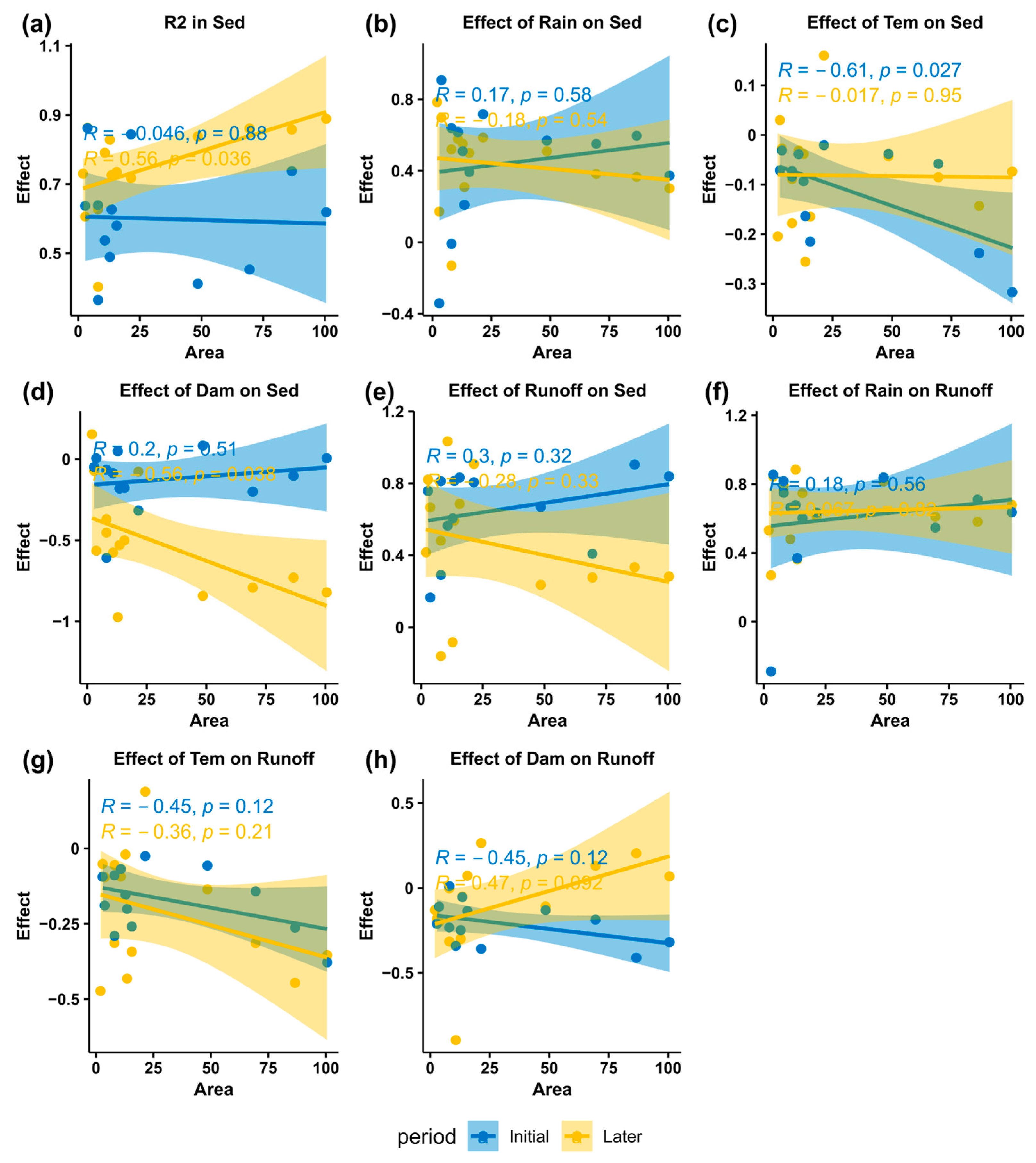
The influence of driving factors exhibited clear spatial scaling effects that evolved over time (Figure 8). In the later period, the explained variation in sediment load increased with basin area. Crucially, the “dam effect” strengthened as the drainage area increased, whereas the impacts of rainfall and runoff weakened.
In contrast, during the initial period, the dam effect actually decreased with basin area. This reversal reflects the historical shift in dam site selection: early-stage reservoirs were mostly small-scale and located on minor tributaries (impacting small basins), while later-stage mega-dams (e.g., cascade hydropower) are situated on the mainstream, exerting a dominant “filtering” effect on larger spatial scales.

3.5. Spatio-Temporal Evolution of the SSY Scaling Exponent

In the power-law relationship S S Y = α A β , the coefficient α reflects the baseline erosion intensity at the local scale, while the scaling exponent β mainly characterizes the spatial delivery logic of the basin. Since this study aims to reveal how climatic and anthropogenic drivers alter the cross-scale transport regime, our analysis focuses primarily on the temporal and spatial evolution of β , which serves as the diagnostic indicator of scaling dependency. The scale dependency of SSY underwent a radical transformation (Figure 9). In the initial period, β was stable near zero (−0.2 to 0.2), indicating that SSY was relatively uniform across scales. However, in the later period, beta fluctuated violently. Between 1985 and 2009, beta was largely positive, suggesting that SSY increased with basin area—a potential result of downstream channel erosion or tributary contributions. After 2009, beta shifted to negative values, marking a return to the traditional scale dependency where sediment is progressively trapped as it moves downstream. The significant difference in beta between the two stages (p < 0.01) confirms that intensive human activities have not only reduced sediment volume but also fundamentally altered the spatial laws governing its transport.

4. Discussion

4.1. Spatio-Temporal Shifts in SSY Across the UYRB

Over the past six decades, SSY at the Yichang station has undergone a staggering decline, falling from 512 t km−2 a−1 in the 1960s to a mere 12 t km−2 a−1 in the 2010s (Table 1). The current SSY magnitude in the UYRB is now markedly lower than that of other major Asian rivers, such as the Mekong [20], the Hanjiang [21], and the Zhujiang [22]. While the Yellow River remains a global outlier in soil erosion, its mean decreasing rate (196.31 t km−2 a−1) far exceeds that of the UYRB [23], highlighting the diversity of sediment reduction trajectories across different climatic and geological settings.
The synchronization of abrupt change points (mostly post-1980) across the UYRB, Yellow River [24], and Pearl River [25] basins underscores a unified regional response to China’s intensified watershed management and economic development. The slight lag between the Yichang (1991) and Datong (1992) stations reflects the sediment transport residence time along the mainstream [26]. This consistency across different basins further validates the external coherence of our detected structural breaks. Interestingly, the emergence of a strong scale effect during the later period—where the SSY decreasing trend intensified with increasing basin area (A)—points to the cumulative “filtering” efficacy of cascade reservoirs along the mainstream.
A standout anomaly is the Shigu station, which exhibited a significant upward trend in SSY (1.70 t km−2 a−1) after 1995, contrasting with the basin-wide decline. This aligns with findings in the Tuotuohe headwaters [27] and can be attributed to the “Third Pole” warming. Accelerated glacier-snow-permafrost melting has increased both runoff and sediment supply in high-altitude source regions [27,28].
However, this increased sediment pulse from the headwaters is effectively sequestered by downstream reservoirs, preventing it from reaching the Pingshan station or the lower reaches. This longitudinal disconnection underscores the role of dams as permanent sinks that decouple source-to-sink sediment routing [29].

4.2. Evolution of SSY Scale Dependency

Our analysis demonstrates that the scale dependency of SSY is not a static geomorphic law but a dynamic characteristic sensitive to human intervention. During the initial period, the scaling exponent beta hovered near zero, indicating a relatively uniform sediment contribution across scales—a finding slightly different from the mainstream-focused study by Yan et al. (2011) [30] (β = 0.34). This discrepancy likely stems from our inclusion of diverse tributaries, which introduces higher spatial heterogeneity and non-monotonic SSY–A relationships similar to those observed in the Yellow and Pearl Rivers [31].
The transition from a near-zero β to more pronounced fluctuations in the later period reflects a shift in the basin’s geomorphic stability. From an epistemological perspective, this suggests that the natural stationarity of sediment transport has been replaced by human-induced spatial heterogeneity. While the limited number of stations (n = 14) may introduce some statistical sensitivity, these fluctuations are physically consistent with the staggered implementation of mega-dams and regional restoration projects. Rather than a simple destabilization of natural laws, the data suggest that localized human interventions have increased the spatial heterogeneity of sediment delivery, making the basin-wide scaling relationship more sensitive to individual sub-basin dynamics. As sediment flux across China’s nine major rivers plummeted from 2.03 billion t a−1 (1955–1968) to 0.335 t a−1 (2000–2016) [32,33], the spatial heterogeneity of these drivers ensures that long-term SSY averages may no longer accurately represent the current, highly regulated state of the basin.

4.3. Scale-Dependent Mechanisms: Climate vs. Human Drivers

The most profound discovery is the spatial scale dependency of the “dam effect” itself. In the later period, the influence of dams on SSY intensified with increasing basin area, whereas the roles of precipitation and runoff weakened. This is a direct consequence of the spatial evolution of hydropower: early dams were small, dispersed, and located on tributaries, creating a relatively uniform and weak impact across the basin [34]. In contrast, the later period saw the construction of mega-dams (e.g., TGD, XLD, XJB) on the mainstream, which control vast drainage areas and have doubled the basin’s total storage capacity since 2003 [35].
This shift has fundamentally altered the hydro-meteorological sensitivity of the UYRB. While runoff was the primary driver during the initial period (total effect = 0.75), dams now dictate sediment dynamics (effect = 0.65). Consequently, traditional sediment rating curves and flow-based predictions have become increasingly unreliable, particularly in larger watersheds where dams have decoupled the sediment-runoff relationship [36,37]. Conversely, smaller watersheds remain more sensitive to extreme precipitation events (Rx5day, R12), which are increasing in frequency [38,39]. This scale-dependent sensitivity suggests that while mega-dams mitigate sediment loads at the basin scale, smaller catchments remain vulnerable to “sediment pulses” during extreme storms [40,41].
Furthermore, our SEM results yielded a negligible and non-significant direct coefficient for vegetation (−0.023), indicating that its immediate impact on basin-scale sediment yield is limited within the current model framework. This lack of a significant relationship warrants a more objective examination of potential constraints. The coarse resolution of the GIMMS NDVI data (8 km) may be insufficient to capture the fine-scale, high-intensity erosion and vegetation–soil interactions typical of the rugged Upper Yangtze terrain. While the “Grain for Green” program has demonstrably reduced hillslope erosion by over 50% [42,43], its signal at the hydrological station is often overshadowed by reservoir sequestration. Nevertheless, the role of vegetation is critical: by reducing upland erosion, afforestation extends the operational lifespan of downstream reservoirs and regulates annual discharge, thereby indirectly curbing sediment transport capacity.

4.4. Implications for Sustainable Watershed Management and Limitations

The findings of this study have profound implications for the sustainable management of the UYRB. The “Hydropower–Sediment Paradox” must be addressed: while the cascade dams in the UYRB provide a sustainable source of low-carbon energy, their role as “sediment traps” threatens the geomorphological sustainability of downstream deltas and estuaries. The observed decoupling of sediment and runoff in larger watersheds suggests that natural river functions are being replaced by artificial regulation. Sustainable policy-making should prioritize sediment bypassing or flushing operations to restore downstream sediment supply.
The scale-dependent response identifies a management gap: while large dams manage sediment at the basin scale, smaller catchments remain highly vulnerable to extreme climate events. A multi-scale sustainable management framework—integrating large-scale reservoir regulation with small-scale community-based soil conservation—is essential to enhance the basin’s resilience against the backdrop of intensifying global climate change.
This study is constrained by certain scientific uncertainties. This study is constrained by the number of available gauge stations with long-term (60-year) records. The exclusion of smaller catchments (<18,000 km2) means our analysis may overlook the SSY–A dynamics at the hillslope-to-stream transition scale. Furthermore, the limited station density in high-altitude regions may underrepresent the complexity of cryospheric sediment contributions. Future research integrating high-resolution satellite imagery and sediment fingerprinting could provide a more granular view of how specific sub-catchments contribute to the basin-scale shifts observed here.

5. Conclusions

This study elucidates how anthropogenic activities and climate change collectively reshape the sediment dynamics of the UYRB across multiple scales. Our findings reveal that the UYRB has transitioned from a climate-governed system to one dominated by human regulation, with a widespread and significant decline in SSY occurring post-1985, driven by massive cascade damming and ecological restoration. Intensive human intervention has effectively overridden the natural geomorphic equilibrium, causing the SSY scaling exponent ( β ) to shift from a stable near-zero state to high fluctuation, which indicates a fundamental decoupling of traditional spatial sediment transport laws. Furthermore, we identified a clear spatial divergence in driving mechanisms: while mainstream sediment flux is now dictated by reservoir trapping that masks climate and vegetation signals, smaller watersheds remain the frontlines of climate vulnerability, exhibiting high sensitivity to precipitation extremes. These results suggest that sustainable management must shift from one-size-fits-all approaches to scale-appropriate strategies. Specifically, we recommend restoring sediment connectivity in large mainstream channels through targeted reservoir operations while prioritizing erosion resilience and soil conservation in smaller, climate-sensitive sub-catchments to mitigate the risks of extreme weather events.

Supplementary Materials

The following supporting information can be downloaded at: https://www.mdpi.com/article/10.3390/su18094586/s1, Table S1: Meteorological stations.

Author Contributions

Conceptualization, J.B. and M.L.; methodology, J.B. and Z.H.; software, M.L.; validation, J.B.; formal analysis, J.B. and Z.H.; investigation, J.B. and Z.H.; resources, S.W.; writing—original draft preparation, J.B. and M.L.; writing—review and editing, J.B. and M.L.; supervision, S.W.; funding acquisition, S.W. All authors have read and agreed to the published version of the manuscript.

Funding

This research was funded by Three Gorges Follow-up Research Project (No. 5000002024CC20004).

Institutional Review Board Statement

Not applicable.

Informed Consent Statement

Not applicable.

Data Availability Statement

The original contributions presented in this study are included in the article. Further inquiries can be directed to the corresponding author.

Conflicts of Interest

The authors declare there are no conflicts of interest.

References

  1. Levin, S.A. The problem of pattern and scale in ecology: The Robert H. MacArthur award lecture. Ecology 1992, 73, 1943–1967. [Google Scholar] [CrossRef]
  2. Yang, S.L.; Zhang, J.; Zhu, J.; Smith, J.P.; Dai, S.; Gao, A.; Li, P. Impact of dams on Yangtze River sediment supply to the sea and delta intertidal wetland response. J. Geophys. Res. Earth Surf. 2005, 110. [Google Scholar] [CrossRef]
  3. Dai, S.; Lu, X. Sediment load change in the Yangtze River (Changjiang): A review. Geomorphology 2014, 215, 60–73. [Google Scholar] [CrossRef]
  4. Li, L.; Ni, J.; Chang, F.; Yue, Y.; Frolova, N.; Magritsky, D.; Borthwick, A.G.; Ciais, P.; Wang, Y.; Zheng, C. Global trends in water and sediment fluxes of the world’s large rivers. Sci. Bull. 2020, 65, 62–69. [Google Scholar] [CrossRef]
  5. Dagg, M.; Benner, R.; Lohrenz, S.; Lawrence, D. Transformation of dissolved and particulate materials on continental shelves influenced by large rivers: Plume processes. Cont. Shelf Res. 2004, 24, 833–858. [Google Scholar] [CrossRef]
  6. Stout, J.C.; Belmont, P.; Schottler, S.P.; Willenbring, J.K. Identifying sediment sources and sinks in the Root River, Southeastern Minnesota. Ann. Assoc. Am. Geogr. 2014, 104, 20–39. [Google Scholar] [CrossRef]
  7. Pandey, A.; Himanshu, S.K.; Mishra, S.K.; Singh, V.P. Physically based soil erosion and sediment yield models revisited. Catena 2016, 147, 595–620. [Google Scholar] [CrossRef]
  8. Rãdoane, M.; Radoane, N. Dams, sediment sources and reservoir silting in Romania. Geomorphology 2005, 71, 112–125. [Google Scholar] [CrossRef]
  9. De Vente, J.; Poesen, J.; Arabkhedri, M.; Verstraeten, G. The sediment delivery problem revisited. Prog. Phys. Geogr. 2007, 31, 155–178. [Google Scholar] [CrossRef]
  10. Church, M.; Ham, D.; Hassan, M.; Slaymaker, O. Fluvial clastic sediment yield in Canada: Scaled analysis. Can. J. Earth Sci. 1999, 36, 1267–1280. [Google Scholar] [CrossRef]
  11. Walling, D. Human impact on land–ocean sediment transfer by the world’s rivers. Geomorphology 2006, 79, 192–216. [Google Scholar] [CrossRef]
  12. Zhang, G.-H.; Liu, Y.-M.; Han, Y.-F.; Zhang, X. Sediment transport and soil detachment on steep slopes: I. Transport capacity estimation. Soil Sci. Soc. Am. J. 2009, 73, 1291–1297. [Google Scholar] [CrossRef]
  13. Nearing, M.; Pruski, F.; O’Neal, M. Expected climate change impacts on soil erosion rates: A review: Conservation implications of climate change. J. Soil Water Conserv. 2004, 59, 43–50. [Google Scholar] [CrossRef]
  14. Chazdon, R.L. Beyond deforestation: Restoring forests and ecosystem services on degraded lands. Science 2008, 320, 1458–1460. [Google Scholar] [CrossRef]
  15. Milliman, J.D.; Farnsworth, K.; Jones, P.; Xu, K.; Smith, L. Climatic and anthropogenic factors affecting river discharge to the global ocean, 1951–2000. Glob. Planet. Change 2008, 62, 187–194. [Google Scholar] [CrossRef]
  16. Walling, D.; Fang, D. Recent trends in the suspended sediment loads of the world’s rivers. Glob. Planet. Change 2003, 39, 111–126. [Google Scholar] [CrossRef]
  17. Milliman, J.D.; Mei-e, R. River flux to the sea: Impact of human intervention on river systems and adjacent coastal areas. In Climate ChangeImpact on Coastal Habitation; CRC Press: Boca Raton, FL, USA, 2021; pp. 57–83. [Google Scholar]
  18. Long, H.; Heilig, G.; Wang, J.; Li, X.; Luo, M.; Wu, X.; Zhang, M. Land use and soil erosion in the upper reaches of the Yangtze River: Some socio-economic considerations on China’s Grain-for-Green Programme. Land Degrad. Dev. 2006, 17, 589–603. [Google Scholar] [CrossRef]
  19. Bryan, B.A.; Gao, L.; Ye, Y.; Sun, X.; Connor, J.D.; Crossman, N.D.; Stafford-Smith, M.; Wu, J.; He, C.; Yu, D. China’s response to a national land-system sustainability emergency. Nature 2018, 559, 193–204. [Google Scholar] [CrossRef]
  20. Kummu, M.; Lu, X.; Wang, J.-J.; Varis, O. Basin-wide sediment trapping efficiency of emerging reservoirs along the Mekong. Geomorphology 2010, 119, 181–197. [Google Scholar] [CrossRef]
  21. Jiang, C.; Wang, J.; Li, C.; Wang, X.; Wang, D. Understanding the hydropower exploitation’s hydrological impacts through a len of change in flow-sediment relationship: A case study in the Han River Basin, China. Ecol. Eng. 2019, 129, 82–96. [Google Scholar] [CrossRef]
  22. Li, Z.; Xu, X.; Yu, B.; Xu, C.; Liu, M.; Wang, K. Quantifying the impacts of climate and human activities on water and sediment discharge in a karst region of southwest China. J. Hydrol. 2016, 542, 836–849. [Google Scholar] [CrossRef]
  23. Gao, G.; Ning, Z.; Li, Z.; Fu, B. Prediction of long-term inter-seasonal variations of streamflow and sediment load by state-space model in the Loess Plateau of China. J. Hydrol. 2021, 600, 126534. [Google Scholar] [CrossRef]
  24. Tian, S.; Xu, M.; Jiang, E.; Wang, G.; Hu, H.; Liu, X. Temporal variations of runoff and sediment load in the upper Yellow River, China. J. Hydrol. 2019, 568, 46–56. [Google Scholar] [CrossRef]
  25. Wu, C.; Ji, C.; Shi, B.; Wang, Y.; Gao, J.; Yang, Y.; Mu, J. The impact of climate change and human activities on streamflow and sediment load in the Pearl River basin. Int. J. Sediment Res. 2019, 34, 307–321. [Google Scholar] [CrossRef]
  26. Tian, Q.; Xu, K.; Dong, C.; Yang, S.; He, Y.; Shi, B. Declining sediment discharge in the Yangtze River from 1956 to 2017: Spatial and temporal changes and their causes. Water Resour. Res. 2021, 57, e2020WR028645. [Google Scholar] [CrossRef]
  27. Li, D.; Li, Z.; Zhou, Y.; Lu, X. Substantial increases in the water and sediment fluxes in the headwater region of the Tibetan Plateau in response to global warming. Geophys. Res. Lett. 2020, 47, e2020GL087745. [Google Scholar] [CrossRef]
  28. Zhang, F.; Zeng, C.; Wang, G.; Wang, L.; Shi, X. Runoff and sediment yield in relation to precipitation, temperature and glaciers on the Tibetan Plateau. Int. Soil Water Conserv. Res. 2022, 10, 197–207. [Google Scholar] [CrossRef]
  29. Li, D.; Lu, X.; Overeem, I.; Walling, D.E.; Syvitski, J.; Kettner, A.J.; Bookhagen, B.; Zhou, Y.; Zhang, T. Exceptional increases in fluvial sediment fluxes in a warmer and wetter High Mountain Asia. Science 2021, 374, 599–603. [Google Scholar] [CrossRef]
  30. Yan, Y.; Wang, S.; Chen, J. Spatial patterns of scale effect on specific sediment yield in the Yangtze River basin. Geomorphology 2011, 130, 29–39. [Google Scholar] [CrossRef]
  31. Yan, Y.; Wang, S.; Yan, M.; He, L.; Zhang, L. Spatial variation of scale effects of specific sediment yield in Zhujiang (Pearl River) basin. Quat. Int. 2014, 336, 117–126. [Google Scholar] [CrossRef]
  32. Li, T.; Wang, S.; Liu, Y.; Fu, B.; Zhao, W. Driving forces and their contribution to the recent decrease in sediment flux to ocean of major rivers in China. Sci. Total Environ. 2018, 634, 534–541. [Google Scholar] [CrossRef]
  33. Liu, C.; He, Y.; Li, Z.; Chen, J.; Li, Z. Key drivers of changes in the sediment loads of Chinese rivers discharging to the oceans. Int. J. Sediment Res. 2021, 36, 747–755. [Google Scholar] [CrossRef]
  34. Rahbek, C. The role of spatial scale and the perception of large-scale species-richness patterns. Ecol. Lett. 2005, 8, 224–239. [Google Scholar] [CrossRef]
  35. Yang, S.; Milliman, J.; Li, P.; Xu, K. 50,000 dams later: Erosion of the Yangtze River and its delta. Glob. Planet. Change 2011, 75, 14–20. [Google Scholar] [CrossRef]
  36. Horowitz, A.J.; Clarke, R.T.; Merten, G.H. The effects of sample scheduling and sample numbers on estimates of the annual fluxes of suspended sediment in fluvial systems. Hydrol. Process. 2015, 29, 531–543. [Google Scholar] [CrossRef]
  37. Yan, H.; Zhang, X.; Xu, Q. Variation of runoff and sediment inflows to the Three Gorges Reservoir: Impact of upstream cascade reservoirs. J. Hydrol. 2021, 603, 126875. [Google Scholar] [CrossRef]
  38. Guo, J.; Guo, S.; Li, Y.; Chen, H.; Li, T. Spatial and temporal variation of extreme precipitation indices in the Yangtze River basin, China. Stoch. Environ. Res. Risk Assess. 2013, 27, 459–475. [Google Scholar] [CrossRef]
  39. Wu, X.; Guo, S.; Yin, J.; Yang, G.; Zhong, Y.; Liu, D. On the event-based extreme precipitation across China: Time distribution patterns, trends, and return levels. J. Hydrol. 2018, 562, 305–317. [Google Scholar] [CrossRef]
  40. Mano, V.; Nemery, J.; Belleudy, P.; Poirel, A. Assessment of suspended sediment transport in four alpine watersheds (France): Influence of the climatic regime. Hydrol. Process. Int. J. 2009, 23, 777–792. [Google Scholar] [CrossRef]
  41. Sun, P.; Wu, Y.; Gao, J.; Yao, Y.; Zhao, F.; Lei, X.; Qiu, L. Shifts of sediment transport regime caused by ecological restoration in the Middle Yellow River Basin. Sci. Total Environ. 2020, 698, 134261. [Google Scholar]
  42. Lei, D.; Shangguan, Z.-P.; Rui, L. Effects of the grain-for-green program on soil erosion in China. Int. J. Sediment Res. 2012, 27, 120–127. [Google Scholar]
  43. Ran, L.; Lu, X.; Xu, J. Effects of vegetation restoration on soil conservation and sediment loads in China: A critical review. Crit. Rev. Environ. Sci. Technol. 2013, 43, 1384–1415. [Google Scholar] [CrossRef]
Figure 1. Geographical location and monitoring network of the study area. (a) Spatial distribution of the 14 gauging stations and their respective sub-basins within the Upper Yangtze River Basin (UYRB); (b) Enlarged view of the station clusters in the downstream sections to ensure label clarity; (c) Location of the UYRB within the entire Yangtze River Basin (YRB). Station abbreviations and IDs shown in the map correspond to the detailed metadata provided in Table 1.
Sustainability 18 04586 g001
Figure 2. Cumulative values for number (a), area (b) and capacity (c) of reservoirs in UYRB.
Sustainability 18 04586 g002
Figure 3. Median annual NDVI (MNDVI) from 1982 to 2018 across upper Yangtze River Basin (UYRB).
Sustainability 18 04586 g003
Figure 4. Spatial distribution of Mann–Kendall (MK) trend test in APRE, R5day, R12, TEMave, and TEMmx indices in upper Yangtze River Basin for 1960–2018.
Sustainability 18 04586 g004
Figure 5. Changes in SSY at 14 stations. (a) Location of 14 stations in a sketch map, (b) Abrupt change points of SSY, (c) Trend of SSY from 1960 to 2018, (d) from 1960 to 1985, and (e) from 1986 to 2018.
Sustainability 18 04586 g005
Figure 6. The relationship between the trend in SSY for each station and its basin area. From 1960 to 2018 (a), From 1960 to 1985 (b) and From 1986 to 2018 (c).
Sustainability 18 04586 g006
Figure 7. Results of SEM models for 14 stations during the initial and later period. The red arrows represent positive effects, while the green arrows represent negative effects.
Sustainability 18 04586 g007
Figure 8. Results of SEM models for each station and its basin area.
Sustainability 18 04586 g008
Figure 9. Changes in Beta ( β in Equation (1)) value from 1960 to 2018 (a) and comparison in Beta ( β in Equation (1)) value between two stages (b).
Sustainability 18 04586 g009
Table 1. Selected gauge stations in the UYRB.
NoIDNameRiverLongitudeLatitudeBasin Area
(km2)
SSY During
1960–1964
(t km−2 a−1)
SSY During
2014–2018
(t km−2 a−1)
1Y1YichangYangtze111.2830.691,005,50151212.2
2Y2CuntanYangtze106.6029.62866,000525.568.1
3Y3ZhutuoYangtze105.8529.02694,725465.854.5
4Y4PingshanJingshajiang104.4228.63485,099409.83.4
5Y5ShiguJingshajiang99.9526.91214,200125.1150.3
6W1WulongWujiang107.7329.3380,369464.136.8
7J1BeibeiJialingjiang106.4429.84156,1421111.8131.8
8J2WushengJialingjiang106.2530.2780,0251275.315
9J3LuoduxiQujiang106.5830.3537,648564.7116.9
10J4XiaohebaFujiang105.8330.1828,7211014.4396
11T1FushunTuojiang104.9929.1819,854661.5294.6
12M1GaochangMingjiang104.4228.80135,378473.8107
13YL1LuningYalongjiang101.8728.45107,767152.632.7
14YL2TongzilingYalongjiang101.8426.69128,36334566.7
Table 2. Abbreviations and descriptions of latent and measured variables in partial least squares-structural equation modeling (PLS-SEM) analysis.
Latent VariableMeasured VariableDescriptionUnit
Precipitation
(Pre)
APREAnnual precipitation amountmm
Rx5dayMaximum consecutive 5-day precipitationmm
R12Annual precipitation with daily precipitation larger than 12 mmmm
Temperature
(Tem)
TEMaveAnnual mean daily temperature°C
TEMmxAnnual maximum daily temperature°C
Vegetation restoration (Veg)ANDVIThe proportion of region with NDVI larger than 0.6/
DamDAMsaWater surface area of reservoirskm2
DAMsvWater storage capacity of reservoirsm3
RunoffflowAnnual discharge flowm3
Sediment (Sed)SSYAnnual mean sediment yield
Disclaimer/Publisher’s Note: The statements, opinions and data contained in all publications are solely those of the individual author(s) and contributor(s) and not of MDPI and/or the editor(s). MDPI and/or the editor(s) disclaim responsibility for any injury to people or property resulting from any ideas, methods, instructions or products referred to in the content.