Article

Place Integration of Migrant Tourism Entrepreneurs in Rural Destinations: A Social Capital Perspective

1
School of Geographic Sciences, East China Normal University, Shanghai 200241, China
2
The Center for Modern Chinese City Studies, East China Normal University, Shanghai 200062, China
3
School of Business, Xiangtan University, Xiangtan 411105, China
4
Institute of Geographic Sciences and Natural Resources Research, Chinese Academy of Sciences, Beijing 100101, China
*
Author to whom correspondence should be addressed.
Sustainability 2026, 18(9), 4562; https://doi.org/10.3390/su18094562
Submission received: 5 March 2026 / Revised: 20 April 2026 / Accepted: 1 May 2026 / Published: 5 May 2026

Abstract

Against the backdrop of the rapid expansion of rural tourism, an increasing number of migrant tourism entrepreneurs (MTEs) are moving from urban to rural areas. The integration of MTEs is crucial for both business sustainability and rural development. Using Hongcun village as a case study, this study adopts qualitative methods, including participant observation and semi-structured interviews, to explore the dynamic process of MTEs’ place integration from a social capital perspective. The findings suggest that MTEs’ place integration is manifested through four dimensions, namely economic embeddedness, social interaction, cultural acceptance, and emotional integration. Moreover, place integration and social capital form a mutually reinforcing cycle: integration practices generate localized social capital, which in turn facilitates deeper integration. The study also identifies that selective interaction leads to network stratification, highlighting the potential “dark side” of social capital. These findings suggest that effective integration depends not only on the accumulation of social capital but also on maintaining a dynamic balance among different types of social relationships.

1. Introduction

In recent years, with the advancement of China’s rural revitalization strategy, rural tourism has experienced rapid growth. This expansion has created extensive employment and entrepreneurial opportunities, attracting a large number of migrant tourism entrepreneurs (MTEs) to rural areas [1,2,3]. These MTEs have established various small tourism-related businesses [4]. They bring capital, technology, and knowledge into rural communities [5], and have gradually emerged as an important force in rural development and transformation [6]. However, due to differences in cultural backgrounds, languages, and social norms, MTEs inevitably encounter challenges of adaptation and integration after relocating to unfamiliar destinations.
Originally described as “glue” in sociology, integration is a concept used to interpret social harmony and conflict [7,8]. Place integration refers to the process of sustained interaction between individuals and places, triggered by the transformation of an individual’s temporal–spatial context [9,10]. It is not merely about physical entry into a place. Rather, it is a process through which individuals negotiate and construct continuous relational bonds with the place. This process encompasses how individuals survive, produce, and live in a new environment [11]. Existing theories and political discourses on migration and integration have paid limited attention to the experiences of MTEs [12]. Scholars have advocated for greater attention to the sustained and dynamic activities of tourism migrants after their settlement [13]. This includes MTEs’ interactions with different social groups, as well as the formation of new social relationships, which facilitate their adaptation to local community. Nevertheless, existing studies often conceptualize integration as an outcome of adaptation, overlooking the important role of social relationships in the integration process.
Against this backdrop, social capital provides an important perspective for understanding the integration of MTEs. Social capital emphasizes how individuals access resources, build trust, and establish norms of interaction through social networks. It can be understood as a form of resource embedded within social relationships [14]. Given the co-presence of production and consumption in tourism activities, the business operations, social interactions, and cultural practices of MTEs are deeply embedded in local social networks [4]. From this perspective, the integration of MTEs can be regarded as a dynamic process of continuous interaction with place, accompanied by the production and reconfiguration of social capital.
Social capital emphasizes the role of interpersonal relationships. Since its introduction into migration research, a growing body of research has examined its effects on migrants’ economic integration, social incorporation, and place identity [15,16,17]. Existing studies tend to treat social capital primarily as an explanatory variable [18], while paying limited attention to its dynamic formation and transformation. Moreover, as key actors in rural transformation, MTEs not only contribute to local economic development but also reshape local social structures. However, MTEs’ place integration in rural tourism destinations remains insufficiently explored, particularly in contexts of developing countries.
Therefore, this study explored the dynamic process of MTEs’ integration into rural communities, as well as the changes and roles of social capital. Specifically, it addresses the following research questions: How does the process of place integration unfold among MTEs? What are the interactive relationships between social capital and place integration? To answer these questions, this study employs a qualitative research method, taking Hongcun as a case study. Data were collected through semi-structured interviews and participant observation, and analyzed using thematic coding. On this basis, the study identifies key dimensions of MTEs’ integration and further explores its dynamic process, revealing the interactive mechanisms between social capital and place integration. This research not only contributes to a deeper understanding of the complexity and dynamics of MTEs’ integration but also provides practical implications for rural tourism development and the governance of MTEs in destinations.
The remainder of this paper is structured as follows. Section 2 reviews the literature on MTEs’ place integration and social capital. Section 3 introduces the study area and data collection methods. Section 4 analyzes the process of integration across four dimensions: economic embeddedness, social integration, cultural acceptance, and emotional attachment. Section 5 presents the discussion, and the final section concludes the study and describes its implications.

2. Literature Review

2.1. Migrant Tourism Entrepreneurs (MTEs) and Place Integration

Tourism refers to temporary travel and visitation, whereas tourists are temporary visitors who travel outside their usual place of residence without relocating. In contrast, migration are individuals who permanent or semi-permanent change in usual residence [19]. Recent scholarship has increasingly emphasized the tourism–migration nexus, arguing that some forms of mobility cannot be neatly categorized as either tourism or migration alone [20,21]. In this sense, tourism migrants can be understood as people whose residential mobility is closely associated with tourism destinations and who lie on a continuum between temporary tourism and longer-term migration [22]. As a special type of tourism migrants, migrant tourism entrepreneurs are those who move to tourist destinations and establish tourism-related businesses [3].
Migration to tourism destinations is driven by different motivations. Existing studies generally distinguish between production-led [22] and lifestyle-oriented migration [23], both of which account for the existence of MTEs. Production-led MTEs move primarily in response to business opportunities, market potential, and expected profitability in the destination [24]. Here, “production” refers to the production and delivery of tourism goods and services, such as accommodation, catering, retail, guiding, cultural experiences, and other visitor-oriented activities [25]. In contrast, lifestyle-oriented MTEs also engage in tourism production, but their locational choices are more strongly shaped by amenity, environmental quality, and the pursuit of work–life balance [26]. Their migration therefore combines both production and consumption logics, with the latter often being more prominent [27].
In China, most MTEs originate from developed areas and migrate to rural destinations to start tourism businesses [28]. However, as newcomers to the destination community, MTEs are often perceived by local residents as outsiders [12] and may experience exclusion and isolation within the host community [29]. Such dynamics can generate community tensions and even lead some entrepreneurs to withdraw from the destination [30,31]. In addition, differences in culture, language, and local customs create further challenges of cultural adaptation for MTEs. Existing studies have shown that social integration can help mitigate tensions between different social groups in migrant settings [32].
Place integration refers to a process of mutual identification between individuals and the local place [11]. That emphasizes both individual subjectivity and the sustained interactive relationship between people and place. Through this process, individuals gradually narrow their cognitive and identity distance from local groups, while new social relationships are formed and place meanings are co-produced [33]. The place is not fixed or static [34]; rather, it is continually reconstructed and reproduced as MTEs become integrated into the community. In this sense, place integration can be understood as the highest level of localization that MTEs may achieve [31].
Place integration is inherently multidimensional [35], involving not only economic embeddedness but also social, cultural, and psychological integration [31,36]. Embeddedness functions as a key mechanism through which entrepreneurs become incorporated into the local social structure [37], and it is often closely tied to the economic practices of entrepreneurship [38,39]. Economic embeddedness unfolds within specific local social and cultural networks in specific places and therefore carries a distinct place-based character [40]. By mobilizing local resources to create tourism products with local characteristics [38], MTEs gradually develop a functional dependence on specific place-based resources. Meanwhile, interaction and engagement with other groups provide crucial pathways for building social relationships and advancing social integration. Through interest-based interactions in tourism business operations, social boundaries between migrants and residents may gradually weaken, thereby fostering a more positive social environment within the community [41]. Among the factors shaping the degree of place integration among tourism migrants, the formation of emotional ties to place is particularly important, that is, the development of a “topophilia” [35]. A strong sense of belonging and identity can significantly promote individual integration [42]. Moreover, the relationships formed through social interaction in the new environment are important indicators of emotional attachment to the place [43]. Therefore, place integration necessarily involves sustained interaction with multiple local stakeholders, which calls for a theoretical lens capable of capturing the complexity of MTEs’ integration process. As these interactions are fundamentally mediated by social relationships, trust, and access to local resources [44], social capital provides a valuable perspective for understanding how MTEs integrate into destination communities.

2.2. Social Capital

Social capital refers to the resources embedded in social relationships and network structures, which can be mobilized through interaction to generate potential benefits for actors [45]. Unlike tangible assets, social capital is not depleted through use; rather, it can be accumulated, converted, and reconfigured over time [46]. In this study, social capital is understood as a relational resource that helps MTEs access information, support, legitimacy, and opportunities within destination communities.
Social capital encompasses three forms: bonding, bridging, and linking capital [44,47]. Bonding capital refers to strong ties within relatively homogeneous groups, such as family members, close friends, or people sharing similar backgrounds and interests [45,48]. That is characterized by emotional support, solidarity, and high levels of trust, but its inward-looking nature may also restrict access to novel information and wider opportunities [44]. Bridging capital, by contrast, refers to horizontal ties that connect people across different social groups, identities, or occupational backgrounds [49], such as MTEs and villager. That outward-looking relationships are especially important for gaining new information, expanding cooperation, and accessing heterogeneous resources. Linking capital is distinct from both bonding and bridging capital because it refers to vertical ties that connect actors to individuals or organizations positioned at different levels of authority and power, such as governments, institutions, or formal organizations [50]. Whereas bridging capital operates mainly across social difference at a similar level [51], linking capital operates across hierarchical differences and facilitates access to institutional support, policy resources, and formal legitimacy [52].
Trust, norms, and social networks constitute the core elements of social capital [44]. Trust facilitates cooperation and reduces uncertainty in repeated interaction, while norms provide informal or formal rules for behavior [53]. Social networks serve as the carriers through which social capital is produced, circulated, and activated. Because economic activities are embedded in social relationships [54,55], the business practices and daily lives of MTEs are deeply shaped by networks built on trust, reciprocity, and shared norms [56]. Existing studies have shown that social capital can help MTEs gain support and resources [57,58], mobilize multiple stakeholders for exchange and collaboration [59], and contribute to community stability.
However, previous studies have often treated social capital as a static explanatory or mediating variable [60]. In contrast, this study conceptualizes social capital as dynamic and processual. As MTEs interact with residents, fellow entrepreneurs, tourism companies, and local governments, different forms of social capital are continuously produced, transformed, and accumulated. Accordingly, this study integrates social capital into the analysis of place integration to examine not only what kinds of social capital MTEs possess, but also how bonding, bridging, and linking capital change during the integration process and how they facilitate or constrain place integration.

3. Materials and Methods

3.1. Study Area

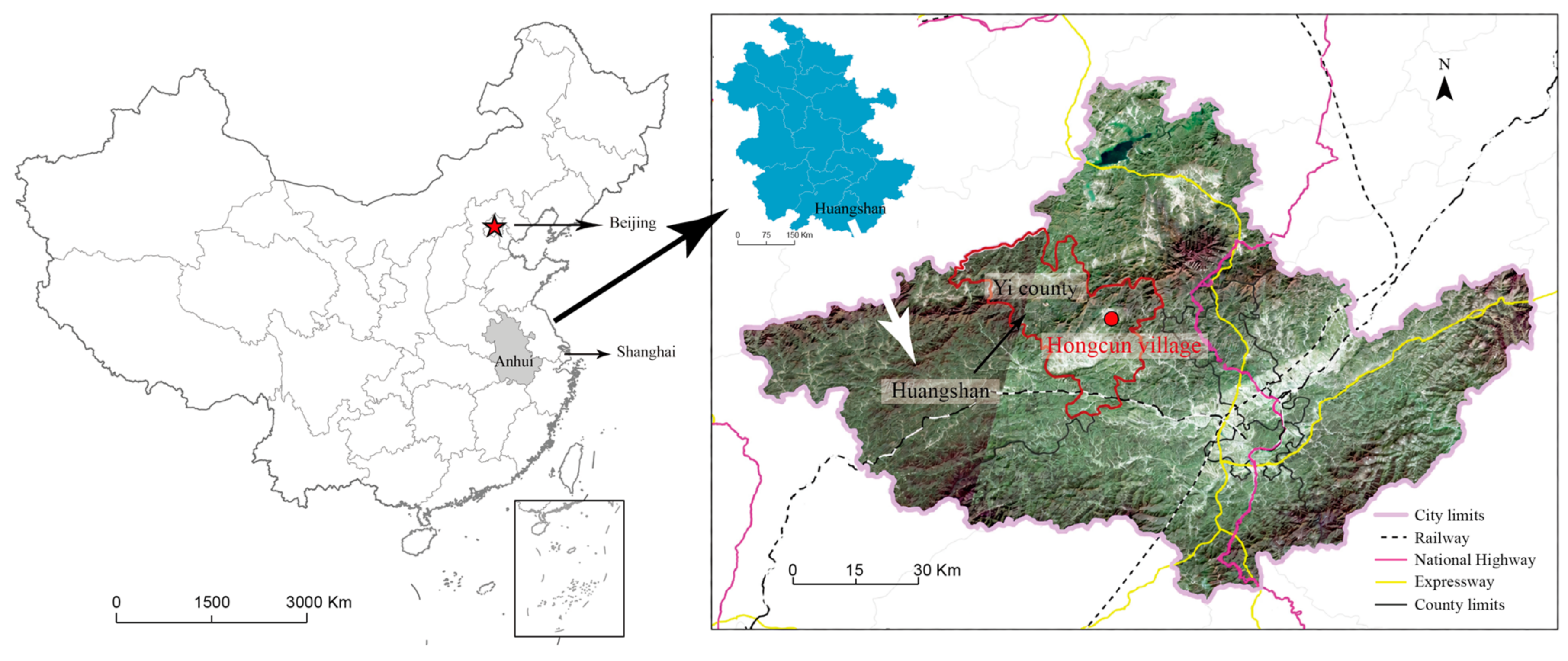
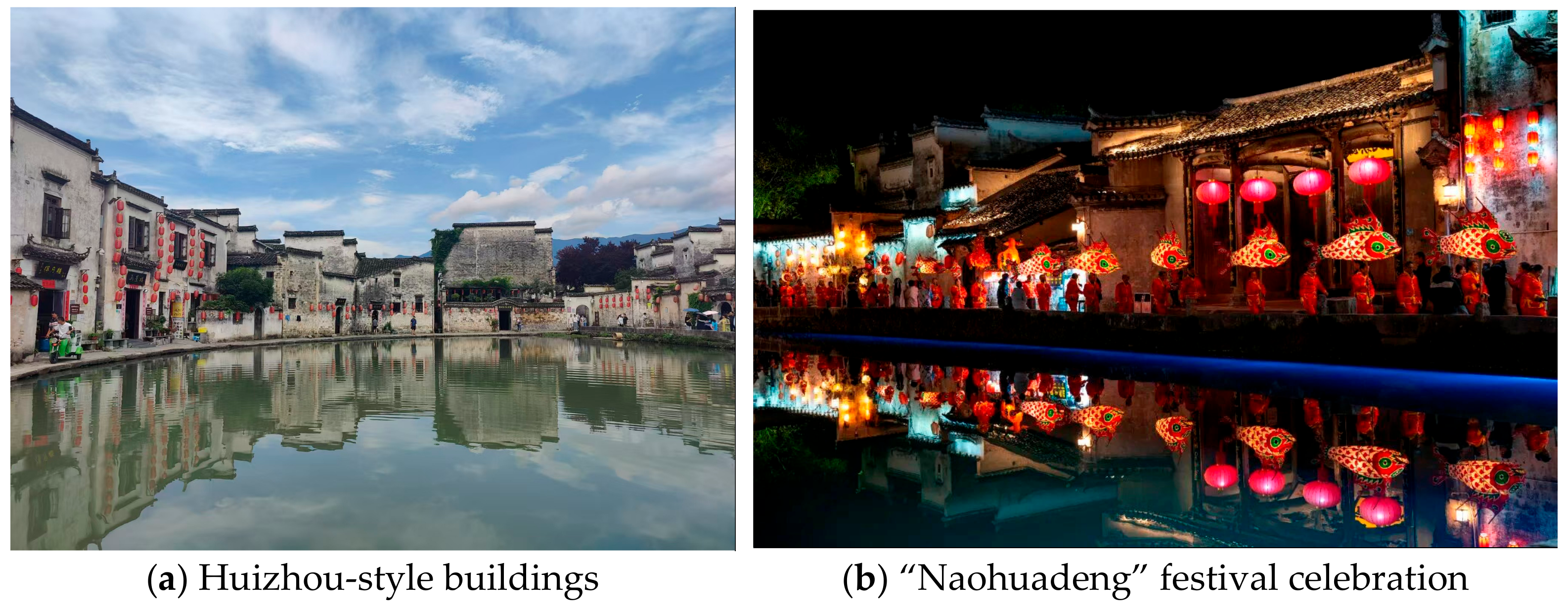
Hongcun village, established in 1131 AD, is a traditional Huizhou village with a history spanning over 895 years. Located in the northeast of Yixian County, Huangshan, Anhui Province (Figure 1), it is an important representative of “Huizhou culture” (a typical Chinese folk culture). Hongcun not only retains a large number of Huizhou-style buildings, couplets, plaques, and traditional festival customs (Figure 2) but also perpetuates the Huizhou merchants’ spirit of upholding righteousness and abiding by integrity. In 2000, together with Xidi village, Hongcun village was included in the UNESCO World Heritage List, which comments that “the two traditional ancient villages in southern Anhui, are a shining example of the combination of human and nature” [61]. Subsequently, Hongcun has been included in China’s first batch of key villages for rural tourism and awarded the title of “China’s Beautiful Village”.
In 1986, the village began to develop a tourism industry. After several changes in management agent, Beijing Zhongkun Company took over the village in 1998. Since then, the Yi County government and Zhongkun Company have launched a series of measures to promote rural tourism. Tourism in Hongcun has developed rapidly, attracting many visitors, with tourist arrivals reaching 3.52 million in 2024 [62]. As a result, the village has attracted many migrant tourism entrepreneurs who have engaged in tourism-related work. Statistics from the Yi County Public Security Bureau show that as of August 2022, 1154 people entered the Hongcun scenic area, accounting for 71.1% of the total inflow population for Hongcun town. For example, 49 homestays were converted from ancient residential buildings in Hongcun, 55% of which are operated by MTEs. Therefore, Hongcun possesses a dual identity as both a traditional cultural heritage village and a tourism migrant destination, making it an appropriate case for examining the integration of MTEs.

3.2. Data Collection

The data for this study was collected through multiple field investigations conducted by the research team in Hongcun village from 2018 to 2024. Specifically, the fieldwork in Hongcun Village began in 2018 and the author conducted field visits annually through 2024. Over a period of almost 7 years, these periods were 10–16 November 2018, 6–13 July 2019, 28 August–2 September 2020, 7–17 July 2021, 21–28 August 2022, 11–17 August 2023, and 5–12 December 2024, during which 7 field trips were conducted.
This study used participant observation and semi-structured interviews to collect data. Specifically, the researchers observed various business types in the village, focusing on the business model choices and place-making of migrant tourism entrepreneurs. During fieldwork, the researchers stayed in different types of homestays in Hongcun as paying guests and engaged in low-intensity everyday interactions in naturally occurring settings, such as check-in and reception, meals, tea chats, neighborhood encounters, and public cultural activities. The purpose of this involvement was to build rapport and gain access to ordinary social interactions without intervening in business operations. The researchers did not participate in pricing, staffing, management decisions, or other forms of business organization. The researchers’ role was therefore limited to that of temporary observers embedded in daily life rather than participants in MTEs’ decision-making. In addition, field notes were systematically compiled to document key events, typical interactions, and contextual changes. Furthermore, observations were conducted repeatedly across different time periods to minimize researcher bias.
When selecting willing participants, this study adhered to the principle of purposive sampling. The key selection criteria were as follows: MTEs had to originate from cities outside of Yixian County; they had to be 18 years old or above; they had to engage in tourism-related work as business owners; and had to reside in Hongcun for at least one year [5]. The identities of the participants were confirmed via the cross-validation of preliminary visits and informal interviews. First, the researchers visited local government, tourism company and village committee to apply for the right of access to files on the business registration list, geography, population, tourism development of Hongcun. Second, the researchers walked the streets in Hongcun and marked the name, type, and location of each tourism business. It was found that MTEs tend to operate four types of tourism businesses: (1) inns and homestays; (2) restaurants, bars, beverage shops and cafes; (3) shops for souvenirs, teas, and cakes; and (4) craft experience and travel photo studios. A balance was striven for in recruitment to ensure that MTEs with various tourism businesses were represented in the sample. Then, a snowball sampling approach was adopted, utilizing existing respondents to expand the sample size. The interviews centered on four core thematic dimensions concerning migrant tourism entrepreneurs: migration motivations, the utilization and transformation of social capital, social interaction and relational network construction, and place perception and identity. Furthermore, supplementary interviews were conducted with the Hongcun Town government, the directors of tourism companies, and the Hongcun village committee.
Social media has become an important medium for MTEs’ daily interaction and business promotion. The online and offline worlds are intertwined, with the internet integrated into daily life [63]. To enhance the reliability of the findings, this study used online texts as supplementary evidence. Rather than being treated as an independent dataset, these materials were used to triangulate and enrich the interview and observational data. Specifically, Douyin and Xiaohongshu were selected, as the two public platforms are widely used by MTEs in Hongcun. With informed consent from the participants, the researchers followed some MTEs’ media accounts and manually collected online data related to tourism practices. The collected data mainly consisted of images and posts related to local cultural sharing, tourism product promotion, community activities, and interactional texts such as captions and comments, where publicly available. These materials were used to cross-check interview data, trace changes in business practices and self-presentation, and better understand how MTEs represented their relationships with place, community, and tourism activities in digital settings. Private or inaccessible online content was not used.

3.3. Data Analysis

Ultimately, a total of 42 migrant tourism entrepreneurs were interviewed, and many on-site photos and secondary data were collected. Each interview lasted approximately 40 min. All the interviewees were coded according to their identities: migrant tourism entrepreneurs (MTE1, MTE2, etc.), government officials (G1, G2), village committee members (VC1, VC2), tourism company employees (TC1, TC2), and local entrepreneurs (LE1, LE2, etc.). The basic information of the interviewees is summarized in Table A1. The store names are presented anonymously in abbreviated form in the article.
The study employed thematic coding for text data analysis. All interviews were recorded and transcribed verbatim. First, the researchers repeatedly read the interview transcripts to gain an overall impression. The narratives were then decomposed into independent semantic units and coded based on their semantic content to generate initial codes [64]. Subsequently, codes related to place integration and social capital were iteratively identified and grouped into themes [65]. Logical relationships among these themes were then established to explore how MTEs integrate into the local context. To enhance the reliability of coding and the validity of concept extraction, two researchers independently conducted manual coding. In addition, team discussions were held to review all extracted content under each theme, ensuring the robustness of the coding process.
During the coding process, a hybrid strategy combining deductive and inductive approaches was adopted. Deductive coding was informed by existing literature on migrant tourism entrepreneurs, place integration, and social capital. Inductive coding, in contrast, emerged directly from the data and was progressively refined through iterative engagement with the interview materials. This dual approach ensured theoretical alignment and the identification of context-specific patterns [66].
Finally, triangulation was employed to enhance the credibility of the study. Interview data were cross-validated with online materials and field notes. The details and procedures for the partial textual analysis are presented in Table 1.

4. Results

4.1. Types and Motivations of MTEs

Driven by the dual logics of production and consumption [67], the identities and roles of MTEs exhibit diverse characteristics. The MTEs in Hongcun primarily consist of two types: production-led and lifestyle-oriented, with the former constituting the majority. Economic gain represents a critical driving force for MTEs. This is attributable to the fact that within the broader Chinese context, tourism entrepreneurship serves as the primary source of household income for the majority of MTEs [68]. Meanwhile, as part of its rural revitalization strategies, the Chinese government has intensified policy support for entrepreneurial and skilled migration to rural areas. These conditions have further supported the rise in production-oriented MTEs.
Traditional rural settlements serve as ideal dwelling spaces [69]. Beyond economic drivers, Hongcun’s natural environment, traditional pastoral landscapes, and profound Huizhou culture are unique attractions for MTEs. Migration decisions were influenced by prior visitation experiences, personal preferences, and the aesthetic appeal of specific locations [70]. As noted by MTE22: “When I first visited Hongcun village for painting in 2008, I developed a strong affection for this small village… Now, it’s my second year operating a homestay here. I find that my obsession with this place has not diminished—in fact, it has grown even stronger.”

4.2. The Formation of Social Relations in Economic Embeddedness

The economic embeddedness of MTEs is primarily grounded in market-based exchange. MTEs participate in rural tourism development by establishing small tourism enterprises [4], forming initial economic ties with local residents through activities such as house rental and labor employment. A homestay manager stated, “during peak seasons, the number of guests is so large that we are completely overwhelmed. Thus, I hired a local aunt to handle cleaning work, allowing me to focus solely on guest reception” (MTE16). These interactions generate early-stage relational connections and facilitate entry into local economic networks.
As economic embeddedness deepens, MTEs increasingly engage in cooperation with other entrepreneurs based on norms of reciprocity. On the one hand, sharing of customer sources and mutual referrals are the common forms of cooperation. As one entrepreneur noted, “We partner with art exam training institutions, which often send groups of over a hundred people. Since I can’t accommodate them all, I arrange for them to go to nearby sketching bases that we often collaborate with… In return, when they receive large groups, they will also refer some to me, so we all profit together” (MTE37). These collaborative relationships are not governed by formal contracts but are instead rooted in trust-based informal norms [40]. Within these networks, trust functions as an informal regulatory mechanism, where violations of these norms may lead to the termination of cooperation.
On the other hand, complementary forms of economic cooperation emerge across MTEs’ different business sectors. Cross-business collaborations, such as joint event organization, service referrals, and bundled offerings, facilitate resource sharing and functional interdependence among MTEs. For example, the band from MTE21’s bar performs at the bonfire events hosted by MTE37’s sketching base; homestay owner MTE22 recommends MTE38’s photography studio to guests, while MTE38 offers photo retouching discounts to customers who book MTE22’s homestay. Those entrepreneurs occupying advantageous network positions are better able to mobilize their resources to attract and maintain cooperative ties [71]. Through repeated interactions and coordinated benefit exchange, such reciprocal cooperation reinforces trust and promotes the relational embeddedness of MTEs.
Cooperation with external markets plays a crucial role in bridging structural holes between rural communities and broader economic systems [72]. By mobilizing external market resources, MTEs expand the scope and depth of local economic structure. This enables Hongcun’s social networks to operate within a wider socio-economic context. For example, the LYT homestay, through outsourced management by Tianjin’s hotel management company, addressed its customer acquisition challenges and achieved branded operations. This connection with the external market has brought advanced operational concepts and management models, enhancing the level of local tourism services. The marketing director of tourism company affirmed the important of MTEs, “in fact, it now functions as a matrix… These individuals all contribute to enhancing the area… At the start of the spring market, they will also visit various schools to develop business, so they bring a lot of sketching students… Thus, the landscape of Hongcun’s tourism industry is expanding” (TC1). This structural embedding has reshaped the structure and scale of the village’s social network, contributing to the sustainable development of Hongcun.

4.3. Social Interaction in Social Integration

Social interaction is a crucial way to access local resources and accumulate social capital [73]. In tourism-related activities and daily lives, MTEs have formed social relationships with diverse stakeholders, including residents, local government, tourism companies, and other entrepreneurs.
In the context of traditional villages, the government plays a dominant role. Currently, Hongcun operates under a “government-led, market-operated” model. Within this institutional context, MTEs’ social interactions extend to local governments and tourism operating companies, thereby forming a multi-level network of relationships. Connections with government authorities enable entrepreneurs to access business permits and policy support [74], reflecting the importance of vertical linkages in the integration process. In Hongcun, the preservation of traditional dwellings is strictly regulated by heritage conservation policies. Housing renovations are subject to government oversight. MTE2 noted, “The requirements for renovating old houses are very strict, and the approval procedures are extremely complicated… I wanted to open a window facing the street, but it was rejected because it would damage the overall architectural appearance.” Such institutional constraints reinforce the relational ties between MTEs and government authorities. Meanwhile, MTEs establish complementary partnerships with tourism company, further enhancing their embeddedness within local social networks. For example, the tourism company’s study tour programs often partner with MTEs who operate complementary activities. As TC1 stated, “Bai (pseudonym) is responsible for the intangible cultural heritage paper-cutting teaching. We offer him three packages, namely A, B and C, all of which are priced identically.” This form of cooperation expands MTEs’ relational networks, enabling connections with diverse actors and access to broader resources and information.
Migrant tourism entrepreneurs tend to establish new interpersonal relationships and lifestyles through social interaction in unfamiliar environments [75]. Given the relatively small spatial scale of Hongcun, MTEs share common public spaces with other community members. As a result, daily life inevitably overlaps with social interaction. Beyond economic relationships, MTEs primarily interact with local entrepreneurs and other migrant tourism entrepreneurs. On the one hand, with similar values, interests, or migration experiences, MTEs are more likely to establish deeper connections with each other. As MTE7 noted, “Sometimes we host small concerts at home; inviting like-minded friends to our own place is the greatest happiness.” This non-instrumental interaction provides emotional support and psychological fulfillment for MTEs. Notably, this homogeneous interaction may lead to isolation from the local community and hinder their effective integration [76].
On the other hand, non-economic interactions, such as neighborhood assistance and festive gatherings, have extended relationships between MTEs and local tourism entrepreneurs beyond business partnerships into their personal lives. A homestay owner said, “Our neighbor aunt doesn’t know how to use online platforms like Ctrip, so I help her manage it. It’s just a small favor” (MTE26). These daily interactions strengthen mutual trust and contribute to the development of emotional bonds between the two parties. However, interactions between MTEs and residents not engaged in tourism activities tend to remain relatively limited. This superficial interaction, lacking emotional connections, result in a pattern of surface-level embeddedness, thereby constraining the breadth of MTEs’ social integration.
In addition, insufficient participation in village public affairs has constrained the social integration of migrant tourism entrepreneurs. These migrants have profited from the village’s status as a cultural heritage site and accessed certain social welfare in Hongcun. The Secretary of the Village Committee stated, “In our scenic area, the leftover food from homestays and restaurants, we have dedicated cleaning staff to collect and remove the garbage without charging any fees. Why don’t we charge for this? Because the main source of income for our village collective is the dividend from the tourism ticket. Although external operators enjoy these benefits, as villagers, they are also required to abide by the principles of our village rules and regulations” (VC2). However, the informal institutions, based on village norms, have not effectively constrained migrant tourism entrepreneurs. Consequently, they have not assumed social responsibilities commensurate with their benefits, leading to local residents’ dissatisfaction and a sense of relative deprivation. A local villager complained, “Every year we have to clean the sludge from ‘cow intestines’ (ancient waterways). When it comes to digging the silt, we can’t just let the villagers do it. Each of these outside bosses must assign one person to participate in the labor. Digging the silt is really hard work. Our party members have to dig the hardest parts, getting into the ditches. It’s both smelly and tiring”. (LE4) This sense of relative deprivation intensifies the psychological social distance between local residents and MTEs, thereby constraining deeper social integration.

4.4. Cultural Acceptance and Reproduction

The acceptance, preservation, and utilization of diverse cultural elements present notable challenges for MTEs [77]. Given China’s vast territory and pronounced regional diversity, cultural variations across regions are substantial [78]. Differences in language and dietary culture have posed challenges to the daily lives of MTEs. The Hongcun dialect, a distinctive yet obscure variety, creates significant communication barriers between MTEs and local residents. As the interviewees mentioned, “They usually chat in the dialect, and I can’t even understand what they say, let alone join in their conversation” (MTE18). This linguistic divide can position MTEs as outsiders.
The acceptance of local culture by migrant tourism entrepreneurs permeates every stage of their integration. In the initial stage, local culture is primarily perceived as an economic resource. MTEs integrate Huizhou cultural elements into place-making and tourism product development to meet tourists’ demand for authentic consumption. For instance, the Huizhou architectural element “Tianjing” (skywell), which embodies the cultural belief that wealth should not be dissipated externally, is incorporated into the packaging design of local specialties. As their residence time and daily interactions increase, entrepreneurs developed a deeper appreciation of the Huizhou culture’s underlying meanings. Cultural elements that were initially perceived merely as commercial resources gradually acquire personalized emotional significance and symbolic meaning. MTE4 stated, “The more you learn about Hongcun’s history and traditional culture, the more fascinated you will be.” This reflects a shift from the instrumental use of culture toward an internalized recognition of its intrinsic value.
Identification with local culture stimulates MTEs’ awareness of heritage preservation [77]. MTEs actively participate in rural intangible cultural heritage activities and promote local culture through social media. For instance, MTEs actively participate in traditional lantern festivals and incorporate lantern-making into their tourism businesses. Meanwhile, through intangible cultural heritage experience workshops, MTEs have commercialized cultural traditions such as making fish and rabbit lanterns. While preserving the traditional bamboo-weaving techniques, they introduce modern materials and adaptations to enhance portability. This process, to some extent, promotes the preservation and innovation of local culture.

4.5. Alienation and Belonging in Emotional Integration

Emotional integration into a place is not an overnight achievement; rather, it emerges through interactions with the place and its inhabitants. The longer entrepreneurs reside in a place, the more time and opportunities they have to engage in local activities, establish local social networks, and foster place attachment [79].
The migrant tourism entrepreneurs form place dependence through mobilizing local resources. Through organizing tourism activities that leverage material, cultural, and historical resources, MTEs develop a functional attachment to local resources but they may lack emotional identification with the place. The greater place dependence, the more effectively local resources support entrepreneurs in achieving their objectives and strengthening their embeddedness in the local economic structure [30]. However, place dependence rooted in economic opportunities does not necessarily translate into stable emotional attachment. For some profit-oriented MTEs, their dependence is more closely tied to local market opportunities and economic structure. Once there are signs of local decline, they tend to withdraw directly. For example, due to the COVID-19 pandemic’s impact, the tourism market has continued to contract. Some entrepreneurs chose to leave the village due to rising rental pressures and declining returns, thereby interrupting their place integration process. A local business owner confirmed: “During the pandemic, many businesses run by outsiders went bankrupt. The rents in the village are very high—unless you are particularly wealthy, it’s simply unaffordable” (LE5).
As local social relationships expand and emotional trust accumulates, MTEs gradually shift from functional dependence to emotional identity. Through positive interactions with villagers, some MTEs develop a stronger sense of belonging to the village. As one entrepreneur noted, “We have very good relationships with some people in the village. We hired locals to renovate this old house, and gradually became familiar with each other. Now they even call and invite us to their homes. I feel like I’m a Hongcun local” (MTE17). The deepening of social relationships provides a crucial foundation for emotional attachment. In this process, rural spaces are endowed with new place meanings. Through sustained interactions with the local environment and social relationships, MTEs no longer view it merely as a place of business, but begin to incorporate it into their lived world [80]. However, the emotions of some MTEs toward the village exhibit a dual character of belonging and alienation. Although they develop a certain sense of belonging to the host destination, they retain a relatively stronger emotional bond with their hometowns. One entrepreneur reflects this contradiction: “I consider myself half a native of Hongcun. Both of my daughters were born here, and my elder daughter studies at Hongcun Primary School… yet, I take them back to our hometown every year, just to tell them where home and their roots are” (MTE23). This ongoing negotiation of belonging across multiple spatial contexts highlights the non-linear nature of emotional integration among MTEs.
A high degree of community embeddedness will influence entrepreneurs’ social responsibility toward the community [81]. As integration deepens, MTEs begin to give back to the local community and proactively assume local responsibilities, such as providing jobs and preserving local culture. A young entrepreneur who identifies as a new resident of Yi County said, “Like in my homestay, 70% of the staff are local and 30% are from other places. The houses and farmlands still owned by the local people. We just rent them. Can this approach address the issue of targeted poverty alleviation we discussed today? We are also trying another kind of targeted poverty alleviation” (MTE37). This approach will positively contribute to the social stability of the village and its sustainable tourism development.

4.6. Social Capital Dynamics in Place Integration

During the process of place integration, MTEs’ social capital undergoes continuous transformation and accumulation. In the initial stage, bonding capital plays a foundational role. Many MTEs rely on strong ties from their places of origin, such as family members, relatives, or close friends, to access information, financial support, and entry opportunities. These pre-existing relationships help them identify business opportunities, and reduce the uncertainty associated with moving to an unfamiliar rural destination. One entrepreneur explained, “My uncle was the first to open a craft shop here. He told my parents that there are many tourists here and suggested they also come to do business… At the beginning, my uncle helped us rent the house” (MTE5). In this sense, bonding capital functions as an initial support mechanism that enables MTEs to enter the destination and achieve preliminary adaptation to new community, although at this stage their interactions with local society remain relatively limited.
As MTEs become more embedded in tourism-related business activities, bridging capital gradually expands through repeated interaction with heterogeneous local actors. Through practices such as employment, housing rental, economic cooperation, and participation in community activities, MTEs establish heterogeneous relational networks with residents and other tourism entrepreneurs, extending beyond their original circles and developing broader local networks. In this process, resources that initially came from outside the destination are increasingly supplemented by ties formed within the local community. For example, in a themed intangible cultural heritage handicraft event organized by Hongcun Rural Guesthouse Alliance, MTE17 was invited to lead sachet-making activities. Through these participations, MTEs enhance their visibility and recognition within the community and broaden interaction and trust with diverse actors in the destination, reflecting the gradual localization of bridging capital. As noted earlier, MTE17 described how hiring local villagers for house renovation gradually developed into daily social relationships, fostering her sense of belonging in Hongcun. This suggests that the accumulation of bridging capital not only extends the boundaries of MTEs’ social networks, but also enhances social intimacy and reinforces place-based belonging, thereby underpinning their tourism business sustainability and deeper integration into the local context.
With deeper participation in destination governance and organized tourism development, linking capital becomes increasingly important. In Hongcun, key tourism resources and opportunities are significantly shaped by the government and tourism companies. MTEs who establish connections with these actors gain access to policy information, institutional support, and greater formal recognition. A representative example is MTE35, who participated in the “Xiaohongling Youth Talk” initiated by the Hongcun town government. Through this platform, MTE35 was appointed as a rural operations manager, which significantly strengthened his connections with government authorities and other influential stakeholders. Building on these institutional relationships, MTE35 rapidly expanded several Huizhou culture-themed creative stores in Hongcun and extended his business to nearby villages. This shows that linking capital enables MTEs to overcome individual limitations and access policy, institutional, and market resources that would otherwise remain inaccessible. This, in turn, strengthens their embeddedness within local networks and facilitates deeper place integration. Unlike bridging capital, which primarily connects heterogeneous actors, linking capital functions by opening vertical channels to institutional power and strategic resources.
Overall, the role of social capital in place integration is not simply a matter of quantitative accumulation. Rather, different forms of social capital may emerge, overlap, and change in relative importance over time. For some MTEs, bonding capital provides initial support; for others, broader local networks become more important; and for a smaller number, institutional connections further deepen their local embeddedness. These different relational resources support different dimensions of place integration: bonding capital facilitates entry and early adaptation, bridging capital promotes everyday interaction and broader local embeddedness, and linking capital enhances access to governance channels, formal legitimacy, and long-term development opportunities. At the same time, this process is uneven. Not all MTEs are able to extend their social relationships beyond closed circles or gain access to institutional channels. Therefore, the integration of MTEs depends not only on the accumulation of social capital, but also on how different forms of social capital coexist, expand, and are balanced over time.

5. Discussion

In the context of rural tourism, this study explored the dynamic process through which migrant tourism entrepreneurs integrate into rural communities. Drawing on the concept of social capital, this study not only identifies the dimensions of place integration, but also explains how integration is relationally produced through ongoing interactions with local actors.
This study shows that place integration is not a linear progression, but a dynamic process marked by multidimensional penetration and continuous evolution. This finding is consistent with existing studies that emphasize the multidimensional and processual nature of integration [8]. More specifically, the results reveal a pronounced imbalance across dimensions of integration, with economic embeddedness preceding social, cultural, and emotional integration. This pattern aligns with prior research [82]. By achieving initial embeddedness through economic activities, MTEs are more likely to establish closer connections with local community networks [4]. In the process of cultural acceptance, MTEs actively engage in learning, packaging, and even reconstructing local culture to meet tourist demand. While prior studies have often warned that commodification may undermine authenticity [83], the Hongcun case suggests that such practices may also revitalize local culture and facilitate its continuity in traditional villages. By mobilizing local cultural resources to create place-based tourism products [39], MTEs strengthen their place dependence, which in turn fosters a stronger sense of place identity and responsibility [30]. Meanwhile, the emotional condition identified in this study resonates with previous arguments that tourism migrants may inhabit an “in-between” position between belonging and detachment [84].
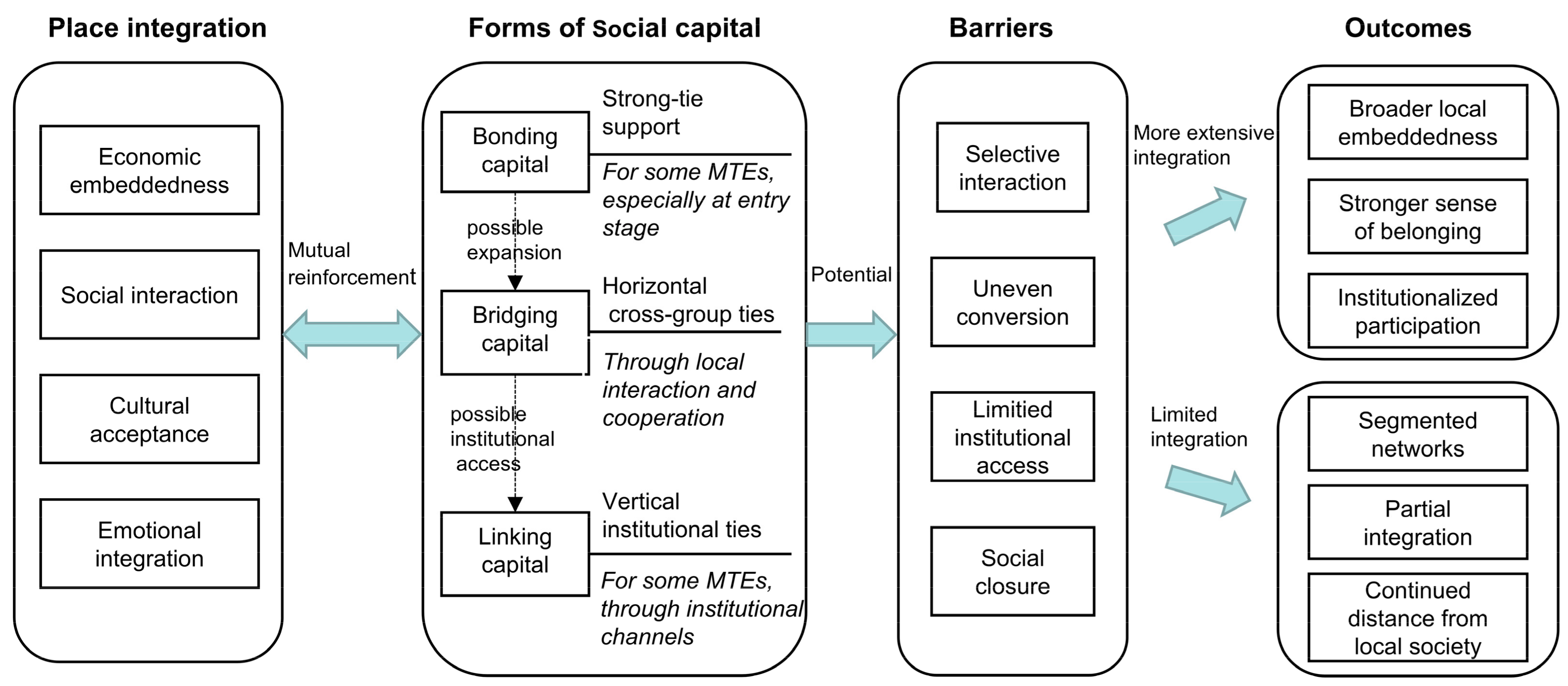
More importantly, this study advances existing place integration research by showing that integration should not be understood merely as an adaptive outcome [12,31,35]. In contrast, it is an ongoing process of interaction with the place, continuously shaped by the formation, mobilization, and transformation of social capital [14,18]. In this sense, the framework developed here moves beyond a dimension-based description of integration and introduces a mechanism-based explanation of how integration unfolds (Figure 3). Rather than suggesting that all MTEs follow the same pathway, Figure 3 summarizes the main forms of social capital, their possible extension, and the barriers that may lead to uneven or partial place integration in this case. It shows that movement from economic embeddedness toward broader social, cultural, and emotional integration depends on how MTEs build and convert social relationships within destination communities.
This mechanism becomes clearer when place integration is examined together with the changing forms of social capital. The changes in social capital during place integration is not uniform. Rather, it tends to proceed from the initial activation of bonding capital, to the expansion of bridging capital in localized heterogeneous networks, and, for some MTEs, to the strengthening of linking capital through institutionalized relationships [44,46]. This pattern supports the view that social capital is dynamic rather than static, as it is continuously generated, converted, and accumulated through interaction [3,46,85]. Existing research has often treated social capital as an explanatory variable affecting migrants’ integration [15,16,17,18]. This study shows that social capital is itself part of the integration process: it is both an outcome of interaction and a mechanism that facilitates further integration.
Furthermore, bonding, bridging, and linking capital are not only conceptually distinct [49] but also exhibit clear functional differences in the integration process. Bonding capital reduces uncertainty and provides entry support through strong ties [44,48]. Bridging capital expands access to heterogeneous actors, cooperation, and community participation [49,51,86]. Linking capital enables access to institutional support and formal legitimacy [50,52]. Likewise, the relationship among bonding, bridging, and linking capital should not be understood as a rigid linear sequence. Rather than being successively replaced, these forms of capital may coexist, overlap, and vary in relative importance over time. For some MTEs, initial strong-tie support may be supplemented by broader local networks; for others, local bridging ties may expand without necessarily leading to linking capital. Linking capital, in particular, is available only to some actors who are able to access institutional channels and formal organizations.
This unevenness is theoretically significant, as it indicates that place integration depends not only on the accumulation of social capital, but also on its extension, coexistence, and conversion under specific local conditions. Selective interaction, limited cross-group engagement, restricted institutional access, and forms of social closure act as key barriers to this process. These constraints help explain why some MTEs achieve broader local embeddedness and stronger place-based belonging, while others remain in segmented networks and experience only partial integration. Moreover, although strong ties provide emotional security and support, overreliance on bonding capital may reinforce closed circles and limit outward engagement [87,88]. Such structural imbalance may weaken community cohesion [89] constrain adaptive capacity and collaborative opportunities [90,91] and even generate exclusionary tendencies associated with social closure [87,92]. From this perspective, the “dark side” of social capital lies less in the existence of close ties themselves than in the failure to extend or convert them into broader and more inclusive relational resources. Therefore, it is imperative to strike a balance between strong ties and weak ties [90]. In other words, the balanced development of social relationships can better promote the place integration among MTEs.

6. Conclusions

This study examined how MTEs integrate into a rural tourism destination in China from a social capital perspective, using Hongcun as a case study. The findings show that MTEs’ place integration is a dynamic and uneven process involving four interrelated dimensions: economic embeddedness, social integration, cultural acceptance, and emotional integration. Among these, economic embeddedness often provides the initial basis for integration, while deeper emotional integration depends on the gradual development of social and cultural connections. The study further shows that place integration is closely intertwined with the transformation of social capital. In the course of integration, MTEs often rely initially on bonding capital, gradually expand bridging capital through localized interaction with heterogeneous actors, and, in some cases, strengthen linking capital through institutionalized relations with governments. However, this process is not always balanced. Selective interaction may reinforce closed circles, social networks, thereby constraining place integration.
This study offers significant theoretical contributions. First, this study advances place integration research by integrating social capital into the analytical framework. Existing studies have largely conceptualized place integration as an outcome of adaptation, primarily emphasizing the extent of their economic, social, and cultural integration [93]. This study highlights the importance of relational networks in facilitating the integration of MTEs. From this perspective, integration is an ongoing process of engagement with the place and continuously shaped by the formation, mobilization, and transformation of social relationships, rather than being a static end state. Second, this study extends existing research by focusing on MTEs moving into rural areas, thereby enriching empirical studies on MTEs and integration in rural tourism contexts. Previous research has largely concentrated on rural-to-urban migration, while paying limited attention to the reverse flow of MTEs into rural destinations. As entrepreneurial actors, MTEs play a critical role in rural revitalization in the Chinese context. By focusing on this group, this study reveals the distinctive logic of their integration process within rural tourism settings. Third, this study deepens the understanding of social capital by conceptualizing it as a dynamic and evolving process. Rather than treating social capital as a static resource or a mediating variable, this study demonstrates how social capital is continuously generated and accumulated throughout the integration process. This perspective contributes to a more nuanced understanding of the dynamic nature of social capital. Moreover, as social capital is increasingly recognized as a key asset in tourism development, this study enriches its empirical application in tourism contexts.
The study also has practical implications. First, local governments can cultivate and activate institutional channels for linking capital. For example, they could establish a one-stop service platform for interdepartmental collaboration, streamlining the process for MTEs to acquire institutional resources such as land, housing, and capital. Second, at the community level, an inclusive community should be constructed to ensure the parity of identity and rights between community residents. This can be accomplished by regularly organizing cultural events, thematic salons, and other activities for villagers and MTEs, thereby establishing a bridge for daily cross-group communication. Concurrently, collaborative projects can integrate the innovative dynamism of MTEs with the social capital of local residents, fostering a community of shared interests. For instance, a village–enterprise cooperation fund can be established to encourage residents and MTEs to engage in diverse forms of entrepreneurial collaboration, strengthening the economic reciprocity and facilitating the accumulation of mutual understanding and trust. Furthermore, the legitimate identity of MTEs can be conferred through empowerment mechanisms, such as the recognition of “honored villagers” and participation in village public affairs, to enhance their community participation and sense of identity. These approaches foster a sense of belonging among migrant tourism entrepreneurs as the hosts, motivating them to more actively integrate into the community and thereby advancing the sustainable development of rural areas.
This study has certain limitations. As a single case of a mature world heritage destination, Hongcun has a particular institutional and socio-spatial context, which may limit the broader generalizability of the findings. Given the potential variations across rural tourism destinations of different types and at different developmental stages, future research could advance this line of inquiry through multi-case comparative analyses. In addition, although the qualitative approach is well suited to revealing the processual and relational nature of integration, it cannot fully assess causal relationships among variables. Future studies can incorporate quantitative methods to develop scales for social capital and integration, as well as conduct large-sample validation.

Author Contributions

Y.L.: Conceptualization, methodology, software, formal analysis, investigation, resources, data curation, writing—original draft preparation, writing—review and editing. C.Y.: investigation, writing—review and editing, funding acquisition. X.L.: investigation, visualization. X.K.: investigation, writing—review and editing, supervision, project administration, funding acquisition. All authors have read and agreed to the published version of the manuscript.

Funding

This research was funded by the National Natural Science Foundation of China (Grant No. 41771156 and 42401286).

Institutional Review Board Statement

Ethical review and approval were not required for this study in accordance with Article 32 of the Measures for the Ethical Review of Life Science and Medical Research Involving Humans issued by the National Health Commission of China. This study constitutes a non-interventional social science investigation, in which all data were collected anonymously, without involving personal privacy or sensitive information, and posed no risk to participants.

Informed Consent Statement

Informed consent was obtained from all subjects involved in the study.

Data Availability Statement

The data are not publicly available because the data in this article was mainly obtained through interviews. The authors promised that the respondents’ information would not be made public.

Conflicts of Interest

The authors declare no conflicts of interest.

Appendix A

Table A1. Basic information of interviewees.
NumberGenderIdentityMotivation
MTE1MaleEntrepreneur of homestayproduction-led
MTE2MaleEntrepreneur of homestayproduction-led
MTE3FemaleEntrepreneur of restaurantLifestyle-oriented
MTE4MaleEntrepreneur of homestayproduction-led
MTE5MaleEntrepreneur of specialty storeproduction-led
MTE6MaleEntrepreneur of engraving shopproduction-led
MTE7FemaleEntrepreneur of handicraft shopproduction-led
MTE8MaleEntrepreneur of homestayproduction-led
MTE9MaleEntrepreneur of homestayproduction-led
MTE10MaleEntrepreneur of homestayproduction-led
MTE11FemaleEntrepreneur of homestayproduction-led
MTE12MaleEntrepreneur of homestayproduction-led
MTE13MaleEntrepreneur of homestayproduction-led
MTE14FemaleEntrepreneur of homestayproduction-led
MTE15FemaleEntrepreneur of specialty storeproduction-led
MTE16MaleEntrepreneur of homestayproduction-led
MTE17FemaleEntrepreneur of homestayLifestyle-oriented
MTE18FemaleEntrepreneur of homestayproduction-led
MTE19FemaleEntrepreneur of tea shopproduction-led
MTE20FemaleEntrepreneur of drink storeproduction-led
MTE21MaleEntrepreneur of barproduction-led
MTE22MaleEntrepreneur of homestayproduction-led
MTE23FemaleEntrepreneur of specialty storeproduction-led
MTE24MaleEntrepreneur of homestayproduction-led
MTE25MaleEntrepreneur of specialty store and craft shopproduction-led
MTE26MaleEntrepreneur of homestayproduction-led
MTE27MaleEntrepreneur of restaurantproduction-led
MTE28FemaleEntrepreneur of homestayproduction-led
MTE29Malebar musicianproduction-led
MTE30MaleEntrepreneur of homestayproduction-led
MTE31MaleEntrepreneur of homestayproduction-led
MTE32FemaleEntrepreneur of coffee shopproduction-led
MTE33MaleEntrepreneur of homestayproduction-led
MTE34FemaleEntrepreneur of homestayLifestyle-oriented
MTE35MaleEntrepreneur of cultural and creative storeproduction-led
MTE36MaleEntrepreneur of homestayproduction-led
MTE37MaleEntrepreneur of the sketching baseproduction-led
MTE38Maletravel photographerproduction-led
MTE39FemaleEntrepreneur of homestayproduction-led
MTE40MaleEntrepreneur of homestayLifestyle-oriented
MTE41MalePartner of a craft storeproduction-led
MTE42MaleEntrepreneur of craft store and coffee shopproduction-led
TC1FemaleMarketing Director of tourism company
TC2MaleScenic area manager
G1MaleGovernment staff
G2FemaleGovernment staff
VC1Malevillage head
VC2Malevillage Party secretary
LE1FemaleOwner of a cloth shop
LE2MaleOwner of restaurant
LE3FemaleManager of tea shop
LE4FemaleOwner of an inn
LE5MaleOwner of homestay

References

  1. Baum, T.; Kralj, A.; Robinson, R.N.; Solnet, D.J. Tourism workforce research: A review, taxonomy and agenda. Ann. Tour. Res. 2016, 60, 1–22. [Google Scholar] [CrossRef]
  2. Calero-Lemes, P.; Garcıa-Almeida, D.J. Immigrant entrepreneur knowledge in the tourism industry of island destinations. Tour. Geogr. 2021, 23, 527–551. [Google Scholar] [CrossRef]
  3. Li, Y.; Xu, Y.; Joseph, J.; Li, P.; Knight, D.W. Capital mobilization: Strategies for integrating migrant tourism entrepreneurs in rural regions. Tour. Geogr. 2025, 27, 275–292. [Google Scholar] [CrossRef]
  4. Su, X.; Chen, Z. Embeddedness and migrant tourism entrepreneurs: A Polanyian perspective. Environ. Plan. A Econ. Space 2017, 49, 652–669. [Google Scholar] [CrossRef]
  5. Liang, Z.; Luo, H.; Hui, T. Multiple measures of tourism-led migrants’ subjective well-being. Tour. Manag. Perspect. 2023, 45, 101047. [Google Scholar] [CrossRef]
  6. Qu, M.; Zollet, S. Neo-endogenous revitalisation: Enhancing community resilience through art tourism and rural entrepreneurship. J. Rural Stud. 2023, 97, 105–114. [Google Scholar] [CrossRef]
  7. Favell, A. Philosophies of integration: Immigration and the idea of citizenship in France and Britain; Palgrave: New York, NY, USA, 2001. [Google Scholar]
  8. Sun, J.; Ling, L.; Huang, Z.J. Tourism migrant workers: The internal integration from urban to rural destinations. Ann. Tour. Res. 2020, 84, 102972. [Google Scholar] [CrossRef]
  9. Cutchin, M.P. Physician retention in rural communities: The perspective of experiential place integration. Health Place 1997, 3, 25–41. [Google Scholar] [CrossRef]
  10. Johansson, K.; Josephsson, S.; Lilja, M. Creating possibilities for action in the presence of environmental barriers in the process of ‘ageing in place’. Ageing Soc. 2009, 29, 49–70. [Google Scholar] [CrossRef]
  11. Zhi-peng, L.; Kai, B.; Xiao-na, W. Research on the local integration of tourism labor migration in Barkhor street, Lhasa. Hum. Geogr. 2021, 36, 175–184. [Google Scholar] [CrossRef]
  12. Van Rooij, N.; Margaryan, L. Integration of “Ideal Migrants”: Dutch lifestyle expat-preneurs in Swedish campgrounds. Rural Soc. 2019, 28, 183–197. [Google Scholar] [CrossRef]
  13. Deng, D.; Zhang, X.M. Hermeneutics of “lifestyle” in the context of liquidity: Based on the case of Dali. Sci. Geogr. Sin. 2023, 43, 828–837. [Google Scholar] [CrossRef]
  14. Zhang, X.; Lu, X.; Huang, C.; Liu, W.; Wang, G. The impact of social capital on migrants’ social integration: Evidence from China. Sustainability 2024, 16, 5564. [Google Scholar] [CrossRef]
  15. Lu, Y.; Ruan, D.C.; Lai, G. Social capital and economic integration of migrants in urban China. Soc. Netw. 2013, 35, 357–369. [Google Scholar] [CrossRef]
  16. Iosifides, T.; Lavrentiadou, M.; Petracou, E.; Kontis, A. Forms of social capital and the incorporation of Albanian immigrants in Greece. J. Ethn. Migr. Stud. 2007, 33, 1343–1361. [Google Scholar] [CrossRef]
  17. Kuo, N.-T.; Cheng, Y.-S.; Chang, K.-C.; Hu, S.-M. How social capital affects support intention: The mediating role of place identity. J. Hosp. Tour. Manag. 2021, 46, 40–49. [Google Scholar] [CrossRef]
  18. Ge, L.; Peiling, C.; Qiyin, M.; Lin, C. The Impact Mechanism of Residing in Urban Villages on the Social Integration of the Floating Population: An Empirical Study in Guangzhou Based on a Social Capital Mediation Model. South China Geogr. J. 2025, 3, 93–109. [Google Scholar] [CrossRef]
  19. Bell, M.; Ward, G. Comparing temporary mobility with permanent migration. Tour. Geogr. 2000, 2, 87–107. [Google Scholar] [CrossRef]
  20. Liang, Z.; Luo, H.; Hui, T. Moving for a good life: Tourism mobility and subjective well-being of Chinese retirement migrants. Tour. Geogr. 2023, 25, 778–796. [Google Scholar] [CrossRef]
  21. Ferrari, S. Impacts of second home and visiting friends and relatives tourism on migration: A conceptual framework. Sustainability 2022, 14, 4352. [Google Scholar] [CrossRef]
  22. Williams, A.M.; Hall, C.M. Tourism and migration: New relationships between production and consumption. Tour. Geogr. 2000, 2, 5–27. [Google Scholar] [CrossRef]
  23. Iversen, I.; Jacobsen, J.K.S. Migrant tourism entrepreneurs in rural Norway. Scand. J. Hosp. Tour. 2016, 16, 484–499. [Google Scholar] [CrossRef]
  24. You, E.-Y.; Ashourizadeh, S.; Adu-Ampong, E.A.; Huijbens, E.H. Inventing lively rural areas: Characteristics, motivations, and regional triggers of young in-migrant tourism entrepreneurs in South Korea. J. Rural Stud. 2025, 120, 103842. [Google Scholar] [CrossRef]
  25. Vuin, A.; Carson, D.A.; Carson, D.B.; Garrett, J. The role of heritage tourism in attracting “active” in-migrants to “low amenity” rural areas. Rural Soc. 2016, 25, 134–153. [Google Scholar] [CrossRef]
  26. Su, X.; Zhang, H.; Cai, X. Lifestyle, profit, and the selling of home to tourists in Lijiang, China. Tour. Geogr. 2021, 23, 1001–1020. [Google Scholar] [CrossRef]
  27. Sun, X.X.; Xu, H.G.; Köseoglu, M.A.; Okumus, F. How do lifestyle hospitality and tourism entrepreneurs manage their work-life balance? Int. J. Hosp. Manag. 2020, 85, 102359. [Google Scholar] [CrossRef]
  28. Xu, H.; Wu, Y. Lifestyle mobility in China: Context, perspective and prospects. Mobilities 2016, 11, 509–520. [Google Scholar] [CrossRef]
  29. Dawson, D.; Fountain, J.; Cohen, D.A. Seasonality and the lifestyle “conundrum”: An analysis of lifestyle entrepreneurship in wine tourism regions. Asia Pac. J. Tour. Res. 2011, 16, 551–572. [Google Scholar] [CrossRef]
  30. Zhang, Q.; Xu, H.; Li, Y.; Wen, T. Understanding the embeddedness and CSR of small in-migration tourism entrepreneurs: The moderating role of the duration of residence. J. China Tour. Res. 2024, 20, 453–475. [Google Scholar] [CrossRef]
  31. Li, Y.J.; Xu, Y.Y.; Ouyang, C.X.; Zhou, L.X. A case study on the local integration of non-local small enterprise in ethnic tourism destination. Tour. Trib. 2023, 38, 38–51. [Google Scholar] [CrossRef]
  32. Zhang, H.X.; Yan, L.B.; Lee, H.M.; Yang, Q.S. Social integration of lifestyle migrants: The case of Sanya snowbirds. Curr. Issues Tour. 2020, 23, 2825–2838. [Google Scholar] [CrossRef]
  33. Duan, S.K.; Zhang, L.; Su, Q. Process and types of place integration of elderly sojourners in Sanya. Tour. Trib. 2022, 37, 41–53. [Google Scholar] [CrossRef]
  34. Zhu, H.; Qian, J.X.; Chen, X.L. Place and identity: The rethink of place of European-American human geography. Hum. Geogr. 2010, 25, 1–6. [Google Scholar] [CrossRef]
  35. Wang, X.; Bai, K.; Bao, J.J. Dimension construction and test of place integration of tourism migration in Lijiang ancient town. Tour. Trib. 2021, 36, 116–132. [Google Scholar] [CrossRef]
  36. Xie, Y.Y.; Ma, L. Dimensions and influencing factors of place embeddedness of Chinese intellectual returnees in Guangzhou. Prog. Geogr. 2024, 43, 331–345. [Google Scholar] [CrossRef]
  37. Munkejord, M.C. Becoming spatially embedded: Findings from a study on rural immigrant entrepreneurship in Norway. Entrep. Bus. Econ. Rev. 2017, 5, 111–130. [Google Scholar] [CrossRef]
  38. Kloosterman, R.C. Matching opportunities with resources: A framework for analysing (migrant) entrepreneurship from a mixed embeddedness perspective. Entrep. Reg. Dev. 2010, 22, 25–45. [Google Scholar] [CrossRef]
  39. Korsgaard, S.; Ferguson, R.; Gaddefors, J. The best of both worlds: How rural entrepreneurs use placial embeddedness and strategic networks to create opportunities. Entrep. Reg. Dev. 2015, 27, 574–598. [Google Scholar] [CrossRef]
  40. Wen, T.; Su, X.B. Relationship and institution: Small tourism business embedded in local social networks. Tour. Trib. 2017, 32, 39–46. [Google Scholar] [CrossRef]
  41. Matarrita-Cascante, D.; Zunino, H.; Sagner-Tapia, J. Amenity/lifestyle migration in the Chilean Andes: Understanding the views of “the other” and its effects on integrated community development. Sustainability 2017, 9, 1619. [Google Scholar] [CrossRef]
  42. Torkington, K. Place and lifestyle migration: The discursive construction of ‘glocal’place-identity. Mobilities 2012, 7, 71–92. [Google Scholar] [CrossRef]
  43. Qiao, W.; Yan, Y.; Chang, L. Perception of lifestyle entrepreneurial migrants based on the mobility paradigm: A case study of Suhe ancient town. Hum. Geogr. 2017, 32, 15–21. [Google Scholar] [CrossRef]
  44. Lang, R.; Fink, M. Rural social entrepreneurship: The role of social capital within and across institutional levels. J. Rural Stud. 2019, 70, 155–168. [Google Scholar] [CrossRef]
  45. Wang, X.R.; Huang, Y.N.; Huang, K.J. How does social entrepreneurship achieve sustainable development goals in rural tourism destinations? The role of legitimacy and social capital. J. Sustain. Tour. 2025, 33, 1262–1280. [Google Scholar] [CrossRef]
  46. Svendsen, G.L.H.; Kjeldsen, C.; Noe, E. How do private entrepreneurs transform local social capital into economic capital? Four case studies from rural Denmark. J. Socio-Econ. 2010, 39, 631–644. [Google Scholar] [CrossRef]
  47. Putnam, R.D. Bowling Alone: The Collapse and Revival of American Community; Simon and Schuster: New York, NY, USA, 2000. [Google Scholar]
  48. Au, A. The embodiment of social capital at individual and communal levels: Action, rewards, inequality, and new directions. Int. J. Sociol. Soc. Policy 2019, 39, 812–830. [Google Scholar] [CrossRef]
  49. Poortinga, W. Community resilience and health: The role of bonding, bridging, and linking aspects of social capital. Health Place 2012, 18, 286–295. [Google Scholar] [CrossRef] [PubMed]
  50. Szreter, S.; Woolcock, M. Health by association? Social capital, social theory, and the political economy of public health. Int. J. Epidemiol. 2004, 33, 650–667. [Google Scholar] [CrossRef]
  51. Ceci, F.; Masciarelli, F.; Poledrini, S. How social capital affects innovation in a cultural network: Exploring the role of bonding and bridging social capital. Eur. J. Innov. Manag. 2020, 23, 895–918. [Google Scholar] [CrossRef]
  52. Sun, J.X.; Zhang, L.Y.; Wang, S.Y. The alternative capitality of tourism: An analysis based on three perspectives. Commer. Econ. Manag. 2023, 397, 52–59. [Google Scholar] [CrossRef]
  53. Peck, J. For Polanyian economic geographies. Environ. Plan. A 2013, 45, 1545–1568. [Google Scholar] [CrossRef]
  54. Granovetter, M. Economic action and social structure: The problem of embeddedness. Am. J. Sociol. 1985, 91, 481–510. [Google Scholar] [CrossRef]
  55. Wang, M.; Rasoolimanesh, S.M.; Kunasekaran, P. A review of social entrepreneurship research in tourism: Knowledge map, operational experiences, and roadmaps. J. Sustain. Tour. 2022, 30, 1777–1798. [Google Scholar] [CrossRef]
  56. Polanyi, K. The economy as instituted process. In Trade and Market in the Early Empires; Polanyi, K., Arensberg, C., Pearson, H.W., Eds.; The Free Press: New York, NY, USA, 1957; p. 243. [Google Scholar]
  57. Guo, Y.; Zhu, L.; Zhao, Y. Tourism entrepreneurship in rural destinations: Measuring the effects of capital configurations using the fsQCA approach. Tour. Rev. 2023, 78, 834–848. [Google Scholar] [CrossRef]
  58. Shen, H.; Liu, X.; Li, M.; Ji, M. Development of social enterprises in rural island tourism in China. J. China Tour. Res. 2019, 15, 262–282. [Google Scholar] [CrossRef]
  59. Mottiar, Z.; Boluk, K.; Kline, C. The roles of social entrepreneurs in rural destination development. Ann. Tour. Res. 2018, 68, 77–88. [Google Scholar] [CrossRef]
  60. Peng, L.L.; Lin, L. Social Organization, Social Capital and Social Inclusion of Migrant Population: An Empirical Study. J. Nanjing Agric. Univ. (Soc. Sci. Ed.) 2022, 22, 43–52. [Google Scholar] [CrossRef]
  61. Liu, C.x. A study of push and pull factors at world heritage sites: A case of vernacular villages xidi and hongcun in southern anhui. Tour. Trib. 2005, 20, 15–20. [Google Scholar] [CrossRef]
  62. Key Tasks for Hongcun Town in 2024. Available online: https://www.yixian.gov.cn/zwgk/public/6616603/11719618.html (accessed on 21 October 2025).
  63. Cao, J.; Kong, Y.; Xu, L. Digital Ethnography: Research on Mediated Daily Life. J. Bimon. 2018, 148, 18–27+149. [Google Scholar] [CrossRef]
  64. Bryman, A. Social Research Methods; Oxford University Press: Oxford, UK, 2012. [Google Scholar]
  65. Braun, V.; Clarke, V. Using thematic analysis in psychology. Qual. Res. Psychol. 2006, 3, 77–101. [Google Scholar] [CrossRef]
  66. Altinay, L.; Toros, E.; Vatankhah, S.; Seyfi, S. Women entrepreneurs as cultural custodians in tourism: A social feminism theory perspective. Tour. Manag. 2026, 112, 105267. [Google Scholar] [CrossRef]
  67. Cohen, S.A.; Duncan, T.; Thulemark, M. Lifestyle mobilities: The crossroads of travel, leisure and migration. Mobilities 2015, 10, 155–172. [Google Scholar] [CrossRef]
  68. Yang, Z.; Cheng, H. Tourism entrepreneurial migrants’ micro-motivations in Chinese natural scenery sightseeing places: A case study of Tangkou Town in Huangshan City. Geogr. Res. 2018, 37, 954–966. [Google Scholar]
  69. Yang, X.K.; Xu, H.G. Producing an ideal village: Imagined rurality, tourism and rural gentrification in China. J. Rural Stud. 2022, 96, 1–10. [Google Scholar] [CrossRef]
  70. Paniagua, A. Urban-rural migration, tourism entrepreneurs and rural restructuring in Spain. Tour. Geogr. 2002, 4, 349–371. [Google Scholar] [CrossRef]
  71. Burt, R.S. Structural Holes: The Social Struture of Competition; Harvard University Press: Cambridge, UK, 1992; p. 74. [Google Scholar]
  72. Kalantaridis, C.; Bika, Z. In-migrant entrepreneurship in rural England: Beyond local embeddedness. Entrep. Reg. Dev. 2006, 18, 109–131. [Google Scholar] [CrossRef]
  73. Yin, S.B.; Gu, M.X.; Du, X. The Influence of Social Communication on the Acquisition of Business Resources by Tourism Small Business Owners. J. Anhui Norm. Univ. (Nat. Sci.) 2024, 47, 44–51. [Google Scholar] [CrossRef]
  74. Haveman, H.A.; Jia, N.; Shi, J.; Wang, Y. The dynamics of political embeddedness in China. Adm. Sci. Q. 2017, 62, 67–104. [Google Scholar] [CrossRef]
  75. Ateljevic, I.; Doorne, S. ‘Staying within the fence’: Lifestyle entrepreneurship in tourism. J. Sustain. Tour. 2000, 8, 378–392. [Google Scholar] [CrossRef]
  76. Jiao, Y.; Chen, B. A study on social integration of artist migrants into rural tourism communities-based on Bourdieu’s field theory. Tour. Trib. 2022, 37, 26–39. [Google Scholar] [CrossRef]
  77. Liu, F.; Wu, X.; Xu, J.; Chen, D. Examining cultural intelligence, heritage responsibility, and entrepreneurship performance of migrant homestay inn entrepreneurs: A case study of Hongcun village in China. J. Hosp. Tour. Manag. 2021, 48, 538–550. [Google Scholar] [CrossRef]
  78. Zhang, C. The Chinese mosaic: Cultural diversity and creative cities. J. Reg. Sci. 2019, 59, 214–227. [Google Scholar] [CrossRef]
  79. Junot, A.; Paquet, Y.; Fenouillet, F. Place attachment influence on human well-being and general pro-environmental behaviors. J. Theor. Soc. Psychol. 2018, 2, 49–57. [Google Scholar] [CrossRef]
  80. Tuan, Y.F. Space and Place: Humanistic Perspective; Springer: Dordrecht, The Netherlands, 1979. [Google Scholar]
  81. Wen, T.; Zhang, Q.; Li, Y. Why small tourism enterprises behave responsibly: Using job embeddedness and place attachment to predict corporate social responsibility activities. Curr. Issues Tour. 2021, 24, 1435–1450. [Google Scholar] [CrossRef]
  82. Ramos-Torres, C. Exploring North-to-South immigrant family business: A resource-based view theoretical framework. J. Fam. Bus. Manag. 2026, 16, 437–460. [Google Scholar] [CrossRef]
  83. MacCannell, D. The Tourist: A New Theory of the Leisure Class; University of California: Berkeley, CA, USA, 1999; pp. 47–50. [Google Scholar]
  84. Su, X.B. From one home to another: Lifestyle migration and the belonging and alienation of home in Lijiang. Tour. Trib. 2022, 37, 14–26. [Google Scholar] [CrossRef]
  85. Adler, P.S.; Kwon, S.-W. Social capital: Prospects for a new concept. Acad. Manag. Rev. 2002, 27, 17–40. [Google Scholar] [CrossRef]
  86. Granovetter, M. The strength of weak ties: A network theory revisited. Sociol. Theory 1983, 1, 201–233. [Google Scholar] [CrossRef]
  87. Portes, A. Social capital: It’s origins and applications in contemporary society. Annu. Rev. Sociol. 1998, 24, 1–24. [Google Scholar] [CrossRef]
  88. Bourdieu, P. The Forms of Capital; Readings in Economic Sociology; Wiley: Hoboken, NJ, USA, 1986. [Google Scholar]
  89. Crowley, H.; Hickman, M.J. Migration, postindustrialism and the globalized nation state: Social capital and social cohesion re-examined. Ethn. Racial Stud. 2008, 31, 1222–1244. [Google Scholar] [CrossRef]
  90. Czernek-Marszałek, K. The overembeddedness impact on tourism cooperation. Ann. Tour. Res. 2020, 81, 102852. [Google Scholar] [CrossRef]
  91. Wang, X.R.; Lai, Q.Q.; Huang, Y.N. Imitation and innovation: Research on relational embeddedness and entrepreneurial mode in rural tourism destinations. Tour. Trib. 2023, 38, 18–31. [Google Scholar] [CrossRef]
  92. Zhou, L.; Chan, E.; Song, H. Social capital and entrepreneurial mobility in early-stage tourism development: A case from rural China. Tour. Manag. 2017, 63, 338–350. [Google Scholar] [CrossRef]
  93. Lu, S.; Zhang, Y.C.; Wang, L.L. Social integration structure and determinant of tourism migration in ancient village: A case study of Hongcun village. Hum. Geogr. 2017, 32, 138–145. [Google Scholar] [CrossRef]
Figure 1. Location of Hongcun village (source: drawn by authors).
Sustainability 18 04562 g001
Figure 2. The material and intangible heritage of Hongcun Village (Source: Picture (a) taken by the authors; picture (b) was from the marketing director of a tourism company).
Sustainability 18 04562 g002
Figure 3. Possible pathways of social capital and place integration among MTEs (Source: drawn by authors).
Sustainability 18 04562 g003
Table 1. Theme-encoding procedure.
CategoryFirst-Level CodesExample Quotes
Economic embeddednessInvestment environment
Career goals
House rental
Resource dependency
Entrepreneurial dilemma
Personnel employment
I have never stopped starting businesses. I rented it for 70,000 yuan a year and spent nearly a million on the entire renovation, which took three months. I originally thought I could recover the cost within three years. After all, Hongcun village is a World Heritage Site and there are really a lot of tourists. But I never expected to encounter the epidemic. When the homestay opened in 2019, there were three waiters. Last year, there were two. This year, it’s just me. But I’m still persisting. It has invested all my efforts, and I can’t bear to sell it. (MTE9)
Social integrationSocial interactions
Information exchange
Interaction limitations
Absence of trust
Interest-based underpinning
We can chat and go out to play together, and organize a meal or a drink, or have a barbecue and so on. But there are still certain problems. When you chat with them, you always talk about the small circle of business. There’s nothing outside of this circle. Unlike childhood friends, there’s no natural trust because there’s no interest involved and everyone is still very innocent. (MTE24)
Cultural acceptanceCultural observation
Traditional rituals
Cultural value
Cultural identity
Awareness of heritage inheritance
Nowadays, young people’s weddings in the village are very lively and grand. The groom rides a big horse, and the bride sits in the wedding palanquin. The groom carries the bride around the red tree at the entrance of the village three times. The procession, including teams dancing lanterns and beating gongs and drums, follows the palanquin around Yuezhao, Nanhu Lake, and Hua bridge. Tourists follow behind taking pictures. It is more meaningful than a Western-style wedding. Such traditional folk customs should be carried on. (MTE31)
Emotional integrationDaily interaction
Material caregiving
Neighborhood reciprocity
Place identity
Sense of belonging
The aunts in the village are really nice. Seeing us two young people in here, they sometimes give us the vegetables they grow. If we weren’t at home, they would just hang them on the door. I didn’t even know who sent them. I feel very moved and healed. The simplicity of the countryside still exists. Only by staying here can you feel so much beauty. (MTE7)
Disclaimer/Publisher’s Note: The statements, opinions and data contained in all publications are solely those of the individual author(s) and contributor(s) and not of MDPI and/or the editor(s). MDPI and/or the editor(s) disclaim responsibility for any injury to people or property resulting from any ideas, methods, instructions or products referred to in the content.