Article

Assessing the Social Carrying Capacity of Urban Tourism: Residents’ and Professionals’ Perceptions in the Municipality of Athens


by
Sotirios Varelas
1,
Georgios Tsoupros
1,* and
Ioannis E. Anastasopoulos
2
1
Department of Tourism Studies, University of Piraeus, 18534 Piraeus, Greece
2
Department of Business and Organizations Administration, University of Peloponnese, 24150 Kalamata, Greece
*
Author to whom correspondence should be addressed.
Sustainability 2026, 18(9), 4560; https://doi.org/10.3390/su18094560
Submission received: 16 April 2026 / Revised: 29 April 2026 / Accepted: 1 May 2026 / Published: 5 May 2026

Abstract

The rapid tourism development in the Municipality of Athens significantly impacts both the local economy and the daily lives of its residents. This study investigates the Social Carrying Capacity (SCC) of Athens by exploring the perceptions, experiences, and attitudes of local citizens and professionals towards the tourism phenomenon. A primary quantitative study was conducted between July and October 2024, utilising a structured online questionnaire based on a stratified random sampling method across the Municipal Communities of Athens, yielding 787 valid responses. The findings reveal a dichotomy in public perception: while the majority recognises the positive economic contributions of tourism—particularly in the catering and hospitality sectors—significant concerns are raised regarding negative socio-environmental impacts. The most severe consequence identified is the surge in housing costs and rent prices, predominantly driven by short-term rentals, followed by increased pressure on public infrastructure, cleanliness, and traffic congestion. Despite these challenges, a considerable portion of the respondents maintains a generally tolerant attitude towards visitors and believes there is still a margin for further tourism growth. The study concludes that to ensure sustainable urban tourism, policymakers must implement targeted strategies, including the regulation of short-term rentals and substantial investments in public infrastructure, thereby balancing economic benefits with residents’ quality of life.

1. Introduction

Urban tourism has emerged as one of the most dynamic and consequential phenomena shaping the socio-economic landscape of contemporary cities. As metropolitan destinations attract increasing volumes of international and domestic visitors, the capacity of host communities to absorb these flows—without compromising the well-being of residents or the integrity of local environments—has become a central concern for scholars, policymakers, and urban managers alike [1,2]. Athens, the capital of Greece and a city of exceptional historical and cultural significance, exemplifies this tension. Following a decade of economic recession, the city has experienced a dramatic tourism resurgence since the mid-2010s onwards, recording record-breaking visitor numbers in consecutive years and integrating itself into the short-break city-tourism circuits of Europe [3].
The transformative effects of this growth are visible across the urban fabric of Athens. Neighbourhoods historically inhabited by working-class and middle-class communities—such as Koukaki, Monastiraki, and Psyrri—have undergone rapid gentrification driven, in large part, by the proliferation of short-term rental platforms and the conversion of long-term residential stock into tourist accommodation [4]. The resulting pressure on housing affordability, combined with rising costs of living, increased noise, traffic congestion, and the erosion of neighbourhood identity, has generated growing public debate about the sustainability of the city’s tourism model [5].
Despite this mounting evidence of strain, systematic empirical research capturing the perceptions of Athenian residents and tourism professionals across the city’s distinct municipal communities remains limited. Most existing studies on residents’ attitudes toward tourism in Greece have focused on island destinations or coastal resort contexts [6,7], leaving the dynamics of urban carrying capacity in Athens underexplored. This gap is particularly significant given that Athens presents a unique case: a dense, historically layered metropolis where tourism is geographically concentrated in specific districts while its socio-economic effects radiate across the entire city.
The present study addresses this gap by operationalising the concept of Social Carrying Capacity (SCC) as a framework for measuring residents’ and professionals’ tolerance thresholds and perceptions of tourism impact in the Municipality of Athens. Drawing on a large-scale quantitative survey of 787 respondents conducted across all seven Municipal Communities of Athens between July and October 2024, the study offers a spatially granular and empirically grounded assessment of how urban dwellers experience and evaluate the tourism phenomenon. The findings provide actionable evidence for local authorities and planners seeking to develop sustainable tourism governance strategies for the city.
Guided by this overarching aim, the study seeks to address the following research questions: (RQ1) How do residents and tourism professionals in the Municipality of Athens perceive the economic, socio-environmental, and housing impacts of tourism across different Municipal Communities? (RQ2) To what extent do perceptions of tourism’s impact vary spatially across the seven Municipal Communities of Athens? (RQ3) What is the current status of the Social Carrying Capacity of Athens as perceived by its residents and professionals, and what are the implications for sustainable tourism governance?

2. Theoretical Background

2.1. The Concept of Carrying Capacity in Tourism

The concept of carrying capacity originates in ecology and environmental management, where it denotes the maximum population size that an environment can sustain indefinitely given available resources [8]. Its application to tourism was first formalised in the 1980s, when scholars recognised that tourist destinations are subject to analogous thresholds beyond which the quality of the visitor experience and the integrity of the host environment begin to deteriorate [8,9,10]. O’Reilly [10] distinguished between two primary dimensions: supply-side capacity, relating to the physical and ecological limits of a destination, and demand-side capacity, concerning visitor satisfaction and the psychological experience of crowding. McCool and Lime [11] further problematised the concept, arguing that carrying capacity is not a fixed or objectively measurable quantity but is rather conditioned by management choices, community values, and evolving social norms. More recent destination-level approaches have further operationalised carrying capacity through structured methodological assessment frameworks for tourism planning [9].
In the context of urban tourism, the application of carrying capacity frameworks has been complicated by the density and functional complexity of city environments, where tourism activity overlaps continuously with the residential and productive life of local communities [12]. Butler’s [13] Tourism Area Life Cycle (TALC) model provides a useful longitudinal perspective, suggesting that destinations progress through stages of exploration, involvement, development, consolidation, stagnation, and eventual decline or rejuvenation—with each stage characterised by distinct patterns of resident–tourist interaction and community tolerance.

2.2. Social Carrying Capacity: Dimensions and Measurement

Social Carrying Capacity (SCC) refers specifically to the limits of tourism development beyond which the social and cultural fabric of the host community begins to suffer adverse effects [14]. Saveriades [14] identified two constitutive dimensions of SCC: the psychological carrying capacity of visitors—the threshold beyond which tourist satisfaction declines due to crowding or over-commercialisation—and the psychological carrying capacity of the host population, which concerns the level of tolerance of residents toward the presence and behaviour of visitors. When this second threshold is exceeded, social tensions between tourists and permanent residents tend to emerge [15], manifested through declining hospitality, increased conflict, and a deterioration in the quality of daily life [16].
Doxey’s [17] Irritation Index (Irridex) offers a foundational model for understanding the progression of resident attitudes from initial euphoria through apathy and irritation toward antagonism as tourism intensity increases. Crucially, both the TALC and the Irridex are dynamic, sequential models that describe change over time: the TALC traces destination-level trajectories from exploration to stagnation or rejuvenation, while the Irridex maps the progressive deterioration of resident–tourist relations as visitor intensity rises. Applied to the urban context, these models generate the expectation that as destinations intensify tourism activity, residents shift from euphoria toward apathy and eventually irritation—a trajectory that can be operationalised empirically through the kinds of perceptual indicators used in this study. However, it should be noted that both frameworks have limitations in urban settings: cities are multi-functional, with heterogeneous neighbourhoods at different stages of tourism development simultaneously, making any single-point TALC classification problematic [17]. This study operationalises Irridex stages indirectly through survey items measuring tolerance and comfort, while treating TALC only as a heuristic reference framework rather than a testable developmental sequence. Mathieson and Wall [18] enriched this framework by situating social impacts within a broader taxonomy of economic, physical, and cultural effects, emphasising that negative social outcomes tend to accumulate as destinations approach or exceed their carrying capacity. The UNWTO [19] has further operationalised SCC measurement through composite indicator frameworks encompassing demographic dynamics, social welfare indicators, crime and safety statistics, and subjective well-being measures.
Moreover, while Butler’s Tourism Area Life Cycle (TALC) and Doxey’s Irritation Index (Irridex) are frequently cited in tourism research, their analytical application to contemporary urban contexts requires careful consideration. The TALC model conceptualises tourism development as a longitudinal process, where destinations evolve through identifiable stages characterised by changing levels of visitor intensity and resident response. In parallel, the Irridex framework captures the progression of residents’ attitudes from euphoria to apathy, irritation, and eventual antagonism as tourism pressure increases.
In the context of urban tourism, these models should be understood not as deterministic sequences but as heuristic frameworks that help interpret observed patterns of perception and tolerance. Cities differ from traditional resort destinations in that they contain multiple neighbourhoods at different stages of tourism development simultaneously. As such, elements of different TALC stages may coexist within the same urban system. The present study adopts these frameworks analytically by interpreting residents’ tolerance levels and perceived impacts as indicators of the current position of Athens within this broader conceptual spectrum, without assuming a linear or uniform developmental trajectory.

2.3. Residents’ Perceptions of Tourism: Key Determinants

A substantial body of literature has examined the factors shaping residents’ attitudes toward tourism. Economic dependency on tourism is consistently identified as a primary driver of positive attitudes: residents who benefit financially from visitor spending tend to evaluate tourism impacts more favourably than those who do not [20,21]. Geographical proximity to tourism hotspots is also significant, with residents in high-traffic areas reporting greater awareness of negative impacts—congestion, noise, litter—while often also acknowledging stronger economic benefits [22].
Demographic variables including age, education level, and length of residence have been found to moderate attitudes in context-specific ways [23]. Crucially, the distinction between residents and tourism professionals has emerged as a robust predictor of perception gaps: the latter group systematically reports more favourable evaluations of tourism’s economic contributions while displaying comparable sensitivity to socio-environmental costs [24]. Recent research has also highlighted housing affordability and displacement anxiety as increasingly salient determinants of negative attitudes, particularly in cities where short-term rental platforms have restructured the residential property market [25,26,27]. Athens, where the saturation of platforms such as Airbnb has been documented extensively, represents a compelling case for examining this relationship at the neighbourhood scale.

2.4. Overtourism, Short-Term Rentals, and Urban Social Carrying Capacity in European Cities

In recent years, the concept of overtourism has gained renewed scholarly attention, particularly in the context of densely populated European cities where tourism growth intersects with residential life. Overtourism is generally understood as a situation in which the intensity of visitor flows exceeds the social, environmental, or infrastructural capacity of a destination, leading to a deterioration in residents’ quality of life and, ultimately, in the visitor experience itself. It is closely linked to the concept of carrying capacity, defined as the maximum number of visitors a destination can accommodate without causing unacceptable environmental, social, or economic impacts [28,29]. Recent empirical studies have increasingly emphasised the role of platform-based short-term rentals as a key driver of these dynamics, particularly in Southern European urban destinations [29].
The expansion of short-term rental platforms has been identified as a structural factor reshaping urban housing markets across European cities such as Lisbon, Barcelona, and Milan, which ultimately results in reduced housing availability and rising rents in urban destinations [29]. These platforms contribute to the conversion of long-term residential housing into tourist accommodation, thereby reducing housing supply, increasing rental prices, and accelerating processes of displacement and gentrification [30,31]. These impacts are not merely economic but extend to social and cultural dimensions, including the erosion of neighbourhood cohesion and changes in local identity.
More broadly, the literature on overtourism highlights that negative externalities—such as congestion, noise, environmental degradation, and pressure on public infrastructure—are typically concentrated in historic urban cores. Empirical studies demonstrate that residents located in central districts experience significantly higher levels of perceived tourism pressure compared to those in peripheral areas, confirming that urban Social Carrying Capacity is spatially differentiated rather than uniform across the city [31].

2.5. Comparative Evidence from European Urban Destinations: The Case of Kraków and Beyond

A growing body of empirical research has examined residents’ perceptions of tourism impacts in European urban destinations comparable to Athens, offering valuable comparative insights. In particular, studies conducted in Kraków—a historically dense Central European city with a rapidly expanding tourism sector—provide a useful benchmark. Research based on survey data from both residents and tourism-related professionals indicates that tourism generates significant economic benefits while simultaneously producing negative externalities such as congestion, rising housing costs, and environmental pressure [32].
More recent comparative work further demonstrates that residents’ perceptions of overtourism vary significantly depending on their location within the city, with those living in central areas reporting higher exposure to crowding, noise, and tourism-related disturbances [33]. This spatial differentiation is particularly relevant for understanding urban Social Carrying Capacity, as it suggests that tolerance thresholds are not homogeneous but vary across neighbourhoods [33].
The comparison between Athens and Kraków is especially instructive. Both cities combine a highly concentrated historic core with a broader metropolitan structure characterised by uneven tourism distribution. In both cases, tourism impacts are disproportionately concentrated in central districts, where residents report higher levels of dissatisfaction related to housing affordability, congestion, and environmental quality. At the same time, both cities exhibit a dual perception pattern, whereby residents acknowledge the economic benefits of tourism while expressing concern about its long-term sustainability [33].
Thus, it has become evident that overtourism is a multidimensional phenomenon affecting not only environmental sustainability but also social cohesion and urban identity [34]. In particular, participatory governance approaches have been highlighted as essential for addressing overtourism in European cities, as they enhance policy legitimacy and stakeholder acceptance [35]. At the same time, empirical studies demonstrate that residents’ perceptions of tourism impacts are highly heterogeneous, varying across social groups and spatial contexts [36,37].
It is also noteworthy that recent research has increasingly emphasised the importance of integrating both residents’ and visitors’ perspectives in destination planning, highlighting the role of governance frameworks in balancing competing stakeholder interests. Empirical evidence from Greek urban contexts, such as the case of Piraeus Port, demonstrates that sustainable tourism development requires coordinated policy approaches that reconcile economic objectives with social acceptance and community well-being [38].
Despite this growing body of comparative research, relatively few studies have systematically examined Social Carrying Capacity in Athens using a large-scale and spatially stratified dataset. The present study contributes to this gap by analysing perceptions across all seven Municipal Communities, thereby offering a more comprehensive and spatially differentiated assessment of tourism impacts in a major Southern European capital.

2.6. Research Gap and Contribution

Although the literature on overtourism, short-term rentals, and residents’ perceptions has expanded significantly in recent years, important gaps remain. First, much of the empirical research has focused on specific neighbourhoods or single-case studies, limiting the ability to capture spatial variation across entire metropolitan areas. Second, while comparative studies from cities such as Kraków, Lisbon, and Barcelona provide valuable insights, there is a lack of comprehensive, large-scale analyses of Social Carrying Capacity in Athens that integrate both residents and tourism professionals.
The present study addresses these gaps by combining a large sample (N = 787) with a spatially stratified design across all seven Municipal Communities of Athens. By integrating economic, socio-environmental, and housing-related dimensions within a unified analytical framework, the study contributes to the literature by offering a more holistic and spatially differentiated assessment of urban Social Carrying Capacity. Furthermore, by explicitly incorporating both residents’ and professionals’ perspectives, the study provides new insights into perception gaps that are often assumed but less frequently tested empirically.

3. Materials and Methods

3.1. Research Design and Sampling

This study adopts a quantitative, cross-sectional survey design to capture residents’ and tourism professionals’ perceptions of Social Carrying Capacity in the Municipality of Athens [39]. The target population comprised permanent residents and business professionals active within the boundaries of the seven Municipal Communities (MC) of Athens. A stratified random sampling strategy was employed to ensure proportional representation across all seven MCs, with data collection points selected to reflect the geographic, socio-economic, and functional diversity of each district—ranging from the historically dense and tourist-intensive 1st MC (Syntagma–Monastiraki–Plaka corridor) to the predominantly residential 4th and 5th MCs (Kolonos, Patisia, Sepolia).
The questionnaire was pre-tested with a convenience sample of 28 participants (14 residents and 14 professionals) drawn from the 1st and 2nd Municipal Communities, selected to reflect the diversity of the target population in terms of age and occupational status. Feedback from the pilot identified three areas of improvement: (1) two Likert-scale items on infrastructure quality (Q17, Q21) were perceived as ambiguous and were rephrased to distinguish between tourism-attributable and general urban infrastructure; (2) the introductory framing of the housing module was expanded to clarify that questions referred to the respondent’s current neighbourhood rather than Athens as a whole; and (3) the estimated completion time was found to exceed expectations (originally ~20 min), which prompted the removal of two open-ended items to achieve a more manageable length (~15 min).
Data were collected through a structured online questionnaire administered via the SurveyMonkey platform between July and October 2024, a period specifically chosen to capture perceptions across both peak tourist season and the transitional off-peak period. Field coordination was carried out by a trained eight-member student research team from the Department of Tourism Studies at the University of Piraeus. The minimum sample size was determined using the standard formula for proportional estimation at a 95% confidence level with a 5% margin of error (n = Z2 × p(1 − p)/a2) [40]. Assuming p = 0.5, the minimum required sample was approximately 384 responses. The final dataset comprised 787 valid responses, substantially exceeding this threshold and providing robust representativeness across all seven MCs.

3.2. Questionnaire Structure and Measurement Instrument

The questionnaire was structured around seven thematic modules informed by the SCC indicator framework of the UNWTO [19] and the theoretical constructs identified in the literature review. The modules addressed: (1) socio-demographic characteristics; (2) perceived tourism presence and its economic importance; (3) economic impacts of tourism; (4) social and environmental impacts; (5) quality of life and infrastructure; (6) dominant tourism activities and their perceived effects; and (7) overall tolerance of tourists and future development potential.
The majority of items employed closed-ended response formats. Attitudinal items were measured using a five-point Likert scale ranging from “Strongly Disagree” (1) to “Strongly Agree” (5), or from “Not at all” (1) to “Very much” (5) for intensity-based questions. Perceived tourism significance and economic dependency were assessed on a 1–10 rating scale. The questionnaire was administered in Greek, and all items were pre-tested with a pilot group to ensure clarity and face validity [28].
To assess the internal consistency of the multi-item attitudinal scales, Cronbach’s alpha coefficients were calculated. The overall scale demonstrated high reliability, with a Cronbach’s alpha of 0.89, exceeding the commonly accepted threshold of 0.70 and indicating strong internal consistency among the items.
Prior to conducting factor analysis, the suitability of the data was examined. The Kaiser–Meyer–Olkin (KMO) measure of sampling adequacy yielded a value of 0.91, indicating excellent adequacy for factor analysis. In addition, Bartlett’s test of sphericity was statistically significant (χ2 ≈ 5800, df = 210, p < 0.001), confirming that the correlation matrix was not an identity matrix and that the variables were sufficiently interrelated to justify factor analysis.

3.3. Exploratory Factor Analysis

An exploratory factor analysis (EFA) using principal component extraction with varimax rotation was conducted to identify the underlying structure of the attitudinal items. The analysis resulted in a five-factor solution, explaining approximately 65% of the total variance.
The rotated factor matrix indicated a coherent structure in which items clustered around five theoretically meaningful dimensions. Economic-related items (Q2, Q3, Q5, Q16) loaded strongly on a single factor, while environmental and urban pressure variables (Q6, Q11, Q12, Q13, Q14, Q15) formed a distinct socio-environmental factor. Housing-related variables (Q18, Q19) emerged as a separate and highly salient dimension, reflecting the prominence of affordability concerns in the dataset. Items related to residents’ tolerance and perceived carrying capacity (Q9, Q10, Q20) loaded on a fourth factor, while perceived tourism intensity and behavioural adaptation (Q1, Q4, Q8) defined a fifth factor.
A small number of items (Q7, Q17, Q21) exhibited weaker or cross-loadings and were retained as standalone indicators due to their conceptual relevance (Table 1).

3.4. Confirmatory Factor Analysis

To further validate the underlying structure of the measurement instrument, a confirmatory factor analysis (CFA) was conducted. Based on the results of the exploratory factor analysis, a five-factor measurement model was specified, comprising: (1) Economic Benefits of Tourism (Q2, Q3, Q5, Q16), (2) Socio-Environmental Impacts (Q6, Q11, Q12, Q13, Q14, Q15), (3) Housing and Cost of Living Pressures (Q18, Q19), (4) Tolerance and Social Carrying Capacity (Q9, Q10, Q20), and (5) Tourism Pressure and Presence (Q1, Q4, Q8). Three items (Q7, Q17, Q21) were retained as single-indicator variables due to their conceptual relevance but were not included in the latent factor structure.
The CFA results indicated a good overall model fit to the data. Specifically, the model yielded a Comparative Fit Index (CFI) of 0.94 and a Tucker–Lewis Index (TLI) of 0.93, both exceeding the recommended threshold of 0.90. The Root Mean Square Error of Approximation (RMSEA) was 0.048, and the Standardized Root Mean Square Residual (SRMR) was 0.041, both indicating a satisfactory fit below the 0.08 threshold. All standardized factor loadings were statistically significant (p < 0.001) and exceeded 0.60 in the majority of cases.
Convergent validity was supported by average variance extracted (AVE) values exceeding 0.50 for all factors, while composite reliability (CR) values ranged between 0.78 and 0.91, indicating satisfactory internal consistency. Discriminant validity was also established, as the square root of AVE for each construct exceeded the inter-construct correlations.
Overall, the CFA results confirm the adequacy of the proposed five-factor model and provide strong evidence for the reliability and construct validity of the measurement instrument.

4. Results

4.1. Sample Profile

The sample was distributed across all seven Municipal Communities, with higher concentrations in the 1st and 2nd MCs, reflecting both their greater population density and their centrality to Athens’s tourism geography. Respondents were classified into four categories by their relationship to the area: permanent residents, local professionals, individuals with dual resident-professional status, and others. The mean questionnaire completion time was approximately 15 min.

4.2. Perceived Tourism Presence and Economic Significance

A substantial majority of respondents—approximately 68%—reported that tourism presence in their area was either “quite” (41.2%) or “very” (26.8%) increased, confirming the broadly felt visibility of visitor flows across the city. The intensity of this perception was strongly differentiated by location: the 1st MC (historic centre) recorded the highest proportion of respondents rating tourist presence as “very” increased (37.0%), while the 4th and 5th MCs—more residential and peripheral—registered the highest proportions of “not at all” or “a little” responses (8.3% and 10.0%, respectively) (Table 2).
The mean perceived importance of tourism for respondents’ neighbourhoods was 6.9 out of 10, indicating a broadly positive but nuanced recognition of tourism’s role. The 1st MC again scored highest (mean 10 rating: 25.9%), while the 7th MC displayed the lowest scores. Economic dependency on tourism was assessed at a mean of 6.1 out of 10 across the full sample, with the 1st MC scoring significantly above average (7.3) and the 4th and 7th MCs scoring below (4.6 and 4.3, respectively).

4.3. Economic Impacts

54.5% of respondents agreed or strongly agreed that tourism contributes to increased income and job creation in their area, making this the most broadly affirmed positive impact. Agreement was highest in the 1st MC (65.1%) and lowest in the 7th MC (36.6%). A similarly positive assessment was recorded for tourism’s contribution to overall economic development, with 60.7% reporting “quite” or “very” significant contributions. However, perceptions of tourism’s effect on the improvement of public infrastructure were markedly more negative: 52% of respondents rated the contribution as “not at all” or “very little,” and only 1.9% rated it as “very” significant—suggesting a widespread sense that public service quality has not kept pace with visitor growth.

4.4. Socio-Environmental Impacts

Overall, 52.2% of respondents agreed or strongly agreed that tourism burdens local cleanliness, with the 6th MC recording the highest rate of agreement (60.8%). On the question of noise disturbance, 51.2% attributed “moderate” to “considerable” responsibility to tourism, with the 1st MC reporting the highest proportion of “very much” responses (17.4%). Regarding traffic congestion, perceptions were more evenly distributed: 23.2% attributed “quite” significant responsibility to tourism, while 18.4% attributed none at all—reflecting the multi-causal nature of urban traffic in a dense metropolitan environment.
Residents’ assessments of tourism’s environmental impact were predominantly neutral or negative: 35.2% disagreed or strongly disagreed that tourism has positive environmental effects, while 38.5% were neutral—suggesting considerable ambivalence rather than active endorsement of tourism’s environmental contributions. Perceptions of short-term rental platforms were particularly polarised; while 13.0% identified short-term rentals as the tourism activity generating the most positive impacts, 54.4% identified them as the activity generating the most negative impacts—the highest score of any category by a wide margin.

4.5. Housing, Cost of Living, and Quality of Life

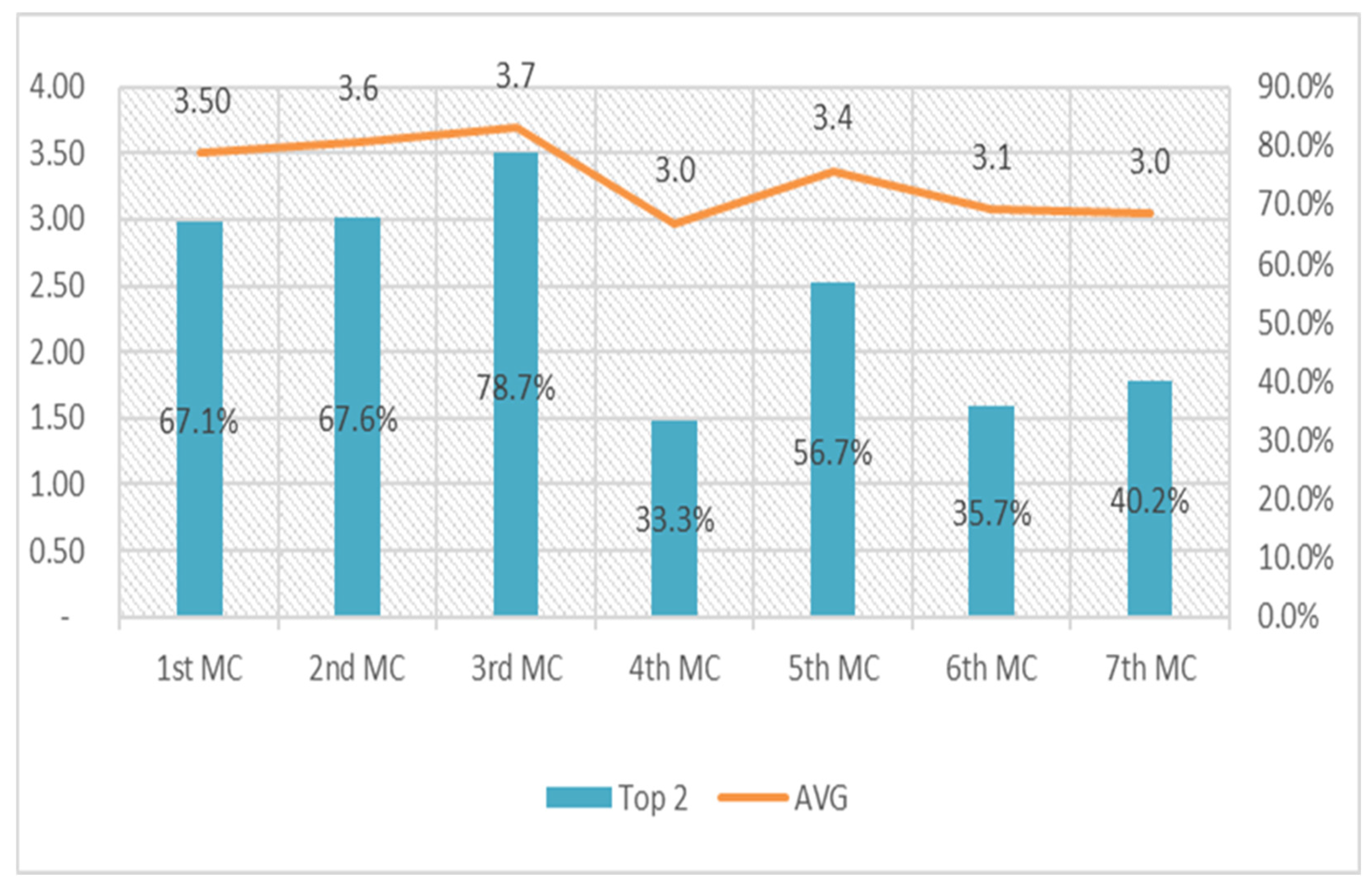
The most striking finding of the study concerns the perceived impact of tourism on housing affordability. 87.0% of respondents agreed or strongly agreed that tourism has driven up rental prices and made it difficult to find residential accommodation—with 61.8% selecting “strongly agree,” the highest frequency response across all items in the questionnaire. Agreement was near-universal in the 1st, 2nd, and 3rd MCs (67.1%, 67.6%, and 78.7% “strongly agree,” respectively), while the 4th MC showed the lowest—though still substantial—rate of strong agreement (33.3%) (Figure 1).
68.9% of respondents perceived that tourism development had increased the cost of living “considerably” or “very much,” with the 1st MC reporting the highest rate of “very much” responses (42.3%). Life satisfaction related to tourism was predominantly moderate: 38.2% described themselves as “moderately” satisfied, 26.2% as “considerably” satisfied, and 32.7% as “not at all” or “very little” satisfied.

4.6. Tolerance, Comfort, and Future Development Potential

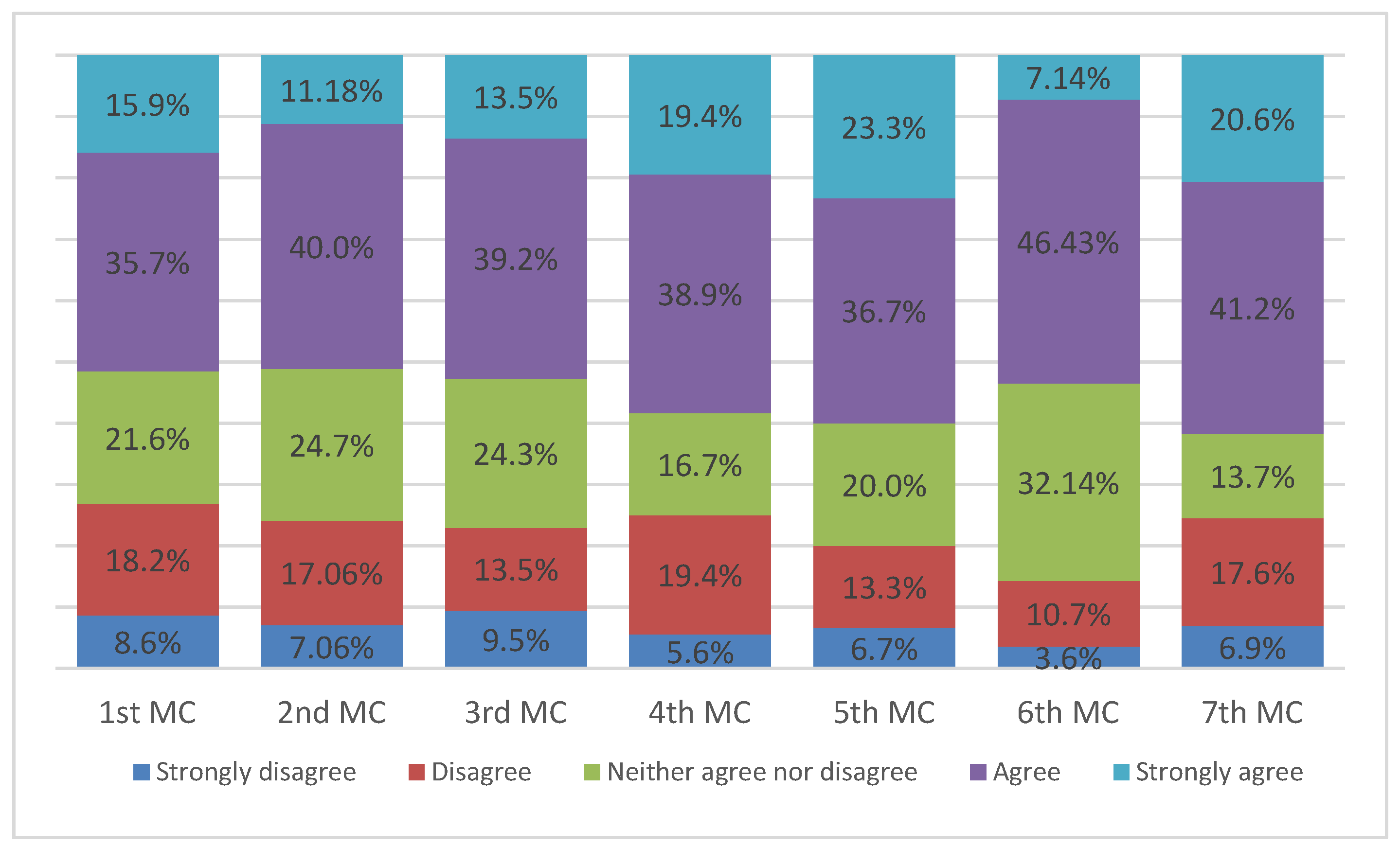
Despite the significant socio-environmental concerns documented above, a majority of respondents exhibited a fundamentally tolerant attitude toward tourist presence. 53.6% agreed or strongly agreed that tourists do not disturb their daily life, and 65.1% reported feeling comfortable and anxiety-free in the presence of tourists. Tourism professionals displayed the highest rates of tolerance (43.0% strongly agreeing that tourists do not disturb daily life), while residents with dual status expressed more ambivalence. Notably, 54.1% of respondents believed that their area still has room for further tourism development, with only 23.3% disagreeing—indicating that, despite present pressures, community support for continued growth remains substantial when managed appropriately (Figure 2).
Catering and food services were identified as the tourism activity generating the most positive local impacts (32.9%), followed by cafés, bars, and entertainment (18.4%) and hotels (17.8%). Tourist buses were identified as the second most negatively perceived activity (15.2%), primarily due to their contribution to traffic congestion.

4.7. Inferential Statistical Analysis

Given the ordinal nature of the response scales and the non-normal distribution of responses across the seven Municipal Communities (MCs), two non-parametric tests were employed for all between-group comparisons. The decision to use non-parametric tests was driven by two considerations: (1) the ordinal nature of the response scales, which violates the interval-measurement assumption required by parametric ANOVA, even when applied to rank-transformed data; and (2) the non-normal distribution of responses confirmed by Kolmogorov–Smirnov tests across the majority of items. More specifically, the Kruskal–Wallis H test was used to assess whether the distributions of responses differed significantly across the seven MCs, with effect size estimated via η2 (eta-squared). Regarding the choice of eta squared, this indicator was selected because it quantifies the proportion of total variance in residents’ perceptions that is specifically attributable to the differences between the seven Municipal Communities, providing a clear measure of the magnitude of spatial differentiation. In the context of urban tourism management, the practical significance of reporting effect sizes lies in its ability to move beyond simple statistical significance (p < 0.05), allowing policymakers to prioritize interventions based on where the impact is most substantial. For instance, the large effect sizes observed for economic dependency and the moderate effects for housing pressures suggest that the spatial hierarchy of tourism in Athens is a structural phenomenon rather than a sampling anomaly. This provides actionable evidence for local authorities to shift from “blanket” tourism management to spatially granular, neighborhood-level governance, where regulatory measures and infrastructure investments are allocated proportionally to the actual intensity of the tourism phenomenon in each district.
Chi-square tests of independence (χ2) were also used to examine the association between MC location and response category distributions. For variables with statistically significant Kruskal–Wallis results, post hoc pairwise comparisons were conducted using Dunn’s test with Bonferroni correction to control for Type I error. Sample sizes per MC were as follows: 1st MC (n = 346), 2nd MC (n = 170), 3rd MC (n = 75), 4th MC (n = 36), 5th MC (n = 30), 6th MC (n = 28), 7th MC (n = 102), total N = 787 (Table 3 and Table 4).
Dunn’s post hoc analysis revealed that the observed differences were primarily driven by contrasts between the 1st Municipal Community and peripheral communities (4th–7th MCs). For instance, perceived tourist presence (Q1) and economic dependency (Q3) were significantly higher in the 1st MC compared to the 4th, 5th, and 7th MCs (p < 0.001). Similarly, housing pressure (Q19) was significantly more pronounced in central communities (1st–3rd MCs) compared to the 4th MC (p < 0.001).
The results demonstrate that fifteen of the twenty-one variables tested yielded statistically significant differences across Municipal Communities in the Kruskal–Wallis test (p < 0.05). The most pronounced spatial differentiation was observed for perceived economic dependency on tourism (H = 151.324, p < 0.001, η2 = 0.186) and the importance of tourism to the local area (H = 147.656, p < 0.001, η2 = 0.182), both indicating large effect sizes. The 1st MC consistently recorded the highest mean scores on tourism salience, economic benefit, and socio-environmental pressure variables, while the 4th, 5th, and 7th MCs displayed markedly lower scores across these dimensions.
The most policy-relevant finding—the near-universal attribution of housing cost increases to tourism—was also confirmed as statistically significant (H = 58.879, p < 0.001, η2 = 0.068), with mean scores ranging from 3.97 (4th MC) to 4.69 (3rd MC) on the five-point scale. The variable with the highest absolute mean across all MCs was the housing cost item, where even the lowest-scoring community (4th MC, M = 3.97) approached the ‘agree’ threshold. The chi-square test for this variable was equally significant (χ2 = 74.124, df = 24, p < 0.001), confirming that the distribution of responses was not uniform across the seven communities (Table 5).
By contrast, six variables showed no statistically significant between-community differences: tourist presence not disturbing daily life (H = 4.545, p = 0.603), comfort with tourist presence (H = 1.018, p = 0.985), perceived positive environmental effects (H = 3.418, p = 0.755), tourism’s contribution to public infrastructure (H = 5.176, p = 0.521), area’s room for further tourism development (H = 10.728, p = 0.097), and area’s infrastructure adequacy (H = 4.293, p = 0.637). These non-significant results are noteworthy in that they provide no evidence of statistically significant differences across communities on these dimensions. It should be emphasised, however, that the absence of a significant result does not establish equivalence of response levels across communities, nor does it permit inference about the homogeneity of the city as a whole. These findings indicate only that the present data do not provide sufficient statistical grounds to reject the null hypothesis of no between-community differences on these particular items. Nonetheless, the consistently moderate-to-positive mean scores on personal comfort and openness to further growth across all communities are consistent with the interpretation that residents’ individual tolerance thresholds have not, on average, been exhausted—a conclusion that is appropriately qualified by the perception-based, individual-level nature of the evidence.
These inferential results substantiate and extend the descriptive findings presented in the main text of the paper, providing statistical confirmation that the spatial hierarchy of tourism impacts reported across the seven Municipal Communities is not attributable to sampling variation but reflects genuine differences in residents’ experiences of and attitudes toward, urban tourism in Athens.

4.8. Differences Between Residents and Tourism Professionals

To examine differences in perceptions between residents and tourism professionals, a Mann–Whitney U test was conducted for selected key variables (Table 6).
The results indicate statistically significant differences in several dimensions. Tourism professionals reported significantly more positive perceptions of tourism’s economic contributions, including its impact on income and employment (Q5) and overall economic development (Q16) (p < 0.01).
In contrast, no statistically significant differences were observed between the two groups regarding the perceived impact of tourism on housing affordability (Q19) and cost of living (Q18), with both groups expressing similarly high levels of concern.
Regarding socio-environmental impacts, residents reported slightly higher levels of perceived disturbance related to cleanliness (Q6) and noise (Q14), although these differences were moderate in magnitude.
Finally, tourism professionals exhibited significantly higher levels of tolerance toward tourism, reporting greater agreement that tourists do not disturb daily life (Q9) and expressing stronger support for further tourism development (Q20) (p < 0.05).
Overall, the findings confirm the existence of a perception gap between residents and professionals, primarily driven by differences in the evaluation of tourism’s economic benefits, while concerns related to housing pressures appear to be shared across both groups.

5. Discussion

The results of this study reveal a nuanced but coherent picture of how Athenian residents and professionals experience and evaluate the tourism phenomenon within the framework of Social Carrying Capacity. Three overarching patterns merit particular attention.
First, the study documents a pronounced spatial hierarchy in the distribution of tourism impacts and perceptions. The 1st Municipal Community—encompassing the Syntagma–Monastiraki–Plaka–Acropolis corridor—consistently records the highest levels of perceived tourist presence, economic dependency, and socio-environmental pressure. This concentration is consistent with the pressure dynamics associated with Butler’s [13] TALC consolidation stage, where visitor growth continues alongside mounting socio-environmental tensions. It must be acknowledged, however, that the TALC is an inherently longitudinal framework describing change over time, whereas the present study relies on one-off, cross-sectional perceptual data. The current findings therefore characterise residents’ perceptions of present conditions, but cannot directly confirm which TALC stage Athens occupies; such a determination would require time-series data on visitor volumes, investment patterns, and attitudinal trends across multiple periods which could be interesting to see in future research. Peripheral communities, by contrast, display markedly lower exposure and more ambivalent perceptions, highlighting the uneven geographic distribution of both tourism’s benefits and its costs—a pattern documented in other European urban destinations [26,27].
Second, the large effect for economic dependency (η2 = 0.186) implies that Municipal Community location explains approximately 18.6% of the total variance in perceived economic dependency on tourism—a figure with direct policy relevance, indicating that economic reliance is not a city-wide uniform characteristic but is strongly geographically concentrated. This suggests that economic diversification strategies should be spatially targeted toward the 1st MC and adjacent communities rather than applied uniformly, and that peripheral communities may require different incentive structures to expand their tourism-related economic base. Moreover, the near-universal identification of short-term rentals as the primary vector of negative tourism impact—and, specifically, the overwhelming consensus that tourism has driven up rental prices—represents the most policy-relevant finding of the study.
With 87% of respondents agreeing that tourism has rendered housing more expensive and difficult to access, the findings from Athens align with the growing body of empirical evidence linking platform-based short-term rentals to residential displacement and affordability pressures in urban destinations [4,25]. The finding is particularly striking given that it cuts across demographic and occupational categories: even tourism professionals, who might be expected to evaluate platform-based accommodation more favourably, overwhelmingly endorsed the view that short-term rentals have negative consequences for the residential market. This consensus suggests that housing impact is perceived not merely as an economic externality but as a substantial threat to social cohesion and community stability. These findings are further supported by the Mann–Whitney U test results, which confirm a statistically significant divergence between residents and tourism professionals, particularly in relation to perceived economic benefits and tolerance toward tourism development. Moreover, they invite comparison with similar empirical studies conducted in other European cities. Research in Kraków [32]—another historically dense European city with a rapidly expanding urban tourism sector—has documented analogous tensions between the economic benefits of visitor flows and the socio-environmental costs borne by permanent residents, including pressure on housing markets and public infrastructure [32]. The structural parallels between Athens and Kraków are instructive: in both cases, tourism concentration in a dense historic core produces asymmetric impacts across the urban fabric, with inner districts bearing disproportionate negative consequences while peripheral communities retain higher levels of tolerance. Comparable dynamics have been documented in Lisbon, Milan, and Budapest [27,33,35], suggesting that the pattern observed in Athens reflects broader structural features of overtourism in Southern European capitals rather than a city-specific anomaly.
Third, the coexistence of broad tolerance toward tourists with sharp criticism of tourism management structures—particularly regarding infrastructure deficits and the perceived inadequacy of current regulatory responses—suggests that Athenian residents have not yet reached the “irritation” or “antagonism” stages posited by Doxey’s [17] Irridex model. The findings suggest that the social carrying capacity of Athens has not yet been exhausted; rather, it appears to be under pressure in specific domains (housing, cleanliness, and infrastructure) while remaining comparatively resilient in others (personal comfort and openness to further tourism development). This distinction is crucial for policy design: interventions should target the specific pressure points rather than seeking blanket restrictions on visitor flows.

6. Conclusions

This study provides a comprehensive empirical assessment of the Social Carrying Capacity of tourism in the Municipality of Athens, based on a large-scale survey of 787 residents and tourism professionals conducted across all seven Municipal Communities. The findings confirm that Athens is experiencing a complex and spatially differentiated tourism transition characterised by significant economic benefits—particularly in catering, hospitality, and employment—alongside mounting socio-environmental pressures that are testing the limits of community tolerance.
The strong spatial concentration of economic reliance in the 1st MC implies that economic diversification programmes—including support for non-tourism businesses, creative industries, and mixed-use commercial zoning—should be prioritised specifically in the 1st and 2nd MCs rather than applied uniformly. For the housing cost finding (87.0% agreement, M = 4.50 in the 1st MC; η2 = 0.068, medium effect): the spatial differentiation confirms that STR regulation should be tiered by district, with the most stringent licensing caps applied in the 1st–3rd MCs. For tolerance (non-significant between-MC variation, consistently positive mean scores): the absence of significant community-level differences in personal comfort with tourists supports a conclusion that broad-based visitor reduction policies are not warranted, and that targeted infrastructure investment and housing regulation are more proportionate responses.
Moreover, the study’s principal conclusion is that, according to respondents’ perceptions, the sustainability of Athens’s urban tourism model appears to be challenged less by visitor numbers per se than by shortcomings in the regulation of short-term rentals and in the adequacy of public infrastructure investment. The near-universal perception that short-term rentals have driven up rents and reduced housing availability for permanent residents indicates a severe policy challenge requiring urgent attention. Similarly, widespread dissatisfaction with public infrastructure—cleanliness, transport, and public space—in the face of growing visitor flows suggests a gap between tourism revenue generation and reinvestment in the urban commons.
Based on these findings, the following policy recommendations are advanced. First, local and national authorities should implement targeted regulation of short-term rental platforms, including licensing requirements, caps on the number of properties eligible for tourist use in high-pressure districts, and fiscal mechanisms to redirect platform revenue toward social housing and affordable rental programmes. Second, the Municipality of Athens should pursue strategic investments in public infrastructure proportional to tourism receipts, particularly in the 1st, 2nd, and 3rd Municipal Communities where pressure is most acute. Third, tourism management strategies should prioritise the geographic dispersal of visitor flows toward under-touristed districts, reducing concentration effects and creating economic opportunities in peripheral communities. Fourth, monitoring mechanisms for SCC indicators—including housing affordability, resident satisfaction, and perceptions of tourist nuisance—should be institutionalised at the municipal level to enable adaptive governance responses as conditions evolve.
This study is not without limitations. The analysis does not disaggregate findings by demographic sub-groups (age, education, length of residence) which have been identified in the literature as moderators of tourism attitudes; such disaggregation is recommended for future research. Moreover, the reliance on self-reported perceptions limits causal inference, and the absence of longitudinal data prevents tracking of attitudinal change over time. The cross-sectional design also constrains the application of longitudinal frameworks such as the TALC model, which requires time-series evidence to situate a destination along its developmental trajectory. Future iterations of this research should incorporate repeated surveys to enable tracking of attitudinal change over time. Additionally, while spatial variation across communities is documented and discussed, the mechanisms driving spatial heterogeneity (e.g., tourism functional zoning, Airbnb penetration rates, demographic composition) could not be fully unpacked from the present data alone; the addition of spatial distribution maps and objective density indicators in future work would substantially strengthen causal interpretation. Lastly, the online SurveyMonkey modality may have underrepresented older residents, digitally excluded populations, and non-Greek speakers, potentially skewing perceptions in ways that cannot be fully assessed post hoc. Mixed-mode data collection (face-to-face alongside digital) is recommended for future iterations. Future research should complement survey-based methods with participatory qualitative approaches and integrate objective indicators—housing price indices, visitor density metrics, and crime statistics—to provide a fuller assessment of SCC.

Author Contributions

Conceptualisation, S.V. and G.T.; methodology, S.V. and G.T.; formal analysis, G.T. and I.E.A.; investigation, G.T.; data curation, G.T.; writing—original draft preparation, S.V., G.T. and I.E.A.; writing—review and editing, S.V. and I.E.A.; supervision, S.V. All authors have read and agreed to the published version of the manuscript.

Funding

This research received no external funding.

Institutional Review Board Statement

The study was conducted in accordance with the Declaration of Helsinki and approved by the Research Ethics Committee of University of Piraeus (protocol code 15/2025 with approval date: 26 March 2025).

Informed Consent Statement

Informed consent was obtained from all subjects involved in the study.

Data Availability Statement

The data presented in this study are available from the corresponding author upon request. Restrictions apply due to privacy, legal, and ethical considerations.

Conflicts of Interest

The authors declare no conflicts of interest.

References

  1. Milano, C.; Novelli, M.; Cheer, J.M. Overtourism and Tourismphobia: A Journey Through Four Decades of Tourism Development, Planning and Local Concerns. Tour. Plan. Dev. 2019, 16, 353–357. [Google Scholar] [CrossRef]
  2. Peeters, P.; Gössling, S.; Klijs, J.; Milano, C.; Novelli, M.; Dijkmans, C.; Eijgelaar, E.; Hartman, S.; Heslinga, J.; Isaac, R.; et al. Research for TRAN Committee—Overtourism: Impact and Possible Policy Responses; European Parliament: Brussels, Belgium, 2018.
  3. Insete (Greek Tourism Confederation). Statistical Bulletin; SETE: Athens, Greece, 2023. [Google Scholar]
  4. Amore, A.; de Bernardi, C.; Arvanitis, P. The impacts of Airbnb in Athens, Lisbon and Milan: A rent gap theory perspective. Curr. Issues Tour. 2022, 25, 3329–3342. [Google Scholar] [CrossRef]
  5. Ioannides, D.; Röslmaier, M.; van der Zee, E. Airbnb as an instigator of ‘tourism bubble’ expansion in Utrecht’s Lombok neighbourhood. Tour. Geogr. 2019, 21, 822–840. [Google Scholar] [CrossRef]
  6. Andriotis, K.; Vaughan, R.D. Urban residents’ attitudes toward tourism development: The case of Crete. J. Travel Res. 2003, 42, 172–185. [Google Scholar] [CrossRef]
  7. Zamani-Farahani, H.; Musa, G. Residents’ attitudes and perception towards tourism development: A case study of Masooleh, Iran. Tour. Manag. 2008, 29, 1233–1236. [Google Scholar] [CrossRef]
  8. Shelby, B.; Heberlein, T.A. Carrying Capacity in Recreation Settings; Oregon State University Press: Corvallis, OR, USA, 1986. [Google Scholar]
  9. ESPON. Carrying Capacity Methodology for Tourism; ESPON: Luxembourg, 2020. [Google Scholar]
  10. O’Reilly, A.M. Tourism carrying capacity: Concept and issues. Tour. Manag. 1986, 7, 254–258. [Google Scholar] [CrossRef]
  11. McCool, S.F.; Lime, D.W. Tourism carrying capacity: Tempting fantasy or useful reality? J. Sustain. Tour. 2001, 9, 372–388. [Google Scholar] [CrossRef]
  12. Ashworth, G.; Page, S.J. Urban tourism research: Recent progress and current paradoxes. Tour. Manag. 2011, 32, 1–15. [Google Scholar] [CrossRef]
  13. Butler, R.W. The concept of a tourist area cycle of evolution: Implications for management of resources. Can. Geogr. 1980, 24, 5–12. [Google Scholar] [CrossRef]
  14. Saveriades, A. Establishing the social tourism carrying capacity for the tourist resorts of the east coast of the Republic of Cyprus. Tour. Manag. 2000, 21, 147–156. [Google Scholar] [CrossRef]
  15. Pizam, A. Tourism’s impacts: The social costs to the destination community as perceived by its residents. J. Travel Res. 1978, 16, 8–12. [Google Scholar] [CrossRef]
  16. Pearce, P.L. The Social Psychology of Tourist Behaviour; Pergamon Press: Oxford, UK, 1982. [Google Scholar]
  17. Doxey, G.V. A causation theory of visitor-resident irritants: Methodology and research inferences. In Proceedings of the Travel and Tourism Research Association Sixth Annual Conference Proceedings, San Diego, CA, USA, 8–11 September 1975; pp. 195–198. [Google Scholar]
  18. Mathieson, A.; Wall, G. Tourism: Economic, Physical, and Social Impacts; Longman: London, UK, 1982. [Google Scholar]
  19. UNWTO. Indicators of Sustainable Development for Tourism Destinations: A Guidebook; World Tourism Organization: Madrid, Spain, 2004. [Google Scholar]
  20. Ap, J. Residents’ perceptions on tourism impacts. Ann. Tour. Res. 1992, 19, 665–690. [Google Scholar] [CrossRef]
  21. Látková, P.; Vogt, C.A. Residents’ attitudes toward existing and future tourism development in rural communities. J. Travel Res. 2012, 51, 50–67. [Google Scholar] [CrossRef]
  22. Sharpley, R. Host perceptions of tourism: A review of the research. Tour. Manag. 2014, 42, 37–49. [Google Scholar] [CrossRef]
  23. Nunkoo, R.; Ramkissoon, H. Developing a community support model for tourism. Ann. Tour. Res. 2011, 38, 964–988. [Google Scholar] [CrossRef]
  24. Vargas-Sánchez, A.; Plaza-Mejía, M.Á.; Porras-Bueno, N. Understanding residents’ attitudes toward the development of industrial tourism in a former mining community. J. Travel Res. 2009, 47, 373–387. [Google Scholar] [CrossRef]
  25. Benítez-Aurioles, B.; Tussyadiah, I. What Airbnb does to the housing market. Ann. Tour. Res. 2021, 90, 103108. [Google Scholar] [CrossRef]
  26. Cócola-Gant, A. Holiday rentals: The new gentrification battlefront. Sociol. Res. Online 2016, 21, 112–120. [Google Scholar] [CrossRef]
  27. Séraphin, H.; Sheeran, P.; Pilato, M. Over-tourism and the fall of Venice as a destination. J. Destin. Mark. Manag. 2018, 9, 374–376. [Google Scholar] [CrossRef]
  28. Varelas, S.; Belias, D. Carrying Capacity Assessment for Tourism Development: A Strategic Approach. In Strategic Innovative Marketing and Tourism; Kavoura, A., Kefallonitis, E., Giovanis, A., Eds.; Springer Proceedings in Business and Economics; Springer: Cham, Switzerland, 2019; pp. 869–876. [Google Scholar]
  29. Żemła, M.; Szromek, A.R. Influence of the Residents’ Perception of Overtourism on the Selection of Innovative Anti-Overtourism Solutions. J. Open Innov. Technol. Mark. Complex. 2021, 7, 202. [Google Scholar] [CrossRef]
  30. Cócola-Gant, A.; Gago, A. Airbnb, buy-to-let investment and tourism-driven displacement. Environ. Plan. A 2021, 53, 1221–1238. [Google Scholar] [CrossRef]
  31. Capocchi, A.; Vallone, C.; Pierotti, M.; Amaduzzi, A. Overtourism: A Literature Review to Assess Implications and Future Perspectives. Sustainability 2019, 11, 3303. [Google Scholar] [CrossRef]
  32. Szromek, A.R.; Kruczek, Z.; Walas, B. The Attitude of Tourist Destination Residents towards the Effects of Overtourism—Kraków Case Study. Sustainability 2020, 12, 228. [Google Scholar] [CrossRef]
  33. Sarantakou, E.; Moschopoulidou, P.; Giannoulatou, K. Participation Matters: A Comparative Assessment of Urban Governance Responses to Overtourism. Tour. Hosp. 2025, 6, 251. [Google Scholar] [CrossRef]
  34. Kuščer, K.; Mihalič, T. Residents’ Attitudes towards Overtourism from the Perspective of Tourism Impacts and Cooperation—The Case of Ljubljana. Sustainability 2019, 11, 1823. [Google Scholar] [CrossRef]
  35. Smith, M.; Sziva, L.; Olt, M. Overtourism and Resident Resistance in Budapest; Routledge: London, UK, 2021. [Google Scholar]
  36. Dodds, R.; Butler, R. The phenomena of overtourism: A review. Int. J. Tour. Cities 2019, 5, 519–528. [Google Scholar] [CrossRef]
  37. Tsoupros, G.; Varelas, S.; Anastasopoulos, I. Strategic Adaptation and Resilience of Tourism Destinations: Insights from the Greek Experience. In Entrepreneurial Resilience in Turbulent Globalized Economies; IGI Global: Hershey, PA, USA, 2026; pp. 371–402. [Google Scholar]
  38. Georgopoulos, N.; Katsanakis, I.; Kopanaki, E.; Varelas, S.; Stroumpoulis, A.; Anastasopoulos, I.; Konstantopoulou, C.; Klada, N.; Tsoupros, G. Bridging Visitors’ and Residents’ Perspectives in Destination Planning: A Sustainability and Governance Case Study of Piraeus Port. Tour. Hosp. 2025, 6, 196. [Google Scholar] [CrossRef]
  39. Tharenou, P.; Donohue, R.; Cooper, B. Management Research Methods; Cambridge University Press: Cambridge, UK, 2007. [Google Scholar]
  40. Cohen, J. Statistical Power Analysis for the Behavioral Sciences, 2nd ed.; Lawrence Erlbaum Associates: Hillsdale, NJ, USA, 1988. [Google Scholar]
Figure 1. Local citizens’ perceptions on how tourism influences housing affordability.
Sustainability 18 04560 g001
Figure 2. Local citizens’ perceptions on whether tourism influences their daily life.
Sustainability 18 04560 g002
Table 1. Rotated Component Matrix (Exploratory Factor Analysis).
ItemEconomic BenefitsSocio-Environmental ImpactsHousing & Cost PressureTolerance & SCCTourism Pressure & Presence
Q1: Increased tourist presence 0.72
Q2: Importance of tourism0.81
Q3: Economic dependency0.84
Q4: Locals adopt tourist behaviour 0.64
Q5: Tourism → income & jobs0.79
Q6: Tourism → cleanliness burden 0.71
Q7: Tourism → increased security 0.42
Q8: Tourist satisfaction 0.68
Q9: Tourists not disturbing 0.74
Q10: Comfortable with tourists 0.78
Q11: Positive environmental impact (R) 0.63
Q12: Businesses respect environment (R) 0.66
Q13: Tourism → waste increase 0.75
Q14: Tourism → noise disturbance 0.77
Q15: Tourism → traffic congestion 0.73
Q16: Tourism → economic development0.82
Q17: Tourism → public infrastructure0.44
Q18: Cost of living increase 0.85
Q19: Housing cost & scarcity 0.88
Q20: Room for tourism growth 0.69
Q21: Adequate tourism infrastructure0.41
Notes: Principal Component Analysis with Varimax rotation. Only loadings ≥ 0.40 are displayed. The analysis yielded a five-factor solution explaining approximately 65% of total variance. Reverse-coded items are marked (R). Items with cross-loadings or lower loadings (Q7, Q17, Q21) were retained due to conceptual relevance but not included in the core factor structure.
Table 2. Importance of tourism to the local citizens.
Municipal Communities
1st MC2nd MC3rd MC4th MC5th MC6th MC7th MCTotal
Column N %Column N %Column N %Column N %Column N %Column N %Column N %Column N %
On a scale of 1 to 10, how important is tourism in general to your region? 1.2%0.0%0.0%0.0%0.0%0.0%0.0%0.5%
11.2%1.8%2.7%2.8%6.7%0.0%4.9%2.2%
21.4%1.2%4.0%13.9%3.3%7.1%9.8%3.6%
31.4%9.4%8.0%11.1%6.7%7.1%13.7%6.2%
41.4%7.6%5.3%2.8%0.0%7.1%8.8%4.3%
53.7%12.9%8.0%19.4%16.7%10.7%18.6%9.5%
67.5%12.4%10.7%13.9%10.0%10.7%16.7%10.5%
714.4%18.8%14.7%11.1%16.7%28.6%12.7%15.6%
828.0%19.4%17.3%13.9%26.7%14.3%6.9%21.2%
913.8%9.4%14.7%2.8%6.7%10.7%3.9%10.8%
1025.9%7.1%14.7%8.3%6.7%3.6%3.9%15.6%
Table 3. Kruskal–Wallis Test Results: Mean Scores by Municipal Community. Mean scores (on a 1–5 Likert or 1–10 scale, as applicable), Kruskal–Wallis H statistic, associated p-value, and effect size (η2) are reported for each variable. Significance levels: * p < 0.05, ** p < 0.01, *** p < 0.001, ns = not significant.
Variable1st MC2nd MC3rd MC4th MC5th MC6th MC7th MCHp-Valueη2
n per MC →34617075363028102
Q1Increased tourist presence in area4.073.733.993.423.133.643.0688.843<0.001 ***0.106
Q2Importance of tourism (1–10)7.866.446.805.536.336.295.13147.656<0.001 ***0.182
Q3Economic dependency on tourism (1–10)7.285.465.594.564.905.574.29151.324<0.001 ***0.186
Q4Locals adopt tourist behaviour2.712.472.672.422.402.712.5112.6830.048 *0.009
Q5Tourism → income & jobs3.673.303.313.193.033.393.0448.030<0.001 ***0.054
Q6Tourism → cleanliness burden3.603.293.313.063.303.543.2822.0660.001 **0.021
Q7Tourism → increased security2.962.632.662.722.602.822.8016.3460.012 *0.013
Q8Tourist satisfaction with experience3.883.733.812.673.203.433.3970.270<0.001 ***0.082
Q9Tourist presence not disturbing3.323.313.343.473.573.433.514.5450.603 ns
Q10Comfortable with tourists present3.643.663.723.613.703.683.751.0180.985 ns
Q11Tourism → positive environment2.882.812.762.922.802.792.973.4180.755 ns
Q12Tourism businesses respect environment2.812.822.962.922.532.253.0616.1700.013 *0.013
Q13Tourism → waste increase3.563.203.263.093.073.392.8639.272<0.001 ***0.043
Q14Tourism → noise disturbance3.162.702.962.422.802.712.6129.532<0.001 ***0.030
Q15Tourism → traffic congestion3.122.772.852.782.902.612.7713.1150.041 *0.009
Q16Tourism → economic development3.843.513.483.263.373.393.1846.403<0.001 ***0.052
Q17Tourism → improved public infrastructure2.522.382.272.282.432.502.315.1760.521 ns
Q18Tourism → increased cost of living4.083.843.843.193.903.633.2553.053<0.001 ***0.060
Q19Tourism → housing cost & rental scarcity4.504.594.693.974.374.074.0458.879<0.001 ***0.068
Q20Area has room for further tourism growth3.323.213.203.563.633.433.5610.7280.097 ns
Q21Area has appropriate tourism infrastructure2.722.722.642.722.432.542.784.2930.637 ns
Note: η2 values of 0.01, 0.06, and 0.14 correspond to small, medium, and large effect sizes respectively [40]. To aid interpretation, the magnitude of each significant effect is classified accordingly: η2 < 0.01 = negligible; 0.01–0.05 = small; 0.06–0.13 = medium; ≥ 0.14 = large. Applying these benchmarks, the largest effects were observed for perceived economic dependency on tourism (η2 = 0.186, large) and the importance of tourism (η2 = 0.182, large); moderate effects were noted for perceived tourist presence (η2 = 0.106, medium), housing costs (η2 = 0.068, medium), and cost of living (η2 = 0.060, medium); all remaining significant effects were small (η2 < 0.06). Dashes (—) indicate non-significant results for which effect size is not reported.
Table 4. Dunn’s Post-hoc Pairwise Comparisons (Bonferroni-adjusted p-values).
VariableComparison (MCi vs. MCj)Z-ValueAdjusted p-ValueSignificance
Q1: Tourist presence1st vs. 4th5.21<0.001***
1st vs. 5th6.03<0.001***
1st vs. 7th7.11<0.001***
3rd vs. 7th3.450.012*
Q2: Importance of tourism1st vs. 4th8.32<0.001***
1st vs. 7th9.10<0.001***
2nd vs. 7th4.87<0.001***
Q3: Economic dependency1st vs. 4th8.55<0.001***
1st vs. 7th9.42<0.001***
Q5: Income & jobs1st vs. 5th4.120.002**
Q8: Tourist satisfaction1st vs. 4th6.88<0.001***
Q13: Waste increase1st vs. 7th4.76<0.001***
Q14: Noise disturbance1st vs. 4th5.33<0.001***
Q18: Cost of living1st vs. 4th6.02<0.001***
Q19: Housing pressure3rd vs. 4th5.77<0.001***
Significance codes: * p < 0.05, ** p < 0.01, *** p < 0.001.
Table 5. Chi-Square Tests of Independence by Municipal Community (Selected Variables). Chi-square tests assess whether the distribution of response categories across Municipal Communities differs from what would be expected under independence. df = degrees of freedom. Significance levels: * p < 0.05, *** p < 0.001, ns = not significant.
Variableχ2dfp-Value
Q1Increased tourist presence114.18724<0.001 ***
Q2Importance of tourism (1–10)199.81854<0.001 ***
Q3Economic dependency (1–10)203.40754<0.001 ***
Q5Tourism → income & jobs67.11824<0.001 ***
Q6Tourism → cleanliness burden39.170240.026 *
Q7Tourism → security41.476240.015 *
Q8Tourist satisfaction114.54424<0.001 ***
Q12Tourism businesses respect environment28.04524ns
Q13Tourism → waste increase51.38724<0.001 ***
Q14Tourism → noise disturbance56.69424<0.001 ***
Q16Tourism → economic development61.80224<0.001 ***
Q18Tourism → cost of living increase73.81424<0.001 ***
Q19Tourism → housing cost & rental scarcity74.12424<0.001 ***
Table 6. Mann–Whitney U Test Results: Residents vs. Tourism Professionals.
VariableGroupNMean RankUZp-ValueEffect Size (r)
Q5: Tourism → income & jobsResidents612372.541,820−3.210.001 **0.11
Professionals175438.6
Q16: Tourism → economic developmentResidents612368.940,965−3.68<0.001 ***0.13
Professionals175452.3
Q6: Tourism → cleanliness burdenResidents612401.748,220−2.050.040 *0.07
Professionals175365.4
Q14: Tourism → noise disturbanceResidents612398.347,560−2.290.022 *0.08
Professionals175371.2
Q18: Tourism → cost of livingResidents612394.653,210−0.880.379 ns0.03
Professionals175400.2
Q19: Tourism → housing costResidents612395.952,840−1.020.308 ns0.04
Professionals175395.7
Q9: Tourists not disturbingResidents612372.141,540−2.870.004 **0.10
Professionals175440.8
Q10: Comfortable with touristsResidents612374.342,010−2.450.014 *0.09
Professionals175433.5
Q20: Room for further tourismResidents612369.540,880−2.980.003 **0.11
Professionals175450.6
Notes: N = 787 (Residents = 612; Professionals = 175). Mann–Whitney U test applied due to non-normal distribution of ordinal variables. Effect size calculated as r = Z/√N. Significance levels: * p < 0.05, ** p < 0.01, *** p < 0.001, ns = not significant.
Disclaimer/Publisher’s Note: The statements, opinions and data contained in all publications are solely those of the individual author(s) and contributor(s) and not of MDPI and/or the editor(s). MDPI and/or the editor(s) disclaim responsibility for any injury to people or property resulting from any ideas, methods, instructions or products referred to in the content.