Systematic Review

Agro-Industrial By-Product Valorization for Sustainable Materials: A Systematic Literature Review of Methods, Trends and Research Frontiers


by
Leonardo Agnusdei
1,*,
Sara De Toro
2,
Pier Paolo Miglietta
3,
Zahra Ardakani
3 and
Giulio Paolo Agnusdei
4
1
Department of Engineering, Pegaso University, 80143 Naples, Italy
2
Department of Architecture and Industrial Design, University of Campania “Luigi Vanvitelli”, 81031 Aversa, Italy
3
Department of Biological and Environmental Sciences and Technologies, University of Salento, 73100 Lecce, Italy
4
Department of Psychology and Health Sciences, Pegaso University, 80143 Naples, Italy
*
Author to whom correspondence should be addressed.
Sustainability 2026, 18(9), 4525; https://doi.org/10.3390/su18094525
Submission received: 24 February 2026 / Revised: 9 April 2026 / Accepted: 11 April 2026 / Published: 4 May 2026

Abstract

Rising population pressures and growing resource consumption underscore the urgent need for sustainable strategies in resource management and waste valorization. Agriculture and the agri-food industry generate substantial biomass residues that, when effectively reused, can be transformed into high-value materials aligned with circular economy and bioeconomy principles. This study presents a Systematic Literature Review (SLR) on the valorization of agro-industrial by-products, focusing on their potential to drive sustainable material innovation strategies. Using the Scopus database, 1063 publications (2015–2025) were analyzed through bibliometric, network and content analysis methods combined with a quantitative meta-analytical approach. The bibliometric analysis outlines research trends and identifies leading journals and disciplines, while network mapping reveals five thematic clusters and a transition toward integrated frameworks linking sustainability and industrial applications. The content analysis is performed through a quantitative meta-analytical approach that highlights that studies integrating multiple waste origins tend to achieve higher scientific visibility. Overall, results highlight a 27.5% annual growth in publication output and five dominant thematic areas: waste recovery, chemical recovery, systemic valorization, energy recovery and alternative fuels. Studies involving multiple waste sources display higher citation averages, highlighting the relevance of integrated valorization strategies. This review provides a solid foundation for future research on agro-industrial by-product management by contributing to the definition of sustainable supply-chain strategies.

1. Introduction

The global human population rose rapidly, from about 3 billion in 1960 to over 8 billion in 2024 [1]. Continuous population growth intensifies pressure on natural resources by increasing the demand for food, water and energy [2], making production systems more resource-intensive [3]. The growing predominance of human-made materials over natural biomass represents a critical environmental turning point, promoting deeper reflection on humanity’s impact on planetary systems [4,5]. The imbalance, driven by unsustainable consumption and production models, underscores the urgent need to reconfigure global practices to mitigate their environmental effects [6]. Biomass, defined as organic matter of biogenic and renewable origin [7], constitutes a strategic resource within the bioeconomy. Agriculture is one of its main producers, generating vast quantities of residues that, if effectively managed, can serve as valuable inputs for value-added production [8]. Within this context, the circular economy framework encourages resource reuse, reduction in consumption cycles, and application of the “End of Waste” principle [9,10]. The management, disposal and reuse of residual biomass represent both challenges and opportunities [11]. Residual biomass, consisting of organic plant and animal materials, can be used either as an energy source or as a secondary raw material [12,13]. An integrated management approach contributes not only to pollution reduction but also to the rebalancing of local systems, generating benefits for communities and regional economies [14]. As noted by [8], the growth of agricultural and livestock production entails significant environmental and health impacts but simultaneously offers opportunities to develop circular solutions such as compost, biofuels and other sustainable derivatives. These residues, considered by-products of cultivation and agri-food processing [15], can be valorized into bioactive compounds, nutraceuticals, biopolymers, industrial enzymes and bio-nanocomposites [16]. Effective valorization of bio-products not only creates new value chains but also fosters collaboration among farmers, industries and research institutions, generating synergies that enhance local development and sustainability [17]. Industrial symbiosis plays a key role in optimizing resource and material exchanges across sectors [18]. Environmentally, transforming residual biomass into innovative materials and energy helps reduce CO2 emissions, as biomass is considered carbon neutral [19]. Economically, valorization promotes bioeconomic growth and green innovation, encouraging investment and the creation of new production systems models [20]. Food waste represents a particularly valuable resource due to its high content of proteins, fibers, lipids, vitamins and antioxidants [16]. For instance, winemaking residues such as grape marc and stems are rich in phenolic compounds, which exhibit strong antioxidant activity and potential nutraceutical applications [21,22]. Moreover, the resulting biochar can serve as both fuel and soil conditioner, offering economic and environmental benefits [23]. Similarly, studies on olive pomace and olive stones have shown that hydrothermal treatments enable the recovery of oligosaccharides, while enzymatic saccharification achieves high glucan conversion yields, demonstrating the olive oil sector’s potential as a source of innovative bio-products [24]. Investigating such developments in complex and interdisciplinary domains such as sustainability transitions, circular economy strategies and material innovation requires a Systematic Literature Review (SLR) framework [25,26].
The SLR applies a transparent and replicable protocol for selecting, evaluating, and synthesizing scientific evidence [27], ensuring methodological rigor and analytical depth. The study contributes to existing literature by offering an integrated perspective that goes beyond traditional approaches. Specifically, it integrates bibliometric, network and content analysis methods with a quantitative meta-analytical approach to systematically investigate the relationships between different research fields and their scientific visibility. Unlike previous studies, this research simultaneously maps the evolution of the field, comparing different valorization strategies and links by-product origins, transformation processes and application sectors. This approach provides insights to guide future research and support policy development in sustainable resource and waste management. It not only enhances methodological rigor but also advances theoretical understanding by shifting the perspective from isolated analyses toward a systemic interpretation of valorization processes, capturing the dynamic relationships between resources, technologies and applications within circular bioeconomy systems. The combined analysis of scientific trends and the potential use of by-products support informed decision-making, contributing to the definition of both theoretical and operational strategies across various industrial applications aligned with circular economy and bioeconomy policies. Previous studies have already highlighted important limitations in the analysis of agro-industrial by-product valorization within the circular economy framework [28], emphasizing that the link between circular economy and the agro-industrial sector remains under-explored. These contributions point to the need for further investigation into systemic dynamics, policy implications and industrial applications, highlighting the absence of a comprehensive synthesis capable of capturing the increasing complexity of the field. However, other studies highlight how the effective and efficient management of waste, supported by scientific research and linked to updated policy frameworks, represents a key element in defining circularity strategies and, consequently, fostering innovative solutions [29]. The present study aims to provide a current analysis of the literature, reflecting the growing scientific interest aligned with the sustainability and circularity framework. At the same time, the investigation of transformation processes provides a clearer understanding of how these processes can be progressively optimized, with the aim of reducing environmental, economic and social impacts. The increasing attention to the valorization of agro-industrial by-products contributes to advancing the field, supporting the development of future circular strategies. It is necessary to analyze both qualitative and quantitative data relating to the different types of agro-industrial by-products to identify the most investigated research trends; furthermore, the investigation of transformation processes and potential applications allows for the identification of the best solutions, contributing to more efficient and sustainable transition pathways. Accordingly, this study addresses the following research questions (RQs):
RQ1: What are the main research trends, thematic areas and disciplinary patterns in the scientific literature on the reuse and valorization of agricultural and agro-industrial by-products for sustainable material innovation?
RQ2: Which types of agro-industrial residues and transformation pathways are most frequently investigated and what are their main applications in bio-based and circular material systems?
RQ3: What knowledge gaps and emerging opportunities can guide future research and technological innovation in sustainable material development?
The study is structured as follows: Section 2 describes the methods used for article selection, classification and analysis; Section 3 highlights the main findings obtained through the analysis; Section 4 provides a critical discussion of the results, while Section 5 concludes by highlighting implications and directions for future research.

2. Materials and Methods

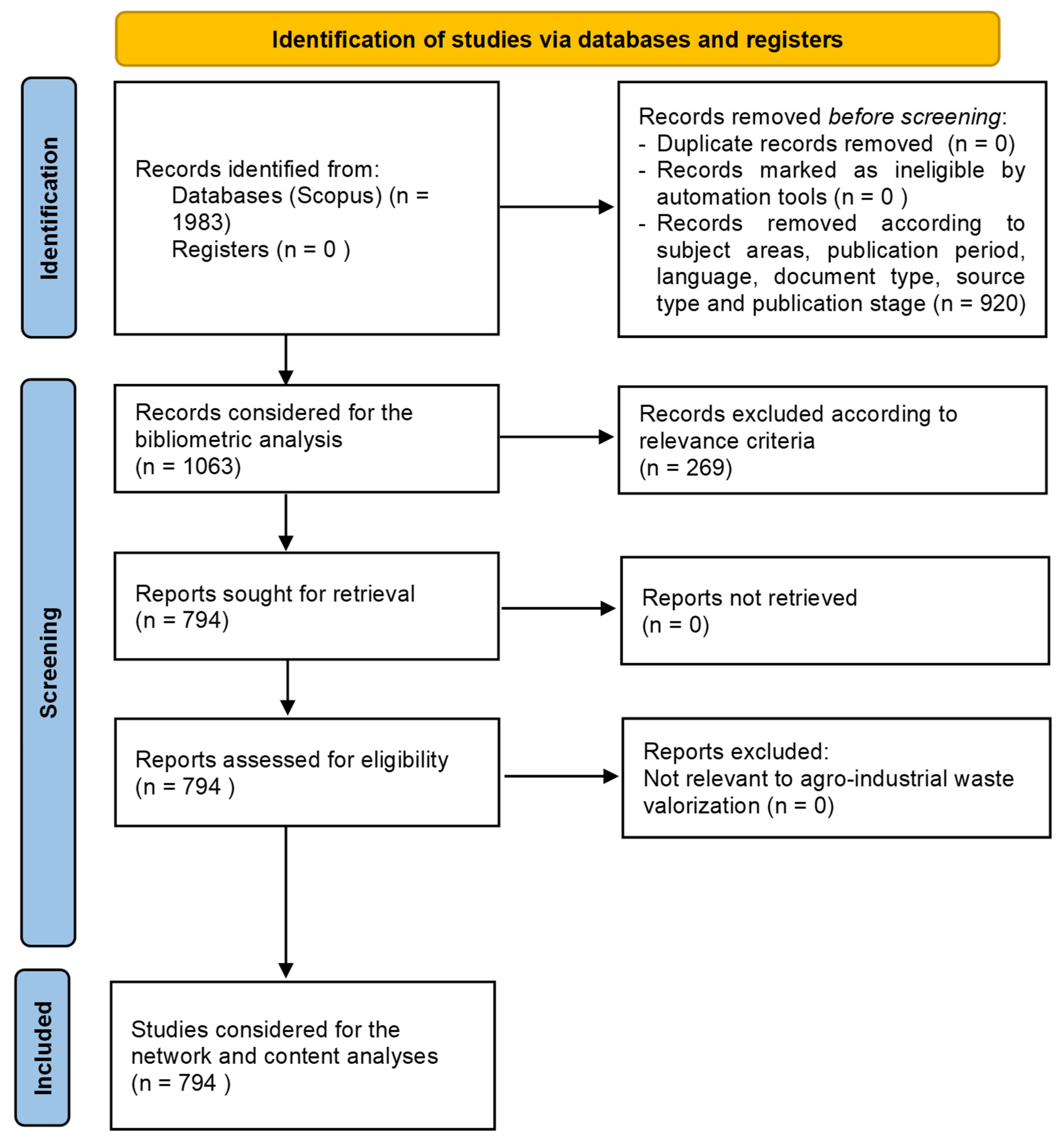
This study adopts a Systematic Literature Review (SLR) methodology aligned with the Preferred Reporting Items for Systematic Reviews (PRISMA) statement to ensure transparency, reproducibility and methodological rigor [30]. The PRISMA framework provides a structured process including the identification, screening and inclusion of studies. The study selection process is illustrated through a PRISMA 2020 flow diagram (Figure 1) and the PRISMA checklist, provided in the Supplementary Materials. To enhance analytical depth, the SLR integrates bibliometric, content and network analysis methods, combined with a quantitative meta-analytical approach, offering both quantitative and qualitative insights into the field.

2.1. Literature Search Protocol

A comprehensive search protocol was developed to systematically identify relevant research on agro-industrial by-products and their industrial applications in sustainable material innovation, using the Scopus database. This database was selected due to its broad multidisciplinary coverage and the availability of advanced bibliometric metadata suitable for network and citation analysis. Since 2015, the Scopus database has recorded an increase in publications on topics related to the research questions of this study and the current literature review. The search strategy was constructed using three conceptual blocks, combined with the Boolean operator AND to ensure the inclusion of all relevant themes: (agriculture OR agrifood OR agro-industrial OR agroindustrial) AND (biomass OR byproduct OR by-product OR “waste residue*”) AND (valorization OR valorisation OR “value added product*” OR “value-added product*”). The OR operator was used to incorporate synonyms and terminological variants, reflecting a strategy of semantic inclusiveness while the asterisk “*” captured orthographic and morphological variations. The selection of keywords and their combinations was designed to ensure consistency with the existing literature. Similar previous studies have used terms such as “by-product”, “valorization”, “waste”, “agro-industrial”, “residues” and “agroindustrial” which have influenced the scope of the present literature review [28,29,31,32]. However, some keywords were added to better align the research with the specific field of study. In particular, the keyword “agriculture” was introduced to better contextualize the study, along with the terms “agri-food” and “agro-industrial,” which have been used in previous reviews [33]. The term “biomass” was also included, as most reviews referred to specific types of waste corresponding to the same organic material; therefore, in this context, the term “biomass” ensures alignment with its use in policy frameworks. Moreover, terms such as “value added” were considered to capture potential reuse and end-use pathways that define new value creation. All the selected keywords covered a wide range of fields to provide a systematic overview of the state of the art. Furthermore, the inclusion of multiple synonyms and terminological variants (“valorization” or “valorisation”) ensured semantic inclusivity and reduced the risk of excluding relevant contributions. This design reflects a systemic circular economy perspective, focusing on the reuse and transformation of agro-industrial by-products into high-value-added materials.
The search was performed on 22 June 2025, targeting the title, abstract and keyword fields (TITLE-ABS-KEY). The initial 1983 records were refined by applying filters based on the publication period (2015–2025), language (English), document type (only articles), source type (journal), and publication stage (final) (Table 1). The selection criteria reported in Table 1 were defined to ensure methodological rigor, consistency and relevance of the dataset. In line with established Systematic Literature Review methodologies, the definition of inclusion and exclusion criteria followed a transparent and replicable approach [25,26,27]. To reflect the most recent developments and emerging trends in the field, the time frame 2015–2025 was selected, particularly in relation to advances in circular economy and bioeconomy research. This temporal delimitation was consistent with prior review studies focusing on recent scientific production to capture evolving research trends [28]. Furthermore, to ensure scientific quality, only articles were included, excluding other document types to reduce the variability in methodological standards. The restriction to journal articles is adopted in systematic reviews to ensure reliability and comparability of findings [26,27]. The restriction to English language publications was applied to ensure consistency in interpretation and alignment with the dominant language of scientific dissemination. The use of the Scopus database was justified by its broad multidisciplinary coverage and the availability of structured bibliometric metadata, making it particularly suitable for science mapping and network analysis [34].
The resulting 1063 documents are provided in Supplementary Table S1 and constituted the dataset used for the bibliometric analysis. Further manual screening of titles and abstracts was conducted to reduce informational noise and ensure consistency among the reviewed studies, focusing on strong relevance to agro-industrial by-product valorization processes. This process resulted in a final dataset of 794 studies, provided in Supplementary Table S2 and used for network and content analysis, as well as a quantitative meta-analytical approach. This design reflects a systemic circular economy perspective, focusing on the reuse and transformation of agro-industrial by-products into high-value-added materials.

2.2. Bibliometric, Content, and Network Analysis Methods

This study combines bibliometric, network and content analysis methods with a quantitative meta-analytical approach to examine the structure, evolution and thematic development of the research field. The process begins with a quantitative bibliometric analysis, which assesses publication dynamics and the structural development of the field using key indicators such as annual publication trends, citation averages, most productive authors, leading journals and annual growth rates [34,35]. Next, a network analysis highlights relationships among keywords, authors and institutions to identify thematic clusters and collaboration models. Index keywords (or Keywords Plus) are used to reveal conceptual linkages across studies, while co-authorship analysis highlights networks of scholarly collaboration [36,37]. Finally, a qualitative content analysis complements these quantitative results by systematically classifying research themes, identifying core concepts, emerging topics and evolving directions within the field [38].

2.3. Quantitative Meta-Analytical Approach

To complement the bibliometric and network analyses, this study incorporates a quantitative meta-analytical approach to statistically synthesize findings from multiple studies. This approach enhances the robustness of the results by providing a more precise and objective quantitative summary, reducing the ambiguity associated with narrative literature reviews and overcoming the limitations of relying solely on bibliometric analyses [39].
In this study, meta-analytical techniques are adapted to a bibliometric context, where structured indicators deriving from the literature are quantitatively synthesized. Preliminarily to the statistical analysis, the proposed meta-analytical approach involves a structured classification of documents according to two key dimensions relevant to the research field. In particular, documents are categorized based on (i) the origin of the analyzed waste and (ii) the number of valorization processes considered. With respect to the first dimension (group “a”), documents are classified according to their focus on waste origin, distinguishing between crop waste and agro-industrial by-products. Each document is assigned a score ranging from 1 to 2, where a value of 1 indicates the analysis of a single waste type, and a value of 2 indicates the inclusion of multiple waste sources. Regarding the second dimension (group “b”), documents are classified based on the number of valorization processes addressed. Each document is assigned a score from 1 to 3: a score of 1 corresponds to studies focusing on a single valorization process, 2 to those considering two processes, and 3 to studies examining three or more valorization pathways. This classification enables the construction of standardized variables that are subsequently used for statistical comparison across groups. In this context, the meta-analytical approach is considered a quantitative synthesis of structured literature-derived indicators, allowing for the identification of systematic relationships between the degree of integration in waste origin and valorization processes and the corresponding scientific impact, measured through citation performance.
Among the statistical tools available for the evaluation, Analysis of Variance (ANOVA) is one of the most commonly applied methods for hypothesis testing, as it examines how one or more categorical variables (factors) influence a continuous dependent variable [40,41]. The method assumes that (i) the groups under comparison follow a normal distribution, and (ii) the variances across groups are homogeneous [42]. Anderson–Darling (A−D) test and Levene’s test assess the normality and homogeneity of variances, respectively [43,44]. When both assumptions are violated, Welch’s ANOVA, a more robust alternative that does not require equal variances, is adopted for the analysis. The dependent variable (Y) to conduct ANOVA in review studies represents the average number of citations per year for each document and is calculated as follows (Equation (1)):
Y i = N u m b e r   o f   c i t a t i o n s i Y t + 1 P u b l i c a t i o n   y e a r i
where Y t denotes the final year of citation data included in the analysis.
Citation performance may be influenced by several factors, including journal visibility, publication timing, and the overall growth of the research field, and should therefore be interpreted with care.

3. Results

This section presents the main results derived from bibliometric, content and network analysis methods, combined with a quantitative meta-analytical approach. This integrated analytical framework enables a comprehensive and systemic understanding of the research field on agro-industrial by-product valorization. Bibliometric and network analyses address RQ1 and RQ2, revealing publication dynamics, research productivity and the thematic organization of the field, while content analysis (RQ2) and quantitative meta-analytical approach (RQ3) provide deeper insights into conceptual developments and citation-based visibility patterns. Together, these results highlight the rapid evolution of the field, identify emerging research trends and clarify the intellectual structure underpinning the bioeconomy transition through by-product valorization, in line with the systemic perspective introduced in the study.

3.1. Bibliometric Analysis

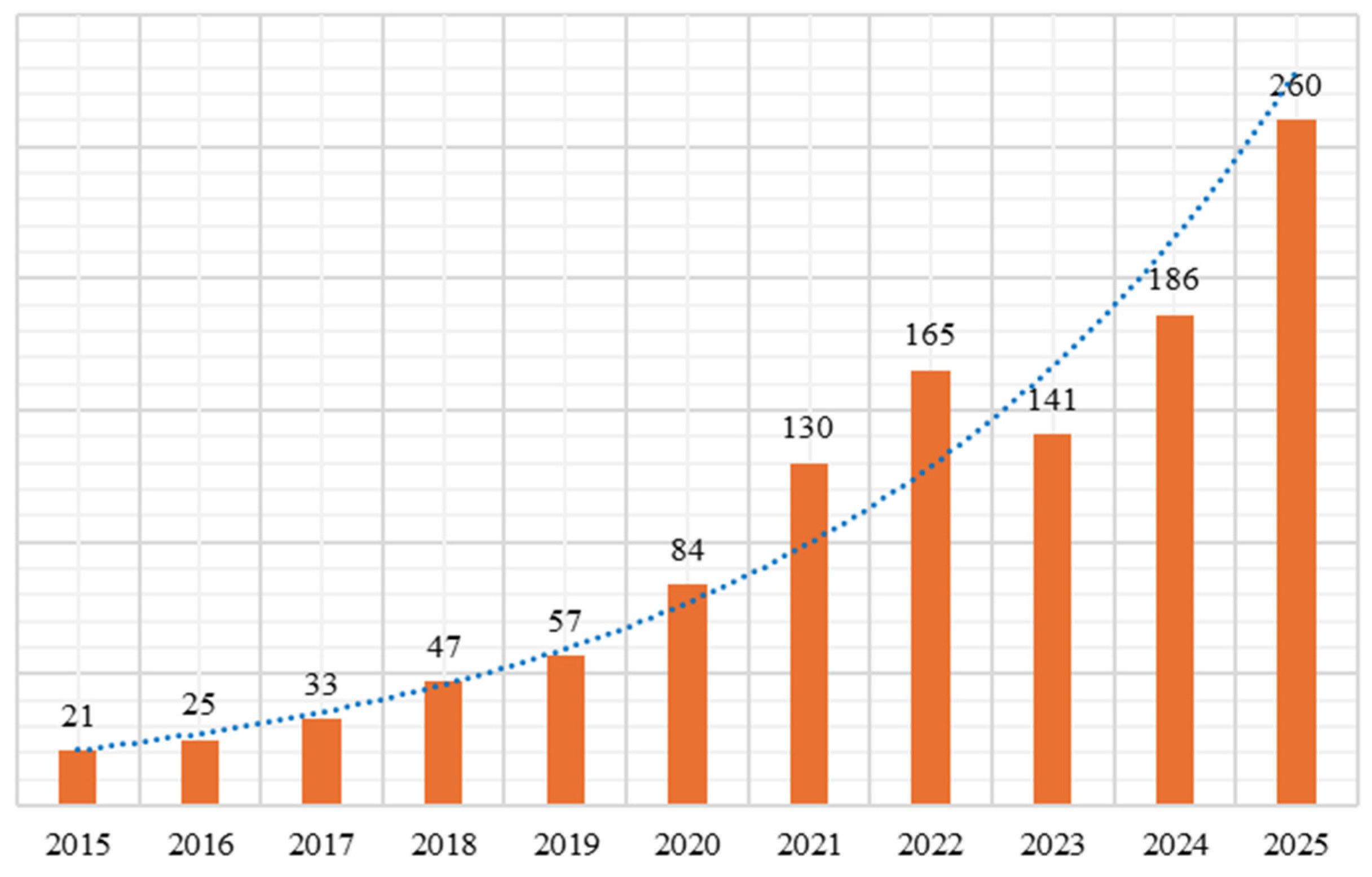
The dataset originally downloaded from the Scopus database was converted from .csv to .bib format and imported into the R software to create a bibliographic data frame. The Bibliometrix package was then used to conduct bibliometric analysis and visualize publication trends. The dataset included studies related to agro-industrial by-product valorization, with filters applied by publication year (2015–2025), language (English), document type (article), source type (journal) and publication stage (final). In total, 1063 journal articles were retained for analysis, while 267 papers published before 2015 were excluded to ensure a focus on the most recent decade (2015–2025). As shown in Figure 2, the number of publications on agro-industrial by-product valorization has increased substantially over the past ten years, reflecting the field’s growing scientific visibility. After a temporary decline in 2023, there was a rapid increase in scientific publications, indicating a renewed research interest in the topic. Table 2 presents the main bibliometric indicators derived from the dataset. The 1063 documents were authored by 5434 researchers and published across 346 journals, with an average of 22.16 citations per document. The field recorded an average annual growth rate of 27.5%, confirming its rapid and sustained expansion.
The journals with the highest number of publications are Waste and Biomass Valorization, the Journal of Cleaner Production and Bioresource Technology (Table 3). When citation performance is considered, Waste and Biomass Valorization again rank first, followed by Science of the Total Environment and Waste Management. This trend aligns with the Scopus CiteScore, calculated as the ratio between citations received over a four-year period and papers published during the same interval [45]. Overall, the Journal of Cleaner Production emerges as the most influential, combining high productivity with the strongest citation and CiteScore performance. Together with Bioresource Technology and Science of the Total Environment, it forms the core group of journals shaping research dissemination in the field of by-product valorization by orienting circular material innovation. Table 4 identifies the five most productive authors in the analyzed field. Kwon, E.E. (Hanyang University, Seoul, South Korea) ranks first with eight publications and the highest h-index, reflecting both productivity and citation impact. Yang, B. (University of Turku, Finland) shows a comparably strong influence despite a slightly lower publication count, underscoring the diversity of active contributors across institutions and regions.
The results of the bibliometric analysis contribute, as do previous studies, to highlighting significant advancements in the research field. For instance, studies such as [28] have already identified a notable expansion of the research area. However, while the previous study was based on 125 documents retrieved from two databases, covering the period 2014–2021, the present analysis includes 1063 publications from a single database over the period 2015–2025, representing a substantial increase in the dataset within a relatively short time interval. Furthermore, the analysis reveals an annual growth rate of 27.5%, along with the presence of a broad and well-structured scientific community (5434 authors across 346 journals), which appeared less developed in earlier studies. This finding, thus, highlights the increasing interest of the scientific community in this research area.

3.2. Network Analysis

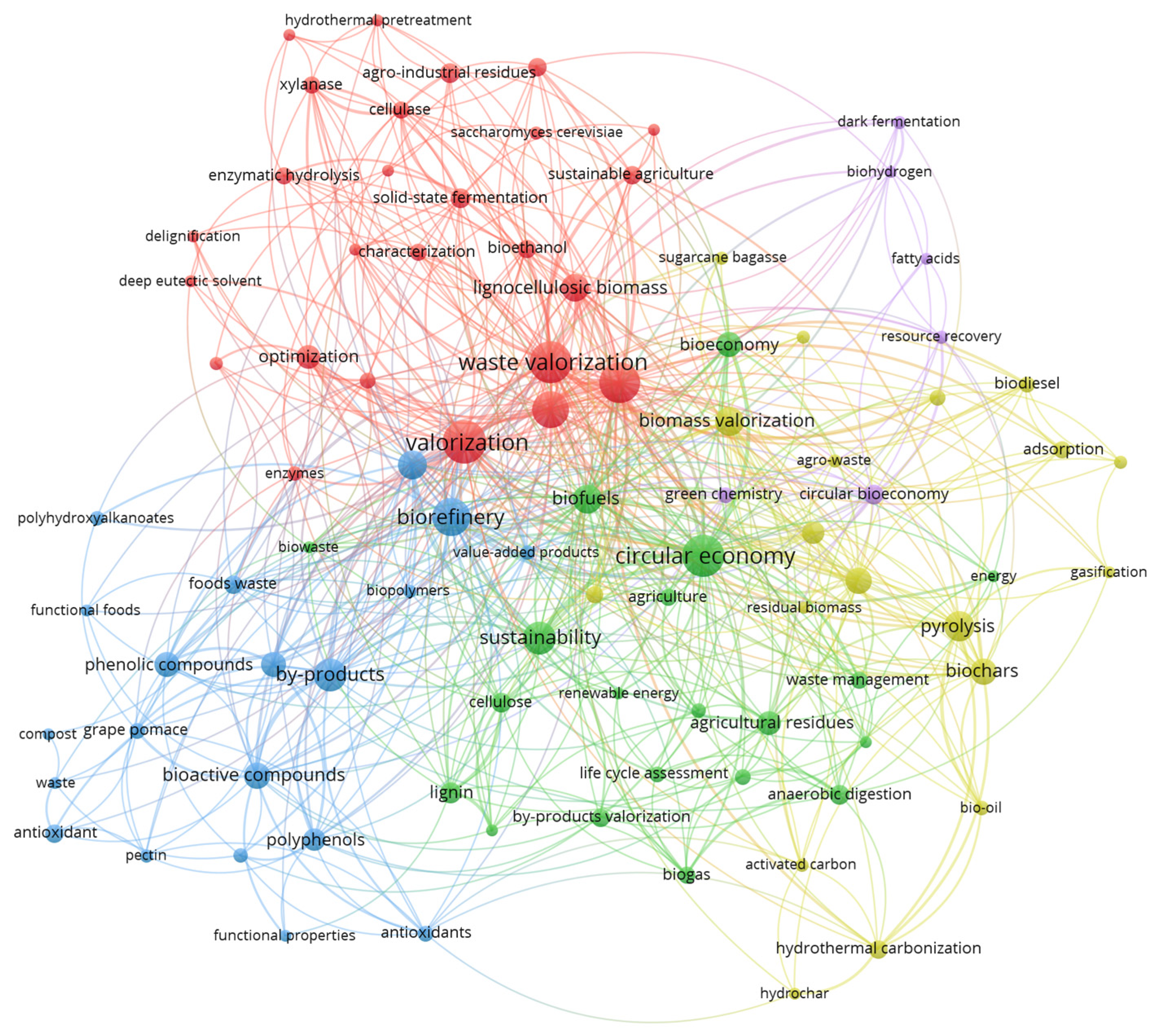
A subset of documents derived from the bibliometric dataset was processed using VOSviewer 1.6.20, which computed the co-occurrence of index keywords using the full counting method, assigning equal weight to each co-occurrence. A minimum threshold of five occurrences was applied, resulting in 91 keywords retained from the initial 2566 identified. Following the bibliographic search, a screening of the selected documents was conducted to ensure alignment with the research objectives. This step involved the manual review of abstracts and, where necessary, full texts to verify relevance to the study’s focus on the identification and valorization of agro-industrial by-products in industrial contexts. Articles found to be inconsistent with the scope were excluded, yielding a final dataset of 794 documents, thereby enhancing the precision and representativeness of the corpus used for analysis. After this first screening, a second one followed to support the content analysis as described in Section 3.3. Before co-occurrence analysis, keyword normalization was performed to ensure semantic consistency. A thesaurus file was manually developed to standardize terminology by merging lexical variations (e.g., singular/plural forms, spelling differences, abbreviations) and aggregating synonymous or conceptually equivalent terms (waste/wastes; byproduct/by-product; valorization/valorisation; agroindustrial/agro-industrial). The resulting thesaurus was integrated into VOSviewer, improving the reliability and interpretive accuracy of the generated semantic network. Table 5 presents the ten most frequent keywords, with valorization ranking first (56 occurrences), followed by waste valorization, circular economy and biomass. These findings are consistent with previous bibliometric studies on the topic [16,41,42], which also identify valorization as a core concept in contemporary literature. The prominence of these terms confirms the growing attention to the valorization of agro-industrial by-products as a key component of the circular economy.
The network visualization in Figure 3 illustrates the clustering of index keywords identified through co-occurrence analysis. Five distinct clusters are detected, each representing a major thematic cluster within the research field: red cluster (waste recovery) comprising 26 items; green cluster (systemic valorization) including 20 items; blue cluster (chemical recovery) containing 20 items; yellow cluster (energy recovery) comprising 19 items; and purple cluster (alternative fuels) including 6 items. The waste recovery (red) cluster includes keywords such as waste valorization, lignocellulosic biomass and enzymatic hydrolysis, which reflect processes and technologies for recovering value from agro-industrial by-products. These studies focus on biotechnological and chemical conversion strategies, particularly enzymatic hydrolysis, a widely explored technique for transforming lignocellulosic materials into fermentable sugars or bioactive compounds [46,47,48,49]. The cluster highlights the optimization of transformation processes and the pursuit of innovative methods to improve biomass conversion efficiency. The chemical recovery (blue) cluster centers on bioactive compounds and functional applications of by-products, emphasizing the transition from energy-oriented uses to high-value-added applications. Keywords such as phenolic compounds, polyphenols, bioactive compounds and antioxidants indicate research targeting the food, nutraceutical and cosmetic sectors [50,51,52]. This reflects a circular value chain perspective, in which agro-industrial residues serve as renewable feedstocks for sustainable product development. In the systemic valorization (green) cluster keywords such as circular economy, sustainability, biorefinery and green chemistry dominate, highlighting the systemic and cross-sectoral dimension of by-product valorization. The focus here extends beyond technological efficiency to encompass economic, environmental and social sustainability within the circular bioeconomy framework [53,54]. This cluster underscores the integration of resource valorization into broader sustainability transitions and policy-driven innovation strategies. The energy recovery (yellow) cluster is characterized by keywords linked to thermochemical conversion and energy generation, such as pyrolysis, biochar, anaerobic digestion and biogas. These studies explore energy production and the generation of multifunctional materials, particularly biochar and bio-oil, for applications in soil improvement, adsorption processes and carbon sequestration [55,56,57]. The findings illustrate how agro-industrial by-products contribute to both renewable energy production and environmental remediation. The alternative fuels (purple) cluster relates to biotechnological fermentation processes and microbial valorization routes. Keywords such as dark fermentation, biohydrogen and biodegradation focus on innovative research on the biological production of alternative fuels, particularly hydrogen, from organic waste streams [58,59,60]. This cluster exemplifies the growing biotechnological dimension of the circular bioeconomy.
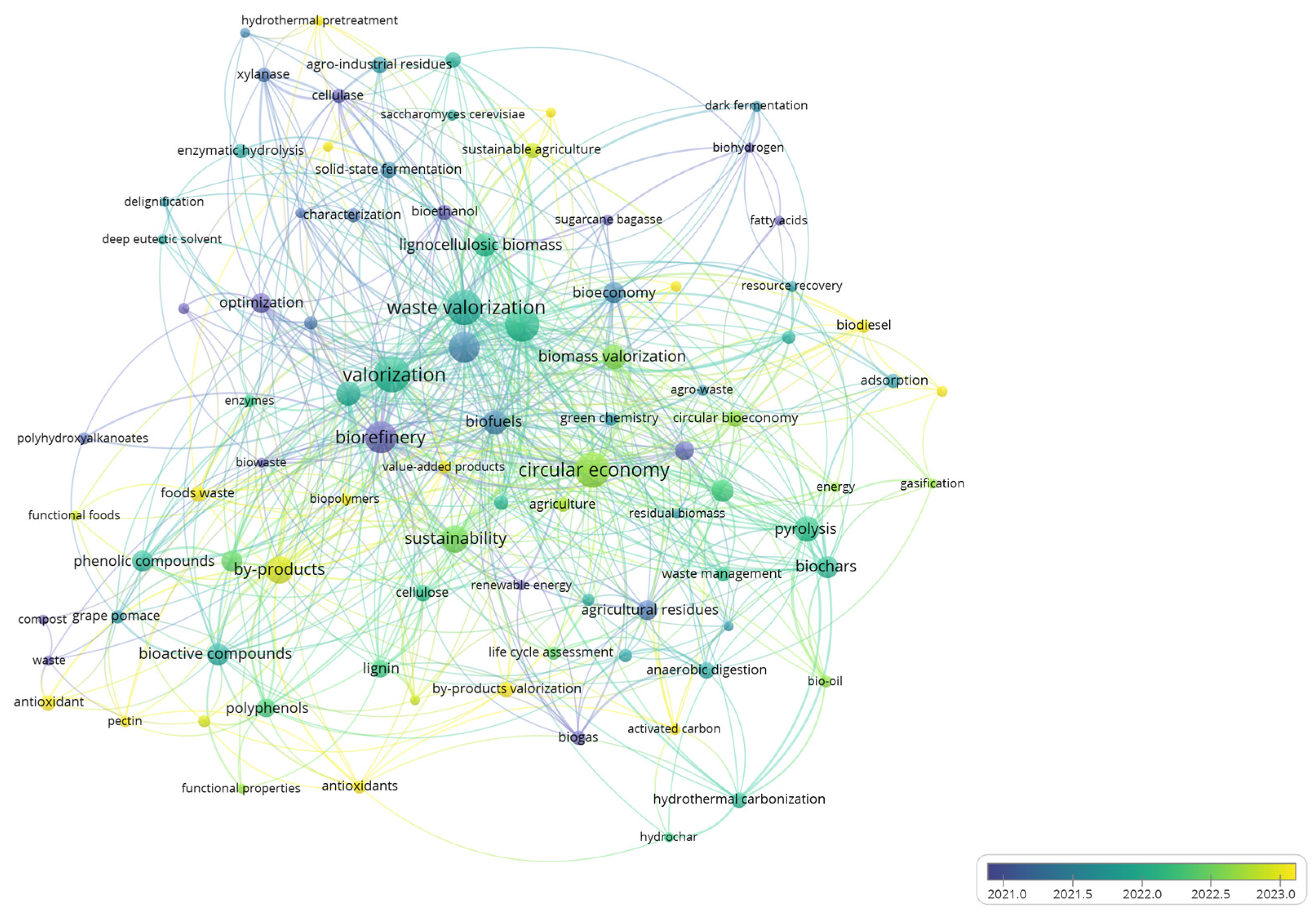
The overlay visualization uses a color gradient to represent temporal trends in keyword importance (Figure 4). It clearly demonstrates the evolution of research focus across the analyzed decade (2015–2025). In the early phase (around 2021, blue shades), research concentrated on technological and process-oriented aspects, such as enzymatic hydrolysis, pretreatment and process optimization. These studies prioritized technical efficiency and experimental development. Around 2022 (green shades), the focus extended toward systemic and sustainability-driven themes, including biorefinery, sustainability and circular economy. This marks a conceptual shift from technical feasibility to the environmental and socioeconomic implications of valorization. In more recent years (2022–2023; yellow shades), research converged on application-oriented studies, emphasizing adsorption, biochar, pyrolysis and biodiesel production. These works demonstrate a clear move toward industrial implementation and practical integration of valorization processes. Overall, the temporal evolution of the keywords reveals the maturation of the research field from early experimental and process optimization studies toward holistic investigations that integrate technological innovation, sustainability assessment and circular system implementation. This trend highlights a progressive alignment of by-product valorization research with the principles of the circular bioeconomy, emphasizing both environmental responsibility and industrial applicability.
The results of the network analysis contribute, in comparison with previous studies, to highlighting significant advancements in the research field. For instance, studies such as [28] identified a still weakly structured network. In contrast, the present analysis, based on a broader and more articulated dataset, reveals a more structured and complex network, identifying five distinct thematic clusters (waste recovery, chemical recovery, systemic valorization, energy recovery and alternative fuels). This represents a significant advancement in the definition and organization of research themes. This evolution is confirmed by the temporal analysis, which shows a transition from single, isolated studies to more integrated approaches that progressively incorporate sustainability-related topics.

3.3. Content Analysis

The content analysis was conducted on the subset of 794 publications identified as relevant after the screening process described in Section 2. Studies focused on urban or industrial (non-agricultural) waste without reference to agro-industrial by-products were excluded. Based on the content analysis, the data were categorized into four main dimensions: agro-industrial by-product origin, key components, extraction methods and application sectors.
Concerning by-product origin, the reviewed literature highlights a clear preference for widely available organic residues generated along agri-food processing chains and agricultural activities, including fruit and vegetable processing residues, sugar industry by-products, dairy waste, olive oil residues and winery waste streams [61,62,63,64,65,66,67,68,69,70]. Despite their heterogeneity, these feedstocks share common characteristics: high availability, seasonal generation, low economic value and high organic load, which may pose environmental challenges if not properly managed. At the same time, their chemical composition, typically rich in lignocellulosic polymers, fermentable sugars and bioactive compounds, makes them particularly suitable for valorization pathways. This recurring pattern suggests that both availability and compositional properties are key drivers in feedstock selection within circular bioeconomy strategies. Regarding extractive methods, the analysis reveals a methodological diversity, reflecting the complexity of converting heterogeneous by-products into valuable outputs. The literature increasingly emphasizes integrated and multi-stage approaches combining biological, chemical and thermo-chemical processes [71,72,73,74,75,76,77,78]. These approaches are designed to enhance accessibility to valuable compounds, improve process efficiency and maximize resource recovery. This trend points toward the consolidation of biorefinery-based models, in which different technologies are applied sequentially. As a result, extractive methods and related transformation processes are closely linked to both the characteristics of the input material and the final application, highlighting a strong interdependence between process design and valorization outcomes.
The analysis identifies a structured distribution across key sectors, including renewable energy production, bio-based materials and high-value bioactive compounds [71,74,78,79,80,81,82]. While energy recovery remains a well-established pathway, increasing attention is directed toward higher value applications such as biopolymers, nutraceuticals and functional materials. This shift reflects a transition from volume-oriented strategies toward value-oriented valorization approaches. In addition, emerging applications in areas such as nanotechnology, environmental remediation, and sustainable agriculture further demonstrate the expanding role of agro-industrial by-products within cross-sectoral and innovative contexts [83,84,85].
These applications demonstrate a clear paradigm shift: agro-industrial by-products are no longer viewed as waste but are increasingly recognized as strategic resources within the bioeconomy. In line with the gaps identified by [29], the present analysis confirms that literature should move towards more complex and integrated models, in which environmental, social and economic dimensions are considered jointly. In particular, the study highlights how literature focuses on several application areas, including bioenergy, materials, fertilizers and compound extraction. A schematic representation of the main categories of agro-industrial by-products, extractive methods, and application sectors is provided in Appendix A (Table A1).

3.4. Quantitative Meta-Analytical Approach

The quantitative meta-analytical approach was conducted on a dataset of 794 documents, manually selected to ensure relevance to the research question. The analysis was performed twice, using two distinct groups of documents (a; b) to explore how the scope of valorization influences scientific visibility. In the group “a”, documents are classified according to their specific focus on their origin by corresponding to crop waste and agro-industrial by-product groups. Each document is assigned a score between 1 and 2, reflecting the number of waste types analyzed: papers addressing a single waste type receive a score of 1, while those examining two different waste sources receive a score of 2. In the second group, “b”, documents are classified according to the number of valorization processes considered. Each document is assigned a score between 1 and 3: a score of 1 corresponds to studies addressing a single valorization type, 2 to those examining two, and 3 to those exploring three or more valorization processes. Results from the Anderson–Darling (A–D) test (Table 6) show that both groups deviate significantly from normality. For waste origin (group a), score 2 exhibited a higher mean of 0.790 and greater variability (Std. Dev = 0.389) than score 1. The A–D test confirmed significant non-normality in both scores, with score 1 displaying near symmetry and score 2 showing a slight positive skew. Levene’s test indicated significant variance heterogeneity (F = 11.74, p-value < 0.0006), violating the homogeneity assumption by justifying the use of Welch’s ANOVA. For the valorization type (group b), the A–D test again showed non-normality across all three scores, though variances remained consistent (Levene’s F = 0.366, p-value = 0.693). Despite the lack of normality, the homogeneity of variance assumption was met.
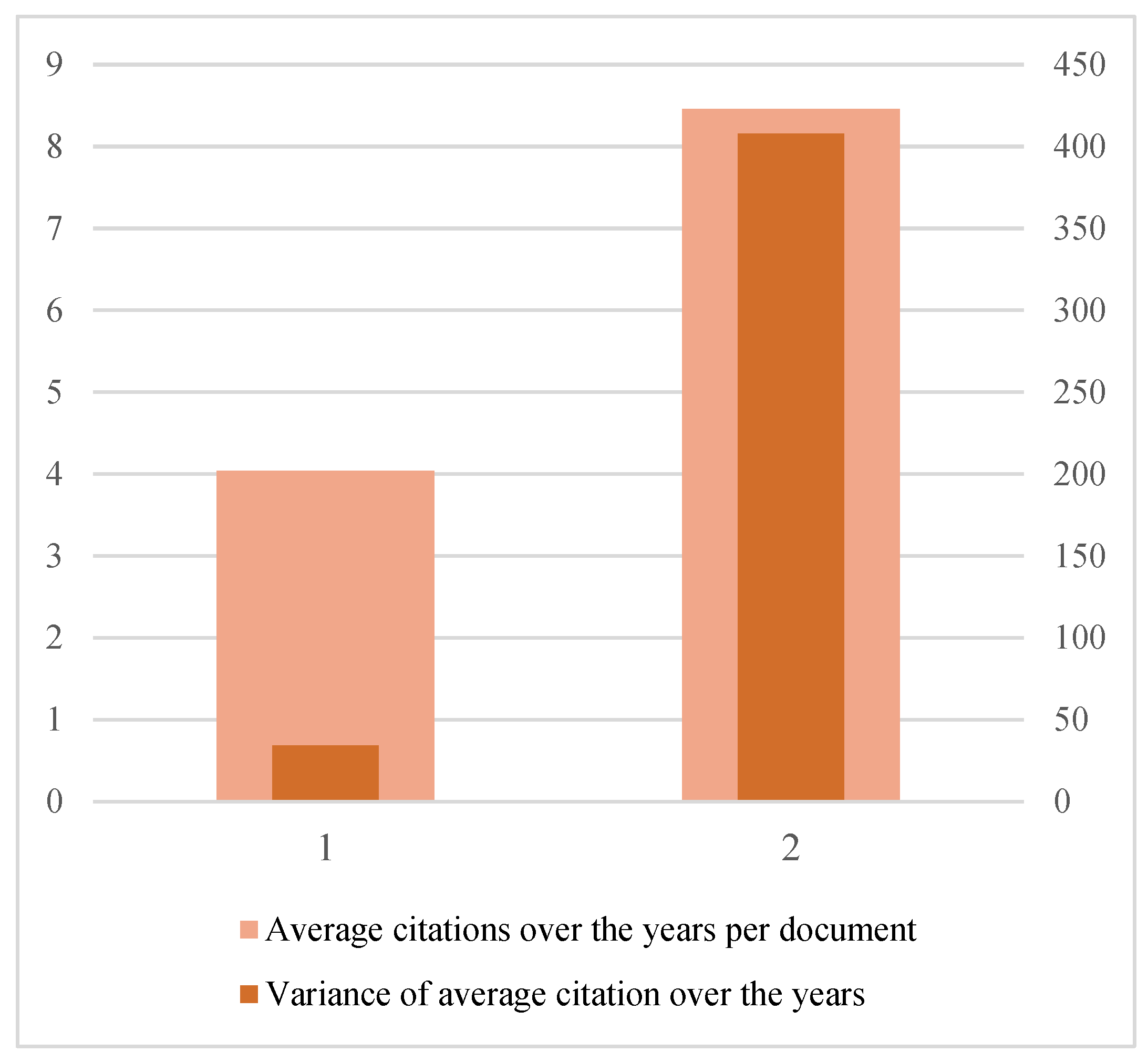
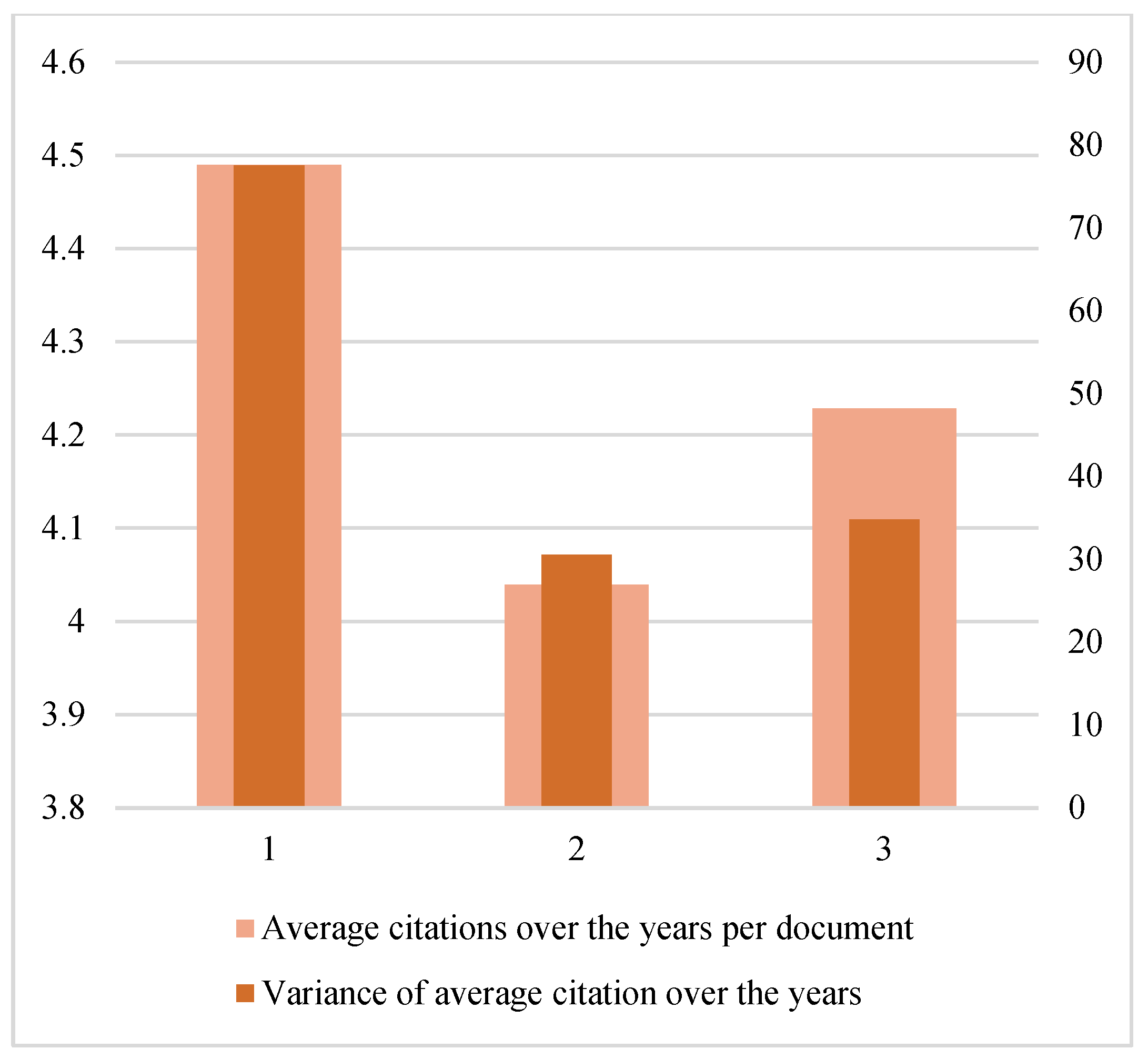
Considering the violation of normality and, in one case, variance homogeneity, Welch’s one-way ANOVA was applied to both groups (a; b). This solid test allows for unequal variances and non-normal distributions. To normalize variance and reduce skewness, citation counts were transformed using the equation log10 (Y + 2), where Y represents the number of citations per document and the constant 2 prevents undefined values for uncited documents. The independent variable (X) represents the categorical grouping (waste origin “a”: score 1–2; valorization type “b”: score 1–2–3), and the dependent variable (Y) is the average number of citations per document. As presented in Table 7, Welch’s ANOVA confirms significant differences between waste origin groups (Welch’s F Ratio = 5.556, p-value = 0.021). Specifically, score 1 (group size = 725) has an average citation over the years per document of 4.04, while score 2 (group size = 68) attains a significant average citation over the years per document of 8.46. This suggests that studies integrating multiple waste sources tend to receive higher scholarly attention and thus exhibit greater scientific visibility. However, score 2 also displays a higher variance of average citations over the years of 407.89, implying greater heterogeneity; some documents achieve high recognition, while others remain marginal. The valorization type (group b) shows no statistically significant difference among the three scores (Welch’s F Ratio = 0.411, p-value = 0.665). Average citations over the years per document values are similar: 4.49 (score 1); 4.04 (score 2); 4.23 (score 3). This indicates that the number of valorization processes considered does not substantially affect the scientific visibility of documents.
The statistical outcomes discussed above are further illustrated in Figure 5 and Figure 6, which visualize the relationship between the degree of integration, both in waste origin and valorization type groups, and the corresponding scientific visibility measured by citation performance. These graphical representations complement the ANOVA results by highlighting not only meaning differences but also the variance patterns within each group by providing a clearer view of how integration breadth relates to research visibility.

4. Discussions

The results of this SLR highlight the rapid growth and progressive maturation of the research field related to the valorization of agro-industrial by-products within the framework of the circular bioeconomy paradigm. The bibliometric analysis shows a significant increase in scientific production during the last ten years, with an average annual growth rate of 27.5%. This trend reflects the growing scientific interest in resource management strategies aimed at the sustainable valorization of resources to develop new sustainable and high-value-added materials. Similarly, the analysis of the most influential journals and authors highlights the need for interdisciplinarity to address this research field. Journals such as Waste and Biomass Valorization, Journal of Cleaner Production, Bioresource Technology and Science of the Total Environment are the main outlets for the dissemination of studies on this topic. The focus of these journals confirms that the disciplinary fields involved in addressing this issue refer to areas such as environmental engineering, green chemistry and agricultural sciences, while other dimensions related to social and economic sustainability remain less represented. These results are confirmed by the keyword co-occurrence in the network analysis, which identified five main thematic clusters structuring the research field: waste recovery, chemical recovery, systemic valorization, energy recovery and alternative fuels. These clusters reflect the multidimensional nature of agro-industrial by-product valorization. On the one hand, the literature focuses on technological aspects and conversion processes; on the other hand, there is an increasing attention to systemic approaches that link resource recovery to the principles of the circular economy, although this dimension remains only partially explored. Another relevant finding emerging from the overlay visualization of keyword co-occurrence concerns the evolution of research priorities over the last decade. In the initial stages, the literature focused on technological and experimental aspects. Gradually, the research focus expanded to include the integration of processes within biorefinery models and the application of circular economy principles. In more recent years, increasing attention has been focused on concrete industrial applications, such as biochar and biofuel production. However, these applications are still framed within environmental regeneration and energy valorization contexts, suggesting the need for greater attention toward other valorization pathways. This indicates a progressive orientation of scientific research toward experimental and applied research approaches. The content analysis of the literature also highlights that certain types of agro-industrial residues have been studied. These include residues from fruit and citrus processing, waste from the sugar industry, by-products from the dairy industry, residues from the olive oil supply chain, and those from wine production. This confirms both their high availability and their richness in potential functional components suitable for different industrial applications. From a technological perspective, various extraction methods emerge, depending on the complexity and origin of the by-product. In many cases, these processes are implemented within biorefinery systems aimed at maximizing resource recovery and improving overall process efficiency. The results of the quantitative meta-analytical approach indicate that studies analyzing multiple types of residues tend to receive a higher number of citations compared to those focusing on a single waste type. These findings suggest that integrated and comparative approaches are increasingly recognized within the scientific community as they allow for broader generalization of findings. However, these results should be interpreted carefully, as higher citation counts do not necessarily imply greater research quality. Citation-based results should be interpreted as indicators of scholarly visibility and attention rather than as direct measures of research quality. Indeed, they may reflect higher visibility, publication in high-impact journals, or alignment with rapidly growing research topics. Nevertheless, it would also be valuable to focus on specific residue types to define valorization strategies strictly dependent on the nature of the by-product, considering aspects such as the physical state of the by-product during recovery and its position within the supply chain and territorial context. Therefore, the integrated analysis suggests that most studies focus on technological innovations that remain at the laboratory stage, while studies addressing industrial scalability, implementation costs and regulatory implications are still less frequent. Although circular economy concepts are frequently mentioned in the literature, only a limited number of studies systematically investigate sustainability starting from the valorization of agro-industrial by-products. In summary, the valorization of agro-industrial by-products: (i) constitutes a dynamic and rapidly maturing field of research that requires stronger interdisciplinary integration between natural, environmental, economic and social sciences; (ii) represents a strategic lever for capturing local opportunities, defining synergies between stake-holders in the field of rural development, strengthening research and industry; (iii) promotes circularity models and strategies based on existing and underutilized by-products, avoiding new planting and land occupation in favor of the strategic and efficient use of unutilized waste that becomes secondary raw material in new supply chain configuration. In this sense, the identification of new renewable raw materials available in specific territorial contexts can improve social, economic and environmental outcomes, thereby contributing to territorial regeneration in line with the principles of the circular bioeconomy. However, the transition from the laboratory to the scale-up of processes opens up the possibility of redefining local supply chains, enhancing local economies, converting industrial infrastructures into new, more sustainable ones and advancing the efficiency and effectiveness of the processes and technologies adopted, which is reflected in the updating of skills and the creation of new professional roles.

5. Conclusions

This study provides a structured and integrated overview of the scientific production on the valorization of agro-industrial by-products through bibliometric, network and content analysis methods combined with a quantitative meta-analytical approach. Compared to purely descriptive mappings, this approach allows for a more systematic interpretation of research trends, thematic evolution and knowledge structures within the field. The results confirm the rapid growth of the research area and its progressive alignment with circular bioeconomy principles and sustainable resource management strategies. The contribution of this study is twofold. First, it identifies and systematizes the main valorization pathways by explicitly linking by-product origins, transformation processes and application domains, thus providing a more structured interpretation of the field. Second, it offers empirical evidence on the factors influencing scientific visibility, showing that studies addressing multiple waste streams tend to receive higher attention, thereby supporting the relevance of integrated and multidimensional approaches. Despite these contributions, several limitations must be acknowledged. The analysis is based exclusively on the Scopus database, which, although comprehensive, may not fully capture the entire body of relevant scientific production. Furthermore, the study does not directly address contextual aspects such as industrial feasibility, economic viability and regulatory constraints, which remain essential for the practical implementation of valorization strategies. Future research should aim to further integrate technological, economic and policy dimensions, moving beyond experimental approaches toward more application-oriented frameworks. Greater attention should be directed toward the integration of currently fragmented research streams into systemic circular models capable of addressing environmental, economic and social dimensions simultaneously. Moreover, future research should prioritize studies to evaluate scalability, real-world implementation and the impacts on local value chains and stakeholder dynamics, thereby providing stronger evidence to support the transition toward sustainable circular systems.

Supplementary Materials

The following supporting information can be downloaded at: https://www.mdpi.com/article/10.3390/su18094525/s1, Table S1: Records considered for the bibliometric analysis; Table S2: Records considered for the network and content analyses.

Author Contributions

Conceptualization, L.A., S.D.T., P.P.M., Z.A. and G.P.A.; methodology, L.A., S.D.T. and P.P.M.; software, L.A. and S.D.T.; validation, S.D.T., P.P.M. and G.P.A.; formal analysis, L.A., S.D.T. and Z.A.; resources, L.A., S.D.T. and Z.A.; data curation, L.A. and S.D.T.; writing—original draft preparation, L.A., S.D.T., P.P.M., Z.A. and G.P.A.; writing—review and editing, L.A., S.D.T., P.P.M., Z.A. and G.P.A.; supervision, L.A., P.P.M. and G.P.A. All authors have read and agreed to the published version of the manuscript.

Funding

This research received no external funding.

Data Availability Statement

The original contributions presented in the study are included in the article, further inquiries can be directed to the corresponding author.

Conflicts of Interest

The authors declare no conflicts of interest.

Appendix A

Table A1. Main categories of agro-industrial by-products, methods and applications.
By-ProductKey ComponentsMethodsApplicationsReferences
Orange peels
  • Essential oils
  • Fermentable sugars
  • Lignocellulosic biomass
  • Bioactive compounds
  • Organic matter
  • Phenolic compounds
  • Volatile pyrolysis compounds
  • Biological processes
  • Process optimization
  • Thermochemical conversion
  • Pretreatment and hydrolysis
  • Extraction
  • Performance targets
  • Bioenergy
  • Chemical
  • Cosmetical
  • Energy
  • Environmental biotechnology
  • Feed
  • Food
  • Paper and pulp
  • Pharmaceutical
  • Nutraceutical
  • Sustainable carbon utilization
  • Textile
[61,71,86]
Orange bagasse
  • Carbon
  • Lignocellulosic biomass
  • Minor xylose
  • Nitrogen
  • Phosphorus
  • Polysaccharides
  • Sulfur
Banana peels
  • Ash
  • Bioactive compounds
  • Cellulose
  • Fermentable sugars
  • Fibers
  • Minerals
  • Organic matter
  • Polysaccharides
  • Biological conversion
  • Thermochemical conversion
  • Chemical modification
  • Material synthesis
  • Characterization
  • Agriculture
  • Bakery
  • Biochar
  • Biomedical
  • Biofuel
  • Biorefinery
  • Food
  • Pharmaceutical
  • Nutraceutical
  • Polymer
[72,87,88,89]
Olive leaves
  • Oleuropein
  • Polyphenols
  • Extraction technologies
  • Biological processes
  • Pretreatment
  • Formulation and applications
  • Animal feed
  • Biopolymer
  • Construction materials
  • Cosmetic
  • Food packaging
  • Fungal biotechnology
  • Green building
  • Livestock
  • Nutraceutical
  • Pharmaceutical
[24,52,63]
  • Oleuropein
  • Polyphenols
  • Macromolecules
Olive pomace
  • Polyphenols
Olive husk
  • Fibers
  • Organic matter
Olive mill stone
  • Proteins
  • Sugars
Tomato pomace
  • Lignocellulosic biomass
  • Sugars
  • Xylan
  • Pretreatment and fractionation
  • Chemical treatment
  • Biological conversion
  • Process optimization
  • Product synthesis and recovery
  • Characterization
  • Advanced materials
  • Bioenergy
  • Biofuels
  • Bioplastics
  • Biopolymers
  • Bioprocessing
  • Chemical
  • Cosmetic
  • Enzyme manufacturing
  • Food
  • Imaging and sensing
  • Nanotechnology
  • Nutraceutical
  • Pharmaceutical
[79,90,91]
Tomato peels and seeds
  • Carbon
  • Lignocellulosic biomass
  • Cellulose
  • Hemicellulose
  • Polysaccharide
  • Sugars
Grape marc, stalks, and lees
  • Fibers
  • Lignocellulosic biomass
  • Organic acids
  • Polyphenols
  • Sugars
  • Proteins
  • Tartrates
  • Yeast biomass
  • Thermochemical conversion
  • Energy conversion
  • Pretreatment (chemical/hydrothermal)
  • Biological processes
  • Extraction and recovery
  • Analytical methods
  • Agriculture
  • Animal feed
  • Biochemicals
  • Bioenergy
  • Biofertilizers
  • Biofuels
  • Biogas
  • Bio-products
  • Nutraceuticals
  • Soil amendments
[66,74,92,93]
Grape seeds
  • Lignocellulosic biomass
  • Oils and fat
  • Polyphenols
  • Sugars.
Grape pomace
  • Lignocellulosic biomass
  • Fibers
  • Polyphenols
  • Sugars
Apple pomace
  • Bioactive compounds
  • Cellulose
  • Fermentable sugars
  • Fibers
  • Hemicellulose
  • Lignocellulosic biomass
  • Organic acids
  • Polyphenols
  • Thermochemical conversion
  • Chemical pretreatment
  • Biological conversion
  • Downstream processing
  • Advanced materials
  • Animal feed
  • Biochar
  • Bioenergy
  • Biopolymers
  • Food industry
  • Nutraceuticals
  • Packaging
  • Soil amendment
[23,94,95,96]
Rice straw
  • Ash
  • Macronutrients
  • Carbohydrates
  • Cellulose
  • Flavonoids
  • Hemicellulose.
  • Lignocellulosic biomass
  • Low heavy metals and silica
  • Micronutrients
  • Organic matter
  • Phenolic compounds
  • Proteins
  • Sugars.
  • Tannins
  • Pretreatment and fractionation
  • Biological conversion
  • Extraction and separation
  • Advanced approaches
  • Performance metrics
  • Animal feed
  • Bioactive compounds
  • Bioenergy
  • Biofuels
  • Bioprocessing
  • Cosmetic
  • Enzyme production
  • Fertilizers
  • Food ingredients
  • Hydrogen production.
  • Nutraceutical
[76,83,97,98]
Wheat straw
  • Carbon-rich volatiles
  • Cellulose
  • Hemicellulose
  • Fermentable sugars
  • Lignocellulosic biomass
  • Organic acids
  • Organic matter
  • Thermochemical and catalytic conversion
  • Chemical treatment
  • Biological conversion
  • Process optimization
  • Advanced materials
  • Biochar
  • Biofuels
  • Chemicals
  • Nanotechnology
  • Syngas production
  • Soil amendment
[85,99,100]
Cheese whey
  • Lactose
  • Proteins
  • Nutrient
  • Minerals
  • Salts
  • Water
  • Biological conversion
  • Biopolymer production
  • Energy recovery
  • Material applications
  • Agriculture
  • Agriculture
  • Animal feed
  • Bioplastics
  • Biomedical materials
  • Food
  • Sustainable packaging
  • Soil amendment
[101,102,103,104]
Sugarcane molasses
  • Bioactive compounds
  • Organic matter
  • Sugars
  • Biological conversion
  • Fungal processes
  • Chemical pretreatment
  • Catalytic fractionation
  • Energy recovery
  • Agriculture
  • Biopolymers
  • Biochemicals
  • Biofuels
  • Biogas
  • Bio-oil
  • Chemicals
  • Cosmetics
  • Detergents
  • Drug delivery
  • Nanomaterials
  • Nutraceuticals
[69,105,106]
Sugarcane straw
  • Bioactive compounds
  • Organic matter
  • Sugars
Sugarcane bagasse
  • Lignocellulosic biomass
  • Silica
Source: Authors’ elaboration.

References

  1. World Bank. World Population Day: Trends and Demographic Changes. 2025. Available online: https://blogs.worldbank.org/en/opendata/world-population-day--trends-and-demographic-changes (accessed on 11 July 2025).
  2. Maja, M.M.; Ayano, S.F. The impact of population growth on natural resources and farmers’ capacity to adapt to climate change in low-income countries. Earth Syst. Environ. 2021, 5, 271–283. [Google Scholar] [CrossRef] [Scilit]
  3. Godfray, H.C.J.; Beddington, J.R.; Crute, I.R.; Haddad, L.; Lawrence, D.; Muir, J.F.; Toulmin, C. Food security: The challenge of feeding 9 billion people. Science 2010, 327, 812–818. [Google Scholar] [CrossRef] [Scilit]
  4. Abdul Malik, F.Z.B.; Teck, T.S.; Geok, L.S.; Fernandez, R.T.; Liau, C.H.; Sonar, P.R.; Veerunjaysingh, S. Integrating the green economy, circular economy, and bioeconomy into a strategic sustainability framework to drive sustainable business transformation. Lex Localis 2025, 23, 615–627. [Google Scholar] [CrossRef] [Scilit]
  5. Chowdhury, P.; Mahi, N.A.; Yeassin, R.; Chowdhury, N.U.R.; Farrok, O. Biomass to biofuel: Impacts and mitigation of environmental, health, and socioeconomic challenges. Energy Convers. Manag. X 2025, 25, 100889. [Google Scholar] [CrossRef] [Scilit]
  6. Elhacham, E.; Ben-Uri, L.; Grozovski, J.; Bar-On, Y.M.; Milo, R. Global human-made mass exceeds all living biomass. Nature 2020, 588, 442–444. [Google Scholar] [CrossRef] [Scilit] [PubMed]
  7. Ahorsu, R.; Medina, F.; Constantí, M. Significance and challenges of biomass as a suitable feedstock for bioenergy and biochemical production: A review. Energies 2018, 11, 3366. [Google Scholar] [CrossRef] [Scilit]
  8. Koul, B.; Yakoob, M.; Shah, M.P. Agricultural waste management strategies for environmental sustainability. Environ. Res. 2022, 206, 112285. [Google Scholar] [CrossRef] [Scilit]
  9. Bocken, N.M.; Rana, P.; Short, S.W. Value mapping for sustainable business thinking. J. Ind. Prod. Eng. 2015, 32, 67–81. [Google Scholar] [CrossRef] [Scilit]
  10. Blomsma, F.; Brennan, G. The emergence of circular economy: A new framing around prolonging resource productivity. J. Ind. Ecol. 2017, 21, 603–614. [Google Scholar] [CrossRef] [Scilit]
  11. Lacy, P.; Rutqvist, J.; Lamonica, B. Circular Economy: Dallo Spreco al Valore; EGEA: Milano, Italy, 2016. [Google Scholar]
  12. Demirbaş, A. Biomass resource facilities and biomass conversion processing for fuels and chemicals. Energy Convers. Manag. 2001, 42, 1357–1378. [Google Scholar] [CrossRef] [Scilit]
  13. Hoogwijk, M.; Faaij, A.; Van den Broek, R.; Berndes, G.; Gielen, D.; Turkenburg, W. Exploration of the ranges of the global potential of biomass for energy. Biomass Bioenergy 2003, 25, 119–133. [Google Scholar] [CrossRef] [Scilit]
  14. Demichelis, F.; Lenzuni, M.; Converti, A.; Del Borghi, A.; Freyria, F.S.; Gagliano, E.; Tommasi, T. Agro-food waste conversion into valuable products in the Italian scenario: Current practices and innovative approaches. J. Environ. Chem. Eng. 2025, 13, 115458. [Google Scholar] [CrossRef] [Scilit]
  15. Obi, F.O.; Ugwuishiwu, B.O.; Nwakaire, J.N. Agricultural waste concept, generation, utilization and management. Niger. J. Technol. 2016, 35, 957–964. [Google Scholar] [CrossRef] [Scilit]
  16. Capanoglu, E.; Nemli, E.; Tomas-Barberan, F. Novel approaches in the valorization of agricultural wastes and their applications. J. Agric. Food Chem. 2022, 70, 6787–6804. [Google Scholar] [CrossRef] [Scilit] [PubMed]
  17. Mesa, J.A.; Sierra-Fontalvo, L.; Ortegon, K.; Gonzalez-Quiroga, A. Advancing circular bioeconomy: A critical review and assessment of indicators. Sustain. Prod. Consum. 2024, 46, 324–342. [Google Scholar] [CrossRef] [Scilit]
  18. Bocken, N.M.; Niessen, L.; Short, S.W. The sufficiency-based circular economy—An analysis of 150 companies. Front. Sustain. 2022, 3, 899289. [Google Scholar] [CrossRef] [Scilit]
  19. Saravanan, A.; Ragini, Y.P.; Karishma, S.; Hemavathy, R.V.; Jyotsna, M. A review on advancing sustainable energy: The role of biomass and bioenergy in a circular economy. Sustain. Futures 2025, 10, 100835. [Google Scholar] [CrossRef] [Scilit]
  20. Fava, F. La bioeconomia motore dell’economia circolare. GeoTrade 2022, 3, 20–23. [Google Scholar]
  21. Troilo, M.; Difonzo, G.; Paradiso, V.M.; Summo, C.; Caponio, F. Bioactive compounds from vine shoots, grape stalks, and wine lees: Their potential use in agro-food chains. Foods 2021, 10, 342. [Google Scholar] [CrossRef] [Scilit]
  22. Sorrenti, V.; Burò, I.; Consoli, V.; Vanella, L. Recent advances in health benefits of bioactive compounds from food wastes and by-products: Biochemical aspects. Int. J. Mol. Sci. 2023, 24, 2019. [Google Scholar] [CrossRef] [Scilit]
  23. Sette, P.; Fernandez, A.; Soria, J.; Rodriguez, R.; Salvatori, D.; Mazza, G. Integral valorization of fruit waste from wine and cider industries. J. Clean. Prod. 2020, 242, 118486. [Google Scholar] [CrossRef] [Scilit]
  24. Miranda, I.; Simões, R.; Medeiros, B.; Nampoothiri, K.M.; Sukumaran, R.K.; Rajan, D.; Ferreira-Dias, S. Valorization of lignocellulosic residues from the olive oil industry by production of lignin, glucose and functional sugars. Bioresour. Technol. 2019, 292, 121936. [Google Scholar] [CrossRef] [Scilit] [PubMed]
  25. Kitchenham, B. Procedures for Performing Systematic Reviews; Keele University Technical Report TR/SE-0401; Keele University: Newcastle, UK, 2004. [Google Scholar]
  26. Tranfield, D.; Denyer, D.; Smart, P. Towards a methodology for developing evidence-informed management knowledge by means of systematic review. Br. J. Manag. 2003, 14, 207–222. [Google Scholar] [CrossRef] [Scilit]
  27. Petticrew, M.; Roberts, H. Systematic Reviews in the Social Sciences: A Practical Guide; Blackwell: Oxford, UK, 2006. [Google Scholar]
  28. Chiaraluce, G.; Bentivoglio, D.; Finco, A. Circular economy for a sustainable agri-food supply chain: A review for current trends and future pathways. Sustainability 2021, 13, 9294. [Google Scholar] [CrossRef] [Scilit]
  29. Carrillo-Rodríguez, L.A.; Romero, M.C.; Larrahondo, J.A.G. The Use of Agro-Industrial Waste towards a Sustainable Circular Economy: A Systematic Review. Detritus 2025, 31, 45. [Google Scholar] [CrossRef] [Scilit]
  30. Moher, D.; Shamseer, L.; Clarke, M.; Ghersi, D.; Liberati, A.; Petticrew, M.; PRISMA-P Group. Preferred reporting items for systematic review and meta-analysis protocols (PRISMA-P) 2015 statement. Syst. Rev. 2015, 4, 1. [Google Scholar] [CrossRef]
  31. Wang, X.; Li, C.; Lam, C.H.; Subramanian, K.; Qin, Z.H.; Mou, J.H.; Jin, M.; Chopra, S.S.; Singh, V.; Ok, Y.S.; et al. Emerging Waste Valorisation Techniques to Moderate the Hazardous Impacts, and Their Path towards Sustainability. J. Hazard. Mater. 2022, 423, 127023. [Google Scholar] [CrossRef] [Scilit]
  32. Junior, A.A.; Nunes, A.; Maraschin, M. Transforming Agro-Industrial Waste into High-Value Industrial Products: A Systematic Review. Environ. Soc. Manag. J./Rev. Gestão Soc. E Ambient. 2025, 19, 4. [Google Scholar]
  33. Tamasiga, P.; Miri, T.; Onyeaka, H.; Hart, A. Food Waste and Circular Economy: Challenges and Opportunities. Sustainability 2022, 14, 9896. [Google Scholar] [CrossRef] [Scilit]
  34. Aria, M.; Cuccurullo, C. bibliometrix: An R-tool for comprehensive science mapping analysis. J. Informetr. 2017, 11, 959–975. [Google Scholar] [CrossRef] [Scilit]
  35. Broadus, R. Toward a definition of bibliometrics. Scientometrics 1987, 12, 373–379. [Google Scholar] [CrossRef] [Scilit]
  36. Newman, M.E.J. The structure of scientific collaboration networks. Proc. Natl. Acad. Sci. USA 2001, 98, 404–409. [Google Scholar] [CrossRef]
  37. Van Eck, N.; Waltman, L. Software survey: VOSviewer, a computer program for bibliometric mapping. Scientometrics 2010, 84, 523–538. [Google Scholar] [CrossRef] [Scilit]
  38. Weber, R.P. Basic Content Analysis, 2nd ed.; Sage Publications: Thousand Oaks, CA, USA, 1990. [Google Scholar]
  39. Borenstein, M.; Hedges, L.V.; Higgins, J.P.; Rothstein, H.R. Introduction to Meta-Analysis; John Wiley & Sons: Hoboken, NJ, USA, 2021. [Google Scholar]
  40. Fisher, R.A. Statistical Methods for Research Workers; Oliver and Boyd: Edinburgh, UK, 1925. [Google Scholar]
  41. Field, A. Discovering Statistics Using IBM SPSS Statistics, 4th ed.; Sage Publications: Thousand Oaks, CA, USA, 2013. [Google Scholar]
  42. Tabachnick, B.G.; Fidell, L.S. Using Multivariate Statistics, 7th ed.; Pearson: London, UK, 2019. [Google Scholar]
  43. Anderson, T.W.; Darling, D.A. A test of goodness of fit. J. Am. Stat. Assoc. 1954, 49, 765–769. [Google Scholar] [CrossRef]
  44. Levene, H. Robust tests for equality of variances. In Contributions to Probability and Statistics: Essays in Honor of Harold Hotelling; Olkin, I., Ed.; Stanford University Press: Stanford, CA, USA, 1960; pp. 278–292. [Google Scholar]
  45. James, C.; Colledge, L.; Meester, W.; Azoulay, N.; Plume, A. CiteScore metrics: Creating journal metrics from the Scopus citation index. arXiv 2018, arXiv:1812.06871. [Google Scholar] [CrossRef] [Scilit]
  46. Khitous, F.; Strozzi, F.; Urbinati, A.; Alberti, F. A systematic literature network analysis of existing themes and emerging research trends in circular economy. Sustainability 2020, 12, 1633. [Google Scholar] [CrossRef] [Scilit]
  47. Ozón, B.; Cotabarren, J.; Valicenti, T.; Parisi, M.G.; Obregon, W.D. Chia expeller: A promising source of antioxidant, antihypertensive and antithrombotic peptides. Food Chem. 2022, 380, 132185. [Google Scholar] [CrossRef] [Scilit] [PubMed]
  48. Martínez-Avila, O.; Llimós, J.; Ponsá, S. Integrated solid-state enzymatic hydrolysis and solid-state fermentation for producing sustainable polyhydroxyalkanoates from low-cost agro-industrial residues. Food Bioprod. Process. 2021, 126, 334–344. [Google Scholar] [CrossRef] [Scilit]
  49. Juhnevica-Radenkova, K.; Kviesis, J.; Moreno, D.A.; Seglina, D.; Vallejo, F.; Valdovska, A.; Radenkovs, V. Highly efficient release of ferulic acid from agro-industrial by-products via enzymatic hydrolysis with cellulose-degrading enzymes: Part I—The superiority of hydrolytic enzymes versus conventional hydrolysis. Foods 2021, 10, 782. [Google Scholar] [CrossRef] [Scilit]
  50. Angulo-López, J.E.; Flores-Gallegos, A.C.; Ascacio-Valdes, J.A.; Contreras Esquivel, J.C.; Torres-León, C.; Rúelas-Chácon, X.; Aguilar, C.N. Antioxidant dietary fiber sourced from agroindustrial byproducts and its applications. Foods 2022, 12, 159. [Google Scholar] [CrossRef] [Scilit]
  51. Castro-Vargas, H.I.; Ballesteros Vivas, D.; Ortega Barbosa, J.; Morantes Medina, S.J.; Aristizabal Gutierrez, F.; Parada-Alfonso, F. Bioactive phenolic compounds from the agroindustrial waste of Colombian mango cultivars ‘Sugar Mango’ and ‘Tommy Atkins’—An alternative for their use and valorization. Antioxidants 2019, 8, 41. [Google Scholar] [CrossRef] [Scilit] [PubMed]
  52. Gómez-Cruz, I.; Cara, C.; Romero, I.; Castro, E.; Gullón, B. Valorisation of exhausted olive pomace by an eco-friendly solvent extraction process of natural antioxidants. Antioxidants 2020, 9, 1010. [Google Scholar] [CrossRef] [Scilit]
  53. Donner, M.; Gohier, R.; de Vries, H. A new circular business model typology for creating value from agro-waste. Sci. Total Environ. 2020, 716, 137065. [Google Scholar] [CrossRef] [Scilit]
  54. García, A.; Gandini, A.; Labidi, J.; Belgacem, N.; Bras, J. Industrial and crop wastes: A new source for nanocellulose biorefinery. Ind. Crops Prod. 2016, 93, 26–38. [Google Scholar] [CrossRef] [Scilit]
  55. Kataki, S.; Hazarika, S.; Baruah, D.C. Assessment of by-products of bioenergy systems (anaerobic digestion and gasification) as potential crop nutrient. Waste Manag. 2017, 59, 102–117. [Google Scholar] [CrossRef] [Scilit]
  56. Murillo, H.A.; Pagés-Díaz, J.; Díaz-Robles, L.A.; Vallejo, F.; Huiliñir, C. Valorization of oat husk by hydrothermal carbonization: Optimization of process parameters and anaerobic digestion of spent liquors. Bioresour. Technol. 2022, 343, 126112. [Google Scholar] [CrossRef] [Scilit] [PubMed]
  57. Sanchez-Borrego, F.J.; Alvarez-Mateos, P.; Garcia-Martin, J.F. Biodiesel and other value-added products from bio-oil obtained from agrifood waste. Processes 2021, 9, 797. [Google Scholar] [CrossRef] [Scilit]
  58. Ghimire, A.; Frunzo, L.; Pontoni, L.; d’Antonio, G.; Lens, P.N.; Esposito, G.; Pirozzi, F. Dark fermentation of complex waste biomass for biohydrogen production by pretreated thermophilic anaerobic digestate. J. Environ. Manag. 2015, 152, 43–48. [Google Scholar] [CrossRef] [Scilit] [PubMed]
  59. Akhiar, A.; Battimelli, A.; Torrijos, M.; Carrere, H. Comprehensive characterization of the liquid fraction of digestates from full-scale anaerobic co-digestion. Waste Manag. 2017, 59, 118–128. [Google Scholar] [CrossRef] [Scilit]
  60. Elain, A.; Le Grand, A.; Corre, Y.M.; Le Fellic, M.; Hachet, N.; Le Tilly, V.; Bruzaud, S. Valorisation of local agro-industrial processing waters as growth media for polyhydroxyalkanoates (PHA) production. Ind. Crops Prod. 2016, 80, 1–5. [Google Scholar] [CrossRef] [Scilit]
  61. Ortiz-Sánchez, M.; Solarte-Toro, J.C.; Inocencio-García, P.J.; Alzate, C.A.C. Sustainability analysis of orange peel biorefineries. Enzym. Microb. Technol. 2024, 172, 110327. [Google Scholar] [CrossRef] [Scilit]
  62. Dar, A.; Hafeez, M.; Sarwar, F.; Ain, N.U.; Yaseen, G.; Anwar, J.; Ansari, M.A. Mitigating carbon dioxide in atmosphere by utilizing biochar as a fertilizer: A step towards sustainable agriculture. Pol. J. Environ. Stud. 2025, 34, 607–616. [Google Scholar] [CrossRef] [Scilit] [PubMed]
  63. Ilgaz, C.; Casula, L.; Sarais, G.; Schlich, M.; Dessì, D.; Cardia, M.C.; Lai, F. Proniosomal encapsulation of olive leaf extract for improved delivery of oleuropein: Towards the valorization of an agro-industrial byproduct. Food Chem. 2025, 479, 143877. [Google Scholar] [CrossRef] [Scilit]
  64. Natalia, G.; Melián, E.; Acebal, C.C.; Domini, C.E.; Faccio, R.; López, O.V. Harnessing antioxidant-rich byproducts from olive and wine industries to produce corn starch films as edible coatings for minimally processed foods. Food Biosci. 2025, 69, 106802. [Google Scholar] [CrossRef] [Scilit]
  65. Cutillo, E.A.; Tregambi, C.; Bareschino, P.; Mancusi, E.; Continillo, G.; Pepe, F. Energetic, exergetic and techno-economic analysis of a bioenergy with carbon capture and utilization process via integrated torrefaction–CLC–methanation. Energies 2024, 17, 2690. [Google Scholar] [CrossRef] [Scilit]
  66. Kokkinomagoulos, E.; Stamkopoulos, A.; Michaelidou, A.M.; Goula, A.M.; Kandylis, P. Valorization of the solid fraction of wine lees through optimized accelerated autolysis: Effect of temperature, pH and solid concentration on free-amino acid concentration. Sustain. Chem. Pharm. 2024, 42, 101780. [Google Scholar] [CrossRef] [Scilit]
  67. Jain, L.; Kurmi, A.K.; Kumar, A.; Narani, A.; Bhaskar, T.; Agrawal, D. Exploring the flexibility of cellulase cocktail obtained from mutant UV-8 of Talaromyces verruculosus IIPC 324 in depolymerizing multiple agro-industrial lignocellulosic feedstocks. Int. J. Biol. Macromol. 2020, 154, 538–544. [Google Scholar] [CrossRef] [Scilit]
  68. Cardoen, D.; Joshi, P.; Diels, L.; Sarma, P.M.; Pant, D. Agriculture biomass in India: Part 1. Estimation and characterization. Resour. Conserv. Recycl. 2015, 102, 39–48. [Google Scholar] [CrossRef] [Scilit]
  69. Nunes, J.S.; de Araújo Padilha, C.E.; de Araújo, B.M.C.; de Paiva, W.K.V.; de Carvalho Gonçalves, L.C.T.; de Oliveira, H.N.M.; de Araújo, D.A.M. Production of ethanol, phenolic acids and hyaluronic acid after fractionation of sugarcane straw using organosolv pretreatment. Ind. Crops Prod. 2024, 220, 119283. [Google Scholar] [CrossRef] [Scilit]
  70. López-Balladares, O.H.; De la Lama-Calvente, D.; Flores-Flor, F.J.; Borja, R. Batch mesophilic anaerobic digestion of mixtures of lignocellulosic biomasses from Ecuador: Influence of inoculum type and thermal pretreatment on methane production and process kinetics. Biomass Convers. Biorefin. 2025, 15, 19111–19126. [Google Scholar] [CrossRef] [Scilit]
  71. Ali, S.; Aslam, M.; Ahmad, M.U.; Masood, R.; Zaman, N.; Arshad, M.; Sharif, S. Valorization of orange peel waste as a potential substrate for the fermentative production of extracellular laccase from Aspergillus niger ISL-09 and determination of its kinetic parameters. Waste Biomass Valorization 2025, 16, 2353–2365. [Google Scholar] [CrossRef] [Scilit]
  72. Nur Liyana, A.; Naemaa, M. Effects of banana peel flour (Musa paradisiaca AAB, sub-group Pisang Nangka) substitution on physicochemical and sensory properties of bun. Food Res. 2025, 8, 22–33. [Google Scholar]
  73. Pesante, G.; Zuliani, A.; Cannone, E.; Greco, F.; Tesoriero, C.; Vettori, A.; Frison, N. Biological conversion of agricultural residues into microbial proteins for aquaculture using PHA-producing mixed microbial cultures. J. Clean. Prod. 2022, 378, 134554. [Google Scholar] [CrossRef] [Scilit]
  74. Castro, L.E.N.; Barroso, T.L.C.T.; Sganzerla, W.G.; Costa, J.M.; Saia, F.T.; Colpini, L.M.S.; Forster-Carneiro, T. Subcritical water hydrolysis of grape pomace as a sustainable pretreatment for anaerobic digestion in a biorefinery concept. Fuel 2024, 363, 130899. [Google Scholar] [CrossRef] [Scilit]
  75. Sindhu, M.; Sharma, R.; Saini, A.; Khanna, V.; Singh, G. Nanomaterials mediated valorization of agricultural waste residue for biohydrogen production. Int. J. Hydrogen Energy 2024, 52, 1241–1253. [Google Scholar] [CrossRef] [Scilit]
  76. Shankar, K.; Beladhadi, R.V.; Jayalakshmi, S.K.; Sreeramulu, K. Recovery of antioxidative phenolic compounds by the valorization of rice biomass under the influence of lignocellulolytic enzymes. Biocatal. Biotransform. 2024, 42, 440–453. [Google Scholar] [CrossRef] [Scilit]
  77. de Hoyos-Martínez, P.L.; Erdocia, X.; Charrier-El Bouhtoury, F.; Prado, R.; Labidi, J. Multistage treatment of almonds waste biomass: Characterization and assessment of the potential applications of raw material and products. Waste Manag. 2018, 80, 40–50. [Google Scholar] [CrossRef] [Scilit]
  78. Fabbri, A.; Bonifazi, G.; Serranti, S. Micro-scale energy valorization of grape marcs in winery production plants. Waste Manag. 2015, 36, 156–165. [Google Scholar] [CrossRef] [Scilit] [PubMed]
  79. Valenti, F.; Parlato, M.C.; Pecorino, B.; Selvaggi, R. Enhancement of sustainable bioenergy production by valorizing tomato residues: A GIS-based model. Sci. Total Environ. 2023, 869, 161766. [Google Scholar] [CrossRef] [Scilit]
  80. López-Salazar, H.; Camacho-Díaz, B.H.; Ocampo, M.A.; Campos-Mendiola, R.; Martínez-Velarde, R.; López-Bonilla, A.; Jiménez-Aparicio, A.R. Microwave-assisted extraction of β-sitosterol: A by-product from Agave angustifolia Haw bagasse. BioResources 2024, 19, 568. [Google Scholar] [CrossRef] [Scilit]
  81. Grisales-Mejia, J.F.; Alvarez-Rivera, G.; Torres-Castaneda, H.G.; Andrade-Mahecha, M.M.; Martinez-Correa, H.A.; Mendiola, J.A.; Ibanez, E. Hass avocado (Persea americana Mill.) residues as a new potential source of neuroprotective compounds using pressurized liquid extraction. J. Supercrit. Fluids 2024, 204, 106117. [Google Scholar] [CrossRef] [Scilit]
  82. Comino, E.; Dominici, L.; Perozzi, D. Do-it-yourself approach applied to the valorisation of a wheat milling industry’s by-product for producing bio-based material. J. Clean. Prod. 2021, 318, 128267. [Google Scholar] [CrossRef] [Scilit]
  83. Verma, N.; Kumar, V.; Bansal, M.C. Utility of starchy, lignocellulosic and cellulosic hydrolysates on cellulase production under liquid state fermentation. Waste Dispos. Sustain. Energy 2019, 1, 289–299. [Google Scholar] [CrossRef] [Scilit]
  84. Cann, I.; Pereira, G.V.; Abdel-Hamid, A.M.; Kim, H.; Wefers, D.; Kayang, B.B.; Mackie, R.I. Thermophilic degradation of hemicellulose, a critical feedstock in the production of bioenergy and other value-added products. Appl. Environ. Microbiol. 2020, 86, e02296-19. [Google Scholar] [CrossRef] [Scilit] [PubMed]
  85. Lee, T.; Moon, G.; Lee, J.; Jang, S.H.; Tsang, Y.F.; Kwon, E.E. Assessing carbon negative potential in CO2-mediated pyrolysis of agricultural residue. J. Anal. Appl. Pyrolysis 2025, 192, 107259. [Google Scholar] [CrossRef] [Scilit]
  86. Kim, J.H.; Lee, T.; Tsang, Y.F.; Moon, D.H.; Lee, J.; Kwon, E.E. Functional use of carbon dioxide for the sustainable valorization of orange peel in the pyrolysis process. Sci. Total Environ. 2024, 941, 173701. [Google Scholar] [CrossRef] [Scilit]
  87. Pereira, B.S.; de Freitas, C.; Contiero, J.; Brienzo, M. Enzymatic production of xylooligosaccharides from xylan solubilized from food and agroindustrial waste. Bioenergy Res. 2022, 15, 1195–1203. [Google Scholar] [CrossRef] [Scilit]
  88. Yassine, B.A.; Bezbiz, M.; Belachemi, L.; Moreau, C.; Garnier, C.; Jonchere, C.; Kaddami, H. Preparation of superabsorbent composites based on dialdehyde cellulose extracted from banana fiber waste. Carbohydr. Polym. 2024, 343, 122504. [Google Scholar] [CrossRef] [Scilit]
  89. Prakash, H.; Chauhan, P.S.; Sharma, A.K. Eco-friendly production of bioethanol from banana peel using thermo-alkali-stable enzymes. Bioprocess Biosyst. Eng. 2018, 41, 1003–1016. [Google Scholar] [CrossRef] [Scilit]
  90. Chang, J.M.; Joye, I.J. Improving agricultural sustainability–A review of strategies to valorize tomato plant residues (TPR). Waste Manag. 2024, 190, 88–101. [Google Scholar] [CrossRef] [Scilit]
  91. Antunes, S.; Freitas, F.; Sevrin, C.; Grandfils, C.; Reis, M.A. Production of FucoPol by Enterobacter A47 using waste tomato paste by-product as sole carbon source. Bioresour. Technol. 2017, 227, 66–73. [Google Scholar] [CrossRef] [Scilit]
  92. Bispo, D.F.; Loeser, T.F.L.; Cardozo-Filho, L.; Romero, R.; Alejandro-Martín, S.; Jegatheesan, J.; dos Santos Freitas, L. Green solvent-assisted hydrothermal conversion of biomass waste into bio-oil under pressurized conditions. Biomass Convers. Biorefin. 2025, 15, 2949–2961. [Google Scholar] [CrossRef] [Scilit]
  93. Hoxha, L.; Taherzadeh, M.J.; Marangon, M. Sustainable repurposing of grape marc: Potential for bio-based innovations. Waste Manag. 2025, 203, 114871. [Google Scholar] [CrossRef] [Scilit] [PubMed]
  94. Carpes, S.T.; Bertotto, C.; Bilck, A.P.; Yamashita, F.; Anjos, O.; Siddique, M.A.B.; Harrison, S.M.; Brunton, N.P. Bio-based films prepared with apple pomace: Volatiles compound composition and mechanical, antioxidant and antibacterial properties. Lwt 2021, 144, 111241. [Google Scholar] [CrossRef] [Scilit]
  95. Uyttebroek, M.; Vandezande, P.; Van Dael, M.; Vloemans, S.; Noten, B.; Bongers, B.; Porto-Carrero, W.; Unamunzaga, M.M.; Bulut, M.; Lemmens, B. Concentration of phenolic compounds from apple pomace extracts by nanofiltration at lab and pilot scale with a techno-economic assessment. J. Food Process Eng. 2018, 41, e12629. [Google Scholar] [CrossRef] [Scilit]
  96. Adair, J.L.; Karod, M.; Goldfarb, J.L. Addition of in situ clay catalysts at different process points in a cascaded hydrothermal carbonization–pyrolysis process for agro-industrial waste valorization. Bioresour. Technol. 2023, 372, 128649. [Google Scholar] [CrossRef] [Scilit]
  97. Ali, B.A.; Hosny, M.; Nassar, H.N.; Elhakim, H.K.; El-Gendy, N.S. A study on the valorization of rice straw into different value-added products and biofuels. Int. J. Chem. Eng. 2024, 2014, 9185870. [Google Scholar] [CrossRef] [Scilit]
  98. Reddy, A.; Begum, S.; Juntupally, S.; Pavuluri, S.; Anupoju, G.R. Silica extraction followed by biogas generation from rice straw: Investigating the impact of pretreatment on purity of silica, biogas yield and microbial diversity along with insights on techno-economic analysis. J. Environ. Chem. Eng. 2022, 10, 108274. [Google Scholar] [CrossRef] [Scilit]
  99. Ibrahim, H.H.; Bilsborrow, P.E.; Phan, A.N. Intensification of pre-treatment and fractionation of agricultural residues. Chem. Eng. Process. 2021, 159, 108231. [Google Scholar] [CrossRef] [Scilit]
  100. Mihajlovski, K.; Pecarski, D.; Rajilić-Stojanović, M.; Dimitrijević-Branković, S. Valorization of corn stover and molasses for enzyme synthesis, lignocellulosic hydrolysis and bioethanol production by Hymenobacter sp. CKS3. Environ. Technol. Innov. 2021, 23, 101627. [Google Scholar] [CrossRef] [Scilit]
  101. Bosco, F.; Cirrincione, S.; Carletto, R.; Marmo, L.; Chiesa, F.; Mazzoli, R.; Pessione, E. PHA production from cheese whey and “scotta”: Comparison between a consortium and a pure culture of leuconostoc mesenteroides. Microorganisms 2021, 9, 2426. [Google Scholar] [CrossRef] [Scilit]
  102. Asunis, F.; De Gioannis, G.; Francini, G.; Lombardi, L.; Muntoni, A.; Polettini, A.; Pomi, R.; Rossi, A.; Spiga, D. Environmental life cycle assessment of polyhydroxyalkanoates production from cheese whey. Waste Manag. 2021, 132, 31–43. [Google Scholar] [CrossRef] [Scilit]
  103. Israni, N.; Venkatachalam, P.; Gajaraj, B.; Varalakshmi, K.N.; Shivakumar, S. Whey valorization for sustainable polyhydroxyalkanoate production by Bacillus megaterium: Production, characterization and in vitro biocompatibility evaluation. J. Environ. Manag. 2020, 255, 109884. [Google Scholar] [CrossRef] [Scilit]
  104. Favaro, L.; Casella, S.; Parro, E.; Franzosi, G.; Rodighiero, V.; Basaglia, M. Utilization of lactose and whey permeate for the sustainable production of polyhydroxyalkanoates by Hydrogenophaga pseudoflava DSM1034. New Biotechnol. 2025, 87, 72–81. [Google Scholar] [CrossRef] [Scilit] [PubMed]
  105. Yadav, M.; George, N.; Dwibedi, V.; Kaur, H. Mechanistic insights into biotransformation of sugarcane bagasse for mycosynthesis of silica nanoparticles using Aspergillus niger MSF3. J. Environ. Manag. 2025, 391, 126637. [Google Scholar] [CrossRef] [Scilit] [PubMed]
  106. García-Velásquez, C.; Van der Meer, Y. Mind the pulp: Environmental and economic assessment of a sugar beet pulp biorefinery for biobased chemical production. Waste Manag. 2023, 155, 199–210. [Google Scholar] [CrossRef] [Scilit] [PubMed]
Figure 1. PRISMA 2020 flow diagram. Identification, screening, eligibility and inclusion process of studies for the Systematic Literature Review on agro-industrial by-product valorization.
Sustainability 18 04525 g001
Figure 2. Annual evolution of scientific output on agro-industrial by-product valorization (2015–2025). Source: Authors’ elaboration.
Sustainability 18 04525 g002
Figure 3. Network visualization of keyword co-occurrence analysis in agro-industrial waste valorization research (2015–2025) performed through VOSviewer. Source: Authors’ elaboration.
Sustainability 18 04525 g003
Figure 4. Overlay visualization of keyword co-occurrence analysis in agro-industrial waste valorization research (2015–2025) performed through VOSviewer. Source: Authors’ elaboration.
Sustainability 18 04525 g004
Figure 5. Average citations over the years per document and variance of average citation over the years by waste origin (group a) score (1; 2). Source: Authors’ elaboration.
Sustainability 18 04525 g005
Figure 6. Average citations over the years per document and variance of average citation over the years by valorization type (group b) score (1; 2; 3). Source: Authors’ elaboration.
Sustainability 18 04525 g006
Table 1. Search protocol for Scopus database.
ParameterCriteria
DatabaseScopus
Keywords(agriculture OR agrifood OR agroindustrial OR agro-industrial) AND (biomass OR byproduct OR by-product OR “waste residue*”) AND (valorization OR valorisation OR “value added product*” OR “value-added product*”)
Publication period2015–2025
LanguageEnglish
Document typeArticles
Source typeJournal
Publication stageFinal
* denotes lexical items sharing a common morphological root while exhibiting different inflectional or derivational endings. Source: Author’s elaboration.
Table 2. Key performance indicators of the agro-industrial by-product valorization research field (2015–2025).
IndicatorValue
Documents1063
Sources (journal)346
Authors5435
Documents per Authors5.74
Authors’ keywords3410
Average citation per document22.16
Annual growth rate (%)27.50
Source: Author’s elaboration.
Table 3. The most influential journals in agro-industrial by-product valorization research.
JournalsDocumentsCitationsAverage Citations per DocumentCiteScore (2025)Impact Factor (2025)
Waste and Biomass Valorization4048812.207.42.8
Journal of Cleaner Production39136635.0320.710.0
Bioresource Technology33110033.3320.79.0
Science of the Total
Environment
31115137.1316.48.0
Biomass Conversion and
Biorefinery
3032910.978.08.0
Industrial Crops and
Products
29114839.599.46.2
Journal of Environmental Management27103838.4414.48.4
Waste Management26119946.1215.17.1
Molecules2134016.198.64.6
Sustainability (Switzerland)2022911.457.73.3
Source: Author’s elaboration.
Table 4. Leading authors in agro-industrial by-product valorization research.
AuthorsAffiliationNumber of PublicationsScopus
h-Index
Kwon, E.EHanyang University, Seoul, South Korea884
Naibabo, J.Teagasc, Irish Agriculture and Food Development Authority, Carlow, Ireland710
Korzeniowska, M.Wrocław University of Environmental and Life, Wroclaw, Poland623
Yang, B.Turun yliopisto, Turku, Finland662
Castro, E.Universidad de Jaén, Jaen, Spain456
Source: Author’s elaboration.
Table 5. Most frequently occurring index keywords in agro-industrial waste valorization research (2015–2025).
Index KeywordsOccurrences (Frequency)
Valorization56
Waste Valorization55
Circular Economy54
Biomass51
Biorefinery43
Agro-industrial Waste40
By-Products33
Sustainability32
Pyrolysis28
Biofuels26
Source: Authors’ elaboration.
Table 6. Anderson–Darling and Levene’s results referring to waste origin and valorization type groups (a; b).
GroupsWaste Origin (a)Valorization Type (b)
Score12123
Group size7266862313733
Mean0.6760.7900.6910.6660.683
Std. Dev.0.2780.3890.2880.2950.319
A–D Test Statistic6.0830.9025.0672.5300.800
p-value<0.0010.020<0.001<0.0010.034
Skewness<0.0010.9580.8940.7820.746
Levene’s testF = 11.74 p-value = 0.0006F = 0.366 p-value = 0.693
Source: Authors’ elaboration.
Table 7. Welch’s one-way ANOVA results referring to waste origin and valorization type groups (a; b).
GroupsWaste Origin (a)Valorization Type (b)
Score12123
Group size7256862313733
Sum of average citations over years2929.86583.512824.13553.36152.22
Variance of average citations over year34.32407.8977.5230.5734.82
Average citations over years per document4.048.464.494.044.23
Welch’s F Ratio5.5560.411
df numerator12
df denominator73.5477.73
p-value0.0210.665
Source: Authors’ elaboration.
Disclaimer/Publisher’s Note: The statements, opinions and data contained in all publications are solely those of the individual author(s) and contributor(s) and not of MDPI and/or the editor(s). MDPI and/or the editor(s) disclaim responsibility for any injury to people or property resulting from any ideas, methods, instructions or products referred to in the content.