1. Introduction
The interrelationship among climate change, energy utilization, financial prosperity, and the built environment establishes the building sector as a pivotal influence on global environmental and economic patterns. Buildings are accountable for a considerable portion of world energy consumption and greenhouse gas emissions, thus playing a key role in anthropogenic climate change. With the rapid pace of urbanization and ongoing population growth, energy demand in the built environment is expected to rise significantly. This rise exacerbates the impacts of climate change, notably through elevated global temperatures and the heightened occurrence of extreme weather events—conditions that further intensify the demand for space heating and cooling. The increase in energy demand exerts further strain on energy systems while also leading to heightened operational expenses and possible macroeconomic instability. Consequently, it is imperative to incorporate energy-efficient design principles, sustainable architectural practices, and low-carbon operational strategies. These actions are crucial for decreasing emissions, improving energy security, and promoting climate-resilient economic development [
1,
2,
3,
4].
In the face of increasing degradation of the environment and economic challenges, the shift towards sustainable buildings has emerged as a strategic necessity. Such buildings constitute an essential element of climate change mitigation approaches, energy efficiency improvement, and sustainable urban development. In the words of the International Green Building Council, “green buildings” are planned, built, and run in a way that greatly reduces or eliminates negative effects on the environment while also possibly providing positive environmental benefits throughout their lifetime [
5]. The Energy Performance of Buildings Directive (EPBD) advocates the Nearly Zero Energy Building (NZEB) idea as a fundamental aspect of sustainable construction methods. NZEBs exhibit minimal energy consumption, with the residual energy needs primarily met by on-site renewable energy systems, hence supporting overarching objectives of decarbonization and resource conservation [
6,
7].
The building sector is a major global energy consumer, representing 20.1% of overall energy consumption and as much as 40% in prosperous nations. In the MENA area, especially in Egypt, the energy demand in this sector is escalating due to swift urbanization, population increase, and rising needs for thermal comfort. Egypt ranks first among MENA nations in energy consumption, with over 51% of national electricity usage ascribed to this sector, mostly due to residential growth and the prevalent use of energy-intensive devices, particularly air conditioning systems [
8,
9,
10]. Space cooling accounts for roughly 26% of household electricity consumption, while HVAC systems in commercial buildings represent nearly 50% of total usage [
11,
12].
This tendency is exacerbated by ineffective cooling technologies and high-GWP refrigerants, potentially resulting in a 90% rise in emissions from the sector by 2050 without action. In response, Egypt has progressively implemented Nearly Zero Energy Building (NZEB) techniques, focusing on minimal energy consumption and the incorporation of on-site or nearby renewable energy sources. With regional energy consumption anticipated to increase by 50% by 2040, Nearly Zero Energy Buildings (NZEBs) serve as a vital strategy for improving energy resilience and reducing environmental effects [
13,
14].
In this context, NZEBs are defined as buildings that integrate high energy efficiency with renewable energy systems to attain net-zero yearly energy consumption. Their optimal design ensures that overall energy exchange balances out over a predetermined period and eliminates dependence on fossil fuels [
15,
16,
17].
In response to the increasing need for energy-efficient and climate-resilient structures, comprehensive research has been undertaken to assess the efficacy of innovative building envelope technologies. These advances, including green roofs, reflective coatings, phase change materials (PCMs) [
18], and photovoltaic-integrated systems, have shown significant potential in decreasing energy use and enhancing thermal comfort in various climates.
Green roof systems have developed as a passive, sustainable solution with considerable environmental and energy advantages. Abu Qadourah [
19] conducted parametric simulation research analyzing the effects of green roofs on energy consumption, indoor temperatures, and carbon emissions in Mediterranean climates. The research demonstrated annual energy savings of up to 12% and significant enhancements in thermal comfort. Ibrahim et al. [
20] assessed several roof enhancement options, including green roofs, solar gardens, reflecting coatings, and thermal insulation, in four distinct locales. Green roofs and solar systems combined decreased energy usage by 40%, while reflective paints resulted in a 12.96% reduction. Reflective coatings emerged as the most economical alternative, although green roofs and solar gardens exhibited substantial economic returns of up to
$3.53 per kilowatt-hour.
Reflective and radiative coatings are crucial in building retrofits. William et al. [
21] found reflective paints combined with GIPVs reduced energy consumption notably, while integrating DOAS further enhanced performance, achieving up to 57% energy savings, lowering emissions, and significantly improving indoor thermal comfort across hot-climate zones.
The amalgamation of phase change materials and insulation technologies has garnered attention for their combined effect on thermal performance. Asghari et al. [
22] simulated residential wall assemblies integrating phase change materials (PCM) with thermal insulation layers (TILs), resulting in a 37.88% decrease in thermal energy and a 26.75% reduction in cooling demand. These findings highlight the economic potential of hybrid systems in reducing building energy demands.
Simulation-based research has been crucial for comprehending and enhancing these tactics. Buonomano et al. [
23] formulated a dynamic model for nearly zero energy buildings (NZEBs), integrating phase change materials (PCMs), building-integrated photovoltaics (BIPVs/BIPV-T), and daylighting controls. Their findings indicated energy savings of up to 16.9%, providing a significant resource for the design of high-performance buildings in Mediterranean climates.
These studies highlight the wide range of technical approaches available for improving the energy efficiency of building envelopes. They also emphasize the importance of adopting context-specific, economically viable, and environmentally responsible solutions to guide the design and retrofit of sustainable buildings worldwide.
Scope, Objectives, and Novelty
Driven by the urgent need for sustainable energy strategies and climate-resilient building solutions, this study investigates vegetation–PV envelope retrofits as integrated pathways for improving building energy performance in hot-humid climates. Rather than focusing on a single retrofit type, the study evaluates and compares two envelope-integrated strategies for an educational building in Alexandria: a roof-based solar green roof and a façade-based system combining green walls with glazing-integrated photovoltaics (GIPVs). Both strategies are examined for their ability to simultaneously reduce cooling demand through passive thermal mechanisms and offset energy use through on-site renewable generation.
The main objective is to evaluate the relative performance of the two vegetation–PV configurations in comparison with calibrated baseline and ASHRAE-compliant reference cases. The assessment encompasses annual and monthly net energy performance, operational CO2 mitigation, and enviro-economic performance using the levelized cost of saved electricity (LCOS). Beyond assessing each strategy individually, the study also aims to determine the extent to which roof-based and façade-based vegetation–PV integrations can contribute to achieving Nearly Zero Energy Building (NZEB) targets in cooling-dominated hot-humid climates.
This paper presents a comparative assessment of two integrated vegetation–PV envelope retrofit strategies within the same calibrated building and climatic conditions. Rather than evaluating photovoltaic systems or vegetation measures independently, the study examines their combined passive–active interaction on building performance. The vegetated components (green roof and green walls) provide thermal regulation through shading, evapotranspiration, and heat-flux reduction, while the PV/GIPV components provide on-site electricity generation. Accordingly, the study compares a solar green roof with a green wall system integrated with glazing-integrated photovoltaics (GIPVs), enabling a consistent evaluation of their energy, environmental, and economic performance in a hot-humid climate.
The study, therefore, contributes not only a performance assessment, but also a decision-oriented comparison linking energy savings, carbon reduction, and cost-effectiveness. This provides practical guidance for selecting climate-responsive envelope retrofit strategies in hot contexts where architectural constraints, building system constraints, available roof area, and economic feasibility all influence NZEB implementation.
2. Materials and Methods
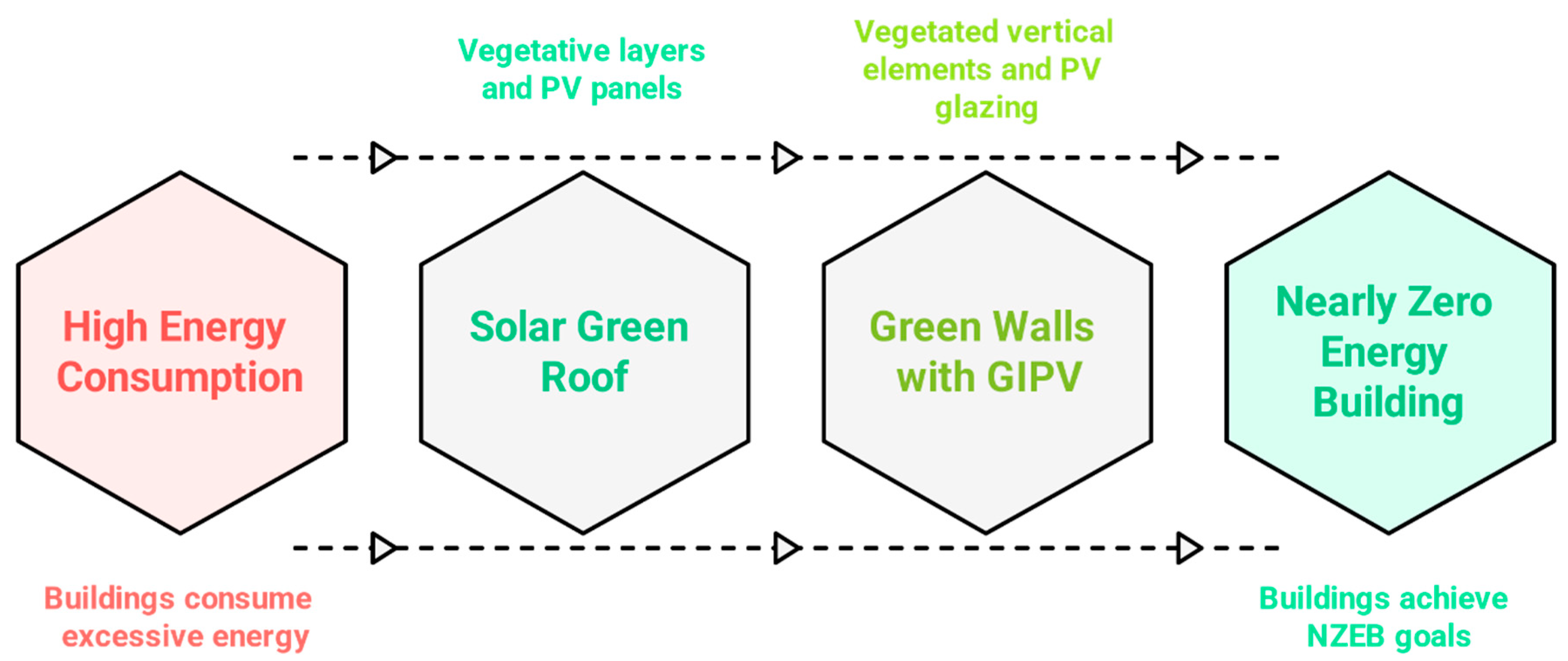
To assess how nature-based and solar-integrated envelope strategies affect the energy efficiency of buildings in Alexandria, Egypt, a thorough simulation-based technique was utilized, as illustrated in
Figure 1. A realistic baseline model of an educational building in Alexandria was first developed using DesignBuilder, and its energy consumption was calibrated with actual operating data to assure precision and dependability. This calibrated baseline represents the “as-operated” building and provides a robust foundation for evaluating performance prior to any retrofitting measures. Subsequently, the model was upgraded to comply with ASHRAE energy-efficiency requirements, thereby establishing a standardized benchmark scenario against which the effectiveness of retrofit measures could be consistently assessed.
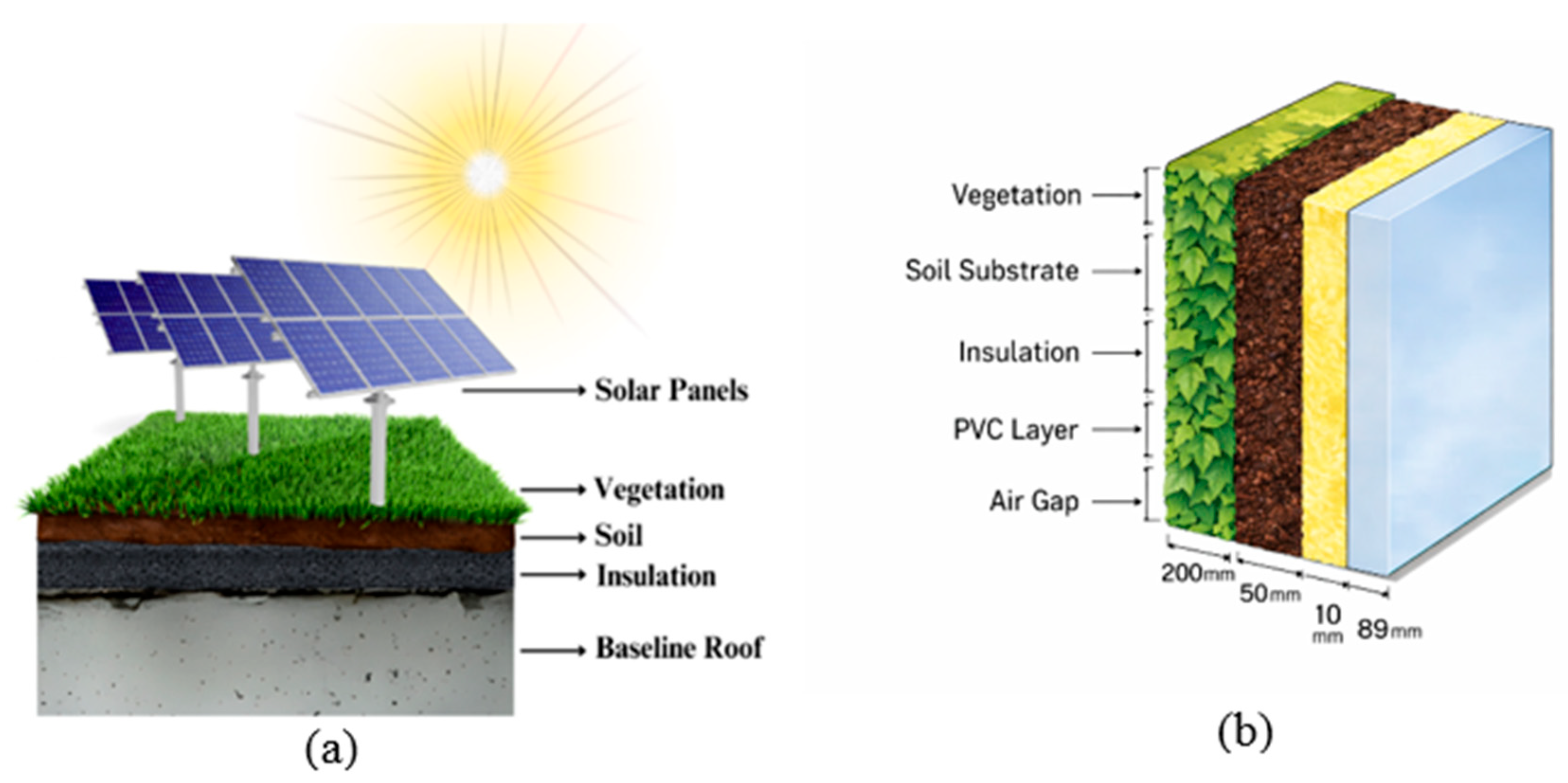
After establishing the baseline and ASHRAE-compliant benchmark, two alternative renewable-biophilic retrofit options were modeled and evaluated under Alexandria’s hot-humid climate conditions. The first option was a solar green roof system, incorporating vegetative layers and roof-mounted photovoltaic (PV) panels (
Figure 2a), implemented to capture its dynamic thermal and electrical behavior. The green roof was modeled using the Advanced EcoRoof model, which captures moisture-dependent thermal behavior and evapotranspiration effects that influence roof surface temperature and heat flux. The photovoltaic system was modeled in decoupled mode, allowing representation of PV shading effects and the indirect interaction between the vegetated surface and PV thermal conditions at the building scale [
20].
This configuration was evaluated for its dual role: improving roof heat balance and thermal resistance to reduce solar heat gain and cooling demand through the vegetative/substrate layers, while simultaneously producing on-site renewable electricity through PV generation. The second option consisted of green walls (
Figure 2b) integrated with GIPVs (glazing-integrated photovoltaics), in which vegetated vertical envelope elements [
24] were combined with PV glazing to assess their combined influence on building performance. In this configuration, the green wall system is applied to the opaque façade surfaces, whereas GIPVs are integrated only within the glazed window areas, ensuring a clear separation between opaque and transparent zones with no double-counting of façade area.
In this scenario, the green wall component was modeled to mitigate conductive and radiative heat transfer through the façade via shading, evapotranspiration, and moderated surface temperatures, while the GIPV element was modeled as a semi-transparent electricity-generating glazing system that contributes to on-site power production and modifies solar gains through the building envelope. Together, the green wall and GIPV integration were treated as a coupled façade strategy aimed at reducing cooling loads and offsetting grid electricity consumption with localized renewable generation.
A comparative analysis was then performed across the calibrated baseline, the ASHRAE-compliant benchmark, the solar green roof retrofit, and the green wall–GIPV retrofit to quantify each strategy’s individual and relative effects on overall building energy performance. This structured comparison enables direct evaluation of the extent to which roof-based PV–vegetation synergy versus façade-based vegetation combined with electricity-generating glazing can support Nearly Zero Energy Building (NZEB) goals in hot, coastal urban contexts such as Alexandria, providing practical guidance on envelope retrofitting pathways that couple passive demand reduction with on-site renewable energy supply.
Moreover, the thermal and moisture behavior of the vegetative layer was defined in the simulation model using explicit thermo-physical and bio-physical input parameters. These parameters govern heat transfer and evapotranspiration processes within the vegetation system. In particular, the model accounts for leaf area index, thermal conductivity, plant height, stomatal resistance, and moisture-related properties. The key vegetative-layer parameters adopted in the simulation are summarized in
Table 1.
2.1. Model Description
The research was conducted on a multi-purpose educational building with an approximate total floor space of 6020 m
2, spanning five levels. The facility’s architectural design accommodates several activities, including teaching spaces (classrooms and labs), faculty office spaces, conference facilities, a prayer room, a restaurant, and designated storage areas.
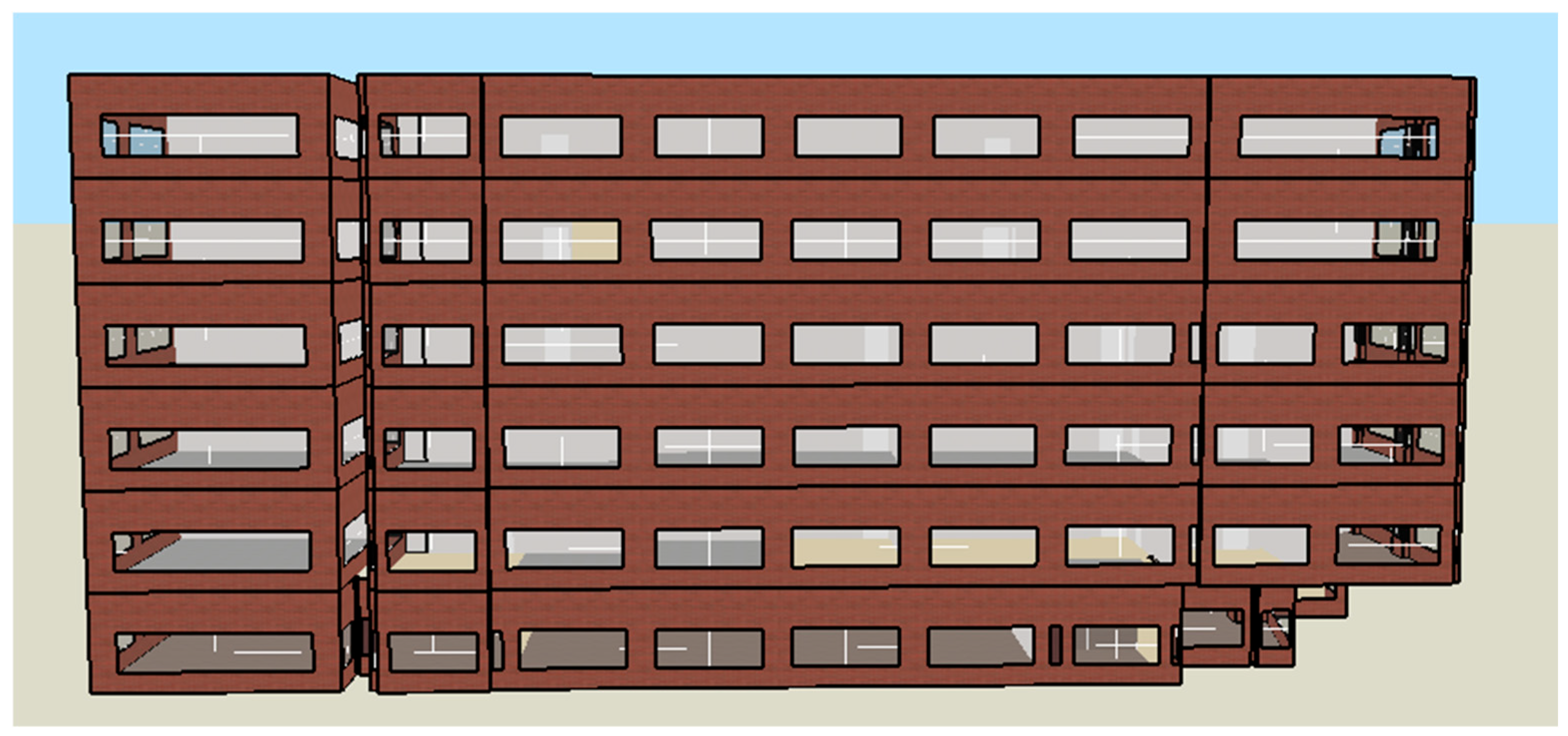
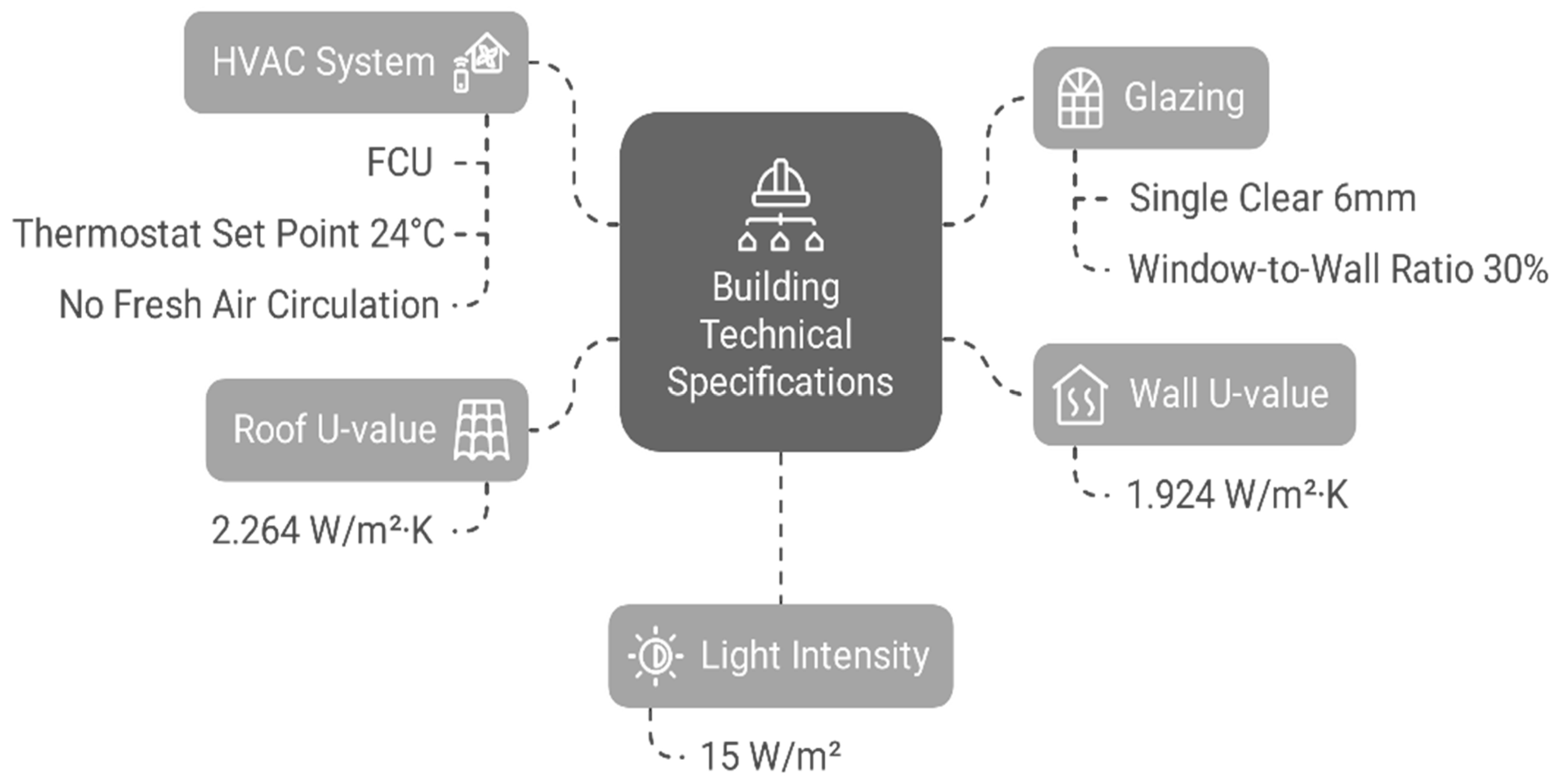
Figure 3 and
Figure 4 illustrate the building’s appearance and the technical specifications of the baseline energy model, respectively. Thermal comfort in the conditioned areas is sustained using a centrally installed fan coil unit (FCU) system, which functions as the principal air-conditioning system.
The technical requirements of the building comprise a wall U-value of 1.924 W/m2·K, a roof U-value of 2.264 W/m2·K, and single clear 6 mm glazing with a window-to-wall ratio of 30%. With an average cooling thermostat set point of 24 °C and no fresh air circulation, the current HVAC system is an FCU. Light intensity per square meter is 15 W. On order to conduct an in-depth evaluation of the building’s energy performance and efficiency, these specifications are necessary.
2.2. Climatic Conditions and Location
Alexandria was selected as the case-study location because its hot-humid climate presents challenges for building energy use, thermal comfort, and cooling-dominated operation. The simulation framework was developed in DesignBuilder V7 to evaluate the influence of vegetation–PV envelope retrofits on building energy performance, HVAC loads, and electricity demand. This climatic context is particularly relevant for assessing both roof-based and façade-based interventions, since the effectiveness of vegetated surfaces and integrated photovoltaic systems is strongly governed by solar exposure, ambient temperature, and seasonal cooling intensity.
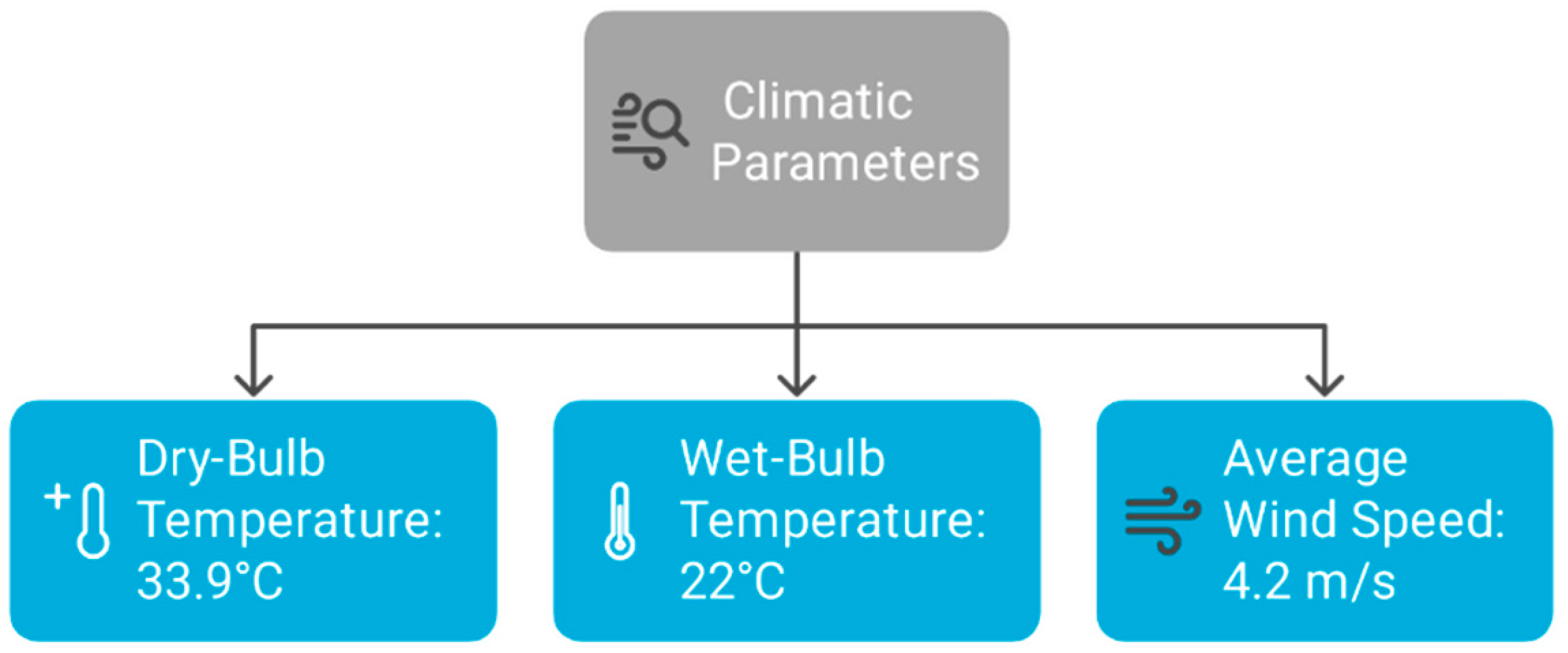
Figure 5 presents critical climatic parameters for Alexandria, encompassing ASHRAE climatic classification, dry-bulb and wet-bulb temperatures, as well as prevalent wind velocities. These environmental parameters are essential for understanding the impact of vegetation–PV envelope retrofits on energy efficiency, as they directly affect the system’s thermal control and capacity for renewable energy generation.
2.3. Model Validation
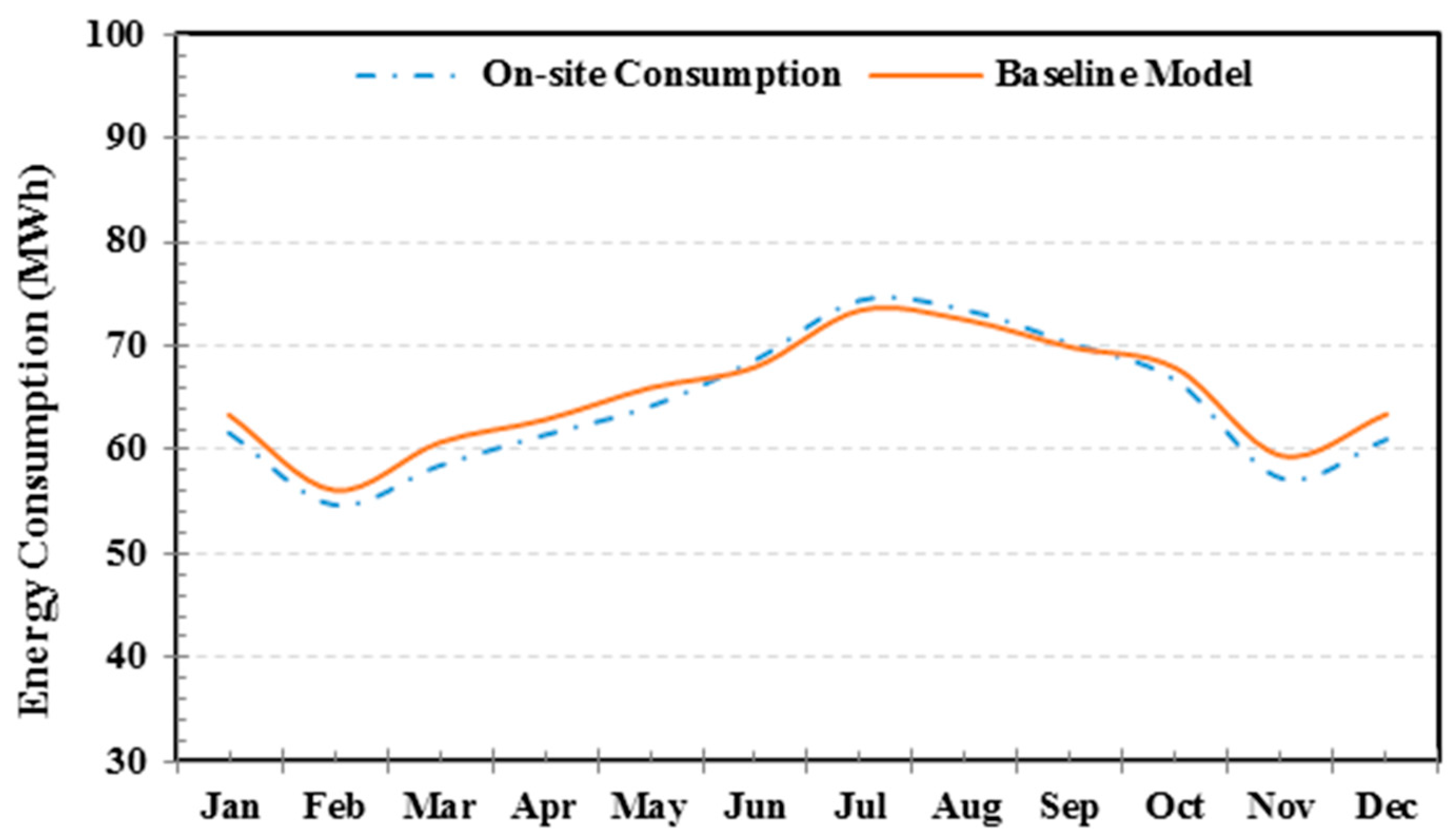
To ensure the validity of the established baseline model, its energy consumption outputs were compared with actual metered data obtained from the building over a whole year. The validation approach sought to verify the model’s capacity to accurately emulate real consumption patterns evident in daily operations.
The model’s predicted performance was evaluated using the Root Mean Square Error (RMSE), which measures the average discrepancy between simulated and actual energy use.
Figure 6 provides a monthly comparison of the modeled and measured energy data, highlighting variations in use and demonstrating the degree of correspondence. The resultant RMSE was roughly 1.63, indicating a comparatively low average annual error. The Coefficient of Variation of the RMSE (CVRMSE) was determined to be 2.54%. The RMSE and CVRMSE are within the permitted limits established by ASHRAE Guideline 14 [
26,
27], indicating that the simulation model correctly reflects the building’s actual energy performance and serves as a reliable baseline for subsequent study.
To ensure adherence to established guidelines for indoor environmental quality and energy efficiency, the baseline model was adjusted to satisfy ASHRAE standards 62.1 and 90.1 [
26,
27]. To optimize energy consumption and enhance indoor air quality, significant modifications were implemented regarding ventilation rates and lighting power density. Furthermore, the Fan Coil Unit (FCU) central air conditioning system was substituted with a Variable Air Volume (VAV) system, ensuring compliance with ASHRAE-recommended fresh air flow rates for educational facilities [
26,
28,
29].
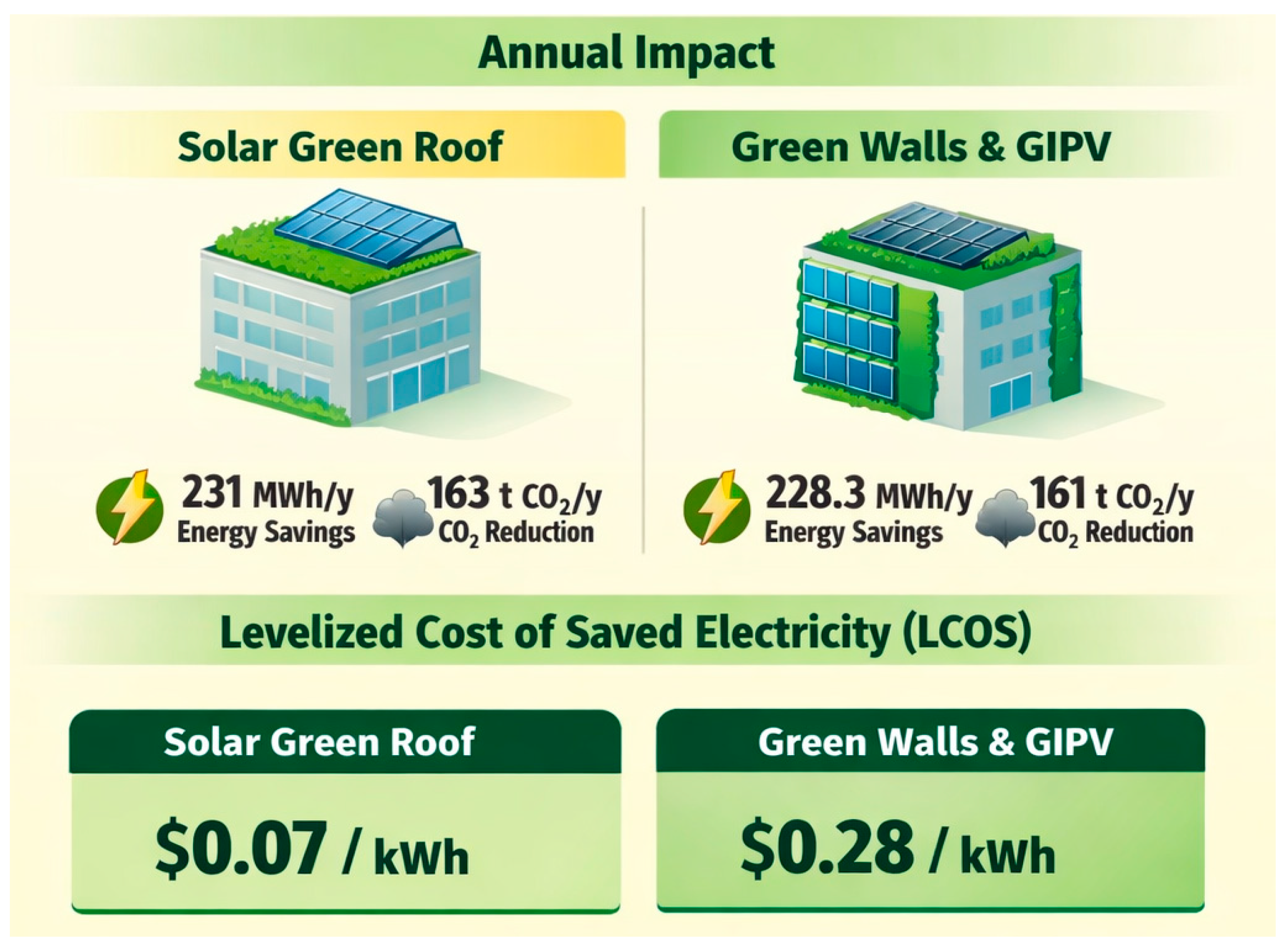
Additionally, GenAI was used to assist in the visualization of Figure 11. The tool was used only for graphical representation, and all data, modeling, and analysis are based on the authors’ research.
3. Results
3.1. Solar Green Roof
The installation of a solar green roof in Alexandria significantly improves building energy performance relative to both the baseline and ASHRAE-compliant models, as depicted in
Figure 7. The yearly energy usage decreases from 784.7 MWh in the baseline model to 723.5 MWh in the ASHRAE model, representing a 7.8% reduction. The solar green roof reduces energy usage to 701.4 MWh, signifying a total decrease of 10.6% compared to the baseline. These data suggest that the solar green roof surpasses conventional insulation enhancements owing to the synergistic benefits of its vegetative covering and integrated photovoltaic system.
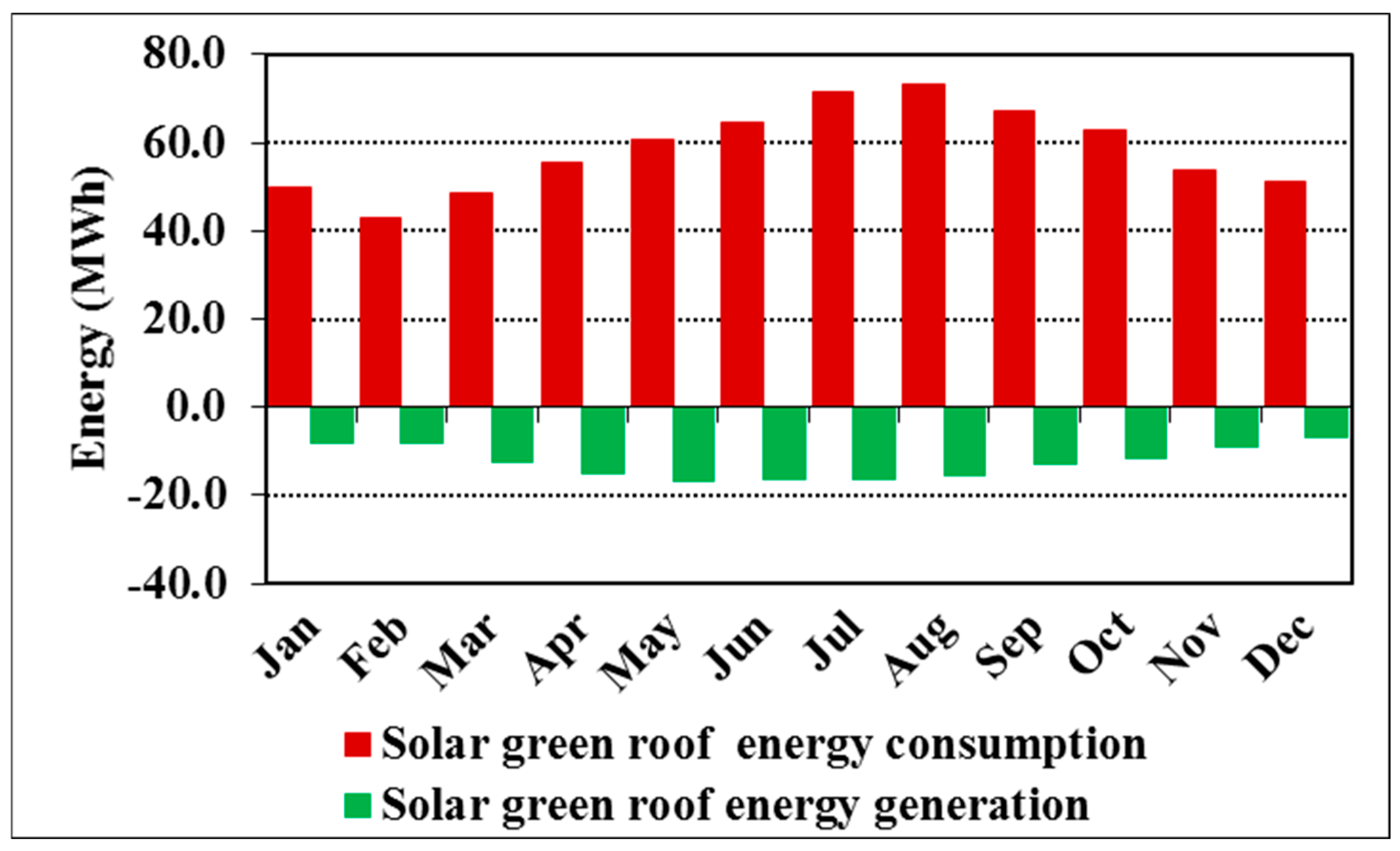
Monthly data indicate that the most significant energy savings occur during the cooling-dominated months of May through August, with consumption decreasing by 1.6 to 2.0 MWh relative to the ASHRAE baseline model. This seasonal performance improvement is due to the solar green roof’s capacity to reduce rooftop heat gain, hence decreasing the building’s cooling requirements. The system generates significant on-site electricity, averaging around 12.4 MWh monthly. Peak generation occurs in May and June (16.7 MWh and 16.5 MWh, respectively), although diminished outputs are noted in winter months such as December (6.8 MWh), indicating seasonal fluctuations in solar irradiation as shown
Figure 8.
The observed improvement can be attributed to the reduction in roof heat flux, driven by the combined effects of vegetation shading, evapotranspiration, and the increased thermal resistance provided by the substrate layer. These mechanisms collectively mitigate both conductive and radiative heat transfer into the building envelope, thereby contributing to a reduction in cooling demand, particularly under peak summer conditions. Furthermore, the integrated photovoltaic system introduces an active component through on-site electricity generation, resulting in an additional decrease in net energy demand beyond the passive thermal benefits.
3.2. Green Walls and GIPV Integration
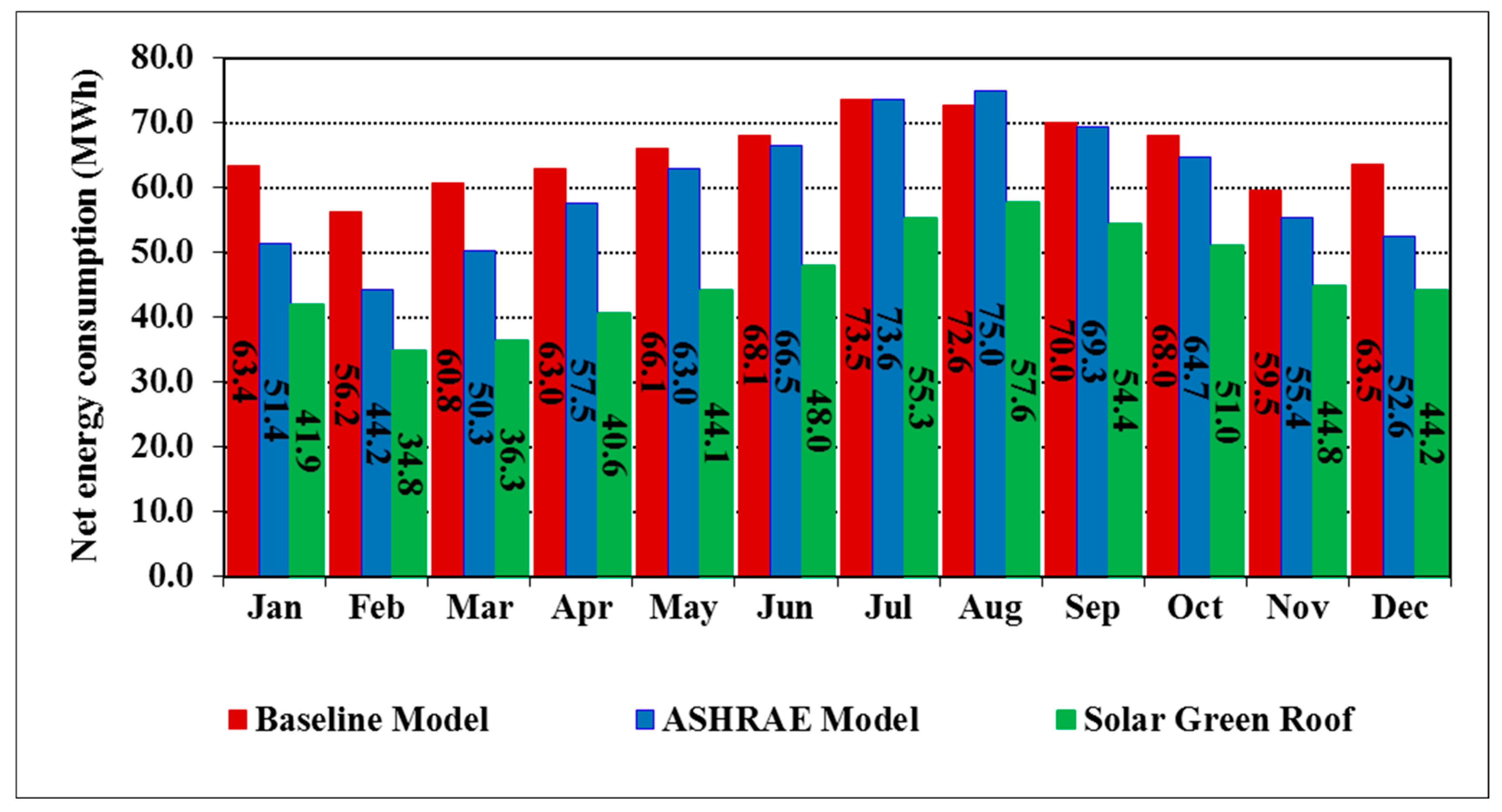
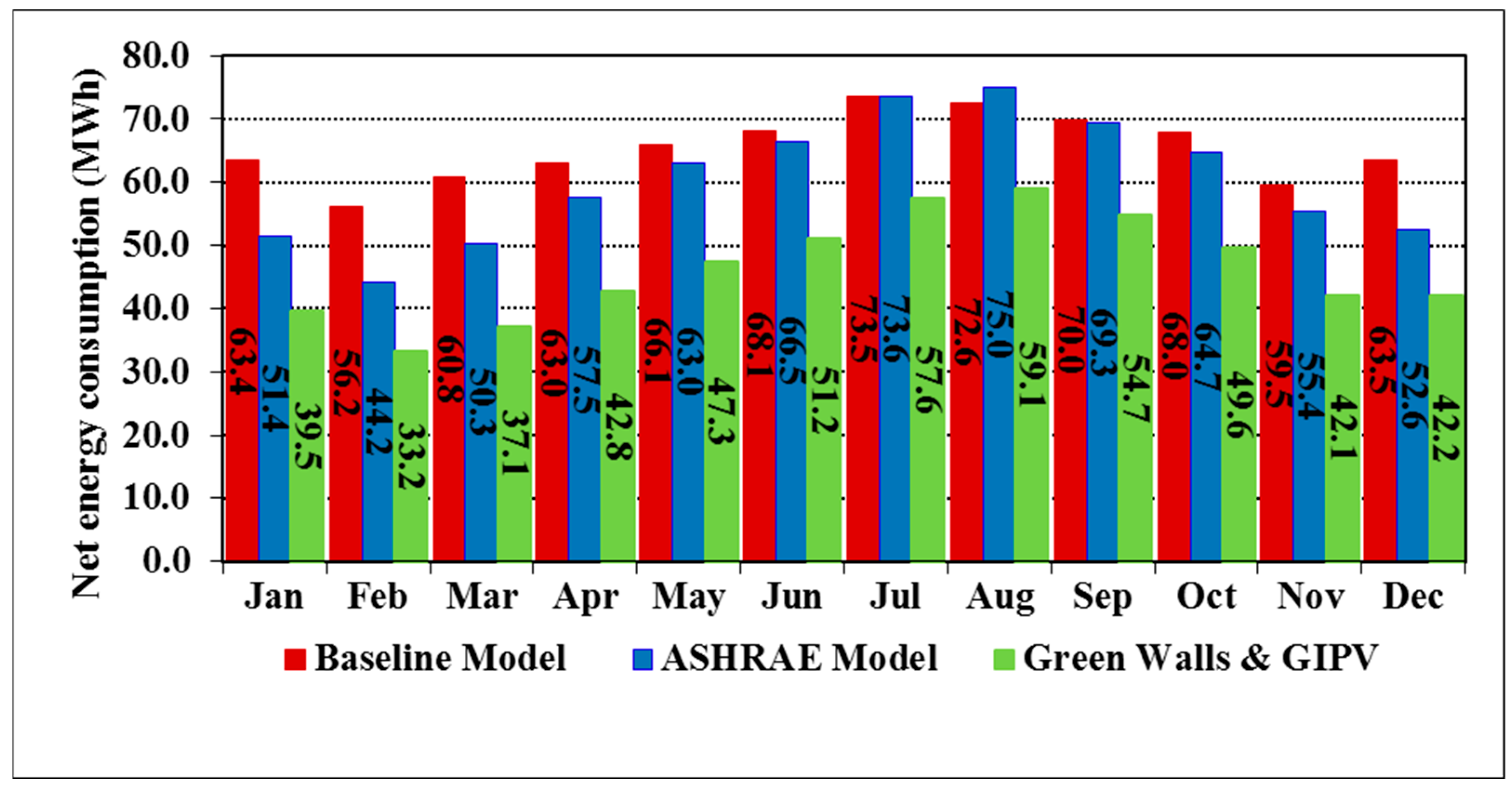
Following the discussion of the solar green roof, the performance of the green walls integrated with the GIPV retrofit is interpreted using the monthly net energy consumption profile shown in
Figure 9. As a reference, the baseline model exhibits a clear cooling-dominated seasonal pattern typical of Alexandria, with net consumption increasing from 56.2 MWh in February to a summer maximum of 73.5 MWh in July, before declining during autumn. When the façade is retrofitted with green walls and glazing-integrated photovoltaics, the same seasonal trend is maintained, but the magnitude is consistently reduced throughout the year. In winter and shoulder months, net energy consumption decreases to 33.2–42.8 MWh (February–April), compared with 56.2–63.0 MWh for the baseline, indicating a substantial reduction in envelope-driven gains even outside the peak cooling period.
During the cooling season,
Figure 9 indicates that the green walls–GIPV configuration reaches its maximum net electricity consumption in August (59.1 MWh), which remains substantially lower than the baseline summer demand (72.6 MWh in August and 73.5 MWh in July). Accordingly, the façade-integrated intervention suppresses the summer peak by approximately 13–15 MWh month
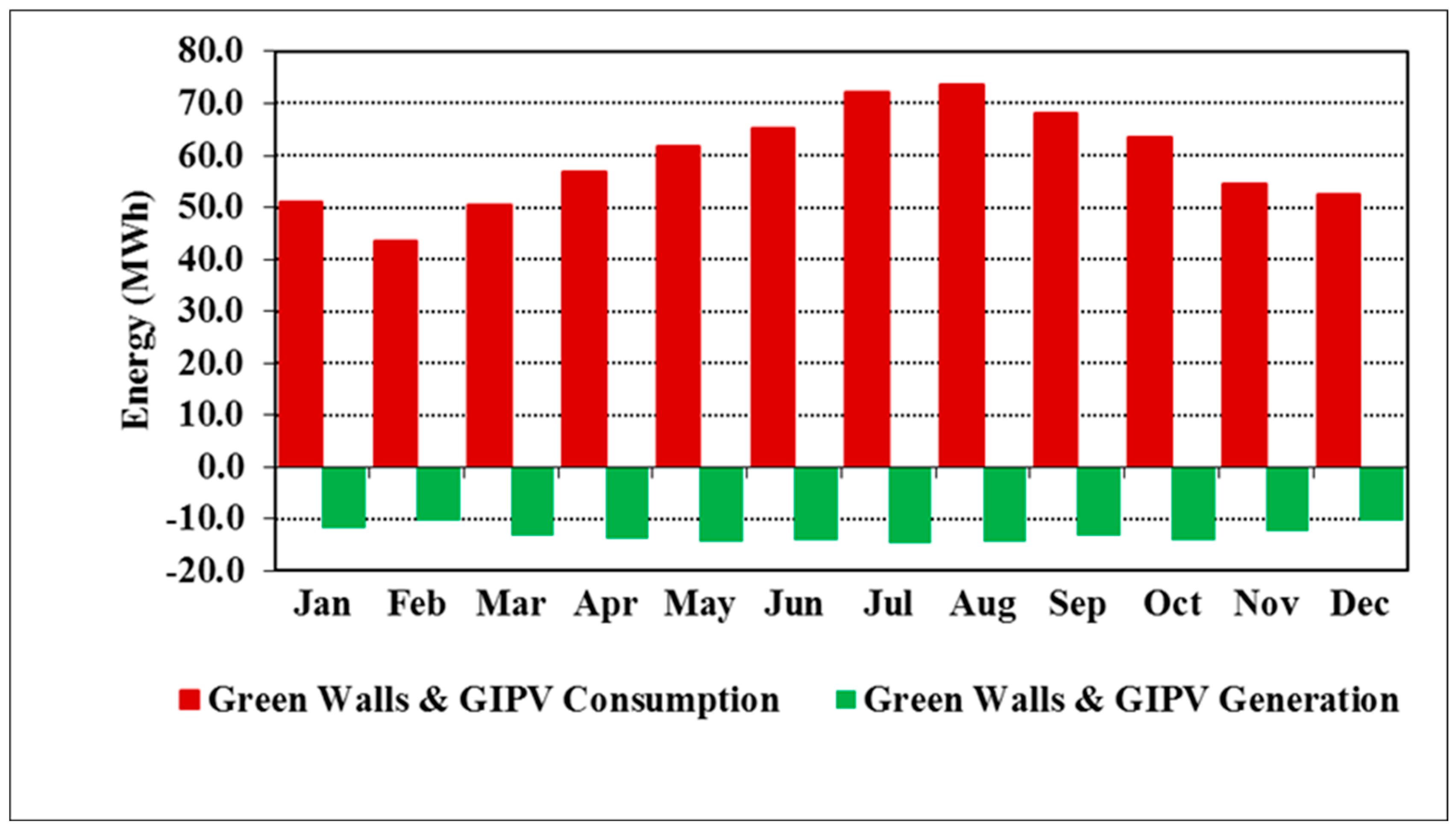
−1, demonstrating high effectiveness under conditions of elevated solar exposure and peak cooling loads. The disaggregated results in
Figure 10 further clarify the underlying behavior: gross monthly electricity consumption follows a cooling-dominated trajectory, increasing from 43.5 MWh (February) to 73.5 MWh (August), whereas GIPV electricity generation exhibits limited seasonal variability, ranging from 10.3 to 14.5 MWh month
−1. Generation is higher in late spring–summer (14.5 MWh in May and July) and lower in winter (10.3–10.4 MWh in December–February). These patterns indicate that the net-energy improvement arises from the coupled contribution of (i) passive façade heat-gain mitigation by the vegetated wall system through shading, evapotranspiration, and reduced exterior surface temperatures, thereby lowering conductive and radiative gains; and (ii) the active electrical offset provided by the GIPV system, which reduces grid electricity demand while also moderating solar transmission through the glazing. Overall,
Figure 9 and
Figure 10 demonstrate that integrating green walls with GIPVs delivers a robust, year-round reduction in net electricity demand relative to the baseline building, with the greatest absolute benefits occurring during peak cooling months, supporting its applicability as an effective façade-based retrofit pathway for Alexandria’s hot context.
This behavior reflects a reduction in façade heat flux due to vegetation shading and evapotranspiration, which lowers external surface temperatures and consequently reduces cooling demand. In parallel, the GIPV system contributes through active electricity generation, enabling a clear distinction between passive thermal mitigation and active energy offset in the overall performance.
Furthermore, the temporal relationship between building energy demand and on-site photovoltaic generation was also examined. The results indicate that peak electricity consumption occurs during the summer months (July–August), which coincides with the highest levels of PV/GIPV generation for both the solar green roof and green walls–GIPV configurations. This alignment reflects the cooling-driven nature of peak loads under a hot-humid climate and enhances the effectiveness of on-site generation in offsetting peak demand.
However, despite this favorable synchronization, PV generation remains insufficient to fully satisfy peak loads, particularly during non-daylight hours and periods of lower solar irradiance. Accordingly, the systems contribute to peak load mitigation and reduced grid dependency rather than full grid independence.
3.3. Enviro-Economic Analysis
The enviro-economic assessment integrates the simulated annual net electricity savings with the associated CO
2 mitigation for Alexandria. As shown in
Figure 11, the solar green roof achieves 231.0 MWh·y
−1 of electricity savings and 163.317 tCO
2·y
−1 avoided emissions, while the green walls–GIPV retrofit provides a comparable benefit of 228.3 MWh·y
−1 and 161.408 tCO
2·y
−1. The similarity of these results indicates that both strategies offer nearly equivalent operational decarbonization potential through reduced grid electricity demand.
The cost-effectiveness of the investigated retrofit configurations was evaluated using the levelized cost of saved electricity (LCOS), which represents the discounted cost of electricity conserved over a system’s lifetime. The analysis considered the capital cost, annual operation and maintenance (O&M) costs, the discount rate, and the system lifetime. A discount rate of 8% and a system lifetime of 25 years were assumed. Annual O&M costs were estimated as a percentage of the capital cost, taken as 1.5% for the solar green roof and 3.0% for the green walls–GIPV system.
To benchmark cost-effectiveness, the levelized cost of saved electricity (LCOS) was calculated using a discounted life-cycle framework, defined as the present value of incremental costs (capital and O&M) divided by the present value of electricity conserved. The resulting LCOS values are 0.07 $/kWh for the solar green roof and 0.28 $/kWh for the green walls–GIPV option. Although both measures deliver similar energy and CO2 savings, the substantially higher capital intensity of the façade-integrated system drives a markedly higher LCOS. Overall, the solar green roof demonstrates the more favorable enviro-economic performance for the Alexandria case study, whereas green walls integrated with GIPVs may be more appropriate where roof area is constrained or where façade interventions and non-energy co-benefits are prioritized.
Compared with the solar green roof, the façade-integrated system demonstrates similar annual energy performance but exhibits different seasonal behavior and economic implications, as further discussed in
Section 3.4. The significant difference in LCOS between the two retrofit strategies is primarily attributed to the higher capital cost associated with GIPV integration within façade systems, including glazing technology and structural requirements, rather than the green wall component itself. In this context, the economic results should be interpreted as reflecting the integrated system cost, where the vegetation component mainly contributes to thermal performance improvements, while the PV integration method governs the overall cost intensity.
3.4. Discussion
This study compared vegetation–PV envelope retrofits and shows that both solar green roofs and green walls integrated with GIPVs achieve nearly equivalent reductions in annual net electricity demand and CO2 emissions. This similarity arises from their shared dual-function mechanism, combining passive thermal regulation through vegetation with active on-site electricity generation. In both cases, shading, evapotranspiration, and reduced surface temperatures lower cooling loads, while PV systems offset grid electricity consumption, resulting in comparable annual energy savings.
Despite the similar performance, a clear divergence emerges in the economic outcomes. While the investigated systems were implemented as integrated configurations, the interaction between vegetation and PV is represented mainly at the system level through variations in surface temperature, heat flux, and solar gains. The vegetated layers enhance envelope cooling by means of shading and evapotranspiration, thereby altering the thermal conditions under which the PV system operates. However, detailed micro scale interactions, such as the direct cooling of PV modules by vegetation or the influence of PV shading on plant growth, are not explicitly captured in the present model.
The solar green roof demonstrates a substantially lower LCOS (0.07 $/kWh) compared with the green walls–GIPV system (0.28 $/kWh). This difference is primarily attributed to higher capital costs and lower energy yield efficiency of façade-integrated systems. Roof-mounted PVs benefit from optimal orientation and minimal shading, while GIPVs operate under less favorable conditions and typically incur higher installation and maintenance requirements.
From a practical deployment perspective, the economic feasibility of the two retrofit strategies is strongly influenced by initial capital cost, installation complexity, and available building surface area. Although the solar green roof and green walls–GIPV configurations achieved comparable energy and environmental benefits, the substantially higher capital intensity of the façade-integrated system reduces its near-term economic attractiveness. Accordingly, the solar green roof appears more suitable for immediate implementation in buildings with sufficient roof area, whereas green walls integrated with GIPVs may be more applicable in dense urban contexts where façade retrofits are preferred or where additional non-energy co-benefits justify the higher investment.
From a thermal perspective, roof-based strategies are particularly effective in hot climates, where roof solar gains dominate cooling demand. The solar green roof directly addresses this pathway while maximizing PV performance. In contrast, façade systems provide distributed but less concentrated thermal benefits, which explains their slightly lower impact during peak cooling periods.
The results suggest that system selection should be driven by design constraints rather than energy performance alone. While solar green roofs are more cost-effective, façade-integrated systems may be justified in cases of limited roof area or when architectural and non-energy benefits are prioritized. Overall, vegetation–PV hybrid systems represent a viable pathway toward NZEB targets in hot-humid climates, offering combined benefits of demand reduction and on-site renewable generation, with economic feasibility favoring roof-based implementations.
Overall, the results indicate that passive vegetation-based envelope modifications primarily reduce cooling demand through heat flux attenuation, while photovoltaic systems contribute through direct electricity generation, with the combined effect governing the total net energy reduction. In addition, advanced PV thermal management approaches, including phase change material (PCM)-assisted cooling and waste heat recovery/storage, may further enhance the performance and functionality of solar-based building systems, and therefore represent a relevant direction for future integration with vegetation–PV retrofit strategies [
18].
4. Conclusions
This study presented a comparative simulation-based assessment of two vegetation–PV envelope retrofit strategies for an educational building in Alexandria, Egypt: a solar green roof and a façade system integrating green walls with glazing-integrated photovoltaics (GIPVs). The results show that both configurations achieve significant reductions in annual net electricity demand, with energy savings of 231.0 MWh for the solar green roof and 228.3 MWh for the green walls–GIPV system. Corresponding CO2 emission reductions reach 163.3 tCO2·y−1 and 161.4 tCO2·y−1, respectively, confirming their effectiveness in mitigating cooling-driven energy demand.
From an economic perspective, the two systems exhibit markedly different cost performance. The solar green roof achieves a levelized cost of saved electricity (LCOS) of 0.07 $/kWh, compared to 0.28 $/kWh for the green walls–GIPV configuration. Despite comparable energy and environmental benefits, the higher capital cost of the façade-integrated system reduces its economic competitiveness. Accordingly, the solar green roof represents the more cost-effective retrofit option under the studied conditions.
Overall, the findings demonstrate that vegetation–PV hybrid systems can effectively reduce building energy demand and emissions in hot coastal climates. However, the results also highlight that economic feasibility is a key determinant for large-scale adoption, favoring roof-based solutions, while façade-integrated systems may be more suitable in cases of limited roof availability.
Limitations and Future Research
The present study provides a comparative assessment of two integrated vegetation–PV retrofit strategies under a common calibrated modeling framework for Alexandria; however, several scope boundaries should be noted. The economic analysis reflects the most recent Egyptian electricity tariffs available at the time of the study, and therefore represents current end-user pricing conditions. In addition, the economic evaluation was performed at the hybrid-system level, meaning that LCOS values represent the combined performance of each retrofit configuration rather than a separate cost attribution for vegetation and PV subcomponents.
From a modeling perspective, the analysis captures the building-scale interaction between vegetation and PVs through changes in shading, evapotranspiration, heat flux, and net electricity demand. However, the study does not explicitly resolve micro-scale PV–vegetation coupling, such as direct module backside cooling, plant-level shading response, or detailed panel temperature variation. Likewise, the assessment was carried out under representative fixed climatic and operational assumptions, without dedicated sensitivity analysis for climatic variability, PV efficiency, vegetation coverage, discount rate, lifespan, or electricity price. Operational factors such as irrigation demand, vegetation lifespan, and PV/GIPV cleaning frequency were also not explicitly parameterized.
These limitations do not affect the main contribution of the study, namely the consistent comparative evaluation of roof- and façade-based vegetation–PV systems under identical boundary conditions. Rather, they define the next stage of development. Future research should therefore extend the present framework through sensitivity analysis, component-level economic breakdown, more detailed PV–vegetation interaction modeling, and experimental validation under real operating conditions.




 ,
,