1. Introduction
Heritage tourism has increasingly been recognized as an important pathway toward sustainable cultural and urban development, contributing simultaneously to economic vitality, cultural preservation, and social regeneration [
1,
2,
3]. Within the framework of sustainable tourism, scholars have emphasized that long-term destination competitiveness depends not only on attracting new visitors but also on fostering repeat visitation and sustained engagement [
4,
5]. Compared with first-time visits, revisit behavior reflects deeper emotional attachment, accumulated experiential value, and stronger recognition of heritage significance [
6,
7]. From a sustainability perspective, repeat visitation stabilizes tourism demand, reduces promotional pressure, and enhances continuous interaction between visitors and heritage environments, thereby supporting resilient destination development [
8].
Existing tourism studies have extensively explored satisfaction, perceived value, and service quality as predictors of revisit intention [
9]. However, heritage tourism differs fundamentally from mass tourism contexts because visitor experiences are strongly shaped by authenticity perception, historical narratives, and cultural symbolism [
10,
11,
12]. Heritage tourism in this study refers to tourism activities centered on the consumption and experience of cultural, historical, and industrial heritage resources, where the value of the destination is closely linked to authenticity, historical narratives, and cultural meaning. In contrast, mass tourism generally describes large-scale, standardized tourism flows characterized by high visitor density, commodification, and efficiency-oriented service provision. It is important to note that these two concepts are not mutually exclusive. Many globally recognized heritage destinations, such as UNESCO World Heritage Sites, simultaneously function as mass tourism attractions and may experience issues such as overtourism. Therefore, the distinction in this study does not imply a strict dichotomy but rather highlights differences in experiential emphasis. Specifically, heritage tourism places greater importance on meaning-making, authenticity perception, and cultural interpretation, whereas mass tourism tends to prioritize accessibility, scale, and consumption efficiency. This distinction is particularly relevant in industrial heritage contexts, where adaptive reuse strategies aim to transform former production spaces into experience-oriented cultural environments. Recent research suggests that revisit intention in heritage settings is closely associated with meaningful experience formation and identity-related interpretation processes rather than purely hedonic satisfaction [
13]. Consequently, revisitation should be understood as a sustainability-oriented behavioral outcome reflecting how heritage values are perceived, internalized, and emotionally connected to visitors [
14,
15]. Despite growing attention, the integrated relationships among tourism preferences, perceived heritage quality, and sustainable behavioral intention remain insufficiently examined, particularly in heritage environments undergoing rapid urban transformation [
16].
Industrial heritage represents a distinctive and increasingly significant category within heritage tourism research. Emerging from former production landscapes, industrial heritage sites embody collective memory, technological history, and spatial restructuring processes [
17]. Unlike conventional monuments or museums, these environments frequently integrate large-scale industrial structures with adaptive reuse programs, including creative industries, leisure functions, and cultural exhibitions [
18]. Recent studies highlight that adaptive reuse not only preserves historical fabric but also generates new experiential landscapes capable of enhancing visitor engagement and place attachment [
19,
20]. Such hybrid spatial characteristics create complex experiential settings in which environmental perception, cultural experience, and situational awareness jointly influence behavioral intention [
21].
In recent decades, waterfront industrial heritage regeneration has become a global urban strategy for sustainable redevelopment, transforming obsolete industrial zones into cultural and recreational corridors [
22]. Waterfront regeneration projects emphasize public accessibility, cultural identity reconstruction, and tourism-led revitalisation [
23]. Shanghai represents a particularly relevant case due to its extensive industrial legacy and ongoing transformation of waterfront production landscapes along the Huangpu River [
24]. Through adaptive reuse initiatives, former factories and docks have been converted into cultural venues, public open spaces, and tourism destinations, forming a continuous heritage landscape integrating urban culture and leisure consumption [
25]. Although these projects have successfully attracted visitors, their long-term sustainability increasingly depends on whether tourists develop enduring engagement and revisit intention rather than one-time consumption experiences [
26].
Against this background, this study investigates how tourism preference dimensions influence perceived heritage quality and subsequently affect revisit intention from a sustainability perspective. A structural equation modeling approach is employed to analyze the relationships among environmental perception, cultural experience, and situational awareness within industrial heritage settings. Rather than treating statistical modeling as an end in itself, the analytical framework aims to provide empirical evidence contributing to theoretical discussions on sustainable heritage tourism and adaptive reuse development [
27].
This study offers several significant contributions to the existing literature. It redirects the analytical lens from satisfaction-dominant models to a revisit-oriented framework, thereby aligning the research agenda with the broader objectives of sustainable tourism development. By incorporating sustainability considerations into visitor perception studies, the research establishes a connection between experiential dimensions and long-term behavioral intentions. Furthermore, through an empirical investigation of Shanghai’s waterfront industrial heritage, the study elucidates how adaptive reuse strategies may strengthen tourism resilience by enhancing experiential quality and deepening heritage perception.
2. Materials and Methods
2.1. Literature Analysis
The intricate relationship between cultural heritage and sustainable tourism has become a central theme in academic discourse, evolving from a focus on preservation to a holistic approach that integrates cultural, environmental, social, and economic dimensions [
28]. Early research laid the groundwork by emphasizing the role of heritage in preserving cultural identity and facilitating urban regeneration, particularly within the context of industrial heritage [
29]. Scholars have consistently highlighted the necessity of balancing conservation goals with tourism development, noting that success hinges on strategic planning and the meaningful engagement of local communities. For instance, Dvorak, Burkšienė, and Sadauskaitė [
30] identified critical challenges in Lithuanian cultural heritage projects, such as a lack of finance and competent human resources, underscoring the importance of community involvement and long-term operational sustainability. Similarly, Burksiene, Dvorak, and Burbulyte-Tsiskarishvili [
31] explored the concept of “sustainability marketing” in cities competing for the European Capital of Culture title, arguing that marketing strategies must be aligned with environmental, social, and cultural sustainability objectives to be truly effective.
In diverse geographical contexts, research has deepened our understanding of the specific factors that drive sustainable heritage tourism. Studies on pilgrimage routes, such as the Darb Zubaydah in Saudi Arabia, demonstrate how heritage can act as a driver for sustainable development by revitalizing cultural landscapes and strengthening local identity, provided that development is guided by principles of cultural, environmental, spatial, and economic sustainability [
32]. In China, research has increasingly focused on the perceptions and behaviors of key stakeholders. Wei, Liu, and Park [
33] introduced the concept of “heritage proximity” in the context of intangible cultural heritage, revealing that residents’ emotional connection to heritage positively influences their perception of tourism’s benefits and their overall attitude, which in turn fosters support for sustainable development. This focus on stakeholder perception is complemented by studies on tourism planning, where Li et al. [
34] developed a suitability evaluation system for world cultural heritage sites, demonstrating that effective planning must be grounded in a robust interpretation of heritage value to ensure authenticity and visitor satisfaction. Furthermore, longitudinal studies, such as Kim’s [
35] examination of Hahoe Village in Korea, reveal that while the UNESCO brand has an enduring impact on tourist motivation, the long-term sustainability of a site requires continuous and balanced management to preserve both heritage value and community well-being amidst the pressures of mass tourism.
Comparative analyses of these varied studies reveal a convergence towards integrated and participatory methodologies. While European studies often emphasize strategic governance, marketing, and the challenges of project implementation [
28], research from other regions provides granular insights into site-specific cultural and social dynamics, such as the role of “heritage proximity” or the necessity of diversifying heritage resources for tourism [
29]. The development of analytical tools, including GIS and space syntax for spatial planning [
36] and the Analytic Hierarchy Process (AHP) for evaluating planning suitability, marks a shift towards more data-driven and nuanced decision-making. Karataş, Özköse, and Heyik [
37] exemplify this integrated approach by proposing an eco-cultural route that connects urban and rural heritage sites, addressing the twin challenges of mass tourism and rural abandonment through a participatory, multi-criteria framework. Synthesizing these international and local perspectives allows for a comprehensive understanding that heritage-based tourism must be co-created with communities, meticulously planned, and constantly adapted to balance preservation with evolving visitor expectations. Therefore, this study draws upon this rich body of international and domestic literature to construct a theoretical framework that links heritage resources, stakeholder perceptions, and sustainable planning strategies within the context of cultural heritage tourism.
2.2. Theoretical Framework of “Tourism Preference-Perceived Quality—Intention to Revisit”
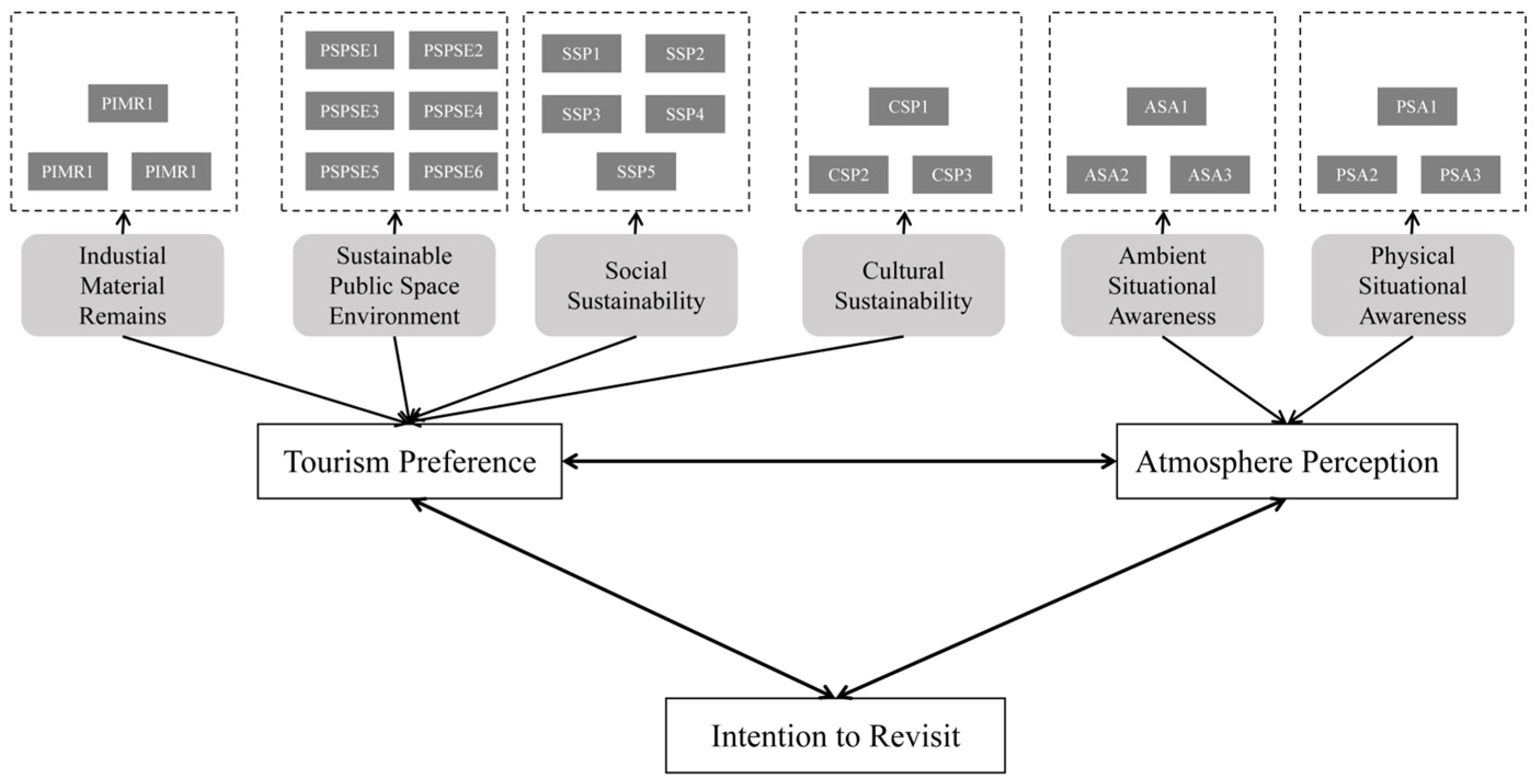
Based on the influence of the desire for revisiting in other fields, and considering the characteristics of the industrial heritage renewal project itself, indicators were determined through scientific measurement, questionnaires, and interviews. This chapter initially establishes the theoretical analysis framework of “tourism preference—perceived quality—revisit desire” for industrial heritage as follows:
Preference for industrial material remains (PIMR1-3,PIMR is the abbreviation of “Preference for industrial material remains”. The numbers 1–3 represent the question numbers of the questionnaire. The same abbreviated form appears in the following text). Li Tongsheng et al. [
38] found in their research on industrial heritage tourism that industrial heritage tourism is a new way of transforming the original industrial machinery, production equipment, factory buildings, etc., through protection and reuse, to attract modern people to understand industrial culture and civilization, while also having unique functions of sightseeing, leisure, and tourism. Ding Shu [
39] proposed specific product development models, such as professional type, park type, comprehensive type, and specific type, based on the analysis of the characteristics of industrial tourism. Combining the literature studies on the impact of the renovation, utilization and protection of industrial material remains on tourists’ willingness to revisit, this paper takes the public attributes (PIMR1), industrial landscapes, skyline, and enclosure degree (PIMR3) transformed from industrial material remains as the observation variables for the preference of industrial material remains, and adds a new item “Whether the industrial heritage and relics have been well utilized (PIMR2)” in combination with the characteristics of industrial heritage in the waterfront area of Shanghai (such as large ships, water tanks, etc., industrial landscapes).
Preference for Sustainable Public Space Environment (PSPSE1-6). Lin Yuxia [
40] used the Q method and classified the structure of tourism destination image preferences into five types, namely: natural ecological tourism preference type, urban tourism preference type, natural cultural tourism preference type, wandering experience tourism preference type, and exploration and adventure tourism preference type. Wang Jinye [
41] and others, through on-site research of the Gudong tourist area in Lijiang, found that the influence of tourists’ tourism preferences on the ecological environment mainly manifested in aspects such as plant growth environment, air environment, water environment, and landscape environment. Based on the conclusions of previous studies, this research will conduct empirical research on the willingness of people to return to this place by analyzing aspects such as green environment, waterfront environment, ecological pleasantness (PSPSE1-3), completeness of guide information, and whether there are landmark markers (PSPSE4-6).
Social Sustainability Preferences (SSP1-5). By integrating the research conducted by Zhu Yanqiu et al. [
42], who took Ma Wei Station as the research subject, the research conclusion indicates that tourists have a high preference for tasting local specialties, experiencing local customs, children’s rural life experiences, as well as local products and handicrafts. This research, which takes rural culture as the research object, is similar to the historical culture of industrial heritage, and can also be used as a reference object. The preference groups of leisure sightseeing (SSP1), experience interaction (SSP2-3), cultural education (SSP4), and diversified thematic cultural positioning (SSP5). These preferences meet the demands of the population for the destination.
Cultural Sustainability Preference (CSP1-3). According to Lou Zaifeng [
43]’s analysis of red tourism preferences and influencing factors, he believes that red cultural cognition, the attractiveness of the tourist destination, publicity and promotion, supporting services, and personal guarantee conditions are the main factors influencing tourism preferences. Wang Heng [
44] used intention-based data analysis to study consumers’ cultural tourism preferences and concluded that consumers generally value the cultural heritage of the tourist destination. Based on the above analysis, cultural spirit has a very important influence on tourists’ willingness to revisit. Therefore, this study focuses on industrial heritage research, based on red culture, and examines national spirit (CSP1), artisan spirit (CSP2), and red culture (CSP3) as observation variables, reflecting the influence of national culture on people’s spirit.
- 2.
Perceived quality:
According to Grönroos [
45], the quality of service depends on the actual perception of the service by the recipient and its comparison with their own inner expectations. By improving the service quality and facilities, destinations can enhance tourists’ satisfaction and loyalty, thereby increasing the revisit rate. Zhang Lin and Zhang Jiaqi [
46] classified the perception of the landscape context of traditional villages from the aspects of function, consciousness, and the local environment, and believed that the landscape context of traditional villages includes the physical context of the landscape and the atmosphere context of the landscape. This study will draw on their research results and take the atmosphere context perception and physical context perception as mediating variables. Physical context perception includes elements related to old equipment, original appearance of relics scenarios (PSA1), heritage characteristic scenarios (PSA2), and relic industrial characteristics scenarios (PSA3), etc. Atmosphere context perception is related to cultural consciousness atmosphere perception (ASA1), industrialization atmosphere perception (ASA2), and regional atmosphere perception (ASA3), etc.
- 3.
Intention to revisit:
Based on the analysis conducted by Gefen Zhou et al. [
47] using the structural equation model, it was found that authenticity directly and indirectly influences tourists’ intention to revisit through tourism memory experiences and local attachment. Stylos, N. et al. [
48] regarded the overall image as the mediator and PNBs as the moderator. The research results verified the mediating role of the overall image on tourists’ intention to revisit, supporting both partial and complete mediation. However, the analysis of the correlation between tourism preferences and revisit intention has only been of academic concern in recent years. Existing studies have proved that tourism preferences have a significant impact on revisit intention, and there are significant differences in revisit intention among different preference groups. This study further analyzes the revisit intention by investigating the tourism preferences of the study population towards industrial heritage destinations along waterfront areas, and conducts research from aspects such as satisfaction, sharing intention, and revisit intention.
Drawing on the research conducted by Li Tongsheng [
38], Ding Shu [
39] and others in the field of industrial heritage tourism, referring to the Q method adopted by Lin Yuxia et al. [
40], Wang Jinye [
41]’s on-site investigation of tourist areas, integrating the research conducted by Zhu Yanqiu [
42] et al., based on the analysis of Lou Zaifeng [
43] on the preferences for red tourism and the influencing factors, Wang Heng [
44] used intention-based data analysis to study consumers’ cultural tourism preferences and, based on Grönroos’ [
45] viewpoint and the analysis of Gefen Zhou et al. [
47] using the structural equation model, this study has constructed a logical framework for the influence of perceived quality on people’s tourism preferences and their re-visiting intentions, namely the “tourism preference—perceived quality—revisit intention” theoretical analysis framework (
Figure 1).
2.3. Research Hypothesis
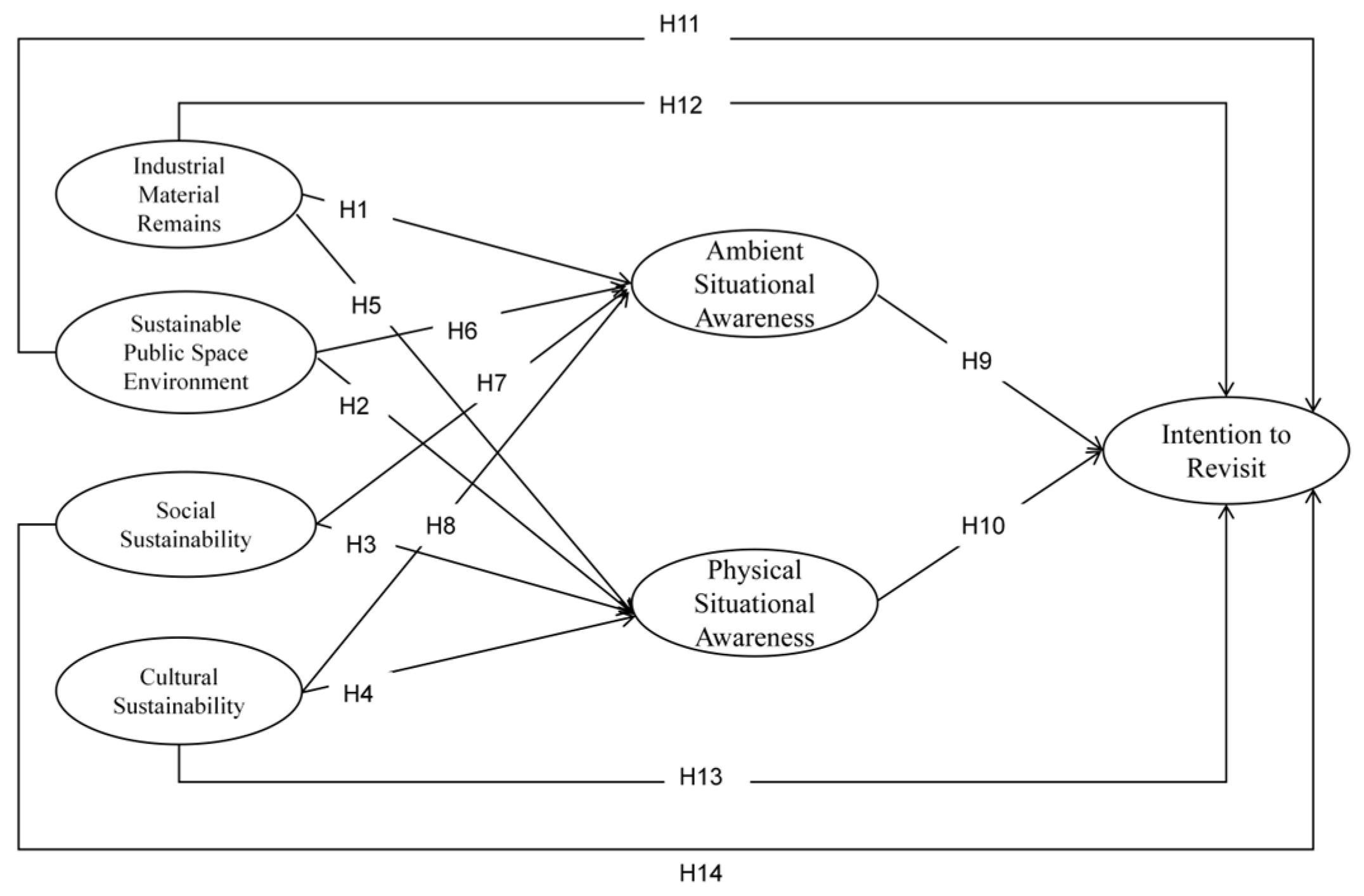
The objective of this study is to develop a theoretical framework for analyzing the relationship between tourism preference, perceived quality, and the intention to revisit industrial heritage sites located on China’s waterfront. The study aims to investigate the impact of tourism preference on the intention to revisit and to explore the factors that influence this relationship. The investigation will delve into the potential direct or indirect impact of these factors. In the event of an indirect effect, the intermediate variables that facilitate its realization must be identified. In essence, this study seeks to elucidate the underlying mechanisms through which these factors influence the willingness to revisit (
Figure 2).
Industrial heritage tourism integrates historical industrial elements with contemporary cultural and sustainability values, shaping visitors’ experiences through both tangible environments and intangible meanings. Previous studies suggest that tourists’ behavioral intentions are not only influenced by physical attributes of heritage sites but also by value-oriented preferences and environmental perceptions formed during the visit. In this study, heritage preference is conceptualized as a multidimensional construct, including preferences for industrial material remains as well as sustainability-related values, namely environmental, social, and cultural sustainability. These preferences represent visitors’ cognitive and value-based expectations toward industrial heritage destinations.
From an environmental psychology perspective, visitors’ prior preferences and values significantly shape how they perceive and interpret tourism environments. Industrial material remains, such as preserved machinery, architectural structures, and historical spatial layouts, provide authenticity cues that enhance visitors’ perception of the physical environment. Meanwhile, sustainability-oriented values influence how visitors evaluate environmental quality, social interaction, and cultural continuity within heritage spaces, thereby contributing to atmosphere perception. When visitors perceive that a heritage site successfully balances conservation, sustainability, and experiential quality, their overall environmental perception becomes more positive. Therefore, heritage preference is expected to positively influence visitors’ perception of both the physical environment and the atmosphere of industrial heritage sites.
H1: Does the preference for industrial material remains have a direct and significant impact on the perception of the atmosphere and environment, and does it indirectly affect the willingness to revisit?
H2: Does the preference for a sustainable public space environment have a direct and significant impact on the perception of the physical environment, and does it indirectly affect the willingness to revisit?
H3: Does the preference for social sustainability have a direct and significant impact on the perception of the physical environment, and does it indirectly affect the willingness to revisit?
H4: Does the preference for cultural sustainability have a direct and significant impact on the perception of the physical environment, and does it indirectly affect the willingness to revisit?
H5: Does the preference for industrial material remains have a direct and significant impact on the perception of the physical environment, and does it indirectly affect the willingness to revisit?
H6: Does the preference for a sustainable public space environment have a direct and significant impact on the perception of the atmosphere and environment, and does it indirectly affect the willingness to revisit?
H7: Does the preference for social sustainability have a direct and significant impact on the perception of the atmosphere and environment, and does it indirectly affect the willingness to revisit?
H8: Does the preference for cultural sustainability have a direct and significant impact on the perception of the atmosphere and environment, and does it indirectly affect the willingness to revisit?
Furthermore, favorable perceptions of the heritage environment are widely recognized as key predictors of revisit intention. A well-preserved physical setting combined with an engaging and meaningful atmosphere enhances experiential value, increases place attachment, and encourages repeat visitation. Visitors who perceive industrial heritage environments as attractive, authentic, and comfortable are therefore more likely to develop intentions to revisit.
H9: Does the perception of atmosphere and environment have a direct and significant impact on the willingness to revisit?
H10: Does the perception of physical environment have a direct and significant impact on the willingness to revisit?
In addition to indirect effects, visitors’ heritage preferences may also directly influence revisit intention. Individuals who highly value industrial authenticity or sustainability principles are more likely to form intrinsic motivation toward heritage destinations, independent of situational perceptions. Such value congruence between visitors and destinations strengthens psychological identification and long-term loyalty, leading to stronger revisit willingness.
H11: Does the sustainable public space environment have a significant impact on the willingness to revisit?
H12: Do the industrial material remains have a significant impact on the willingness to revisit?
H13: Does cultural sustainability have a significant impact on the willingness to revisit?
H14: Does social sustainability have a significant impact on the willingness to revisit?
Each hypothesis was operationalized through corresponding measurement constructs. Tourism preference variables served as exogenous latent variables, perceived quality dimensions functioned as mediating variables, and revisit intention represented the endogenous outcome variable. The questionnaire items were therefore explicitly aligned with the structural paths tested in the SEM model.
2.4. Questionnaire Design
The questionnaire was developed based on the theoretical framework of “tourism preference–perceived quality–revisit intention”. Measurement items were adapted from validated scales in heritage tourism and sustainable tourism studies to ensure construct validity.
The questionnaire consisted of three sections. The first section collected respondents’ demographic information. The second section measured tourism preference dimensions, including industrial material remains preference, environmental and social sustainability preference, social sustainability preference, and cultural sustainability preference. The third section assessed perceived quality (physical context perception and atmospheric perception) and revisit intention.
All measurement items were evaluated using a five-point Likert [
49] scale ranging from 1 (strongly disagree) to 5 (strongly agree). Each construct corresponded directly to the proposed research hypotheses. For example, items measuring environmental sustainability preference were used to test hypotheses H2 and H6, while perceived quality items were used to examine mediating effects proposed in H9–H10.
Prior to formal data collection, the questionnaire was reviewed by three tourism management scholars and two industrial heritage experts to ensure content validity and clarity. A pilot test with 30 respondents was conducted, and minor wording adjustments were made accordingly.
2.5. Selection of Collection Sites
In recent years, Shanghai’s waterfront industrial heritage has experienced a rapid increase in visitor numbers, becoming one of the most urban leisure and cultural destinations. Regeneration projects along the Huangpu River have been actively promoted under municipal policies aimed at enhancing public space accessibility, cultural vitality, and tourism development.
Government-led initiatives, such as the continuous opening of waterfront spaces and the integration of cultural and creative industries, have significantly improved the attractiveness of these sites. As a result, locations such as the Long Museum and the Shanghai International Fashion Center have become important nodes within Shanghai’s cultural tourism network, attracting both local residents and domestic tourists.
These trends indicate that waterfront industrial heritage has already developed a certain level of tourism appeal, making it an appropriate empirical context for examining revisit intention and sustainable development.
This study selected the research locations based on the representativeness, historical value, transformation cases, tourism appeal, geographical location, functional diversity, urban planning, social impact, and environmental improvement of the industrial heritage in the waterfront area. The research was dispersed to the most industrial heritage-rich buildings in the Shanghai waterfront area, mainly including the Long Art Museum in Xuhui waterfront, the 80,000-ton silo, the Shanghai International Fashion Center in Yangpu waterfront, the Yangshupu Waterworks, the ship manufacturing factory, etc. (
Table 1). The Long Museum, originally a former cement factory, was transformed into a cultural institution in 2012 through adaptive reuse. Its redevelopment preserved the industrial structure while introducing cultural and public functions, contributing to the revitalisation of the surrounding waterfront area. This transformation not only enhanced land-use efficiency but also promoted social and cultural sustainability by creating accessible public space and fostering community engagement. The 80,000-ton silo, once the largest bulk grain storage facility in Asia and a key industrial infrastructure along the Huangpu River in the early 20th century, was renovated into an urban exhibition and art center in 2017. While its internal functions have been redefined, the project retains its original industrial form, reflecting a balance between heritage conservation and contemporary utilization. This approach supports physical sustainability by reducing demolition-related resource consumption and preserving the historical industrial landscape. The Shanghai International Fashion Center, formerly the Shanghai No. 17 Cotton Textile Factory, represents a comprehensive regeneration model integrating cultural, commercial, and creative industries. Since its transformation in 2013, the site has incorporated multiple functions, including exhibition spaces, creative offices, and cultural events, thereby enhancing economic sustainability through diversified revenue generation. At the same time, the preservation of its characteristic red-brick industrial architecture maintains historical continuity and contributes to place identity, attracting both local residents and tourists. In addition, the Yangpu Waterworks, one of the earliest industrial facilities in Shanghai, retains a high level of historical integrity and cultural value. Its ongoing conservation and adaptive reuse reflect a long-term approach to sustainability, emphasizing heritage preservation, environmental improvement, and public accessibility.
Overall, these cases illustrate how industrial heritage regeneration along Shanghai’s waterfront integrates physical, social, and economic dimensions of sustainability. By balancing conservation and development, these sites provide an appropriate empirical context for examining how sustainable environmental qualities influence visitor perception and revisit intention.
2.6. Survey Procedure
The survey was conducted between May and July 2025 at major waterfront industrial heritage sites in Shanghai, including the Long Museum, Shanghai International Fashion Center, and Yangshupu Waterworks.
A mixed on-site intercept survey method was adopted. Trained researchers approached visitors after their site experience and invited them to participate voluntarily. Respondents were informed about the academic purpose of the study and assured that participation was anonymous and confidential.
Questionnaires were distributed in paper and digital formats through QR codes to reduce response bias and improve accessibility. Only visitors aged 18 or above who had completed their visit were included in the sample.
A total of 365 questionnaires were collected, of which 335 valid responses were retained after data screening.
2.7. Sample Profile
The sample size satisfies the recommended requirements for structural equation modeling (SEM). Previous methodological studies suggest that SEM analysis requires a minimum sample size of 200 or at least 10–15 observations per estimated parameter. With 335 valid responses, the dataset exceeds these thresholds, ensuring adequate statistical power and model stability.
The mean substitution method [
50] was adopted for processing. Among the 335 samples in this survey (
Table 2), the residents’ identities, or the population, consist of 40.6% being out-of-province tourists or temporary residents and 59.4% being local residents. The proportion of the indicators is relatively balanced, covering both the information collection on the willingness of out-of-province tourists to revisit and that of local residents. Males account for 39.7% and females 60.3%. The reason for the higher proportion of females is that during the survey, most of the females were local residents taking their children for a trip or out-of-province tourists, and this is also related to the population structure of Shanghai [
51]. In terms of age composition, the majority are young and middle-aged people, with the 18–24 and 25–45 age groups accounting for 28.7% and 47.5% of the samples, respectively. The educational attainment is mainly at the undergraduate and junior college levels, accounting for 50.4%. The occupational distribution of the population is relatively balanced, with the largest proportion being educational and professional technical personnel and students, each accounting for 19.4% and 36.4%, respectively.
The dependent variable of this study is the tourists’ willingness to revisit the destination. The mediating variables are atmosphere perception and context perception. Descriptive statistical analysis was conducted on the sample’s tourism preference characteristics (
Table 3). In the question “Did this trip meet your expectations?”, the proportion of “quite a bit” was 51.0%, and the proportion of “fully met” was 23.0%. In the question “Will you visit this place again?”, the proportion of “quite likely” was 46.0%, and the proportion of “fully willing” was 29.9%. In the question “Will you share the industrial heritage tourism of this place on social media such as WeChat, Weibo, Douyin, and Xiaohongshu?”, the proportion of “quite likely” was 33.1%, and the proportion of “fully likely” was 17.6%. In the question “Will you talk about and share this place with others?”, the proportion of “quite likely” was 39.7%, and the proportion of “fully likely” was 31.6%. From the proportion data, it can be seen that the overall level of tourists’ willingness to revisit the industrial heritage in the waterfront area is relatively high, with more than half of them willing to return to the research area for tourism, and most of them are willing to share the research area with their friends or on their social media platforms. Among the four independent variables of tourism preference, tourists pay more attention to the environment of public spaces. For local residents and foreign tourists, a good greenery environment, a waterfront environment, and comfort are what they pay more attention to. From the perspective of perception, the atmosphere perception of the industrial heritage in the waterfront area and the physical perception are not much different. The perception of industrialization atmosphere is 4.01, which further indicates that tourists can more strongly feel the industrial atmosphere in this situation.
2.8. Ethical Considerations
This study followed the ethical standards for social science research involving human participants. Participation was voluntary, and informed consent was obtained from all respondents prior to completing the questionnaire. No personally identifiable information was collected.
The research protocol was reviewed and approved by the Academic Ethics Committee of the University of Shanghai for Science and Technology (Apethical approval was obtained from the institutional academic committee.).
3. Results
3.1. Measurement Model Testing
3.1.1. Reliability
To assess the appropriateness of the questionnaire items, using item analyses, reliability, and validity tests were conducted on the sample’s statistical software to measure the reliability and validity of the actual indicators of the scales of tourism preferences and crowd perceptions (SPSS 26.0 and AMOS 24.0). The item analysis mainly used the total score correlation method of the questions, i.e., the corrected total score correlation coefficient of the items in the software, while the reliability test referred to SPSS, the Cronbach’s alpha value [
52] and the combined reliability, and the validity test was mainly based on the convergent validity and the discriminant validity of the model.
In this study, the main factors were measured in the form of scales, so the data quality of the measurement results is an important prerequisite for ensuring the significance of the subsequent analyses. The internal consistency of each dimension was first analyzed using Cronbach’s coefficient of reliability test. Cronbach’s coefficient ranges from 0 to 1, and the higher the value of the coefficient, the higher the reliability. A reliability coefficient of 0.6 or less is generally considered to be unreliable and it is necessary to redesign the questionnaire or try to recollect the data and analyze it again. A reliability coefficient between 0.6 and 0.7 is considered credible, between 0.7 and 0.8 is considered more credible, between 0.8 and 0.9 is considered highly credible, and between 0.9 and 1 is considered very credible [
53].
In this analysis, the results of the reliability analysis are shown in
Table 4. The reliability coefficients of the secondary dimensions, such as revisit intention, tourism preference, and group perception, all fall within the range of 0.6 to 1. Among them, the Cronbach’s coefficient of people’s activity preference and atmosphere-situation perception is between 0.6 and 0.7, which is questionable. Adjustments and explanations will be made in the factor analysis of the tourism preference scale. The Cronbach’s coefficients of other variables are all above 0.7. Therefore, it indicates that the scales used in this study have good internal consistency and good reliability.
3.1.2. Factor Analysis for Validation of the Travel Preference Scale
According to the results of the model fit test in
Table 5, it can be seen that CMIN/DF (chi-squared degrees of freedom ratio) = 2.672, which is in the excellent range of 1–3, RMSEA (Root Mean Square of Error) = 0.071, which is in the good range of, <0.08 the test results of reaching the IFI and CFI excellent level of, and the other >0.9test results of reaching, and the other TLI >0.8 good level. Therefore, the combined results of this analysis can indicate that the travel preference of the TLI CFA model is a good fit.
Under the precondition that the model has a good fit, the convergent validity (of each dimension of the scale will be further tested by the CFA, the Travel Preference Scale AVE), and combinatorial reliability (CR). The test procedure is to, through the established calculation, calculate the standardized factor loading of each measurement item on the corresponding dimension model. Then, by CFA, the convergent validity and combined reliability values for each dimension were calculated in formulae. According to the criteria, the AVE and CRA minimum values of required AVE of 0.5 and a minimum CR value of 0.7 are to indicate good convergent validity and combinatorial reliability.
The AVE is calculated as:
The CR calculation formula is:
Among them:
λ denotes the path coefficient between the indicator and the latent variable.
θ denotes the error variance [
54].
According to the analysis results in
Table 6, it can be seen that in the validity test of the tourism preference scale, the AVE values of each dimension have all reached above 0.5, and the CR values have all reached above 0.7. Since PSPSE5 = 0.492, SSP1 = 0.365, SSP2 = 0.498, and SSP5 = 0.424, the factor loadings are lower than 0.5. However, among the 5 items in the social sustainability, 4 have a value lower than 0.5.
Although the commonly recommended threshold for factor loadings is 0.50, previous methodological studies have suggested that items with loadings slightly below this criterion may still be retained when they contribute to theoretical completeness and when overall construct reliability and validity remain acceptable. In the present study, the item SSP2 showed a factor loading of 0.498, which is marginally below the recommended threshold but very close to the acceptable level.
Considering that social sustainability represents a multidimensional construct requiring adequate item coverage to capture its conceptual meaning, removing this item would substantially reduce the content validity of the construct and weaken its theoretical representation within the measurement model. Furthermore, after retaining SSP2, the composite reliability (CR) and average variance extracted (AVE) of the social sustainability construct still met the recommended criteria, indicating satisfactory internal consistency and convergent validity at the construct level.
Therefore, SSP2 was retained in the final model to preserve construct validity while maintaining acceptable psychometric quality, a practice consistent with prior structural equation modeling studies that allow the retention of marginal items when supported by theoretical justification and overall model adequacy. Therefore, SSP2 = 0.498 will be retained. And the ‘PSPSE5, SSP1, SSP5’ that do not meet the standards will be deleted.
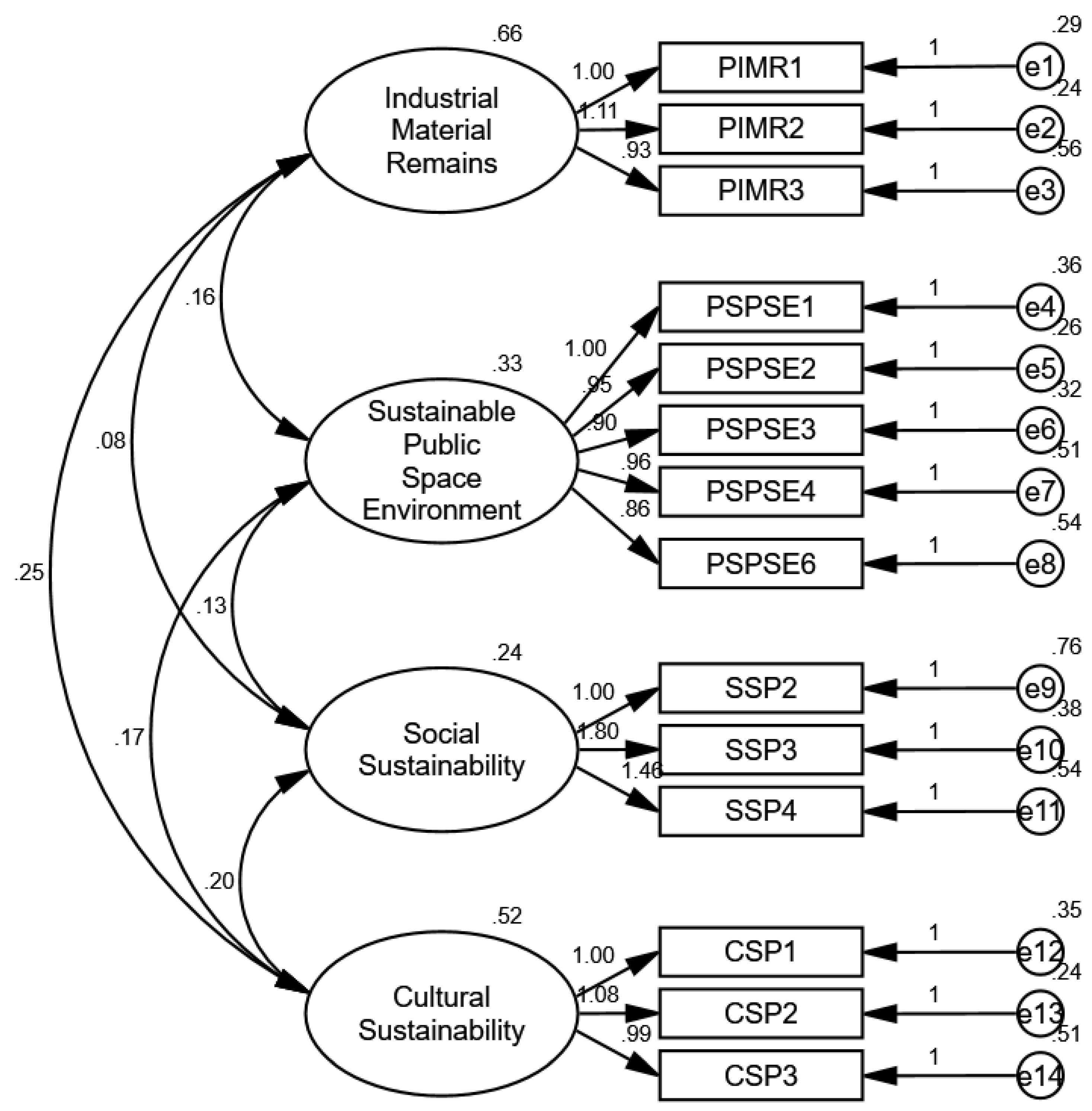
According to the analysis results in
Table 7, it can be seen that the standardized correlation coefficients between two by two of each pair of dimensions are less than the square root of the AVE value corresponding to the dimension in this test of differential validity, indicating that all dimensions have good differential validity among themselves. The CFA model diagram for the validated factor analysis of the travel preference scale is shown in
Figure 3.
Table 8 below shows the results of the descriptive statistics analysis and normality test of the current status of the factors used in this study. According to the results of the descriptive statistics analysis, it can be seen that the mean values of each variable are between 3 and 4, and the scale values are 1–5 positive, so it can be seen that the level of awareness and behavior of the group of subjects of the current study in terms of willingness to revisit, travel preferences and perceived quality is above the medium level.
The normality test for each measurement question item was performed using skewness and kurtosis, and according to the criteria proposed by Kline [
55], the data are considered to meet the requirements of an approximate normal distribution if the absolute value of the skewness coefficient is within 3 and the absolute value of the kurtosis coefficient is within 8. Based on the results of the analysis in
Table 8, it can be seen that the absolute values of the skewness and kurtosis coefficients of each measurement question item in this study are within the standard range. Therefore, it can be said that the data of each measurement question item follow the approximate normal distribution.
In this analysis, the correlation between each variable was explored through an exploratory correlation analysis, and according to the results of the analysis (
Table 9), it can be seen that there is a significant correlation between each variable in this analysis, and all of them are at the level of 90% significance. According to the results of the correlation coefficients, it can be seen that the correlation coefficients between the variables Person r are greater than 0, so the synthesis can be shown that in this analysis, there is a significant positive correlation between the variables.
3.2. SEM Model Fitness Test of Factors Influencing Industrial Heritage Tourism Preferences and Perceived Quality on Revisit Intention
Based on the results of the model fit test in
Table 10 it can be seen that CMIN/DF (chi-square degrees of freedom ratio) = 1.834, which is in the range of 1–3, RMSEA (Root mean square error of approximation) = 0.050, which is in the good range of <0.08, and the test results of IFI, TLI, and CFI all reached the good level of >0.9. Therefore, based on the analysis results of this study, it can be concluded that the tourism preference CFA model has a good fit.
4. Discussion
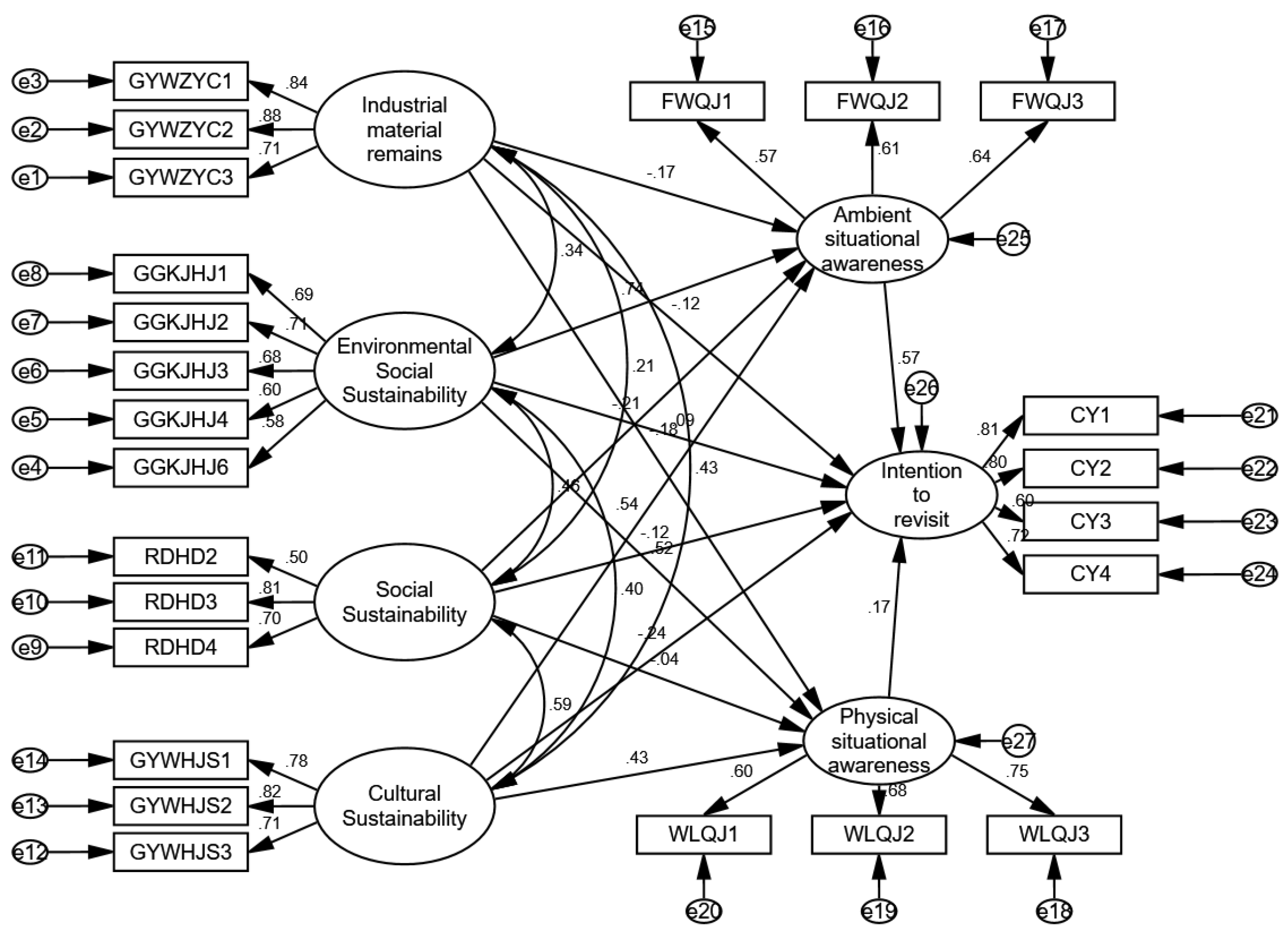
The final corrected model was obtained, and the standardized parameter estimation path diagram is shown in
Figure 4 is the final model. The path analysis of the final model is presented in
Table 11. The validation results indicate that among the 14 paths between the population’s tourism preferences, perceived quality and the intention to revisit in the hypotheses, 11 paths passed the significance test, and 3 paths were rejected. From this, the interaction relationships among the latent variables, mediating variables and outcome variables can be known.
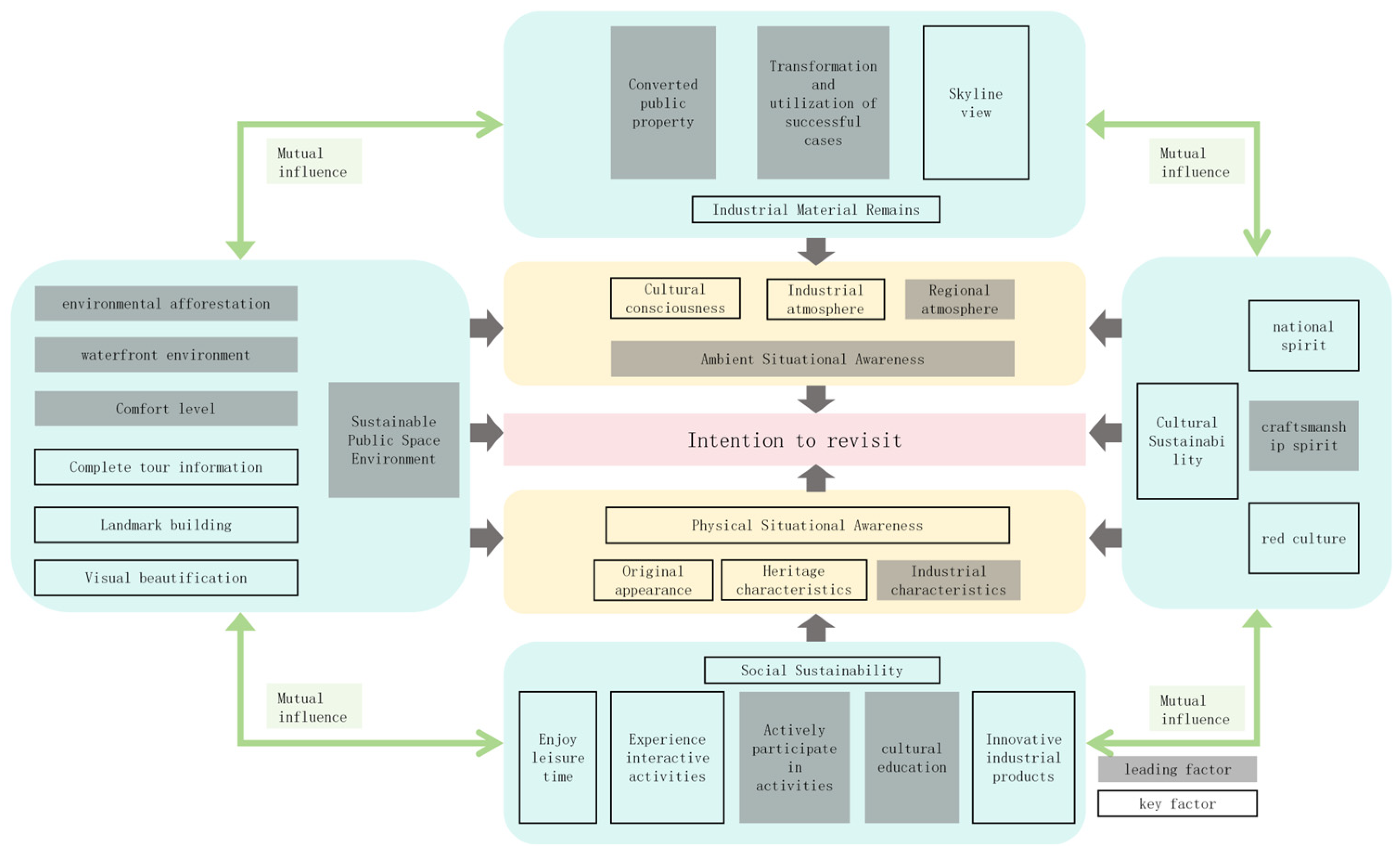
The empirical results of this study show (
Figure 5):
This study demonstrates that tourists’ revisit intention to industrial heritage sites in waterfront areas is shaped by the combined effects of tourism preferences and perceived quality, with sustainable public space environment and industrial cultural atmosphere playing particularly important roles. From a sustainability perspective, these findings indicate that enhancing revisit intention can serve as an effective pathway for the sustainable utilization of industrial heritage.
Unlike one-time, consumption-oriented tourism behavior, revisit intention reflects a long-term, low-impact engagement pattern between tourists and heritage sites. A stable revisit intention helps reduce reliance on continuous physical expansion and excessive commercialization, thereby lowering environmental pressure and preserving heritage authenticity. In this sense, revisit intention can be regarded as an operational indicator of economic and social sustainability in industrial heritage tourism.
The results further suggest that high-quality sustainable public space environment and strong industrial cultural atmosphere contribute not only to tourists’ immediate satisfaction, but also to sustained emotional attachment and repeated participation. This supports the idea that environmental sustainability (through high-quality public spaces), cultural sustainability (through the preservation and communication of industrial spirit), and social sustainability (through everyday public use and interaction) are closely interconnected in waterfront industrial heritage sites [
56].
In addition to social and cultural sustainability, the findings highlight the critical role of physical sustainability in shaping revisit intention. Physical sustainability in industrial heritage contexts refers to the quality of the built environment, spatial design, ecological performance, and the adaptive reuse of industrial structures.
The strong influence of the sustainable public space environment suggests that visitors are highly sensitive to factors such as walkability, landscape quality, waterfront accessibility, and environmental comfort. These elements not only improve immediate visitor experience but also contribute to long-term environmental resilience and low-impact tourism development.
This indicates that physical sustainability should be regarded as a foundational dimension in industrial heritage regeneration, as it directly affects perception formation and behavioral outcomes. Therefore, future research and planning practices should place greater emphasis on integrating ecological design, spatial quality, and environmental performance into heritage conservation strategies.
Therefore, the sustainable conservation and utilization of industrial heritage should move beyond short-term tourism development goals and focus on creating experience-oriented, culturally continuous, and revisit-friendly environments. By strengthening perceived quality and encouraging repeated visitation, industrial heritage sites can achieve a balance between conservation and use and become resilient components of sustainable urban development in waterfront cities.
Figure 5.
Mechanisms of the influence of traveling preferences and perceived quality on the willingness to revisit industrial heritage tourism.
Figure 5.
Mechanisms of the influence of traveling preferences and perceived quality on the willingness to revisit industrial heritage tourism.
5. Conclusions
The empirical findings confirm that tourists’ revisit intention toward waterfront industrial heritage sites is jointly influenced by tourism preferences and perceived quality, among which the sustainable public space environment and the industrial cultural atmosphere play decisive roles. From a sustainability perspective, revisit intention represents not merely a behavioral outcome but a mechanism that supports the long-term, balanced utilization of industrial heritage resources. By encouraging repeated, low-impact visitation rather than one-time consumption-oriented tourism, heritage sites can reduce pressures associated with excessive commercialization and spatial expansion while maintaining cultural authenticity and environmental integrity.
From a theoretical perspective, this study extends existing revisit intention research by shifting the analytical focus from satisfaction-based models to a preference–perception–intention framework. It demonstrates that tourism preferences, particularly those related to environmental sustainability, act as antecedent variables shaping perceived quality, thereby enriching the explanatory mechanism of behavioral intention in heritage tourism.
Furthermore, the findings contribute to sustainability theory by revealing that environmental and experiential dimensions play a more prominent role than social sustainability factors in influencing revisit intention within regenerated industrial heritage contexts. This highlights the context-dependent nature of sustainability dimensions and suggests that physical and experiential sustainability may function as primary drivers in adaptive reuse settings.
By integrating sustainability-oriented preferences into structural modeling, this study provides a more nuanced understanding of how heritage tourism can support long-term, low-impact engagement, thereby contributing to the theoretical development of sustainable destination management.
The results further demonstrate that high-quality public environments and a strong industrial cultural atmosphere foster emotional attachment and continuous engagement, linking environmental sustainability, cultural continuity, and social interaction within waterfront heritage spaces. Therefore, sustainable industrial heritage development should shift from short-term tourism growth toward experience-oriented and culturally embedded place-making strategies that promote repeated visitation and long-term value creation.
Based on these findings, several practical recommendations can be proposed for heritage managers and urban planners.
Improving the quality of sustainable public spaces emerges as a key imperative for planners. This can be achieved through human-scale waterfront design, ecological landscape restoration, the enhancement of walkability, and the creation of multifunctional open spaces that accommodate both tourism and everyday community activities. The integration of green infrastructure, comfortable pedestrian systems, and the adaptive reuse of industrial structures collectively enhances perceived environmental quality, fostering longer stays and increased revisit rates.
Strengthening the industrial cultural atmosphere requires heritage managers to translate historical narratives into immersive and participatory experiences. Strategies such as interpretive exhibitions, interactive digital storytelling, preservation of original industrial machinery, and the organization of regular cultural events or educational programs serve to communicate industrial memory and identity. These approaches facilitate the transformation of industrial heritage from static displays into dynamic cultural environments, thereby deepening visitors’ emotional engagement.
Continuous engagement should be promoted through governance strategies that foster community participation, organize recurring cultural festivals, and implement adaptive programming to attract both residents and tourists year-round. The establishment of stable cultural activities, as opposed to one-off attractions, cultivates habitual visitation patterns and reinforces revisit intention as a foundation for economic resilience and social sustainability.
In conclusion, enhancing perceived quality and fostering revisit intention provides a practical pathway for achieving a dynamic balance between conservation and utilization. Through environmentally sensitive design, culturally meaningful interpretation, and sustained public participation, waterfront industrial heritage sites can evolve into resilient and sustainable components of contemporary urban development.
Despite the valuable contributions of this study, its findings are subject to certain limitations. The use of cross-sectional survey data restricts the ability to capture causal dynamics and long-term behavioral changes, while the focus on a single city’s waterfront industrial heritage sites may limit the generalizability of results across diverse cultural and developmental contexts. Furthermore, the analytical framework centers primarily on tourists, omitting the perspectives of other key stakeholders such as residents, planners, and heritage managers. Future research would benefit from integrating longitudinal data, cross-regional comparisons, and multi-stakeholder perspectives to provide a more comprehensive understanding of sustainable development pathways in waterfront industrial heritage tourism.
Author Contributions
Conceptualization, Z.F.; methodology, J.S.; formal analysis, J.S.; investigation, J.S.; resources, J.S.; data curation, J.S.; writing—original draft preparation, J.S.; writing—review and editing, J.S.; visualization, J.S.; supervision, Z.F.; project administration, Z.F.; funding acquisition, Z.F. All authors have read and agreed to the published version of the manuscript.
Funding
This research was funded by Natural Science Foundation Project of Shanghai “Science and Technology Innovation Action Plan” (24ZR1452700), Shanghai Philosophy and Social Sciences Planning Project (2024BCK008), Shanghai Education Science Research Project “Special Project for Philosophy and Social Sciences Research in Shanghai Higher Education Institutions” (2025ZSD003).
Institutional Review Board Statement
Ethical review and approval were waived for this study due to the study design and plan werescientifically sound, fair and impartial, without harm or risk to subjects, and conducted inaccordance with the principles expressed in the Declaration of Helsinki. Participants are recruitedin accordance with the principles of voluntary and informed consent, and the rights and privacy ofparticipants are protected. The project does not present a conflict of interest or violate ethical andlegal prohibitions.
Informed Consent Statement
Informed consent was obtained from all subjects involved in the study.
Data Availability Statement
Dataset available on request from the authors.
Conflicts of Interest
The authors declare no conflicts of interest.
References
- Ozcelikci, E.; Kul, A.; Gunal, M.F.; Ozel, B.F.; Yildirim, G.; Ashour, A.; Sahmaran, M. A Comprehensive Study on the Compressive Strength, Durability-Related Parameters and Microstructure of Geopolymer Mortars Based on Mixed Construction and Demolition Waste. J. Clean. Prod. 2023, 396, 136522. [Google Scholar] [CrossRef]
- Kolar, T.; Zabkar, V. A Consumer-Based Model of Authenticity: An Oxymoron or the Foundation of Cultural Heritage Marketing? Tour. Manag. 2010, 31, 652–664. [Google Scholar] [CrossRef]
- Neuhofer, B.; Buhalis, D.; Ladkin, A. A Typology of Technology-Enhanced Tourism Experiences. Int. J. Tour. Res. 2014, 16, 340–350. [Google Scholar] [CrossRef]
- Yoon, Y.; Uysal, M. An Examination of the Effects of Motivation and Satisfaction on Destination Loyalty: A Structural Model. Tour. Manag. 2005, 26, 45–56. [Google Scholar] [CrossRef]
- van der Zee, E.; Gerrets, A.-M.; Vanneste, D. Complexity in the Governance of Tourism Networks: Balancing between External Pressure and Internal Expectations. J. Destin. Mark. Manag. 2017, 6, 296–308. [Google Scholar] [CrossRef]
- Stanford, D. Destination Marketing Essentials, S. Pike, Routledge, Abingdon (2016), 344 pp., (Pbk.), £36.99, ISBN: 9781138912908. Tour. Manag. 2017, 61, 41–42. [Google Scholar] [CrossRef]
- Kirillova, K.; Lehto, X.Y.; Cai, L. Existential Authenticity and Anxiety as Outcomes: The Tourist in the Experience Economy. Int. J. Tour. Res. 2017, 19, 13–26. [Google Scholar] [CrossRef]
- Chen, J.; Zhang, A. Exploring How and When Environmental Corporate Social Responsibility Impacts Employees’ Green Innovative Work Behavior: The Mediating Role of Creative Self-Efficacy and Environmental Commitment. Sustainability 2023, 16, 234. [Google Scholar] [CrossRef]
- Peng, J.; Yang, X.; Fu, S.; Huan, T.-C. Exploring the Influence of Tourists’ Happiness on Revisit Intention in the Context of Traditional Chinese Medicine Cultural Tourism. Tour. Manag. 2023, 94, 104647. [Google Scholar] [CrossRef]
- Jin, Q.; Hu, H.; Kavan, P. Factors Influencing Perceived Crowding of Tourists and Sustainable Tourism Destination Management. Sustainability 2016, 8, 976. [Google Scholar] [CrossRef]
- Chen, C.-F.; Tsai, D. How Destination Image and Evaluative Factors Affect Behavioral Intentions? Tour. Manag. 2007, 28, 1115–1122. [Google Scholar] [CrossRef]
- Yan, M.; Li, Q.; Zhang, J. Rethinking Industrial Heritage Tourism Resources in the EU: A Spatial Perspective. Land 2023, 12, 1510. [Google Scholar] [CrossRef]
- Zarzycki, J.; Korzeniak, J.; Perzanowska, J. Impact of Land Use Changes on the Diversity and Conservation Status of the Vegetation of Mountain Grasslands (Polish Carpathians). Land 2022, 11, 252. [Google Scholar] [CrossRef]
- Chan, C.-S.; Marafa, L.M. Knowledge-Perception Bridge of Green-Smart Integration of Cities: An Empirical Study of Hong Kong. Sustainability 2018, 10, 107. [Google Scholar] [CrossRef]
- Napoli, J.; Dickinson, S.J.; Beverland, M.B.; Farrelly, F. Measuring Consumer-Based Brand Authenticity. J. Bus. Res. 2014, 67, 1090–1098. [Google Scholar] [CrossRef]
- Hu, Y.; Xu, S. Memorability of a Previous Travel Experience and Revisit Intention: The Three-Way Interaction of Nostalgia, Perceived Disappointment Risk and Extent of Change. J. Destin. Mark. Manag. 2021, 20, 100604. [Google Scholar] [CrossRef]
- Tóth, Z.; Dul, J.; Li, C. Necessary Condition Analysis in Tourism Research. Ann. Tour. Res. 2019, 79, 102821. [Google Scholar] [CrossRef]
- Gössling, S. New Performance Indicators for Water Management in Tourism. Tour. Manag. 2015, 46, 233–244. [Google Scholar] [CrossRef]
- Qian, J.; Li, X. Perceived Value, Place Identity, and Behavioral Intention: An Investigation on the Influence Mechanism of Sustainable Development in Rural Tourism. Sustainability 2024, 16, 1583. [Google Scholar] [CrossRef]
- Kozak, M. Repeaters’ Behavior at Two Distinct Destinations. Ann. Tour. Res. 2001, 28, 784–807. [Google Scholar] [CrossRef]
- Zhou, G.; Chen, W.; Wu, Y. Research on the Effect of Authenticity on Revisit Intention in Heritage Tourism. Front. Psychol. 2022, 13, 883380. [Google Scholar] [CrossRef] [PubMed]
- Derakhshan, Z.; Mahvi, A.H.; Ghaneian, M.T.; Mazloomi, S.M.; Faramarzian, M.; Dehghani, M.; Fallahzadeh, H.; Yousefinejad, S.; Berizi, E.; Ehrampoush, M.H.; et al. Simultaneous Removal of Atrazine and Organic Matter from Wastewater Using Anaerobic Moving Bed Biofilm Reactor: A Performance Analysis. J. Environ. Manag. 2018, 209, 515–524. [Google Scholar] [CrossRef] [PubMed]
- Ma, S.; Kirilenko, A.P.; Stepchenkova, S. Special Interest Tourism Is Not so Special after All: Big Data Evidence from the 2017 Great American Solar Eclipse. Tour. Manag. 2020, 77, 104021. [Google Scholar] [CrossRef]
- Bullen, P.A.; Love, P.E.D. The Rhetoric of Adaptive Reuse or Reality of Demolition: Views from the Field. Cities 2010, 27, 215–224. [Google Scholar] [CrossRef]
- Prayag, G.; Hosany, S.; Odeh, K. The Role of Tourists’ Emotional Experiences and Satisfaction in Understanding Behavioral Intentions. J. Destin. Mark. Manag. 2013, 2, 118–127. [Google Scholar] [CrossRef]
- Ghosh, S.; Mitra, S.K. Tourism and Inequality: A Relook on the Kuznets Curve. Tour. Manag. 2021, 83, 104255. [Google Scholar] [CrossRef]
- Torres-Moraga, E.; Rodriguez-Sanchez, C.; Alonso-Dos-Santos, M.; Vidal, A. Tourscape Role in Tourist Destination Sustainability: A Path towards Revisit. J. Destin. Mark. Manag. 2024, 31, 100863. [Google Scholar] [CrossRef]
- Gecikli, R.M.; Turan, O.; Lachytova, L.; Dagli, E.; Kasalak, M.A.; Ugur, S.B.; Guven, Y. Cultural Heritage Tourism and Sustainability: A Bibliometric Analysis. Sustainability 2024, 16, 6424. [Google Scholar] [CrossRef]
- Giliberto, F.; Labadi, S. Re-Imagining Heritage Tourism in Post-COVID Sub-Saharan Africa: Local Stakeholders’ Perspectives and Future Directions. Sustainability 2023, 15, 4339. [Google Scholar] [CrossRef]
- Wang, H.; Ge, J.; Chen, X.; Zhou, Q.; Huang, K. Heritage Tourism Development Should Take Care of Industrial Heritage Protection: A Study on the Development Strategy of Industrial Heritage Tourism in Nanjing. Sustainability 2024, 16, 8534. [Google Scholar] [CrossRef]
- Dvorak, J.; Burkšienė, V.; Sadauskaitė, L. Issues in the Implementation of Cultural Heritage Projects in Lithuania: The Case of the Klaipeda Region. Cult. Manag. Sci. Educ. 2019, 3, 23–37. [Google Scholar] [CrossRef]
- Burksiene, V.; Dvorak, J.; Burbulyte-Tsiskarishvili, G. Sustainability and Sustainability Marketing in Competing for the Title of European Capital of Culture. Organizacija 2018, 51, 66–78. [Google Scholar] [CrossRef]
- Moscatelli, M. Heritage as a Driver of Sustainable Tourism Development: The Case Study of the Darb Zubaydah Hajj Pilgrimage Route. Sustainability 2024, 16, 7055. [Google Scholar] [CrossRef]
- Li, Z.; Shang, Q.; Duan, X.; Nie, X. Suitability Evaluation System of World Cultural Heritage Tourism Planning Based on Effective Interpretation of Heritage Value. A Case Study of the Ancient Tea Forest Cultural Landscape of Jingmai Mountain in Pu’er, China. Mitteilungen Österr. Geogr. Ges. 2025, 166, 263–295. [Google Scholar] [CrossRef]
- Kim, S. Tourism Impacts Continuity of World Heritage List Inscription and Sustainable Management of Hahoe Village, Korea: A Case Study of Changes in Tourist Perceptions. Sustainability 2019, 11, 2573. [Google Scholar] [CrossRef]
- Demiröz, M.; Åberg, H.E.; de Luca, C. Shaping the Relation Between Heritage and Tourism: Taxonomies of Sustainable Cultural Tourism for Local Development. Herit. Soc. 2025, 1–21. [Google Scholar] [CrossRef]
- Karatas, E.; Ozkose, A.; Heyik, M.A. Sustainable Heritage Planning for Urban Mass Tourism and Rural Abandonment: An Integrated Approach to the Safranbolu-Amasra Eco-Cultural Route. Sustainability 2025, 17, 3157. [Google Scholar] [CrossRef]
- Wu, X.; Yu, L.; Fang, H.; Wu, J. Research on the Protection and Reuse of Industrial Heritage from the Perspective of Public Participation-A Case Study of Northern Mining Area of Pingdingshan, China. Land 2022, 11, 16. [Google Scholar] [CrossRef]
- Ding, S. The Development History, Characteristics and Development Models of Industrial Tourism in China. Financ. Trade Econ. 2005, 92–94. [Google Scholar] [CrossRef]
- Lin, Y.; Lin, B. The Structure of Tourism Destination Image Preference Based on Q Method. Trop. Geogr. 2019, 39, 278–287. [Google Scholar] [CrossRef]
- Wang, J.; Wei, W.; Mao, S. The Impact of Tourists’ Tourism Preferences in Ecotourism Areas on the Environment—A Case Study of Lijiang Gudong Tourism Area. Fujian For. Sci. Technol. 2009, 36, 235–238. [Google Scholar]
- Zhu, Y.; Zhang, H.; Yang, R. Research on Rural Tourism Preferences: A Case Study of Maoweiyi in Xingping City, Shaanxi Province. Henan Sci. 2016, 34, 1380–1385. [Google Scholar]
- Wei, C.; Zhang, T. Authenticity and Quality of Industrial Heritage as the Drivers of Tourists’ Loyalty and Environmentally Responsible Behavior. Sustainability 2023, 15, 8791. [Google Scholar] [CrossRef]
- Zhang, Y.; Yang, M.; Li, Z.; Li, W.; Lu, C.; Li, Z.; Li, H.; Zhai, F. Study on the Spatial Distribution Characteristics and Influencing Factors in the Reuse of National Industrial Heritage Sites in China. Sustainability 2023, 15, 6685. [Google Scholar] [CrossRef]
- Gronroos, C.; Gummerus, J. The Service Revolution and Its Marketing Implications: Service Logic vs Service-Dominant Logic. Manag. Serv. Qual. 2014, 24, 206–229. [Google Scholar] [CrossRef]
- Zhang, L.; Zhang, J. Research on the Relationship between Traditional Village Landscape Contextual Perception and Tourist Experience Quality—Taking Hongcun, Huangling Village and Zhuge Guawu Village as Examples. Archit. Cult. 2017, 186–188. [Google Scholar]
- Ni, Z.; Ouyang, T.; Xu, J. Research on the Sustainable Development of Enterprises That Evoke Industrial Heritage-A Case Study of Taoxichuan. Sustainability 2023, 15, 1176. [Google Scholar] [CrossRef]
- Stylos, N.; Vassiliadis, C.A.; Bellou, V.; Andronikidis, A. Destination Images, Holistic Images and Personal Normative Beliefs: Predictors of Intention to Revisit a Destination. Tour. Manag. 2016, 53, 40–60. [Google Scholar] [CrossRef]
- Gravagnuolo, A.; Angrisano, M.; Girard, L.F. Circular Economy Strategies in Eight Historic Port Cities: Criteria and Indicators Towards a Circular City Assessment Framework. Sustainability 2019, 11, 3512. [Google Scholar] [CrossRef]
- Li, Z.; Gai, Q.; Qin, L. Superimposed Renewal of Industrial Heritage under the Guidance of Low Maintenance and Sustainability—Renewal of Refinery Site in Jinan Tianhong Community. Sustainability 2022, 14, 7486. [Google Scholar] [CrossRef]
- Yan, Y.; Ji, L.; Qin, Y. Analysis of the Multidimensional Impact of Population Characteristics on Industrial Development: A Case Study of Nanshang Town, Jiading District, Shanghai. Stat. Sci. Pract. 2022, 45–49. [Google Scholar]
- Harfst, J.; Sandriester, J.; Fischer, W. Industrial Heritage Tourism as a Driver of Sustainable Development? A Case Study of Steirische Eisenstrasse (Austria). Sustainability 2021, 13, 3857. [Google Scholar] [CrossRef]
- Zhang, J.; Xu, S.; Shigeki, A. Overview of Information Collection and Management System Construction for Industrial Heritage in China. Urban Archit. 2019, 16, 7–11+27. [Google Scholar] [CrossRef]
- Huang, W.; Xiong, G.; Zhong, L.; Li, K.; Li, H.; Skitmore, M.; Talebian, N. Research into Satisfaction with Industrial Heritage Renewal Based on the SEM-IPA Model: A Case Study of the Dongguan Jianyuzhou Park. Land 2022, 11, 403. [Google Scholar] [CrossRef]
- Gao, J.; Lin, S.; Zhang, C. Authenticity, Involvement, and Nostalgia: Understanding Visitor Satisfaction with an Adaptive Reuse Heritage Site in Urban China. J. Destin. Mark. Manag. 2020, 15, 100404. [Google Scholar] [CrossRef]
- Ladeira, W.J.; Santini, F.d.O.; Araujo, C.F.; Sampaio, C.H. A Meta-Analysis of the Antecedents and Consequences of Satisfaction in Tourism and Hospitality. J. Hosp. Market. Manag. 2016, 25, 975–1009. [Google Scholar] [CrossRef]
| Disclaimer/Publisher’s Note: The statements, opinions and data contained in all publications are solely those of the individual author(s) and contributor(s) and not of MDPI and/or the editor(s). MDPI and/or the editor(s) disclaim responsibility for any injury to people or property resulting from any ideas, methods, instructions or products referred to in the content. |