1. Introduction
Urban density has become a central concept in contemporary debates on sustainable urban development. Promoted as a key mechanism for reducing land consumption, limiting urban sprawl, and improving the efficiency of infrastructure and mobility systems [
1], densification is widely embedded in international and national planning agendas, reflecting broader concerns about urban sprawl and its environmental impacts [
2,
3]. Recent evidence suggests that urban sprawl has continued to accelerate globally, reinforcing the need for more compact and resource-efficient forms of urban development [
4]. At the same time, increasing density is often associated with concerns about environmental quality, social well-being, and everyday urban experience. This dual role positions urban density at the intersection of quantitative planning objectives and qualitative aspects of urban life, while also influencing economic performance and spatial efficiency [
5]. Thus, urban density is a key component of sustainable urban development, as it directly relates to the efficient use of land resources, the reduction in environmental pressures, and the creation of liveable and resilient urban environments.
Despite its widespread use, urban density remains a concept that is difficult to define, measure, and interpret consistently. The concept of urban density is inherently complex and multi-dimensional, encompassing physical, functional, and perceptual aspects that cannot be reduced to a single measure [
6,
7]. Traditionally, density has been operationalised through single indicators, most commonly population per unit area [
8]. However, such measures provide only a partial and often misleading representation of urban conditions, as they neglect the physical structure of the built environment, the distribution of functions, and the spatial organisation of open and green spaces. As noted in the literature, density is inherently multidimensional, encompassing morphological, functional, and spatial aspects that vary across scales and contexts [
9,
10,
11,
12]. Different combinations of built form, land use, and population distribution can produce similar aggregate density values while generating fundamentally different urban environments.
In parallel, the concept of quality of life (QoL), often operationalised through urban liveability, has developed into a multidimensional framework capturing the interaction between the built environment, health, accessibility, and social conditions. Contemporary approaches to liveability emphasise the role of the physical environment in shaping everyday experiences, including access to services, walkability, the availability of green and blue infrastructure, and exposure to environmental stressors; these relationships are also consistent with evidence on the interaction between the built environment and travel behaviour [
13]. Recent research frameworks highlight the need to integrate multiple domains—such as transport, public space, environmental quality, and social cohesion—into coherent indicator systems [
14,
15,
16]. Empirical studies further demonstrate that specific built-environment characteristics, including access to green space and walkable urban form, are strongly associated with health outcomes and well-being [
17,
18].
However, the relationship between urban density and quality of life remains ambiguous and highly context-dependent, a point long recognised in debates on the compact city [
19]. Empirical evidence suggests that density alone is neither inherently beneficial nor detrimental. Studies in different urban contexts report mixed and sometimes contradictory findings. For example, compact urban form has been associated with improved access to services and social interaction, but also with increased exposure to noise, perceived crowding, and stress [
20]. Other studies indicate weak or inconsistent relationships between density and subjective well-being, suggesting that density effects are mediated by factors such as accessibility, environmental quality, and neighbourhood conditions [
21]. In some contexts, higher density has been linked to lower quality of life when not accompanied by adequate infrastructure and public space provision [
22], while in others, compact urban forms have supported higher levels of urban quality when combined with mixed-use development and adequate services [
23,
24].
These findings highlight a critical limitation in current research and planning practice: although both urban density and quality of life are increasingly measured using sophisticated indicator systems, the link between them remains insufficiently operationalised. Existing studies often rely on aggregated or single-dimensional indicators, making it difficult to capture the mechanisms by which different dimensions of density influence specific aspects of liveability. Furthermore, the lack of consistent spatial units of analysis and the variability in measurement approaches further complicate comparisons across contexts and scales.
These issues are closely aligned with broader sustainability objectives, particularly the need to balance environmental, social, and economic dimensions of urban development. Meanwhile, recent research on compact cities emphasises the need to explicitly address trade-offs between density, environmental quality, and well-being. While densification can generate substantial benefits in terms of mobility, resource efficiency, and public health, it may also lead to reduced availability of green space, increased urban heat stress, and other negative externalities if not properly managed [
25,
26]. These trade-offs underscore the importance of moving beyond normative assumptions about density towards more nuanced, context-sensitive approaches. This perspective is also reflected in international policy frameworks that promote compact, integrated, and liveable urban development [
27,
28].
In this context, there is a clear need for methodological frameworks that enable a systematic and operational link between urban density and quality of life. Such frameworks should go beyond single indicators and integrate multiple dimensions of density across different spatial scales, explicitly relating them to planning-relevant aspects of liveability.
This paper addresses this gap by developing a multidimensional framework for measuring urban density and linking it to quality of life within the context of spatial planning. The proposed approach integrates morphological, functional, and structural dimensions of density and connects them to selected liveability indicators, including accessibility, green infrastructure, and environmental conditions. Particular attention is given to the definition of spatial units of analysis, introducing the concept of the urban footprint as a more appropriate basis for measuring density than conventional administrative boundaries.
The framework is operationalised using data from Slovenian cities and demonstrated through its application to three case studies representing different urban typologies. The purpose of these case studies is not to provide statistical validation, but to illustrate how the proposed methodology can be applied in practice and how it reveals differences in urban structure that are not captured by conventional density measures.
By translating abstract urban density concepts into a structured and operational system of indicators, the paper helps bridge the gap between theoretical debates on density and practical decision-making in spatial planning. The proposed framework provides a transferable methodological tool for analysing and guiding densification processes in a way that supports quality of life in urban environments.
The proposed framework does not aim to construct a comprehensive composite index of liveability, but rather to provide a structured basis for interpreting how different density configurations relate to selected dimensions of quality of life.
This paper makes two main contributions: (i) the development of a multidimensional and operational framework for measuring urban density based on consistent spatial units, and (ii) the explicit integration of density indicators with selected dimensions of liveability within a single analytical structure.
2. Materials and Methods
2.1. Conceptual Framework
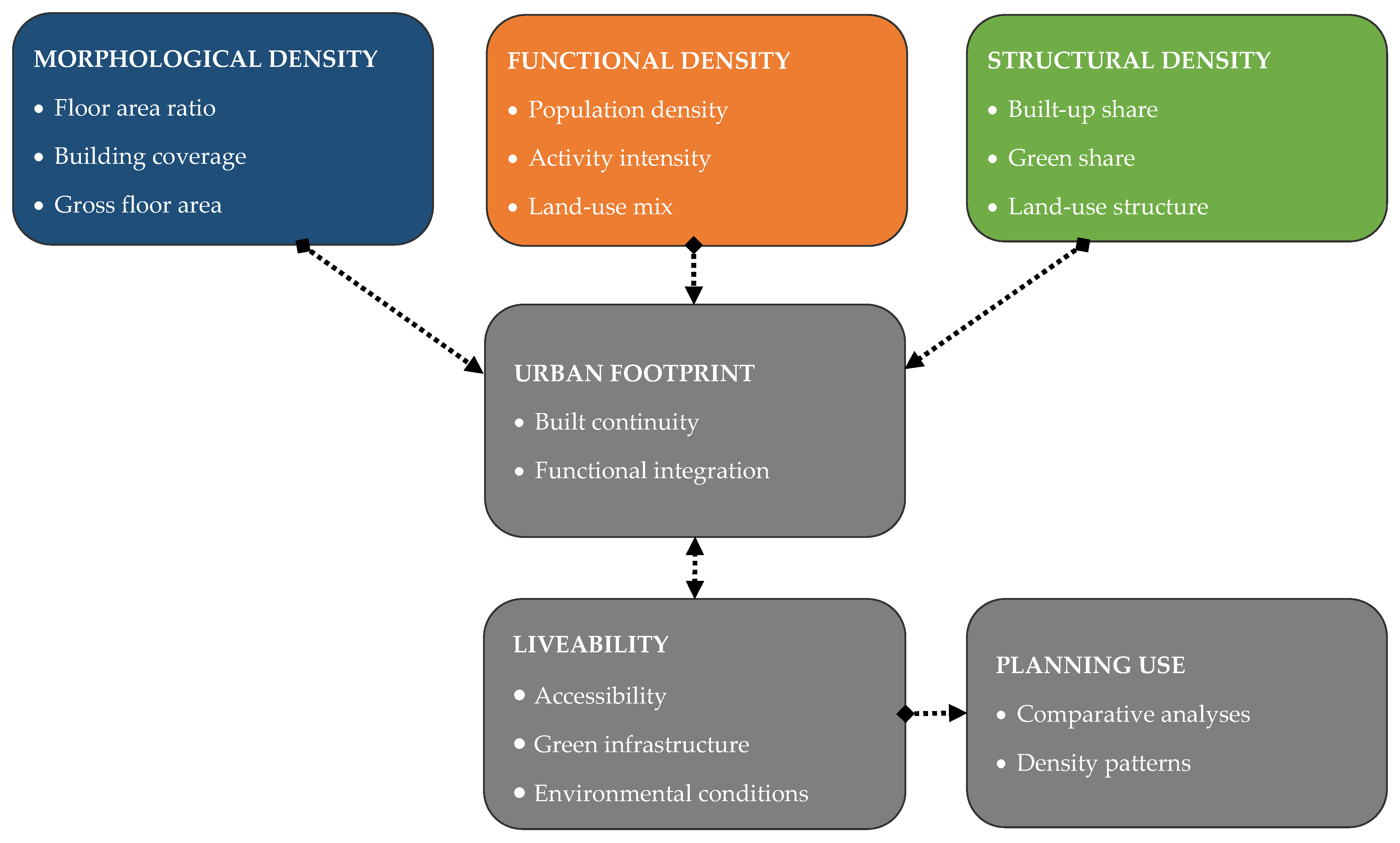
The methodological framework developed in this study is based on the premise that urban density is a multidimensional phenomenon that cannot be adequately captured by single indicators. Instead, density is conceptualised as the result of interactions between different spatial and functional components of the urban system. Building on existing literature, the framework distinguishes three primary dimensions of density: morphological, functional, and structural. While previous applications often distinguish between functional and structural dimensions, this study explicitly introduces morphological density as a separate dimension in order to capture the physical characteristics of the built environment more clearly.
Morphological density refers to the physical characteristics of the built environment, including building intensity, built-up ratios, and spatial configuration. Functional density captures the concentration and distribution of population and activities, reflecting the intensity of use within a given area. Structural density addresses the composition and organisation of land uses, including the balance between built-up areas, green infrastructure, and other open spaces. These dimensions are interrelated but analytically distinct, enabling a more comprehensive interpretation of urban form and its implications. This approach is consistent with recent research linking density to urban morphology across multiple spatial scales [
29].
In addition to these three dimensions, the framework incorporates selected aspects of quality of life as an interpretative layer. Rather than measuring quality of life directly, the approach links density indicators to spatial characteristics associated with liveability, such as accessibility, availability of green spaces, and functional diversity. This enables a structured interpretation of how different density configurations may influence everyday urban conditions.
In this study, liveability is defined using selected spatial indicators that act as proxies for key dimensions of quality of life. Accessibility is understood as spatial accessibility to services and urban functions, estimated by the distribution of functional land uses and activity intensity. Green infrastructure is evaluated using indicators of green space proportion and distribution, reflecting environmental quality and recreational potential. Environmental conditions are interpreted indirectly through spatial characteristics such as land-use composition and the presence of green areas. These indicators are not intended to provide a comprehensive measure of liveability, but to support a structured interpretation of how different density configurations relate to planning-relevant aspects of urban quality.
The framework integrates morphological, functional, and structural dimensions of urban density within a unified analytical structure. By combining these dimensions through a common spatial unit—the urban footprint—the framework enables consistent and comparable interpretation of density across different urban contexts. The relationship between urban density and liveability is understood as conditional and potentially bidirectional. Density configurations affect accessibility, environmental quality, and spatial experience, while these liveability factors may also influence the attractiveness of urban areas and indirectly affect population distribution and development intensity. In this framework, liveability is mainly used as an interpretative layer; however, the interaction between density and liveability is acknowledged as dynamic rather than strictly unidirectional. In addition, selected liveability components are incorporated as an interpretative layer, allowing the relationship between density configurations and quality of life to be examined in a structured manner. The overall structure and logic of the framework are illustrated in
Figure 1.
2.2. Definition of Indicators
Each dimension of density is operationalised through a set of measurable indicators derived from available spatial and statistical data.
Morphological density is described using indicators such as floor area ratio (FAR), building coverage ratio, and gross floor area per unit of land. In this study, the floor area ratio (FAR, expressed as a percentage) is expressed as a relative percentage indicator following the national methodology, and therefore differs from the conventional international definition; it should be interpreted as a proxy for built intensity rather than a directly comparable FAR value. These indicators capture the intensity of built form and provide insight into the spatial distribution of buildings within the urban fabric.
Functional density is measured through population-based indicators, including population density and, where applicable, indicators related to the distribution of activities. These measures reflect the intensity of use and the concentration of users within a given area. In addition, alternative population-based measures, including gross, net, and residential density, as well as indicators of housing provision such as dwellings per 1000 inhabitants, are considered where data are available. Gross, net, and residential density are distinguished based on the spatial units used in their calculation, corresponding respectively to total area, built-up areas, and residential land. Commercial space provision refers to the total floor area of non-residential economic uses, including retail, office, and service-related activities, expressed per capita.
Structural density is assessed through indicators related to land-use composition, including the proportion of built-up areas, green spaces, and other functional categories. Particular attention is given to the presence and distribution of green infrastructure, given its relevance for environmental quality and well-being. Additional indicators include the share of transport infrastructure, economic areas, and degraded or underused land, providing further detail on the internal structure of urban areas. While green infrastructure is included as part of structural density (e.g., green space share), it is also considered within the liveability dimension as an interpretative factor. To avoid double counting, green infrastructure indicators are not aggregated across dimensions but are interpreted according to their different analytical roles: as a structural component of land-use composition and as a contributor to environmental quality within the liveability framework.
The selection of indicators is guided by two main criteria: (i) conceptual relevance for capturing different dimensions of density, and (ii) availability and comparability of data across case studies. The resulting set of indicators is designed to be sufficiently robust for analytical purposes while remaining applicable in planning practice. Indicator definitions and calculation procedures follow the methodology developed by Grom et al. [
30], ensuring consistency in data processing and interpretation across case studies. Detailed calculation procedures and indicator definitions are provided in
Appendix A.
2.3. Spatial Unit of Analysis
A key methodological issue in measuring urban density is defining an appropriate spatial unit of analysis. Conventional approaches often use administrative boundaries, which may not reflect the actual extent or structure of urban areas. This can result in distorted density values, particularly when large non-urban areas are included within administrative units.
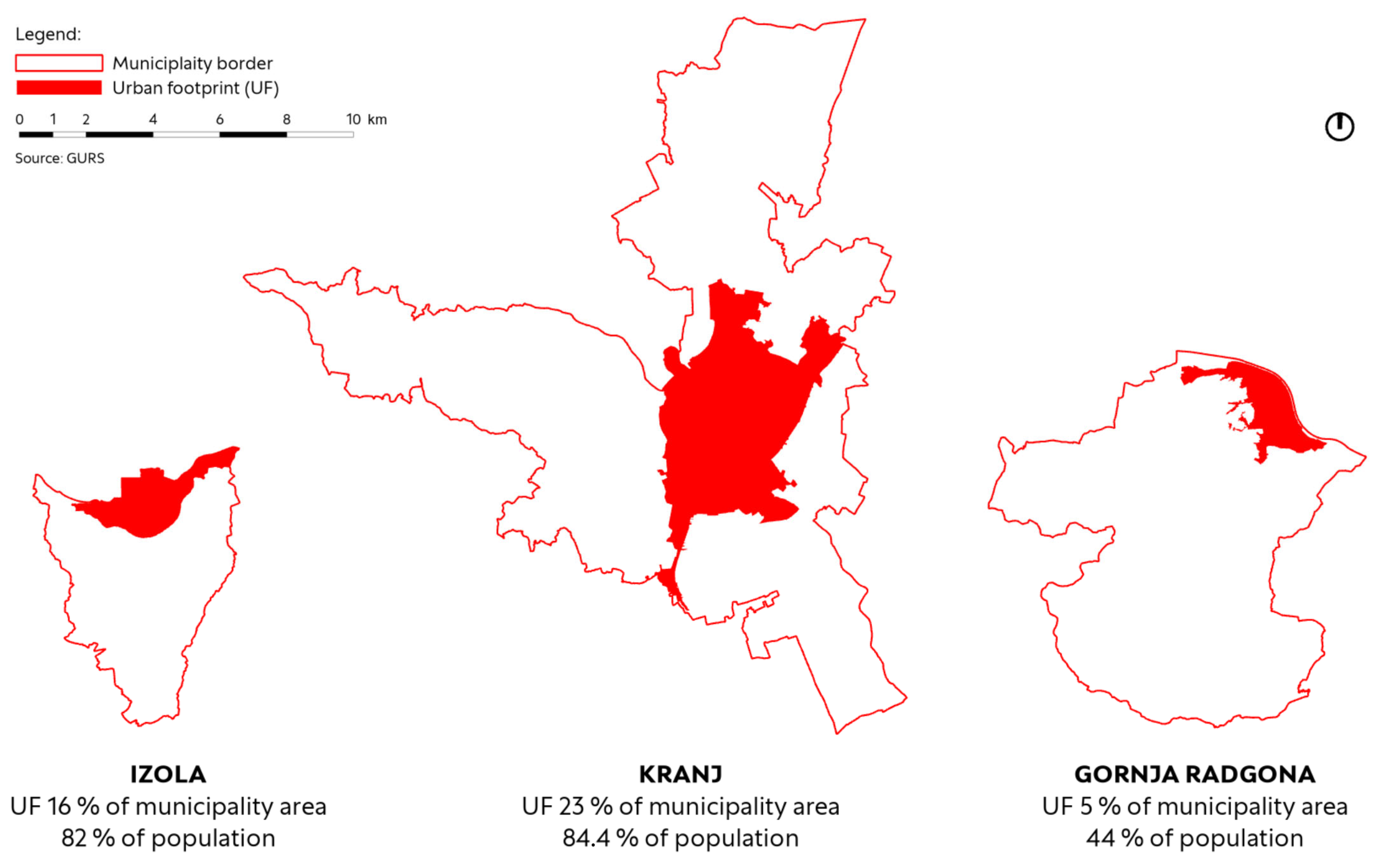
To address this limitation, the study introduces the concept of the urban footprint as the primary spatial unit of analysis. The urban footprint is defined as a spatially continuous area characterised by urban land uses and functional integration. It is delineated based on the extent of built-up areas and their spatial continuity, rather than administrative borders.
This approach provides a more accurate representation of urban density by aligning the unit of measurement with the actual morphology and functioning of the urban system. It also enables comparison across different settlements by applying a consistent delineation logic.
The delineation of the urban footprint is based on the spatial continuity of built-up areas and their functional integration. Built-up areas are identified using land-use and building data, and contiguous urban patches are delineated according to a consistent logic of spatial continuity and functional integration applied across all case studies. Isolated or functionally disconnected areas are excluded. While the exact delineation depends on data availability, the approach follows a consistent logic across case studies to ensure comparability. Functional integration is approximated through spatial continuity and the presence of mixed or complementary land uses, rather than through explicit flow-based indicators such as commuting data, which were not available for this study. A detailed description of the delineation procedure and parameter settings is provided in
Appendix A.
The delineation of the urban footprint follows a rule-based GIS procedure to ensure transparency and reproducibility. Built-up areas were first identified using national land-use and building datasets. Contiguous urban patches were delineated based on spatial continuity, applying a distance threshold of 50 m between built structures to define functional connectivity. To exclude isolated or weakly integrated areas, a minimum patch size threshold was applied, and areas with predominantly non-urban land uses were removed. Although the delineation process involves parameter selection, the same criteria were consistently applied across all case studies to ensure comparability. This approach reduces subjectivity while maintaining flexibility to adapt to different urban morphologies.
To address the Modifiable Areal Unit Problem (MAUP) and ensure consistency across datasets, all indicators were calculated within a harmonised spatial framework based on the delineated urban footprint. Source datasets with different spatial resolutions (e.g., cadastral parcels, land-use polygons, and statistical units) were standardised through spatial aggregation and intersection procedures within a common GIS environment. Indicator values were calculated using area-weighted and population-weighted methods where appropriate, ensuring that all measures refer to the same spatial extent. This harmonisation process enables consistent comparison across case studies despite differences in the original data structure.
2.4. Data Sources and Processing
The framework is implemented using a combination of spatial and statistical data from national and municipal sources. Key datasets include building registers, land-use data, population statistics, and planning documents. These datasets form the basis for calculating the selected indicators across different spatial units.
The datasets used in this study refer to the most recent available data at the time of analysis (mainly 2022–2024) and vary in spatial resolution depending on the source. Building and land-use data are available at the parcel or object level, while population data are aggregated to statistical units and then spatially redistributed within the urban footprint. Differences in spatial resolution were addressed through harmonisation procedures to ensure consistency across indicators.
Data processing involves several steps. First, spatial datasets are harmonised and integrated within a common geospatial framework. Second, the urban footprint is delineated for each case study area. Third, selected indicators are calculated for each spatial unit using standardised procedures. Finally, the results are organised to allow comparison across different urban contexts. Further technical details on data harmonisation and processing steps are provided in
Appendix A.
Given the diversity of data sources, particular attention is paid to ensuring consistency and comparability. Where necessary, data are aggregated or normalised to ensure that indicators are calculated using comparable definitions and spatial extents.
2.5. Case Study Design
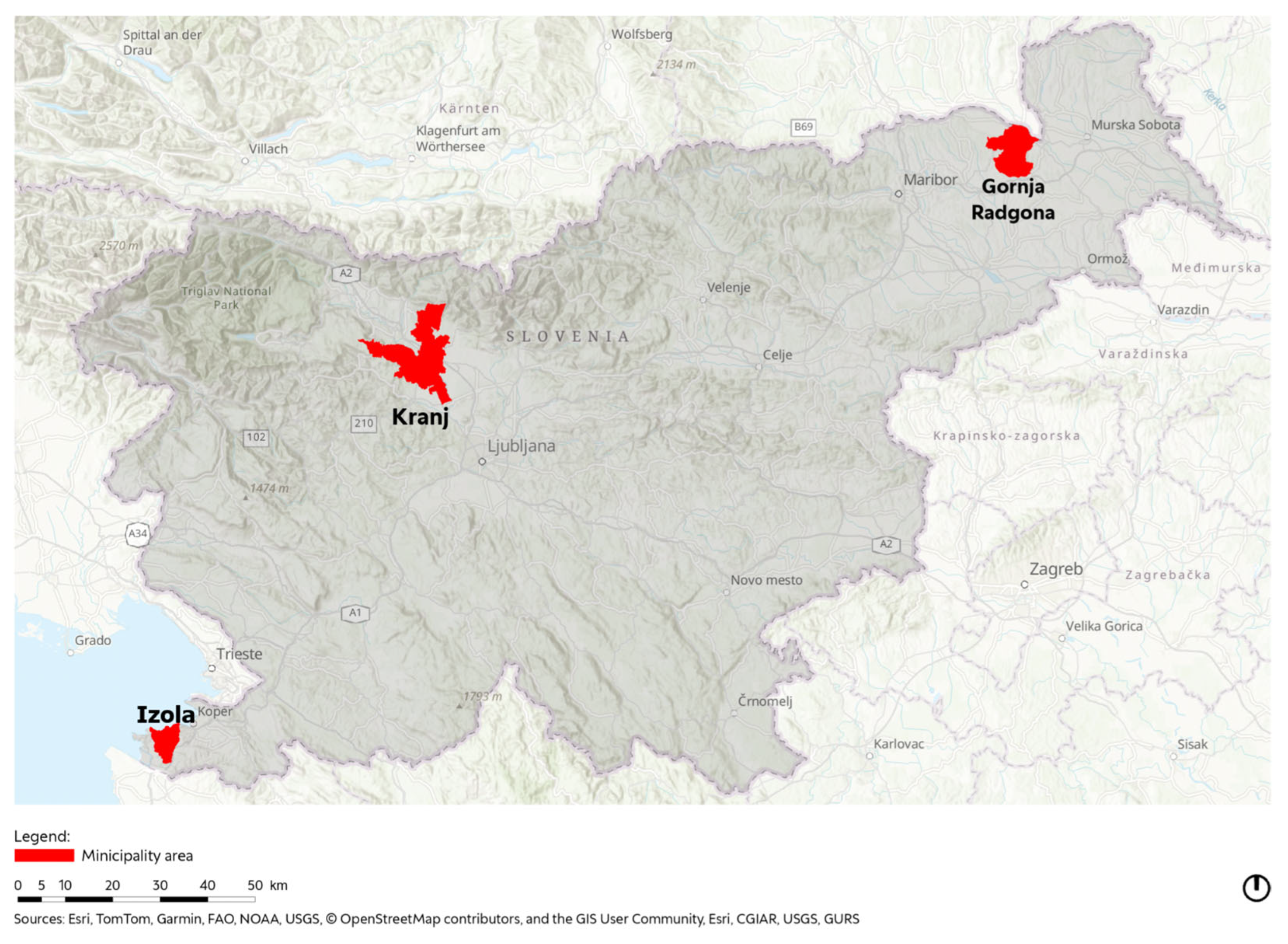
The methodological framework is demonstrated through its application to three Slovenian cities that represent different urban typologies: Izola, Kranj, and Gornja Radgona. These case studies were chosen to capture variation in size, spatial structure, and development patterns, ranging from a coastal, tourism-oriented environment (Izola), to an industrial city at the foothills of the Alps and one of the largest urban centres in Slovenia (Kranj), and to a smaller border town with a dispersed structure, where part of the urban area extends across the Mura River into Austria (Gornja Radgona). The locations of the case study cities within Slovenia are shown in
Figure 2.
The selected case study cities reflect three distinct urban typologies within the Slovenian context, enabling a comparative assessment of how differing spatial and functional characteristics influence urban density patterns. Izola represents a coastal urban system with a pronounced functional orientation towards tourism and seasonal population dynamics, which may result in fluctuating density distributions. It should be noted that the analysis is based on officially available population data referring to permanent residents. As a result, seasonal fluctuations related to tourism are not explicitly reflected in the functional density indicators. This is a limitation of the study, especially for Izola, where temporary population dynamics may significantly affect actual density patterns. Kranj exemplifies a major industrial and regional centre situated at the foothills of the Alps, characterized by a relatively high level of urban consolidation and its role as the fourth largest city in the country, providing a reference case of a more compact and structurally integrated urban form. In contrast, Gornja Radgona illustrates a small-scale, border urban system with a dispersed spatial structure, shaped by its transnational position, as part of the urban area extends across the Mura River into Austria, thereby introducing additional spatial discontinuities. Due to data availability constraints, the analysis focuses on the Slovenian part of the urban system. Although Gornja Radgona is part of a transnational urban area extending into Austria, cross-border integration is not explicitly analysed. This limitation should be considered when interpreting the results, as the functional urban system extends beyond the spatial unit analysed.
2.6. Analytical Approach
The analysis is based on a comparative interpretation of the selected indicators across case studies and density dimensions. Rather than focusing on single values, the approach emphasises relationships between indicators and the identification of patterns and discrepancies. The primary unit of analysis is the delineated urban footprint (
Figure 3), within which all indicators are calculated as aggregated measures rather than at the level of predefined administrative or statistical subunits. This approach ensures that density indicators reflect the functional and morphological characteristics of the urban system as a whole, while avoiding distortions associated with heterogeneous subunits such as census tracts or administrative zones. Additional methodological details supporting the analytical approach are included in
Appendix A.
In particular, the framework enables the identification of mismatches between different dimensions of density, such as cases where high morphological density does not correspond to high functional density, or where structural characteristics influence the interpretation of density values. These patterns provide insight into the complexity of urban systems and the limitations of simplified density measures.
The analytical approach is therefore primarily interpretative, aiming to show how a multidimensional framework can support a more nuanced understanding of urban density and its implications for spatial planning.
Although the analysis is primarily interpretative, the methodological robustness of the framework lies in its internal consistency, the comparability of indicators across case studies, and its ability to systematically reveal relationships and mismatches between different dimensions of density. The approach is therefore not intended to provide statistical validation, but to offer an operational and transferable analytical structure that can support further quantitative applications. The approach prioritises interpretability and applicability in planning practice over statistical generalisation.
3. Results
Building on the conceptual framework presented in
Figure 1, the analysis applies a multidimensional approach to examine urban density patterns across the selected case studies.
3.1. Operational Structure of the Framework
The results are structured through a multidimensional framework that operationalises urban density across three interrelated dimensions: morphological, functional, and structural. Each dimension captures a distinct aspect of urban form and use, while their combined interpretation enables a more comprehensive understanding of density patterns.
The framework operates across multiple spatial scales, with the urban footprint serving as the primary unit of analysis. This ensures that density is measured in relation to the actual spatial extent of urbanised areas rather than administrative boundaries. Consequently, the calculated indicators reflect the effective intensity and structure of urban development.
The results further integrate density indicators with selected dimensions of liveability, enabling a joint interpretation of spatial structure and quality of life by linking spatial indicators—such as green space availability, functional mix, and accessibility—to different density configurations.
3.2. Application to Case Study Areas
The framework was applied to three Slovenian cities: Izola, Kranj, and Gornja Radgona, representing different urban typologies and development patterns. The application shows how the same set of indicators produces distinct density profiles depending on the spatial structure and functional characteristics of each case. The resulting density indicators reveal distinct profiles across the three cities and are summarised in
Table 1.
Table 1 presents a selected set of key indicators, while the complete list is provided in
Appendix B. This application provides the empirical basis for the comparative analysis presented in
Section 3.3,
Section 3.4,
Section 3.5 and
Section 3.6.
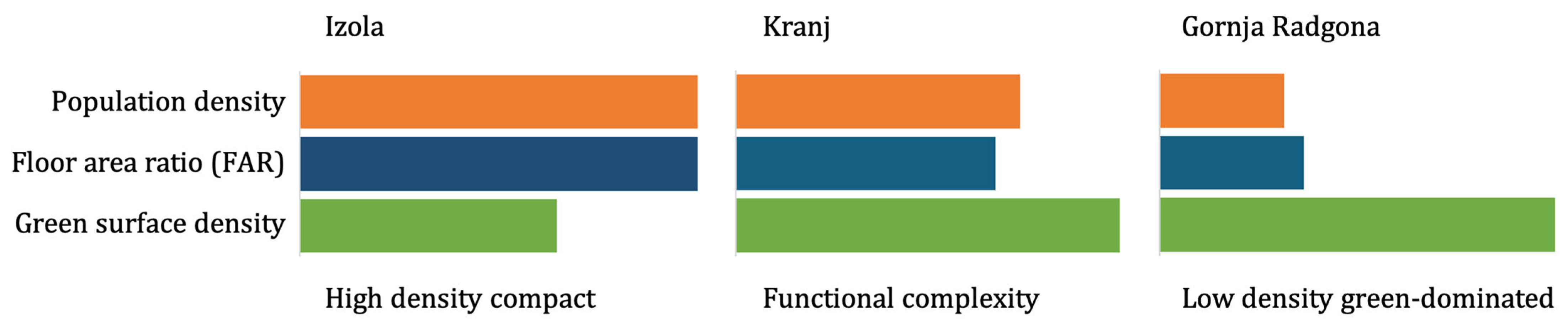
Table 1 reveals clear differences in the density profiles of the three cities across functional, morphological, and structural dimensions. Izola exhibits the highest population density (28.85 inh./ha) and floor area ratio (11%), indicating a relatively compact and spatially intensive urban form, although with substantially lower commercial space provision than Kranj. Kranj, despite a lower population density (20.09 inh./ha), stands out in terms of functional complexity, with significantly higher commercial space provision (8.32 m
2 per capita), reflecting a more diversified urban structure. In contrast, Gornja Radgona shows the lowest population density (9.04 inh./ha) and FAR (4%), combined with a higher share of green surfaces (17%), reflecting structural characteristics associated with a more dispersed and lower-intensity settlement pattern. Although the three cities exhibit comparable overall development levels, their internal configurations differ substantially, highlighting that these differences are not captured by conventional single indicators but become evident through a multidimensional approach. These differences are further illustrated in
Figure 4, which provides a comparative visualisation of density profiles across the three dimensions.
3.3. Morphological, Functional, and Structural Density Patterns
Building on the differences identified in
Table 1, the comparative analysis further examines how the morphological, functional, and structural dimensions of density interact across the case studies.
Morphological density indicators reveal relatively high building intensity in Izola, consistent with its high built-up density (46%) and floor area ratio (11%), suggesting a relatively compact urban form and limited spatial expansion. Kranj displays moderate to high values with greater internal variation, while Gornja Radgona shows lower overall building intensity, in line with its lower FAR (4%) and more dispersed spatial structure.
Functional density patterns differ from morphological density patterns. In some areas, high building intensity does not correspond to high population concentration, as indicated by differences between built-up density and population density values in
Table 1. This may suggest the presence of non-residential uses or underutilised built space, particularly in areas potentially associated with tourism or industrial activities.
Structural density further modifies the interpretation of density values. Structural density indicators, particularly those related to green space and land-use composition, provide additional insight into the spatial organisation of urban areas. The proportion and distribution of green spaces, infrastructure, and non-built areas significantly influence the perceived and functional intensity of urban environments. For example, the higher share of green surfaces in Gornja Radgona (17%) compared to Izola (11%) reflects structural characteristics that contribute to a lower overall intensity despite comparable levels of built-up density. In this respect, similar numerical density values can correspond to markedly different spatial conditions. These interactions between density dimensions form the basis for identifying more complex patterns and inconsistencies in urban structure.
3.4. Identification of Density Mismatches and Typologies
Building on these interactions, the results identify systematic mismatches between different dimensions of density.
Firstly, a divergence between morphological and functional density is observed in areas where built intensity is high but population density remains relatively low. This pattern is consistent with the results presented in
Table 1, where relatively high built-up density and FAR values do not always correspond to high population density, indicating the presence of non-residential uses or underutilised built space. Such configurations may be associated with industrial zones, tourism-oriented developments, or areas with a high proportion of secondary residences. These interpretations are based on indirect evidence from the indicator structure and should therefore be understood as indicative rather than conclusive.
Secondly, the analysis reveals a “density dilution effect”, whereby large spatial units with mixed land uses produce lower average density values, masking local concentrations of activity. This effect is particularly evident in cities such as Kranj, where high functional intensity (e.g., commercial space provision) coexists with moderate overall density values, reflecting internal heterogeneity within the urban structure. Similar indicator-based approaches have also been used to identify spatial pressure and density dynamics in urban systems [
31]. This effect is conceptually related to the Modifiable Areal Unit Problem (MAUP), although a formal sensitivity analysis is beyond the scope of this study.
Thirdly, the results highlight the existence of distinct density typologies that cannot be identified using single indicators. Similar aggregate density values may correspond either to compact and spatially efficient urban environments, as observed in Izola, or to more fragmented and mono-functional structures, as in Gornja Radgona. These differences reflect variations in the relationship between built form, land use, and spatial intensity.
These findings demonstrate the limitations of conventional density measures and highlight the need for multidimensional approaches. The identification of mismatches is based on comparative interpretation of indicator values, with the aim of revealing meaningful patterns rather than defining statistically fixed categories.
3.5. Linking Density Indicators to Liveability Dimensions
The results provide a basis for interpreting how different dimensions of density relate to selected aspects of quality of life.
In particular, the availability and distribution of green spaces directly influence environmental quality and perceived liveability. These effects are linked to structural characteristics of urban areas and become especially relevant in contexts of high morphological density. Similarly, functional density and land-use mix are closely linked to accessibility and the availability of services, which are key components of everyday urban experience.
The analysis shows that density alone does not determine liveability outcomes. Rather, the relationship depends on the interaction between different density dimensions. High density can support favourable liveability conditions when combined with adequate structural elements such as green infrastructure, accessibility, and functional diversity. Conversely, similar density levels may lead to less favourable outcomes in the absence of these supporting elements.
These results confirm that density is a conditional and context-dependent factor rather than a standalone indicator.
3.6. Implications for the Use of Density Indicators in Planning
The results demonstrate that a multidimensional approach provides a more precise and operational basis for analysing urban density in planning contexts.
In particular, the previously identified density mismatches and internal heterogeneity across the case studies demonstrate that integrating morphological, functional, and structural dimensions enables more meaningful comparisons between urban areas and helps reveal development patterns that conventional indicators do not capture.
In practical terms, this allows planners to move beyond simplified density targets based solely on population or built intensity and to consider the internal structure of urban areas. For example, areas with similar overall density values may require different planning approaches depending on their functional composition, green space provision, and spatial configuration.
The framework therefore supports more informed decision-making in urban densification processes, particularly in balancing development intensity with environmental quality and accessibility. This highlights the need to replace uniform density thresholds with multidimensional indicators in planning practice.
Identifying density mismatches has direct implications for planning policy. Areas with high morphological but low functional density may indicate underutilised built capacity, suggesting potential for functional intensification without additional land consumption. Conversely, areas with low structural density but high functional intensity may require targeted interventions to improve green infrastructure and environmental quality. Recognising these patterns enables more differentiated and context-sensitive planning strategies compared to uniform density-based approaches.
4. Discussion
The results confirm that urban density should be interpreted as the interaction of morphological, functional, and structural dimensions rather than as a single metric. This finding supports a central premise in the literature that density is inherently multidimensional [
9,
10,
12]. By integrating these dimensions within a common analytical framework, this study provides a more nuanced interpretation of density patterns and their implications for urban environments. Compared to approaches that treat density as a single indicator or as loosely connected metrics, the proposed framework offers a more integrated and operational basis for interpreting density in spatial planning.
The empirical application demonstrates that similar aggregate density values can correspond to fundamentally different spatial configurations. This finding aligns with previous research emphasising that conventional density measures obscure internal urban structure and functional diversity [
8,
11]. The identified mismatches between morphological and functional density further support arguments that built intensity alone is insufficient for understanding how urban areas function in practice. In particular, the existence of areas with high built density but relatively low population intensity highlights the role of land-use specialisation, seasonal use, or underutilisation—patterns often overlooked in standard density metrics.
The results also contribute to ongoing debates on the compact city and its implications for quality of life. As noted by Burton [
19] and subsequent studies [
20,
26], the relationship between density and liveability is neither linear nor universally positive. The findings presented here reinforce this view by showing that the effects of density depend on the interaction of multiple dimensions. For example, higher morphological density may support efficient land use and accessibility, but may also be associated with reduced green space, potentially affecting environmental quality. Conversely, lower-density environments may offer more favourable environmental conditions but can lack functional intensity and accessibility. This is consistent with studies linking urban form and density to multiple dimensions of liveability, including accessibility, environmental quality, and social conditions [
32]. The relationship between density and liveability is interpreted qualitatively in this study, while future research should aim to operationalise these relationships using quantitative accessibility and environmental indicators.
These results align with research highlighting the importance of green infrastructure and spatial configuration in mediating the effects of density on well-being [
17,
25,
33]. The observed differences between case studies indicate that similar density levels can produce divergent liveability outcomes depending on the balance between built-up areas, green spaces, and functional diversity. This is also consistent with international policy frameworks, which emphasise the role of integrated urban form, accessibility, and environmental quality in shaping liveability outcomes [
34,
35]. Recent research also highlights the role of green space provision in shaping the acceptance of densification processes [
36].
A key contribution of this study is the operationalisation of the relationship between density and liveability within a single analytical framework. While previous studies have examined these domains separately or through loosely connected indicator systems [
14,
15], the proposed approach enables their joint interpretation using a consistent spatial unit and a structured set of indicators. The introduction of the urban footprint as the primary unit of analysis addresses a well-recognised methodological limitation associated with the use of administrative boundaries, which often distort density measurements and hinder comparability across contexts. This challenge has also been highlighted in European territorial research, which emphasises the importance of functionally defined spatial units for analysing urban systems [
37].
However, several limitations of the study should be acknowledged. First, the empirical analysis is based on a limited number of case studies, intended to illustrate the applicability of the framework rather than to provide statistically generalisable results. Second, the selection of indicators is constrained by data availability, which may affect the comparability of results in different contexts. Third, the analysis remains primarily interpretative, focusing on identifying patterns and relationships rather than establishing causal links between density and liveability outcomes. In addition, specific case-related limitations should be considered when interpreting the results. In the case of Izola, the use of permanent population data does not capture seasonal fluctuations associated with tourism, which may affect the interpretation of functional density patterns. Similarly, the analysis of Gornja Radgona is limited to the Slovenian part of a functionally transnational urban system, potentially underrepresenting cross-border interactions and their influence on density and liveability relationships.
Despite these limitations, the framework provides a basis for further research and practical application. Future work could extend the approach by incorporating additional indicators and applying it to a broader range of urban contexts. Quantitative validation and integration with modelling approaches would further strengthen its analytical capacity, while ongoing efforts to develop harmonised indicator systems at the European level provide an important reference for methodological refinement [
35].
From a planning perspective, the findings highlight the need to move beyond simplified density targets and adopt more context-sensitive approaches to densification. Rather than treating density as a single objective, planners should consider the configuration of different density dimensions and their implications for quality of life. This position aligns with international policy frameworks that emphasise integrated approaches to urban development, combining density, accessibility, environmental quality, and social well-being [
27,
28,
33,
34]. In this regard, the proposed framework offers a practical tool for identifying development patterns, diagnosing spatial imbalances, and supporting more informed decision-making.
Overall, the study contributes to a growing body of research advocating more nuanced and operational approaches to urban density. By linking density measurement with liveability considerations within a coherent methodological structure, it helps bridge the gap between theoretical concepts and planning practice, offering a transferable approach for analysing and guiding urban development in diverse contexts.
5. Conclusions
This paper develops and demonstrates a multidimensional framework for measuring urban density and linking it to selected aspects of liveability. By integrating morphological, functional, and structural dimensions within a common spatial unit—the urban footprint—the proposed approach enables a more consistent and operational interpretation of density across different urban contexts.
The results show that conventional single indicators are insufficient to capture the internal structure and functioning of urban areas. Similar aggregate density values may correspond to substantially different spatial configurations, leading to distinct implications for accessibility, environmental quality, and overall liveability. The identification of density mismatches and the “density dilution effect” further highlights the limitations of simplified measurement approaches.
The study confirms that the relationship between density and quality of life is conditional and context-dependent. Density does not act as an independent determinant of liveability; rather, its effects depend on the interaction between built form, land-use structure, and the availability of green and functional infrastructure.
From a methodological perspective, the framework provides a transferable methodological approach that can support the analysis of urban density across different contexts. However, its broader applicability requires further testing on a wider range of case studies and datasets. It enables more nuanced and potentially more meaningful comparisons between urban areas and supports the identification of development patterns that are not visible through conventional indicators.
From a planning perspective, the findings underline the need to move beyond uniform density targets towards more context-sensitive approaches to densification. The proposed framework offers a basis for evaluating the balance between development intensity and quality of life, supporting more informed and integrated decision-making in the context of sustainable urban development.
Future research should focus on extending the empirical application of the framework, incorporating additional indicators, and testing its applicability across a broader range of urban contexts. Further work is also needed to strengthen the quantitative assessment of relationships between density configurations and specific liveability outcomes. The framework thus provides a practical basis for rethinking how urban density is measured and applied in planning, shifting the focus from quantity alone to the quality and structure of urban development.
From a broader perspective, the proposed framework contributes to ongoing efforts to support sustainable urban development by providing a more nuanced basis for understanding and managing urban density. By explicitly linking density configurations with accessibility, environmental conditions, and green infrastructure, the approach supports key sustainability objectives, including efficient land use, reduced urban sprawl, and improved quality of life. The framework enables planners to balance development intensity with environmental and social considerations, thereby contributing to more integrated and context-sensitive strategies for sustainable urban transformation.