1. Introduction
The disinfection of water for human consumption represents one of the most significant milestones in the history of public health, as it enables the effective control of pathogens and the eradication of large-scale outbreaks of waterborne diseases [
1,
2]. However, this process may also lead to some undesirable side effects, such as the formation of so-called disinfection by-products (DBPs). These compounds are generated from the addition of oxidising agents such as chlorine, chloramines, chlorine dioxide or ozone, which triggers chemical reactions with natural organic matter (NOM) and anthropogenic contaminants present in water sources [
3,
4]. This family of compounds affect not only humans but other living beings too, which is why they have been subject to intense research in recent decades. Up until now, hundreds of different DBPs have been identified [
5]; however, international regulatory frameworks only cover a very small fraction of them, mainly trihalomethanes (THMs) and haloacetic acids (HAAs) [
6].
In recent decades, the scientific community’s interest has shifted towards emerging DBPs, which, despite being detected at significantly lower concentrations (ng/L or ppt) than regulated ones (µg/L or ppb), exhibit toxicity several orders of magnitude greater [
7]. Within this high-priority group are halobenzoquinones (HBQs), a class of aromatic by-products that have raised growing concern due to their ubiquity and their potential cytotoxicity, genotoxicity and carcinogenic nature [
2,
8,
9]. Among the HBQs most frequently detected in drinking water, 2,6-dichloro-1,4-benzoquinone (DCBQ) is the predominant species, whose presence has been confirmed in both urban distribution networks, recreational waters and swimming pools [
3,
10].
DCBQ has been identified as one of the most toxic halogenated disinfection by-products, exhibiting cytotoxic, genotoxic, and carcinogenic effects even at trace concentrations. These characteristics justify its prioritization as a target contaminant and highlight the need for optimized treatment strategies capable of preventing both its persistence and the formation of toxic transformation by-products. The toxicity of DCBQ is a critical factor justifying its detailed study. Epidemiological research and in vitro studies have linked chronic exposure to these compounds with an increased risk of bladder, colon and rectal cancer in humans [
7]. At the cellular level, DCBQ provokes severe oxidative stress, DNA damage and mitochondrial dysfunction. Recent studies in biological models have revealed concerning systemic impacts, such as developmental toxicity in zebrafish embryos and significant alterations in the mammalian immune system [
11,
12]. Another relevant adverse effect is related to the digestive tract, as exposure to DCBQ has been shown to cause dysbiosis of the gut microbiome, disrupting the host’s metabolic functions and suggesting a route of public health risk via the digestive system [
4].
The formation of DCBQ is a complex chemical process derived from various aromatic precursors. Traditionally, it has been associated with the chlorination of hydrophobic fractions of organic matter (OM), specifically phenolic structures derived from lignin [
13]. However, anthropogenic activity contributes critical precursors through the discharge of synthetic phenolic antioxidants used extensively in the food, plastics and cosmetics industries, such as butylated hydroxyanisole (BHA), butylated hydroxytoluene (BHT) and bis(4-tert-butylphenyl) amine (BBPA) [
3]. In addition to these industrial sources, personal care products such as UV filters and certain common green algae (e.g., Chlorella vulgaris) have been identified as potential sources that release HBQ precursors following chlorination and chloramination processes [
14,
15].
A distinctive feature of DCBQ is its metastable nature in water, which is governed by a dynamic equilibrium between its continuous formation and its simultaneous degradation [
1]. DCBQ decomposition occurs primarily via alkaline hydrolysis, a process highly dependent on pH and temperature. At pH values above 7, its degradation follows pseudo-first-order kinetics that depend on the concentration of hydroxyl ions. Notably, the presence of residual free chlorine accelerates its decomposition. Furthermore, reactive electrophilic species such as dichlorine monoxide (Cl
2O) have been identified as key contributors to its degradation when chlorine levels exceed 1 mg/L [
7].
Given DCBQ’s high toxicity and its ability to persist through conventional water treatment processes—many of which are insufficient for its complete removal—research into advanced oxidation processes (AOPs) has been driven forward [
16,
17]. Among these technologies, ozonation, UV/H
2O
2 systems and photo-Fenton treatments have proven to be viable strategies for the degradation of DCBQ and the neutralisation of its precursors [
8,
18]. Nevertheless, the application of these methods requires rigorous optimisation to maximise mineralisation and prevent the formation of transient aromatic intermediates whose toxicity may exceed that of the original compound [
7]. The performance of AOPs is strongly influenced by several operational parameters, including the oxidant dose, operating pH and the presence of inorganic anions (which may act as radical scavengers or modify reaction pathways) [
19].
Among the advanced oxidation processes proposed for the control of halobenzoquinones, ozonation stands out due to its dual molecular and radical oxidation pathways and its wide application in water treatment systems. In this context, pH plays a central role not only in controlling ozone chemistry and radical formation, but also in determining ozone stability and utilization efficiency within the reactor [
2]. While numerous studies have investigated the influence of pH on ozone reaction pathways and degradation kinetics, its combined effect on overall ozonation performance and gas–liquid mass transfer efficiency has received limited attention.
Previous studies on the ozonation of DCBQ and related halobenzoquinones have mainly focused on degradation kinetics and oxidation efficiency under selected pH conditions, typically emphasizing contaminant disappearance rather than comprehensive water quality evolution. In most cases, ozonation performance has been evaluated over limited pH ranges or under fixed operating conditions, with little attention given to turbidity development, aromaticity transformation, or ozone utilization efficiency. Moreover, the influence of pH on gas–liquid ozone transfer has generally been treated implicitly, without direct experimental assessment of dissolved ozone dynamics or mass transfer limitations.
As a result, important practical questions remain unresolved regarding the identification of optimal pH domains that balance oxidation efficiency, ozone stability, and effluent quality. In particular, the lack of integrated analyses linking oxidation pathways with gas–liquid mass transfer hampers the development of sustainable ozonation strategies for highly reactive and toxic compounds such as DCBQ.
Furthermore, turbidity management becomes particularly relevant, as extreme alkalinity conditions may promote colloidal aggregation of dissociated organic fragments. Additionally, the implementation of pre-ozonisation has proven to be a highly effective strategy not only for breaking down DCBQ already present in raw water, but also for the removal of its aromatic precursors, significantly reducing its potential formation during the subsequent chlorination stage [
3,
10]. Recent studies have shown that changes in disinfectant chemistry can be tracked through variations in electrical water properties, offering complementary tools for monitoring water quality in treated and recreational systems [
20].
Given the magnitude of the potential risks and the chemical complexity of this compound, this study aims to investigate the degradation mechanisms of 2,6-dichloro-1,4-benzoquinone through the application and optimisation of the ozonation process. The primary objective is to evaluate the influence of critical operating parameters not only on the removal of the DCBQ, but also on the evolution of general water quality indicators, thereby seeking to provide sustainable and eco-efficient strategies for the mitigation of disinfection by-products in the integrated water cycle.
Accordingly, this study aims to evaluate the pH-dependent ozonation of 2,6-dichlorobenzoquinone, with particular emphasis on the interplay between oxidation pathways, water quality evolution, and gas–liquid mass transfer. The novelty of this study lies in demonstrating that sustainable ozonation of DCBQ requires not only chemical optimization, but also pH-dependent control of gas–liquid mass transfer. This dual approach—rarely addressed together in previous research—identifies the conditions that minimize ozone wastage, prevent turbidity-associated operational issues, and enhance contaminant removal efficiency. These findings provide actionable design criteria for low-impact, energy-efficient, and scalable ozonation treatments within sustainable water-remediation frameworks.
2. Materials and Methods
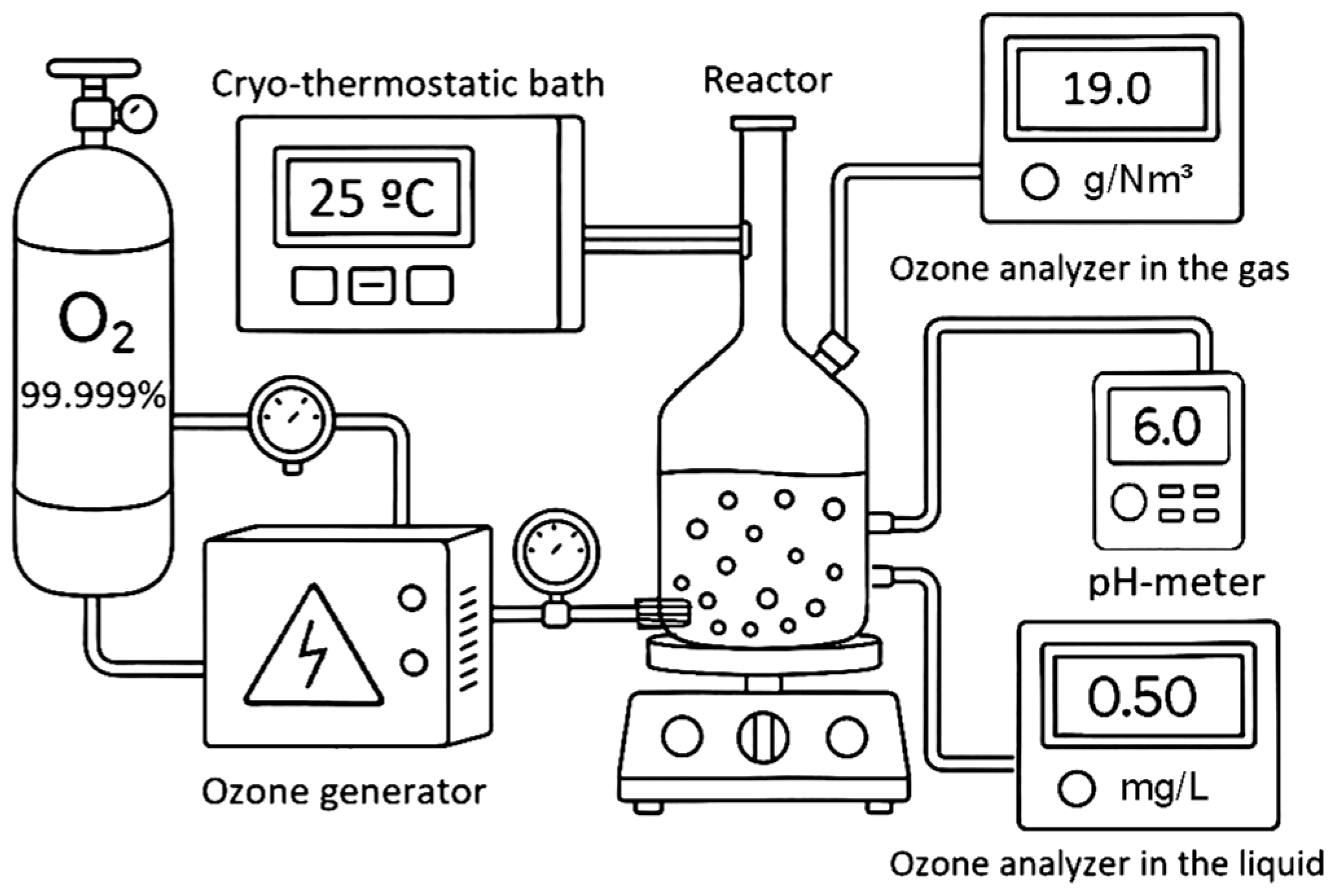
The ozonation experiments were carried out in a laboratory-scale semi-continuous reactor designed to ensure controlled contact between gaseous ozone and the aqueous phase (
Figure 1). The reactor had a working volume of 1 L and was equipped with dedicated ports for ozone gas injection and analytical probes of pH HI2003 electrode (Hanna Instruments Edge, Woonsocket, RI, USA) and dissolved ozone DOZ6000 Controller Dissolved Ozone Meter (Chemtrac Inc., Norcross, GA, USA). Dissolved ozone concentration was measured continuously using an amperometric membrane-based ozone probe, which quantifies ozone via electrochemical oxidation at the sensor electrode. This method provides reliable measurements over acidic to moderately alkaline conditions, where ozone remains sufficiently stable in the aqueous phase. Continuous monitoring of ozone concentration in the gas phase was performed using an Ozone Analyzer BMT 964C—Ozone Content (Ozone Solutions Inc., Hull, IA, USA). Ozone was generated from high-purity oxygen (≥99.999%; Air Liquide, Madrid, Spain) using a corona-discharge generator (Triogen LAB2B, BIO-UV Group, Lunel, France).
The ozone generator operates based on corona discharge technology and allows stable ozone production over a wide concentration range, with a typical generation capacity compatible with laboratory-scale water treatment applications. Under the operating conditions employed in this study, ozone production was stable over time, and the gas-phase ozone concentration was continuously monitored using an online ozone analyzer to ensure reproducibility. The gas flow rate was maintained at 1 L/min using a precision flow-control valve, providing controlled and reproducible gas–liquid contact conditions throughout all experiments.
The selected gas-phase ozone concentration (19.0 g/Nm3) falls within the upper range typically applied in both laboratory and full-scale ozonation systems and was deliberately chosen to ensure non-limiting ozone availability during the rapid oxidation of DCBQ. In practical water treatment applications, gas-phase ozone concentrations commonly range between 5 and 25 g/Nm3, depending on the target contaminant, contactor design, and desired oxidation intensity. The use of a relatively high ozone concentration in this study enables the isolation of pH-dependent chemical and mass-transfer effects without interference from ozone supply limitations. Accordingly, the applied ozone level represents a realistic yet conservative operational scenario, allowing mechanistic interpretation of oxidation pathways and gas–liquid mass transfer behavior while remaining consistent with engineering practice.
The resulting ozone–oxygen mixture was introduced into the reactor through a silicon-carbide micro-diffuser, Pawfly ASC-025 (Aipade, Shenzhen, Guangdong, China), located at the bottom of the vessel, providing fine bubble dispersion. The gas flow rate was maintained at 1 L/min using a precision flow-control valve, Vogueing YB-4M. Excess ozone in the off-gas stream was treated using an ozone destructor to prevent atmospheric release. Temperature was kept constant at 25 °C by means of an internal quartz heat-exchange sleeve connected to a thermostated recirculation bath (Frigiterm-P, Selecta, Barcelona, Spain).
Stock solutions of 2,6-dichloro-1,4-benzoquinone (DCBQ, 98%, Sigma-Aldrich, Darmstadt, Germany; C6H2Cl2O2) were prepared in distilled water to obtain an initial concentration of 50.0 mg/L. Distilled water was selected as the reaction medium in order to isolate the intrinsic effects of pH on ozone reactivity, oxidation pathways, and gas–liquid mass transfer, minimizing the interference of background species. Consequently, the experimental system does not contain naturally occurring inorganic anions (e.g., HCO3−, CO32−, Cl−, SO42−) or natural organic matter (NOM), which are known to influence radical availability and ozone stability in real water matrices.
In natural waters, inorganic anions and NOM can significantly affect ozonation efficiency and oxidation pathways. Bicarbonate and carbonate species are well-known scavengers of hydroxyl radicals, reducing the contribution of radical-mediated oxidation, while chloride and sulfate ions can modify ozone decomposition kinetics and, in some cases, generate secondary reactive species. In addition, NOM competes for ozone and radicals and may influence bubble coalescence and ozone transfer. These effects have been widely documented in the ozonation literature and are expected to attenuate oxidation rates compared to distilled water systems [
21,
22,
23,
24].
Prior to each experimental run, the initial pH of the solution was adjusted using small amounts of concentrated HCl or NaOH. Dilution effects were negligible. All experiments were conducted over a wide initial pH range (pH0 = 5.0–14.0) under constant operating conditions. A high ozone concentration in the gas phase (19.0 g/Nm3) was applied in all cases to evaluate pH-dependent changes in ozone reactivity, stability, and oxidation pathways. Solutions were stirred at 500 rpm to ensure homogenization.
The concentration of DCBQ was quantified using a High-Performance Liquid Chromatography system (Model 2695, Waters Chromatography S.A., Cerdanyola del Vallès, Spain) equipped with a Dual-λ absorbance detector (Model 2487, Waters Chromatography S.A., Cerdanyola del Vallès, Spain). Chromatographic separation was carried out on a Zorbax Eclipse PAH analytical column (150 mm × 4.6 mm, 5 μm particle size) coupled with a Zorbax Eclipse PAH guard column (4.6 mm × 12.5 mm), both supplied by Agilent (Santa Clara, CA, USA). The mobile phase was a mixture of water and acetonitrile (ACN), delivered at a flow rate of 0.8 mL/min. The gradient program initiated at 20% ACN increased linearly to 45% (v/v) within 3 min and was maintained for 6 min, and subsequently returned to 20% (v/v) over 1 min. The total analysis time was 10 min. Sample injections were performed with a volume of 50 μL, and all runs were conducted at ambient temperature. DCBQ identification was based on comparison of retention times with external standards, and detection was set at 275 nm. The analytical method was validated in terms of recovery and precision to ensure the reliability of DCBQ quantification. Recovery was assessed by spiking distilled water samples with known concentrations of DCBQ at representative levels within the working range, followed by HPLC analysis under the same conditions used for experimental samples. Recoveries ranged between 95% and 103%, indicating the excellent accuracy of the method. Method precision was evaluated through repeated analysis (n = 5) of spiked samples, and relative standard deviation (RSD) values were consistently below 5%, demonstrating the good repeatability of the HPLC measurement protocol.
Turbidity measurements were obtained using a nephelometric turbidimeter (model HI88703, Hanna Instruments S.L., Eibar, Spain). Sample color and aromaticity were assessed using a UV–Vis spectrophotometer (model V-630, Jasco, Madrid, Spain) at wavelengths of 455 nm and 254 nm, respectively. The variability between replicates was below 10% for all monitored parameters.
3. Results
3.1. Kinetics of DCBQ Ozonation
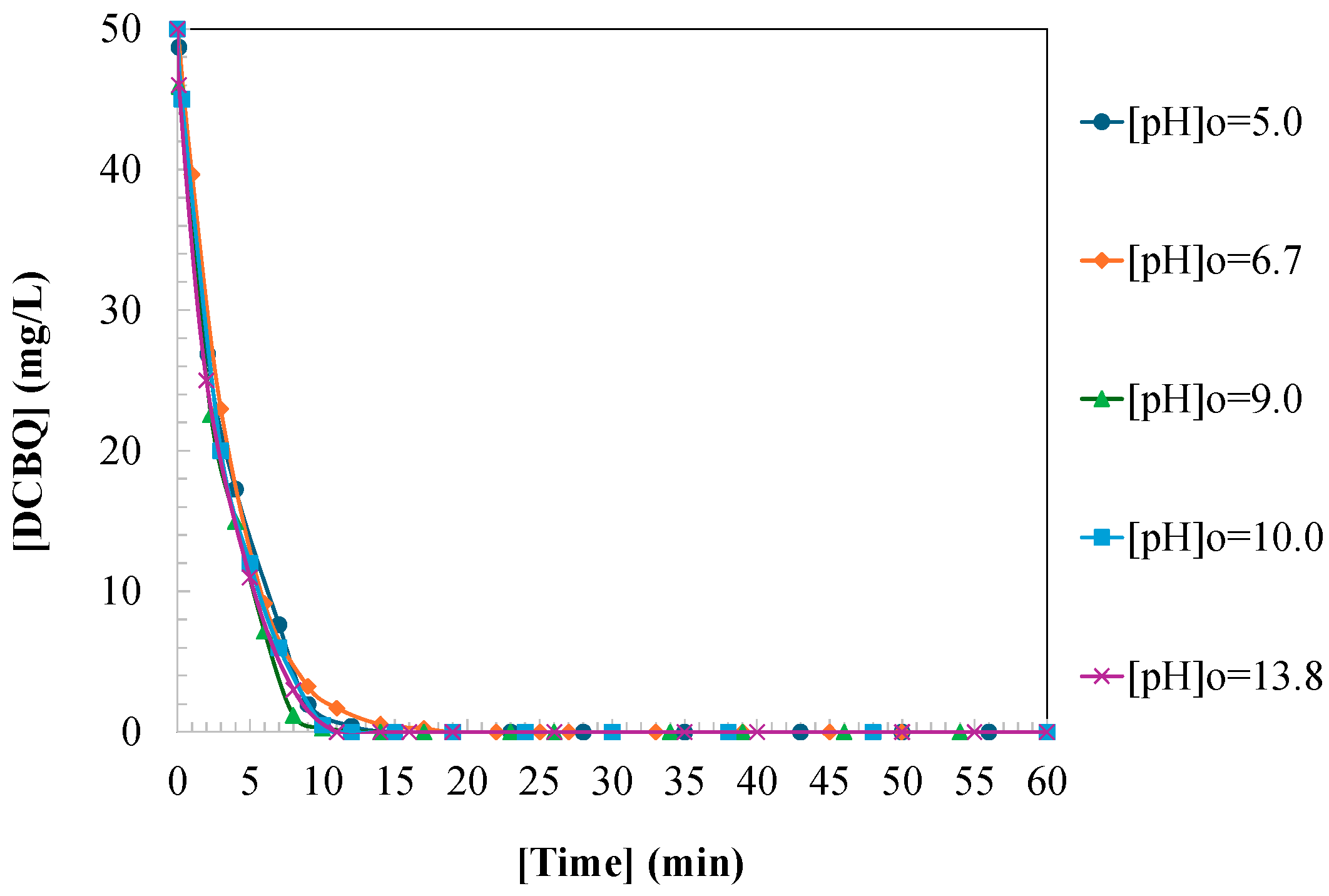
Figure 2 shows the ozonation kinetics of 2,6-dichlorobenzoquinone (DCBQ) as a function of the initial pH of the aqueous solution. As observed, DCBQ is completely degraded within the first 10 min of reaction under all tested pH conditions, following a first-order kinetic behavior. The average rate constant k
DCBQ obtained from experimental data was 0.31 (1/min), indicating a rapid oxidation process consistent with the high reactivity of quinones toward ozone.
The first-order kinetic model provided a correct description of the experimental DCBQ degradation data. Linear regression of ln ([DCBQ]/[DCBQ]0) versus time yielded correlation coefficients (R2) higher than 0.97 for all tested pH values. The root mean square error (RMSE) remained below 5% of the initial concentration, and the regression slopes were statistically significant (p < 0.01), confirming the robustness of the proposed kinetic model.
The degradation of DCBQ during ozonation can be satisfactorily described by a first-order kinetic model (Equations (1)–(3)), as confirmed by the linear relationship between ln ([DCBQ]/[DCBQ]0) and time. The good agreement between experimental data and the model indicates that ozone availability remained sufficiently high throughout the reaction, preventing mass-transfer limitations under the studied operating conditions.
The degradation of DCBQ during ozonation can be described by the differential mass balance for a first-order reaction:
Integrating between the initial concentration [DCBQ]
0 and the concentration at time t, the integrated rate law becomes:
yielding the first-order kinetic expression:
being:
[DCBQ]: 2,6-dichlorobenzoquinone concentration (mg/L)
[DCBQ]0: initial 2,6-dichlorobenzoquinone concentration (=50.0 mg/L)
t: time (min)
kDCBQ: first-order rate constant for DCBQ degradation (=0.31 1/min)
Notably, no significant differences in degradation rate were observed as a function of initial pH, despite the wide range explored. This result suggests that, under the applied ozone dose, DCBQ disappearance is governed by fast oxidative reactions that are not rate-limited by pH-dependent ozone decomposition or radical formation pathways. DCBQ is rapidly and completely removed by ozonation irrespective of the initial pH, indicating that pH mainly influences oxidation pathways and by-product evolution rather than the disappearance kinetics of the parent compound.
3.2. pH Kinetics During DCBQ Ozonation
According to
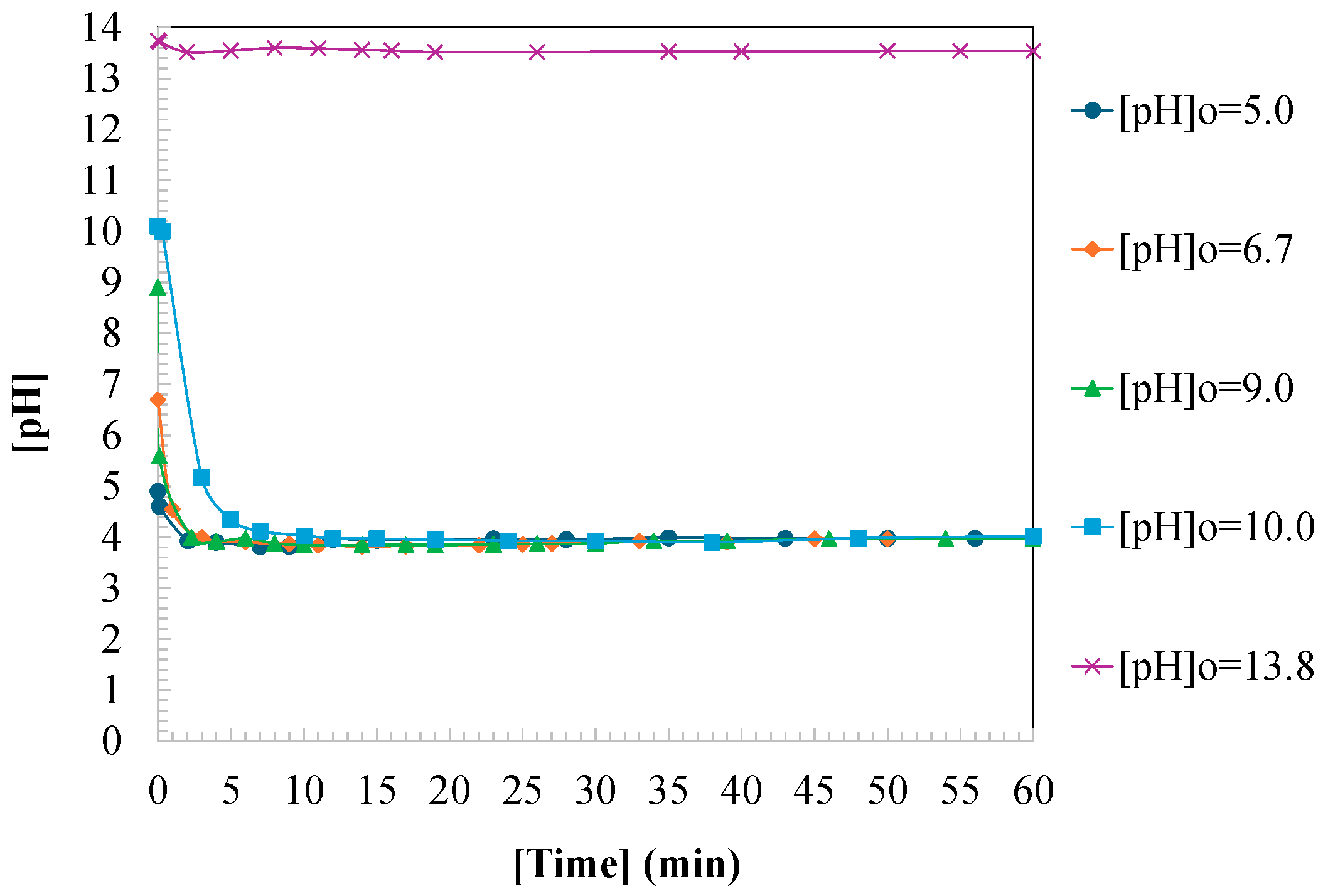
Figure 3, a progressive decrease in the initial pH of the water is observed during the ozonation process for all initial values between pH
0 = 5.0 and 10.0, with a pronounced drop occurring within the first 5 min. Thereafter, the slope becomes less steep until a stable value close to pH ≈ 4.0 is reached, which remains practically constant throughout the treatment. This behavior—characterized by an initial sharp decrease followed by a stationary phase—is typical of advanced oxidation processes in which ozone and hydroxyl radicals generate oxygenated intermediates from aromatic compounds such as DCBQ. Aromatic ring-opening and hydroxylation reactions lead to the formation of carboxylic acids (maleic, oxalic, malonic), oxygenated phenolic acids, and lactones. The formation of these products involves the release of protons (H
+) into the medium, which explains the initial pH decrease.
In this study, the formation of oxygenated intermediates such as carboxylic acids and phenolic derivatives is inferred from the combined evolution of pH, aromaticity, color, and ozone behavior, rather than from direct molecular identification. This indirect approach provides robust information on the extent of aromatic ring opening, oxidation depth, and process efficiency, which are directly relevant for water quality assessment and reactor operation. Previous studies employing LC-MS/MS and related techniques have consistently reported that DCBQ ozonation proceeds through initial electrophilic ozone attack on the quinone ring, followed by dechlorination, ring opening, and formation of short-chain carboxylic acids. The trends observed in the present work are fully consistent with these reported pathways, although detailed molecular identification of intermediates falls outside the scope of this study.
As the reaction proceeds, most intermediates are converted into more stable and less reactive species; consequently, the rate of proton generation declines, and a dynamic acid–base equilibrium is established in which the system becomes buffered and the pH stabilizes around 4.0. This pH evolution therefore reflects the accumulation and buffering action of weak acidic oxidation products rather than the depletion of the parent DCBQ compound. Ultimately, pH stabilization around 4.0 is driven by the predominance of weak acidic products with limited dissociation in this pH range, which confer buffering capacity to the system.
Therefore, when operating under neutral or slightly acidic initial conditions, DCBQ ozonation leads to proton generation associated with the formation of organic acids, causing the pH to decrease to values around 4.0. Beyond this point, the system stabilizes due to the presence of a mixture of weak acidic species that provide buffering capacity.
In contrast, when the reaction is carried out at an initial pH0 = 13.8, the pH remains constant throughout the entire treatment. Under these strongly alkaline conditions, the generation of protons becomes negligible compared with the large excess of hydroxide ions (OH−), and the acids formed during the oxidation process are fully dissociated. As a result, no measurable decrease in pH occurs during ozonation. This behavior can be explained by several concurrent phenomena. First, the concentration of hydroxide ions is sufficiently high to neutralize instantly any protons released during the formation of carboxylic acids. The number of OH− ions present largely exceeds the amount of H+ produced during the oxidation of DCBQ. Second, even the stronger carboxylic acids generated during the process have pKₐ values above 2–3, and at pH 13.8 they exist exclusively in their ionized form. Consequently, these species do not contribute free protons to the aqueous medium and therefore cannot lower the pH. Under these conditions, the system behaves as a strongly buffered alkaline medium in which proton generation during oxidation has no measurable impact on pH.
Additionally, the kinetics of ozone decomposition differ markedly under strongly alkaline conditions. Ozone undergoes rapid decomposition, leading to the formation of hydroxyl radicals; however, this radical-generation pathway does not involve proton production, and thus it does not influence the pH. Finally, the reaction medium behaves effectively as a solution buffered by a strong base. The buffering capacity provided by the large excess of hydroxide ions overwhelms the small quantities of protons released, preventing any detectable variation in pH during the ozonation process.
Under acidic to mildly basic initial conditions, DCBQ ozonation naturally shifts the system toward a buffered acidic pH (~4) due to the formation of weak organic acids, whereas strong alkaline buffering suppresses pH evolution and defines a fundamentally different reaction environment.
3.3. Loss of Water Aromaticity
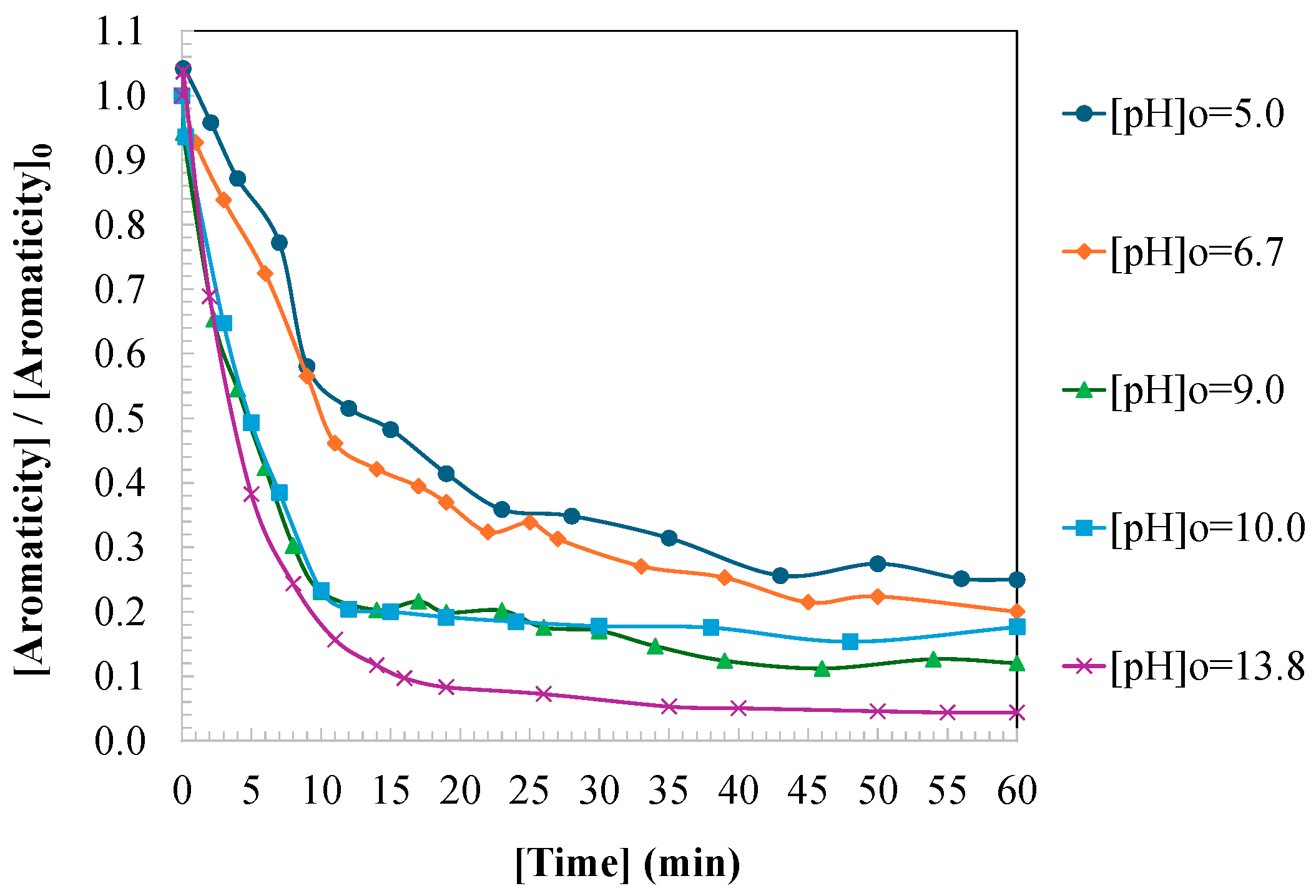
Figure 4 shows the temporal evolution of water aromaticity during the ozonation of aqueous DCBQ solutions at different initial pH values. Aromaticity is expressed in absorbance units (AU) at 254 nm, a UV region widely used as an indicator of the presence of aromatic rings and conjugated systems. This UV
254 signal is a standard parameter in advanced oxidation processes, as it provides an indirect measure of the degradation of aromatic organic compounds and their oxidative intermediates.
In all experiments, a progressive decrease in absorbance is observed over the 60 min of ozonation. This trend confirms the breakdown of the aromatic structures of DCBQ and of the intermediates formed during its oxidation. The continuous decline in UV254 indicates that ozone attack—whether through direct reaction or through secondary hydroxyl-radical pathways—leads to aromatic ring-opening and the formation of more oxidized and less conjugated products. This overall decrease confirms that ozonation promotes progressive aromatic ring cleavage, although the extent of transformation depends strongly on the initial pH.
Despite this general behavior, the final aromatic residual after 60 min is clearly dependent on the initial pH. The curves show that higher pH values result in more pronounced degradation, yielding lower residual aromaticity. This dependence may be attributed to the enhanced deprotonation of DCBQ and to the greater contribution of radical-driven mechanisms under slightly basic conditions, which accelerate ring cleavage. The quantitative relationship between the final aromatic fraction and the initial pH is expressed in Equation (4). This relationship highlights pH as a controlling parameter for deep aromatic oxidation rather than for initial contaminant removal.
This expression reveals a negative linear correlation between the initial pH and the remaining aromaticity: for each pH unit, the final aromaticity decreases by approximately 2.36%. The negative slope confirms that more basic conditions promote greater aromatic degradation, while under acidic conditions, a higher proportion of aromatic structures persists after treatment. The intercept (0.3479) further indicates that even at elevated pH, a minimum fraction of compounds retains some aromatic character, suggesting the presence of refractory intermediates or the formation of ozone-resistant by-products under the studied conditions.
During DCBQ ozonation, the persistence of a residual absorbance fraction at 254 nm can be attributed to the formation of oxidation intermediates that retain aromatic structures or conjugated systems. It should be emphasized that the specific degradation products were not directly identified in this study; therefore, the transformation pathways discussed below are proposed as literature-supported hypotheses inferred from the combined evolution of aromaticity, pH, color removal, turbidity, and ozone behavior.
Based on previous investigations of DCBQ and structurally related halogenated aromatic compounds, ozonation is known to proceed through a sequence of electrophilic ozone attack on the quinone ring, partial dechlorination, hydroxylation, and subsequent ring-opening reactions, particularly under radical-mediated conditions. In this context, partially oxidized species such as chlorinated hydroquinones or semiquinone-type intermediates may transiently form and contribute to the residual UV254 signal due to their retained conjugation and reduced reactivity. Similarly, chlorinated aromatic carboxylic acids generated after incomplete ring cleavage have been reported to exhibit high stability toward further ozone attack, especially under molecular-ozonation regimes.
Under conditions where radical pathways become dominant, additional transformation routes may include the formation of highly oxygenated aromatic derivatives or recombination products derived from radical reactions. Although these species differ from the parent compound, their conjugated structures can still contribute to UV254 absorbance. Accordingly, the observed residual aromaticity is interpreted as an indirect indicator of incompletely oxidized aromatic intermediates rather than as evidence of incomplete DCBQ removal. These proposed pathways are consistent with established ozonation mechanisms for chlorinated aromatic compounds and are included here to contextualize the experimental trends rather than to represent experimentally confirmed reaction products. The persistence of these species explains the existence of a residual UV254 signal even after prolonged ozonation, indicating partial resistance of some aromatic intermediates to complete mineralization.
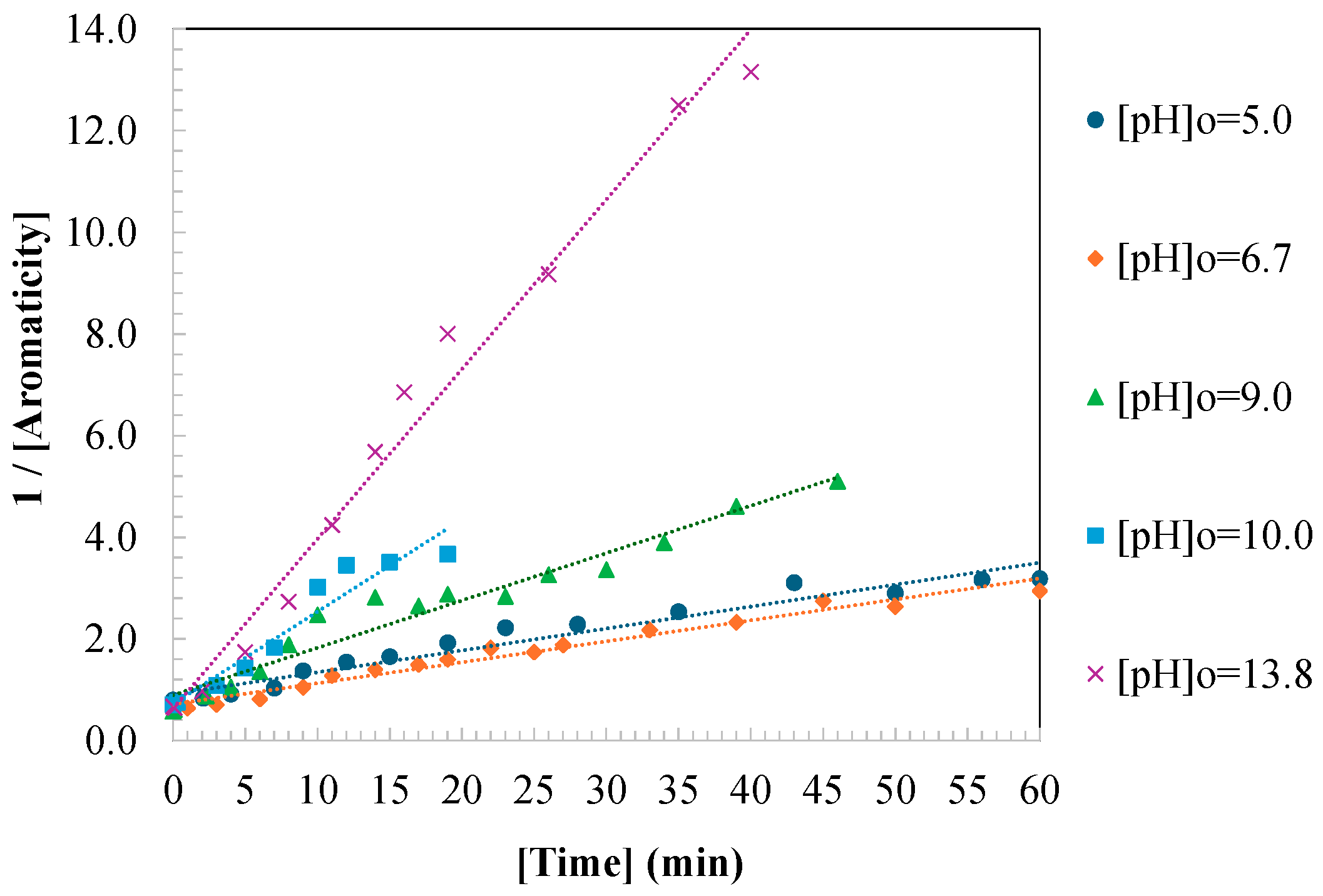
A second-order kinetic model is proposed for the loss of water aromaticity during the ozonation of DCBQ, as shown in
Figure 5. Only the time interval over which second-order kinetics were observed was used for linear fitting; once aromaticity reached a plateau, additional data were excluded from regression.
The choice of a second-order model is justified by the nature of the processes occurring during the ozonation of chlorinated aromatic structures such as DCBQ. The degradation does not necessarily follow a strictly pseudo-first-order behavior—typically observed in ozonation treatments when a soluble species is present in large excess—because the UV254 signal does not represent a single compound, but rather the sum of all transient aromatic species. As ozone attacks DCBQ, intermediates of varying reactivity are generated, many of which also absorb at 254 nm. Therefore, the disappearance rate depends not only on the concentration of the parent compound, but also on the accumulation and transformation of oxidative intermediates. In this context, a quadratic term provides a better description of the competition between ozone and the different aromatic intermediates, as well as the variability of direct and radical reaction pathways throughout the process.
The mass balance for this kinetic model is expressed as:
Integration yields:
being:
[Aromaticity]: water aromaticity (AU)
[Aromaticity]0: initial water aromaticity (=1.6 AU)
kArom: second-order rate constant for loss of water aromaticity (1/AU min)
The linearity obtained in
Figure 5 confirms that the second-order model satisfactorily describes the experimental behavior. This suggests that the loss of aromatic character occurs through mechanisms in which ozone reacts simultaneously with aromatic species of different nature, and where the overall concentration of these species governs the instantaneous reaction rate. Furthermore, the shape of the fit indicates that aromatic destruction is accelerated during the initial stages—when the concentration of aromatic compounds is higher—and slows down progressively as these species are degraded and as more oxidized, less reactive intermediates appear.
The second-order rate constant for ozonation, k
Arom (1/(AU·min)), is a function of the initial pH of the water, as shown in Equation (7):
The second-order kinetic model was statistically validated by linear regression of the transformed variables shown in
Figure 5. The obtained fits exhibited correlation coefficients (R
2) above 0.95, with low residual dispersion. RMSE values were below 6% of the initial UV254 absorbance, and all regression coefficients were statistically significant (
p < 0.05), supporting the suitability of the proposed model to describe aromaticity attenuation during ozonation.
This linear dependence highlights the central role of pH in the oxidative mechanisms of the DCBQ–ozone system. At higher pH values, the deprotonation of aromatic species and the enhanced formation of hydroxyl radicals increase the oxidative capacity of ozone, thereby accelerating the degradation of overall aromaticity. Conversely, at lower pH values, the dominant pathway is the direct reaction of molecular ozone, which is less effective at breaking chlorinated aromatic rings and deeply oxidizing the intermediates formed. Consequently, the positive slope of Equation (7) indicates that increasing pH promotes aromatic destruction, whereas the negative intercept reveals the existence of a minimum pH threshold below which the kinetics become very slow or even negligible.
Therefore, aromaticity decay reflects the collective transformation of DCBQ and its aromatic oxidation products, with kinetics accelerated under alkaline conditions due to enhanced radical pathways. Increasing the initial pH enhances aromatic ring destruction by promoting radical-mediated oxidation pathways, making pH a key parameter for achieving deep structural transformation beyond simple discoloration.
3.4. Discoloration in Ozonated Water
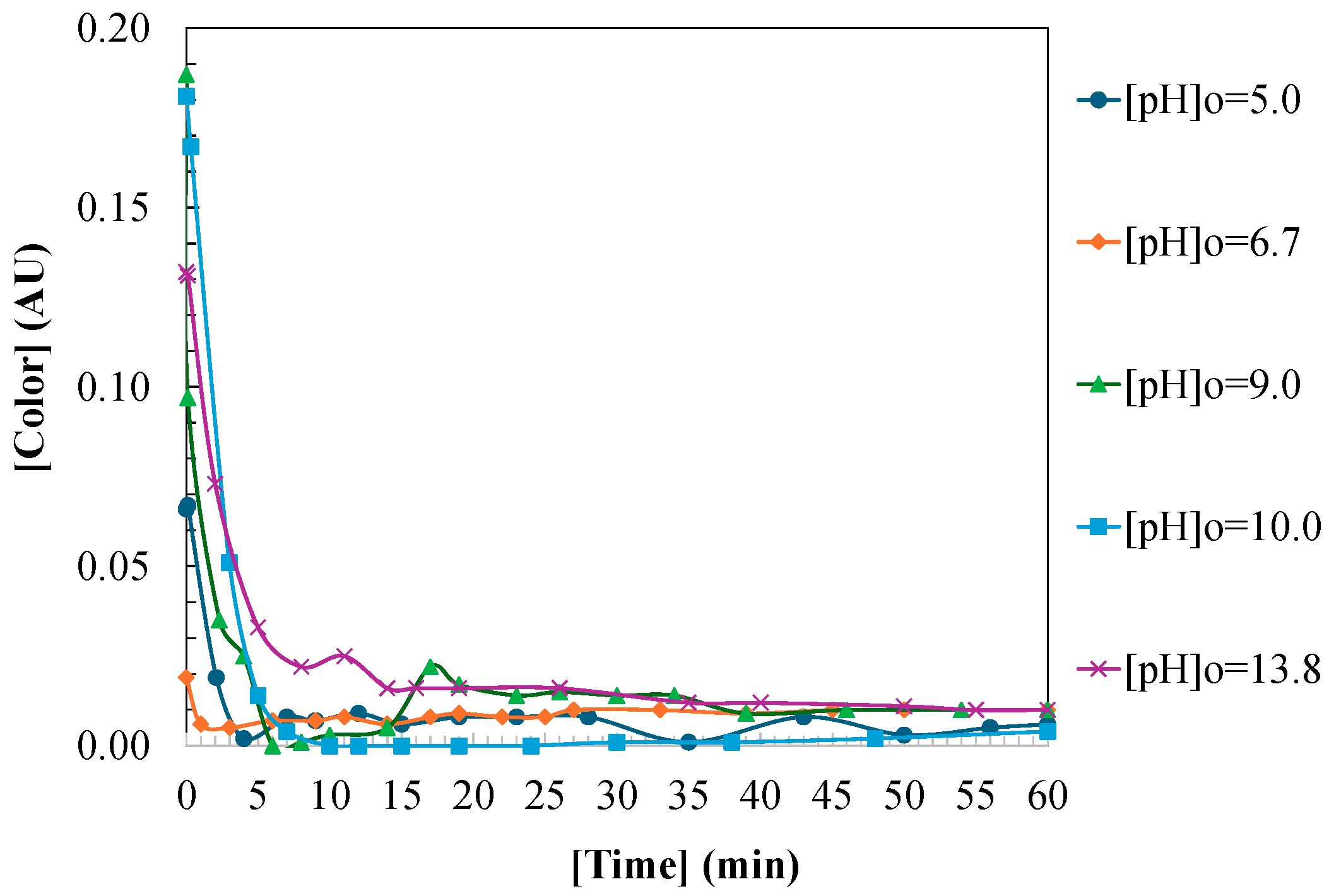
Figure 6 shows the disappearance of the initial color of the aqueous DCBQ solutions subjected to ozonation. The main purpose of this figure is to visually illustrate how pH conditions the oxidation mechanism of the compound and, consequently, affects both the rate and the efficiency of color removal.
From the beginning of the experiment, each solution exhibits a different color, which is explained by the electronically conjugated π-bond system of DCBQ, formed by alternating double bonds within the quinone ring, and its sensitivity to the acid–base state of the medium. DCBQ is a quinone with aromatic systems whose absorption in the visible region depends on the distribution of electronic density and on the equilibrium between the different species: the neutral quinone form, the semiquinones generated through one-electron transfer, the presence of trace amounts of hydroquinones depending on pH, and, in basic media, the deprotonated species with enhanced electronic displacement over the ring. As a result, acidic pH conditions generally lead to yellow or brownish tones, neutral pH yields darker or purplish colors, and strongly basic media give rise to brighter or less intense yellow hues.
The time-dependent color evolution, observed at different reaction times, shows a progressive decrease in chromatic intensity for all the pH conditions studied. This loss of color occurs within the first 5 min of ozonation, regardless of the initial color intensity of the water. This behaviour is not arbitrary; rather, it directly reflects the chemistry of ozone and its dominant reaction mechanism as a function of pH. During ozonation, color disappearance is explained by the breakdown of DCBQ conjugated systems and the progressive opening of the aromatic ring:
At acidic–neutral pH, oxidation proceeds gradually because selective reaction with molecular ozone predominates. The color fades slowly, since the aromatic structure retains part of its conjugation during the initial minutes.
At intermediate–alkaline pH (9–10), the combination of direct ozone attack and radical-driven processes promotes faster oxidation, leading to a more pronounced color removal.
At pH 13.8, color disappearance is practically instantaneous, due to the intense generation of highly non-selective hydroxyl radicals capable of destroying the chromophore within a few seconds. The rapid cleavage of the aromatic system completely suppresses absorption in the visible region, which explains why the water becomes colorless even though high turbidity (see
Figure 7) and a milky appearance may simultaneously be observed due to the formation of microbubbles.
Overall, discoloration occurs rapidly under all tested conditions and does not represent a limiting step of the ozonation process. However, its kinetics clearly reflect the pH-dependent transition from selective molecular ozonation to radical-dominated oxidation. Thus, color removal serves as a rapid qualitative indicator of the dominant reaction pathway rather than a direct measure of overall oxidation efficiency.
3.5. Turbidity Development in Water
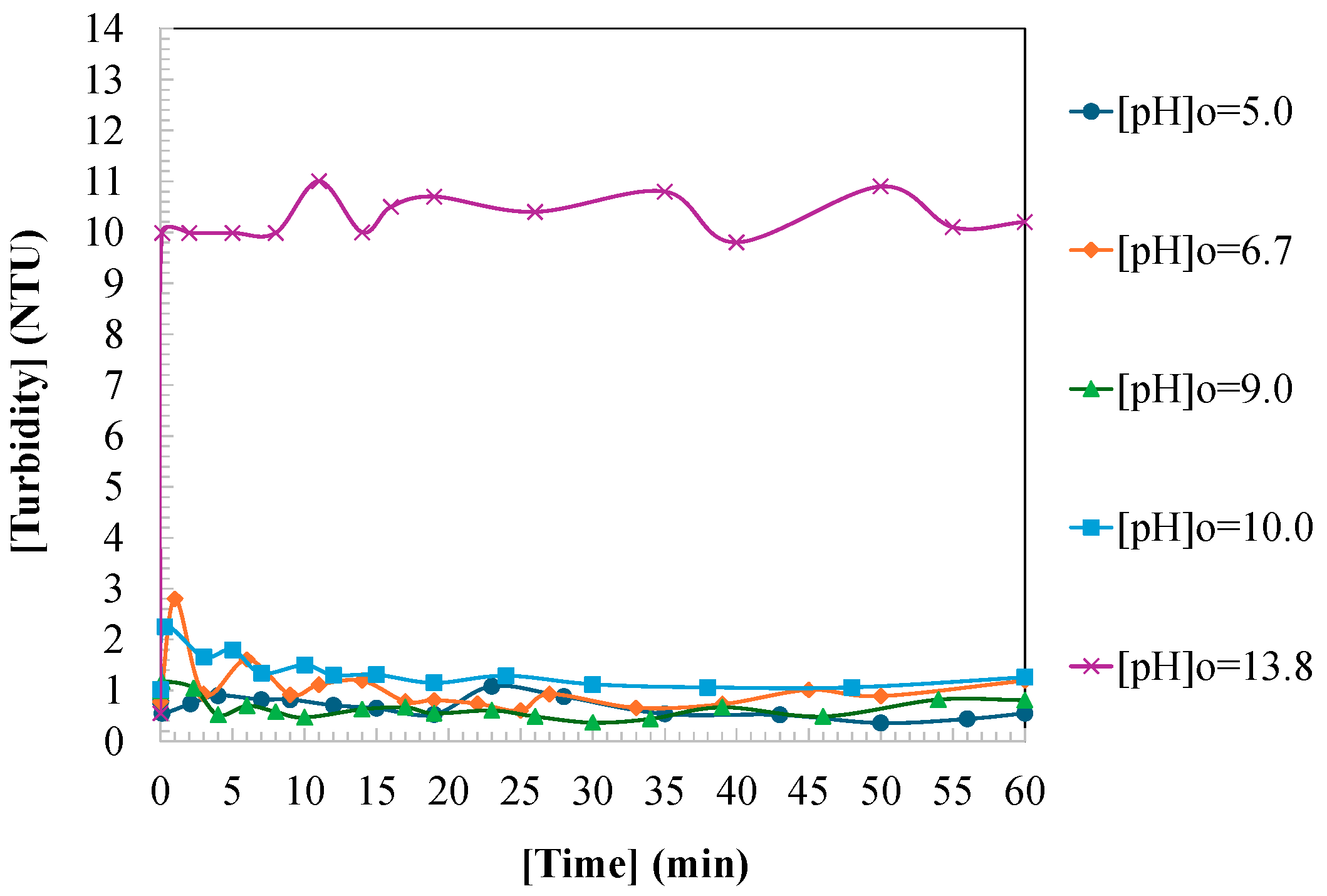
Figure 7 shows the evolution of water turbidity during the ozonation of DCBQ. As can be observed, when the treatment is carried out within the pH range between 5.0 and 10.0, the turbidity of the water remains consistently below 5 NTU. In fact, under all these conditions, the recorded values are lower than 3 NTU, indicating that the oxidative treatment does not generate suspended particles, colloids, or visible precipitates during the transformation of DCBQ.
Figure 7.
Turbidity of water during the ozonation of aqueous DCBQ solutions. Experimental conditions: [DCBQ]0 = 50.0 mg/L; [T] = 25 °C; [O3]gas = 19.0 g/Nm3.
Figure 7.
Turbidity of water during the ozonation of aqueous DCBQ solutions. Experimental conditions: [DCBQ]0 = 50.0 mg/L; [T] = 25 °C; [O3]gas = 19.0 g/Nm3.
The World Health Organization recommends that turbidity in drinking water should generally remain below 5 NTU to ensure the effectiveness of disinfection, while values below 1 NTU are considered desirable for optimal water quality. Similarly, the U.S. Environmental Protection Agency establishes turbidity limits and treatment technique requirements, with operational targets typically ≤1 NTU (and ≤0.3 NTU for filtered water), to ensure adequate pathogen removal and disinfection performance [
25,
26,
27,
28].
This behaviour is consistent with the chemical nature of the oxidation products formed within this pH range, where soluble species such as aromatic and aliphatic carboxylic acids, oxygenated phenols, and lactones predominate. Their presence does not increase light scattering. Likewise, ozone decomposition in this pH interval is moderate, limiting the formation of highly reactive radicals and preventing the generation of polymeric or insoluble by-products that could increase turbidity. These results indicate that, within the pH range 5–10, DCBQ ozonation preserves the physical clarity of water while achieving effective oxidation, suggesting that no additional clarification steps would be required downstream.
In contrast, when the treatment is performed at pH 13.8, a marked increase in turbidity is observed, reaching values close to 10 NTU and remaining between 10 and 11 NTU throughout the process. This increase can be attributed to several physicochemical processes characteristic of strongly alkaline media:
First, at extremely high pH, many of the organic intermediates formed during ozonation—including oxidised aromatic fragments, ionised phenols, and carboxylic acids in their dissociated form—tend to generate colloidal aggregates and microprecipitates due to reduced stability and solubility.
Additionally, under these conditions ozone decomposes rapidly, producing large amounts of hydroxyl radicals that promote non-selective oxidation, uncontrolled fragmentation, and the possible formation of partial polymers or insoluble oligomers.
Moreover, the high concentration of hydroxide ions (OH−) can facilitate the formation of poorly soluble salts between the organic anions generated (R–COO−) and cations commonly present in water, such as Ca2+ or Mg2+, further increasing turbidity.
Finally, the highly basic environment may induce desolvation effects. This phenomenon, known as desolvation, involves organic molecules losing part of the surrounding “water shell” that keeps them in solution. When this occurs, the organic fragments—already ionised and chemically unstable under these conditions—tend to interact with each other, clustering to minimise exposure to the strongly alkaline medium. As a result, organic clusters are formed, that is, small colloidal aggregates or insoluble microdroplets composed of oxidised fragments of the initial contaminant. These clusters are large enough to scatter light, which explains the high turbidity observed during the treatment. In other words, extreme alkalinity reduces the affinity of water for these organic intermediates and favours their association, generating structures that increase turbidity. In summary, turbidity development is not linked to incomplete oxidation but to the physicochemical instability of oxidized fragments under extreme alkalinity. This highlights turbidity as a critical operational constraint of radical-dominated ozonation regimes.
The observed turbidity increase under strongly alkaline conditions is therefore attributed to the formation and aggregation of colloidal oxidation products, as inferred from the abrupt loss of water clarity and the extreme pH environment. Although particle size distribution and zeta potential measurements were not performed in the present study, the proposed interpretation is consistent with well-established colloidal destabilization mechanisms reported under high pH conditions, where deprotonated organic fragments and multivalent ions promote aggregation and light-scattering structures.
Accordingly, turbidity evolution in this work is interpreted as an indirect but robust indicator of colloidal aggregation rather than as direct experimental evidence of particle growth. Detailed characterization of colloid size and surface charge would be required to fully elucidate aggregation mechanisms and will be addressed in future studies.
The formation of colloidal aggregates under strongly alkaline conditions (pH 13.8) is primarily manifested through turbidity measurements, which are based on nephelometric light scattering and are therefore highly sensitive to suspended micro- and nanoscale particles. However, the presence of colloids is not necessarily reflected to the same extent in UV–Vis absorbance measurements. In particular, light scattering by colloids predominantly affects the visible region, whereas absorbance at 254 nm—used here as an indicator of aromatic structures—remains mainly governed by electronic transitions of dissolved organic species rather than by scattering effects.
Accordingly, the rapid loss of color and the continuous decay of aromaticity observed at pH 13.8 indicate effective destruction of chromophoric and aromatic structures, despite the simultaneous increase in turbidity. This apparent decoupling confirms that the observed turbidity increase arises from physicochemical aggregation of oxidized fragments rather than from incomplete oxidation. Similar behavior has been reported in ozonation systems under extreme alkaline conditions, where colloidal scattering strongly influences turbidity but exerts only a limited effect on aromaticity.
To further elucidate how pH governs ozone availability and utilization, gas-phase ozone concentration was subsequently analyzed.
3.6. Ozone Gas Concentration During the Ozonation Process
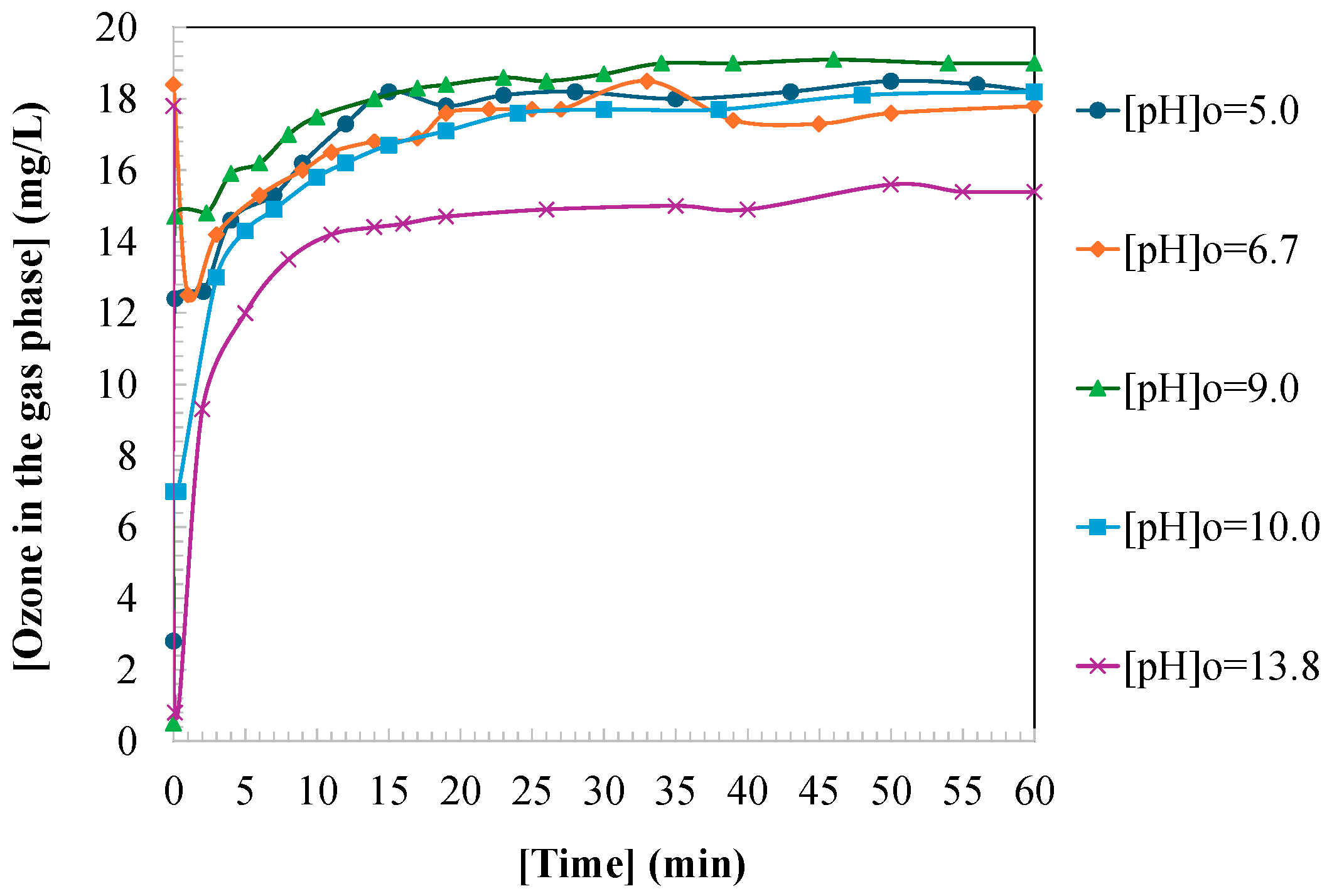
Figure 8 shows the temporal evolution of the gaseous ozone concentration measured inside the contactor during the ozonation of aqueous DCBQ solutions under different initial pH values. The concentration of ozone in the gas phase (g/Nm
3) recorded inside the reactor reflects the dynamic equilibrium between the applied ozone dose, its transfer from the gas phase to the liquid phase, and its consumption rate through oxidative reaction.
In all experiments, the gaseous ozone concentration decreases sharply during the first minute of the reaction, reaching a minimum value that depends on the initial pH of the water. This initial drop is explained by the fact that, at the start of the treatment, the solution contains a high concentration of DCBQ and therefore a strong oxidant demand. The ozone transferred to the liquid is consumed immediately through two main pathways: direct reaction of molecular ozone with the conjugated double bonds of the quinone, and formation of oxygenated intermediate species. This high consumption rate reduces the amount of ozone returning to the gas phase, which explains the low concentrations measured inside the contactor during the first moments of the process.
As ozonation progresses, the concentration of DCBQ decreases, and with it the oxidant demand. Consequently, the gaseous ozone concentration inside the reactor gradually increases, following the continuous ozone feed to the system. This upward trend continues until it stabilises at around 30 min of reaction, when a pseudo-steady state is reached in which ozone transfer to the water and its consumption are balanced. Under these conditions, the recorded gas-phase ozone concentration approaches the value of ozone fed into the system (≈19.0 g/Nm3), indicating that most of the DCBQ and its intermediates have already been degraded.
A clearly different behaviour is observed at pH 13.8. In this case, the gaseous ozone concentration initially drops to only 0.8 g/Nm3, reflecting an extremely rapid ozone consumption during the early stages of the reaction. This accelerated consumption is due to the fact that, under strongly alkaline conditions, ozone decomposes very efficiently, generating hydroxyl radicals, far more reactive oxidising species than molecular ozone. Radical generation drives the system into a radical oxidation regime, where the reaction rate is higher and ozone is consumed immediately both by decomposition and by reactions with DCBQ and its derivatives.
Subsequently, although the gas-phase ozone concentration inside the reactor increases over time, it does so to a lesser extent than in systems with pH between 5.0 and 10.0. Instead of approaching the feed concentration (≈19.0 g/Nm3), the value stabilises around 15.4 g/Nm3. This difference indicates that, even at advanced stages of the process, ozone consumption remains high due to the persistence of radical reactions in the highly basic medium. Under these conditions, ozone not only oxidises DCBQ but also continuously decomposes to generate radicals, preventing the gas-phase concentrations observed at lower pH values from being reached. In other words, at pH 13.8 the system maintains a high internal oxidant demand, which reduces the availability of ozone in the gas phase even when the treatment is prolonged.
In summary, the results show that pH governs the ozone consumption kinetics. At moderate pH, the process is dominated by direct reaction with molecular ozone, whereas at very high pH, the radical pathway predominates, characterised by high reactivity, accelerated ozone consumption, and lower gaseous ozone concentrations inside the contactor. From a practical perspective, these profiles indicate that extreme alkaline conditions impose a sustained ozone demand that reduces ozone utilization efficiency, whereas mildly alkaline and neutral conditions allow a progressive recovery of gas-phase ozone as oxidation advances.
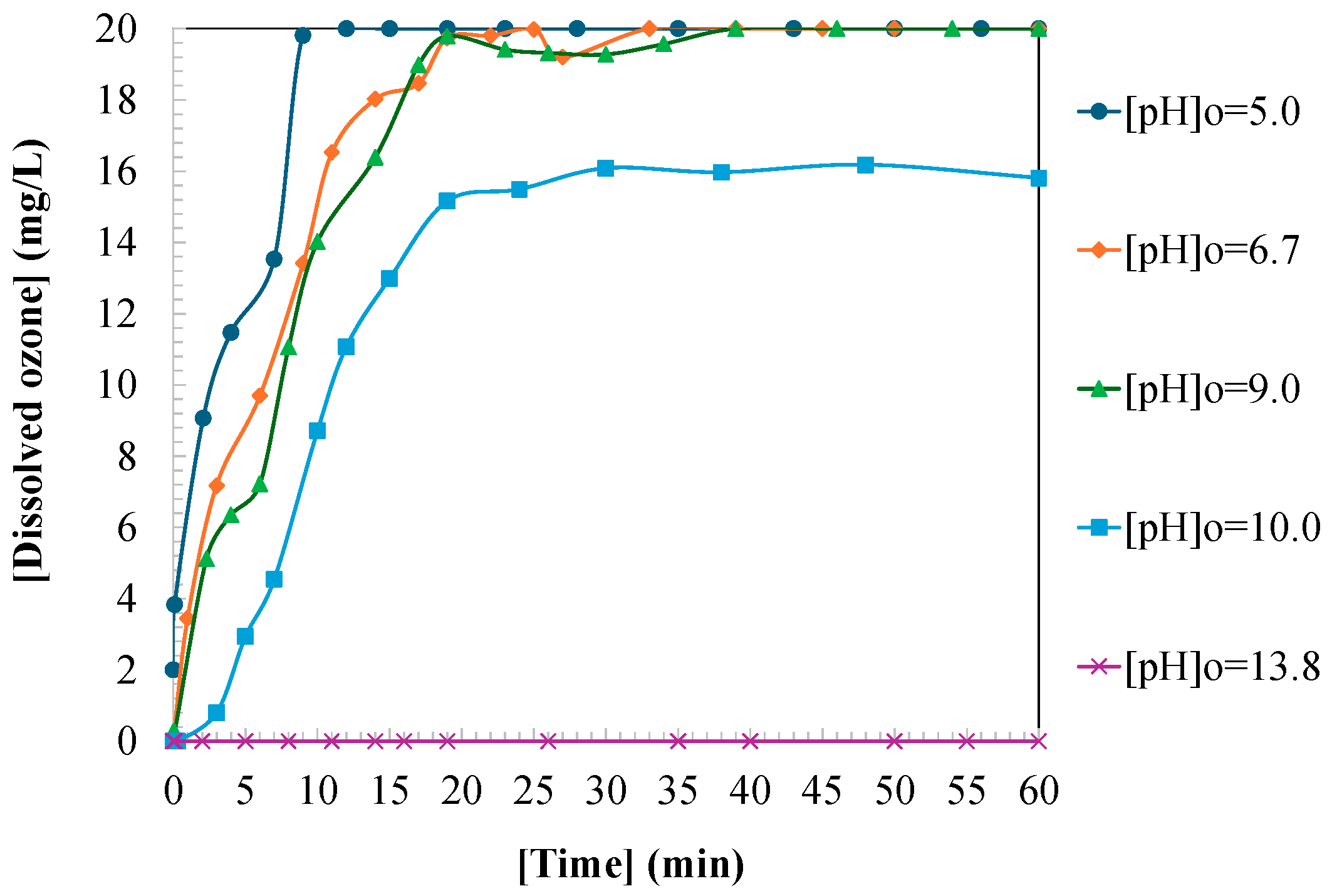
3.7. Ozone Dissolved in Water
Figure 9 shows the evolution of dissolved ozone in water (mg/L) during the ozonation of aqueous DCBQ solutions operated at different initial pH values. This representation makes it possible to verify that the stability of ozone in the aqueous phase, its gas–liquid transfer rate, and its decomposition rate depend directly on pH, which decisively determines the effectiveness of the oxidation process. The dissolved ozone reflects the dynamic equilibrium between the ozone entering by transfer from the gas phase and the ozone disappearing through reaction or decomposition.
It should be noted that the electrochemical measurement of dissolved ozone is applicable only within pH ranges where ozone exhibits measurable stability in water. In the present study, reliable dissolved ozone profiles were obtained between pH 5.0 and 10.0. At strongly alkaline conditions (pH 13.8), ozone decomposes nearly instantaneously, and the dissolved ozone concentration remains below the detection capability of the probe rather than reflecting limitations of gas–liquid mass transfer.
Under acidic conditions ([pH]0 = 5.0), ozone exhibits its longest lifetime in water, as O3 decomposition is minimal and proceeds mainly through slow self-decomposition or direct reaction with DCBQ. Experimentally, this behavior results in a curve with relatively high and sustained concentrations of dissolved ozone, characterized by a gradual increase during the initial minutes followed by stabilization. In this regime, ozone acts as a selective oxidant; thus, the ozonation process is governed by direct molecular reactions and efficient gas–liquid mass transfer, with negligible losses due to chemical decomposition.
The behavior at [pH]0 = 6.7 and 9.0 follows a similar trend, although with slightly lower stabilized ozone concentrations. Near neutral pH, ozone decomposition becomes moderately enhanced due to the higher presence of species such as HO2·, which act as mild initiators of radical-chain pathways. Nevertheless, ozone persists at appreciable concentrations for a considerable time, indicating that its consumption remains dominated by reaction with DCBQ rather than by accelerated decomposition.
A more pronounced shift is observed at [pH]0 = 10.0, where dissolved ozone decays much more rapidly. In this alkaline range, the abundance of OH− ions promotes the onset of radical-mediated decomposition via the well-established mechanism in which OH− acts as an initiator, triggering the transformation of O3 into reactive species such as HO2− and hydroxyl radicals. Consequently, dissolved ozone is consumed quickly, reaches a lower maximum concentration, and displays a shorter residence time in water. The resulting curve shows an early decline, marking the transition from a predominantly molecular regime to a mixed molecular–radical regime. This behavior marks a critical operational transition in which ozone stability and oxidative aggressiveness become decoupled.
The behavior at [pH]0 = 13.8 is the most extreme and distinctive. Under these strongly basic conditions, ozone cannot be stabilized in water: its dissolved concentration is extremely low from the outset and drops to nearly zero almost immediately. In this environment, ozone undergoes near-instantaneous decomposition. The very high concentration of OH− ions explosively activates radical-chain processes in which ozone is rapidly converted into HO2−, O2, and subsequently into ·OH and O2·− radicals. As a result, ozone is destroyed at a rate far exceeding its gas–liquid transfer rate, and the measured concentration of dissolved ozone remains essentially null throughout the experiment. This behavior confirms that oxidation at [pH]0 = 13.8 proceeds through a purely radical pathway rather than a molecular one, explaining the concomitant observations of extremely rapid color removal, immediate loss of aromaticity, and the significant increase in turbidity due to the generation of O2 microbubbles.
As shown in
Figure 8 and
Figure 9, the concentration of dissolved ozone can exceed the value of the ozone concentration measured in the gas phase. This phenomenon is common in closed reactors operated under neutral-to-acidic pH conditions and in the presence of chemical species that consume ozone. The ozone concentration in the gas phase is not directly comparable to the concentration in the liquid phase. Since the density of water is approximately three orders of magnitude higher than that of gas under standard conditions, there is no physical restriction preventing dissolved ozone concentrations from exceeding the concentration values expressed for the gas phase.
In a reactor with continuous ozone feeding, the accumulation of ozone in the aqueous phase proceeds as long as a driving force for mass transfer exists; that is, as long as the dissolved concentration remains below the equilibrium concentration determined by the partial pressure of ozone in the gas phase. This process is typically described by a first-order expression with respect to the difference between the equilibrium concentration and the actual concentration in the liquid. Consequently, mass transfer persists until equilibrium is reached or until dissolved ozone is chemically consumed at a rate comparable to the mass transfer rate (Equation (8)). Under neutral-to-acidic pH conditions, ozone exhibits high chemical stability, as both radical formation and base-catalyzed decomposition pathways are strongly suppressed. As a result, ozone transferred from the gas phase remains in the liquid for relatively long periods, promoting its progressive accumulation.
In systems containing reactive compounds such as dichloro-benzoquinones, ozone is consumed simultaneously with its dissolution. This reaction maintains the dissolved ozone concentration below its equilibrium value during the initial minutes of operation, thereby temporarily increasing the mass transfer driving force and allowing a higher net flux of ozone into the liquid. Once the reaction rate decreases—either due to the partial depletion of the organic reactant or the stabilization of radical pathways—the ozone concentration in water can rise rapidly and approach its equilibrium solubility again. Therefore, dissolved ozone profiles provide a direct and quantitative indicator of the prevailing oxidation regime, enabling the identification of pH domains where ozone acts predominantly as a stable molecular oxidant or as a radical precursor.
3.8. Estimation of the Gas–Liquid Mass Transfer Coefficient
The mass transfer coefficient, k
La (1/min), was calculated from the temporal evolution of dissolved ozone concentration in aqueous DCBQ solutions prepared at different initial pH values. This parameter was obtained by fitting the experimental data to the classical gas–liquid mass transfer kinetic model, which assumes that the variation in dissolved ozone concentration is governed by the difference between the equilibrium concentration and the instantaneous concentration in the liquid (Equation (8)) [
29,
30]. Integration of the resulting differential equation yields an exponential expression that describes the approach of the dissolved ozone concentration to equilibrium (Equation (9)). Using this expression, k
La was estimated through kinetic fitting performed in Python, determining the value that best reproduced the experimental curve prior to the plateau, defined as the region in which the dissolved ozone concentration no longer increases significantly over time (C*, mg/L). The resulting k
La values exhibited a marked dependence on the initial pH of the DCBQ-containing solutions (Equation (10)). Consequently, k
La values obtained under reactive conditions should be interpreted as apparent parameters that integrate both physical mass transfer and chemical reactivity, particularly when comparing systems operating at different pH values.
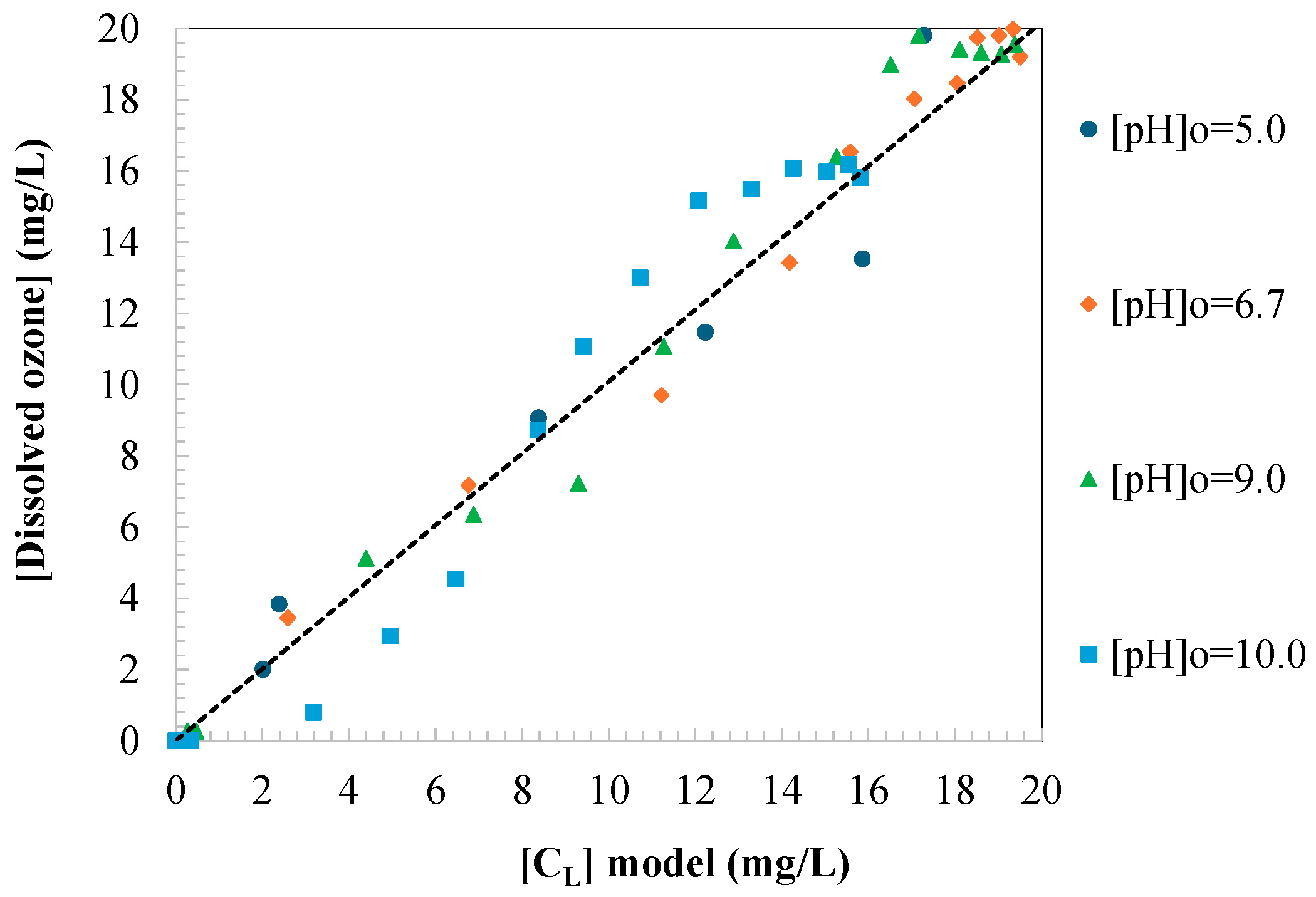
Figure 10 shows the predictions of the proposed mathematical model.
being:
CL: dissolved ozone concentration (mg/L)
C*: dissolved ozone concentration at equilibrium (mg/L)
CL0: initial concentration of dissolved ozone (=0 mg/L)
kLa: gas–liquid mass transfer coefficient (1/min)
All linear relationships proposed in this study (Equations (4), (7) and (10)) were statistically evaluated using least-squares regression. The fittings yielded correlation coefficients (R2) ranging from 0.93 to 0.98, with RMSE values consistently below 10% of the corresponding measured ranges. In all cases, regression slopes were statistically significant (p < 0.05), confirming the reliability of the linear trends used to describe pH-dependent behaviour. The pH-dependent trends observed in this work were evaluated using regression analysis rather than discrete statistical comparison tests, as the objective was to identify systematic process trends and operational optima across a continuous pH range.
Figure 10.
Predictions of the proposed mathematical model to estimate the mass transfer coefficient during the ozonation of aqueous DCBQ solutions. Experimental conditions: [DCBQ]0 = 50.0 mg/L; [T] = 25 °C; [O3]gas = 19.0 g/Nm3.
Figure 10.
Predictions of the proposed mathematical model to estimate the mass transfer coefficient during the ozonation of aqueous DCBQ solutions. Experimental conditions: [DCBQ]0 = 50.0 mg/L; [T] = 25 °C; [O3]gas = 19.0 g/Nm3.
At moderately acidic pH values (≈4), ozone exhibits high chemical stability and its decomposition is minimal. Under these conditions, the dissolved ozone concentration increases clearly from the first minutes of the experiment, which enables a reliable kinetic fit and the determination of a relatively high kLa value. However, as the initial pH increases toward neutral or slightly basic conditions, ozone stability decreases and radical-driven decomposition processes intensify, resulting in the immediate consumption of an increasingly large fraction of the ozone transferred into the liquid. Consequently, the initial slope of the dissolved ozone concentration curve becomes shallower, leading to progressively lower kLa values. It is important to note that this apparent decrease in kLa does not reflect changes in the hydrodynamic performance of the reactor, but rather increasing ozone consumption at or near the gas–liquid interface.
The influence of pH becomes particularly critical in strongly basic media (pH > 10). Under these conditions, ozone decomposition is essentially instantaneous and fully dominates the process. As a result, the dissolved ozone concentration remains close to zero throughout the entire experiment, without showing the characteristic increase prior to equilibrium. In such cases, kinetic fitting is not feasible because no accumulation phase of dissolved ozone is available from which to estimate the mass transfer coefficient. This absence of detectable ozone in the aqueous phase does not indicate poor mass transfer performance; rather, it reflects an extremely rapid degradation kinetics at the gas–liquid interface, which prevents any measurable accumulation in the liquid phase.
Overall, the results indicate that the kLa parameter obtained from kinetic fitting reflects not only the intrinsic gas–liquid mass transfer efficiency of the reactor, but also the dynamic balance between physical transfer and chemical consumption of ozone. Thus, the initial pH largely determines the fraction of transferred ozone that remains in the liquid phase long enough to be quantified. This interplay between physical mass transfer and chemical reactivity explains why kLa systematically decreases with increasing pH and why, under strongly alkaline conditions, the kinetic-fit methodology based on the accumulation of dissolved ozone becomes inapplicable.
To quantitatively assess the sustainability of the ozonation process, ozone utilization efficiency was evaluated as the amount of ozone effectively consumed to degrade a unit mass of DCBQ. Ozone consumption was estimated from the difference between the applied ozone dose and the residual ozone measured in the gas and aqueous phases, integrated over the reaction time. This approach allows comparison of oxidant efficiency across different pH conditions using the same experimental dataset. The ozone utilization efficiency (η
O3) was calculated according to Equation (11):
being:
ΔmDCBQ = degraded DCBQ mass (mg)
ΔmO3 = total mass of ozone consumed (mg)
The calculated ozone utilization efficiencies exhibited a clear dependence on pH (
Table 1). The calculated ozone utilization values should be regarded as comparative indicators, as they are derived from integrated gas-phase measurements under controlled laboratory conditions. Acidic and near-neutral conditions showed moderate utilization efficiency, reflecting stable molecular ozonation but slower oxidation of aromatic intermediates. At pH 9–10, ozone utilization was maximized, indicating efficient coupling between ozone transfer, radical-mediated oxidation, and DCBQ degradation. In contrast, strongly alkaline conditions (pH 13.8) displayed markedly lower ozone utilization efficiency due to extensive ozone self-decomposition and radical scavenging processes, whereby a significant fraction of the supplied ozone did not directly contribute to DCBQ oxidation.
These results quantitatively demonstrate that the intermediate alkaline range (pH 9–10) provides the most favorable balance between oxidation efficiency and ozone consumption, effectively minimizing oxidant wastage while achieving advanced structural degradation. From a sustainability perspective, ozone utilization efficiency represents a critical metric for minimizing energy demand and oxidant consumption. The superior performance observed at pH 9–10 confirms this range as the most sustainable operational window for DCBQ ozonation.
Accordingly, the present results do not aim to reconstruct the full molecular degradation pathway of DCBQ, but rather to elucidate how pH governs the balance between molecular ozonation, radical-mediated oxidation, and gas–liquid mass transfer. This process-oriented perspective complements molecular-level studies and provides actionable insight into the operational optimization of ozonation systems.
5. Conclusions
This study confirms that pH is the central operational variable controlling ozonation performance during the degradation of 2,6-dichloro-1,4-benzoquinone (DCBQ). Although the parent compound was rapidly removed under all investigated conditions, the dominant oxidation pathways, ozone utilization efficiency, and resulting water quality were strongly pH-dependent.
Acidic to near-neutral conditions favored stable molecular ozonation with low turbidity but limited aromaticity removal, whereas strongly alkaline conditions promoted radical-dominated pathways accompanied by excessive ozone decomposition and turbidity formation. An intermediate alkaline range (pH 9–10) emerged as the most balanced operational window, enabling enhanced aromatic ring cleavage while maintaining adequate ozone stability and acceptable effluent clarity.
When compared with other advanced oxidation processes reported for DCBQ treatment, such as UV-based systems, photo-Fenton, catalytic ozonation, or hybrid O3/GAC processes, the ozonation strategy investigated in this study presents distinct advantages and limitations. In particular, the optimized ozonation approach allows rapid DCBQ removal and effective aromatic transformation without catalyst addition, external irradiation, or complex reactor configurations, while maintaining acceptable turbidity and ozone utilization at mildly alkaline pH. Photo-Fenton and catalytic systems often achieve high degradation rates and extensive mineralization, but require the continuous addition of reagents, catalyst recovery, or strict pH control, which may increase operational complexity and secondary waste generation. Hybrid processes such as O3/GAC improve ozone utilization and by-product control but involve additional material costs and reactor complexity.
In contrast, the pH-optimized ozonation process proposed here operates without added catalysts or chemicals and relies on intrinsic pH-controlled reaction pathways to enhance oxidation efficiency. Although ozonation alone may exhibit lower mineralization efficiency than some catalytic or photochemical AOPs, the superior ozone utilization efficiency observed in the mildly alkaline range (pH 9–10), combined with low turbidity and simple operation, and identifies ozonation as a competitive and scalable option for DCBQ control. These results provide practical guidance for process selection by highlighting ozone-based treatment as a balanced solution between efficiency, operational simplicity, and sustainability.
From an engineering perspective, the selection of pH 9–10 as the optimal operational range requires consideration of pH adjustment costs and compatibility with existing water treatment processes. Conventional drinking water and wastewater treatment systems typically operate within an effluent pH range of approximately 6.5–8.5. Adjusting the pH to mildly alkaline values therefore implies an additional chemical demand; however, the required adjustment from neutral to pH 9–10 is significantly less intensive than operation under strongly alkaline conditions.
In practical applications, this pH shift can be achieved using common alkaline reagents such as sodium hydroxide or lime, often already employed in water treatment for corrosion control or coagulation optimization. Based on the present results, an engineered ozonation strategy targeting pH 9–10 should combine moderate ozone gas concentrations (≈15–20 g·Nm−3), short contact times (≤10–15 min), and controlled pH adjustment limited to the ozonation step, followed by neutralization if required. This approach minimizes chemical consumption while maximizing ozone utilization efficiency and oxidation performance, thereby enhancing the overall sustainability and feasibility of implementation in existing treatment infrastructures.
From an applied perspective, these findings demonstrate that effective and sustainable DCBQ ozonation can be achieved without operating under extreme alkaline conditions. In the short term, this provides practical guidance for the design and optimization of ozonation units aimed at controlling halobenzoquinones and related emerging disinfection by-products, minimizing ozone wastage and avoiding downstream clarification constraints. Overall, this work highlights the importance of integrating chemical reactivity and mass-transfer considerations when defining optimal ozonation conditions, supporting the implementation of environmentally efficient oxidation strategies in water treatment processes.