Article

Exploring the Soundscape Perception of Streets: A Thematic Analysis of Focus Groups with Experts


UCL Institute for Environmental Design and Engineering, The Bartlett, University College London (UCL), Central House, 14 Upper Woburn Place, London WC1H 0NN, UK
*
Author to whom correspondence should be addressed.
Sustainability 2026, 18(9), 4369; https://doi.org/10.3390/su18094369
Submission received: 6 March 2026 / Revised: 19 April 2026 / Accepted: 22 April 2026 / Published: 29 April 2026
(This article belongs to the Special Issue Advances in Soundscape Quality in the Built Environment)

Abstract

Street soundscapes significantly shape communities’ environmental perceptions, behaviour and urban sustainability. Previous research has mainly focused on physical and acoustic aspects, while limited attention has been given to emotional and behavioural dimensions. This study explores how expert participants perceive street soundscapes through personal, physical, behavioural, and emotional dimensions, using international online focus groups with soundscape experts, urban planners, and policymakers (n = 12). Analysis followed a deductive thematic approach establishing four main a priori themes, with additional inductive coding used to refine these themes. The findings reveal that perception is shaped by contextual, cultural, temporal, multisensory, and environmental affordance factors. Notably, silence was found to carry a dilemma—perceived as either safe or unsafe depending on pedestrian density—and religious and cultural soundmarks were identified as evoking place attachment and belonging, areas largely overlooked in existing literature. These soundscapes were associated with emotional responses, including comfort, safety, restoration, and belonging, and with pedestrian behaviour encompassing mobility choices, coping strategies, and social interactions. Furthermore, seven out of ten Healthy Streets metrics were directly referenced by participants, highlighting the close relationship between acoustic environments and healthy streets design. Future studies should examine cultural, temporal, and spatial street characteristics and their effects on human behaviour and emotional responses.

1. Introduction

Streets are among the most vibrant urban spaces, where mobility, commerce, and social life converge. As key components of sustainable urban environments, streets significantly shape communities’ health, well-being, and quality of life [1]. Early street soundscape research largely focused on noise as a source of annoyance and pollution, adopting methodologies of noise control [2]. Over the past two decades, there has been a growing interest in soundscape perception, which emphasises personal experiences rather than physical noise levels. Despite this increasing attention in everyday sound environments, most existing studies have primarily focused on open public spaces such as parks, squares, or commercial districts [3,4,5,6]. In contrast, the soundscapes of urban streets remain relatively underexamined [2,3]. A recent scoping review identified 16 empirical studies that specifically investigated street soundscapes [2]. These studies consistently highlight that natural sounds (e.g., birdsong, water flow) are associated with positive affective and physiological responses, whereas traffic-related sounds are often linked to stress, annoyance, and negative psychological outcomes [4,5,6].
Previous research has also highlighted the importance of physical characteristics in shaping street soundscapes [2]. According to the literature, factors such as street geometry, building height, and height-to-width ratios influence both the propagation of sound and the perceived acoustic comfort, demonstrating the close relationship between spatial form and sound quality. Moreover, the presence of greenery and water features helps to mask unpleasant sounds and enhance tranquillity in street environments. These elements therefore play a key role in understanding how the physical environment shapes the acoustic atmosphere of streets. Temporal factors such as seasonal variation and tourism activity further influence how urban sounds are experienced [7]. However, existing studies have examined physical characteristics predominantly through quantitative approaches, with limited attention to how design professionals interpret these elements qualitatively.
Soundscapes evoke a wide range of emotional reactions, yet existing literature shows that these responses vary according to factors such as context, gender, and sound source. Despite this, limited attention has been devoted specifically to street soundscapes. Research on street sound environments has predominantly focused on distinguishing between pleasant and unpleasant emotions. Pleasant soundscapes are often associated with tranquillity, restoration, and relaxation, whereas unpleasant soundscapes are typically linked to stress, discomfort, and annoyance, often resulting from mechanical noise [8,9,10]. However, this binary framework remains limited in explaining the more nuanced emotional experiences that emerge within urban street atmospheres.
Beyond emotional reactions, human responses to soundscapes also encompass behavioural dimensions. Studies indicate that the acoustic environment of a street can influence how long people are willing to stay, which routes they choose, and their motivation for social interaction [11,12]. Nevertheless, current research remains insufficient to fully explain how sound directly shapes community behaviour in street environments.
Despite the growing number of studies in this field, comprehensive research examining the relationship between soundscape and streetscape remains limited. The existing literature presents four main gaps. First, research on street soundscapes has been dominated by quantitative approaches, with limited attention to qualitative and experiential dimensions. Second, emotional responses have predominantly been examined through the pleasant-unpleasant dimension; however, the emotional complexity and diversity of everyday street soundscape experiences remain insufficiently explored. Third, while some studies have investigated behavioural responses, aspects such as social interaction, movement patterns, and use of space remain poorly understood. Fourth, existing research has largely focused on general user perspectives, with expert viewpoints remaining underrepresented. Expert perspectives are particularly valuable as they help bridge interdisciplinary knowledge across soundscape research, urban design, and policy practice. The study therefore aims to address these gaps through a qualitative expert focus group approach. This study aims to investigate how people perceive the street soundscape as part of the physical environment and how it shapes their behavioural and emotional experiences. A qualitative approach was adopted, drawing on expert focus group discussions with professionals from urban design, acoustics, and municipal practice. The findings will inform soundscape design and sustainable street planning decisions, with reference to the Healthy Streets framework. The research questions are outlined below:
  • RQ1: How do individuals perceive the street soundscapes generally?
  • RQ2: How do the physical characteristics of streets shape street soundscapes?
  • RQ3: How do street soundscapes influence individuals’ emotional responses?
  • RQ4: How do street soundscapes influence individuals’ behaviour?

2. Materials and Methods

This study adopts a deductive thematic analysis design to explore how urban street soundscapes are defined and experienced in everyday life and how they shape users’ perception, comfort, and use of space. This approach is appropriate because it allows for a systematic examination of expert perspectives within a predefined analytical framework derived from the research questions, while remaining flexible enough to capture emergent nuances within the data. Focus groups were chosen to reveal interactional meaning-making and expert reasoning about streets and sounds [13].

2.1. Expert Focus Groups

2.1.1. Participants

Prior to the main study, a pilot focus group with academic researchers (n = 12) was conducted to test the question guide, timing, and refined wording of the questions. Pilot data were used solely to improve the protocol and were not included in the subsequent analysis.
Two expert focus groups were recruited: a Turkish cohort (n = 6) and an international cohort (n = 6). Participants came from diverse professional and geographic backgrounds, enabling the study to capture a heterogeneous range of expert perspectives on street soundscape and urban design. Türkiye was selected on the basis of access and existing professional networks, while the international cohort broadened the overall scope of perspectives represented in the study.
Within each group, disciplinary heterogeneity was sought to stimulate interaction. Approximately half of participants were sound/soundscape researchers, and the remaining were policy and design practitioners. Participants included academics, applied researchers, landscape architects, architects, and acousticians. Eligibility was verified through publicly available professional profiles (e.g., institutional webpages and professional directories) and recent outputs. Invitations prioritised individuals with demonstrable competence in soundscape, sound policy/management, or street/street-space design where formal work experience was limited and relevant scholarly contributions were considered. Participation was voluntary, and informed consent was obtained from all participants (see Table 1).
The validity and credibility of the findings were supported through several measures. Data collection continued until thematic saturation was reached, as responses across focus group sessions became increasingly convergent with no substantively new themes emerging. Following Malterud et al. [14], sample adequacy was further assessed through information power across five dimensions: study aim, sample specificity, use of established theory, quality of dialogue, and analysis strategy. The sample of 12 expert participants was considered sufficient, as all five dimensions indicated adequate information power for the aims of this study. Analytical validity was further supported through a two-researcher coding process, in which coding decisions were reviewed and resolved through consensus, and through systematic triangulation of findings against existing literature throughout the discussion.

2.1.2. Online Focus Group Procedure

Sessions were conducted synchronously via Microsoft Teams (version 26058.713.4529.5861, Microsoft Corporation, Redmond, WA, USA). Each focus group session commenced with a brief introduction outlining the study’s purpose and procedures. Participants then responded to open-ended, semi-structured questions about their experiences of street features and street scale. Table 2 summarises the topics addressed in each session. Moderators avoided leading participants toward answers. Item-level participation was voluntary; respondents could choose which questions to address.
The focus group questions presented in Table 2 were developed through iterative discussions within the research team, informed by the findings of a prior scoping review [2]. The questions were subsequently piloted in a preliminary focus group session, following which the discussion guide was reviewed and finalised based on the feedback and insights obtained.

2.2. Data Analysis

Thematic analysis proceeded in eight steps: (1) transcription; (2) familiarisation with the data; (3) constructing a template of themes from the research questions; (4) line-by-line coding of transcripts; (5) redefining and naming themes; (6) reviewing codes and themes; (7) updating the codebook (themes, subthemes, codes); and (8) producing the final report [15].
Focus-group audio recordings were automatically transcribed in Microsoft Teams and the transcripts were exported to NVivo (version 15, Lumivero, Denver, CO, USA) for data management and coding. Analysis then followed a deductive, template-based approach derived from the research questions. The initial codebook included four top-level themes based on the research questions. The codebook was piloted on approximately 10–15% of the transcripts, specifically the first session from each context group, to ensure its suitability across the dataset. Following the pilot, the primary coder and a second researcher discussed and reviewed the coding style, definitions, and inclusion/exclusion criteria. Coding was conducted by one researcher, and the coded transcripts were subsequently reviewed by a second researcher. Any discrepancies identified during this review were discussed and resolved through consensus before the codebook was finalised. Code names, definitions, and inclusion/exclusion rules were further refined throughout this process. Minor emergent nuances were retained as nested subcodes only when they clarified an existing code.
Transcripts were coded line-by-line within this framework, and the coding template was progressively refined: new codes were added where warranted by the data, and low-value subthemes were collapsed or removed. Table 3 presents an example of the coding pathway for Theme 1, illustrating the progression from initial line-by-line codes to subthemes and the overarching theme. The finalised codebook comprised 4 main themes and 16 subthemes, encompassing 34 code names. A total of 102 coded instances were identified and classified across all transcripts, with the first theme presented as an illustrative example in Table 3.
The research team comprises academics with backgrounds in indoor and urban design and soundscape research. As researchers embedded in this field, we acknowledge that our disciplinary perspectives may have influenced the interpretation of themes. To mitigate this, coding decisions were collectively discussed and agreed upon across the research team throughout the analytical process.

3. Results

Thematic analysis of the focus group discussions followed an eight-step thematic analysis process using NVivo (version 15, Lumivero, Denver, CO, USA). Most excerpts aligned with the themes of street soundscape perception, physical and spatial characteristics, emotional responses, and pedestrian behaviour, while additional content on healthy-street attributes (e.g., safety, accessibility, visual interest) was coded as subthemes. The themes were derived from the research questions with 4 main theme titles, while the subthemes emerged inductively from the data through line-by-line coding. Themes and subthemes were then reviewed and agreed upon by the research team. Across all themes, the results show a broad consistency between the Turkish and international expert groups across all themes with no considerable difference. This suggests that the responses reflected shared expert perspectives rather than clear cohort-based differences.

3.1. Influence of Street Soundscapes on Perception

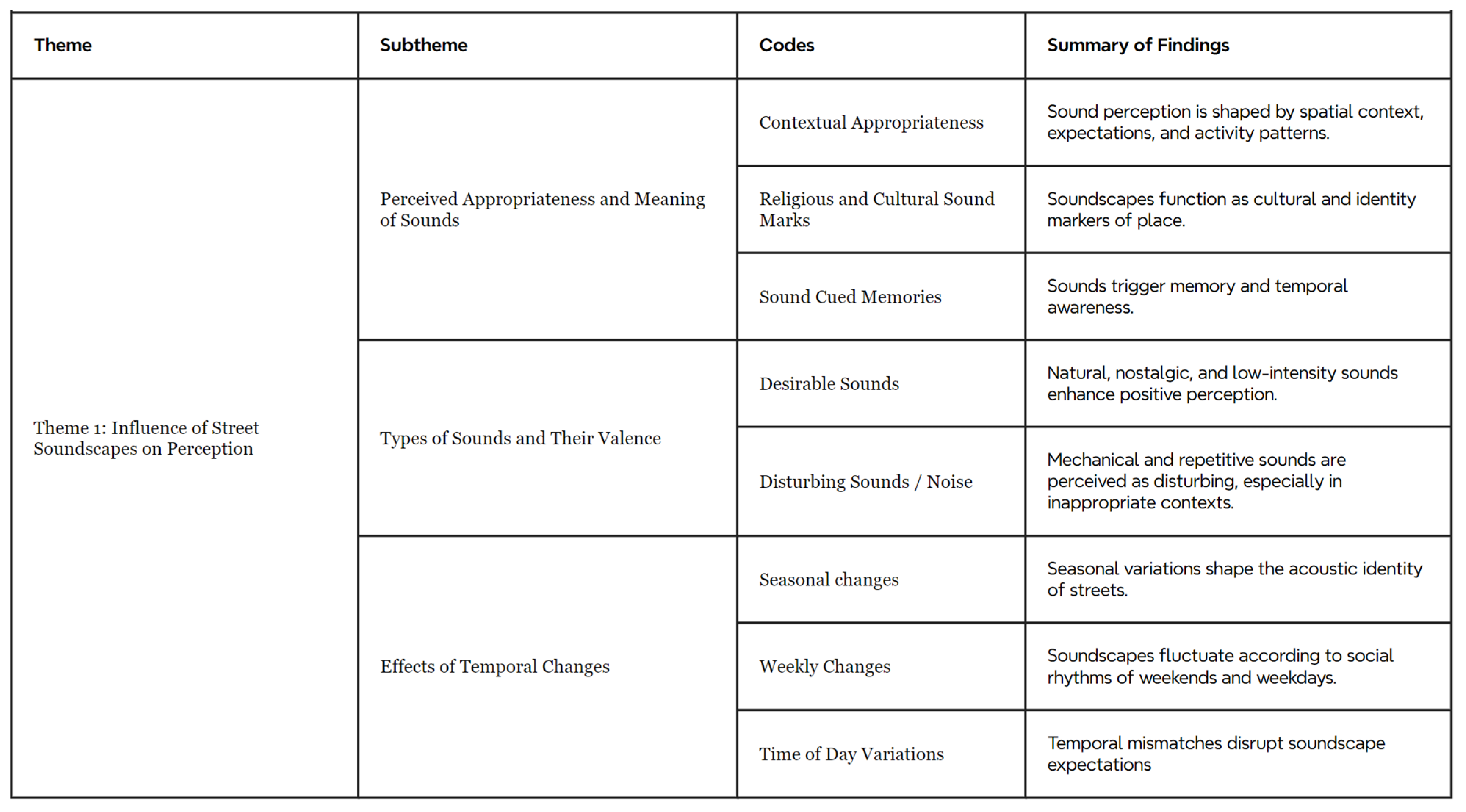
The first question identified three subthemes, which were (1) Perceived Appropriateness and Meaning of Sounds, (2) Types of Sounds and Their Valence, (3) Effects of Temporal Changes (Figure 1). These themes relate to RQ1: How do individuals perceive the street soundscapes generally? Through these questions, individuals’ street sound experiences were thoroughly explored. They were consistently observed across the discussions, with the majority of participants (n = 10) referring to them throughout the focus groups.

3.1.1. Perceived Appropriateness and Meaning of Sounds

This subtheme illustrates how participants evaluated the soundscape in relation to meaning and appropriateness. The perceived meaning of sound depends on the cultural context, environmental condition and circumstances. Sometimes sounds evoke specific moments or are used as an invitation to a religious ritual.
Participants discussed their expectations regarding contextual appropriateness and acceptability of the sounds depending on the setting. Location, time of day, street function, and cultural comparisons were identified as key contextual factors. For example, greater tolerance for noise in lively areas, heightened annoyance in quiet zones, and shifts in perception influenced by travel or prior experience.
“Noise does affect me, depending on where I am. Also depending on how I’m getting there—whether I’m walking, cycling, or driving.”
Expert 10
The findings suggest that sounds can evoke specific moments or act as auditory cues for religious rituals. The concept of a “normal” or “fitting” sound atmosphere was also discussed in the focus group discussions, highlighting perspectives such as tolerance for noise in lively areas, annoyance in quiet zones, and shifts in perception based on travel or prior experience.
Experts also described periodic, locally recognised cultural and religious signals as part of street soundscapes. These sounds had several functions, such as structuring the day and supporting place identity and attachment. Beyond their acoustic qualities, they were interpreted through cultural lenses and everyday routines. Comparisons highlighted recognisable ‘sound signatures’ between countries and cities. Socioeconomic level was also reflected in the vehicles, where noisy luxury engines were interpreted as markers of wealthier urban areas.
Participants framed the adhan and church bells as signals that structure the daily rhythm and reinforce place identity and belonging, with their valence varying according to conditions of exposure. For example, one participant noted that the adhan structures the day as well as people’s behaviour.
“The mosques and the adhan were very noticeable to me because I’m obviously not used to hearing that in London. Still, I found it comforting. Even though it can be loud and sometimes wakes you up in the morning, it gives you a sense that people are waking and moving about. It also structures your sense of time throughout the day. You start to anticipate when the roads will be busy because people are heading to markets and other activities. So overall, for me, it was a positive experience.”
Expert 10
Another participant contrasted the lighter, less intrusive chimes heard in parts of Italy with the heavier, louder bells reported in some Protestant contexts, describing the latter as more objectionable.
“I should add something about Italy. Of course there are many churches there, but in my experience they don’t use the heavy bells you often hear in Protestant countries—such as Germany or Switzerland—where the bells can be extremely loud. In Italy, the bells tend to sound more like a lighter ‘ding, ding, ding,’ which feels much less disturbing. But this is, of course, just my totally unscientific personal experience.”
Expert 12
Participants described instances in which street sounds evoked personal memories associated with places and life phases, thereby reinforcing place identity and belonging. Common triggers included recognisable signals such as station jingles and religious soundmarks.
“I heard that jingle every ten minutes, almost every hour. Now it kind of reminds me of the time I spent abroad during my PhD.”
Expert 7

3.1.2. Types of Sounds and Their Valence

In the focus groups, participants identified several categories of sound relevant to soundscape quality, including desirable sounds, disturbing sounds, and silence. They also emphasised that preferences for sound are context-dependent and shaped by the type and source of sounds.
Participants described desirable sounds as natural and context-appropriate, often noting that vegetation and water features can both enhance positive soundscapes and mask unwanted noise. Across accounts, preferred sounds led to feelings of tranquillity, relaxation, pleasantness, and a calming ambience.
One of the most frequently discussed themes was natural sounds. These included natural features like animal sounds and the sound of the sea. Overall, these sounds are perceived as desirable and satisfying. Throughout the conversation, participants expressed a range of emotions about natural sounds.
The nostalgic sounds category includes church bells, bicycle bells, and the sound of cobbled streets. These sounds are also recognised as desirable sound elements.
“As a cyclist, walker, and driver, I experience sound from multiple perspectives. I find myself drawn to nostalgic sounds like church bells or bicycles on cobbled streets, though I’m not sure if that’s simply nostalgia.”
Expert 9
The term “silence” was mentioned in various ways throughout the discussions. In some contexts, silence is seen as a desirable sound atmosphere but not in others. For example, some silent environments are perceived as unsafe, making people less likely to prefer them. However, in some cases, silence is seen as a key element of a good environmental atmosphere. This dual perception of silence presents a dilemma in the literature.
“I’ve been thinking about weekdays versus weekends. For example, where I live—quite close to Austria—Sundays can feel completely calm and empty. Everything is closed, and even the traffic noise drops significantly.”
Expert 8
Noise was a recurring theme where individuals collectively discussed the negative aspects of the soundscape. Noise was discussed in relation to noise cancellation, crowds, ambulance sirens, and vehicle sounds as potential noise sources eight times throughout the discussion. Participants often mentioned the reasons for the noise, such as being in the city centre, as one participant noted below:
“Two sounds I would mention in particular are ambulance and police sirens. Here in the UK, I find them extremely loud—much louder than in France, for example. A couple of days ago I was in Madrid and also noticed that the ambulance sound there is different: less sharp and, I would say, less annoying…”
Expert 7

3.1.3. Effects of Temporal Changes

Temporal changes are defined as changes in streetscape depending on time, weather, lighting conditions, humidity, and temperature. Participants mentioned daily changes due to morning-night differences and seasonal changes associated with summer, winter, or autumn times. These changes are also affected by social, architectural, and contextual variations.
Participants also identified seasonal conditions as one of the main features of the sound environment.
“For me, streets and landscapes are closely connected. Certain seasons seem to belong to certain streets. Some historic streets, for example, are strongly associated with autumn or with summer. That’s why seasonality matters.”
Expert 5
Some participants also mentioned that experiencing seasonal or daily cycles is important, and that these cycle-related changes affect the sound atmosphere.
“I strongly agree that seasonal variation is highly relevant and closely connected to street noise, especially in places where seasonal differences are pronounced.”
Expert 4
Participants perceived a distinction in the soundscape between weekends and weekdays.
“I’ve been thinking about weekdays versus weekends. For example, where I live—quite close to Austria—Sundays can feel completely calm and empty. Everything is closed, and even the traffic noise drops significantly.”
Expert 8
The importance of perceiving daily changes through both visual and sound elements was emphasised five times throughout the discussions.
“I want to feel seasonal and daily changing over time.”
Expert 2
Respondents noted that nighttime sounds were sometimes perceived as desirable and reassuring. However, concerns were also raised about their negative impact on sleep quality.

3.2. Theme 2: Impact of Physical and Spatial Characteristics on Street Soundscape

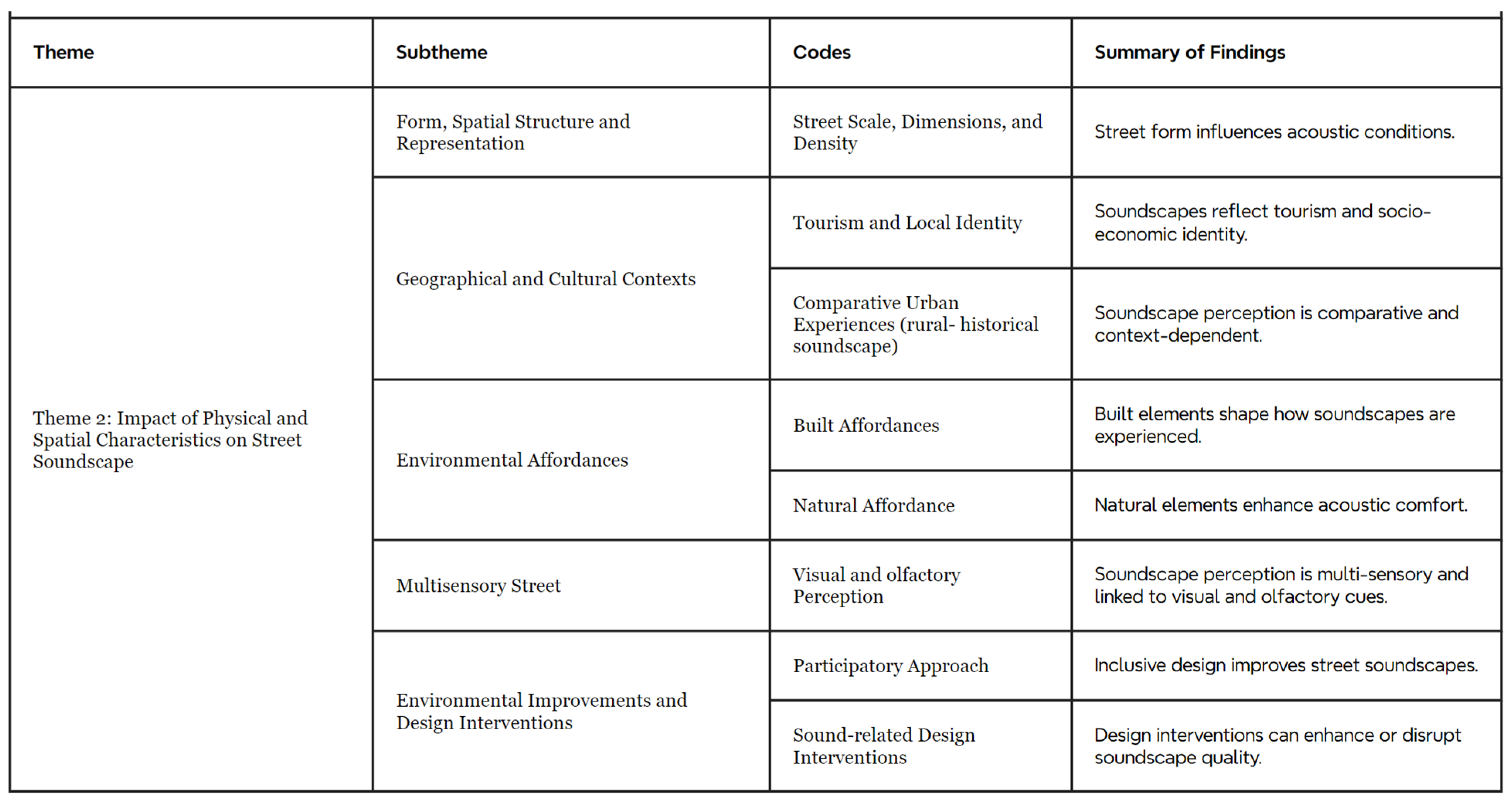
The second research question (RQ2) examined how the physical characteristics of streets shaped street soundscapes. Respondents discussed several themes related to the architectural and visual characteristics of streetscapes, including (1) form, spatial structure, and representation; (2) geographical and cultural context; (3) environmental affordances; (4) multisensory street atmospheres; and (5) environmental improvements and design interventions (Figure 2).

3.2.1. Form, Spatial Structure and Representation

This subtheme explores how expert participants define the street environment through its form, spatial structure, and the challenges of representing its complexity. In response to RQ2, many participants recalled streets in terms of their form. For instance, some used metaphors such as ‘streets are a band’ or referred to the ‘urban canyon’ to describe narrow street sections.
Building on these reflections, experts further highlighted the challenges of fully illustrating street areas with all their details, describing the task as a ‘nightmare’. They emphasised that most 3D models tend to represent streets as empty, thereby overlooking the dynamic elements that shape everyday street life.
“For me, the streetscape is almost a nightmare to represent and describe. It’s so complex and rich in detail that it can be really difficult. And because we don’t always pay attention to those details, we often end up focusing on creating 3D models of buildings—while the 3D model of the street itself remains strangely empty in digital representations.”
Expert 7
The scale and proportions of street spaces were strongly associated with emotional responses. Narrow streets lined with tall buildings were described as stifling and claustrophobic, whereas wide streets evoked feelings of openness and comfort.
“High-rise buildings in narrow streets feel stifling.”
Expert 3
Reflections on urban density reinforced this point: commuting in high-density Hong Kong was described as stressful, whereas suburban Dublin was described as providing a more restorative and relaxed walking environment. These accounts indicate that spatial scale and density can directly influence affective states and everyday well-being.
“In Hong Kong, when I used to arrive at my office after my daily walk, I was usually quite stressed. Here, my commute passes partly through a park and a more suburban environment, so it feels more relaxing—especially compared to the high-density area where I used to live.”
Expert 11
In the discussions, participants noted that monotony shaped their perception of time and influenced the way they engaged with the street environment.

3.2.2. Geographical and Cultural Contexts

Participants also reflected on how natural elements and settlement type influence the way streets are perceived. Streets located near rivers were described as carrying a distinctive atmosphere, where the presence of water shaped both the soundscape and the overall sense of calm.
Several participants noted that the context of the street (e.g., a dense urban centre, a small rural settlement, or alongside natural features) directly shaped their perception of safety, comfort, and identity. In villages, for example, the sound of bells or local practices like singing while cycling was seen as cultural imprints that defined the environment. These observations indicate that perceptions of street areas are profoundly influenced by geographical location and environmental context, which affect individuals’ emotions, behaviours, and relationships with the area.
“Well, still on the church bell and yeah, so and from a very small town in the north of Italy and by Milan. And there is a town that has, like probably is around 10,000 inhabitants and we have like 5 or 6 churches. All of them with church bells. So in fact, people coming from my town, they are called it. Well, in the dialect from Milan is Patach. That is basically the metal things that is used to play the bells.”
Expert 7
Tourism emerged as another factor influencing how street layouts are experienced. In historic Mediterranean cities, the distinctive sound of wheeled suitcases rolling across cobblestones was described as an “acoustic imprint” of touristic areas. At the same time, participants acknowledged that their own relationship to streets changes over the life course: what once felt playful or enjoyable in childhood may not carry the same appeal in adulthood.
The thematic analysis suggests that actively accommodating different user groups across gender, socioeconomic, and generational lines influences the mediation of social use, cultural identity, and everyday interactions.
In the discussions, participants compared street experiences across different contexts, highlighting contrasts in density, infrastructure, socioeconomic conditions, noise levels, and urban furniture. High-density cities such as Hong Kong were described as stressful, while suburban Dublin was perceived as more relaxing.
“I went to Madrid last year and found it incredibly noisy—much noisier than London, although that was just my personal experience. Maybe it was because I was staying right in the city centre. I’m not sure, but I also have a comparative perspective…”
Expert 11

3.2.3. Environmental Affordances

Participants frequently referred to the affordances of street environments and how these shaped their everyday mobility and comfort. Poorly placed furniture, obstructive planters, and cluttered elements were perceived as restricting accessibility.
“I also don’t like street furniture placed in the middle of actively used walking lines. I think city furniture should be functional first and foremost. Sometimes I see furniture that blocks the way or makes it harder to move around, especially when it’s designed in awkward shapes.”
Expert 5
Functionality and standardisation were recurring themes, with some participants arguing that street furniture should be uniform across districts to ensure predictability and ease of use. Accessibility was also linked to broader mobility infrastructure, including crossings and shelters, and was emphasised as particularly important for children, disabled users, and the elderly. In contrast, car-free or low-traffic areas were described as exemplary environments that offered calmness, functionality, and comfort.
Usability, safety and social interaction were also shaped by urban furniture. Lighting was frequently associated with perceptions of safety and its interplay with sound.
“Streets feel less safe to me when there’s no lighting, and lighting also affects sound. The sounds I hear on a street can make me feel safer—or less safe.”
Expert 2
Green and natural features were consistently associated with positive perceptual and affective experiences in the focus group discussions. Trees, vegetation, and water features were identified as contributors to both acoustic quality and psychological restoration.
“I’ve been walking to work for a year, and psychologically it’s been really relaxing—almost like therapy for me. Even though we live in a built-up area with high buildings, we also have plenty of open and green spaces. Through spending time there, I’ve learned a lot about birds and different species. In fact, the landscape design is often planned with this in mind. The animal species you find in an area are shaped by the plant types, and regulations and planting decisions are made accordingly. Similar approaches could be used on streets to support biodiversity and enhance natural sounds”
Expert 6
Flora and fauna were described as amplifying positive sounds, mitigating intrusive noises, and supporting biodiversity. Water elements, however, elicited mixed responses: while some participants valued them for enhancing tranquillity, others perceived artificial fountains as intrusive or ineffective in masking noise.
“I think the environment can contribute to a positive sound atmosphere when it is carefully designed, for instance, by reducing decibel levels and integrating natural elements. Flora and fauna help encourage pleasant sounds while minimising negative noise.”
Expert 6

3.2.4. Multisensory Street Atmosphere

Participants frequently conceptualised the street as a multisensory environment during the discussions, which was mentioned 5 times. Visibility and smell were identified as playing an important role in street perception, and in some cases, were considered more influential than the soundscape. Odours from bins, for example, were described as particularly discomforting and negative.
“I don’t want to sit or spend time near bins or planters because there’s often noise, smell, or other unpleasant conditions around them.”
Expert 1
On the other hand, different aspects of greenery, lighting, temperature, and visual aesthetics were perceived to enhance comfort and safety.

3.2.5. Environmental Improvements and Design Interventions

Participants suggested various interventions for improving street environments, such as enhancing green elements, designing at a human scale, and incorporating participatory decision-making into planning processes. Technological changes were also highlighted, particularly the rise of electric vehicles, which were viewed as fundamentally reshaping urban soundscapes.
Noise reduction through vegetation and improved spatial planning was frequently proposed to promote environmental harmony, reduce stress, and enhance well-being. Greenery was also described as a tool for noise control, with participants endorsing environmentally friendly solutions such as ‘green curtains’ to serve as acoustic buffers. Participants associated such elements with greater environmental harmony, reduced stress, and enhanced well-being.
In addition, participants emphasised the importance of participatory approaches in environmental design. Several participants argued that municipalities should consult residents before introducing new street furniture or design changes to ensure alignment with user needs. Materiality—such as stone façades or pavement textures—was also identified as shaping both the acoustic and experiential qualities of streets.

3.3. Theme 3: The Soundscape Impact on Emotional Response

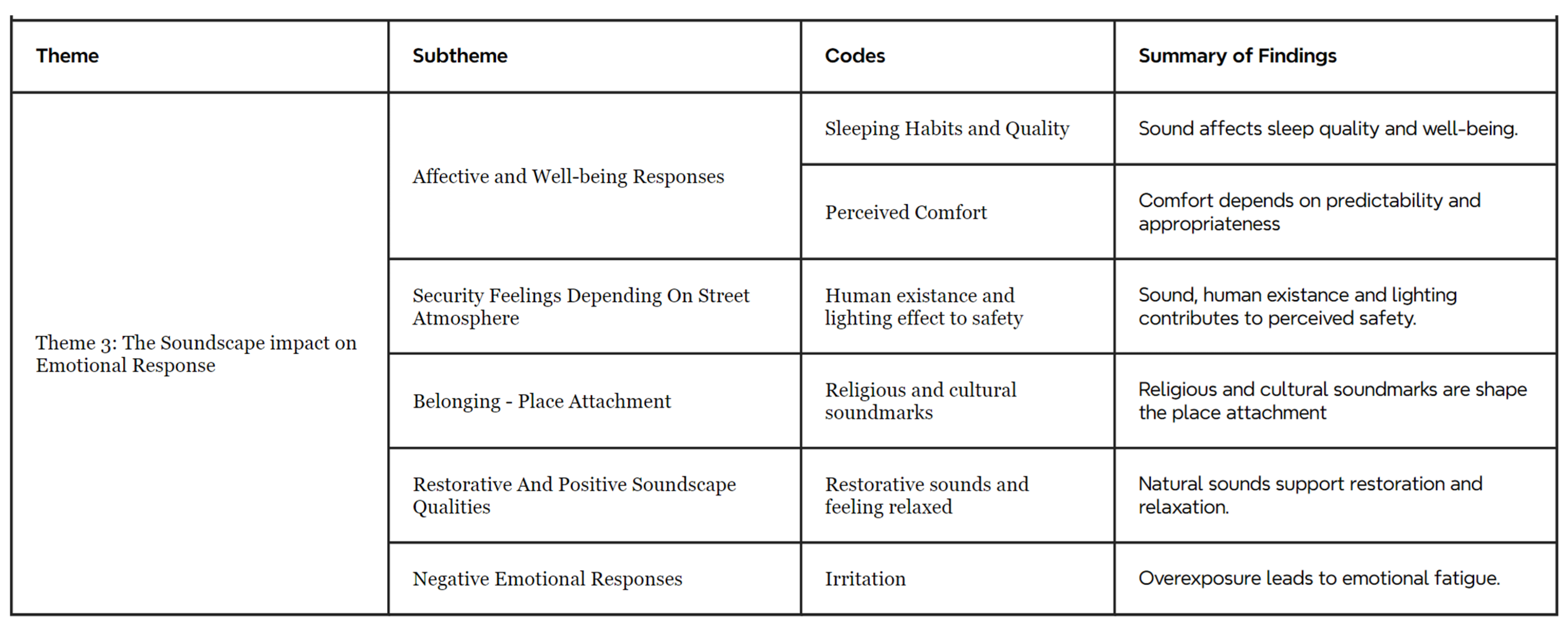
Research focusing on emotional responses to street soundscapes remains limited. The present study addressed this gap through RQ3, examining how street soundscapes influence individuals’ emotional responses. Main responses were related to affective states and well-being, feelings of security, place attachment and belonging, as well as restorative and positive soundscape qualities, alongside negative emotional reactions (Figure 3). This theme was identified across the majority of participants (n = 10), reflecting a consistent pattern in the expert discussions.

3.3.1. Affective States and Well-Being

In the discussions, participants described a wide range of emotional and well-being responses to different sound sources. These included effects on sleep habits and quality, as well as perceived comfort in street environments.
“At midnight they ring twelve times, and there are also quarter-hour chimes. So even at 12:45 a.m. you can be woken up—it can be quite intense.”
Expert 9

3.3.2. Security Feelings Depending on Street Atmosphere

In the discussions, participants frequently described their perceptions of safety in street environments as highly context dependent. In unfamiliar settings, quiet streets without lighting at night were often perceived as unsafe, whereas lively or noisier streets implied social presence and were described as more reassuring. This suggests that participants associated sound and lighting conditions with social presence, which shaped their sense of safety.
“I want to feel seasonal and daily changing over time. It sounds more unsafe to me where there’s no light, but it also has a sound effect with lighting. I mean the sounds I hear on that street can make me feel safer.”
Expert 10

3.3.3. Belonging and Place Attachment

In focus group discussions, religious and cultural soundmarks—such as church bells and the adhan—elicited mixed emotional responses, though many participants described them as evoking a sense of home.
“Because there are so many churches, most of them now use loudspeakers rather than the actual bells—maybe only one still rings a real bell. But that sound is what makes me feel at home.”
Expert 7

3.3.4. Restorative and Positive Soundscape Qualities

During discussions, participants frequently mentioned water features and natural sounds as providing soothing and restoration. For instance, one participant noted that the sound of water at a busy pedestrian crossing helped ease their fatigue.
“Another sound I really enjoy is water—like water features or a stream. When I come across moving water, I find it very soothing and pleasant.”
Expert 8

3.3.5. Negative Emotional Response

In discussions, negative emotions were expressed through various terms such as ‘disturbing’, ‘unwanted’, ‘annoying’, ‘clogging’, ‘anxious’, ‘bothersome’, ‘uncomfortable’, ‘distracting’, ‘hateful’, ‘nervous’, ‘nightmarish’, ‘pressuring’, ‘scary’, ‘stifling’, ‘strange’, ‘stressful’, ‘tiring’, and ‘weird’.
These words were commonly used to describe traffic related sounds such as ambulance sirens or loud human noises. Such elements were found to contribute to cognitive fatigue and over-stimulation.
“Two sounds I would mention in particular are ambulance and police sirens. Here in the UK, I find them extremely loud—much louder than in France, for example.”
Expert 7
Interestingly, extreme silence was also described as unsettling—similar to a post-disaster city—which suggests that silence itself can evoke feelings of emptiness, unease, or discomfort.
“Completely calm and empty—everything is closed, and the traffic noise has almost disappeared. This feels somewhat peculiar and strange to me compared to the rest of Italy. It looks like a post-earthquake city…”
Expert 8

3.4. Theme 4: The Soundscape Impact on Pedestrian Behaviour

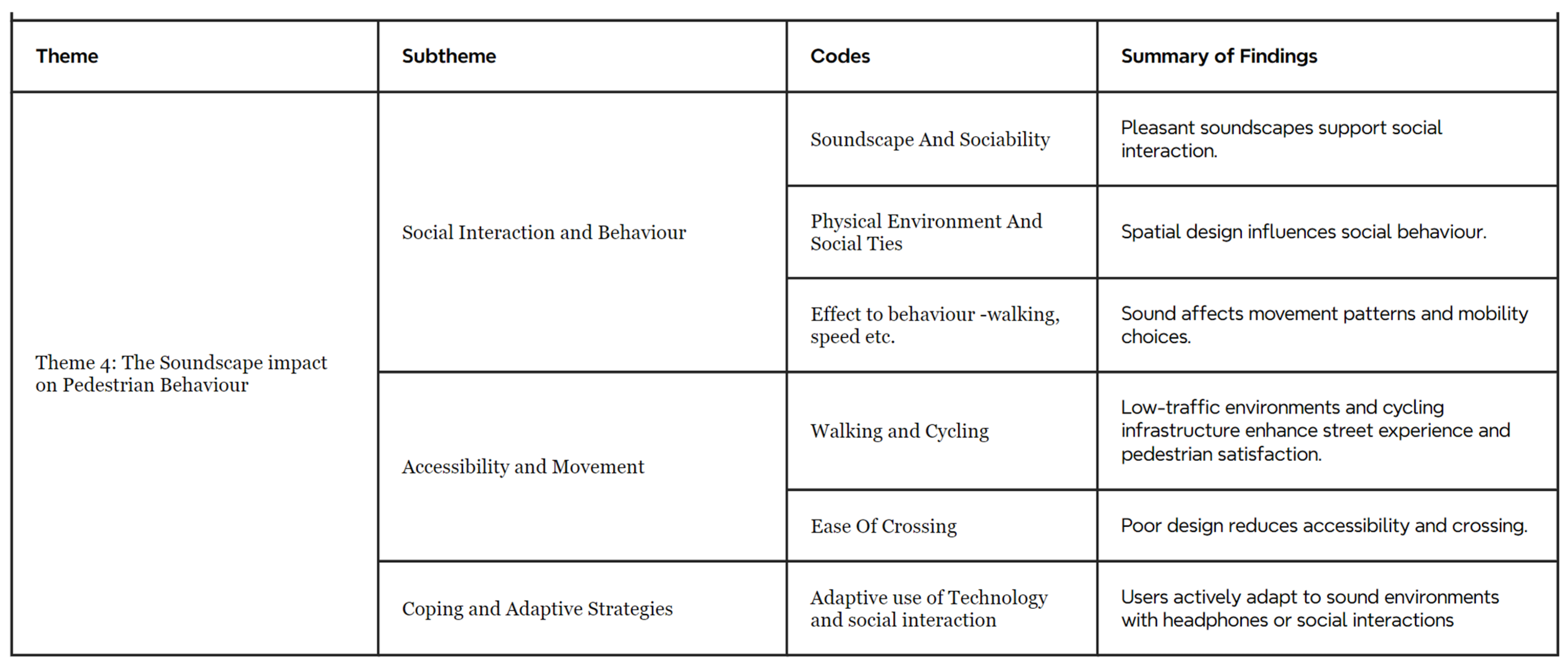
This section examines responses to RQ4: How do street soundscapes influence individuals’ behaviour? The analysis revealed that sound atmospheres particularly influence social interaction, accessibility, and coping or adaptive behaviour within street environments (Figure 4). This theme was identified across the majority of participants (n = 10), reflecting a consistent pattern in the expert discussions.

3.4.1. Social Interaction and Behavioural Influence

Participants noted that specific sound sources can influence sociability, social connections, and human behaviour, including walking speed and route choice. For example, the adhan can orient pedestrian flows toward the mosque at particular times, whereas aversive sounds may prompt detours or withdrawal from an area. In this way, the street soundscape affects not only navigation but also patterns of social presence—for instance, when people pause to talk, gather, or decide to leave.
“I just spent my holidays in India, and a lot of the time my tourist experience was honestly ruined by car honking and the constant noise from different transport modes—cars, tuk-tuks, and everything else. That kind of noise can really shape how a place is perceived, not only by tourists but also by the people who live there.”
Expert 11
Another major theme was the role of the physical layout of streets. Streets were often described as more welcoming when they facilitated encounters with neighbours and supported a sense of sociability.
“I think streets feel friendlier when you can interact with the people who live in the houses along them.”
Expert 12

3.4.2. Accessibility and Movement

This subtheme explores soundscape perceptions related to mobility and infrastructure. During the discussions, many participants described mobility as a defining characteristic and primary function of streets. When recalling their memories, they frequently associated streets with transport access and movement across four different places.
On the other hand, movement and transportation were also described through characteristic ‘sounds of movement’, such as the flow of traffic or the braking noises. One participant referred to these as a ‘linear noise source’, linking the idea of mobility to the acoustic character of street environments. The qualities of such sounds vary across contexts: for instance, the stress of walking through dense and noisy city streets such as those in Hong Kong or Madrid contrasts with the relative calm of suburban routes or park-adjacent streets.
“So, when I used to arrive at my office in Hong Kong after my daily walk, I would already feel pretty stressed. Here, though, my walk to work is partly through a park or a fairly suburban environment…”
Expert 11
The importance of accessibility was discussed frequently in relation to cycling and walking provisions and pedestrian crossings. Additionally, the presence of dedicated cycling paths was highlighted as a key factor in promoting safe and inclusive mobility.
“I mean, I’m quite in favour of them because I’m mobile and I walk and cycle most places I hardly drive…”
Expert 9
In the discussions, participants frequently highlighted the importance of street crossings in promoting accessibility, which is particularly significant for children, individuals with disabilities, and older adults. Conversely, car-free or low-traffic zones were described as exemplary urban environments, offering tranquillity, functionality, and enhanced liveability without dependence on motorised transport.
“I don’t like street furniture placed in the middle of actively used pedestrian routes. I think city furniture should be functional first and foremost. Sometimes I see furniture blocking the way or making it difficult to walk around because of its shape. I hate vases in the middle of streets.”
Expert 1

3.4.3. Coping and Adaptive Strategies

In the discussions, participants described a variety of coping and adaptive strategies in response to urban soundscapes. For example, one participant mentioned using bone-conduction headphones while running, which allowed them to listen to music while remaining aware of their acoustic surroundings. Others emphasised the importance of social interaction and familiar sonic cues along the street, noting that these elements contributed to a sense of friendliness and safety.
“I like running, so I usually go for a run at the weekend, and I don’t like wearing in-ear headphones. So I bought bone-conduction headphones. Basically, they let you hear your surroundings while still listening to music, so you can stay aware of what’s happening in terms of sound around you.”
Expert 7

4. Discussion

This study examines how urban street soundscapes are experienced in daily life and how they shape perception, comfort, and use of space based on experts’ perspectives. This research aims to provide different perspectives from experts in various fields. The results revealed that participants’ perceptions and interpretations of soundscape varied depending on their location, background, and travelling experiences. For instance, participants shared different experiences from various countries such as China, Hong Kong, Italy, UK, and Türkiye. Hence, street design policies should consider the variability across the communities, geographical locations, and countries. Overall, four main research themes were identified: street soundscapes, physical street elements, pedestrian behaviour, and pedestrian emotions (Figure 5).
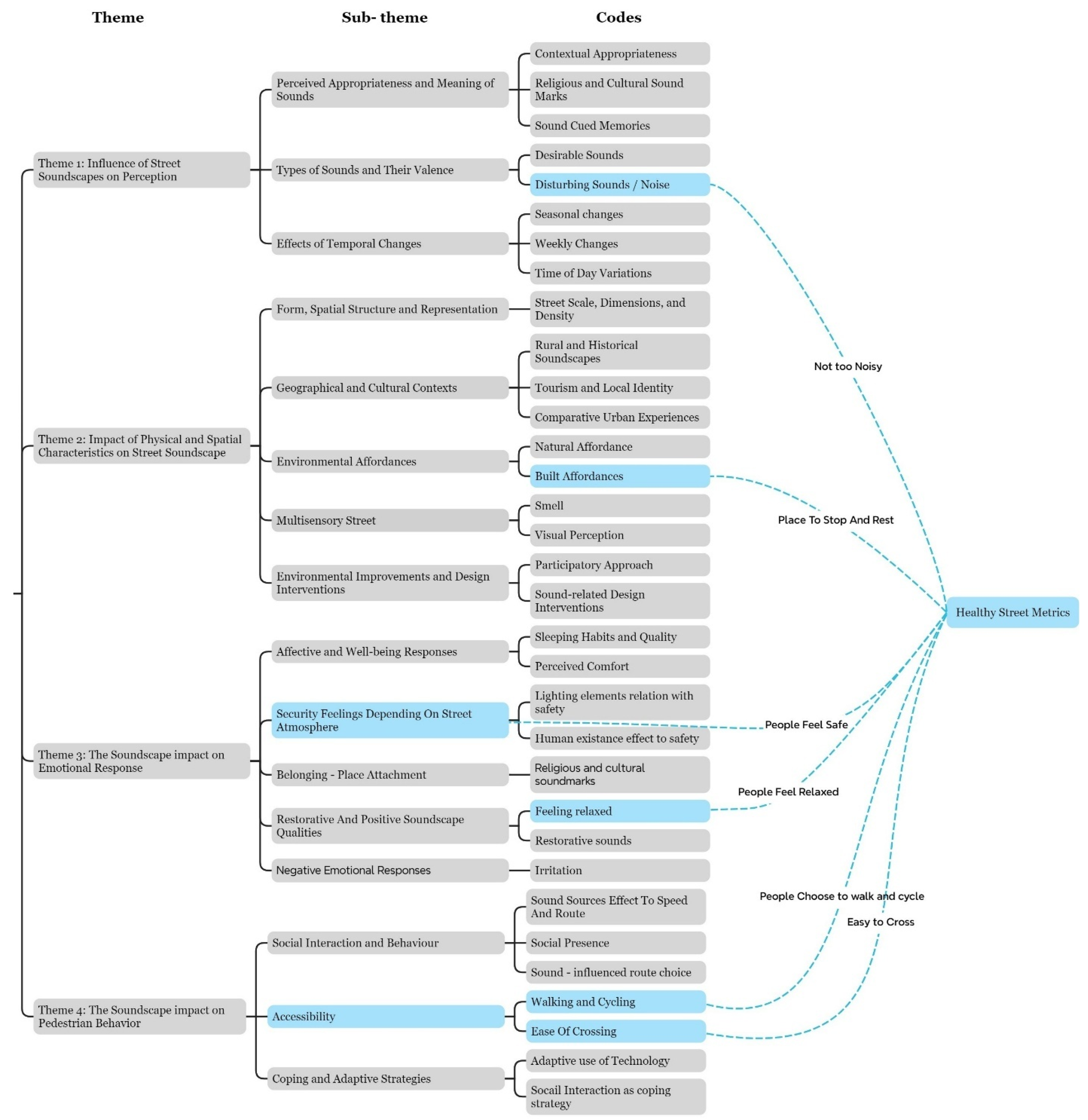
Figure 5 illustrates the relationship between soundscape-streetscape themes and Healthy Streets metrics. The figure maps how soundscape characteristics, street spatial and physical attributes, emotional responses, and behavioural responses collectively shape expert perceptions of street environments and demonstrates how these dimensions align with established healthy streets parameters.

4.1. How Do Individuals Perceive the Street Soundscapes Generally? (RQ1)

Three main themes emerged from the discussion, which are (1) Perceived Appropriateness and Meaning of Sounds, (2) Types of Sounds and Their Valence, and (3) Effects of Temporal Changes. Expert participants explored the impact of street soundscape atmospheres on sensory experiences from various professional perspectives, reflecting a topic that is gaining increasing attention in the field. In the literature, sound comfort, sound preference, pleasantness, and noise annoyance have been predominantly examined.
The thematic analysis revealed that soundscape perception depends on contextual appropriateness in daily life and environmental conditions. The literature also parallels the current findings on appropriateness [16]. For example, Fang’s study explored the appropriateness of soundscapes [17]. The findings indicated that appropriateness is positively associated with both pleasantness and eventfulness. It is more strongly perceived by individuals over 55 years old, while showing negative associations with visit frequency [17]. From the perspective of street soundscapes, appropriateness is closely linked to visual harmony and the functional use of space, particularly in shopping streets [18]. These findings indicate that while sound appropriateness has been investigated in existing research, its application to street environments remains limited. ISO standards also address sound context and appropriateness through personal, social, cultural, land use, economic, and geographical lenses [19].
Religious and cultural significance were identified as key elements in how individuals attribute meaning to street soundscapes. Periodic, locally recognised cultural and religious sounds play a significant role in shaping the auditory environment. Although literature has paid limited attention to street soundscapes and religious–cultural markers, several studies have examined religious soundscapes within historical contexts. For instance, one study found that urban religiosity is expressed not only through communal sounds—such as church bells—but also through individual practices and experiences within urban settings [20]. From a cultural perspective, cross-place comparisons highlighted recognisable “sound signatures” across different countries and cities. Socioeconomic composition was also reflected in the soundscape, particularly through vehicles, where noisy luxury engines were interpreted as markers of affluent urban areas. A study emphasised the importance of hearing levels, noting that these sounds can symbolise political authority and urban identity [21].
The present study shows that street sounds evoke specific personal memories tied to past places and life phases, thereby reinforcing place identity and a sense of belonging. In the literature, the relationship between personal memories and soundscapes has been explored mostly within the context of music. One study found that human sounds are more likely to trigger personal memories, while natural sounds tend to be associated with semantic memories. The same research also indicated that technological sounds are linked to implicit memories [22]. Another study suggested that memory is a more effective predictor of soundscape perception than acoustic conditions [23]. However, these studies do not specifically address the street atmosphere. Future research should focus more directly on the role of street soundscapes in shaping personal memory and emotional connection.
Throughout the discussions, participants identified specific sound sources that elicited various responses, such as sense of belonging, place attachment, acoustic habituation, relaxation, irritation, insecurity, and discomfort. Based on the thematic findings, participants identified several key themes. Natural and human sounds were perceived favourably, consistent with previous research indicating that exposure to water and other natural sounds enhances relaxation, motivation, acoustic comfort, and a sense of tranquillity among listeners [9,10,24,25]. Examples of pleasant sounds include bird songs, sea waves, and animal sounds [9,26,27,28,29]. The bird sound was identified as a factor of decreasing noise annoyance in rural areas, in line with the previous studies [9,10]. Among natural sounds, perception of water sounds was rather ambivalent. Some participants argued that water sounds are discomforting and noisy, while others found them calming and pleasant. This finding is partially supported by the research of Yilmaz et al. [9] and Fu et al. [10], which showed that the sound of water evokes a sense of calmness and enhances aesthetic appeal [9,10].
In the present study, participants mentioned that human sounds were perceived as a sign of safety. Previous research focused on safety and soundscapes in relation to squares and open public spaces but not the street environment [30,31,32].
During the focus group discussions, noise in the street environment was a predominant theme. Beyond traffic sounds, construction and machinery noise were also highlighted as discomforting and annoying factors. These findings align with previous studies that have consistently reported noise as a major source of annoyance in urban environments [7,33,34,35].
Based on the literature review and thematic findings, it is clear that natural features, not just greenery, should be further studied, including different types of natural elements [36]. Also, the street and traffic noise should be investigated across different traffic elements such as non-motorised vehicles (cycles, motors, etc.) and new technological factors and their effect on the street soundscape.
Focus groups also included discussion of how natural cycles influence soundscapes. While seasonal variations were a central focus, daily fluctuations and their impact on the acoustic environment were also emphasised. The literature has examined seasonal changes predominantly in relation to parks and other public spaces. Some studies have explored daily rhythms, tourist seasonality, and distinctions between weekday and weekend soundscape atmospheres [7]. However, limited attention has been paid to street environments, with only one study addressing temporary changes in urban streets which highlights the need for further research on this topic [37].
The findings suggest that temporal changes merit further investigation, particularly in relation to street atmosphere, seasonal transitions, daily patterns, and event-based conditions. Moreover, these temporary changes not only shape perceptual experiences but also directly influence human behaviour.

4.2. How Do the Physical Characteristics of Streets Shape Street Soundscapes? (RQ2)

The analysis indicates that participants often recalled street atmospheres through spatial characteristics such as “bands of place” or “canyon-type streets”. These types of streets were also described as “linear noise sources” within the urban context. This continuous and flexible interpretation aligns with the principles outlined in the Global Street Design Guide [38]. In the literature, several studies have examined canyon-type streets and their influence on sound perception [39].
Participants highlighted how building height, street width and location-based usage of these scales influence their visual perception and preferences. Previous research has similarly shown that street height-to-width ratios affect perceptions of enclosure, spaciousness, aesthetics, and pleasantness [11,39,40,41].
It should also be noted that design experts discussed challenges in representing street environments, particularly the limitations of digital tools. They noted that such platforms often fail to accurately convey the physical characteristics, such as the details of street design and experiential qualities of street elements. However, previous research did not specifically address how different representation styles affect soundscape perception. Future research should investigate the different aspects of street scales and location-based changes of perception.
Thematic analysis indicated that participants identified various geographical conditions (such as proximity to rivers and rural–urban differences) as influential in shaping street soundscape perceptions, emotions, behaviours, and social connections. Although water sounds have been investigated in soundscape literature, specific attention to riverside or seaside environments remains limited. Some studies have explored the audio-visual restorative potential of rural streets, yet broader geographical influences on pedestrian soundscape experience warrant further research [10]. Several studies suggest that the perception of soundscape elements varies across urban and rural contexts. For instance, technological sounds are often perceived as more disruptive in rural environments, where the overall soundscape is typically quieter and dominated by natural sound [42]. Despite these observations, research specifically addressing rural street soundscapes remains limited. There is a need for further context-sensitive research that considers the unique soundscape composition, spatial dynamics, and cultural characteristics of rural settings.
In participant discussions, the social context was addressed from multiple perspectives, highlighting the role of animals, vegetation, and human presence in creating a more vibrant and pleasant street environment. While the literature extensively explores the influence of vegetation and human crowding on urban soundscapes, the specific contribution of street animals remains underexamined [34,43]. Research focusing on how animals shape the acoustic character of streets is still relatively scarce, indicating a gap in current soundscape studies.
Street social context was also discussed from a tourism perspective. Experts mentioned that tourist season has specific sound sources which were described as the “acoustic imprint”, including street density, traffic, and morning-night differences. In the literature, touristic areas are characterised by traffic noise annoyance effect to locals in a tourist city road [7], which is related to many health impacts such as headaches, cognitive impairment and noise annoyance [7]. In the present study, expert participants mentioned that these soundscape changes would be different depending on the age (adult, child, teenager, etc.) and gender. For example, a certain sound atmosphere was perceived as more enjoyable and playful during childhood but not in adulthood.
Focus group discussions identified that mobility has a major impact on street perception and the quality of soundscapes. Participants emphasised that excessive motorised vehicle speed caused disruptive, high-decibel noise. This observation aligns with previous studies exploring noise pollution, road design, and accessibility [32,44,45,46]. Common urban noise sources—such as honking, sirens, and alarms—were identified as key contributors to discomfort [33]. Participants suggested that limiting vehicle access and implementing stricter traffic controls could mitigate these negative effects [28]. Scooters and electric vehicles were also discussed in connection with changing urban mobility patterns. Although electric vehicles contribute to sustainability and reduce overall noise levels, participants noted that their quietness can make them harder for pedestrians to notice, potentially creating safety concerns. These insights suggest that future urban design should address the perceptual challenges posed by increasingly silent forms of transport. Hence, future research and policy development should focus on integrating traffic management strategies with soundscape planning, aiming to reduce noise pollution while improving urban liveability.
Numerous studies in the literature have examined various architectural features of streets, including paving, seating elements, shelters, lighting elements, sculptures, architectural style harmony, accessibility features for disabled individuals, and materials such as façades, flooring, and urban furniture [18,28,47]. However, these studies have not sufficiently explored the relationship between street architectural features and acoustics or soundscapes [1,18]. Therefore, future studies should investigate how materiality and design typologies influence street perception, and design policies should expand beyond decibel-based approaches to include experiential and emotional dimensions.
Focus group discussions suggested that participants identified a range of natural elements as influential in perception and well-being. During group discussions, participants highlighted the beneficial effects of these features in terms of noise reduction, enhancement of positive sounds, and contribution to overall design aesthetics. Participants also frequently emphasised that visual and olfactory cues played a more prominent role than auditory cues in their overall street experience, with odour perception identified as a key factor influencing comfort and emotional response.
In the literature on street features, vegetation and natural elements have been among the most extensively studied topics, particularly in relation to visual and soundscape perception [9,10,24,26,37]. Fu et al. [10] investigated natural elements in relation to visual perception factors such as openness, enclosure, and aesthetics [10]. Similarly, Zhao et al. [43], Han et al. [26], Ren et al. [34], and Jiang et al. [37] examined architectural and natural features in combination [26,34,37,43]. A substantial body of literature has examined the relationship between soundscapes and multisensory perception, with particular attention to the interaction between auditory and visual stimuli from both psychological and physiological perspectives [18,34,43,48,49,50,51]. Accordingly, future urban planning should integrate natural and architectural elements in a holistic way, promoting sensory diversity and fostering restorative, inclusive, and health-supportive urban soundscapes.
While odour has been addressed in some studies at the street scale, existing research often overlooks the diversity of unpleasant or disruptive odour types [28]. This gap underscores the need for further investigation into the role of smellscape in shaping urban experience, particularly in relation to comfort, identity, and behavioural responses.
During the discussions, participants not only shared their personal experiences and perceptions but also proposed concrete strategies for improving street environments. Key recommendations included increasing the presence of green elements, adopting human-scale design principles, and incorporating participatory approaches into planning processes. In the existing literature, a wide range of environmental improvement strategies have been explored. Among these factors, the role of green elements in shaping soundscapes has attracted considerable scholarly attention. A common line of inquiry examines how vegetation contributes to positive environmental perceptions, including tranquillity, aesthetic appreciation, and a sense of restorativeness [10,11,27]. Other studies have focused on designing traffic flow and reducing annoying traffic noise, which in turn creates a calmer and more pleasant street environment [10,52]. However, research addressing the diversity of environmental features and their multisensory impacts remains limited—particularly regarding olfactory and tactile dimensions [8,9].

4.3. How Do Street Soundscapes Influence Individuals’ Emotional Responses? (RQ3)

Affective and well-being indicators such as sleep quality and sleeping habits were discussed in relation to soundscapes. Although the literature has examined the link between sound environments and sleep quality, these studies have rarely focused on the street soundscapes [33,53]. Participants also highlighted issues related to seating, walking, and driving comfort, aspects that are also under-represented in the existing street soundscape literature. Future research should therefore explore pedestrian and driver attention levels, the overall quality of street life, and the implications for both physical and psychological fatigue.
In the discussions, participants frequently reported feeling insecure in the presence of silence and the absence of lighting. In the literature, one study has examined safety within the framework of healthy streets metrics alongside perceived sound, comfort, perceived loudness, and annoyance parameters [34]. The findings indicated that safety was rated the highest compared to the other parameters [34]. Future research should therefore investigate the combined effects of lighting and acoustic factors on the perception of street safety.
In focus group discussions religious and cultural soundmarks elicited mixed valence (church bells and the adhan) feel like home. In street soundscape literature there is limited research about that topic; although the relationship between soundscapes and a sense of belonging has been widely discussed, studies examining place attachment within the context of street soundscapes remain notably limited [54].
The terms ‘silence’ and ‘calm’ were frequently mentioned during the focus group discussions. Participants associated silence in the soundscape with either safe or unsafe conditions depending on the pedestrian density. In the literature, calmness or silence was often linked to healing, tranquillity, and emotional well-being [31,32]. Some studies showed that music can reduce feelings of unsafety and that perceptions of sound may vary depending on gender [31,32]. Additionally, some research has focused on the physiological effects of silence on the human body [55,56]. However, most of these studies do not focus on street environments; instead, they tend to examine urban green spaces, squares, and open public spaces [31,32]. These studies reveal significant findings related to human health. However, the impact of silence in street environments remains an area with gaps in the literature, requiring further investigation from both positive and negative perspectives.
In the discussions, negative emotional responses were described using expressions such as ‘disturbing’, ‘unwanted’, ‘annoying’, ‘anxiety’, ‘discomfort’, ‘distraction’, ‘hatred’, ‘nervousness’, ‘fear’, ‘pressure’, ‘stress’, ‘tiredness’, ‘strangeness’, and ‘stifling’ feelings. The literature shows that traffic noise, horns, sirens, and mechanical sound sources may lead to negative emotional reactions such as annoyance, unpleasantness, frustration, stress, and feelings of chaos, which can diminish overall well-being [37]. In the literature, specific seasons have been identified as periods of increased sound irritation, particularly the traffic and tourist seasons [7,57].
In addition, the focus group discussions indicated that the silence on the streets may evoke feelings of emptiness, unease, or even discomfort. However, the literature has not sufficiently examined the negative effects of such silent street environments.

4.4. How Do Street Soundscapes Influence Individuals’ Behaviour? (RQ4)

The thematic analysis indicates that social and behavioural cues significantly influence pedestrian sociability, movement, including walking pace and route selection, e.g., individuals may avoid certain paths due to unpleasant or disturbing sounds. Kuratomo et al. [11] investigated the impact of different sound sources (accordion music, applause, and natural sounds) on pedestrian path selection, finding that only natural sounds positively influenced the perception of walking routes [11]. Additionally, research has shown that pedestrianisation efforts tend to increase human crowding, suggesting a link between spatial design and social behaviour. Another study highlights that the rhythm and continuity of the street environment are positively associated with a greater willingness to walk and feelings of relaxation [12,34].
Focus group participants discussed accessibility in relation to walkability, cycling, and the varying needs of different age groups. Both the physical street environment and the soundscape design were emphasised as key factors shaping sensory experience and urban inclusivity. In the literature, accessibility has often been examined in a more limited way, typically focusing on a single aspect such as human presence, pedestrian behaviour, crowdedness or accessibility [6,58,59]. The literature indicates that the presence of people plays a crucial role in shaping environments that promote accessibility, comfort, interaction, and a sense of pleasantness [11,60]. For instance, Kuratomo et al. [11] demonstrated that natural sounds significantly influenced pedestrians’ choice of walking paths, whereas human applause and music had no significant effect [11]. Future studies should therefore examine the relationship between soundscapes and accessibility in greater depth, with particular attention to walkability, cycling, motorised vehicle use, and the needs of different age groups.
The present findings indicated that individuals adopt a range of coping strategies to manage negative street soundscapes, including the use of headphones and engaging in social interactions. Although such adaptive behaviours have been extensively discussed in indoor soundscape research, their significance within outdoor urban contexts remains unexplored [61]. Future research should therefore focus on understanding coping and adaptation mechanisms specific to street soundscapes, particularly in relation to behavioural and emotional regulation.

4.5. Healthy Streets Principles

Healthy Streets metrics are developed for creating more liveable and healthy cities [29,62]. This approach consists of ten key principles, seven of which were mentioned in the focus group discussions, except shade and shelter, things to see and do and clean air (Figure 5). For example, participants highlighted the importance of walkability and cycling opportunities in the streets, as well as street and pavement accessibility. Accessibility was also linked to the design of street furniture and its impact on pavement layout. In addition, during these discussions, participants mentioned the accessibility of different age groups in street environments, which relates to another Healthy Streets parameter: “pedestrians from all walks of life”. These findings highlight that accessibility, walkability, and easy crossing are essential criteria for effective street design [62]. The selection of Healthy Streets metrics was informed by a review of the soundscape, street design, and street policy literature, followed by discussion and consensus among the research team. Metrics were included where clear conceptual alignments were identified between the literature and the thematic content of the focus group data.
The selection of Healthy Streets metrics was based on a two-stage process. First, the ten principles were reviewed against the existing soundscape and urban design literature to identify conceptual alignments. Second, the mapped metrics were reviewed and agreed upon through discussion among the research team. This approach, while interpretive in nature, was grounded in established frameworks and guided by the thematic content of the focus group data.
Other key metrics discussed include safety and a sense of relaxation. In certain sections, the perception of safety was associated with factors like adequate lighting and a quiet acoustic environment. This finding aligns with existing literature, which indicates that perceived safety is impacted by various environmental conditions such as lighting, human presence, and diverse sound sources [31,32,60,63]. However, none of these studies have specifically examined the street atmosphere. Therefore, this research contributes to existing knowledge by providing a qualitative understanding of safety perception in street settings.
The concept of relaxation was frequently discussed in relation to natural elements. Participants described greenery, water features, and bird sounds as relaxing which confirms the previous literature where natural elements are widely recognized as sources of relaxation in urban spaces and streets [24]. Moreover, these elements were recognised as fundamental visual components of the streetscape, with some participants indicating a preference for walking routes that include these features.
In the context of the Healthy Streets metrics, the ‘not too noisy’ criterion is also frequently discussed [29,62]. For example, people often mention noise as a factor that negatively impacts their emotional state and behaviour in public spaces. This issue has been explored in previous research, which suggests solutions such as redesigning roads and setting sound decibel limits for public areas [28,33,34].
Overall, discussion of the Healthy Streets parameters is mostly in line with the existing street literature [29,62]. Future research could focus on the links between various Healthy Streets parameters and the concept of soundscape, expanding the Healthy Streets framework beyond the focus on noise perception [29,62].

4.6. Limitations

The current study also has several limitations. Firstly, the focus group meetings were conducted online, which sometimes limited participants’ involvement due to poor internet connections. Some participants had joined the meetings during their commute times, which often resulted in them not fully taking part in group discussions. In terms of sampling, only twelve experienced professionals who were interested in urban soundscapes or street policies took part in the study, which may limit the transferability of the findings. Formal participant validation was not conducted; however, analytical rigour was ensured through peer debriefing and systematic triangulation of findings against existing literature. This research is also limited to expert participants and does not capture non-experts’ perspectives on the street soundscape. Additionally, some group members were interested in joining from different time zones, but the time difference between these countries limited participant attendance.

5. Conclusions

Through focus group discussions and thematic analysis, the key findings of this study, along with directions for future research, can be summarised as follows:
Expert participants indicated that street soundscapes are evaluated through contextual appropriateness, cultural or religious markers, and personal memories. Perceptions were found to depend on whether sounds are considered desirable or disturbing, and also to shift with temporal factors such as the season, day of the week, or time of the day. In the literature, the influence of cultural and religious markers and personal memories on the perception of street soundscapes has not been extensively investigated. Future research should therefore consider the multidimensional nature of sound perception and integrate these insights into design and policy studies.
The findings further indicate that the physical characteristics of streets—including spatial form, built and natural affordances, and multisensory factors—play an important role in shaping soundscape perception. Design interventions, geographical context, and street density were further identified as reinforcing these dynamics. Future research could explore different aspects of street spatial characteristics (e.g., façade scales), diverse neighbourhood contexts, multisensory atmospheres, and a wider range of street typologies, including pedestrian streets and high streets.
Street soundscapes were found to influence pedestrian behaviour in urban spaces, including patterns of movement, social interaction, and accessibility. Participants noted that individuals adopt coping strategies—such as choosing quieter routes or using headphones—to adapt their everyday mobility to the sound environment. In the literature, human presence and walking behaviour have been investigated; however, future studies should focus on other types of movement, social interactions, and more nuanced aspects of accessibility, such as the influence of demographic factors.
In addition, street soundscapes were found to shape emotional responses, including feelings of comfort, safety, and belonging. Positive soundscapes were described as restorative, relaxing, and supportive of well-being, whereas negative soundscapes were perceived as inducing irritation, stress, or insecurity. Future studies could explore how different street atmospheres contribute to diverse emotional states, which has been insufficiently studied in the literature.
Healthy Streets metrics were frequently referenced in relation to themes such as safety, relaxation, accessibility, preferred activities, and noise. These findings suggest that the acoustic environment of streets is closely linked to health-related parameters, pointing to the need for further investigation. In conclusion, this study contributes to a deeper understanding of how experts interpret and experience urban street soundscapes, offering valuable professional insights for future research and practice. Moreover, the findings may inform future street design guidelines and support discussions among policymakers, architects, designers, and urban planners.

Supplementary Materials

The following supporting information can be downloaded at: https://www.mdpi.com/article/10.3390/su18094369/s1, Table S1: Codebook used in the thematic analysis.

Author Contributions

Conceptualization, J.K., F.A. and Z.S.O.; methodology, F.A. and Z.S.O.; software, Z.S.O.; data curation, Z.S.O.; writing—original draft preparation, Z.S.O.; writing—review and editing, F.A. and Z.S.O.; visualization, Z.S.O.; supervision, J.K. and F.A. All authors have read and agreed to the published version of the manuscript.

Funding

This research received no external funding.

Institutional Review Board Statement

The study was conducted in accordance with the Declaration of Helsinki, and approved by the UCL Bartlett School of Environment, Energy and Resources Research Ethics Committee (UCL BSEER REC) (protocol code: Z6364106/2023/09/12 and date of approval: 10 November 2023).

Informed Consent Statement

Informed consent was obtained from all subjects involved in the study.

Data Availability Statement

The original contributions presented in this study are included in the Supplementary Material. Further inquiries can be directed to the corresponding author.

Acknowledgments

We are grateful to the 12 participants of the focus group discussions. ChatGPT (version 4o, OpenAI, San Francisco, CA, USA) was used solely for English language editing. The researcher, Z.S.O. PhD was funded by the Ministry of National Education of the Republic of Türkiye.

Conflicts of Interest

The authors declare no conflicts of interest.

References

  1. York, I.; Bradbury, A.; Reid, S.; Ewings, T.; Paradise, R. Manual for Streets: Evidence and Research; TRL Limited: Berkshire, UK, 2007; ISBN 1846086604. [Google Scholar]
  2. Ozturk, Z.S.; Kang, J.; Aletta, F. Soundscape Research in Streets: A Scoping Review. Sustainability 2025, 17, 3329. [Google Scholar] [CrossRef]
  3. Djimantoro, M.I.; Martokusumo, W.; Poerbo, H.W.; Sarwono, R.J. The Historical Soundscape Analysis of Fatahillah Square, Jakarta. Acoustics 2020, 2, 847–867. [Google Scholar] [CrossRef]
  4. Yang, W.; Kang, J. Soundscape and Sound Preferences in Urban Squares: A Case Study in Sheffield. J. Urban Des. 2005, 10, 61–80. [Google Scholar] [CrossRef]
  5. Miller, N.P. US National Parks and Management of Park Soundscapes: A Review. Appl. Acoust. 2008, 69, 77–92. [Google Scholar] [CrossRef]
  6. Sun, X.; Zhang, T.; Zhuang, Q.; Li, Z. Research on the Correlation between Tourists’ Walking Behaviours and the Spatial Characteristics of Traditional Commercial Districts—A Case Study of Tunxi Ancient Street and Liyang In Xiang in Huangshan City, China. Urban Des. Int. 2025. [Google Scholar] [CrossRef]
  7. Nath, H.; Adhikary, S.K.; Alsulamy, S.; Al Kafy, A.; Rahaman, Z.A.; Roy, S.; Hossain, M.I.; Al Mamun, A. Assessment of Index-Based Traffic Noise Annoyance Level at Major Road Intersections in a Tourist City: A Case Study Towards Environmental Sustainability. Heliyon 2024, 10, e40005. [Google Scholar] [CrossRef]
  8. Yilmaz, N.G.; Lee, P.J.; Heimes, A.; Galbrun, L. The Influence of Natural Features and Height-to-Width Ratios on Psycho-Physiological Responses to Urban Street Canyons. Build. Environ. 2025, 276, 112851. [Google Scholar] [CrossRef]
  9. Yilmaz, N.G.; Lee, P.J.; Heimes, A. The Influences of Vegetation and Water Features on the Perception of Urban Streets. In Proceedings of the International Congress on Acoustics, Gyeongju, Republic of Korea, 24–28 October 2022. [Google Scholar]
  10. Fu, E.; Ren, Y.; Li, X.; Zhang, L. Research on the Healing Potential of Rural Community Streets From the Perspective of Audiovisual Integration: A Case Study of Four Rural Communities in China. Front. Public Health 2022, 10, 861072. [Google Scholar] [CrossRef]
  11. Kuratomo, N.; Karic, B.; Kray, C. Design and Effect of Guiding Sound for Pedestrians While Maintaining the Streetscape Perception. In Proceedings of the ACM Symposium on Spatial User Interaction (SUI’ 23), Sydney, Australia, 13–15 October 2023; pp. 1–10. [Google Scholar] [CrossRef]
  12. Nello-Deakin, S.; Sancho Vallvé, C.; Sila Akinci, Z. Who’s Afraid of Pedestrianisation? Residents’ Perceptions and Preferences on Street Transformation. Habitat Int. 2024, 150, 103117. [Google Scholar] [CrossRef]
  13. Morgan, D. Focus Groups as Qualitative Research; SAGE Publications, Inc.: Thousand Oaks, CA, USA, 1997; ISBN 9780761903437. [Google Scholar]
  14. Malterud, K.; Siersma, V.D.; Guassora, A.D. Sample Size in Qualitative Interview Studies: Guided by Information Power. Qual. Health Res. 2016, 26, 1753–1760. [Google Scholar] [CrossRef]
  15. Braun, V.; Clarke, V. Using Thematic Analysis in Psychology. Qual. Res. Psychol. 2006, 3, 77–101. [Google Scholar] [CrossRef]
  16. Brown, A.L.; Kang, J.; Gjestland, T. Towards Standardization in Soundscape Preference Assessment. Appl. Acoust. 2011, 72, 387–392. [Google Scholar] [CrossRef]
  17. Fang, X.; Aletta, F.; Mitchell, A.; Oberman, T.; Kang, J. Determining Factors for the Appropriateness of Soundscapes: A Cross-Sectional Large-Sample Study in London (UK). J. Acoust. Soc. Am. 2024, 156, 3588–3607. [Google Scholar] [CrossRef]
  18. Abdul Hamid, N.H.; Zainal Abdullah, M.E.; Othmani, N.I.; Mohamed, S.A.; Yeo, L.B.; Wan Mohamad, W.S.N.; Ramlee, N.; Ujang, N. Visual Perception Factors on the Soundscape of Urban Shopping Streets: Environmental Factors. In Proceedings of the IOP Conference Series: Earth and Environmental Science; IOP Publishing: Bristol, UK, 2023; Volume 1167, pp. 1–11. [Google Scholar]
  19. PD ISO/TS 12913-2: 2018; Acoustics—Soundscape Part 2: Data Collection and Reporting Requirements. BSI Standards Publication: Geneva, Switzerland, 2018.
  20. Brown, C. Sound Faith: Religion and the Aural Environment of Towns in Northern England, ca. 1740-1830. Cult. Soc. Hist. 2021, 18, 463–480. [Google Scholar] [CrossRef]
  21. Fırat, H.B. Call to Piety: The Role of Adhan in the Shaping Rumi Identity and Governmental Authority. J. Urban Hist. 2025, 51, 818–852. [Google Scholar] [CrossRef]
  22. Engel, M.; de Ulhôa Carvalho, M.L.; Davies, W.J. The Influence of Memories on Soundscape Perception Responses. In Proceedings of the 48th Annual Conference on Acoustics DAGA, Stuttgart, Germany, 21–24 March 2022. [Google Scholar]
  23. Smalley, A.J.; White, M.P.; Sandiford, R.; Desai, N.; Watson, C.; Smalley, N.; Tuppen, J.; Sakka, L.; Fleming, L.E. Soundscapes, Music, and Memories: Exploring the Factors That Influence Emotional Responses to Virtual Nature Content. J. Environ. Psychol. 2023, 89, 102060. [Google Scholar] [CrossRef]
  24. Leereveld, T.; Estévez-Mauriz, L.; Margaritis, E. Understanding Perceived Tranquillity in Urban Woonerf Streets: Case Studies in Two Dutch Cities. Noise Mapp. 2024, 11, 20240009. [Google Scholar] [CrossRef]
  25. Héroux, M.E.; Babisch, W.; Belojevic, G.; Brink, M.; Janssen, S.; Lercher, P.; Paviotti, M.; Pershagen, G.; Waye, K.P.; Preis, A.; et al. WHO Environmental Noise Guidelines for the European Region. In Proceedings of the Euronoise 2015, Maastricht, The Netherlands, 31 May–3 June 2015. [Google Scholar]
  26. Han, M.H.; Joo, M.K.; Kim, J.T.; Oh, Y.K. Seasonal Preferences and Interactions of Visual/ Auditory Elements of Streetscape in Namwon City, Korea. Indoor Built Environ. 2011, 20, 162–170. [Google Scholar] [CrossRef]
  27. Hong, J.Y.; Jeon, J.Y. The Effects of Audio-Visual Factors on Perceptions of Environmental Noise Barrier Performance. Landsc. Urban Plan. 2014, 125, 28–37. [Google Scholar] [CrossRef]
  28. Jiang, L.; Masullo, M.; Maffei, L. Effect of Odour on Multisensory Environmental Evaluations of Road Traffic. Environ. Impact Assess. Rev. 2016, 60, 126–133. [Google Scholar] [CrossRef]
  29. Mayor of London. Guide to the Healthy Streets Indicators: Delivering the Healthy Streets Approach; Transport for London: London, UK, 2017. [Google Scholar]
  30. Luo, P.; Miao, Y.; Zhao, J. Effects of Auditory-Visual Combinations on Students’ Perceived Safety of Urban Green Spaces during the Evening. Urban For. Urban Green. 2021, 58, 126904. [Google Scholar] [CrossRef]
  31. Aletta, F.; Molinero, L.; Astolfi, A.; Di Blasio, S.; Shtrepi, L.; Oberman, T.; Kang, J. Exploring Associations between Soundscape Assessment, Perceived Safety and Well-Being: A Pilot Field Study in Granary Square, London. In Proceedings of the International Congress on Acoustics, Aachen, Germany, 9–13 September 2019; pp. 7946–7953. [Google Scholar] [CrossRef]
  32. Liu, Y.; Xiao, T.; Liu, Y.; Yao, Y.; Wang, R. Natural Outdoor Environments and Subjective Well-Being in Guangzhou, China: Comparing Different Measures of Access. Urban For. Urban Green. 2021, 59, 127027. [Google Scholar] [CrossRef]
  33. Berglund, B.; Lindvall, T.; Schwela, D. Guidelines for Community Noise; World Health Organization (WHO): Geneva, Switzerland, 1995; Volume 31. [Google Scholar]
  34. Ren, X.; Wei, P.; Wang, Q.; Sun, W.; Yuan, M.; Shao, S.; Zhu, D.; Xue, Y. The Effects of Audio-Visual Perceptual Characteristics on Environmental Health of Pedestrian Streets with Traffic Noise: A Case Study in Dalian, China. Front. Psychol. 2023, 14, 1122639. [Google Scholar] [CrossRef]
  35. Li, W.; Zhai, J.; Zhu, M. Characteristics and Perception Evaluation of the Soundscapes of Public Spaces on Both Sides of the Elevated Road: A Case Study in Suzhou, China. Sustain. Cities Soc. 2022, 84, 103996. [Google Scholar] [CrossRef]
  36. Shi, Q.; Zhang, J.; Zhang, X.; Wei, Y. Visual Conflict in Urban Landscape Design: A Study on the Influence of Street Signboards on the Saliency of Greenery. Urban Des. Int. 2025. [Google Scholar] [CrossRef]
  37. Jiang, L.; Masullo, M.; Maffei, L.; Meng, F.; Vorländer, M. How Do Shared-Street Design and Traffic Restriction Improve Urban Soundscape and Human Experience?—An Online Survey with Virtual Reality. Build. Environ. 2018, 143, 318–328. [Google Scholar] [CrossRef]
  38. Initiative Global Designing Cities. Global Designing Cities Initiative, and National Association of City Transportation Officials; Island Press: Washington, DC, USA, 2016. [Google Scholar]
  39. Yilmaz, N.G.; Lee, P.J.; Imran, M.; Jeong, J.H. Role of Sounds in Perception of Enclosure in Urban Street Canyons. Sustain. Cities Soc. 2023, 90, 104394. [Google Scholar] [CrossRef]
  40. Qi, Z.; Li, J.; Yang, X.; He, Z. How Streetscape Shapes Affect Visitor Emotions: An Experimental Analysis Based on Large-Scale Street View Images in Xi’an, China. Cities 2026, 168, 106424. [Google Scholar] [CrossRef]
  41. Gjerde, M. Visual Evaluation of Urban Streetscapes: How Do Public Preferences Reconcile with Those Held by Experts. Urban Des. Int. 2011, 16, 153–161. [Google Scholar] [CrossRef]
  42. Papadakis, N.M.; Aletta, F.; Kang, J.; Oberman, T.; Mitchell, A.; Aroni, I.; Stavroulakis, G.E. City, Town, Village: Potential Differences in Residents Soundscape Perception Using ISO/TS 12913-2:2018. Appl. Acoust. 2023, 213, 109659. [Google Scholar] [CrossRef]
  43. Zhao, T.; Liang, X.; Tu, W.; Huang, Z.; Biljecki, F. Sensing Urban Soundscapes from Street View Imagery. Comput. Environ. Urban Syst. 2023, 99, 101915. [Google Scholar] [CrossRef]
  44. Kay, J.; Tan, A.; Hasegawa, Y.; Lau, S.; Tang, S. The Effects of Visual Landscape and Traffic Type on Soundscape Perception in High-Rise Residential Estates of an Urban City. Appl. Acoust. 2022, 189, 108580. [Google Scholar] [CrossRef]
  45. Ascigil-Dincer, M.; Yilmaz, S. Model Development for Traffic Noise Annoyance Prediction. Appl. Acoust. 2021, 177, 107909. [Google Scholar] [CrossRef]
  46. Ma, K.W.; Mak, C.M.; Chung, F.L.K.; Wong, H.M. The application of the Psychoacoustics Perception Scale (PPS) in the measurement of soundscape with low-frequency traffic noise. In Proceedings of Meetings on Acoustics; Acoustical Society of America (ASA): Melville, NY, USA, 2023; Volume 52, p. 040003. [Google Scholar] [CrossRef]
  47. Lesan, M.; Gjerde, M. Sidewalk Design in Multi-Cultural Settings: A Study of Street Furniture Layout and Design. Urban Des. Int. 2021, 26, 21–41. [Google Scholar] [CrossRef]
  48. Xu, X.; Wu, H. Audio-Visual Interactions Enhance Soundscape Perception in China’s Protected Areas. Urban For. Urban Green. 2021, 61, 127090. [Google Scholar] [CrossRef]
  49. Li, H.; Lau, S. A Review of Audio-Visual Interaction on Soundscape Assessment in Urban Built Environments. Appl. Acoust. 2020, 166, 107372. [Google Scholar] [CrossRef]
  50. Köhler, A.L.; Koch, I.; Ladwig, S. Investigating the Role of Visual and Corresponding Auditory Stimuli in Driving-Related Speed Perception. Transp. Res. Part F Traffic Psychol. Behav. 2025, 110, 1–14. [Google Scholar] [CrossRef]
  51. Guo, X.; Liu, J.; Albert, C.; Hong, X.-C. Audio-Visual Interaction and Visitor Characteristics Affect Perceived Soundscape Restorativeness: Case Study in Five Parks in China. Urban For. Urban Green. 2022, 77, 127738. [Google Scholar] [CrossRef]
  52. Ahmad Sofi, S.S.; Kadar Hamsa, A.A. Field Measurement and Residents’ Perceptions on the Effects of Road Humps on Traffic Noise. Transp. Res. Procedia 2025, 82, 2245–2261. [Google Scholar] [CrossRef]
  53. Riedy, S.M.; Smith, M.G.; Rocha, S.; Basner, M. Noise as a Sleep Aid: A Systematic Review. Sleep Med. Rev. 2021, 55, 101385. [Google Scholar] [CrossRef]
  54. Yang, L.; Liu, J.; Albert, C.; Guo, X. Exploring the Effects of Soundscape Perception on Place Attachment: A Comparative Study of Residents and Tourists. Appl. Acoust. 2024, 222, 110048. [Google Scholar] [CrossRef]
  55. Astolfi, A.; Orecchia, P.; Bo, E.; Shtrepi, L.; Calleri, C.; Aletta, F. Influence of Soundscapes on Perception of Safety and Social Presence in an Open Public Space. In Handbook of Research on Perception-Driven Approaches to Urban Assessment and Design; IGI Global: Hershey, PA, USA, 2018; pp. 126–148. ISBN 9781522536383. [Google Scholar]
  56. Korpilo, S.; Nyberg, E.; Vierikko, K.; Ojala, A.; Kaseva, J.; Lehtimäki, J.; Kopperoinen, L.; Cerwén, G.; Hedblom, M.; Castellazzi, E.; et al. Landscape and Soundscape Quality Promote Stress Recovery in Nearby Urban Nature: A Multisensory Field Experiment. Urban For. Urban Green. 2024, 95, 128286. [Google Scholar] [CrossRef]
  57. Dzhambov, A.M.; Markevych, I.; Tilov, B.G.; Dimitrova, D.D. Residential Greenspace Might Modify the Effect of Road Traffic Noise Exposure on General Mental Health in Students. Urban For. Urban Green. 2018, 34, 233–239. [Google Scholar] [CrossRef]
  58. Hollander, J.B.; Naughton, L.; Miller, E.L.; Jacob, R.J.K. The Walkable Neighborhood and Public Art: Using AI to Measure the Impact of Visual Interest on Pedestrian Behavior. Urban Des. Int. 2025, 30, 37–54. [Google Scholar] [CrossRef]
  59. Yang, C.; Qian, Z. Street Network or Functional Attractors? Capturing Pedestrian Movement Patterns and Urban Form with the Integration of Space Syntax and MCDA. Urban Des. Int. 2023, 28, 3–18. [Google Scholar] [CrossRef]
  60. Xu, H.; Jiang, Y.; Xue, T.; Wang, Z.; Fang, Y.; Huang, X. Exploring the Impact of Objective Features and Subjective Perceptions of Street Environment on Cycling Preferences. Cities 2026, 168, 106434. [Google Scholar] [CrossRef]
  61. Torresin, S.; Aletta, F.; Dicle, S.; Albatici, R.; de Dear, R.; Hasegawa, Y.; Kang, J.; Parkinson, T.; Cabrera, D. Towards Developing a Model of Adaptive Acoustic Comfort in the Built Environment: A Thematic Analysis from an Expert Focus Group. Build. Environ. 2024, 266, 112074. [Google Scholar] [CrossRef]
  62. Healthy Streets Qualitative Assessment. Available online: https://www.healthystreets.com/resources#qualitative-street-assessment (accessed on 14 September 2025).
  63. Engel, M.S.; Paas, B.; Schneider, C.; Pfaffenbach, C.; Fels, J. Perceptual Studies on Air Quality and Sound through Urban Walks. Cities 2018, 83, 173–185. [Google Scholar] [CrossRef]
Figure 1. Summary of Findings: Influence of Street Soundscapes on Perception.
Sustainability 18 04369 g001
Figure 2. Summary of Findings: Physical Characteristics of Street Soundscapes.
Sustainability 18 04369 g002
Figure 3. Summary of Findings: Street Soundscape Impact on Emotional Response.
Sustainability 18 04369 g003
Figure 4. Summary of Findings: Street Soundscape Impact on Pedestrian Behaviour.
Sustainability 18 04369 g004
Figure 5. The relationship between thematic analysis findings and Healthy Streets parameters, illustrating the progression from codes to subthemes to themes (left to right). Codes and themes with a blue background are associated with Healthy Streets criteria.
Sustainability 18 04369 g005
Table 1. Overview of Experts.
ExpertCountryNative Language Main Area of Interest
1TürkiyeTurkish Urban Soundscape, Environmental Science
2TürkiyeTurkish Soundscape, Heritage Soundscape
3GermanyTurkish Urban Soundscape, Architectural Acoustics
4TürkiyeTurkish Municipality Urban Design, Landscape Architecture
5TürkiyeTurkish Policy Making, Landscape Architecture
6TürkiyeTurkish Policy Making, Landscape Architecture
7UKItalian Soundscape, Sensorial Urbanism, Virtual Models
8ItalyItalianSoundscape Research
9UKPersianSensory Architecture, Urban Sound Studies
10UKEnglishEnvironmental Engineering, Urban Policy Making, Systems thinking approach
11Ireland Spanish Urban Policy Making
12SwitzerlandFrenchNoise Research, Policy Making
Table 2. Focus Group Questions.
ThemesQuestions
Background Information How would you define a street?
Soundscape Preference How would you describe your ideal sound environment in the streets, and what types of sounds do you find either disturbing or pleasant during your daily experience?
In your experience, how do changes in the sound environment over time—such as differences between morning and night, or sounds associated with specific events—affect your perception or use of the space?
Streetscape FeaturesWhich physical elements of the street environment (e.g., furniture, greenery, traffic infrastructure) do you notice most during your daily experience, and how do they affect your perception, comfort, or interaction with the space?
How do different aspects of street scale—such as building height, street width, and spatial proportions—affect your perception, emotional response, or sense of comfort in urban environments?
Table 3. Examples of Coding Process.
Sorting MemosCodeSubtheme Theme
noise does affect me, depending on where I am. also depending on how I’m getting there—whether I’m walking, cycling, or driving. Contextual appropriatenessPerceived Appropriateness and Meaning of SoundsTheme 1 Influence of Street Soundscapes on Perception
I’ve lived in Italy and France, and now in the UK, I find it really interesting how different streets—really, different cities and countries—have their own sound signatures, and how some of those are instantly recognizable.Religious and Cultural Sound Marks
I heard that jingle every ten minutes, almost every hour. Now it kind of reminds me of the time I spent abroad during my PhD.Sound Cued Memories
noise does affect me, depending on where I am. also depending on how I’m getting there—whether I’m walking, cycling, or driving. Contextual appropriatenessTypes of sounds and Their Valence
Streets naturally generate a lot of noise, but people usually don’t want too much noise in their homes.Disturbing Sounds/Noise
I believe that experiencing the four seasons on the street is important. For example, in Türkiye, especially along the Mediterranean coast, there are distinctive insects whose sounds you hear in summer. I also remember—and really like—the quiet of snowy streets in winterSeasonal ChangesEffects of Temporal Changes in Street Sound Environment
I’ve been thinking about: weekdays versus weekends. For example, where I live—quite close to Austria—Sundays can feel completely calm and empty. Everything is closed, and even the traffic noise drops significantlyWeekly Changes
I’ve also noticed birds singing at unusual times—like 11 p.m. or even 1 a.m. But it’s not the kind of birdsong you would expect at night. I don’t know if it’s related to noise pollution, light pollution, or a mix of both. It’s something I’ve noticed over the last couple of years, very close to where I live. Maybe it’s just a specific bird that has adapted and started singing at night, but it feels strange to hear that sound at the “wrong” time of day. Time of Day Variations
Disclaimer/Publisher’s Note: The statements, opinions and data contained in all publications are solely those of the individual author(s) and contributor(s) and not of MDPI and/or the editor(s). MDPI and/or the editor(s) disclaim responsibility for any injury to people or property resulting from any ideas, methods, instructions or products referred to in the content.