Article

Environmental and Technical Assessment of HVO-Based Renewable Drilling Fluid

by
Fernando Fabris Vieira
and
Jean Vicente Ferrari
*
Departamento de Engenharia de Minas e Petróleo, Escola Politécnica da Universidade de São Paulo, Av. Professor Mello Moraes 2373, São Paulo 05509-030, SP, Brazil
*
Author to whom correspondence should be addressed.
Sustainability 2026, 18(9), 4343; https://doi.org/10.3390/su18094343
Submission received: 1 April 2026 / Revised: 20 April 2026 / Accepted: 22 April 2026 / Published: 28 April 2026
(This article belongs to the Section Sustainable Chemical Engineering and Technology)

Abstract

Renewable drilling fluids have attracted considerable focus due to their impact on marine ecosystems. Regulatory agencies utilize environmental evaluations to oversee the use and discharge of chemicals in marine environments. Common non-aqueous drilling fluids are derived from n-paraffin and internal olefins, with research highlighting biodiesel and ester-based fluids for their non-toxicity and biodegradability under anaerobic conditions, although their performance may vary. This study focused on Hydrotreated Vegetable Oil (HVO) as a base fluid, comparing it with an olefin fluid. Commercially sourced HVO was evaluated at a 60/40 oil-to-water ratio, typical of inverse emulsion fluids. The analysis included rheological properties, filtration, electrical stability, and ecotoxicological aspects. The HVO-based fluid exhibited strong electrical stability (>200 V), appropriate rheological behavior, thixotropic properties, and promising biodegradability, achieving 75% biodegradation in 28 days. The data show HVO’s potential for formulating effective non-aqueous inverse emulsion drilling fluids with suitable viscosity and gel strength.

1. Introduction

Environmental variables are becoming increasingly relevant to companies and governing authorities as societal environmental awareness intensifies. At the same time, technology advances and the demand to discover new sources of energy production grows.
Thus, new oil and gas reserves are discovered, and technological innovations are developed to improve alternative, clean, and renewable energy sources. Notwithstanding this commitment, it is unquestionable that oil, as an input, will remain a relevant mineral resource to be extracted and produced, providing the oil industry with a prominent position globally for several decades to come [1].
In this context of environmental valorization and constant progress in oil exploration and production, the consideration of environmental variables becomes, every day, a crucial aspect for the survival of large oil companies, which compete and merge in an unending search for new hydrocarbon reserves [2]. As noted by Borges [3], the obstacles in this sector are significant. They can only be overcome through collaboration between the scientific and technological community and companies that act as producers and suppliers in the oil and gas chain.
There is a wide variety of drilling fluids available for drilling oil and natural gas wells. The predominant factors that commonly affect the choice of appropriate drilling fluid for a particular well include safety, cost, lithology, formation temperature and pressure range, well depth, technical performance, and environmental impact [4,5]. Beyond fluid properties, the geomechanical response of the surrounding formation is another factor influencing wellbore integrity during drilling operations, specifically in complex trajectories such as horizontal wells [6].
However, the two main types of drilling fluids used in drilling operations are aqueous drilling fluids (WBMs) and oily drilling fluids (OBMs). There is a wide range of oils that can be used in oil-based drilling fluid formulations, with fossil diesel being the most common. However, the use of diesel oil from fossil sources in drilling fluids has proven costly, unsustainable, and harmful to the environment [7,8,9]. Therefore, research has focused on identifying suitable non-fossil oils as alternatives to fossil diesel [10,11,12].
Pollution resulting from the production of waste from oil well drilling operations, as well as from its disposal on land, from the disposal of tailings at sea and from atmospheric emissions, must be reduced to the minimum possible and managed in a way that protects the health of the environment, a basic aspect for operators to comply with their legal and financial obligations [13].
The analysis of a sample of waste or effluent represents a point-in-time assessment. All modifications to the production process, including raw materials and inputs, can alter the effluent attributes. Therefore, it is dangerous to conclude toxicity or its absence based on a single assessment [14].
As observed by Sil et al. [15], synthetic-based drilling fluids can cause adverse effects on the marine environment. The impact caused is generally related to the type of fluid, the concentration, and the exposure time. Physical and chemical properties are important for calculating the hazard and potential environmental impact of drilling waste. Research by Sil et al. [15] involving an aquatic fish population found that the chemical compounds in drilling fluids are harmful to these organisms. The objective of the laboratory experiment was to identify the toxic concentration of drilling waste and base oil for fish over 4 days. The authors found a significant difference in mortality between control and test concentrations. The research results indicated that chemical compounds are harmful to aquatic life, as the mortality rate increased with increasing chemical concentration.
The study by Enty (2011) [16] found that drilling waste causes serious environmental problems in communities with abundant oil. Vincent-Akpu and Sikoki (2013) [17] investigated the toxicity of drilling fluid in relation to microbial load and the survival of juvenile O. niloticus, observing an increase in fungal biomass with increasing drilling mud concentration, along with a decrease in bacterial biomass. Furthermore, they reported mortality rates of 26%, 33%, 73%, and 80% for juvenile O. niloticus at concentrations of 1000, 3000, 5000, and 9000 mg L−1, respectively.
In addition to toxicity, biodegradability is an important parameter in the environmental evaluation of drilling fluids, since conventional mineral and diesel oils used as the continuous phase in oil-based fluids exhibit low biodegradability. As a result, these fluids tend to persist in the environment, making them unsuitable for environmentally sensitive conditions, particularly offshore, and strengthening the need for biodegradable alternatives derived from renewable or less harmful sources [18]. In this context, the development of drilling fluids based on renewable feedstocks, such as HVO (Hydrotreated Vegetable Oil), constitutes an important step toward increasingly sustainable oil and gas operations, as it helps reduce environmental impacts while preserving the technical requirements for efficient drilling.
This study presents the development of an HVO-based non-fossil drilling fluid with performance comparable to that of an olefin-based fluid, including technical evaluation of both fluids and environmental assessment of the HVO-based fluid.

2. Materials and Methods

2.1. Fluid Preparation

The samples consisted of synthetic drilling fluids formulated with HVO (Neste, Rotterdam, The Netherlands) and an olefin-based fluid (Amodrill 1000, INEOS, La Porte, TX, USA), a blend of internal and alpha-olefins with approximately 70% C16 and 30% C18 hydrocarbons, and were subjected to laboratory testing.
The oil-to-water ratio (OWR) was 60/40. The most prevalent synthetic drilling fluid is olefin-based, due to its high environmental biodegradability and suitability for drilling operations under high-temperature, high-pressure conditions [19,20]. Then, the same oil-to-water ratio was used for olefin-based fluids, and the results were compared.
In this work, drilling fluids with formulations from HVO and Olefin (continuous phase), emulsifier, calcium hydroxide (alkalizing agent), brine (dispersed phase), organophilic clay (viscosifier), filtrate reducer, rheological modifier, calcium carbonate 2-44, and barite (BaSO4, densifier) will be studied, and their main properties are highlighted as follows:
  • Emulsifier: Stabilizer for W/O or O/W emulsions, a mixture of amine derivatives, fatty acids, and high molecular weight esters forms its composition;
  • Alkalizing agent: Calcium hydroxide, Ca(OH)2, is commonly employed in reverse emulsion systems for the formation of the alkaline hydrolysis reaction (saponification) with the rheological modifier based on a fatty acid mixture of the emulsifier;
  • Viscosifier: Organophilic clay is used to increase the apparent viscosity of drilling fluids without interfering with electrical stability [21]. The main function of viscosifiers is to ensure the support of solids from the formation cut and the thickener (barite) used in the composition of drilling fluids. Due to treatment with organic salts based on quaternary ammonium with 12 carbon atoms, organophilic clay has no affinity with water [22,23];
  • Thickener: Barium sulfate (BaSO4) is used to increase the weight of the drilling fluid, helping to control the hydrostatic pressure;
  • Brine: A solution produced from water and salt (sodium chloride) that is usually saturated, helps inhibit clay from increasing fluid density, and reduces solids content. The most commonly used salts in the composition of oil-based fluids and reverse emulsions are CaCl2 and NaCl [20];
  • HVO (Cn = CnH2n + 2): A completely saturated paraffinic hydrocarbon used as an oil phase in the preparation of drilling fluids;
  • Olefin: Synthetic olefin is an unsaturated, aromatic-free, acyclic hydrocarbon produced from ethylene. It has low viscosity and excellent environmental properties with respect to biodegradation and low aquatic toxicity;
  • Calcium carbonate: Used as an additive in drilling fluids, it helps in the formation of plaster and can act as a thickener or a bridging agent;
  • Filtrate Reducer: A polymer designed to complement emulsifiers to provide control of HTHP fluid loss at low concentrations to obtain very low filtrates and no water;
  • Rheological Modifier: A fatty acid mixture used to increase low shear rate viscosity, gel strength, and thixotropic characteristics of drilling fluid to improve well cleanliness and gravel carrying capacity.
The order of addition of the products that make up the fluid formulation was as described below:
  • First, the organic base volume was measured directly in the cup of the Hamilton Beach shaker model HMD200 from FANN Instrument Company (Houston, TX, USA) which was operated at a rotation speed of 18,000 rpm.
  • Emulsifier was added.
  • Then, 50% of the bulk of calcium hydroxide was added to the cup (alkalizing).
  • Mixture was added to a saturated solution of water and sodium chloride (brine).
  • Next, the other half of calcium hydroxide was added.
  • Added the rheological modifier.
  • Added filtrate reducer.
  • Calcium carbonate (Micronized limestone 2-44) was added.
  • Mixture was added to barite.
After 30 min of agitation at 18,000 rpm, the mixture was homogenized and the fluid properties were measured. After this step, the fluids were conditioned in an HTHP cell for the fluid-aging test, which was performed in a FANN model 705ES furnace with temperature control.

2.2. Formulation of Drilling Fluids

In the tests carried out, 2 fluid formulations were adopted as described in Table 1 and Table 2. The standard fluid in the offshore drilling market is olefin-based. This same olefin-based formulation will be used to develop HVO-based fluids.
The results of the olefin-based fluid will serve as a comparative reference for the HVO-based fluids developed in this work. Note that the oil/water ratio is 60/40 in all fluids in this work.
During the experiments, it was observed that when using the same concentrations of organophilic clay and rheological modifier as in the olefin-based formulation of our reference, the yield point and plastic viscosity of the HVO-based fluid exceeded the reference range for drilling operations, as shown in Section 3.1. Therefore, the additive concentrations for the HVO-based formulation were adjusted to ensure the fluid remained within the acceptable range.

2.3. Characterization of Drilling Fluids

The drilling fluids were evaluated using only HVO and Olefin as bases, retaining the same oil-water ratio throughout. The rheological parameters, electrical stability, filtrate, and density were analyzed to evaluate the performance of the fluids in accordance with American Petroleum Institute (API) specifications. After validation of the formulations, toxicity and biodegradability tests were conducted on the HVO-based fluid.

2.3.1. Measurement of the Electrical Stability of Drilling Fluids

After the fluid preparation was complete, electrical stability measurements were performed at 120 °F using a FANN electrical stability meter, model 23 D. The tests were conducted at the same temperature as the rheology test (120 °F), according to API 13B-2 guidelines.

2.3.2. Fluid Density

To determine the density of the drilling fluids, a FANN density balance with a 0.1 lb/gal margin of error was used.

2.3.3. Rheological Parameters

The rheology of the fluids was determined through experiments using a FANN 35A viscometer, with all measurements performed in accordance with API 13B-2 (2014) [24], an international standard that provides procedures for testing drilling fluids. The equipment cup was filled with approximately 350 mL of fluid, and various rotation speeds were applied to the system (3, 6, 100, 200, 300, and 600 rpm). The deflection angle values were recorded in triplicate for each applied speed.
The apparent viscosity (AV), plastic viscosity (PV), and yield point (YP) were calculated (Equations (1)–(3)) from viscometer dial readings using standard field correlations derived from the Bingham plastic model. In these equations, L600 and L300 correspond to the viscometer dial readings at 600 rpm and 300 rpm, respectively.
(i)
Apparent viscosity
Equation (1): Apparent Viscosity
A V = L 600 2 ( C p )
where AV is the Apparent viscosity given in Centipoise (Cp), indicating the overall resistance to flow.
(ii)
Plastic Viscosity
Equation (2): Plastic Viscosity
PV = L600L300(cP)
which represents the viscous contribution to fluid flow.
(iii)
Yield Point
Equation (3): Yield Point
YP = L300PV
which represents the stress required to initiate fluid flow.
It should be noted that Equations (1)–(3) are based on standard field correlations from FANN viscometer dial readings. The calculated parameters were subsequently expressed in SI units for consistency in data presentation.
The Bingham plastic model, which describes the relationship between shear stress and shear rate, is given by Equation (4).
(iv)
Bingham’s model
Equation (4): Bingham’s rheological model
τ = Y P + ( P V × γ ˙ )
where τ is the shear stress and γ ˙ is the shear rate.
Although drilling fluids often exhibit non-Newtonian, pseudoplastic behavior, the Bingham plastic model is widely used in field practice because it provides key rheological parameters, such as PV and YP, with relative ease.
The flow behavior index (n) and consistency index (K) were determined using the Power-law model based on viscometer readings:
(v)
Behavior Index
Equation (5): Behavior Index
n = 3.32 × l o g 10 L 600 L 300
where n is a dimensionless parameter that characterizes the flow behavior of the fluid.
(vi)
Consistency Index
Equation (6): Consistency Index
K = L 300 511 n
where K represents the consistency index related to the fluid’s viscosity. The factor 511 corresponds to the shear rate at 300 rpm expressed in field units (s−1). In field units, K is obtained in lb/100 ft2·sn and can be converted to SI units (Pa·sn) using the conversion factor 1 lb/100 ft2 = 0.4788 Pa.

2.3.4. Filtration Parameters

HPHT (High Pressure, High Temperature) filtration tests were carried out using a FANN HPHT filter press at 200 °F and 500 psi. The filtrate volume was collected in a graduated cylinder; all tests were done in triplicate according to API RP 13B and API RP 13B-2 standards.

2.4. Ecotoxicological Tests

Drilling fluids are of great importance because of their complex chemical compositions and the large volumes generated and disposed of at sea during drilling operations. The results of marine biodegradability and chronic and acute toxicity tests for the proposed HVO drilling fluid will be presented. The ecotoxicological tests were conducted by third-party laboratories in accordance with standard protocols, as described in the following sections.

2.4.1. Marine Biodegradability

The method consists of exposing microorganisms naturally present in seawater to the substance to be tested at concentrations of 2.0–6.0 mg L−1 for 28 days in closed BOD (Biochemical Oxygen Demand) bottles, in the dark, at approximately 20 °C. The percentage biodegradation of the test substance is determined from dissolved oxygen concentration over the course of the assay.
The test measures oxygen consumption since microorganisms use dissolved oxygen to degrade organic carbon into CO2 and water. Therefore, higher biodegradation results in greater oxygen consumption over time. In this context, the biodegradation percentage reflects the extent of complete degradation of organic matter.
The seawater used to prepare test solutions was kept in the laboratory under mild aeration and in the dark. Before the assay, it was filtered to remove particles and ensure the survival of microorganisms throughout the test. It was enriched with nutrients (nitrogen and phosphorus). The standard count of heterotrophic bacteria naturally present in seawater was also determined.
A 2.0 mg L−1 solution of the test substance was prepared, and another of the same concentration with the reference substance, sodium benzoate (C7H5O2Na), was prepared to evaluate the activity of the microorganisms present in the water. A control containing only seawater enriched with nitrogen, phosphorus, sulfur, magnesium, iron, and calcium was also prepared. A toxicity control was prepared to assess whether the test substance inhibits the inoculum’s activity during the test. For the toxicity control, a solution containing 2.0 mg L−1 of the test substance and 2.0 mg L−1 of the reference substance was prepared.
For each treatment and the control, a volume sufficient to fill eight incubation flasks was used: two flasks per day of dissolved oxygen readings (0, 5, 15, and 28 days). The main experimental conditions of the marine biodegradability test are summarized in Table 3.
It should be noted that the biodegradability test involves exposing the test substance to naturally occurring microorganisms in seawater for 28 days in closed BOD bottles in the dark at approximately 20 ± 2 °C. The seawater was aerated during the pretreatment step, and the temperature after aeration was 25 ± 2.0 °C, as reported in Table 3. However, after the addition of the test substance, the incubation temperature is maintained at 20 ± 2 °C throughout the 28-day assay, in accordance with OECD 306 guidelines. The temperature of 25 °C does not compromise microbial viability.
Dissolved oxygen concentration in each treatment was analyzed in duplicate vials at the beginning of the assay and after 5, 15, and 28 days to calculate average dissolved oxygen consumption.
For each day of analysis, the net dissolved oxygen (DO) consumption of the test substance and the reference substance was calculated according to the following formula, in which average DO consumption corresponds to the decrease in dissolved oxygen between the initial and sampling times:
Equation (7): Net consumption
N e t c o n s u m p t i o n = A v e r a g e D O c o n s u m p t i o n i n A A v e r a g e D O c o n s u m p t i o n i n B C o n c e n t r a t i o n A *
where
  • A = Test substance or reference substance treatment; B = control treatment
  • * Concentration of test substance and reference substance = 2 mg L−1
The biodegradation of the test substance was calculated as the ratio between net oxygen consumption and its COD (Chemical Oxygen Demand), expressed as a percentage. The biodegradation of the reference substance was also calculated as the ratio between its net consumption and the theoretical demand for dissolved oxygen (ThDO), expressed as a percentage, according to the following formula:
Equation (8): % Biodegradability
%   B i o d e g r a d a b i l i t y = N e t D O c o n s u m p t i o n i n A × 100 C O D o r T h D O *
where
  • A = Test substance or reference substance
  • * COD (Chemical Oxygen Demand) of the test substance [25] or theoretical demand for dissolved oxygen (ThDO) of the reference substance.
To verify whether the test substance presented toxicity to the inoculum during the test, the net oxygen consumption of the toxicity control was compared with the sum of the oxygen consumption of the test substance and the reference substance.

2.4.2. Chronic Ecotoxicological Test

An eight-day semi-static test was performed to evaluate the survival and reproduction of the microcrustacean Ceriodaphnia dubia. For this purpose, the ABNT NBR 13373 (2022) [26] standard was adopted as a reference, as was the manual on chronic toxicity tests of the American Environmental Protection Agency (USEPA, 2002b).
The test consisted of exposing the body to different concentrations of the HVO fluid for 8 days. The exposure concentrations used were 31.25 ppm, 62.5 ppm, 125 ppm, 250 ppm, and 500 ppm, in addition to the control. 10 replicates were prepared for each concentration.
Toxicity to this test organism was measured by female survival and reproduction. At the end of the tests, the CI(I)50 [initial concentration that affects the reproduction of 50% of the females] was quantified using the Linear Interpolation Method [27] (Norberg-King, 1993).

2.4.3. Acute Ecotoxicological Test

For the proposed study, organisms of the species Mysidopsis juniae obtained from laboratory cultures were used in the assays.
The cultivation, maintenance, and verification of the organisms’ sensitivity were carried out in accordance with the recommendations of the reference standard for testing with mysids, ABNT-NBR 15.308: Aquatic Ecotoxicology–Acute toxicity–Test Method with mysidia (Crustacea) [28], and the reference standard for sample preparation, ABNT-NBR 15.469: Ecotoxicology—Collection, preservation, and preparation of samples [29].
In general, the norms and references used in this work provide guidelines for cultivation, and all parameters controlled in the trials are reported within a range of variation.

3. Results and Discussion

3.1. Fluid Characterization and Performance

The results obtained in the laboratory for the HVO and olefin-based drilling fluids included plastic viscosity (PV), apparent viscosity (AV), yield point (YP), electrical stability (ES), gel strength (GS), filtrate volume (FV), and, for the HVO base, biodegradability and ecotoxicity tests.
As a reference, the thixotropic and rheological properties (yield strength, plastic viscosity, initial gel, and final gel) typical of a reverse emulsion fluid, as reported in previous studies [30,31,32], are presented in Table 4. As there is no upper limit for electrical stability, the minimum value is presented in Table 4.
According to the American Petroleum Institute, apparent viscosity depends on the applied shear stress and can also vary with weather conditions. Extensional flow applies to a flow that occurs in uniaxial extension in a steady state. Moreira et al. [34] note that, according to the American Petroleum Institute’s definition, AV values are related to the pressure loss that occurs during fluid circulation through the drilling string, which increases with higher readings obtained during the test.
The measurements were performed at the following rotational speeds, N (rpm): 600, 300, 200, 100, 6, and 3 rpm, with the fluid held for 1 min at each speed, after which the deflection reading was taken. Rheological tests were conducted at 48.9 °C (120 °F).
In addition to the field-based rheological parameters, the viscometer deflection readings ( θ ) were used to calculate the shear stress, τ (N/m2), and the corresponding shear rate, γ (s−1), associated with each rotational speed, N (rpm), using Equations (9) and (10), respectively.
τ = 0.51 × θ
γ = 1.703 × N
The shear stress and shear rate (γ) values were plotted to analyze the behavior of the drilling fluid. Another relevant parameter for rheological evaluation is the apparent viscosity (μ), calculated in Equation (11).
μ = 300 × θ N
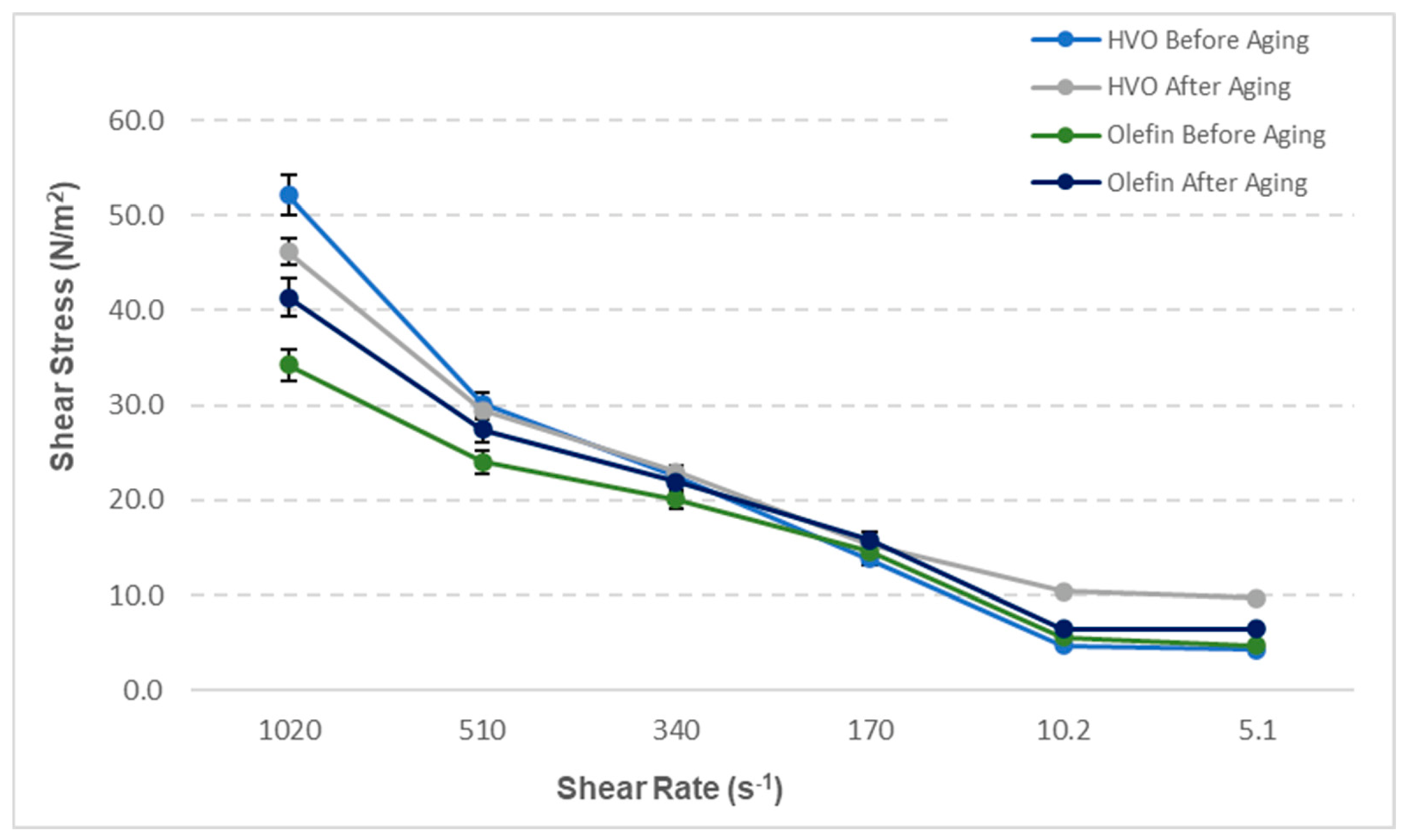
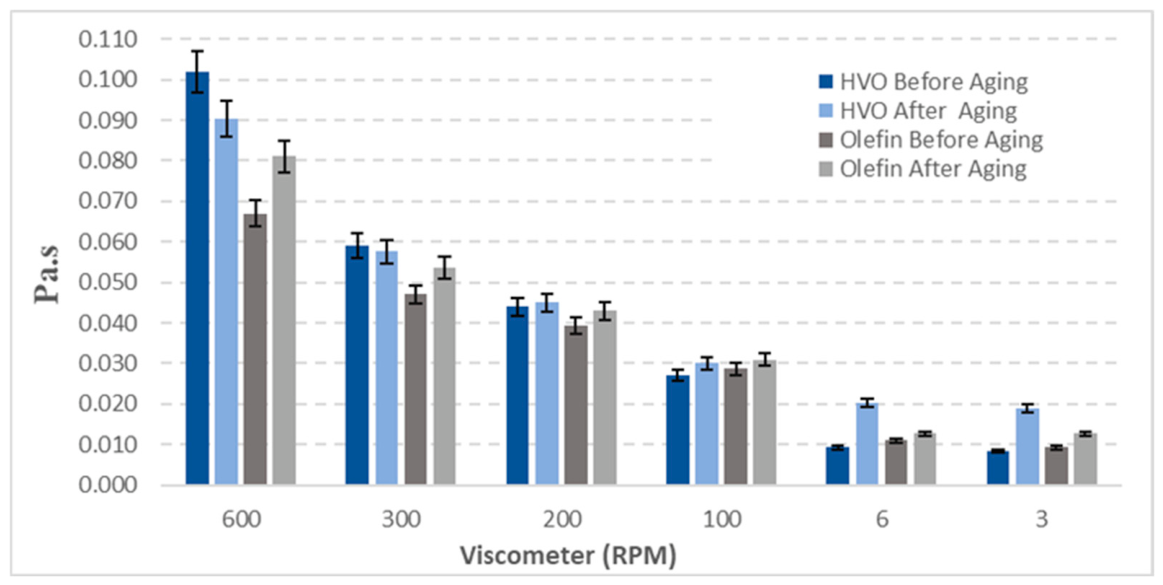
Figure 1 illustrates the results of rheological experiments conducted at a constant shear rate, allowing the variation in shear stress over time to be examined until the fluid reaches equilibrium, characterized by stress stability [35]. The assays were performed at shear rates of 5.1, 10.2, 170, 340, 510, and 1020 s−1, all in triplicate.
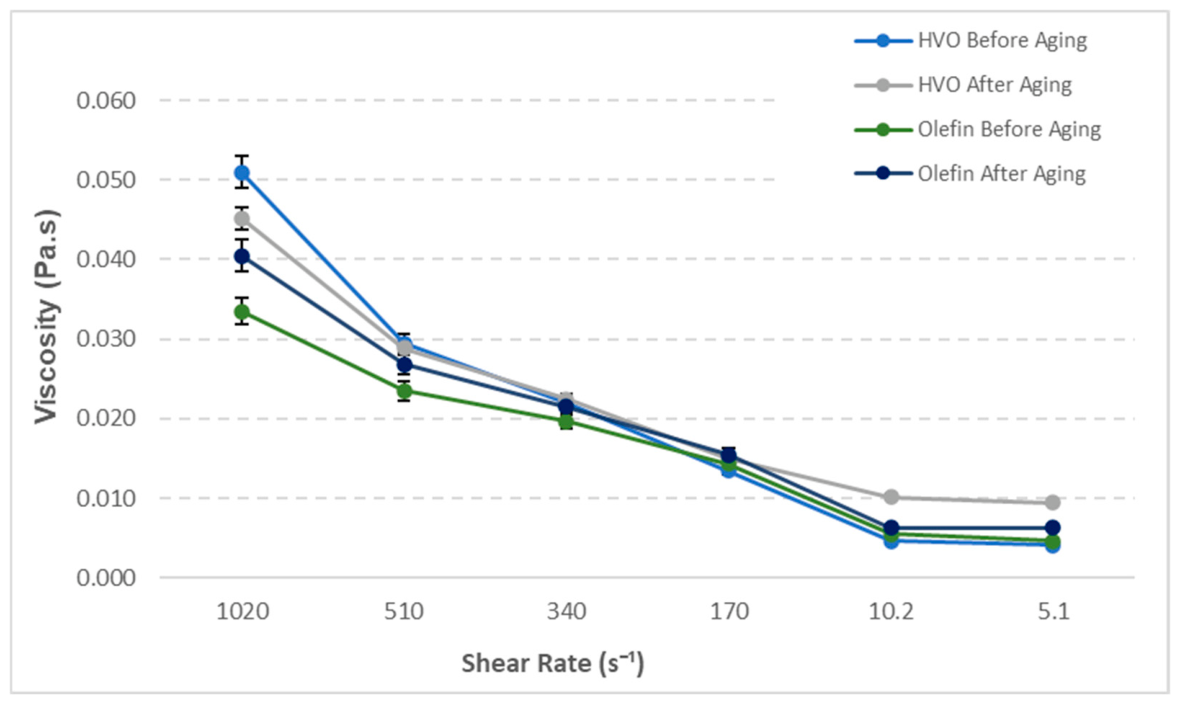
Based on the measurements, it was feasible to draw a consistency curve that establishes a relationship between shear stress (N/m2) and each shear rate, γ (s−1). Thus, it will be possible to derive rheological models for the samples, as illustrated in Figure 2 and Figure 3, while also considering their aging conditions and the corresponding γ (s−1).
Fluid classification is essential for analyzing the correlation between shear rate and consistency variation, especially for non-Newtonian fluids, as demonstrated in Figure 3, which clearly illustrates this relationship for both drilling fluids in their pre- and post-aging states.
Both drilling fluids, in their pre-aging and post-aging conditions, can be classified as non-Newtonian fluids, exhibiting pseudoplastic behavior as a function of shear rate, a common characteristic of drilling fluids, as illustrated in Figure 3. The decrease in apparent viscosity with increasing shear rate confirms the shear-thinning behavior of the systems. However, the results also suggest that aging may have partially strengthened the structural network of the HVO-based emulsion.
To further describe this behavior, the rheological response of the fluids after aging was analyzed using the Power-law model. The flow behavior index (n) characterizes the nature of the fluid: n < 1 indicates pseudoplastic (shear-thinning) behavior, whereas n = 1 corresponds to Newtonian behavior. The parameter K (consistency index) reflects the fluid’s overall viscosity, with higher values indicating greater resistance to flow.
The values obtained for the consistency index (K) were 0.49 Pa·sn for the HVO-based fluid and 0.63 Pa·sn for the olefin-based fluid, while the corresponding n values were 0.65 for the HVO-based fluid and 0.59 for the olefin-based fluid, respectively, for the aged systems. These results are consistent with the expected behavior of drilling fluids, which typically exhibit pseudoplastic characteristics, as evidenced by n values < 1. In addition, after aging, the higher K value observed for the olefin-based fluid indicates greater flow resistance than that of the HVO-based system.
The identification of behaviors that diverge from Newtonian laws focuses on the relationship between shear stress (τ) and the strain rate (γ). The analysis of an initial stress (τ0) together with the shape of the consistency curve supports the characterization of non-Newtonian fluids, as evidenced by results for both pre- and post-aging fluids. The pseudoplastic behavior, characterized by the reduction in viscosity with increasing shear rate, reveals the shear-thinning phenomenon. This behavior is remarkable, given that shear rates are generally higher under conditions that frequently occur in the drill string. The apparent viscosity, in turn, increases at low shear rates, which are predominant in the annular space, thus optimizing the solids-carrying capacity. Table 5 shows the values obtained for the Yield Point, Apparent Viscosity, Plastic Viscosity, Electric Stability, and Filtrate.
Regarding the different fluid compositions, HVO presented higher apparent viscosity values than the olefin-based fluid. However, a slight decrease was observed after aging, while the olefin-based fluid showed a moderate increase. The higher apparent viscosity observed for the HVO fluid compared with the olefin-based fluid may be related to differences in the composition of the base oils or to the greater dispersion of emulsified water droplets promoted by the emulsifier in the HVO system. According to Palma and Giudici [36], viscosity generally increases as particle size decreases in the fluid.
In addition, this behavior may also be related to the chemical composition of HVO (predominantly paraffinic hydrocarbons), which can enhance compatibility with the quaternary ammonium chains of organophilic clays, leading to more effective clay dispersion and improved structural development. In contrast, olefin-based fluids may exhibit lower compatibility with these additives, requiring higher concentrations to achieve similar rheological properties.
Furthermore, fluids based on hydrotreated vegetable oil (HVO) are mainly composed of hydrocarbons with longer carbon chains (C18–C20), which may contribute to higher viscosity compared with olefin-based fluids, whose composition is mainly dominated by hydrocarbons in the C16–C18 range.
The apparent viscosity values presented in Table 5 for the HVO-based drilling fluids are within commercial standards for reverse emulsion fluids, indicating good capacity to carry solids during drilling and showing their importance for the success of drilling operations.
According to Silva [37], plastic viscosity is a measure of a fluid’s internal resistance to its own motion. Plastic viscosity increases as particle size decreases. The main reason explaining this phenomenon is the decrease in the surface area of the fluid micelle because of the decrease in the size of the emulsion particles.
Both fluids studied, the olefin-based and the HVO-based systems, showed consistent relationships between plastic viscosity and apparent viscosity. The values obtained are within the recommended ranges, indicating adequate solids-carrying capacity for the cuttings generated during drilling operations.
As presented by Silva [37], the yield limit represents the effort required to initiate fluid motion and reflects the forces of attraction between particles in the drilling fluid. As observed in practice by Caenn et al. [38], drilling fluid performance is evaluated using the yield point, which indicates whether maintenance treatment is needed when the drilling fluid presents difficulties with displacement. Yield point is sensitive to the chemical environment, as it reflects the attractive forces between particles and may indicate the need for chemical treatment. As shown in Table 5, all yield point values were positive, which is consistent with the expected non-Newtonian behavior of drilling fluids. Highly lubricated fluids, such as synthetic fluids, exhibit this phenomenon, which can be observed when a lubricating layer forms and adheres to the equipment’s metal surfaces, reducing the flow force required.
The fluids exhibited different yield-point values, all of which are consistent with their use as drilling fluids. The HVO-based fluid showed slightly higher yield point values than the olefin-based fluid, suggesting stronger interactions between dispersed particles in the emulsion system.
According to a study by Perez [39], the electrical stability parameter is a measure of the voltage required to initiate electric current flow. It indicates how strongly the water is emulsified in an organic base. The high electrical stability values indicate a stronger emulsion, since oil is an electrical insulator. Between the electrodes, a flow of electricity is established through the emulsified water droplets, which coalesce to form a bridge. The emulsion breaks down at a voltage threshold, completing the circuit and achieving electrical stability, expressed in volts. Electrical stability may be associated with the emulsifier concentration in reverse emulsion drilling fluids. In the present study, the emulsifier concentration was kept constant at 8.0 lb/bbl, and the oil–water ratio (OWR) was approximately 60/40 for both fluids. Under these conditions, the electrical stability values obtained indicate that this formulation provided adequate emulsion stability for the analyzed systems.
All analyzed fluids showed satisfactory electrical stability, with values above 200 V, which is considered acceptable according to industry standards. Before aging, the olefin-based fluid showed higher electrical stability; after aging, the HVO-based fluid exhibited the highest stability. These results indicate that both systems formed stable emulsions, with good dispersion of the water phase in the oil phase, reducing coalescence and the formation of conductive bridges.
The filtrate volume from the filtration process is one of the main parameters for studying drilling fluid, as this test directly assesses the emulsion’s stability: the more stable it is, the lower the filtrate volume. The filtrate volume is directly related to the volume of fluid that invades the formation under certain temperature and pressure conditions [34]. All filtrate volume values obtained are within the API standard specifications. In all formulations, the results were below 5 mL, the limit set by current standards. Another point to note was that the filtrate contained 0% free water. The results for this parameter were highly promising, indicating good emulsion stability and making phase separation difficult during fluid use.
Based on the parameters analyzed in this work, the results for the HVO-formulated fluid were compatible with those of the olefin-based fluids widely used in offshore drilling operations or showed superior performance.
It is worth mentioning that while drilling fluid properties are critical for hole cleaning and wellbore stability, drilling efficiency is also governed by rock-breaking processes at the bit-formation interface, which depend on mechanical interactions under confining pressure conditions (Zou et al., 2024) [40]. In this context, fluid rheology may indirectly influence drilling performance by affecting cuttings transport and bit cleaning efficiency. The rheological properties of HVO-based fluids, particularly their shear-thinning behavior and gel strength, may affect the removal of rock cuttings from the bit face and the rate of penetration. Future studies should investigate how HVO-based fluids influence rock-breaking efficiency under downhole conditions, integrating fluid rheology with mechanical cutting models.
In addition to fluid performance, compatibility with elastomeric components used in drilling equipment is an important operational consideration. Recent advances in high-performance elastomeric materials with improved thermal stability and chemical resistance highlight the importance of material selection in demanding environments [41]. However, the interaction between HVO-based fluids and elastomeric materials was not addressed in the present study and should be considered in future work.


3.2. Biodegradability and Ecotoxicity

3.2.1. Biodegradability

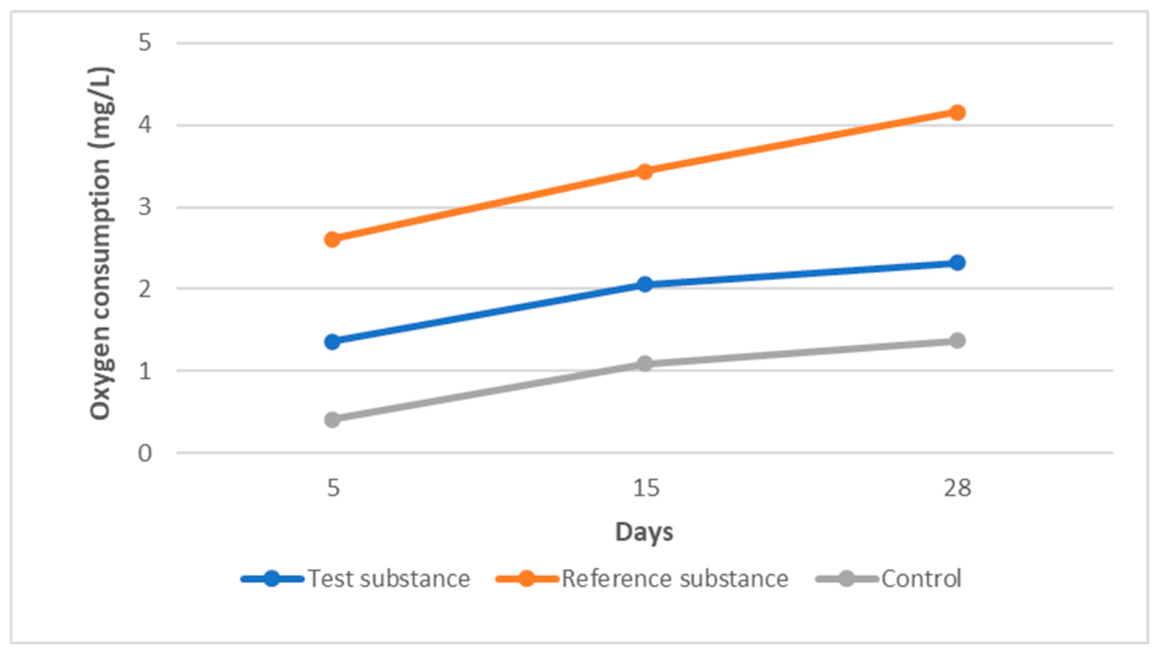
Table 6 shows the dissolved oxygen values obtained in the replicates of the control, the test substance, the reference substance, and the toxicity control for each day of sampling (0, 5, 15, and 28 days) and the mean dissolved oxygen consumption (Figure 4). These values correspond to the raw experimental data, without correction for endogenous oxygen consumption.
The mean dissolved oxygen concentration in the control ranged from 5.425 mg O2 L−1 at the beginning of the trial to 4.060 mg O2 L−1 on the 28th day. Thus, oxygen consumption in the control was 25.16% at the end of the trial. This value is within the limit established for the approval of dilution water by OECD Standard 306 [42], which establishes that the maximum consumption in the control must be 30%. A gradual decrease in dissolved oxygen was observed across all conditions, with higher consumption in the reference substance and toxicity control, indicating active microbial degradation. The elevated oxygen consumption in the toxicity control indicates active microbial activity.
Table 7 shows the net oxygen consumption for the different treatments, along with the estimated percentage biodegradability of the test and reference substances. According to Equation (4), the normalization was performed using the nominal concentration of the substances (2 mg L−1), while for the toxicity control, the normalization factor corresponds to the combined concentration of the test and reference substances (4 mg L−1). In this case, the values correspond to processed data corrected for the oxygen consumption observed in the control, thus representing net biodegradation. These calculations are based on nominal concentrations rather than on oxygen demand values (COD or ThOD), which were used for biodegradability calculations.
The net oxygen consumption observed in the toxicity control was lower than the combined consumption of the test and reference substances, suggesting a possible inhibitory effect of the test substance on microbial activity.
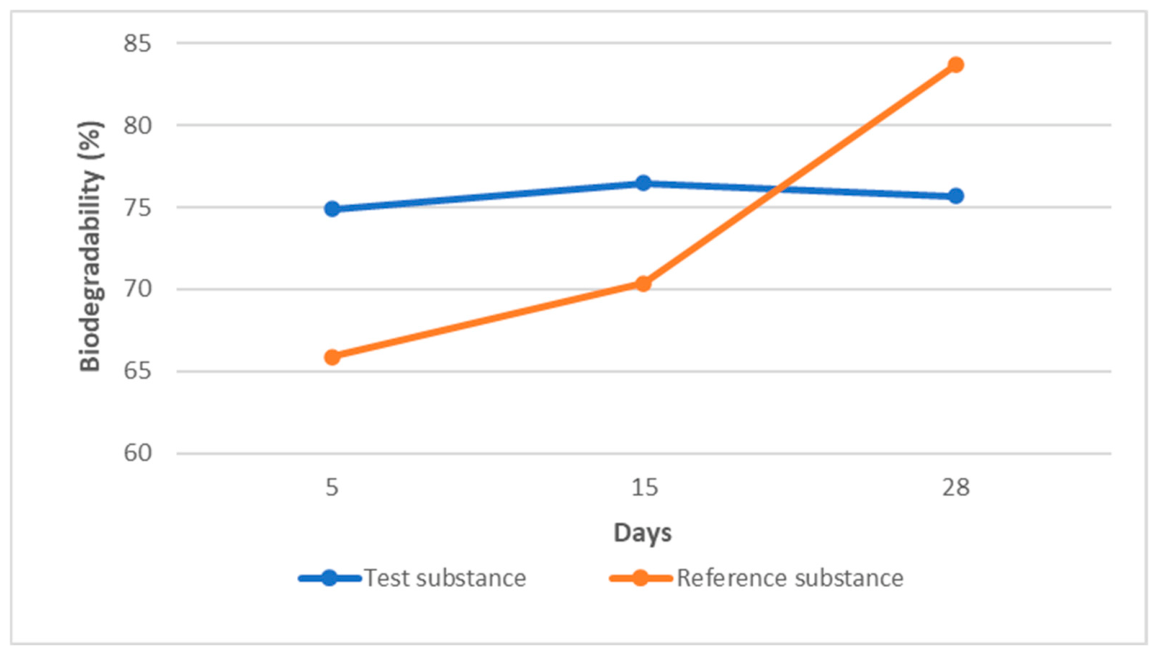
The estimated biodegradability of the reference substance reached 83.68% after 28 days, indicating that the inoculum was viable and active throughout the test.
Figure 5 presents the estimated biodegradability of the test and reference substances over the test period, based on the data shown in Table 7.
As shown in Figure 5, at the end of the test, the estimated biodegradability of the test substance (HVO) was 75.70%, which is above the 60% threshold established by OECD 306 [42] for classification as biodegradable. This value is comparable to those reported for ester-based drilling fluids (up to 81% in 28 days) according to Razali et al. (2018) [43], which serve as a reference for biodegradability. Generally, ester-based drilling fluids have been reported to provide superior biodegradation performance compared to other synthetic base fluids. However, they also have limitations, including lower thermal and chemical stability [43]. The chemical structure of ester-based fluid, which contains oxygen and hydrolysable ester bonds, facilitates microbial degradation, whereas HVO, which is composed mainly of saturated paraffinic hydrocarbons, still exhibited a similarly favorable biodegradation performance in this study. Moreover, commercially available biodegradability data on synthetic paraffinic and olefin bases typically exhibit aerobic biodegradation rates of approximately 55–80%, depending on composition and formulation [44].
Huang et al. (2025) [45] highlight that, although enhanced oil recovery technologies have significantly improved oil production, they also generate large volumes of wastewater containing salts, hydrocarbons, and residual chemical additives, which may pose environmental risks if not properly managed. Improper disposal of this wastewater can lead to considerable environmental contamination. In this context, the environmental performance of drilling fluids is also important, as residual fluids associated with cuttings and wastewater streams may contribute to the overall environmental impact of drilling operations. The high biodegradability of HVO observed in this study (75.7% in 28 days) suggests that such residues may be more readily degraded, likely reducing environmental burdens.

3.2.2. Ecotoxicity

In the present study, ecotoxicological tests were carried out in accordance with Brazilian standards.
Chronic Ecotoxicological Test
  • Test organism: Ceriodaphnia dubia (CRUSTACEA-CLADOCERA)
  • Trial response: Effects on reproduction
  • Expression of results: CI(I)50—initial concentration affecting the reproduction of 50% of females at the end of the trial.
  • Calculation method: Linear interpolation method [27] (Norberg-King, 1993)
  • Reference Method for cladocera assay: ABNT-NBR 13373: 2022–Aquatic ecotoxicology–Chronic toxicity–Ceriodaphnia spp. (Cladocera, Crustacea) [25] assay method
  • Reference Method for sample preparation: ABNT-NBR 15.469:2021 Ecotoxicology–Collection, preservation and preparation of samples [29].
  • Stock solution: 500 mg L−1 (0.25 g of sample in 500 mL of seawater)
  • Test solutions: 31.25, 62.5, 125, 250, and 500 mg L−1.
The results of the chronic ecotoxicity test are presented in Table 8, including female mortality, reproduction (number of neonates), and physicochemical parameters (pH and dissolved oxygen).
As shown in Table 9, the CI(I)50 value for the HVO-based fluid was 80.00 mg L−1, representing the chronic toxicity threshold for this fluid.
Acute Ecotoxicological Test
  • Test organism: Daphnia similis (CRUSTACEA-CLADOCERA)
  • Observed effect: Mobility
  • Expression of results: EC(I)50; 48 h—initial concentration that affects the mobility of 50% of the organisms, at 48 h.
  • Calculation method: Trimmed Spearman–Karber [46] (Hamilton et al., 1977)
  • Reference Method for cladocera test: ABNT-NBR 12.713:2022–Aquatic ecotoxicology–Acute toxicity–Daphnia spp. test method (Cladocera, Crustacea).
  • Reference Method for sample preparation: ABNT-NBR 15.469:2021 Ecotoxicology–Collection, preservation and preparation of samples [29].
  • Stock solution: 1000 mg L−1 (0.25 g of the sample in 250 mL of seawater).
  • Test solutions: 62.5, 125, 250, 500, 1000 mg L−1.
The results of the acute ecotoxicity test are presented in Table 10, including the number of mobile and immobilized organisms and the corresponding immobility percentages at each tested concentration.
As shown in Table 10, no immobilization was observed at lower concentrations (up to 125 mg L−1), while significant effects occurred at higher concentrations, reaching 100% immobility at 1000 mg L−1.
Table 11 presents the results of the acute toxicity tests with Daphnia similis. The HVO analysis showed an EC(I)50 of 406.13 mg L−1 at 48 h, indicating the concentration associated with acute effects (immobility) in 50% of the exposed organisms.
The EC50 value obtained for the HVO-based fluid is lower than those reported for C18 alkenes (e.g., EC50 > 1000 mg L−1 for Daphnia) [47] (NICNAS, 2003). However, such high values may be attributed to the limited water solubility. These results indicate relatively low acute toxicity of the HVO-based fluid under the tested conditions.
It is important to note that the concentration tested in these studies was determined according to standard protocols. Chronic toxicity tests were carried out at concentrations from 31.25 to 500 mg L−1, while acute toxicity tests ranged from 62.5 to 1000 mg L−1. From an environmental aspect, these concentrations represent conservative exposure scenarios, as dilution processes in offshore environments typically reduce the concentrations of discharged fluids into seawater. The obtained CI(I)50 (80 mg L−1) and EC(I)50 (406.13 mg L−1) values may indicate relatively low toxicity under environmental conditions.
It is important to note that the tested system corresponds to a specific formulation based on HVO as the base fluid. The biodegradability and toxicity observed in this study demonstrate the promising environmental profile of the HVO-based fluid under the tested conditions. However, the general environmental behavior of drilling fluids may vary depending on the presence of additives. Thus, further studies including different additives are necessary to provide a more comprehensive assessment of environmental risk.

4. Conclusions

The development of reverse emulsion drilling fluids has always been directed toward formulating an environmentally friendly fluid with low toxicity and high biodegradability, thereby minimizing environmental impact. This is necessary due to the increasing restrictions imposed by governments and environmental protection agencies in different countries. In this sense, the HVO-based drilling fluids developed in this work represent an advantageous alternative as an organic base for oil well drilling fluids.
The present work demonstrates that inverse emulsion drilling fluids (organic continuous phase and aqueous dispersed phase) can be successfully developed using HVO as the continuous phase. The HVO-based fluid showed lower plastic viscosity with fewer chemical additives, while the yield strength behaved similarly to that of olefin-based fluids, reducing chemical additive consumption without impairing drilling fluid properties.
The emulsions prepared with HVO showed good stability, without flocculation or phase separation during the evaluation period, as evidenced by the electrical stability results. In general, HVO-based fluids presented higher electrical stability values than olefin-based fluids, indicating the formation of stable emulsions. In addition, the rheological and thixotropic properties of the HVO fluids were comparable or superior to those of olefin-based fluids, confirming their suitability as an organic base for drilling fluids.
Thermal aging slightly reduced viscosity at high shear rates but increased gel strength and electrical stability for both HVO and olefin-based fluids. The filtrate volumes obtained for HVO-based formulations were low, indicating good formation stability and contributing to wellbore integrity.
From an environmental perspective, the results of biodegradability and ecotoxicity tests show the low environmental impact of using HVO as a base for reverse emulsion drilling fluids, with biodegradability reaching 75.70% after 28 days and low acute toxicity (EC50 = 406.13 mg L−1).
In addition, environmentally friendly fluid systems have also been explored in enhanced oil recovery (EOR), where nanofluid flooding has shown potential to improve oil displacement efficiency [48]. Furthermore, recent studies have highlighted the use of green solvents that can be injected alongside steam to reduce the viscosity of heavy oils, thereby improving flow and recovery rates during thermal EOR processes [49]. In this context, HVO offers potential for future investigation in EOR systems, particularly as a complementary component rather than a primary injection fluid.
Overall, the results indicate that HVO-based fluids provide a balanced combination of rheological performance, emulsion stability, and environmental compatibility, making them a promising alternative to conventional olefin-based systems.
Regarding sustainable development, this work contributes to reducing the impacts of existing drilling operations by using a renewable, non-fossil-fuel-based fluid that is biodegradable and less toxic than conventional fossil-fuel-based fluids. The noted reduction in rheological additives is highlighted to minimize chemical use and environmental impact, without compromising drilling fluid properties. These outcomes support the development of more sustainable drilling fluid systems, particularly in offshore environments in which environmental protection is critical. Therefore, this work contributes to sustainable development by proposing a drilling fluid formulation that combines technical performance with decreased environmental impact.

Author Contributions

Conceptualization, F.F.V.; methodology, F.F.V. and J.V.F.; validation, F.F.V. and J.V.F.; formal analysis, F.F.V.; investigation, F.F.V.; resources, F.F.V.; data curation, F.F.V.; writing—original draft preparation, F.F.V.; writing—review and editing, F.F.V. and J.V.F.; supervision, J.V.F.; project administration, F.F.V.; funding acquisition, F.F.V. All authors have read and agreed to the published version of the manuscript.

Funding

This work was conducted as part of the doctoral program at the Escola Politécnica da Universidade de São Paulo (PPGEMP). VAMTEC Group funded the costs of analyses, equipment, and materials.

Institutional Review Board Statement

Not applicable.

Informed Consent Statement

Not applicable.

Data Availability Statement

The original contributions presented in this study are included in the article. Further inquiries can be directed to the corresponding authors.

Conflicts of Interest

F.F.V. reports that VAMTEC Group provided financial support, equipment, supplies, and travel. F.F.V. reports a relationship with VAMTEC Group, including board membership. F.F.V. has a patent pending. The funders had no role in the design of the study, the collection, analysis, or interpretation of data, the writing of the manuscript, or the decision to publish the results. J.V.F. declares that they have no known competing financial interests or personal relationships that could have appeared to influence the work reported in this paper.

Abbreviations

The following abbreviations are used in this manuscript:
HVOHydrotreated Vegetable Oil
OECD Organization for Economic Co-operation and Development
ABNTBrazilian Association of Technical Standardization
APIAmerican Petroleum Institute
AVApparent Viscosity
PVPlastic Viscosity
YPYield Point
lbPound
bblOil barrel

References

  1. Amui, S. Petróleo e gás Natural para Executivos. Exploração de Áreas, Perfuração e Completação de Poços e Produção de Hidrocarbonetos; Editora Interciência: Rio de Janeiro, Brazil, 2010; p. 183. [Google Scholar]
  2. Schaffel, S.S. Questão Ambiental na Etapa de Perfuração de Poços Marítimos de Óleo e Gás no Brasil. Master’s Thesis, COPPE, Rio de Janeiro, Brazil, 2002. [Google Scholar]
  3. Borges, F.A.T. Biodegradação de Fluídos Base e de Cascalhos Oriundos da Perfuração de Poços de Petróleo e Gás. Master’s Thesis, Universidade Federal do Espírito Santo, Vitoria, Brazil, 2006. [Google Scholar]
  4. Hamoodi, A.; Rahimy, A.A.; Khalid, A.W. The Effect of Proper election of Drilling Fluid on Drilling Operation in Janbour Field. Am. Sci. Res. J. Eng. Technol. Sci. 2018, 39, 224–234. [Google Scholar]
  5. Ramsey, M.S. Practical Wellbore Hydraulics and Hole Cleaning: Unlock Faster, More Efficient, and Trouble-Free Drilling Operations; Gulf Professional Publishing: Cambridge, MA, USA, 2019. [Google Scholar]
  6. Li, Y.; Weng, X.; Hu, D.; Tan, Z.; Liu, J. Data-Driven Method for Predicting Long-Term Underground Pipeline Settlement Induced by Rectangular Pipe Jacking Tunnel Construction. J. Pipeline Syst. Eng. Pract. 2025, 16, 4025046. [Google Scholar] [CrossRef]
  7. Magathevan, T.; Yusup, S.; Raman, N.; Ruzaimah, Y.; Kamil, N.M. Performance Comparison and Optimization of Palm Fatty Acid Distillate (PFAD) Biodiesel Based Drilling Fluid. Aust. J. Basic Appl. Sci. 2014, 8, 56–62. [Google Scholar]
  8. Sylvia, I.; Azuokwu Augustine, A.; Igbafe Anselm, I. Production and Characterization of an Eco-Friendly Oil Based Mud from Synthetic Bio-lubricant Derived from Chrysophyllum Albidum Seed Oil. Eng. Technol. Res. J. 2021, 6, 40–47. [Google Scholar]
  9. Udeagbara, S.G.; Okereke, N.U.; Kerunwa, A.; Oguamah, I.; Nwanwe, O.I.; Odo, J.E.; Ikejimba, B.; Okeke, R. Performance evaluation of oil based drilling fluid formulated with castor oil. J. Pet. Gas Eng. 2021, 12, 8–22. [Google Scholar] [CrossRef]
  10. Onuh, C.Y.; Dosunmu, A.; Anawe, P.A.L.; Okoro, E.E.; Igwilo, K.C.; Ehinmowo, A.B. The rheological behavior of a pseudo-oil-based mud formulated with Hura crepitans plant oil as base fluid. J. Pet. Explor. Prod. Technol. 2019, 10, 71–89. [Google Scholar] [CrossRef]
  11. Kumar, S.; Thakur, A.; Kumar, N.; Husein, M.M. A novel oil-in-water drilling mud formulated with extracts from Indian mango seed oil. Pet. Sci. 2020, 17, 196–210. [Google Scholar] [CrossRef]
  12. Ahmed, A.; Elkatatny, S.; Al-Afnan, S. Applications of Biodiesel in Drilling Fluids. Geofluids 2021, 2021, 5565897. [Google Scholar] [CrossRef]
  13. Araruna, J., Jr.; Burlini, P. Gerenciamento de Resíduos na Indústria Depetróleo e Gás, 1st ed.; Elsevier: Rio de Janeiro, Brazil, 2013; pp. 1–76. [Google Scholar]
  14. Arenzon, A.; Pereira Neto, T.J.; Gerber, W. Manual Sobre Toxicidade de Efluentes Industriais; FIERGS: Porto Alegre, Brazil, 2011. [Google Scholar] [CrossRef]
  15. Sil, A.; Wakadikar, K.; Kumar, S.; Babu, S.S.; Sivagami, S.P.M.; Tandon, S.; Kumar, R.; Hettiaratchi, P. Toxicity characteristics of drilling mud and its effect on aquatic fish populations. J. Hazard. Toxic Radioact. Waste 2012, 12, 51–57. [Google Scholar] [CrossRef]
  16. Enty, G.S. Estimation of Drilling Wastes—An Environmental Concern While Drilling Oil and Gas Wells. Master’s Thesis, African University of Science and Technology, Abuja, Nigeria, 2011. [Google Scholar]
  17. Vincent-Akpu, I.F.; Sikoki, F.D. Toxicity of Drilling Fluid Parateq on Microbial Load and Survival of Oreochromis niloticus Fingerlings. J. Fish. Aquat. Sci. 2013, 8, 218–222. [Google Scholar] [CrossRef][Green Version]
  18. Arain, A.H.; Ridha, S.; Suppiah, R.R.; Irawan, S.; Ilyas, S.U. Developing an efficient ester-based drilling fluid based on Calophyllum Inophyllum oil for eco-friendly drilling of unconventional shale formation. J. Pet. Sci. Eng. 2022, 219, 111141. [Google Scholar] [CrossRef]
  19. Petrobras. Manual de Fluidos/Engenharia de Poço, 1st ed.; Petrobras: Salvador, Brazil, 2011.
  20. Okoro, C. Biodegradation Potential of Paraffin and Olefin Synthetic Based Drilling Mud Base Fluids under Microaerophilic and Anaerobic Conditions. Nat. Sci. 2011, 9, 81–88. [Google Scholar]
  21. Growcock, F.; Ellis, C.; Schmidt, D.; Azar, J. Electrical Stability, Emulsion Stability, and Wettability of Invert Oil-Based Muds. SPE Drill. Complet. 1994, 9, 39–46. [Google Scholar] [CrossRef]
  22. Neto, M.A.S. Contribuição Técnica de um Sistema de Emulsão Inversa a Base de Óleos Vegetais para Fluidos de Perfuração. Master’s Thesis, Universidade Federal do Rio Grande do Norte, Natal, Brazil, 2002. [Google Scholar]
  23. Martins, A.L.; Waldmann, A.T.A.; Ribeiro, D.C.; Massarani, G. The conceptual design of a non-invasive solids-free drilling fluid. Bol. Técnico Produção Petróleo 2008, 2, 7–27. [Google Scholar]
  24. API Recommended Practice 13B-2; Recommended Practice for Field Testing Oil-Based Drilling Fluids; American Petroleum Institute: Washington, DC, USA, 2014.
  25. APHA; AWWA; WEF. Standard Methods for the Examination of Water and Wastewater, 21st ed.; American Public Health Association: Washington, DC, USA, 2005. [Google Scholar]
  26. NBR 13373; Aquatic Ecotoxicology—Chronic Toxicity—Test Method with Ceriodaphnia spp. (Crustacea, Cladocera). ABNT Brazilian Association of Technical Standardization: Rio de Janeiro, Brazil, 2022.
  27. Norberg-King, T.J. A Linear Interpolation Method for Sublethal Toxicity: The Inhibition Concentration (ICp) Approach; Version 2.0; U.S. Environmental Protection Agency: Duluth, MN, USA, 1993.
  28. NBR 15.308; Aquatic Ecotoxicology: Acute Toxicity—Test Method with Mysids (Crustacea). ABNT Brazilian Association of Technical Standardization: Rio de Janeiro, Brazil, 2011.
  29. NBR 15.469; Ecotoxicology—Collection, Preservation, and Preparation of Samples. ABNT Brazilian Association of Technical Standardization: Rio de Janeiro, Brazil, 2021.
  30. Mueller, H.; Herold, C.P.; VonTapavicza, S. Use of Selected Fatty Alcohols and Their Mixtures with Carboxylic Acid Esters as Lubricant Components in Water Based Drilling Fluid Systems for Soil Exploration. U.S. Patent 6716799, 6 April 2004. [Google Scholar]
  31. Qudaihy, D.S.; Faraj, O.A.; Alnughaimish, F.N. Improving horizontal well productivity using novel technology and optimization of drilling fluids. SPE Drill. Complet. 2005, 20, 205–208. [Google Scholar] [CrossRef]
  32. Li, W.; Zhao, X.; Ji, Y.; Peng, H.; Li, Y.; Liu, L.; Han, X. An investigation on environmentally friendly biodiesel-based invert emulsion drilling fluid. J. Pet. Explor. Prod. Technol. 2016, 6, 505–517. [Google Scholar] [CrossRef]
  33. Magalhães, S.C.; Calçada, L.A.; Scheid, C.M.; Almeida, H.; Waldmann, A.T.A. Improving drilling performance with continuous online measurements of electrical stability and conductivity in oil based drilling fluids. J. Pet. Sci. Eng. 2016, 146, 369–379. [Google Scholar] [CrossRef]
  34. Moreira, G.; Costa, M.; Araújo, R.; Girão, J.; Gracia, R. Estudo comparativo entre novo emulsificante e produtos comerciais na estabilidade de fluidos de perfuração à base de éster. In Anais do 4º Congresso Brasileiro de Pesquisa e Desenvolvimento em Petróleo e Gás (PDPETRO); ABPG: Natal/Campinas, Brasil, 2007; Volume 4, pp. 1–6. [Google Scholar]
  35. De Souza Mendes, P.R. Thixotropic elasto-viscoplastic model for structured fluids. Soft Matter 2011, 7, 2471–2483. [Google Scholar] [CrossRef]
  36. Palma, M.; Giudici, R. Copolimerização em emulsão de acetato de vinila e acrilato de butila com alto teor de sólidos. Polímeros Ciência Tecnol. 2006, 16, 269–275. [Google Scholar] [CrossRef]
  37. da Silva, C.T. Desenvolvimento de Fluidos de Perfuração a Base de Óleos Vegetais; Monografia; Universidade Federal do Rio Grande do Norte: Natal, Brazil, 2003. [Google Scholar]
  38. Caenn, R.; Darley, H.; Gray, G. Composition and Properties of Drilling and Completion Fluids, 6th ed.; Gulf Professional Publishing: Waltham, MA, USA, 2011. [Google Scholar]
  39. Perez, G. Estudo da Estabilidade Elétrica de Fluidos de Emulsão Inversa Usados para Perfuração de Poços de Petróleo; Monografia; Universidade Federal de Santa Catarina: Florianopolis, Brazil, 2008. [Google Scholar]
  40. Zou, B.; Yin, J.; Liu, Z.; Long, X. Transient rock breaking characteristics by successive impact of shield disc cutters under confining pressure conditions. Tunn. Undergr. Space Technol. 2024, 150, 105861. [Google Scholar] [CrossRef]
  41. Li, D.; Ning, S.; Yu, L.; Jiang, F.; Zhao, D.; Zhang, S.; Liao, M.; Meng, Q.; Fang, Q.; Kang, H.; et al. Molecular Reconstruction for the High-Performance Recycled Fluororubbers. Adv. Mater. 2025, 37, 2501622. [Google Scholar] [CrossRef] [PubMed]
  42. OECD. OECD Guideline for Testing of Chemicals (306): Biodegradability in Seawater; OECD: Paris, France, 1992. [Google Scholar]
  43. Razali, S.Z.; Yunus, R.; Rashid, S.A.; Lim, H.N.; Jan, B.M. Review of biodegradable synthetic-based drilling fluid: Progression, performance and future prospect. Renew. Sustain. Energy Rev. 2018, 90, 171–186. [Google Scholar] [CrossRef]
  44. Shell. NEOFLO™ Performance Olefins. Available online: https://www.shell.com/business-customers/chemicals/our-products/shell-performance-olefins/neoflo.html (accessed on 16 April 2026).
  45. Huang, B.; Shu, X.; Liu, X.; Fu, C.; He, J.; Zhang, X. Experimental study on the characteristics, injection damage, and oil displacement efficiency of alkali-free ternary composite flooding extracted wastewater. Energy 2025, 332, 137278. [Google Scholar] [CrossRef]
  46. Hamilton, M.A.; Russo, R.C.; Thurston, R.V. Trimmed Spearman–Karber method for estimating median lethal concentrations in toxicity bioassays. Environ. Sci. Technol. 1977, 11, 714–719. [Google Scholar] [CrossRef]
  47. NICNAS. PIB Distillate—Full Public Report; National Industrial Chemicals Notification and Assessment Scheme: Canberra, ACT, Australia, 2003. Available online: https://www.industrialchemicals.gov.au/sites/default/files/STD1040%20Public%20Report%20PDF.pdf (accessed on 5 April 2026).
  48. Fu, C.; Huang, K.; Chen, H.; Huang, B.; Zhang, W. From fundamental mechanisms to applications and challenges of nanofluid flooding in enhanced oil recovery: A review. Fuel 2025, 396, 135317. [Google Scholar] [CrossRef]
  49. Kamal, R.S.; El-Shazly, R.I.; Keshawy, M.; Hasan, A.M.; Abdel-Raouf, M.E. Green Materials Used in Enhanced Oil Recovery: A Historical Background and a Future Outlook. In Recent Approaches in Enhanced Oil Recovery—New Perspectives and Future Outlook; Intech Open: London, UK, 2025. [Google Scholar] [CrossRef]
Figure 1. Rheological results obtained.
Sustainability 18 04343 g001
Figure 2. Shear rate with shear stress.
Sustainability 18 04343 g002
Figure 3. Viscosity × shear rate.
Sustainability 18 04343 g003
Figure 4. Mean oxygen consumption (mgO2 L−1) in the control, test substance, and reference substance, on days 5, 15, and 28 (Table 6).
Sustainability 18 04343 g004
Figure 5. Percentage (%) of Biodegradability estimated for the test substance and reference substance on days 5, 15, and 28 (Table 7).
Sustainability 18 04343 g005
Table 1. Composition of olefin-based fluid.
ProductConcentration
Olefin (Amodrill 1000)0.518 bbl
Primary emulsifier8 lb/bbl
Hydrated lime9 lb/bbl
NaCl solution (saturated)0.308 bbl
Organophilic clay4 lb/bbl
Rheology modifier1 lb/bbl
Filtrate reducer1.5 lb/bbl
Calcium carbonate 2-4415 lb/bbl
Barite65 lb/bbl
Table 2. HVO Base Fluid Composition.
ProductConcentration
HVO0.518 bbl
Primary emulsifier8 lb/bbl
Hydrated lime9 lb/bbl
NaCl solution (saturated)0.308 bbl
Organophilic clay2 lb/bbl
Rheology modifier0.5 lb/bbl
Filtrate reducer1 lb/bbl
Calcium carbonate 2-4415 lb/bbl
Barite65 lb/bbl
Table 3. Summary of marine biodegradability test conditions.
Dilution water: Seawater
Collection Location: Arraial do Cabo (23°07′16.07″ S–41°59′55.22″ W)
Pickup date: 04/05/2023Collecting Depth: Surface
Pretreatment:aeration for 08 days and filtration
Salinity: 3.6%Temperature after aeration 25 ± 2.0 °C
Standard Bacteria Count:1.05 × 10⁶ UFC/mL
Test substance: HVO
Concentration: 2 mg L−1
Chemical Oxygen Demand (COD): 630.784 mgO2/kg
(0.630784 mgO2/kg)
Reference substance:
Sodium benzoate (C7H5O2Na) (ThDO)1.67 mgO2/mg
Incubation temperature of the assay:20 ± 2.0 °C
Photoperiod:Dark
No. replications/treatment:8
Duration of the test28 days
Table 4. Typical values for drilling fluid properties reverse emulsion.
PropertyValue Range
American StandardInternational Standard
Plastic Viscosity10–60 cP0.01–0.06 Pa·s
Yield Point 5–42 lbf/100ft22.5–20 Pa
Initial Gel8–21 lbf/100ft24–10 Pa
Final Gel8–31 lbf/100ft24–15 Pa
Electrical Stability>200 V
Source: Li et al., Magalhães et al. [32,33].
Table 5. Yield point, apparent viscosity, plastic viscosity, electric stability, and filtrate.
Fluid BaseYield Point (Pa)Apparent
Viscosity (Pa·s)
Plastic
Viscosity (Pa·s)
Electrical
Stability (Volts)
Filtrate (mL)
BAAABAAABAAABAAABAAA
HVO28.2327.600.0510.0450.0430.033320836-2.8
Olefin22.4925.680.0340.0410.0200.027475614-3.1
BA: Before Aging. AA: After Aging.
Table 6. Dissolved oxygen values obtained in the replicates of the control, toxicity control, reference substance, and test substance, and the mean consumption for the sampling days (5, 15, and 28 days).
Bottle No.mg O2/L on Sampling Days
051528
Control15.355.174.304.07
25.504.864.384.05
Average5.4255.0154.3404.060
Average Consumption *C5: 0.410C15: 1.085C28: 1.365
Test Substance 15.583.903.533.19
25.304.273.253.05
Average5.4404.0853.3903.120
Average Consumption *T5:1.355T15: 2.050T28: 2.320
Reference Substance 15.493.152.061.52
25.512.632.071.16
Average5.5002.892.0651.340
Average Consumption *T5: 2.610T15: 3.435T28: 4.160
Toxicity Control15.672.400.500.25
25.212.360.670.22
Average5.4402.3800.5850.235
Average Consumption *Tox5: 3.060Tox15: 4.855Tox28: 5.205
(*) Average consumption calculated from the decrease in dissolved oxygen relative to day 0.
Table 7. Net oxygen consumption in the toxicity control in the test substance and in the reference substance, and the percentage of biodegradability estimated for the substance test and the reference substance, for the sampling days (5, 15, and 28 days).
Sampling Days
51528
Toxicity ControlNet consumption
T o x X C X 4 m g / L
0.66250.94250.9600
Test SubstanceNet consumption
T X C X 2 m g / L
0.47250.48250.4775
% Biodegradability
L i q u i d   c o n s u m p t i o n   T   ×   100 0.639784
74.9176.4975.70
Reference SubstanceNet consumption
R X C X 2 m g / L
1.10001.17501.3975
% Biodegradability
L i q u i d   c o n s u m p t i o n   R   ×   100 1.67
65.8770.3683.68
C = Control; T = Test substance; R = Substance reference. CX = Average consumption in the control of day X. TX = Average consumption in the test substance on day X. RX = Average consumption of the reference substance on day X ToxX = Average intake in the toxicity control on day X.
Table 8. Percentage mortality of females and average number of young per female, pH values, and dissolved oxygen (mg L−1) measured at the beginning (I) and at the end (T) of the test, in the control, and in the smallest and largest test solutions.
Test
Solutions (mg L−1)
Mortality of Females (%)Number of Neonates (Replica)No. Average of Young/Females
Control0.0273939249312222242726.4
31.250.01432171823172020161919.6
62.520.002352515191922161616.0
12560.000017160661146.0
25040.031141009800135.8
500 **70.02186004000104.0
Test Solution (mg L−1)Dissolved OxygenpH
ITIT
Control6.15.87.08.2
31.256.65.67.28.1
500 **6.65.87.28.4
Control: Exposure of organisms to dilution water (reconstituted water) under the same conditions as the sample. ** Stock solution.
Table 9. Results of aquatic ecotoxicology tests–Chronic toxicity–Test method with Ceriodaphnia spp. (Cladocera).
CI(I)50: 80.00 mg L−1
Confidence interval (IC): 50.86–104.17 mg L−1
Survival in control: 100%
Average number of young female obtained in the control: 26.4
Essay with NaCl (10/05/2023): 1.96 g L−1 (IC: 1.76–2.19 g L−1)
IC: Confidence interval. Test validation criteria: Survival of control organisms: 80%. Average number of young organisms produced per female in the control: ≥15. Sensitivity to NaCl: CI(I) 50; 48 h: 1.40–2.08 g L−1 (Control chart: 9 January 2023).
Table 10. Number of mobile/immobile organisms and percentage of immobility at the end of the test, for different test solutions. pH and dissolved oxygen values (mg L−1) measured at the beginning (I) and at the end (T) of the test, in the control, and in the smallest and largest test solutions.
Test Solutions (mg L−1)Number of Mobile OrganismsNumber of Immobilized OrganismsImmobility
Control2000.0
62.52000.0
1252000.0
25020420.0
500201260.0
1000 *2020100.0
Test Solution (mg L−1)Dissolved OxygenpH
ITIT
Control6.65.47.08.1
62.54.95.07.38.1
1.000 *5.45.67.38.0
Control: exposure of the organisms to dilution water (reconstituted water) under the same conditions as the samples. * Stock solution.
Table 11. Results of aquatic ecotoxicology tests–Acute toxicity–Test method with Daphnia spp. (Cladocera, Crustacea).
EC(I)50: 48 h: 406.13 mg L−1
Confidence interval (IC): 333.82–494.09 mg L−1
Survival in control: 100%
Essay with NaCl (25/04/2023): 28.87 g L−1 (IC: 2.45–3.36 g L−1)
Test validation criteria: Survival of control organisms: ≥90%. Sensitivity to NaCl: EC(I) 50; 48 h: 2.26–3.72 g L−1 (Control chart: 9 January 2023).
Disclaimer/Publisher’s Note: The statements, opinions and data contained in all publications are solely those of the individual author(s) and contributor(s) and not of MDPI and/or the editor(s). MDPI and/or the editor(s) disclaim responsibility for any injury to people or property resulting from any ideas, methods, instructions or products referred to in the content.