Coupling Coordination Between Transport Development Level and Carbon Emission Intensity in China: Spatiotemporal Patterns and Regional Heterogeneity


Abstract
1. Introduction
2. Literature Review
2.1. Research on TD
2.2. Research on TCEI
2.3. Mechanism Analysis of TD and TCEI Interaction
2.3.1. TD’s Impact on TCEI
2.3.2. TCEI’s Impact on TD
2.4. Research Gaps and Contributions
3. Materials and Methods
3.1. Research Area
3.2. Evaluation Indicators and Data Sources
3.2.1. Evaluation Indicators
- (1)
- Indicators for TD
- (2)
- Indicators for TCEI
3.2.2. Data Sources and Treatment
3.3. Research Method
3.3.1. Entropy Weight TOPSIS Method
3.3.2. Coupling Coordination Degree Model
- (1)
- Comprehensive Index Calculation
- (2)
- Coupling Degree Calculation
- (3)
- Coupling Coordination Degree
3.3.3. Kernel Density Estimation (KDE)
3.3.4. Spatial Autocorrelation Analysis
- (1)
- Global Moran’s I
- (2)
- Local Indicators of Spatial Association (LISA)
- (3)
- Spatial Weight Matrix
3.3.5. XGBoost-SHAP Explainable Machine Learning Framework Based on Transfer Learning
- (1)
- Fundamental Principles of the XGBoost Model
- (2)
- Transfer Learning Strategy
- (3)
- Principles of SHAP Value Calculation
4. Results and Discussion
4.1. Spatiotemporal Evolution of TD and TCEI
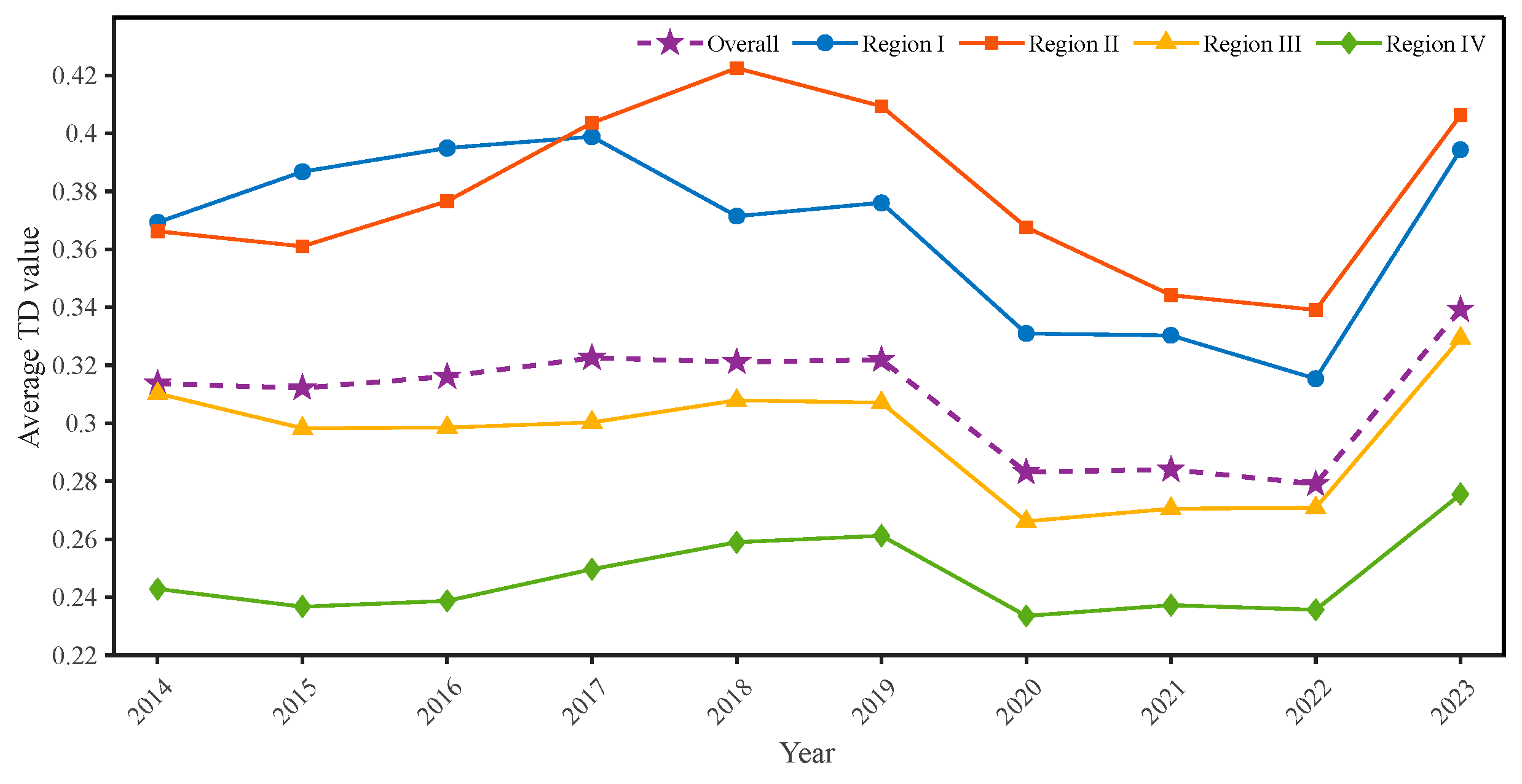
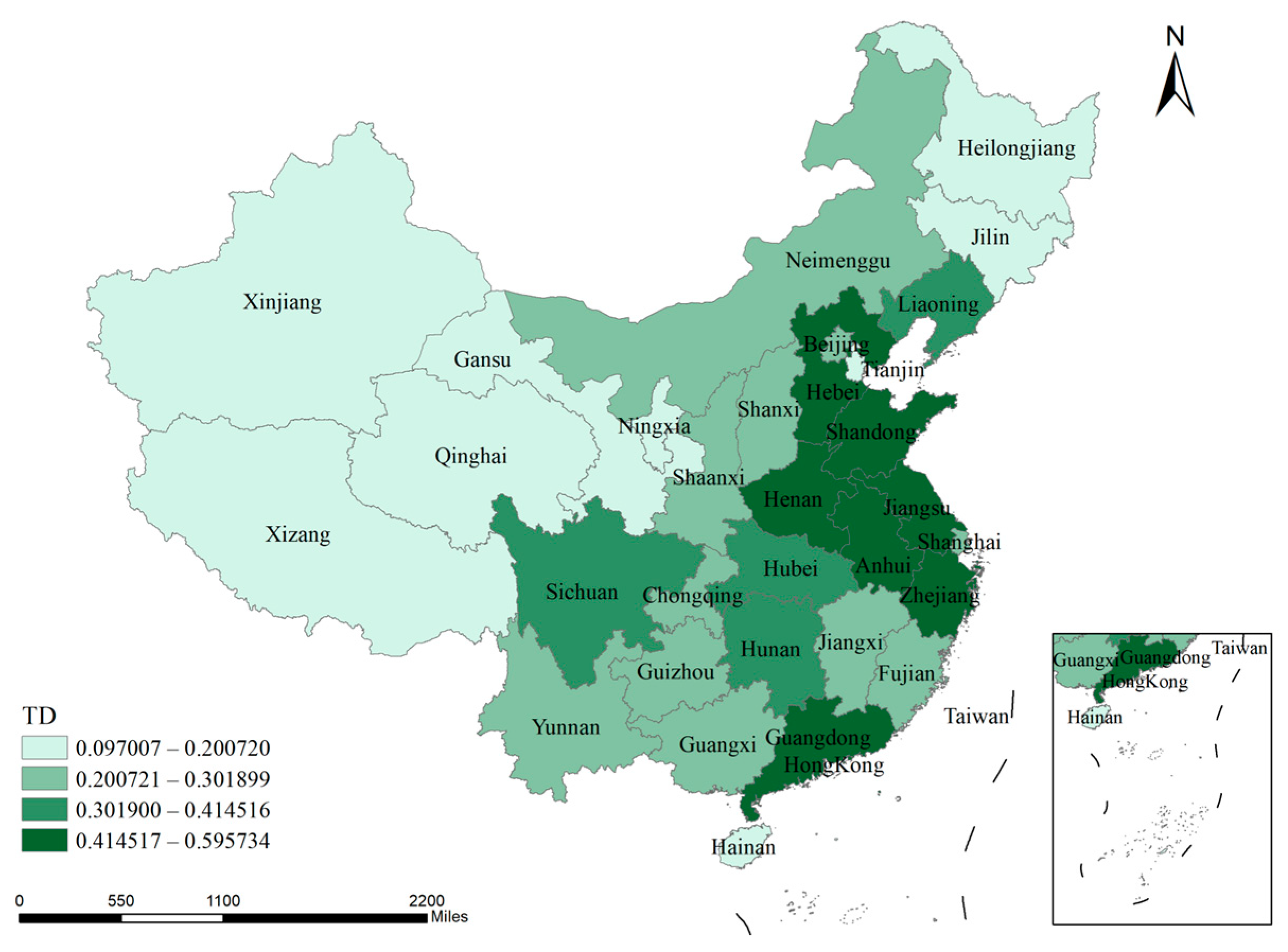
4.1.1. Spatiotemporal Evolution of TD
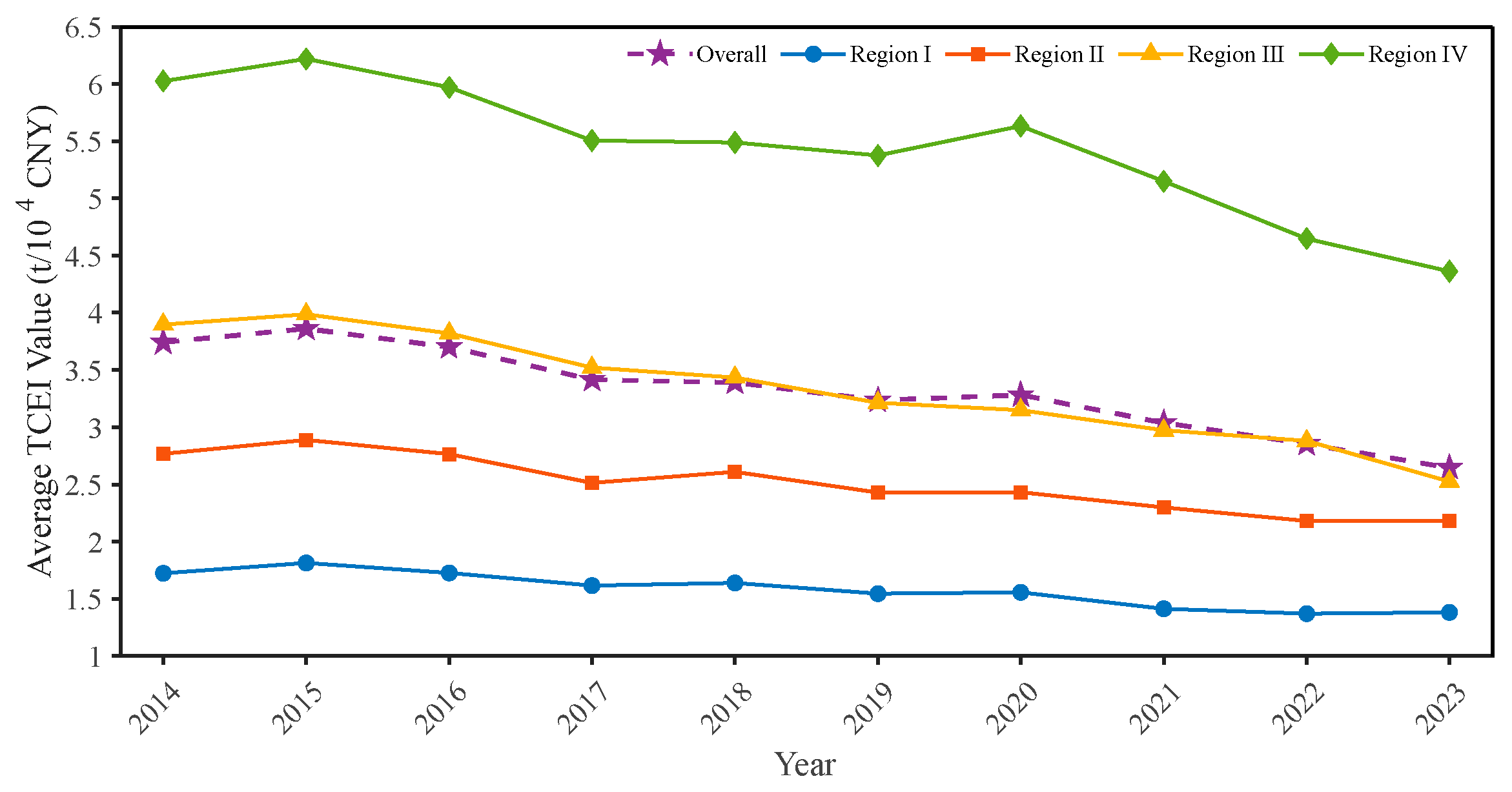
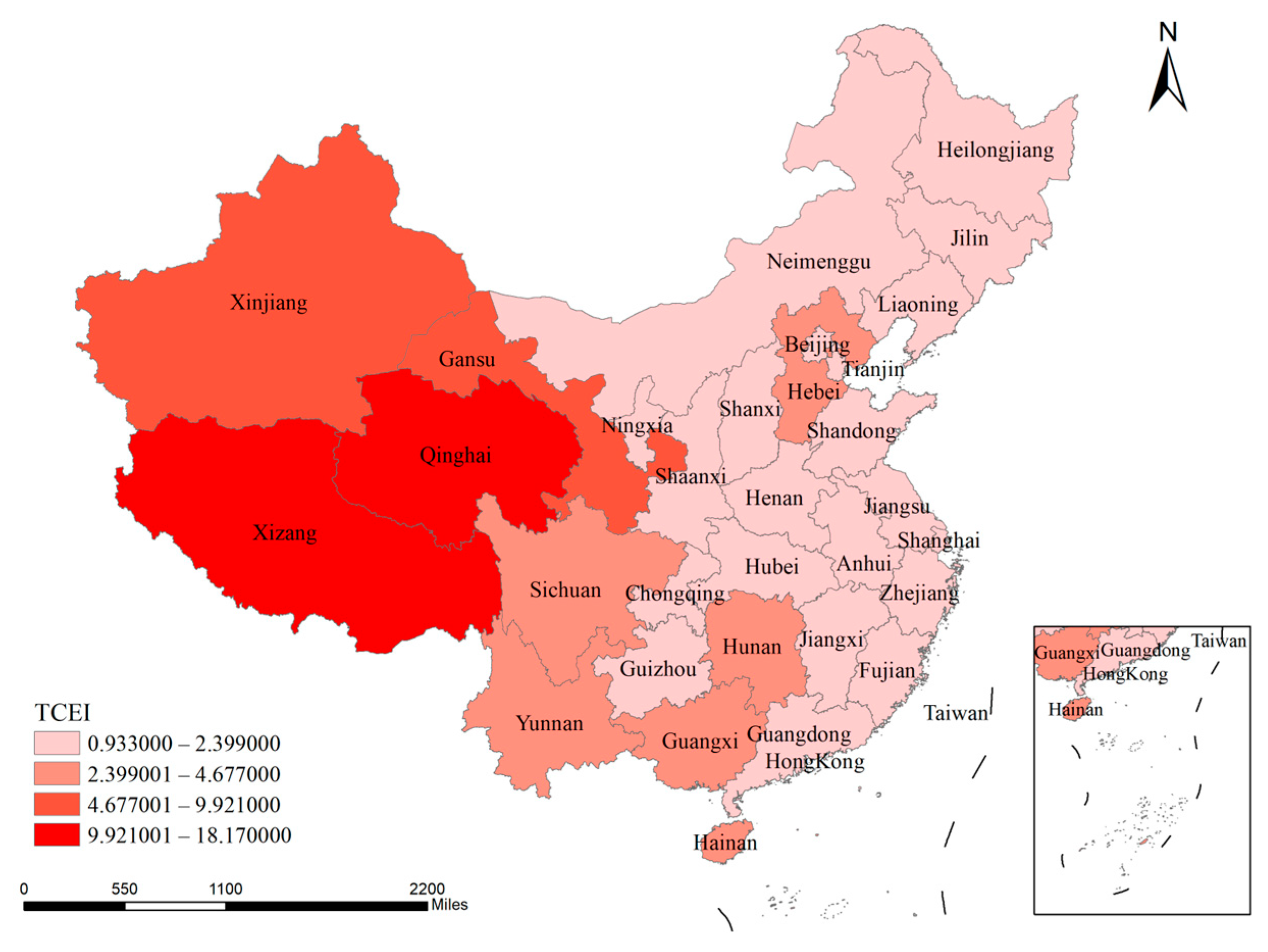
4.1.2. Spatiotemporal Evolution of TCEI
4.2. The Spatiotemporal Evolution of CCD
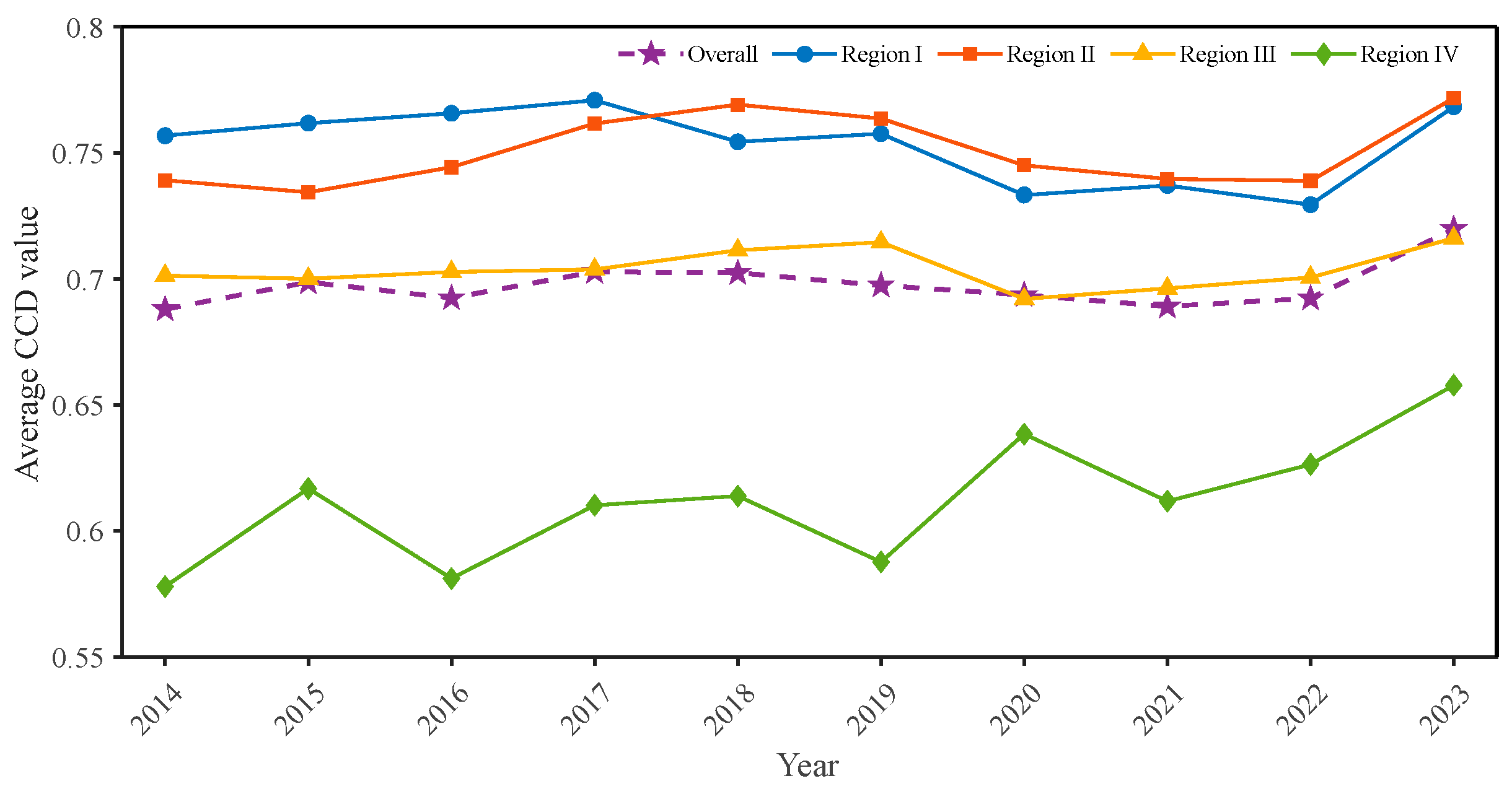
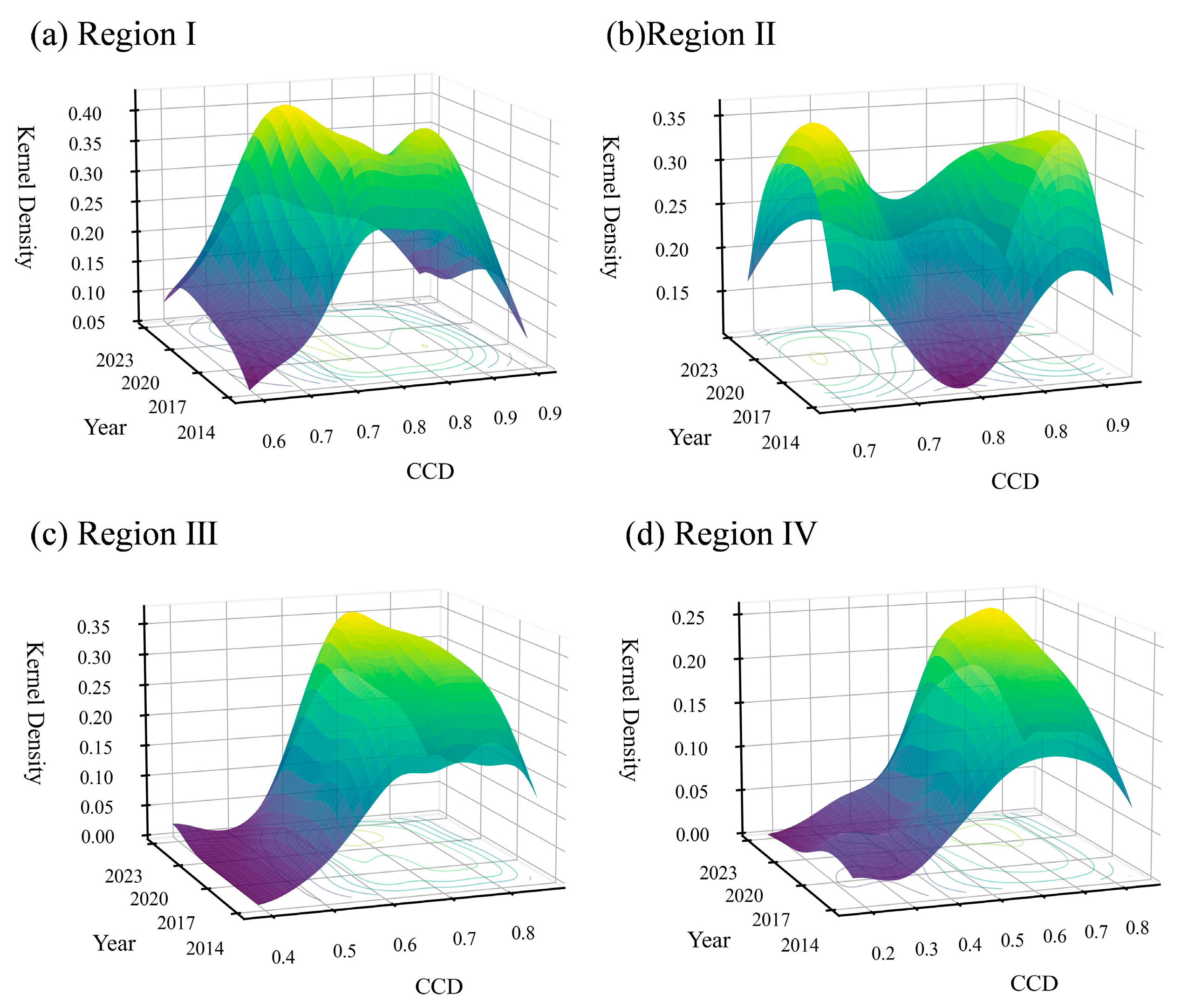
4.2.1. The Temporal Evolution of CCD
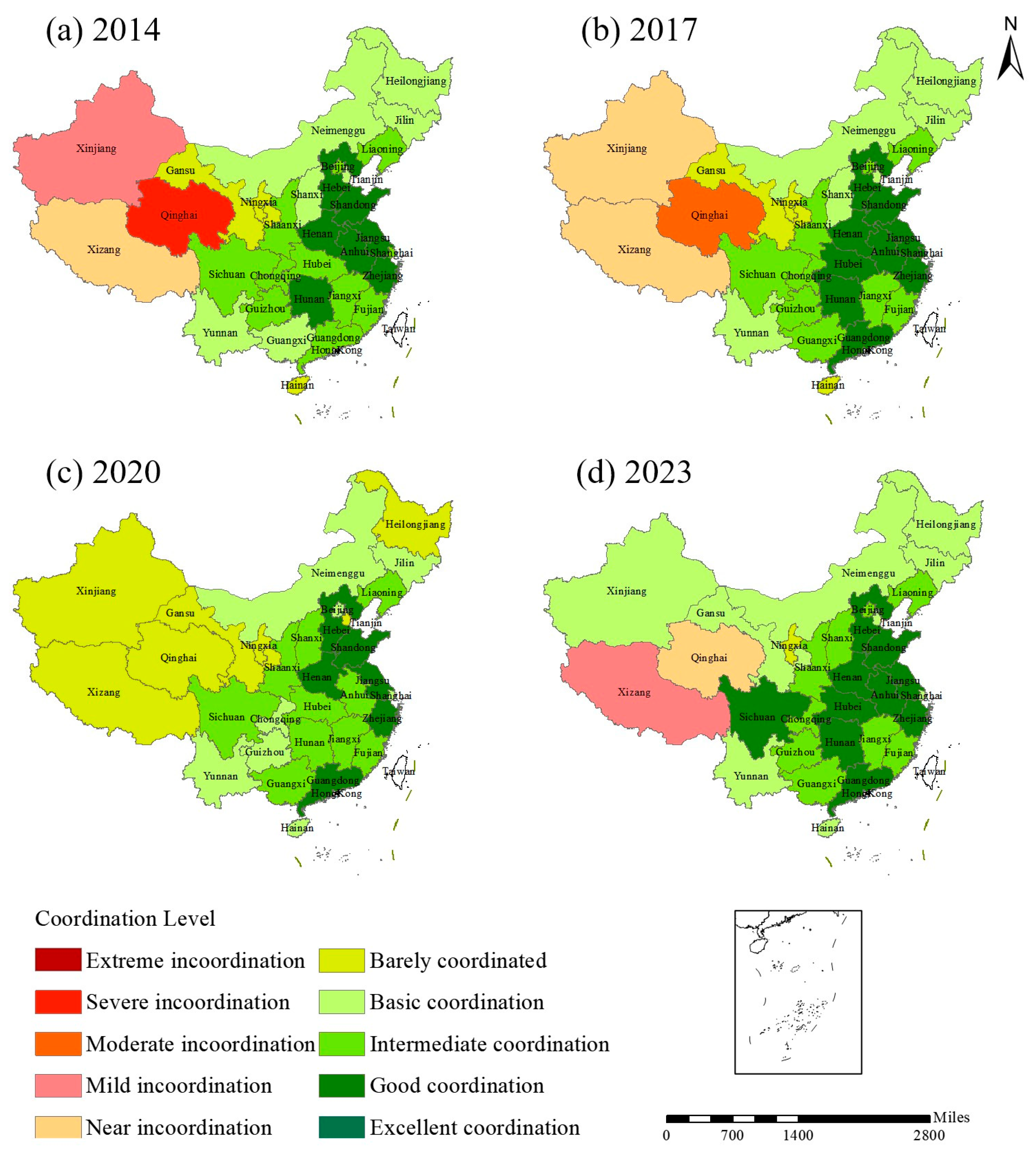
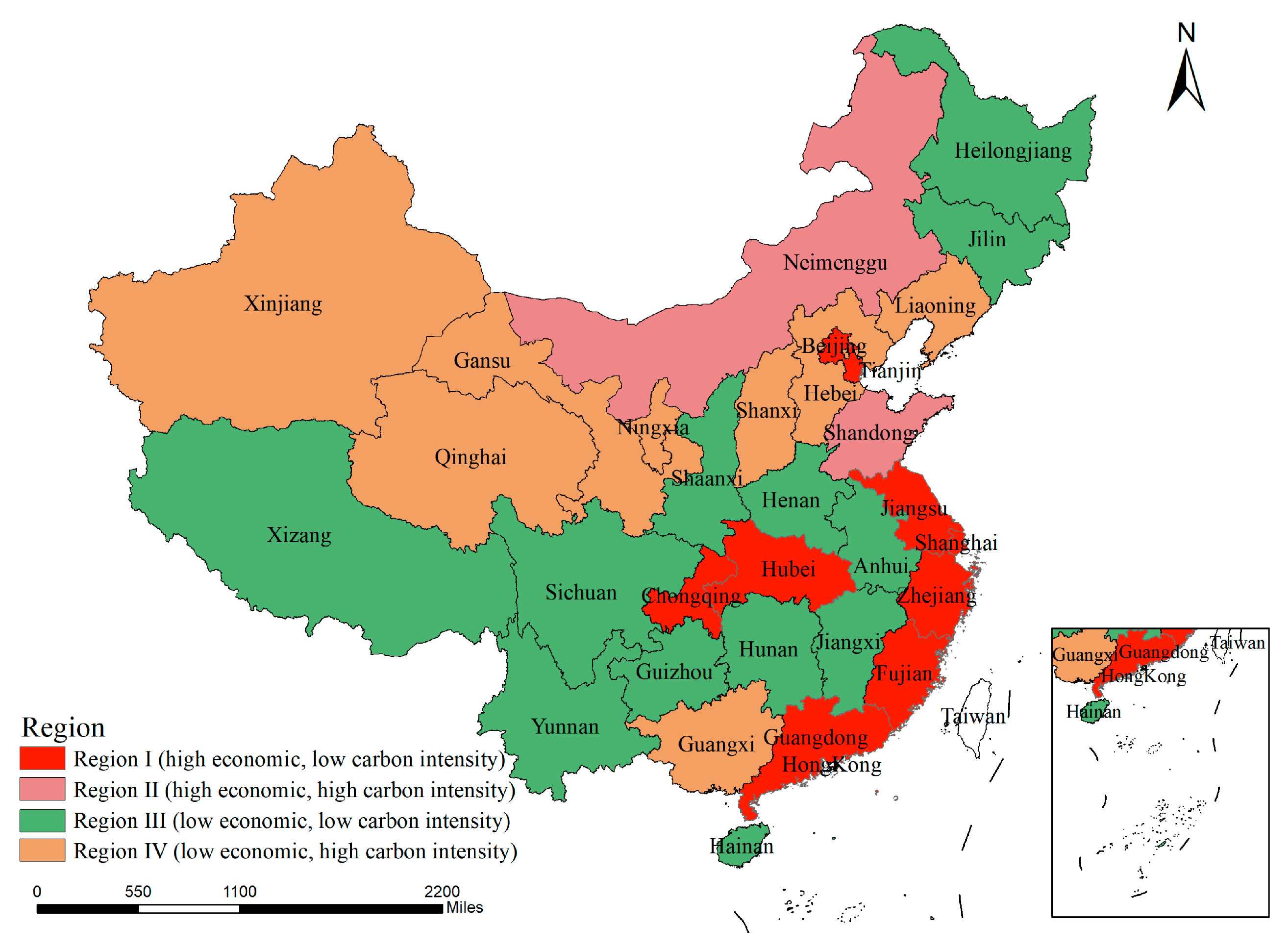
4.2.2. Spatial Distribution Characteristics of the CCD
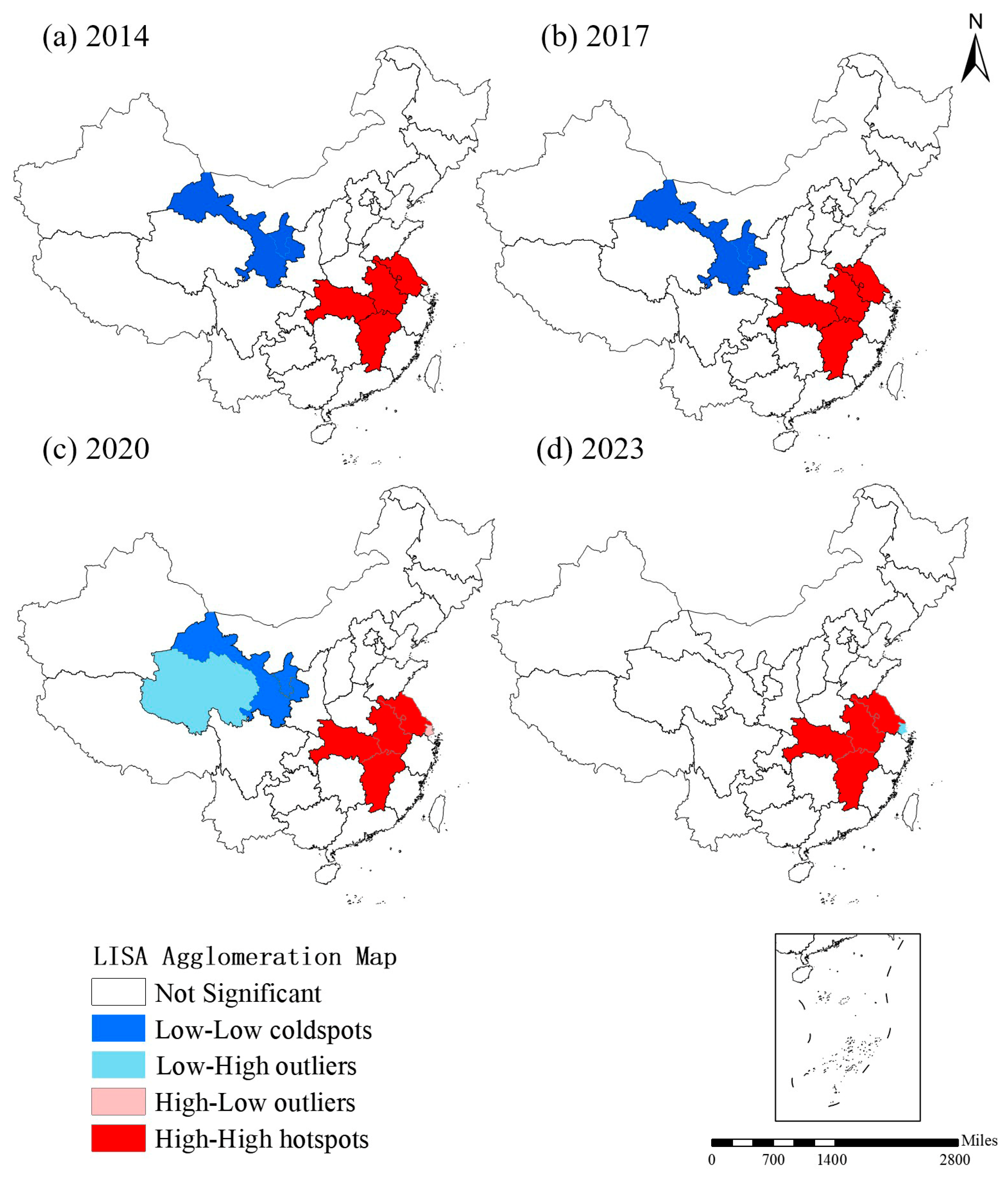
4.2.3. Spatial Autocorrelation of the CCD
4.3. Driving Factors Analysis
4.3.1. Model Selection and Validation
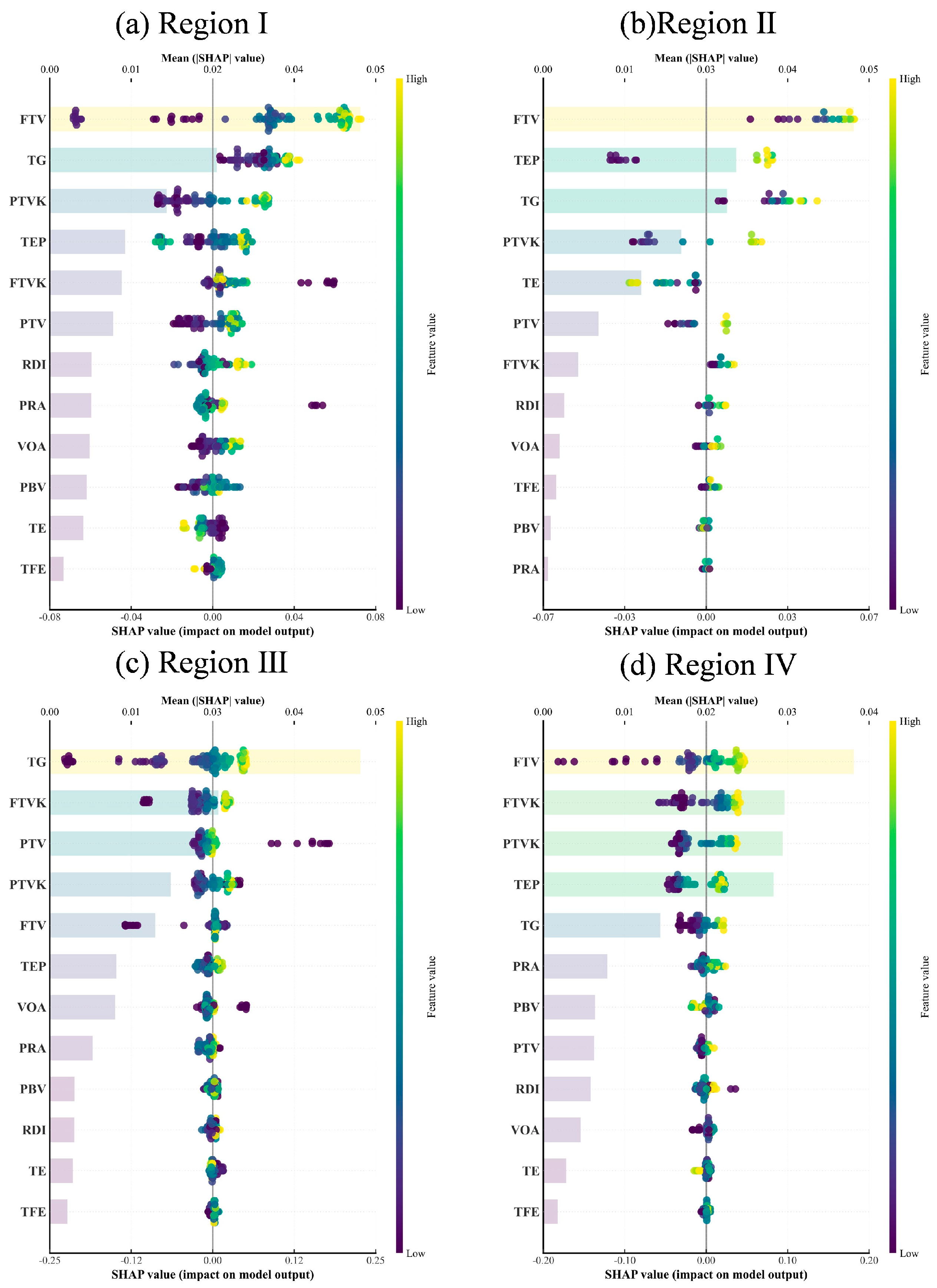
4.3.2. Identification of Key Factors
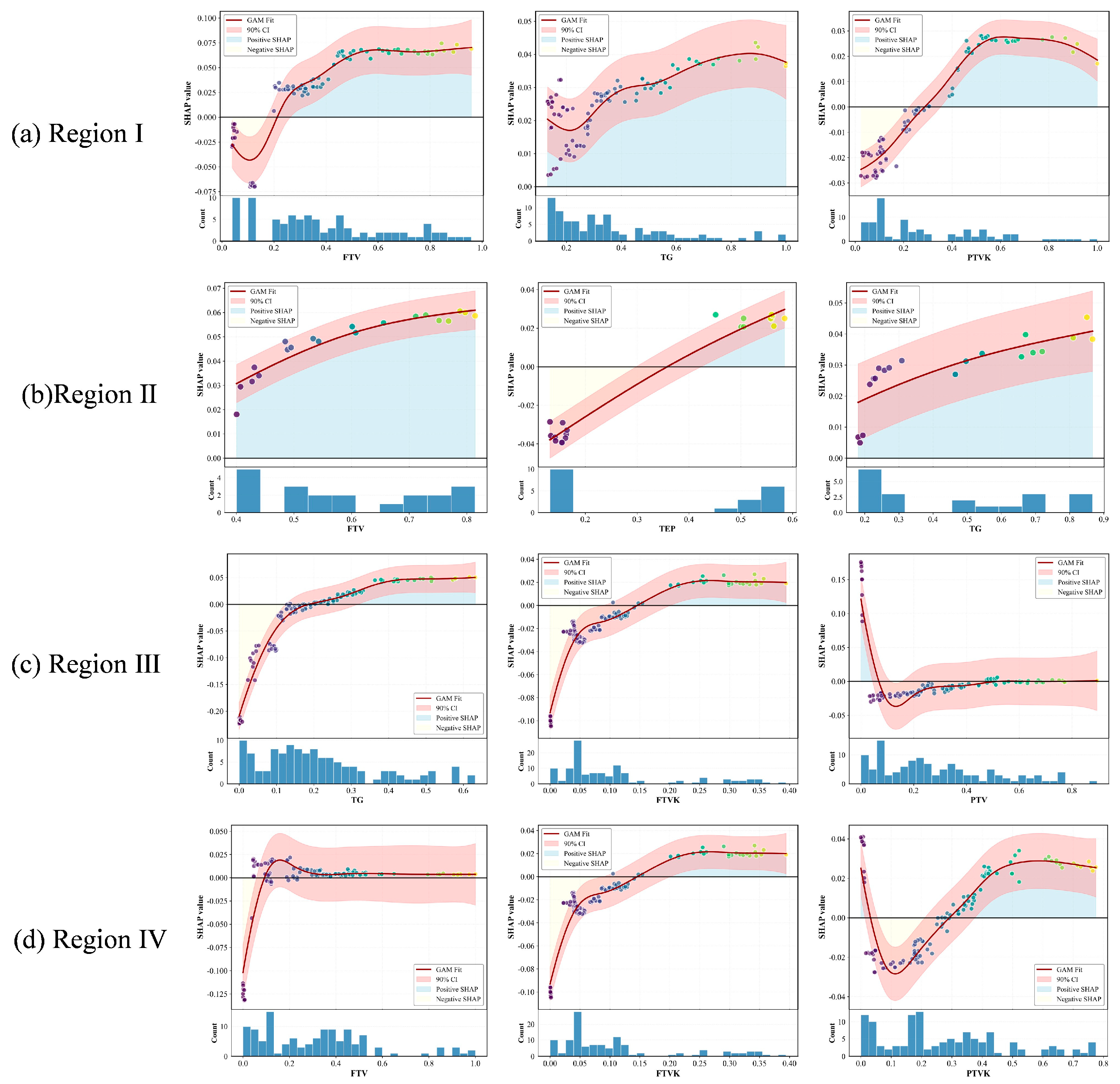
4.3.3. Single-Factor Importance Impact Analysis
- (1)
- Threshold-Crossing Type: The impact of TG on CCD in Region III shows a typical “suppression-then-promotion-followed-by-stabilization” characteristic. The TG-SHAP curve shows that the SHAP values cross zero and turn positive when TG reaches approximately 0.2, indicating that a low level of transport industry output value initially has a significant negative impact on CCD. Once TG exceeds 0.3, the SHAP values stabilize at a positive level of 0.04, reflecting the emerging scale effect of transportation economic output. In Region IV, the FTV-SHAP curve exhibits the sharpest threshold transition, starting at approximately −0.125, crossing zero at around 0.15, and stabilizing at 0.02 when FTV exceeds 0.3, reflecting the critical importance of a minimum freight volume for CCD in underdeveloped transportation regions. Similar threshold effects were also observed in various indicators across different regions. For instance, the FTV-SHAP curve in Region I shows that the SHAP values turn positive when FTV reaches approximately 0.2, and stabilize at around 0.075 when FTV exceeds 0.5. In Region II, the SHAP value for TEP turns positive at approximately 0.35, and stabilizes at around 0.03 when TEP exceeds 0.55. The FTVK-SHAP curves in Regions III and IV, and the PTVK-SHAP curve in Region I exhibit analogous patterns with varying thresholds. In these scenarios, the driving effect on CCD follows a pattern of initial suppression, followed by threshold-crossing, and then diminishing marginal effects.
- (2)
- Continuous Promotion Type: In Region I, the impact of TG on CCD remains consistently positive, with SHAP values rising steadily from 0.02 to around 0.04, indicating that the transport industry output value in this region has reached a higher level, and its sustained growth continues to enhance CCD. In Region II, FTV shows a positive upward trend, with SHAP values rising from 0.015 to between 0.05 and 0.06, indicating that freight volume has reached a scale economy effect and continues to drive CCD upward. The TG-SHAP curve in Region II exhibits a similar consistently positive pattern. This pattern reflects how high-coordination regions maintain a stable CCD promotion mechanism by leveraging existing advantages.
- (3)
- U-Shaped Crossing Type: In Region III, the impact of PTV on CCD follows a U-shaped curve of “promotion-then-decline-and-tends-to-zero,” with SHAP values starting at approximately 0.15, crossing zero when PTV reaches 0.05, and gradually stabilizing near zero when PTV exceeds 0.5, reflecting that the initial growth of passenger volume, which outpaced infrastructure supply, led to a rapid attenuation of its positive contribution to CCD. In Region IV, the PTVK-SHAP curve exhibits a more complex U-shaped pattern of “promotion-then-decline-followed-by-recovery”: the SHAP values start at approximately 0.04, cross zero, and turn negative when PTVK reaches 0.05; then recover and cross zero again when PTVK reaches approximately 0.3; and continues to rise to around 0.03 when PTVK exceeds 0.45. This reflects that as passenger turnover intensity initially outpaced supply capacity, the positive effect temporarily reversed, but eventually recovered as supply–demand balance was restored. This pattern reveals the supply–demand imbalance phase that low-coordination regions may experience during their development.
4.4. Limitations
5. Conclusions and Recommendations
5.1. Research Conclusions
5.2. Recommendations
Author Contributions
Funding
Data Availability Statement
Conflicts of Interest
References
- Tian, P.N.; Mao, B.H.; Tong, R.Y.; Zhang, H.X.; Zhou, Q. Analysis of carbon emission level and intensity of China’s transportation industry and different transportation modes. Clim. Change Res. 2023, 19, 347–356. [Google Scholar] [CrossRef]
- Zhan, C.; Zhang, X.; Yuan, J.; Chen, X.; Zhang, X.; Fathollahi-Fard, A.M.; Wang, C.; Wu, J.; Tian, G. A hybrid approach for low-carbon transportation system analysis: Integrating CRITIC DEMATEL and deep learning features. Int. J. Environ. Sci. Technol. 2024, 21, 791–804. [Google Scholar] [CrossRef]
- Said, Z.M.; Dindar, S. Key challenges and strategies in the evaluation of sustainable urban regeneration projects: Insights from a systematic literature review. Sustainability 2024, 16, 9903. [Google Scholar] [CrossRef]
- Li, W.; Bao, L.; Wang, L.; Li, Y.; Mai, X. Comparative evaluation of global low-carbon urban transport. Technol. Forecast. Soc. Change 2019, 143, 14–26. [Google Scholar] [CrossRef]
- Kong, X.; Zhang, H.; Ren, C. Research on Low Carbon Level Evaluation of Urban Transportation System Based on Grey Comprehensive Evaluation. IOP Conf. Ser. Earth Environ. Sci. 2019, 300, 042064. [Google Scholar] [CrossRef]
- Sun, Y.; Cui, Y. Evaluating the coordinated development of economic, social and environmental benefits of urban public transportation infrastructure: Case study of four Chinese autonomous municipalities. Transp. Policy 2018, 66, 116–126. [Google Scholar] [CrossRef]
- Song, W.; Zhang, H. Research on the measurement and influencing factors of carbon emission efficiency in China’s transportation sector based on EBM-Tobit model. Front. Environ. Sci. 2025, 13, 1565476. [Google Scholar] [CrossRef]
- Zhou, G.; Chung, W.; Zhang, Y. Measuring energy efficiency performance of China’s transport sector: A data envelopment analysis approach. Expert Syst. Appl. 2014, 41, 709–716. [Google Scholar] [CrossRef]
- Li, X.; Zhan, J.; Lv, T.; Wang, S.; Pan, F. Comprehensive evaluation model of the urban low-carbon passenger transportation structure based on DPSIR. Ecol. Indic. 2023, 146, 109849. [Google Scholar] [CrossRef]
- Bai, Y.; Wang, J.; Su, J.; Zhou, Q.; He, S. Assessment of urban rail transit development using DPSIR-Entropy-TOPSIS and obstacle degree analysis: A case study of 27 Chinese cities. Phys. A Stat. Mech. Its Appl. 2025, 663, 130439. [Google Scholar] [CrossRef]
- Wei, F.Q.; Zhang, X.Q.; Chu, J.F.; Yang, F.; Yuan, Z. Energy and environmental efficiency of China’s transportation sectors considering CO2 emission uncertainty. Transp. Res. Part D Transp. Environ. 2021, 97, 102955. [Google Scholar] [CrossRef]
- Cullinane, K.; Wang, T.F.; Song, D.W.; Ji, P. The technical efficiency of container ports: Comparing data envelopment analysis and stochastic frontier analysis. Transp. Res. Part A Policy Pract. 2006, 40, 354–374. [Google Scholar] [CrossRef]
- Huang, W.; Shuai, B.; Sun, Y.; Wang, Y.; Antwi, E. Using entropy-TOPSIS method to evaluate urban rail transit system operation performance: The China case. Transp. Res. Part A Policy Pract. 2018, 111, 292–303. [Google Scholar] [CrossRef]
- Hamurcu, M.; Eren, T. Strategic planning based on sustainability for urban transportation: An application to decision-making. Sustainability 2020, 12, 3589. [Google Scholar] [CrossRef]
- Awasthi, A.; Chauhan, S.S.; Omrani, H. Application of fuzzy TOPSIS in evaluating sustainable transportation systems. Expert Syst. Appl. 2011, 38, 12270–12280. [Google Scholar] [CrossRef]
- Hong, J.; Chu, Z.; Wang, Q. Transport infrastructure and regional economic growth: Evidence from China. Transportation 2011, 38, 737–752. [Google Scholar] [CrossRef]
- Chen, F.; Wu, J.; Chen, X.; Wang, J. Vehicle kilometers traveled reduction impacts of Transit-Oriented Development: Evidence from Shanghai City. Transp. Res. Part D Transp. Environ. 2017, 55, 227–245. [Google Scholar] [CrossRef]
- Barth, M.; Boriboonsomsin, K. Real-world carbon dioxide impacts of traffic congestion. Transp. Res. Rec. 2008, 2058, 163–171. [Google Scholar] [CrossRef]
- Schafer, A.; Victor, D.G. The future mobility of the world population. Transp. Res. Part A Policy Pract. 2000, 34, 171–205. [Google Scholar] [CrossRef]
- Chapman, L. Transport and climate change: A review. J. Transp. Geogr. 2007, 15, 354–367. [Google Scholar] [CrossRef]
- Simonov, M. The Belt and Road Initiative and Partnership for Global Infrastructure and Investment: Comparison and current status. Asia Glob. Econ. 2025, 5, 100106. [Google Scholar] [CrossRef]
- Fan, F.; Lei, Y. Decomposition analysis of energy-related carbon emissions from the transportation sector in Beijing. Transp. Res. Part D Transp. Environ. 2016, 42, 135–145. [Google Scholar] [CrossRef] [PubMed]
- Chen, Q.; Wang, Q.; Zhou, D.; Wang, H. Drivers and evolution of low-carbon development in China’s transportation industry: An integrated analytical approach. Energy 2023, 262, 125614. [Google Scholar] [CrossRef]
- Sun, H.; Hu, L.; Geng, Y.; Yao, H. Uncovering impact factors of carbon emissions from transportation sector: Evidence from China’s Yangtze River Delta Area. Mitig. Adapt. Strateg. Glob. Change 2020, 25, 1423–1437. [Google Scholar] [CrossRef]
- Wang, Y.; Zhou, Y.; Zhu, L.; Zhang, F.; Zhang, Y. Influencing factors and decoupling elasticity of China’s transportation carbon emissions. Energies 2018, 11, 1157. [Google Scholar] [CrossRef]
- Xu, B.; Lin, B. Carbon dioxide emissions reduction in China’s transport sector: A dynamic VAR (vector autoregression) approach. Energy 2015, 83, 486–495. [Google Scholar] [CrossRef]
- IPCC. 2019 Refinement to the 2006 IPCC Guidelines for National Greenhouse Gas Inventories; Volume 2: Energy; Calvo Buendia, E., Tanabe, K., Kranjc, A., Baasansuren, J., Fukuda, M., Ngarize, S., Osako, A., Pyrozhenko, Y., Shermanau, P., Federici, S., Eds.; IPCC: Geneva, Switzerland, 2019; Available online: https://www.ipcc-nggip.iges.or.jp/public/2019rf/ (accessed on 15 June 2025).
- Zhang, C.; Nian, J. Panel estimation for transport sector CO2 emissions and its affecting factors: A regional analysis in China. Energy Policy 2013, 63, 918–926. [Google Scholar] [CrossRef]
- Lenzen, M. Errors in conventional and input-output-based life-cycle inventories. J. Ind. Ecol. 2000, 4, 127–148. [Google Scholar] [CrossRef]
- Fan, Y.; Liu, L.C.; Wu, G.; Tsai, H.T.; Wei, Y.M. Changes in carbon intensity in China: Empirical findings from 1980–2003. Ecol. Econ. 2007, 62, 683–691. [Google Scholar] [CrossRef]
- Zhu, B.; Jiang, M.; Wang, K.; Chevallier, J.; Wang, P.; Wei, Y. On the road to China’s 2020 carbon intensity target from the perspective of “double control”. Energy Policy 2018, 119, 377–387. [Google Scholar] [CrossRef]
- Chen, J.; Gao, M.; Cheng, S.; Hou, W.; Song, M.; Liu, X.; Liu, Y.; Shan, Y. County-level CO2 emissions and sequestration in China during 1997–2017. Sci. Data 2020, 7, 391. [Google Scholar] [CrossRef] [PubMed]
- Huang, Y.; Zhu, H.; Zhang, Z. The heterogeneous effect of driving factors on carbon emission intensity in the Chinese transport sector: Evidence from dynamic panel quantile regression. Sci. Total Environ. 2020, 727, 138578. [Google Scholar] [CrossRef]
- Liu, J.; Li, S.; Ji, Q. Regional differences and driving factors analysis of carbon emission intensity from transport sector in China. Energy 2021, 224, 120178. [Google Scholar] [CrossRef]
- Lin, B.; Benjamin, N.I. Influencing factors on carbon emissions in China transport industry. A new evidence from quantile regression analysis. J. Clean. Prod. 2017, 150, 175–187. [Google Scholar] [CrossRef]
- Xie, M.; Feng, Z.; Wang, S.; Wang, S.; Chang, X. Spatiotemporal patterns and nonlinear influencing factors of carbon emission intensity under urban shrinkage and growth: A machine learning approach with interpretability. Sustain. Cities Soc. 2025, 130, 106593. [Google Scholar] [CrossRef]
- Gambhir, A.; Tse, L.K.C.; Tong, D.; Martinez-Botas, R. Reducing China’s road transport sector CO2 emissions to 2050: Technologies, costs and decomposition analysis. Appl. Energy 2015, 157, 905–917. [Google Scholar] [CrossRef]
- Janic, M. Estimating the long-term effects of different passenger car technologies on energy/fuel consumption and emissions of greenhouse gases in Europe. Transp. Plan. Technol. 2014, 37, 409–429. [Google Scholar] [CrossRef]
- Liu, X.; Zhou, X.; Zhu, B.; He, K.; Wang, P. Measuring the maturity of carbon market in China: An entropy-based TOPSIS approach. J. Clean. Prod. 2019, 229, 94–103. [Google Scholar] [CrossRef]
- Lin, B.; Li, X. The effect of carbon tax on per capita CO2 emissions. Energy Policy 2011, 39, 5137–5146. [Google Scholar] [CrossRef]
- Li, J.; Ku, Y.; Liu, C.; Zhou, Y. Dual credit policy: Promoting new energy vehicles with battery recycling in a competitive environment? J. Clean. Prod. 2020, 243, 118456. [Google Scholar] [CrossRef]
- Porter, M.E.; Van der Linde, C. Toward a new conception of the environment-competitiveness relationship. J. Econ. Perspect. 1995, 9, 97–118. [Google Scholar] [CrossRef]
- Ambec, S.; Cohen, M.A.; Elgie, S.; Lanoie, P. The Porter hypothesis at 20: Can environmental regulation enhance innovation and competitiveness? Rev. Environ. Econ. Policy 2013, 7, 2–22. [Google Scholar] [CrossRef]
- Wang, Y.; Zhao, T. Impacts of energy-related CO2 emissions: Evidence from under developed, developing and highly developed regions in China. Ecol. Indic. 2014, 50, 186–195. [Google Scholar] [CrossRef]
- Wu, Y.; Shen, L.; Zhang, Y.; Shuai, C.; Yan, H.; Lou, Y.; Ye, G. A new panel for analyzing the impact factors on carbon emission: A regional perspective in China. Ecol. Indic. 2019, 97, 260–268. [Google Scholar] [CrossRef]
- Li, W.; Yi, P. Assessment of city sustainability—Coupling coordinated development among economy, society and environment. J. Clean. Prod. 2020, 256, 120453. [Google Scholar] [CrossRef]
- Jia, H.; Li, W.; Tian, R. Spatio-Temporal Influencing Factors of the Coupling Coordination Degree Between China’s New-Type Urbanization and Transportation Carbon Emission Efficiency. Land 2025, 14, 623. [Google Scholar] [CrossRef]
- Wang, S.; Li, S. Spatiotemporal evolution and driving factors of coupling coordination between carbon emission efficiency and carbon balance in the Yellow River Basin. Sustainability 2025, 17, 5975. [Google Scholar] [CrossRef]
- Li, Y.; Li, Y.; Zhou, Y.; Shi, Y.; Zhu, X. Investigation of a coupling model of coordination between urbanization and the environment. J. Environ. Manag. 2012, 98, 127–133. [Google Scholar] [CrossRef]
- He, J.; Wang, S.; Liu, Y.; Ma, H.; Liu, Q. Examining the relationship between urbanization and the eco-environment using a coupling analysis: Case study of Shanghai, China. Ecol. Indic. 2017, 77, 185–193. [Google Scholar] [CrossRef]
- Ben-David, S.; Blitzer, J.; Crammer, K.; Kulesza, A.; Pereira, F.; Vaughan, J.W. A theory of learning from different domains. Mach. Learn. 2010, 79, 151–175. [Google Scholar] [CrossRef]
- Chen, T.; Guestrin, C. XGBoost: A scalable tree boosting system. In Proceedings of the 22nd ACM SIGKDD International Conference on Knowledge Discovery and Data Mining, San Francisco, CA, USA, 13–17 August 2016; pp. 785–794. [Google Scholar] [CrossRef]
- Owais, M.; Barhoum, E.; Younes, H. Studying high-density polyethylene effect in hot-mix asphalt mixtures: Preprocessing and postprocessing analysis. Innov. Infrastruct. Solut. 2026, 11, 32. [Google Scholar] [CrossRef]
- Owais, M.; Ramadan, I. Integrated Deep Learning and Global Sensitivity Analysis Framework for Transportation Link Criticality Evaluation. Transp. Res. Rec. 2025, 03611981251394975. [Google Scholar] [CrossRef]






| Primary Classification | Secondary Classification | Indicators and References | Weight |
|---|---|---|---|
| Utilization Dimension | Passenger Transport Intensity | Passenger Traffic Volume (PTV) [11,28] | 0.1448 |
| Passenger Traffic Volume-Kilometer (PTVK) [23] | 0.1358 | ||
| Freight Transport Intensity | Freight Traffic Volume (FTV) [11] | 0.1147 | |
| Freight Traffic Volume-Kilometer (FTVK) [23,28] | 0.1629 | ||
| Supply Dimension | Infrastructure | Road Density Index (RDI) = Total Urban Road Length/Built-up Area [5,9] | 0.0652 |
| Per Capita Road Area (PRA) [5,9] | 0.0385 | ||
| Vehicles | Vehicle Ownership Amount (VOA) = Civil Vehicles + Operational Highway Vehicles (10,000 units) [4] | 0.1263 | |
| Public Bus per 10,000 People (PBV) [4,5] | 0.0303 | ||
| Support Dimension | Financial Support | Transportation Financial Expenditure (TFE) [23] | 0.0744 |
| Human Resource Support | Transportation Employment Personnel (TEP) [7,11] | 0.1072 |
| CCD Level | CCD Range | CCD Level | CCD Range |
|---|---|---|---|
| Extreme Disorder | [0, 0.1] | Barely Coordination | (0.5, 0.6] |
| Severe Disorder | (0.1, 0.2] | Basic Coordination | (0.6, 0.7] |
| Moderate Disorder | (0.2, 0.3] | Intermediate Coordination | (0.7, 0.8] |
| Mild Disorder | (0.3, 0.4] | Good Coordination | (0.8, 0.9] |
| Near Disorder | (0.4, 0.5] | Excellent Coordination | (0.9, 1] |
| Year | Moran’s I | Z-Score | p-Value |
|---|---|---|---|
| 2014 | 0.348632 | 3.2393 | 0.004 |
| 2015 | 0.295396 | 2.6438 | 0.018 |
| 2016 | 0.338438 | 3.1344 | 0.007 |
| 2017 | 0.372692 | 3.3177 | 0.001 |
| 2018 | 0.382329 | 3.4809 | 0.002 |
| 2019 | 0.321307 | 3.5135 | 0.003 |
| 2020 | 0.326249 | 2.8339 | 0.01 |
| 2021 | 0.424316 | 3.6917 | 0.001 |
| 2022 | 0.433423 | 4.0869 | 0.001 |
| 2023 | 0.340013 | 2.9805 | 0.007 |
| Model | Region | R2 | RMSE | MAE |
|---|---|---|---|---|
| Baseline R2 | Region I | 0.8083 | 0.0371 | 0.0185 |
| Region II | −1.2994 | 0.1042 | 0.0795 | |
| Region III | 0.9185 | 0.0283 | 0.0199 | |
| Region IV | 0.7826 | 0.0737 | 0.0311 | |
| Transfer Learning R2 | Region I | 0.9777 | 0.0127 | 0.0102 |
| Region II | 0.9714 | 0.0116 | 0.0091 | |
| Region III | 0.9678 | 0.0178 | 0.0133 | |
| Region IV | 0.765 | 0.0767 | 0.0407 |
Disclaimer/Publisher’s Note: The statements, opinions and data contained in all publications are solely those of the individual author(s) and contributor(s) and not of MDPI and/or the editor(s). MDPI and/or the editor(s) disclaim responsibility for any injury to people or property resulting from any ideas, methods, instructions or products referred to in the content. |
© 2026 by the authors. Licensee MDPI, Basel, Switzerland. This article is an open access article distributed under the terms and conditions of the Creative Commons Attribution (CC BY) license.
Share and Cite
Liu, X.; Tu, L.; Zhou, B. Coupling Coordination Between Transport Development Level and Carbon Emission Intensity in China: Spatiotemporal Patterns and Regional Heterogeneity. Sustainability 2026, 18, 4314. https://doi.org/10.3390/su18094314
Liu X, Tu L, Zhou B. Coupling Coordination Between Transport Development Level and Carbon Emission Intensity in China: Spatiotemporal Patterns and Regional Heterogeneity. Sustainability. 2026; 18(9):4314. https://doi.org/10.3390/su18094314
Chicago/Turabian StyleLiu, Xiaolan, Libin Tu, and Biwei Zhou. 2026. "Coupling Coordination Between Transport Development Level and Carbon Emission Intensity in China: Spatiotemporal Patterns and Regional Heterogeneity" Sustainability 18, no. 9: 4314. https://doi.org/10.3390/su18094314
APA StyleLiu, X., Tu, L., & Zhou, B. (2026). Coupling Coordination Between Transport Development Level and Carbon Emission Intensity in China: Spatiotemporal Patterns and Regional Heterogeneity. Sustainability, 18(9), 4314. https://doi.org/10.3390/su18094314