1. Introduction
“There was a time when the Brahmaputra rippled with the silent glide of gharials. We grew up alongside them, but to today’s children, that sounds like a myth whispered by an old river,” said a retired teacher from Dibrugarh, a district located in the north bank of the Brahmaputra in Assam. Accounts from British India described that the Indian gharial (
Gavialis gangeticus) was a common sight across the floodplains of the river Indus, Ganga–Brahmaputra–Meghna, Mahanadi–Brahmani, and Irrawaddy basins, along with the Godavari and Kaladan basins [
1]. But, in the last 50 years, its visibility has decreased so drastically that the species was thought be extinct until recently. The sighting of a lone female gharial in the rivers of Kaziranga National Park in 2024 has sparked a ray of hope among wildlife enthusiasts and climate scientists [
2]. Villagers believe that climate change coupled with misguided policies in the region have been responsible for these drastic changes in the nature and species composition of the river.
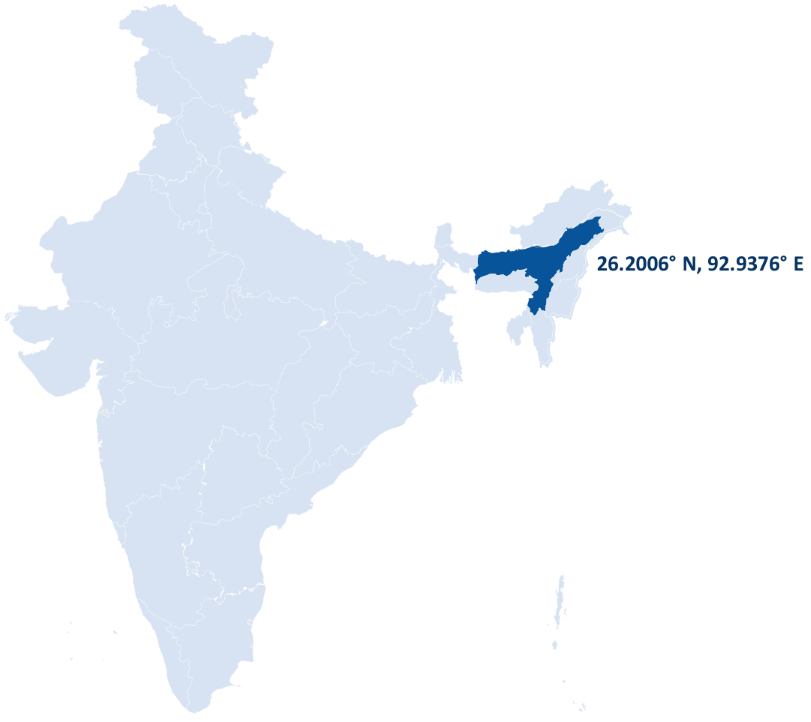
The northeast-Indian state of Assam (
Figure 1) consisting of 35 districts has a unique geo-climatic condition, making it prone to floods, soil erosion, earthquake, and landslides [
3]. Floods are common and necessary for agriculture, but the extent of damage caused and the intensity of floods is increasing every year. The overall flood-prone area in the Brahmaputra valley is around 3.2 million hectares, which is more than 40% of the land surface today [
4]. The changing nature of floods coupled with the top-down approach of its mitigation have posed a challenge for the communities residing in the flood-prone areas of the state and those dwelling in the
char/chapori areas. The “
char areas” are riverine islands or sandbars, mostly formed by the Brahmaputra in Assam, India, and Bangladesh. They are highly unstable, continually shifting with erosion and deposition as they move downstream. Communities living there face frequent displacement from floods and lead a unique yet precarious way of life [
5].
These frequent displacements lead to a loss of cultivable land and livestock, the affecting economic stability of the communities. Many landowners have become landless, pushing families downward in the social hierarchy, leading to insecurity and helplessness. This compels the younger workforce to migrate to cities in search of employment opportunities. In such a situation, policy interventions designed to combat, mitigate, and control the effects of flood and erosion must consider the lived experiences of the communities to reinvent strategies that ensure sustainable management and social security. Global and national disaster management policies underline the need for an inclusive risk management. The “Whole of the Society approach” by the United Nations Office for Disaster Risk Reduction (UNDRR) highlights the bringing together of government, civil society and communities to tackle the challenges put forth by natural hazards and climate change [
6]. Along similar lines, the 2030 agenda for sustainable development and SDGs commits to “Leave No One Behind” and ensure that the vulnerable and marginalized population is brought into the centre of development [
7].
However, most of the approaches in the valley have been top-down and based mostly on technocratic solutions rather than nature-based tested ideas [
8]. Recent studies highlight the importance of community participation and local knowledge in effective disaster management. Acharya et al. (2025) [
9] found that incorporating community knowledge and traditional coping practices significantly improved disaster response and resilience strategies in Nepal. Their findings showed that community engagement enabled disaster planning to better reflect local geographical and cultural realities, leading to more effective and context-appropriate interventions. The study concluded that collaboration between local communities, non-governmental organizations (NGO)s, and government agencies could strengthen governance mechanisms and enhance the overall effectiveness of disaster risk management [
9]. Similarly, the community-driven perspectives documented by Muyambo et al. (2025) [
10] recognize that nature-based solutions (NBSs) are not merely technical interventions but fundamentally social ones. From preserving wetlands to reducing deforestation, the viability of NBSs rests on the active stewardship of local communities. Without embedding NBSs within participatory frameworks, even well-designed ecological interventions risk losing the local legitimacy, contextual knowledge, and sustained effort that make them effective over the long term [
10]. Thus, community engagement and participation become a critical component of sustainable disaster management practices like NBSs. Arnstein’s Ladder of Citizen Participation illustrates the varying degrees of citizen power in decision-making, from manipulation to citizen control, highlighting the importance of genuine community involvement in achieving meaningful outcomes [
11]. National policies recognize this and emphasize community participation through decentralized governance mechanisms like the Panchayati Raj Institutions (PRIs), an elected local self-governance system in rural India, but the on-the-ground realities mostly reveal top-down planning, minimal public engagement, and tokenistic consultation practices [
12]. While the current participatory literature regards participation as a beacon of equity and representation, prevailing community relations may not always allow participation to be inclusive and holistic [
13].
Flood and erosion mitigation continues to be shaped by technocratic decision-making, top-down planning, weak inter-agency coordination, and insufficient community involvement despite global policy discourses accepting the importance of participatory approaches [
14]. In this study, we present an account of how the gap between technocratic policies and community-driven approaches manifest in a specific and understudied regional context. Using Dervin’s sense-making theory as an interpretative framework, the study examines the lived realities of communities living in the flood and erosion-prone areas of Assam through a stakeholder perception analysis (SPA), that make their participation necessary but difficult to achieve. The theory offers a useful lens for understanding how communities experiencing floods and erosion for years construct meaning from their circumstances. It talks about how communities, while moving through time and space, encounter gaps in understanding, and build bridges to move forward despite those gaps. This theory shifts the focus from information deficits towards the active, experiential knowledge-making of individuals and communities [
15]. It has been widely applied in information science and health communication, but is underutilized in the flood risk management (FRM) literature. This study argues for its relevance because flood-affected communities that have lived with the disaster for generations are not passive recipients of technical interventions, but are active meaning-makers who interpret, adapt, and respond to flood and erosion events through the lens of lived experience, cultural identity, and accumulated local knowledge.
The SPA, in this context, demonstrates its broader potential as a methodological tool for understanding how different stakeholder groups across socio-economic and cultural positions perceive risk, interpret institutional failures, and construct meaning from their lived experiences of recurring disasters. This misalignment between technocratic governance and community experience is not merely structural but deeply perceptual, rooted in how disaster is lived, narrated, and responded to across generations. Such experientially grounded traditional knowledge remains systematically overlooked by frameworks that privilege technical rationality over cultural and contextual understanding. However, it is important because, without understanding the perceptual and cultural dimensions of disaster response, interventions will fail to create a lasting positive impact.
2. Methodology
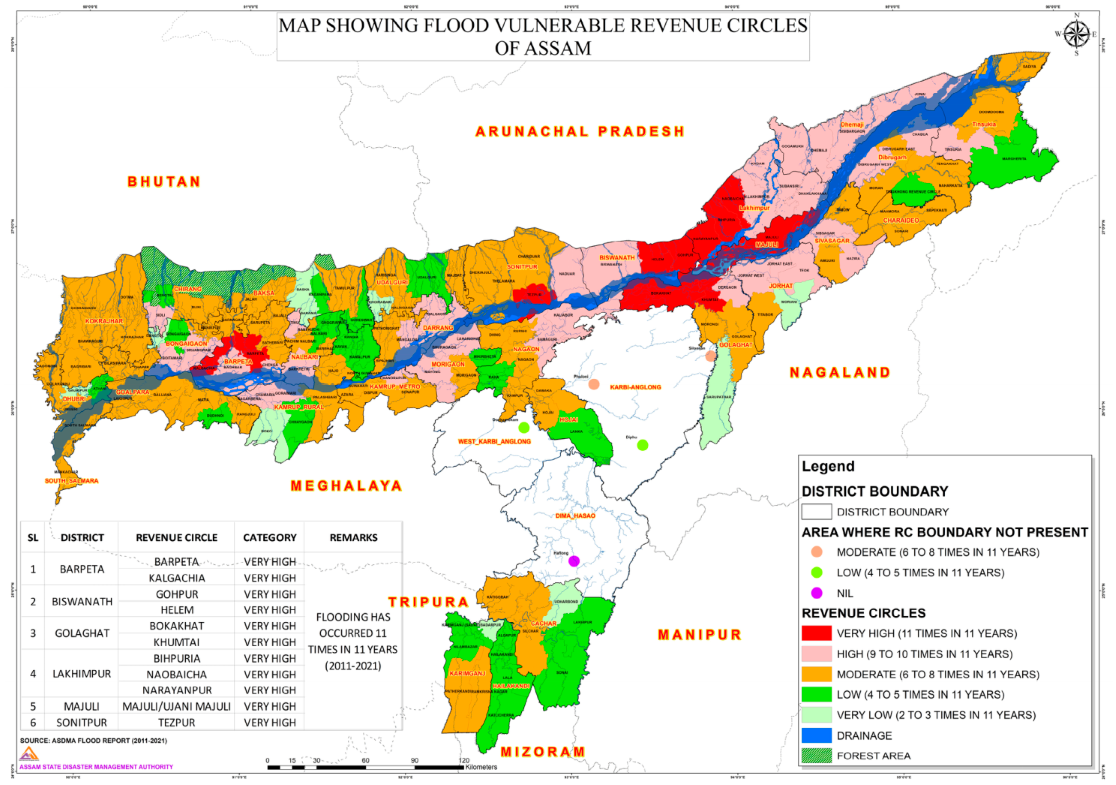
The study identified stakeholders across the flood- and erosion-affected regions of the Barpeta, Dibrugarh, and Majuli districts in Assam (
Table 1). These districts are some of the worst-affected in the state. While Dibrugarh is braided by the Buridihing river, a tributary of the Brahmaputra [
16], Barpeta district majorly has the Beki and the Brahmaputra flowing through it [
17]. Beki is also a major tributary of the Brahmaputra. Majuli, on the other hand, is the largest riverine island in the world. Surrounded by the Brahmaputra on all sides, it attained its district status in 2016 [
18].
Community stakeholders were categorized into several groups based on geographical location, age, gender, and occupation. The different occupations included the village head, ward members, schoolteachers, business owners, shopkeepers, Accredited Social Health Activist (ASHA) workers, farmers, home-makers, weavers, and daily wage labourers. This purposive sampling method was used to ensure the inclusion of stakeholders from various socio-economic backgrounds and geographical locations within the said districts. Also, it purposely included members of families who lost their lands to erosion so that experience of landlessness and economic impacts could be considered. It enabled the selection of participants who had experienced the phenomenon under study, ensuring the richness of the data [
19].
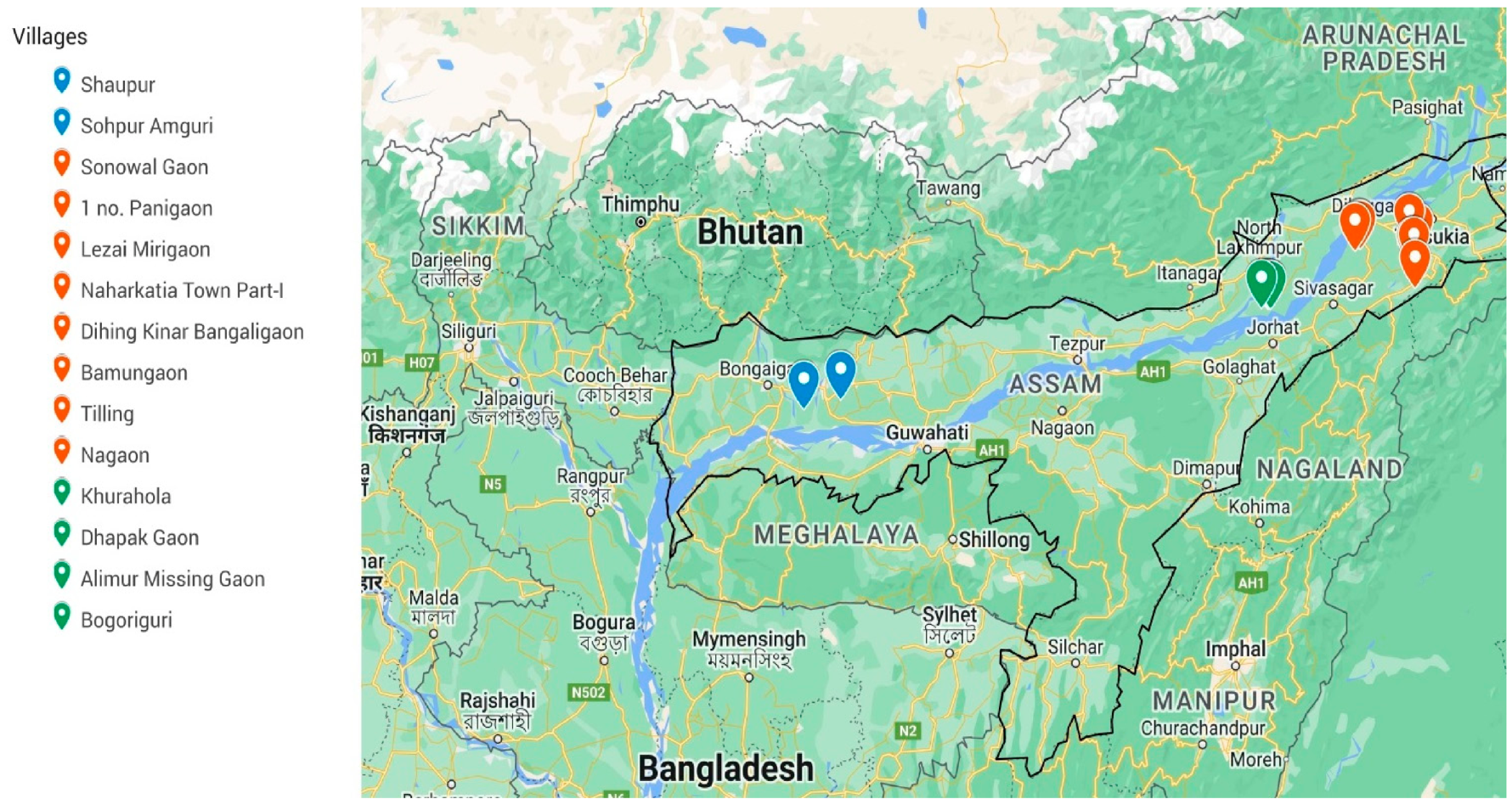
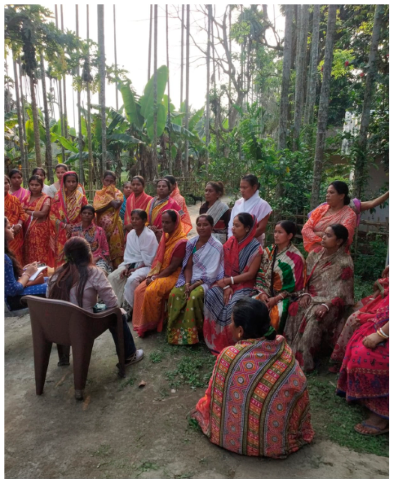
Data was primarily collected through FGDs and semi-structured interviews in flood-prone villages of the three districts (
Figure 2 and
Figure 3). The FGDs were organized to facilitate community discussion, enabling various opinions and experiences. The study conducted 22 FGDs with community stakeholders and interviewed 30 opinion leaders who were recognized due to their social status, age, or occupation, including government representatives who were in close contact with the community during disasters. Opinion leaders included the village headmen
(Gaonbura), ward members, government employees, schoolteachers, business owners, ASHA workers, and farmers.
The data was collected from March to June of 2023. The timing was purposely selected to witness active mitigation work, if any, as floods hit the regions from July onwards. The FGDs and interviews were guided by a semi-structured questionnaire that was based on the objectives of the stakeholder perception analysis which aimed at identifying and evaluating the attitudes, beliefs, and perceptions of the stakeholders towards flood risk, erosion, and mitigation strategy design and implementation process.
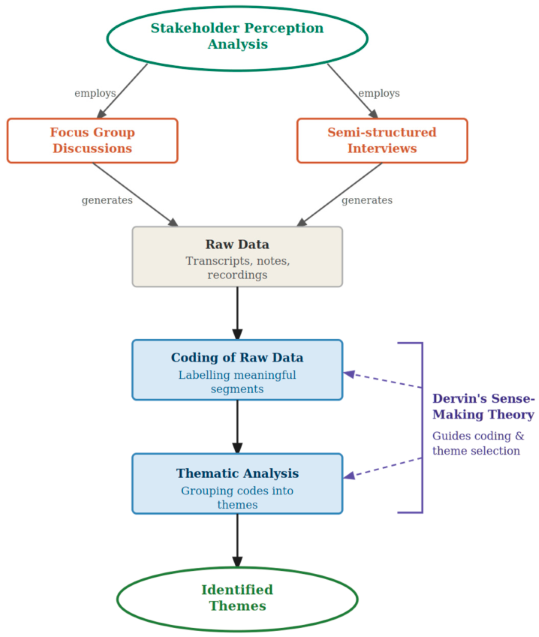
The study used thematic analysis to identify recurring patterns across the data collected (
Figure 4). Shared perceptions were then connected with other aspects of the sample like experiences, gender, location, occupation, and social status. To understand why certain groups of people shared similar perceptions, inferences were drawn from the Dervin’s sense-making theory. Sense-making theory helped us to understand why different groups of people felt differently about the same issue and how that affected their perceptions, because each participant brought their own interpretation to make sense of their experiences and bridge gaps in their understanding. The analysis was inductive in nature; patterns and commonalities were first observed within the data, and the theory was subsequently applied to the themes that had already emerged organically.
3. Results
3.1. Flood Warning and Management
Socio-economic factors significantly shape a community’s vulnerability to disasters, with marginalized groups often bearing the brunt of such events due to limited access to resources and adaptive capacities [
20]. For those belonging to economically disadvantaged groups, the recurring floods exacerbate their existing vulnerabilities. They face challenges such as loss of livelihoods, displacement, and lack of access to essential services during and after floods. These communities perceived flood management efforts as insufficient and misaligned with their needs. They expressed frustration over the lack of timely and effective assistance from authorities. The study revealed that communities in the flood-prone areas have a heightened awareness of the risks posed by floods, primarily due to their past experiences with flooding. Despite this awareness, there is a notable disparity in how different groups within the communities perceive the severity and frequency of floods. Those who have experienced repeated flooding express a growing concern about the increasing unpredictability and intensity of floods, which they attribute to changing weather patterns. Such perceptions are influenced by their observations of environmental changes in the region, such as changes in river patterns, deforestation, and increased rainfall variability. Many community members attribute these changes to broader environmental degradation and express concerns about the long-term impacts on their livelihoods and the sustainability of their traditional practices. They call for more comprehensive flood management strategies that incorporate environmental conservation and address the underlying causes of these changes.
The communities highlight the persistent issue of embankment failures, which have been identified as a significant contributor to the increased flood impacts. Many of these structures, originally intended to protect communities, have become liabilities due to poor maintenance, leading to catastrophic breaches during high flood events. “Earlier water would stay in the village for three days or so but now because of embankments in the neighbouring village, the water is trapped more than a week. We told the engineers that embankment is not a good idea and sluice gates should be used instead. Earlier the region has multiple sluice gates, and we would control them locally depending at the water levels,” said a retired teacher. This shows that modern engineered solutions, if not planned and implemented according to community experiences, often lead to worse impacts, especially in the case of an unpredictable river like the Brahmaputra, which is known to shift its course rapidly. It also states the sluice gates, something simple and easy-to-use, can be more effective if implemented wisely.
Such observations align with Liu and Burnett (2022) [
21], who argue that combining an insider’s local knowledge with an outsider’s critical distance enhances research depth, ethics, and accuracy through a shared learning process [
19]. Effective flood management requires integrating community knowledge, fostering collaboration, and supporting continuous learning through adaptive management. Current policies still rely heavily on conventional control measures and do not adequately reflect community experiences or local adaptation needs. Persistent miscommunication, especially around dam releases, embankment breaches, and the unresolved past issues, have weakened trust among officials, policymakers, and affected communities. These gaps illustrate how the lack of community-informed policymaking exacerbates vulnerability [
22].
Communities also highlight the need for road connectivity because poor road conditions only hinder access to relief during floods and affect timely evacuation. These infrastructure deficits are critical barriers to effective flood management. Hence, the effectiveness of most flood management strategies is limited by low investments in maintaining and upgrading flood protection infrastructures. A comprehensive infrastructure assessment and prioritization of critical repairs and upgrades is necessary.
3.2. Community Challenges
Communities encounter several difficulties, including inadequate access to timely information, a lack of elevated areas, sudden erosion, insufficient warning systems, poor healthcare for humans and animals, and more. “Continued waterlogging makes the village more prone to water-borne and vector-borne diseases like cholera, malaria, etc. Many of our livestock get trapped in the waters, get diseased, and die. There is no veterinary assistance provided during the waterlogging. Losing our livestock is like losing a family member,” says a woman emotionally.
Additionally, they experience delays in implementing flood and erosion management measures and limited government interaction. There is a need for better coordination among government agencies responsible for flood management to avoid overlapping responsibilities, inefficient use of resources, and delays in response during flood events. The analysis brings out the exclusion of local communities from flood management planning processes, which has led to implementing misinformed interventions that do not meet the needs and realities of the affected populations, reducing their overall effectiveness. A partially blind old lady said, “I never get to know what is happening in the village. I only got to know about today’s meeting because I was accidently in the area and overheard people talking about it.” She cited her age, disability, and social status as reasons for the neglect. She lost both her son and husband, and was then living alone on a secluded side of the village that was largely abandoned due to the incoming river. Hence, improving inter-agency cooperation and ensuring community participation in planning processes are critical for developing more effective and responsive flood management strategies.
Another significant challenge flood-affected communities face is long-term displacement, often leading to loss of livelihoods. Displaced families struggle to find stable housing and income, leading to long-term financial insecurity. The communities express a deep sense of loss and frustration over the lack of adequate support for displaced families in terms of immediate relief and long-term rehabilitation.
During and after flood events, communities face significant challenges in accessing essential services such as healthcare, education, and clean water. The disruption of these services increases their hardships. There is a strong demand for better infrastructure and service delivery that can withstand flood events and ensure continuity of access.
Many feel marginalized and believe that their voices are not adequately heard in the planning and implementation processes of flood management programmes. They perceive a disconnect between the priorities of government authorities and their own needs and experiences. This marginalization is particularly pronounced among vulnerable groups such as women, the elderly, and economically disadvantaged families, who often face additional barriers to participation in decision-making processes (
Figure 5).
3.3. Coping Mechanisms
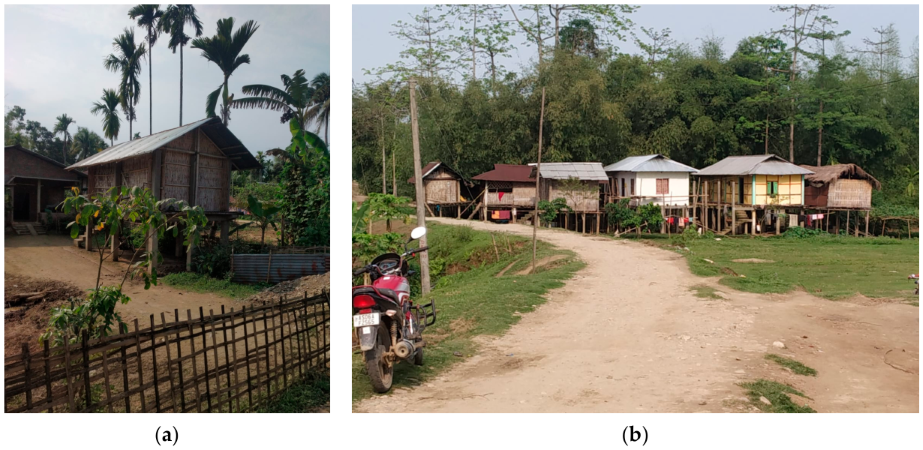
Communities in Assam have a long history of living with floods, leading to the development of traditional knowledge systems for coping with its effects. This knowledge has been passed down through generations and includes strategies like building homes on bamboo stilts, cultivating flood-resistant crops, building bamboo bridges and boats for transportation during flood seasons. Communities perceive these traditional practices as crucial for their survival and resilience. They want to maintain these practices as they view these as more reliable and contextually appropriate than modern interventions (
Figure 6).
Chang ghars or stilt houses are popular in Dibrugarh and Majuli as they provide a temporary refuge during floods and help protect livestock and essential goods from water damage. In Lezai Mirigaon, Dibrugarh, Mishing communities live in stilt houses, a practice adopted by surrounding non-Mishing villages, though they primarily raise their granaries instead of the entire home. Another instance of a traditional knowledge system is reflected in the use of termite soil to mop the mud floors to enhance the floor’s seepage ability and preventing water leakage during floods. Using termite soil as a building material is also customary in certain regions of Africa, like Zambia and Togo, where it is used to make furnaces, plaster huts, and granaries. It prevents the entry of water into homes [
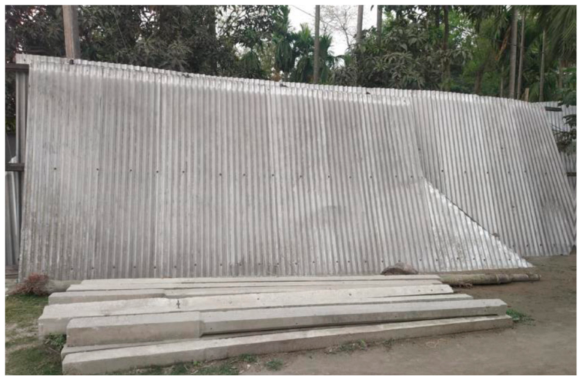
23]. Other adaptive strategies include observing cloud patterns to predict floods, preparing emergency bags, and building high storage spaces near ceilings for storage during floods. In Shaupur, Barpeta, villagers construct tin houses, which are cheap and can be dismantled and carried to elevated areas during floods (
Figure 7).
However, the study also notes that these traditional coping mechanisms are increasingly under threat due to the changing nature of floods, which are now more intense and prolonged, often overwhelming these conventional adaptations. The traditional practices increase resilience and are more aligned with nature-based solutions but one also needs to adapt to the changing environmental conditions. This has led to a hybrid approach that blends traditional and modern methods. Notably, this adaptation is occurring at the community level, driven entirely by community members themselves, with little to no involvement from the state. While policymakers and engineers have largely overlooked traditional knowledge in favour of modern interventions such as embankments, communities have taken a different path, drawing on their experiential knowledge while selectively contemplating what different structures can offer. “We have stilt granaries but now we make them on cement pillars rather than bamboo as it is more durable. Also, we use the granaries not only to store grains and pulses but also to safekeep important documents in the high shelves as flood waters cannot reach those spaces,” said a villager. This aligns with the idea of skeuomorphism discussed in architectural studies [
24] and shows the readiness of communities to adapt modern solutions if they benefit. Hence, combining traditional knowledge with modern flood management techniques is a more robust approach to build resilience and adapt to climate change (SDG 13).
Farmers have adopted flood-resistant crops as a modern adaptation strategy to ensure food security. However, poor farmers are often unable to access the necessary resources and knowledge. The introduction of mobile flood warning systems is also a promising modern development in flood management as it has the potential to provide timely alerts, allowing communities to evacuate and take protective measures. However, the effectiveness of these systems is uneven, with gaps in coverage and accessibility. The findings indicate that, while modern adaptation strategies show potential, there is a need for broader and more equitable access to these innovations. Therefore, targeted programmes that ensure marginalized communities can benefit from these modern technologies are essential to reduce their vulnerability.
This process of integration is recognized across disciplines under different terms: “reinvention” in diffusion studies [
25], “skeuomorphism” in architectural studies [
24], and “syncretism” in cultural studies [
26]. However, such integration ideally requires meaningful coordination and participation among all stakeholders, a condition that remains largely unmet in this context, where dialogue between technocrats and community members is rarely constructive or equitable.
Communities favour incremental change over the radical transformations typically associated with state-sponsored schemes [
27]. Their relationship with land is deeply sacred, and the knowledge systems that surround it are rooted in holistic wisdom. Such wisdom is plural in origin, shaped by individual experiences, and collectively held. Unlike state-driven scientific knowledge, this system has no single custodian or patent holder; it belongs to the community. Central to this worldview is the continuity between past, present, and future, a thread that communities actively maintain to strike a balance between preserving ancestral wisdom and adapting to contemporary realities [
28].
3.4. Perception by Occupation
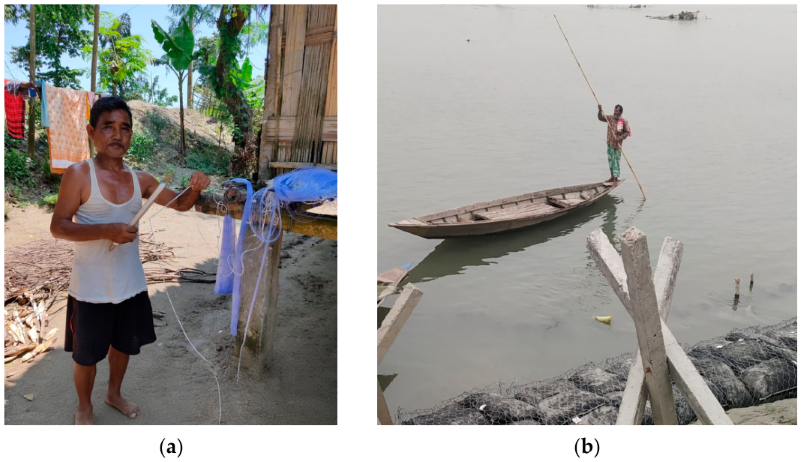
Most agriculturists, farmers, and cultivators recognized the dual nature of floods, acknowledging their importance in agriculture but viewing them as destructive due to their high frequency and intensity. A sudden rise in water levels robbed farmers of the shallow water periods needed to sow rice saplings, and erosion washed away their valuable lands. They were keen on contributing to policymaking by relying on modern technology and traditional knowledge.
Daily wage labourers, many of whom lost their land to erosion, viewed floods negatively, attributing the worsening situation to poor management. They prioritized immediate solutions like rehabilitation and employment due to their economic constraints. Village heads and ward members shared the concerns of farmers but were more informed about government policies and advocated for more inclusive approaches that incorporated community experiences. Teachers emphasized the significance of historical context and drastic biodiversity changes, while calling for effective interventions by government and non-governmental organizations (NGO). Well-educated business owners usually participated in village organizations and saw both positive and negative impacts of current policies. While they acknowledged improvements in health status and reduced mortality, concerns about property and crop losses remained. They advocated for cost-effective, accessible policies with greater government involvement facilitated by village leaders (
Figure 8).
3.5. Community Communication
People received information primarily from village heads (Gaonburas) and Panchayat members, with government officials like Circle Officers (COs) and District Magistrates (DMs) visiting during floods to provide relief. However, communication from the government before and after floods was sparse. Many respondents reported that officials and engineers arrived shortly before floods to implement mitigation efforts, which often failed due to the onset of floods a few days later. These officials typically used top-down communication methods and disregarded local expertise. Political representatives were similarly absent, frequenting only during elections, though few respondents recounted positive interactions when they visited the leaders in their offices. However, promises made by these representatives seldom materialized.
Some villagers use mobile phones and the internet, including platforms like Facebook and YouTube, to gather flood-related information. But there needs to be more communication between NGOs and Community-Based Organizations (CBOs). Only one community recalled an NGO visit but that too did not lead to any concrete action. Media presence was also minimal, with only 1 no. Panigaon receiving media attention due to protests over poor roads. Due to lower participation in village meetings and other social constraints, women did not have absolute access to information, like economically disadvantaged groups engaged in daily wage labour. Communities expressed a desire for more proactive communication from the government through village heads and NGO workers. They trusted the village heads but wished for better disaster preparation and hoped that their opinions and experiences would be considered before implementing mitigation measures. This aligns with the ethos of SDG 17, which calls for strengthened public and civil society partnerships for sustainable development.
However, a strong sense of community and belonging remained the primary source of resilience. Neighbours, families, and friends often helped each other during crises, offering shelter and pooling resources to support those affected. They also engaged with government officials and political representatives to demand better flood and erosion management.
3.6. Community Expectations
Communities demanded more effective early warning systems, improved infrastructure, and greater involvement in planning and decision-making processes. Meeting these expectations would require a multi-faceted approach that combined technological advancements with community-centred planning. There was a growing awareness of the need for sustainable and long-term solutions that addressed the root causes of flooding and erosion. Some community members advocated for more participatory approaches involving them in decision-making and considering their traditional knowledge and experiences.
In response to the perceived shortcomings of external interventions, communities have taken matters into their own hands by organizing community-led flood management initiatives. These efforts included collectively constructing and maintaining local infrastructures like embankments and drainage systems, and establishing community-based early warning systems. These initiatives reflected the communities’ resilience, resourcefulness, and desire for greater autonomy in managing the risks associated with flooding.
“We can look at the cloud pattern and detect how long it will take for the flood waters to reach the village,” said a middle-aged farmer. Such reflections show that the lived experiences of the people are not merely assumptions. They trust their logic and instincts before listening to top-down warning systems. They still believe that the sky gives signals if one knows how to receive them. This shows the value of experience and traditional knowledge that may hold greater significance over scientific predictions in many communities today. Thus, utilizing the skills of such individuals instead of ignoring them will not only enhance trust in the community but may also improve scientific techniques.
4. Discussion
4.1. Floods as Livelihood, Not Disaster: Sense-Making Reframes
The communities studied in this research base their understanding of flood and erosion management on personal and communal experiences. For those living in flood-prone areas, floods are not necessarily seen as adverse events but as essential phenomena that sustain their agricultural practices. The recurring floods contribute to soil fertility, making agriculture, especially rice cultivation, a central aspect of their culture and livelihood. This farming practice is deeply embedded in their social and cultural life, where rice is more than just a crop; it is a symbol celebrated in festivals and integral to their identity. Faced with the gap between recurring flood events and the need to sustain livelihoods, communities construct a bridge by reinterpreting floods not as threats but as ecologically and culturally productive phenomena. Rather than aligning with the dominant technocratic narrative that positions floods as hazards requiring containment, communities have developed an alternative meaning system that accommodates floods within their agricultural and cultural rhythms.
4.2. Land, Loss, and the Gap Between Policy and Lived Reality
Despite belonging to various tribes and castes, the people in these villages share a typical social structure, significantly influenced by their occupation and land ownership status. Land ownership is crucial, as it determines economic status and social standing. Government schemes like Pradhan Mantri Awas Yojna (PMAY) provide housing, but for these communities, preserving their land is of paramount importance. Wage-employment schemes like the Mahatma Gandhi National Rural Employment Guarantee Act (MGNREGA), which has been rebranded as Viksit Bharat—Guarantee for Rozgar and Ajeevika Mission (GRAMIN) since March 2026, offer temporary labour opportunities during non-agricultural seasons. This help communities meet short-term household expenses, but these provisions do not offset the long-term losses caused by land erosion. State policies reduce land to an economic and administrative category, while communities experience it as an extension of memory, identity, and intergenerational continuity. The land is not merely a physical asset; it holds personal and emotional significance.
“Now that I don’t have my land, will I not be considered a citizen of the state?” asked a curious citizen. This shows how intricately land is tied to cultural identity and nationality. The home address of an individual becomes the primary indicator of many citizenship documents, but if there is no land, where is one supposed to address as home? “We used to have the temple way back in that area. Now it is here but this year this too will get washed away. What is the point of all these discussions? Will we get back our land? Without our land we have no identity.” Such statements show the belongingness and emotional connection to land. The connection is not just physical; it is emotional. “We don’t have the grounds where we played when we were young. We don’t have those backyards anymore. The river took it all. Our neighbours have provided us with some space to live, we are grateful. But that is their land, not ours.” The community support exists but families feel isolated because they are living on borrowed land. They have no land to call their own. Instead of compensation, they would want to protect their land. This gap between the communities’ perception of their land and the bureaucratic language of compensation by the government aligns with Gluckman’s estate of administration where land is treated as a resource to be managed and governed, focusing on legal, administrative, and political control [
29]. This disconnect is as a fundamental failure in community-based disaster risk reduction, when top-down interventions do not account for the social and cultural dimensions of vulnerability, and address the physical symptom while leaving the deeper wound unattended [
30].
4.3. Exclusion and Sense-Making Participation Barriers
Livestock is deeply intertwined with a community’s sense of society in the village. While authorities prioritize human life and provide health aid accordingly, the villagers perceive that their animals have been neglected because of the lack of veterinary assistance during flood and erosion. What is priority to one is perceived as an afterthought by the other. As a result, the villagers feel that the authorities do not care about their livestock, which in many cases are a part of their family and sometimes a source of income. This highlights the fundamental disconnect between the etic perspective of authorities, who focus on standardized health protocols, and the emic reality of the villagers, whose disaster recovery is tied to the survival of their livestock [
31].
It is mostly the women who shed light on the livestock issues, as they are the primary care-takers of the animals. But women and economically disadvantaged groups within these communities feel marginalized and unheard, which reflects the ingrained gender biases that prevent them from participating in decision-making processes. This cultural norm was evident during the FGDs, where women were hesitant to voice their opinions, indicating that their exclusion from such processes is not seen as abnormal but somewhat expected. Geographical and demographic isolations also seclude certain populations from the communication loop, showing how, even in the grassroots, not everyone is equal. Hence, there can never be a “one size fits all” policy. Also, families that do not have a young male member might often get dropped out of the information loop as the meetings mostly include men, who then relay the messages to their wives and mothers. Such structural and material conditions systematically exclude the most marginalized from access to communication resources, demonstrating that, in communities where information flows through male-dominated social networks, those without male intermediaries are rendered communicatively invisible by the very structures meant to serve them. This forces the marginalization of those who are already most at risk [
32]. The study finds that participation is like a consultation without meaningful influence, aligning with Arnstein’s ladder of participation, which distinguishes between tokenistic inclusion and genuine empowerment. Addressing this gap requires not only logistical inclusion of women in meetings, but a deliberate restructuring of the social norms that govern those sense-making counts.
4.4. Scepticism Towards Scientific Interventions Despite Willingness to Adopt
Relying only on traditional methods has failed the communities because floods are much more intense and unpredictable now. So, villagers think that modern interventions might help. However, repeated disappointments with government initiatives that have failed to deliver results have created a sense of disillusionment and has fostered scepticism towards interventions that never incorporated local knowledge and experience. In Dihing Kinar Bangaligaon village of Dibrugarh, there was a noticeable lack of optimism towards the FGDs itself, because repeated failures of externally imposed interventions have eroded the community’s capacity to construct hopeful or productive meaning from new initiatives. “Why have you come again? What will you do? Many people come. They talk, discuss, and leave,” said the women, almost teary-eyed.
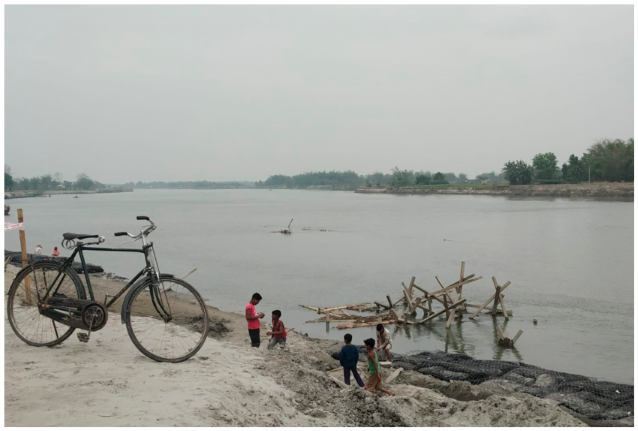
The poorly placed porcupine structures in Shaupur and Naharkatia are a telling example of a technical solution implemented without community consultation, which not only failed but actively undermined trust in future interventions (
Figure 9). This finding extends the arguments that flood management systems fail not merely due to technical inadequacies but due to the exclusion of local knowledge from the design and implementation process [
33]. When communities are consistently bypassed, the sense-making gap between their experience and the solutions offered to them widens, making meaningful engagement increasingly difficult.
4.5. Climate Change as Lived Experience: Divergent Sense-Making Systems
Climate change is a tangible reality for these communities. They observe ecological changes that deviate from cultural norms, such as shifts in rainfall patterns, changes in the availability of herbs and flowers for festivals in the desired seasons, and the altered timing of seasonal diseases. These changes are not just environmental but deeply cultural, disrupting the rhythm of life that these communities have known for generations. Unlike policymakers who rely on scientific data to understand climate change, these communities experience it firsthand, making their understanding more immediate and visceral. While one sense-making system is rooted in quantitative scientific data and modelled projections, the other is embodied in culturally situated observation. Neither is inherently superior; rather, they represent different epistemological bridges constructed across the same gap. The communities’ observations is a form of ecological monitoring that is granular, longitudinal, and culturally embedded. This finding supports the argument for adaptive governance frameworks that integrate scientific and experiential knowledge systems rather than privileging one over the other [
34].
Given their experiences, the community favours innovative solutions that integrate their insights into flood and erosion management. By focusing on the gap-bridging processes of flood-affected communities, this study reveals that the central challenge in flood and erosion management is not merely technical but epistemological. It is about whose knowledge is used to construct solutions, and whose sense-making is incorporated into governance. Communities are not waiting passively for state intervention; they are actively making sense of their circumstances, adapting their strategies, and integrating traditional and experiential knowledge in ways that formal policy frameworks have yet to recognize or support. The study also demonstrates that participation is not a uniform condition but a layered, culturally mediated process shaped by gender, land relations, historical trust deficits, and the legacies of failed interventions. It also contributes a methodological argument: FRM research benefits from frameworks, like sense-making, that are designed to bring to the surface the meaning-making processes of communities rather than simply document their behaviours or preferences.
5. Conclusions
The study presents a comprehensive analysis of the perceptions, challenges, and expectations of riparian communities regarding flood and erosion management in Assam. It highlights the intricate dynamics that characterizes the region’s approach to disaster management. Historical and contemporary evidence shows that flood management in India remains dominated by technocratic solutions like embankment construction, reflecting a long-standing technological lock-in that limits flexibility in decision-making. The effectiveness of embankments has plateaued while breaches and outflanking have often intensified damage. This top-down, infrastructure-centric approach leaves little room for alternative strategies or community-informed solutions. In the context of climate change, where rainfall extremes and flood peaks are expected to rise, embankments alone are inadequate, and at times even hazardous. A shift toward more flexible, holistic, and adaptive flood mitigation policies is urgently needed [
35]. Thus, the findings underscore the need for an integrated strategy that addresses both infrastructural and socio-cultural dimensions.
Flood risk perception is influenced by direct experiences, with riparian communities expressing significant concern over the increasing frequency and severity of floods. However, this concern is rarely aligned with knowledge or preparedness, indicating a critical gap in flood risk education. The challenges identified by the communities include failed embankments, poor road connectivity, and a lack of coordination among government agencies. The study also points out the exclusion of community voices from planning processes, which affects the quality of interventions and leads to local resistance.
The study also highlighted the resilience of rural communities through the continued use of traditional practices like building chang ghars. However, these practices are under threat due to changing flooding patterns. Modern technological strategies, such as flood-resistant crops and mobile flood warning systems, show promise but are unevenly distributed, often leaving poorer communities more vulnerable. Communities wish for more effective early warning systems, increased investment in resilient infrastructure, and improved participation in planning processes.
Enhancing flood risk education to bridge the gap between risk perception and preparedness in vulnerable communities is crucial. Substantial investment in resilient infrastructure, including the maintenance and reinforcement of embankments and roads, alongside the construction of new, climate-resilient facilities and better inter-agency coordination, is essential. Mitigation strategies must emphasize greater community involvement in planning and decision-making, integrate local knowledge, and ensure culturally appropriate interventions. Lastly, equitable access to modern adaptation strategies through programmes that ensure marginalized communities can access these vital resources is recommended.
Therefore, the study recommends a multi-faceted approach to flood and erosion management in Assam. By addressing the infrastructural and socio-cultural challenges and involving communities more actively in the planning and implementation processes, authorities can develop more effective and sustainable strategies to mitigate disaster impacts in the region. This is even more important now as Assam has recently been declared as a Seismic Zone VI region, compounding an already fragile disaster risk landscape [
36]. In such a scenario, there is a need to explore networked approaches, prioritizing UNDRR’s Whole of Society approach where community knowledge systems, local adaptive practices, and state-supported technocratic solutions are not competing paradigms but complementary loops within a larger resilience architecture.
This approach also aligns with SDG 13 and 17, which is dedicated to strengthening climate resilience by increasing the adaptive capacity of vulnerable communities, and integrating effective public, public–private, and civil society partnerships for sustainable development. Eventually, participatory nature-based disaster management practices will curb the impacts of climate change on both human and non-human elements of nature, ensuring ecological justice. Furthering this, the United Nations Decade on Ecosystem Restoration (2021–2030) urges global stakeholders to revive degraded ecosystems for climate resilience, biodiversity protection, and community wellbeing and that will be most effective if approached from a social–ecological perspective [
37]. In this global mandate, the local becomes the site of strategic importance. This study gains further relevance as it highlights locally grounded strategies that resonate with global restoration goals, reaffirming that the integration of community knowledge into ecological decision-making is central to long-term sustainability. To think globally, the communities in Assam and their traditional knowledge systems must be empowered to act locally.