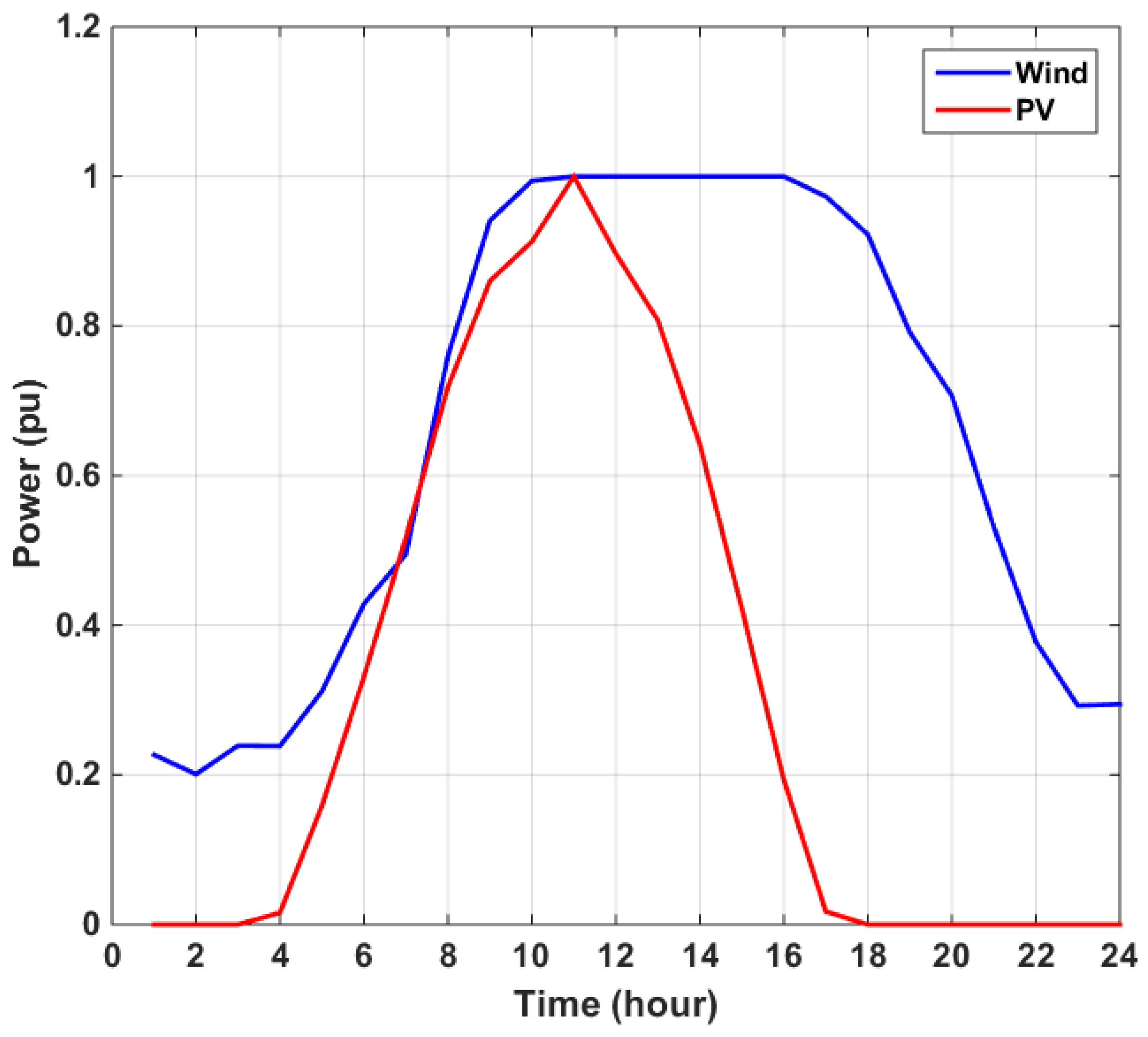
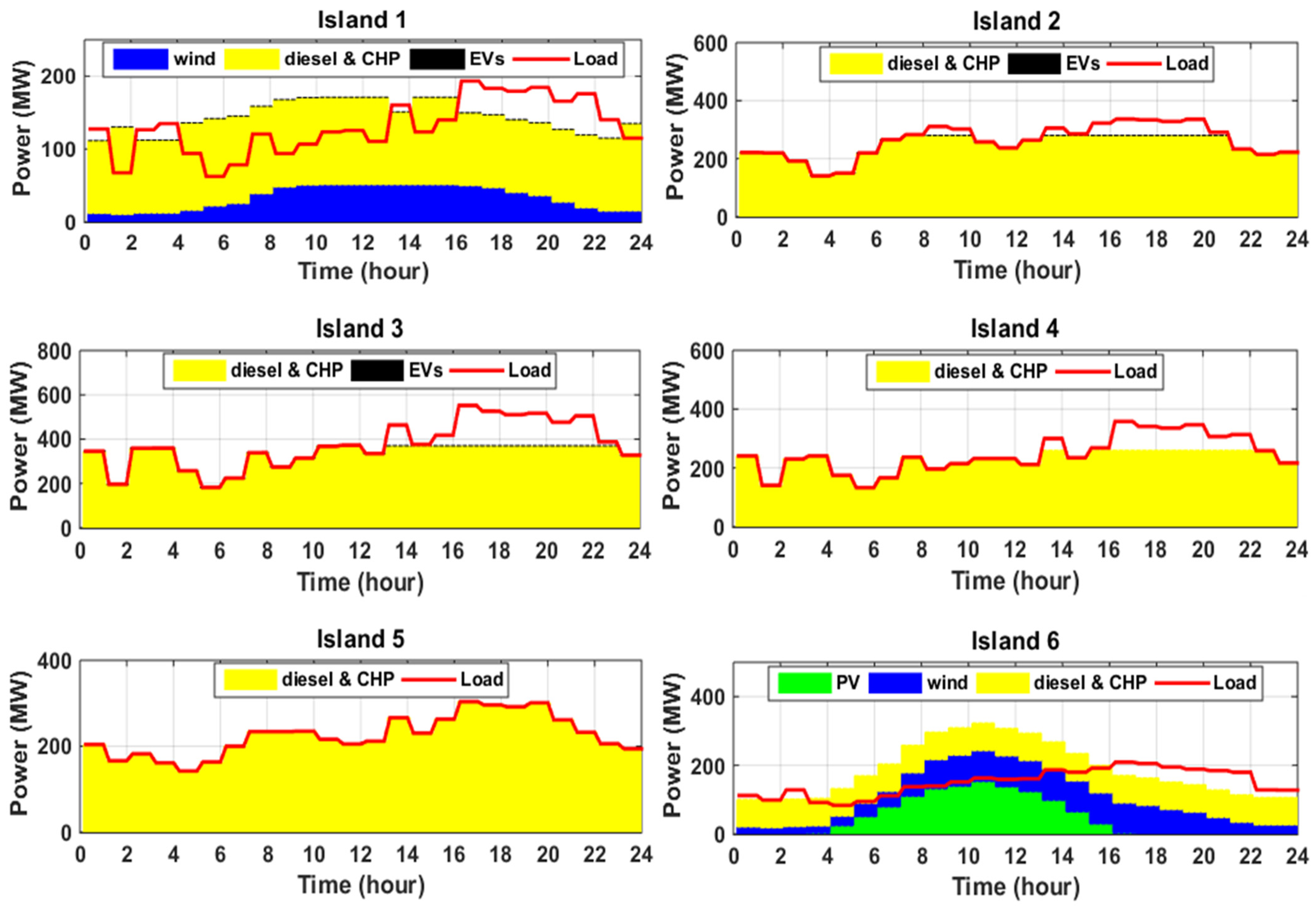
With the widespread adoption of distributed generation (DG) and its penetration into the power system, power systems transferred from being centralized systems to more sustainable, decentralized ones. As a result, a power system can be split into several isolated subsystems or islands following a catastrophe to avoid blackouts. These controlled islands can improve the continuity of supply to local loads which improves the sustainability and reliability of the power system.
1.2. Literature Review
Many studies have addressed the optimal intentional islanding operation and DG benefits during load restoration. In [
1], a fault recovery approach for a distribution network was proposed considering the charging/discharging of EVs as well as the network reconfiguration. In this approach, an island partition model was developed for optimizing the priority restoration of important loads. However, the presented approach did not take the outage loss or load control through DSM programs into consideration.
Similarly, to maximize the demand’s supply, an islanding strategy was proposed in [
2] considering mobile batteries placed on trucks. The interaction between the location of such mobile batteries and load switching was addressed to reach the research’s objective. In addition, the network loads were prioritized. However, in this work the loads with less priority were completely disconnected. Shifting these loads in response to available power supply by applying DSM was not considered.
An approach to find the optimal configuration of islanded microgrids in the presence of renewable energy resources was presented by the authors of [
3]. The objective of this approach was to improve system resilience through a reduction in power loss. However, the proposed algorithm did not consider the continuity of the supply of critical loads or the outage losses.
In [
4], the authors proposed a fault recovery strategy with the help of DG through a coordinated control of island partitioning to shorten the outage duration and minimize economic loss. However, the operational conditions of the distribution system regarding the power loss and voltage deviations were not considered. In addition, the priority distribution of the loads was not addressed.
In order to provide emergency power to restore critical loads, EVs were considered as distributed mobile energy storage units which could be dispatched to charging stations [
5]. The main objective was to optimally locate the charging stations, taking into consideration the distance of traffic networks in addition to the operational conditions of the distribution network. However, the idea of dispatching EVs from their regular parking stations adds time limitations to the load restoration process, unlike making use of the stored energy of static EVs without dispatching them away from their parking location.
The authors of [
6] presented a load restoration strategy incorporating both static and mobile energy storage systems. In addition, an optimal load pickup sequence was introduced, taking into consideration the priorities of the loads. The objective of the research was to maximize the total restored priority weighted power of the loads during outages. However, partitioning the distribution system into islands was not considered to lead to higher power loss.
On the other hand, in [
7], a fault recovery strategy was introduced which took into consideration the presence of DERs. In addition, an island partitioning scheme was proposed which considered the important load level during the island partitioning process. The objectives were to reduce active power losses and minimize the number of switching actions. However, the load level considered represented the number of restored loads without taking the priority of these loads into consideration.
Nevertheless, there still remains a gap in the research concerning the reduction in both the curtailed loads and the outage losses during outage periods through the application of demand side management programs on flexible loads which take into consideration the loads’ priorities, while splitting the distribution network into islands depending on the presence of DERs.
Furthermore, power outages and load curtailment can cause direct economic losses (such as household labor losses) and indirect economic losses (such as production delay losses) [
8,
9]. To mitigate outage risks, many studies proposed outage insurance mechanisms in order to compensate users’ losses.
In [
10], a post-disaster insurance mechanism was proposed, in which the distribution network losses due to disasters were claimed by insurance. The claimed insurance can provide financial support during disaster recovery.
An outage insurance mechanism was proposed in [
11], such that a customer receives outage compensation based on the outage value. The distribution company signs insurance contracts with the customers defining the insurance premiums. The distribution company uses these premiums to reimburse consumers according to their outage value when the electricity outage occurred.
Similarly, a reliability insurance scheme was introduced in [
12], in which electricity consumers are capable of determining their desired reliability levels and hence paying the corresponding premiums to the distribution system operator (DSO). The DSO can use the premiums to reimburse consumers according to their outage and reliability levels.
The concept of reliability insurance contracts was introduced in [
13]. According to these contracts, investment incentives were calculated with respect to customer damage function. In the presence of these contracts, the revenue opportunities for distributed generation were also evaluated.
In [
14], a study of the insurance effect associated with DERs with respect to distribution network reliability was presented. The relationship between the failure risk of DERs and the investment decisions made by consumers was investigated.
However, the outage insurance presented in the above-mentioned studies [
10,
11,
12,
13,
14] is a direct insurance that depends on a direct contract between the insurer and the customer with insufficient participation rate. In addition, risk distribution is centralized with a lack of cost sharing and control.
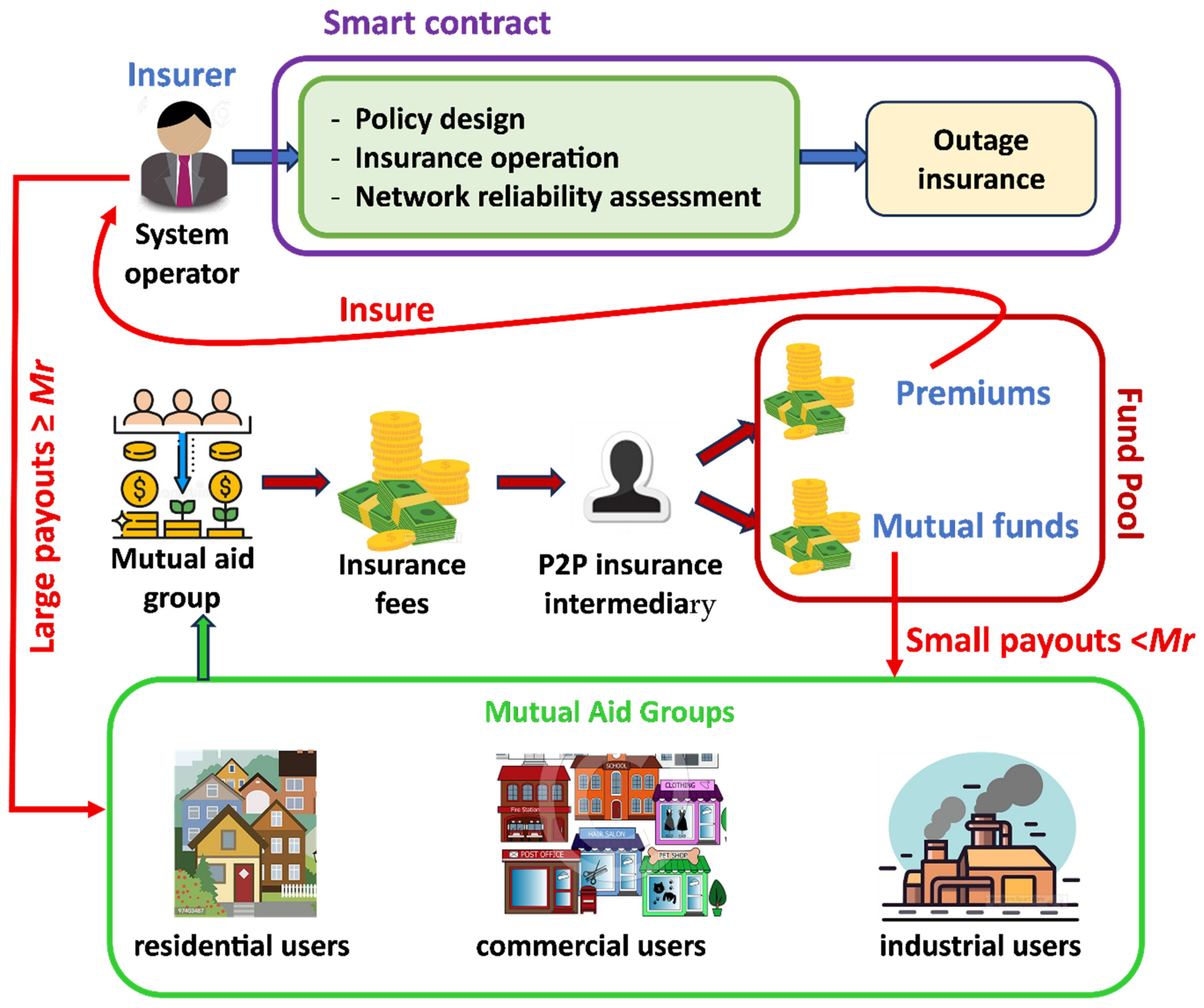
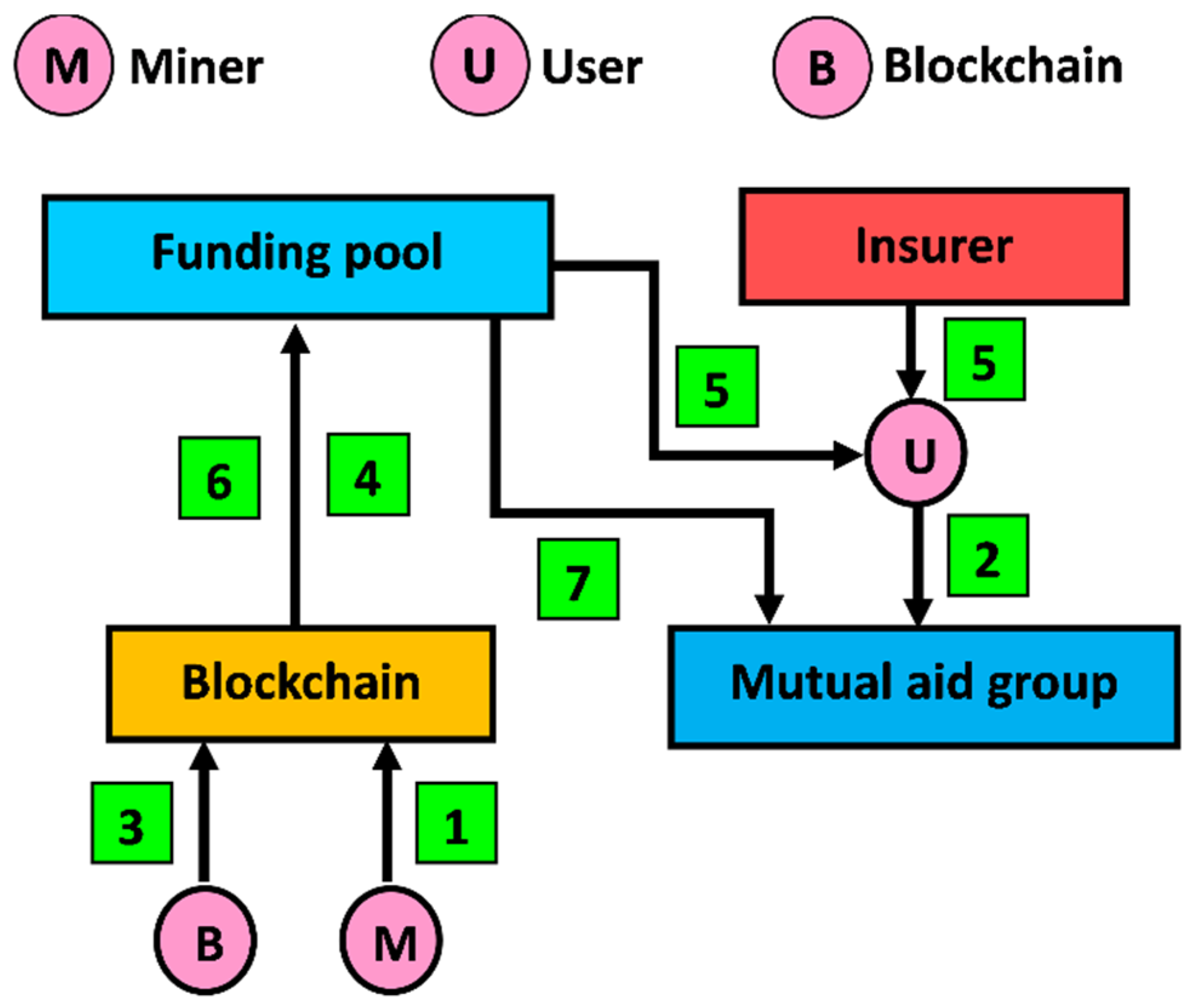
On the contrary, the peer-to-peer (P2P) insurance mechanism is a decentralized mechanism with a higher participation rate and interaction between users (peers). With the help of Internet platforms, users can exchange information more easily, pool their resources to compensate each other for losses, and reduce the cost of insurance [
15,
16]. In such a mechanism, users are aggregated through a P2P network into mutual aid groups. Participants pay part of the total premium to the insurance company as the insured amount, and the remaining part is kept as a fund pool for the group [
17]. In addition, P2P insurance aims to reduce costs as it cuts out some of the middle-level expenses, relying more on a digital platform and the self-organizing nature of the peer group [
18].
P2P insurance was extended to the power industry. For example, authors in [
18] proposed a P2P outage insurance mechanism for residential users based on a distribution network reliability assessment to achieve effective sharing and a reduction in outage risk. In [
19], a risk management framework combining parametric insurance and peer-to-peer (P2P) risk sharing to address production uncertainty in solar electricity generation was proposed. In that framework, a complementary P2P mechanism was introduced that redistributed the remaining risk among participants.
However, authors in [
18,
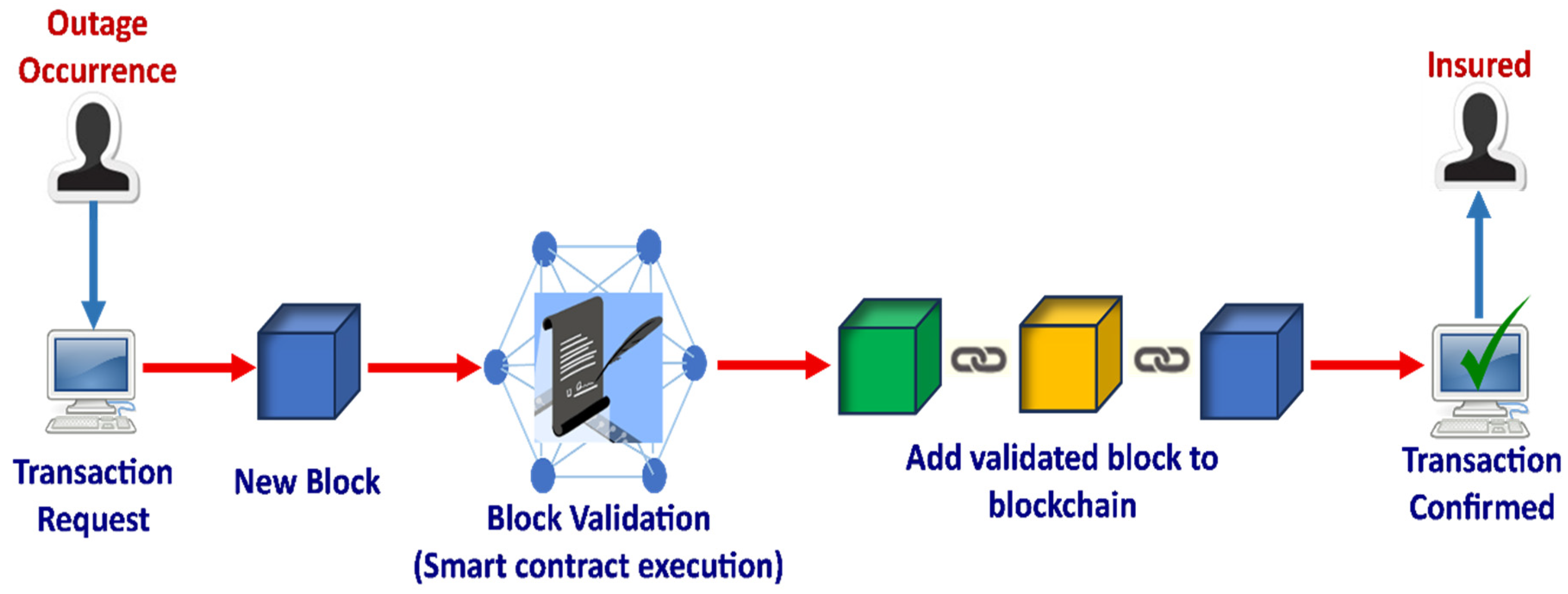
19] assumed that policyholders belonged to the same community, grouping them together on a digital platform which relies on social bond to overcome any element of distrust. Nevertheless, with the help of emerging blockchain technology, peers of different social communities can form a mutual aid group. Blockchain technology offers a notable degree of security and transparency through the use of distributed ledgers, suitable for the exchange of payments and claims of the P2P insurance system.
Regarding energy management optimization, authors in [
20] presented a hybrid metaheuristic (DE-HHO) combining differential evolution (DE) and Harris Hawks optimization (HHO) that enhances global exploration and local exploitation for microgrid energy management, achieving notable improvements in cost reduction and convergence speed. Although advanced hybrid metaheuristics can improve optimization performance, the research primarily focused on single-layer energy management problems. In contrast, the proposed work introduces a multi-layer restoration-oriented framework that jointly considers islanding, DSM/EV scheduling, and DER dispatch, in addition to integrating economic resilience mechanisms (blockchain-based P2P insurance). This establishes a clear distinction in both problem formulation and system scope, rather than only optimization techniques.
In addition, the study presented in [
21] emphasizes the importance of integrating sustainability and resilience into energy-related decision-making. Motivated by that work, the proposed framework in this paper particularly addresses the integration of resilience metrics, DER utilization, and economic risk mitigation mechanisms. While the work in [
21] focuses on macro-level corporate resilience, the proposed study contributes at the system-operation level by quantitatively embedding resilience through outage management, insurance mechanisms, and distributed energy coordination.
1.3. Contributions
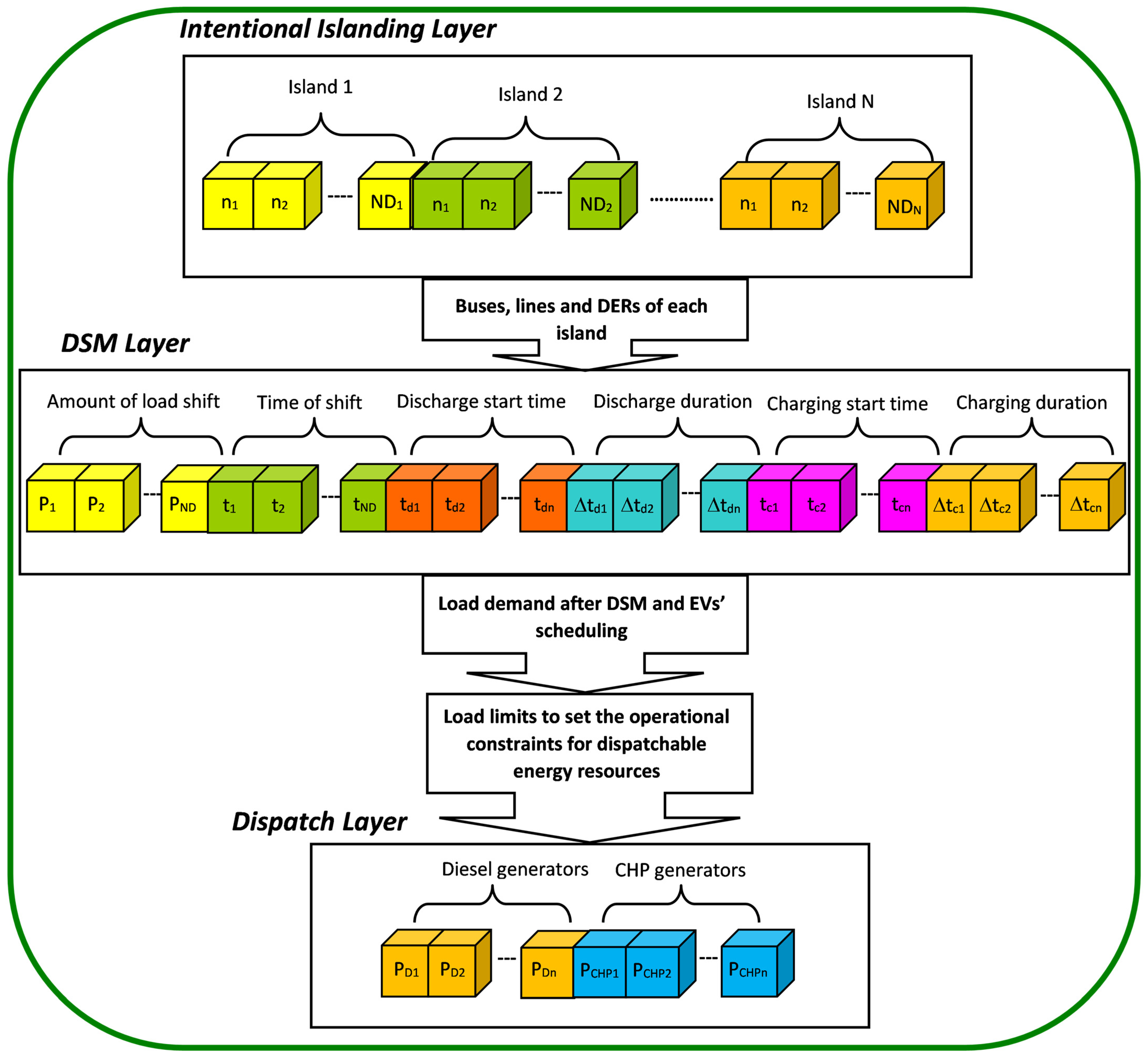
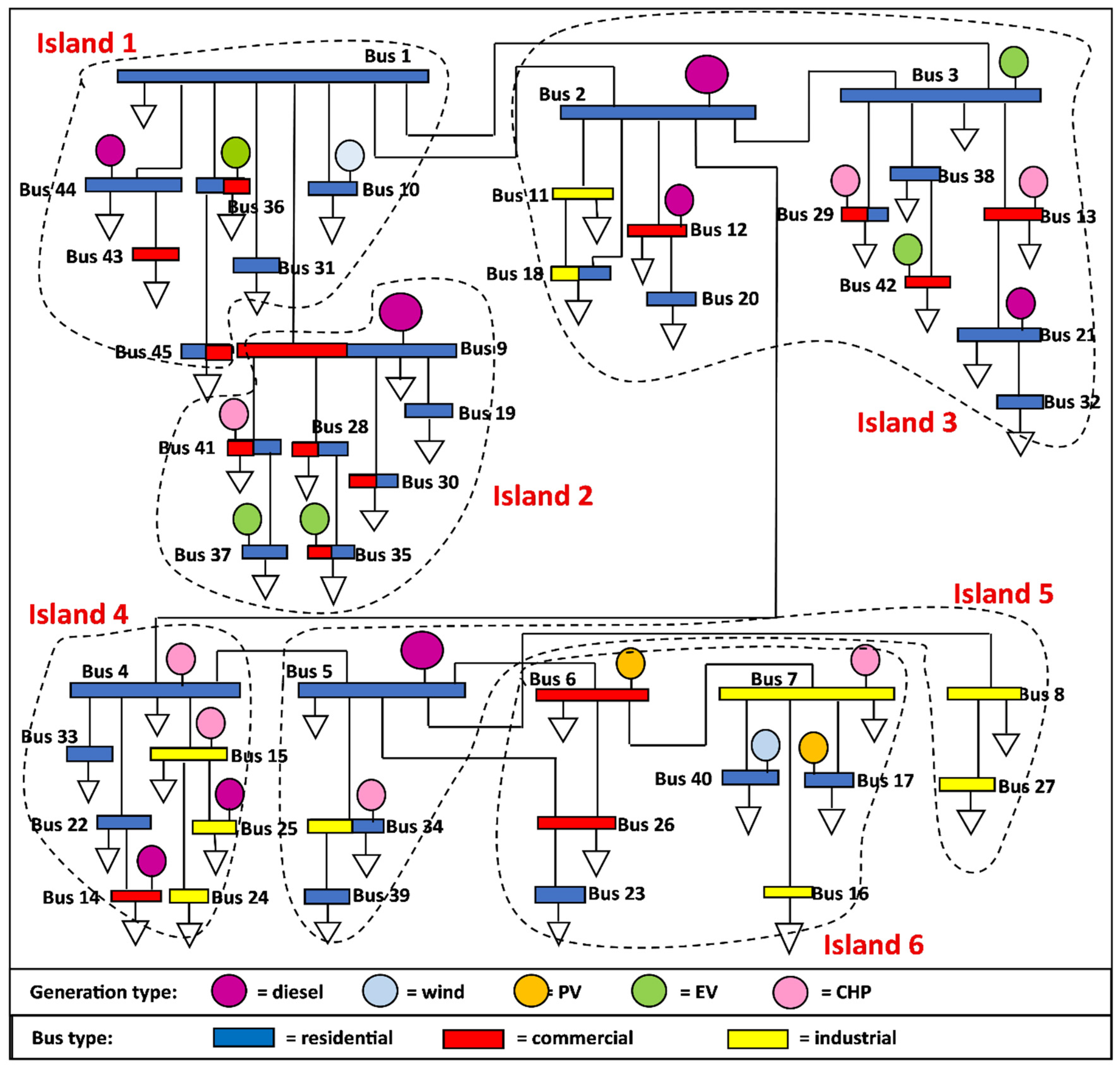
In this paper, a multi-layer multi-objective individual-based optimization algorithm is proposed for optimal restoration of the distribution system after a loss of connection to the upstream network. In the first layer of the proposed algorithm, partitioning the distribution network into islands is considered. In the second layer, depending on the islands formed, demand side management (DSM) of flexible loads in addition to scheduling of EV charging/discharging are considered. Finally, in the third layer, the optimal dispatch of diesel generators and combined heat and power (CHP) units is considered. The objective of the proposed algorithm is to restore as much power as possible to the network loads depending on their priority. By maximizing the restored power to high priority loads, the outage losses of the system are minimized. Furthermore, to compensate the customers for their losses, a blockchain-based P2P insurance mechanism is proposed. With the minimization of outage losses taking into consideration the loads’ priorities, the premium collected is also minimized. In addition, the application of the proposed blockchain-based P2P insurance scheme further reduces the cost of insurance, while maintaining secure and transparent financial transactions.
The main contributions of this work are summarized as follows:
Development of a multi-layer, multi-objective optimization framework for coordinated islanding based on DER availability, DSM, EV scheduling, and DG dispatch.
Incorporation of DSM of flexible loads during outage conditions, depending on load shifting instead of complete disconnection, which improves overall load restoration and reduces unnecessary load shedding.
Implementation of a priority-based restoration strategy to ensure that critical loads are continuously supplied through optimal management of higher-priority loads.
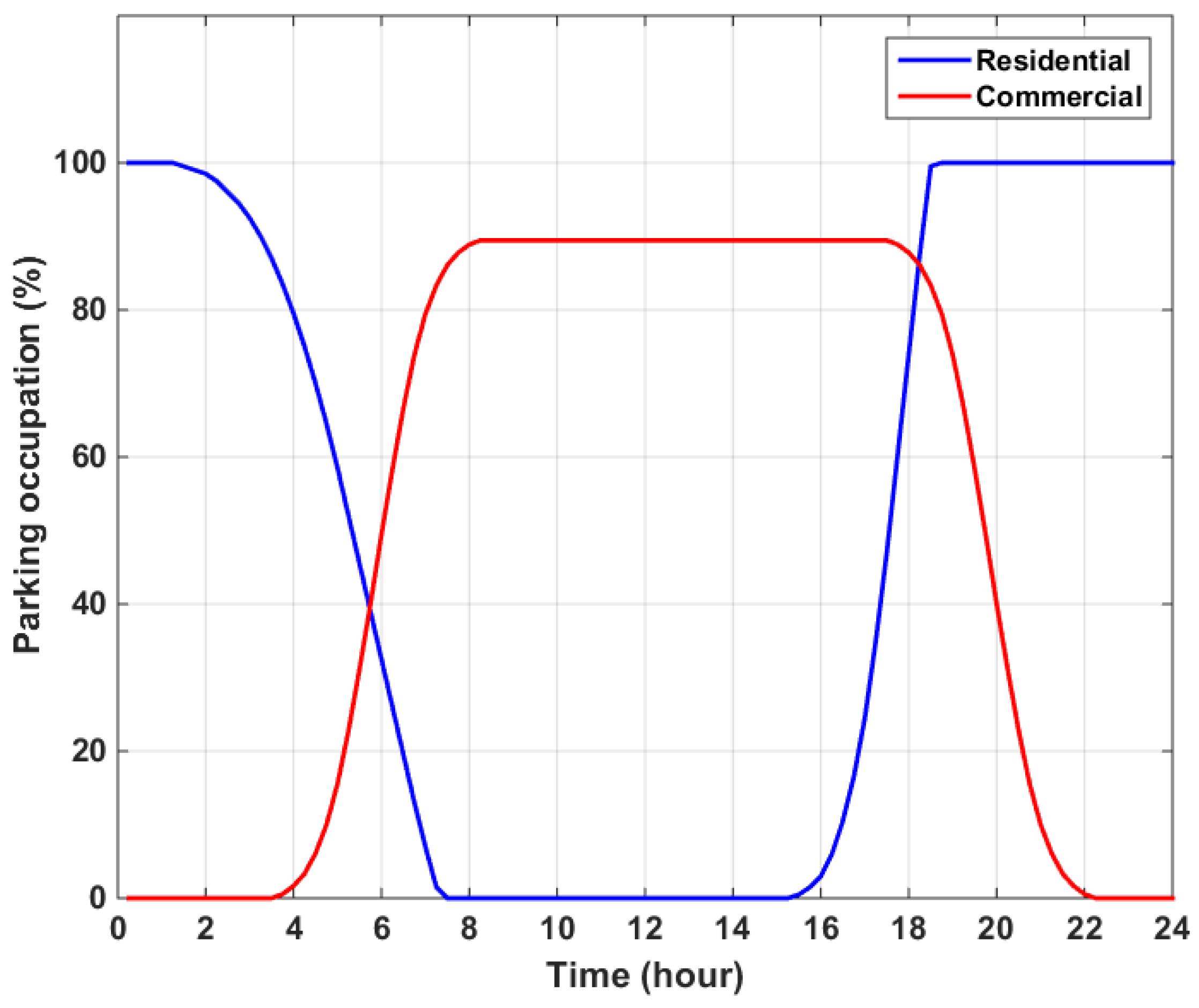
Efficient utilization of EVs as stationary distributed storage units through smart charging/discharging scheduling, which overcomes delays resulting from the dispatch to charging stations and improves their response during outages.
The proposed multi-objective algorithm explicitly considers the economic impacts of outage losses by maximizing restored power to high-priority loads and applying DSM, which many prior works have overlooked.
A blockchain-based P2P outage insurance scheme is introduced, enabling cost-effective and decentralized risk sharing among users, in addition to transparent and secure financial transactions.
The coupling between technical outage restoration and financial risk mitigation, which reduces both the outage losses and the insurance premiums.
Focus on resilience enhancement during outage conditions, rather than only cost or emission optimization.
Table 1 summarizes how the proposed framework not only addresses individual limitations of prior works [
1,
2,
3,
4,
5,
6,
7,
8,
9,
10,
11,
12,
13,
14,
15,
16,
17,
18,
19] but also provides a unified techno-economic solution that jointly optimizes system restoration and outage risk mitigation.