Maritime and Port Contributions to Coastal Nutrient Loading in the Baltic Sea: Apportionment and Regulatory Implications




Abstract
1. Introduction
1.1. State of the Baltic Sea
1.2. Nutrient Sources
1.3. Regulatory Context
1.4. Research Gap and Rationale
1.5. What We Study
2. Materials and Methods
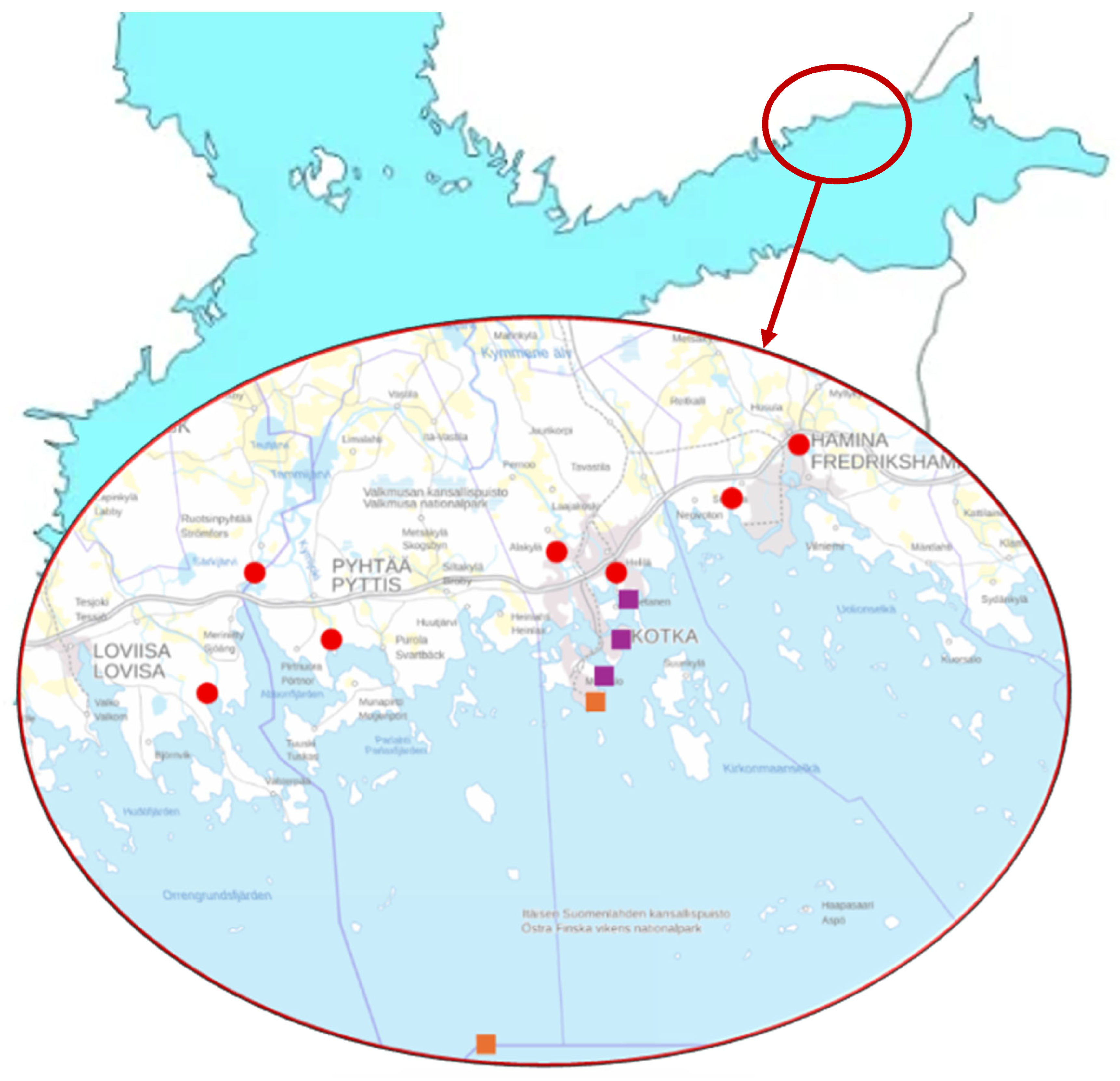
2.1. Study Area and Scope of the Assessment
- (i)
- Riverine inputs (representing combined diffuse and upstream point sources);
- (ii)
- Local land-based point sources (municipal wastewater treatment and industrial facilities);
- (iii)
- Maritime-related sources, separating diffuse ship waste waters from fertilizer cargo handling point source at port terminals.
2.2. Data Sources
2.3. Analytical Approach to Nutrient Source Apportionment
2.4. Unit Harmonization, Uncertainty and Limitations
2.5. Regulatory Analysis
3. Results
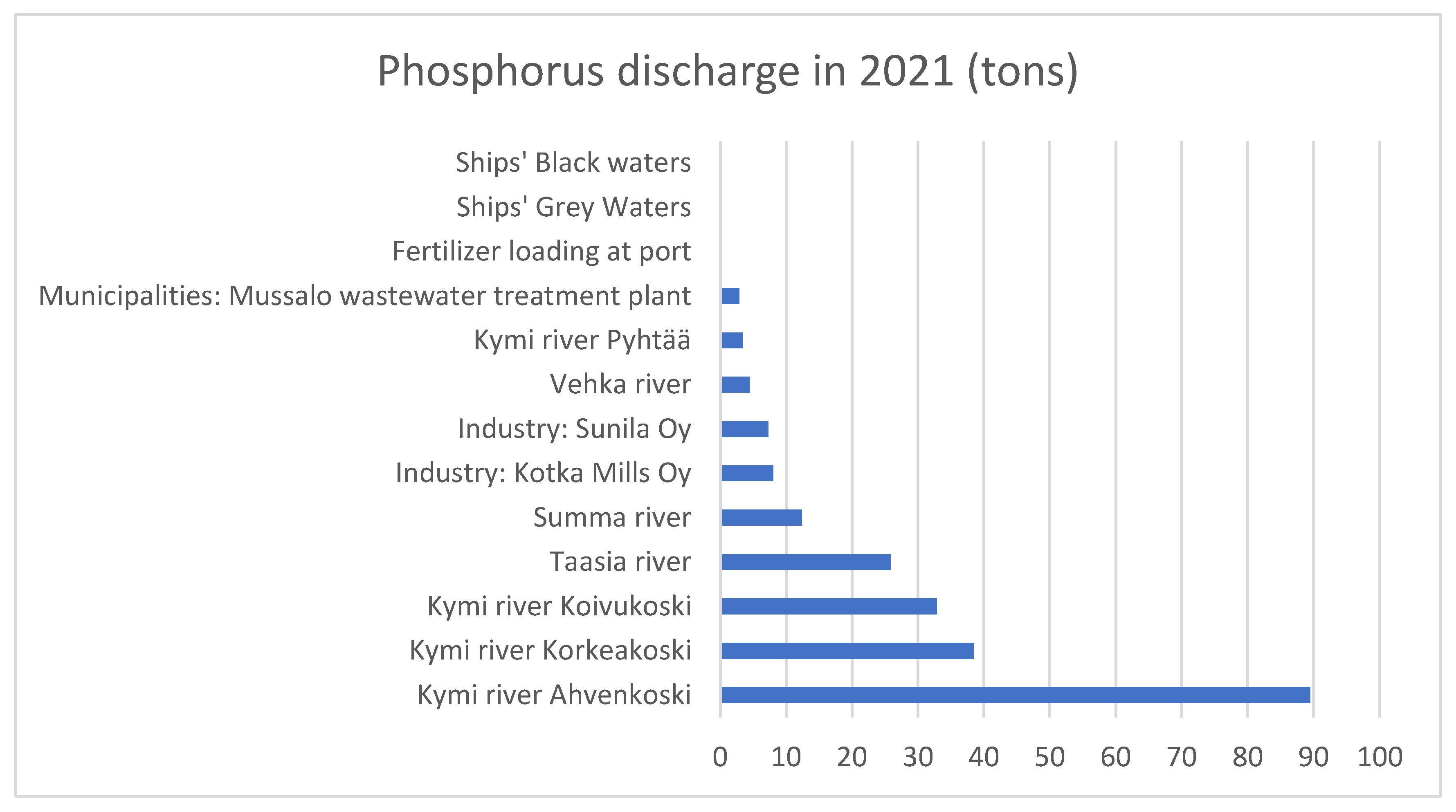
3.1. Nutrient Load Quantification
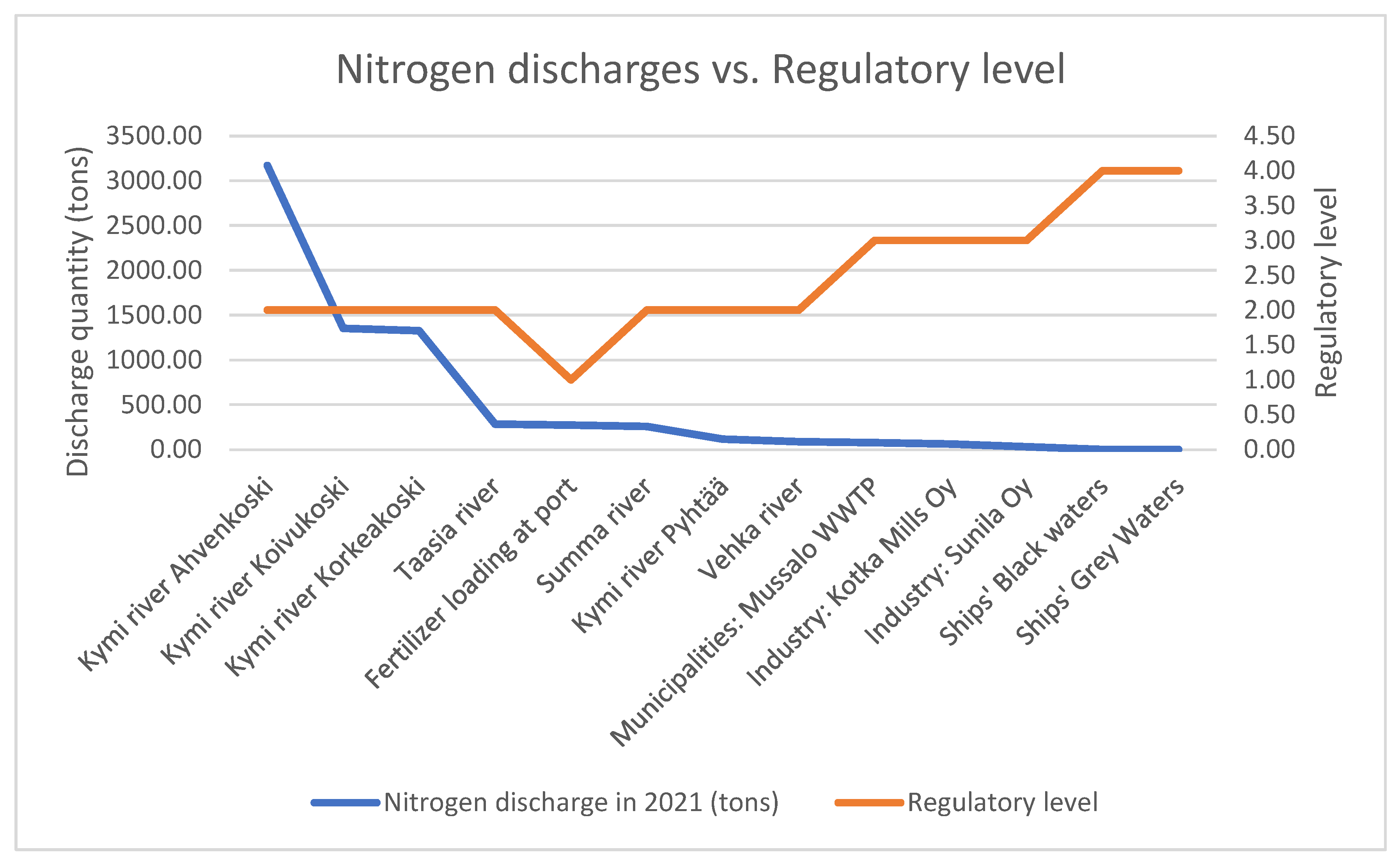
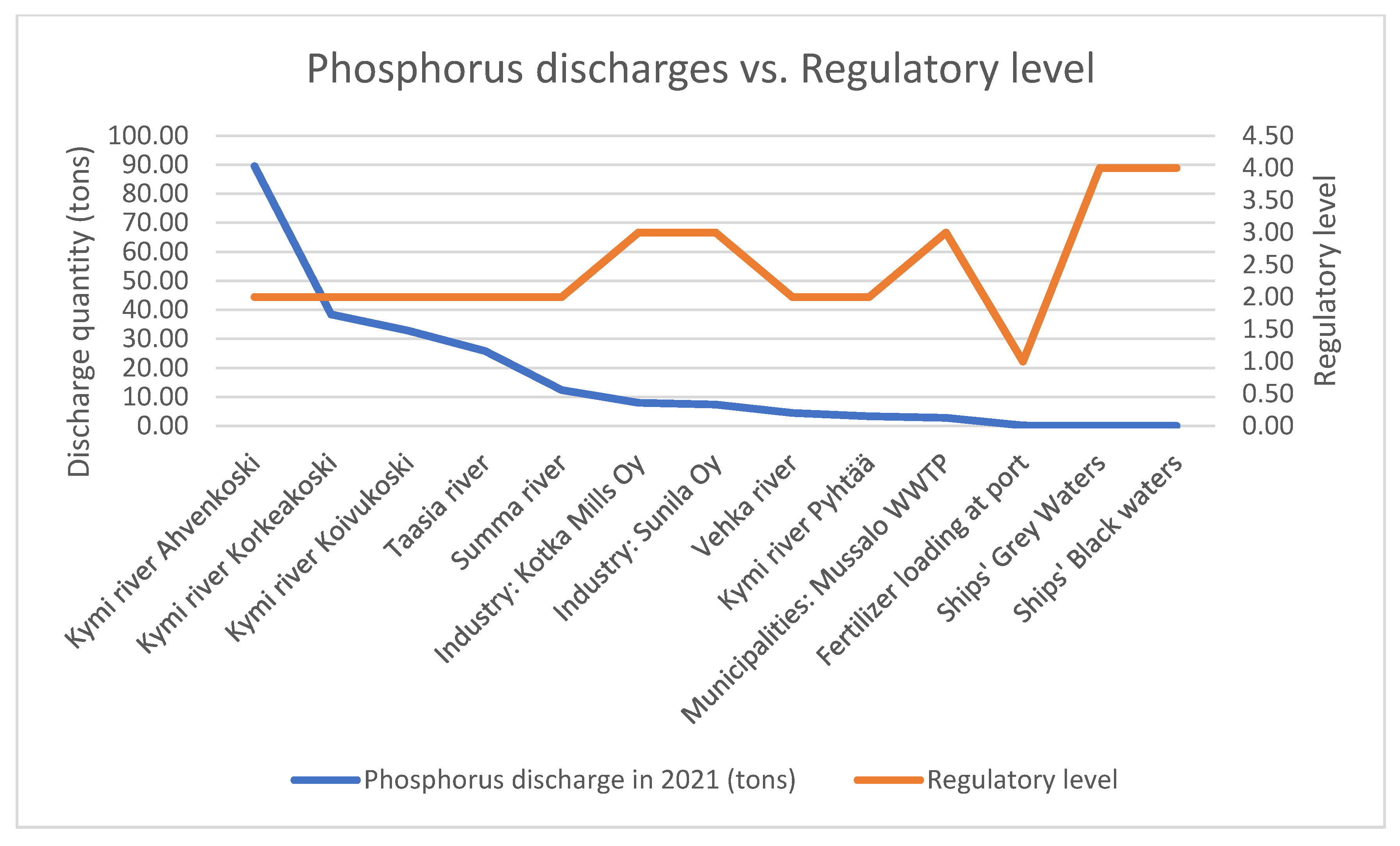
3.2. Regulatory Mapping
4. Discussion
4.1. Contextualizing Maritime Contribution
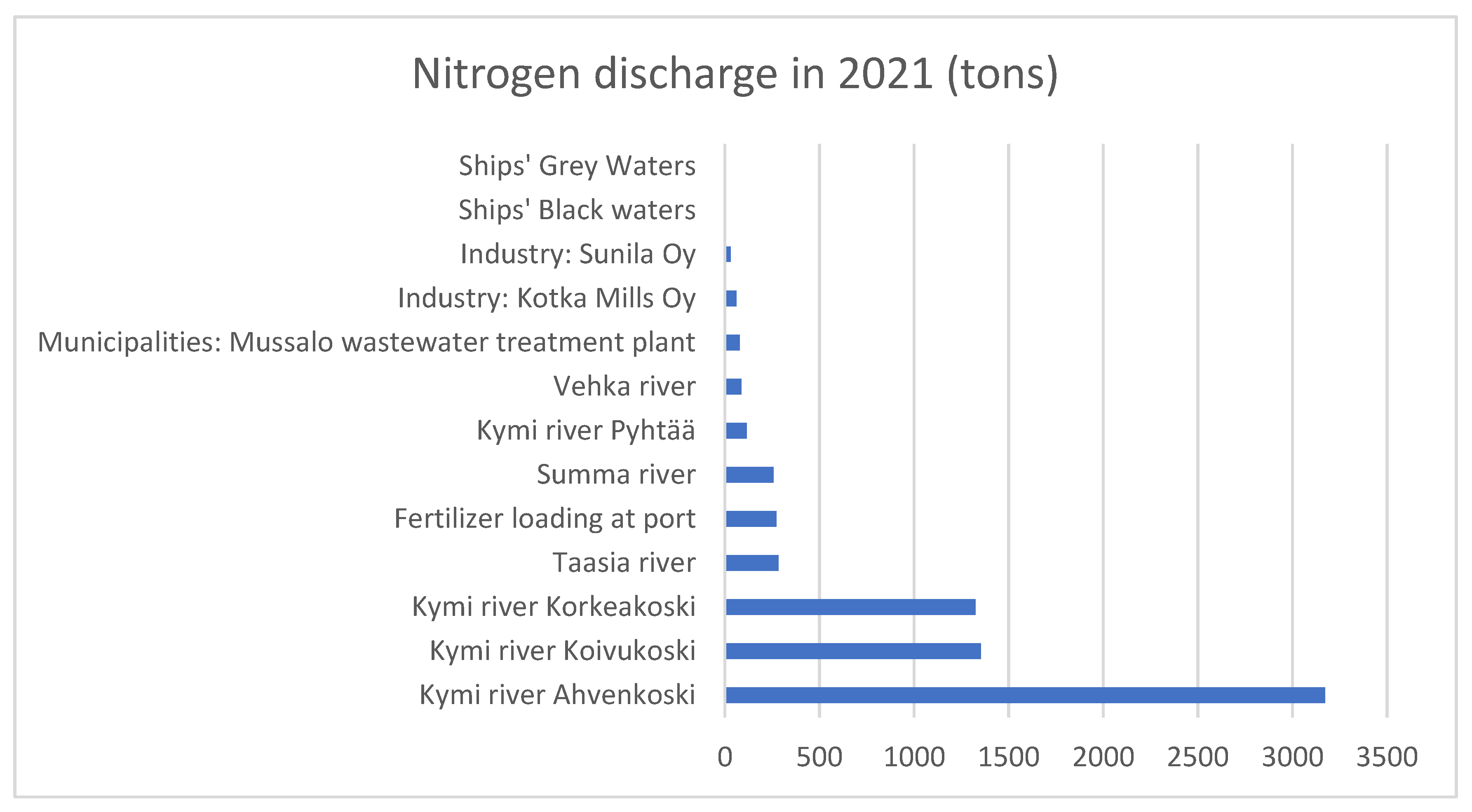
- Riverine inputs dominate total nutrient delivery by 94% of N (nitrogen) and 92% of P (phosphorus) in 2021;
- Ships’ wastewaters are minor contributors in magnitude (<0.1% of N and <0.1% of P) and distributed outside coastal waters;
- Fertilizer cargo loading at port contributes 3.9% of N and 0.1% of P, being the biggest identified point source of nitrogen exceeding other point sources combined.
4.2. Regulatory Implications
- Nutrient inputs to the study area are governed by a multi-layered regulatory framework spanning international conventions, EU legislation, national laws, and local environmental permits.
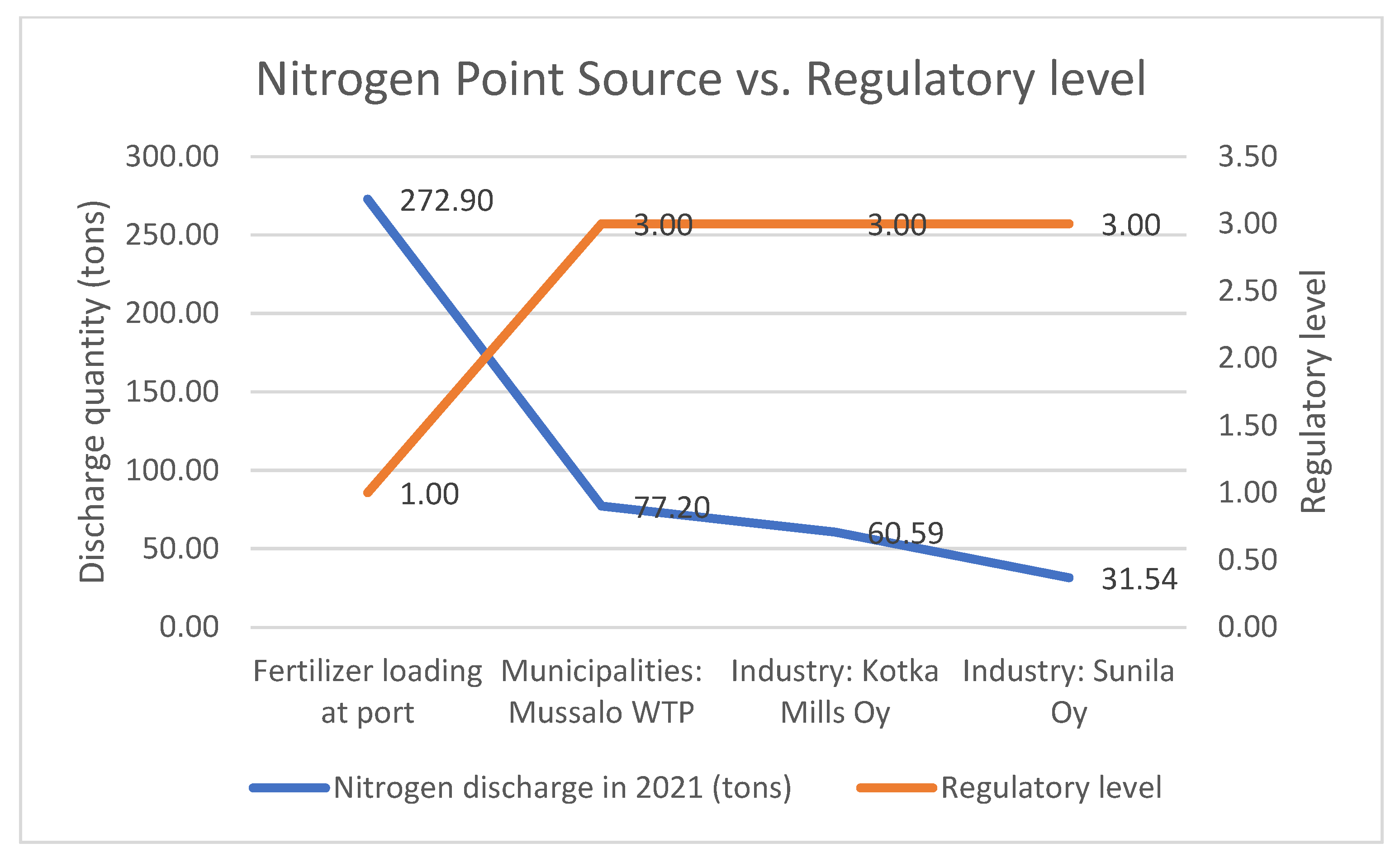
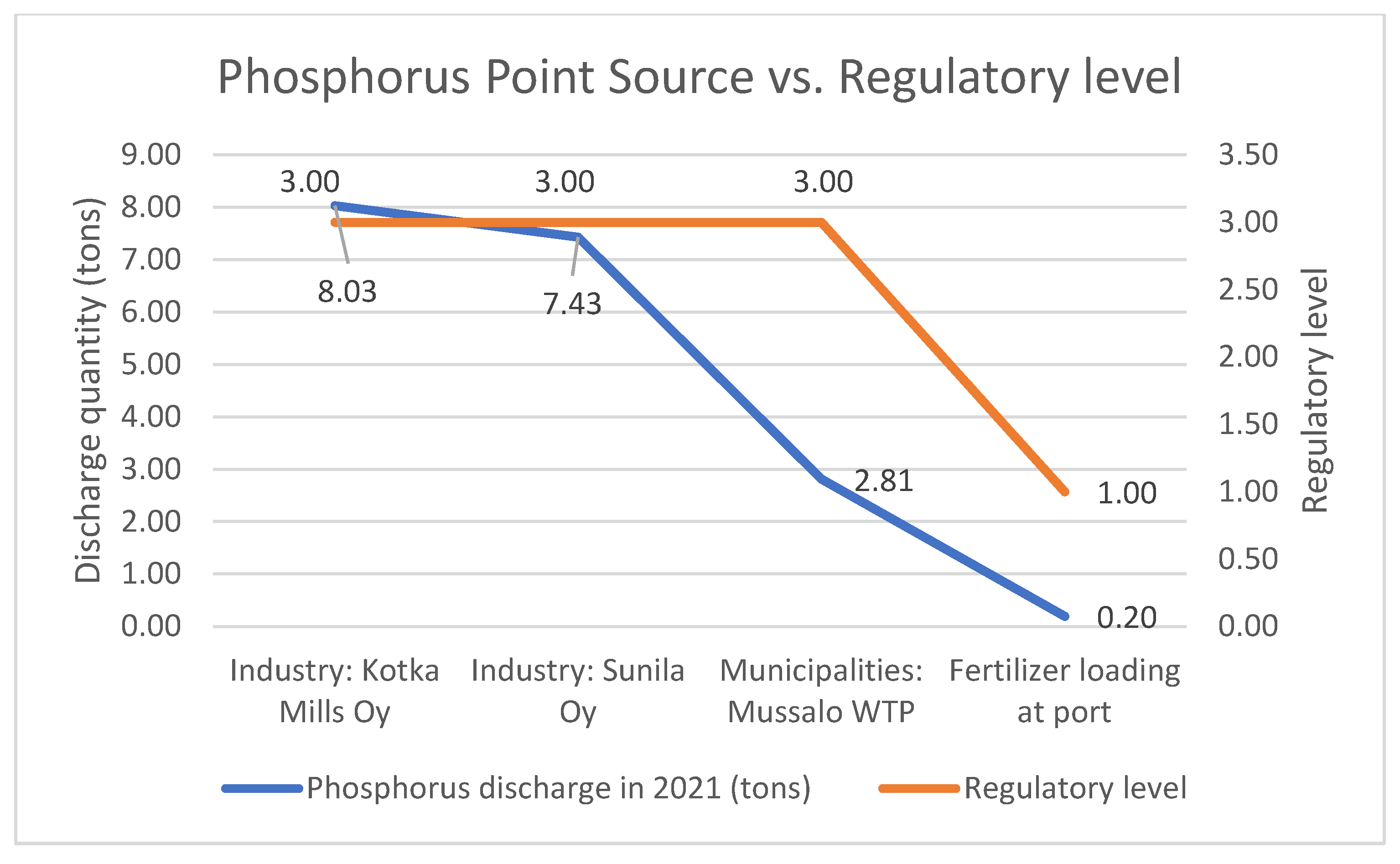
- Regulatory stringency is not aligned with the magnitude of nutrient pressures: sources contributing the largest nutrient loads are often regulated less strictly than sources with minor quantitative importance.
- ○
- Diffuse agricultural sources, which dominate total nitrogen and phosphorus inputs via rivers, remain ineffectively regulated despite extensive policy frameworks.
- ○
- Ship-generated wastewater contributes a negligible share of nutrient inputs but is subject to the strictest regulatory controls, including discharge prohibitions to certain ship types (passenger vessels by international MARPOL) and to certain locations (all ships in Finnish territorial waters by national legislation).
- ○
- Fertilizer cargo handling at ports constitutes the largest maritime-related nitrogen source and the largest identified nitrogen point source, yet environmental permits lack explicit nutrient discharge limits.
4.2.1. Ineffective Regulation of Dominant Diffuse Sources
4.2.2. Fertilizer Cargo Handling: An Overlooked but Manageable Source
4.2.3. Inefficiency of Additional Ship Wastewater Restrictions
4.3. Alignment with HELCOM Targets
5. Conclusions
Supplementary Materials
Author Contributions
Funding
Institutional Review Board Statement
Informed Consent Statement
Data Availability Statement
Conflicts of Interest
References
- Meier, H.E.M.; Reckermann, M.; Langner, J.; Smith, B.; Didenkulova, I. Overview: The Baltic Earth Assessment Reports (BEAR). Earth Syst. Dynam. 2023, 14, 519–531. [Google Scholar] [CrossRef]
- Helsinki Commission (HELCOM). Reinforcing Oil Spill Response Capacity in the Baltic; Baltic Marine Environment Protection Commission: Helsinki, Finland, 2009. [Google Scholar]
- Rosemarin, A.; Macura, B.; Carolus, J.; Barquet, K.; Ek, F.; Järnberg, L.; Lorick, D.; Johannesdottir, S.; Pedersen, S.M.; Koskiaho, J.; et al. Circular nutrient solutions for agriculture and wastewater—A review of technologies and practices. Curr. Opin. Environ. Sustain. 2020, 45, 27–35. [Google Scholar] [CrossRef]
- Reckermann, M.; Omstedt, A.; Soomere, T.; Aigars, J.; Akhtar, N.; Bełdowska, M.; Bełdowski, J.; Cronin, T.; Czub, M.; Eero, M.; et al. Human impacts and their interactions in the Baltic Sea region. Earth Syst. Dynam. 2022, 13, 1–80. [Google Scholar] [CrossRef]
- Conley, D.J. Save the Baltic Sea. Nature 2012, 486, 463–464. [Google Scholar] [CrossRef]
- Nellesen, T.; Broeg, K.; Dorgeloh, E.; Joswig, M.; Heitmüller, S. A Technical Guidance for the Handling of Wastewater in Ports of the Baltic Sea Special Area Under MARPOL Annex IV; Helsinki Commission—HELCOM: Helsinki, Finland, 2020. [Google Scholar]
- Helsinki Commission (HELCOM). Baltic Sea Action Plan 2021 Update; HELCOM: Helsinki, Finland, 2021. [Google Scholar]
- Raudsepp, U.; Maljutenko, I.; Kõuts, M.; Granhag, L.; Wilewska-Bien, M.; Hassellöv, I.-M.; Eriksson, K.M.; Johansson, L.; Jalkanen, J.-P.; Karl, M.; et al. Shipborne nutrient dynamics and impact on the eutrophication in the Baltic Sea. Sci. Total Environ. 2019, 671, 189–207. [Google Scholar] [CrossRef]
- Jalkanen, J.-P.; Johansson, L.; Wilewska-Bien, M.; Granhag, L.; Ytreberg, E.; Eriksson, K.M.; Yngsell, D.; Hassellöv, I.-M.; Magnusson, K.; Raudsepp, U.; et al. Modeling of discharges from Baltic Sea shipping. Ocean Sci. 2021, 17, 699–728. [Google Scholar] [CrossRef]
- Lappalainen, S.-T.; Kotta, J.; Tombak, M.-L.; Tapaninen, U. Using machine learning methodology to model nutrient discharges from ports: A case study of a fertilizer terminal. J. Mar. Sci. Eng. 2024, 12, 143. [Google Scholar] [CrossRef]
- John Nurminen Foundation. Fertiliser Ports Have the Potential to Make Major Reductions in Nutrient Discharges. Available online: https://johnnurmisensaatio.fi/en/news-and-events/news/fertiliser-ports-have-the-potential-to-make-major-emission-reductions/ (accessed on 20 February 2026).
- Jalkanen, J.-P.; Johansson, L.; Majamäki, E. Discharges to the Sea from Baltic Sea Shipping in 2024. HELCOM Baltic Sea Environment Fact Sheets; HELCOM: Helsinki, Finland, 2025. [Google Scholar]
- Boesch, D.F. Barriers and bridges in abating coastal eutrophication. Front. Mar. Sci. 2019, 6, 123. [Google Scholar] [CrossRef]
- Alexander, R.B.; Smith, R.A.; Schwarz, G.E.; Boyer, E.W.; Nolan, J.V.; Brakebill, J.W. Differences in phosphorus and nitrogen delivery to the Gulf of Mexico from the Mississippi River Basin. Environ. Sci. Technol. 2008, 42, 822–830. [Google Scholar] [CrossRef]
- Vermaat, J.E.; Broekx, S.; Van Eck, B.; Engelen, G.; Hellmann, F.; De Kok, J.L.; Van der Kwast, H.; Maes, J.; Salomons, W.; Van Deursen, W. Nitrogen source apportionment for the catchment, estuary, and adjacent coastal waters of the River Scheldt. Ecol. Soc. 2012, 17, 23. [Google Scholar] [CrossRef]
- Robertson, D.M.; Saad, D.A.; Benoy, G.A.; Vouk, I.; Schwarz, G.E.; Laitta, M.T. Phosphorus and nitrogen transport in the binational Great Lakes Basin estimated using SPARROW watershed models. JAWRA 2019, 55, 792–810. [Google Scholar] [CrossRef]
- Liang, H.; Zhang, J.; Zhang, J.; Zhang, P.; Deng, X.; Chen, J.; Wang, Z.; Long, C.; Lu, C.; Wang, D.; et al. Unveiling the eutrophication crisis: 20 years of nutrient development in Zhanjiang Bay, China. Front. Mar. Sci. 2024, 11, 1373716. [Google Scholar] [CrossRef]
- Zeldis, J.; Swaney, D. Balance of catchment and offshore nutrient loading and biogeochemical response in four New Zealand coastal systems. Estuaries Coasts 2018, 41, 132–149. [Google Scholar] [CrossRef]
- International Maritime Organization (IMO). International Convention for the Prevention of Pollution from Ships (MARPOL), 1973/1978; IMO: London, UK, 1978. [Google Scholar]
- Government of Finland. Maritime Environmental Protection Act (1672/2009); Government of Finland: Helsinki, Finland, 2009.
- European Union. Council Directive 91/676/EEC Concerning the Protection of Waters Against Pollution Caused by Nitrates from Agricultural Sources. Available online: https://eur-lex.europa.eu/eli/dir/1991/676/oj (accessed on 3 March 2026).
- European Union. Directive 2000/60/EC Establishing a Framework for Community Action in the Field of Water Policy. Available online: https://eur-lex.europa.eu/eli/dir/2000/60/oj (accessed on 3 March 2026).
- Government of Finland. Government Decree on the Use of Phosphorus-Containing Fertilising Products and Manure (64/2023); Government of Finland: Helsinki, Finland, 2023.
- Laakso, J.; Luostarinen, S. Legislation and Voluntary Actions Regulating Manure Fertilization in the Baltic Sea Region; Natural Resources Institute Finland (Luke): Helsinki, Finland, 2019. [Google Scholar]
- Finland’s Environmental Administration. Environmental Permits. Available online: https://www.ymparisto.fi/fi/luvat-ja-velvoitteet/ymparistolupa (accessed on 3 March 2026).
- Helsinki Commission (HELCOM). Baltic Sea Action Plan—Nutrient Reduction Scheme. Available online: https://helcom.fi/baltic-sea-action-plan/nutrient-reduction-scheme/ (accessed on 3 March 2026).
- Helsinki Commission (HELCOM). Inputs of Nutrients (Nitrogen and Phosphorus) to the Sub-Basins 1995–2022. Available online: https://indicators.helcom.fi/indicator/inputs-of-nutrients/ (accessed on 3 March 2026).
- Helsinki Commission (HELCOM). Summary Report on the Development of Revised Maximum Allowable Inputs (MAI) and Updated Country Allocated Reduction Targets (CART) of the Baltic Sea Action Plan. In Proceedings of the HELCOM Ministerial Meeting, Copenhagen, Denmark, 3 October 2013. [Google Scholar]
- Baltic Sea Action Group. Available online: https://www.bsag.fi/en/about/ (accessed on 5 March 2026).
- John Nurminen Foundation. Available online: https://johnnurmisensaatio.fi/en/ (accessed on 5 March 2026).
- Race for the Baltic. Available online: https://www.raceforthebaltic.com/ (accessed on 5 March 2026).
- Nakari, H.; Anttila-Huhtinen, M. Monitoring Report of Waters at Pyhtää–Kotka–Hamina Sea Area; Report No. 311/2022; Water and Environment Association of the River Kymijoki: Tampere, Finland, 2022. [Google Scholar]
- Holmberg, J.; Raunio, J. Joint Monitoring of Water Quality in the Lower Part of the Kymijoki River in 2021; Research Report No. 309/2022; Water and Environment Association of the River Kymijoki: Tampere, Finland, 2022. [Google Scholar]
- Mussalo Wastewater Treatment Plant. Wastewaters. Available online: https://kymenvesi.fi/toiminta/jatevedet/ (accessed on 13 March 2026).
- Kotkamills Oy. Available online: https://mm.group/locations/mm-kotkamills/#product (accessed on 13 March 2026).
- Lappalainen, S.-T.; Tapaninen, U.; Kotta, J. Nitrogen and phosphorus discharges from cargo ships’ black and grey waters—A case study of a Baltic Sea port. Oceans 2024, 5, 560–570. [Google Scholar] [CrossRef]
- HaminaKotka Port. Traffic Statistics 2014–2025. Available online: https://www.haminakotka.com/fi/tietoa-satamasta/haminakotka-satama-oy/liikennetilastot (accessed on 8 March 2026).
- Statistics Finland. Loaded Fertilizer Quantities in the Port of HaminaKotka 2021–2025. Available online: https://pxdata.stat.fi/PxWeb/pxweb/fi/StatFin/StatFin__uvliik/statfin_uvliik_pxt_12is.px/ (accessed on 8 March 2026).
- Statistics Finland. Population of Hamina–Kotka–Kouvola–Pyhtää in 2021. Available online: https://pxdata.stat.fi/PxWeb/pxweb/fi/StatFin/StatFin__vaerak/statfin_vaerak_pxt_11ra.px/table/tableViewLayout1/ (accessed on 8 March 2026).
- Mäkitalo, J.; Ukko, E.-M. Quarterly Compliance Monitoring Summaries of the Mussalo Wastewater Treatment Plant, 2021; Kymen Vesi Oy: Kotka, Finland, 2021. [Google Scholar]
- Stora Enso Oy. Sunila Mill—Compliance Monitoring Reports 1–12/2021; Stora Enso Oy: Helsinki, Finland, 2021. [Google Scholar]
- Regional Administrative Agency. Environmental Permit of the Port of HaminaKotka / Mussalo Port; ESAVI/288/04.08/2013; Regional Administrative Agency: Tampere, Finland, 2015.
- Regional Administrative Agency. Environmental Permit of Kotkamills Oy; ESAVI/10733/2015; Regional Administrative Agency: Tampere, Finland, 2016.
- Regional Administrative Agency. Environmental Permit of Mussalo Wastewater Treatment Plant; ESAVI/11525/2014; Regional Administrative Agency: Tampere, Finland, 2016.
- Regional Administrative Agency. Environmental Permit of Sunilan Puhdistamo Oy; ESAVI/846/2016; Regional Administrative Agency: Tampere, Finland, 2017.
- Boynton, W.R.; Garber, J.H.; Summers, R.; Kemp, W.M. Inputs, transformations, and transport of nitrogen and phosphorus in Chesapeake Bay and selected tributaries. Estuaries 1995, 18, 285–314. [Google Scholar] [CrossRef]
- Wilewska-Bien, M.; Granhag, L.; Jalkanen, J.-P.; Johansson, L.; Andersson, K. Phosphorus flows on ships: Case study from the Baltic Sea. WMU J. Marit. Aff. 2019, 18, 139–152. [Google Scholar] [CrossRef]
- Pecio, A. The share of Poland in the actual pollution status of Baltic Sea waters with nitrates in the light of HELCOM PLC research. Curr. Agron. 2024, 53, 96–115. [Google Scholar] [CrossRef]
- Andersen, J.H.; Carstensen, J.; Conley, D.J.; Dromph, K.; Fleming-Lehtinen, V.; Gustafsson, B.G.; Josefson, A.B.; Norkko, A.; Villnäs, A.; Murray, C. Long-term temporal and spatial trends in eutrophication status of the Baltic Sea. Biol. Rev. 2017, 92, 135–149. [Google Scholar] [CrossRef] [PubMed]
- Murray, C.; Müller-Karulis, B.; Carstensen, J.; Conley, D.J.; Gustafsson, B.G.; Andersen, J.H. Past, present and future eutrophication status of the Baltic Sea. Front. Mar. Sci. 2019, 6, 2. [Google Scholar] [CrossRef]
- Kuss, J.; Holtermann, P.; Umlauf, L.; Dellwig, O.; Prien, R.D.; Waniek, J.J. The changing Baltic Sea: Between nutrient load reduction and a warming climate. Annu. Rev. Mar. Sci. 2025, 17, 1–27. [Google Scholar] [CrossRef]
- Huhta, H.-K.; Rytkönen, J.; Sassi, J. Estimated Nutrient Load from Waste Waters Originating from Ships in the Baltic Sea Area; VTT Research Notes 2370; VTT: Espoo, Finland, 2007. [Google Scholar]
- Mujingni, J.T.; Ytreberg, E.; Hassellöv, I.-M.; Rathnamali, G.; Hassellöv, M.; Salo, K. Sampling strategy, quantification, characterization and hazard potential assessment of greywater from ships in the Baltic Sea. Mar. Pollut. Bull. 2024, 196, 116993. [Google Scholar] [CrossRef] [PubMed]
- Malone, T.C.; Newton, A. The globalization of cultural eutrophication in the coastal ocean: Causes and consequences. Front. Mar. Sci. 2020, 7, 670. [Google Scholar] [CrossRef]
- Gilek, M.; Karlsson, M. Seeking pathways towards improved environmental governance of the Baltic Sea. In Environmental Governance of the Baltic Sea; Gilek, M., Karlsson, M., Linke, S., Smolarz, K., Eds.; MARE Publication Series, Vol. 10; Springer: Cham, Switzerland, 2016; pp. 229–246. [Google Scholar] [CrossRef]
- Tynkkynen, N.; Schönach, P.; Pihlajamäki, M.; Nechiporuk, D. The governance of the mitigation of the Baltic Sea eutrophication: Exploring the challenges of the formal governing system. Ambio 2014, 43, 105–114. [Google Scholar] [CrossRef]
- Hyytiäinen, K.; Huttunen, I.; Kotamäki, N.; Kuosa, H.; Ropponen, J. Good eutrophication status is a challenging goal for coastal waters. Ambio 2023, 53, 579–591. [Google Scholar] [CrossRef] [PubMed]
- Piniewski, M.; Tattari, S.; Koskiaho, J.; Olsson, O.; Djodjic, F.; Giełczewski, M.; Marcinkowski, P.; Księżniak, M.; Okruszko, T. How effective are River Basin Management Plans in reaching the nutrient load reduction targets? Ambio 2021, 50, 706–722. [Google Scholar] [CrossRef]
- Brady, M.V.; Andersen, M.S.; Andersson, A.; Kilis, E.; Saarela, S.-R.; Thorsøe, M. Strengthening the policy framework to resolve lax implementation of the Baltic Sea Action Plan for agriculture. Ambio 2022, 51, 69–83. [Google Scholar] [CrossRef]
- Grizzetti, B.; Bouraoui, F.; Aloe, A. Changes of nitrogen and phosphorus loads to European seas. Glob. Change Biol. 2012, 18, 769–782. [Google Scholar] [CrossRef]
- Grizzetti, B.; Udias, A.; Vigiak, O.; Pistocchi, A.; Aloe, A.; Diaz-Caneja, M.B.; Bisselink, B.; Bouraoui, F.; De Meij, A.; Fellmann, T.; et al. Effects of EU policy and climate change on future delivery of nutrients to European freshwater and seas. Environ. Res. Lett. 2025, 20, 124001. [Google Scholar] [CrossRef]
- Tynkkynen, N. Baltic Sea environment, knowledge and the politics of scale. J. Environ. Policy Plan. 2015, 17, 201–216. [Google Scholar] [CrossRef]
- Grönholm, S. Governing the Baltic Sea: A Study of the Functionality of Contemporary Environmental Governance; Åbo Akademi University: Turku, Finland, 2020. [Google Scholar]
- Hyytiäinen, K.; Ahtiainen, H.; Heikkilä, J.; Helin, J.; Huhtala, A.; Iho, A.; Koikkalainen, K.; Miettinen, A.; Pouta, E.; Vesterinen, J. An integrated simulation model to evaluate national policies for the abatement of agricultural nutrients in the Baltic Sea. Agric. Food Sci. 2009, 18, 440–459. [Google Scholar] [CrossRef]
- Bohman, B. Lessons from regulatory approaches to combat eutrophication in the Baltic Sea region. Mar. Policy 2018, 98, 227–236. [Google Scholar] [CrossRef]
- Darpä, J. Nordic Environmental Permitting Processes; Nordic Council of Ministers: Copenhagen, Denmark, 2023; Available online: https://pub.norden.org/temanord2023-522 (accessed on 3 March 2026).
- Andersen, M.S.; Andersson, A.; Brady, M.V.; Graversgaard, M.; Kilis, E.; Pedersen, A.B.; Thorsøe, M.; Valve, H. The Helsinki Convention’s agricultural nutrient governance: How domestic institutions matter. J. Balt. Stud. 2022, 54, 443–466. [Google Scholar] [CrossRef]




| Regulatory Level | Criteria |
|---|---|
| 0 | No restrictions |
| 1 | No numerical discharge limits Monitoring and mitigation requirements |
| 2 | Numerical discharge or input limits by regulations in general Monitoring and mitigation requirements |
| 3 | Specific numerical discharge limits by environmental permits Monitoring and mitigation requirements |
| 4 | Discharge prohibited |
| Nitrogen Source | Nitrogen (Tons) | Point Source | Data Sources | Phosphorus Source | Phosphorus (Tons) | Point Source | Data Sources |
|---|---|---|---|---|---|---|---|
| Kymi River Ahvenkoski | 3171.03 | no | [32,33] | Kymi River Ahvenkoski | 89.49 | no | [32,33] |
| Kymi River Koivukoski | 1352.25 | no | [32,33] | Kymi River Korkeakoski | 38.45 | no | [32,33] |
| Kymi River Korkeakoski | 1325.21 | no | [32,33] | Kymi River Koivukoski | 32.83 | no | [32,33] |
| Taasia River | 283.97 | no | [32,33] | Taasia River | 25.86 | no | [32,33] |
| Fertilizer loading at port | 272.90 | yes | [10] | Summa River | 12.37 | no | [32,33] |
| Summa River | 256.93 | no | [32,33] | Industry: Kotkamills | 8.03 | yes | [32] |
| Kymi River Pyhtää | 114.94 | no | [33] | Industry: Sunila Mill | 7.43 | yes | [41] |
| Vehka River | 87.90 | no | [32,33] | Vehka River | 4.50 | no | [32,33] |
| Municipalities: WWTP | 77.20 | yes | [40] | Kymi River Pyhtää | 3.37 | no | [33] |
| Industry: Kotkamills | 60.59 | yes | [32] | Municipalities: WWTP | 2.81 | yes | [40] |
| Industry: Sunila Mill | 31.54 | yes | [41] | Fertilizer loading at port | 0.20 | yes | [10] |
| Ships’ Black waters | 0.61 | yes | [36] | Ships’ Grey Waters | 0.07 | yes | [36] |
| Ships’ Grey Waters | 0.17 | yes | [36] | Ships’ Black waters | 0.06 | yes | [36] |
| Total Nitrogen load | 7035.24 | Total Phosphorus load | 225.45 |
| Source Group | Source Category | Examples in This Study | Main Regulatory Instruments | Regulatory Level (0–4) |
|---|---|---|---|---|
| Land-based sources | Riverine and diffuse catchment inputs including point sources via rivers | Kymi River branches; Taasia, Summa and Vehka Rivers | EU Water Framework Directive programmes of measures; Nitrates Directive; national agri-environmental regulations, environmental permits for industrial facilities along the river with numeric nitrogen and phosphorus discharge limits | 2 |
| Municipal point sources | Mussalo wastewater treatment plant | Environmental permit with numeric nitrogen and phosphorus discharge limits; monitoring and reporting obligations | 3 | |
| Industrial point sources | Kotkamills; Sunila Mill | Environmental permit with numeric nitrogen and phosphorus discharge limits; monitoring and reporting obligations | 3 | |
| Maritime and port-related sources | Port cargo handling | Fertilizer loading terminals; contaminated stormwater | Environmental permits for port and terminal operations; operational requirements (generally without numeric nutrient limits) | 1 |
| Ship sewage (blackwater) | Cargo vessel sewage | MARPOL Annex IV; national prohibition of sewage discharge in Finnish territorial waters | 4 | |
| Ship greywater | Cargo vessel greywater | (greywater not regulated under MARPOL Annex IV); national prohibition in Finnish territorial waters from 2030 | 4 |
Disclaimer/Publisher’s Note: The statements, opinions and data contained in all publications are solely those of the individual author(s) and contributor(s) and not of MDPI and/or the editor(s). MDPI and/or the editor(s) disclaim responsibility for any injury to people or property resulting from any ideas, methods, instructions or products referred to in the content. |
© 2026 by the authors. Licensee MDPI, Basel, Switzerland. This article is an open access article distributed under the terms and conditions of the Creative Commons Attribution (CC BY) license.
Share and Cite
Lappalainen, S.-T.; Kotta, J.; Aiken, D.M.; Tapaninen, U.P. Maritime and Port Contributions to Coastal Nutrient Loading in the Baltic Sea: Apportionment and Regulatory Implications. Sustainability 2026, 18, 3983. https://doi.org/10.3390/su18083983
Lappalainen S-T, Kotta J, Aiken DM, Tapaninen UP. Maritime and Port Contributions to Coastal Nutrient Loading in the Baltic Sea: Apportionment and Regulatory Implications. Sustainability. 2026; 18(8):3983. https://doi.org/10.3390/su18083983
Chicago/Turabian StyleLappalainen, Suvi-Tuuli, Jonne Kotta, Deniece M. Aiken, and Ulla Pirita Tapaninen. 2026. "Maritime and Port Contributions to Coastal Nutrient Loading in the Baltic Sea: Apportionment and Regulatory Implications" Sustainability 18, no. 8: 3983. https://doi.org/10.3390/su18083983
APA StyleLappalainen, S.-T., Kotta, J., Aiken, D. M., & Tapaninen, U. P. (2026). Maritime and Port Contributions to Coastal Nutrient Loading in the Baltic Sea: Apportionment and Regulatory Implications. Sustainability, 18(8), 3983. https://doi.org/10.3390/su18083983