Systematic Review

A Systematic Literature Review on Urban Mining: The State of the Art and Future Directions

Institute for Information Management in Engineering, Karlsruhe Institute of Technology, 76133 Karlsruhe, Germany
*
Author to whom correspondence should be addressed.
Sustainability 2026, 18(8), 3947; https://doi.org/10.3390/su18083947
Submission received: 15 February 2026 / Revised: 27 March 2026 / Accepted: 13 April 2026 / Published: 16 April 2026
(This article belongs to the Special Issue Advances in Electronic Waste Management and Sustainability)

Abstract

This systematic review uses the PRISMA method to comprehensively analyze the current state of research and development of urban mining technologies. Existing technologies, their effectiveness, and areas of application are examined. Research gaps are identified, and the potential of previously unused methods, as well as key developments in the technology sector, are highlighted. Furthermore, connections between technologies and their application areas are explored. A total of 45 publications from the databases Scopus, Web of Science, Google Scholar, ScienceDirect, and SpringerLink, covering the years between 2022 and 2025, are considered. The inclusion and exclusion criteria focus specifically on urban mining-related technologies. Apart from metallurgical processes, only a few established technologies currently exist in urban mining. Three technologies were identified as breakthroughs. Technologies such as membrane processes and composting, originally developed for other areas, are increasingly being transferred to urban mining. Despite these advancements, most research remains at the laboratory stage. Practical implementation and full utilization of waste are currently insufficient. This review represents the first comprehensive technological overview of the future of urban mining.

1. Introduction

Accelerating urbanization [1,2] and global population growth [3] are driving demand for raw materials to unprecedented levels. This trend presents profound ecological and economic challenges, ranging from the overuse of natural resources to a growing burden of waste [1,3]. Against this backdrop, an innovative concept has come to the fore: urban mining. It promises sustainable recovery of resources from existing urban infrastructures and offers a promising avenue to address rising waste volumes. This marks a potential turning point in how cities manage their resources.
Closed-loop systems demonstrably reduce material waste and improve resource efficiency, thereby contributing to sustainability [4]. Moreover, the concentration of valuable raw materials in electrical and electronic waste can be up to 250 times higher than in natural deposits [5,6,7]. In view of increasing regulatory requirements and global sustainability goals [8], the efficient use of secondary resources is becoming a strategic necessity [9,10]. The Sustainable Development Goals of the United Nations provide a global orientation framework to foster sustainable societies. They guide political, economic, and societal change toward greater sustainability. They also support a resource-efficient circular economy [11], for example through targets for industry, innovation, and infrastructure, and for responsible consumption and production [9,10]. Urban mining takes advantage of the anthropogenic stock as a usable resource base. This process helps establish resilient, safe, and sustainable cities by mitigating the health and environmental risks associated with the direct disposal of electronic waste [9]. Therefore, it contributes directly to climate protection [9,10]. Delegated Regulation (EU) 2023/2486 complements the EU Taxonomy with technical screening criteria for environmental objectives, including the transition to a circular economy. Urban mining is aligned with this objective through the efficient recovery of secondary raw materials from anthropogenic stocks.
Improper waste disposal, particularly open dumping and the direct incineration of plastics, causes significant environmental impacts, including the release of greenhouse gases and toxic substances, strong odors, and contamination of soil, water, and air [3,12]. Such practices also pose a risk of explosions [3] and attract a large number of disease vectors and insects [3,12]. Consequently, work near dumpsites poses high risks of chemical poisoning, congenital malformations, and reduced birth rates, as well as gastrointestinal and neurological diseases [3,13]. These impacts can be significantly reduced and transformed into value-creating processes through the consistent implementation of circular economy concepts [3]. Such developments would lessen health and environmental burdens and improve overall well-being [9].
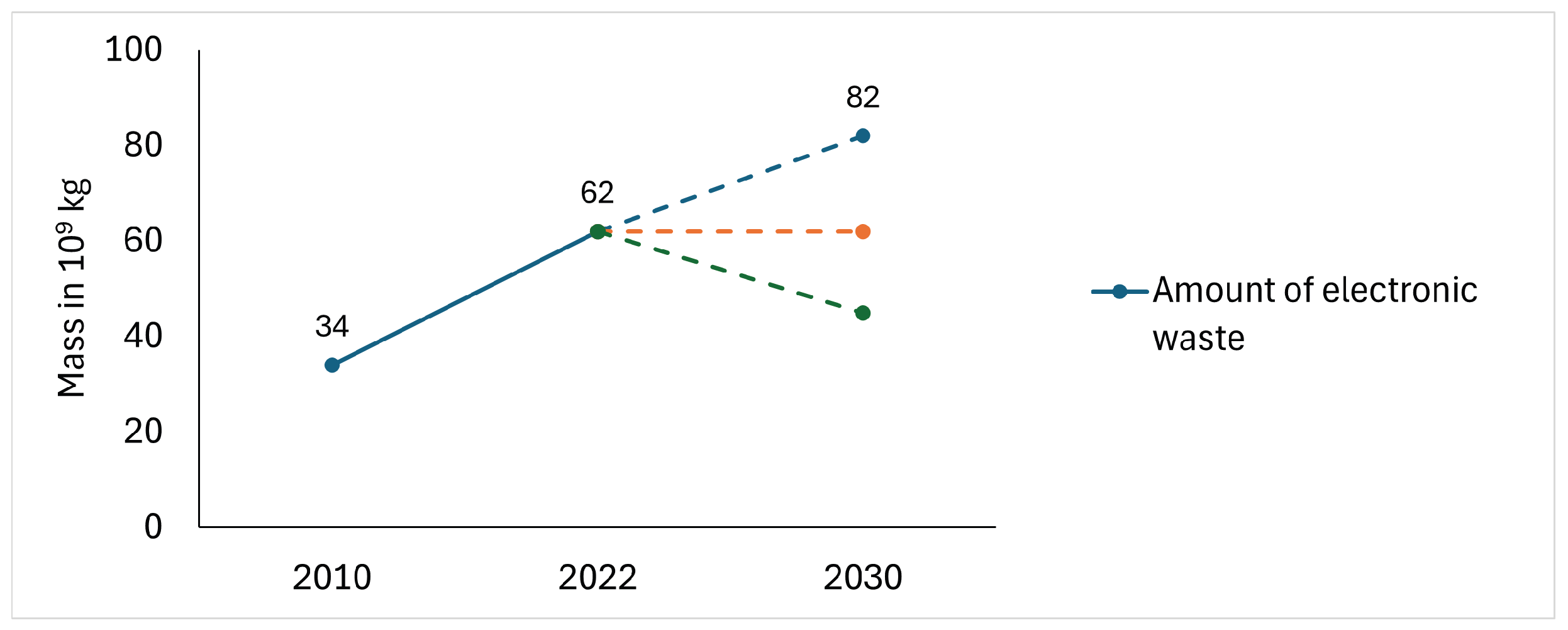
As shown in Figure 1, the E-Waste Monitor projects that by 2030, the global volume of e-waste will be more than double (blue) its level in 2010 [14]. Without global commitment and improved solutions for valorizing the rising volumes of waste, the impacts on people, the climate, and the environment will intensify. The widespread deployment and optimization of urban mining could stabilize (orange) or even reduce (green) this trend.
This article presents a systematic review focusing on the technologies used in urban mining and addresses the following research questions (RQs):
1.
What is the current state of research and development in urban mining?
2.
What technological developments are driving urban mining forward?
3.
What technologies and processes have been proven to be effective?
4.
Are there links between technologies and application domains?
5.
What research gaps currently exist in urban mining?
6.
Is there potential to apply previously underused methods in urban mining?
To answer these questions, the work first presents theoretical and conceptual foundations and reviews related research. It then explains the literature review methodology following PRISMA, which is complemented by data mining procedures. The results of the review are presented next and then discussed, including direct answers to the research questions. The study concludes with a critical assessment, an outlook, and a summary.

2. Theoretical Foundations

This section first defines the scope and terminology and situates urban mining within the circular economy, including boundaries to recycling, reuse, and landfill mining. It then proposes a process-based taxonomy of technologies that spans pretreatment, separation, recovery, and purification and, for each class, outlines operating principles, typical inputs and outputs, and representative waste streams. Finally, it synthesizes related reviews and identifies methodological and technological gaps that motivate the present study.

2.1. Urban Mining Scope Boundaries and Relation to Recycling and the Circular Economy

Recycling is defined in the German Circular Economy Act as follows. Recycling within the meaning of this Act is any recovery operation by which waste is reprocessed into products, materials, or substances. The reprocessed outputs are used for the original purpose or for other purposes. The definition includes the reprocessing of organic materials. It does not include energy recovery or reprocessing into materials that are intended for use as fuel or for backfilling. By law, the term recycling, also called recovery, applies only if the raw material was previously classified as waste. Otherwise, the relevant concept is reuse. Reuse means any operation by which products or components, such as parts that are not waste, are used again for the same purpose for which they were originally intended. Upcycling denotes a higher value use, for example concrete with an improved strength class [15]. Downcycling denotes lower value use, for example concrete as a base layer material [15]. In recycling, materials are used again either in the same form or in a higher value application. Upcycling is therefore part of recycling, while downcycling is not. Recycling conserves resources but often results in only modest reductions in greenhouse gas emissions [15]. Recycling is used both in the circular economy and in urban mining.
The circular economy is a sustainable economic model that seeks to minimize resource use, avoid waste, and keep materials in the economic cycle for as long as possible [16]. It includes reuse, repair and refurbishment, recycling, design for durability, and the regeneration of natural systems [16]. Through these process steps, recovered materials are reintroduced into production cycles [1]. Design for durability describes the process of designing products to be long-lived, repairable, and recyclable [16]. The circular economy proactively focuses on designing and planning processes that prevent waste after construction and enable a closed material cycle [11]. The circular economy builds on business models that reject the linear take—make—waste approach. It integrates secondary raw materials into production cycles and links this with job creation [1].
Anthropogenic stocks are human-made accumulations of materials [1,10,15] and therefore artificially created sources of materials [10]. Buildings are anthropogenic raw material stocks that contain concentrated quantities of materials in urban areas. Other examples are waste electrical and electronic equipment, construction and demolition waste, and vehicles [1,10,15]. Existing landfills are also included in these depots because they were created by humans. The residue of waste incineration plants is also part of anthropogenic stocks [1]. Urban mines are anthropogenic stocks in which secondary raw materials are concentrated and targeted for recovery [1].
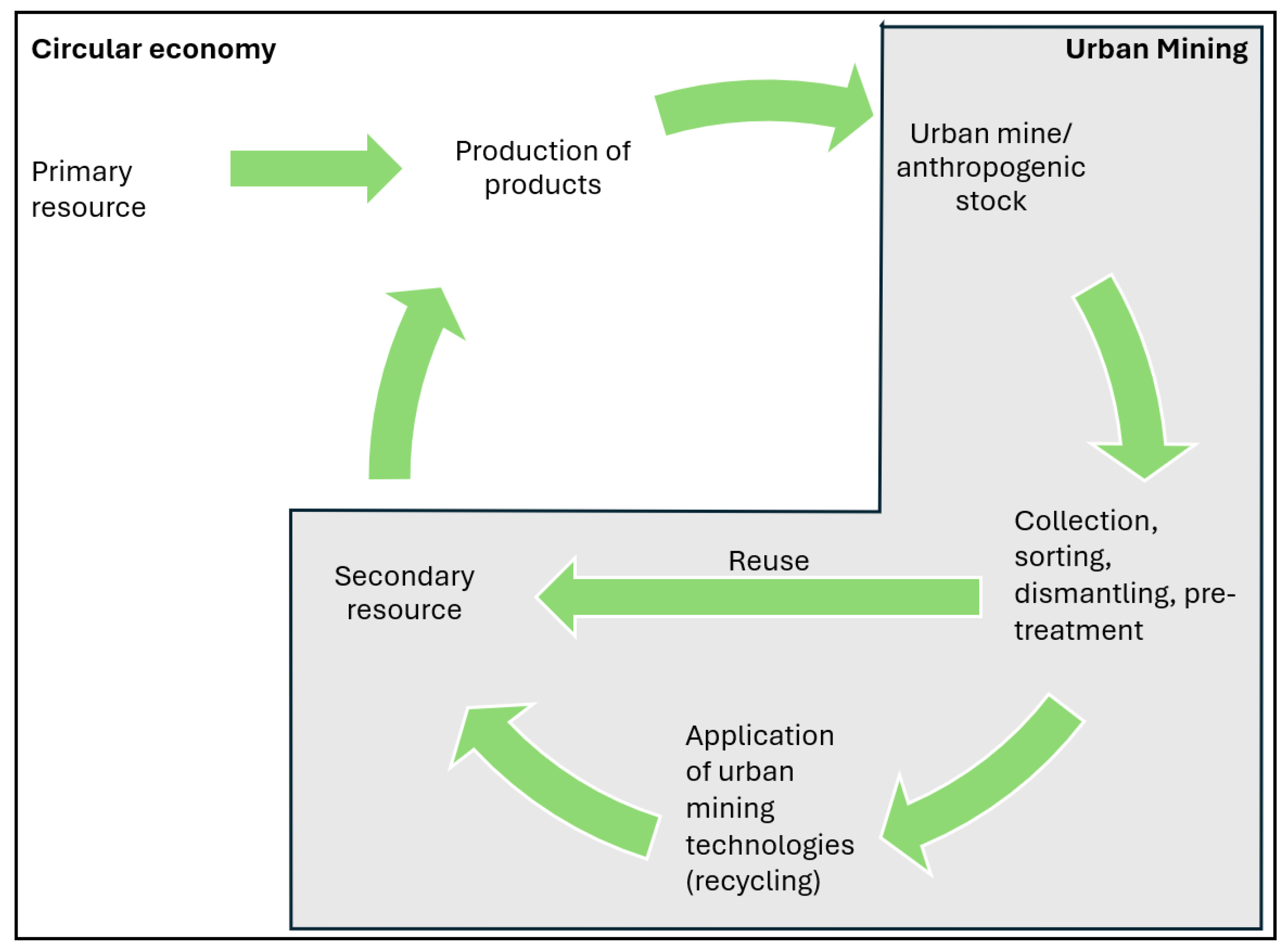
Urban mining recovers secondary raw materials from end-of-life products that are located in anthropogenic stocks [1,10,17,18,19]. Products in use are also considered in urban mining [19] by including them in resource planning or assessment. This enables estimation of when and how many raw materials will become available in the future. In contrast, the use of secondary raw materials for product manufacturing belongs to the circular economy. The word urban signifies that materials with recovery potential are found mainly in urban areas, although not exclusively [1,10,17,18]. Secondary raw materials are preferably reused directly and in part recovered through recycling [19]. For recovery, urban mining applies, among other methods, recycling processes to treat input materials so that they can be reused as secondary raw materials. Since this approach enables further use of raw materials but does not constitute a closed regenerative system, urban mining is not identical to the circular economy. It is a sub-discipline within the circular economy. It generates a new material flow that can be fed into the overall system as an additional usable stream [17]. Figure 2 shows the process flow in the circular economy and in urban mining. Pure incineration is excluded from the definition of urban mining because it causes heavy air pollution. As a result, heavy metals enter the water and soil and thus the food chain, which adversely affects human health [20]. Urban mining also differs from classical landfill mining because it includes active products, buildings, and infrastructure and not only historical landfills [1,19].

2.2. Technologies in Urban Mining

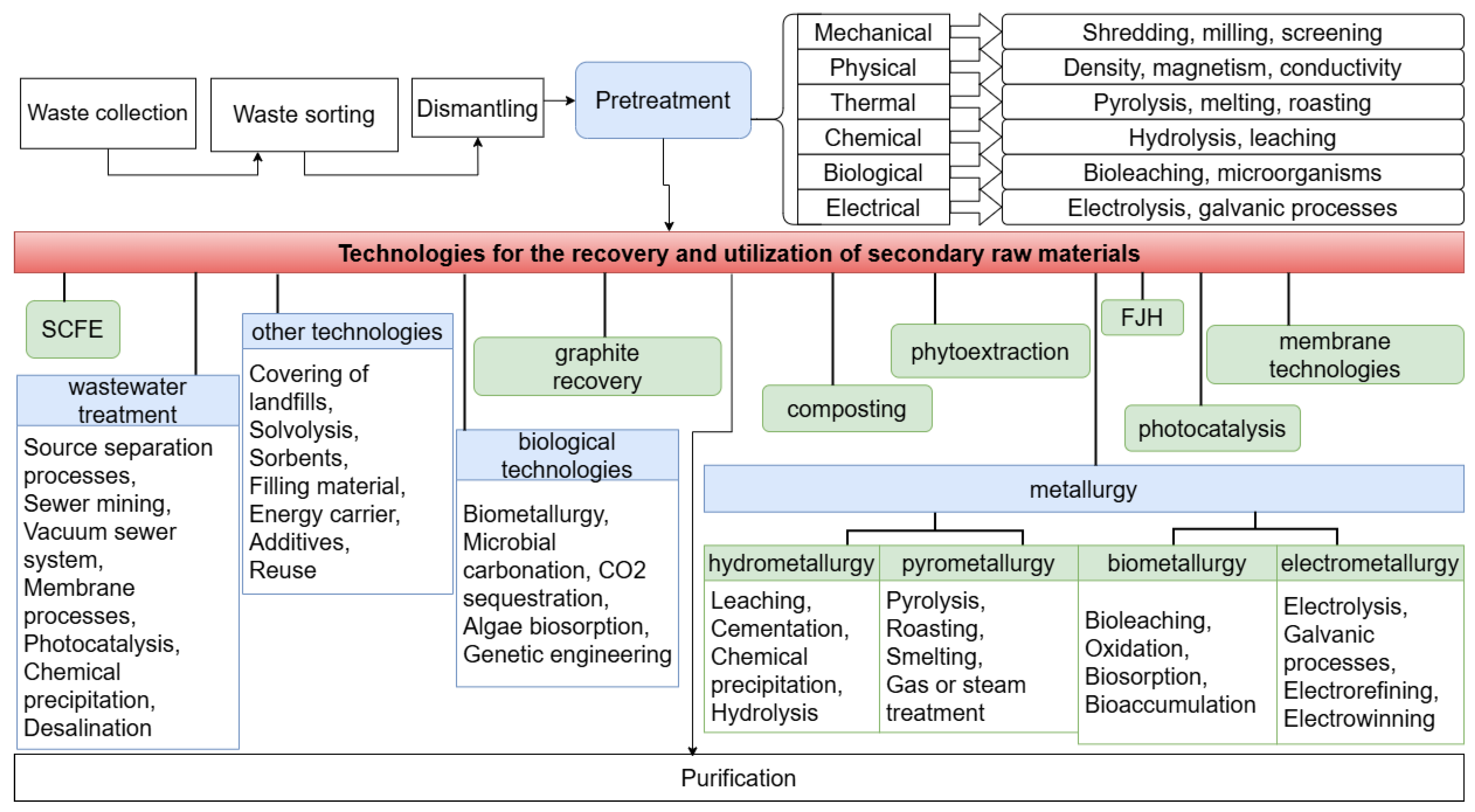
This research identifies established and emerging technologies in urban mining through a literature review and consolidates them. This section first explains established technologies and then the emerging ones. The application of a given technology is usually preceded by pretreatment. A detailed discussion of pretreatment is beyond the scope here. The publications [5,21,22,23] focus primarily on pretreatment. Table 1 shows and describes the technologies. Figure 3 shows the process flow in urban mining from waste collection to purification of secondary materials.
Pretreatment is divided into six types and each type comprises several methods. The green fields list eleven technologies that are explained in this section. The blue fields denote categories that group together several technological methods with conceptual similarities. Among these, wastewater treatment, other processes, and biological processes including biometallurgy as the main component are used as technology categories in the following figures and analyses. In addition, combinations of the listed technologies are grouped into one technology category named combined methods, which is also used in the following analysis. One detection method is also used (it does not recover or valorize substances; it serves to provide evidence). In the subsequent analysis, a total of fifteen technologies are distinguished. The terms in the white fields are used in the flow chart for completeness but are not further considered in this research.

2.3. Related Work

This section presents the state of the art in urban mining based on methodologically and thematically related studies. The objective is to position relevant scholarly contributions and to substantiate the need for this research. First, methodologically related reviews without a technology focus are presented, then thematically related reviews with a focus on technologies.
An initial literature search for review articles in the field of urban mining, with the criterion that the term “urban mining” is explicitly included in the title of the publication, yielded only a small number of relevant works. At first glance, most of the identified publications do not place a specific focus on technologies in urban mining. Examples include [11] with a focus on sustainability goals and [31] with a focus on the critical success factors and maturity of urban mining. Other studies focus on only one technology in urban mining [5,27,32]. Furthermore, several identified contributions were not sufficiently recent to serve as a direct basis for comparison, for example [33,34]. In [35] the current state of research on urban mines and their potential for urban mining is examined in the context of sustainable urban development. The study shows that buildings and infrastructures are considered important sources of secondary raw materials. Since Aldebei and Dombi [35] was not conducted according to PRISMA, focuses primarily on quantitative assessment and modeling of urban material flows, and does not fulfill the technological focus, it is clearly distinct from this research in both content and method. This supports the relevance of the systematic literature review conducted here. Orenga Panizza and Nik-Bakht [36] also do not present technologies. They emphasize that the building sector is a major source of waste and environmental problems, but it offers high potential for material reuse. A holistic methodology for estimating building materials in existing stock is missing. They identify literature gaps and improvement opportunities, mainly the lack of holistic perspectives because studies usually analyze single levels in isolation, and the limited use of data-driven methods such as machine learning and deep learning.
The initial search reveals an absence of artificial intelligence applications, indicates that future research should test technologies on a large scale, identifies pilot and industrial plants as a research gap, and shows a strong focus on the construction and building sector. This focus was later extended to electronic waste and is illustrated in the following with six representative studies. These are considered thematically related because they provide an overview of technologies in urban mining. An overview of the six thematically related studies is shown in Table 2. It presents methodological criteria for the review of the literature of each study. The table indicates whether a reporting guideline is named and described, whether search criteria and databases are transparently documented, which languages and time spans are included, whether inclusion and exclusion criteria are stated, and whether the number of identified and excluded sources is reported. The term sound denotes completeness and precision.
Xavier et al. [1] investigate urban mining with a focus on electronic waste and demonstrates high ecological and economic recovery potential, especially for valuable metals. Success depends on integrated approaches such as industrial ecology, efficient logistics and recycling processes, and appropriate legal frameworks. It is hindered by inconsistent terminology, lack of regulation, and technological deficits [1]. Open research topics include standardization of terminology, regulatory harmonization, green design, quantification of stocks, and technological feasibility studies.
Udage Kankanamge et al. [23] develop a systematic classification of factors that influence the design and adoption of sustainable technologies in the urban recycling of electronic waste. Four central theme clusters are identified. The study shows that despite growing research and increasing volumes of electronic waste, many companies still rely on conventional and less sustainable methods. It highlights the importance of sustainable and data-driven technologies, such as machine learning and automated robotics, to improve efficiency, environmental protection, and occupational safety and to meet regulatory requirements. The study covers only a few technological aspects.
According to [37], rare earth elements are of major economic importance for urban mining due to their critical supply situation. The study identifies several central research gaps and challenges. These include the lack of comprehensive pilot and demonstration projects for industrial-scale deployment, insufficiently reliable data on supply and demand, and high costs, especially in biometallurgy, which could be reduced by research on less expensive carbon and nutrient sources. Insufficient development of political and economic frameworks for promoting recycling and urban mining is also identified and needs further study, including process optimization and the development of business models for the integration of urban mining.
Erdiaw-Kwasie et al. [38] show that urban mining is increasingly being used to recover valuable resources from electronic waste in developing countries. The topic has been only partially researched to date. Using a systematic literature review, the authors examine drivers, barriers, and technologies across all phases of urban mining. The most important drivers are economic incentives and scarcity of raw materials. Lack of technology, regulation, and environmental protection are central barriers. The technologies used are mostly outdated, and modern processes are rarely applied. The study provides a comprehensive basis for future policy measures and research to promote sustainable urban mining practices in developing countries. In general, the review shows that the potential of urban mining in developing countries can only be fully realized when legislation, technology, incentive systems, and cross-sector collaboration are reinforced in a systematic way.
Ouro-Salim [10] concludes that urban mining, particularly in the context of electronic waste, is a promising approach for sustainable resource management within the circular economy. It faces many challenges, including missing legal frameworks, limited producer responsibility, weak take-back systems, and low integration of informal actors. Zeng from China has the highest number of publications, while important scholarly contributions come from countries such as Germany, Brazil, Austria, and China. The geographic focus varies. In China it lies on electronic waste; in the Netherlands, it lies on construction waste. A thematic focus is identified to be electronic waste, lithium-ion batteries, construction waste, and rare metals. Many technologies exist only at a laboratory scale and have not yet been implemented at an industrial scale. The identified research gaps include missing AI applications, life cycle assessments, recycling standards, characterization of waste materials, limited data availability, insufficient economic evaluations, and regulatory differences between countries.
Tejaswini et al. [3] show that improper disposal of electronic and plastic waste creates serious environmental and health risks due to pollutants such as heavy metals and microplastics. Urban mining offers sustainable solutions by recovering valuable materials. Different techniques are evaluated with regard to environmental and economic performance. The study demonstrates that techno-economic analyzes of waste valorization can be both environmentally beneficial and economically viable. Investments and technological advances are needed. The study identifies challenges for urban mining implementation, including insufficient waste separation, high costs, lack of technical infrastructure, and occupational health and safety.

2.4. Research Gap

Only two review articles [3,37] cover a broad range of technologies in the context of urban mining. Only two studies [23,38] apply the PRISMA method which is also used in this research. The absence of a systematic investigation into which technologies are suitable for urban mining and are actually applied is an identified research gap. Closing this gap is the objective of this research. In addition, this research identifies research gaps, potential applications, and linkages; determines breakthroughs and innovations; and assesses the effectiveness of technologies in urban mining. The recommendation in [10] is taken up in this study. Book chapters, opinion pieces, conference contributions, conference reports, and dissertations are considered and partially included in the analysis. In line with [10], additional databases such as ScienceDirect and Web of Science are used, and the literature search is conducted according to PRISMA.

3. Materials and Methods

As outlined in the Introduction, this review focuses on technologies used in urban mining. Its primary objective is to systematically identify the full range of technologies currently used in urban mining and to provide a comprehensive overview of those available at present.
A systematic literature review was used to map technologies, breakthroughs and research gaps in urban mining (UM). The review followed the PRISMA 2020 guide to ensure transparent, reproducible reporting and clear documentation of each step from identification to inclusion [40,41]. The completed PRISMA checklist is available in the Supplementary Materials [41].
Given the interdisciplinarity of the field, the search strategy balanced breadth with current precision. To minimize false positives from tangential work in the circular economy, records were required to contain the exact phrase “Urban mining” in the title (title field queries). All data analysis and screening were performed by the author.
The database portfolio was defined a priori to prioritize sources with high coverage of the engineering and natural science domains. Web of Science, Scopus, Google Scholar, ScienceDirect, and SpringerLink were used, while PubMed, PsycINFO, ChemSpider, and arXiv were excluded as out of scope for the present topic. IEEE Xplore was dropped after a pilot search returned no UM-relevant records for 2022–2025. The searches focused on the period from January 2022 through to the search dates (Google Scholar on 17 March 2025; Web of Science, Scopus, ScienceDirect, and SpringerLink on 18 March 2025).
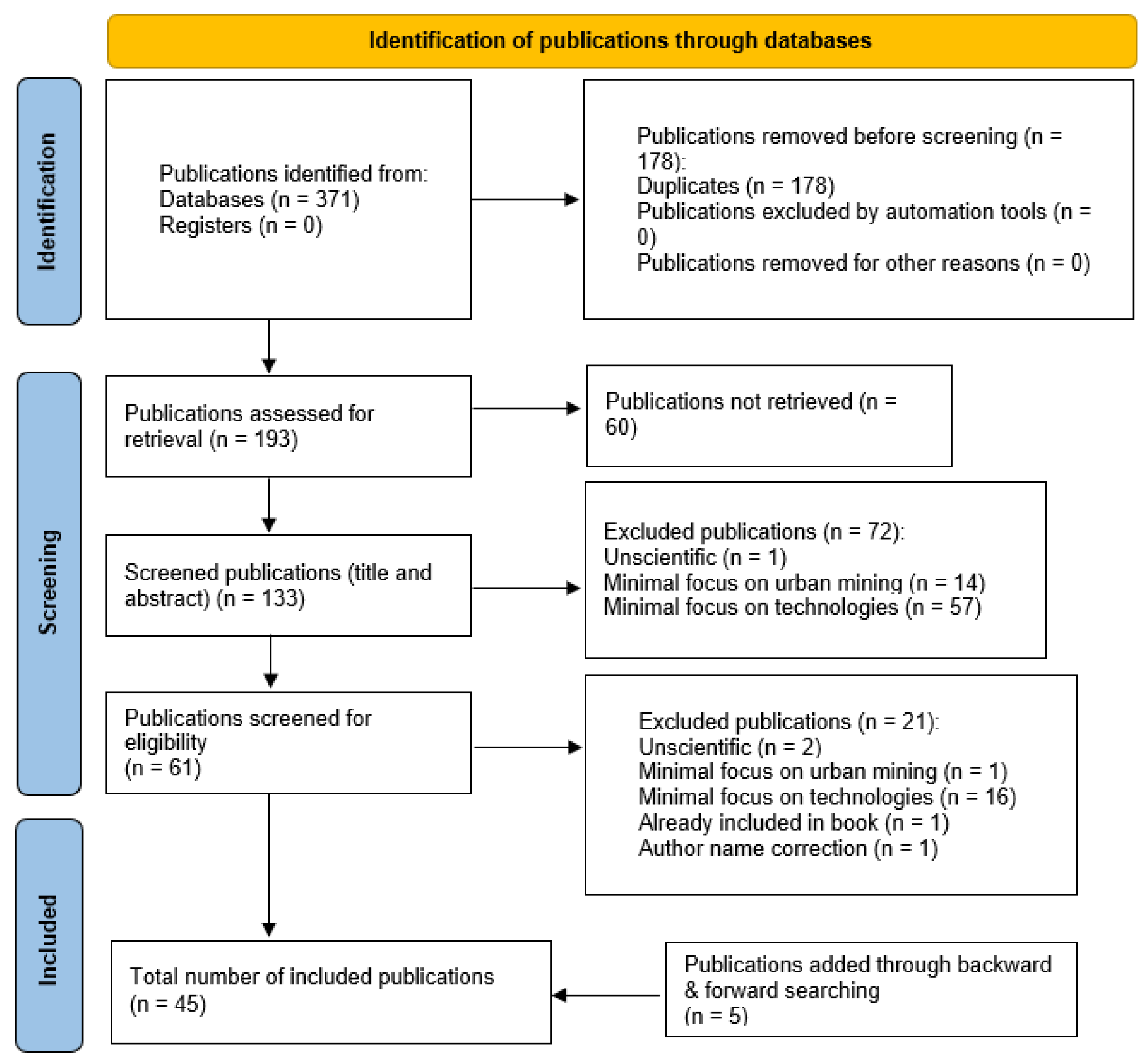
The initial search yielded 355 records (Google Scholar: 183; Web of Science: 43; SpringerLink: 17; Scopus: 79; ScienceDirect: 33). During metadata completion (e.g., adding missing PDFs/DOIs), the library expanded to 371 entries, occasionally creating parallel records. Duplicates were removed using a two-step approach (title + author comparison in Excel, followed by manual spot checks for DOI/year/venue), eliminating 178 items. We then excluded inaccessible or non-English/German items (n = 60), leaving 133 records for title/abstract screening. All publications whose abstracts included technologies, innovations, or breakthroughs in the area of the research topic and potentially answered at least one of the research questions were directly included. Applying predefined criteria, we excluded 72 records at this stage: non-scientific formats (n = 1), insufficient UM focus despite the title (n = 14), and papers lacking substantive technology detail (n = 57). Sixty-one records advanced to full-text review. At the full-text review, we excluded 21 additional items—technology focus missing (n = 16), UM focus missing (n = 1), duplicate within an already-included edited volume (n = 1), non-scientific (n = 2), and one update of the author’s name—yielding 40 studies. The overall selection is summarized in Figure 4 and Table 3.
To mitigate database bias and surface-relevant but older/gray items, we complemented the main search with citation chasing. The backward reference screening across the 40 studies identified 52 candidates; after removing duplicates (n = 32) and inaccessible items (n = 3), 17 remained for abstract scanning. In line with an emphasis on primary evidence [23], we excluded seven secondary reviews, three items without sufficient technology detail, and one work subsumed by an already-included dissertation; six advanced to full text. To corroborate topical coherence where abstracts were ambiguous, we applied Latent Dirichlet Allocation (LDA) topic modeling to processed full texts; two items were excluded for lacking a discernible technology focus, leaving four retained from the backward search. A forward citation search with Google Scholar on 9 April 2025 yielded 22 items; 21 were duplicates and one met inclusion criteria. The final corpus comprised 45 publications. Although modest in absolute terms, this corpus size meets commonly cited sufficiency thresholds for systematic reviews in emerging domains [38,42,43]. In the specific context of this review, the sample size met expectations, because the focus was strictly set on “technologies” rather than general UM.
Quality evaluation was descriptive at the venue level rather than inferential at the study level. The SCImago Journal Rank (SJR) [44] was used to characterize visibility and potential influence (24 Q1 venues; 10 lower-quartile; 11 not ranked). Because the SJR does not capture methodological rigor, it was not used to filter studies. Instead of a separate risk-of-bias instrument, selection bias was addressed through predefined eligibility criteria, multi-database searching with harmonized filters, explicit exclusion reasons, and systematic backward/forward citation checks; gray items surfaced by citations in indexed sources were considered on equal footing if they met inclusion criteria.
Key limitations include reliance on the SJR as a venue-level indicator rather than a study-level quality assessment. Additional constraints arise from the unclear peer review status of a few items, single-reviewer screening with attendant bias risk, and research gaps that were not systematically verified against the older or adjacent-domain literature.
The analyses were carried out in R using readxl, dplyr, tidyr, ggplot2, patchwork, and cowplot. We profiled temporal trends (by publication year, language, article type, and research maturity), quantified the prevalence and evolution of 15 technology categories, and mapped geographic activity through choropleths aggregated by first-author country. To surface latent thematic structure and strengthen the face validity of inclusions, we performed per-article word cloud summaries and constructed bigram networks, following common text mining practice. For topic discovery, we fitted LDA models with k = 5 topics using the text2vec package; after standard preprocessing, we performed: PDF text extraction; lowercasing; removal of punctuation, numerals, and single-character tokens; stop-word and domain-specific high-frequency term filtering; tokenization; and construction of a document–term matrix (bag-of-words). The models were trained for ∼1000 iterations with collapsed Gibbs sampling. The authors assigned topic labels post hoc based on the highest probability terms per topic and inspection of representative documents. Where LDA or the word cloud contradicted the apparent scope of the abstract, full-text inspection determined eligibility.

4. Results

This section presents a synthesis of the analyzed literature, focusing on visual summaries of the quantitative findings. It provides an overview of the 45 publications retained after the screening process. Regarding representativeness, it is important to note that, while research articles often mention multiple technologies, typically only one is the primary subject of investigation, while others are discussed theoretically or as benchmarks.
For each publication, specific characteristics are recorded, including the technologies addressed, institution (e.g., university or research institute), the country of origin of the lead author, year of publication, language of publication, and type of article (research article, book chapter, etc.). Furthermore, the maturity level of the described technologies (e.g., theoretical or laboratory-scale) is classified. The data is compiled in a data frame to enable a comparative analysis across various categories, such as technological maturity, thematic focus, and structural and geographical patterns.
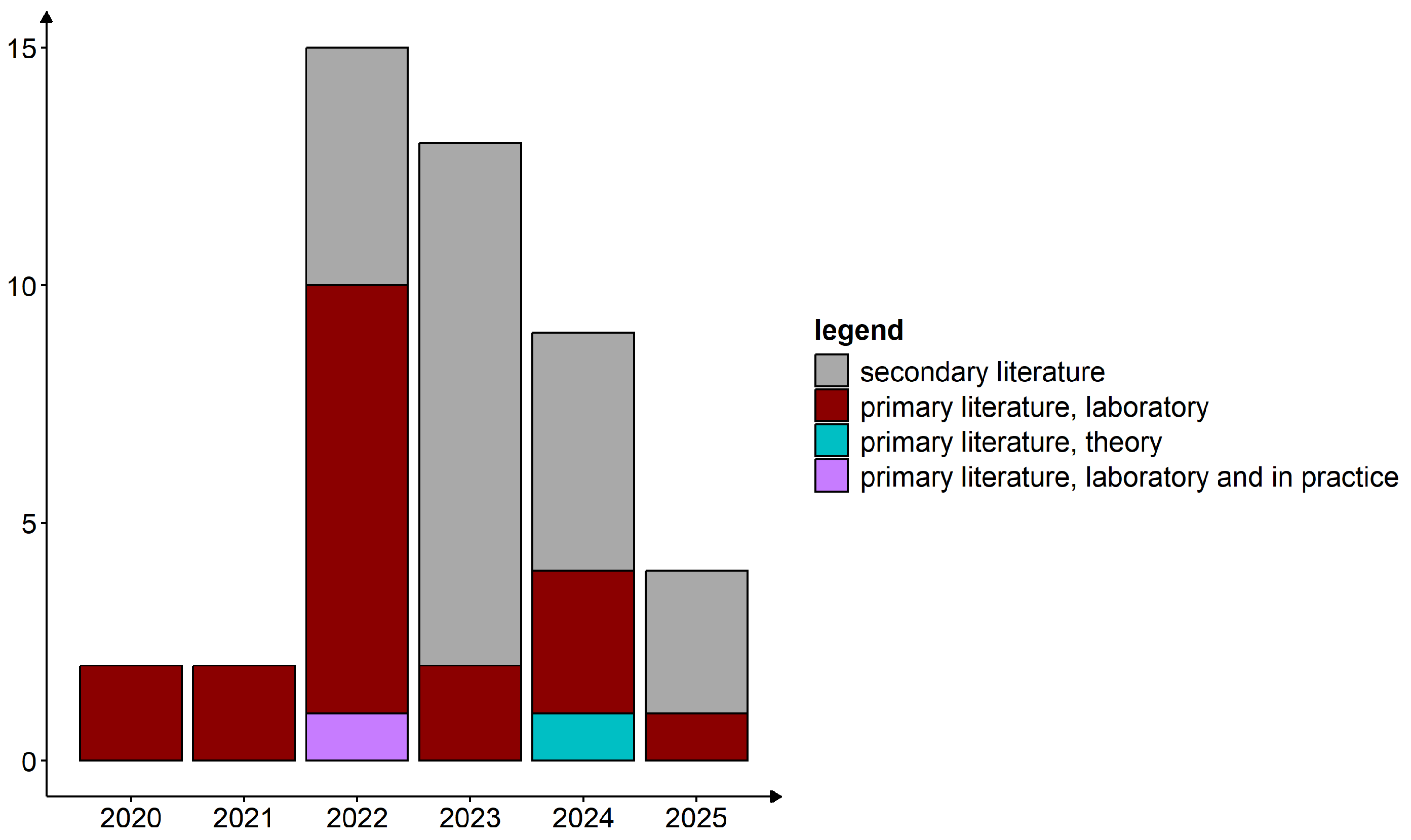
Figure 5 disaggregates the articles by the maturity level of the underlying research. Here, the “primary literature” comprises research articles and theses, while all other publication types are classified as the “secondary literature.” Collectively, these graphs depict the annual publication volume, the ratio of primary to secondary literature, and the maturity distribution within the primary sector. As shown in Figure 5, all technology categories currently under investigation are in early developmental stages, with maturity largely restricted to the laboratory scale. One technology remains in the pre-research phase, limited to conceptual design and simulation. Notably, the dissertation by [45] stands out by bridging laboratory, pilot, and industrial implementation scales for the use of rubber in asphalt.
The trend in Figure 5 suggests a decline in the volume of technology-focused urban mining publications since 2023. Research activity appears to be slowing: following a peak of ten primary sources in 2022, the count dropped to two in 2023 before rising slightly to four in 2024. Although the data for 2025 is not yet fully representative due to the early date of extraction, the overall pattern indicates a softening of research activity in this domain.
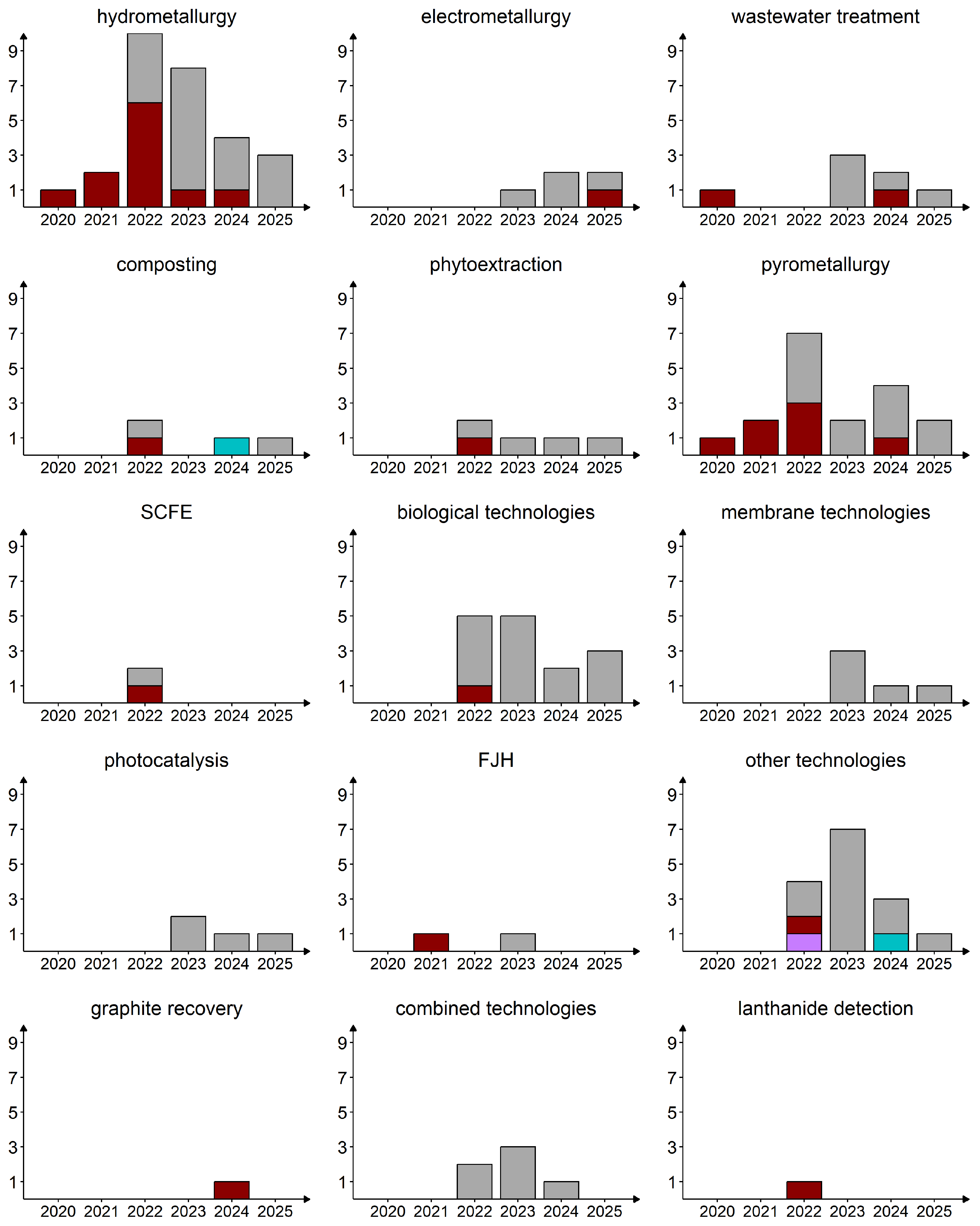
Figure 6 details the number of associated publications by year for each technology category defined in Section 2.2. The legend corresponds to that of Figure 5: bars distinguish between primary and secondary literature, with the primary literature further subdivided by maturity level. For any given category, the total height of the bar corresponds to the category totals reported.
A comprehensive summary table (Table 4) listing all 45 included articles is provided below. It presents a clear mapping of each study to the specific recovery technologies addressed (e.g., hydrometallurgy, pyrometallurgy, and phytoextraction). This enables readers to quickly identify which studies focus on particular technological approaches.
Not all 45 publications are included in the analysis per technology as in Figure 6, Figure 7, Figure 8, Figure 9, Figure 10 and Figure 11. The mere mention of a technology is insufficient for inclusion. Only publications that make a substantive contribution to the respective technology are considered, for example by presenting advantages and disadvantages, an application, an explanation, or a research-related discussion. Some review articles merely list technologies without discussing them in detail and are therefore not included in this analysis. Furthermore, certain publications are thematically assigned to other categories, such as pretreatment, and are therefore not included in this analysis.
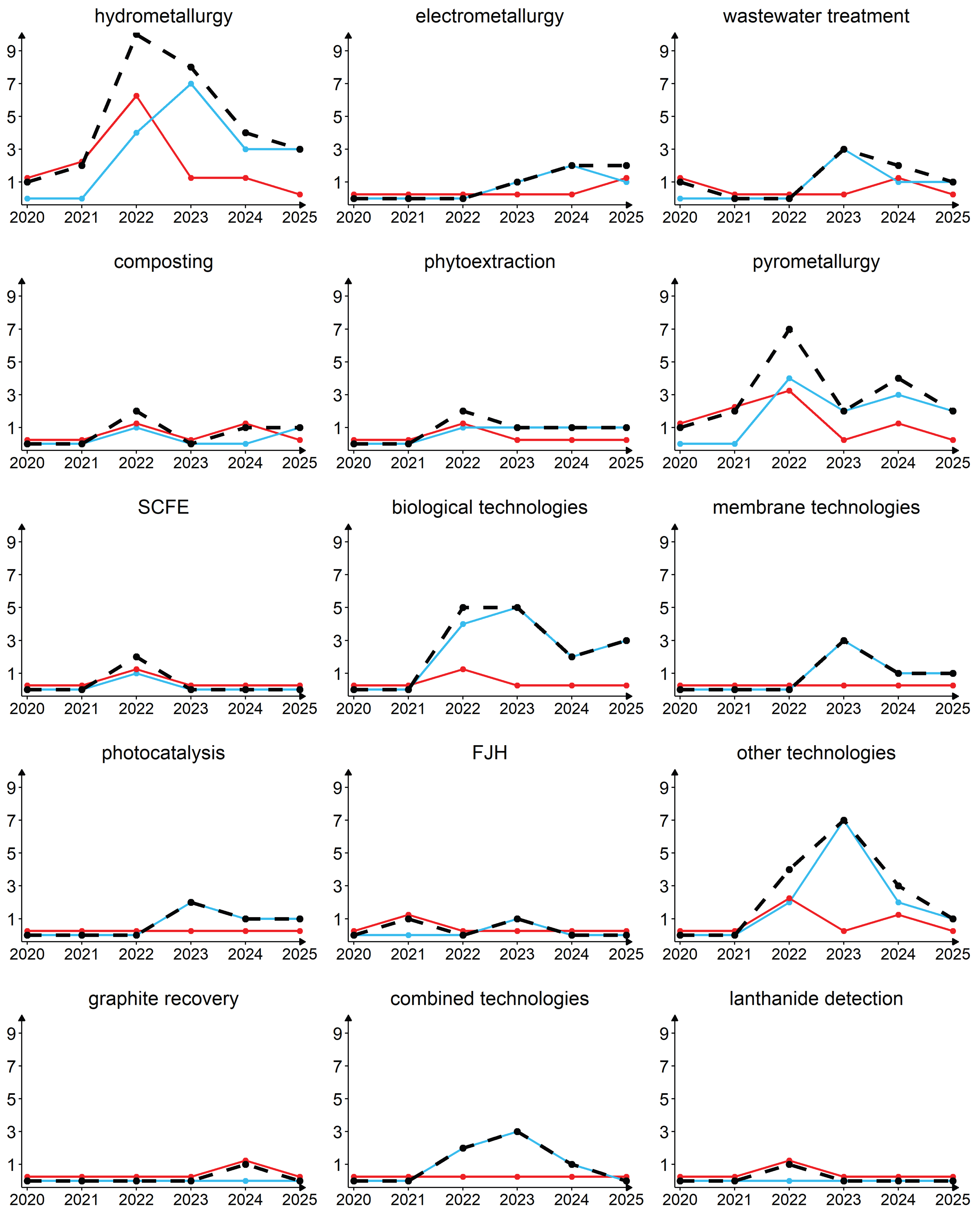
Figure 7 presents these dynamics as line graphs, summing the “total” (black) series over the years for any given technology.
Key observations from Figure 6 and Figure 7 include:
  • Hydrometallurgy: The primary literature increased initially, peaking in 2022, followed by a marked decline with only one recent publication and none recorded in 2025. The secondary literature peaked in 2023 and stabilized at approximately three publications per year.
  • Electrometallurgy: No publications appeared prior to 2023. The secondary literature began in 2023, rising to two in 2024, while the primary literature emerged only once, in 2025.
  • Pyrometallurgy: The primary literature shows a general downward trend (peaking at three in 2022, then dropping to zero in 2023 and 2025). The secondary literature remained relatively stable between 2022 and 2025.
  • Biological Methods: Following a single primary article in 2022, the secondary literature peaked in 2023, dropped, and then rebounded to three items in 2025.
  • Other/Niche Technologies: “Other processes” contains three primary publications, though most items are secondary. Graphite recovery (2024) and detection methods (2022) appear only once in the primary literature. SCFE appears twice in 2022. No primary publications were found for combined processes, membrane processes, or photocatalysis.
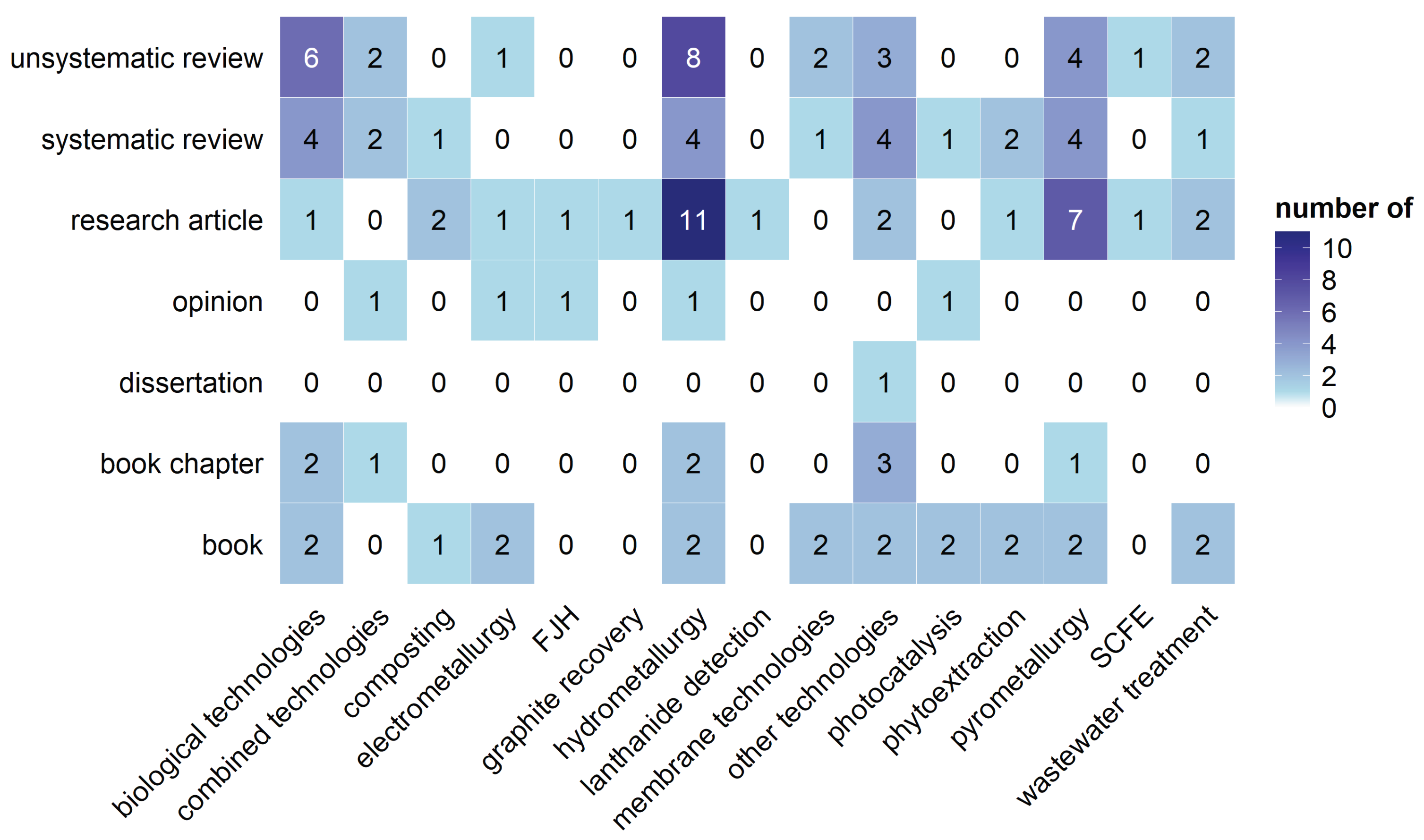
Figure 8 displays the joint distribution of publication types across technology categories. Phytoextraction, though well-established in gold recovery [55], appears as a novel application area within urban mining (one research article and multiple secondary mentions). The situation is similar with composting, which is covered in two research articles, a review article, and a book on urban mining. Wastewater treatment and electrometallurgy are present in books and at least one research article each. Biological methods show minimal primary research activity but substantial coverage in the secondary literature.
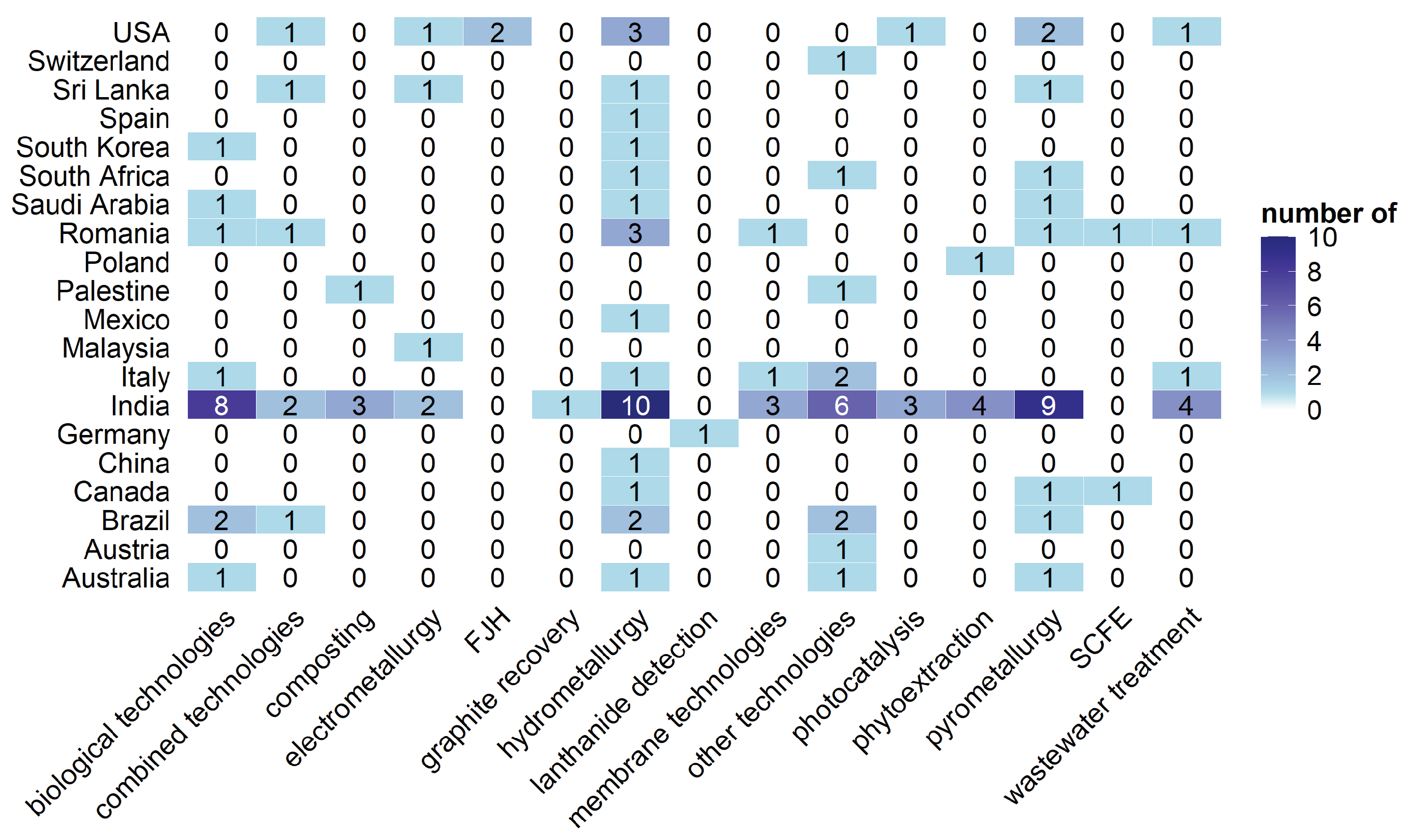
Figure 9 illustrates the geographic distribution of research. India demonstrates a strong concentration of activity, covering almost all technologies with emphases on hydrometallurgy, pyrometallurgy, phytoextraction, and biological methods; photocatalysis is investigated almost exclusively there. The United States and Romania also show breadth, focusing on hydrometallurgy, while FJH appears exclusively in US-based research. Italy and Brazil cover a wide range, favoring “other processes,” hydrometallurgy, and biological methods. Several niche technologies—including FJH, photocatalysis, membrane processes, phytoextraction, composting, wastewater treatment and electrometallurgy—are geographically concentrated in a small number of countries.
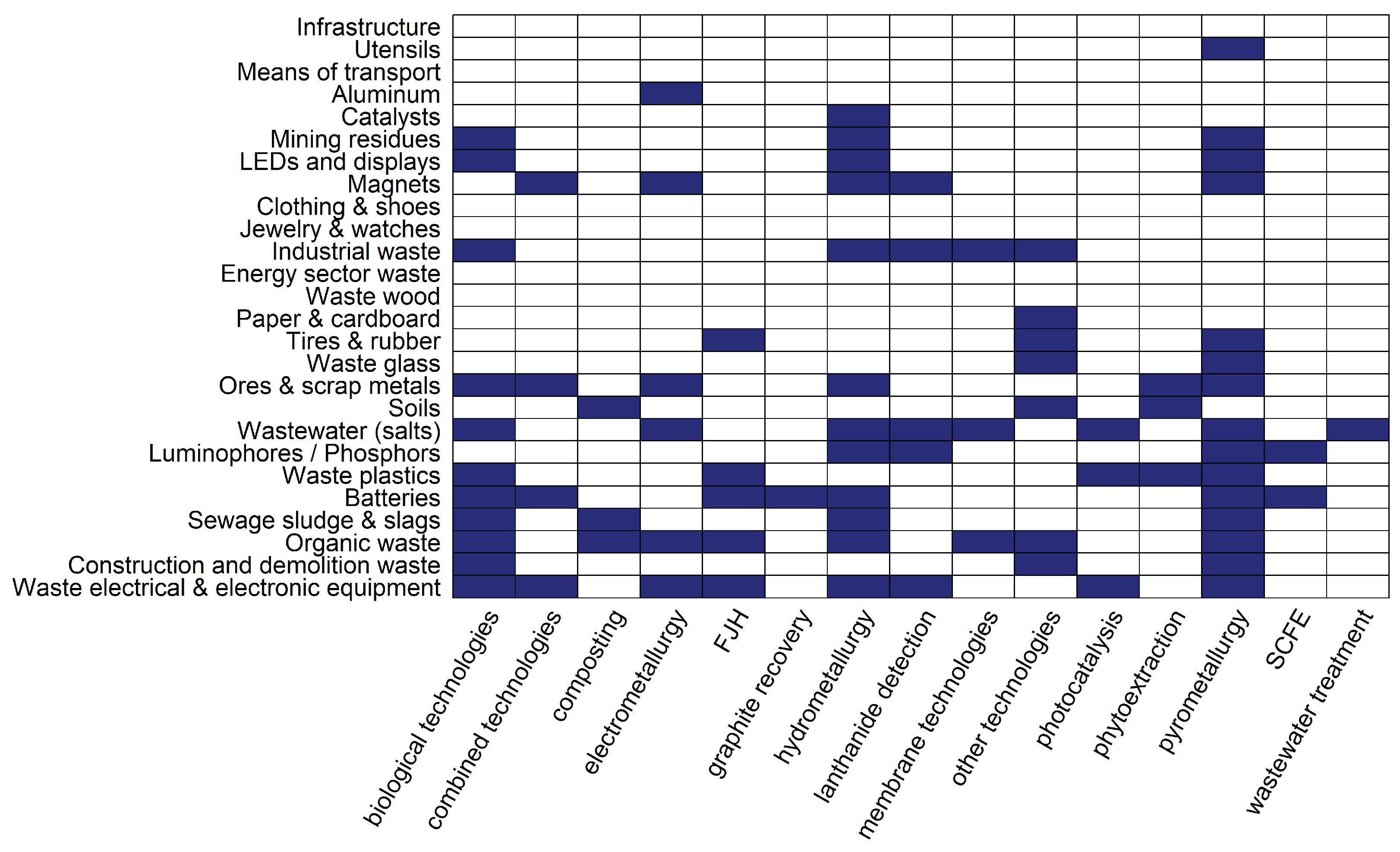
Figure 10 maps urban waste streams to the technologies applied to them. Pyrometallurgy appears most frequently, reflecting its flexibility. In contrast, graphite recovery has been applied to only one stream to date. The categorizations used include: “Industrial waste” (e.g., oils and radioactive substances), “Utensils” (everyday objects like cutlery), “Infrastructure” (streetlights and bridges), “Phosphors” (spent phosphors and lamps), “Transport (cars, ships and planes),” “Energy sector waste” (e.g., wind turbines), “Plastic waste” (polymers), “Aluminum” (Al-bearing waste), and “Magnets” (mostly permanent magnets).
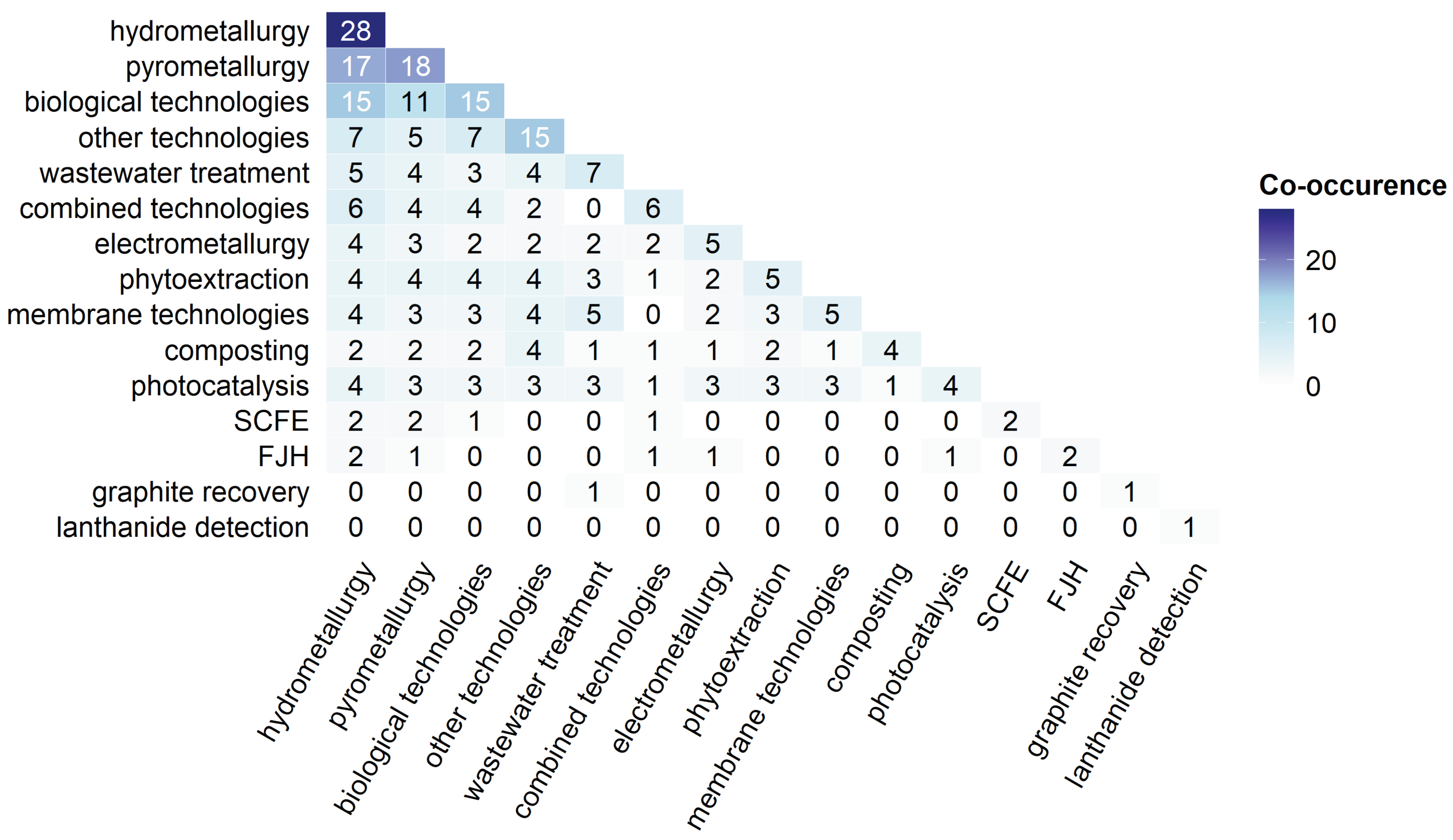
Finally, Figure 11 depicts the co-occurrence of technology categories. The three most frequent technologies—hydrometallurgy, pyrometallurgy, and biological methods—often co-occur, forming a triadic relationship. Wastewater treatment is frequently paired with hydrometallurgy or membrane processes (the latter often functions as a subcomponent of wastewater treatment, as noted in Figure 3). Photocatalysis appears exclusively in the secondary literature and is consistently used in combination with other methods. Graphite recovery and detection methods are found only in the primary literature and have not been further developed from other urban mining technologies, which is also reflected in the fact that there is not a single co-occurrence with the other methods. SCFE is linked to hydro- and pyrometallurgy, often cited as a “green alternative” [30]. Combined processes consistently co-occur with hydrometallurgical and pyrometallurgical methods.

5. Discussion

5.1. Comparison to Related Work

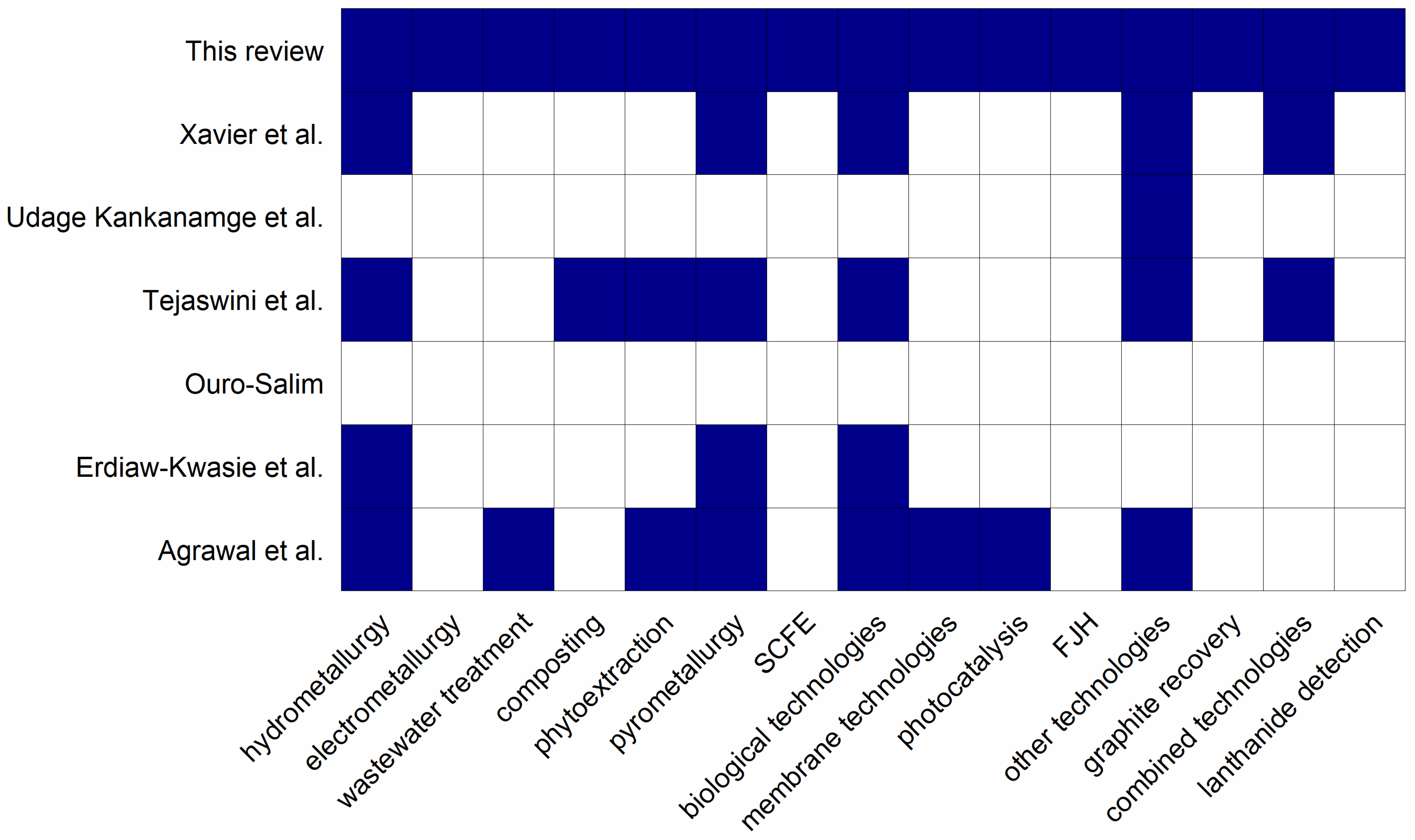
This paper positions its contributions against related work and demonstrates, in Figure 12, that it covers all technologies previously addressed while adding five additional technologies. The PRISMA methodology proved appropriate for the study aims. Its structured documentation reduces the risk of selective or biased inclusion, increases objectivity, and ensures full traceability and reproducibility of the selection process. Such a systematic approach is suitable for decision-oriented questions in practice and research, and it enabled the identification and classification of additional technologies.
The findings of this paper largely align with the conclusions of related studies (see Section 2.3). Both this paper and prior work identify the construction and building sector as well as electronic waste as priority domains. The absence of pilot plants and industrial research is emphasized in this paper and in related studies [1,10,37], which collectively indicate the early developmental stage of urban mining. The scarcity of artificial intelligence applications observed here is consistent with prior evidence [10,23]. Technological deficits are underscored by the literature [1,3,10,38] and corroborated by this paper. In [10], future research on the characterization of waste materials is recommended. This study identified contributions in that direction; regardless, it is recommended to pursue this aspect further.
A notable finding concerns China: although there is substantial work on urban mining in general, technology-centered primary contributions are largely absent in the present corpus, which may reflect publication language, indexing practices, or withheld information. The backward search nevertheless incorporated numerous references originating from [10], including studies on industrial practice and challenges [65], national recycling rates and volumes [66], and the energy-reduction effects of urban mining [67]. The limited technology focus in China may reflect a scarcity of domestic developments.
Overall, this paper confirms established insights and extends them by delineating additional research gaps and untapped potentials, documenting further breakthroughs and innovations, and explicitly linking technologies to applications together with statements on process effectiveness.

5.2. Research Questions

This section answers the six research questions in a continuous narrative that connects quantitative patterns with full-text insights. The general picture is that urban mining research is technically centered on metallurgical routes, while a handful of newer, urban mining-specific approaches are beginning to emerge; activity is highly uneven across countries; and most primary work remains at the laboratory scale, limiting confident statements about economic and environmental performance in real-world settings.
Regarding the state of research and development (RQ1), multiple views of the data (Figure 6, Figure 7, Figure 8 and Figure 9 and Figure 11) converge on a clear focus on hydro-, pyro- and biometallurgy, with electrometallurgy trailing behind despite the momentum of the policy for the recovery of critical and precious metals from electronic waste [68,69]. As shown in Figure 7, the intensive reporting on hydrometallurgy in the form of the secondary literature is preceded by a phase of increased research activity. It can therefore be deduced that no further fundamental technological breakthroughs are currently expected; rather, it can be assumed that only incremental optimizations will occur. This assessment is supported by the recent literature: recent articles largely refine established unit operations rather than redefine them, as illustrated by 95% copper recovery through H2SO4 leaching and iron cementation [47], model-guided and experimentally confirmed separations for silver and tin with yields close to predictions [6], and optimization of nitric acid-driven yield [53]. Pyrometallurgy shows sparse, declining primary activity after 2022 (Figure 7), which aligns with its industrial embeddedness [54] and suggests a predominantly optimization-oriented frontier. There is no in-house experimental research on biometallurgy, but it frequently appears through citation in pre-existing, non-UM literature, which suggests that the technology is mature. Earlier demonstrations of stirred-tank bioleaching and pilot-scale techno-economic reasoning indicate technical feasibility with scale-up challenges [49,70]. In short, the metallurgical core is well-established, and near-term advances are likely to come from scale-up, integration, pretreatment, and pollution control rather than from radically new unit operations.
Technology transfer in the urban mining context complements this core. Methods such as wastewater treatment, composting, membrane processes, phytoextraction, flash Joule heating, and photocatalysis are largely adapted from adjacent domains; only three lines—supercritical fluid extraction, graphite recovery from battery waste, and a luminescence-based detection method for Tb3+/Eu3+—function as genuinely new directions in the corpus. Wastewater treatment is inspired by hydrometallurgical principles. The precipitation-based schemes can avoid hazardous residues and generate reusable by-products such as K2SO4 or ammonium salts [59], a pattern mirrored by the technology co-occurrences in Figure 11. Composting in UM remains at a proof-of-concept and lab scale; phytoextraction, despite its pedigree in gold extraction [55], is only tentatively extended to UM and is often discussed alongside hydro-, pyro- and biometallurgy (Figure 11). FJH is represented by one research article [26] and a subsequent viewpoint by overlapping authors [64], and activity is geographically concentrated in only one country, the USA. This leads directly to the geography of research: India dominates output and breadth across technologies and is the only country in the corpus with monographs (Figure 9); Romania matches the United States in thematic breadth despite a smaller academic base and uniquely features an Academy of Sciences contribution; dissertations are vanishingly rare, suggesting weak integration into formal academic training; and Africa, along with other resource-rich regions, is underrepresented despite substantial waste pressures, plausibly reflecting the persistent cost advantage of primary extraction and capacity constraints. Overall, the R&D landscape is split into two: optimization and adaptation on one side, and cautious exploration on the other. It is also overwhelmingly university-based, with few sequential follow-up studies outside India. These findings make it clear that scientific progress in the field of urban mining is closely linked to the conditions of the political, economic, and infrastructure framework. In resource-rich countries, regardless of their level of development, targeted scientific strategies for promoting sustainable secondary resource use are often lacking, as there is currently no perceived need for them.
Technological developments that are driving urban mining forward (RQ2) will be answered in terms of breakthroughs and innovations. The findings stand out when time trends (Figure 6) are read together with full-text evidence. SCFE using scCO2 and a TBP-HNO3 complex enables the solvent-benign, energy-leaky extraction of rare earths from lamp phosphor waste and provides a green alternative to conventional hydro/pyro-routes [30]. Graphite recovery achieves direct synthesis of graphene oxide from recycled lithium-ion battery (LIB) graphite using a modified Tour method, reducing the use of strong oxidants against natural graphite baselines (up to 40% for H2SO4 and 20% for KMnO4) and leveraging pre-existing defects to improve product purity [29]. The luminescent, spectrometer-free TLC method for Tb3+/Eu3+ screening offers a robust, low-barrier tool for source qualification, though scalability and field protocols remain to be demonstrated [60]. Within established routes, model-guided hydrometallurgical separations were experimentally confirmed using olive-leaf extracts as greener reductants [6]; engineered PET-hydrolases now depolymerize PET to monomers with up to 95% efficiency within about ten hours after immobilization, enabling near-virgin-quality recyclates [3,71]; green electrolysis with pH-neutral ethylene glycol and LCA-guided optimization shows effective copper recovery and lower toxicity while indicating lower GHG intensities for UM than for primary mining (approximately 4.06 vs. 5.44 kg CO2-eq per kg) [63] and electrochemical routes for rare earth recovery in molten fluoride media suppress anode gas formation [9]; and mechanochemical activation of lamp phosphor waste raises defect density and surface area to boost leaching and eliminate thermal/chemical pretreatment, increasing rare earth extraction efficiencies by roughly 20–30% [30,58].
Effectiveness (RQ3), in the context of this discussion, means which technology actually achieves the respective objective. Effective processes are those that reliably fulfill the intended purpose, regardless of the effort required. Effectiveness is evaluated based on the following criteria with the prioritization shown: 1. scalability and success rate in industrial application; 2. recovery rates (yield) and purity of the recovered secondary raw materials; 3. diverse application possibilities (versatility) of the technologies are shown in Figure 10. In Table 5, an overview of the results from these three categories is presented. The following text provides selected detailed findings.
Industrial readiness today is strongest for pyrometallurgy [54], which couples high extraction [1,9,24,37,54], high purity [9] and fast kinetics [9,24,37,54] with established practice but at an energy and environmental cost [1,9,20,24,30,37,48,52,53,54,62]; electrometallurgy is theoretically scalable but under-evidenced in the literature and green electrolysis reports copper yields up to about 85% under the studied conditions [63]. Hydro- and biometallurgy achieve high recoveries and purities [1,9,18,20,24,27,32,37,47,48,50,51,53,58,59,61] in the laboratory but face effluent, kinetics and scale-up hurdles [1,9,18,20,24,26,32,37,47,48,49,53,54,56,58,61,62]. Among transferred methods, wastewater treatment, FJH and photocatalysis have plausible industrial pathways [24,26,64], membrane processes offer niche selectivity, especially for rare or radioactive species [27], but are fouled and cost-intensive [24,27,37], and phytoextraction and composting trade recovery efficiency for co-benefits in remediation and soil quality. Across the groups, FJH and pyrometallurgy emerge as front-runners in effectiveness; photocatalysis and SCFE form a promising second tier: SCFE performs strongly in purity and recovery, yet remains sensitive to authentic waste matrices and feed composition. Phytoextraction follows due to its combined remediation–recovery profile; composting ranks fourth with respect to industrial recovery criteria, while also providing agronomic benefits.
Links between technologies and application areas (RQ4) are clearest for e-waste and metallurgical routes: LEDs, displays, batteries, and general e-waste exhibit overlapping treatability via hydro-, pyro-, and biometallurgical options, with choice mediated by selectivity, kinetics, effluent burden, and scale. In this sense, hydrometallurgy, pyrometallurgy, and biometallurgy are technology-agnostic scaffolds that can be tuned to similar streams with different trade-offs.
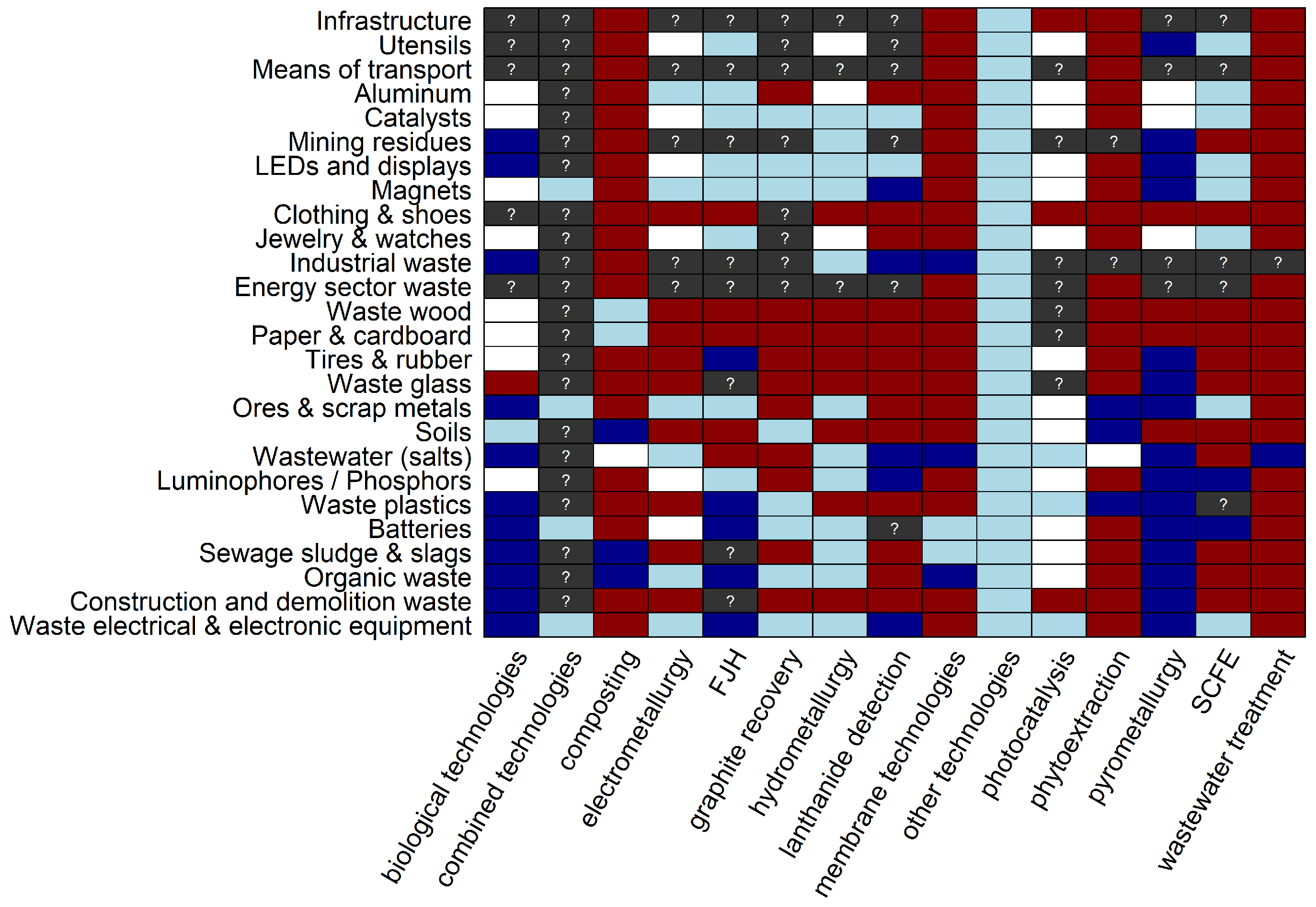
Finally, research gaps and potentials (RQs 5–6) are visible when the stream–technology grid (Figure 10) is reinterpreted as a status map, shown in Figure 13. We identified 35 gaps in general, concentrated by waste stream in aluminum, catalysts, and jewelry/watches, and by technology in biometallurgy, electrometallurgy, and especially photocatalysis. Photocatalysis is absent from the primary literature in the review window (Figure 6, Figure 7 and Figure 8) despite promising signals from the secondary literature: purities reported above 98%, kilogram-scale demonstrations and more than 100-fold catalyst reusability [28,64], as well as efficacy against hydrophobic pollutants [25].
The potential of the system falls into three motifs: first, the broader application of mature methods, e.g., biological routes, FJH, SCFE, membrane processes, composting, and the luminescent detection approach to additional waste streams; second, the potential for better scalability of technology such as electrometallurgy and hydrometallurgy, where effluent management engineering, energy integration, and plant-level control could unlock wider deployment; third, the potential to further develop the technology itself and its application area, for combined and other processes as well as graphite recovery, which is presently confined to batteries and represented by a single research paper. From a long-term perspective, scaling up to an industrial scale and applying it to other types of waste appears promising. The literature on process combinations predominantly names hydro–pyro, hydro–bio, and hydro–electro pairings and even hints at hydro–pyro–photocatalysis, but typically without experimental detail, making this an especially promising target for focused primary studies or a dedicated systematic review. Because other processes aggregate heterogeneous ideas from solvolysis and reuse to asphalt rubber and mineral fillers [15,17,19,45,57], generalization is premature and deeper experimental programs are warranted before efficiency, purity, and scalability can be credibly rated.
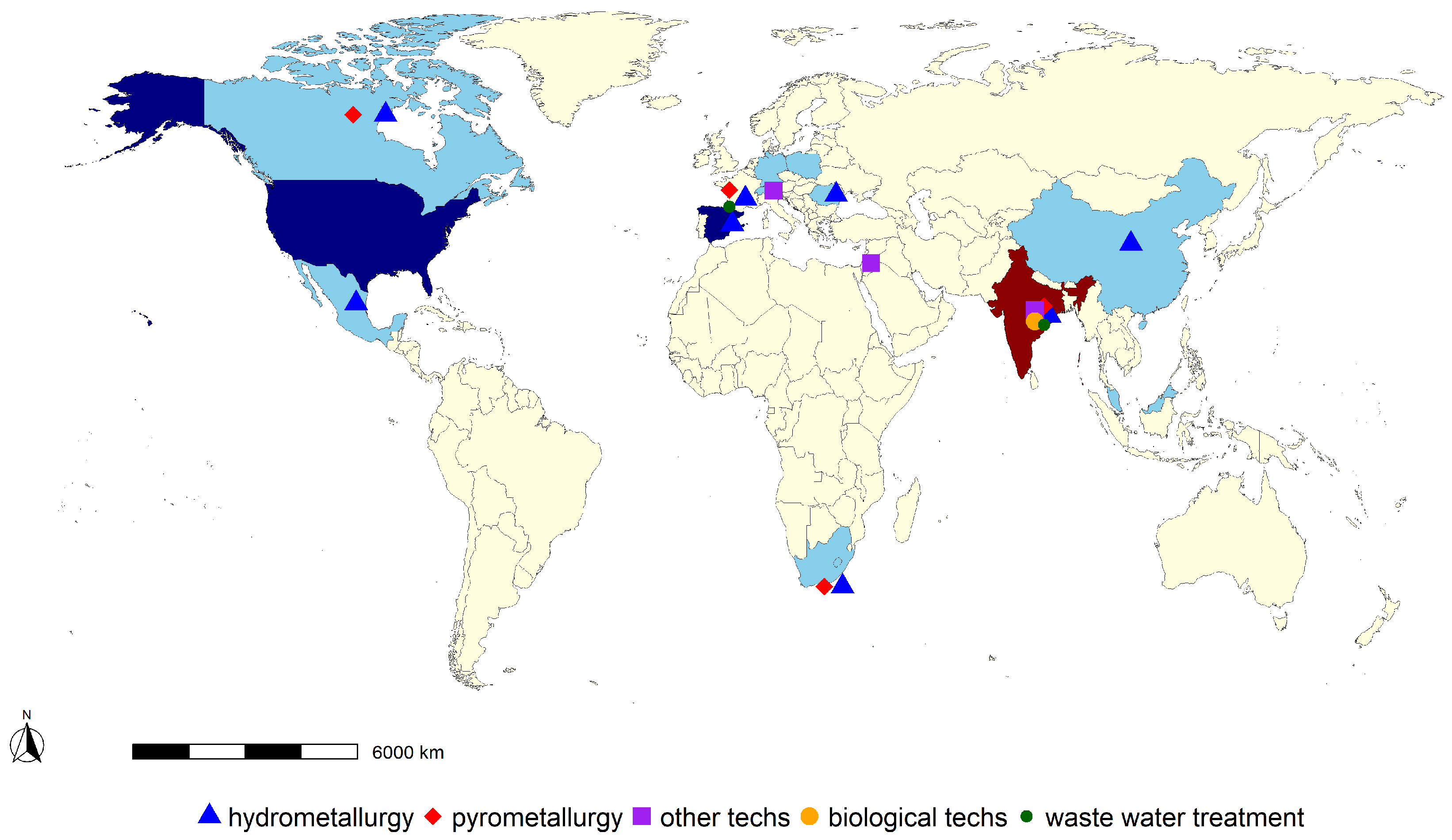
Figure 14 shows, on a color-coded world map, the countries where urban mining research is taking place. Only primary sources are considered, i.e., research articles and the dissertation. The color scale visualizes the number of published research papers (light blue = one, dark blue = two, red = >three, and yellow = zero). It should be noted that Palestine and Singapore are difficult to identify on the world map due to their small geographical size. The light blue coloring of these countries is barely perceptible. The majority of scientific work originates from Europe, Asia, and North America. This concentration underscores that urban mining research has thus far been largely confined to technologically more advanced regions with established scientific infrastructure. Globally, however, the number of primary publications remains low overall. India is the focal point of research activity. Against the backdrop of an increasing global population, a trend towards urbanization, and a worldwide rise in the consumption of primary raw materials, it can be assumed that more countries will increasingly contribute to urban mining research in the future. In particular, densely populated areas, which are often found in the “white spots” on the urban mining technology map, offer a low-threshold entry point into the research topic due to the large number of existing urban mines.

5.3. Economic Feasibility and the Reverse Supply Chain

Although the technical effectiveness of breakthrough technologies (RQ3) is promising, the transition from laboratory success to industrial viability is frequently obstructed by factors beyond the reaction vessel. As noted in the literature [1,65], urban mining is often hindered not by a lack of fundamental technology, but by the complexities of the Reverse Supply Chain. The economic feasibility of the identified breakthroughs is highly sensitive to the costs of collection, sorting, and transportation. For technologies such as FJH or supercritical fluid extraction to achieve competitive economies of scale, they require a steady, high-volume influx of specific waste streams. However, the decentralized nature of WEEE generation often leads to high logistics costs that can outweigh the value of recovered secondary raw materials. Furthermore, many of the green alternatives identified in this review (e.g., bioleaching or SCFE) currently lack the process speed of traditional pyrometallurgy. In an industrial context, the trade-off between environmental footprint and throughput remains a significant barrier. Future research must therefore move beyond bench-scale yields and incorporate techno-economic signatures that account for the reverse logistics and the energy required to aggregate dispersed urban ore into centralized processing hubs. Without addressing these systemic costs, even the most efficient breakthrough remains a niche laboratory application rather than a scalable industrial solution.

6. Conclusions

This research maps the technological state of the art in urban mining and assesses where breakthroughs, effective practices, and research gaps lie. Using a systematic review guided by PRISMA in Web of Science, Scopus, Google Scholar, ScienceDirect, and SpringerLink, we targeted records with the exact phrase "Urban Mining" in the title and restricted the window to 2022–2025. After deduplication and multistage screening, 45 publications were included. All screening and extraction processes were performed by the author; eligibility, coding, and synthesis steps were specified ex ante and documented for reproducibility.
Three high-level conclusions emerge. First, the technical focus in urban mining remains firmly metallurgical. Hydrometallurgy, pyrometallurgy, and—more unevenly—biometallurgy dominate topical coverage, while electrometallurgy is only beginning to appear. Evidence points to maturity rather than radical novelty: hydrometallurgical work in the period largely optimizes established unit operations and chemistries, pyrometallurgy is industrially embedded but only sporadically research-active, and recent biometallurgy contributions in the corpus cite earlier non-UM foundations rather than introducing new experimental lines. Primary work is overwhelmingly at the laboratory scale, with scarce pilots and industrial demonstrations, which limits firm conclusions about techno-economics, environmental performance, and operational feasibility under real-world conditions.
Second, a small set of truly new directions complements these established routes: SCFE using sc and CO2 with a TBP–HNO3 complex for rare earth recovery from lamp phosphor waste; direct synthesis of graphene oxide from recycled LIB graphite; and a robust, spectrometer-free luminescent thin-layer chromatography method to screen for Tb3+/Eu3+ in aqueous media.
Third, the geography and institutional foundations of the field are uneven. India stands out for breadth and intensity across technologies and is the only country represented by monographs in the corpus; dissertations are virtually absent; and research is concentrated in universities, with comparatively few contributions from research institutes or industry. Regions with abundant, low-cost primary resources and/or limited research capacity remain underrepresented, which helps to explain the modest global publication volume and the small number of sequenced follow-up studies.
Overall, the results, in agreement with the literature, indicate an early developmental stage with limited pilot and industry-scale activity and little visible use of AI. This work also identified a promising research gap in photocatalysis for urban mining.
Three priorities for future research follow. First, growth in UM research is likely in densely populated regions without strong primary resource bases, and studies of anthropogenic deposits and waste streams should be explicitly coupled with technology development. Second, transferring and combining separate approaches could be promising—for example, phyto-mineralization followed by metallurgical recovery and then composting/biogas treatment of detoxified residues, integration of waste heat and CO2 from biogas plants into algal reactors, chemical regeneration loops, and AI-supported logistics—along with renewed attention to pretreatment because it is a general lever for yield and cost. Third, pilots and demonstration plants are needed to quantify efficiency, scalability, costs, and environmental impacts. With these steps, urban mining can shift from promising laboratory concepts to low-impact scalable technologies aligned with the objectives of the circular economy.

Supplementary Materials

The following supporting information can be downloaded at: https://www.mdpi.com/article/10.3390/su18083947/s1.

Author Contributions

Conceptualization, S.L.-S. and L.G.; writing—original draft preparation, S.L.-S.; software, L.G.; visualization, S.L.-S.; writing—review and editing, S.L.-S. and L.G.; supervision, L.G. All authors have read and agreed to the published version of the manuscript.

Funding

This research received no external funding.

Institutional Review Board Statement

Not applicable.

Informed Consent Statement

Not applicable.

Data Availability Statement

No new data were created or analyzed in this study. Data sharing is not applicable to this article.

Conflicts of Interest

The authors declare no conflicts of interest.

References

  1. Xavier, L.H.; Ottoni, M.; Abreu, L.P.P. A Comprehensive Review of Urban Mining and the Value Recovery from E-Waste Materials. Resour. Conserv. Recycl. 2023, 190, 106840. [Google Scholar] [CrossRef]
  2. Capodaglio, A.G. Urban Wastewater Mining for Circular Resource Recovery: Approaches and Technology Analysis. Water 2023, 15, 3967. [Google Scholar] [CrossRef]
  3. Tejaswini, M.; Pathak, P.; Gupta, D. Sustainable Approach for Valorization of Solid Wastes as a Secondary Resource through Urban Mining. J. Environ. Manag. 2022, 319, 115727. [Google Scholar] [CrossRef] [PubMed]
  4. Kara, S.; Hauschild, M.; Sutherland, J.; McAloone, T. Closed-Loop Systems to Circular Economy: A Pathway to Environmental Sustainability? CIRP Ann.-Manuf. Technol. 2022, 71, 505–528. [Google Scholar] [CrossRef]
  5. Ambrós, W.M. Gravity Concentration in Urban Mining Applications—A Review. Recycling 2023, 8, 85. [Google Scholar] [CrossRef]
  6. Alexandre-Franco, M.F.; Fernández-González, C.; Reguero-Padilla, G.; Cuerda-Correa, E.M. Olive-Tree Polyphenols and Urban Mining. A Greener Alternative for the Recovery of Valuable Metals from Scrap Printed Circuit Boards. Environ. Res. 2022, 214, 114112. [Google Scholar] [CrossRef]
  7. Zhou, W.; Liang, H.; Xu, H. Recovery of Gold from Waste Mobile Phone Circuit Boards and Synthesis of Nanomaterials Using Emulsion Liquid Membrane. J. Hazard. Mater. 2021, 411, 125011. [Google Scholar] [CrossRef]
  8. Vieira, L.C.; Longo, M.; Mura, M. Are the European Manufacturing and Energy Sectors on Track for Achieving Net-Zero Emissions in 2050? An Empirical Analysis. Energy Policy 2021, 156, 112464. [Google Scholar] [CrossRef]
  9. Dushyantha, N.; Kuruppu, G.N.; Nanayakkara, C.J.; Ratnayake, A.S. The Role of Permanent Magnets, Lighting Phosphors, and Nickel-Metal Hydride (NiMH) Batteries as a Future Source of Rare Earth Elements (REEs): Urban Mining Through Circular Economy. Mining Metall. Explor. 2024, 41, 321–334. [Google Scholar] [CrossRef]
  10. Ouro-Salim, O. Urban Mining of E-Waste Management Globally: Literature Review. Clean. Waste Syst. 2024, 9, 100162. [Google Scholar] [CrossRef]
  11. Botelho Junior, A.B.; Martins, F.P.; Cezarino, L.O.; Liboni, L.B.; Tenório, J.A.S.; Espinosa, D.C.R. The Sustainable Development Goals, Urban Mining, and the Circular Economy. Extr. Ind. Soc. 2023, 16, 101367. [Google Scholar] [CrossRef]
  12. Devahi, P.; Rathod, D.; Muthukkumaran, K. Sustainable Reuse Potential of Landfill Mining Waste Retrieved from Urban Mining Sites in South India. J. Mater. Cycles Waste Manag. 2022, 24, 2582–2597. [Google Scholar] [CrossRef]
  13. Pujara, Y.; Pathak, P.; Sharma, A.; Govani, J. Review on Indian Municipal Solid Waste Management Practices for Reduction of Environmental Impacts to Achieve Sustainable Development Goals. J. Environ. Manag. 2019, 248, 109238. [Google Scholar] [CrossRef] [PubMed]
  14. Baldé, C.P.; Kuehr, R.; Yamamoto, T.; McDonald, R.; D’Angelo, E.; Althaf, S.; Bel, G.; Deubzer, O.; Fernandez-Cubillo, E.; Forti, V.; et al. Global E-Waste Monitor 2024, Pdf version: 978-92-61-38781-5; International Telecommunication Union and United Nations Institute for Training and Research: Geneva, Switzerland; Bonn, Germany, 2024; ISBN 978-92-61-38781-5. [Google Scholar]
  15. Glock, C.; Haist, M.; Bergmeister, K.; Voit, K.; Beyer, D.; Heckmann, M.; Hondl, T.; Hron, J.; Kaufmann, F.; Pürgstaller, A.; et al. Klima- Und Ressourcenschonendes Bauen Mit Beton. In BetonKalender 2024: Hochbau; Digitales Planen und Baurobotik; Ernst & Sohn GmbH: Berlin, Germany, 2024; Chapter II; pp. 177–265. [Google Scholar] [CrossRef]
  16. Kirchherr, J.; Reike, D.; Hekkert, M. Conceptualizing the Circular Economy: An Analysis of 114 Definitions. Resour. Conserv. Recycl. 2017, 127, 221–232. [Google Scholar] [CrossRef]
  17. Al-Sari’, M.I.; Haritash, A.K. Municipal Organic Solid Waste Management in the Concept of Urban Mining and Circular Economy: A Model from Palestine. J. Mater. Cycles Waste Manag. 2024, 26, 2980–2995. [Google Scholar] [CrossRef]
  18. David, M.; Gavrilescu, M. Sustainable Management, Treatment and Recovery of Waste in an European Context: Urban Mining and the Circular Economy. Bul. Inst. Politeh. IașI SecțIa Chim. Ing. Chim. 2022, 68, 55–77. [Google Scholar] [CrossRef]
  19. Mahdjoub, N. Urban Mining and Circular Economy in South Africa: Waste as a Resource for New Generation of Hybrid Materials. In Waste Management in Developing Countries, Waste as a Resource; Springer International Publishing: Cham, Switzerland, 2023; Chapter 9; pp. 157–172. [Google Scholar] [CrossRef]
  20. Pathak, P.; Chabhadiya, K. Recycling of Rechargeable Batteries: A Sustainable Tool for Urban Mining. In Handbook of Solid Waste Management; Springer Nature Singapore: Singapore, 2022; pp. 1635–1652. [Google Scholar] [CrossRef]
  21. Charpentier, N.M.; Maurice, A.A.; Xia, D.; Li, W.J.; Chua, C.S.; Brambilla, A.; Gabriel, J.C.P. Urban Mining of Unexploited Spent Critical Metals from E-waste Made Possible Using Advanced Sorting. Resour. Conserv. Recycl. 2023, 196, 107033. [Google Scholar] [CrossRef]
  22. Talens Peiró, L.; Castro Girón, A.; Gabarrell I Durany, X. Examining the Feasibility of the Urban Mining of Hard Disk Drives. J. Clean. Prod. 2020, 248, 119216. [Google Scholar] [CrossRef]
  23. Udage Kankanamge, A.K.S.; Erdiaw-Kwasie, M.O.; Abunyewah, M. Towards a Taxonomy of E-Waste Urban Mining Technology Design and Adoption: A Systematic Literature Review. Sustainability 2024, 16, 6389. [Google Scholar] [CrossRef]
  24. Randive, K.; Nandi, A.K.; Jain, P.K.; Jawadand, S. (Eds.) Current Trends in Mineral-Based Products and Utilization of Wastes: Recent Studies from India; Springer Proceedings in Earth and Environmental Sciences; Springer Nature: Cham, Switzerland, 2024; verwendete Seitenzahlen: 1–27. 49–77. 133–139. 205–241. 277–297. [Google Scholar] [CrossRef]
  25. Yatoo, A.M.; Kumar Gupta, P.; Singh, R.P. (Eds.) Integrated Waste Management: Trends, Policies, and Perspectives, 1st ed.; CRC Press: Boca Raton, FL, USA, 2025; verwendete Seitenzahlen: 23–150. 161, 212, 257–274. [Google Scholar] [CrossRef]
  26. Deng, B.; Luong, D.X.; Wang, Z.; Kittrell, C.; McHugh, E.A.; Tour, J.M. Urban Mining by Flash Joule Heating. Nat. Commun. 2021, 12, 5794. [Google Scholar] [CrossRef]
  27. Man, G.T.; Albu, P.C.; Nechifor, A.C.; Grosu, A.R.; Tanczos, S.K.; Grosu, V.A.; Ioan, M.R.; Nechifor, G. Thorium Removal, Recovery and Recycling: A Membrane Challenge for Urban Mining. Membranes 2023, 13, 765. [Google Scholar] [CrossRef] [PubMed]
  28. Chen, Y.; Xu, M.; Wen, J.; Wan, Y.; Zhao, Q.; Cao, X.; Ding, Y.; Wang, Z.L.; Li, H.; Bian, Z. Selective Recovery of Precious Metals through Photocatalysis. Nat. Sustain. 2021, 4, 618–626. [Google Scholar] [CrossRef]
  29. Kumari, P.; Samadder, S.R. Urban Mining for Graphite Recovery from Retired Lithium-Ion Batteries and Its Valorization to Valuable Graphene Materials: A Comprehensive Characterization Study. J. Energy Storage 2024, 102, 113873. [Google Scholar] [CrossRef]
  30. Zhang, J.; Anawati, J.; Azimi, G. Urban Mining of Terbium, Europium, and Yttrium from Real Fluorescent Lamp Waste Using Supercritical Fluid Extraction: Process Development and Mechanistic Investigation. Waste Manag. 2022, 139, 168–178. [Google Scholar] [CrossRef]
  31. Fatimah, Y.A.; Govindan, K.; Sasongko, N.A.; Hasibuan, Z.A. The Critical Success Factors for Sustainable Resource Management in Circular Economy: Assessment of Urban Mining Maturity Level. J. Clean. Prod. 2024, 469, 143084. [Google Scholar] [CrossRef]
  32. Funari, V.; Toller, S.; Vitale, L.; Santos, R.M.; Gomes, H.I. Urban Mining of Municipal Solid Waste Incineration (MSWI) Residues with Emphasis on Bioleaching Technologies: A Critical Review. Environ. Sci. Pollut. Res. 2023, 30, 59128–59150. [Google Scholar] [CrossRef]
  33. Tunsu, C.; Petranikova, M.; Gergorić, M.; Ekberg, C.; Retegan, T. Reclaiming Rare Earth Elements from End-of-Life Products: A Review of the Perspectives for Urban Mining Using Hydrometallurgical Unit Operations. Hydrometallurgy 2015, 156, 239–258. [Google Scholar] [CrossRef]
  34. Krook, J.; Baas, L. Getting Serious about Mining the Technosphere: A Review of Recent Landfill Mining and Urban Mining Research. J. Clean. Prod. 2013, 55, 1–9. [Google Scholar] [CrossRef]
  35. Aldebei, F.; Dombi, M. Mining the Built Environment: Telling the Story of Urban Mining. Buildings 2021, 11, 388. [Google Scholar] [CrossRef]
  36. Orenga Panizza, R.; Nik-Bakht, M. Building Stock as a Future Supply of Second-Use Material—A Review of Urban Mining Methods. Waste Manag. Bull. 2024, 2, 19–31. [Google Scholar] [CrossRef]
  37. Agrawal, R.; Bhagia, S.; Satlewal, A.; Ragauskas, A.J. Urban Mining from Biomass, Brine, Sewage Sludge, Phosphogypsum and e-Waste for Reducing the Environmental Pollution: Current Status of Availability, Potential, and Technologies with a Focus on LCA and TEA. Environ. Res. 2023, 224, 115523. [Google Scholar] [CrossRef]
  38. Erdiaw-Kwasie, M.O.; Abunyewah, M.; Baah, C. A Systematic Review of the Factors—Barriers, Drivers, and Technologies—Affecting e-Waste Urban Mining: On the Circular Economy Future of Developing Countries. J. Clean. Prod. 2024, 436, 140645. [Google Scholar] [CrossRef]
  39. Cronin, P.; Ryan, F.; Coughian, M. Undertaking a Literature Review: A Step-by-Step Approach. Br. J. Nurs. 2008, 17, 38–43. [Google Scholar] [CrossRef] [PubMed]
  40. Page, M.J.; Moher, D.; Bossuyt, P.M.; Boutron, I.; Hoffmann, T.C.; Mulrow, C.D.; Shamseer, L.; Tetzlaff, J.M.; Akl, E.A.; Brennan, S.E.; et al. PRISMA 2020 Explanation and Elaboration: Updated Guidance and Exemplars for Reporting Systematic Reviews. BMJ 2021, 372, n160. [Google Scholar] [CrossRef] [PubMed]
  41. Page, M.J.; McKenzie, J.E.; Bossuyt, P.M.; Boutron, I.; Hoffmann, T.C.; Mulrow, C.D.; Shamseer, L.; Tetzlaff, J.M.; Akl, E.A.; Brennan, S.E.; et al. The PRISMA 2020 Statement: An Updated Guideline for Reporting Systematic Reviews. BMJ 2021, 372, n71. [Google Scholar] [CrossRef]
  42. Paul, J.; Criado, A.R. The Art of Writing Literature Review: What Do We Know and What Do We Need to Know? Int. Bus. Rev. 2020, 29, 101717. [Google Scholar] [CrossRef]
  43. Paul, J.; Barari, M. Meta-Analysis and Traditional Systematic Literature Reviews—What, Why, When, Where, and How? Psychol. Mark. 2022, 39, 1099–1115. [Google Scholar] [CrossRef]
  44. González-Pereira, B.; Guerrero-Bote, V.P.; Moya-Anegón, F. A New Approach to the Metric of Journals’ Scientific Prestige: The SJR Indicator. J. Inf. 2010, 4, 379–391. [Google Scholar] [CrossRef]
  45. Piao, Z. Urban Mining for Low-Noise Urban Roads. Ph.D. Thesis, ETH Zürich, Zürich, Switzerland, 2022. DISS. ETH NO. 28634. [Google Scholar] [CrossRef]
  46. Alecu, G.; Kappel, W. Precious metals recovered by Urban Mining. J. Eng. Sci. Innov. 2022, 7, 29–44. [Google Scholar] [CrossRef]
  47. Anwer, S.; Panghal, A.; Majid, I.; Mallick, S. Urban Mining: Recovery of Metals from Printed Circuit Boards. Int. J. Environ. Sci. Technol. 2022, 19, 9731–9740. [Google Scholar] [CrossRef]
  48. Arya, S.; Patel, A.; Kumar, S.; Pau-Loke, S. Urban Mining of Obsolete Computers by Manual Dismantling and Waste Printed Circuit Boards by Chemical Leaching and Toxicity Assessment of Its Waste Residues. Environ. Pollut. 2021, 283, 117033. [Google Scholar] [CrossRef] [PubMed]
  49. Bhandari, G.; Gupta, S.; Chaudhary, P.; Chaudhary, S.; Gangola, S. Bioleaching: A Sustainable Resource Recovery Strategy for Urban Mining of E-waste. In Microbial Technology for Sustainable E-waste Management; Springer International Publishing: Cham, Switzerland, 2023; Chapter 10; pp. 157–175. [Google Scholar] [CrossRef]
  50. Castillo-Ramírez, C.; Janssen, C.H.C. Pseudo-Protic Ionic Liquids for the Extraction of Metals Relevant for Urban Mining. Ind. Eng. Chem. Res. 2023, 62, 627–636. [Google Scholar] [CrossRef]
  51. Chen, Y.; Wu, H.; Hu, Y. Phosphate-Based Phosphor for the Urban Mining of Lanthanides: A Case Study of Samarium. RSC Sustain. 2024, 2, 1363–1366. [Google Scholar] [CrossRef]
  52. Debnath, B.; Pati, S.; Kayal, S.; De, S.; Chowdhury, R. Pyrolytic Urban Mining of Waste Printed Circuit Boards: An Enviro-Economic Analysis. Environ. Sci. Pollut. Res. 2024, 31, 42931–42947. [Google Scholar] [CrossRef]
  53. Durski, M.; Moodley, K.; Naidoo, P. Urban Mining of rare earth elements from rare earth magnets—Hydrometallurgical Processing. In Proceedings of the WasteCon 2022, Johannesburg, South Africa, 18–20 October 2022. [Google Scholar]
  54. Firmansyah, M.L.; Rizki, I.N.; Ullah, N. Recent Advances in Urban Mining Technology: A Focus on Electronic Waste Recycling Potential in Indonesia. Clean. Waste Syst. 2025, 10, 100239. [Google Scholar] [CrossRef]
  55. Gawroński, S.; Łutczyk, G.; Szulc, W.; Rutkowska, B. Urban Mining: Phytoextraction of Noble and Rare Earth Elements from Urban Soils. Arch. Environ. Prot. 2022, 48, 24–33. [Google Scholar] [CrossRef]
  56. Jha, M.K. Business Opportunities to Reclaim Metals by Urban Mining. J. Metall. Mater. Sci. 2022, 64, 1–10. [Google Scholar]
  57. Chand, S.; Rout, P.R.; Pathak, P. Urban Mining for Waste Management and Resource Recovery: Sustainable Approaches. In Urban Mining for Waste Management and Resource Recovery: Sustainable Approaches, 1st ed.; CRC Press: Boca Raton, FL, USA, 2022; pp. 1–11. [Google Scholar] [CrossRef]
  58. Pontes, F.V.M.; Paulino, J.F.; Carneiro, M.C. Exhausted Fluorescent Bulbs: An Important Target for Urban Mining of Rare Earth Elements, 2023. In Proceedings of the XXIX Encontro Nacional de Tratamento de Minérios e Metalurgia Extrativa (ENTMME); CETEM/MCTI: Rio de Janeiro, Brazil, 2023; ISSN 0103-7374. [Google Scholar]
  59. Prodius, D.; Gandha, K.; Mudring, A.V.; Nlebedim, I.C. Sustainable Urban Mining of Critical Elements from Magnet and Electronic Wastes. ACS Sustain. Chem. Eng. 2020, 8, 1455–1463. [Google Scholar] [CrossRef]
  60. Sedykh, A.E.; Pflug, J.J.; Schäfer, T.C.; Bissert, R.; Kurth, D.G.; Müller-Buschbaum, K. Rapid Spectrometer-Free Luminescence-Based Detection of Tb3+ and Eu3+ in Aqueous Solution for Recovery and Urban Mining. ACS Sustain. Chem. Eng. 2022, 10, 5101–5109. [Google Scholar] [CrossRef]
  61. Tran, D.T.; Tran, N.T.T.; Song, M.H.; Pham, T.P.T.; Yun, Y.S. Thiosulfate-Based Leaching for Eco-Friendly Urban Mining: Recent Developments and Challenges. Sep. Purif. Technol. 2025, 359, 130775. [Google Scholar] [CrossRef]
  62. Trivedi, A.; Vishwakarma, A.; Saawarn, B.; Mahanty, B.; Hait, S. Fungal Biotechnology for Urban Mining of Metals from Waste Printed Circuit Boards: A Review. J. Environ. Manag. 2022, 323, 116133. [Google Scholar] [CrossRef] [PubMed]
  63. Wirman, N.L.; Subramaniam, K.; Ravi, P.M.; Mansur, F.Z.; Muhammad, N.I.S. Sustainable Copper Extraction from Printed Circuit Boards through Urban Mining: Evaluating Environmental Impact Assessment. AIP Conf. Proc. 2025, 3266, 030009. [Google Scholar] [CrossRef]
  64. Wyss, K.M.; Deng, B.; Tour, J.M. Upcycling and Urban Mining for Nanomaterial Synthesis. Nano Today 2023, 49, 101781. [Google Scholar] [CrossRef]
  65. Hu, Y.; Poustie, M. Urban Mining Demonstration Bases in China: A New Approach to the Reclamation of Resources. Waste Manag. 2018, 79, 689–699. [Google Scholar] [CrossRef]
  66. Qi, Y.; Gong, R.; Zeng, X.; Wang, J. Examining the Temporal and Spatial Models of China’s Circular Economy Based upon Detailed Data of E-Plastic Recycling. Int. J. Environ. Res. Public Health 2022, 19, 2807. [Google Scholar] [CrossRef]
  67. Shen, H.; Yang, Z.; Bao, Y.; Xia, X.; Wang, D. Impact of Urban Mining on Energy Efficiency: Evidence from China. Sustainability 2022, 14, 15039. [Google Scholar] [CrossRef]
  68. Legaz, B.V.; Unguru, M.; Mancini, L.; Latunussa, C.; Hamor, T.; Ardente, F.; Mathieux, F.; Nita, V.; Matos, C.T.d.; Plazzotta, B.; et al. Raw Materials Scoreboard: European Innovation Partnership on Raw Materials, 3rd ed.; Publications Office of the European Union: Luxembourg, 2021. [Google Scholar] [CrossRef]
  69. Grohol, M.; Veeh, C. Study on the Critical Raw Materials for the EU 2023; Publications Office of the European Union: Luxembourg, 2023. [Google Scholar] [CrossRef]
  70. Xia, M.C.; Wang, Y.P.; Peng, T.J.; Shen, L.; Yu, R.L.; Liu, Y.D.; Chen, M.; Li, J.K.; Wu, X.L.; Zeng, W.M. Recycling of Metals from Pretreated Waste Printed Circuit Boards Effectively in Stirred Tank Reactor by a Moderately Thermophilic Culture. J. Biosci. Bioeng. 2017, 123, 714–721. [Google Scholar] [CrossRef]
  71. Tournier, V.; Topham, C.M.; Gilles, A.; David, B.; Folgoas, C.; Moya-Leclair, E.; Kamionka, E.; Desrousseaux, M.L.; Texier, H.; Gavalda, S.; et al. An Engineered PET Depolymerase to Break down and Recycle Plastic Bottles. Nature 2020, 580, 216–219. [Google Scholar] [CrossRef]
Figure 1. Global e-waste generation over time [14].
Sustainability 18 03947 g001
Figure 2. Process flow of the circular economy and the sub-discipline urban mining.
Sustainability 18 03947 g002
Figure 3. Detailed process flow in urban mining.
Sustainability 18 03947 g003
Figure 4. PRISMA flow.
Sustainability 18 03947 g004
Figure 5. Annual distribution of publications, categorized by research maturity.
Sustainability 18 03947 g005
Figure 6. Temporal evolution of publication counts per technology category, including research maturity.
Sustainability 18 03947 g006
Figure 7. Annual publication trends per technology (Blue: secondary literature; Red: primary literature; Black: total).
Sustainability 18 03947 g007
Figure 8. Heat map: Publication type by technology category.
Sustainability 18 03947 g008
Figure 9. Heat map: Frequency of publications by country and technology.
Sustainability 18 03947 g009
Figure 10. Matrix of waste streams and applied technologies.
Sustainability 18 03947 g010
Figure 11. Co-occurrence matrix of technology categories.
Sustainability 18 03947 g011
Figure 12. Technologies discussed in thematically related works [1,3,10,23,37,38] compared to this work.
Sustainability 18 03947 g012
Figure 13. Technologies for different types of waste; red: unsuitable; dark blue: researched; grey: questionable; light blue: potential; white: research gap.
Sustainability 18 03947 g013
Figure 14. World map: Locations of the primary literature with the five most common technologies.
Sustainability 18 03947 g014
Table 1. Technologies in urban mining: concise comparison.
TechnologyCore PrincipleTypical FeedTypical Product or OutcomeRef.
HydrometallurgyDissolve metals as ions in aqueous media with acids or bases and recover from solutionOres, wastes, process residuesMetal salts or metals after deposition[24]
PyrometallurgySmelting or reduction at high temperature to separate metals from solidsOres, slags, metallic wastesMolten metals, alloys, matte, slag[24]
BiometallurgyMicrobial leaching through metabolic redox reactionsLow-grade ores, e-waste fractionsMetal rich leachates for downstream recovery[24]
CompostingAerobic biodegradation of organic wasteBiowaste, organicsStabilized compost for use as humus[25]
PhytoextractionPlant uptake and accumulation followed by ash recoveryContaminated soils, tailingsMetal-enriched ash for extraction[25]
Flash Joule heatingMillisecond electrical pulses reach extreme temperatures and break metal–oxide bondsSlags, composite wastesReduced metals or reactive intermediates[26]
Membrane processesSize- or chemistry-based separation with semipermeable membranesWastewater, process liquorsPurified water or recovered solutes[27]
PhotocatalysisLight-driven oxidation on catalytic surfacesContaminated water or airDegraded pollutants, improved effluent quality[28]
ElectrometallurgyElectrochemical deposition, purification, or extraction in cellsMetal ion solutions or meltsHigh-purity metals or intermediates[24]
Graphite recoveryOxidize spent graphite to GO then reduce to rGO with benign agentsSpent Li ion battery anodesrGO with enhanced conductivity[29]
Supercritical fluid extraction (SCFE)Supercritical CO2 extracts rare earth ions as nonpolar complexes and releases them by depressurizationREE-bearing solidsPrecipitated REE complexes for recovery[30]
Table 2. Overview of methodological approaches in thematically related studies.
Criterion[1][23][37][38][10][3]
Reporting guidelinesnot explainedPRISMAapproach explained without guidelinePRISMAapproach following Cronin [39]approach explained without guideline
Search criteriamissingsoundsoundsoundsoundsound
Inclusion and exclusion criteriamissingsoundmissingsoundimprecisemissing
Languagesmissingsoundmissingsoundsoundmissing
Databasesmissingsoundsoundsoundsoundsound
Number of sourcesmissingsoundsoundsoundsoundsound
Time spanmissingstart unclear to search date 2023the last five years, impreciseall entries up to search date 20232013 to search date 2023from 2015 to 2021
Conclusionmethod not presented transparentlycomplete except for the start date, process flow diagram presentincomplete, process flow diagram missingall criteria fully met, process flow diagram presentalmost complete, process flow diagram missingincomplete, process flow diagram missing
Table 3. Inclusion and exclusion criteria for the PRISMA search.
CriteriaInclusionExclusion
Publication yearJanuary 2022–March 2025Outside this period
Search string: Title requirement“Urban mining” exists in the title“Urban mining” is missing from the title
LanguageEnglish and GermanNot written in English or German
Type of publicationBooks, research papers, review papers, book chapters, conference papers, dissertations, and opinion papersTertiary studies, conceptual papers, and works without sufficient technological detail, non-scientific formats
TopicTechnologies in urban mining, innovations and breakthroughs within the technologiesInsufficient focus on urban mining or lack of technological relevance within urban mining technologies
ContextEngineering and natural science domains; higher education contextOut-of-scope domains (e.g., medicine, psychology) or non-higher-education contexts
Table 4. Summary of all technologies addressed across the 45 reviewed studies.
Author (Short)PretreatmentHydrometallurgyElectrometallurgyWastewater TreatmentCompostingPhytoextractionPyrometallurgySCFEBiological TechnologiesMembrane TechnologiesPhotocatalysisFJHOther TechnologiesGraphite RecoveryCombined TechnologiesLanthanide Detection
Agrawal et al. [37] x x xx xxx x
Al-Sari et al. [17] x x
Alecu et al. [46] x
Alexandre-Franco et al. [6] x
Ambrós [5]x
Anwer et al. [47] x x x
Arya et al. [48] x x
Bhandari et al. [49] x x x
Capodaglio [2] x x x
Castillo-Ramírez et al. [50] x
Charpentier et al. [21]x
Chen et al. [51] x
David et al. [18] x xxx x
Debnath et al. [52] x
Deng et al. [26] x x x
Devahi et al. [12] x x
Durski et al. [53] x x
Dushyantha et al. [9] xx x x
Erdiaw-Kwasie et al. [38] x x x
Firmansyah et al. [54] x x x
Funari et al. [32] x x x
Gawroński et al. [55] x
Glock et al. [15] x
Jha [56] x
Kumari et al. [29] x x
Mahdjoub [19] x
Man et al. [27] x x x
Ouro-Salim [10]
Piao [45] x
Pathak et al. [20] x x x
Pathak et al. [57] x
Pontes et al. [58] x x x
Prodius et al. [59] x x x
Randive [24] xxx xx xxx x
Sedykh et al. [60] x
Talens Peiró et al. [22]x
Tejaswini et al. [3] x xxx x x x
Tran et al. [61] x x
Trivedi et al. [62] x x x
Udage Kankanamge et al. [23]x x
Wirman et al. [63] x
Wyss et al. [64] xx xx x
Xavier et al. [1] x x x x x
Yatoo et al. [25] xxxxxx xxx x
Zhang et al. [30] x xx
Table 5. Technology maturity assessment.
TechnologyScalabilityYield/PurityVersatilityRank
Hydrometallurgy++
Pyrometallurgy+++1
Biological technologies+0
Membrane technologies0+
SCFE++2
Graphite recovery?0
Composting0+4
Photocatalysis++2
FJH++01
Phytoextraction003
Electrometallurgy0+0
Wastewater treatment++
Lanthanide detection?0
Disclaimer/Publisher’s Note: The statements, opinions and data contained in all publications are solely those of the individual author(s) and contributor(s) and not of MDPI and/or the editor(s). MDPI and/or the editor(s) disclaim responsibility for any injury to people or property resulting from any ideas, methods, instructions or products referred to in the content.