


Abstract
Advancing environmental monitoring through coordinated autonomous systems is central to sustainable smart region governance and data-driven territorial management. The article presents an engineering-oriented architecture and deployment methodology for an integrated wildfire monitoring and response system that combines unmanned aerial vehicles (UAVs), unmanned ground vehicles (UGVs), and stationary sensor networks (SNs). We formalise hub-and-spoke infrastructure placement as a mixed-integer optimisation problem that accounts for platform types, endurance, travel times and logistical constraints, and propose a practical pre-processing pipeline (confidence scoring, resampling, Kalman/median filtering, strategy fusion) for heterogeneous telemetry and imagery. The system couples multimodal neural network processing (image backbones, clustering and time-series models) with online resource-allocation and mission-planning mechanisms to prioritise UAV/UGV sorties and dynamically select launch sites. The article describes scenario-driven operational modes (early warning, alarm verification, autonomous local extinguishing, post-fire recovery, sensor-gap compensation, and inter-hub reinforcement), defines validation protocols (synthetic experiments, precision/recall/F1, and hardware-in-the-loop testing), and proposes KPIs to assess environmental, social, and economic impacts for smart regions. The contribution is a reproducible, deployment-focused blueprint that bridges conceptual UAV–UGV–SN research and practical implementation, highlighting trade-offs in reliability, communication redundancy, and sustainability, and outlining directions for simulation, field pilots and algorithmic refinement.
Keywords:
wildfire; monitoring; UAV; UGV; sensor networks; neural networks; prediction; risk; clustering; smart regions 1. Introduction
Every year, forest fires burn millions of hectares of natural landscapes worldwide, causing severe losses of biodiversity, releasing large quantities of carbon into the atmosphere, and inflicting major economic damage. In 2023, Canada experienced its most destructive fire season on record, with the affected area ranging from approximately 15 to over 18 million hectares [1]. The economic cost of that season exceeded CAD 1 billion in direct firefighting expenditure alone, with insured losses and ecosystem service damage estimated at several times that figure [1]. Globally, the area burned by wildfires has increased by more than 25% over the past two decades, with Southern Europe, Australia, and sub-Saharan Africa experiencing the most severe escalation. Climate change—through prolonged dry periods and increasingly frequent extreme weather events—is considered the primary driver of this escalating trend [2]. In conflict-affected regions, wildfire risks are further compounded: according to satellite data from 2024, approximately 8700–9000 fires were recorded in Ukraine alone, affecting approximately 965,000 hectares—fires frequently ignited by ammunition debris and occurred in areas where mine contamination makes emergency access hazardous or impossible [3].
Traditional approaches to wildfire monitoring—satellite observation, ground-based sensor networks, and manned aerial surveillance—each carry structural limitations that prevent timely, coordinated response. Satellite systems provide broad spatial coverage but are constrained by revisit cycles measured in hours, resulting in critical detection latency during rapidly developing fires. Ground sensor networks deliver continuous environmental data but lack spatial mobility and cannot independently confirm or localise detected anomalies. Manned aerial surveillance enables direct visual inspection but requires human operators and is therefore unsuitable for mine-contaminated terrain or other hazardous access conditions. Critically, none of these approaches, used in isolation, support the closed-loop cycle of detection, verification, and coordinated response that effective wildfire management requires.
The complementary integration of unmanned aerial vehicles (UAVs), unmanned ground vehicles (UGVs), and stationary sensor networks (SNs) addresses these limitations in a principled way. UAVs provide rapid aerial inspection and thermal imaging over hard-to-reach terrain, enabling the autonomous confirmation of sensor-detected anomalies within minutes. UGVs enable ground-level intervention in areas dangerous for human responders, including mine-contaminated zones. The operational relevance of autonomous robotic systems in such environments is supported by research on robotic-biological platforms for explosive ordnance detection [4] and deep learning models enabling real-time ordnance identification by autonomous ground vehicles [5]. SNs deliver continuous monitoring of temperature, humidity, CO2, and smoke concentration as a persistent environmental baseline. Together, the three subsystems form an integrated detection–verification–response loop that no single platform can achieve alone. This integration is especially significant for smart regions—territories with data-driven governance infrastructure—where wildfire monitoring must feed into digital twins, early warning dispatchers, and public safety services as part of a coordinated environmental management system.
Despite growing research interest, most existing solutions address only one platform type, lack formalised infrastructure placement, or omit validation protocols suitable for operational deployment. A comprehensive, deployment-oriented framework that integrates all three subsystems with explicit engineering specifications has not yet been established. This study addresses that gap. It extends prior work [6], which introduced the UAV–UGV–SN concept and demonstrated a neural network approach for risk-map generation, by providing the engineering framework required for practical deployment: (i) the hub-and-spoke infrastructure placement formalised as a mixed-integer programming problem with platform endurance, terrain, and budget constraints; (ii) an end-to-end data pre-processing pipeline comprising confidence scoring, resampling, Kalman and median filtering, and strategy fusion; (iii) six scenario-based operational modes with defined triggers, action sequences, and measurable KPIs; and (iv) a validation protocol based on synthetic experiments, precision/recall/F1 metrics, and hardware-in-the-loop testing.
Figure 1 presents the overall structure of the study, connecting its objectives, methodological steps, and expected outputs. To address the identified gap, the following research questions are formulated:
Figure 1.
General structure of the study. The bidirectional arrow between the results and methodology indicates iterative refinement: results inform and update the methodological approach throughout the research process.
To address this gap, the following research questions are formulated:
- RQ1: How can an integrated UAV-UGV-SN architecture be designed to ensure continuous, reliable, and scalable wildfire monitoring across diverse terrain and operational conditions?
- RQ2: How can hub-and-spoke infrastructure deployment be formalised as an optimisation problem to minimise response time while satisfying platform endurance, budget, and logistical constraints?
- RQ3: How can heterogeneous multimodal data from UAVs, UGVs, and sensor networks be pre-processed and fused to support accurate and timely wildfire risk assessment?
- RQ4: What scenario-based operational modes and validation approaches can be used to evaluate integrated UAV-UGV-SN systems in the absence of full-scale field implementation?
- RQ5: How does the deployment of an integrated UAV-UGV-SN system contribute to the environmental, social, and economic sustainability of smart regions?
The remainder of the paper is structured as follows. Section 2 presents a structured literature review across the relevant domains. Section 3 (Materials and Methods) describes the integrated system architecture, the hub-and-spoke deployment model, and data pre-processing pipeline, addressing RQ1, RQ2, and RQ3. Section 4 (Results) presents the six scenario-based operational modes, addressing RQ4. Section 5 (Discussion) analyses contributions, limitations, and sustainability impact, addressing RQ5. Section 6 presents conclusions with explicit answers to each RQ.
2. Literature Review
The development of integrated systems for wildfire monitoring and response has progressed rapidly across five interconnected domains: computer vision and deep learning for fire detection, multi-UAV mission planning and swarm coordination, wireless sensor networks, infrastructure deployment optimisation, and digital twin frameworks for smart region management. Before reviewing each domain, four core concepts that underpin this article are defined.
Systems integration refers to the coordinated combination of heterogeneous subsystems—in this context UAVs, UGVs, and SNs—into a unified operational framework in which data flows, decision logic, and physical actions are synchronised to achieve a goal that no single subsystem can accomplish alone.
Operational reliability denotes the probability that a system performs its required functions under stated conditions and within a defined time period. For UAV-UGV-SN systems operating in harsh environments, reliability encompasses fault-tolerant communication, redundant sensor coverage, and graceful degradation under node failures.
Multimodal monitoring describes the concurrent collection and fusion of data from physically distinct sensing modalities—such as thermal imaging, optical video, gas concentration sensors, and meteorological instruments—to construct a more complete and reliable situational picture than any single modality provides.
The link between monitoring technology and sustainable development operates through three channels: environmental (early detection reduces burned area, carbon emissions, and biodiversity loss), social (faster response reduces risk to human responders and affected populations), and economic (containing fires at an earlier stage lowers direct damage costs and optimises the use of emergency resources). Together, these channels position wildfire monitoring as a measurable contributor to all three pillars of the United Nations Sustainable Development Goals framework.
2.1. Computer Vision and Deep Learning for UAV-Based Fire Detection
Computer vision applied to UAV imagery has become the dominant approach for early-stage wildfire detection. The YOLO (You Only Look Once) family of object detection architectures has emerged as the primary framework in this domain, combining real-time speed with sufficient accuracy for onboard deployment [7]. Shamta and Demir (2024) demonstrated a YOLOv8- and YOLOv5-based surveillance system on an NVIDIA Jetson Nano platform, achieving 96% classification accuracy for forest fire and smoke in autonomous UAV patrols [8]. Subsequent works improved YOLO-based detection by incorporating attention mechanisms such as BiFormer blocks and Wise-IoU regression loss, yielding a 3.3% accuracy gain over the YOLOv8 baseline on smoke detection benchmarks [9]. A dedicated Forest Fire Identification and Monitoring Model based on improved YOLOv8 was validated on real fire footage from multiple datasets, confirming the viability of embedded deployment [10,11]. Complementary work on rapid fire recognition in UAV imagery [12] and technical aspects of deploying YOLO-based detection on embedded UAV and ground robot platforms [13] further supports the feasibility of onboard inference for operational wildfire systems.
Beyond single-modal detection, Transformer architectures model global scene context more effectively than convolutional networks, particularly under complex forest backgrounds, variable illumination, and nighttime conditions [14]. Deep convolutional neural networks have also demonstrated strong performance in forest fire detection from standard imagery [15], and AI-based drone systems incorporating such models have been presented for practical wildfire detection and monitoring applications [16]. Vision–language multimodal models that jointly describe flame type, intensity, and vegetation characteristics further increase operator situational awareness [17]. The integration of heterogeneous sensor streams—RGB, thermal, and multispectral—significantly reduces false alarm rates, especially in smoky or nocturnal conditions [18,19,20]. Hyperspectral and multispectral remote sensing has also been applied to fire risk mapping, demonstrating the value of spectral analysis for pre-fire vegetation stress assessment and post-fire damage evaluation [21]. A four-channel visible-infrared fusion model demonstrated joint detection of people and vehicles in smoke and low-light forest environments, confirming the advantage of multimodal inputs over single-channel systems [22].
Comprehensive surveys of ML, DL, and reinforcement learning for wildfire management confirm that AI-enabled UAVs now represent the frontier of fire technology across pre-fire, active-fire, and post-fire stages, yet deployment-grade integration across the full operational pipeline remains limited [20,23]. A practical limitation consistently highlighted is the use of generic image classification benchmarks for architecture validation; domain-specific datasets such as FLAME and FireNet are required for credible evaluation of wildfire detection systems [8,23].
2.2. Multi-UAV Mission Planning and Swarm Coordination
Effective large-scale wildfire coverage requires mission planning beyond single-platform capabilities. Probabilistic path planning (PPP) approaches integrate real-time fire risk logistic regression models to filter low-probability patrol points and generate dynamic UAV routes, improving detection timeliness compared to fixed-grid coverage methods [24]. Deep reinforcement learning (DRL) provides an adaptive alternative: proposed a DRL-based trajectory planner for multi-UAV systems that partitions disaster areas into risk-graded grids, optimising paths under battery and communication constraints while adapting to evolving fire fronts [25]. Multi-target task planning using improved Grey Wolf Optimisation (MP-GWO) allows for simultaneous path planning and task allocation under environmental threats such as thermal updrafts, dense smoke, and signal shielding zones [26].
For resource-constrained firefighting operations, swarm coordination presents additional challenges. UAV swarm strategies for monitoring and cordoning wildfire perimeters have been explored as a means of containing fire spread through coordinated aerial coverage [27]. A multi-UAV swarm firefighting strategy incorporating dynamic fire spread models and a temperature-change-driven adaptive search algorithm (MUSAIDCS) was formulated, demonstrating substantially reduced task completion times and improved suppression efficiency compared to static allocation approaches [28]. Multi-UAV coverage path planning and risk-aware routing are also addressed in [29,30], demonstrating that probabilistic models integrating fire risk maps allow UAVs to prioritise high-ignition-probability areas, reducing average detection time.
A systematic review of UAV-UGV collaboration underscores the complementarity of aerial and ground platforms and identifies the development of unified interaction protocols and dynamic mission re-planning as the primary open research challenge [31]. A documented example of this complementarity is the cooperative hotspot surveillance system in which UAV aerial footage provides long-range guidance for UGV centimetre-level hotspot inspection in post-fire recovery operations [32]. Earlier work on automatic forest-fire measurement demonstrated the combined use of ground stations and unmanned aerial systems for georeferenced fire perimeter tracking, establishing foundational methods for multi-platform fire monitoring [33].
2.3. Wireless Sensor Networks and LoRaWAN-Based Forest Monitoring
Stationary sensor networks (SNs) provide the continuous environmental baseline from which fire ignition anomalies are detected. LoRaWAN has established itself as the preferred communication protocol for large-scale forest deployments due to its multi-kilometre range, low power consumption, and licence-exempt spectrum operation [34,35]. A field deployment evaluated by Mukhia et al. (2023) demonstrated reliable forest fire and air quality monitoring across remote forested areas with a retransmission mechanism ensuring data completeness under intermittent connectivity [36]. The LDSE protocol extending LoRa-Mesh networks with hierarchical routing and time synchronisation outperformed standard AODV routing in packet loss rate and energy efficiency for forest monitoring applications [37]. A peer-to-peer LoRa relay system with real-time smartphone and web alerts addressed the timeliness gap of earlier star-topology deployments [38], while a smart CO2 sensor network with LoRaWAN connectivity demonstrated early smoke detection through chemical signature analysis prior to visual flame appearance [34].
Machine learning models applied to sensor time-series data represent a growing direction for predictive risk assessment. Smart wireless sensor networks with virtual sensors—computational substitutes that estimate readings of failed physical nodes from neighbouring measurements—increase network resilience under adverse conditions [39,40]. ML models that analyse time series of meteorological and chemical indicators are used to predict ignition probability before visual confirmation, enabling proactive UAV dispatch [39,40].
UAV-IoT integration, in which UAVs carry LoRaWAN or similar nodes to dynamically extend sensor coverage into uncovered terrain, has been demonstrated as a practical architecture for gap compensation [41,42]. This hybrid approach is directly relevant to the sensor-gap compensation scenario described in the present study.
2.4. System Architecture and Infrastructure Deployment
The translation of UAV-UGV-SN capabilities into deployable systems requires formal infrastructure planning. Comprehensive reviews of remote sensing for wildfire monitoring have catalogued the range of available platforms and algorithmic approaches, confirming that integrated multi-platform architectures remain underexplored relative to single-sensor studies [43]. Architecture studies increasingly adopt a system-of-systems (SoS) perspective, combining low-cost UAVs with IoT ground sensors, satellite data, and AI task allocation within a unified operational framework [44]. An architecture for wildfire detection and spread estimation integrating UAVs, base stations, and satellite assets demonstrated that a scalable SoS design with AI allocation and swarm-oriented coverage methods enables comprehensive operational management with commercial off-the-shelf platforms [44]. Edge computing integration—enabled by UAV-hosted MEC nodes—brings inference closer to the data source in remote environments where backhaul bandwidth is constrained, reducing latency from detection to alert [45].
The hub-and-spoke deployment model for UAV and UGV basing has been analysed through p-median facility location optimisation in adjacent application domains. Studies on UAV logistics routing formalised multi-objective location-routing models with time-window constraints, battery recharging logistics, and uncertain traffic scenarios, demonstrating significant reductions in energy consumption and operational risk [46,47]. The issue of base and forward point placement is further examined in [48,49], which formulate coverage optimisation under budget constraints. Adaptation of such models to dynamic fire monitoring scenarios—specifically accounting for platform endurance, mission feasibility (round-trip time with on-site reserve), and real-time task prioritisation—remains an open engineering challenge that the present article directly addresses.
Reliability analysis provides a complementary perspective on integrated system design. Assessment of wireless sensor networks considering fatal combinations of multiple simultaneous sensor failures showed that standard k-coverage and naive duplication are insufficient when correlated failure modes are ignored; topology-aware redundancy and cross-modal hardening are recommended [50]. Integrating UAV/IoT platforms with digital twins and component-level reliability models provides a tested framework for failure injection, mission validation, and maintenance planning [51].
2.5. Digital Twin Integration and Smart Region Management
Digital twin (DT) frameworks have emerged as a promising integration layer for intelligent wildfire management within smart regions. By fusing data from remote sensing, weather forecasting, UAV imagery, and ground sensors into a continuously updated virtual replica, DT platforms support real-time situational awareness, simulation-based scenario testing, and decision support for regional managers [52]. A review of DT systems for wildland fire management confirms that DTs enable holistic integration of heterogeneous data sources and identifies NASA’s Wildfire Digital Twin as a milestone in applying this concept at operational scale [52].
At the urban interface, the FireCom platform demonstrated DT concepts for city-scale fire and smoke management, fusing air quality sensors, meteorological data, and 3D urban infrastructure models into a publicly accessible dashboard [53]. AIoT-powered building digital twins demonstrated real-time spatiotemporal temperature field reconstruction from discrete IoT sensor arrays combined with 60 s predictive fire forecasting at a fraction of conventional CFD simulation latency [54].
Multimodal sensor data fusion is identified as a key enabler across these DT applications: combining acoustic, thermal, visual, and chemical sensor streams through early, late, or hybrid fusion architectures allows AI inference to remain reliable even when individual sensor modalities are degraded by smoke, precipitation, or equipment faults [55,56]. This is directly relevant to the graceful degradation behaviour required of integrated UAV-UGV-SN systems in adverse weather and equipment failure scenarios.
2.6. Research Gap
The review of the literature reveals consistent progress across individual subsystems: accurate real-time fire detection via YOLO and Transformer architectures deployed on edge hardware [8,9,10,14]; probabilistic and DRL-based path planning for multi-UAV coordination [24,25,28]; energy-efficient LoRaWAN sensor networks with ML-based ignition prediction [34,36,37,39]; and DT frameworks that fuse heterogeneous data into regional management dashboards [52,53]. However, five critical gaps remain unaddressed:
- No unified, reproducible engineering framework integrates UAV, UGV, and SN subsystems into a single system with formal deployment methodology, rather than treating each as an isolated research problem.
- Infrastructure placement—specifically the hub-and-spoke model for UAV and UGV basing—has not been formalised as a mixed-integer optimisation problem accounting simultaneously for platform endurance, mission feasibility, hub-spoke hierarchy, and budget constraints within a wildfire monitoring context.
- Multimodal data pre-processing pipelines (confidence scoring, resampling, Kalman/median filtering, strategy fusion) for heterogeneous telemetry from UAVs, UGVs, and SNs have not been described at an engineering level sufficient for reproduction and deployment.
- Online resource allocation mechanisms that dynamically prioritise UAV/UGV sorties based on real-time risk assessment remain absent from most reviewed architectures.
- Systematic scenario-driven operational modes with defined KPIs linking system behaviour to environmental, social, and economic sustainability indicators for smart regions remain undeveloped.
It is precisely this set of gaps that defines the contribution of the present study: a deployment-focused blueprint that bridges conceptual UAV-UGV-SN research and practical implementation, addressing RQ1–RQ5 through a formalised, reproducible architectural framework for smart regional wildfire management.
3. Materials and Methods
This study follows design science research: it constructs and evaluates an artefact—an integrated UAV-UGV-SN architecture for wildfire monitoring—against a set of defined requirements rather than testing a hypothesis through empirical experimentation. The contribution is a deployment-focused engineering framework supported by formal mathematical modelling (mixed-integer programming), structured data pipeline design, and scenario-based functional evaluation. Empirical field validation is explicitly identified as a direction for future work.
The study proceeds in four methodological steps. First, system architecture is specified by defining the roles, interaction protocols, and communication topology of the three subsystems (Section 3.1, Section 3.2 and Section 3.3). Second, infrastructure placement is formalised as a mixed-integer programming problem that maps platform parameters and terrain geometry to binary hub, spoke, and coverage assignment variables (Section 3.2). Third, a data pre-processing and fusion pipeline is designed to handle heterogeneous, multi-rate telemetry from UAVs, UGVs, and SNs (Section 3.4). Fourth, scenario-based operational modes are derived from the architecture to define the system’s expected behaviour under each operational condition, serving as the primary basis for functional evaluation (Section 4).
This section specifies the engineering architecture of the integrated system, covering subsystem roles and interaction protocols, infrastructure placement, data pre-processing, and communication design. The overarching objective is to achieve sub-threshold ignition detection, structured operational data collection, and coordinated multi-platform response through spatially optimised and synchronised deployment of all system elements.
3.1. Integrated UAV-UGV-SN System Architecture
Three functionally distinct subsystems constitute the integrated architecture. UAV swarms fulfil the aerial layer: they execute rapid area surveys, carry thermal and optical sensors, maintain communication relay links, and can deliver initial suppression payloads; cooperative search and escort capabilities of such platforms are documented in [51,55,57]. UGV swarms form the ground layer: their primary mission is precise hot-spot localisation, the establishment of firebreaks, and intervention in terrain that is dangerous or physically inaccessible to human responders. The stationary sensor network (SN) provides the persistent environmental baseline: nodes deployed across high-risk zones continuously log temperature, relative humidity, smoke density, and gas concentrations and forward aggregated readings to the central station for processing and analysis. Combining the spatial omnipresence of fixed sensing with the reactive mobility of autonomous platforms yields detection and response capabilities that neither component class could achieve independently. Figure 2 shows a generalised diagram of this architecture.
Figure 2.
Generalised diagram of the system architecture.
All operational intelligence is consolidated at the central station, which aggregates incoming data streams, generates risk maps, and issues mission directives. Three subsystems execute in parallel under its coordination: the UAV swarm handles aerial imaging and inter-node communication relay; the UGV swarm localises ignition points and conducts suppression operations; and the SN subsystem maintains uninterrupted acquisition of temperature, humidity, smoke, and gas readings.
3.2. Hub-and-Spoke Deployment Model
The location of ground bases for UAVs and UGVs involves a well-thought-out combination of large strategic hubs, compact forward points, and mobile logistics nodes, while accounting for operational, landscape, and communication constraints. Strategic hubs serve as secure technical support and logistics centres: they house repair shops, warehouses for spare platforms and consumables, powerful charging stations and generators, as well as channels for high-speed data transmission and for coordinating operations. Forward points (spokes) are located closer to the operational area and are designed for quick preparation, the charging or replacement of batteries, and the rapid departure/departure and quick return of vehicles. They can be stationary with autonomous power supply or mobile (containers, vehicle complexes) for flexible coverage of “white spots.” Mobile logistics nodes complement the network, allowing for the rapid movement of resources and closing gaps in coverage during dynamic events.
When choosing and placing sites, it is necessary to systematically take into account the operational radius of specific platforms, i.e., the real flight/movement time, taking into account the time of the on-site task and the safe return reserve, the topography of the area, the availability and accessibility of logistics corridors, as well as meteorological conditions, in particular permanent wind corridors, which affect the safety of take-off and landing. Planning should be based on multidimensional criteria: time to point, energy costs, likelihood of communication loss, risk of exposure to external threats (such as combat or natural factors), and the possibility of infrastructure masking.
The hierarchical hub-and-spoke model combines the advantages of centralisation (savings on maintenance, concentration of specialists and supplies) with the resilience of a distributed network of forward points that ensure low response times. The practical implementation of this model requires a formalised approach: the use of coverage, facility-location, and p-median tasks to select the optimal set of hubs and spokes under given constraints (budget, maximum reach time, hub capacity). For dynamic scenarios, adaptive methods are helpful, allowing the placement of mobile nodes to be adjusted in real time. Hub a large base with battery/fuel reserves, spare equipment, powerful communication channels, and repair equipment.
A spoke/forward point is a light platform closer to the area of operations, designed for charging/replacing batteries, quick take-offs/landings, and operational departures.
To increase reliability, several technical requirements should be established: autonomous power supply for forward points (solar panels, batteries with a charge-control system), standardised quick-change battery kits, compact sites with structures for camouflaging and protecting equipment, and unified interfaces for quick platform changes between hubs and spokes.
Deployment planning should be supported by simulations and field pilots: simulation tests should take into account terrain, wind, and typical fire scenarios, hardware-in-the-loop testing to work out communications and logistics, as well as controlled pilot deployments to fine-tune maintenance procedures and evaluate KPIs (time from detection to verification, false positive frequency, time from verification to start of extinguishing, resource efficiency).
In general, the optimal distribution of bases combines the advantages of a hierarchical hub-and-spoke model with distributed autonomous sites, formalised through coverage and facility-location models, verified through simulations and pilots, and supplemented by practical requirements for energy, communications, security, and maintenance—which together provide a reliable, flexible, and efficient infrastructure to support UAV/UGV operations in real-world conditions. Figure 3 shows example of a hub-and-spoke layout.
Figure 3.
Example of a hub-and-spoke layout.
We consider the problem of two-step coverage in the two-dimensional space S⊂R with a set of points of interest I = {1,…,n}, the coordinates “” of which there are sets of candidate places for strategic hubs J = {1,…,m} with coordinates “” and for forward points (spoke) K = {1,…,p} with coordinates “”. Platforms can be of different types of r ∈ R (eg UAV type A, UAV type B, UGV), each type is set to speed “” (km/h), autonomy “” (hours), mission lead time “” (hours) and backup time “” (hours). The distances between the points are denoted by d(a,b), travel/flight time (1).
Each hub or spoke opening has a cost of “” or “”, and the hub can have a capacity of “” (maximum load/number of spokes).
The idea of a two-step model, such field operations are performed with spoke departure/exit from spoke to point I, the performance of work and return to the same spoke must be invested in the autonomy of the platform; logistics support of spoke (carrying batteries, repairing) is carried out through hub, so each open spoke must be attached to one hub. For practical implementation, preliminary data processing is performed first. For each triangle (j, k, i) and platform type r, it is checked whether the mission from spoke k to point I is feasible, taking into account the round-trip time, on-site time, and reserve. For example, for UAV, the feasibility condition has the form (2).
If the inequality holds, then we denote “”, otherwise “”. Similarly, the suitability of the connection between the hub and the spoke, based on replenishment time or other logistical constraints, can be checked.
Formalisation of the problem as integer optimisation uses binary variables “” means opening hub j, “” opening spoke k, “” pinning spoke k by hub j, and “” covering point I with spoke k. The requirement of full coverage is written as (3).
For a point to be assigned only to an open spoke, the constraint applies “”.
Each open spoke must be anchored to exactly one hub, that is (4), and binding to a hub is only possible if the hub is open (“”).
The capacity of the hub can be given as (5).
Ensuring mission feasibility is taken into account through pre-computed (6): the point can be fixed to spoke k only if spoke k is connected to such a hub j, which makes the mission executable.
If there is a budget, then a limit is imposed (7).
Typical optimisation goals include minimising the combined opening cost and average response time, minimising the maximum response time (k-centre approach), or minimising the combined risk of undercoverage. To avoid nonlinear products of variables, it is helpful during data pre-processing to compute numerical and Boolean parameters (e.g., matrices and time matrices) that preserve the linearity of the MIP model.
For illustration, we will give a small numerical example. Suppose one type of UAV with parameters: speed “”, autonomy “” h (30 min), mission time “” and reserve “”. The available time for going back and forth is “” (20 min). Multiplying by the speed, we get a total permissible round-trip distance of 60⋅0.333 = 20 km, so the maximum one-way distance from spoke to the point “” km. If, for example, a point has coordinates (10.9) and spoke k—(8.8), then “”, distance “”. The round-trip distance is approximately 4.4729 km, which is significantly less than the permissible 20 km. Time for round trip 4.472 min; total time with mission time and reserve 4.47 + 5 + 5 ≈14.47 min, which is autonomous for 30 min, that is, such a mission is feasible. This example demonstrates how to immediately obtain a Boolean feasibility value (1 or 0) from the parameters of the platform and the geometry of the point to fill the matrix “” after which the optimisation problem is solved as an MIP.
From the point of view of infrastructure planning, it is also advisable to lay out escalation scenarios: in the event of extensive fires or difficult access, increase the number of temporary forward points and, if necessary, mobile nodes to involve neighbouring strategic hubs. This approach allows for maintaining the system’s flexibility and adaptability without a significant initial investment in the full number of stationary sites.
The hierarchical hub-and-spoke scheme, together with distributed autonomous platforms, provides a balanced approach: centralised logistics from hubs provides stable technical support, and spokes reduce response time and expand the operational radius of UAV/UGV operations. Platform parameters (speed, mission time, reserve), terrain, supply routes and quality of communication should be taken into account in planning; duplication and retransmission capability should be provided at critical points. The final solution is based on formalised optimisation and verification through simulations and pilot deployments, ensuring reliability in real-world conditions.
3.3. Stationary Sensor Network Placement
The stationary sensor network is designed as an adaptive grid with variable pitch: node density increases in high-risk areas, and additional sensors are located around the perimeter and in natural wind corridors for early warning and quick determination of flame propagation directions. The architecture combines energy-efficient peripheral nodes in a mesh topology with reliable backbone nodes that have better communication channels and power supplies to aggregate and transmit data to a central station. Sensor classes include thermal, humidity, and smoke and gas sensors; low-speed cameras or acoustic sensors are used as needed. Power is mainly from solar panels and batteries, with consideration of alternatives in areas with limited solar resources. For the periphery, it is recommended to use LoRa/LoRaWAN as an energy-efficient channel, while backbone nodes provide transmission via LTE/5G or satellite channels; repeaters at height or supports are installed at critical points.
When planning the placement of sensors and backbone nodes, it is important to formalise coverage and connectivity problems to move from qualitative descriptions to specific design and validation solutions. Let the set notation and formalisation principles be as follows: the set of candidate positions for placing sensors is denoted by I (index i), and the set of points of interest (discretisation of space) by J (index j). The binary variable “” takes the value 1 if the sensor is set in position I; “”—1 if the backbone/hub is placed in position I. The parameter shows whether position I covers point j. The cost of installation and equipment for position I is indicated by “”, and the total budget by B.
Moving to the calculation of the fundamental problem of coverage, the main goal is to minimise the number of installed sensors (or the total cost) under the condition of covering points of interest. To do this, we will use the Formula (8) and the restricted Formula (9).
If full coverage is not possible due to the budget, tasks are formulated as maximising important coverage. Then the importance “” (risk) of point j is introduced, and the binary variable “” to indicate that the point is covered, and then the main goal is to maximise (10) with a fixed B.
For increased reliability, it is necessary to accept the requirement of at least “” sensors at critical points “”. This can then be calculated using the Formula (11).
It is also necessary to pay attention to refusals. If the probability of sensor failure I is denoted by “”, the problem can be posed as ensuring that the probability of uncritical non-overlap of point j is less than the permissible threshold. This comes down to redundancy requirements (k-coverage). Also, to minimise the detection time, we can determine the expected detection time “” for each point j, which depends on the location of the sensors, the interrogation frequency and transmission delays. Furthermore, it is calculated according to the Formula (12).
Let us go to an example. Let us discretise the area by representing it as the set J of |J| = 100 points. A set of candidate positions for sensors I with |I| = 50. Suppose that the nominal coverage radius for each peripheral node is R = 150 m (the radius within which the model provides a sufficient signal/detection probability), and the budget allows no more than B = 15 sensors. Our problem statement is to choose up to 15 sensors to maximise the sum of the weights of the covered points “” where “” if the point is covered when selected “”.
Then we first form the coating matrices. To do this, we calculate the Euclidean distance (Euclidean distance) “” for each candidate position I and each point j. If “”, then “”, otherwise 0. Now, let us determine the weights (risks). These will be determined based on historical fire data and landscape characteristics. However, for example, let us take the following points:
- 30 points is a high risk and their weight “”;
- 50 points is the average risk and their weight “”;
- 20 points is a low risk and their weight “”.
Then the total maximum potential weight is “”.
To demonstrate calculations, we will apply an iterative approach. At each step, we calculate the increase in the total covered weight if each candidate position is added. Then we select the position with the most significant increase, mark the covered points, and repeat until the budget is exhausted. Take three iterations:
- Iteration 1: Found position A that covers 20 points: 10 high (“”), 8 medium (“”), 2 low (“”) then the weight gain is 44.
- Iteration 2: Position B gives 18 new points: 6 high (18), 9 medium (13.5), 3 low (3) then the weight gain is 34.5.
- Iteration 3: Position C gives 12 new points: 4 high (12), 6 medium (9), 2 low (2) then the weight gain is 23.
Thus, repeating similar steps at 15 positions, we achieved a total coverage of 28 out of 30 high-risk points, 45 out of 50 medium-risk points, and 18 out of 20 low-risk points. Then the total weight of the coating is equal to “”. Now we can calculate the relative coverage by weight “”, that is, 91.6% of the maximum possible important coverage.
3.4. System Components
Each hardware layer contributes a distinct capability to the monitoring pipeline. The SN layer comprises thermal and infrared cameras, electrochemical smoke and gas analysers, meteorological stations, acoustic detectors, and multispectral nodes distributed across fire-prone zones. Continuous acquisition of temperature, humidity, smoke density, and gas concentration enables anomaly detection prior to visible ignition. The UAV layer carries high-resolution optical, infrared, and thermal imaging payloads. Aerial platforms reach alert locations within minutes, supply georeferenced imagery for alarm verification, and serve as airborne relay nodes that extend communication range over complex terrain. The UGV layer operates at ground level: platforms are fitted to transport fire-suppression agents and deploy physical firebreak structures, enabling precise localisation of hot spots and initial containment in areas inaccessible or unsafe for human crews.
The central control station consolidates all incoming data, performs multi-level processing using analytical algorithms and machine learning models, and generates up-to-date risk maps and short- and long-term forecasts of fire spread. Based on this data, the system also dynamically prioritises resource deployment and suggests optimal launch positions from strategic hubs to closer forward points and mobile logistics nodes, taking into account the operational radius of the platforms, terrain, and communication quality. Real-time information is transmitted to subsystems (SN, UAV, UGV, and communication relays), enabling rapid deployment of drones and ground platforms, including the use of repeaters or UAV relays in areas with poor coverage, and providing redundancy for critical functions to increase resilience. This coordinated effort significantly reduces response times and minimises economic and environmental damage.
3.5. Interaction and Reliability of Subsystems
Operationally, the system executes a closed-loop sequence of perception, inference, and action. The SN layer provides a continuous stream of environmental telemetry—temperature, humidity, smoke concentration, and gas levels—from instrumented high-risk zones. On anomaly detection, readings are forwarded via encrypted links to the central station, where they are fused with historical baselines and contextual data to refine risk estimates and trigger the appropriate response tier.
To formalise the system’s reliability, it is appropriate to consider three key subsystems: the sensor network (SN), mobile platforms (UAV and UGV), and the communication infrastructure (central station and communication channels). In the simplest case, the system functions when all these subsystems are operating, and the overall probability of failure-free operation is given by the product of their reliabilities (13).
However, the sensor subsystem usually has a higher risk of failure due to environmental factors, limited power supply, and possible physical damage, so it is advisable to duplicate it by creating independent sensor clusters and backup sensors. The combined reliability of two independent sensor clusters with the same reliability “” is equal to (14).
The redundancy of communications, implemented through LTE, 5G, satellite channels, and radio relay lines, is modelled as parallel channels and calculated using Formula (15).
For example, suppose that the basic reliability of the sensor network is “ = 0.70” (lower due to the increased risk of failures), the reliability of the UAV, “”, the reliability of the UGV “”, and in the absence of communication reserves “”. Then the basic overall reliability of the system without duplication of sensors and without channel redundancy is “”. If you introduce duplication of sensor clusters (two independent clusters) such that “”, and add backup communication channels (LTE = 0.80, 5G = 0.70, SAT = 0.90), the combined reliability of communications is “”, and then the overall reliability of the system increases to about “”. Such a transition from 0.495 to 0.799 demonstrates that duplicating the vulnerable sensor subsystem, combined with the multi-channel communication, provides a significant increase in reliability.
Following risk assessment, the central station issues prioritise deployment orders. UAVs proceed to the flagged zone, transmitting real-time thermal video and telemetry that either confirm or dismiss the alert and allow for incremental refinement of the risk map. Upon confirmation, UGVs are dispatched for ground-level investigation, firebreak establishment, and initial containment. Throughout this sequence, the SN continues uninterrupted data transmission, supplying the situation picture that synchronises the actions of all mobile assets.
When planning and executing operations, the central station considers the ground infrastructure, including the locations of strategic hubs, forward points, and mobile logistics nodes. Decisions as to which site to initiate a mission from are made taking into account the operational radius of specific platforms (taking into account speed, available mission time and return reserve), terrain and availability of logistics corridors; in case of complicated communication coverage, options using repeaters or UAV relays are automatically offered, as well as moving mobile nodes closer to priority areas.
Communication integrity across all nodes is maintained through a layered redundancy strategy: UAV and UGV platforms double as airborne and ground-level relay nodes, sustaining data flow in topographically complex or signal-degraded environments. Primary wireless links are backed by parallel channels—LTE/5G, satellite uplinks, and short-range radio relay—so that no single link failure interrupts the operational pipeline. The modular system architecture further accommodates the incremental addition of sensors and platforms without service interruption.
Autonomy is provided by built-in machine learning models that can make local decisions in the event of a loss of communication with the centre: analyse local indicators, predict the spread of flames, and initiate basic response measures. Equipment self-diagnosis mechanisms are also implemented, including monitoring node states, detecting failures, and automatically switching to backup modes to minimise the risk of data or functionality loss.
The central station is operated by trained emergency management personnel—typically regional fire dispatch officers or civil protection coordinators—who retain final decision authority over all response actions. The system is designed to support, not replace, human judgement. Alert levels are communicated through a structured interface: a yellow alert (composite risk score 0.50–0.74) displays the triggered sensor readings, the affected cluster on the risk map, and a recommended UAV sortie with the proposed launch site, allowing the operator to confirm or override the automated suggestion. A red alert (score ≥ 0.75, or UAV-confirmed ignition) presents a prioritised action list—UGV deployment routes, fire-agent quantities, and inter-spoke coordination options—and initiates autonomous pre-positioning of platforms, while requiring explicit operator confirmation before irreversible actions such as extinguishing agent release. All alert decisions, operator overrides, and system recommendations are logged with timestamps to support post-event review and model calibration.
The resulting architecture—persistent SN-based monitoring, hub-and-spoke-aware resource allocation, multi-channel communication redundancy, and on-board autonomous inference—shortens the interval from anomaly detection to effective response, thereby limiting fire spread and reducing the associated environmental and economic damage.
3.6. Architecture of a Neural Network System with Clustering
For validation of the fire and smoke detection component, domain-specific datasets are used: the FLAME dataset [23], which contains UAV-captured aerial footage of fires in forest environments, and the FireNet benchmark [8], comprising real fire and non-fire images suitable for embedded deployment validation. These datasets are directly relevant to wildfire detection and enable credible evaluation of the proposed neural network architecture under realistic operational conditions.
The neural network processing subsystem ingests heterogeneous streams from stationary sensors, UAV onboard sensors, UGV telemetry, and auxiliary peripherals. Its purpose extends beyond real-time data aggregation: by applying clustering and predictive modelling to multi-source fused features, the subsystem converts raw measurements into calibrated risk scores and early-warning signals that drive proactive platform dispatch.
Figure 4 presents the architecture of the data processing and clustering subsystem.
Figure 4.
Component structure and data processing sequence (reprint from ref. [6]).
It should be noted that Figure 4, Figure 5, Figure 6 and Figure 7 are reproduced from the companion study [6], which introduced the conceptual UAV–UGV–SN framework and the underlying neural network architecture for risk-map generation. They are retained here to provide the reader with a complete picture of the data processing pipeline on which the present work builds. The original contributions of this article do not concern these conceptual diagrams. They lie in the formal MIP-based hub-and-spoke deployment model (Section 3.2); the engineering-level data pre-processing pipeline with confidence scoring, Kalman/median filtering, and fusion strategy selection (Section 3.7); the six scenario-based operational modes with defined triggers, outputs, and KPIs (Section 4); and the validation protocol and sustainability KPI framework (Section 4 and Section 5). These four components are entirely new and are not present in [6].
Figure 5.
Wildfire risk maps: (A)—map based on annual climate data, (B)—map based on current sensor readings (reprint from ref. [6]).
Figure 6.
Drone zone inspection stage: (A)—yellow preliminary risk areas, (B)—confirmed high-risk areas (reprint from ref. [6]).
Figure 7.
Map update during extinguishing: black arrows indicate data exchange between the UAV, UGV, and ground station. Red areas dynamically expand or contract based on thermal imaging data and sensor readings (reprint from ref. [6]).
The architecture consists of several interconnected blocks:
- Data acquisition layer. Environmental readings and platform telemetry are ingested from the distributed SN nodes, UAV onboard sensors, UGV modules, and hub service records. Spatial and temporal metadata (UTC timestamps, GPS coordinates) are attached to each packet at source to support downstream georeferenced analysis.
- Pre-processing layer. Raw streams arrive in heterogeneous formats and may contain sensor noise, transmission gaps, or sampling-rate mismatches. This stage performs format unification, resampling to a common time step, Kalman and median filtering for noise suppression, short-gap interpolation, longer-gap imputation, feature normalisation, and confidence-score assignment based on sensor health and link quality.
- Neural network processing and clustering layer. Cleaned, normalised feature vectors are passed to machine learning models that extract latent correlations including cross-modal relationships among humidity, temperature, and gas levels, and automatically forms clusters of territories based on parameter similarities. Cluster analysis allows for grouping areas by risk level and identifying priority areas for preventive or operational actions.
- Dynamic risk-map generation. Cluster assignments and composite risk scores are projected onto a georeferenced territorial grid to produce an interactive threat-level visualisation. The map refreshes continuously as new sensor readings arrive and serves as the primary decision-support interface from selecting the optimal hub or spoke for the next sortie to assigning specific mission profiles to individual UAV and UGV units.
- Fire prediction subsystem. Prediction modules based on historical data and current indicators analyse indicator development over time and assess the likelihood of fire in specific clusters in the near future. This allows preventive measures to be initiated in advance.
- Automatic learning and adaptation. The system constantly replenishes its database with new data and regularly updates clustering and forecasting models, thereby improving estimate accuracy and adapting to seasonal/environmental changes. In addition, validation and training quality control mechanisms are implemented to prevent model degradation over time.
Taken together, the subsystem implements a closed inference loop: raw multi-source data are ingested, cleaned, clustered, and scored, and the resulting risk map directly feeds mission-planning logic. Embedding hub, spoke, and mobile-node location data into this loop grounds predictive outputs in actual platform reach and logistics constraints, enabling risk forecasts to be translated directly into executable sortie plans and substantially reducing the probability of uncontrolled fire escalation.
3.7. Detailed Technology of Neural Network Cluster Monitoring
The technology of neural network-based cluster monitoring of forest fire risks is conceived as an engineering-representative pipeline that combines the collection of heterogeneous data, their preliminary processing, algorithmic clustering, and integration of results with the operational management of UAV/UGV. Data sources include stationary ground sensors (temperature, relative humidity, CO2/CO gas concentrations), sensors on support poles and forward points, UAV onboard thermal and optical cameras, UGV data, and historical climate databases; each data packet has a timestamp (UTC) and georeferencing (lat/lon). At the data pre-processing stage, all flows are resampled to a single time step, undergo noise filtering (median or Kalman filters for time series), interpolation of short gaps, imputation of longer gaps, and normalisation of features to unify input vectors and ensure algorithm stability. To increase data confidence, each packet is assigned “”, depending on the state of the sensor and the quality of the communication. This value is used in data aggregation and in the calculation of composite risk.
Trait formation combines short- and long-term statistics, including hourly temperature changes, moving averages, drought indices, and temperature-to-humidity ratios, and provides image extraction of traits using pre-trained CNNs. Data fusion is implemented in two modes: early fusion, which merges normalised sensor and meteorofits into a single vector before clustering; and late fusion, which uses separate modules for images and time series, followed by merging results at the feature or solution level. Composite “” for each territorial cell is calculated as the weighted sum of normalised components, for example “” denotes Ĥ normalised values, and w—weights; “”, “” (inverse component since low humidity increases the risk), “” and “” is chosen as a working example. For operational logic, “ = 0.5” (yellow) and “” (red) are proposed, which can be adapted to local conditions if necessary after calibration on historical data.
Clustering can be performed by different methods depending on the requirements: for an interpreted and fast approach, k-means is used (practical k = 3 for division into low/medium/high risk), for the detection of irregular local clusters—DBSCAN (eps parameters, “”), for uncertainty in belonging—a Gaussian Mixture, and for fuzzy features, it is advisable to use an autoencoder with further clustering in the latent space. The choice of the number of clusters and parameter settings is justified by clustering quality metrics (silhouette score and Davies–Bouldin) and domain requirements (e.g., the need to display results on the map in the format “green/yellow/red”). Operational integration assumes that, when exceeded, the system automatically creates a task to check the UAV, selecting the nearest hub/spoke based on the minimum departure time criterion. When an image or additional sensor data confirms the ignition, a task is generated to deploy UGVs and ground crews. In a work project, target SLAs can be as follows: time from detection to departure of the UAV ≤ 15 min, and time from confirmation to deployment of the UGV ≤ 30–60 min, depending on the distance.
Model training is proposed to take place offline on historical data using time-series cross-validation. The primary metrics are ROC-AUC for early ignition detection, precision/recall/F1 for ignition events, and silhouette and Davies–Bouldin for clusters. To control drift, monitoring of changes in the distributions of figs (PSI, KL) and the medium “”. When significant drift is detected, model overproduction is triggered. The system is designed to support online learning or incremental updates, enabling adaptation to seasonal and environmental changes, but at the same time it is necessary to implement quality control of learning (validation on hold-out, testing on retrospective events) to prevent degradation.
Fault tolerance is achieved by duplicating channels at critical points, such as key locations, using several independent sensors. Majority voting or weighting by e will also be used in case of discrepancies. Moreover, packets are proposed to be locally stored on hubs in case of communication loss and to provide backup transmission channels.
3.8. Algorithm for Using Neural Networks
The monitoring and forecasting algorithm operates across two complementary temporal scales. A static baseline layer is established from multi-year climate records for each territorial cell, capturing long-run patterns of temperature, humidity, drought index, and fire history. This baseline defines the normal operating envelope and informs the initial placement of strategic hubs and forward spokes by revealing zones with persistently elevated ignition probability.
Concurrently, a real-time acquisition layer streams current readings from the distributed sensor network. Nodes continuously log temperature, humidity, barometric pressure, and ancillary environmental indicators, providing the operational deviation signal against which the baseline is compared. Current images and measurements are visualised on a separate map of the current state (Figure 5).
Fusing historical baselines with live sensor streams gives the neural network models their primary analytical advantage: the dual-timescale input allows the system to distinguish genuine pre-ignition anomalies from seasonal noise, improving both sensitivity and specificity. Cluster analysis partitions the territory into risk-homogeneous zones and assigns each an ignition-probability estimate; a cell exhibiting historically moderate temperature that suddenly records a sharp rise alongside a rapid humidity drop transitions to the high-risk category.
The outputs of this analysis are rendered as a continuously refreshed georeferenced risk map coded on a three-level scale: green denotes stable conditions within historical norms; yellow signals elevated risk requiring heightened monitoring; red indicates probable ignition onset and triggers immediate response actions.
Elevation of any territorial cell to yellow status automatically triggers a UAV inspection sortie. The mission-planning module selects the departure site hub or forward spoke by minimising estimated flight time to the flagged cell subject to platform endurance constraints and current terrain accessibility. During flight, the UAV streams georeferenced thermal and optical imagery in real time; the central station and operator jointly assess the footage against the SN signals to accept or reject the alarm. A confirmed ignition automatically generates downstream task assignments for UGV deployment and updates the risk map to reflect the verified threat boundary.
If the drone inspection confirms that a fire has already started or is in its early stages, the system immediately switches to extinguishing mode. The neural network instantly updates the area’s status on the map, marking it in red to signal the need for urgent intervention. At the same time, aviation and ground resources are deployed: UAVs conduct aerial monitoring and apply initial extinguishing measures, while UGVs and ground units are dispatched to conduct local operations to eliminate the fire’s source (Figure 7).
Black arrows indicate data exchange channels between the UAV, UGV, node (which collects information from the SN and transmits it to the hub and also serves as a forwarding point for drone data), and the hub.
The algorithm thus implements a complete sense-assess-act cycle: territorial state is evaluated by fusing long-term climate data with live sensor readings; the resulting risk map flags anomalies for UAV verification; confirmed events escalate to coordinated aerial and ground suppression. Zone risk scores feed back directly into launch-site selection, closing the loop between situational awareness and infrastructure utilisation. The net effect is a reduction in mean detection-to-response latency and a corresponding limitation of fire spread extent.
3.9. Advantages of Using Clustering
Clustering provides the analytical backbone through which raw heterogeneous telemetry is converted into actionable territorial intelligence. By partitioning the monitored area into coherent risk groups, cluster analysis yields three operational advantages. First, zone-level resolution: aggregating sensors with similar readings identifies the highest-risk micro-regions more reliably than individual node thresholds. Second, resource targeting: mission planners can concentrate UAV sorties, pre-positioned UGVs, and suppression reserves in high-risk clusters rather than distributing them uniformly across the entire territory. Third, infrastructure rationalisation: cluster boundaries and centroid locations inform optimal hub and spoke placement, shortening average sortie distance within each risk tier and strengthening overall system responsiveness.
To illustrate the practical value of this approach, consider a regional fire management authority operating with a constrained seasonal budget. Without clustering, resources must be distributed across the entire monitored territory based on broad administrative boundaries. With the proposed system, the neural network partitions the territory into three risk clusters—low, medium, and high—updated continuously from SN and UAV data. A regional manager consulting the risk dashboard can immediately identify that, for example, 15% of the monitored area falls into the high-risk cluster and concentrate preventive UAV patrols, pre-positioned UGVs, and firefighting chemical reserves exclusively in those zones. The remaining 85% of the territory, classified as low- or medium-risk, requires only routine SN monitoring and periodic aerial checks. This targeted allocation can reduce preventive deployment costs by a substantial margin while simultaneously increasing coverage density and therefore detection probability in the zones that matter most.
4. Results: Scenario-Based Operational Modes
4.1. Classification of Scenarios
This section specifies six operational modes derived from the integrated architecture. Each mode is defined by its trigger condition, the sequence of actions executed across the three subsystem layers, the role of neural network processing in that sequence, the expected system output, and the KPIs by which performance is measured. The synergistic effects arising from concurrent UAV, UGV, and SN operation are analysed per scenario. Table 1 presents six scenarios that can be adapted or expanded as needed, taking into account terrain, climatic features, and management tasks.
Table 1.
UAV-UGV-SN integrated system application scenarios.
4.2. Description of Scenarios
4.2.1. Scenario Sc1: AI-Driven Forecasting and Early Warning
In this scenario, the system integrates data from the current sensor network (SN), meteorological records, and fire history. Neural networks perform spatiotemporal signal fusion, identifying patterns indicative of increased fire risk. The SN regularly collects meteorological and visual information (temperature, humidity, wind direction and speed). Based on the results, the neural network generates dynamic risk maps and priorities for resource deployment, recommending specific launch sites—from strategic hubs to the nearest forward points or mobile logistics nodes, taking into account the operational radius of the platforms, terrain, and the state of communication channels. This approach allows preventive measures (enhanced monitoring, moistening of territories, etc.) to be implemented long before the anomaly becomes a hotspot.
4.2.2. Scenario Sc2 Early Detection and Verification of Alarms
In normal mode, SN provides stable measurements; in the event of a sudden temperature jump or smoke appearance, the system generates an alarm signal. Neural networks immediately correlate SN data with prior observations and determine the urgency level. If necessary, the central station initiates the launch of a UAV from the nearest forward site for thermal imaging and simultaneously sends a UGV for on-site confirmation. The networks and the operator process the image streams, assess the detection confidence, and return a command to the team: confirm the alarm and start localisation, or reject it as a false alarm.
4.2.3. Scenario Sc3 Autonomous Local Extinguishing
After confirming the threat, the system automatically switches to response mode. Neural networks analyse combined SN and UAV data to determine the fire front, then generate optimal tactical points for applying fire extinguishing agents, taking into account wind, terrain, and the operational radius of the platforms. UGVs receive routes and tasks (creation of firebreaks, delivery of fire extinguishing materials, and local extinguishing), while UAVs provide surveillance, correction, and extinguishing. Networks evaluate the effectiveness of the measures taken in real time and adjust routes and priorities.
4.2.4. Scenario Sc4 Post-Fire Restoration
Once the fire has been extinguished, the rehabilitation phase begins. UAVs map damaged areas and perform multispectral imaging to determine the extent of damage; neural networks then analyse these images and prioritise areas for restoration. UGVs and mobile logistics hubs carry out seed dispersal, seedling planting, irrigation, and fertilisation according to a plan coordinated through the nearest hubs. SN continues long-term monitoring of soil moisture and environmental indicators. Neural networks use this data to adjust care strategies and predict the success of restoration. Such coordinated work, taking into account the locations of hubs and spoils, allows for targeted ecosystem restoration at minimal cost and reduced risk of repeat fires.
4.2.5. Scenario Sc5 Temporary Replacement/Degradation of the Sensor Network
In the event of partial failure or degradation of the stationary sensor network (due to damage, power failures, or communication interference), the system switches operations to hybrid monitoring mode. UAVs (with thermal/multispectral and gas equipment kits) and mobile sensor modules mounted on UGVs or transport platforms are rapidly deployed to fill gaps in the SN temporarily. Neural networks automatically reconfigure sensor channel weights, adjust data confidence maps, and assess detection accuracy and uncertainty in areas with weakened sensor coverage. In parallel, an optimal resource deployment algorithm is launched, which selects UAV/UGV sets based on flight time/arrival time, operational radius, and energy reserves. As a result, we have minimised blind spots, reduced the likelihood of missing initial outbreaks, and quickly restored normal sensor coverage.
A specific case of Sc5 and one of practical engineering importance arises when UAVs are grounded due to adverse meteorological conditions: sustained wind speeds exceeding platform safety thresholds, heavy precipitation, or dense smoke that renders optical and thermal cameras unreliable. In this UAV-grounded degradation mode, the system automatically transitions to an SN-primary configuration. The neural network reconfigures the data fusion pipeline: confidence weights for UAV-derived channels are reduced to zero, the weight of stationary SN nodes in unaffected areas is increased, and UGVs which are not constrained by wind or optical visibility are prioritised for ground-level verification of anomalies detected by the SN. Mobile sensor modules mounted on UGVs provide limited spatial coverage to partially compensate for the absence of aerial data. The risk map continues to update in real time using SN readings alone, with expanded uncertainty bands displayed to the operator to reflect the reduced sensor coverage. Once meteorological conditions permit UAV re-deployment, the system automatically restores the full multi-modal fusion pipeline and reconciles any coverage gaps accumulated during the grounded period.
4.2.6. Scenario Sc6 Inter-Spoke Reinforcement and Coordination in the Event of Uncontrolled Spread
When the local resources of one spoke (UAVs and UGVs from the forward point) are unable to extinguish the fire due to its scale, terrain, or unfavourable wind conditions, the system initiates an inter-spoke assistance mechanism. Neural networks assess the need for additional platforms, water/firefighting resources, and logistics. Central coordination deploys additional UAVs/UGVs from neighbouring hubs/spokes, optimising delivery routes and placement based on arrival time, road accessibility, and safe deployment areas. Neural networks coordinate synchronised actions (e.g., encircling the front on two sides, simultaneous water delivery, and creation of UGV firebreaks). As a result, we have accelerated localisation and containment of the fire through joint efforts, more efficient use of the network’s total resources, and reduced the risk of losing control of the fire.
5. Discussion
5.1. Analysis of Architectural and Methodological Contributions
The concept of an integrated UAV–UGV–SN system for early incident detection, rapid verification, and response coordination represents a substantive advance over isolated platform approaches. The results demonstrate that the six operational scenarios collectively span the full wildfire management cycle—from AI-driven early warning and alarm verification through autonomous extinguishing, post-fire recovery, sensor-gap compensation, and inter-hub reinforcement. Technical approaches including combined telemetry processing, multi-sensor fusion, and HIL validation of algorithms enable a practical balance between alert accuracy and response speed, which is critical for smart region operations.
The hub-and-spoke deployment model formalised as a mixed-integer programming problem provides a rigorous, reproducible basis for infrastructure planning. The pre-computed feasibility matrices preserve the linearity of the MIP formulation while accounting for platform-specific endurance and terrain constraints—a practical improvement over heuristic placement approaches found in the literature.
5.2. Limitations, Practical Risks, and Architectural Considerations
The proposed framework shows how UAVs, UGVs, and distributed sensor networks can be integrated into a unified wildfire monitoring and response system, but it should not be treated as a fully validated operational solution. This should be taken into account when interpreting the results and defining the scope of this work.
Several limitations must therefore be considered. The effectiveness of the system depends on the quality, consistency, and availability of heterogeneous data obtained from ground sensors, UAV imagery, UGV telemetry, and environmental databases, as well as on the reliability of the communication infrastructure. In real deployment conditions, unstable wireless coverage, delays in transmission, missing data, and uneven spatial coverage may reduce both the accuracy of risk assessment and the timeliness of operational decisions.
The neural network and clustering modules are included as configurable elements of the processing pipeline rather than as fixed predictive models with a single predefined implementation. Their exact architecture, hyperparameters, and training settings may vary depending on the available datasets, sensor configuration, and operational conditions. For this reason, the present study does not aim to define a benchmark-ready machine-learning model, but to describe the system-level workflow in which such models operate.
In the same context, the risk maps presented in Figure 5 and Figure 6 should be interpreted as operational outputs of the pipeline “data collection–pre-processing–clustering–risk estimation–decision support”. They are intended to illustrate how heterogeneous data can be transformed into actionable situational awareness for mission planning and resource allocation, rather than to serve as quantitatively validated predictive maps. A rigorous evaluation of prediction accuracy, clustering quality, or map reliability would require large-scale ground-truth datasets obtained from real integrated UAV–UGV–sensor deployments, which are currently not available.
The proposed hub-and-spoke deployment model and scenario-based operational logic provide a scalable basis for implementation. However, their practical efficiency must still be confirmed through pilot deployments, hardware-in-the-loop testing, and field experiments. Real operating conditions such as terrain constraints, adverse weather, hardware failures, battery limitations, and human-in-the-loop decision processes may significantly influence system behaviour.
In addition to these architectural limitations, several practical risks must be considered. The quality and density of sensor network data may vary significantly across deployment regions, affecting model calibration and the reliability of risk scores. Unreliable communication channels, insufficient energy infrastructure, and uneven spatial coverage may reduce system availability at critical moments, particularly in remote or conflict-affected areas. Classification errors and false positives also require careful threshold tuning and human-in-the-loop verification to avoid unnecessary resource mobilisation. At the same time, social, legal, and ethical aspects remain relevant: continuous aerial and ground data collection may raise privacy concerns, while deployment of sensor infrastructure may face community resistance without transparent engagement. In addition, the environmental footprint of the infrastructure itself—including battery production and disposal, as well as the energy consumption of hubs and charging stations—should be taken into account in long-term life-cycle planning.
Compared with approaches based only on satellite monitoring, stationary sensor networks, or standalone UAV missions, the proposed architecture offers greater integration and operational flexibility but also introduces higher system complexity and stronger infrastructure dependence. Therefore, the results of this work should be interpreted primarily as a methodological and architectural contribution that establishes the basis for further simulation studies, quantitative validation, and real-world pilot implementations.
5.3. Impact on Sustainable Development of Smart Regions
The integrated UAV-UGV-SN system contributes across three pillars of regional sustainable development. Environmentally, early detection and rapid localisation of ignition events reduce the burned area, limit CO2 and particulate emissions, preserve biodiversity habitats, and mitigate soil erosion. Socially, shorter detection-to-verification and verification-to-response times reduce risk to human responders and lower public exposure to smoke pollution, while the system’s integration into regional early-warning infrastructures supports broader community resilience. Economically, reducing the scale of fires decreases direct losses to forestry and property, and enables more efficient allocation of fire-fighting resources.
Practical impact assessment is supported by a three-tier KPI framework: environmental KPIs (reduction in burned area, biodiversity indices, soil degradation metrics); social KPIs (detection and response times, number of protected persons and assets, community trust indicators) and economic KPIs (reduction in direct damage costs, cost–benefit ratio). Technical performance metrics—precision, recall, F1, system availability, false alarm frequency—are integrated as operational sub-indicators within this framework. A phased implementation approach is recommended: baseline measurement, pilot deployment with iterative KPI collection, scalable rollout with cost–benefit analysis, and annual public reporting aligned with regional digital twin dashboards.
A structured assessment of the environmental footprint of the UAV-UGV-SN infrastructure requires consideration of three life-cycle phases. During the production phase, the dominant impact arises from lithium-ion battery manufacturing a process associated with significant CO2 emissions, water consumption, and the extraction of critical minerals (lithium, cobalt, nickel); published LCA studies of commercial UAV platforms estimate production-phase carbon footprints in the range of 20–80 kg CO2-equivalent per unit, depending on battery capacity and platform size. During the operational phase, energy consumption is the primary driver: hub charging stations and SN backbone nodes require continuous power supply, which, if grid-sourced, contributes to the system’s carbon footprint. This is mitigated in the proposed architecture through solar panels and battery storage at forward points, as well as energy-efficient LoRaWAN communication for peripheral SN nodes. During the end-of-life phase, lithium battery packs and drone electronics require dedicated recycling pathways; unmanaged disposal poses risks of heavy-metal leaching and loss of recoverable critical materials. Mitigation measures built into the proposed system design include renewable energy supply at hubs and spokes, modular platform architectures that extend hardware service life through component replacement, minimally invasive hub structures, and explicit component disposal plans as a contractual requirement in the KPI framework. A full quantitative LCA integrating empirical energy consumption data from field-deployed platforms and regional electricity grid emission factors is identified as a priority direction for future work (Section 5.4).
5.4. Directions for Further Research
From a technical perspective, future work should focus on improving system resilience through distributed edge computing, adaptive energy management, and federated learning to preserve privacy while improving models in heterogeneous environments. Development of open interoperability standards for UAV-UGV-SN component interaction and automated resource coordination workflows will facilitate integration with regional information systems and digital twins. A dedicated life-cycle assessment (LCA) of the UAV-UGV-SN infrastructure covering lithium battery production emissions, operational energy consumption disaggregated by subsystem, and end-of-life recycling pathways for drone electronics and battery packs is recommended as a follow-on quantitative study, building on the qualitative framework outlined in Section 5.3.
A further avenue for investigation concerns the communication layer of the sensor network itself. Current LoRaWAN and LDSE-based protocols optimise energy efficiency and connectivity under static network topologies, but do not adapt routing decisions to real-time fire risk maps or platform mobility patterns. Machine-learning-enhanced cluster routing protocols such as EMO-PEGASIS, which applies evolutionary multi-objective optimisation to the PEGASIS chain-based aggregation scheme offer a promising direction for UAV relay networks, where optimal cluster-head selection and chain formation must be updated dynamically as UAVs move, battery reserves deplete, and fire fronts evolve. Evaluating the applicability and performance gain of such protocols within the proposed UAV-UGV-SN architecture represents a concrete and tractable direction for future protocol-level research.
Further research directions relevant to sustainability and the smart region framework include: dynamic digital forest twin models integrating real-time sensor data with predictive fire spread simulations, citizen-science platforms and public alert applications that engage local communities in monitoring and reporting, predictive energy models that optimise infrastructure self-sufficiency and minimise carbon footprint and community response pattern modelling to refine alert dissemination strategies and foster data-driven collective resilience.
In conclusion, the proposed concept demonstrates high applied value as a tool for improving the sustainability of smart regions, but its long-term success depends on a comprehensive approach that combines technical solutions, environmental practices, regulatory mechanisms, field validation, and active stakeholder engagement.
6. Conclusions
This article developed and described a deployment-oriented engineering framework for wildfire monitoring and suppression, founded on the synchronised operation of three autonomous subsystem classes: aerial platforms, ground vehicles, and distributed stationary sensor nodes. The following conclusions are drawn in direct response to the research questions formulated in the Introduction.
A three-layer architecture was proposed, in which UAV swarms provide rapid aerial inspection and thermal imaging coverage, UGV swarms enable ground-level intervention in hazardous or inaccessible areas, and a stationary SN performs continuous environmental monitoring of temperature, humidity, CO2, and smoke indicators. Integration is achieved through a central processing station coordinating all subsystems via a hierarchical hub-and-spoke topology. Communication redundancy (LoRa + LTE/5G + satellite relay through UAVs), autonomous power supply at forward points, and edge processing capability ensure operational continuity across diverse terrain and adverse conditions, including conflict-affected areas.
Infrastructure placement was formalised as a mixed-integer programming (MIP) problem with binary decision variables for hub and spoke opening, coverage constraints ensuring all points of interest are served, feasibility matrices encoding platform endurance and geometric reachability, spoke-to-hub assignment constraints, hub capacity limits, and an optional budget constraint. The objective function minimises combined infrastructure cost and average response time. Pre-computing Boolean feasibility values from platform parameters and terrain geometry preserves linearity and enables practical solution using standard MIP solvers. A numerical example demonstrated that the approach can rapidly evaluate mission feasibility and populate the A_ijk matrix, supporting automated deployment planning.
A structured data pre-processing pipeline was proposed, comprising: packet-level confidence scoring based on sensor health and communication quality, resampling of heterogeneous data streams to a unified time step, noise reduction via Kalman filters for time series and median filters for spatial data, interpolation of short gaps and imputation of longer gaps, feature normalisation for algorithm stability and data fusion in either early mode (merging normalised vectors before clustering) or late mode (separate processing of image and time-series streams, merged at decision level). A composite risk score (Equation (8)) weighted across temperature, humidity, CO concentration, and historical risk components enables real-time territorial risk assessment. Clustering methods (k-means, DBSCAN, Gaussian Mixture Models) applied to fused feature vectors support dynamic risk map generation with interpretable three-level outputs.
Six scenario-based operational modes were proposed and specified: Sc1 (AI-driven forecasting and early warning, triggered by composite risk score exceeding threshold_warn), Sc2 (early detection and alarm verification through autonomous UAV inspection), Sc3 (autonomous local extinguishing coordinating UAV aerial suppression and UGV ground response), Sc4 (post-fire recovery mapping for re-ignition risk and erosion assessment), Sc5 (temporary sensor-gap compensation using UAVs as mobile sensor relays) and Sc6 (inter-hub reinforcement and resource reallocation during large-scale events). Validation is planned to combine synthetic dataset experiments with precision/recall/F1 metrics for detection quality, ROC-AUC for early-warning reliability, silhouette and Davies–Bouldin indices for clustering quality, and hardware-in-the-loop (HIL) testing for real-time system integration and communications.
Deployment of the proposed system is expected to contribute across all three pillars of sustainable development. Environmentally, early ignition detection and rapid response have the potential to reduce burned area, limit CO2 and particulate emissions, and support the preservation of biodiversity habitats and watershed integrity. Socially, shorter detection-to-verification and verification-to-response times are designed to reduce the risk to emergency responders and public exposure to smoke, while integration with regional early-warning infrastructure is intended to strengthen community resilience. Economically, containing fires at an earlier stage reduces direct damage costs and improves the cost-efficiency of fire-fighting resource deployment. A three-tier KPI framework—covering environmental, social, and economic indicators, with technical performance metrics as operational sub-indicators—provides a measurable basis for ongoing impact assessment and integration with regional digital twin platforms.
In summary, the proposed framework bridges the gap between conceptual UAV-UGV-SN research and practical deployment by combining a formalised MIP placement model, an engineering-grade data pre-processing pipeline, six described and structured operational scenarios, and a KPI-driven sustainability assessment protocol. Future work should prioritise pilot field deployments to validate the proposed architecture under real conditions, refine the optimisation model with empirically measured platform parameters, and expand the system toward full digital twin integration at the smart region scale.
Author Contributions
The authors contributed equally to the conception, development, and presentation of the integrated UAV–UGV–SN system for intelligent wildfire monitoring and response. D.K. and N.S. performed the core research and system development, including the design of the integrated architecture, the formulation and implementation of the hub and spoke deployment and sensor network optimisation models, the development of the neural network-based data processing and clustering pipeline, and the execution and analysis of simulations and validation experiments. V.K., H.F., J.B. and N.B. provided overall scientific guidance, defined the main methodological and reliability directions, ensured the alignment of the work with the OVERWATCH project’s objectives and the smart region sustainability framework, and carried out the critical review, refinement, and final editing of the manuscript. All authors have read and agreed to the published version of the manuscript.
Funding
This work was partially supported by the OVERWATCH project, which has received funding from the Horizon Europe Programme (CALL: HORIZON EUSPA 2021 SPACE) under Grant Agreement 101082320, with Jose Borges acting as the scientific supervisor responsible of the project and supervising the research activities on behalf of the Portuguese partner.
Institutional Review Board Statement
Not applicable.
Informed Consent Statement
Not applicable.
Data Availability Statement
The original contributions presented in this study are included in the article. Further inquiries can be directed to the corresponding author.
Conflicts of Interest
The authors declare no conflicts of interest.
References
- Canada’s Record Wildfire Season Burned More Than 18 Million Hectares. Reuters. 2023. Available online: https://www.reuters.com/graphics/CANADA-WILDFIRE/HISTORIC/znvnzebmavl/ (accessed on 20 August 2025).
- Climate Change 2023: Synthesis Report. IPCC. 2023. Available online: https://www.ipcc.ch/report/ar6/syr (accessed on 20 August 2025).
- Fires in Conflict Areas of Ukraine in 2024: Satellite-Based Assessment. European Commission—Joint Research Centre (JRC). 2024. Available online: https://effis.jrc.ec.europa.eu (accessed on 20 August 2025).
- Fedorenko, G.; Fesenko, H.; Kharchenko, V.; Kliushnikov, I.; Tolkunov, I. Robotic-Biological Systems for Detection and Identification of Explosive Ordnance: Concept, General Structure, and Models. Radioelectron. Comput. Syst. 2023, 2, 143–159. [Google Scholar] [CrossRef] [Scilit]
- Mishchuk, V.; Fesenko, H.; Kharchenko, V. Deep Learning Models for Detection of Explosive Ordnance Using Autonomous Robotic Systems: Trade-Off Between Accuracy and Real-Time Processing Speed. Radioelectron. Comput. Syst. 2024, 4, 99–111. [Google Scholar] [CrossRef] [Scilit]
- Korniienko, D.; Kharchenko, V. Integrated UAV–UGV–Sensor Network System for Wildfire Monitoring and Response. In Proceedings of the 2025 IEEE 19th International Conference on Advanced Trends in Information Theory (CoLInS-2025), Lviv, Ukraine, 21–25 November 2025; pp. 112–118. [Google Scholar] [CrossRef] [Scilit]
- Danish, S.; Piran, M.J.; Khan, S.U.; Khan, M.A.; Dang, L.M.; Zweiri, Y.; Song, H.K.; Moon, H. Vision-Based Fire Management System Using Autonomous Unmanned Aerial Vehicles: A Comprehensive Survey. Artif. Intell. Rev. 2026, 59, 16. [Google Scholar] [CrossRef] [Scilit]
- Shamta, I.; Demir, B.E. Development of a Deep Learning-Based Surveillance System for Forest Fire Detection and Monitoring Using UAV. PLoS ONE 2024, 19, E0299058. [Google Scholar] [CrossRef] [Scilit] [PubMed]
- Saydirasulovich, S.N.; Mukhiddinov, M.; Djuraev, O.; Abdusalomov, A.; Cho, Y.I. An Improved Wildfire Smoke Detection Based on YOLOv8 and UAV Images. Sensors 2023, 23, 8374. Available online: https://www.mdpi.com/1424-8220/23/20/8374 (accessed on 6 March 2026). [CrossRef] [Scilit]
- Yun, B.; Xu, X.; Zeng, J.; Lin, Z.; He, J.; Dai, Q. An Improved Unmanned Aerial Vehicle Forest Fire Detection Model Based on YOLOv8. Fire 2025, 8, 138. [Google Scholar] [CrossRef] [Scilit]
- Wang, J.; Zhang, L.; Huang, X. A Forest Fire Identification and Monitoring Model Based on Improved YOLOv8. Sci. Rep. 2025, 15, 37018. Available online: https://www.nature.com/articles/s41598-025-17893-3 (accessed on 6 March 2026). [CrossRef] [Scilit]
- Li, S.; Han, J.; Chen, F.; Min, R.; Yi, S.; Yang, Z. Fire-Net: Rapid Recognition of Forest Fires in UAV Remote Sensing Imagery Using Embedded Devices. Remote Sens. 2024, 16, 2846. [Google Scholar] [CrossRef] [Scilit]
- Dilmi, W.; El Ferik, S.; Ouerdane, F.; Khaldi, M.K.; Saif, A.-W.A. Technical Aspects of Deploying UAV and Ground Robots for Intelligent Logistics Using YOLO on Embedded Systems. Sensors 2025, 25, 2572. [Google Scholar] [CrossRef] [Scilit]
- Muksimova, S.; Umirzakova, S.; Mardieva, S.; Abdullaev, M.; Cho, Y.I. Revolutionizing Wildfire De-tection Through UAV-Driven Fire Monitoring with a Transformer-Based Approach. Fire 2024, 7, 443. [Google Scholar] [CrossRef] [Scilit]
- Chowdhury, S.; Islam, M.; Rahman, M. An Efficient Forest Fire Detection System Using Deep Learning Techniques. IEEE Access 2020, 8, 123456–123465. [Google Scholar]
- Mόller, J.; Becker, T. An AI-Based Drone That Speeds Up the Detection and Monitoring of Wildfires Is Presented in Germany. AP News. 2024. Available online: https://apnews.com/article/germany-drones-wildfires-ai-b6ba6b7729f383fe4ffad4dee609f3f1 (accessed on 6 March 2026).
- Seidel, L.; Gehringer, S.; Raczok, T.; Ivens, S.-N.; Eckardt, B.; Maerz, M. Advancing Early Wildfire Detection: Integration of Vision Language Models with Unmanned Aerial Vehicle Remote Sensing for Enhanced Situational Awareness. Drones 2025, 9, 347. [Google Scholar] [CrossRef] [Scilit]
- Lσpez, R.B.; Garc, C.J.; Torres, A. Drone-Based Wildfire Detection with Multi-Sensor Integration. Remote Sens. 2024, 16, 4651. [Google Scholar] [CrossRef] [Scilit]
- Khan, M.; Ali, S.; Raza, B. A Review of UAV-Based Fire Detection Systems: Challenges and Opportunities. Fire Technol. 2022, 58, 1101–1120. [Google Scholar]
- Boroujeni, S.P.H.; Razi, A.; Khoshdel, S.; Afghah, F.; Coen, J.L.; O’Neill, L.; Fule, P.; Watts, A.; Kokolakis, N.M.T.; Vamvoudakis, K.G. A Comprehensive Survey of Research Towards AI-Enabled Unmanned Aerial Systems in Pre-, Active-, and Post-Wildfire Management. Inf. Fusion 2024, 108, 102369. [Google Scholar] [CrossRef] [Scilit]
- Chuvieco, E.; Ria, D.; Aguado, I.; Plaza, J. Hyperspectral Remote Sensing for Fire Risk Mapping. Remote Sens. Environ. 2005, 96, 415–426. [Google Scholar] [CrossRef] [Scilit]
- Marques, T.; Carreira, S.; Miragaia, R.; Ramos, J.; Pereira, A. Applying Deep Learning to Real-Time UAV-Based Forest Monitoring: Leveraging Multi-Sensor Imagery for Improved Results. Expert Syst. Appl. 2024, 238, 121859. [Google Scholar] [CrossRef] [Scilit]
- Aldughayfiq, B.; Alrashdi, I.; Tawfeek, M.A.; Jamel, L.; Shaban, W.M.; Talaat, F.M. Real-Time Forest Fire Detection, Monitoring, and Mitigation to Safeguard Humanity Using YOLO and Federated Learning. Int. J. Distrib. Sens. Netw. 2025, 2025, 4707734. [Google Scholar] [CrossRef] [Scilit]
- Wang, Y.; Gao, F.; Li, M. Probabilistic Path Planning for UAVs in Forest Fire Monitoring: Enhancing Patrol Efficiency through Risk Assessment. Fire 2024, 7, 254. [Google Scholar] [CrossRef] [Scilit]
- Demir, K.; Tumen, V.; Kosunalp, S.; Iliev, T. A Deep Reinforcement Learning Algorithm for Trajectory Planning of Swarm UAV Fulfilling Wildfire Reconnaissance. Electronics 2024, 13, 2568. [Google Scholar] [CrossRef] [Scilit]
- Zhu, P.; Jiang, S.; Zhang, J.; Xu, Z.; Sun, Z.; Shao, Q. Multi-Target Firefighting Task Planning Strategy for Multiple UAVs Under Dynamic Forest Fire Environment. Fire 2025, 8, 61. [Google Scholar] [CrossRef] [Scilit]
- Saffre, F.; Hildmann, H.; Karvonen, H.; Lind, T. Monitoring and Cordoning Wildfires with an Autonomous Swarm of Unmanned Aerial Vehicles. Drones 2022, 6, 301. [Google Scholar] [CrossRef] [Scilit]
- Zhu, P.; Song, R.; Zhang, J.; Xu, Z.; Gou, Y.; Sun, Z.; Shao, Q. Multiple UAV Swarms Collaborative Firefighting Strategy Considering Forest Fire Spread and Resource Constraints. Drones 2025, 9, 17. [Google Scholar] [CrossRef] [Scilit]
- Kritikou, G.; Xofis, P.; Souflas, K.; Moulianitis, V. Path Planning of Multiple UAVs for the Early Detec-tion of Wildfires in the National Park of Kotychi and Strofylia Wetlands. Fire 2024, 7, 444. [Google Scholar] [CrossRef] [Scilit]
- Kim, H.S.; Nguyen, D.T.; Kothari, M.R. Routing and Planning Methods for UAV Wildfire Tasks. AIAA J. Guid. Control Dyn. 2024. [Google Scholar] [CrossRef] [Scilit]
- Munasinghe, I.; Perera, A.; Deo, R.C. A Comprehensive Review of UAV-UGV Collaboration: Advancements and Challenges. J. Sens. Actuator Netw. 2024, 13, 81. [Google Scholar] [CrossRef] [Scilit]
- UAV and UGV Autonomous Cooperation for Wildfire Hotspot Surveillance. IEEE Conference Publication. 2023. Available online: https://ieeexplore.ieee.org/document/10002208 (accessed on 6 March 2026).
- Martνnez-de-Dios, J.R.; Merino, L.; Caballero, F.; Ollero, A. Automatic Forest-Fire Measuring Using Ground Stations and Unmanned Aerial Systems. Sensors 2011, 11, 6328–6353. [Google Scholar] [CrossRef] [Scilit]
- De Rango, D.A.; Furnari, L.; Cortale, F.; Senatore, A.; Mendicino, G. Wildfire Early Warning System Based on a Smart CO2 Sensors Network. Sensors 2025, 25, 2012. [Google Scholar] [CrossRef] [Scilit]
- Brinkschulte, C. The Future of Wildfire Management: LoRaWAN Mesh Networks Lead the Way. The Fast Mode. 2024. Available online: https://www.thefastmode.com/expert-opinion/36217 (accessed on 6 March 2026).
- Mukhia, R.; Sarambage Jayarathna, K.G.; Lertsinsrubtavee, A. Performance Evaluation of LoRaWAN Forest Fire Monitoring Network in the Wild. In Proceedings of the 18th Asian Internet Engineering Conference (AINTEC’23), Hanoi, Vietnam, 12–14 December 2023; pp. 96–104. [Google Scholar] [CrossRef] [Scilit]
- Li, Z.; Li, X.; Shang, J. Forest Fire Monitoring and Energy Optimization Based on LoRa-Mesh Wireless Communication Technology. Electronics 2025, 14, 4135. [Google Scholar] [CrossRef] [Scilit]
- Makdee, S.; Sangkaphet, P.; Boonprasom, C.; Chaleamwong, B.; Chansiri, N. The Development of a Wildfire Early Warning System Using LoRa Technology. Computers 2026, 15, 105. [Google Scholar] [CrossRef] [Scilit]
- Haque, A.; Soliman, H. Smart Wireless Sensor Networks with Virtual Sensors for Forest Fire Evolution Prediction Using Machine Learning. Electronics 2025, 14, 223. [Google Scholar] [CrossRef] [Scilit]
- Lertsinsrubtavee, A.; Kanabkaew, T.; Raksakietisak, S. Detection of forest fires and pollutant plume dispersion using IoT air quality sensors. Environ. Pollut. 2023, 338, 122701. [Google Scholar] [CrossRef] [Scilit] [PubMed]
- Hassan, M.; Hassan, A. Early Detection of Wildfires Using IoT and Drone Technologies. Comput. Electron. Agric. 2021, 186, 106214. [Google Scholar] [CrossRef] [Scilit]
- Ramadan, M.N.; Basmaji, T.; Gad, A.; Hamdan, H.; Akgün, B.T.; Ali, M.A.; Alkhedher, M.; Ghazal, M. Towards Early Forest Fire Detection and Prevention Using AI-Powered Drones and the IoT. Internet Things 2024, 27, 101292. [Google Scholar] [CrossRef] [Scilit]
- Gσmez, L.; Ros, A. Remote Sensing for Wildfire Monitoring: A Comprehensive Review. Int. J. Wildland Fire 2018, 27, 213–229. [Google Scholar] [CrossRef] [Scilit]
- Meimetis, D.; Papaioannou, S.; Katsoni, P.; Lappas, V. An Architecture for Early Wildfire Detection and Spread Estimation Using Unmanned Aerial Vehicles, Base Stations, and Space Assets. Available online: https://www.sciepublish.com/article/pii/206 (accessed on 6 March 2026).
- Li, C.; Li, G.; Song, Y.; He, Q.; Tian, Z.; Xu, H.; Liu, X. Fast Forest Fire Detection and Segmentation Application for UAV-Assisted Mobile Edge Computing System. IEEE Internet Things J. 2023, 11, 26690–26699. Available online: https://ieeexplore.ieee.org/document/10239290 (accessed on 6 March 2026). [CrossRef] [Scilit]
- Martνnez, J.; Domνnguez, E.; Paredes, L. Integration of Unmanned Systems for Forest Fire Response. Technical Report, Universitat Politθcnica de Valθncia (UPV). 2024. Available online: https://riunet.upv.es/server/api/core/bitstreams/445723cb-7503-4a14-b355-7573bb6ba340/content (accessed on 6 March 2026).
- Mahmoodi, A.; Sajadi, S.M.; Sadeq, A.M.; Narenji, M.; Eshaghi, M.; Jasemi, M. Enhancing UAV Logistics for Dynamic Delivery: A Hybrid NSGA-II with Bayesian Belief Networks. Ann. Oper. Res. 2025. [Google Scholar] [CrossRef] [Scilit]
- Guiop-Servan, R.E.; Cotrina-Sanchez, A.; Puerta-Culqui, J.; Oliva-Cruz, M.; Barboza, E. Remote Sensing for Wildfire Mapping: A Comprehensive Review of Advances, Platforms, and Algorithms. Fire 2025, 8, 316. [Google Scholar] [CrossRef] [Scilit]
- Li, X.; Peng, J.; Yang, Z. Forest Fire Detection Based on Deep Convolutional Neural Networks. Sensors 2019, 19, 1150. [Google Scholar] [CrossRef] [Scilit]
- Yakovlev, S.; Leychenko, K.; Skorobogatko, S.; Fesenko, H.; Kharchenko, V. Assessment of the Reliability of Wireless Sensor Networks for Forest Fire Monitoring Systems Considering Fatal Combinations of Multiple Sensor Failures. Cybern. Syst. Anal. 2025, 61, 137–147. [Google Scholar] [CrossRef] [Scilit]
- Sun, Y.; Fesenko, H.; Kharchenko, V.; Zhong, L.; Kliushnikov, I.; Illiashenko, O.; Morozova, O.; Sachenko, A. UAV and IoT-Based Systems for the Monitoring of Industrial Facilities Using Digital Twins: Methodology, Reliability Models, and Application. Sensors 2022, 22, 6444. [Google Scholar] [CrossRef] [Scilit]
- Li, Y.; Zhang, T.; Ding, Y.; Wadhwani, R.; Huang, X. Review and Perspectives of Digital Twin Systems for Wildland Fire Management. J. For. Res. 2025, 36, 14. [Google Scholar] [CrossRef] [Scilit]
- Seong, K.; Jiao, J.; Lewis, R.H.; Farahi, A.; Navrátil, P.; Casebeer, N.; Davis, B.; Jones, J.; Niyogi, D. Towards a digital twin for smart resilient cities: Real-time fire and smoke tracking and prediction platform for community awareness (FireCom). Comput. Urban Sci. 2025, 5, 49. [Google Scholar] [CrossRef] [Scilit]
- Xie, W.; Zeng, Y.; Zhang, X.; Wong, H.Y.; Zhang, T.; Wang, Z.; Wu, X.; Shi, J.; Huang, X.; Xiao, F.; et al. AIoT-Powered Building Digital Twin for Smart Firefighting and Super Real-Time Fire Forecast. Adv. Eng. Inform. 2025, 65, 103117. [Google Scholar] [CrossRef] [Scilit]
- Zhang, Y.; Qi, J. Multi-Sensor Data Fusion for Forest Fire Detection. Int. J. Remote Sens. 2019, 40, 3875–3892. [Google Scholar]
- Xiao, S.; Wang, S.; Ge, L.; Weng, H.; Fang, X.; Peng, Z.; Zeng, W. Hybrid Feature Fusion-Based High-Sensitivity Fire Detection and Early Warning for Intelligent Building Systems. Sensors 2023, 23, 859. [Google Scholar] [CrossRef] [Scilit]
- Merino, L.; Caballero, F.; Martνnez-de-Dios, J.R.; Ollero, A. Cooperative Search and Tracking with Unmanned Aerial Vehicles. J. Field Robot. 2007, 24, 343–367. [Google Scholar] [CrossRef] [Scilit]
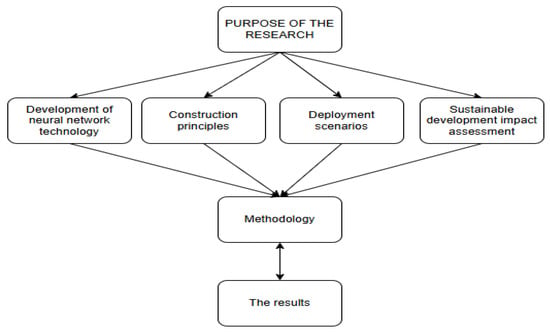
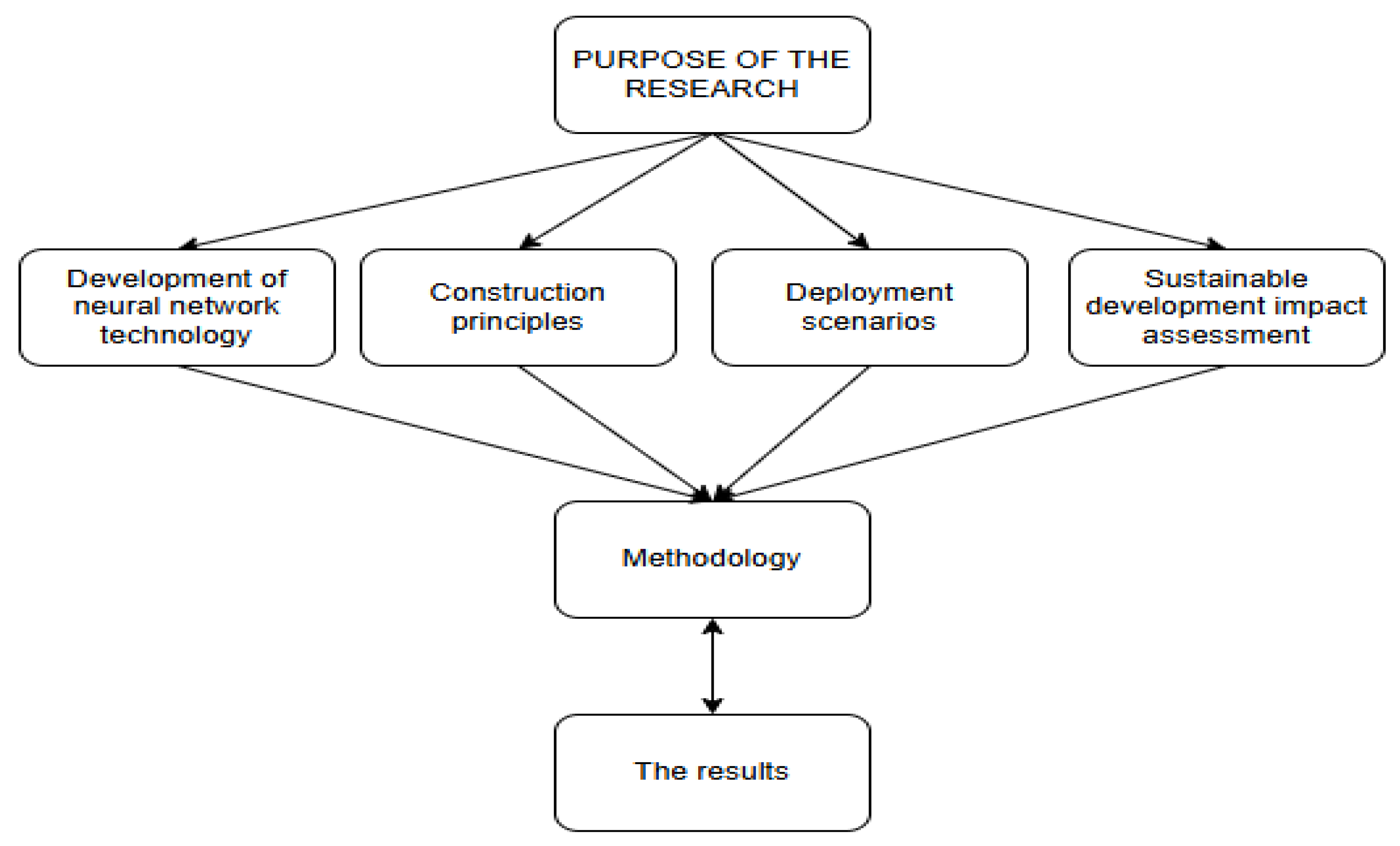
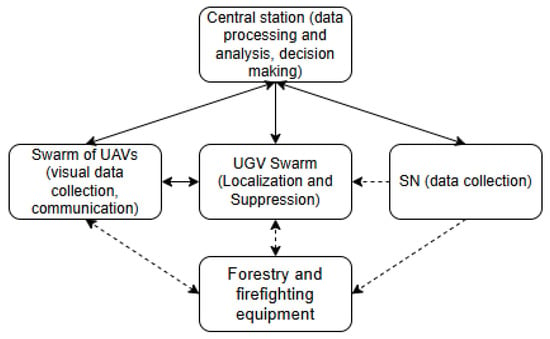
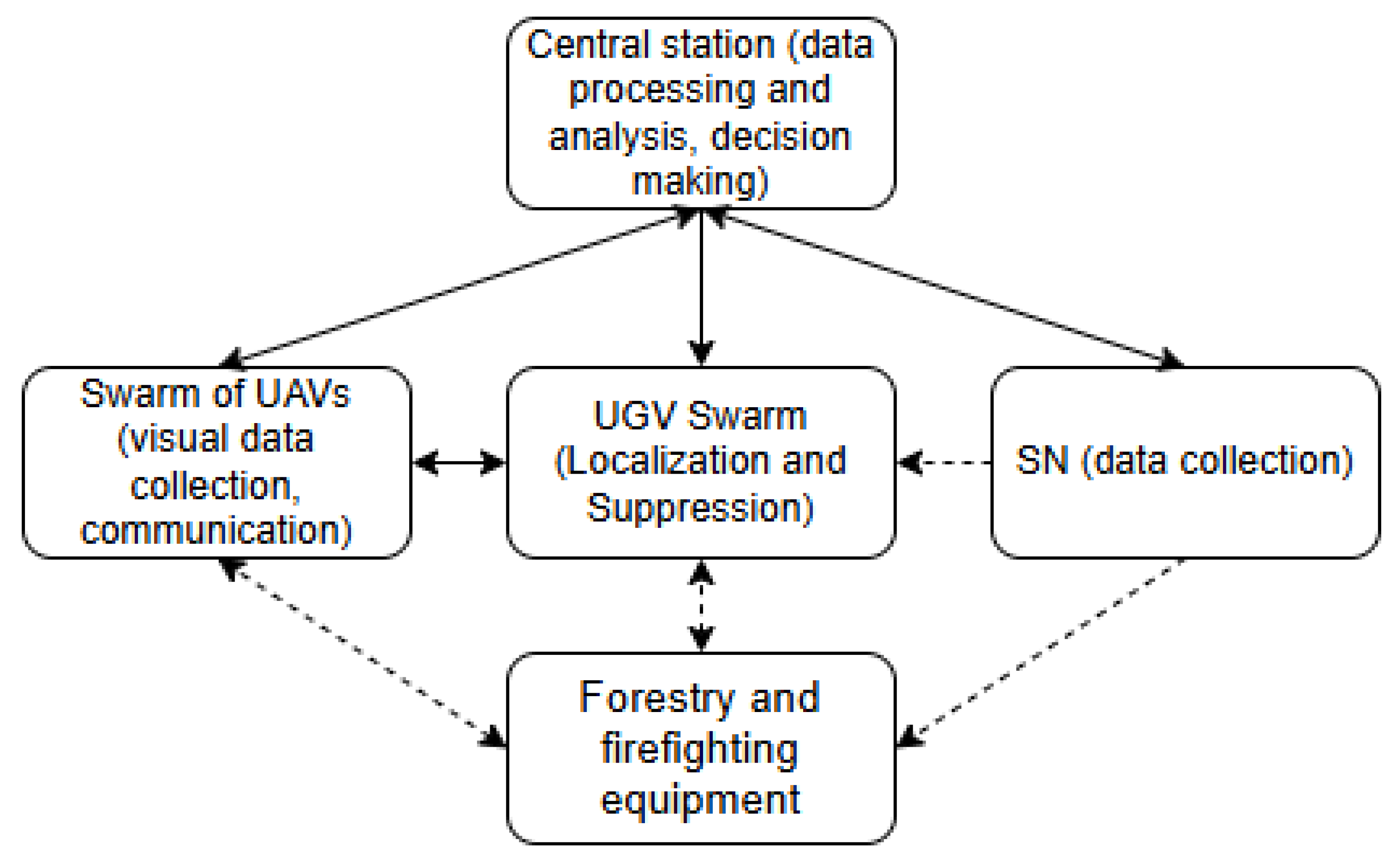
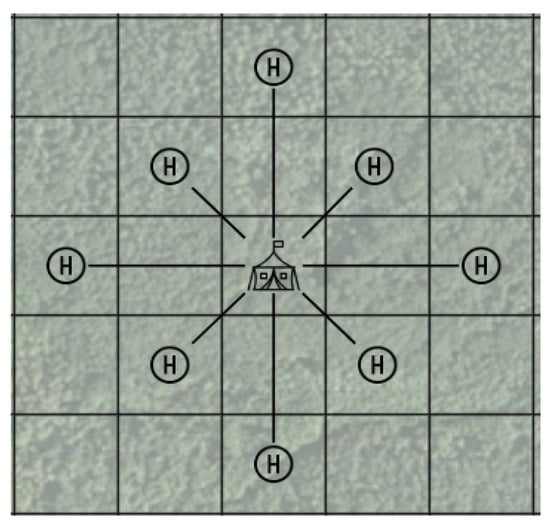
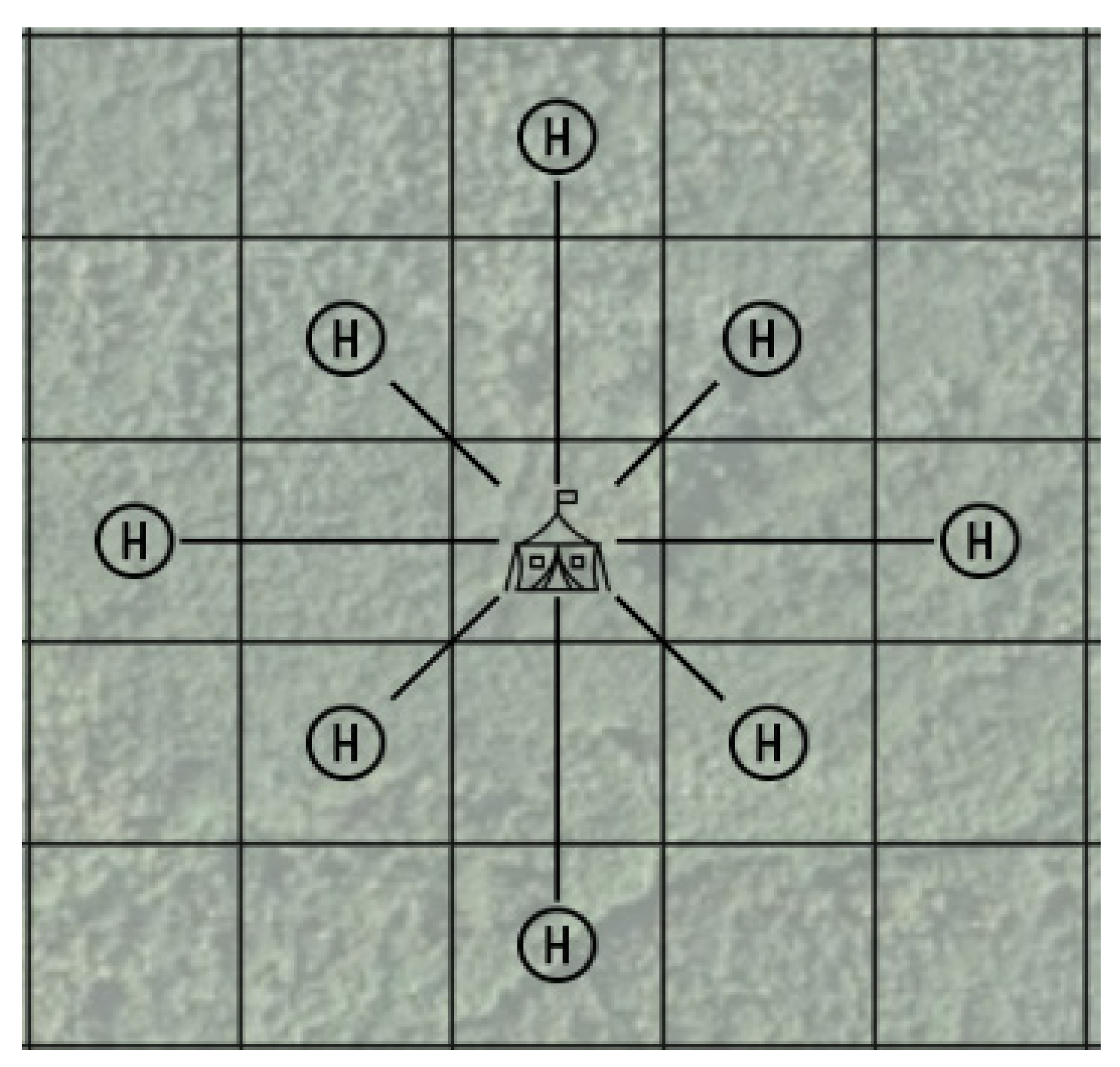
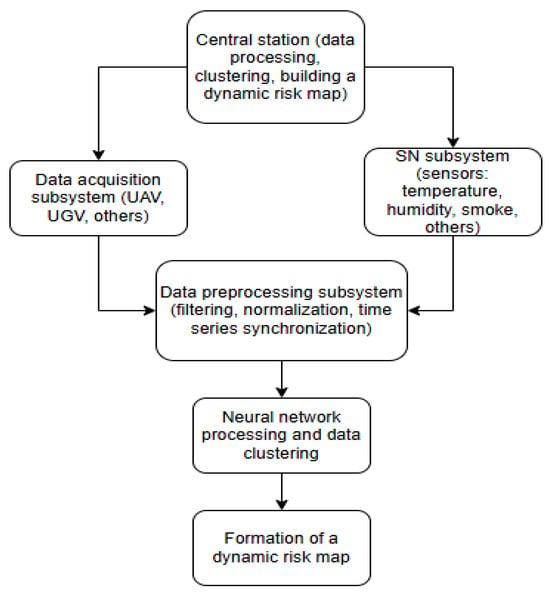
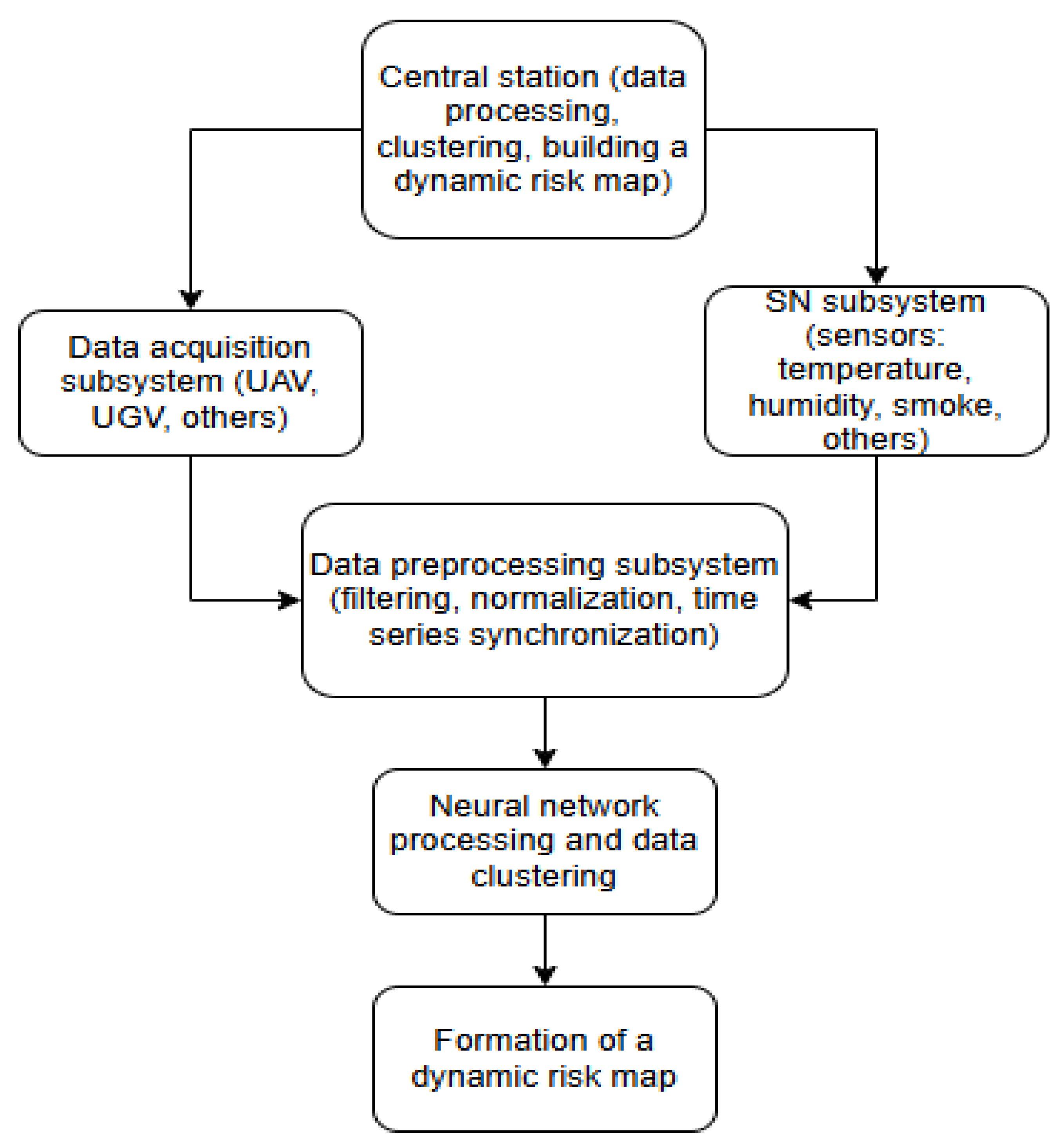
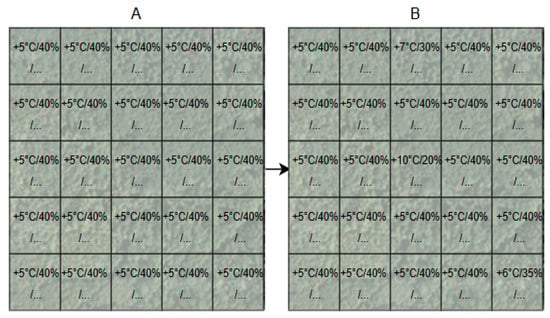
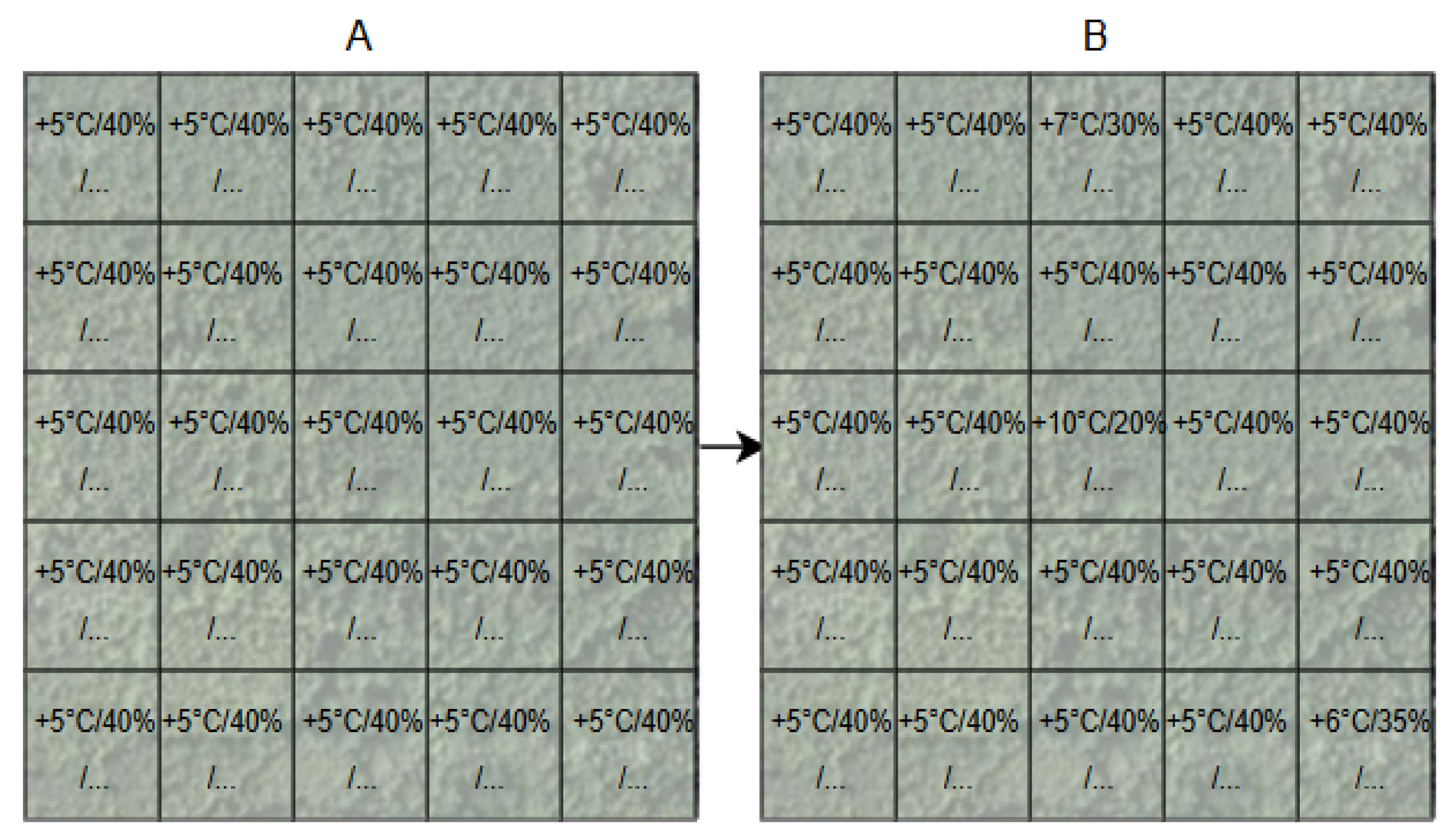
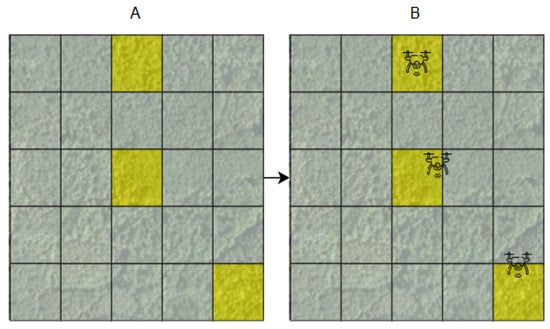
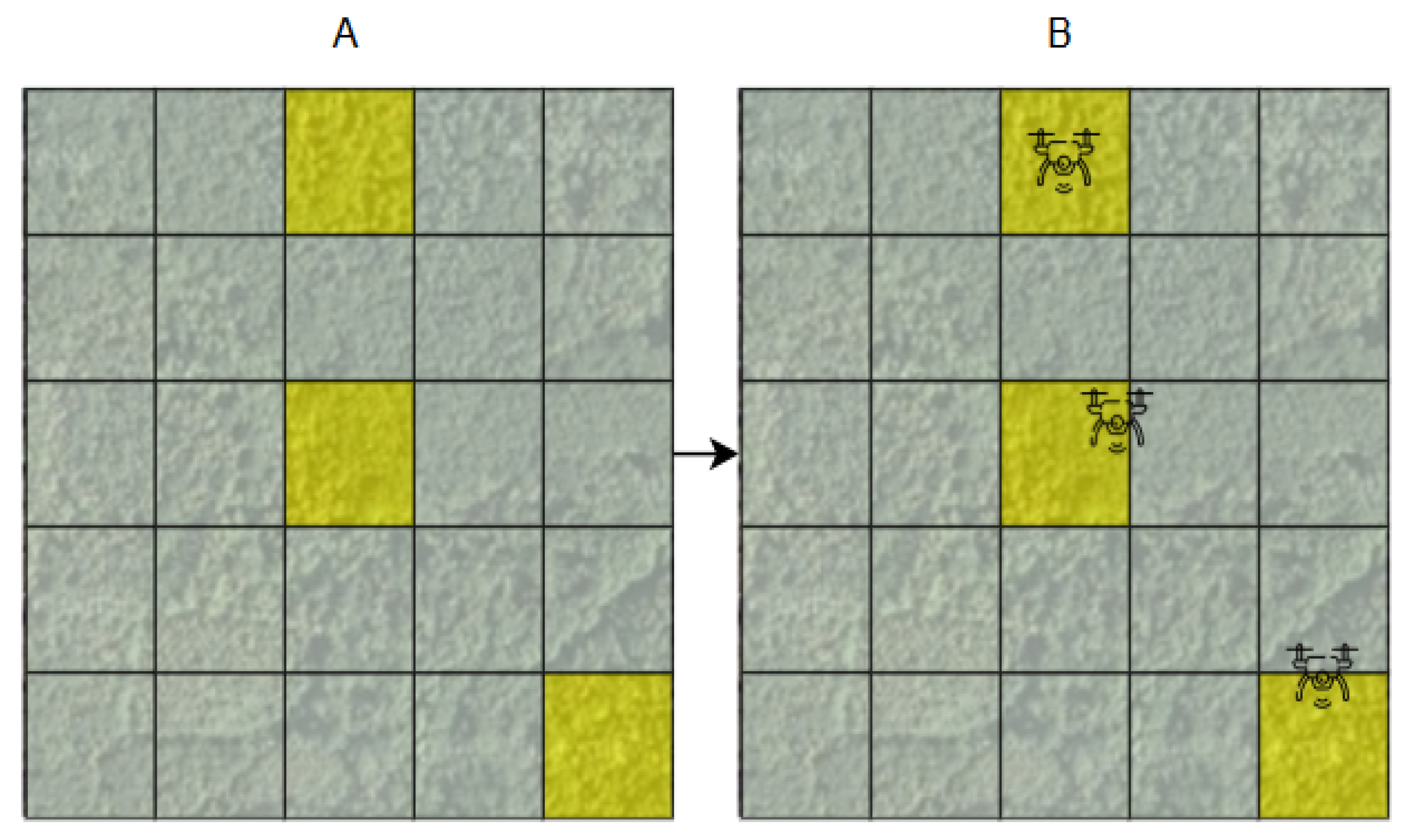
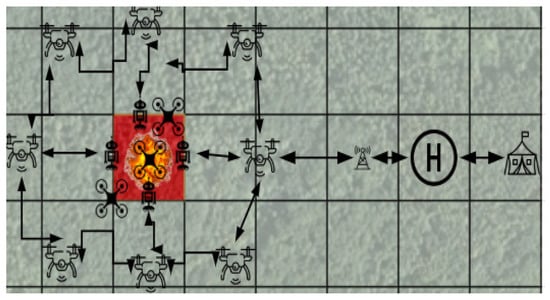
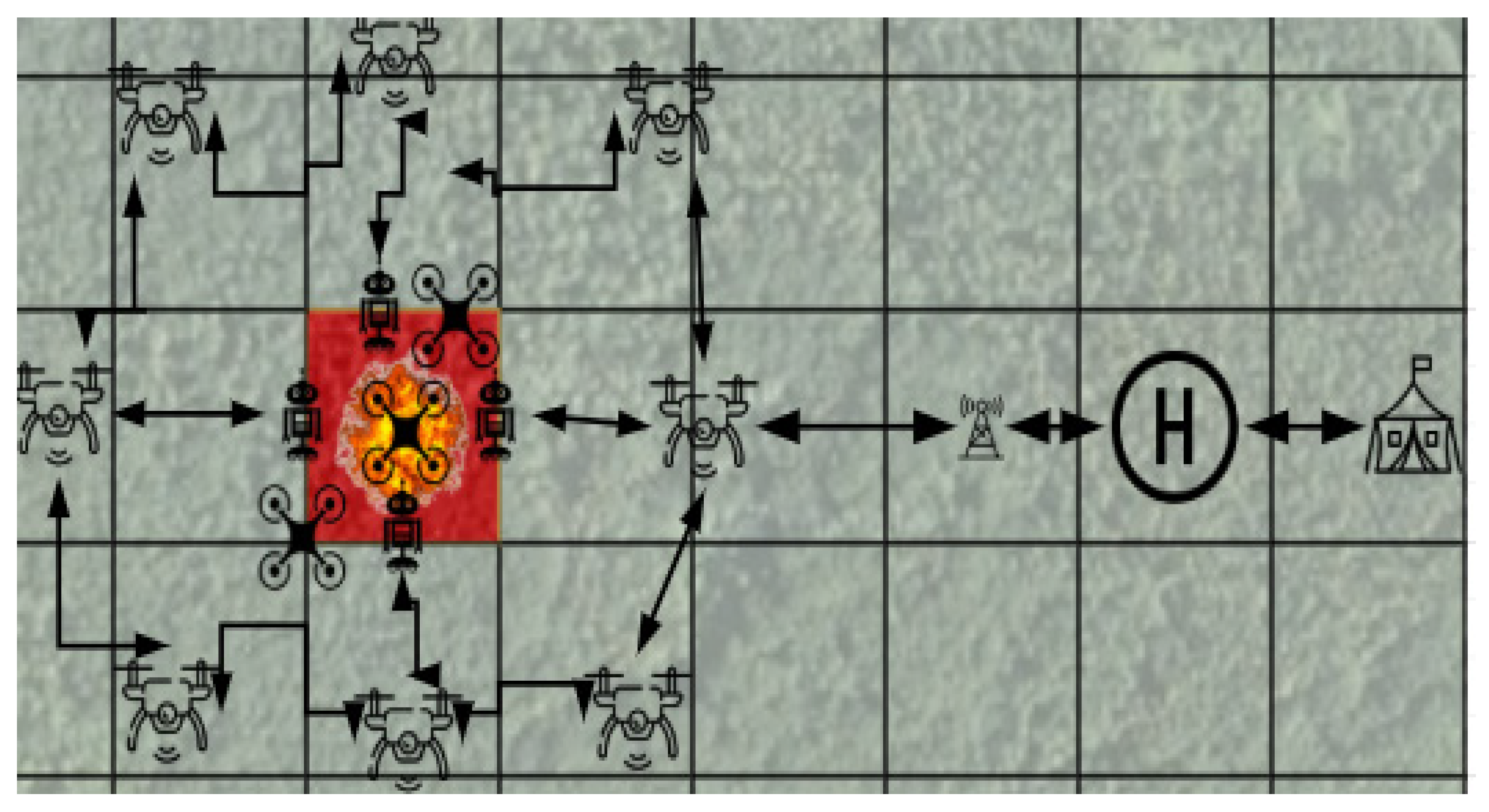

Disclaimer/Publisher’s Note: The statements, opinions and data contained in all publications are solely those of the individual author(s) and contributor(s) and not of MDPI and/or the editor(s). MDPI and/or the editor(s) disclaim responsibility for any injury to people or property resulting from any ideas, methods, instructions or products referred to in the content. |
© 2026 by the authors. Licensee MDPI, Basel, Switzerland. This article is an open access article distributed under the terms and conditions of the Creative Commons Attribution (CC BY) license.