Article

SiO2NPs/Paraloid B-72 Nanocomposite-Based Formulation for Sustainable Restoration and Mitigation of Fungal Deterioration of Sandstone Cultural Heritage


1
Department of Architectural Engineering, College of Engineering, University of Hail, Hail 81422, Saudi Arabia
2
Department of Civil Engineering, College of Engineering, University of Hail, Hail 81422, Saudi Arabia
3
Conservation Department of Aswan and Nubia Antiques, Ministry of Tourism and Antiquities, Aswan 81511, Egypt
4
Conservation Department, Faculty of Archaeology, Aswan University, Aswan 81528, Egypt
5
Faculty of Engineering, Civil Engineering Department, South Valley University, Qena 83523, Egypt
*
Author to whom correspondence should be addressed.
Sustainability 2026, 18(8), 3860; https://doi.org/10.3390/su18083860
Submission received: 14 March 2026 / Revised: 30 March 2026 / Accepted: 7 April 2026 / Published: 14 April 2026

Abstract

This study evaluates a SiO2 nanoparticle (SiO2NPs)/Paraloid B-72 nanocomposite as a restorative and antifungal treatment for deteriorated sandstone at the Ptolemaic Temple of Isis, located within a densely populated residential area. The temple stones exhibit structural damage, soiling, and severe microbiological deterioration. Fungal isolates from the sandstone were cultured on PDA medium and identified by ITS region DNA sequencing as Alternaria alternata, Penicillium chrysogenum, and Aspergillus niger. The SiO2NPs and their Paraloid B-72 nanocomposites were synthesized and characterized using transmission electron microscopy (TEM) and X-ray diffraction (XRD). Stone samples, examined before and after treatment via SEM-EDX, TEM, and XRD, were used to assess both conservation performance and compatibility. Laboratory antifungal tests showed that SiO2NPs at 300 ppm exhibited the greatest inhibition of mycelial growth, reaching 91.59% for P. chrysogenum, 90.77% for A. niger, and 85.2% for A. alternata. Mechanical testing demonstrated that treatment with the SiO2NPs/Paraloid B-72 nanocomposite enhanced stone strength, increasing compressive strength from 26.5 MPa to 27.4 MPa. SEM images confirmed excellent, homogeneous dispersion of the nanocomposite on stone grains, forming a coherent coating without pore occlusion. Overall, the SiO2NPs/Paraloid B-72 formulation improved sandstone surface properties while substantially improving short-term mechanical performance and antifungal efficacy, indicating promise for enhancing restoration procedures when combined with established conservation protocols for sandstone architectural heritage.

1. Introduction

Today’s conservation techniques provide powerful tools to protect and preserve historical and cultural heritage. Advanced methods such as nanomaterials and nondestructive testing allow conservators to treat heritage materials with outstanding precision while minimizing damage to the original structure. The use of nanoparticles in cultural heritage conservation has recently advanced due to their unique chemical and physical properties [1]. Nanoparticles effectively enhance damaged archeological stones’ mechanical and physical characteristics while preserving material heritage [2]. According to studies [3,4], several investigations on the addition of SiO2 nanoparticles to cement-based mixes have determined that these nanoparticles increase the compressive strength of mortars. However, in some cases, this increases peaks at a certain nanoparticle concentration and then decreases with higher concentrations. Conversely, porosity exhibits an opposite trend, and some studies have shown that permeability, at least up to a nanoparticle content of 3. The addition of nanoparticles results in variations such as a reduction in the carbonation rate and changes in microstructural properties influenced by a pozzolanic reaction, as observed in thermogravimetric measurements [5]. The use of nanoparticles in conserving stone heritage has been demonstrated in various studies [6,7,8,9,10,11]. Later applications of nanoparticles include their use for cleaning and strengthening. These particles are water-repellent and antimicrobial, significantly mitigating temple stones’ biological degradation. The noticeable microbiological damage underscores the necessity of intervention to prevent further deterioration.
The Temple of Isis, dating back to the Ptolemaic era, has suffered cracks, soot, and severe biological damage. Exposed to environmental and human pressures, its preservation is crucial to protect its historical and cultural value for future generations. The temple is located on the eastern bank of the Aswan Governorate. The temple was discovered in 1871, and parts of its structure date back to Ptolemy III and Ptolemy IV. Additionally, it is decorated with magnificent mural paintings. The temple features a simple architectural design and is constructed from sandstone. It consists of a rectangular hall measuring 12.5 × 7.5 × 6.45 m. The temple’s main door is in the middle of the western wall, with another door on the southern side of the same wall. As the primary building material, the sandstone faces several environmental hazards that have caused significant deterioration, necessitating urgent consolidation.

1.1. Building Materials and Deterioration

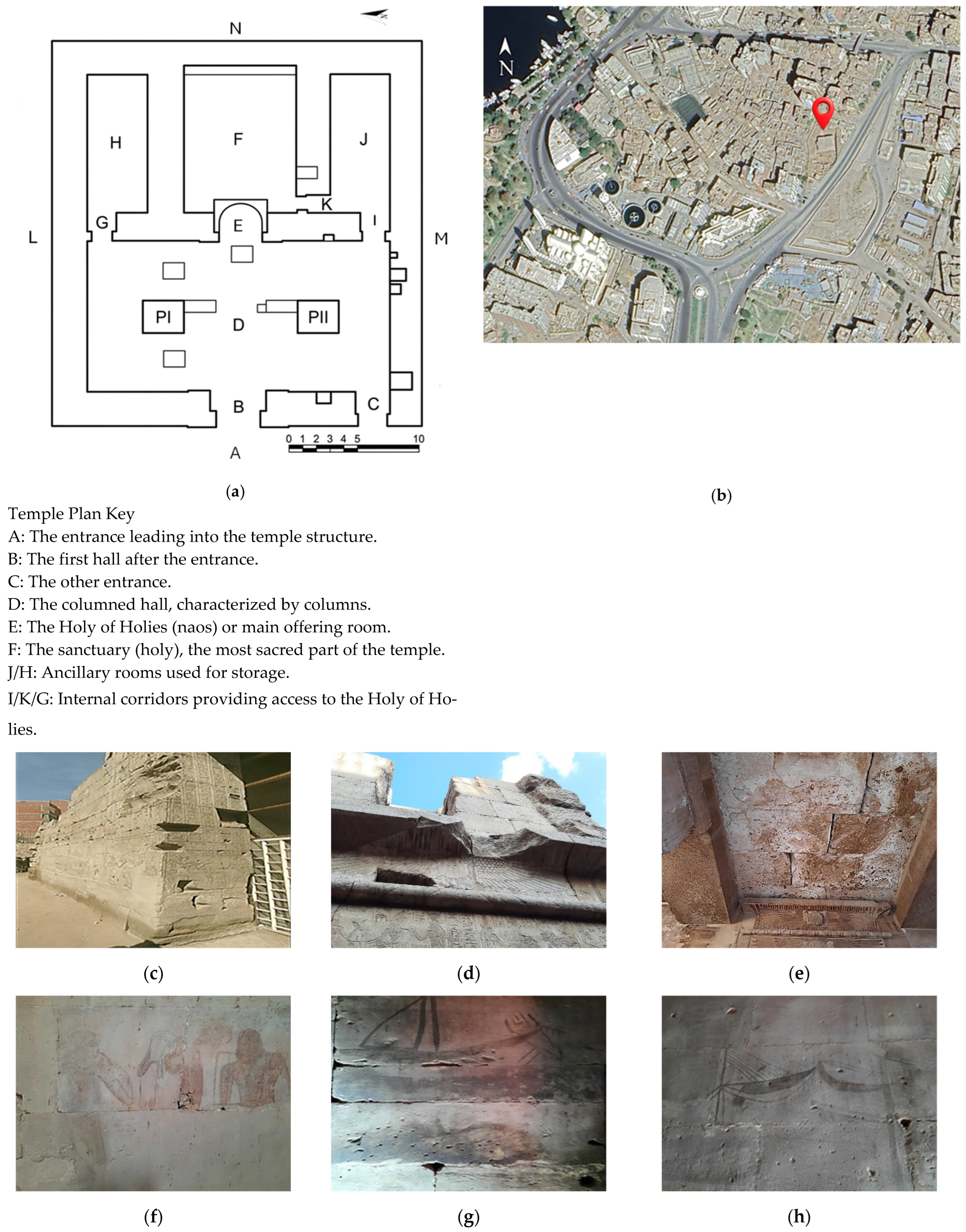
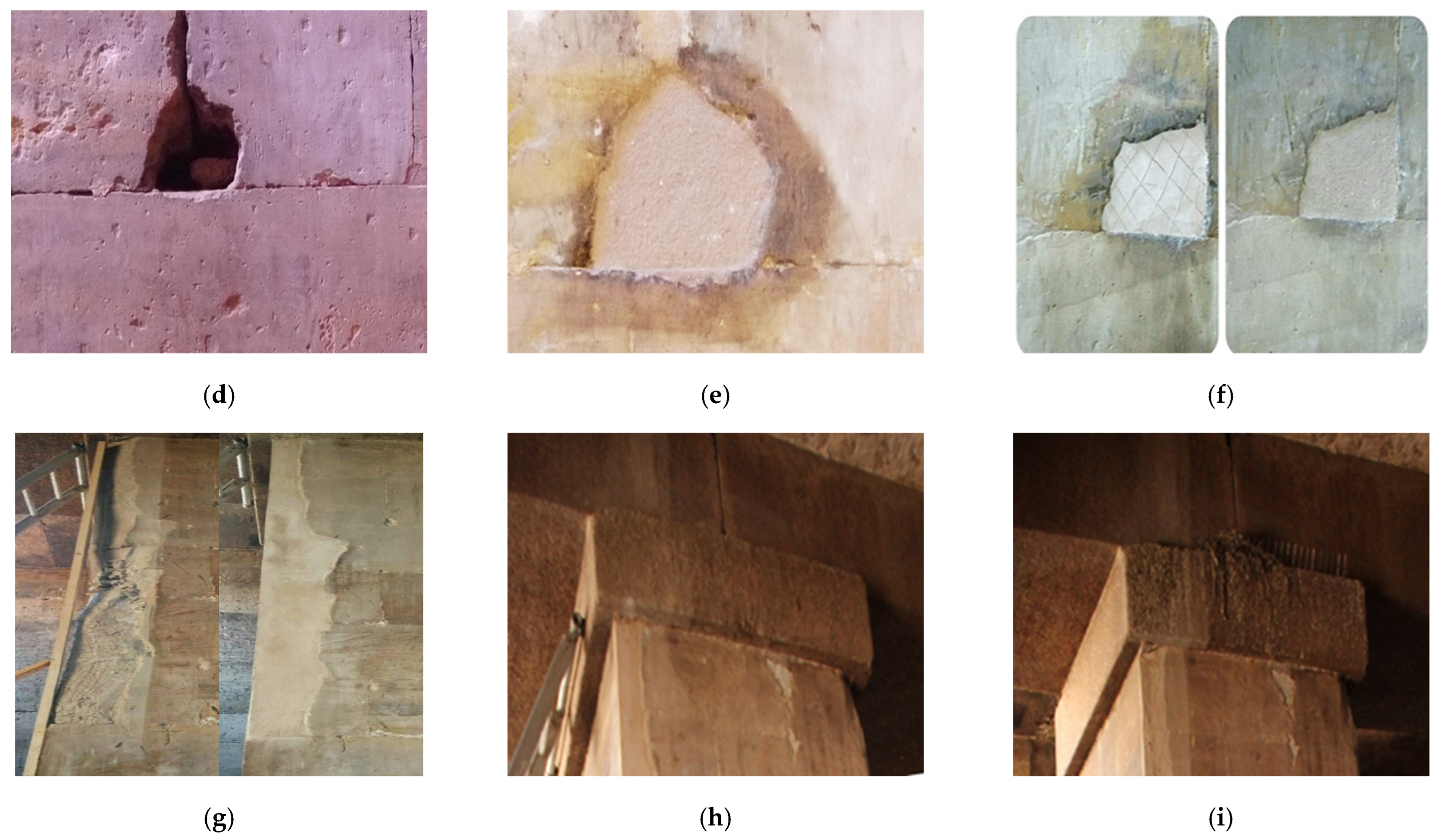
The temple has two entrances on the western facade: the main entrance is in the center of the facade, and the other is to the left of the main entrance. Depictions of the king offering sacrifices to the goddess (Satet/Anqit/Khnum), associated with the Aswan Trinity, are visible on the back wall of the main hall. Several Coptic inscriptions and a rare architectural drawing illustrating the original layout of the temple were discovered during the restoration efforts. Moreover, the temple site preserves remnants of Roman and Islamic brick dwellings, indicating the continuous reuse of the location over the centuries. The temple was constructed using sandstone, while mud bricks were used for the surrounding wall (Figure 1a–i).

1.2. Symptoms of Deterioration

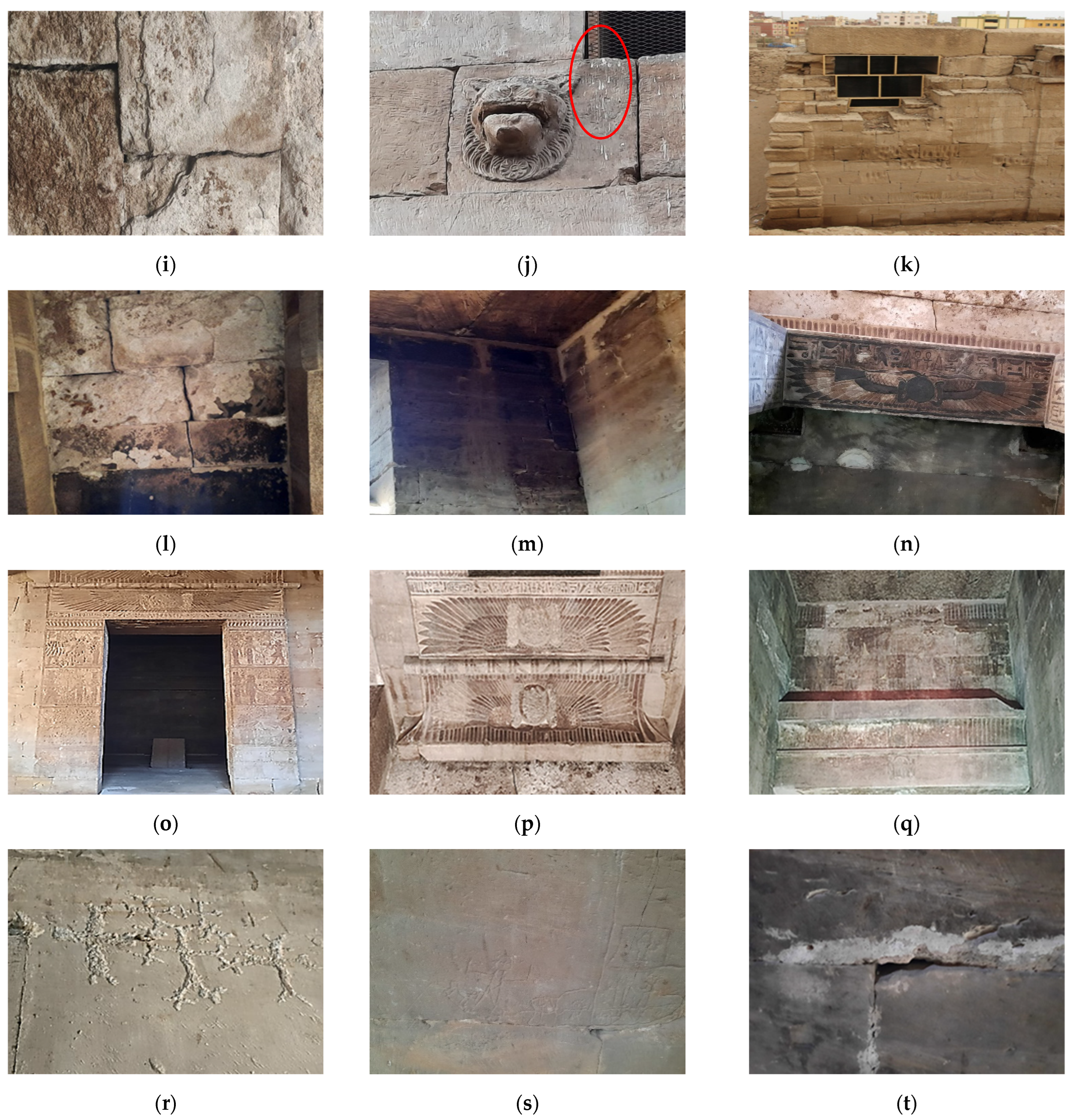
When water from various sources around the temple is present, it rises in the walls due to capillary action, reaching different visibly apparent levels. This phenomenon depends on the porosity and permeability of the building materials and the amount of water accumulated around the structure. This process displaces the binding materials of the stone block grains, gradually weakening them over time. Water in the soil causes fluctuations in its level among the various soil layers, leading to shrinkage or expansion of soil components and minerals. Additionally, the presence of soluble salts is recognized as a significant factor in the deterioration of stone structures. These physical and mechanical processes result in an imbalance between the building’s original and supporting soil mass. Moreover, high temperatures during the summer in Aswan exacerbate the deterioration of the temple. The external surfaces absorb and store significant amounts of thermal energy during daylight hours, leading to a noticeable rise in wall temperatures. The thermal fluctuations between day and night induce expansion and contraction in the building materials, further contributing to structural stress. Furthermore, the presence of bats causes damage to the temple’s walls. Bats create habitats within the temple, and their excrement damages the walls, inscriptions, and writings, leaving behind dark brown stains that are difficult to remove during restoration. Air pollution compounds the deterioration of ancient temples by accumulating pollutants on the stone’s surface. Additionally, the temple suffers from severe microbiological deterioration. To address this issue, fungi responsible for the biological degradation of the temple stones were isolated and morphologically characterized (Figure 1k–t).

2. Materials and Methods

Sample collection: A set of damaged stone samples was collected for analysis. Isolation and morphological characterization of deteriorative fungi were conducted using a potato dextrose agar (PDA) medium. The isolated fungi were purified and preserved on PDA at 25 °C. Fungal identifications were initially performed by investigating colony and conidia morphology, supplemented by microscopic analysis of mycelium. Molecular characterization of deteriorative fungi. The isolated fungus was characterized by amplifying and sequencing the internal transcribed spacer (ITS) region. Total genomic DNA was extracted from freshly grown 7-day-old cultures using the Dellaporta protocol [13]. The PCR was performed on selected isolates using ITS1 (forward) and ITS4 (reverse) primers, as follows: ITS1: (5-TCCGTAGGTGAACCTGCGG-3) and ITS4: (5-TCCTCCGCTTATTGATATGC-3) [14]. These symbols indicate the method of preparing the starter used and known in the diagnosis and identification of fungi, following the nitrogenous base sequence. Primers ITS1, ITS2, and ITS4 detect the intraspecies variability in the internal transcribed spacers and 5.8S rRNA gene region in clinical isolates of fungi.
The PCR reaction was carried out in a 25 µL reaction volume with 10 µL of PCR Master Mix (amaR OnePCR, GeneDirex, Inc. Taoyuan City, Taiwan).), 11 µL of ddH2O, 1.5 µL of each primer, and 1 µL of template DNA. The PCR products were cleaned and equenced in both directions using the Macrogen, Inc. Sequencing Service in Seoul, Republic of Korea. The PCR amplification conditions were as outlined by Alhudaib [15], using a 2720 Thermal Cycler (Applied Biosystems, Foster City, CA, USA). The BLASTn algorithm was employed with the NCBI GenBank database to assign taxonomy, comparing the queries to type specimens. Materials SiO2 and B72 were obtained from Nano Jet Company, El-Moqattam, Cairo, Egypt [16].

2.1. Characterization of SiO2NPs

Morphological characterization: The size and morphology of both SiO2NPs were microscopically examined with a Transmission Electron Microscope (TEM) on a JEOL JEM-2100 (JEOL Ltd., Tokyo, Japan) high-resolution transmission electron microscope at an accelerating voltage of 200 kV. A drop from a very dilute sample solution was deposited on an amorphous carbon-coated copper grid and left to evaporate at room temperature.
X-ray diffraction (XRD) analysis of SiO2NPs: The X-ray diffraction analysis was utilized to identify the prepared SiO2 nanoparticles and sandstone minerals. Specimens were analyzed at the Central Lab, SVU, Egypt. Powder X-ray diffraction was used for this investigation. The X-ray diffraction pattern was obtained using an XPERT-PRO powder diffractometer system (Malvern Panalytical, Malvern, UK), with a 2θ range of 10° to 80° and a wavelength (K) of 1.546 Å.
Antifungal activity of SiO2NPs against Alternaria alternata, Penicillium chrysogenum, and Aspergillus niger: The poisoned media technique was used to evaluate the antifungal activity of SiO2NPs against A. alternata, P. chrysogenum, and A. niger. SiO2NPs were investigated at concentrations of 125, 250, and 500 ppm. The respective concentrations of SiO2NPs were added to the PDA medium after cooling to 45 °C. The medium was dispensed in Petri dishes (9 cm) and allowed to solidify. Mycelial plugs (5 mm) of the fungal pathogen (7-day-old cultures) were placed in the middle of the plate. Suitable control was maintained by growing the cultures on PDA without SiO2NPs. Three replicates were used for each treatment. All plates were incubated at 25 ± 2 °C for about 7 days. The radial growth of the fungi was measured until it covered the control plates completely. Inhibition of the pathogen compared to the control was calculated by the following equation: % inhibition = [(control diameter − treated diameter)/control diameter] × 100.

2.2. Preparation of SiO2NPs and Paraloid B72 Nanocomposite

Thirty grams of SiO2NPs powder was dispersed in 1000 mL of ethanol, using the chemicals without additional purification at a concentration of 3 wt.%. The nanoparticles were dispersed in water in an ultrasonic bath to prevent agglomeration and ensure proper particle dispersion in the mortar. The paste was mixed by hand for three minutes and then placed in a standard cast measuring 4 cm x 4 cm x 16 cm. The water/solid ratio increased with the quantity of nanoparticles. In previous research, the application conditions of nanomaterials to strengthen samples could be tested after four months in the laboratory at a temperature of 25 °C and a relative humidity of 35% [17]. However, in this study, the test was conducted after 3 weeks. The environments were controlled using a climate chamber set at 25 °C and a relative humidity of 75%. The SiO2NPs were then combined with Paraloid B72 in a 1:1 ratio. An ultrasonic mixer and magnetic stirrer were employed for an additional 30 min at room temperature to achieve a homogeneous mixture.
In this study, a single SiO2NPs loading (3 wt% in ethanol, combined 1:1 with Paraloid B-72) was selected based on previous optimization studies and preliminary laboratory trials, which indicated good workability and penetration into the sandstone matrix. Although no formal rheological measurements were performed, the viscosity of the nanocomposite solution was qualitatively evaluated during mixing and application and was found to permit uniform coating and capillary uptake without observable sedimentation or clogging.

2.3. Application of the SiO2NPs/Paraloid B72 Nanocomposite

The SiO2NPs/Paraloid B72 nanocomposite was applied to the stone samples, which were partially immersed in the products for 3 h. The application duration was determined by assessing the surface penetration of the consolidant into the samples. It was established that 3 h was the requisite duration for the consolidants to reach the surface of the samples (3 cm). The samples were evaluated before and immediately after the application of the nanocomposite. Thorough drying was allowed for three weeks following the application. During handling and preservation, the conditions were controlled using a climatic chamber set at 25 °C and 75% relative humidity. The use of nonmetric materials in the restoration process of archeological buildings made of sandstone, such as the Temple of Isis, has a strengthening impact due to their superior ability to penetrate the monument’s interior. This ability allows them to repair cracks and weak internal structures, which traditional restoration materials cannot reach.
Silicon dioxide nanoparticles (SiO2) are used as consolidating agents. Researchers have observed that SiO2NPs dispersions exhibit limited penetration depth into the stone matrix (around 2 mm) and tend to create a xerogel coating on the stone’s surface. They suggested that pre-treating the stone surface with ethanol could reduce surface tension, thereby improving penetration depth and enhancing consolidation. Furthermore, Okubo et al. [18] demonstrated the impact of solvents, humidity, and temperature on the colloidal crystals of silica spheres (ranging from 103 to 110 nm in diameter) deposited on the cover glass. They determined that temperature and relative humidity significantly influence the macroscopic drying patterns of colloidal SiO2NPs [19]. Consolidation efficiency depends on the SiO2NPs suspension in water and ethyl silicate as an inorganic solvent applied to some types of rock [20].

2.4. Scanning Electron Microscopy (SEM) of the Sandstone

The surface morphology of the sandstone samples was examined using scanning electron microscopy (SEM) (JEOL/JSM-5500LV) (JEOL Ltd., Tokyo, Japan). The accelerating voltage at 7 kV was analyzed at the SEI, with samples analyzed at the South Valley University Central Laboratory in Qena, Egypt. X-ray fluorescence (XRF) analysis of the sandstone was employed to ascertain the minerals present in it. Samples were examined in the central laboratory, SVU, Egypt.

3. Results

3.1. Morphological Characterization of Fungi

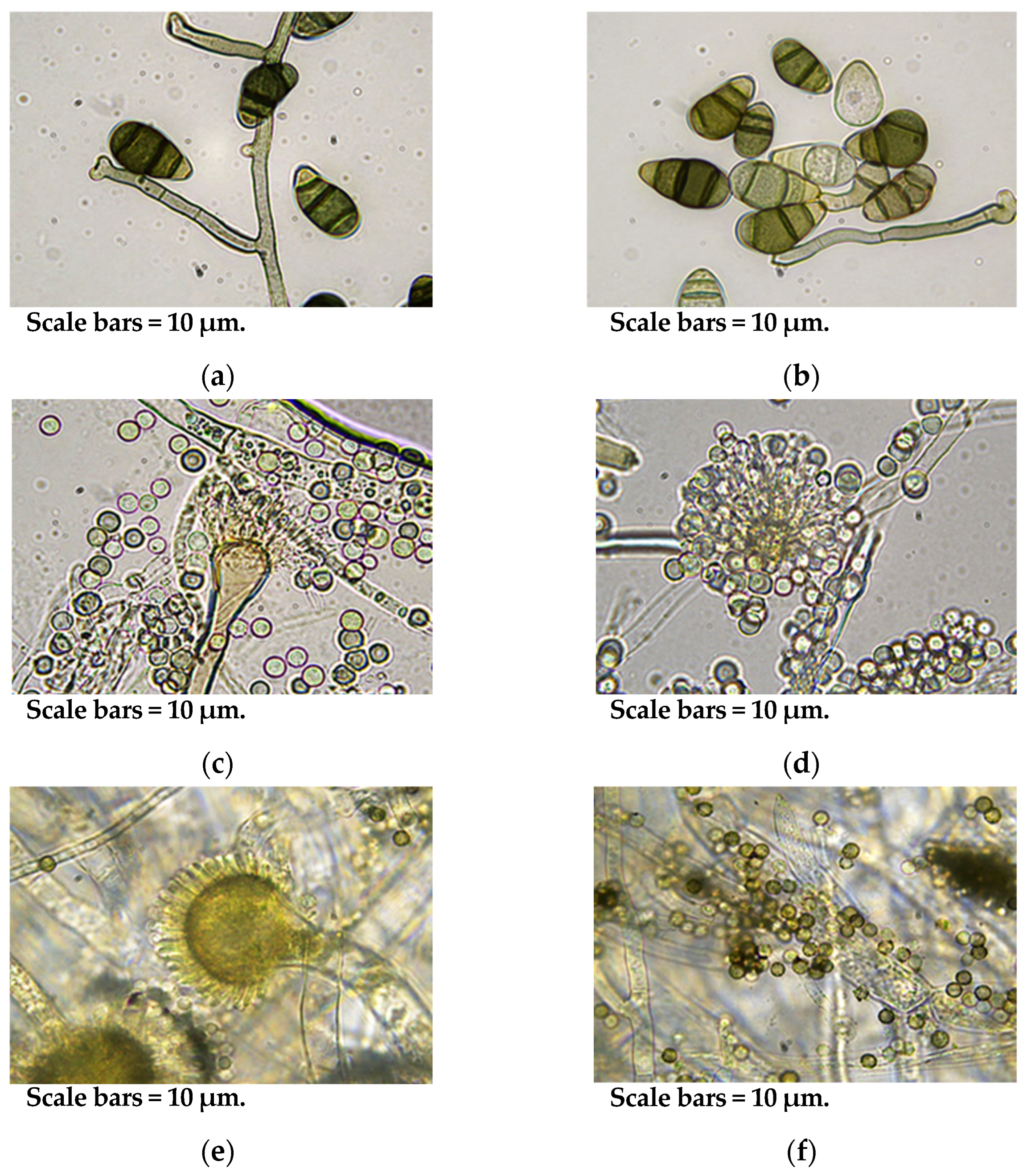
After several purification processes, all isolates were initially identified using phenotypic methods. Microscopic examinations revealed that the Alternaria-like isolates produced conidia in an acropetal and catenate manner on conidiophores (Figure 2a,b). The conidia of these isolates were oval or ellipsoidal with 3–5 transverse septa and 0–3 longitudinal septa (Figure 2b). These fungi were tentatively identified as Alternaria sp. based on these characteristics and the description of Alternaria [21]. Furthermore, microscopic examination of Penicillium-like isolates showed conidia in long, dry chains or columns, with globose or sometimes ellipsoidal shapes, produced on hyaline, smooth conidiophores (Figure 2c,d). Based on these features and the descriptions provided by previous researchers [22], these fungi were identified as Penicillium sp. Additionally, microscopic observation of Aspergillus-like isolates revealed smooth, colored conidiophores and conidia (Figure 2e,f). The conidial heads exhibited a radial arrangement, dividing into columns. The phialides generated conidia with a coarse texture and a dark brown hue. These observed criteria are consistent with those previously described for Aspergillus sp. [23].

3.2. Molecular Characterization of Fungi

The PCR amplification and sequencing results confirmed the findings from phenotypic identification. The closest match for the ITS sequence of ALT-EG-2024 exhibited a 100% similarity to Alternaria alternata (GenBank Accessions: MN495781, MZ209279, OQ719881, and ON110299). Similarly, the closest match for the ITS sequence of PC-EG-2024 showed 100% similarity to Penicillium chrysogenum (GenBank Accessions: MK267450, MH865997, and OR506340). Finally, the closest match for the ITS sequence of AN-EG-2024 demonstrated 100% similarity to Aspergillus niger (GenBank Accession: MH865152). The ITS rDNA sequences of these three isolates were deposited in the NCBI GenBank database under the following GenBank accession numbers: PQ803140, PQ803141, and PQ803142.

3.3. Characterization of SiO2NPs

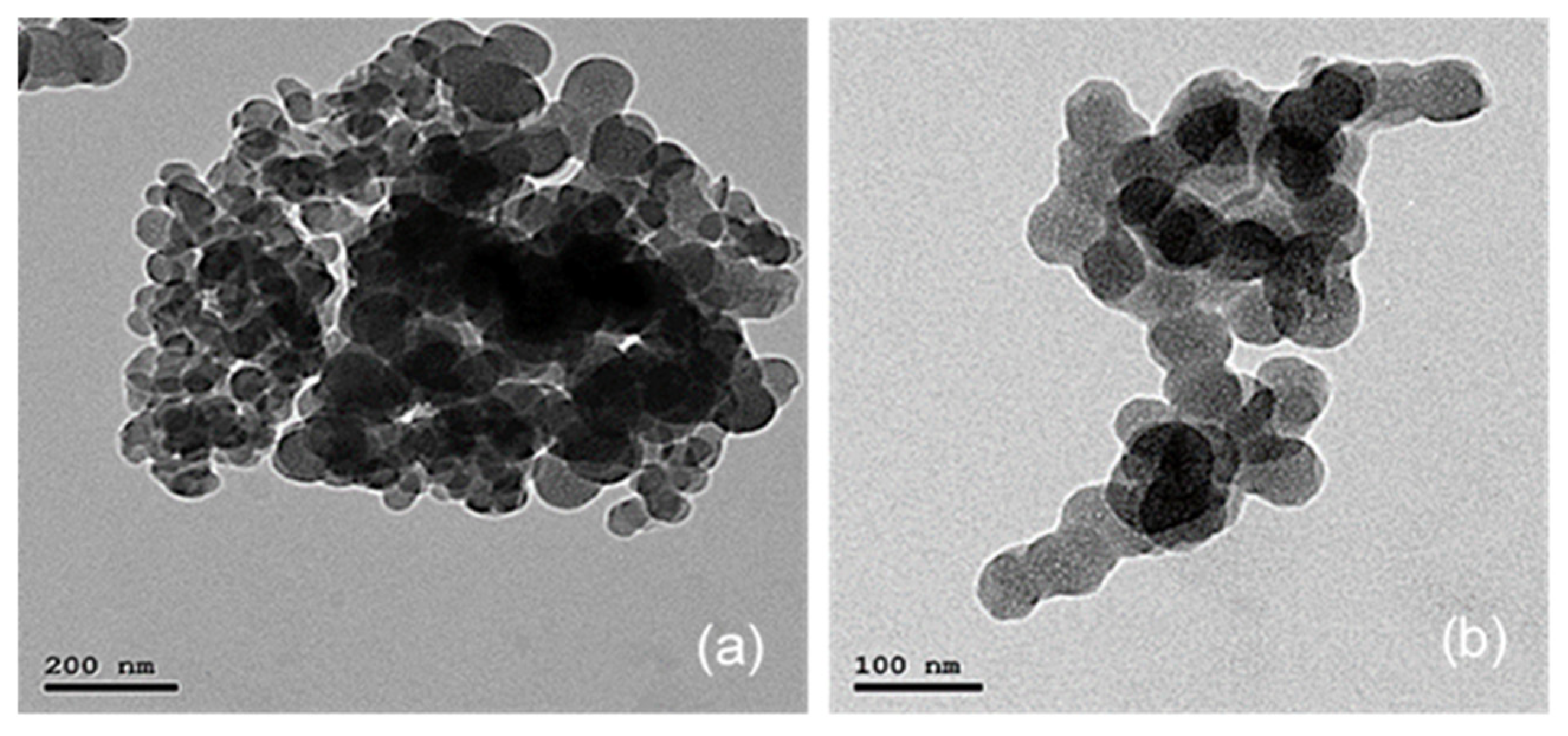
Figure 3 shows TEM images (Figure 3a,b) of the SiO2 nanoparticles from this investigation. Figure 3b shows that the nanometer-scale SiO2 particles with sizes of about 52–75 nm have amorphous morphology, with no crystallinity seen, which is consistent with the X-ray diffraction data.

3.4. X-Ray Diffraction of SiO2 Nanoparticles

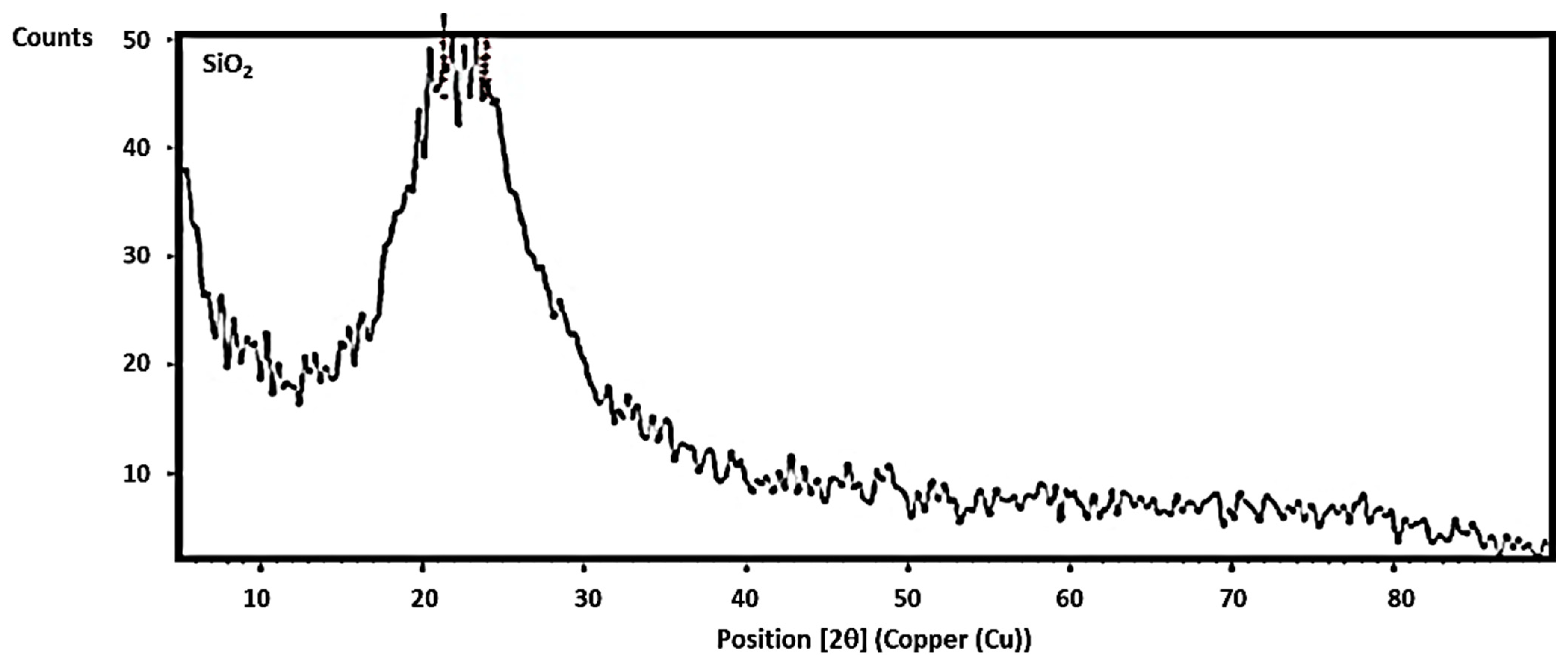
The diffraction pattern (Figure 4) showed that nanoparticles agglomerate, making them amorphous. All samples were found to contain SiO2, since they coincided with the specified peak and had a diffraction angle of approximately 25°. This has previously been reported for SiO2 nanoparticles and sometimes in the angle range (20 < 30) [24]. Furthermore, the absence of a greater intensity of the diffraction peak in the case of commercial nanoparticles indicates that they are all nanoparticles of nanometer size.

3.5. Antifungal Activity of SiO2NPs Against Alternaria alternata, Penicillium chrysogenum, and Aspergillus niger

As displayed in Table 1, the SiO2NPs at the three tested concentrations had an inhibitory effect on the growth of the tested fungi. Fungal species varied in their response to the three concentrations of SiO2NPs. The highest concentration, 300 ppm, exhibited the highest inhibitory effect against mycelial growth of Penicillium chrysogenum, Aspergillus niger, and Alternaria alternata, with values reaching 91.59%, 90.77%, and 85.2%, respectively. While the lowest concentration, 100 ppm, revealed an inhibitory effect against mycelial growth, with efficacy reached 72.45%, 74.88%, and 77.27% for Penicillium chrysogenum, Alternaria alternata, and Aspergillus niger, respectively. The control sample has an inhibition rate of 0.0% because it does not contain any SiO2 nanoparticles; therefore, it has no antifungal effect, and its number is 0.

3.6. Morphological Investigation Before Nanocomposite Treatment

SEM is used in the morphological study of the archeological stone under investigation. This analysis tells the extent of surface deterioration and is used to identify signs of damage, including cracks, exfoliation, and material degradation. Furthermore, it demonstrates the extent of saline and biological weathering of the archeological surfaces. SEM reveals salt crystals (such as calcite) that may fill pores, producing significant mechanical stress, in addition to monitoring the effects of biological weathering on the stone. It also provides a microstructural characterization in terms of the type of stone and its porosity, which helps in assessing deterioration. Finally, it assists in evaluating restoration treatments: it is used in restoration studies to assess the penetration of proposed strengthening materials and to study the cohesion of the stone after the application of these materials.
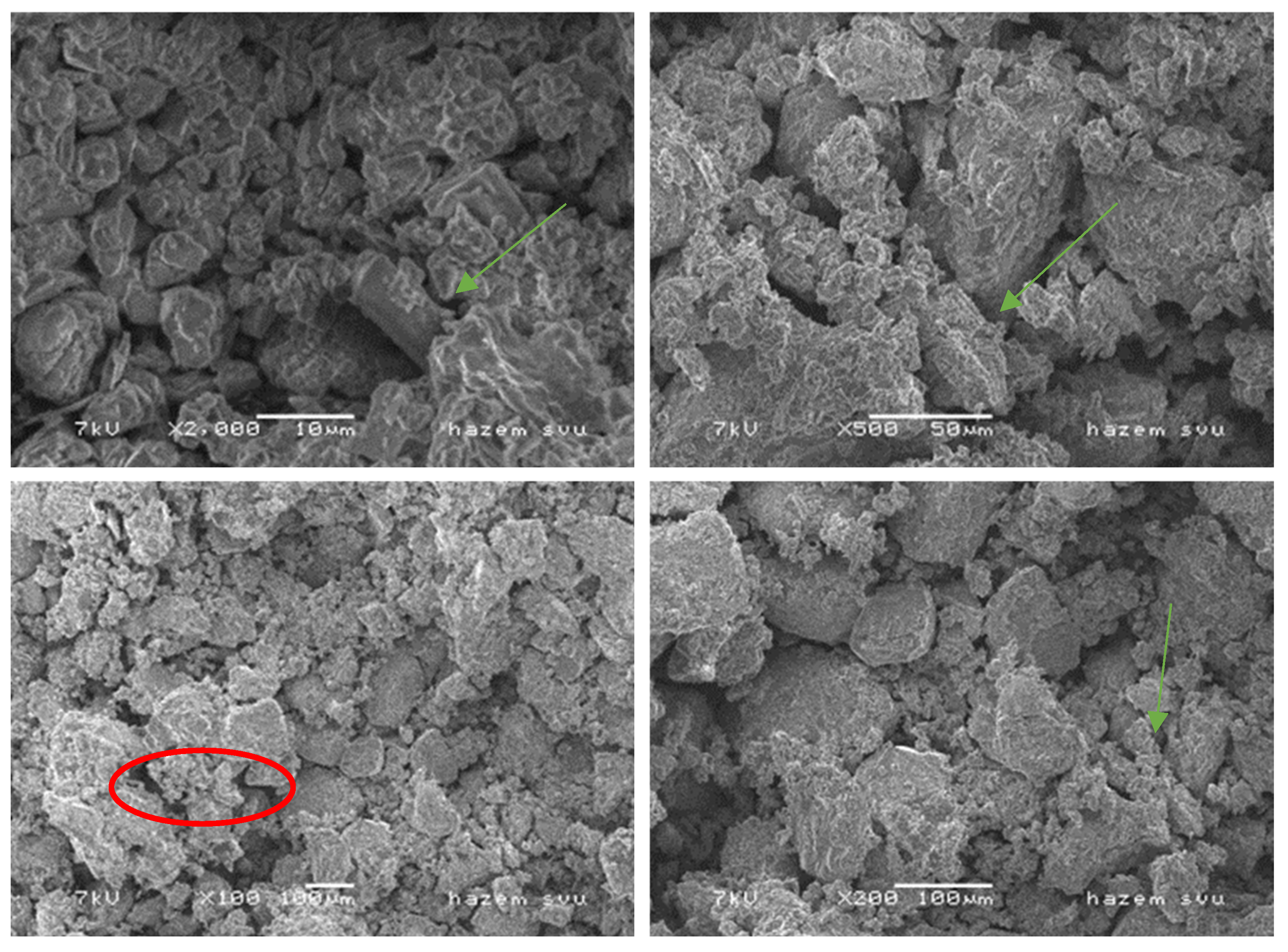
The SEM photomicrograph in Figure 5 shows the presence of quartz, sulfate, and halite. SEM at various magnifications revealed the texture of the natural sandstone samples used in this study, with evidence of the disintegration of mineral grains and salts.

3.7. XRF Analysis

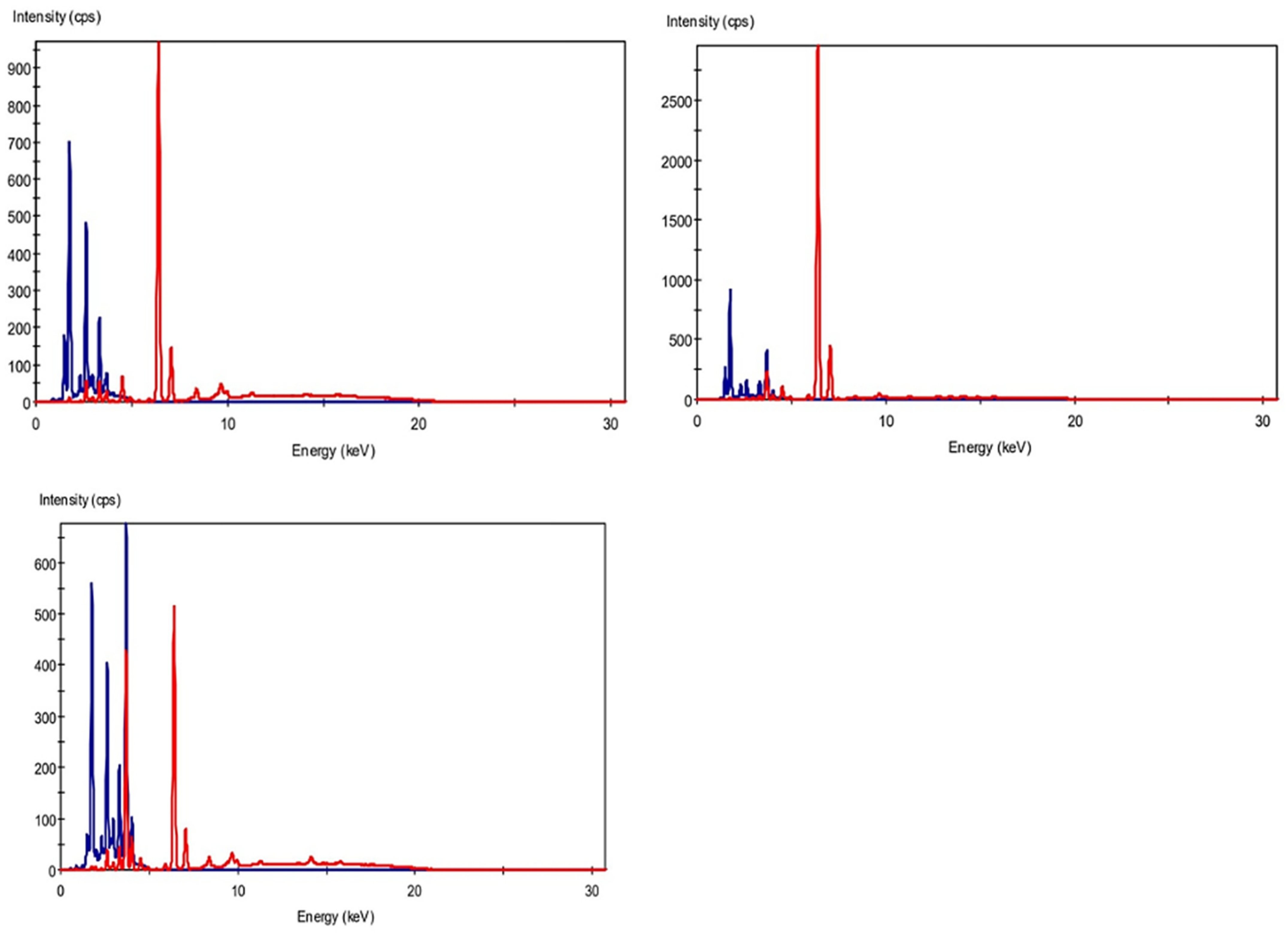
This technique enables the determination of the elemental composition of the stone, identifying the concentrations of aluminum (Al), chloride (Cl), silica (Si), iron oxide (Fe), calcium (Ca), and sulfur (S). The results are presented in Table 2 and graphically illustrated in Figure 6 and Figure 7.
Compounds: CaCO3: calcium carbonate; NaCl: sodium chloride; MgSO4: magnesium sulfate; CaSO4·2H2O: calcium sulfate; SiO2: quartz; Fe2O3: iron oxide; Al2O3: aluminum oxide.
Mechanical testing: The uniaxial compressive strength (UCS), shear strength, and splitting tensile strength of the sandstone were investigated. The results of the two tested sandstone samples showed that the weathered samples taken from the temple are damaged in UCS, with values ranging from 18.22 MPa to 20.52 MPa, indicating they are weak or modest. To complete the mechanical testing of the sandstone, the shear strength of two specimens was assessed and found to range from 4 MPa to 5.6 MPa. The splitting tensile strength of the sandstone was found to be between 2.4 MPa and 2.8 MPa. Using tests and analyses to study the mechanical properties is necessary to ensure the effectiveness of the restoration materials and confirm that they have achieved the desired purpose of their application, as shown in Table 3.
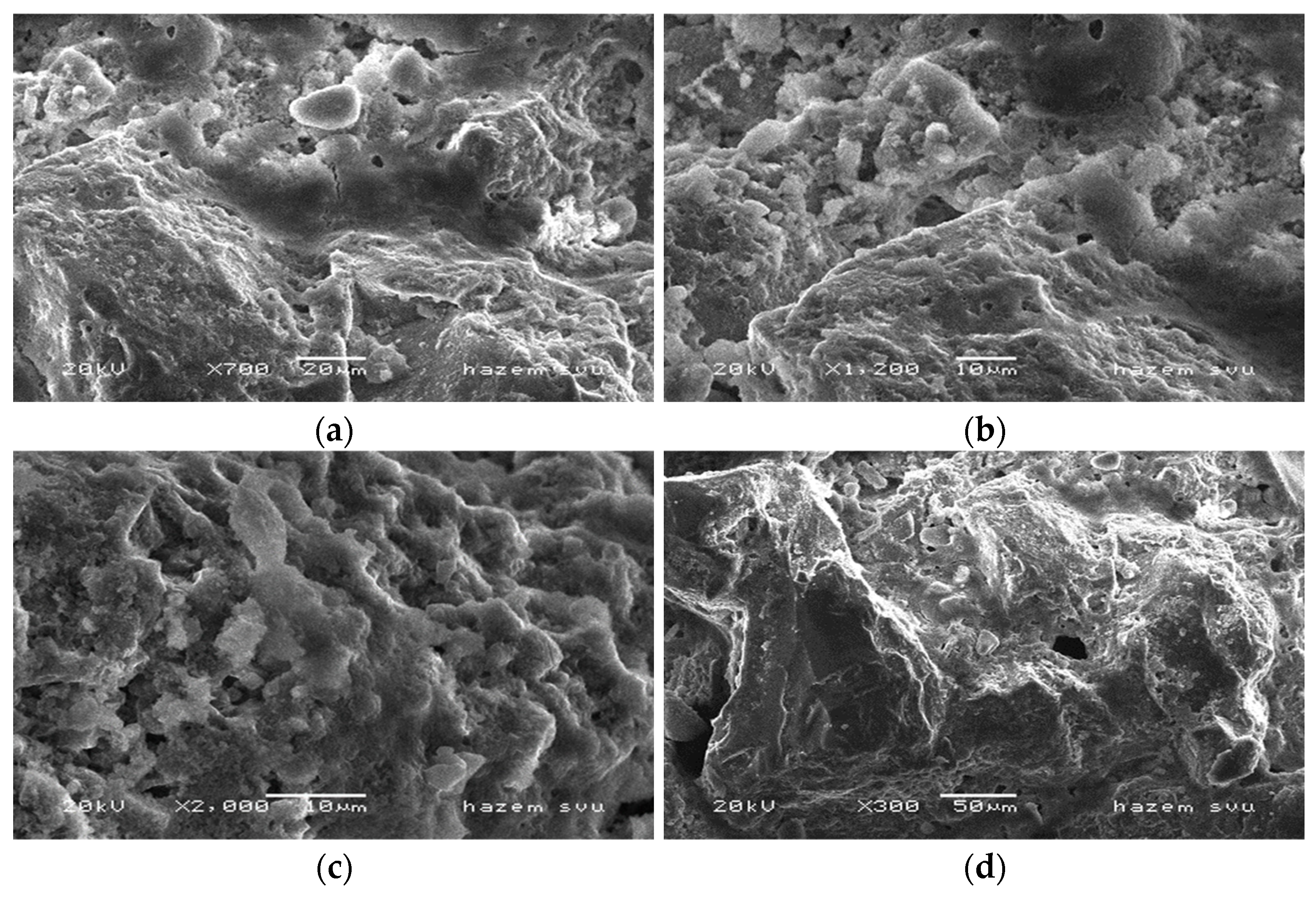
By studying the mechanical properties of sandstone before and after using SiO2NPs and Paraloid B72 nanocomposite, the results confirmed that the nanocomposite penetrated the pores, showing a significant improvement in mechanical properties. Additionally, it is used as a protective layer on the outer surface of the sandstone. In addition to the notable strengthening, the results showed a noticeable improvement, with values ranging from 26.5 MPa to 27.4 MPa. The findings are summarized in Table 3. SEM investigation of samples after nanocomposite treatment.
The SEM analysis of samples treated with SiO2NPs/Paraloid B-72 nanocomposite exhibited superior and uniform material dispersion, effectively coating the stone grains without occluding the pores, as illustrated in Figure 8a,b. Suitable materials in this research were used to conserve the surfaces of stone monuments to protect them from the impacts of deterioration processes. Mechanical examinations and tests were conducted on the reinforced samples to ensure the extent of their penetration and confirm that these materials can resist damaging conditions, remaining unaffected by heat, light, and humidity. Figure 8c,d show the successful penetration of the nanomaterial inside the archeological stones, as observed with SEM.

3.8. Restoration Procedures for the Temple of Isis

As a result of the above studies, the evaluations were conducted to determine the damage and restoration steps taken to complete the conservation work in the temple, as outlined below.
Mechanical and chemical cleaning:
  • Dust and dirt stuck to the walls were removed using brushes of different sizes.
  • Bird nests and droppings were removed using brushes and various scalpels.
  • Bat droppings and blood were removed using various brushes.
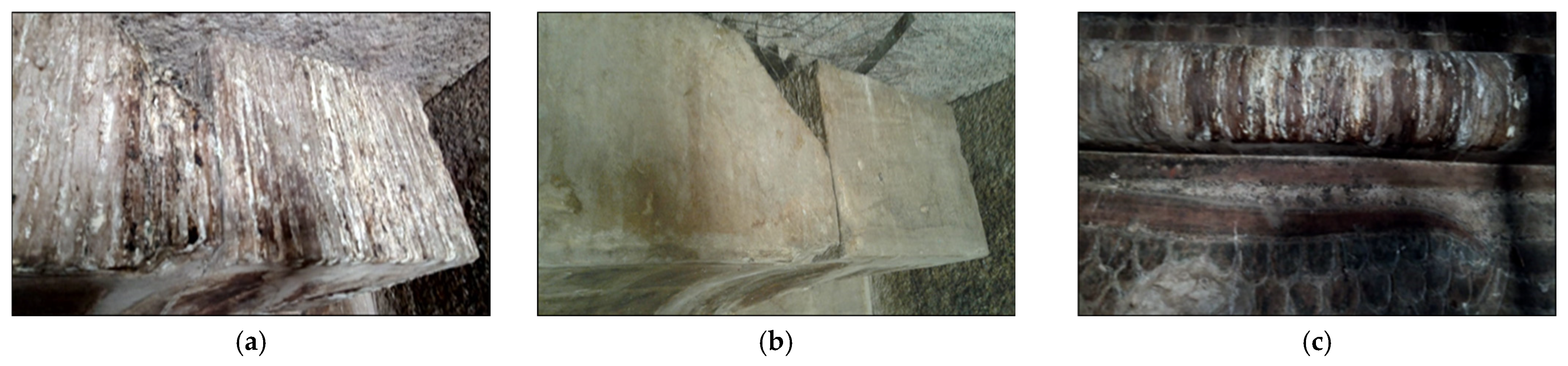
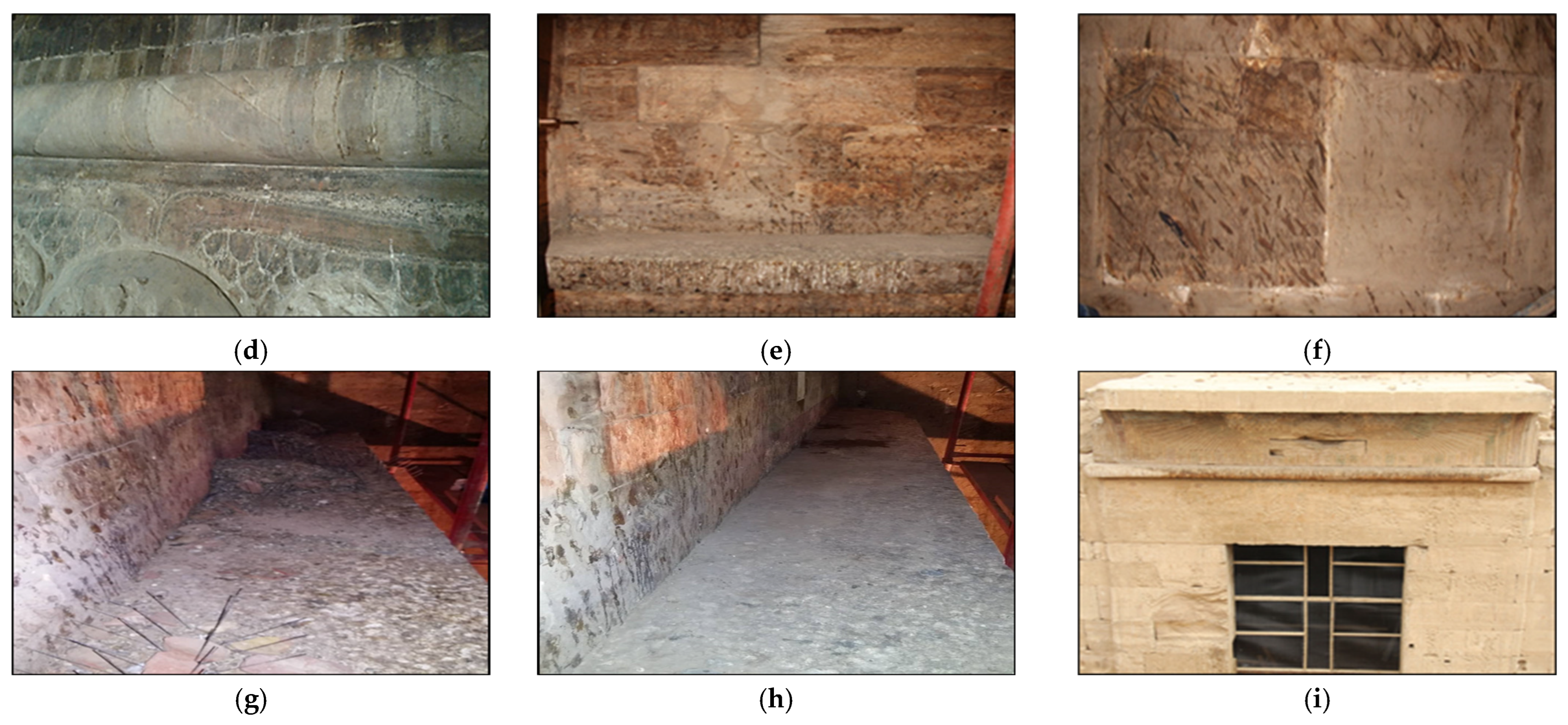
The second stage, following mechanical cleaning, was chemical cleaning to achieve the best results in removing the remains of bird droppings, soot, and bat droppings. Ethyl alcohol and distilled water were used to remove bird droppings and dirt from the walls. Ammonium carbonate, mixed with distilled water in different proportions, was used to remove bat blood residues. The restoration and cleaning procedures carried out in the temple are shown in Figure 9a–i.

3.9. Consolidation and Re-Adhesion of Detachment and Cracks

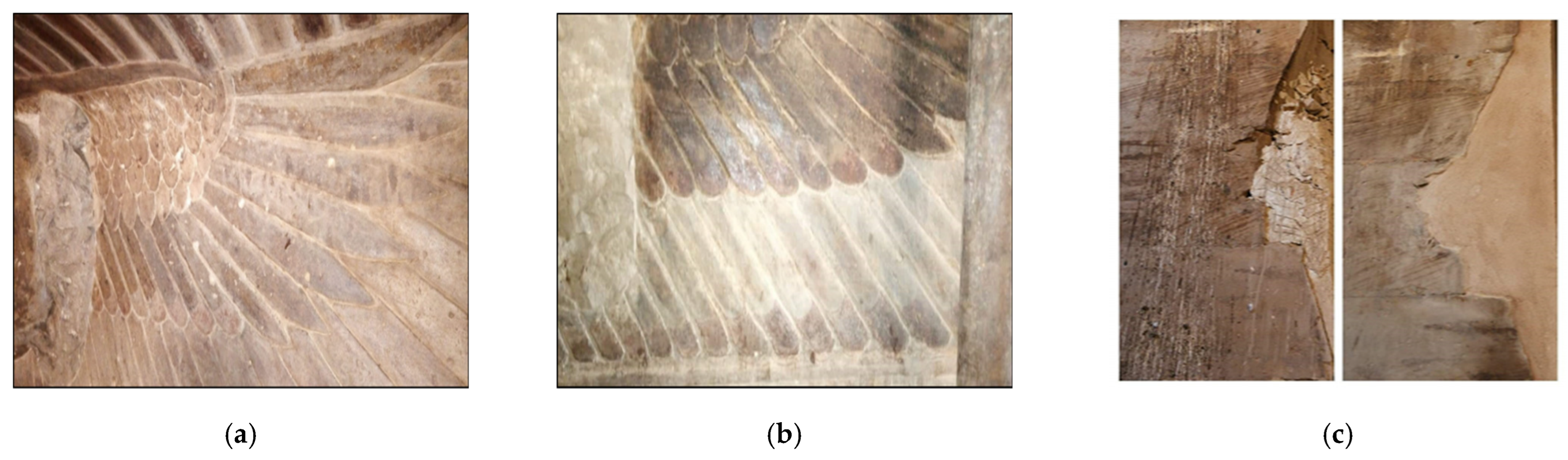
The missing parts were filled using lime mortar consisting of sandstone powder, lime, and sand. However, it is noted that only a limited number of studies have addressed the use of nanoparticles in mortars to reconstruct lost fragments of buildings. The nanoparticles most used in mortar-based materials are composed of SiO2NPs and TiO2NPs. SiO2NPs are active due to their pozzolanic properties. The completed part should be approximately 2 mm lower than the level of the wall and the inscriptions (Figure 10).

4. Discussion

Sandstone is a sedimentary rock composed of minor minerals and organic grains. It contains a binding substance for the sand grains and may include silt particles. Quartz is the most common mineral in sandstone, constituting approximately 90%. The sandstone used in this study originates from excavations in Aswan, Egypt. It is a fine-grained sedimentary rock, primarily composed of quartz (95%), with muscovite and feldspar as minor constituents. The primary physical parameter of this sandstone, expressed as an average value, is porosity. 28 Findings from SEM and XRF analyses indicated degradation in the composition of the sandstone temple stones, along with the disintegration and fragility of their grains caused by salt deterioration, predominantly sodium chloride. This decline is evident in the gaps and voids observed in the walls, which are attributed to groundwater presence, neglect, population growth, and deteriorating sewage networks. The test results indicated that the sample compositions include calcite (CaCO3), halite (NaCl), magnesium sulfate (MgSO4), calcium sulfate dihydrate (CaSO4·2H2O), quartz (SiO2), traces of dolomite (CaMg(CO3)2), iron oxide (Fe2O3), and alumina (AlO). These salts pose a significant risk by forming within the stone structure, creating mechanical stresses that degrade internal bonds. They provide a constant source of moisture, which causes the salt to be absorbed and recrystallized repeatedly. Microbial degradation analysis at the Temple of Isis revealed that all detected deteriorative microorganisms were fungi, indicating extensive contamination in museums, temples, and tombs. Fungal contamination is attributed to low temperatures and elevated indoor relative humidity, reaching 70%, which facilitates the germination and dissemination of spores from xerophilic and xerotolerant fungal species, including Aspergillus sp. and Penicillium sp. [25]. These findings align with Salvadori and Municchia [26], who identified A. niger and Penicillium sp. on stone monuments. Furthermore, other researchers [27,28] have isolated Penicillium frequentens and Cladosporium cladosporoides from stone monuments. Additionally, it was noted that Aspergillus niger was the most prevalent species discovered on sandstone, marble, and limestone. [29] Also, our results align with those of previous studies [30], which identified a wide range of fungal species on the limestone false door in the Kom Aushim Museum, El-Fayoum Governorate, Egypt. These species include Aspergillus niger, A. fumigatus, A. sulphureus, A. flavus, Alternaria alternata, Alternaria spp., and Cladosporium herbarium. The findings indicated that incorporating Paraloid B72 into the SiO2NPs compound enhanced the properties of sandstone. Adapting primary alkoxysilane, or TEOS-based formulations, for the consolidation of archeological stone has often been explored [31].
The development of nanocomposites based on colloidal dispersions of nanoparticles has demonstrated favorable benefits, such as increased saturation depth and a rise in the specific surface area available for reactions [32,33]. Moreover, SiO2NPs have been applied in the field of mortars. Zendri et al. [34] investigated the reactivity of a colloidal silica suspension composed of particles with an average diameter of 10–15 nm, sodium silicate, and ethyl silicate with calcium carbonate and quartz. These consolidant products form a gel of amorphous silica, which, upon solvent evaporation, converts into xerogels. The use of SiO2NPs in cementitious mortars has been shown to enhance the strength and durability of cement-based materials due to their increased reactivity and specific surface area, resulting in a high level of pozzolanic activity [35]. Zornoza-Indart et al. [32] studied the impact of relative humidity on the commercial product Nanoestel®, which is formed from an aqueous solution of colloidal SiO2NPs. They demonstrated that its consolidating effect on bioclastic sandstones (calcarenites) highly depends on relative humidity. Mosquera et al. [36] noted that cracking occurs due to the high capillary pressure sustained by the gel network during drying. Smaller pores experience higher pressures than larger ones. As a result, dense gels with micropores, which are usually made from TEOS, are more likely to break. To reduce TEOS’s tendency to break, new nanomaterials have been made using a sol–gel transition method with n-octylamine, a non-ionic surfactant. N-octylamine acts as a template to regulate pore size within the gel network and serves as a basic catalyst for the sol transition on the stone surface, effectively preventing consolidant cracking [37]. One critical property to examine is the impact of SiO2NPs of various sizes on drying shrinkage. Research indicates that cracking is more apparent in preparations containing 10% nanoparticles when they are 12 nm or 20 nm in size compared to 40 nm. Nanoparticles exhibit notable hydrophobic characteristics [38], making them suitable as additives in building materials, especially when integrated into polymers to enhance their mechanical and thermal properties [39,40].
Nanomaterials are currently being explored for their role in removing sulfate salts from stones [41]. Our SiO2NPs consolidants displayed excellent mechanical properties and outstanding durability. The consolidant containing SiO2NPs, formulated with Paraloid B72, demonstrated superior strength and durability. Furthermore, the SiO2NPs used in this research showed negligible toxicity to human lung cells [42]. This research focuses on understanding the impact of SiO2NPs on the mineral composition, microstructure, and material properties of the mixtures used to reinforce sandstone. SiO2NPs were synthesized using a modified sol–gel method, as described in a previous study [43]. Many nanoparticle-based products used in strengthening and restorative treatments are susceptible to external and internal factors, such as relative humidity, exposure time [44], temperature fluctuations, or long-term stability [45]. The mechanical properties of sandstone samples from the Temple of Isis were evaluated, revealing values between 18.22 MPa and 20.52 MPa for deteriorated sandstone. These low mechanical properties underscore the material’s suitability for studying the reinforcement of the sandstone from the Temple of Isis. Following treatment with SiO2NPs/Paraloid B-72 nanocomposite, our research findings showed substantial improvement in mechanical properties, with values ranging from 26.5 MPa to 27.4 MPa.
When compared with antifungal efficiencies reported in the literature for commonly used consolidants and biocidal formulations [46,47,48,49], the inhibition levels obtained with SiO2NPs in this study fall within the higher range of values reported for mineral surfaces colonized by filamentous fungi. Although the present work does not include direct experimental comparisons with commercial products or with neat Paraloid B-72, the strong reduction in mycelial growth, together with the mechanical reinforcement of the sandstone, indicates that the SiO2NPs/Paraloid B-72 formulation is a promising candidate for integrated consolidation–bioprotection treatments. Future studies should incorporate systematic head-to-head testing of the nanocomposite against unmodified B-72 and representative commercial consolidants or biocides under identical conditions.
The TEM images of the synthesized SiO2NPs and the SEM observations of treated sandstone surfaces indicate that, at the employed loading level, the nanoparticles are well dispersed within the Paraloid B-72 matrix and across the stone grain boundaries, without visible micron-scale agglomerates. Nonetheless, the present study does not provide a quantitative rheological analysis of the composite or high-resolution mapping of potential nanoscale clusters at higher loadings. Future work should therefore include systematic variation in SiO2NP content, combined with DLS or small-angle scattering and cross-sectional EDS mapping, to correlate nanoparticle loading, viscosity evolution, film-forming behavior, and any tendency toward nanocluster formation.
While the present study demonstrates notable short-term improvements in mechanical strength and antifungal performance of the treated sandstone, it does not yet encompass a systematic evaluation of long-term coating stability. Key aspects such as adhesion strength evolution, resistance to delamination, and the development of micro-cracking under prolonged UV exposure, moisture cycling, and thermal fluctuations remain to be quantified. These factors are critical for fully validating the sustainable restoration potential of the SiO2NPs/Paraloid B-72 system and will be addressed in future work through extended artificial aging and in situ monitoring campaigns.

5. Conclusions

This study demonstrates that a SiO2 nanoparticle/Paraloid B-72 nanocomposite can effectively reinforce and protect microbiologically deteriorated sandstone from the Temple of Isis. Fungal isolation and ITS-based identification confirmed Alternaria alternata, Penicillium chrysogenum, and Aspergillus niger as the dominant biodeteriogenic agents colonizing the temple stone. SiO2 nanoparticles prepared by a modified sol–gel route and incorporated into a Paraloid B-72 matrix formed a compatible consolidant capable of penetrating the porous sandstone substrate. Laboratory antifungal assays showed that SiO2NPs at the highest tested concentration achieved strong inhibition of mycelial growth of all three fungi, supporting the biocidal potential of the nanocomposite formulation. Mechanical testing further indicated that treatment with the SiO2NPs/Paraloid B-72 nanocomposite significantly improved the mechanical performance of weathered sandstone, with compressive strength increasing from approximately 18–20 MPa in the deteriorated state to around 26.5–27.4 MPa after consolidation. Microstructural analyses confirmed that the nanocomposite formed a coherent coating on and within the stone grains while preserving open porosity, thereby contributing to both structural stabilization and moisture transport compatibility. Overall, the proposed SiO2NPs/Paraloid B-72 formulation represents a promising conservation strategy for sandstone monuments exposed to complex environmental and biological stressors. Future work should include systematic weathering simulations and long-term monitoring to verify the durability, adhesion stability, and resistance to cracking of the nanocomposite under real service conditions.

Author Contributions

Conceptualization, M.H.H.A., M.M.E.K., and A.S.; methodology, A.S., H.I., and M.S.; formal analysis, M.M.E.K., H.I., and A.A.; investigation, M.H.H.A. and M.M.E.K.; resources, H.I. and M.T.; data curation, A.A. and H.I.; writing—original draft preparation, A.S. and H.I.; writing—review and editing, M.H.H.A. and M.T.; visualization, A.A. and M.S.; supervision, M.M.E.K.; project administration, K.E.; funding acquisition, K.E. All authors have read and agreed to the published version of the manuscript.

Funding

This research was funded by the Deanship of Scientific Research at the University of Ha’il, Saudi Arabia, under the project number RG-23 043.

Institutional Review Board Statement

Not applicable.

Informed Consent Statement

Not applicable.

Data Availability Statement

The datasets generated and/or analyzed during the current study are available at the following URLs: Alternaria alternata (PQ803140): (https://www.ncbi.nlm.nih.gov/nuccore/PQ803140, accessed on 2 March 2025). Penicillium chrysogenum (PQ803141): (https://www.ncbi.nlm.nih.gov/nuccore/PQ803141, accessed on 2 March 2025). Aspergillus niger (PQ803142): (https://www.ncbi.nlm.nih.gov/nuccore/PQ803142, accessed on 2 March 2025).

Acknowledgments

The authors would like to express their sincere gratitude to the Deanship of Scientific Research at the University of Ha’il for providing the necessary support to conduct this research.

Conflicts of Interest

The authors declare no conflicts of interest.

References

  1. Sierra-Fernandez, A.; Gomez-Villalba, L.S.; Rabanal, M.E.; Fort, R. New nanomaterials for applications in conservation and restoration of stony materials: A review. Mater. Construcción 2017, 67, e107. [Google Scholar] [CrossRef]
  2. Cavazos, J.-S.; González, G.; Kharissova, O.V.; Ortega, B.; Peña, L.; Osorio, M.; Garza Castanon, M. Impact of Nanoparticles on Mechanical Properties of Cement-Sand Mortar Applications. Adv. Chem. Eng. Sci. 2017, 7, 270–276. [Google Scholar] [CrossRef]
  3. Mendes, T.M.; Hotza, D.; Repette, W.L. Nanoparticles in cement based materials: A review. Rev. Adv. Mater. Sci. 2015, 40, 89–96. [Google Scholar]
  4. Qiang, X.; Yu, J.L.; Kaisong, Z. Engineering multi-channel water transport in surface-porous MXene nanosheets for high-performance thin-film nanocomposite membranes. J. Membr. Sci. 2025, 728, 124151. [Google Scholar]
  5. Collepardi, M.; Olagot, J.J.O.; Troli, R.; Skarp, U. Influence of Amorphous Colloidal Silica on the Properties of Self- Compacting Concretes. In Proceedings of the International Conference: Challenges in Concrete Construction, Dundee, UK, 9–11 September 2002. [Google Scholar]
  6. Dei, L.; Salvadori, B. Nanotechnology in cultural heritage conservation: Nanometric slaked lime saves architectonic and artistic surfaces from decay. J. Cult. Herit. 2006, 7, 110–115. [Google Scholar] [CrossRef]
  7. Manoudis, P.; Papadopoulou, S.; Karapanagiotis, I.; Tsakalof, A.; Zuburtikudis, I.; Panayiotou, C. Polymer–Silica nanoparticles composite films as protective coatings for stone-based monuments. J. Phys. Conf. Ser. 2007, 61, 1361–1365. [Google Scholar] [CrossRef]
  8. Baik, A.; Habibullah, A.; Sallam, A.; Salah, T.; Saleh, M. A Four-Dimensional Historical Building Defect Information Modeling (HBDIM) Framework Integrating Digital Documentation and Nanomaterial Consolidation for Sustainable Stucco Conservation. Sustainability 2026, 18, 3244. [Google Scholar] [CrossRef]
  9. Orabi, E.; Sallam, A. Damage Assessment and Nano Treatment of the Sharia Judge Tomb at the Fatimid Cemetery, Aswan—Egypt. Egypt. J. Archaeol. Restor. Stud. 2022, 12, 217–225. [Google Scholar]
  10. Sallam, A.; Hemeda, S.; Hassan, M.; Khalil, M.M. Non-Destructive Testing of Nano-Silica for Enhancing the Durability of Limestone Structures in the Valley of the Kings, Luxor, Egypt. Conserv. Sci. Cult. Herit. 2022, 22, 51–60. [Google Scholar]
  11. Sallam, A.; Albaqawy, G.A.; Touahmia, M.; Boukendakdji, M.; Khalil, M.M.E. Improving Mud Brick Durability in Ancient Closed-Box Tombs: A Graphene Oxide Nanoparticle Approach. Buildings 2024, 14, 2248. [Google Scholar] [CrossRef]
  12. Dijkstra Jitse, H.F.; Joint Archeological Mission in Aswan. Syene I. The Figural and Textual Graffiti from the Temple of Isis at Aswan; Cruz-Uribe, E., Ed.; Verlag Philipp von Zabern: Darmstadt, Germany, 2012; p. 198. [Google Scholar]
  13. White, T.J.; Bruns, T.; Lee, S.J.W.T.; Taylor, J.; Nnis, M.A.; Gelfand, D.H.; Sninsky, J.J. PCR Protocols—A Guide to Methods and Applications; Academic Press: Cambridge, UK, 1990. [Google Scholar]
  14. Alhudaib, K.; Ismail, A.M.; Magistà, D. Multi-Locus Phylogenetic Analysis Revealed the Association of Six Colletotrichum Species with Anthracnose Disease of Coffee in Saudi Arabia. J. Fungi 2023, 9, 705. [Google Scholar] [CrossRef]
  15. Stöber, W.; Fink, A.; Bohn, E. Controlled growth of monodisperse silica spheres in the micron size range. J. Colloid Interface Sci. 1968, 26, 62–69. [Google Scholar] [CrossRef]
  16. Nanogate Egypt Website. Available online: https://nanogate-eg.com (accessed on 25 April 2025).
  17. Beatriz, M.; Dita, F.; José, D.; Radek, Š.; Petra, M.; Mouna, F.; Zuzana, S. The use of nanoparticles to improve the performance of restoration mortars. In Proceedings of the 5th Historic Mortars Conference, Pamplona, Spain, 19–21 June 2019. [Google Scholar]
  18. Okubo, T.; Nakagawa, N.; Tsuchida, A. Drying dissipative patterns of colloidal crystals of silica spheres in organic solvents. Colloid Polym. Sci. 2007, 285, 1247–1255. [Google Scholar] [CrossRef]
  19. Okubo, T.; Kimura, K.; Tsuchida, A. Drying dissipative patterns of colloidal crystals of silica spheres on cover glass at regulated temperature and humidity. Colloid Polym. Sci. 2008, 286, 621–629. [Google Scholar] [CrossRef]
  20. Ruffolo, S.A.; La Russa, M.F.; Ricca, M.; Belfiore, C.M.; Macchia, A.; Comite, V.; Pezzino, A.; Crisci, G.M. New insights on the consolidation of salt weathered limestone: The case study of Modica stone. Bull. Eng. Geol. Environ. 2017, 76, 11–20. [Google Scholar] [CrossRef]
  21. Woudenberg, J.H.; Groenewald, J.Z.; Binder, M.; Crous, P.W. Alternaria redefined. Stud. Mycol. 2013, 75, 171–212. [Google Scholar] [CrossRef]
  22. Martinez, A.T.; Calvo, M.A.; Ramirez, C. Scanning electron microscopy of Penicillium conidia. Antonie Leeuwenhoek 1982, 48, 245–255. [Google Scholar] [CrossRef]
  23. Samson, R.A.; Visagie, C.M.; Houbraken, J.; Hong, S.B.; Hubka, V.; Klaassen, C.H.; Perrone, G.; Seifert, K.A.; Susca, A.; Tanney, J.B.; et al. Phylogeny, identification, and nomenclature of the genus Aspergillus. Stud. Mycol. 2014, 78, 141–173. [Google Scholar] [CrossRef]
  24. Gomes, B.R.; Lopes, J.L.; Coelho, L.; Ligonzo, M.; Rigoletto, M.; Magnacca, G.; Deganello, F. Development and Upscaling of SiO2@TiO2 Core-Shell Nanoparticles for Methylene Blue Removal. Nanomaterials 2023, 13, 2276. [Google Scholar] [CrossRef] [PubMed]
  25. Liu, Z.; Zhang, Y.; Zhang, F.; Hu, C.; Liu, G.; Pan, J. Microbial community analyses of deteriorated storeroom objects in the Tianjin Museum. Front. Microbiol. 2018, 9, 802. [Google Scholar] [CrossRef] [PubMed]
  26. Salvadori, O.; Casanova, M. The role of fungi and lichens. Open Conf. Proc. J. 2016, 7, 39–54. [Google Scholar] [CrossRef]
  27. Abd-Elhalim, B.T.; Hemdan, B.A.; El-Sayed, S.M.; Ahmed, M.A.; Maan, S.A.; Abu-Hussien, S.H. Enhancing durability and sustainable preservation of Egyptian stone monuments using metabolites of Streptomyces exfoliates. Sci. Rep. 2023, 13, 9458. [Google Scholar] [CrossRef] [PubMed]
  28. Mohammadi, P.; Krumbein, W.E. Biodeterioration of ancient stone materials from the Persepolis monuments. Aerobiologia 2008, 24, 27–33. [Google Scholar] [CrossRef]
  29. Mohammadi, P.; Maghboli-Balasjin, N. Isolation, and molecular identification of deteriorating fungi from Cyrus the Great tomb stones. J. Microbiol. 2014, 6, 361–370. [Google Scholar]
  30. Abdel Ghany, T.M.; Omar, A.M.; Elwkeel, F.M.; Al Abboud, M.A.; Alawlaqi, M.M. Fungal deterioration of limestone false-door monument. Heliyon 2019, 5, e02673. [Google Scholar] [CrossRef]
  31. Chelazzi, D.; Camerini, R.; Giorgi, R.; Baglioni, P. Nanomaterials for the consolidation of stone artifacts. In Advanced Materials for the Conservation of Stone; Springer: Cham, Switzerland, 2018; pp. 151–173. [Google Scholar]
  32. Zornoza-Indart, A.; Lopez-Arce, P. Silica nanoparticles (SiO2): Influence of relative humidity in stone consolidation. J. Cult. Herit. 2016, 18, 258–270. [Google Scholar] [CrossRef]
  33. Rodrigues, A.; da Fonseca, B.S.; Pinto, A.P.F.; Piçarra, S.; Montemor, M.F. TEOS Nanocomposites for the Consolidation of Carbonate Stone. Materials 2022, 15, 981. [Google Scholar] [CrossRef]
  34. Zendri, E.; Biscontin, G.; Nardini, I.; Rialto, S. Characterization, and reactivity of silicatic consolidants. Constr. Build. Mater. 2007, 21, 1098–1106. [Google Scholar] [CrossRef]
  35. Aggarwal, P.; Pratap Singh, R.; Aggarwal, Y. Use of nano-silica in cement based materials—A review. Cogent Eng. 2015, 2, 1078018. [Google Scholar] [CrossRef]
  36. Mosquera, M.J.; de los Santos, D.M.; Rivas, T. Surfactant-synthesized Ormosils for stone restoration. Langmuir 2010, 26, 6737–6745. [Google Scholar] [CrossRef]
  37. Mosquera, M.J.; de los Santos, D.M.; Valdéz-Castro, L.; Esquivias, L. New route for producing crack-free xerogels. J. Non-Cryst. Solids 2008, 354, 645–650. [Google Scholar] [CrossRef]
  38. Facio, D.S.; Mosquera, M.J. Superhydrophobic coatings in situ on building substrates. ACS Appl. Mater. Interfaces 2013, 5, 7517–7526. [Google Scholar] [CrossRef]
  39. Mohammad Rabea, A.; Mohseni, M.; Mirabedini, S.M.; Hashemi Tabatabaei, M. Surface analysis and ant graffiti behaviour of polyurethane coating with hydrophobic nano silica. Appl. Surf. Sci. 2012, 258, 4391–4396. [Google Scholar] [CrossRef]
  40. Licchelli, M.; Malagodi, M.; Weththimuni, M.; Zanchi, C. Anti-graffiti nanocomposite materials for porous stone protection. Appl. Phys. A 2014, 116, 1525–1539. [Google Scholar] [CrossRef]
  41. Ciliberto, E.; Condorelli, G.G.; La Delfa, S.; Viscuso, E. Nanoparticles of Sr(OH)2 for cultural heritage artefacts. Appl. Phys. A 2008, 92, 137–141. [Google Scholar] [CrossRef]
  42. Remzova, M.; Zouzelka, R.; Brzicova, T.; Vrbova, K.; Pinkas, D.; Rőssner, P.; Topinka, J.; Rathousky, J. Toxicity of TiO2, ZnO, and SiO2 nanoparticles in human lung cells. Nanomaterials 2019, 9, 968. [Google Scholar] [CrossRef]
  43. Jafarzadeh, M.; Rahman, I.A.; Sipaut, C.S. Synthesis of silica nanoparticles by modified sol–gel process. J. Sol-Gel Sci. Technol. 2009, 50, 328–336. [Google Scholar] [CrossRef]
  44. López-Arce, P.; Gomez-Villalba, L.S.; Pinho, L.; Fernández-Valle, M.E.; de Buergo, M.Á.; Fort, R. Porosity and humidity influence on consolidation of dolostone with Ca(OH)2 nanoparticles. Mater. Charact. 2010, 61, 168–184. [Google Scholar] [CrossRef]
  45. Rodríguez-Navarro, C.; Vettori, I.; Ruiz-Agudo, E. Kinetics of Ca(OH)2 conversion into calcium alkoxides. Langmuir 2016, 32, 5183–5194. [Google Scholar] [PubMed]
  46. Alhazmi, N.M. Fungicidal Activity of Silver and Silica Nanoparticles against Aspergillus sydowii Isolated from the Soil in Western Saudi Arabia. Microorganisms 2023, 11, 86. [Google Scholar] [CrossRef] [PubMed]
  47. Albalawi, M.A.; Abdelaziz, A.M.; Attia, M.S.; Saied, E.; Elganzory, H.H.; Hashem, A.H. Mycosynthesis of Silica Nanoparticles Using Aspergillus niger: Control of Alternaria solani Causing Early Blight Disease, Induction of Innate Immunity and Reducing of Oxidative Stress in Eggplant. Antioxidants 2022, 11, 2323. [Google Scholar] [CrossRef] [PubMed]
  48. Matras, E.; Gorczyca, A.; Przemieniecki, S.W.; Oćwieja, M. Surface properties-dependent antifungal activity of silver nanoparticles. Sci. Rep. 2022, 12, 18046. [Google Scholar] [CrossRef] [PubMed]
  49. Belhedi, M.; Sghaier-Hammami, B.; Masiello, M.; Nafati, H.; Somma, S.; Gambacorta, L.; Salhi, R.; Messaoud, M.; Labidi, S.; Moretti, A.; et al. Silicon dioxide (SiO2) nanoparticles affect the morphology, sporulation, mycotoxin production, and pathogenicity of Fusarium brachygibbosum infecting olive trees. Front. Nanotechnol. 2025, 7, 1569453. [Google Scholar] [CrossRef]
Figure 1. (a) Layout of the Temple of Isis [12]. (b) Google Maps location of the Temple of Isis: 2°05′02.9″ N 3°53′05.6″ E. (c) The right side of the main entrance, with some parts of the temple stones missing. (d) The middle of the temple’s facade, featuring the symbolic main gate, is decorated with scenes and texts and topped with a winged sun disk. (e) Visible damage to the temple roof stones. (f) Colored drawings were revealed during the cleaning and restoration of the temple. (g) Numerous Coptic writings and graphics. (h) Colored Coptic drawings were uncovered during the temple’s restoration. (i) The temple’s exposure to various deterioration factors, such as collapses, falling, and widening between the stone blocks, has resulted in clearly visible gaps and spaces between the wall stones throughout the temple. (j) Bird droppings persist despite cleaning operations on the temple walls. (k) The impact of moisture at the base of the walls. (l) Accumulation of soot due to the temple being repurposed as a church. (m) Soot penetration into wall paintings. (n) Soot covering most of the temple’s wall engravings. (o) Entrance to the main chamber leading to the Holy of Holies. (p) Detailed evidence of holes, gaps, color residues, and fading. (q) Salts forming between sandstone joints in the upper sections and walls. (r) Damage caused by the temple’s use as a church, including engraved crosses on its walls. (s) Human-caused damage from visitors scratching the walls. (t) A hard crust of salts on the surface of the sandstone.
Sustainability 18 03860 g001aSustainability 18 03860 g001b
Figure 2. Morphological characteristics of conidiophores and conidia of Alternaria alternata (a,b), Penicillium chrysogenum (c,d), and Aspergillus niger (e,f). Scale bars = 10 µm.
Sustainability 18 03860 g002
Figure 3. TEM images of the SiO2NPs at (a) 200 nm and (b) 100 nm.
Sustainability 18 03860 g003
Figure 4. X-ray diffraction (XRD) pattern of the amorphous SiO2 nanoparticles used in this study.
Sustainability 18 03860 g004
Figure 5. SEM photomicrograph showing the existence of quartz, sulfate, and halite.
Sustainability 18 03860 g005
Figure 6. X-ray fluorescence (XRF) spectra show the elemental composition of the stone.
Sustainability 18 03860 g006
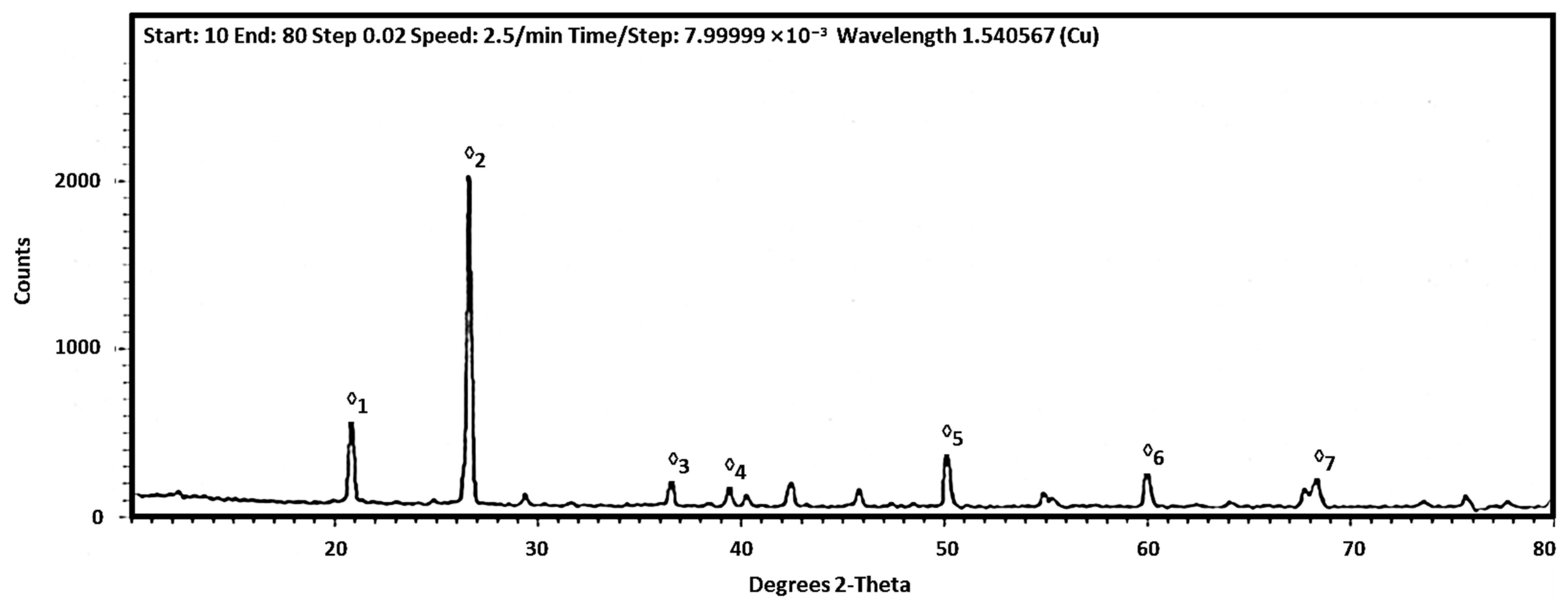
Figure 7. XRD patterns show the presence of elements of sandstone.
Sustainability 18 03860 g007
Figure 8. SEM images demonstrating the sample prior to consolidation (a,b) and after consolidation (c,d) interaction with the stone grain.
Sustainability 18 03860 g008
Figure 9. The restoration and cleaning procedures, both during and after. (a) Part of the cornice before the restoration and cleaning procedures. (b) Part of the cornice after the cleaning and restoration procedures were completed. (c) Part of the facade of the entrance to the Holy of Holies before the restoration process. (d) Part of the facade of the entrance to the Holy of Holies after the restoration procedures. (e) The abundance of bat droppings on the engravings. (f) The walls before and after removing the remains of bat blood. (g) Abundant bird nests and droppings on the temple stones. (h) After the cleaning process and removal of various wastes. (i) Installation of wooden windows with wire to prevent birds from entering the temple.
Sustainability 18 03860 g009aSustainability 18 03860 g009b
Figure 10. The restoration and completion stages carried out in the temple. (a) The entrance to the Holy of Holies during cleaning and consolidation with Paraloid B72. (b) The entrance to the Holy of Holies after cleaning and consolidation with Paraloid B72 dissolved in acetone at a concentration of 2%. (c) One of the temple’s columns before and after the restoration and completion. (d) Gaps and missing parts. (e) Filling the gaps and missing parts with mortar compatible with the texture and color. (f) The addition of the inner lining during the completion process. (g) Completion of parts of the column. (h) The removal of pigeon nests and bird droppings. (i) Pigeon nests and remains of bird droppings spread on top of the walls.
Sustainability 18 03860 g010aSustainability 18 03860 g010b
Table 1. Inhibitory activity of SiO2NPs against Penicillium chrysogenum, Aspergillus niger, and Alternaria alternata under laboratory conditions.
Fungal SpeciesMycelial Growth Inhibition (%)
100 ppm200 ppm300 ppmControl
Aspergillus niger77.2789.6890.770.0
Alternaria alternata74.8878.1785.20.0
Penicillium chrysogenum72.4580.2591.590.0
LSD at 0.050.1750.2100.1570
Table 2. The elemental composition of the analyzed sandstone specimens from the Isis Temple.
SampleA
ElementNaMgAlSiPSClKCaTiMnFe
Con. %1.221.3310.9957.890.932.915.384.722.592.980.098.86
SampleB
ElementNaMgAlSiPSClKCaTiMnFe
Con. %12.081.9110.7943.350.962.8710.421.229.552.530.2513.27
SampleC
ElementNaMgAlSiPSClKCaTiMnFe
Con. %1.231.404.3141.751.982.273.642.9832.611.480.176.00
Table 3. Mechanical properties of the sandstone before and after treating with SiO2NPs/Paraloid B72 nanocomposite.
No.L
(mm)
W (mm)A2
(mm2)
Failure Load (kN)Before Using SiO2NPs/Paraloid B72After Using SiO2NPs/Paraloid B72
Σc
(MPa)
σt
(MPa)
Ʈ
(MPa)
σc
(MPa)
σt
(MPa)
Ʈ
(MPa)
1323196114.5018.222.4–2.64.0–4.225.5–26.74.7–4.87.1–7.4
2323093017.2020.522.5–2.85.1–5.626.5–27.44.9–5.37.8–7.9
σc: uniaxial compressive strength; σt: splitting tensile strength; Ʈ: shear strength.
Disclaimer/Publisher’s Note: The statements, opinions and data contained in all publications are solely those of the individual author(s) and contributor(s) and not of MDPI and/or the editor(s). MDPI and/or the editor(s) disclaim responsibility for any injury to people or property resulting from any ideas, methods, instructions or products referred to in the content.