Article

Pathways to Sustainable Land Stewardship in South Africa’s Wine-Producing Regions

by
Hannah V. Herrero
1,*,
Zoe L. Van der Walt
2,
Erin L. Bunting
3,
Stephanie A. Insalaco
2,
Jack D. Spining
1,
Dryver Z. Finch
1,
Jane Southworth
4 and
Jason K. Blackburn
4,5
1
Department of Geography & Sustainability, University of Tennessee, Knoxville, TN 37996, USA
2
Environmental Studies Program, Southwestern University, Georgetown, TX 78626, USA
3
Department of Geography, Environment, and Spatial Sciences, Michigan State University, East Lansing, MI 48824, USA
4
Department of Geography, University of Florida, Gainesville, FL 32611, USA
5
Spatial Epidemiology and Ecology Research Laboratory, Emerging Pathogens Institute, University of Florida, Gainesville, FL 32611, USA
*
Author to whom correspondence should be addressed.
Sustainability 2026, 18(8), 3825; https://doi.org/10.3390/su18083825
Submission received: 20 February 2026 / Revised: 1 April 2026 / Accepted: 2 April 2026 / Published: 13 April 2026
(This article belongs to the Section Sustainability in Geographic Science)

Abstract

Sustainable land stewardship is increasingly essential in South Africa’s wine-producing regions (WPR), where climate variability, ecological sensitivity, and economic pressures interact to shape vineyard management practices. This study synthesizes data from 107 vineyard websites and 20 in-depth stakeholder interviews to examine how sustainability is conceptualized and practiced across the region. Results show that growers prioritize biodiversity conservation, soil health, and water-efficient management as foundational to long-term resilience, with widespread adoption of practices such as mulching, cover cropping, habitat restoration, and integrated pest management. Website-derived data reveal substantial participation in sustainability certifications, including the Integrated Production of Wine (IPW) program and WWF Conservation Champions, although implementation depth varies among producers. Interviews underscore that climate extremes—particularly drought—have intensified reliance on soil-moisture conservation and adaptive irrigation strategies. Producers also identified escalating input costs, shifting markets, and export barriers as central economic challenges, contributing to diversified business models that include tourism and direct-to-consumer sales. Collectively, these findings demonstrate that sustainable viticulture in South Africa’s WPR is shaped by dynamic interactions between environmental stewardship and economic adaptation. Strengthening collaboration and aligning local practices with global sustainability frameworks can enhance the region’s ecological resilience and support the long-term viability of its wine industry.

1. Introduction

When South African Wine, a trade organization launched in 2023, was asked about the top five challenges facing South Africa’s wine industry, some of the key leaders in the industry outlined: Climate Change, Electricity, Market Access, Profitability, and the Cape Town Port [1]. These challenges highlight the complex socioecological factors influencing the industry. Each of these subjects had an emphasis on managing these systems sustainably for positive ecological and economical outcomes for both South African wines and the landscapes they rely on.

1.1. Climate Variability and Agriculture in South Africa

Observed climate trends in Southern Africa underscore vulnerabilities to climatic fluctuations, creating substantial risk for agricultural systems and livelihoods worldwide [2,3,4,5]. These trends are already altering hydrological cycles, evapotranspiration dynamics, and ecosystem functioning, intensifying stress in water-limited landscapes such as South Africa’s wine-producing regions (WPR) [6,7,8,9].
Climate variability and long-term warming trends already place South Africa among the countries most vulnerable to these impacts [10,11]. Mean annual temperatures have increased at a rate approximately 1.5 times greater than the global average of 0.65 °C over the past five decades. There has also been a concurrent rise in extreme rainfall events [6,7,12,13,14,15,16]. Since 1960, South Africa’s mean temperature has risen by 1.5 °C, alongside increases in both hot extremes and heavy rainfall [11]. The most recent IPCC Sixth Assessment Report (2022) documents declining mean precipitation in southwestern Africa, coupled with more frequent heavy rainfall and flooding events. Projections also indicate intensifying aridity and increasing agricultural and ecological droughts across the region [6]. Increasing climate variability has also intensified the frequency and magnitude of extreme events across Southern Africa [6,7,17]. Recent assessments further indicate rising rainfall variability and increasing incidence of compound events, such as drought–heatwave combinations, that amplify ecological and socioeconomic vulnerability [12].
Agricultural production is highly sensitive to both precipitation and temperature in terms of timing and pattern, making it especially vulnerable to climate variability and extremes [18]. Moreover, the timing and intensity of rainfall is often more critical than, say, total precipitation (annual or seasonal), as shifts towards more concentrated rainfall events can disrupt planting cycles and soil moisture availability [19,20]. For example, South Africa may experience highly concentrated rainfall within short but critical agricultural periods, amplifying certain types of vulnerability for these systems, e.g., disease [18,19,20]. Crop vulnerability to climate extremes is well documented across South Africa [21,22,23]. For instance, droughts increase disease susceptibility and physiological stress in grapevines, leading to reduced yields [24,25]. Grapevine leafroll disease, primarily caused by Grapevine leafroll-associated virus 3 (GRLaV-3), represents a major stressor in South African vineyards [26,27,28,29,30,31,32]. Grapevines exposed to both GRLaV-3 and drought stress exhibit significantly reduced resilience compared to healthy plants [31]. Conversely, excessive rainfall increases the incidence of downy mildew, one of the most widespread vineyard diseases in the Western Cape [33,34]. Together, these stressors illustrate how climate extremes can compound biotic and abiotic pressures on agricultural systems.
Shifts in precipitation and temperature also affect growing season length, harvest date, and how the vineyard is managed (e.g., pruning), with both positive and negative consequences [18]. Several studies have applied future climate projections and species distribution models to estimate potential changes in the spatial extent of suitable habitat for viticulture (the cultivation and production of grapevines). For example, a recent study modeling suitable areas of Vitis vinifera, one of the most common species of grapevine, under current and future climate scenarios with the Copernicus Climate Data Store (CDS) Toolbox Species Distribution Model (SDM) approach showed significant decreases in grapevine habitat across France from baseline (current day) to 2050 and 2070 using different representative concentration pathways (RCPs) [35]. Those models predict that under the RCP 4.5 scenario, France could see a reduction of more than 630,000 hectares by 2070 [24]. Similarly, Turkey is predicted to lose areas suitable for V. vinifera cultivars in both the 2041–2060 and 2081–2100 time periods based on MaxEnt experiments relating climatic conditions to species presence [36]. While those examples are focused on mapping distributional changes for grapes, other studies have examined how climate variability may impact grape quality, growing season changes, and wine quality. In one such study, Cardell et al. (2019) showed changes in distribution and wine quality across many parts of European wine country when RCP data are adjusted locally using quantile-quantile adjustments, allowing for evaluation of how climatic changes will affect grape and wine quality [37].
In some communities in SSA, approximately 60% of the workforce is employed in agriculture despite contributing only 30% to GDP [38,39]. This reliance heightens vulnerability to environmental shocks, threatening both productivity and livelihoods [40,41]. Sub-Saharan Africa also faces structural barriers to adaptation, including challenges with infrastructure, investment, and policy frameworks [39,42,43]. While irrigation and other adaptation measures have been promoted, their implementation has been constrained by insufficient incentives, market access, and governance [42,43,44].

1.2. Wine Industry of South Africa

The South African wine industry has experienced substantial structural change since the late 20th century. The number of wineries nearly doubled from fewer than 300 in 1997 to around 600 by 2010 [45,46]. However, vineyard expansion has slowed since 2004, with a reduction in younger vine plantings suggesting a decline in growth momentum [46,47]. Despite this trend, the industry has maintained production standards and expanded export volumes [46,48,49].
As of 2021, South Africa had 536 wineries producing 911 million liters of wine, of which 387.9 million liters were exported, with 37.5% packaged and 62.5% exported in bulk [45]. While exports have increased, other New World competitors, such as Australia and Chile, outrank South Africa in terms of volume/value [46,49]. Domestic demand has decreased over the last decade, and exports are generally sold at lower prices, creating persistent economic pressures and reinforcing the industry’s reliance on international markets [46,49].
The Western Cape Province accounts for approximately 90% of national wine production and contributes an estimated 8% to the Gross Provincial Product [45,50] while supporting 269,096 jobs before COVID-19 (1.6% of national formal and informal employment) [51]. In 2004, the vineyard area in the province was 124,749 hectares, producing over 1.3 million tons of grapes [45], of which approximately 70% was used for wine production [45,50]. However, there has been a decline over time, and as of 2024, there are 87,848 hectares in wine production, with 55% white varietals and 45% red varietals [52]. Some of the major wine-producing districts include Stellenbosch, Paarl, Franschhoek, Worcester, Robertson, and the Olifants River Region [45,50].

1.3. Vineyards and Sustainability

Sustainable land stewardship may be defined as the responsible management and care of land resources, emphasizing sustainable land management practices that address trade-offs in land use decisions and contribute to socioeconomic benefits and environmental restoration [53]. Here, sustainability is defined as the management of the landscape for long-term productivity and the long-term health of the business and people [54]. This study analyzes questions from a lens of sustainability for both vineyards (ecology) and businesses (economics). Sustainability in agriculture, especially the wine and grape industry, is especially important in a time of changing climate, highlighted above [55]. Across South Africa, sustainability of viticulture is particularly concerning given the increasing frequency of unpredictable rainfall and prolonged droughts, which have already had measurable impacts on vineyard productivity and crop quality across the region [55,56]. Climate projections to mid-century further underscore these risks, indicating warmer and drier conditions, heightened climate variability, and increasingly complex seasonal precipitation patterns. Global climate models consistently project that such conditions will intensify across Sub-Saharan Africa by 2050, amplifying vulnerability within climate-sensitive sectors such as viticulture [46]. Without the adoption of effective and regionally appropriate sustainable practices, producers face increasing risks of yield losses, economic instability, and diminished contributions to local and national economies.
The Western Cape is particularly susceptible to these climatic pressures due to its geographic location and dependence on winter rainfall systems [57]. Empirical research within the region demonstrates that rising temperatures have already altered grape physiology and wine quality, reinforcing concerns about the long-term viability of existing production systems under continued warming [57]. These findings highlight the continued need for region-specific adaptation strategies, including the evaluation of more climate-resilient grape varieties and management practices tailored to local environmental conditions.
There are many other concerns facing the wine industry globally such as land use change, rising temperatures, ecosystem pollution, drought, desertification, and more factors that have made it difficult for vineyards to adapt to climate variability [55,58]. As the wine industry in South Africa is a significant contributor to the economy, ensuring that the environment can be sustained for years to come is crucial [59]. Although attention to sustainability in the South African wine sector has continued to increase through the years, gaps remain in implementation and empirical research.
Globally and within South Africa, adaptation strategies within the wine industry include the adoption of alternative grape varieties and rootstocks, modifications to training and trellising systems, improved vineyard management practices, and, in some cases, the relocation of vineyards to cooler regions [60,61]. In South Africa, several initiatives have begun to address sustainability challenges at the industry level. One way that South African farmers are addressing sustainability is through the use of regenerative agriculture, which may be defined as farming with an emphasis on biodiversity conservation, soil preservation, reduced inputs, and livestock integration. For example, in 2025, Hartenberg Wine Estate, in conjunction with Stellenbosch University, became the first winery in South Africa to earn an international certification (Ecological Outcome Verification from the Savory Institute in the USA) for regenerative farming [62,63]. Other certifications in South Africa include the Integrated Production of Wine (IPW) scheme, administered by the public sector, which establishes environmental sustainability criteria for viticulture and winemaking, contributing to improved crop protection, food safety, reduced carbon emissions, and enhanced conservation outcomes [64]. Similarly, the World Wildlife Fund Conservation Champions Programme emphasizes biodiversity conservation through performance standards related to energy, water, and natural resource management. While consumers are becoming knowledgeable about sustainability and are sometimes willing to spend more for sustainable products, research about sustainability and the wine industry in Sub-Saharan Africa has been minimal [55,65,66]. While producers may enroll by meeting a single criterion, many exceed these minimum requirements, signaling a growing commitment to sustainability across the sector [64]. These initiatives suggest that, despite being relatively understudied in the academic literature, vineyards in Sub-Saharan Africa are actively engaging with sustainability-oriented practices.
Emerging sustainability initiatives in South Africa’s WPR illustrate how agricultural regions can play a meaningful role in advancing global sustainability agendas [67]. Efforts to integrate responsible production practices, climate-responsive management, and biodiversity stewardship position the sector to contribute to international frameworks such as the UN Sustainable Development Goals, particularly those focused on consumption and production, climate action, and terrestrial ecosystem health [68]. Framing vineyard landscapes within this broader context underscores the potential for agriculture to generate environmental and social benefits that extend beyond the farm scale [69].
The long-term sustainability of South African wine enterprises is increasingly shaped by shifting economic pressures, evolving market conditions, and a growing need for revenue diversification [51,70]. Producers confront rising production and operating costs, while pandemic-era disruptions and regulatory actions have reduced domestic sales and constrained export flows, undermining short-term returns and market access [71,72]. Global concentration among buyers and downstream squeezing of suppliers have further compressed margins and forced firms to re-evaluate their business models and cost structures [73]. Changes in consumer behavior accelerated by COVID-19 have reshaped sales channels and underscored the importance of flexible business models that can stabilize income during demand shocks [72,74]. For regions competing in both domestic and export markets, strategic positioning, brand development, and the capacity to navigate compliance and trade barriers have become central to financial resilience [1,75]. Understanding how vineyards adapt through product and process upgrading, market diversification and sustainability investments is therefore essential for assessing sectoral sustainability and identifying pathways to strengthen the industry outlook [74,75,76].
Special consideration must be given to the impact of COVID-19 on the South African wine industry, a sector that supports approximately 290,000 livelihoods and generates 55 billion Rand (approximately $3.6 billion) annually. During the pandemic, the government implemented a series of three major prohibitions on alcohol sales between March 2020 and early 2021, which included wine and, at times, restrictions on distribution and exports. The first ban, initiated on 27 March 2020, under the national state of disaster, prohibited the domestic sale, transport, and on-site consumption of alcohol. A second comprehensive ban was reimposed on 12 July 2020, in response to rising COVID-19-related hospitalizations, again suspending retail sales, distribution, and public consumption. Restrictions were later eased, and by 17 December 2020, a third phase allowed a partial reopening of alcohol sales, including wine, under regulated conditions. These measures were primarily intended to reduce alcohol-related trauma cases and alleviate pressure on healthcare systems while also limiting social gatherings. These repeated prohibitions had severe economic consequences. During the first two bans alone, the wine industry lost approximately 7 billion Rand (around $464 million) in direct income, with each week of prohibition costing an estimated 400 million Rand (approximately $26.5 million). By August 2020, the broader alcohol industry had reported total revenue losses exceeding 25 billion Rand (approximately $1.6 billion), alongside the loss of roughly 120,000 jobs. The effects extended across the entire value chain, impacting grape growers, wine producers, distributors, retailers, and suppliers of essential materials such as bottles, closures, and labels.
Industry projections highlighted the longer-term risks. At the time, Vinpro (a South African non-profit that represents South African Wine Growers) estimated that more than 80 wineries and 350 wine-grape producers could close within 18 months, placing over 21,000 additional jobs at risk. These challenges were further exacerbated by export restrictions during the initial five-week lockdown and continued logistical bottlenecks, including Cape Town port operating at only 25% capacity. Given that exports account for approximately 45% of South Africa’s wine sales, these disruptions significantly undermined market stability. As the 2021 harvest approached, the industry faced a critical bottleneck, with an estimated 250 million liters of unsold wine from the previous vintage still in storage. This lack of available cellar space constrained new production and intensified financial strain, forcing many producers to provide food relief to unemployed farmworkers and their dependents in the absence of sufficient government support [77].
Ultimately, effective adaptation within South Africa’s WPR must be multi-dimensional. Sustainability practices are essential not only for maintaining vineyard productivity and ecological integrity but also for supporting the economic stability and social well-being of communities that depend on the wine industry. Given the region’s historical context, there is a particular responsibility for the contemporary wine industry to pursue sustainability in ways that are both environmentally sound and socially inclusive [78]. Establishing robust land stewardship and transparent sustainability practices is therefore critical for ensuring a resilient and equitable future for South Africa’s wine sector.
Accordingly, this study addresses the following research question: How can sustainable land stewardship practices be effectively integrated within South Africa’s viticulture sector to balance ecological integrity with economic viability? To guide this inquiry, we propose the following hypothesis: Vineyards in the Western Cape that adopt biodiversity-focused, soil-health, and water-efficient management practices demonstrate alignment between ecological stewardship and long-term economic resilience. This study evaluates the hypothesis using a mixed-methods empirical approach.
Data from 107 vineyard websites provide systematic evidence of publicly stated sustainability practices, certifications, and environmental commitments. Complementary in-depth interviews with 20 viticulturists supply detailed, ground-level insights into how land stewardship practices are implemented, how climate variability influences decision-making, and how growers perceive economic trade-offs. Together, these datasets allow us to assess how the adoption of sustainable land management practices corresponds with the ecological and economic outcomes anticipated in the hypothesis and thus directly address the research question.

2. Materials and Methods

2.1. Study Area

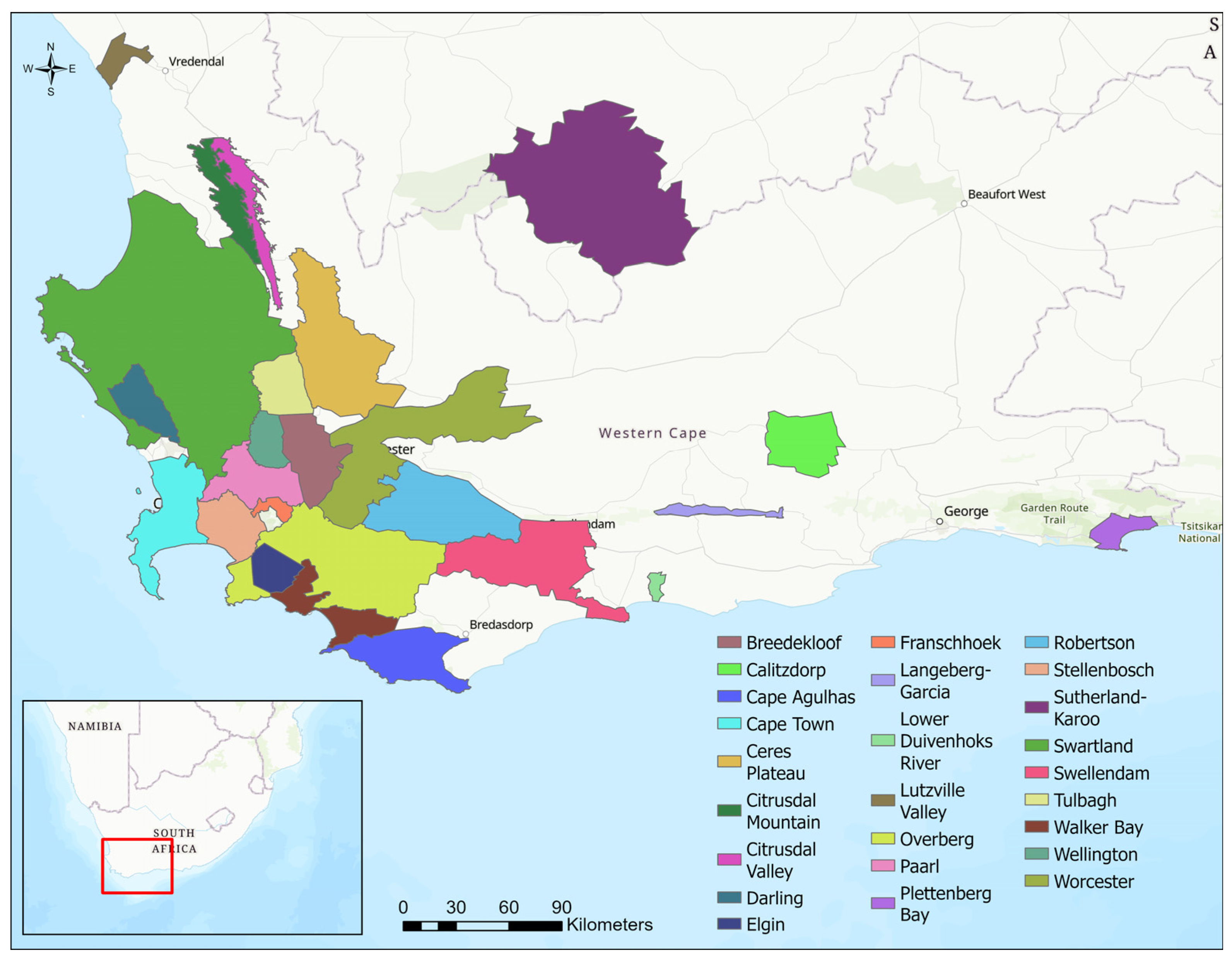
South Africa’s WPR were selected as the study area due to their importance in global wine markets, their growing climatic risks, and the limited availability of research examining sustainability strategies at the farm scale (Figure 1). Further, the Western Cape Province is the largest employer in commercial agriculture, accounting for about 25% of the country’s total [79].
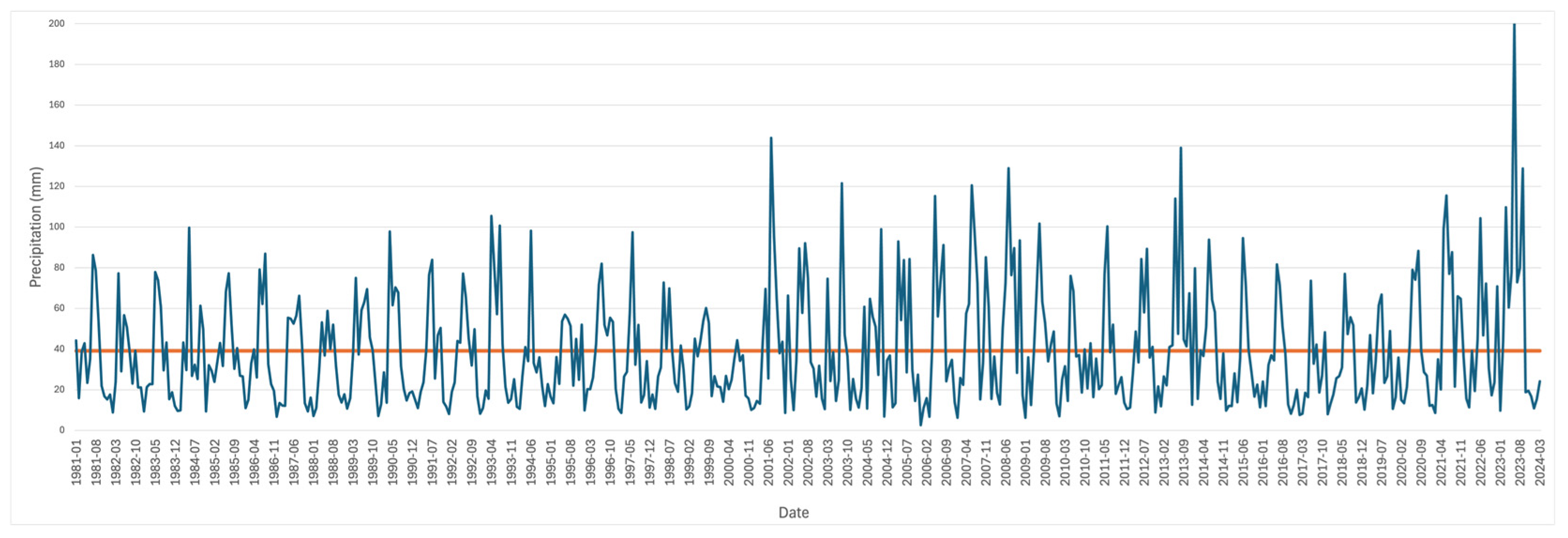
Across this study area, the Mediterranean climate, defined by mild, wet winters and dry, hot summers, causes most of the temperature and precipitation variation, but these variations might become more prominent under increasing climate variability. Inland and coastal temperature are greatly affected by the Atlantic and Indian Oceans such that differences over short distances allow the presence of micro- and macroclimates to form. The Western Cape Province has the highest rainfall variation in South Africa that ranges from 60 mm (about 2.36 in) to 3345 mm (about 10.97 ft) per year [80] (Figure 2).
Rainfall data were downloaded for the Western Cape Province from the Climate Hazards Group InfraRed Precipitation with Station data (CHIRPS) dataset (1981-present). CHIRPS constitutes a quasi-global rainfall dataset encompassing over 35 years of temporal data that is an integration of satellite imagery with in situ meteorological data to create a 0.05° gridded rainfall product [81]. It is a key data source for the analysis of trends and monitoring of seasonal drought conditions.
Terroir describes the unique geophysical conditions of a landscape, of which one important factor is soil [82]. Soil type plays a critical role in grape production in South Africa’s WPR, which are characterized by high spatial heterogeneity in soil properties. The dominant soils derive from Table Mountain sandstone, granite, and shale, each exhibiting distinct agrochemical and water-physical characteristics. Sandstone-derived soils are typically sandy, nutrient-poor, and have low water-retention capacity, whereas granite-derived soils are generally acidic, well drained, and possess good water-holding properties. Shale-derived soils tend to be more strongly structured, with higher nutrient reserves and moderate to high water-retention capacity. This diversity of soil types over short distances contributes to variability in vine vigor and production potential across the region [83].
Another important factor of terroir is topography [82]. Vineyards are distributed across a wide range of altitudes, slopes, and aspects, from valley floors to steep mountain slopes, creating substantial variation in mesoclimate and solar radiation exposure. Slope inclination and aspect influence temperature regimes, wind exposure, and drainage, while differences in elevation affect ripening rates and cultivar suitability. In the Southern Hemisphere context, cooler southern and eastern aspects are often preferred for more climate-sensitive varieties, whereas warmer northern and western slopes tend to accelerate ripening. This topographic diversity contributes to heterogeneity in vine performance and production outcomes both within and between farms [84].

2.2. Data Mining

Data were collected from the websites of 109 vineyards in the Western Cape Province to better understand what conservation and sustainability efforts they were undertaking. The entirety of each of the websites were mined. Vineyards were chosen either because they were a part of the Cape Wine Makers Guild (CWG), those designated as World Wildlife Fund Conservation Champions (WWF CC), or the Agulhas Wine Triangle (AWT). This analysis included all members of these organizations in 2023, except for 2, which did not have this information/websites available, bringing the actual number of analysis to 107. The CWG is described on their website as: “Membership is by invitation only and many of South Africa’s leading winemakers are members of the Guild. The CWG meets regularly as a technical tasting group, providing its members with an opportunity to evaluate wines from around the world and to share their knowledge and ideas” [85]. The WWF CC is a voluntary project where WWF works with environmental leaders in SA’s wine industry. The participating landowners commit to biodiversity-friendly and regenerative farming practices, which serve to conserve their natural areas and continually improve their water and energy efficiencies [86]. The AWT is a non-profit founded in 2019 to showcase the wines, tourism and natural beauty of the Agulhas area [87].
From each website, extensive notes were taken on key themes of sustainability and aligned with interview responses, as detailed below, for analysis. While these vineyards were selected due to their membership in these organizations, which may systematically privilege certain institutional voices, this number represents approximately 20% of all South African vineyards in 2023.
Tokenization and stemming were used to systematically identify key sustainability-related terms across these websites. Texts were first tokenized into individual words, after which stemming grouped closely related linguistic variants (e.g., “restore,” “restoration,” “restoring”) under shared conceptual roots. This approach allowed for consistent detection of terms such as biodiversity, fynbos, restoration, alien clearing, compost, recycle, cover crops, habitat, soil erosion, and solar. Although these concepts are thematically related, they were treated as analytically distinct because each captures a specific environmental practice, ecosystem component, or sustainability strategy within the context of this study. Retaining them as separate categories enabled more precise identification of how different aspects of environmental stewardship are emphasized and communicated.

2.3. Grower Surveys and Interviews

A survey was created and deployed, via 1 h interviews, during the austral autumn/winter of 2023 (IRB approval: IRB-STUDY00003012 at Michigan State University with a reliance agreement at the University of Tennessee, Knoxville). The interviews were conducted with a combination of viticulturists and vintners. The 20 recorded respondents were chosen from the Cape Winemakers Guild, though not every respondent answered every question. Sampling branched out from there using a snowball sampling technique, where participants were asked to recommend other participants [88]. Each of the interviews included guided questions, as well as an opportunity to freely discuss other information they thought was important. The data curation types and sample numbers are in Table 1.
The quantitative and qualitative questions used in the survey, separated by question type, are outlined in Appendix A. The goal of these questions was to collect a variety of information from respondents that addressed several issues present in South Africa’s WPR. The “General Questions” determined the position and occupation of participants, while “Vineyard Characteristics” questions asked participants to describe the specific characteristics of the vineyard they were associated with. “Climate” questions were related to climate variability, impacts on the vineyards, and sustainable management techniques/adaptations they have made. Finally, “Economics and Outlook” questions focused on economic challenges and how participants perceive the future of the industry.

2.4. Statement on the Use of Artificial Intelligence

During the preparation of this manuscript, the authors employed several artificial intelligence (AI)–assisted tools for clearly defined and limited purposes. Microsoft Co-pilot (version 2.20260331.37.0) was used to assist with consolidating and organizing results already derived from the authors’ analyses. It was also used to recreate a certain figure for illustrative purposes, and ChatGPT (version GPT-5.2; OpenAI, 2026) was used to assist with the visual layout of the conceptual framework based on author-defined content. SciSpace was used to assist with reference management. In all cases, AI tools were used as supportive aids only. All conceptual development, analysis, interpretation, and final text were generated and reviewed by the authors, who take full responsibility for the accuracy and integrity of the manuscript.

3. Results

3.1. Vineyard Backgrounds

Vineyards in this study vary substantially in their physical location and composition, which was not data that was mined from the 107 websites. Instead, to provide a sampling of vineyard backgrounds, the 20 surveyed vineyards ranged widely in size, from 8 to 3500 hectares, though most fell between 20 and 120 ha, representing a predominance of small-to-mid-scale operations. Establishment dates ranged from the 1970s to the early 2000s, reflecting a variety of vineyard and vine ages. All 20 in-person surveyed vineyards reported having some degree of conservation or set-aside land, either through formal biodiversity partnerships or internally designed natural habitat corridors. The land histories of these vineyards are varied, with many having been converted from cropland, orchards, grazing fields, natural vegetation, or other land use types. Respondents emphasized that terrain-linked factors such as soil depth and drainage, access to mountain water sources, and exposure to the ocean were foundational to their production. One interviewee described their location as shaped by “altitude, water from mountains, well-drained soils, and the ocean effect,” highlighting the intersecting environmental features that contribute to vineyard production. Another respondent stated that, “The valley location, steep slopes, and good soil for farming are crucial,” emphasizing topographic and geomorphological variation as a central factor in viticulture practice. These site-specific features were frequently described as active determinants of varietal suitability, flavor development, and yield stability.

3.2. Sustainability and Conservation Efforts

The results from the 107 vineyard websites analyzed provide an overview of sustainability commitments, including participation in environmental initiatives and descriptions of on-farm ecological practices. Across reviewed vineyards, 47% indicated dedicated conservation areas or explicit biodiversity initiatives.
Furthermore, within our dataset, membership in formal conservation initiatives varied across the website dataset. A total of 40% vineyards reported affiliation with the CWG, while 51% were identified as WWF CC and 12% as members of the AWT. Many vineyards frame sustainability and certification as integral to their brand identity. A larger portion of vineyards from the websites (not included in the interview portion of the study) reported no affiliation with these organizations, demonstrating wide variations in formal recognition despite extensive sustainability initiatives.
Sustainability terminology was identified through manual keyword extraction of vineyard website sustainability descriptions. Sustainability-related terms (e.g., fynbos restoration, invasive alien clearing, biodiversity corridors, wetland protection, and minimal intervention farming) were recorded when present in the vineyard website text. Each vineyard was counted once per keyword to avoid duplication where there were multiple references to the same keyword within one vineyard. The frequency of these terms across the website dataset was then summarized to identify commonly reported sustainability practices. The most frequent sustainability terms extracted from these websites are summarized in Table 2.
While some websites framed sustainability broadly through general commitments to environmental stewardship, others described specific implementation practices. For example, several vineyards reported setting aside land for conservation, with one noting that “50 hectares are set aside for conservation, mostly consisting of Overberg Sandstone Fynbos and some critically endangered Western Ruens Shale Renosterveld.” Others described active ecosystem management, including “removal of invasive alien plants from the farm to conserve unique biodiversity.” Further examples referenced habitat protection and restoration, such as “rehabilitating indigenous vegetation by planting endemic trees and removing invasive species,” and soil restoration efforts, including “promoting natural cover crops and weeds between vines to enhance soil health and microclimates.” These examples highlight that while sustainability terminology is widespread across vineyard websites, the depth of reported implementation varies across producers.
Examples of conservation initiatives described by these websites included:
  • “50 hectares are set aside for conservation, mostly consisting of fynbos habitat.”
  • “Removal of invasive alien plants from the farm to conserve groundwater and restore natural vegetation.”
  • “WWF CC… committed to sustainable farming, monitoring water quality, and supporting local wildlife.”
  • “Habitat preservation… protecting bird, plant, and wildlife diversity within the farm boundaries.”
  • “Tree planting and ecological restoration aimed at increasing biomass and improving soil structure.”
Data from vineyard websites reveal how vineyards publicly communicate sustainability commitments, but the depth of these efforts varies widely. Participation in external programs within the dataset is substantial: 51% of vineyards are certified WWF CC, and 11% are verified under the IPW scheme. Many smaller producers emphasize farm-specific practices such as mulching (which decreases soil moisture loss by creating a protective layer over the soil which in turn will decrease the irrigation demands and lower soil temperature), native planting, or wetland restoration rather than formal accreditation.
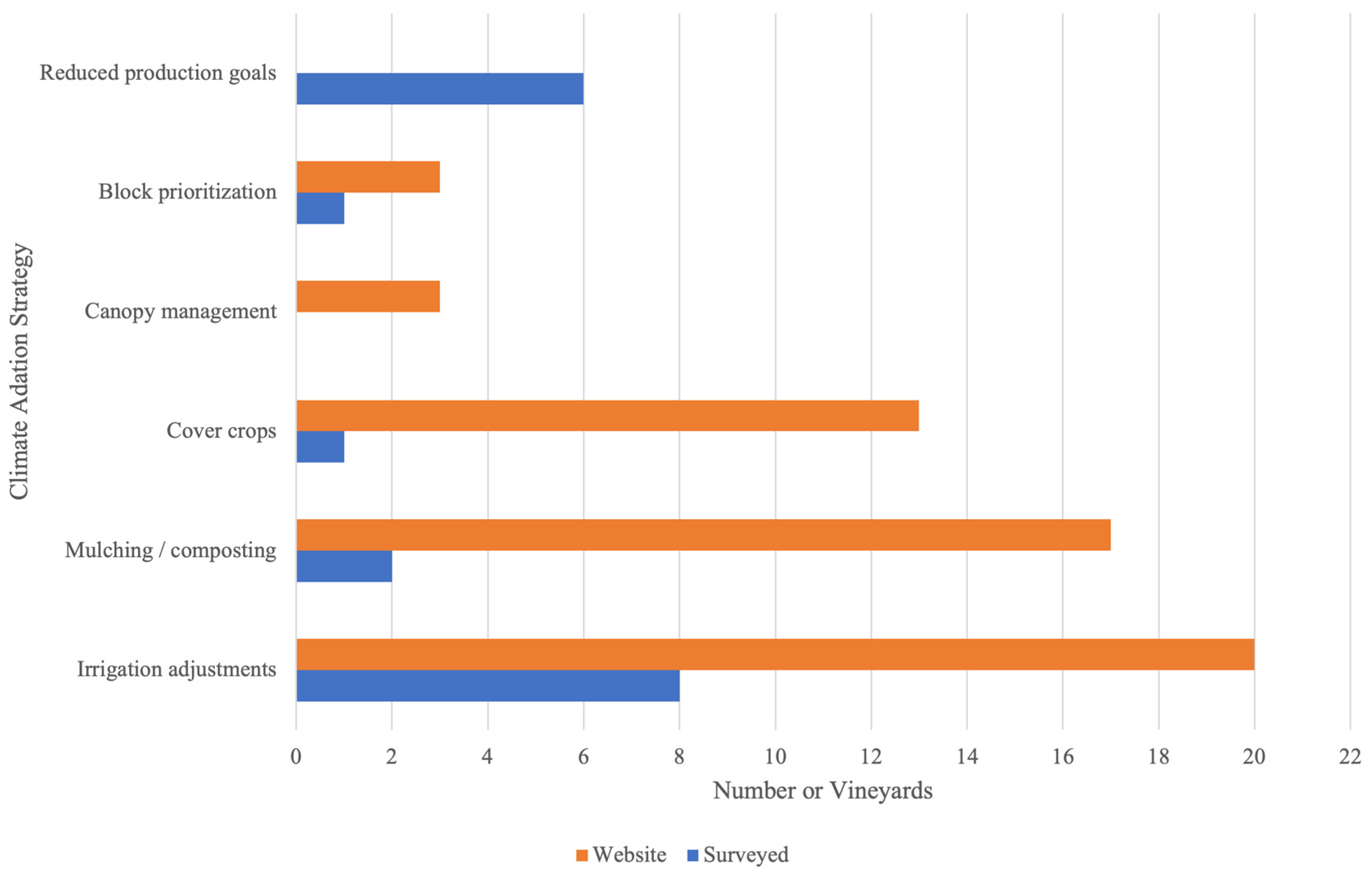
Sustainability practices reported by those surveyed align closely with patterns among the broader website datasets. Surveyed vineyards described soil-moisture management—especially mulching, composting, cover cropping, and reduced tillage—as core strategies for building resilience during dry or heat-intense vintages. These survey responses closely align with the website dataset, where soil and water-related practices were the most frequently documented adaption strategies: irrigation adjustments were identified at 19% of vineyards, mulching or composting at 16% of vineyards, and cover cropping at 12% of vineyards. Several surveyed vineyards also reported having conservation areas, including restoration of natural vegetation and protection of non-vineyard land.

3.3. Climate Variability and Sustainable Water Management

Climate variability emerged as a major recurring theme across both the surveyed respondents and website-derived dataset. Producers consistently described increasing erratic weather patterns, with several noting long-term directional shifts towards warmer and drier climate conditions and shifts in the timing of harvest. One respondent noted, “We have noticed a change in climate conditions over the last 30 years, including warmer and drier seasons,” while another emphasized that “climate conditions have become less predictable and more extreme.” Survey respondents were also asked if they had seen a change in climate conditions, such as temperature and rainfall, including annual norms or within season variability, in their region over the last 5 years, and 92% of respondents stated that they had. Among surveyed respondents, the 2015–2019 drought period was the most frequently mentioned climate event, with 2016 and 2019 highlighted as the most extreme. This period was often associated with yield declines, increased vine stress, and increased dependence on supplemental irrigation. Producers also referenced isolated but acute heat events in 2016 and 2018, along with excessive rainfall in 2023. These climate events contribute to variability in grape quality and adjustments in harvest timing.
Website-derived data demonstrates similar concerns. Many vineyards mentioned the need to adapt to increasingly unpredictable climate conditions, often highlighting the need to buffer vines against heat and moisture stress. Water conservation, soil organic matter building, drought resilience, and the use of heat-tolerant cultivars in select regions were also mentioned. Some vineyards framed climate adaptations as a long-term climate commitment.
Across both datasets, vineyards described the need for adaptive drought-responsive strategies to combat climate challenges. Surveyed vineyards highlighted targeted irrigation adjustments, mulching, cover cropping, composting, soil-structure improvements (anti-erosion measures), and dryland farming as the main strategies to reduce irrigation demand, retain soil moisture, and stabilize vine performance during changing climate conditions (Figure 3). One producer summarized this adaptive approach: “They are mulching to stabilize water demands,” while another respondent highlighted soil-based mitigation, stating, “We are doing a lot of mulching and composting too.” Several vineyards also reported selective block prioritization or strategic reductions in production during severe weather years. Websites mirror these approaches. Many vineyards reported utilizing soil conservation practices, restoring natural vegetation in surrounding areas, and implementing water-efficient irrigation systems. Several vineyards also described using canopy shading, replanting more resilient clones, or installing weather-monitoring systems to improve seasonal forecasting.
Water availability and irrigation infrastructure emerged as one of the most frequently cited operational concerns among surveyed vineyards. Respondents indicated substantial variation in water scrutiny across estates: 58% identified irrigation costs, reliance on boreholes, salinity risks, pumping constraints, and load-shedding disruptions as persistent issues, while 42% of producers reported no current water-related challenges. Across sampled vineyards, drip irrigation was the predominant method of irrigation to address climate variability while maintaining sustainable practices, which is supplemented by springs, farm dams, and boreholes. One respondent noted that “The irrigation is coming from a dam that was already on the farm. There is a spring on the farm too,” while another emphasized infrastructure costs, stating, “The quality of the water is great. The cost of putting in irrigation will be offset by the increased production in the first year.” Producers who have experienced recurring droughts highlighted their reliance on drip irrigation and storage capacity, with one respondent stating, “We drilled a borehole…If the dams are full, we can sustain the season because we are not expecting rainfall in the growing season.”
Overall, survey results indicate a pattern in which water access varies across the region and by infrastructure, but resource-intensive years, particularly drought periods, trigger a shift towards soil moisture conservation practices, alternative water sourcing, and reduced irrigation when possible.

3.4. Sustainable Disease Management

Disease management emerged as a widespread and increasingly complex priority across both surveyed and website-examined vineyards. The long-term sustainability of these businesses depends on sustainable disease management. Among surveyed producers, leafroll virus, powdery mildew, downy mildew, botrytis, wood rot, mealybugs, and nematodes were the most frequently cited issues. Respondents also noted that disease events may have increased in recent years. One such producer noted that they had “struggled with leafroll, downy mildew, and botrytis,” while another described “major issues with leafroll virus, wood rot disease, and mildew.” Several respondents identified powdery mildew as a recurrent disease, with statements such as: “Powdery mildew and leafroll virus are significant concerns.” Across the 107 vineyards included in the website dataset, disease-related terminology appeared frequently in susceptibility or vineyard-practice descriptions. Commonly referenced issues involved fungal pathogens (specifically downy and powdery mildew), viral infections (more notably leafroll), and vineyard pests (such as mealybugs and scale insects). Disease-related keywords—including leafroll, powdery mildew, downy mildew, fungal pressure, and mealybugs—appeared consistently in online data extraction results, indicating high industry-wide knowledge of these diseases and pests.
Disease management practices reported in both datasets demonstrate that controlling these pathogens requires monitoring and intervention, which South African viticulturists address from a sustainability framework as well. For the sustainability of the environment and their businesses, they use integrated pest management (IPM) approaches that emphasize biological or minimally synthetic mitigation efforts. Vineyards report persistent pathogen presence and gradual shifts towards lower-input, ecosystem-based management strategies. Vineyards described implementing the use of beneficial insects, predatory mites, fungal biocontrol agents, targeted canopy management (to improve airflow and reduce fungal pressure), and reduced spray programs. Several vineyards also referenced dryland practices, open-canopy training, or site selection as indirect disease control methods. Viral infections (e.g., leafroll) were often linked to vector management, particularly mealybug control, which in turn requires insect treatments. Infected vines were occasionally removed entirely, creating ecological and economic loss.
Website extraction results reveal a similar reference to IPM strategies. Vineyards described their reliance on biological control organisms, adopting minimal spray regimes, and using monitoring-based fungicide applications. Many vineyards also noted pest-specific interventions, such as the removal of virus-infected vines and targeted mealybug management. Vineyards frequently framed disease control as essential to sustaining long-term vineyard health. Several vineyards noted that disease results in yield loss or vine removal, further emphasizing the importance of proactive disease monitoring to maintain vineyard health and production. These responses highlight that disease management is not only a crop management strategy but also a measure of long-term environmental and economic sustainability within the operations of vineyards.

3.5. Sustainability of the Business: Market and Economic Adaptation, and Future Outlook

Vineyards reported operating within a mix of supplying both domestic consumers and international export markets. Common export destinations included the United States, the United Kingdom, Germany, and Japan, although the degree of reliance on international sales varied. Many respondents noted that production and operating costs have risen in recent years, particularly for glass, packaging, fuel, and labor, leading most to implement gradual price increases.
Diversification beyond wine sales was widespread among surveyed vineyards. Tourism-based revenue streams such as tastings, lodgings, restaurants, and cultural experiences such as art galleries and game drives, were frequently described as established components of business models rather than supplementary activities. These activities were identified as important for stabilizing revenue during periods of fluctuating grape yields or consumer demand.
Multiple respondents reported growth in online direct-to-consumer sales following the COVID-19 pandemic, exemplified in responses such as: “COVID had a positive impact in the long term, but we faced challenges during the lockdown periods,” and “COVID led to disruptions but also facilitated innovation in online sales.” Over the course of the first year of the pandemic, South African wine sales were shut down domestically, causing billions of Rand loss to the industry, of which many wineries are still recovering from.
For vineyards exporting to the United States, respondents noted that import challenges, such as shipping issues, regulatory constraints, and market access, limit export potential. One respondent noted that it is “difficult to import to the States,” while others highlighted rising packaging costs driven by the international supply chains. They also noted difficulties due to rising compliance and import-related costs. Respondents emphasized that market access is constrained not only by transportation and logistics but also by tariff policies imposed on South African goods. Post the timeframe of this study, South African products exported to the U.S. are currently subject to a 30% tariff that began on the 7th of August 2025 [89], but still, this has since increased the cost of entry into U.S. markets and limited competitive positioning for premium wine producers.
Survey results indicate divided outlooks for the future of the South African wine industry, with national and international outlooks being somewhat similar in tone. Overall, the most common response for both national and international projections was “somewhat negative,” used by 42% of respondents for the national outlook and 50% the international outlook. However, the data also reveals important nuances. A total of 33% of respondents selected “somewhat positive” for both national and international outlooks, and 25% of respondents viewed the national outlook as “very positive”. When asked to elaborate, respondents frequently noted the rising input and production costs, particularly for packaging, glass and transport, combined with limited government support. Several respondents highlighted issues of infrastructure and regulation, stating that “the long-term outlook for the wine industry nationally is somewhat negative due to challenges like electricity restraints,” and “the industry needs to become a bit smaller, and they need to grow the prices—the South African wine industry is not sustainable given the prices.”
Other concerns included the shrinking footprint of wine grapes, competition with other crops, limited subsidies, and persistent barriers to increasing exports. One producer noted, “It’s difficult to import to the States… same in the UK. Germany produces enough wine for their population, so it’s difficult.” However, the negative view of the international wine markets is not unanimously negative: “Internationally, the outlook is somewhat positive, especially with increasing demand in certain markets.”
A theme in the surveyed respondents was the need for South African wine to move away from “cheap and cheerful,” and move towards a higher-value identity, which they are doing by continuing to increase the quality of wine produced. One respondent noted that “South African wines need to be better seen. Blind tastings showing how South African wines compare [to others] would help.”

4. Discussion

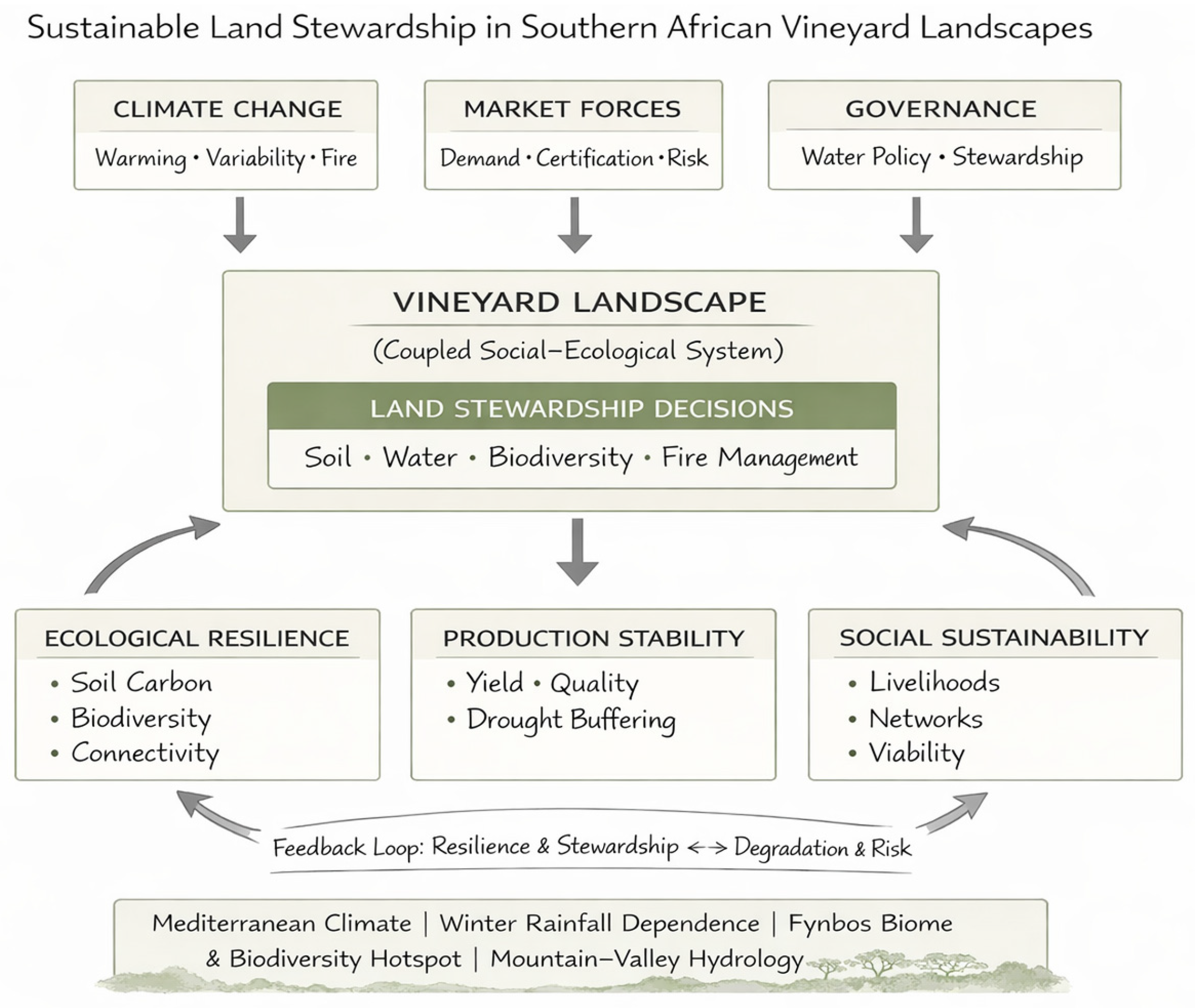
This study examined growers’ perceptions of sustainable land stewardship in South Africa’s WPR through a mixed-methods approach combining website content mining with stakeholder surveys. Sustainable vineyard landscapes in South Africa emerge from the interaction of climate pressures, market dynamics, and governance systems, all of which shape how producers manage soil, water, and biodiversity. These stewardship choices, in turn, influence ecological resilience, production stability, and social wellbeing, creating a feedback loop which under strong management enhances long-term sustainability, while degradation heightens vulnerability and risk. Seen at this broader scale, the conceptual diagram (Figure 4) highlights that vineyard sustainability is not driven by any single factor but by the alignment of environmental conditions, economic incentives, and social systems within a coupled social-ecological landscape. Our findings show that viticulturists emphasized the importance of implementing measures to increase biodiversity conservation, soil health (including anti-erosion), and water efficiency, yet there are still structural economic barriers to implementing regenerative practices at scale. These results contribute to the growing body of literature on sustainable viticulture while highlighting region-specific challenges and opportunities unique to a South African WPR context [55,61].
Our thematic analysis shows that managers view conservation practices such as habitat restoration, cover cropping, and integrated pest management as essential investments in operational sustainability. For South African viticulturists, this is integral to their professional and cultural practices. These practices reflect broader trends in regenerative agriculture [90], where ecological health is recognized as foundational to sustained productivity. The emphasis on soil health aligns with global movements toward climate-smart agriculture [91]. A related initiative in South Africa, the Old Vine Project, a nonprofit organization, certifies vines that are at least 35 years old, to encourage viticulturists to plant virus-free vines to produce better wine for the future, to encourage producers to farm as close to nature as possible, and to demonstrate a sustainable pricing model using old vines as a basis for growth [92]. To further improve resilience, companies such as Vititec are developing hardy clonal material for the South Africa’s WPR [93], while companies like Hortec work to provide microclimate data to farmers [94]. One study in this area showed that the correlation between drought years and El Niño years was stronger at the farm scale than at the broader landscape scale. Farms could mitigate some of the impacts of the drought through careful irrigation management, which we know most farmers are doing based on the survey and data mining results [24,95]—thus suggesting that South Africa’s WPR are a leader in climate-responsive viticulture.
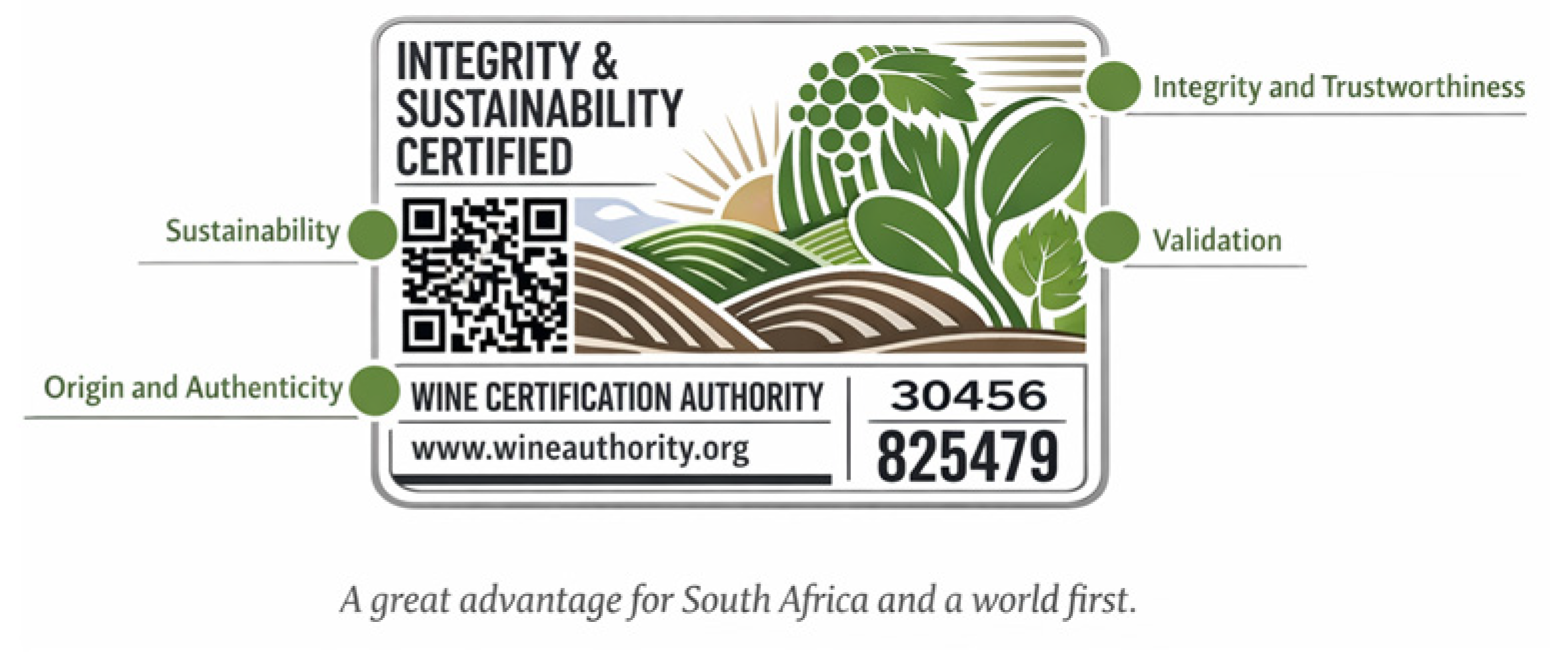
Our findings of industry resources and stakeholder perspectives indicate that market pressures and consumer demand for eco-friendly products are partial drivers of sustainability adoption in South Africa’s WPR [96]. In South Africa, the Wine Certification Authority supports a joint certification (seal, titled the IPW, recreated in Figure 5) that confirms the integrity of the origin of a wine as well as the vintage year, grape varietal, and sustainable (which they define as “environmentally responsible”) production and traceability up to the final product [97]. These types of certification programs, such as the IPW and WWF CC, recognize environmental stewardship/accountability and can enhance market competitiveness [98,99]. The survey respondents noted that certification not only provides market access but also serves as a framework for continuous improvement in environmental performance. Therefore, one note of importance is that certification systems in South Africa (and globally) should be designed in a way that maintains rigorous environmental standards while also remaining accessible to diverse producers [100,101].
Water scarcity in the Western Cape is exacerbated by increasing climate variability [102,103,104]. This has emerged as both a driver of innovation and a challenge for sustainability efforts. One of the strongest themes throughout the interviews was the adoption of more water efficient practices, especially given that there is primarily reliance on individual farm scale action in this region [24,95]. For future action in the Western Cape, watershed-scale planning that integrates accessible agricultural water infrastructure with conservation objectives and community needs could benefit the region.
Another important insight from this study was the importance of collaborative initiatives, such as biodiversity corridors and landscape-scale conservation planning. Farms that participated in biodiversity and other conservation efforts reported positive sustainability outcomes and greater confidence in the long-term viability of their operations. These findings support theoretical frameworks emphasizing collaborative initiatives as essential for managing complex social-ecological systems. In South Africa’s WPR, where private agricultural lands are interspersed with protected areas of global biodiversity significance, landscape-scale coordination is particularly crucial. One such effort is the Biodiversity and Wine Initiative (BWI), which promotes conservation by providing advisory extension support for the wine industry [105]. These efforts are particularly crucial in this region because of the endangered vegetation of the Greater Cape Floristic Region, one of the highest biodiversity hotspots on Earth [106]. The success of initiatives like BWI demonstrates that voluntary, multi-stakeholder approaches can achieve conservation outcomes while maintaining agricultural productivity. However, the sustainability of such partnerships depends on sustained funding, institutional support, and equitable power dynamics among participants. Smaller producers can feel excluded from decision-making processes dominated by larger estates and conservation organizations. Addressing these power imbalances is essential for ensuring that collaborative governance models are truly inclusive and capable of mobilizing diverse forms of knowledge and resources [107].
At a larger scale, the ecological sustainability efforts of farmers in South Africa’s WPR outlined above are supporting South Africa in meeting global sustainability goals, particularly the UN Sustainable Development Goals (SDGs) related to responsible consumption and production (SDG 12), climate action (SDG 13), and life on land (SDG 15) (UN SDGs, 2025). By integrating conservation principles with economic viability, the region demonstrates that agricultural landscapes can contribute to multiple sustainability objectives simultaneously [68].
From the sustainability of the business perspective, tourism is an industry around South Africa’s WPR that connects the cultural heritage of the region with sustainability [108]. The tourism industry capitalizes on the region’s physical landscapes and historical vineyards, which generates revenue to increase the sustainability of the landscapes through conservation and the sustainability of businesses [109]. Our findings show that tourism was an integral component of the vineyard businesses. Balancing tourism development with environmental protection requires careful planning and governance arrangements that prevent commodification of nature while supporting local livelihoods [110,111,112].
There are several limitations of note in this study including: making improvements in the diversity of viticulturists in future interviews that could provide broader, more peripheral perspectives on sustainability, particularly small-scale farms who face unique challenges. Similarly, this study focused on gathering information from viticulturists, but important perspectives on sustainable pathways could be revealed by interviewing others involved in the industry, such as workers, local communities, and consumers.
Future directions include expanding the study to quantitatively assess the ecological outcomes of different practices or the cost-effectiveness of various interventions. Longitudinal research combining ecological monitoring with economic analysis would provide valuable evidence for prioritizing conservation investments and evaluating the effectiveness of policy interventions. Finally, repeating this study in other countries could help to identify the most transferrable lessons and adaptions to the sustainability challenges of the wine industry, which have some similar overarching themes but different place-based challenges.

5. Conclusions

The results of this study show that while growers strive for sustainability of vineyards in South Africa’s WPR, such sustainability is influenced by significant challenges and adaptation strategies. Both the surveys and website scraping demonstrate that conservation practices are widely used. Such practices include habitat restoration, soil health management, and biodiversity corridors, amongst others. Almost half of the reviewed vineyards reported that they had dedicated conservation areas.
One of the most critical concerns for the long-term sustainability of both the landscape and vineyard businesses is water management, an issue that has become increasingly urgent given observed and projected climate variability; indeed, 92% of respondents noted shifts toward warmer, drier conditions. The primary techniques used to mitigate drought stress include drip irrigation, boreholes, and mulching, all of which were especially necessary during the severe 2015–2019 drought, while broader adaptations include soil moisture conservation strategies, refined canopy management, and selective production adjustments. At the same time, extreme events at the opposite end of the spectrum are also a concern, as demonstrated by the severe flooding in the Western Cape during the austral winter of 2023 that destroyed roads and homes and further underscored the region’s climate vulnerability.
Disease pressures, most notably leafroll virus and mildew, also remain pervasive challenges; to improve sustainability and reduce reliance on chemical inputs, farmers are increasingly implementing IPM approaches that incorporate biological control organisms alongside reduced chemical applications, which are essential for combating diseases that can rapidly devastate entire vineyard blocks and require multi-year recovery.
In response to both environmental and economic pressures, producers are strengthening their resilience through diversification, including expanded tourism offerings and direct-to-consumer sales, although rising inflation and export barriers have tempered some optimism about the industry’s long-term outlook. Collectively, these findings underscore that farmers in South Africa’s WPR are innovating at the intersection of ecological stewardship and economic adaptation, positioning the region as a compelling case study in climate-responsive viticulture.
In conclusion, our findings show that South Africa’s WPR can serve as a model of sustainable viticulture that can be transferred to other agricultural regions that are facing similar pressures, such as increasing climate variability, biodiversity loss, and changing markets. In South Africa, the extensive use of sustainable agricultural practices, various certificate programs, and community cooperation are examples of how both production and conservation goals can be ecologically sound and economically viable.

Author Contributions

Conceptualization, H.V.H. and E.L.B.; methodology, H.V.H. and E.L.B.; validation, H.V.H.; formal analysis, H.V.H. and Z.L.V.d.W.; investigation, H.V.H., E.L.B. and J.S.; resources, H.V.H., E.L.B. and J.S.; data curation, H.V.H. and E.L.B.; writing—original draft preparation, H.V.H., Z.L.V.d.W., J.D.S. and S.A.I.; writing—review and editing, H.V.H., J.K.B., S.A.I., D.Z.F., J.D.S., Z.L.V.d.W., E.L.B. and J.S.; visualization, Z.L.V.d.W. and J.S.; supervision, H.V.H.; project administration, H.V.H. and E.L.B.; funding acquisition, H.V.H., E.L.B. and J.S. All authors have read and agreed to the published version of the manuscript.

Funding

This research was partially funded by the University of Tennessee, Knoxville, Michigan State University, the University of Florida, and Southwestern University.

Institutional Review Board Statement

The study was conducted in accordance with the Declaration of Helsinki and approved by the Institutional Review Board of Michigan State University (IRB-STUDY00003012, 7 July 2019).

Informed Consent Statement

Informed consent was obtained from all subjects involved in the study.

Data Availability Statement

The data presented in this study are available on request from the corresponding author.

Acknowledgments

We thank the wine producers of South Africa for their participation in this study, for generously sharing their knowledge and experiences. This research would not have been possible without their time, openness, and insights, resulting in invaluable contributions. The authors would also like to thank Harmony Rain Fine (a University of Tennessee, Department of Geography & Sustainability alumni) for their contribution to the analysis of the survey results. During the preparation of this manuscript, the authors used Microsoft Co-Pilot version 2.20260331.37.0 for the purposes of consolidating some of the results and the recreation of the seal in Figure 5. For the creation of the conceptual diagram, Figure 4, we used ChatGPT, version GPT-5.2; Open AI, 2026. We also used SciSpace (https://scispace.com/) for the generation of some reference materials. The authors have reviewed and edited the output and take full responsibility for the content of this publication.

Conflicts of Interest

The authors declare no conflicts of interest.

Appendix A

Below are the questions that were used in the survey, by category:
  • General Questions
    • What is your role or position?
    • How many years have you been working at the vineyard?
    • What year was the vineyard or brand established?
    • Total size of cultivated vineyard (ha)
    • Do you run any conservation programs or have any part of your farm set aside for conservation purposes? Select all that apply.
    • Have you or are you considering converting any land to organic production?
    • Total size of conservation lands (ha or % of total land is fine) owned by the vineyard
  • Vineyard Characteristics
    • What type of grapes, and at what percentage, are grown across the vineyard?
    • What characteristics, across your vineyard, drive grape quality? (e.g., slope, aspect, wind direction). Please provide details related to your response.
    • What was the dominant land cover at this vineyard before vines were planted?
    • Is water a major concern for the vineyard?
    • What aspect related to water is of concern to you? (e.g., cost of water, infrastructure, salinity, abundance, and accessibility)
    • Do you irrigate? If so, where is the water coming from?
    • Have you struggled with diseases? If so, what type?
    • If yes, has disease been more prevalent in the last 5 years?
  • Climate
    • How do you use weather station data across the vineyard? And do you have one onsite?
    • Please list years when, in your opinion, grape quality was very good.
    • Please list years when, in your opinion, grape quality was less than ideal.
    • During these years, what strategies did you use to overcome less than ideal production?
    • Would you be willing to share production data with the research team? This data will not be shared with others.
    • Thank you for agreeing to share, or consider sharing, data with the team. What is the best email address to contact you about obtaining this information?
    • Have you noticed a change in the climate conditions (temperature and rainfall), including annual norms or within season variability, in your region over the last 30 years?
    • If yes, you have noticed a change in climate conditions in your regions over the last 30 years, how so?
    • Have you noticed a change in the climate conditions (temperature and rainfall), including annual norms or within season variability, in your region over the last 5 years?
    • If yes, you have noticed a change in climate conditions in your regions over the last 5 years, how so?
    • In what years did extreme temperatures impact production? (e.g., heatwaves and frost)
    • In what years did extreme rainfall impact production? (e.g., drought and flood)
    • What management strategies are employed during extreme climate events? (e.g., heatwaves, frost, flooding, drought)
    • Are the economic consequences of climate change (temperature and rainfall) positive, negative, or neutral for your business?
  • Economics and Outlook
    • Do you have supplemental forms of income associated with the vineyard?
    • How has COVID impacted your business?
    • Where is your primary market, domestic or international?
    • What other countries do you export wine?
    • What have you done to adapt to the change in market cost (i.e., inflation) lately?
    • Do you think the long-term outlook for wine industry nationally (given climate, market changes, environmental stresses, etc.) is:
    • Do you think the long-term outlook for wine industry internationally (given climate, market changes, environmental stresses, etc.) is:
    • What are your biggest concerns about the wine industry in the next 10 years?
    • Final thoughts or comment? Can you suggest any other winemakers or growers to take the survey?

References

  1. South Africa Wine Part One: Industry Growth and Black Power. Available online: https://londonwinecompetition.com/en/blog/insights-1/south-africa-wine-part-one-industry-growth-and-black-power-783.htm (accessed on 18 February 2026).
  2. Easterling, W.E.; Aggarwal, P.K.; Batima, P.; Brander, K.M.; Erda, L.; Howden, S.M.; Kirilenko, A.; Morton, J.; Soussana, J.-F.; Schmidhuber, J. Food, Fibre and Forest Products. Clim. Change 2007, 2007, 273–313. [Google Scholar]
  3. Nelson, G.C.; Rosegrant, M.W.; Koo, J.; Robertson, R.; Sulser, T.; Zhu, T.; Ringler, C.; Msangi, S.; Palazzo, A.; Batka, M.; et al. Climate Change: Impact on Agriculture and Costs of Adaptation; International Food Policy Research Institute: Washington, DC, USA, 2009; Volume 21, ISBN 0-89629-535-4. [Google Scholar]
  4. Liverman, D.; Kapadia, K. Food Security, Food Systems and Global Environmental Change. In Food Security and Global Environmental Change; Routledge: Oxford, UK, 2012; pp. 3–24. [Google Scholar]
  5. Vermeulen, S.J.; Aggarwal, P.K.; Ainslie, A.; Angelone, C.; Campbell, B.M.; Challinor, A.J.; Hansen, J.W.; Ingram, J.S.; Jarvis, A.; Kristjanson, P.; et al. Options for Support to Agriculture and Food Security under Climate Change. Environ. Sci. Policy 2012, 15, 136–144. [Google Scholar] [CrossRef]
  6. Intergovernmental Panel on Climate Change (IPCC). Climate Change 2022—Impacts, Adaptation and Vulnerability: Working Group II Contribution to the Sixth Assessment Report of the Intergovernmental Panel on Climate Change; Cambridge University Press: Cambridge, UK, 2023. [Google Scholar]
  7. Masson-Delmotte, V.; Zhai, P.; Pirani, A.; Connors, S.L.; Péan, C.; Berger, S.; Caud, N.; Chen, Y.; Goldfarb, L.; Gomis, M.I.; et al. Climate Change 2021: The Physical Science Basis. Contribution of Working Group I to the Sixth Assessment Report of the Intergovernmental Panel on Climate Change; IPCC, Ed.; Cambridge University Press: Cambridge, UK; New York, NY, USA, 2021. [Google Scholar]
  8. Knight, J.; Harrison, S. The Impacts of Climate Change on Terrestrial Earth Surface Systems. Nat. Clim. Change 2013, 3, 24–29. [Google Scholar] [CrossRef]
  9. Conly, F.M.; Van der Kamp, G. Monitoring the Hydrology of Canadian Prairie Wetlands to Detect the Effects of Climate Change and Land Use Changes. Environ. Monit. Assess. 2001, 67, 195–215. [Google Scholar] [CrossRef] [PubMed]
  10. Dilley, M. Reducing Vulnerability to Climate Variability in Southern Africa: The Growing Role of Climate Information. Clim. Change 2000, 45, 63–73. [Google Scholar]
  11. World Bank Climate Change Knowledge Portal|Climate Change Knowledge Portal. Available online: https://climateknowledgeportal.worldbank.org/ (accessed on 17 March 2026).
  12. World Meteorological Organization State of the Climate in Africa 2024. Available online: https://wmo.int/publication-series/state-of-climate-africa-2024 (accessed on 17 March 2026).
  13. South African Weather Service. Annual State of the Climate of South Africa 2023; South African Weather Service: Pretoria, South Africa, 2023.
  14. South African Weather Service. Annual State of the Climate of South Africa 2024; South African Weather Service: Pretoria, South Africa, 2024.
  15. Pachauri, R.K.; Allen, M.R.; Barros, V.R.; Broome, J.; Cramer, W.; Christ, R.; Church, J.A.; Clarke, L.; Dahe, Q.; Dasgupta, P. Climate Change 2014: Synthesis Report. Contribution of Working Groups I, II and III to the Fifth Assessment Report of the Intergovernmental Panel on Climate Change; IPCC: Geneva, Switzerland, 2014; ISBN 92-9169-143-7. [Google Scholar]
  16. Ziervogel, G.; New, M.; Archer van Garderen, E.; Midgley, G.; Taylor, A.; Hamann, R.; Stuart-Hill, S.; Myers, J.; Warburton, M. Climate Change Impacts and Adaptation in South Africa. Wiley Interdiscip. Rev. Clim. Change 2014, 5, 605–620. [Google Scholar] [CrossRef]
  17. Jentsch, A.; Beierkuhnlein, C. Research Frontiers in Climate Change: Effects of Extreme Meteorological Events on Ecosystems. C. R. Geosci. 2008, 340, 621–628. [Google Scholar] [CrossRef]
  18. Calzadilla, A.; Rehdanz, K.; Betts, R.; Falloon, P.; Wiltshire, A.; Tol, R.S. Climate Change Impacts on Global Agriculture. Clim. Change 2013, 120, 357–374. [Google Scholar] [CrossRef]
  19. Roffe, S.J.; Fitchett, J.M.; Curtis, C.J. Investigating Changes in Rainfall Seasonality across South Africa: 1987–2016. Int. J. Climatol. 2021, 41, E2031–E2050. [Google Scholar] [CrossRef]
  20. Dunning, C.M.; Black, E.; Allan, R.P. Later Wet Seasons with More Intense Rainfall over Africa under Future Climate Change. J. Clim. 2018, 31, 9719–9738. [Google Scholar] [CrossRef]
  21. Gbetibouo, G.; Ringler, C. Mapping South African Farming Sector Vulnerability to Climate Change and Variability; International Food Policy Research Institute: Washington, DC, USA, 2009. [Google Scholar]
  22. Thomas, D.S.G.; Twyman, C.; Osbahr, H.; Hewitson, B. Adaptation to Climate Change and Variability: Farmer Responses to Intra-Seasonal Precipitation Trends in South Africa. Clim. Change 2007, 83, 301–322. [Google Scholar] [CrossRef]
  23. Blignaut, J.; Ueckermann, L.; Aronson, J. Agriculture Production’s Sensitivity to Changes in Climate in South Africa: Research Article. S. Afr. J. Sci. 2009, 105, 61–68. [Google Scholar]
  24. Araujo, J.A.; Abiodun, B.J.; Crespo, O. Impacts of Drought on Grape Yields in Western Cape, South Africa. Theor. Appl. Climatol. 2016, 123, 117–130. [Google Scholar] [CrossRef]
  25. Talanow, K.; Topp, E.N.; Loos, J.; Martín-López, B. Farmers’ Perceptions of Climate Change and Adaptation Strategies in South Africa’s Western Cape. J. Rural Stud. 2021, 81, 203–219. [Google Scholar] [CrossRef]
  26. Pietersen, G. Spread of Grapevine Leafroll Disease in South Africa—A Difficult but Not Insurmountable Problem; FAO: Rome, Italy, 2004. [Google Scholar]
  27. Pietersen, G. Spatio-Temporal Dynamics of Grapevine Leafroll Disease in Western Cape Vineyards. In Proceedings of the Extended Abstracts of the 15th Meeting of the International Council for the Study of Virus and Virus-like Diseases of the Grapevine (ICVG), Stellenbosch, South Africa, 3–7 April 2006; pp. 126–127. [Google Scholar]
  28. Pietersen, G.; Spreeth, N.; Oosthuizen, T.; van Rensburg, A.; van Rensburg, M.; Lottering, D.; Rossouw, N.; Tooth, D. Control of Grapevine Leafroll Disease Spread at a Commercial Wine Estate in South Africa: A Case Study. Am. J. Enol. Vitic. 2013, 64, 296–305. [Google Scholar] [CrossRef]
  29. El Aou-ouad, H.; Montero, R.; Medrano, H.; Bota, J. Interactive Effects of Grapevine Leafroll-Associated Virus 3 (GLRaV-3) and Water Stress on the Physiology of Vitis vinifera L. Cv. Malvasia de Banyalbufar and Giro-Ros. J. Plant Physiol. 2016, 196, 106–115. [Google Scholar] [CrossRef] [PubMed]
  30. El Aou-ouad, H.; Bota, J.; Obata, T.; Montero, R.; Fernie, A.R.; Medrano, H.; Pou, A.; Florez-Sarasa, I. Combined Drought and Virus Infection Trigger Aspects of Respiratory Metabolism Related to Grapevine Physiological Responses. J. Plant Physiol. 2018, 231, 19–30. [Google Scholar] [CrossRef]
  31. Cui, Z.-H.; Bi, W.-L.; Hao, X.-Y.; Xu, Y.; Li, P.-M.; Walker, M.A.; Wang, Q.-C. Responses of In Vitro-Grown Plantlets (Vitis vinifera) to Grapevine Leafroll-Associated Virus-3 and PEG-Induced Drought Stress. Front. Physiol. 2016, 7, 203. [Google Scholar] [CrossRef] [PubMed]
  32. Cui, Z.-H.; Bi, W.-L.; Hao, X.-Y.; Li, P.-M.; Duan, Y.; Walker, M.A.; Xu, Y.; Wang, Q.-C. Drought Stress Enhances Up-Regulation of Anthocyanin Biosynthesis in Grapevine Leafroll-Associated Virus 3-Infected In Vitro Grapevine (Vitis vinifera) Leaves. Plant Dis. 2017, 101, 1606–1615. [Google Scholar] [CrossRef]
  33. Walker, S.; Haasbroek, P.D. Use of a Mathematical Model with Hourly Weather Data for Early Warning of Downy Mildew in Vineyards. Presented at Farming Systems Design 2007—International Symposium on Methodologies for Integrated Analysis of Farm Production Systems, Catania, Italy, 10–12 September 2007. [Google Scholar]
  34. Emmett, R.W.; Harris, A.R.; Taylor, R.H.; McGechan, J.K. Grape Disease and Vineyard Protection. In Viticulture-Vol II Practices; Wine Titles: Adelaide, Australia, 1992; pp. 232–278. [Google Scholar]
  35. Mendoza, G.H.; Ramos, C.A.G.; Corral, D.M.H.; Cruz, R.S.; Garbolino, E. Assessing Suitable Areas of Common Grapevine (Vitis vinifera L.) for Current and Future Climate Situations: The CDS Toolbox SDM. Atmosphere 2020, 11, 1201. [Google Scholar] [CrossRef]
  36. Aktaş, İ.; Kılıç, O.M. Prediction of the Potential Spatial Distribution of the Vitis vinifera (Narince Cv) SpeciesUnder Current and Future Climate Change Scenarios Using the MaxENT Model. J. Agric. Fac. Gaziosmanpaşa Univ. 2024, 41, 157–165. [Google Scholar] [CrossRef]
  37. Cardell, M.F.; Amengual, A.; Romero, R. Future Effects of Climate Change on the Suitability of Wine Grape Production across Europe. Reg. Environ. Change 2019, 19, 2299–2310. [Google Scholar] [CrossRef]
  38. Taylor, M.R.; Howard, J.A. Investing in Africa’s Future: US Agricultural Development Assistance for Sub-Saharan Africa; Resources for the Future; Partnership to Cut Hunger and Poverty in Africa: Washington, DC, USA, 2005. [Google Scholar]
  39. Thornton, P.K.; Jones, P.G.; Ericksen, P.J.; Challinor, A.J. Agriculture and Food Systems in Sub-Saharan Africa in a 4 °C+ World. Philos. Trans. R. Soc. A Math. Phys. Eng. Sci. 2011, 369, 117–136. [Google Scholar] [CrossRef] [PubMed]
  40. Hazell, P.; Wood, S. Drivers of Change in Global Agriculture. Philos. Trans. R. Soc. B Biol. Sci. 2007, 363, 495–515. [Google Scholar] [CrossRef]
  41. Pretty, J.; Sutherland, W.J.; Ashby, J.; Auburn, J.; Baulcombe, D.; Bell, M.; Bentley, J.; Bickersteth, S.; Brown, K.; Burke, J.; et al. The Top 100 Questions of Importance to the Future of Global Agriculture. Int. J. Agric. Sustain. 2010, 8, 219–236. [Google Scholar] [CrossRef]
  42. Faurès, J.M.; Santini, G. Water & the Rural Poor: Interventions for Improving Livlihoods in Sub-Saharan Africa; FAO Land & Water Division, Food and Agriculture Organization of the United Nations, International Fund for Agricultural Development: Rome, Italy, 2008. [Google Scholar]
  43. Calzadilla, A.; Zhu, T.; Rehdanz, K.; Tol, R.S.; Ringler, C. Economywide Impacts of Climate Change on Agriculture in Sub-Saharan Africa. Ecol. Econ. 2013, 93, 150–165. [Google Scholar] [CrossRef]
  44. Burke, E.J.; Brown, S.J.; Christidis, N. Modeling the Recent Evolution of Global Drought and Projections for the Twenty-First Century with the Hadley Centre Climate Model. J. Hydrometeorol. 2006, 7, 1113–1125. [Google Scholar] [CrossRef]
  45. Wines of South Africa—SAWIS Annual Statistics. Available online: https://www.wosa.co.za/The-Industry/Statistics/Sawis-Annual-Statistics/ (accessed on 17 March 2026).
  46. Vink, N.; Deloire, A.; Bonnardot, V.; Ewert, J. Climate Change and the Future of South Africa’s Wine Industry. Int. J. Clim. Change Strateg. Manag. 2012, 4, 420–441. [Google Scholar] [CrossRef]
  47. Sandrey, R.; Vink, N. Deregulation, Trade Reform, and Innovation in the South African Agriculture Sector. OECD J. Gen. Pap. 2008, 2008, 219–255. [Google Scholar]
  48. Esterhuizen, D.; Van, R.C.J. An Inquiry into Factors Impacting on the Competitiveness of the South African Wine Industry. Agrekon 2006, 45, 467–485. [Google Scholar] [CrossRef][Green Version]
  49. van Rooyen, J.; Esterhuizen, D.; Stroebel, L. Analyzing the Competitive Performance of the South African Wine Industry. Int. Food Agribus. Manag. Rev. 2011, 14, 179–200. [Google Scholar] [CrossRef]
  50. Carter, S. The Projected Influence of Climate Change on the South African Wine Industry; IIASA: Laxenburg, Austria, 2006. [Google Scholar]
  51. FTI Consulting. Macro-Economic Impact of the Wine Industry on the South African Economy; South African Wine Industry Information and Systems: Paarl, South Africa, 2021. [Google Scholar]
  52. Moobi, M. An Overview of the South African Wine Industry; United States Department of Agriculture, Foreign Agricultural Service: Pretoria, South Africa, 2024.
  53. Gnacadja, L. Concluding Remarks. In Land Restoration: Reclaiming Landscapes for a Sustainable Future; Academic Press: Cambridge, MA, USA, 2016; pp. 555–557. [Google Scholar]
  54. Wu, J. Landscape Sustainability Science: Ecosystem Services and Human Well-Being in Changing Landscapes. Landsc. Ecol. 2013, 28, 999–1023. [Google Scholar] [CrossRef]
  55. Gbejewoh, O.; Keesstra, S.; Blancquaert, E. The 3Ps (Profit, Planet, and People) of Sustainability amidst Climate Change: A South African Grape and Wine Perspective. Sustainability 2021, 13, 2910. [Google Scholar] [CrossRef]
  56. Mesagan, E.P. Environmental Sustainability in Sub-Saharan Africa: The Case of Production and Consumption Activities. J. Knowl. Econ. 2022, 13, 2840–2867. [Google Scholar] [CrossRef]
  57. Chauke, H.; Pongrácz, R. Future Climate Trends in the Wine-Growing Regions of the Western Cape of South Africa. Atmosphere 2025, 16, 227. [Google Scholar] [CrossRef]
  58. Castellanos, B.G.; García, B.G.; García, J.G. Evaluation of the Sustainability of Vineyards in Semi-Arid Climates: The Case of Southeastern Spain. Agronomy 2022, 12, 3213. [Google Scholar] [CrossRef]
  59. Schultz, H.R. Global Climate Change, Sustainability, and Some Challenges for Grape and Wine Production. J. Wine Econ. 2016, 11, 181–200. [Google Scholar] [CrossRef]
  60. Sacchelli, S.; Fabbrizzi, S.; Menghini, S. Climate Change Effects and Adaptation Strategies in the Wine Sector: A Quantitative Literature Review. Wine Econ. Policy 2016, 5, 114–126. [Google Scholar] [CrossRef]
  61. van Leeuwen, C.; Sgubin, G.; Bois, B.; Ollat, N.; Swingedouw, D.; Zito, S.; Gambetta, G.A. Climate Change Impacts and Adaptations of Wine Production. Nat. Rev. Earth Environ. 2024, 5, 258–275. [Google Scholar] [CrossRef]
  62. Agricultural Portal How a South African Vineyard Is Making Better Wine Thanks to Cattle and Ducks. Available online: https://www.agricultureportal.co.za/index.php/agri-index/86-other/12012-how-a-south-african-vineyard-is-making-better-wine-thanks-to-cattle-and-ducks (accessed on 19 February 2026).
  63. Kriel, G. Lessons from SA’s First Regenerative Verified Wine Farm. Farmer’s Weekly SA, 4 September 2025.
  64. Nair, R.D.; Chisoro, S.; Ponte, S. Sustainability in the South African Wine Industry: Status, Opportunities and Challenges; Centre for Business and Development Studies: Frederiksberg, Denmark, 2023. [Google Scholar]
  65. Santiago-Brown, I.; Metcalfe, A.; Jerram, C.; Collins, C. Sustainability Assessment in Wine-Grape Growing in the New World: Economic, Environmental, and Social Indicators for Agricultural Businesses. Sustainability 2015, 7, 8178–8204. [Google Scholar] [CrossRef]
  66. Schäufele, I.; Hamm, U. Consumers’ Perceptions, Preferences and Willingness-to-Pay for Wine with Sustainability Characteristics: A Review. J. Clean. Prod. 2017, 147, 379–394. [Google Scholar] [CrossRef]
  67. Pool-Stanvliet, R.; Giliomee, J. A Sustainable Development Model for the Wine Lands of the Western Cape: A Case Study of the Cape Winelands Biosphere Reserve; Department of Environmental Affairs: Pretoria, South Africa; UNESCO: Paris, France, 2013.
  68. McCarthy, M.J.; Herrero, H.V.; Insalaco, S.A.; Hinten, M.T.; Anyamba, A. Satellite Remote Sensing for Environmental Sustainable Development Goals: A Review of Applications for Terrestrial and Marine Protected Areas. Remote Sens. Appl. Soc. Environ. 2025, 37, 101450. [Google Scholar] [CrossRef]
  69. SA Wine Industry. A More Sustainable Future for the Wine Industry. Wineland Media, 2 May 2025.
  70. Botha, E. An Industry Under Pressure: The Influence of Economic, Technological and Environmental Pressures on the Social Sustainability of the South African Wine Industry. In Social Sustainability in the Global Wine Industry: Concepts and Cases; Forbes, S.L., De Silva, T.-A., Gilinsky, A., Jr., Eds.; Springer International Publishing: Cham, Switzerland, 2020; pp. 15–25. ISBN 978-3-030-30413-3. [Google Scholar]
  71. Davids, T.; Vink, N.; Cloete, K. Covid-19 and the South African Wine Industry. Agrekon 2022, 61, 42–51. [Google Scholar] [CrossRef]
  72. Sikuka, W. South Africa Lifts Ban on Alcohol Sales & Distribution; United States Department of Agriculture, Foreign Agricultural Service: Pretoria, South Africa, 2020.
  73. Ponte, S. Governance in the Value Chain for South African Wine; Danish Institute for International Studies: Copenhagen, Denmark, 2007. [Google Scholar]
  74. Trade Forward Southern Africa. Vinpro South Africa’s Wine Industry Ready to Grow. 2022. Available online: https://www.tfsouthernafrica.org/south-africas-wine-industry-ready-to-grow/ (accessed on 29 January 2026).
  75. Ewert, J.; Hanf, J.H.; Schweickert, E. Strategic Challenges Facing South African Wine Co-Operatives: Upgrading or Bulk Production? J. Wine Res. 2015, 26, 287–303. [Google Scholar] [CrossRef]
  76. Ponte, S.; Ewert, J. Which Way Is “Up” in Upgrading? Trajectories of Change in the Value Chain for South African Wine. World Dev. 2009, 37, 1637–1650. [Google Scholar] [CrossRef]
  77. Lloyd, A.; Buzzeo, L. South Africa Lifts Wine Sales Ban, but the Damage Is Done. Wine Enthusiast, 8 May 2023.
  78. Deffee, A. Corporate Sustainability and Responsibility in the Cape Winelands. Master Thesis, Faculty of Humanities, Department of Sociology, University of Cape Town, Rondebosch, South Africa, 2019. [Google Scholar]
  79. Maluleke, R. Census of Commercial Agriculture; Statistics Department of South Africa: Pretoria, South Africa, 2017.
  80. Western Cape Department of Agriculture Cape Farm Mapper. Available online: https://gis.elsenburg.com/apps/cfm/ (accessed on 17 March 2026).
  81. Funk, C.; Peterson, P.; Landsfeld, M.; Pedreros, D.; Verdin, J.; Shukla, S.; Husak, G.; Rowland, J.; Harrison, L.; Hoell, A.; et al. The Climate Hazards Infrared Precipitation with Stations—A New Environmental Record for Monitoring Extremes. Sci. Data 2015, 2, 150066. [Google Scholar] [CrossRef]
  82. Wines of South Africa A Unique Terroir. Available online: https://www.wosa.co.za/The-Industry/Terroir/A-Unique-Terroir/ (accessed on 16 March 2026).
  83. Wines of South Africa Soil. Available online: https://www.wosa.co.za/The-Industry/Terrior/Soil/ (accessed on 16 March 2026).
  84. Wines of South Africa Topography. Available online: https://www.wosa.co.za/The-Industry/Terrior/Topography/ (accessed on 16 March 2026).
  85. Cape Winemakers Guild Home. Available online: https://www.capewinemakersguild.com/ (accessed on 2 December 2025).
  86. World Wildlife Fund Conservation Champions. Available online: https://www.wwf.org.za/our_work/initiatives/conservation_champions (accessed on 17 March 2026).
  87. Agulhas Wine Triangle. Wine for Explorers. Available online: https://agulhaswinetriangle.co.za/ (accessed on 11 November 2025).
  88. Goodman, L.A. Snowball Sampling. Ann. Math. Stat. 1961, 32, 148–170. [Google Scholar] [CrossRef]
  89. Ngcobo, K. US Tariffs and South Africa: Donald Trump Presses Ahead with 30% Tax. Available online: https://www.bbc.com/news/articles/cr74v1dzzxdo (accessed on 12 March 2026).
  90. Fenster, T.L.D.; Oikawa, P.Y.; Lundgren, J.G. Regenerative Almond Production Systems Improve Soil Health, Biodiversity, and Profit. Front. Sustain. Food Syst. 2021, 5, 664359. [Google Scholar] [CrossRef]
  91. Akhil, K.; S, R.N.; M, V.K.; Sowjanya, J.; S.M, K.; S.M, B. Revitalizing Soil Health through Regenerative Agriculture: History, Principles, Practices and Challenges. Int. J. Environ. Clim. Change 2025, 15, 249–262. [Google Scholar] [CrossRef]
  92. About Old Vine Project. Old Vine Project. Available online: https://oldvineproject.co.za/about-old-vine-project/ (accessed on 11 November 2025).
  93. VITITEC|Vine Improvement Nurseries|Western Cape Wines. Available online: https://vititec.com/ (accessed on 16 March 2026).
  94. Hortec Analytical Services and Weather Stations Services. Available online: https://www.hortec.co.za/ (accessed on 16 March 2026).
  95. Mendoza-Espinosa, L.G.; Burgess, J.E.; Daesslé, L.; Villada-Canela, M. Reclaimed Water for the Irrigation of Vineyards: Mexico and South Africa as Case Studies. Sustain. Cities Soc. 2019, 51, 101769. [Google Scholar] [CrossRef]
  96. Sünkel, L. Towards Sustainable Wine in South Africa: A Case Study on Strategy Formulation of an Organic and Biodynamic Winery. Master’s Thesis, Copenhagen Business School, Frederiksberg, Denmark, 2020. [Google Scholar]
  97. Home—Wine Certification Authority 2024. Available online: https://wineauthority.org/ (accessed on 11 February 2026).
  98. Overton, J.; Murray, W.E.; Howson, K. Doing Good by Drinking Wine? Ethical Value Networks and Upscaling of Wine Production in Australia, New Zealand and South Africa. Eur. Plan. Stud. 2019, 27, 2431–2449. [Google Scholar] [CrossRef]
  99. Waldrop, M.; McCluskey, J. Impact of Organic, Sustainable, and Biodynamic Wine Making Practices on Wine Prices. In Proceedings of the 2016 Agricultural & Applied Economics Association Annual Meeting, Boston, MA, USA, 31 July–2 August 2016. [Google Scholar] [CrossRef]
  100. Ponte, S.; das Nair, R.; Chisoro, S. Is Sustainability Governance Abetting Inequality? Reflections from the South African Wine Value Chain. Geoforum 2023, 147, 103877. [Google Scholar] [CrossRef]
  101. McEwan, C.; Bek, D. The Political Economy of Alternative Trade: Social and Environmental Certification in the South African Wine Industry. J. Rural Stud. 2009, 25, 255–266. [Google Scholar] [CrossRef]
  102. Zwane, E.M. Impact of Climate Change on Primary Agriculture, Water Sources and Food Security in Western Cape, South Africa. Jamba J. Disaster Risk Stud. 2019, 11, 562. [Google Scholar] [CrossRef] [PubMed]
  103. Midgley, G.; Chapman, A.; Hewitson, B.; Johnston, P.; de Wit, M.; Ziervogel, G.; Mukheibir, P.; van Niekerk, L.; Tadross, M.; van Wilgen, B. A Status Quo, Vulnerability and Adaptation Assessment of the Physical and Socio-Economic Effects of Climate Change in the Western Cape; CSIR Environmentek: Stellenbosch, South Africa, 2005; Volume 73. [Google Scholar]
  104. Erasmus, B.; van Jaarsveld, A.; van Zyl, J.; Vink, N. The Effects of Climate Change on the Farm Sector in the Western Cape. Agrekon 2000, 39, 559–573. [Google Scholar] [CrossRef]
  105. CAPE. Biodiversity and Wine Initiative (BWI); CAPE: Melbourne, FL, USA, 2018. [Google Scholar]
  106. NASA. South Africa’s Greater Cape Floristic Region; NASA: Washington, DC, USA, 2023.
  107. Herman, A. Asymmetries and Opportunities: Power and Inequality in Fairtrade Wine Global Production Networks. Area 2019, 51, 332–339. [Google Scholar] [CrossRef]
  108. Ferreira, S.L.A.; Hunter, C.A. Wine Tourism Development in South Africa: A Geographical Analysis. Tour. Geogr. 2017, 19, 676–698. [Google Scholar] [CrossRef]
  109. Fuentes-Fernández, R.; Martínez-Falcó, J.; Sánchez-García, E.; Marco-Lajara, B. Does Ecological Agriculture Moderate the Relationship between Wine Tourism and Economic Performance? A Structural Equation Analysis Applied to the Ribera Del Duero Wine Context. Agriculture 2022, 12, 2143. [Google Scholar] [CrossRef]
  110. Booyens, I. Tourism Innovation in the Western Cape, South Africa: Evidence from Wine Tourism. In New Directions in South African Tourism Geographies; Rogerson, J.M., Visser, G., Eds.; Springer International Publishing: Cham, Switzerland, 2020; pp. 183–202. ISBN 978-3-030-29377-2. [Google Scholar]
  111. Gieseke, T.M. Shared Governance for Sustainable Working Landscapes; CRC Press: Boca Raton, FL, USA, 2016; ISBN 978-1-315-37107-8. [Google Scholar]
  112. Folke, C.; Hahn, T.; Olsson, P.; Norberg, J. Adaptive Governance of Social-Ecological Systems. Annu. Rev. Environ. Resour. 2005, 30, 441–473. [Google Scholar] [CrossRef]
Figure 1. Wine Districts of South Africa (Western Cape Department of Agriculture, [80]).
Sustainability 18 03825 g001
Figure 2. Total monthly precipitation in the Western Cape Province from CHIRPS in blue with the Mean Annual Precipitation value in orange.
Sustainability 18 03825 g002
Figure 3. Adaption strategies employed by South African vineyards (surveyed and website-derived).
Sustainability 18 03825 g003
Figure 4. Conceptual diagram demonstrating the study’s framework and interconnectedness of systems in South Africa’s wine producing regions. Created using ChatGPT version GPT-5.2; Open AI, 2026.
Sustainability 18 03825 g004
Figure 5. A reproduction of the Integrated Production of Wine program seal, which visually integrates the core concepts highlighted in this study. Figure redrawn by Microsoft Co-Pilot version 2.20260331.37.0 for illustrative purposes based on a figure from the Wine Certification Authority, 2026 [97].
Sustainability 18 03825 g005
Table 1. Data curation type with sample number. There were 17 overlapping combinations of the data curations type (including 14 with interviews), but combinations are not specified here because certain combinations would reveal the respondent(s).
Data Curation TypeNumber
WWF CC Websites54
CWG Websites42
AWT Websites13
In-person Interviews20
Total129
Table 2. Table depicting the frequency of words used to describe sustainable initiatives undertaken by vineyard websites surveyed (n = 107).
WordWord Frequency
Biodiversity49
Fynbos12
Restoration6
Alien Clearing18
Compost18
Recycle18
Cover Crops12
Habitat19
[Soil] Erosion7
Solar18
Disclaimer/Publisher’s Note: The statements, opinions and data contained in all publications are solely those of the individual author(s) and contributor(s) and not of MDPI and/or the editor(s). MDPI and/or the editor(s) disclaim responsibility for any injury to people or property resulting from any ideas, methods, instructions or products referred to in the content.