Article

Sustainable Management of Groundwater Resources in Central Tunisia: Nitrate Pollution and Health Risk Assessment

1
Water, Energy and Environmental Laboratory (L3E), National Engineering School (ENIS) of Sfax, University of Sfax, Street Soukra Km 3.5, Sfax BP. W: 3038, Tunisia
2
School of Science and Technology, Geology Division, University of Camerino, 62032 Camerino, Italy
3
Hydrometeorological Institute for Training and Research (IHFR), Oran 31000, Algeria
4
Department of Earth & Atmospheric Sciences, University of Houston, Houston, TX 77204, USA
5
Laboratory for the Application of Materials to the Environment, Water and Energy, Faculty of Sciences of Gafsa, University of Gafsa, Gafsa BP. W: 2112, Tunisia
6
Department of Earth Sciences, Faculty of Sciences, University of Sfax, Sfax BP. W: 3038, Tunisia
*
Author to whom correspondence should be addressed.
Sustainability 2026, 18(8), 3759; https://doi.org/10.3390/su18083759
Submission received: 12 February 2026 / Revised: 18 March 2026 / Accepted: 2 April 2026 / Published: 10 April 2026
(This article belongs to the Special Issue Circular Economy and Sustainable Water Treatment)

Abstract

Degraded groundwater quality, characterized by elevated salinity and nitrate concentrations, poses significant public health concerns, particularly for vulnerable populations such as children. High content of nitrate in drinking water may lead to non-carcinogenic health risks, highlighting the urgent need for sustainable groundwater management strategies to protect both human health and environmental integrity. This study assesses the suitability of groundwater resources in the Regueb Basin for irrigation and drinking purposes, with particular attention paid to nitrate contamination. The Irrigation Water Quality Index (IWQI) indicates considerable spatial variability in groundwater quality, with values varying between 15.86 and 89.55 and a median of 41.69, reflecting differing levels of suitability for irrigation across the basin. Similarly, the Drinking Water Quality Index (DWQI) ranges from 149.16 to 982.42, with a median value of 445.71, suggesting significant concerns regarding groundwater suitability for drinking purposes. The health risk assessment (HHRA) based on the Nitrate Pollution Index (NPI) and the nitrate hazard quotient (HQ_nitrate) reveal substantial risks to human health. NPI values vary between 0.45 and 5.5, with a median of 1.65 indicating varying levels of nitrate pollution. The HQ_nitrate results show that all groundwater samples (100%) pose health risks for children (HQ > 1). For women, 75.61% of HQ values exceed the safe threshold, affecting approximately 80% of the study area, whereas for men, 48.48% of HQ values exceed 1, impacting about 36.67% of the area. Overall, these findings highlight the urgent need for effective groundwater management strategies to mitigate nitrate contamination and ensure the safe and sustainable use of the groundwater resources in the Regueb Basin.

1. Introduction

Groundwater is vital for drinking, agricultural production, and socio-economic development, especially in arid and semi-arid regions where surface water availability is limited [1]. However, increasing anthropogenic pressures have led to progressive groundwater quality deterioration worldwide. Among the various contaminants, nitrate (NO3) has emerged as one of the most widespread pollutants due to its high mobility in the subsurface and its strong association with agricultural activities, particularly the excessive application of nitrogen fertilizers, as well as wastewater mismanagement [2,3,4].
Globally, elevated nitrate concentrations in groundwater have been identified as a major environmental and public health concern. Excessive nitrate intake poses severe health risks, including methemoglobinemia in infants, adverse reproductive outcomes, and potential long-term carcinogenic effects, as recognized by the World Health Organization [5] and several international reviews [6,7]. Consequently, rigorous assessment and continuous monitoring are vital to guarantee the maintainable use of groundwater resources.
Numerous studies worldwide have documented the growing severity of nitrate contamination in groundwater systems. In Asia, significant nitrate pollution has been reported in semi-arid aquifers of China and India, primarily linked to agricultural intensification and fertilizer misuse [8,9,10]. Similar trends have been observed in Africa, where groundwater nitrate contamination has been widely documented in Nigeria, Ghana, Morocco, and Tunisia, reflecting the combined impacts of agricultural activities and insufficient wastewater management [11,12,13]. In Europe, several studies have documented groundwater nitrate concentrations exceeding the guideline value of 50 mg/L recommended by the WHO for drinking water quality. High nitrate levels have been observed in intensively cultivated areas of Spain [14], Italy [15], and Poland [16]. Similar situations have also been reported in many semi-arid regions worldwide, highlighting the global scale of nitrate pollution and the urgent need for effective groundwater management strategies.
Integrated methods combining the Nitrate Pollution Index (NPI) with Human Health Risk Assessment (HHRA) are increasingly applied to assess nitrate contamination and its potential health effects [17,18,19]. These approaches allow for the measurement of pollution levels, the recognition of at-risk populations, and the establishment of priorities for intervention strategies.
In Tunisia, nitrate pollution is well-documented and constitutes a major environmental challenge, especially in agricultural regions experiencing growing pressure on groundwater resources. Several studies have highlighted alarming nitrate levels across various aquifers [20,21,22], with exceedances of national and international drinking-water standards. Investigations in Cap Bon and southeastern Tunisia attribute nitrate enrichment primarily to fertilizer leaching, animal waste, and uncontrolled abstraction [23]. Recent studies in the Regueb Basin have provided additional insights into groundwater dynamics and hydrogeochemical processes, emphasizing the role of irrigation practices and recharge potential in nitrate distribution [24].
Groundwater represents the primary water resource in many semi-arid regions, including Central Tunisia, where increasing agricultural activities and intensive fertilizer use have led to growing concerns about nitrate contamination. In this context, the present study provides a comprehensive assessment of groundwater quality in the Regueb Basin aquifer (Central Tunisia), with particular emphasis on nitrate contamination and its associated human health risks. While previous studies in Tunisia have mainly focused on hydrogeochemical characterization or general groundwater quality evaluation, integrated assessments that simultaneously examine groundwater suitability for drinking and irrigation, nitrate pollution levels, and related human health risks remain limited, particularly in semi-arid aquifer systems such as the Regueb Basin.
To address this gap, the present study adopts an integrated methodological framework that combines hydrochemical analysis with multiple evaluation tools, including the Drinking Water Quality Index (DWQI), Irrigation Water Quality Index (IWQI), Nitrate Pollution Index (NPI), and Human Health Risk Assessment (HHRA). Specifically, the objectives of this study are to: (i) evaluate the suitability of groundwater for drinking and irrigation purposes, (ii) analyze the spatial distribution and intensity of nitrate contamination, and (iii) assess the potential human health risks associated with nitrate exposure through groundwater consumption. By linking hydrochemical processes, water quality indices, and health risk assessment, this study provides new insights into the spatial distribution of nitrate contamination and contributes to the development of sustainable groundwater management strategies in semi-arid environments.

2. Material and Methods

2.1. Study Area

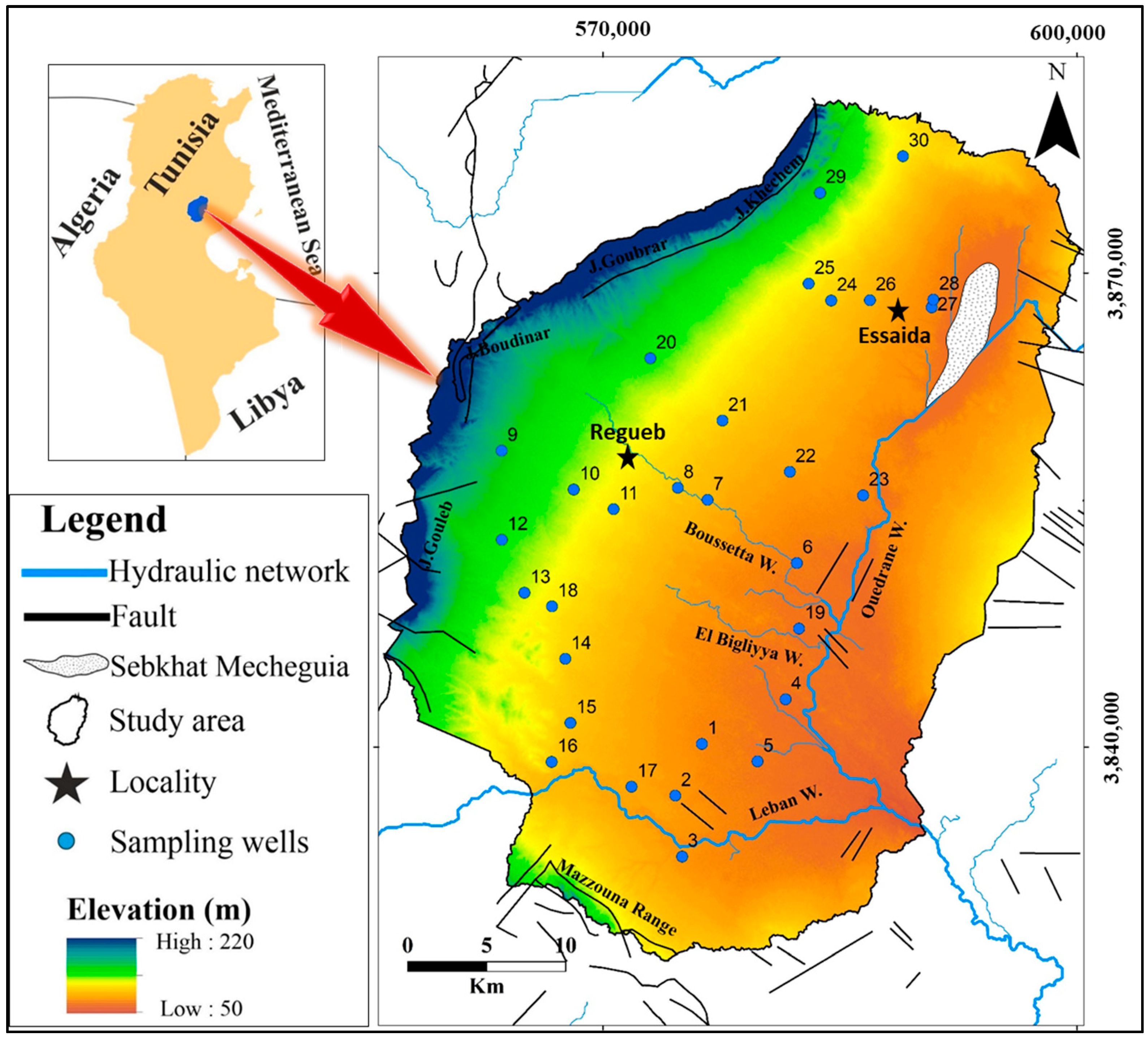
The study area is located in central Tunisia and is characterized by a semi-arid climate and a complex hydrogeological structure composed mainly of alluvial deposits and carbonate formations (Figure 1). Groundwater resources occur primarily in shallow aquifer systems widely used for domestic and agricultural purposes. Groundwater level generally ranges between approximately 10 and 40 m below ground surface depending on local geological and hydrological conditions. The hydraulic conductivity of the aquifer formations varies according to lithological characteristics, with higher permeability associated with sandy deposits and fractured carbonate formations. Regional groundwater flow generally follows the topographic gradient toward the central depression of the basin [25].
Groundwater samples were collected from 30 wells distributed across the study area. Prior to sampling, wells were purged for several minutes to obtain representative groundwater samples. The samples were collected in pre-cleaned polyethylene bottles, and they were preserved in iceboxes at approximately 4 °C and transported to the laboratory for chemical analysis within 24 h to ensure the reliability of the measurements [5].
The Regueb Basin is located within the Jeffara Plain and is underlain predominantly by Tertiary and Quaternary sedimentary formations. These geological units comprise marls, sandstones, conglomerates, and extensive alluvial deposits, which collectively exert a significant control on groundwater occurrence, storage, and movement. The heterogeneity of these formations, in terms of lithology and permeability, influences aquifer characteristics, recharge dynamics, and vulnerability to contamination. Understanding the geological framework is therefore essential for evaluating groundwater quality and appraising the spreading and transport of nitrate pollutants within the basin [26].
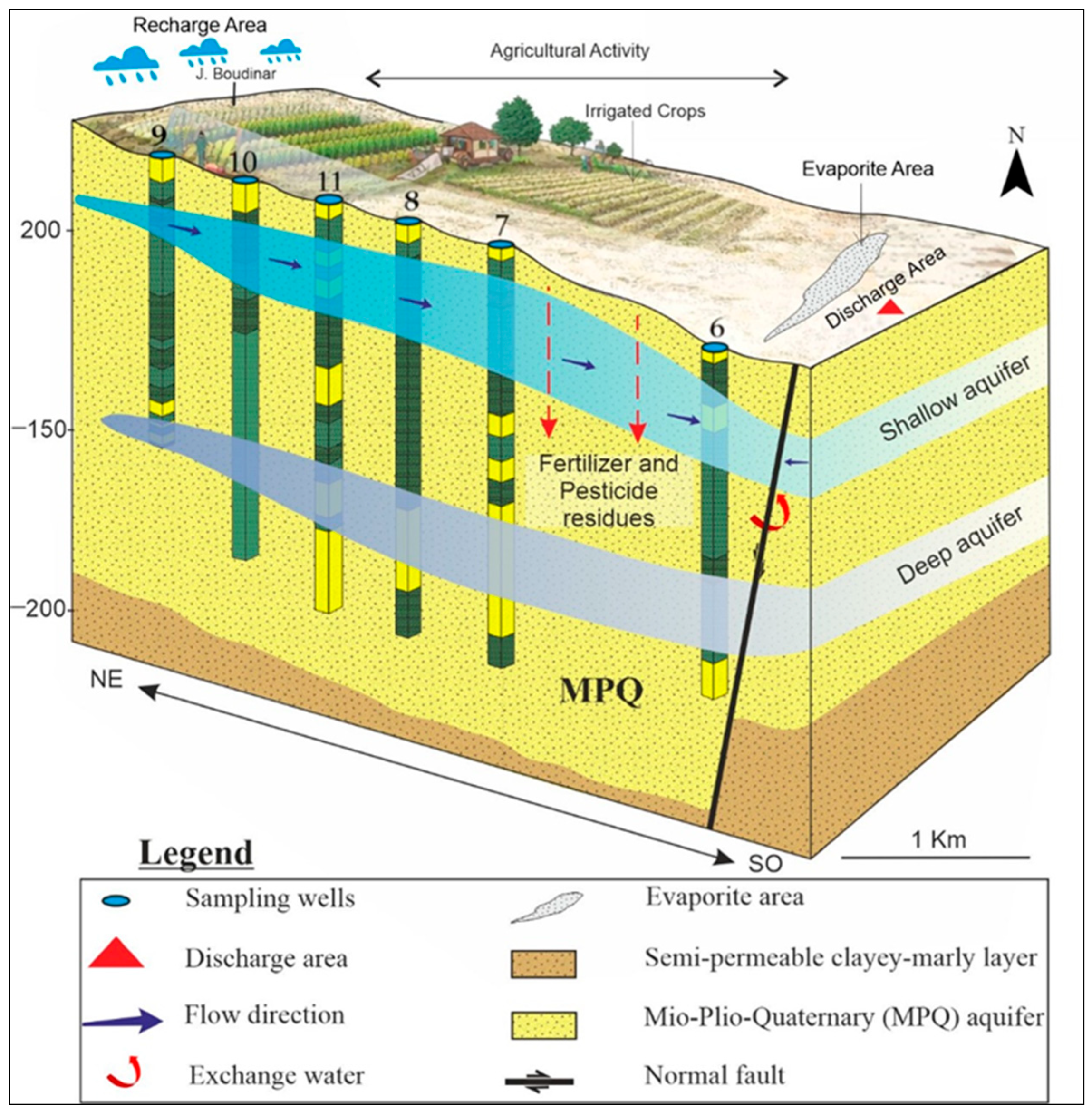
In the Regueb Basin, the hydrogeological framework is predominantly governed by Mio-Plio-Quaternary (MPQ) sedimentary formations composed of unconsolidated sands, gravels, and clays that form the principal aquifer systems [27]. These shallow and highly permeable deposits serve as the main groundwater sources for both drinking and irrigation purposes. The basin lies within a semi-arid climate, marked by scarce and irregular rainfall, high temperatures, and significant potential evapotranspiration, all of which greatly restrict natural groundwater recharge [28]. Groundwater replenishment occurs mainly through diffuse rainfall infiltration, resulting in marked seasonal and inter-annual fluctuations in water levels (Figure 2).
The combination of limited recharge, high climatic stress, and intensive groundwater abstraction has increased pressure on the aquifer system, contributing to declining water tables and heightened vulnerability to contamination, particularly nitrates [29,30]. These conditions highlight the need for combined water management approaches, including the adoption of sustainable pumping strategies, regulation of agricultural water use, and the implementation of artificial recharge techniques to enhance aquifer sustainability and protect groundwater quality in the Regueb Basin [31].

2.2. Data Collection

Thirty water samples were collected from wells systematically distributed across the Regueb Basin to capture diverse land-use types and hydrogeological settings [27] (Table 1). Groundwater sampling was carried out in September 2021, corresponding to the late irrigation period, when groundwater quality reflects the cumulative impact of agricultural activities while minimizing short-term variability related to rainfall events. However, it should be noted that sampling during a single period may not fully capture seasonal hydrochemical variations [10]. The samples were analyzed for major cations and anions, including magnesium (Mg2+), calcium (Ca2+), sodium (Na+), potassium (K+), bicarbonate (HCO3), chloride (Cl), sulfate (SO42−), and nitrate (NO3). All measurements were conducted at the CRDA Laboratory in Sidi Bouzid following standardized procedures to ensure data reliability [32,33].

2.3. Data Analysis

2.3.1. Irrigation Water Quality Index (IWQI)

The irrigation groundwater suitability in the Regueb Basin was assessed using the IWQI. This index integrates individual chemical indicators [34,35] with multiple combined indices [36] to offer a complete assessment of groundwater quality for decision-making purposes. Given the basin’s reliance on groundwater for extensive agricultural activities, it is essential to evaluate chemical constituents that can influence crop productivity and soil health, particularly by affecting the plant cells’ osmotic pressure [37].
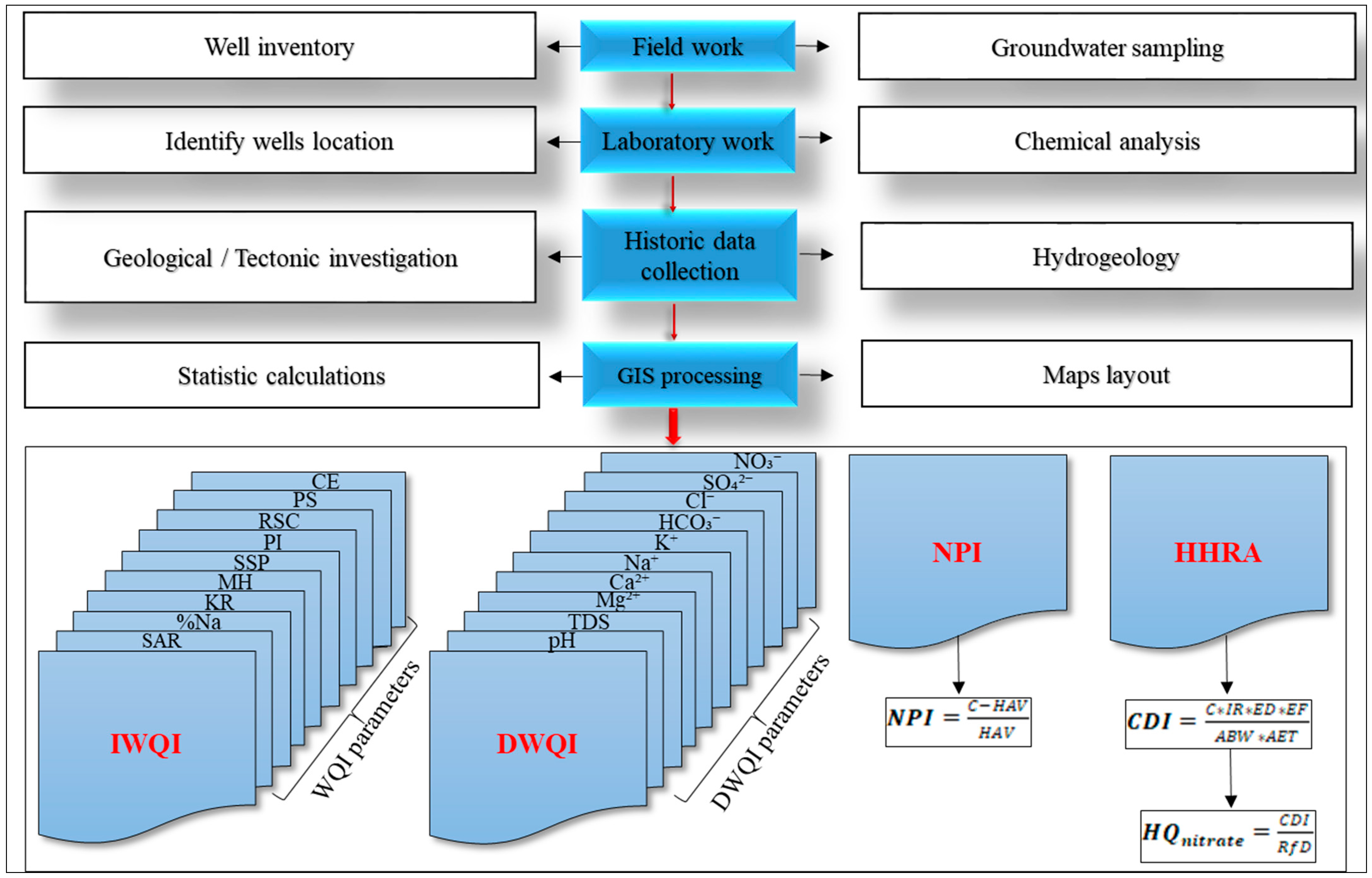
The IWQI, defined by [36], incorporates multiple critical water quality parameters, such as sodium adsorption ratio (SAR), electrical conductivity (EC), Kelly ratio (KR), soluble sodium percentage (SSP), sodium content (%Na), permeability index (PI), magnesium hazard (MH), potential salinity (PS), and residual sodium carbonate (RSC). These parameters were calculated using the equations summarized in Table 2, allowing for a quantitative evaluation of irrigation suitability across the study area (Figure 3).
The IWQI was determined using a three-step approach: calculation of the quality rating (qi) for each water quality parameter; assignment of relative weights (wi) according to the significance of each parameter in evaluating irrigation water quality, with the highest weight (4) given to EC, followed by SAR (3), %Na (2), and %MH, SSP, KR, and PI (1); and computation of the overall IWQI. These steps involve calculating the quality rating (qi) for each parameter, as expressed in the following Equation (1):
q i = q i m a x x i j x i n f q i a m p x a m p
where qimax is the maximum value of qi for the class; xij is the observed value for the parameter; xinf is the value corresponding to the lower limit of the class to which the parameter belongs; qiamp is the amplitude of the class; xamp is the amplitude of the class to which the parameter belongs.
The IWQI is calculated using Equation (2):
I W Q I = i = 1 n q i w i
where qi: the quality of the ith parameter; wi: the weighted weight of the ith parameter; n: the number of parameters.

2.3.2. Drinking Water Quality Index (DWQI)

The Drinking Water Quality Index (DWQI) was assessed based on ten groundwater quality parameters EC, pH, Na, K, Cl, TDS, Mg, SO4, Ca, and HCO3 following [5] guidelines. The computation was carried out in four sequential steps:
Assigning Weight Values (wi): a weight (wi) from 1 to 5, based on its impact on human health, was attributed to each parameter.
Calculating Relative Weight (Wi):
W i = w i i = 1 n w i
where Wi is the relative weight, n is the number of properties and wi is the weight of each water property.
Quality Assessment (qi):
q i = C i S i 100
where qi is the quality index, Ci is the quantity of each water property and Si is the desirable limit of each property [5].
DWQI Calculation:
D W Q I = i = 1 n S I i
where SIi is the subindex of the i parameter and qi is the quality score depending on the quantity of i properties, as shown in Equation (6).
S I i = W i q i

2.3.3. Nitrate Pollution Index (NPI)

The Nitrate Pollution Index (NPI) is a metric used to evaluate the extent of nitrate contamination in groundwater [38]. It is defined as follows (Equation (7)):
N P I = C H A V H A V
where C, is the measured concentration of nitrates in a sample, and HAV is the value of nitrates acceptable to the human species, which is taken as 20 mg/L.

2.3.4. Human Health Risk Assessment (HHRA)

Following the framework established by the United States Environmental Protection Agency (USEPA), the non-carcinogenic health risk from drinking water consumption can be estimated using Equation (8) [39]. Accordingly, the non-carcinogenic risk resulting from drinking water consumption is expressed as follows:
C D I = C I R E D E F A B W A E T
where CDI: chronic daily dose (mg/kg per day); IR: human ingestion rate (L/day); EF: frequency of exposure (days/year: 365 days); C: the concentration of a particular contaminant in groundwater (mg/L); ABW: medium body weight (Kg); ED: duration of exposure (years); AET: medium duration of exposure (days) = (ED × 365) [18].
The exposure parameters used for the Hazard Quotient (HQ) calculations for children, men, and women are summarized in Table 3.
These parameters were adopted from commonly used exposure assumptions in groundwater health risk assessment studies.
The present study assesses the non-carcinogenic health risk associated with nitrate (NO3) in drinking water, primarily quantified through risk quotient values (HQ_nitrate) [13] which is calculated using Equation (9):
H Q _ n i t r a t e = C D I R f D
where HQ is the nitrate risk quotient, CDI: the chronic daily dose (mg/kg day), and RfD is the reference dose of the contaminant (USEPA) [mg/(kg per day)−1].
In the case where HQ < 1, harmful effects of exposure cannot be expected. However, if HQ > 1, it represents a potential risk of presence of additional non-carcinogenic substances and exposure to harmful effects.

3. Results and Discussion

3.1. Statistical Analysis of Groundwater Hydrochemical Parameters

The physico-chemical properties of the sampled groundwater, encompassing pH, Salinity (TDS), major dissolved ions (SO42−, Cl, HCO3, NO3, K+, Na+, Ca2+, and Mg2+) are summarized in Table 1. This table presents the minimum, maximum, mean, standard deviation, Skewness and Kurtosis values calculated from a dataset of 30 groundwater samples. The results indicate that groundwater in the study area is neutral to slightly alkaline, with low pH variability, reflecting a chemically buffered system dominated by carbonate equilibria. Salinity shows moderate to high values and relatively symmetrical distributions, suggesting spatially variable but widespread mineralization within the aquifer. Major ions display contrasting statistical behaviors. Calcium, magnesium, bicarbonate, and sulfate have moderate dispersion and near-symmetrical distributions, indicating consistent control by water–rock interaction, particularly dissolution of carbonate and sulfate minerals. In contrast, sodium and chloride exhibit high variability and strong positive skewness, pointing to localized salinity sources such as evaporate dissolution and evaporation processes, which affect only part of the aquifer. Nitrate concentrations show pronounced positive skewness and high kurtosis, revealing the presence of extreme values superimposed on a lower background level. This pattern is characteristic of non-uniform anthropogenic inputs, most likely related to agricultural activities. Overall, the statistical characteristics suggest that groundwater chemistry is primarily governed by natural geochemical processes, while salinity hotspots and nitrate enrichment reflect superimposed human influence.

3.2. Groundwater Quality Assessment

3.2.1. Assessment of Irrigation Water Quality Using IWQI

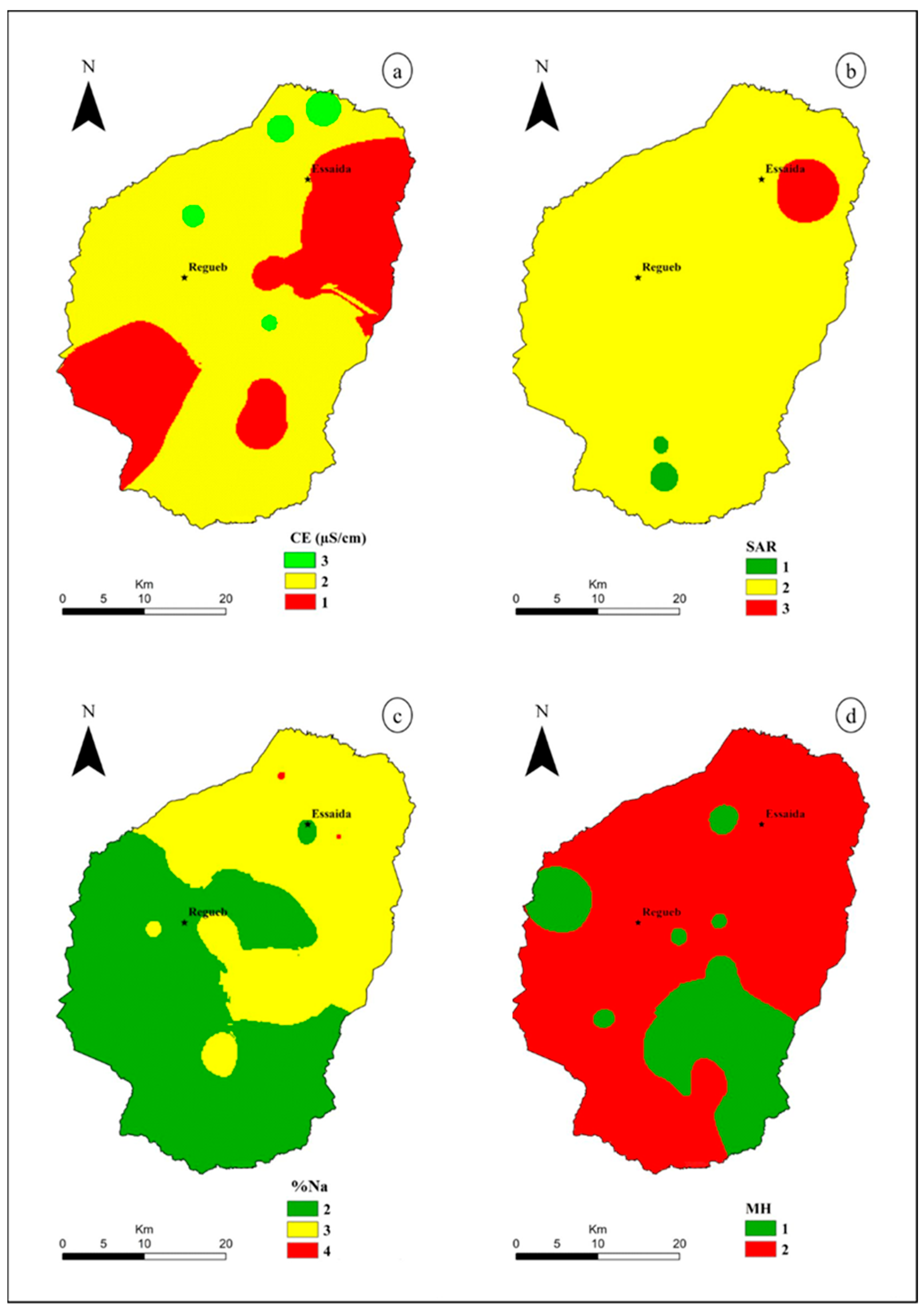
Electrical conductivity (EC) is a key parameter for evaluating water salinity and its appropriateness for irrigation. In the Regueb aquifer, EC values ranged between 1200 and 24,180 µS/cm, with an average of 7641 µS/cm. Following the classification of [40], EC is divided into five categories: excellent (<250 µS/cm), good (250–750 µS/cm), permissible (750–2250 µS/cm), doubtful (2250–5000 µS/cm), and unsuitable (>5000 µS/cm). In the study area, 50% of the samples fell into the doubtful category, 36.67% were classified as good, and 13.33% as permissible, reflecting a generally moderate but variable salinity risk for irrigation (Figure 4a) [31].
The SAR reflects the balance between sodium and calcium plus magnesium ions, serving as an indicator of potential soil sodicity. In the Regueb aquifer, SAR values ranged from <3 to >9, with the majority of samples (96.16%) classified as moderately suitable (3–9), 6.66% as acceptable (<3), and 6.66% as unsuitable (>9) (Figure 4b). High SAR values can negatively affect soil structure by displacing calcium and magnesium ions, thereby reducing soil permeability [41,42].
The %Na indicates the relative proportion of sodium in irrigation groundwater. In this study, %Na values ranged from below 20% to 91.38%, with 56.67% of samples falling into the permissible category (40–60%), 36.66% classified as good (20–40%), 6.66% as doubtful (60–80%), and none as excellent (<20%) (Figure 4c). High sodium content in irrigation groundwater can impair soil permeability and adversely impact crop development [31,37]. Magnesium Hazard (MH) evaluates the effect of magnesium on soil quality. MH values ranged from <50% to >50%, with 70% of samples exceeding the threshold and thus considered unsuitable for irrigation, while 30% were within the acceptable range (<50%) (Figure 4d). High MH can increase soil alkalinity and negatively impact crop productivity [10].
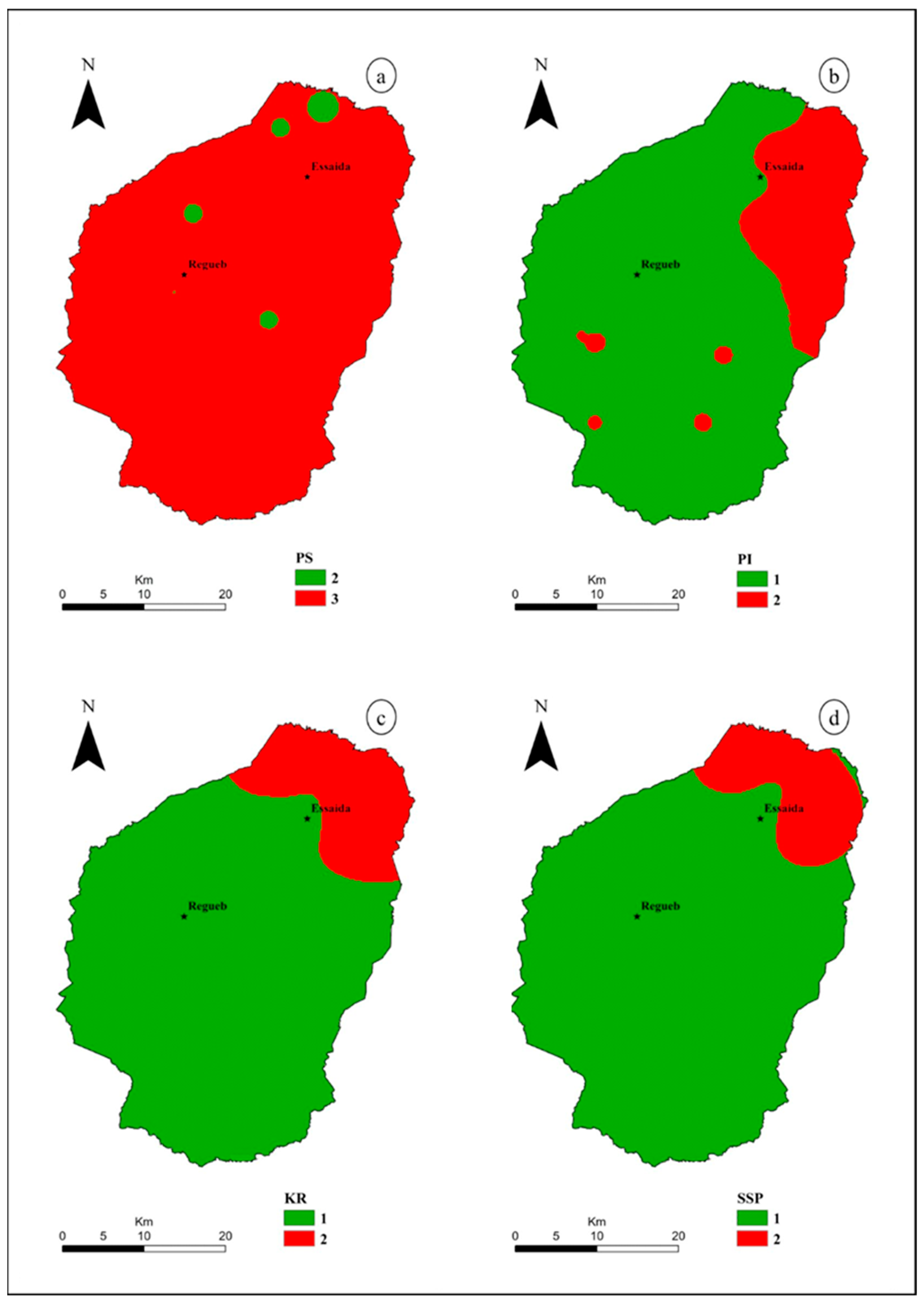
Potential Salinity (PS) evaluates the risk of soil salinization from chloride and sulfate ions. PS values ranged from <3 to >15, with 86.67% of samples classified as doubtful (>15), 13.33% as moderate (3–15), and none as acceptable (<3) (Figure 5a). Prolonged use of water with high PS can degrade soil fertility and crop yield [43,44].
Permeability Index (PI) assesses the impact of water chemistry on soil permeability. PI values ranged from <25 to >75, with 76.67% of groundwater samples classified as unsuitable (<25), 23.33% as acceptable (25–75%), and none in the excellent category (>75) (Figure 5b). High Na+ and HCO3 concentrations reduce soil permeability, affecting crop growth [29,35].
Kelly’s Ratio (KR) measures the dominance of sodium relative to calcium and magnesium in water. In the Regueb aquifer, KR values ranged from below 1 to above 1, with 86.67% of samples considered suitable for irrigation (<1) and 13.33% deemed unsuitable (>1) (Figure 5c). KR is commonly employed to assess the sodium hazard in irrigation water [37,45].
Soluble Sodium Percentage (SSP) represents the proportion of sodium relative to other cations. SSP values varied from <50% to >50%, with 86.67% of samples suitable for irrigation (<50%) and 13.33% unsuitable (>50%) (Figure 5d). Proper management of SSP is essential to maintain soil structure and irrigation efficiency [40,42].
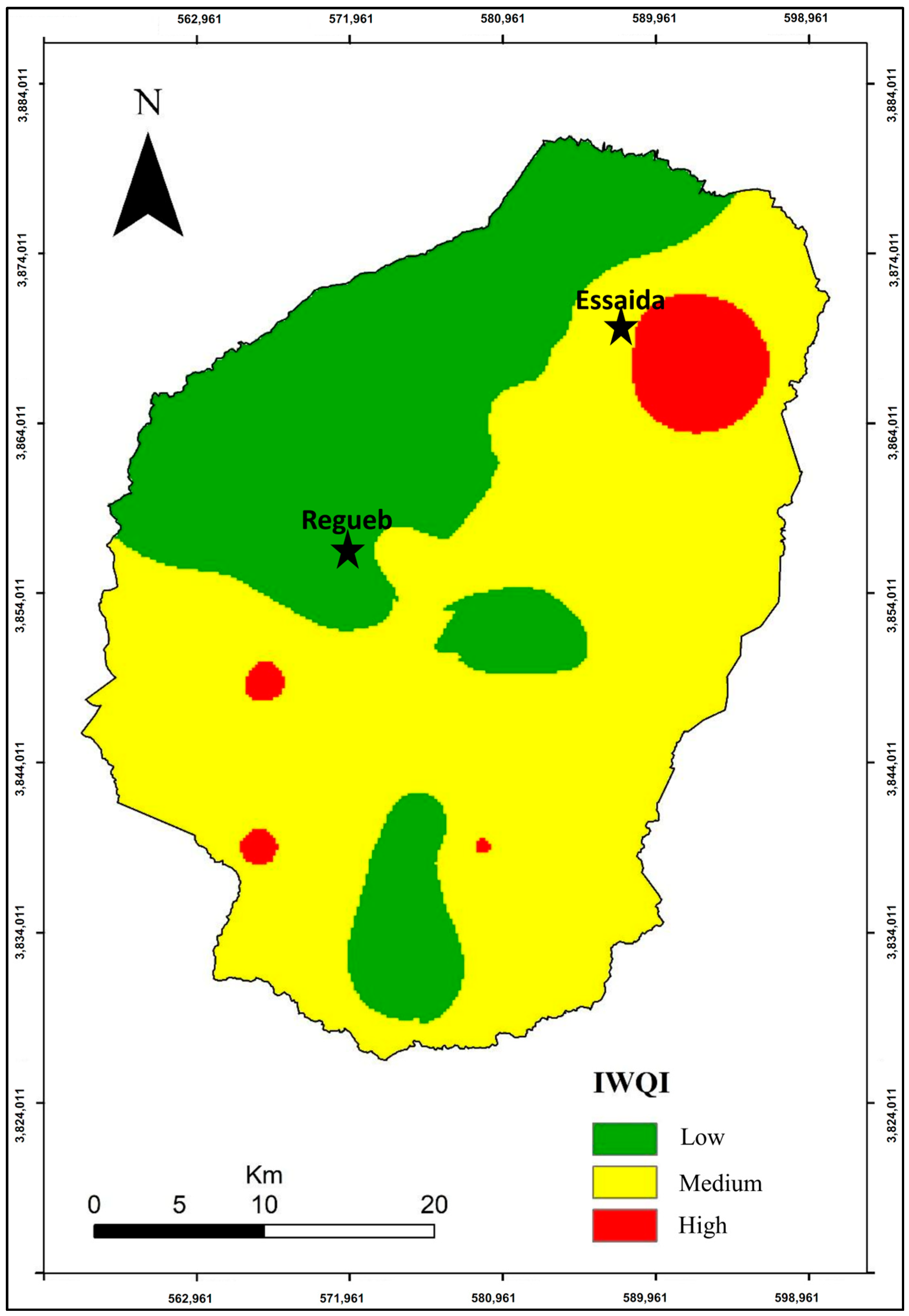
Based on the IWQI, the groundwater’s classification (Table 4) reveals that, overall, groundwater quality in the study area is largely unsuitable for irrigation. Only 16.67% of the samples are categorized as low-restriction (IWQI < 22), highlighting the limited availability of high-quality water for irrigation purposes.
The moderate restriction class (IWQI = 22–37) accounts for 36.67% of the samples, suggesting that groundwater can be used for irrigation under controlled management practices. In contrast, the high restriction class (IWQI > 37) is dominant, comprising 46.67% of the samples and covering 54.31% of the study area, indicating a high risk of soil salinization and reduced crop productivity (Figure 6).
The observed deterioration in groundwater quality is likely driven by natural mineralization processes within the aquifer, the semi-arid climate, and intensive agricultural practices. These results underscore the importance of implementing sustainable groundwater management strategies, such as optimized irrigation techniques and the cultivation of salt-tolerant crops, to support long-term agricultural sustainability [31,34,41].

3.2.2. Drinking Water Quality Evaluation Using DWQI

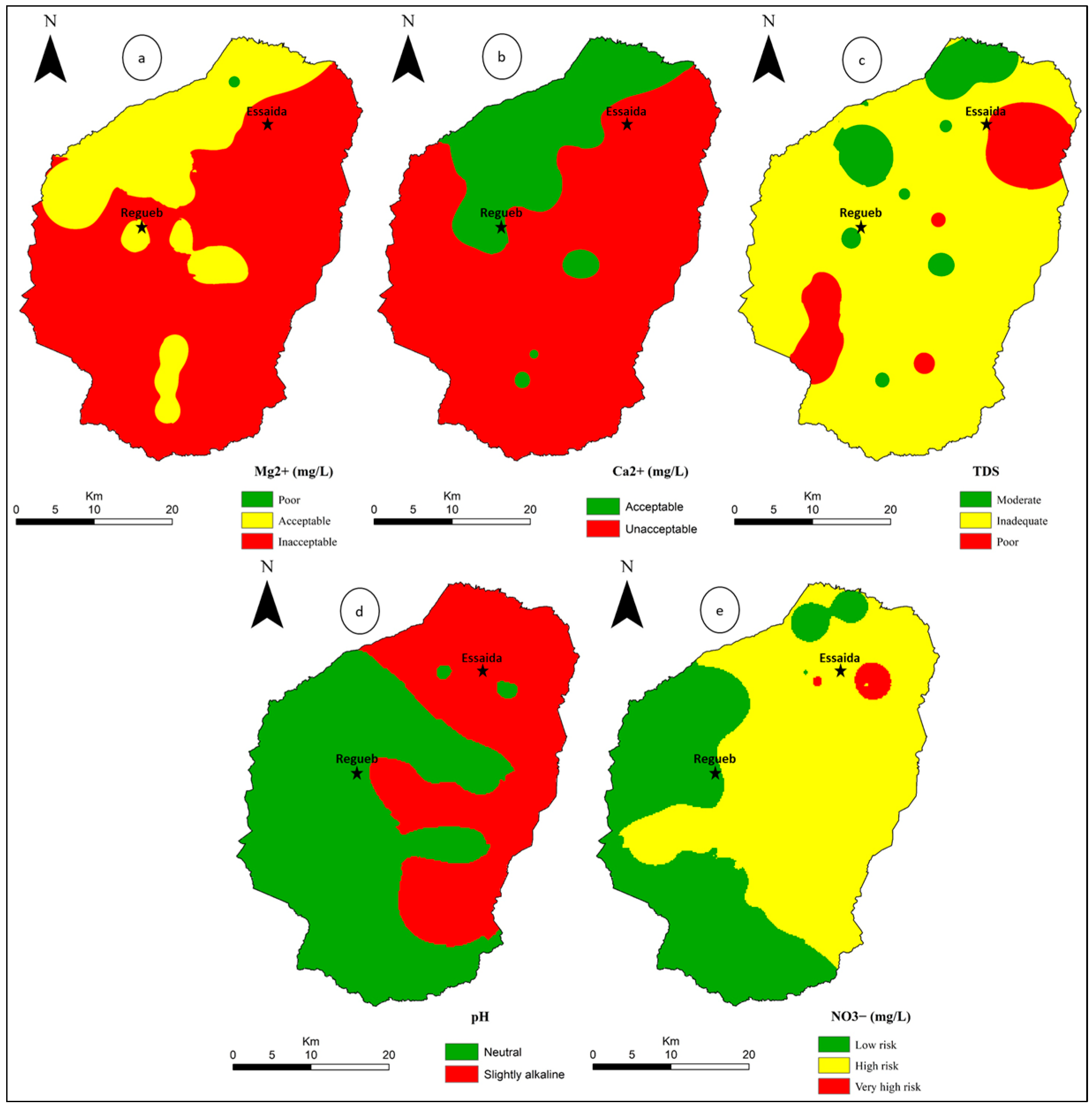
The hydrochemical properties of groundwater in the Regueb aquifer are presented in Table 5. Total dissolved solids (TDS) vary between 840 and 16,926 mg/L, with a mean value of 5348 mg/L, surpassing the WHO guideline of 1000 mg/L in the majority of samples. Elevated TDS levels correspond to high contents of Ca2+, Mg2+, Na+, K+, HCO3, Cl, and SO42−. Spatial analysis indicates that 40% of the samples are moderately mineralized, while 60% fall into categories ranging from unsuitable to undrinkable, particularly in the vicinity of Sebkhat Mecheguia (Figure 7a) [41,46].
Groundwater pH in the Regueb aquifer varied from 7.32 to 8.18, with an average of 7.59, indicating neutral to slightly alkaline conditions, consistent with the underlying sandstone and basalt lithology. All samples fall within the WHO recommended range of 6.5–8.5. Neutral water dominates 56.67% of the samples, covering 66.67% of the study area, while slightly alkaline water accounts for 43.33% (Figure 7b) [20,47].
Calcium (Ca2+) concentrations in the Regueb aquifer ranged from 40 to 720 mg/L, with a mean of 268.8 mg/L, and 43.33% of the samples surpassed the WHO standard of 200 mg/L (Figure 7c). Magnesium (Mg2+) levels varied between 43.2 and 662.4 mg/L, averaging 255.52 mg/L, with 66.67% of samples surpassing the permissible limit of 150 mg/L, indicating widespread water hardness (Figure 7d) [8,11].
Nitrate (NO3) concentrations in the Regueb aquifer varied from 29 to 130 mg/L, with a mean value of 52.93 mg/L. A significant portion of the samples falls into high to very high health-risk categories, potentially leading to conditions such as methemoglobinemia and gastrointestinal disorders (Figure 7e) [4,6,48].
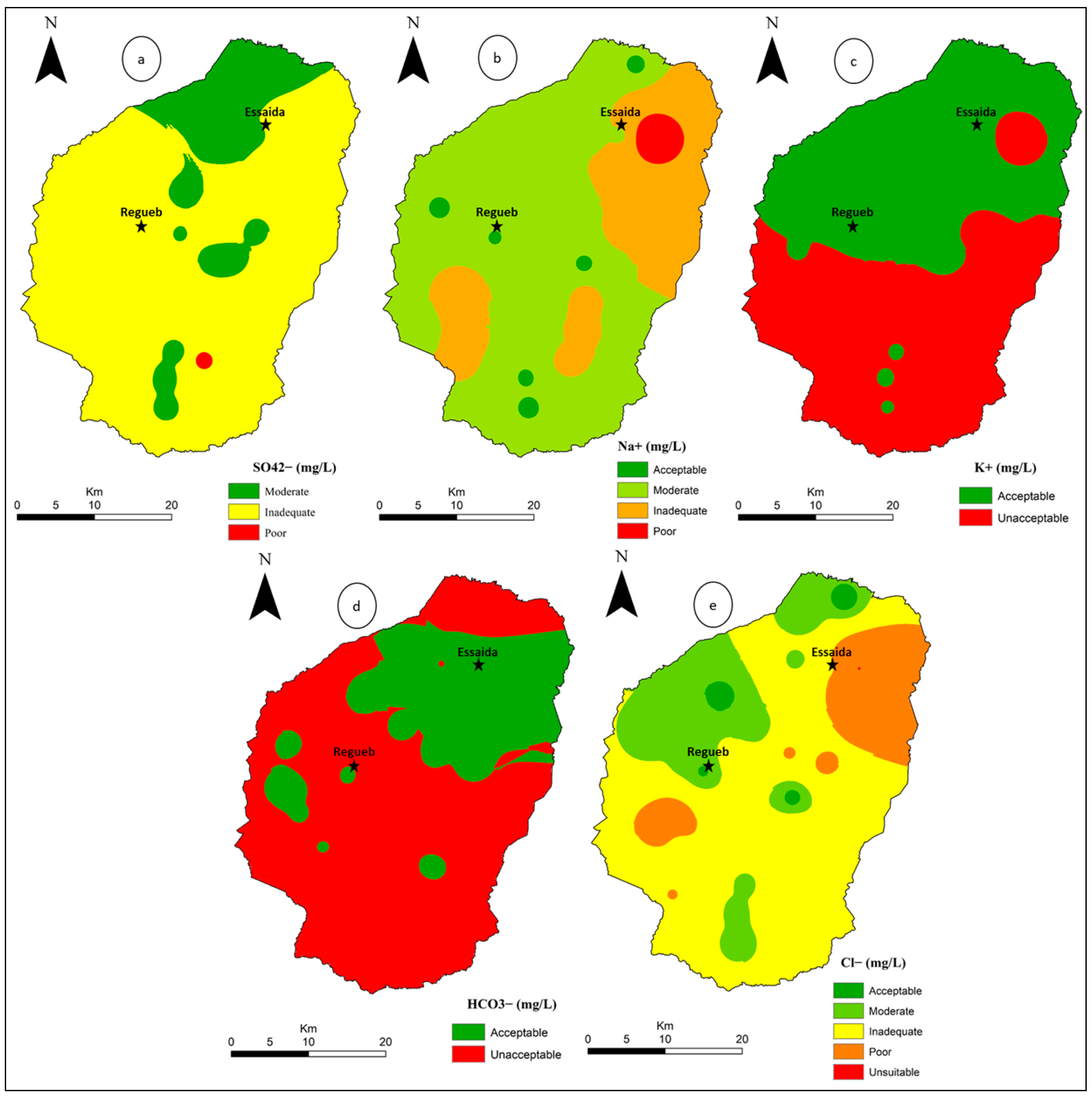
Sodium (Na+) concentrations ranged from 115.1 to 1156 mg/L, largely influenced by irrigation return flows, soil leaching, wastewater intrusion, and the mixing of brackish water (Figure 8a). Potassium (K+) levels varied between 5 and 47.7 mg/L, with a mean of 19.51 mg/L, and 46.67% of samples exceeded the recommended limit of 12 mg/L (Figure 8b) [4,49].
Elevated sulfate concentrations (4368 mg/L) may be related not only to natural mineral dissolution but also to anthropogenic activities such as the use of sulfate-based fertilizers, irrigation return flows, and wastewater infiltration (Figure 8c).
Bicarbonate (HCO3) remains within safe limits across the study area (Figure 8d). Chloride (Cl) ranges from 213 to 6035 mg/L, indicating strong salinity influence and potential anthropogenic contamination (Figure 8e) [17,50].
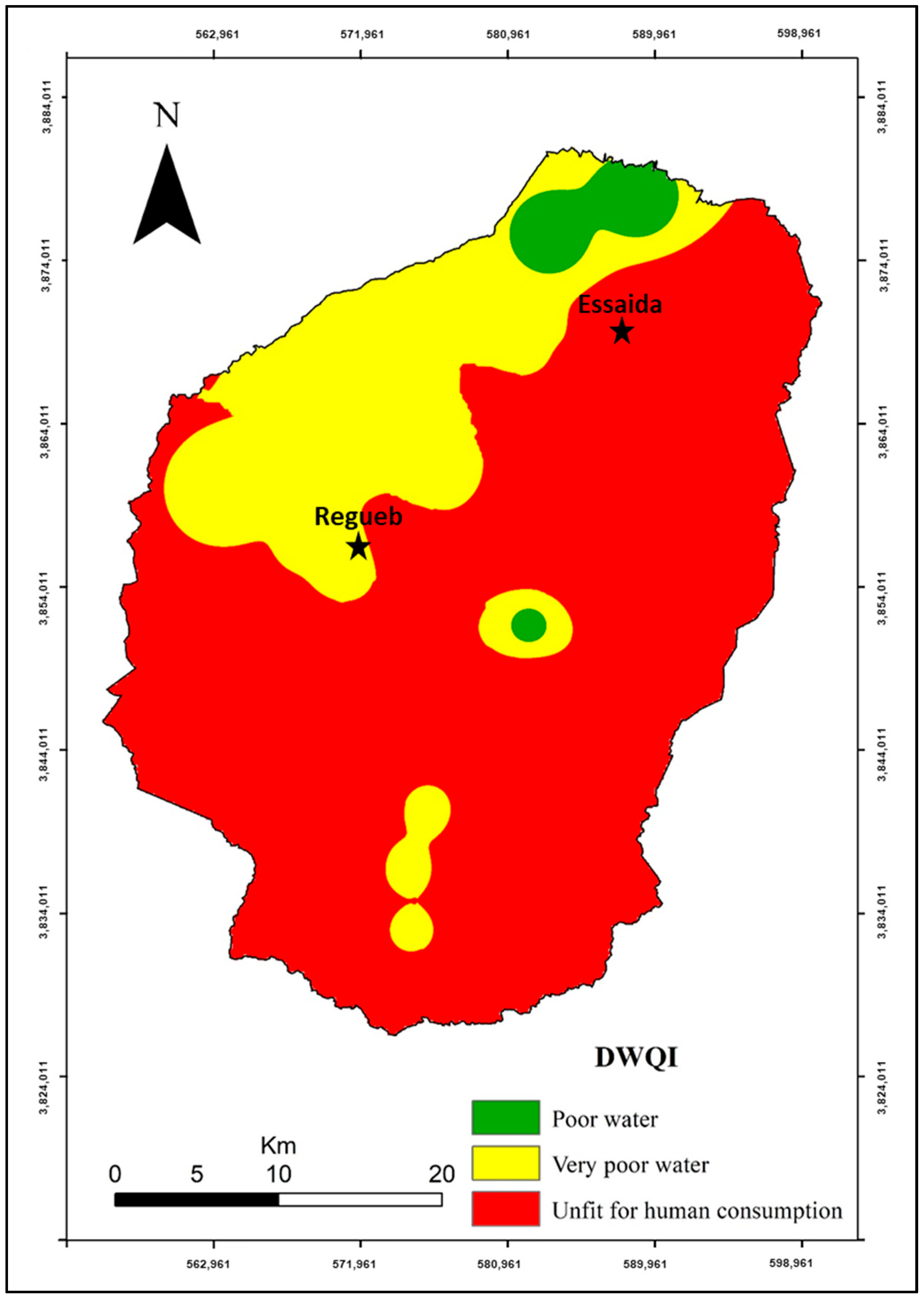
Based on the DWQI, the groundwater quality is predominantly poor to unfit for human consumption for human consumption, with 66.67% of samples classified as unfit (DWQI > 300), covering 75.88% of the study area (Table 6). Only a minor fraction corresponds to poor water quality, confirming the limited suitability of groundwater for drinking in the Regueb aquifer (Figure 9) [12,13].
Overall, the findings demonstrate that groundwater quality in the Regueb aquifer is influenced by the interplay of natural mineralization, semi-arid climatic conditions, and agricultural activities. These results underscore the critical need for regular water quality monitoring, effective treatment measures, and sustainable groundwater management practices to minimize health risks and ensure the provision of safe drinking water, corroborating observations from previous studies [1,41,46].

3.2.3. Nitrate Contamination Assessment Using the NPI

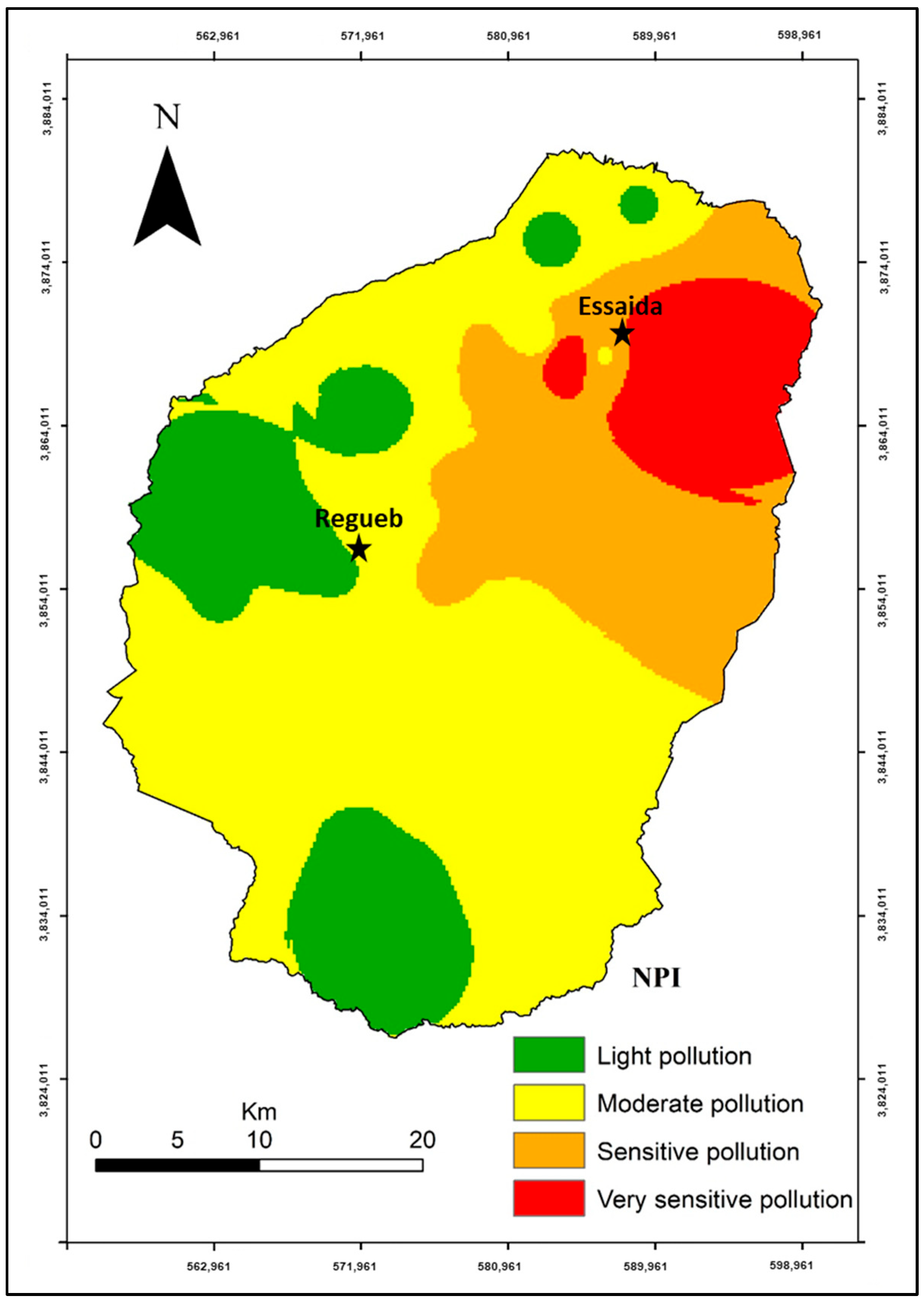
The NPI classification indicates that the majority of groundwater samples fall within moderate to sensitive pollution categories, confirming the widespread impact of nitrate contamination in the Regueb aquifer (Table 7). NPI values ranged from 0.45 to 5.5, with a mean of 1.65, reflecting spatial variability in nitrate pollution throughout the study area.
Based on NPI classification, 33.33% of samples are lightly polluted (0–1), 40% are moderately polluted (1–2), 16.67% are sensitive (2–3), and 10% are very sensitive (>3). Spatially, moderate pollution dominates 53.2% of the study area, highlighting areas of concern for water quality (Figure 10) [12,22,40].
The NPI results indicate that nitrate contamination is widespread, with more than half of the area affected by moderate to very sensitive pollution levels. This reflects the combined impact of agricultural activities, inadequate sanitation, and domestic wastewater discharge.
Agricultural runoff is likely the main contributor, as nitrate-rich fertilizers are commonly applied in the study area. Uncovered septic tanks and sewage intrusion also elevate Nitrate concentrations in shallow aquifers, while leachate from open dumps may further exacerbate pollution [48,49].
The health risks associated with nitrate are significant. Groundwater with High nitrate levels poses potential hazards such as methemoglobinemia in infants, hypertension, and gastric disorders [41,48]. From a management perspective, areas classified as sensitive and very sensitive require priority monitoring, improved sanitation, controlled fertilizer use, and possible water treatment before consumption.
The spatial pattern of NPI corresponds closely with land use and anthropogenic pressure, emphasizing that human activities are the principal drivers of nitrate contamination in the Regueb aquifer. These findings are consistent with studies in similar semi-arid regions, where agriculture and inadequate wastewater management are major contributors to groundwater nitrate pollution [1,17,50].

3.2.4. Health Risk Assessment (HQ)

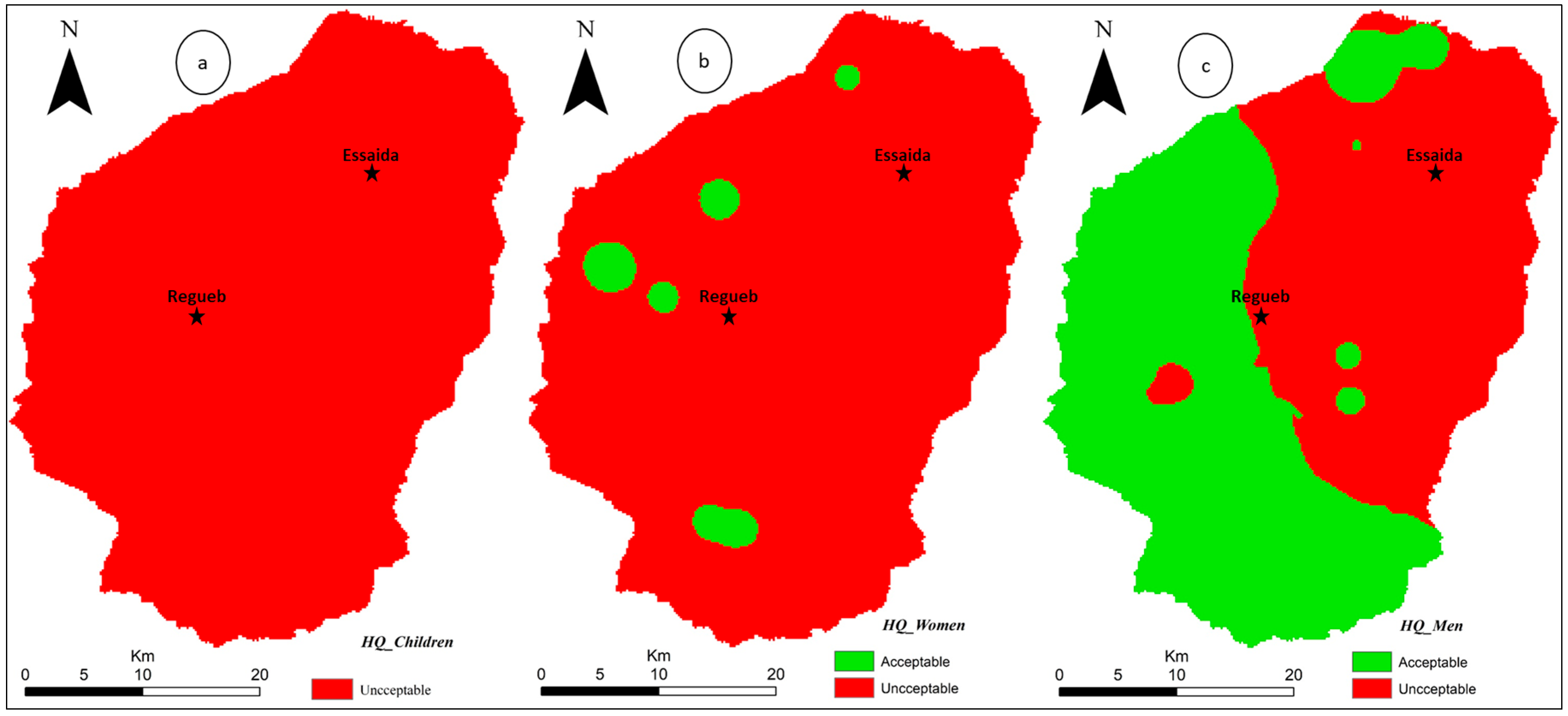
The risk quotient (HQ) quantifies potential non-carcinogenic health risks. Oral HQ values differ by age and gender: children (1.53–6.06, mean 2.48), women (0.82–3.69, mean 1.5), and men (0.54–2.3, mean 1.05) (Table 8, Figure 11). All water samples pose unacceptable risks for children (HQ > 1). For women, 24.39% of HQ values are safe (HQ < 1, covering 20% of the area), while 75.61% are unsafe. For men, 51.52% are safe (63.33% of the area), and 48.48% are unsafe.
The HQ results indicate that children are the most vulnerable group, with all samples exceeding the recommended safety limit (HQ > 1), consistent with their higher water intake per body weight. Women also show significant exposure (HQ > 1 in 80% of cases), likely due to similar consumption patterns and local water use. Men are comparatively less exposed, but nearly one-third of samples exceed safe HQ levels, indicating localized health risks [22,39].
These findings suggest that nitrate contamination in the Regueb aquifer poses a serious public health concern, especially for infants and women [52]. Mitigation strategies should prioritize children and women through measures such as alternative water sources, water treatment, and regular monitoring of nitrate levels [41]. The spatial distribution of HQ aligns with areas of High nitrate concentration identified in NPI and DWQI analyses, confirming that agricultural runoff, septic tanks, and wastewater are key contributors to health risk [53].

3.3. Potential Sources of Groundwater Contamination

Analysis of land use, irrigation practices, and population activities in the study area indicates that nitrate contamination of groundwater arises from multiple interrelated sources. Agricultural activities, particularly intensive vegetable and cereal cultivation, represent the main contributor, as excessive use of nitrogen-based fertilizers enhances nitrate leaching through the soil into shallow aquifers [26]. Similar trends have been reported in southern Spain and Italy, where fertilizer application strongly correlates with elevated nitrate levels in groundwater [14,15]. In addition, domestic wastewater from peri-urban settlements, often untreated or inadequately managed, infiltrates into the aquifer via septic tanks or effluent leaks, adding localized nitrate loads and microbial contamination [16,54]. Livestock farming further contributes organic nitrogen through manure application and direct waste deposition near recharge zones, which is subsequently mineralized into nitrate, a pattern observed also in Poland and other European semi-arid regions [55]. While anthropogenic activities dominate, natural hydrogeological factors such as nitrogen-rich soils or shallow permeable layers can enhance nitrate accumulation in certain areas [56]. Comparisons with other semi-arid regions worldwide confirm that intensive fertilization, insufficient wastewater management, and livestock operations consistently lead to elevated nitrate concentrations [57]. This multi-factorial understanding underscores the importance of integrated land and water management strategies, including controlled fertilizer use, improved wastewater treatment, and protection of recharge zones, to effectively reduce groundwater contamination and safeguard human health.

3.4. Human Health Risks

To evaluate the implications of this contamination for local populations, a human health risk assessment was conducted based on nitrate concentrations measured in groundwater. The non-carcinogenic health risk was estimated using the Hazard Quotient (HQ) approach for different population groups, particularly adults and children. The results indicate that some wells may pose potential health risks, especially for children, who are more vulnerable to nitrate exposure due to their lower body weight and relatively higher water intake. These findings are consistent with the drinking water guidelines established by the WHO, which recommend a maximum nitrate concentration of 50 mg/L to prevent adverse health effects such as methemoglobinemia. Comparable health risk assessments conducted in agricultural aquifers in Tunisia, Spain, Italy, and Poland have similarly reported elevated nitrate concentrations and associated health concerns linked to intensive farming activities [14,15,16].

3.5. Global Comparison

To further contextualize the severity of groundwater contamination in the study area, the results were compared with those reported from other semi-arid and European agricultural regions. The nitrate concentrations observed in this study are comparable to, and in some cases exceed, levels reported in intensively cultivated aquifers worldwide. Studies from Spain and Italy, for example, have documented significant nitrate accumulation associated with fertilizer application and groundwater–surface water interactions [14,15], while research in Poland has highlighted the role of agricultural nitrogen inputs in increasing nitrate levels in groundwater systems [16]. These international comparisons confirm that nitrate pollution is a widespread environmental issue affecting both semi-arid and temperate agricultural regions. Integrating the findings of the present study within this global context highlights the critical influence of intensive agricultural practices and insufficient nutrient management on groundwater quality and emphasizes the need for sustainable land and water management strategies. Such measures include controlled fertilizer application, improved wastewater treatment systems, and the protection of groundwater recharge zones to mitigate contamination and safeguard water resources and public health.

3.6. Safeguarding Health and Livelihoods Through Groundwater Management

Nitrate-induced groundwater degradation in semi-arid regions has considerable socio-economic impacts, especially in areas like Central Tunisia, where groundwater is considered the main source for both irrigation and drinking water. Several studies conducted in Tunisian aquifer systems have shown that intensive agricultural activities, combined with inadequate sanitation and limited natural recharge, have led to a deterioration of groundwater quality, directly affecting human well-being and local economic stability [21]. From a public health standpoint, water with High nitrate content presents substantial risks, especially for infants, pregnant women, and other vulnerable groups. Prolonged exposure to nitrate-contaminated groundwater has been linked to methemoglobinemia and other chronic health effects, which can elevate healthcare costs and strain local medical infrastructure [7,30]. In rural areas, where alternative water supplies are scarce, households are often forced to purchase bottled water or invest in water treatment systems, representing a substantial financial burden for low-income communities [10,48].
Agriculture, which constitutes a central component of the regional economy in Central Tunisia, is also adversely affected. While nitrate-rich groundwater may temporarily enhance crop growth, prolonged irrigation with contaminated water can generate soil salinization, nutrient imbalance, and declining soil fertility, ultimately reducing agricultural productivity. Recent studies have shown that intensive irrigation practices influence nutrient dynamics and nitrate leaching, with excessive water application increasing nitrate movement through soil profiles and potentially degrading soil quality and crop yields if not optimally managed [58]. Furthermore, research Highlights that salinity and sodicity often linked to poor-quality irrigation water affect a significant portion of global irrigated lands, impairing soil fertility and crop productivity, which poses substantial risks to agricultural sustainability and food security [59]. These findings underscore the intricate connections between groundwater quality, irrigation practices, and long-term agricultural viability in semi-arid environments.
Climate change acts as an additional stressor, intensifying these socio-economic challenges. Rising temperatures, reduced precipitation, and increased evapotranspiration rates decrease groundwater recharge and promote the concentration of dissolved pollutants, including nitrates [28]. Prolonged drought periods increase groundwater abstraction for irrigation, accelerating aquifer depletion and water quality deterioration. These combined pressures heighten the risk of water scarcity, rural poverty, and population displacement in semi-arid regions [30].
Addressing the socio-economic impacts of nitrate pollution requires integrated groundwater management strategies that combine water quality protection, sustainable agricultural practices, and social equity considerations. Encouraging efficient irrigation practices, controlling fertilizer application, and establishing long-term groundwater monitoring programs are crucial measures to safeguard public health and support sustainable socio-economic development in semi-arid regions like Central Tunisia [41].

4. Conclusions & Recommendations

Groundwater in the Regueb Basin shows moderate to High nitrate contamination, with 76.67% of sampled wells exceeding the WHO guideline value of 50 mg/L. Hazard Quotient calculations indicate that children are the most at-risk group, followed by women and men. Based on these findings, groundwater monitoring programs should prioritize high-nitrate wells. Sustainable groundwater management practices, including improved fertilizer application, controlled irrigation, and protection of recharge areas, are recommended to minimize nitrate leaching and safeguard human health and agricultural productivity.
The Irrigation Water Quality Index (IWQI) assessment discloses that more than half of the aquifer is unsuitable for irrigation, highlighting risks of soil salinization, reduced permeability, and declining crop productivity. Assessment of drinking water quality using the DWQI shows that approximately two-thirds of the total samples are unsuitable for human consumption, with elevated levels of TDS, nitrates, and other major ions exceeding WHO standards. Based on the results of the Nitrate Pollution Index (NPI) and the Human Health Risk Assessment (HQ), groundwater monitoring programs should prioritize wells showing nitrate concentrations exceeding drinking water standards. Furthermore, improved fertilizer management and controlled irrigation practices are recommended to minimize nitrate leaching and protect groundwater resources in the Regueb Basin.
These findings underscore the combined effects of natural mineralization, semi-arid climate, intensive agriculture, and inadequate sanitation on groundwater quality. The socio-economic implications are substantial, affecting public health, agricultural sustainability, and local livelihoods.
To mitigate these challenges, integrated groundwater management strategies are essential, including the adoption of efficient irrigation practices, regulation of fertilizer application, water treatment, and long-term monitoring programs. These strategies are vital to protect human health, maintain soil fertility, and encourage the sustainable management of groundwater resources in semi-arid areas such as Central Tunisia.
To lessen the impacts of the contaminated groundwater and safeguard sustainable water use in the Regueb aquifer, it is recommended to (i) establish long-term groundwater monitoring programs for key contaminants (nitrates, salinity, TDS), (ii) promote efficient irrigation practices and salt/nitrate-tolerant crops to protect soil and maintain productivity, (iii) optimize fertilizer use and improve sanitation to reduce anthropogenic nitrate pollution, and (iv) implement affordable water treatment and community awareness programs to safeguard public health.

Author Contributions

Conceptualization, R.M. and S.B.; methodology, R.M. and S.B.; software, R.M.; validation, S.B. and Y.H.; formal analysis, M.A., A.H. and M.G.; investigation, R.M.; resources, R.M.; data curation, R.M., M.G., A.H. and M.A.; writing—original draft preparation, R.M., M.G., A.H. and M.A.; writing—review and editing, S.B. and Y.H.; visualization, R.M. and M.A.; supervision, S.B., Y.H., G.P. and M.G.; project administration, S.B., Y.H., G.P. and M.G. All authors have read and agreed to the published version of the manuscript.

Funding

This research received no external funding.

Institutional Review Board Statement

Not applicable.

Informed Consent Statement

Not applicable.

Data Availability Statement

The original contributions presented in the study are included in the article; further inquiries can be directed to the corresponding author.

Conflicts of Interest

The authors declare no conflicts of interest.

References

  1. Al-Aizari, H.S.; Aslaou, F.; Al-Aizari, A.R.; Al-Odayni, A.B.; Al-Aizari, A.J.M. Evaluation of Groundwater Quality and Contamination Using the Groundwater Pollution Index (GPI), Nitrate Pollution Index (NPI), and GIS. Water 2023, 15, 3701. [Google Scholar] [CrossRef]
  2. Chen, J.; Wu, H.; Qian, H. Groundwater nitrate contamination and associated health risk for the rural communities in an agricultural area of Ningxia, northwest China. Expo. Health 2016, 8, 349–359. [Google Scholar] [CrossRef]
  3. Egbueri, J.C.; Ezugwu, C.K.; Ameh, P.D.; Unigwe, C.O.; Ayejoto, D.A. Appraising drinking water quality in Ikem rural area (Nigeria) based on chemometrics and multiple indexical methods. Environ. Monit. Assess. 2020, 192, 308. [Google Scholar] [CrossRef]
  4. Pasupuleti, S.; Singha, S.S.; Singha, S.; Kumar, S.; Singh, R.; Dhada, I. Groundwater characterization and non-carcinogenic and carcinogenic health risk assessment of nitrate exposure in the Mahanadi River Basin of India. J. Environ. Manag. 2022, 319, 115746. [Google Scholar] [CrossRef] [PubMed]
  5. WHO (World Health Organization). Guidelines for Drinking-Water Quality: Fourth Edition Incorporating the First Addendum; WHO: Geneva, Switzerland, 2017; Available online: https://www.who.int/publications/i/item/9789241549950 (accessed on 1 April 2026).
  6. Rahman, A.; Mondal, N.C.; Tiwari, K.K. Anthropogenic nitrate in groundwater and its health risks in the view of background concentration in a semi-arid area of Rajasthan, India. Sci. Rep. 2021, 11, 9279. [Google Scholar] [CrossRef] [PubMed]
  7. Wang, Z.; Wang, Y.; Shi, M.; Ji, W.; Li, R.; Wang, X. Coordinated analysis of groundwater spatiotemporal chemical characteristics, water quality, and potential human health risks with sustainable development in semi-arid regions. Environ. Geochem. Health 2024, 46, 370. [Google Scholar] [CrossRef]
  8. Chen, J.; Wu, H.; Qian, H.; Gao, Y. Assessing nitrate and fluoride contaminants in drinking water and their health risk of rural residents living in a semiarid region of Northwest China. Expo. Health 2017, 9, 183–195. [Google Scholar] [CrossRef]
  9. Zhang, Y.; Wu, J.; Xu, B. Human health risk assessment of groundwater nitrogen pollution in Jinghui canal irrigation area of the loess region, northwest China. Environ. Earth Sci. 2018, 77, 273. [Google Scholar] [CrossRef]
  10. Wang, Y.; Li, P. Appraisal of shallow groundwater quality with human health risk assessment in different seasons in rural areas of the Guanzhong Plain (China). Environ. Res. 2022, 207, 112210. [Google Scholar] [CrossRef]
  11. Egbi, C.D.; Anornu, G.K.; Ganyaglo, S.Y.; Appiah-Adjei, E.K.; Li, S.L.; Dampare, S.B. Nitrate contamination of groundwater in the Lower Volta River Basin of Ghana: Sources and related human health risks. Ecotoxicol. Environ. Saf. 2020, 191, 110227. [Google Scholar] [CrossRef]
  12. El Mountassir, O.; Bahir, M.; Ouazar, D.; Chehbouni, A.; Carreira, P.M. Temporal and spatial assessment of groundwater contamination with nitrate using nitrate pollution index (NPI), groundwater pollution index (GPI), and GIS (case study: Essaouira basin, Morocco). Environ. Sci. Pollut. Res. 2022, 29, 17132–17149. [Google Scholar] [CrossRef] [PubMed]
  13. Egbueri, J.C.; Agbasi, J.C.; Ayejoto, D.A.; Khan, M.I.; Khan, M.Y.A. Extent of anthropogenic influence on groundwater quality and human health-related risks: An integrated assessment based on selected physicochemical characteristics. Geocarto Int. 2023, 38, 2210100. [Google Scholar] [CrossRef]
  14. Arauzo Sánchez, M.; Valladolid Martín, M.; Andries, D.M. Contaminación por nitrato en las aguas subterráneas de la Demarcación Hidrológica del Segura (España) y su particular incidencia en el área de captación del Mar Menor. Estud. Geológ. 2024, 80, 1071. [Google Scholar] [CrossRef]
  15. Lasagna, M.; De Luca, D.A.; Franchino, E. Nitrate contamination of groundwater in the western Po Plain (Italy): The effects of groundwater and surface water interactions. Environ. Earth Sci. 2016, 75, 240. [Google Scholar] [CrossRef]
  16. Svendsen, L.M.; Gustafsson, B. Waterborne nitrogen and phosphorus inputs and water flow to the Baltic Sea 1995–2018. In HELCOM Baltic Sea Environmental Fact Sheet; HELCOM: Helsinki, Finland, 2020. [Google Scholar]
  17. Wu, W.; Liao, R.; Hu, Y.; Wang, H.; Liu, H.; Yin, S. Quantitative assessment of groundwater pollution risk in reclaimed water irrigation areas of northern China. Environ. Pollut. 2020, 261, 114173. [Google Scholar] [CrossRef]
  18. He, S.; Li, P.; Su, F.; Wang, D.; Ren, X. Identification and apportionment of shallow groundwater nitrate pollution in Weining Plain, northwest China, using hydrochemical indices, nitrate stable isotopes, and the new Bayesian stable isotope mixing model (MixSIAR). Environ. Pollut. 2022, 298, 118852. [Google Scholar] [CrossRef] [PubMed]
  19. Jin, J.; Wang, Z.; Zhao, Y.; Ding, H.; Zhang, J. Delineation of hydrochemical characteristics and tracing nitrate contamination of groundwater based on hydrochemical methods and isotope techniques in the northern Huangqihai Basin, China. Water 2022, 14, 3168. [Google Scholar] [CrossRef]
  20. Hassen, I.; Hamzaoui-Azaza, F.; Bouhlila, R. Application of multivariate statistical analysis and hydrochemical and isotopic investigations for evaluation of groundwater quality and its suitability for drinking and agriculture purposes: Case of Oum Ali-Thelepte aquifer, central Tunisia. Environ. Monit. Assess. 2016, 188, 135. [Google Scholar] [CrossRef] [PubMed]
  21. Troudi, N.; Hamzaoui-Azaza, F.; Tzoraki, O.; Melki, F.; Zammouri, M. Assessment of groundwater quality for drinking purpose with special emphasis on salinity and nitrate contamination in the shallow aquifer of Guenniche (Northern Tunisia). Environ. Monit. Assess. 2020, 192, 641. [Google Scholar] [CrossRef]
  22. El Amri, A.; M’nassri, S.; Nasri, N.; Nsir, H.; Majdoub, R. Nitrate concentration analysis and prediction in a shallow aquifer in central-eastern Tunisia using artificial neural network and time series modelling. Environ. Sci. Pollut. Res. 2022, 29, 43300–43318. [Google Scholar] [CrossRef]
  23. Hamma, B.; Alodah, A.; Bouaicha, F.; Bekkouche, M.F.; Barkat, A.; Hussein, E.E. Hydrochemical assessment of groundwater using multivariate statistical methods and water quality indices (WQIs). Appl. Water Sci. 2024, 14, 33. [Google Scholar] [CrossRef]
  24. Banerjee, A.; Creedon, L.; Jones, N.; Gill, L.; Gharbia, S. Dynamic groundwater contamination vulnerability assessment techniques: A systematic review. Hydrology 2023, 10, 182. [Google Scholar] [CrossRef]
  25. Zammouri, M.; Siegfried, T.; El-Fahem, T.; Kriâa, S.; Kinzelbach, W. Salinization of groundwater in the Nefzawa oases region, Tunisia: Results of a regional-scale hydrogeologic approach. Hydrogeol. J. 2007, 15, 1357–1375. [Google Scholar] [CrossRef]
  26. Missaoui, R.; Abdelkarim, B.; Ncibi, K.; Hamed, Y.; Choura, A.; Essalami, L. Assessment of groundwater vulnerability to nitrate contamination using an improved model in the Regueb Basin, Central Tunisia. Water Air Soil Pollut. 2022, 233, 320. [Google Scholar] [CrossRef]
  27. Missaoui, R. Study of the Interaction Mechanisms Between Irrigation, Groundwater Dynamics, and Solute Transport in the Regueb-Sidi Bouzid Aquifer: A Multidisciplinary Approach Using Numerical and Geochemical Simulation. Ph.D. Thesis, University of Gabès, Gabès, Tunisia, 2024. [Google Scholar]
  28. Wang, W.; Chen, Y.; Wang, W.; Chen, Y.; Hou, Y. Groundwater level dynamic impacted by land-cover change in the desert regions of tarim basin, central Asia. Water 2023, 15, 3601. [Google Scholar] [CrossRef]
  29. Ababakr, F.A.; Shakeri, S.; Tand, E.; Kazemi, S. Interpolation approaches to groundwater quality mapping: Trends and techniques in Erbil City. Adv. Civ. Eng 2024, 1, 50–63. [Google Scholar]
  30. Liu, Y.; Huang, A.B.; Liu, H.; Peng, B.; Zhang, X.; Huang, Q. Dynamic evolution characteristics and influencing mechanisms of groundwater in the Zoige Plateau. J. Groundw. Sci. Eng. 2025, 13, 286–300. [Google Scholar] [CrossRef]
  31. Bouri, A.; Brahim, F.B.; Haj-Amor, Z.; Mezlini, W.; Kharroubi, A.; Bouri, S.; Ali, T. Assessment and Prediction of Irrigation Groundwater Suitability Using Traditional and Artificial Intelligence Models in Semi-Arid Regions: Special Focus on Northern Gabès Aquifer System. Earth Syst. Environ. 2026, 10, 1595–1615. [Google Scholar] [CrossRef]
  32. Missaoui, R.; Abdelkarim, B.; Ncibi, K.; Gentilucci, M.; Brahmi, S.; Ayadi, Y.; Hamed, Y. Mapping groundwater recharge potential zones in arid region using remote sensing and GIS perspective, Central Tunisia. Euro-Mediterr. J. Environ. Integr. 2023, 3, 557–571. [Google Scholar] [CrossRef]
  33. Missaoui, R.; Ncibi, K.; Abdelkarim, B.; Bouajila, A.; Choura, A.; Hamdi, M.; Hamed, Y. Assessment of hydrogeochemical characteristics of groundwater: Link of AHP and PCA methods using a GIS approach in a semi-arid region, Central Tunisia. Euro-Mediterr. J. Environ. Integr. 2023, 8, 99–114. [Google Scholar] [CrossRef]
  34. Ayers, R.S.; Westcot, D.W. Water Quality for Agriculture; Food and Agriculture Organization of the United Nations: Rome, Italy, 1985; Volume 29, p. 174. [Google Scholar]
  35. Doneen, L.D. Notes on Water Quality in Agriculture; Department of Water Science and Engineering, University of California: Davis, CA, USA, 1964. [Google Scholar]
  36. Meireles, A.C.M.; Andrade, E.M.D.; Chaves, L.C.G.; Frischkorn, H.; Crisostomo, L.A. A new proposal of the classification of irrigation water. Rev. Ciênc. Agron. 2010, 41, 349–357. [Google Scholar] [CrossRef]
  37. Bishwakarma, K.; Wang, G.X.; Zhang, F.; Adhikari, S.; Karki, K.; Ghimire, A. Hydrochemical characterization and irrigation suitability of the Ganges Brahmaputra River System: Review and assessment. J. Mt. Sci. 2022, 19, 388–402. [Google Scholar] [CrossRef]
  38. Adimalla, N.; Qian, H.; Nandan, M.J. Groundwater chemistry integrating the pollution index of groundwater and evaluation of potential human health risk: A case study from hard rock terrain of south India. Ecotoxicol. Environ. Saf. 2020, 206, 111217. [Google Scholar] [CrossRef]
  39. USEPA (Agence Américaine de Protection de L’environnement). Guide D’évaluation des Risques Pour le Superfund, Volume, I.: Manuel D’évaluation de la Santé Humaine (Partie, E.; Guide Supplémentaire Pour L’évaluation des Risques Cutanés), Version Finale; Bureau de L’assainissement et de L’innovation Technologique du Superfund, Agence Américaine de Protection de L’environnement: Washington, DC, USA, 2004.
  40. Wilcox, L.V. Classification and Use of Irrigation Waters; U.S. Department of Agriculture: Washington, DC, USA, 1955.
  41. Abd-Elaty, I.; Pugliese, L.; Zelenakova, M.; Mesaros, P.; Shinawi, A.E. Simulation based solutions reducing soil and groundwater contamination from fertilizers in arid and semi-arid regions: Case study the Eastern Nile Delta, Egypt. Int. J. Environ. Res. Public Health 2020, 17, 9373. [Google Scholar] [CrossRef]
  42. Khatri, K.; Jha, B.R.; Khadka, U.R.; Gurung, S. Evaluation of multiple water quality indices for irrigation purposes for the Bheri and Babai River systems, Nepal. Nepal J. Environ. Sci. 2022, 10, 1–14. [Google Scholar] [CrossRef]
  43. Gentilucci, M.; Catorci, A.; Panichella, T.; Moscatelli, S.; Hamed, Y.; Missaoui, R.; Pambianchi, G. Analysis of snow cover in the Sibillini Mountains in Central Italy. Climate 2023, 11, 72. [Google Scholar] [CrossRef]
  44. Gentilucci, M.; Domenicucci, S.; Barbieri, M.; Hamed, Y.; Hadji, R.; Missaoui, R.; Pambianchi, G. Spatial effects of NAO on temperature and precipitation anomalies in Italy. Water 2023, 15, 3727. [Google Scholar] [CrossRef]
  45. Kelley, W.P. Composition et concentration admissibles de l’eau d’irrigation. Trans. Am. Soc. Civ. Eng. 1941, 106, 849–855. [Google Scholar] [CrossRef]
  46. Aweda, A.K.; Jatau, B.S.; Goki, N.G. Groundwater geochemistry and hydrochemical processes in the Egbako aquifer, Northern Bida Basin, Nigeria. RBRH 2023, 28, e31. [Google Scholar] [CrossRef]
  47. Kumar, S.; Kumar, M.; Chandola, V.K.; Kumar, V.; Saini, R.K.; Pant, N.; Chaudhary, A. Groundwater quality issues and challenges for drinking and irrigation uses in central ganga basin dominated with rice-wheat cropping system. Water 2021, 13, 2344. [Google Scholar] [CrossRef]
  48. Akber, M.A.; Islam, M.A.; Dutta, M.; Billah, S.M.; Islam, M.A. Nitrate contamination of water in dug wells and associated health risks of rural communities in southwest Bangladesh. Environ. Monit. Assess. 2020, 192, 163. [Google Scholar] [CrossRef] [PubMed]
  49. Adimalla, N.; Li, P.; Qian, H. Evaluation of groundwater contamination for fluoride and nitrate in semi-arid region of Nirmal Province, South India: A special emphasis on human health risk assessment (HHRA). Hum. Ecol. Risk Assess. Int. J. 2019, 25, 1107–1124. [Google Scholar] [CrossRef]
  50. Vasanthavigar, M.; Srinivasamoorthy, K.; Vijayaragavan, K.; Rajiv Ganthi, R.; Chidambaram, S.; Anandhan, P.; Vasudevan, S. Application of water quality index for groundwater quality assessment: Thirumanimuttar sub-basin, Tamilnadu, India. Environ. Monit. Assess. 2010, 171, 595–609. [Google Scholar] [CrossRef]
  51. Verma, P.; Kumar, N.; Misra, A.K. Hydrogeochemical characterization and groundwater quality assessment using water quality index in a semi-arid region of India. Environ. Earth Sci. 2020, 79, 34. [Google Scholar]
  52. Karakus, C.B.; Yıldız, S. Evaluation for irrigation water purposes of groundwater quality in the vicinity of Sivas City centre (Turkey) by using Gis and an irrigation water quality index. Irrig. Drain. 2019, 69, 121–137. [Google Scholar] [CrossRef]
  53. Wang, Z.; Geng, S.; Zhang, J.; Yang, H.; Shi, S.; Zhao, L.; Cao, Z. Methods for the characterization of dermal uptake: Progress and perspectives for organophosphate esters. Environ. Int. 2024, 183, 108400. [Google Scholar] [CrossRef]
  54. Alsabti, B.; Sabarathinam, C.; Samayamanthula, D.R.; Al-Rashidi, A.; Al-Haddad, S. Groundwater Nitrate as a Key Concern of Water Scarcity in Arid Environment: A Special Focus on MENA Region. In Global Water Scarcity: Causes, Impacts, and Management Strategies; Wiley: Hoboken, NJ, USA, 2025; pp. 49–72. [Google Scholar]
  55. Kasem, A.M.; Xu, Z.; Jiang, H.; Liu, W.; Zhang, J.; Nosair, A.M. Nitrate source and transformation in groundwater under urban and agricultural arid environment in the southeastern Nile Delta, Egypt. Water 2024, 16, 22. [Google Scholar] [CrossRef]
  56. Food and Agriculture Organization of the United Nations (FAO). Nitrate Pollution from Agriculture and Livestock in Semi-Arid Areas; FAO Report; FAO: Rome, Italy, 2021. [Google Scholar]
  57. United Nations Environment Programme (UNEP). Global Environment Outlook: Water Quality in Semi-Arid Regions; UNEP Report; UNEP: Nairobi, Kenya, 2022. [Google Scholar]
  58. Harilal, C.C.; Hashim, A.; Arun, P.R.; Baji, S. Hydrogeochemistry of two rivers of Kerala with special reference to drinking water quality. Ecol. Environ. Conserv. 2004, 10, 187–192. [Google Scholar]
  59. Wagh, V.M.; Mukate, S.V.; Panaskar, D.B.; Muley, A.A.; Sahu, U.L. Study of groundwater hydrochemistry and drinking suitability through Water Quality Index (WQI) modelling in Kadava river basin, India. SN Appl. Sci. 2019, 1, 1251. [Google Scholar] [CrossRef]
Figure 1. Geographic location of the study area.
Sustainability 18 03759 g001
Figure 2. Lithostratigraphic framework and aquifer distribution in the Regueb Basin.
Sustainability 18 03759 g002
Figure 3. Flowchart illustrating the study methodology.
Sustainability 18 03759 g003
Figure 4. Spatial distribution of IWQI parameters in the Regueb aquifer: (a) CE (μS/cm), (b) SAR, (c) %Na, and (d) MH.
Sustainability 18 03759 g004
Figure 5. Spatial distribution of IWQI parameters in the Regueb aquifer: (a) PS, (b) PI, (c) KR, and (d) SSP.
Sustainability 18 03759 g005
Figure 6. Classification of Irrigation Water Quality Index (IWQI).
Sustainability 18 03759 g006
Figure 7. Spatial distribution of DWQI parameters in the Regueb aquifer: (a) TDS (mg/L), (b) pH, (c) Ca2+ (mg/L), (d) Mg2+ (mg/L), and (e) NO3 (mg/L).
Sustainability 18 03759 g007
Figure 8. Spatial distribution of DWQI parameters in the Regueb aquifer: (a) Na+ (mg/L), (b) K+ (mg/L), (c) SO42− (mg/L), (d) HCO3 (mg/L), and (e) Cl (mg/L).
Sustainability 18 03759 g008
Figure 9. Classifications of Drinking Water Quality (DWQI).
Sustainability 18 03759 g009
Figure 10. Spatial distribution of Nitrate Pollution Index (NPI) in the Regueb groundwater.
Sustainability 18 03759 g010
Figure 11. Risk quotient (HQ) assessment map in the study area for children (a), women (b), and men (c).
Sustainability 18 03759 g011
Table 1. Statistics of groundwater hydrochemical parameters in the Regueb basin.
ParameterUnitMinimumMaximumMeanStandard DeviationSkewnessKurtosis
pH-7.228.087.490.200.441.47
TDSg/L1.146.053.151.350.41−0.67
Na+mg/L165.012,489.9412.48245.052.084.57
K+mg/L3.740.714.8210.351.150.01
Ca2+mg/L63.7470.0259.20142.040.14−1.19
Mg2+mg/L41.8368.3187.695.610.28−0.86
HCO3mg/L54.96292.6149.8572.310.56−1.08
SO42−mg/L167.01279.3689.45268.500.16−0.75
NO3mg/L28.0129.053.3923.921.642.34
Clmg/L137.02864.21002.61663.560.860.39
Table 2. Classification and weighting of IWQI parameters for irrigation suitability assessment.
ParametersRangeClassScoreWeightDomain (%)Number of Samples (n)
EC (µS/cm)<250Excellent540
250–750Good430.0911
750–2250Permissible31.934
2250–5000Doubtful267.9815
SAR<3Acceptable130.792
3–9Moderate296.1626
>9Unsuitable33.032
Na%<20Excellent120
20–40Good254.7511
40–60Permissible345.1817
60–80Doubtful40.072
>80Unsuitable50
MH<50Acceptable1120.029
>50Unsuitable279.9721
KR<1Acceptable1185.1726
>1Unsuitable214.834
PI>75Excellent310
25–75Acceptable219.197
<25Unsuitable180.8123
PS<3Acceptable110
3–15Moderate21.554
>15Doubtful398.4526
SSP<50Acceptable1187.6826
>50Unsuitable212.324
Table 3. Exposure parameters used for Hazard Quotient (HQ) calculations.
ParameterDescriptionChildManWomanReference
IR (L/day)Water ingestion rate0.782.52.5[38]
ED (years)Exposure duration126467
EF (days/year)Exposure frequency365365365
ABW (kg)Average body weight156555
AET (days)Average exposure time (ED × 365)438023,36024,455
Table 4. Classification of groundwater samples for irrigation suitability based on IWQI.
IWQI ClassIWQI RangeQuality LevelDomain (%)Samples (n)Reference
Low pollution<22Low2.955[34]
Medium pollution22–37Medium42.7211
High pollution>37High54.3114
Table 5. Classification of groundwater quality based on nitrate concentration.
ParameterRangeClassDomain (%)Samples (n)
TDS (mg/L)840–2000Moderate26.668
2000–4000Inadequate46.6614
4000–8000Poor26.668
>8000Unsuitable for drinking0
pH<7.62Neutral56.6717
>7.62Slightly alkaline43.3313
Ca2+ (mg/L)<200Acceptable56.6717
>200Unacceptable43.3313
Mg2+ (mg/L)<50Poor3.331
50–150Acceptable30.009
>150Unacceptable66.6720
NO3 (mg/L)<45Low risk38.0411
45–100High risk60.7618
>100Very high risk1.181
Na+ (mg/L)115–230Acceptable1.541
230–460Moderate68.6821
460–920Inadequate27.708
920–1840Poor2.061
K+ (mg/L)<12Acceptable48.6315
>12Unacceptable51.3615
SO42− (mg/L)24.05–580Moderate17.515
580–1150Inadequate82.2524
1150–2240Poor0.231
>2240Unsuitable0
HCO3 (mg/L)<120Acceptable29.179
>120Unacceptable70.8321
Cl (mg/L)175–350Acceptable1.553
350–700Moderate21.758
700–1400Inadequate62.2911
1400–2800Poor14.406
>2800Unsuitable0.082
Table 6. Groundwater suitability for drinking based on DWQI.
DWQI RangeWater Quality ClassDomain (%)Samples (n)References
<50Excellent water0[51]
50–100Good water0
100–200Poor water1.314
200–300Very poor water22.86
>300Unfit for human consumption75.8820
Table 7. NPI values and categories of groundwater from the Regueb aquifer.
NPI RangePollution LevelNPI ClassDomain (%)Samples (n)
<0Clean10
0–1Light pollution217.6510
1–2Moderate pollution353.212
2–3Sensitive pollution420.425
>3Very sensitive pollution58.713
Table 8. Distribution of groundwater samples by Hazard Quotient (HQ) class for different population groups.
HQRangeClass%Class
Child<1Acceptable0
>1Unacceptable100
Women<1Acceptable24.39
>1Unacceptable75.61
Man<1Acceptable51.52
>1Unacceptable48.48
Disclaimer/Publisher’s Note: The statements, opinions and data contained in all publications are solely those of the individual author(s) and contributor(s) and not of MDPI and/or the editor(s). MDPI and/or the editor(s) disclaim responsibility for any injury to people or property resulting from any ideas, methods, instructions or products referred to in the content.