1. Introduction
Mediterranean forests are increasingly exposed to multiple and interacting climate-related risks, including large-scale wildfires, prolonged droughts, and processes of rural abandonment [
1,
2]. These dynamics not only affect ecological stability but also challenge the capacity of territories to adapt and maintain essential ecosystem services [
2,
3]. In this context, sustainable forest management (SFM) has been widely recognised as a key strategy for enhancing resilience, reducing wildfire risk, and supporting climate change adaptation [
1,
2,
3]. Despite this growing recognition, the implementation of SFM faces important social and institutional barriers. In particular, previous research has shown that public perceptions of forests and forest management are often shaped by simplified or incomplete understandings of ecological processes, as well as by dominant narratives circulating in the media and public discourse [
4,
5]. These perceptions can significantly influence the social acceptance of forest policies and management practices, which is a critical factor for their effective implementation [
5].
At the same time, the literature on wildfires has traditionally focused on their ecological impacts, risk assessment, and technological solutions, including recent advances in modelling and system-based analyses for wildfire prediction and prevention [
6,
7,
8,
9]. While these approaches provide valuable insights, they often overlook the role of social perception, communication dynamics, and governance processes in shaping responses to wildfire risk [
6,
7]. Similarly, research on media framing has highlighted how environmental issues are constructed through selective narratives, which can influence public understanding and policy support [
10,
11], but these insights have rarely been integrated into the analysis of forest governance.
As a result, an important analytical gap remains: there is still limited understanding of how wildfire-centred media narratives shape public perceptions of forests and influence the social acceptance of sustainable forest management, particularly in Mediterranean contexts where climate risks are intensifying [
1,
3]. This gap is especially relevant because the predominance of reactive, event-driven narratives focused on catastrophic wildfires may obscure the role of preventive and adaptive forest management, reinforcing distorted perceptions of forest dynamics and limiting the social legitimacy of SFM.
To address this gap, this study develops an integrated analytical approach that combines media framing analysis with empirical data on social perception. Using the Valencian region (Spain) as a case study, the research applies a mixed-methods design that includes media analysis, system mapping, and survey data [
10,
11]. This approach allows for a more comprehensive understanding of how information ecosystems, public discourse, and individual perceptions interact in shaping the acceptance of forest management strategies.
This study aims to analyse media framing of sustainable forest management (SFM) and its implications for social perception in a Mediterranean context. Specifically, it examines dominant media narratives related to SFM and wildfires, explores how these narratives are associated with public perceptions and attitudes, and assesses the role of media as a mediating factor in the social construction of forest-related issues. Through the combination of qualitative media analysis and a structured interpretative framework, the study contributes to a better understanding of the interaction between communication processes and forest governance [
10,
11].
2. Materials and Methods
This section describes the methodological approach adopted to analyse social perceptions of SFM and the informational and discursive factors shaping them. The study follows a mixed-methods design, integrating qualitative and quantitative techniques in a sequential and complementary manner [
12]. Media content analysis, system mapping and population survey data are combined to capture how narratives, perceptions, and levels of social acceptance of SFM are constructed and mediated in the example of the case study region. This integrative design provides a comprehensive empirical basis for examining the social dimension of forest governance in a Mediterranean context.
The empirical analysis is based on a combination of data sources. First, a dataset of conventional and digital media content was compiled to analyse dominant narratives related to wildfires and forest management. The selection of media sources was based on their relevance, audience reach, and representativeness within the regional information ecosystem. Second, a population survey was conducted to capture public perceptions of forests, climate change, and forest management, including variables related to knowledge, attitudes, and social acceptance. The survey sample (
n = 1070) was designed to ensure sufficient coverage of the study area. These data sources were analysed using a mixed-methods approach combining qualitative and quantitative techniques [
12].
2.1. General Study Design
The study adopts a mixed methodological approach, both qualitative and quantitative, to analyse the social perception of SFM in the Mediterranean context, in this case in the case study region of Valencia/Spain, and the informational and discursive factors that influence its social construction.
The methodological design was structured in a sequential and integrative manner, combining five complementary analytical blocks:
- (i)
scientific and documentary review;
- (ii)
analysis of the conventional and digital media ecosystem;
- (iii)
qualitative analysis of messages using system mapping [
12];
- (iv)
population survey; and
- (v)
diagnostic synthesis using SWOT analysis [
13].
Triangulation between these sources made it possible to contrast heterogeneous evidence and reinforce the interpretative robustness of the results, integrating informational, perceptual, and territorial dimensions of SFM.
2.2. Scientific and Documentary Review
A systematic review of scientific, technical and institutional literature related to SFM, social perception, environmental communication, and climate change was carried out.
Searches were conducted in Web of Science, Scopus, Google Scholar, and through the scientific searching machine (Polibuscador) of the Polytechnic University of Valencia, using combinations of keywords in Spanish and English (e.g., sustainable forest management, social perception, forest fires, climate change, environmental communication). Selection criteria based on thematic relevance, geographical relevance (Europe, Mediterranean, Spain) and scientific quality were applied. References were managed using Mendeley and organised by thematic categories. The final database included approximately 175 references, including scientific articles and technical documents.
In addition, strategic and regulatory documents at the international, European, national, and regional levels were analysed, as well as relevant European projects identified through the CORDIS database. So, this review made it possible to delimit the scope and thematic boundaries of the existing scientific, technical and institutional literature on SFM and its social dimensions, with a particular focus on European and Mediterranean contexts.
2.3. Analysis of the Media Ecosystem
Given the central role of the media in shaping environmental perceptions [
14,
15], a systematic analysis of conventional and digital media was developed.
The media analysis was guided by a framing approach, focusing on how forest-related issues and management practices are problematised, contextualised and evaluated in public discourse. Media content was analysed using a structured coding scheme that captured dominant narrative frames, thematic focus and interpretative emphasis, without assessing the factual accuracy of the information. The analytical framework was designed to identify recurring patterns in the representation of forests, wildfires, and SFM across different media formats. This approach allowed for a comparative reading of conventional and digital media environments.
2.3.1. Conventional Media
The selection of conventional media was based on audience data from the General Media Study (EGM) of the AIMC (Spanish Association for Media Research) [
16], incorporating national and regional media with relevance in the case study region. For each media outlet, its web platforms, programme archives and thematic sections were reviewed, identifying content related to forest management, wildfires, climate change, bioeconomy, sustainability, and nature.
The unit of registration was defined as an individual news item or programme/episode, and for each unit, variables were coded relating to format, genre, main theme, date, authorship, predominant narrative framework (risk, prevention, sustainability, conflict, among others), and key messages.
In addition, an analysis of the national news agency (EFE—Green Section) was included due to its role as a content provider for multiple media outlets, as well as a systematic compilation of headlines using front-page monitoring tools.
2.3.2. Digital Media and Social Networks
A specific analysis of digital media and social networks was incorporated due to their growing importance as a primary source of environmental information [
17,
18]. The platforms were selected based on their capacity for content dissemination, potential for virality and audience segmentation. Moreover, they were grouped according to their functional characteristics (rapid news dissemination, audiovisual content, specialised debate spaces, and professional networking).
To minimise biases derived from algorithmic personalisation, new accounts not linked to previous histories were created and standardised keyword-based search protocols were applied. Likewise, the filter bubble phenomenon was documented as a methodological limitation inherent to the digital environment. The “filter bubble” refers to the algorithm-driven personalisation of online content, whereby users are exposed primarily to information that reinforces their existing preferences and viewpoints, potentially limiting exposure to diverse perspectives [
19].
A specific database was created for each platform, recording common variables such as publication date, author or issuer, reach, interaction, key messages, relationship with SFM and climate change, and links to the original content.
The temporal scope of the digital media analysis corresponds to the data collection period during which media and social media content were systematically compiled and analysed (April–May 2024). This period coincides with a phase of heightened environmental communication and increased public attention to wildfire-related risks, allowing the identification of dominant communicative patterns under conditions of elevated media activity.
Rather than aiming to capture long-term trends, the analysis is designed to provide a structured snapshot of the information ecosystem within a specific and contextually relevant timeframe. This approach enables the examination of how forest-related narratives are articulated and amplified during periods of increased visibility.
However, it is acknowledged that this temporal scope limits the ability to generalise findings regarding long-term media framing dynamics. Therefore, the results should be interpreted as indicative of prevailing patterns within the analysed period rather than as a comprehensive longitudinal assessment.
2.4. Qualitative Analysis of Messages (System Mapping)
Based on the set of scientific, documentary and media content analysed, a system mapping exercise was developed to identify, organise and relate keywords, phrases and messages linked to SFM and climate change.
System mapping is conceived in this study as a structured qualitative analysis tool that allows complex systems of interaction between actors, messages, narratives and social effects to be represented, without resorting to formal modelling or dynamic simulation, but rather as a support for the interpretation of communication and socio-environmental governance processes [
12].
This approach is inspired by recent work on systemic analysis applied to environmental policies and multilevel governance, adapted here to a communicative study context. The mapping allowed us to synthesise the main communication challenges associated with SFM and served as a methodological bridge between the analysis of the information ecosystem and the conceptual design of the population questionnaire.
The system mapping exercise followed an iterative and interpretative procedure. First, key concepts, recurrent expressions and dominant narratives were identified across the analysed media and documentary corpus. These elements were then organised into thematic clusters and relational links, reflecting perceived causalities, tensions and reinforcing dynamics in the public discourse on MTEs and SFM. The resulting map was used as an analytical support tool to structure interpretation and to inform the design of survey questions, rather than as a predictive or formal modelling instrument.
2.5. Design and Application of the Population Questionnaire
A structured questionnaire was designed to assess social perceptions of forests, climate change and SFM, as well as the level of knowledge, attitudes and social acceptance of different management practices.
The questionnaire was distributed nationwide through a sustained multi-channel dissemination effort (online, in person and in educational centres), achieving more than 2500 valid responses throughout Spain. However, the main analysis focuses on the Valencia Region, where over 1000 valid responses were obtained, constituting a robust sample base for regional analysis.
The instrument included sections on sociodemographic profile, perception of climate change, assessment of forests, knowledge and acceptance of SFM, sources of information and attitudes towards different forestry practices. Responses were collected using Google Forms and processed using statistical and visualisation tools (Excel, Power BI).
The sampling strategy followed a non-probabilistic and voluntary participation approach, which is appropriate for exploratory and perceptual studies focused on social attitudes and interpretative patterns. Although this design does not allow for strict statistical representativeness, the large sample size and territorial coverage provide a robust basis for identifying dominant trends and comparative differences within the case study region. Potential self-selection biases, particularly towards environmentally sensitive profiles, are acknowledged as a limitation of the study. To mitigate these effects, responses were analysed by key sociodemographic and territorial variables. The results are therefore interpreted in analytical rather than inferential terms. It should be noted that the classification of responses by territorial categories (e.g., rural vs. urban) is based on available variables and post-processing criteria.
2.6. Data Analysis and Diagnostic Synthesis (SWOT)
The quantitative data were analysed using descriptive statistics and comparative analyses by sociodemographic variables (age, gender, place of residence, relationship with the forestry sector), while the qualitative data from the media analysis and system mapping were synthesised using thematic analysis. So, a SWOT analysis was developed as a diagnostic integration tool, conceived not as a predictive technique but as a strategic synthesis framework to organise and relate evidence from the different phases of the study [
13]. This SWOT analysis made it possible to contrast social perceptions with existing institutional diagnoses, especially with the regional Just Transition Strategy [
20] facilitating the identification of convergences, divergences and strategic opportunities.
The analytical strategy adopted in this study is primarily descriptive and interpretative, in line with its exploratory objectives and the mixed-methods design. Rather than testing causal relationships through multivariate or inferential models, the analysis focuses on identifying patterns, contrasts and convergences between social perceptions, media narratives and institutional diagnoses. This approach is consistent with understanding how meanings and attitudes towards SFM are socially constructed in a specific territorial context. The SWOT analysis is therefore used as a heuristic and integrative tool, not as a predictive framework. This methodological choice prioritises interpretative depth and policy relevance over statistical generalisation.
3. Results
Figures have been revised and standardised to improve clarity, consistency, and readability across the manuscript.
3.1. Characterisation of the Sample and Territorial Scope
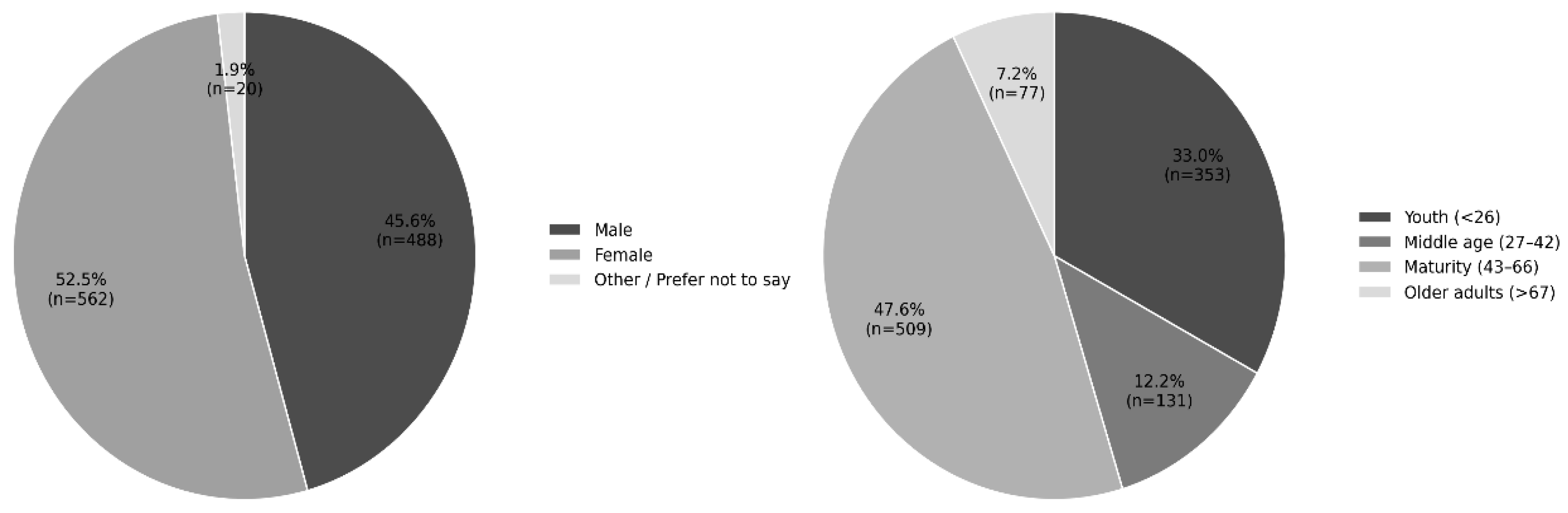
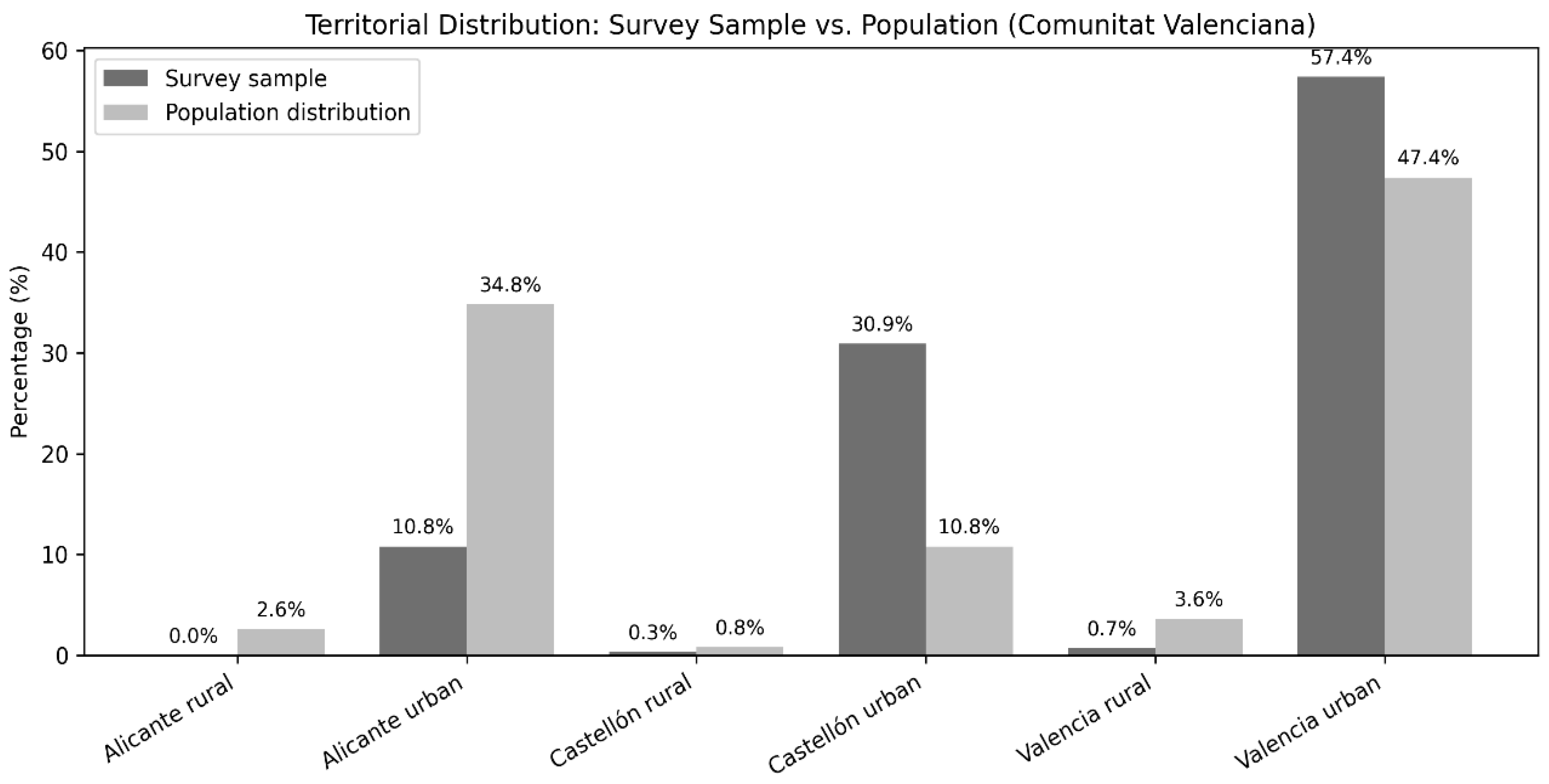
A total of 1070 valid responses were collected. The analysis focuses on the case study region, where the sample size is sufficient to analyse social perception patterns and examine differences by sociodemographic and territorial context, without aiming for statistical representativeness.
The distribution of the sample by gender and age groups is presented in
Figure 1. The territorial distribution by province and by residence environment (rural/urban) is summarised in
Figure 2, showing broad geographical coverage consistent with the regional demographic structure. For clarity and conciseness, gender and age distributions are presented together to provide an integrated overview of the sample’s sociodemographic structure.
This segmentation provides contextual support for the interpretation of perception patterns presented in
Section 3.2 and
Section 3.3.
It should be noted that the classification of responses into territorial categories (e.g., rural versus urban) is based on the available variables and criteria applied during post-processing. In the case of Alicante, due to the low number of responses obtained in these small towns, they were not classified within the ‘rural’ category; this may reflect limitations in the categorisation approach rather than the absence of respondents from rural areas.
Once the empirical basis of the study has been characterised, the results relating to the information ecosystem in which social perceptions of forests and SFM are constructed are presented below, considering both conventional media and digital environments.
3.2. Results of the Analysis of the Forest Information Ecosystem
The analysis of the forest-related information ecosystem reveals a marked concentration of media and digital content on specific forest-related topics. Across both conventional media and digital environments, coverage is predominantly associated with extreme events, particularly large wildfires, while references to SFM appear less frequently and tend to be episodic.
3.2.1. Conventional Media: Focus on Risk and Low Visibility of SFM
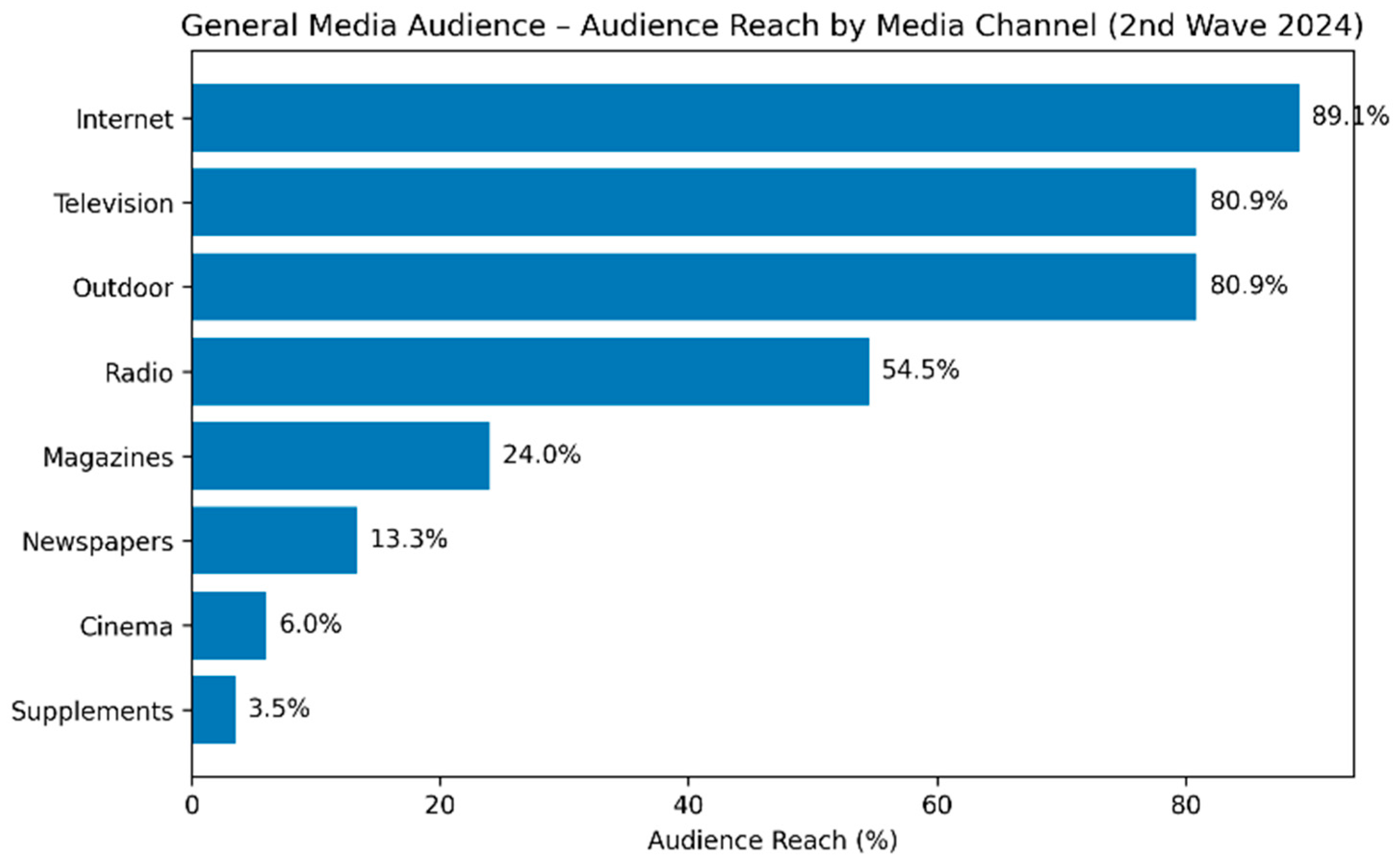
Audience data for the case study region indicate that internet and social media constitute the main channels through which the population accesses environmental information (89.1%), followed by television (81.0%), outdoor advertising (80.9%) and radio (54.5%). Other media formats show a substantially lower penetration, including magazines (24.0%), daily newspapers (13.3%), cinema advertising (6.0%), and print supplements (3.5%) (
Figure 3). This media consumption pattern defines the primary informational context in which public narratives about forests, wildfires, and SFM are constructed.
Within this context, the analysis of conventional media content reveals a clear imbalance in thematic focus. Environmental and forestry coverage is predominantly concentrated on episodic and event-driven topics, particularly natural perturbances, especially large wildfires, while preventive forest management, territorial planning, and climate change adaptation receive markedly less and more irregular attention. This bias is especially evident in television programming, where formats dedicated to climate risks, emergencies and crisis reporting largely outweigh those addressing structural forest management issues.
A similar pattern is observed in print and digital front-page coverage during major wildfire events in the studied region, where headlines prioritise urgency, catastrophe and visual impact. In contrast, references to forest management processes, long-term planning or adaptive strategies tend to be marginal or absent from headline narratives.
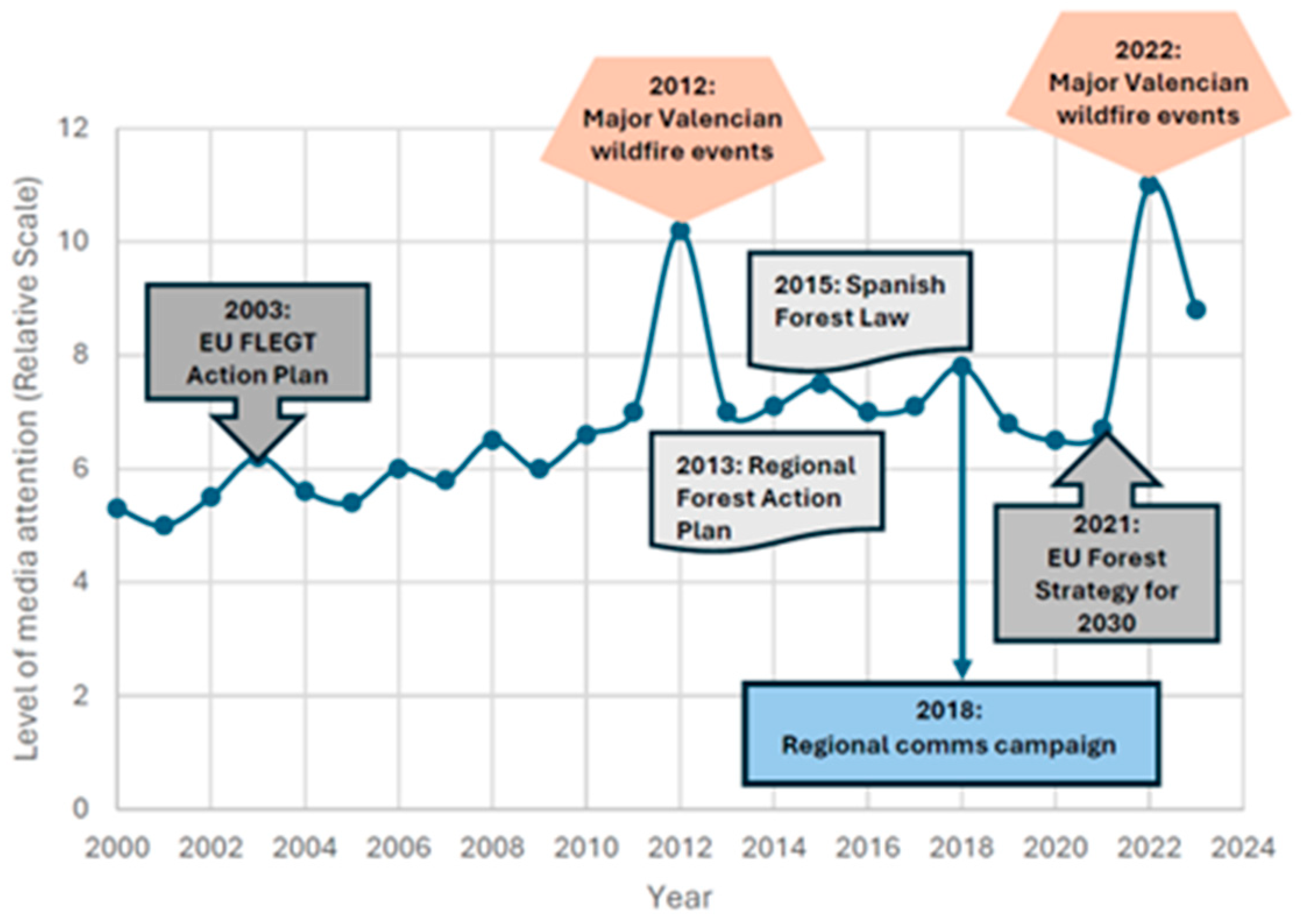
Finally, the temporal distribution of media attention to forest-related issues is highly discontinuous, characterised by sharp peaks during wildfire episodes followed by prolonged periods of low visibility (see
Figure 4).
Figure 4 presents a simplified and standardised representation of the temporal evolution of media coverage, highlighting major forest fires and political milestones. This pattern reinforces a reactive approach to forests and limits the presence of forest management as an ongoing and structural public policy issue.
3.2.2. Digital Media and Social Networks: Emotional Amplification and Discursive Fragmentation
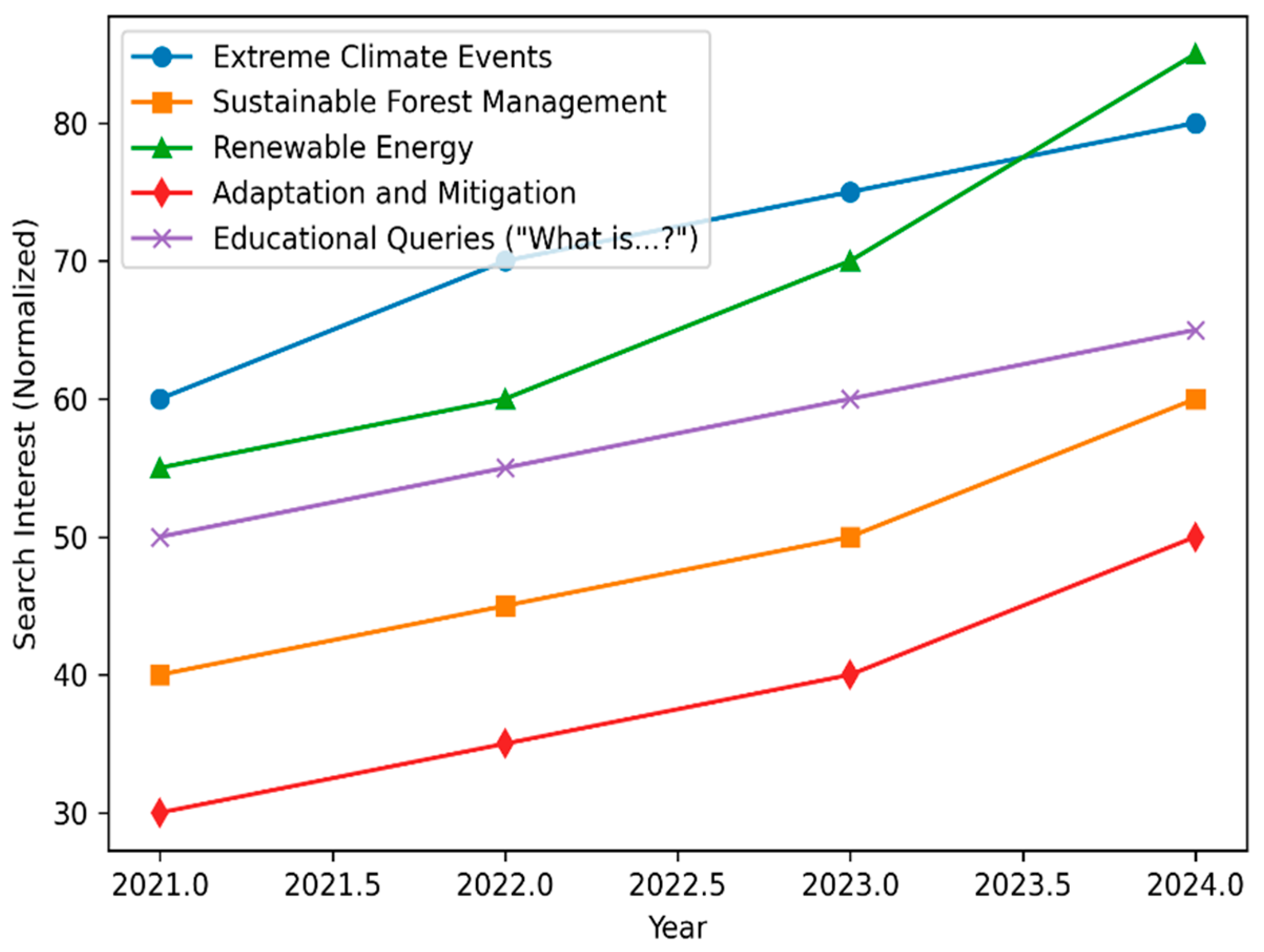
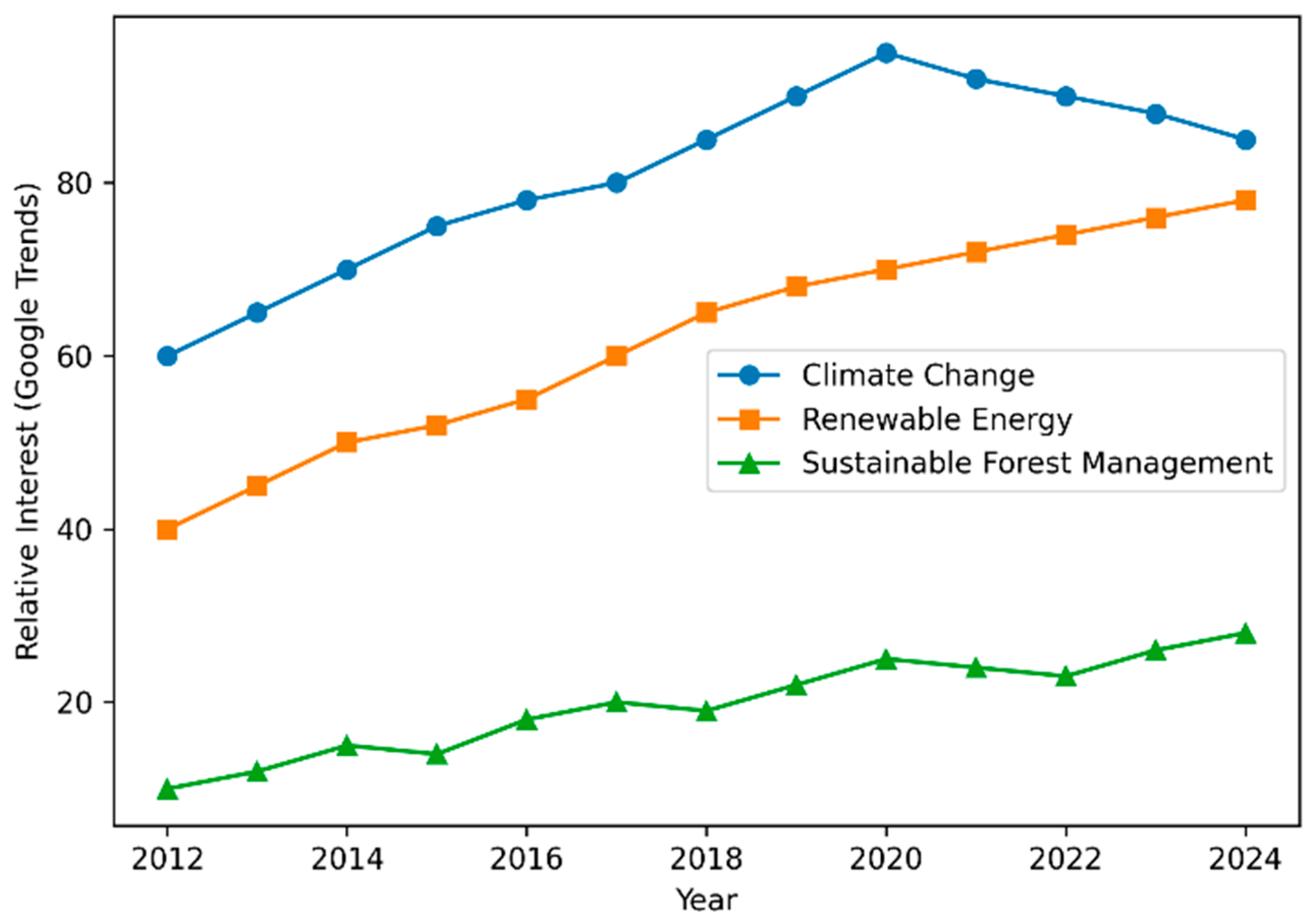
In digital environments, the pattern identified reproduces and amplifies the trends observed in conventional media, albeit with its own dynamics. A comparison of Google search interest shows a clear asymmetry: while terms such as climate change and forest fires receive high and sustained levels of attention, sustainable forest management maintains low and irregular interest, with peaks mainly associated with wildfire seasons (
Figure 5).
Consistently, specific trends related to climate change reinforce the centrality of extreme events in the digital public agenda, as opposed to concepts of planning, adaptation, or land management (
Figure 6).
Analysis of social media and digital platforms also reveals: (i) a high presence of emotionally charged environmental content; (ii) marked polarisation of discourse around logging, fires and human intervention in forests; and (iii) low visibility of technical or educational messages about SFM. These patterns are summarised in
Table 1, which shows the frequency and positioning of SFM content on different digital platforms.
3.2.3. Interpretative Summary of the Information Ecosystem
The analysis of the forest-related information ecosystem reveals three interrelated structural features. First, both conventional and digital media predominantly frame forests through risk- and emergency-oriented narratives, mainly associated with extreme events such as large wildfires. Second, SFM remains largely absent from regular media coverage as a preventive and adaptive public policy, appearing only sporadically and usually in reactive contexts. Third, there is a persistent misalignment between the scientific and technical agenda on forest planning, bioeconomy and adaptive management, and the themes that dominate public and media discourse.
Together, these features shape an information environment that strongly conditions how MTEs and forest management are understood by the society. This framework provides a necessary context for interpreting the social perception results presented in the following section, particularly in relation to knowledge gaps, perceptual dissonances and levels of acceptance of active forest management.
3.3. Social Perception of Forests, Climate Change and SFM
This section presents the results of the population survey conducted in the case study region, focusing on social perceptions, attitudes and levels of acceptance related to forests, climate change and SFM. Beyond a descriptive characterisation, the analysis seeks to identify key perception patterns and explanatory factors that help to interpret social acceptance or rejection of active SFM practices.
The results are structured into three analytical blocks: (i) perception of climate change and the role attributed to forests, (ii) social assessment of forest condition and the existence of perceptual dissonances, and (iii) social acceptance of different forest management models and specific intervention practices. These findings are interpreted considering the information ecosystem analysed in
Section 3.2., allowing connections to be drawn between media framing, knowledge gaps, and social attitudes.
3.3.1. Climate Change and the Role Attributed to Forests
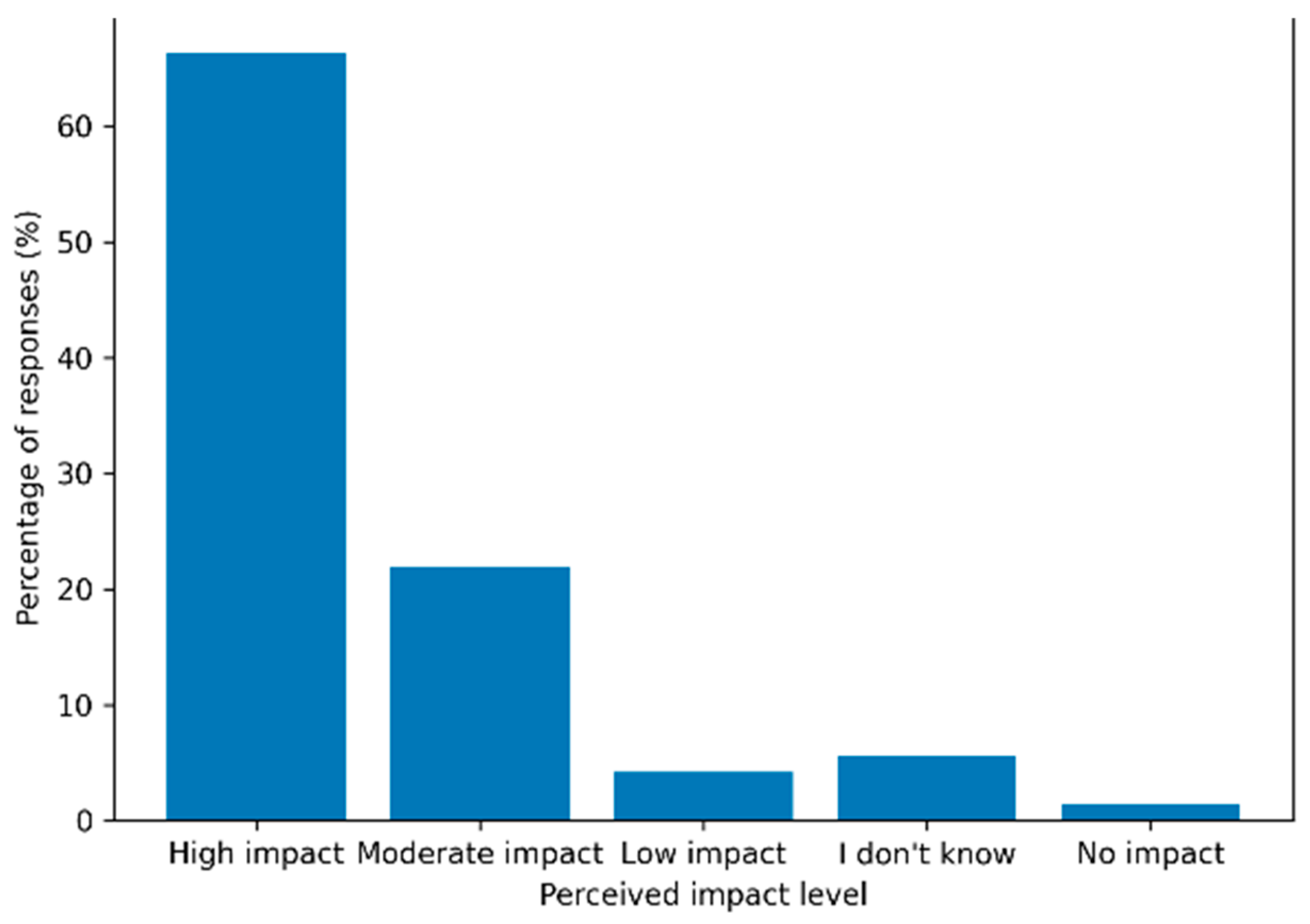
The results reveal a high level of social awareness of climate change. An overwhelming majority of respondents perceive climate change as a real and already observable phenomenon, with clear impacts on their territory and, in particular, on MTEs (see
Figure 7).
How do you think climate change will affect the territory in the coming decades?
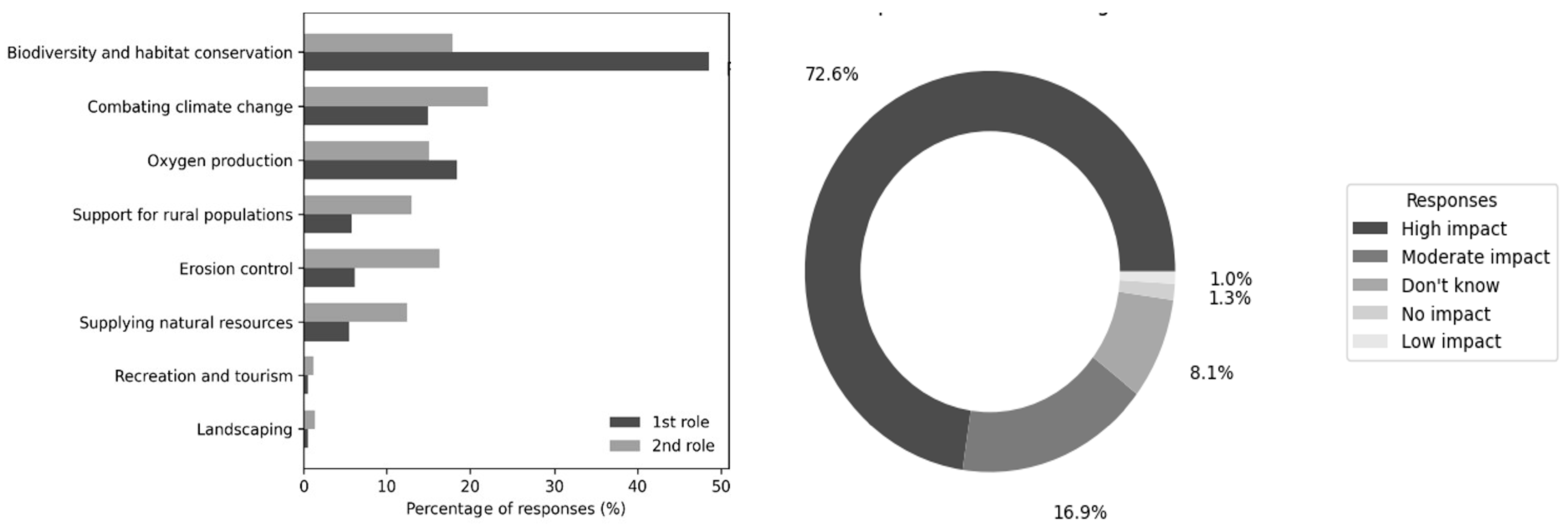
Forests are predominantly perceived as key environmental assets in the context of climate change. Respondents most frequently associate forests with climate regulation, biodiversity conservation and protection against natural hazards. At the same time, there is a strong perception that climate change is already negatively affecting forest condition and functioning (see
Figure 8).
Taken together, these results indicate a favourable social framework for linking MTEs and SFM to climate change mitigation and adaptation strategies. However, this high level of climate sensitivity does not necessarily imply a consolidated understanding of forest dynamics or of the active management practices required to enhance forest resilience and long-term sustainability. This gap between general awareness and operational knowledge becomes particularly relevant in the interpretation of social acceptance patterns analysed in the following sections.
3.3.2. State of Forests and Perceptual Dissonance
In this study, perceptual dissonance refers to the mismatch between socially constructed perceptions of forest decline or degradation and the empirical evidence on forest extent, structure and recent territorial dynamics documented by technical and institutional sources.
A significant proportion of respondents believe that MTEs are in decline, deteriorating or disappearing, or are simply unaware of them (72.43%), while a smaller share considers that the forest area has remained stable or even increased. This perception contrasts with technical evidence pointing to long-term trends of forest expansion in many Mediterranean regions, largely driven by land abandonment and natural regeneration processes.
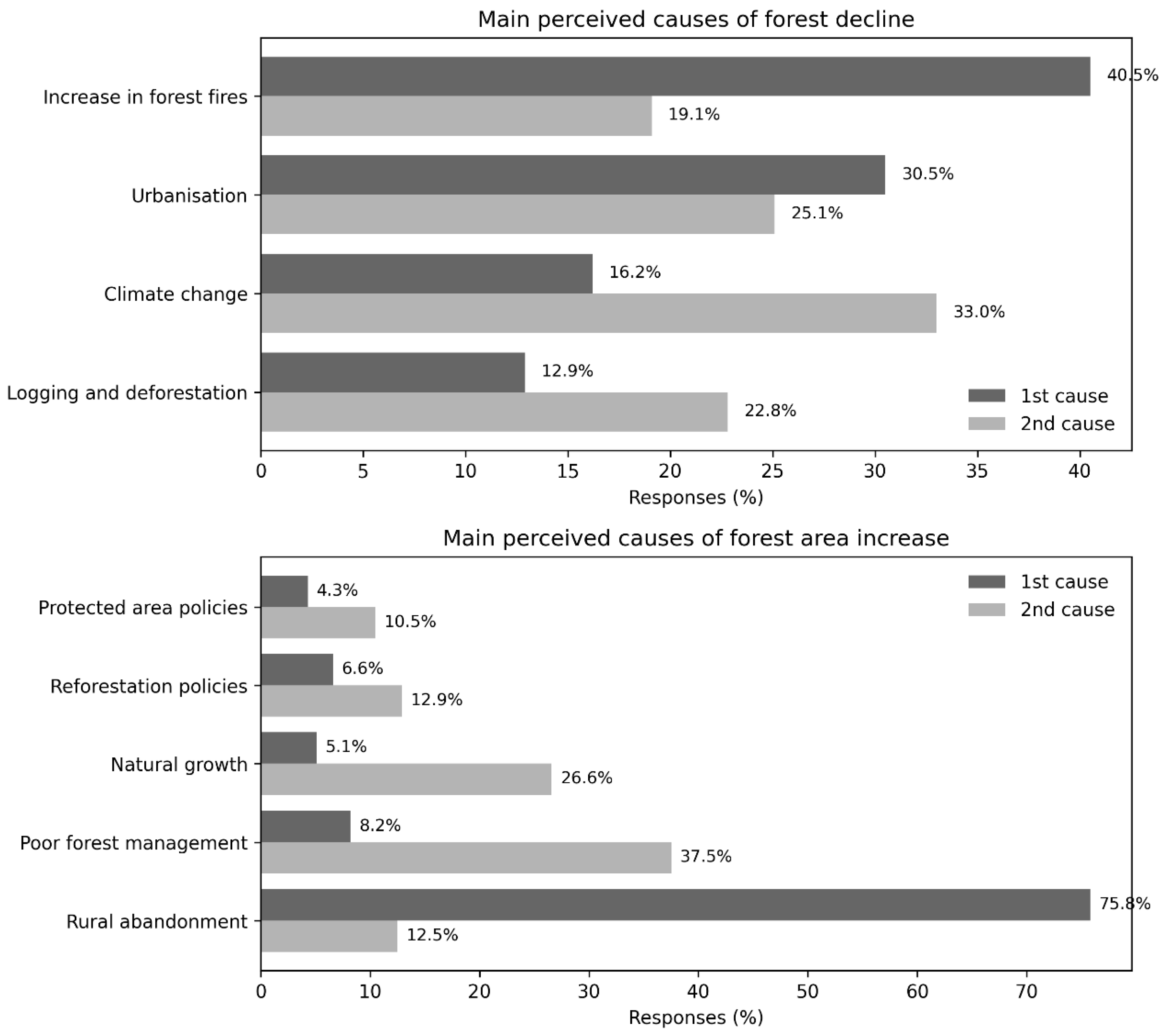
Among respondents who perceive forest decline, the most frequently cited causes are increased forest fires, prolonged droughts, climate change impacts and rural abandonment (see
Figure 9). These drivers are closely aligned with highly visible risk narratives and extreme events that dominate public and media discourse. By contrast, respondents who perceive stability or growth in forest area mainly refer to natural regeneration, reforestation and the abandonment of traditional agricultural land uses (
Figure 9), processes that are less visible and receive limited media attention.
This contrast illustrates a clear case of perceptual dissonance between quantitative forest expansion and qualitative perceptions of forest degradation. While a significant proportion of respondents correctly associate rural abandonment with increased forest area, this process is often perceived negatively, as it is linked to unmanaged vegetation, increased fire risk, and landscape degradation. As a result, forests tend to be socially perceived as systems in continuous decline, even when empirical indicators suggest more nuanced or divergent trajectories.
3.3.3. Social Acceptance of Forest Management and Intervention Practices
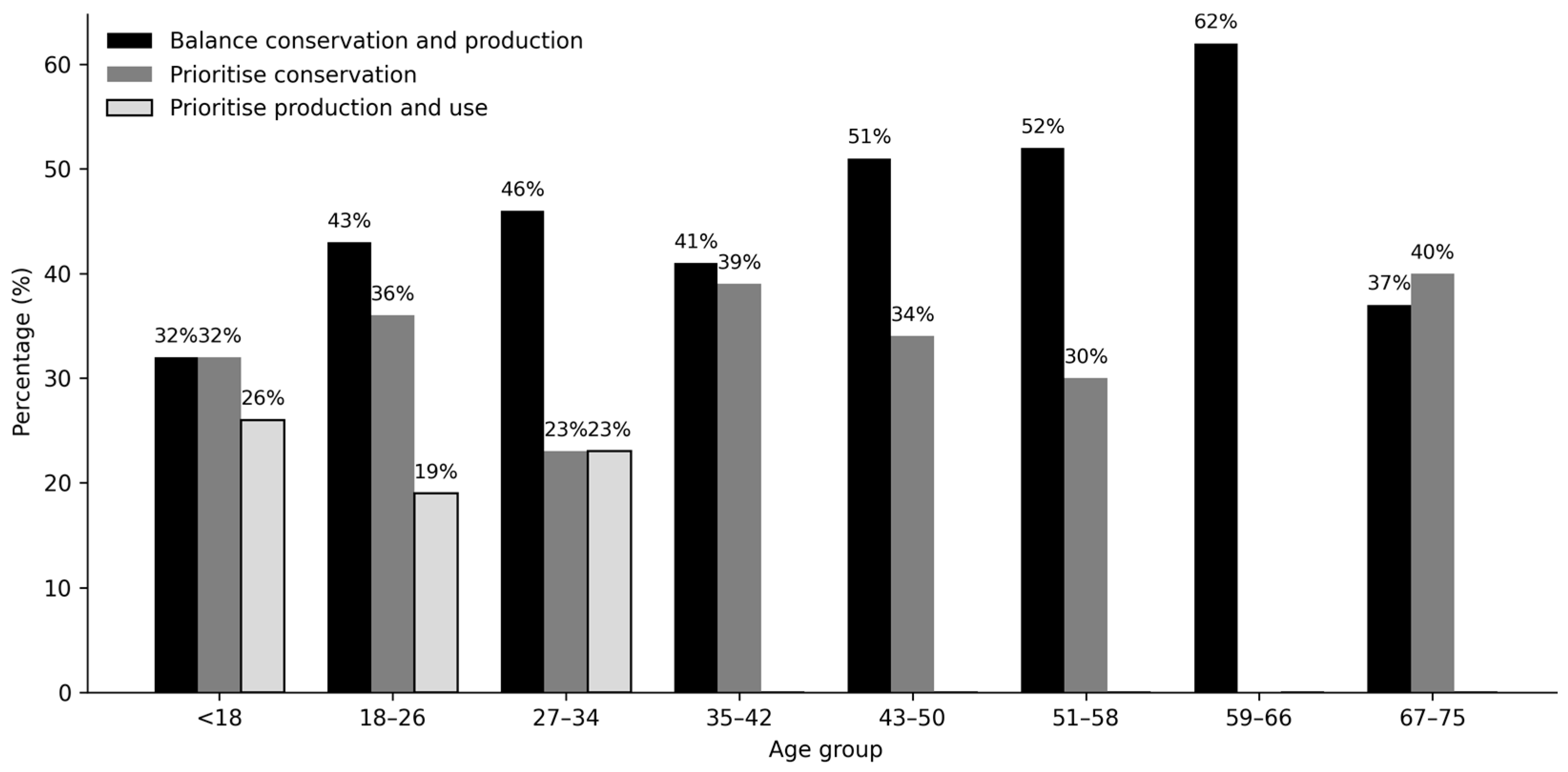
Despite the perceptual dissonances detected, the results show a largely favourable attitude towards balanced SFM models. When analysing general management preferences, the most supported option is one that combines conservation and sustainable use, followed by models that prioritise conservation with traditional local production. Intensive models focused exclusively on production receive significantly less support (see
Figure 10).
This pattern remains relatively consistent across different age groups, indicating widespread acceptance of multifunctional management approaches. However, this general support for balanced SFM models does not automatically translate into acceptance of specific intervention practices, particularly those that involve visible human action in MTEs. The results also reveal notable generational differences, with younger and older respondents showing distinct priorities regarding forest production and use. This suggests that age plays a relevant role in shaping perceptions of forest functions and management preferences.
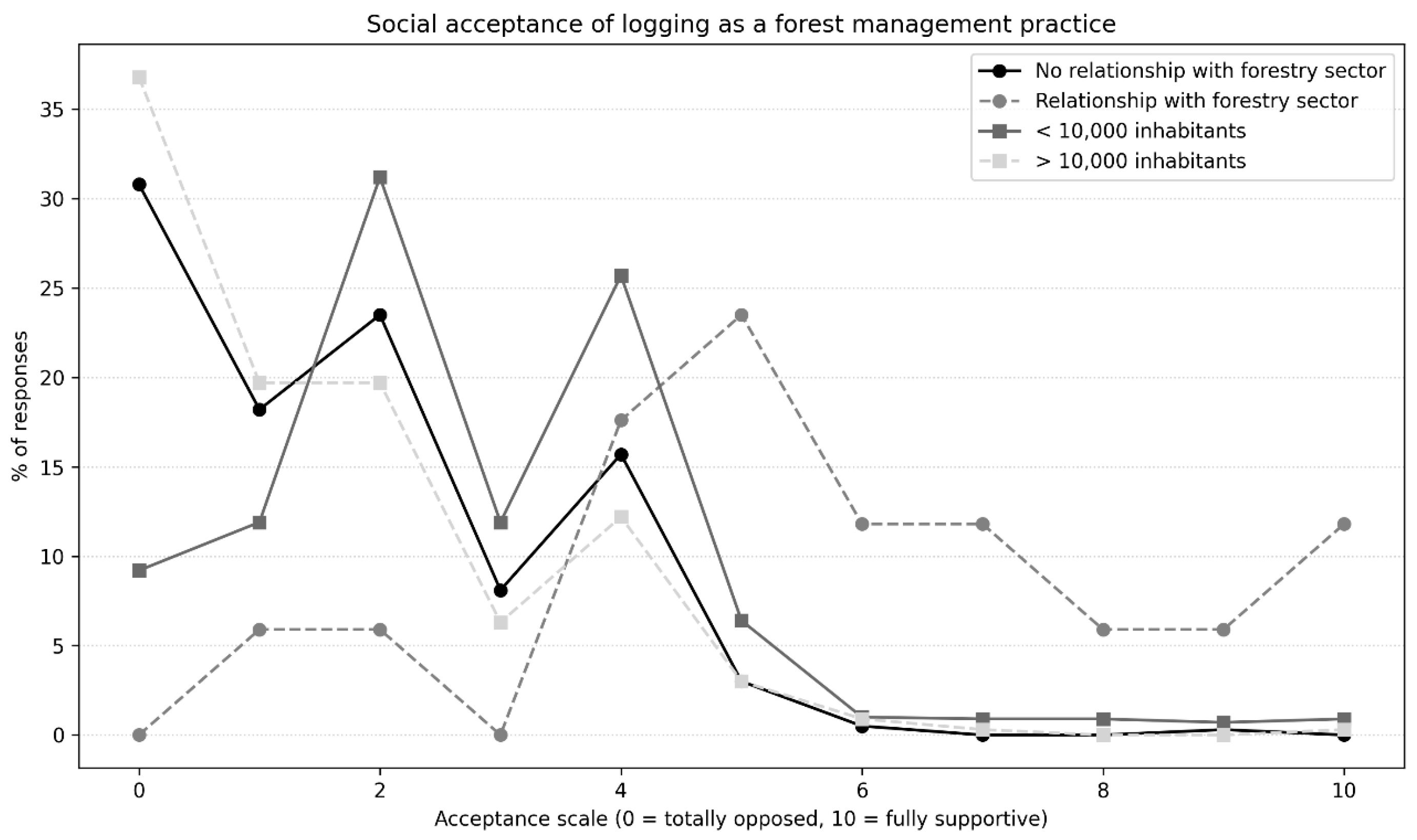
When attitudes towards specific forest management practices are analysed, significant differences emerge depending on social profile and territorial context. Acceptance of logging as a management tool is substantially higher among respondents with a direct relationship to the agricultural and/or forestry sector and among those living in rural environments, while greater reluctance is observed among urban residents and respondents without direct contact with rural activities (see
Figure 11).
These differences suggest that direct experience, contextualised knowledge and territorial proximity play a key role in shaping social acceptance of active SFM practices. For groups more distant from forest management, both socially and territorially, logging tends to be interpreted primarily through risk-oriented or conflict-based narratives, often disconnected from its preventive or adaptive functions. By contrast, respondents with greater familiarity with forestry practices are more likely to recognise logging as an effective and necessary tool for reducing fuel loads for actively preventing large wildfires, as well as for enhancing natural regeneration of MTEs.
This contrast reinforces the idea that social rejection of specific forest interventions is not necessarily rooted in opposition to SFM as a concept, but rather in information gaps, limited experiential knowledge and the dominance of simplified or polarised representations of human intervention in MTEs.
3.3.4. Summary of Perception Patterns
First, there is a high level of climate awareness and a broadly positive social valuation of the environmental role of forests, particularly in relation to climate regulation, biodiversity conservation and wildfire prevention. This constitutes a favourable social baseline for the acceptance of SFM objectives.
Second, this favourable baseline coexists with a marked perceptual dissonance regarding forest dynamics, whereby MTEs are widely perceived as deteriorating systems despite the existence of more complex and heterogeneous territorial trends. This dissonance is strongly influenced by the predominance of risk-oriented and event-driven narratives in the information ecosystem.
Third, while there is majority support for balanced, multifunctional forest management models in abstract terms, acceptance decreases when specific intervention practices are considered, especially among socially and territorially distant groups. This pattern highlights the central role of information, experience and framing in shaping attitudes towards active forest management.
Overall, these perception patterns provide a coherent interpretative framework for the diagnostic analysis developed in the following section, where social strengths, weaknesses, opportunities and threats associated with SFM are systematically examined.
3.4. Diagnostic Summary: SWOT Analysis of Social Perceptions of SFM
The SWOT analysis synthesises the main patterns identified in the social perception of SFM in the case study region. A comprehensive presentation of the analytical results is available in the
Supplementary Materials. Weaknesses refer to internal social and communicative limitations affecting legitimacy, whereas threats denote external structural and contextual constraints that may hinder implementation. The analytical framework is supported by schematic and integrative tools, including system mapping and SWOT analysis, which help to structure the relationships between media narratives, social perception, and forest governance. These tools provide a coherent basis for synthesising the empirical findings and interpreting their implications from a governance perspective.
3.4.1. Strengths and Opportunities from a Social Perspective
The results reveal a favourable social baseline for SFM. There is broad recognition of the role of Mediterranean forest ecosystems in climate change mitigation and adaptation, biodiversity conservation and wildfire risk reduction. This positive valuation constitutes a solid foundation for social legitimacy.
SFM is also perceived as compatible with rural development and bioeconomy objectives. Its association with local employment and economic activity reinforces its relevance in Mediterranean regions affected by depopulation and land abandonment.
Significant opportunities emerge in the field of communication. Tailoring messages to different sociocultural profiles and increasing the use of visual, educational and digital formats could improve understanding of preventive and adaptive management practices. Furthermore, linking SFM to widely shared climate and ecological transition agendas may strengthen its institutional visibility and public legitimacy.
3.4.2. Structural Weaknesses and Threats
Despite this favourable baseline, several weaknesses constrain social legitimacy. The forestry sector is widely perceived as using technical, inaccessible language, reflecting the complexity of the communication messages associated with sustainable forest management. This limits public understanding of the rationale and functions of active forest management and hinders broader social engagement.
A further weakness is the perceived distance between forest policy and everyday social experience, particularly in urban contexts. For many groups, SFM appears episodically in connection with major wildfires rather than as a continuous public policy.
Among the main threats identified are the increasing frequency of extreme weather events, which reinforce emergency-based narratives and overshadow preventive approaches. Land-use competition linked to urbanisation, tourism, and infrastructure development further limits the space available for active forest management. In addition, limited political prioritisation, and the relatively low political influence of forest-related issues within broader policy agendas may constrain long-term implementation, reducing the visibility and strategic relevance of SFM.
Together, these weaknesses and threats highlight governance and communication challenges that directly affect the social viability of SFM.
3.4.3. Contrast with the Institutional Diagnosis
The comparison between social perception and the institutional diagnosis shows strong convergence at the strategic level. Both emphasise wildfire prevention, biodiversity conservation, rural development and access to European funding as key priorities.
However, divergences emerge at the operational and social levels. While the institutional diagnosis focuses on administrative coordination and regulatory constraints, social perception places greater emphasis on communication deficits, limited citizen involvement and the gap between technical discourse and public understanding.
This contrast indicates that, despite alignment in objectives, shortcomings remain in the social and communicative translation of SFM as public policy.
3.4.4. Implications for the Interpretation of Results
Overall, the SWOT analysis indicates that the main barriers to social acceptance of SFM are not primarily technical, but relate to governance dynamics, communication processes and issues of legitimacy.
Information flows, media framing, and experiential proximity strongly shape public understanding. The contrast between institutional and social perspectives underscores the importance of addressing communicative and participatory dimensions alongside regulatory and financial instruments.
4. Discussion
4.1. SFM Between Potential Legitimacy and Communicative Fragility
The findings of this study indicate that SFM enjoys a form of potential social legitimacy in the Mediterranean case study region. In line with previous research in other European contexts, there is broad support for balanced forest management models that combine conservation objectives with sustainable use of resources [
5,
22,
23]. This legitimacy, however, remains largely latent and fragile, as it is not underpinned by a consolidated public understanding of forest management as a continuous and preventive public policy.
The results reveal a clear dissociation between general normative support for SFM and concrete knowledge of its objectives, practices and territorial functions. Similar patterns have been documented in other contexts, where acceptance of active SFM increases when its rationale and benefits are communicated in accessible and locally grounded terms [
7,
22]. In this sense, the resistance observed in relation to specific practices does not appear to reflect ideological opposition to forest intervention, but rather deficits in communication, institutional mediation and trust-building processes.
This issue is particularly critical in Mediterranean regions, where active SFM constitutes a key instrument for reducing fuel loads, limiting the severity of large wildfires and enhancing ecosystem resilience under climate change conditions [
3,
4]. Without socially embedded narratives that make these functions visible, the potential legitimacy of SFM remains vulnerable to misunderstanding and episodic contestation.
4.2. The Weight of Media Framing in Shaping Social Perception
This study highlights the central role of media framing in shaping social perceptions of SFM, reinforcing and extending previous contributions in the field of environmental communication. The predominance of reactive, event-driven narratives centred on forest fires and other extreme events situates forests primarily within a logic of crisis and emergency, a pattern that has been widely documented in climate-related media coverage [
14,
15].
The findings suggest that this framing not only amplifies perceptions of vulnerability and risk, but also systematically marginalises forest management as a preventive, planned and adaptive public policy. In this respect, the study provides empirical evidence for the argument that disaster-focused communication can obscure the structural processes that generate long-term environmental risk, thereby limiting public understanding of management-oriented solutions [
14,
15].
In Mediterranean contexts, where biomass accumulation, landscape homogenisation and rural abandonment increase wildfire susceptibility, the implications of this framing are particularly significant. By reinforcing conservationist interpretations based on non-intervention, media narratives may inadvertently undermine the social legitimacy of management practices that are ecologically necessary under current climate conditions [
4].
Furthermore, the dynamics observed in digital media and social networks, characterised by emotional amplification, polarisation and algorithmic segmentation, are consistent with recent research on information bubbles and fragmented public discourse [
19]. These dynamics further constrain the circulation of technical, educational and context-specific knowledge about SFM, reinforcing simplified or conflict-based representations of human intervention in MTEs.
4.3. Gaps Between Social Perception and Scientific Evidence: Implications for Forest Policy
The results of this study point to a persistent gap between social perceptions of forest dynamics and the available scientific and technical evidence. While a substantial share of the population perceives forests in their region as in decline, empirical data from forest inventories and land-use change analyses indicate long-term trends of forest expansion in many Mediterranean areas, largely associated with rural abandonment and natural regeneration [
11,
24,
25].
This divergence is consistent with previous research documenting mismatches between environmental perception and actual territorial dynamics, particularly in contexts where public understanding is shaped by media coverage of extreme events and the absence of narratives addressing slow, cumulative landscape transformations [
6,
24]. In this respect, the findings reinforce the relevance of perceptual dissonance as an explanatory concept for understanding social attitudes towards forest management.
From a policy perspective, this gap has important implications for how SFM is socially interpreted. An increase in forest area does not necessarily translate into improved ecological quality, enhanced resilience or reduced wildfire risk, especially in Mediterranean landscapes characterised by dense, continuous and poorly managed forest structures [
3,
4]. Consequently, social evaluations of forest management that focus primarily on forest extent may overlook key dimensions related to structure, functionality and adaptive capacity under climate change conditions.
Public discourse on SFM would benefit from incorporating more nuanced representations of MTEs’ quality and dynamics. However, the effectiveness of such communication also depends on the audience’s capacity to interpret and engage with complex information, highlighting the need for adaptive and audience-sensitive communication strategies.
4.4. Forest Governance and the Social Dimension: Beyond Technical Instruments
The contrast between the SWOT analysis of social perception and the institutional diagnosis highlights the central role of governance and communication processes in shaping SFM’s social viability. Beyond technical or financial considerations, the findings point to the importance of how forest policies are articulated, communicated and socially mediated.
While European and regional strategic frameworks tend to emphasize funding opportunities, innovation and employment generation [
20,
26]. Social perception places greater weight on issues such as institutional visibility, political prioritisation and opportunities for citizen involvement. This divergence suggests that governance challenges are not limited to the availability of instruments but also concern the processes through which SFM objectives are framed and legitimised in the public sphere.
These results are consistent with previous research indicating that transitions towards sustainable forestry models depend not only on technical adjustments, but also on transformations in governance arrangements, participation mechanisms and legitimacy-building processes [
27,
28]. In this context, the social dimension of governance emerges as a critical factor influencing whether SFM is perceived as a shared public concern or as a marginal and episodic policy domain.
4.5. Contributions, Limitations and Implications for Research and Policy
This study contributes to the scientific literature in several ways. First, it provides an empirically grounded and territorialised analysis of the social perception of SFM in a Mediterranean context, a setting that has received comparatively limited attention from an integrated socio-communicative perspective. By focusing on the case study region, the research offers insights into a region characterised by high climate vulnerability, structural land-use change and increasing wildfire risk.
Second, the study advances existing research by explicitly linking media framing, information ecosystems and social acceptance of forest management practices. Rather than analysing public attitudes in isolation, it highlights the role of communication dynamics and narrative structures in shaping how SFM is understood, contested and legitimised. This integrative approach contributes to a more comprehensive understanding of forest governance as a socio-communicative process.
Third, the combined use of media analysis, system mapping and a population survey allows for a multidimensional reading of social perception, capturing not only expressed attitudes but also the informational and discursive contexts in which they are formed. This methodological integration represents an added value compared to studies focused exclusively on landscape preferences or acceptance of specific forestry interventions.
Despite these contributions, several limitations should be acknowledged. The survey sample, while robust for the case study region, limits the direct transferability of the results to other Mediterranean regions with different institutional, cultural or ecological characteristics. In addition, the analysis of the information ecosystem is based on a defined time window, which limits the ability to capture long-term dynamics and shifts in media narratives.
Finally, the analytical approach adopted is predominantly descriptive and interpretative. While this is appropriate for exploring social perception and communication processes, future research could complement these findings by incorporating explanatory models, longitudinal designs or multivariate analyses to further investigate causal relationships between media exposure, knowledge formation and social acceptance of SFM. In particular, the limited temporal scope of the media analysis constrains the ability to capture long-term framing dynamics and evolving narrative patterns over time.
4.6. Implications for Future Research and Public Policy
This study makes three main contributions. First, it provides an empirically grounded and territorially contextualised analysis of the social perception of SFM in a Mediterranean region characterised by high climate vulnerability, structural land-use change and increasing wildfire risk.
Second, it explicitly links media framing, information ecosystems and social acceptance of forest management, moving beyond isolated analyses of public attitudes and highlighting the socio-communicative nature of forest governance. Third, the combined use of media analysis, system mapping and population survey enables a multidimensional understanding of social perception, capturing both expressed attitudes and the informational contexts in which they are formed.
Despite these contributions, several limitations must be acknowledged. The survey sample, although robust at the regional scale, limits the direct transferability of results to other Mediterranean contexts with different institutional, cultural or ecological conditions. The analysis of the information ecosystem is time-bound, restricting the assessment of long-term narrative shifts. Moreover, the predominantly descriptive and interpretative design does not allow causal relationships between media exposure, knowledge formation and social acceptance to be established.
These limitations open relevant avenues for future research. Comparative studies across Mediterranean regions, longitudinal analyses of media framing and public perception, and explanatory models incorporating sociocultural typologies would deepen understanding of the factors shaping acceptance of SFM practices.
From a public policy perspective, the findings suggest that technical planning instruments and regulatory frameworks are insufficient on their own. Social acceptance emerges as a critical enabling condition, closely linked to communication, visibility and citizen involvement. Climate adaptation and wildfire risk reduction policies would therefore benefit from continuous, territorially embedded and educational communication strategies that clarify the rationale and benefits of active forest management.
Overall, integrating scientific knowledge, institutional planning and social perception should be considered a central component of forest governance. Addressing communicative and participatory dimensions alongside technical measures may significantly enhance the long-term legitimacy and effectiveness of SFM policies in Mediterranean landscapes.
5. Conclusions
This study provides an integrated assessment of the social perception of sustainable forest management (SFM) in a Mediterranean context, using the case of Valencia (Spain) as a representative example. By combining media discourse analysis, information ecosystem mapping, population survey data and a SWOT-based diagnostic synthesis, the research offers a comprehensive perspective on how SFM is socially constructed and interpreted.
The results reveal a favourable social baseline for SFM, characterised by high levels of climate awareness and a generally positive valuation of the environmental functions of forests. However, this latent support coexists with important gaps in specific knowledge and understanding of active forest management practices.
A key finding is that social resistance to SFM appears to be driven less by ideological opposition than by perceptual misalignments and communication shortcomings. Media framing, particularly through narratives centred on wildfires and extreme events, plays a central role in shaping public perceptions. This reactive, event-driven discourse tends to diminish the visibility of preventive and adaptive management practices, contributing to simplified interpretations of Mediterranean forest ecosystems.
The study also highlights a relevant mismatch between public perceptions of forest dynamics and available scientific evidence. While processes such as forest expansion are widely recognised, they are often interpreted through a negative lens associated with abandonment, fuel accumulation and increased fire risk. This perceptual dissonance underscores the need to move beyond purely quantitative indicators and incorporate qualitative dimensions of forest condition, resilience and management.
From a governance perspective, the findings emphasise that the effectiveness and social legitimacy of SFM depend not only on technical and ecological factors, but also on communication processes and public engagement. Strengthening the clarity, continuity and accessibility of communication, as well as adapting messages to different social groups, emerges as a key condition for improving public understanding and acceptance.
Overall, SFM in Mediterranean regions should be understood as a policy domain that integrates climate adaptation, territorial resilience and social legitimacy. Aligning scientific knowledge, institutional strategies, and public perception represents both a major challenge and a strategic opportunity in the context of increasing climate risks.
This study has several limitations. The analysis is based on a specific case study, which may limit the generalisability of the results. In addition, the survey data capture perceptions at a given point in time and may be influenced by recent events, particularly wildfires. Furthermore, the media analysis is based on a defined observation period and does not aim to capture long-term trends.
Future research should further explore the relationships among communication processes, social perception and forest governance across different socio-ecological contexts. In particular, longitudinal and comparative approaches would be valuable to better understand how evolving information environments influence public attitudes towards SFM.




 ,
,